The P. and G. Klopp Story

Chapter VI continued

Report by Lavana Kilborn  (Chart I – III)

My Journey from 1943 to 1947

In the summer of 1943, my mother and I left by train for Hirschberg, where relatives of mine resided. As we lived in the country, it was necessary for me to move in order to obtain proper schooling. My host-family consisted of my widowed aunt Johanna, her parents and three cousins of mine, one of them being a girl, named Elisabeth and two boys. After a few days my mother returned home.

I got along very well with my new family, in particular with Elisabeth, who was of the same age as myself. We sat side by side in school and became good friends. The beautiful city had a large swimming pool, surrounded by grass to sunbathe, play ball etc. On weekends the family would go hiking in the nearby mountains, where the source of the mighty Elbe River is located. The song “Oh du schönes Riesengebirge, wo die Elbe heimlich rinnt …” still makes me melancholic, when I sing it. We also skied on wooden skis. There were no lifts then, but how much fun it was. All these activities were new and exciting experiences for me.
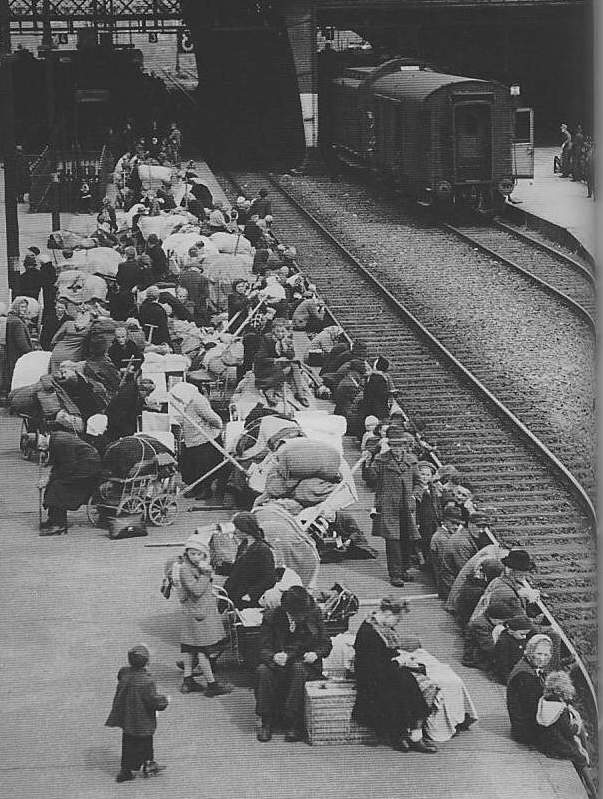
Refugees Waiting for the Last Train at Breslau

Refugees Waiting for the Last Train at Breslau

In January of 1945 everything came to an abrupt halt. Refugees started pouring in from neighboring provinces, fleeing from the encroaching Russian front. They were mostly old people, women and children. There was lots of speculation about how this all would develop, some people moved westward on their own, others stayed in the city, hoping that they may return some day. The evacuation order came in early February and trains were ready to take us to safety and by now we could hear the guns in the distance. My family hesitated, there were discussions, but finally common sense prevailed. And our little group left on the last train out; later on we learned that all Russian soldiers entered the city the following day. Our train compartment was very crowded, one toilet, a small hand basin with only cold water for all of us meant long line-ups throughout the day. Food and drink were provided for our journey. The winters in East Germany are very cold, the land covered in snow, not much for us kids to see. Twice the whistle blew, the train stopped and we were ordered to step outside and move away from the train and stand still. When the whistle blew again, we were to get back on the train immediately. These were brief episodes when Allied planes came and went quickly not interested in us at all as they had bigger fish in mind. However our last stop along the way was different, as we were now ordered not to leave the train. We were all wondering what this was all about. Soon it became apparent that Dresden, the beautiful city, had been bombed, the sky was aflame to tell the story. Later we learned that thousands of people had perished, many of them at the main train station. This was the reason for us to be rerouted a day later. Our Tante Margot survived, as they were in another part of Dresden.
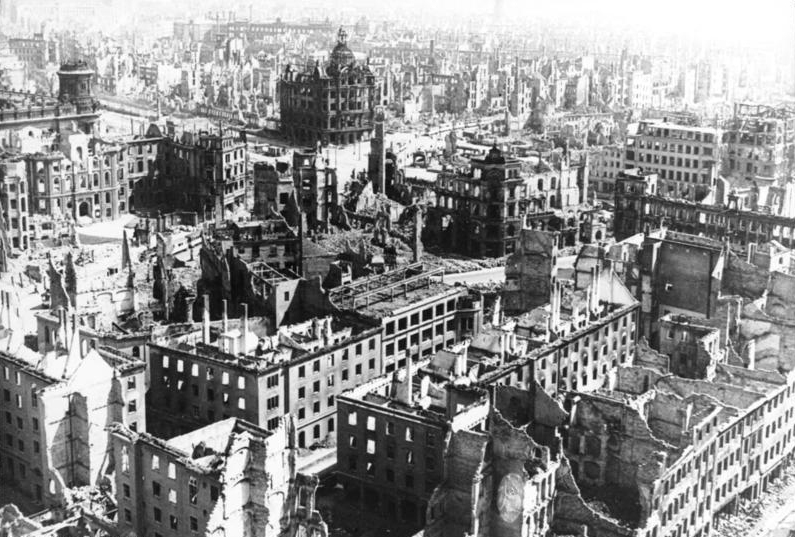
Dresden - Photo Credit: Bundesarchiv_Bild_183-Z0309-310

Dresden – Photo Credit: Bundesarchiv_Bild_183-Z0309-310

Our little group eventually made it to Mark Brandenburg, a place so far untouched by the war. Our major problem was that we were always hungry. Us older kids left daily on food-begging trips. Thus we managed to survive. Often I went on my own. Once while crossing a forested area, I came across the body of a German officer, eyes and mouth open providing a feast to tiny creatures. Another episode was more frightening. Three German teens in uniform, not knowing that the war had ended, shot dead a Russian soldier on patrol. These kids were caught and executed in the courtyard of the farmhouse where we stayed. It was horrifying to hear those shots. Another experience stands out for me. As I was approaching a large farmhouse, the hausfrau saw me coming, yelling at me to leave or she would sic the dog on me. Scared I turned to run off, when a Russian soldier took me by the arm and motioned to follow him into the root cellar. Here the farmers kept their food. From the shelves the soldier took bread, cheese, a piece of bacon and handed me the goodies, which I put into my bag. I was out of there in no time never to come back to that place again.
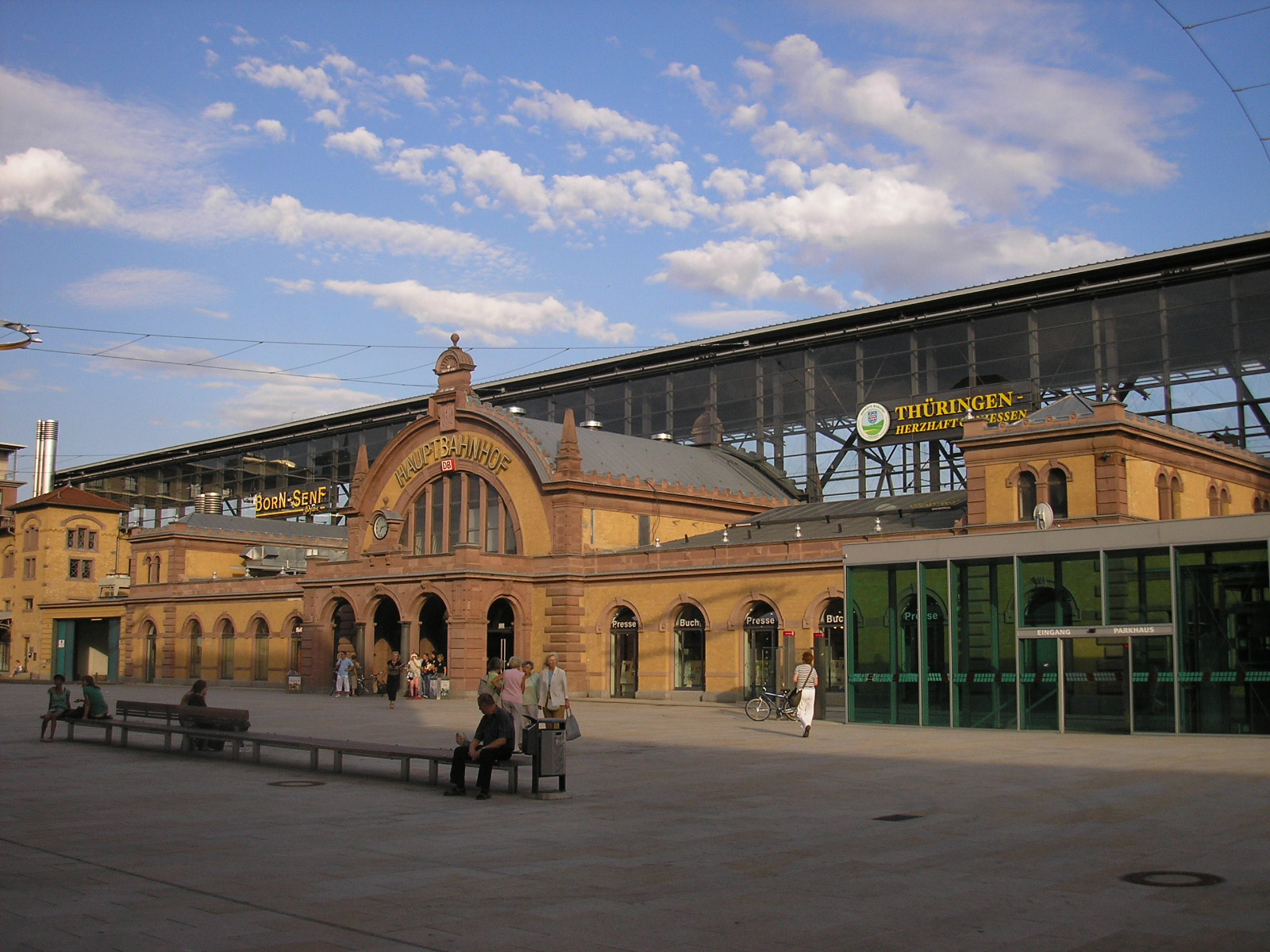
Railway Station Erfurt

Railway Station Erfurt – Photo Credit: Wikipedia.og

Eventually my host family was able to contact an uncle of mine in Erfurt. He and his wife took me in and my life began to normalize again. I loved the family, the school and the beautiful city. However, I often wondered where my parents and siblings might be. My mother and the two youngest brothers were finally located. In the meantime the two older brothers also arrived in Erfurt. And it was decided that Adolf and I were to join Mother in southwest Germany. The necessary papers arrived and we were on our way. The train took us close to the border and we walked the rest of the way. Two Russian border guards saw us coming and questioned us. After studying our valid papers allowing us to pass, they just tore them up. We were stunned at such injustice, after all we were 15 (Adolf) and 13 years old myself. The soldiers shooed us off, one of them pointing at his gun, in case we had any ideas of returning. We left seeking shelter behind a haystack and began to weigh our options on what to do next. Adolf wanted to return to Erfurt, but I would have none of it. I picked up my stuff carefully avoiding the guardhouse. Now a steady rain had begun. Soon I heard my brother’s footsteps behind me and I was much relieved. I don’t remember how long we walked. It seemed like a long time. By the time we got to a small railway station, we were exhausted, yet very much relieved that we were in the West. Two French border guards approached us demanding to see our papers, – no wonder, we looked like runaways. Adolf handled the situation quite well and we were allowed to board the train,
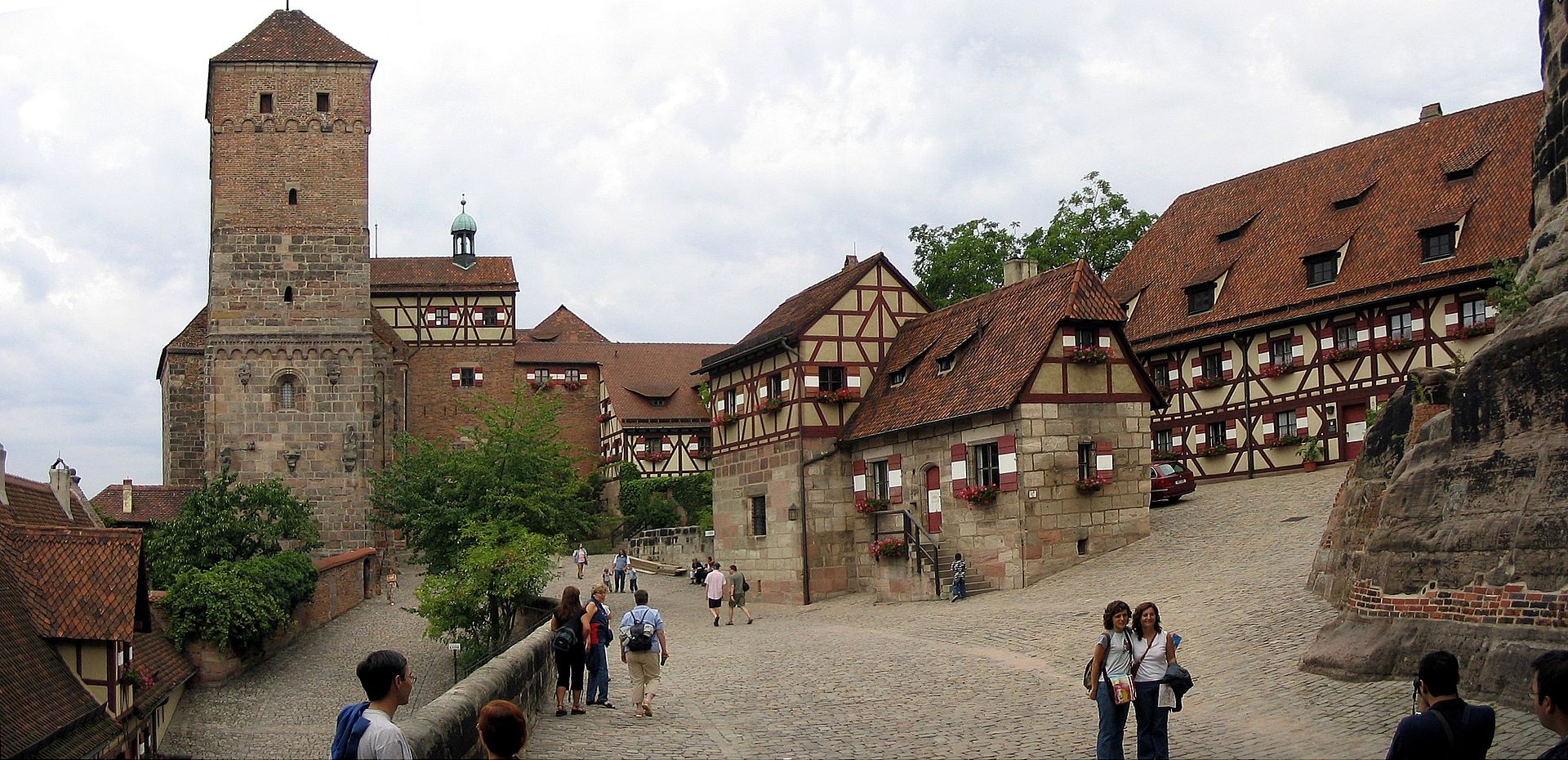
Nuernberg_Burg_Panorama_PtGUI

Nuremberg Castle – Photo Credit: Wikipedia.og

In Nuremberg we found the Red Cross Refugee Camp, where we received food and shelter. As we were out of money, discussing our next move, a woman interrupted us handing Adolf a bill that would cover our train fare to Meßkirch. Several kilometers more on foot and we arrived in Rohrdorf. What a relief for all of us to join our mother and the two youngest brothers again after such a long separation!

We Welcome Felix, Sabine and Little Mia

 Mia, Granddaughter of Dieter and Edda Barge

The Star of the Gallery

Contributed by Sabine Barge  (Chart II a – V + VI)

Marie Kegler, Stalwart of Christian Faith – Part II

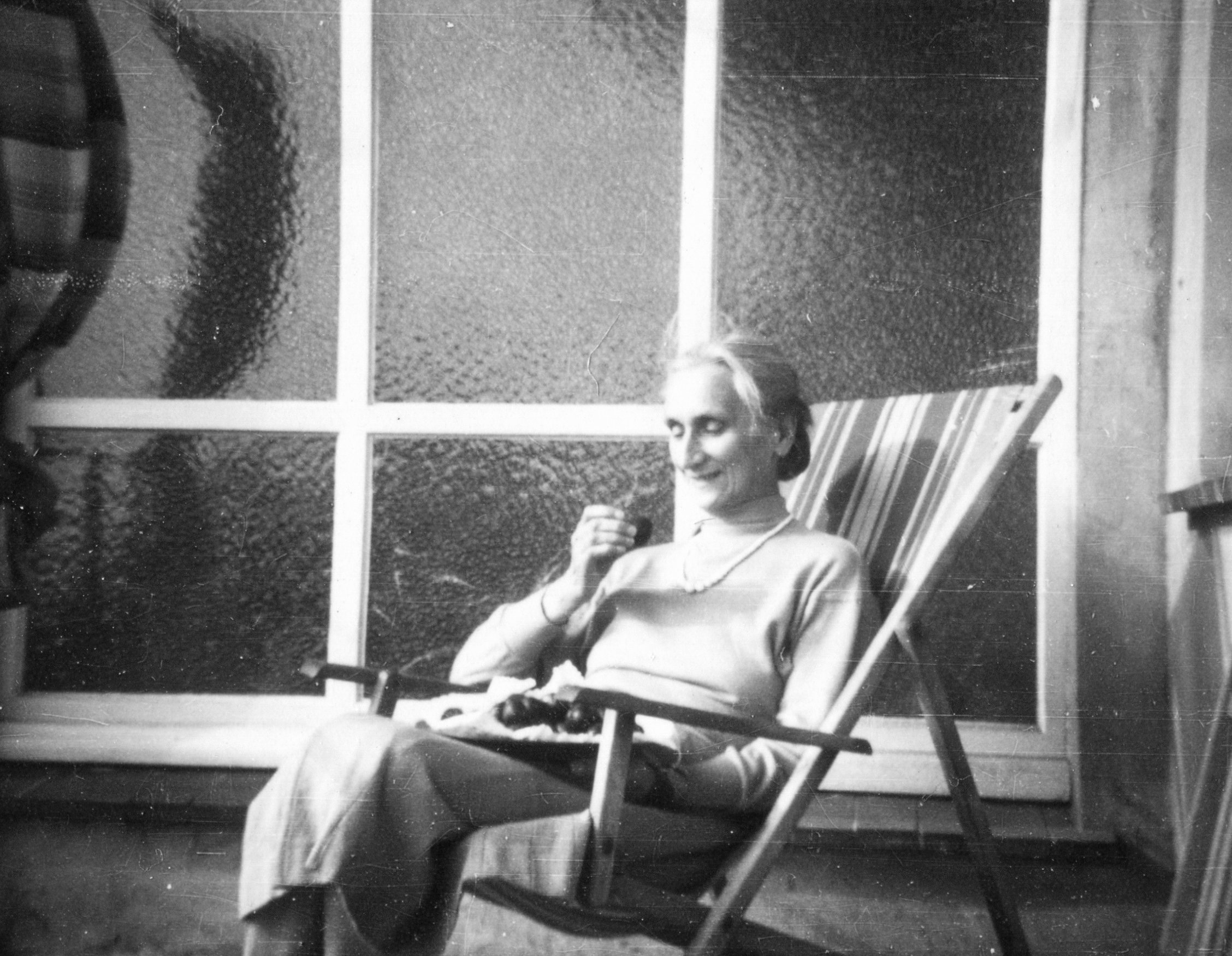
Aunt Marie (Tante Mieze)

In a previous post I described how Marie Kegler got to look after me for an entire year in 1954. That was the year when she resumed work as teacher at the Elementary School in Brünen. She had found modest accommodation at a miller’s farmhouse. You can read more about it in greater detail in an upcoming chapter of the P. and G. Klopp Story.

Marie Kegler on the Balcony of our Wesel Apartment

Marie Kegler on the Balcony of our Wesel Apartment

In 1955 she managed to land a teaching position in the nearby city of Wesel on the River Rhine. At a time, when there was a great housing shortage in the bombed-out city, she located a two-bedroom apartment. At last, Mother, who had become Tante Mieze’s housekeeper in exchange for room and board, was able to reconnect with me. Marie Kegler retired in 1957 and in 1962 the two sisters accepted my uncle’s invitation to share a rental house in Watzenborn-Steinberg. The new place turned out to be a veritable beehive of relatives and friends dropping in for a taste of the pleasant hospitality, which Uncle Günther, Chief of the Kegler Clan and avid Doppelkopf player, his wife Aunt Lucie, Aunt Marie, and my mother were tirelessly offering to their guests. I have the fondest memories of my frequent weekend visits during my army years. Aunt Mieze as during the time in Wesel continued to provide spiritual leadership by daily reading from a devotional booklet and saying grace and thanks to God at breakfast, lunch and dinner time.

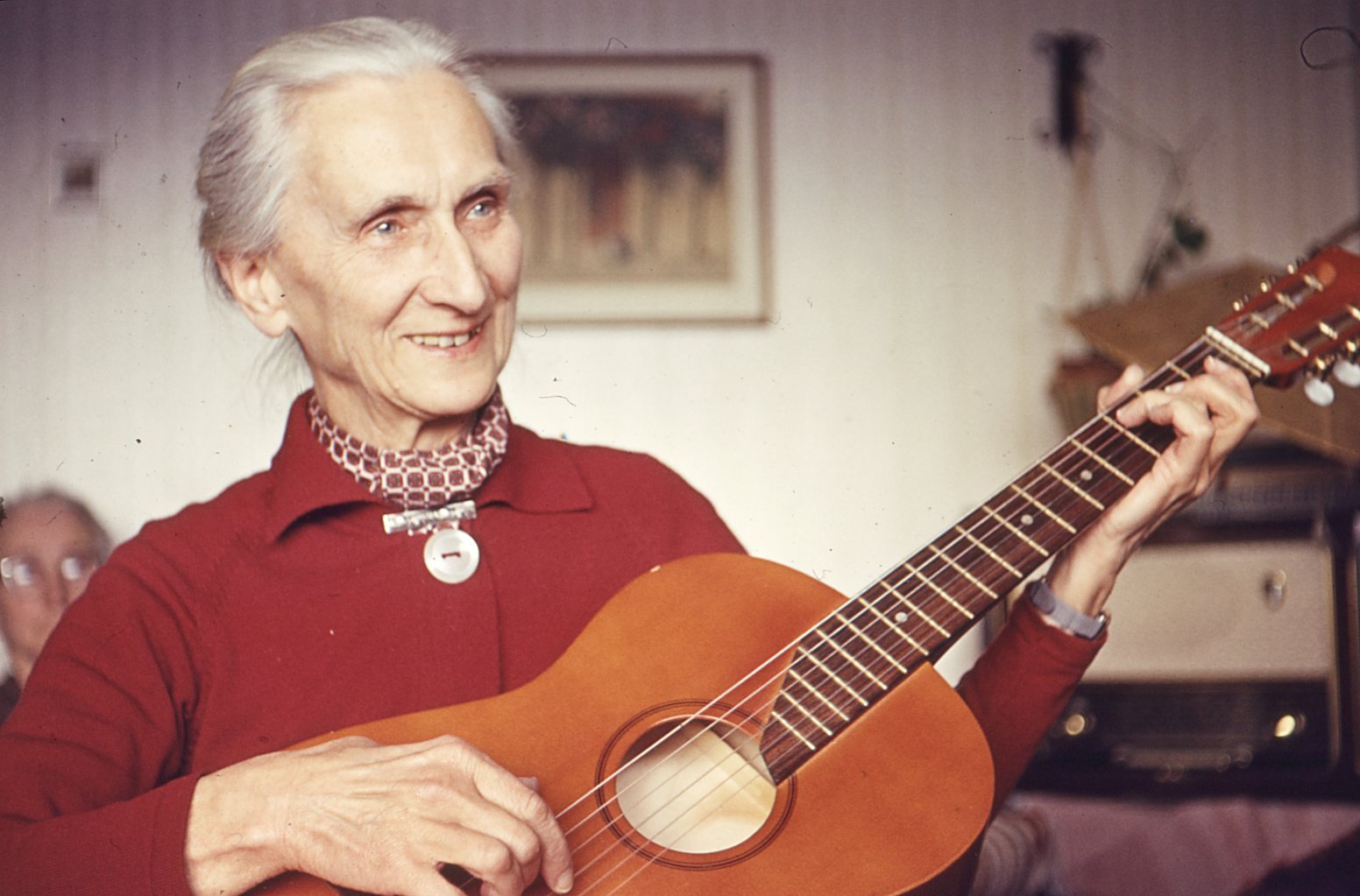
Pretending to Play the Guitar

Trying out my  Guitar

Alas, Aunt Lucie passed away after a lengthy illness. When Uncle Günther remarried and moved with his new wife Aunt Friedel to Kassel, a very happy period of family togetherness came to a sudden end. Tante Mieze could not afford to pay the rent. Even if she had had the means, the house in Watzenborn was too large for just two people. So they moved to Bad Ems in the beautiful Lahn Valley, where they lived in Haus Abendfrieden (House Evening Peace) for another six years. In 1980, Tante Mieze became very ill. The Senior Citizen Home, where they stayed, had no intensive care facilities. Thus, they had to move to Gladenbach close to the picturesque medieval city of Marburg. Shortly after Tante Mieze had been taken by ambulance to the Old Folks Home, she died at the age of 89.

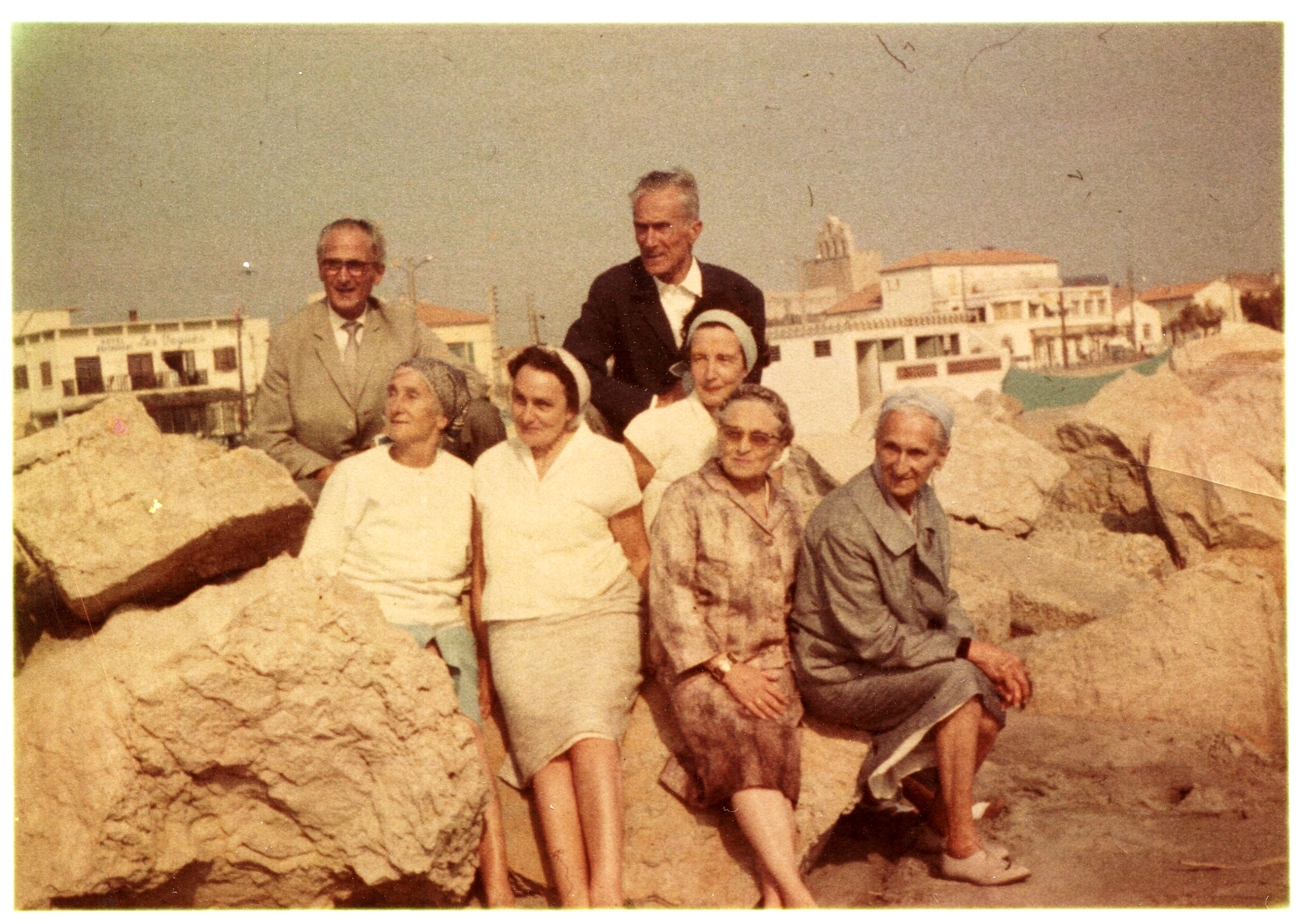
Südfrankreich 1965 Gerhard Margit Günther Lucie Erika Johanna Mieze

Günther, Gerhard, Mother, Johanna. Margot, Lucie, Marie Kegler in Southern France

Deeply steeped in the Christian faith, she led a life that in my view was exemplary. When she saw other people in need, she was always ready to help.Thankfully I will always remember her kindness to invite Mother to join her in Wesel. With her financial help I was able to finish my German High School diploma. without which my teaching career in Canada would have been unthinkable. After we emigrated to Canada, she kept mailing devotional booklets to her niece and nephews in the hope to provide some spiritual guidance. I must admit I did not take the time to read them. My brother Gerry too was not too interested either and irreverently called them flyswatters (Fliegenklappen).

In the world we live in we appraise a person’s success in life by standards, such as wealth, status, popularity, etc. God on the other hand looks at the motives and favors the purity of the heart. Aunt Marie’s actions always spoke louder than words. Love and compassion for her fellow human beings were the guiding principles throughout her entire life.

Memory Fragments by Anke Schubert

Lenzen

Lenzen near Anke’s Hometown Mellen – Photo Credit: Lea@Flickr

Reflections on Early Childhood Memories

Anke Schubert (Chart II a – IV)

Translated by Peter Klopp

Do you feel the same as I do? The older you get, the more in your memories you return to your childhood years. That’s at least how it is with me, especially now that the children have grown up and are taxing my physical and mental strength around the clock any more. Thoughts are stirring, nostalgic and regretful at times, because happy days, familiar places and dear people are gone forever, but I am also filled with joy, because they were once present way back in long-gone times.

Actually I thought that I would remember next to nothing at all about my earliest childhood. But sometimes and quite suddenly like out of the blue a memory shoots through my mind, a piece of the past, an event of my childhood, often only a single image without any connection. The more these ‘memory fragments’ go back in time, the smaller, the more scattered they appear to be. Yet, as the thoughts travel back more frequently, other thoughts rise and flash on my inner horizon. Often I no longer know how they are connected. In fact, it is next to impossible to maintain a reliable sequence of the fragments in my early childhood memories.

But that is actually not so important.I simply try to nail down a few of these fragments, before they vanish forever into the abyss of eternal darkness. There are some events, which I no longer know or cannot know at all, because they happened before I was born, for example, how my parents got to know each other. These things I will draw from old letters and later down the road from my old journals. Who knows there might be somebody somehow involved here, who might add something to whom I may pass on to read the rough copy of my scribbles. They may perhaps contribute a couple of their own memories to turn the individual fragments into a cohesive picture of my – or much better – of our childhood in Gulow and in Mellen.

The Klopp Grandparents IV

Heraldry of Wolmirstedt

Heraldry of Wolmirstedt

Emma’s Father, Friedrich Wilhelm Bauer

1818 – 1868

Adapted from Eberhard Klopp’s Family Chronicle

F. W. Bauer’s job description ‘factory inspector’ goes back to government regulations, which were based on laws pertaining to safety and protection at the workplace. Factory inspectors with the authority of the local police ensured the prevention of child labor, enforced the labor law regarding the maximum number of hours permitted for day and night shifts, and generally were there to protect the safety and health of the workers. In addition to these duties, they made sure that all workers were provided with proper ID cards and that logbooks be kept with their employment records.

In other words my great-grandfather F. W. Bauer in Jersleben now belonged to that special organization of state employees, who in the interest of factories took up control functions for the protection of the workers. The scope of his responsibilities as a commercial policeman may have included the supervision of mills, sugar and starch plants of the region around Jersleben and Wolmirstedt.

About three years after their move from Rottendorf F. W. Bauer died in Jersleben on April 20, 1868 at the age of only 50. His wife Sophie Bauer (née Wegener), a woman of exceptional beauty in the memory of her descendants, outlived her husband by thirty years and died in 1898 at the age of 76 in the Wolmirstedt house of her grandson Friedrich Klopp (1875-1946).

Photo Credit: Museum Wolmirstedt

Photo Credit: Museum Wolmirstedt

Marie Kegler, Stalwart of Christian Faith

Aunt Marie (Tante Mieze)

Chart II a – II

13

Erika Klopp, Peter, Aunt Marie – Wesel 1955

Of all the relatives in the Kegler family Aunt Marie was closest to me. But before I go into the details, I need to go back a few years to provide the background for a better understanding of the circumstances that made her for more than a year my loving caretaker.

After my father’s failure in a small-scale farming venture  in Southern Germany, he was financially ruined. My mother had to go out and find work as housekeeper first at Sigmaringen, a small, picturesque town on the River Danube and then later in 1955 at a Senior Citizen home at Rudersberg not far from the city of Stuttgart, Father’s health while being a POW had been severely affected by the intolerable working conditions  in a Russian coal mine.  He suffered from a number of psychological and physical ailments. His recurring back pains prevented him from taking up any meaningful employment. It is sad to say that after the miraculous  survival and coming together again of the entire Ernst Klopp family in the village of Rohrdorf, there were signs of disintegration written on future’s gloomy horizon. Karl had gone off to university at Göttingen, Adolf emigrated to Canada, Eka (Lavana) took up nurses’ training at Hamburg, Gerhard entered a toolmaker’s apprenticeship program in Switzerland, and I, barely 12 years old, had to nobody to look after me.

This is where Aunt Marie comes in. She had just taken up employment as elementary school teacher in Brünen, a short bus ride away from the city of Wesel. Its  claim to fame is that it is known as the most destroyed city of  Germany  (almost 98% turned into rubble by two consecutive Allied bombing raids near the end of World War II). For almost 5 years my aunt was not permitted under the rules and regulations of the occupation authorities to carry out her teaching profession. As former state employee of Nazi Germany, she like many thousands of other civil servants was suspected of harboring pro-Nazi sentiments and was consequently classified as unfit and dangerous for the teaching profession. This happened in postwar Germany under the so-called denazification program. The injustice was that all former teachers were given the same label and that there was no exception to the rule.

Finally the Allied authorities saw it fit to lift the ban. And Tante Mieze, close to  her retirement age, was able to resume her work and do what she liked best, to teach. How I am connected to her and what impact she had on my life will be the topic on one of my following posts.