Chart II a + b, II


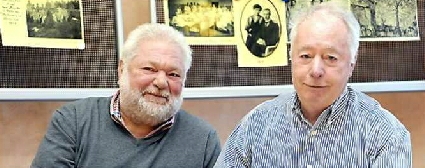
Christian (links) und Norbert Werner bewahren die Tagebücher ihres Großvaters Friedrich Werner, die er während des Ersten Weltkrieges geschrieben hat.
Er war ein großer Mann, respekteinflößend, aber dennoch liebevoll und sehr geschichtsinteressiert. So beschreibt Christian Werner seinen Großvater Friedrich Werner. Der 62-jährige gebürtige Gothaer und sein Bruder Norbert Werner halten die Erinnerungen an ihren Großvater wach, der akribisch Aufzeichnungen zur Familiengeschichte, der Geschichte der Stadt Gotha und der Region, aber auch über seine Teilnahme am Ersten Weltkrieg angefertigt hat. Die Aufzeichnungen über seine Kriegserlebnisse, die er mit zahlreichen Postkarten, Fotos und eigenen Zeichnungen illustriert hat, haben einen Umfang von 480 Seiten. Dazu kommt noch ein umfangreiches Kartenmaterial von den Kriegsschauplätzen. Continue reading
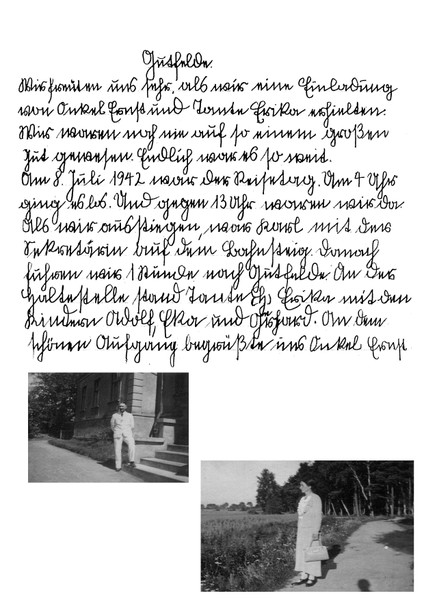
We were very happy, when we received an invitation from Uncle Ernst and Aunt Erika. We had never been on such a huge estate before. Finally we were on our way. The traveling day was July 8, 1942. At four o’clock we departed. And around 13 hours we arrived. When we got off the train, Karl with the secretary were standing on the platform. Then we traveled for an hour to Gutfelde, Aunt Erika and the children Adolf, Eka, and Gerry were waiting at the stop. At the beautiful staircase to the entrance Uncle Ernst greeted and welcomed us.
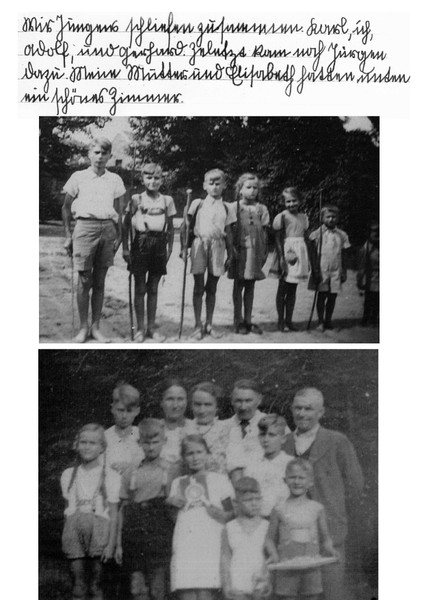
We boys slept together: Karl, I, Adolf and Gerhard. Finally Jürgen was added to our gang. My mother and Elisabeth had a nice room downstairs.
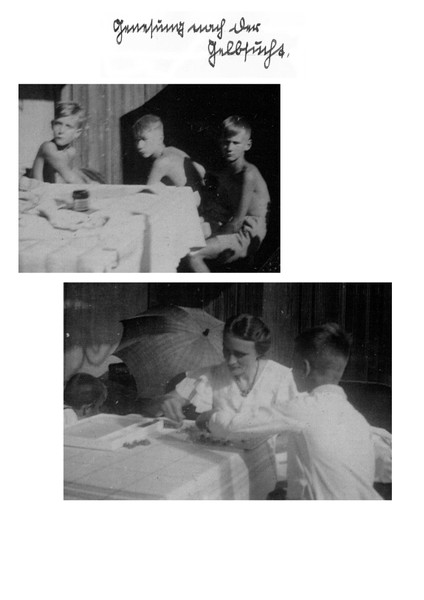 Genesung nach der Gelbsucht.
Recovery after jaundice.
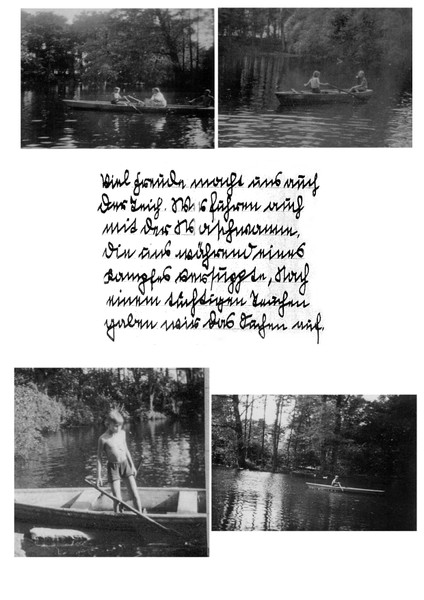
We had lots of fun on the pond. We also cruised on the washtub, which later during a ‘naval’ battle sank. After much thorough diving we gave up the search.
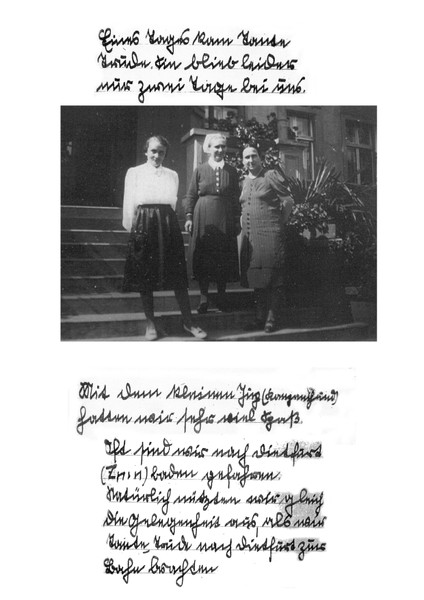
One day Aunt Trude (Gertrud) arrived. Unfortunately, she stayed only for two days. With little Jürgen we had lots of fun. Often we went swimming at the Dietfurt Lake. Naturally we made good use of the occasion, when we took Aunt Trude to the Dietfurt railway station.
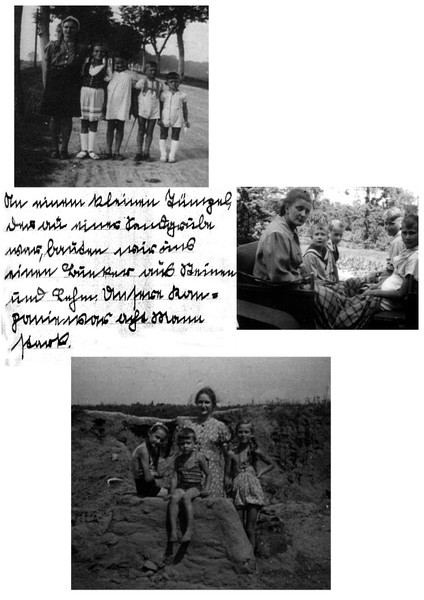
Near a tiny pond at a sandy ditch we built a bunker out of rocks and clay. Our company was eight man strong.
To be continued …
It was my goal to restrict the family research to our grandparents. Yet, to get a well-rounded picture of Peter Friedrich Klopp and to enhance our understanding of his colorful personality, I need to go back to his parents, Heinrich Friedrich and Charlotte Wilhelmine (neé Hoppe) Klopp. They got married in the St. Catherine Church on July 6, 1851 in Magdeburg, where they lived until Heinrich’s early death in 1861, most likely brought on by consumption, the most common cause of death in those days.
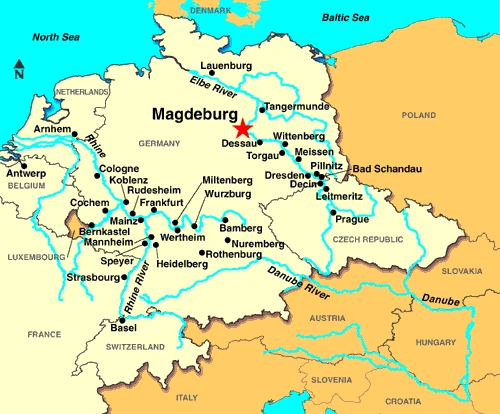
In the few years, which Heinrich had after the wedding, he was barely able to eek out a living for his growing family. For a short while he managed to run an independent business as hauler and carrier of goods, mail and people. With horse and buggy he provided a service to the people of Magdeburg very much akin to a modern taxi service. During this time three children were born, the first born being my grandfather Peter Friedrich Klopp. The location where he worked and lived with his family was the former shopping street ‘Breiter Weg’ (Broadway), known as the popular social center complete with pubs, inns, breweries, stores, various governmental establishments and offices, for which Heinrich could provide a service in the fledgling transportation business, enough at least to feed his family. Alas, he passed away too soon, and widowed Charlotte had to endure many hardships raising her children and working as seamstress and washerwoman. On October 27, 1862 she gave birth to the illegitimate son Franz Karl August, whose father remained unknown. In 1864 she married Ferdinand Pielert, who, having been born in 1836, was ten years younger and worked as deckhand on one of the boats plying the waters of the Elbe River. Due to the transitory nature of his work the two rarely saw each other. When he finally settled down with a permanent address in Magdeburg, Charlotte had already died on October 28, 1870.
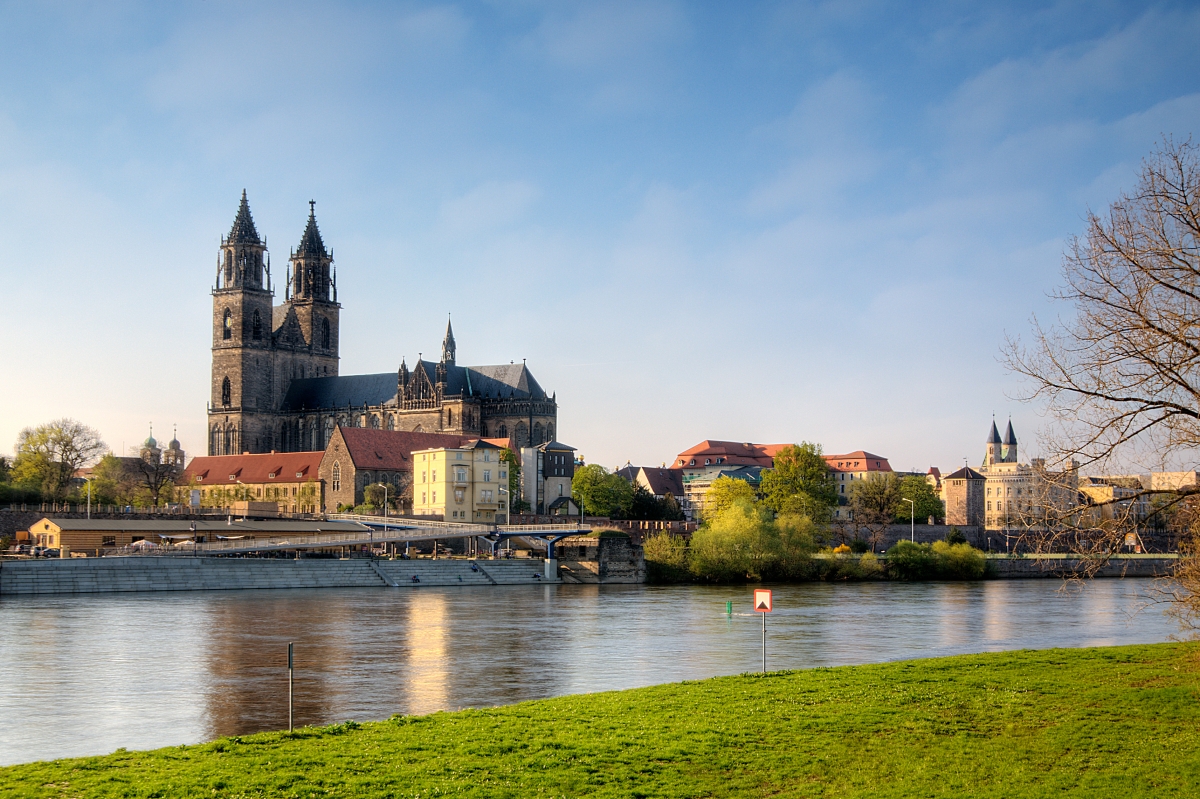
Magdeburg on the Elbe River – Photo Credit: Wikipedia.org
Little Peter Friedrich Klopp (born on January 23, 1852) was barely nine years old when his father died. As the eldest he experienced how his mother after the loss of the bread earner plunged into deeper misery and abject poverty. Since his stepfather Pielert was rarely at home with no permanent address in Magdeburg, the responsibility for her son’s education and trade lay entirely upon the shoulders of the single mother. The circumstances, under which Peter Friedrich Klopp found his way to the mills at Jersleben, could probably be guessed from his mother’s connections with relatives and acquaintances in her hometown Wolmirstedt, a short distance north of Magdeburg.
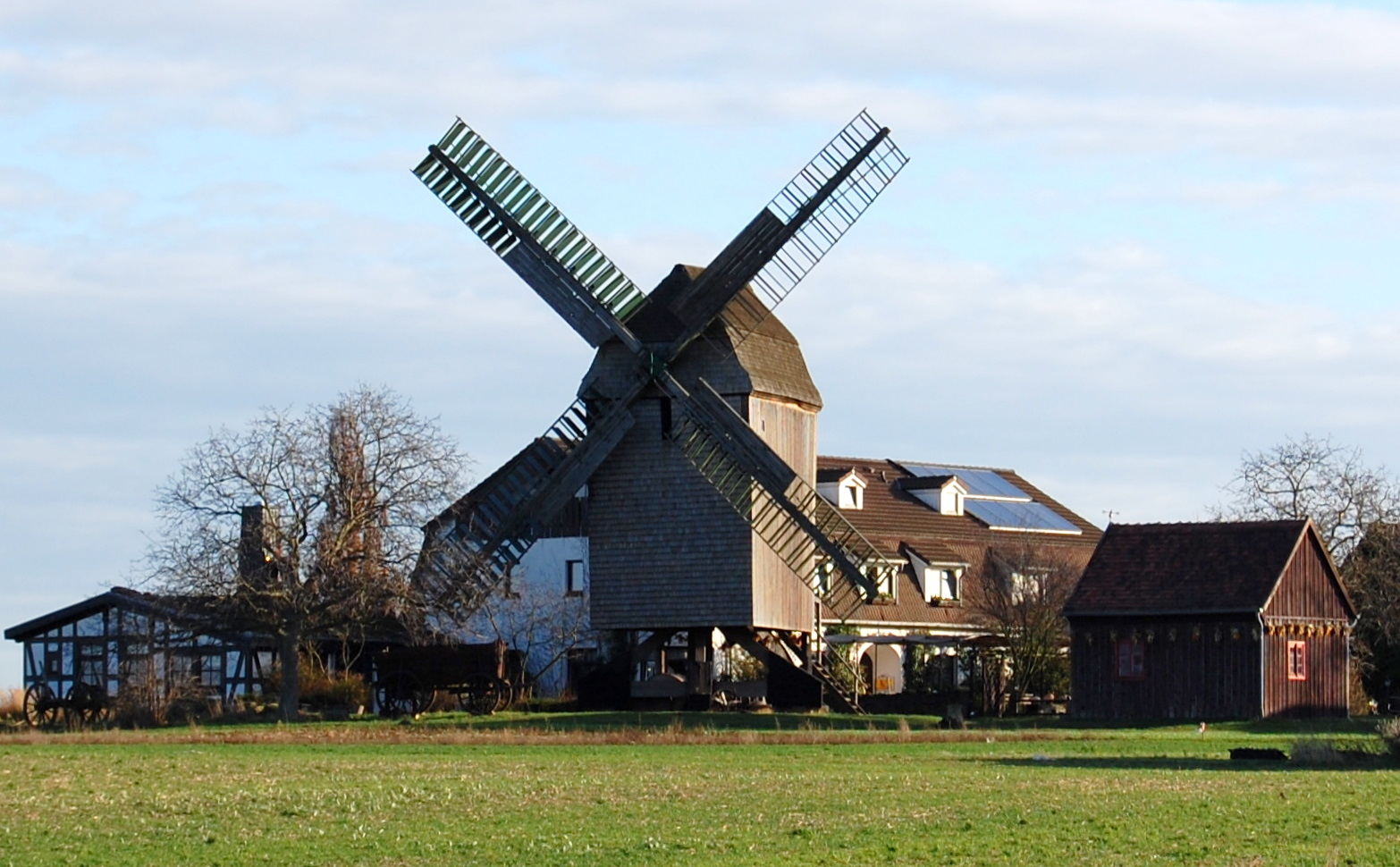
Auerbach Mill near Wolmirstedt – Photo credit: Wikipedia.org
“My advice is to never do tomorrow what you can do today. Procrastination is the thief of time.” Charles Dickens
There lives an evil spirit in us all. It puts fetters on your feet and shackles on your thoughts. It impedes good deeds and wastes precious time, not minutes, hours, or days, but years, decades, even en entire life span. Many have learned to master it, but I am not one of them. For me, it is a monster of titanic strength and insidious cunning. As long as I can remember, I have been struggling with this maleficent force that has been leering at my weaknesses and taunting me from within. Yes, I do admit, I often succumbed to it, but also successfully put up resistance against its crafty attempts to lure me into the swamp of idleness when vigorous action was required. That monster is commonly known as procrastination. It has been working hard to thwart my plan to write a family history. Continue reading
 The Peter and Gertrud Klopp Family