Short History of Fauquier BC – Part 1

The First Settlers and Pioneers

Adapted from an Untitled Document at the Arrow Lakes Historical Society

Photos from A. Devlin’s Personal Archive

Fauquier lies 60 km south of Nakusp. It was chosen as a settling site due to the plentiful supply of fresh water, fertile soil, and suitable climate. Also, because the land was easy to clear due to a forest fire that had swept the area twenty years previously.

Prior to 1895 only trappers and prospectors lived on the site of Fauquier. One prospector, named Dugelle, located a silver claim on Hart Creek. He developed his claim, and sold it to George and Harold Thompson, who were farmers.

In 1897, the first settlers arrived. The three Funk brothers walked over the Monashee and pre-empted three large blocks of land. They cleared their land, and made it into a fine farm. Mr. L. Funk built the first local roads.

Mr. Frederick George Fauquier, son of Bishop Fauquier of Algoma, Ontario, arrived in the area in 1910. He acquired four large blocks of land that extended 1 square mile. He hired native people from the Oatscott reservation near Burton to clear his land. Orchards and quick crops of small fruits were planted. His land brought him great wealth. Fauquier called his farm “the Needles Ranch”.
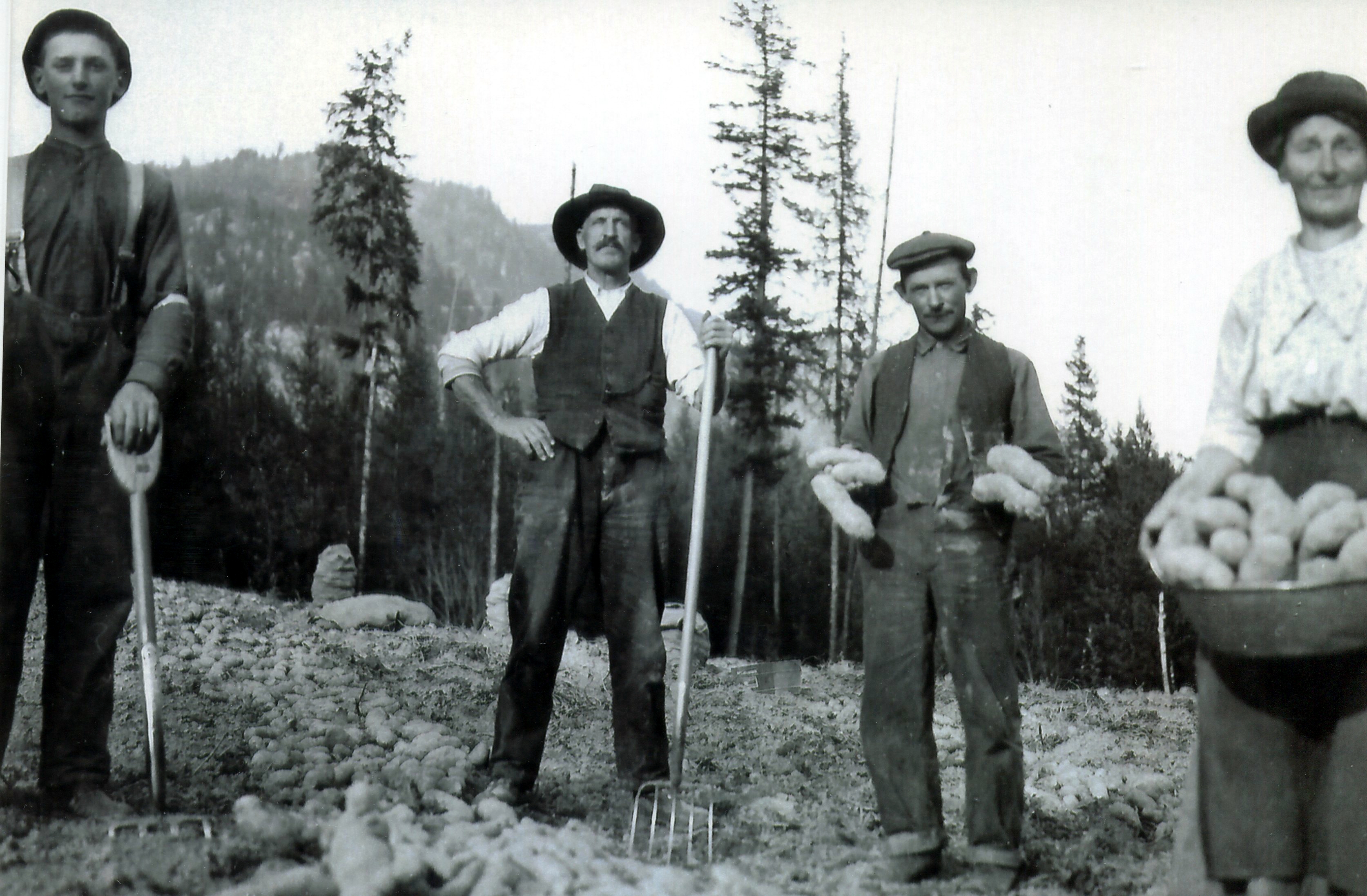
A395

Fertile Land Producing Abundant Crops

In 1910, Mr. Fauquier had the rest of his land surveyed into 63 small farm holdings. During this time, the Arrow Lakes was widely advertised as a fine fruit growing area; so his lots found ready sale. People soon moved in and planted orchards all over. Small fruits were already plentiful and provided the local people with much needed cash when they were picked.
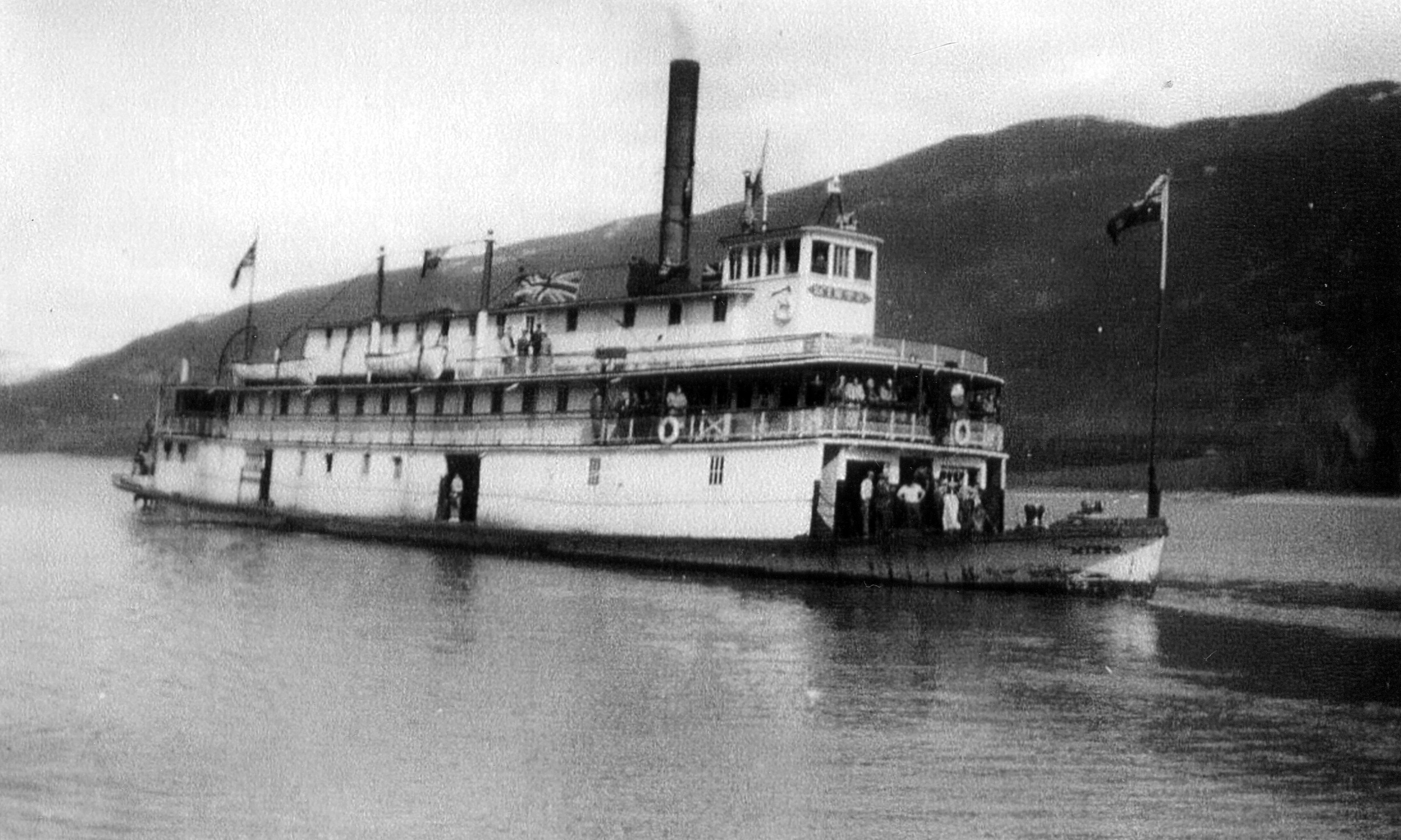
A363

Minto, One of the Sternwheelers Serving Fauquier

The first school was built in 1912. It was made of logs, and at first, it lacked doors and windows. The people held socials and dances in it to raise funds for the windows, doors and other supplies. When it was finished and ready for use, 25 children were enrolled.

In 1913, the town was finally given a name. It happened when Mr. George E. Smeddley built a fine general store and post office. A place had to have a name in order for goods to be sent there. In honor of Mr. Fauquier, his name was chosen since he was the founder of the “Needles Ranch.”

Fauquier’s Namesake was Guilty of Graft

Frederick George Fauquier – Part II

Report to the Arrow Lakes News by Greg  Nesteroff

From the Archives of the Arrow Lakes Historical Society

What Arrow Lakes community is named after a man jailed for embezzlement? The answer, likely to surprise many, is Fauquier. Frederick George Fauquier’s incarceration was a severe aberration in an otherwise distinguished career that included many government appointments. Indeed, he emerged from prison virtually unscathed: no one seemed to think any less of him for it.  Born in Woodstock, Ontario, to an Anglican bishop, Fauquier came to West Kootenay in 1893 and was appointed mining recorder, police officer, and notary public at Nakusp.

His diligent service was recognized in 1900 when he was transferred to Revelstoke and named stipendiary magistrate, justice of the peace, government agent, assistant lands and works commissioner, assessor and collector, vital events registrar, and gold commissioner. Something, however, went wrong. In August 1901, a government auditor was dispatched to Revelstoke to look into irregularities in the gold commissioner’s office. Fauquier was arrested at home and charged with misappropriating $100 in public funds while mining recorder at Nakusp. He was released on $2,500 bail.

“The greatest regret is expressed in town at this unfortunate affair as Mr. Fauquier is not only personally popular but has proved himself both at Nakusp and here a most acceptable and capable official,’’ the Revelstoke Herald wrote. The Kootenay Mail added Fauquier “had many warm friends” who would have repaid the money had they known it was missing before the auditor arrived.

“It is evident that Mr. Fauquier had been making an effort to straighten matters up as he has been offering for sale his ranch in the lower country,” the newspaper said.

When Fauquier next appeared before a judge, he was further charged with stealing $2,097 in land sale money between Oct. 15, 1900 and Aug. 21, 1901 at Revelstoke as well as $811 in taxes collected from the Imperial Bank on June 22, 1901. The earlier Nakusp charge was dropped. The auditor produced a list of land transactions for which no receipts existed, ranging from $3 to $213. The auditor also presented a statement showing Fauquier received $819 in taxes, while the books recorded only $8. Fauquier was committed for trial, and released again on $12,000 bail. Several more prominent businessmen stepped forward to post sureties.

A few weeks later, however, Fauquier pleaded guilty. The motivation for the crimes was never explained. His lawyer only said he took the money “to pay claims that other men would have ignored.”

And while there was no justification for the offense, “it had always been Mr. Fauquier’s intention to replace these monies,” the Kootenay Mail wrote.

“Mr. Fauquier had a wife dependent on him and also a family, and was without other means than this property. He was prepared, if he got his liberty at no distant date, to repay every cent he had taken.”

The judge sentenced him to two years in the provincial penitentiary. It’s not clear how much time he served (nor if he ever repaid the money he stole), but around 1904, he returned to his ranch, later known as Fauquier’s Landing, or just Fauquier, and began growing fruit. Overall, despite his transgressions, Fauquier’s kept his reputation intact. In 1911, he was spoken of as a potential candidate for provincial office, and upon his death in 1917 at age 65, his obituary was adulatory.

“Always of a bright and cheerful nature Mr. Fauquier was universally liked and highly respected by all who came in contact with him,” the Nelson Daily News wrote. “He was the most extensive fruit grower on the lake, his orchards being considered among the models of British Columbia.”

Fauquier was buried in Nakusp. Although his crimes were whispered of in his namesake community, they are not recorded in any history book.

 Gavel

How Fauquier Got Its Name

Frederick George Fauquier – Part I

From the Archives of the Arrow Lakes Historical Society

S.J. Clarke Publishing Company 1914

Few men are more prominently or more widely known in the district around the Arrow Lakes than Frederick George Fauquier, who is the founder of the fruit-growing industry in this section and therefore one of the greatest individual forces in the growth and development of the locality. Mr. Fauquier had been engaged in fruit-growing here since 1904 and has today one of the finest producing fruit ranches and one of the best equipped establishments for handling the product in this section. He was born in Woodstock, Ontario 13, 1852, and is a son of Frederick D. and Elisabeth Fauquier, the former minister of the Church of England, afterward becoming bishop of Algoma. The parents have passed away.

F. G. Fauquier acquired his early education in Hellmuth College in London, Ontario, afterward entering Trinity College in Toronto. He was graduated from the latter institution in 1873. Following the completion of his studies he engaged in farming for three years and then moved to Muskoka, Ontario, where he remained until 1885, during which time he became very well known in public life, serving as a member of the local legislature for Muskoka and Parry Sound, When he left Ontario he moved to the northwest and located in Maple Creek, Saskatchewan, in 1885, there engaging in stock-ranching until 1893. In that year he moved to the Kootenay district and after staying for a short time at Nelson he moved to Nakusp, where he was appointed mining recorder. From that city he moved to Revelstoke and there served as gold commissioner for some time. In 1885 he preempted land on the Lower Arrow Lake, then a virgin country, securing possession of the tract which is now the center of his extensive holdings in and around Fauquier, afterward named in his honor.This is located at a deep water landing, making shipping facilities excellent and adding to the advantages of this locality as a fruit-growing center. When Mr. Fauquier located here it was with the expectation of making it a town and the shipping point for the mines, which were then being developed back from the lake at this point. These mines failed to prove paying propositions and, having the land on his hands, Mr. Fauquier began experimenting in fruit growing. A few strawberry plants previously set out had done splendidly and the fruit trees, about a dozen, set out in 1898 proved so promising that he immediately set out one hundred more. These were the first trees on the Arrow Lakes for commercial fruit growing, In 1904 he moved  upon his ranch and began raising fruit for the market. He now has forty acres in bearing and ships many carloads every year. His ranch, well known as the Needles Fruit Ranch, is a model one in every respect, being provided with all the equipment necessary for the packing and preservation of fruit, and his success is amply attested by the great number of prizes which he has been awarded on his exhibits wherever shown in Canada, the States or in England. Mr. Fauquier gives practically his entire time and attention to the scientific development of the property, and his success is the natural reward of his ability and intelligent management.

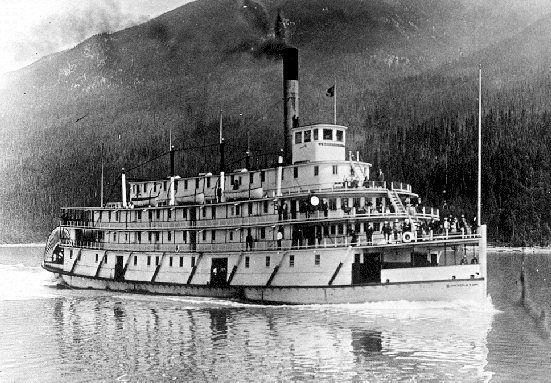
SS Bonnington Plying the Waters of Lower Arrow Lake

SS Bonnington Plying the Waters of the Lower Arrow Lake

Mr. Fauquier is a charter member of the Ancient Order of United Workmen and of the Order of Foresters and is connected also with Oxford Lodge, No. 76, A.F. & A.M. He belongs to the Church of England and gives his political allegiance to the conservative party, taking an intelligent and active interest in public affairs, He stands as a central figure in the promotion of fruit-growing interests here, a pioneer in the development of one of the greatest resources in the locality, and the community owes him a debt which can never be fully repaid.

Where in the world is Fauquier BC?


There are two reasons you may have trouble finding Fauquier on a map.

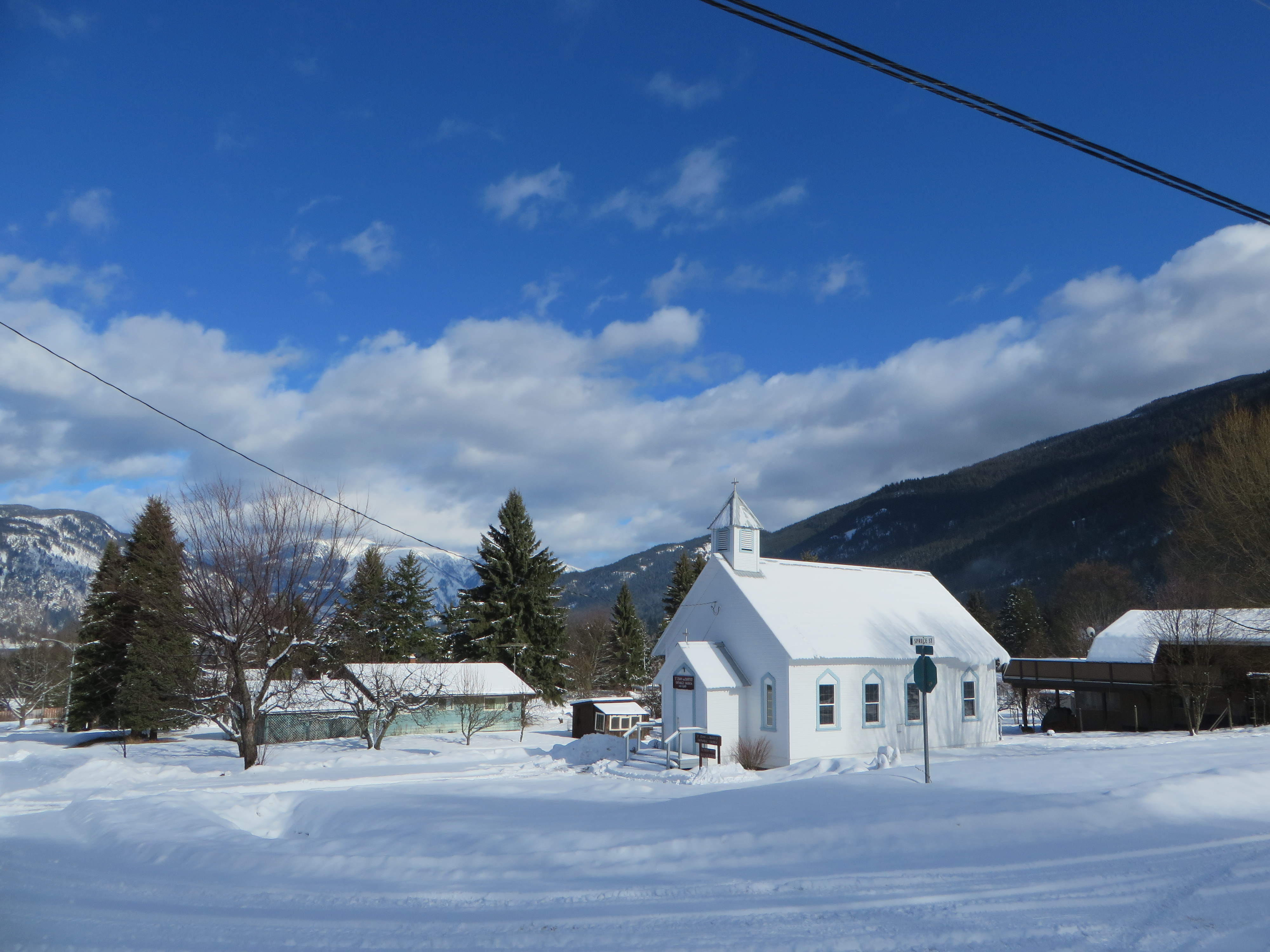
First of all, our community is very small. It has only a little over 200 people. Some would mock and say, ‘Dogs and cats included’. There is a small grocery store, where you can buy all the basic food stuff, drinks, alcoholic beverages included. There they also sell gasoline, diesel and propane for traveling and camping needs. Nearby is the large Fauquier Community Hall, where the people gather for small and large social events, such as dances, dinners, birthday and anniversary parties, weddings and memorial services and much more. In one of the upper rooms, the Fauquier Community Club is holding its monthly meeting. Their mandate is to look after the maintenance of the hall and many community events. Fauquier is too small to afford a municipal government. So our unincorporated village depends very much on the financial support from the Regional District. In the former Fauquier Elementary School, where I had been teaching for almost a quarter of a century, we find the Fauquier Communication Center, which houses the communication equipment for wireless Internet service and  the library. Here also take place Yoga classes, preschool activities, crib games and many other worthwhile events, too numerous to mention. There is a small Catholic church that looks after the spiritual needs in the village. Overlooking the breathtaking scenery of the Arrow Lake is the Fauquier and District Golf course, that is very popular among travelers and local people alike, because of its beauty and uncrowded conditions.

St. John The Baptist Church

St. John The Baptist Church

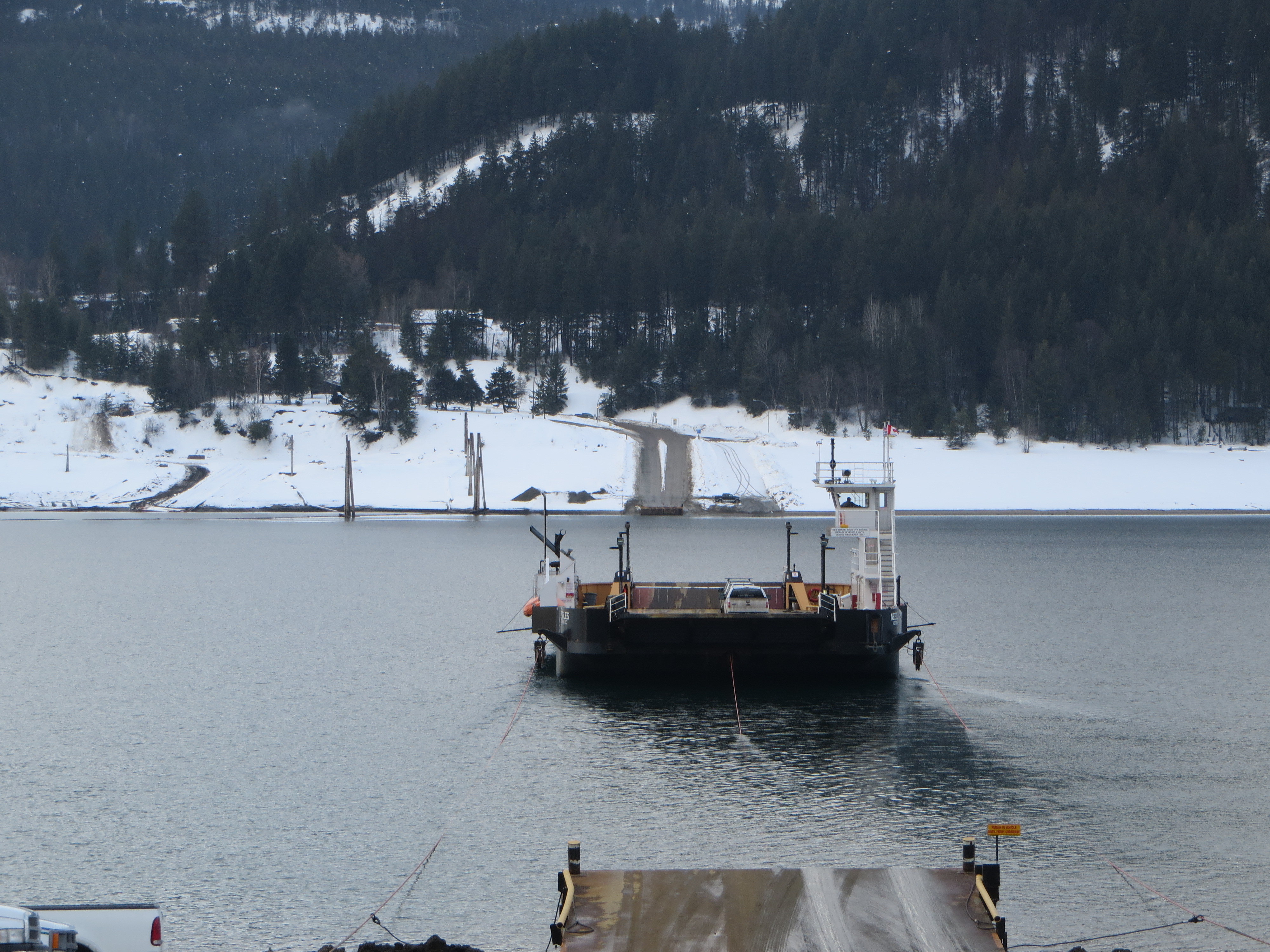
Secondly, we live in a relatively remote area. A two hours’ drive will take you to Vernon, the nearest city to the West on Highway 6. To get there, you first have to take the free ferry, which crosses the Lower Arrow Lake every 30 minutes. Then you travel on a winding mountain road up to the Monashee Pass at abt. 1200 m overcoming an altitude change of more than 700 m. If you are not in a hurry, you can stop and take a break at a picnic area close to a mountain lake. Going in the opposite direction you again follow Highway 6, until you reach Nakusp famous for its hot springs, a beautiful walkway along the Arrow Lake, and its many quaint stores and restaurants. Going north from this town you need to cross the lake at Galena Bay by enjoying a 30 minute ferry ride. Eventually you will arrive in Revelstoke on the Trans Canada Highway, which will take you passing through the spectacular Rocky Mountains some 600 km east all the way to Calgary, Alberta. If you should decide going west instead, you would eventually reach Vancouver, the world-famous city on the West Coast.

IMG_3590

Ferry just Leaving the Fauquier Side of the Arrow Lake

Research at the Arrow Lakes Historical Society

A Wealth of Information on Fauquier, BC

Today I paid my second visit to the Arrow Lakes Historical Society in Nakusp. I dropped in at their spacious room on the second floor of the library building to which it is conveniently connected.

The purpose was to find out what resources would be available for the menu item ‘Our Community’ on this blog. Two things impressed me very much: the friendly and helpful staff, Rosemarie Parent and Kyle Kusch, and an abundance of material for my research on Fauquier. There is very little information on the Internet. Wikipedia has less than half a dozen lines on our community with a brief reference to its namesake Frederick George Fauquier.

Kyle like the week before located all the relevant binders on the shelves of the of the archival section and laid them out on the table for me to look through. One binder that contained newspaper clippings on the present and former residents of Fauquier caught my immediate attention. Kyle opened the Klopp files for me. Apart from a reward ceremony, in which I had been honored for 20 years of service for the Arrow Lakes School District, I discovered the newspaper article on our son Richard winning a $1500 scholarship for outstanding academic achievement at Nakusp High School in 1987.

This discovery really fired me up to take a closer look. From that moment on I copied many pages using my digital camera. And while I was doing it, I caught glimpses of a legacy of so many remarkable people that had helped shape Fauquier during the past 100 years or so. Armed with all this information, I will endeavor on my next post to explain why our little community has such a strange French name that outsiders have trouble pronouncing it properly.

Arrow Lakes Historical Society Building

Arrow Lakes Historical Society Building