In the first week of January 1945, Papa took the train to Zagreb, the capital and largest city of Croatia, from where he began the long train ride to Vienna. The resistance forces under the leadership of Josef Tito were cutting off all the supply lines from the north, which included the rail connections to Germany. So when Papa arrived in the capital of Austria, he heard that he had been on the very last passenger train that succeeded in leaving Yugoslavia. If we consider all the horrific atrocities that Tito’s guerilla army revengefully committed against German ethnic groups living in Yugoslavia in general and against German officers and ordinary soldiers in particular, it is fair to say that the birth of the twins had saved Papa from certain death.
On May 6, 1945, General Kesselring told Colonel-General Löhr, the commander of the southeast army, that Germany would capitulate on May 9. Löhr then contacted Tito to work out the capitulation details. The Yugoslavs ignored anything agreed upon as soon as the Germans had surrendered and had laid their arms down. They forced the POWs to march in so-called Sühnemärsche (atonement marches). The Geneva Convention states that POWs can march no more than 20km (12.5 miles) a day. One of the POW groups walked 75 km in 20 hours. Whoever straggled or was begging for water or food was shot. Ten thousand perished during those marches.
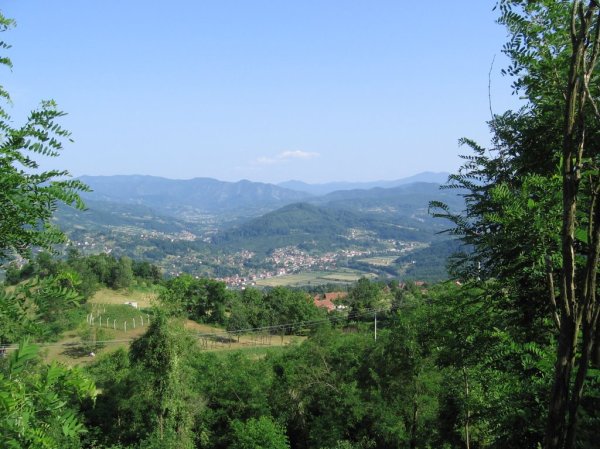
Picturesque Modern Day Croatia
Camp life was no better. Hardly any food was available. The prisoners had to gather herbs and cook them. The result was diarrhea and dysentery. “Death worked with a scythe” in Belgrade Camp # 1. The dysentery barracks housed eight hundred; it was called the death barracks. The death count was at least ten corpses each day. The camp masters worked the inmates to death in lumber camps and mines. They also forced them to clear minefields without the proper equipment. At times, at the end of a shift, hundreds of POWs were chased onto the cleared field to ensure that no mines remained. Those who died were buried in unmarked graves. The camp authorities did not attempt to record their names.
For some posts, I do not have to go very far. The photos that I am putting on display today have been captured just a few metres from our backdoor. Word spread quickly among our feathery friends that there are delicious and nutritious sunflower seeds in bird feeders and also on the ground left behind by messy eaters. Some birds like the chickadees make their presence known with the cheerful chirping all year round. Others like the grosbeaks are just travelling through on their long flight to more northern regions. Some are mere summer guests. Prominent among them are the aggressive but adorable hummingbirds. If you stand under their feeder they swoop down on you like dive bombers only to veer off at a right angle at the last second. Enjoy.
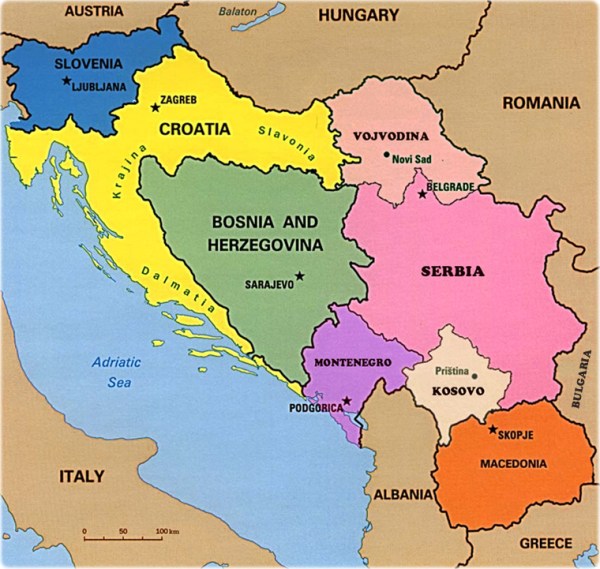
In early 1941 Germany, together with her Italian, Hungarian, and Rumanian allies, had invaded and occupied the multiethnic Balkan country of Yugoslavia. During that time, in punitive response to his refusal to join the SS, Papa received a disciplinary transfer to the Bosnian town of Zavidovici as commander of a battalion. Fierce fighting raged between the Axis armies and the various partisan groups. Under the leadership of Josef Tito, some 70,000 resistance fighters were conducting guerilla warfare against the invaders. By contrast, the provinces of Croatia and Bosnia-Herzegovina were experiencing a period of relative peace and calm until January 1945.
Yugoslavia before the country split up
Here at the banks of the River Bosna, Papa was in charge of general security around Zavidovici. The town nestled between dense forests reaching high into the mountains was blessed with large tracts of fertile land along the riverbanks. The area provided plenty of food for the local people and the security forces. The soldiers lived in nearby barracks.
Zavidovici and the River Bosna
Local dairies delivered milk, butter, and various fine Balkan cheeses. Farmers sold eggs, meat, corn and wheat, while tobacco plantations ensured a good supply of high-quality cigarettes. Most of these products had become very scarce back home in Germany. So ironically, in the land where the war was being fought mercilessly against Tito’s communist partisans, Papa enjoyed the good life in a relatively safe region loyal to Germany.
While these were happy times for the Panknin family, storm clouds gathered over Germany’s political landscape when the Nazis took control of the government in 1933. Two incidents had an immediate disturbing impact on Papa and his family. During election times, at rallies, and on numerous other occasions, the stormtroopers of the SA, whose methods of violent intimidation played a key role in Hitler’s rise to power, carried out physical attacks on political opponents, Jews, communists and trade unionists.
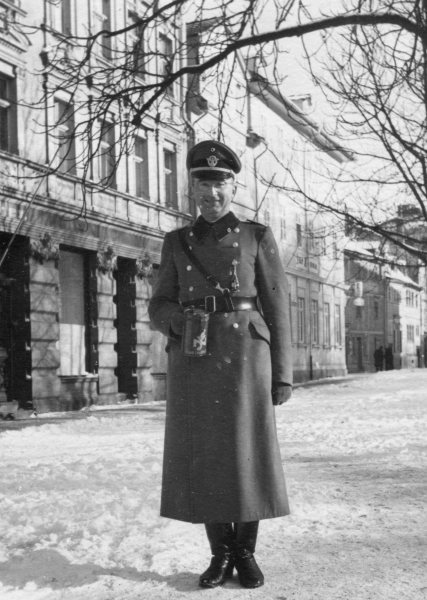
Police Officer Walter Panknin 1927
On the night when Hitler seized power, roughneck elements of this vast paramilitary organization overpowered practically every local government in the country. In the small town Kamen near Dortmund, where Papa had been in charge of maintaining law and order for almost ten years, his police staff captured and arrested an unruly mob of some twenty SA men. On the next day, the newspapers, already under the control of the Nazi regime, requested the immediate dismissal of First Lieutenant Walter Panknin. Although he managed to keep his position, his refusal to go with the flow of the political current caused him much grief in the months and years to come. He based all his actions on following the law and his conscience. Rather than blindly following the ideology of a political party, he took a common-sense approach within the jurisdiction entrusted to him by his country.
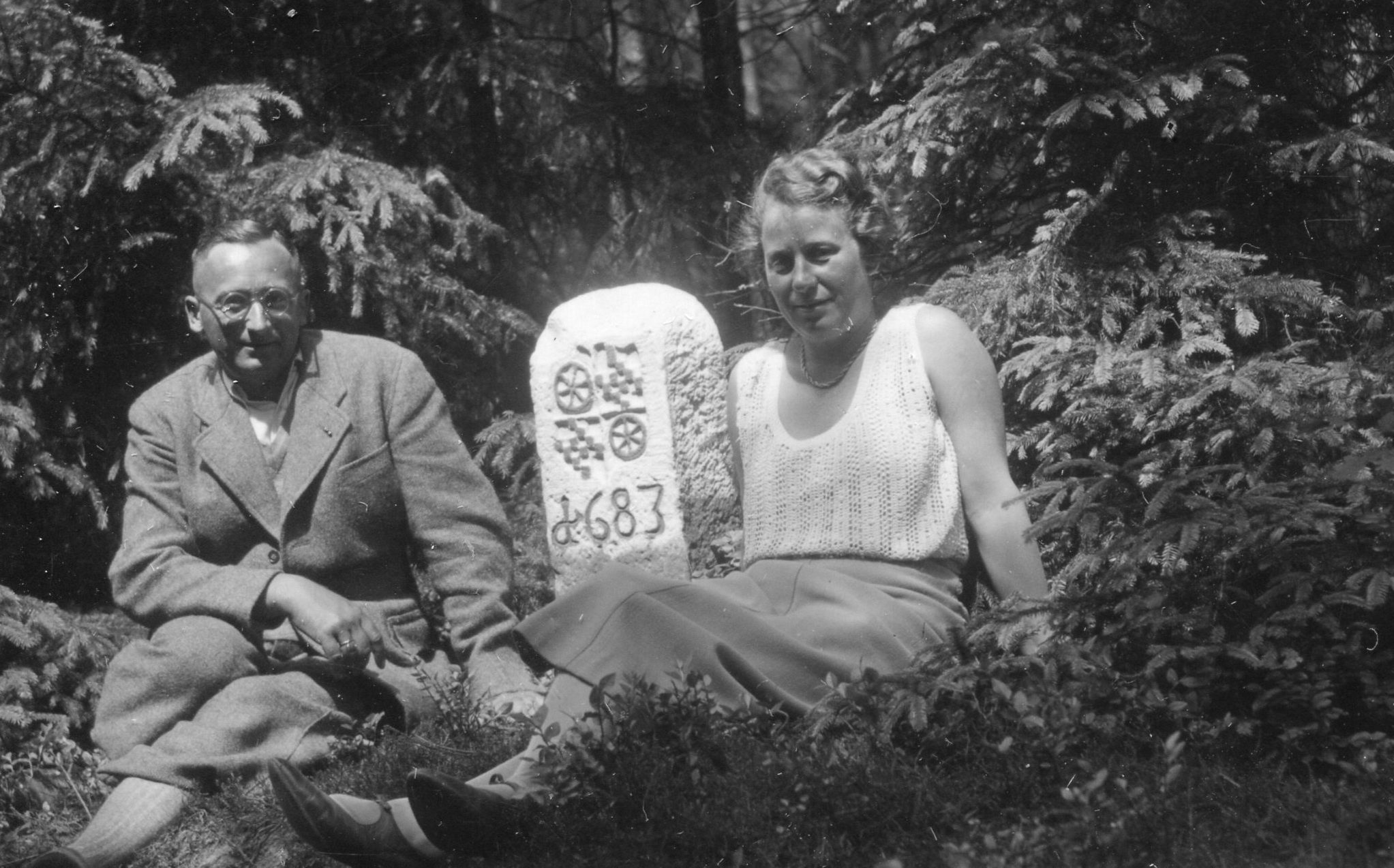
Hike in the Spessart Forests 1934
Even more severely affecting his professional advancement in the police force and ultimately safety for him and the family was the second incident. In their drive for complete control over the lives of German citizens, the Nazi authorities stripped the court system of its independent status, which had so far guaranteed a fair trial to all citizens no matter what crime they had committed. Equally sinister was the forced subordination of the arm of the law, the police force, into the new political system. All officers of the security forces were automatically and without exception registered as members of the NSDAP (National Socialist Party). They also asked Papa to leave the church, which he steadfastly refused despite threats of punitive actions and reprisals. Worse, all leaders of the various police departments were under pressure to join the infamous SS organization. When Papa declined, he knew that he would become suspect as someone not following the party line. He was fully aware that his refusal to join would appear to make him an opponent to the Nazi regime further down the road. Walter Panknin had to put up with constant harassment and ridicule by the party-liners. But fortunately, he had some influential colleagues who knew him as a friend and capable officer. They must have put in a word on his behalf. Papa spoke very little about his troubles in the privacy of their apartment. With great determination, he managed to maintain the feeling of peace and security, at least within the walls of their home.
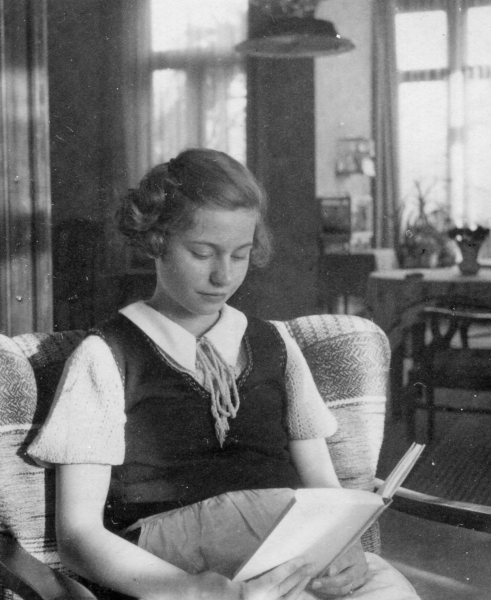
Daughter Elsbeth Panknin in their Home in Gotha 1936
Happy Times for the Walter and Elisabeth Panknin Family
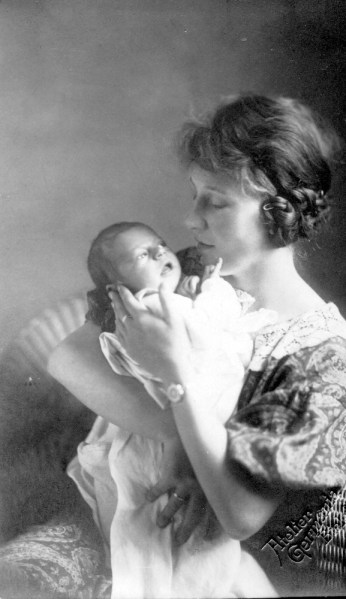
Biene’s Mother with Baby Elsbeth
When baby Elsbeth was born in 1924, her immediate family and relatives did not reject her, as one would have expected under the circumstances. They showed genuine compassion and forgiveness by helping her get on with her life. With their support, she found employment in a photo studio. Four years later, she met Papa and, after a brief courtship, married him. Thus, she put an end to the period of turmoil, grief and the grim prospect of raising alone her fatherless daughter. Not that Papa was the only one smitten with the attractive photo model. She must have had quite a few open and secret admirers who felt drawn to her irresistible charm and infectious cheerfulness. Among her memorabilia, I stumbled over a booklet with poems by Annette von Droste-Hülshoff. The poet’s given name, in all likelihood, became the second part of Biene’s double name, Gertrud-Anette. Significantly, Mutti had kept this book for such a long time. The well-worn pages and binding indicate that she frequently enjoyed reading the most romantic poems with its distinct Westphalian flavour. The handwritten dedication by a certain young man with a heartfelt message of regret about coming too late into her life made me recall my near failure to form a lifelong bond with Biene by ‘courting too slow.’
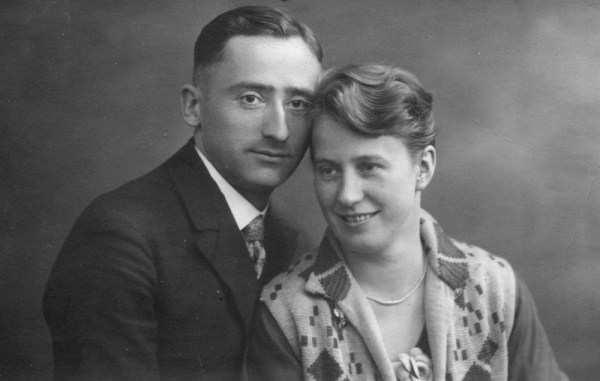
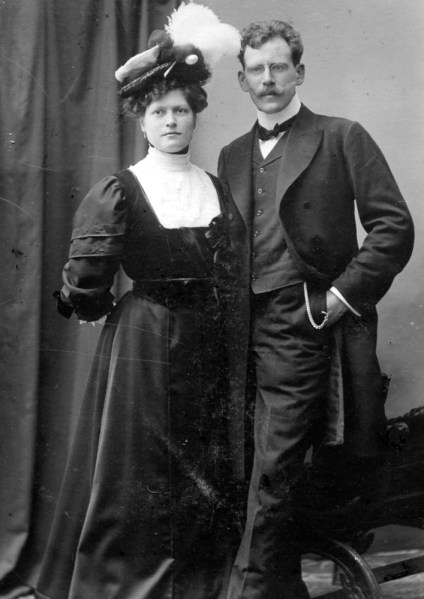
Walter and Elisabeth at the time of their Wedding
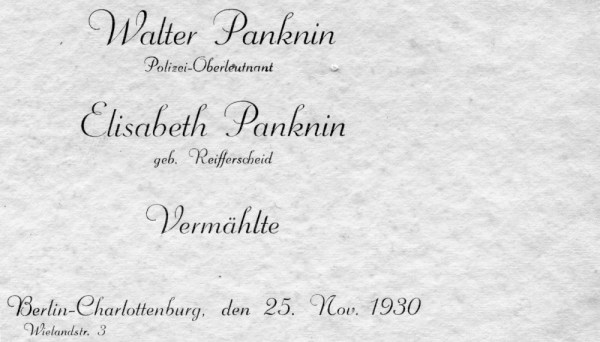
The Wedding Announcement
Before Papa and Mutti got married, Papa insisted that their personal life would follow the expectations that would satisfy the honour code of a German police officer. For one thing, to prevent tarnishing his image among his colleagues, he decided to adopt the ten-year-old Elsbeth as his daughter. Her name was subsequently officially changed in the family register to Elisabeth Panknin. For another, Mutti had to abandon her occupation as a photo model and give up her studio employment. State employees and civil servants were expected to support their wives and family fully. It was considered a disgrace to have one’s wife working. For Mutti, it was a new beginning. And if it had not been for the disastrous and chaotic times at the outbreak of WW2, one could have easily ended the story with the fairytale-like concluding sentence, ‘And they lived happily ever after.’
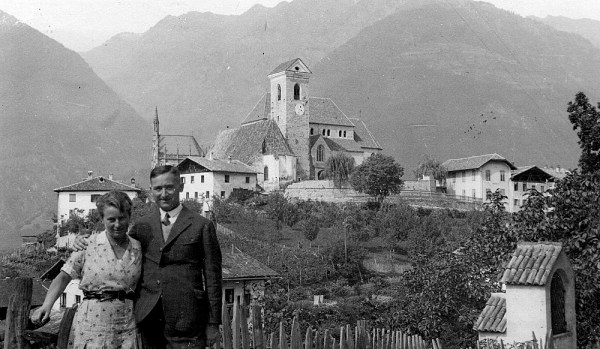
Honeymoon in Meran, Italy – 1930
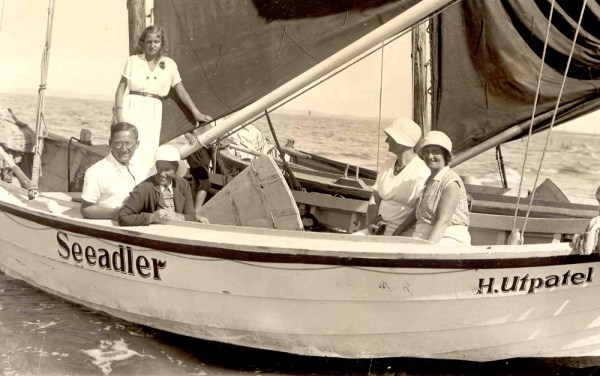
After their wedding, Papa and Mutti spent their honeymoon in Meran, Northern Italy. But this trip was just the start of a decade-long travelling experience. They went camping and boating together on all the major German rivers. Rain or shine, they paddled down the beautiful Danube into Austria. They explored the romantic stretches of the castle dotted banks of the Rhine. They also travelled down through the low-lying plains on the Ems and Elbe towards the North Sea. Swimming and sunbathing at the white beaches of the Baltic Sea became memorable events. Whenever First Lieutenant Panknin made use of his vacation time or transformed some of the statutory holidays into long weekends, the young family was on the go. The decade before World War2 turned out to be the best time of their lives. Photos in the carefully documented albums, showing the newlyweds on their travels, attest to the happy days they were able to spend together. Papa was very fond of little Elsbeth and treated her as if she was his very own daughter. They included her in most of the travelling adventures on land and water, the little outings, the relaxing weekend picnics or the frequent hikes in the nearby forests.
My Wife’s Grandparents Ernst and Elisabeth Reifferscheid 1900
Disaster Strikes the Reifferscheid Family
On the 18th of April, 1901, Mutti was born to Ernst and Elisabeth Reifferscheid (née Krämer) in Burg an der Wupper, a small village south of Wuppertal and Velbert. She was named after her mother, Elisabeth. Her brother Ernst was born in 1903. Then in quick succession followed her brothers Hans and Carl. Three additional children, Margaretha, Anton and Katharina died in their early infancy. When Biene’s grandmother passed away in 1912, most likely from childbed fever at the young age of thirty-six, Mutti was just eleven years old. Her father, who died four years later, could not look after them and placed his orphaned children into the care of relatives and religious institutions. Mutti, motherless and fatherless, spent the next eight years or so in a catholic convent school. She received her education supported by the church and the large, charitable Reifferscheid family, whose guiding principle as devoted members of the Catholic Church can be found in James: True religion is to care for orphans and widows in their afflictions.
The Reifferscheid Family 1908 – Biene’s Mother on the Left
As if the tragedy of losing her mother so early in her life and growing up without the nurturing parental love had not caused enough misery, Fate soon dealt her another blow. After she had left the nuns’ protective care that had given her a good foundation in education and matters of Christian faith, she fell in love with a young man. He could – so she was hoping – make up for the lost love she had been missing during her most precious childhood years. Alas, he was of the wrong faith and marrying him in the eyes of her religiously devout relatives would have been unthinkable. While such objections are hard to understand in today’s world, we need to be familiar with the background and origin of such strict opinions. Today, the Catholic Church still claims to be the only true church, but a hundred years ago also enforced strict adherence to the dogma that a parishioner must not marry an unbeliever or a member of a different faith. As Biene and I have experienced ourselves in our struggle of coming together, true love is a powerful force that is willing to break all the rules and conventions. So there was nothing that could stop the two. But Mutti, being an orphan for such a long time, did not want to be cut off from all the family members. They had supported her financially and emotionally until now. The only way to get their approval and remain part of the family was to embark on a most dangerous plan. Mutti and her fiancé decided to force the issue by having a baby. In today’s society, teenage unwed mothers can proudly show off their babies and don’t even hesitate to present them to their classmates and friends in school.
Biene’s Mother Elisabeth and Brother Carl 1919
We wonder and ask as to why having a baby would have made such a difference in the opinion of Mutti’s relatives. Without getting judgmental, one must understand the prevailing culture of almost a century ago. Children were and still are considered a gift of God. As soon as they were born, they were baptized into the Christian faith. Godparents were not just there to offer presents and take care of the children when a tragic event would bereave them of their parents. But they were also responsible for providing spiritual nurturing. When the children had grown up, they would get married in a church with the bride’s parents’ consent. At the end of their life’s journey through sorrows and joys, hardships and blessings, successes and failures, wealth and poverty, they departed from the earth with the conviction that there was hope for life beyond the grave. The church in the past proclaimed these views as biblical truths and imposed and enforced them, often regretfully in a dictatorial manner. However, we must not ignore that the believers of those days and still today wholeheartedly sought and embraced the comfort of belonging to the Christian church. A child born out of wedlock would have been a disgrace. Only within the context of the pious Catholic Reifferscheid family’s religious beliefs can we begin to understand Mutti’s and her fiancé’s actions. Aunts and uncles would have readily agreed to the lesser evil of having their precious niece marry a non-member of the church. So, the two so profoundly in love, must have felt. It would most likely have worked if Fate had not decided on a different course and took Mutti’s fiancé away through a fatal accident while she was already pregnant.






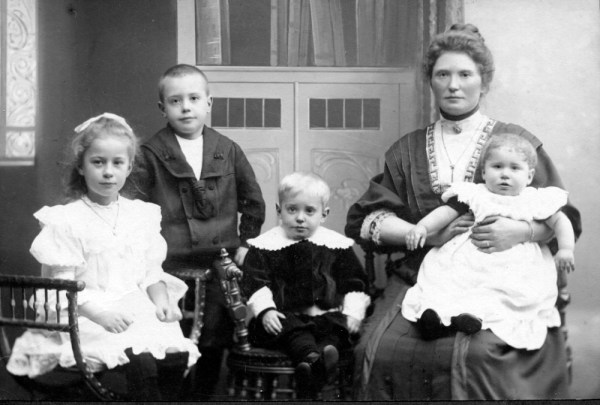
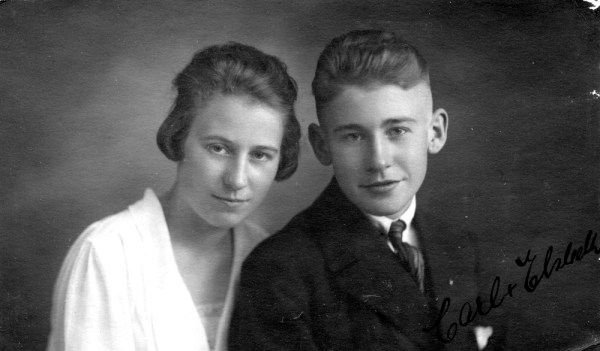
 The Peter and Gertrud Klopp Family