Ernst Klopp (1900 – 1964) – Part 6

New Responsibilities and a Growing Family

Ernst Klopp followed Pascheke and took over the administration as director of the entire complex. His assistant director was Karl Paetsch. Ernst Klopp was heading the functions of the mission establishments self-responsibly until the fall of 1940. Since the ‘entire realm for the people’s food production was exclusively a national-socialist domain’, those in control over all aspects of administration converted the church-run training home into an establishment of the state, which was now under the jurisdiction of the provincial land association. During this decisive conversion to a state-controlled training centre, Ernst Klopp, as evidenced by keeping his director position, must have made a favourable impression.

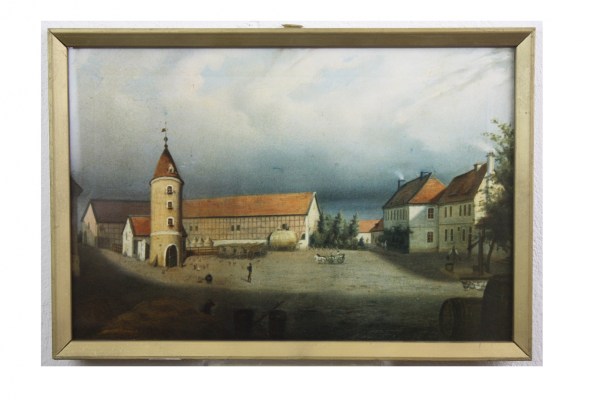
In-between three more children were born: Adolf (1932 – 1989), Erika (1934), and Gerhard (1936). In these years, Ernst managed to have a painting of his parents Emma and P. F. W. Klopp done from an old no longer existing photo. The painting accompanied the family until 1945. In Belgrade also hung the framed message of brother Otto’s death, who was killed in Russia in 1915. On January 27, 1936, the entire family celebrated on Ernst-Flos-Estate the 80th birthday of mother and grandmother Emma Klopp (née Bauer). A photo of this eventful day still exists and is in the personal archives of Eberhard Klopp, the author of the Klopp Chronicles.

Three years before the family moved from Belgrade further east to West Prussia (re-occupied by the Nazi regime) Ernst Klopp had a house  built on the Ernst-Flos-Estate property, in which the family lived until the fall of 1940. Finally, the family had their own home separate from the institutional buildings.
Ernst Klopp (1900 – 1964) – Part 5

Gleichschaltung of the Belgard Institutions

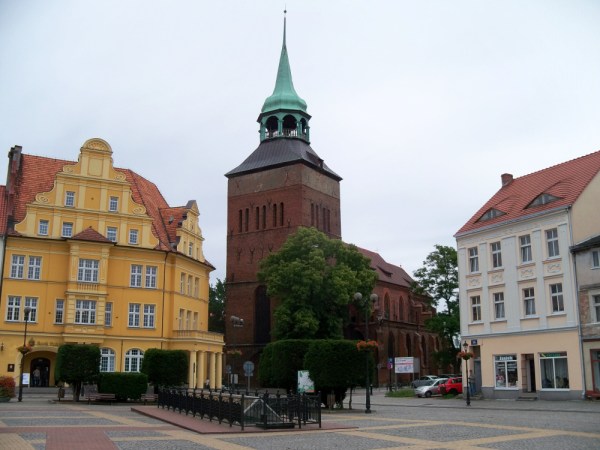
The Belgard institutions of the Inner Mission were divided into three work areas: The Dr.-Klar-Foundation, the Johannis-House and the Ernst-Flos-Estate. In 1930, Ernst Klopp took over the agricultural part of the Ernst-Flos-Estate. For its operation, Ernst made use of orphans and young delinquents, agricultural apprentices of the town of Belgard, and asocial people, who were being drafted during harvest times. With this workforce at his disposal, Ernst was able to secure the food requirements for all the people under his care. In the home of the Dr.-Klar-Foundation these were mostly senior citizens and special needs persons and in the Johannis-House alcoholics and the incurable sick. For the delinquent youth and orphans there was mandatory school attendance.

Belgard, Pomerania (now Polish Białogard) – Wikipedia

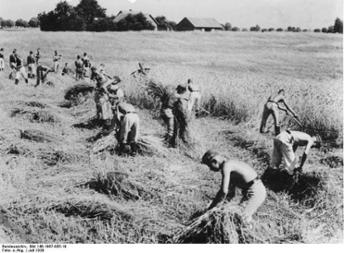
Erika Klopp (my mother) in the role of a domestic administrator was in charge of the personell from the ‘Alcoholic Rescue Home’, the Johannis-House, who had beed assigned to the Ernst-Flos-Estate. After 1933, female members of the NS Work Service (Reichsarbeitsdienst) and the operators of a pig farm for the NS Food Supply Service (Ernährungshilfswerk) were added to the growing enterprise.

Reichsarbeitsdienst at Harvest Time – Bundesarchiv

Direktor Pascheke had been serving the Dr.-Klar-Foundation as House Father (Hausvater) since 1925. In 1933 or 1934, he was dismissed on account of alleged financial irregularities, an often used method by the Nazis to replace ‘undesirable’ individuals with more party-friendly people in their take-over of independently run institutions.

Ernst Klopp (1900 – 1964) – Part 4

Wedding Bells and Return to Agriculture

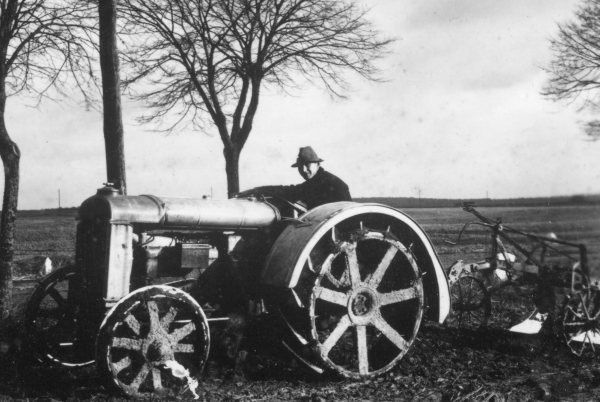
With assistance from his Freikorps organization, Ernst Klopp continued his training in agriculture. In 1923 we find him working in the Magdeburg area. From 1927 onward, he worked as administrator at Neuhof (former Pomerania) in the Schlochau County, at the estate of his sister Anna and brother-in-law Ludwig von Waldenfels.

Ernst Klopp circa 1927

In the fall of 1927 after the sale of the Neuhof property, Ernst found temporary employment at an estate in Quastenberg near Burg Stargard. [photo wiki]. In 1928, he moved into the family hotel of his sister Jula and and her husband Friedrich Steuer in Diensdorf at Lake Scharmützel.

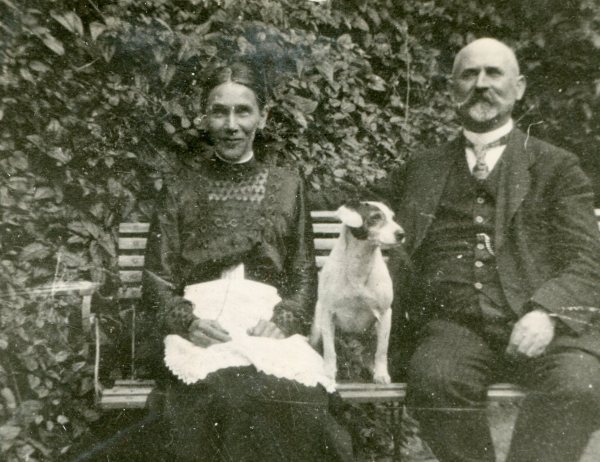
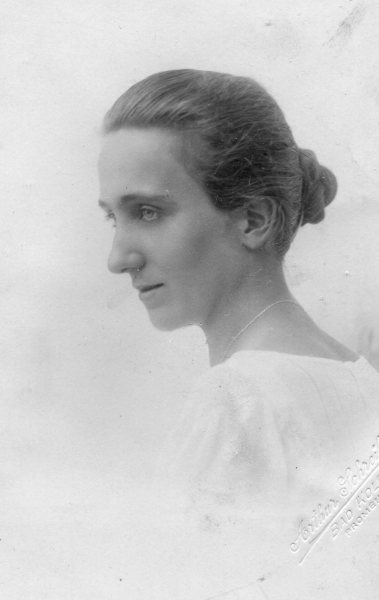
In the same year on June 5, he married Erika Klara Else Kegler, who lived in Stolpmünde, Pomerania, 20 Willan Street. Erika Kegler (my mother) was born on March 24, 1899 in Grünewald, Neustettin County (Pomerania). She was the daughter of the Protestant pastor Carl Kegler (September 22, 1860 – June 15, 1919) and his wife Elisabeth Kegler ( August 13, 1868 ß September 14, 1948). Her forefathers had lived in villages around Obornik north of Posen (now Polish Poznan).

Carl and Elisabeth Kegler, Grünewald, Neustettin County (Pomerania)

On March 6, 1929, Ernst and Erika,s eldest son wad born in Stolpmünde (now Polish Ustka) at the Baltic Sea. In the same year through his wife’s family connections, Ernst was able to link up with the Protestant Inner Mission and its institutions in Belgard, Pomerania (now Polish Bialogard). The complex together with a large-sized farming area stretched in northwestern direction on either side of the Köslin Stree on the road to Kolberg.

My mother Erika Klopp circa 1927

Ernst Klopp (1900 – 1964) – Part 3

Chaos and Violence in Berlin

My Father’s Involvement in the Freikorps

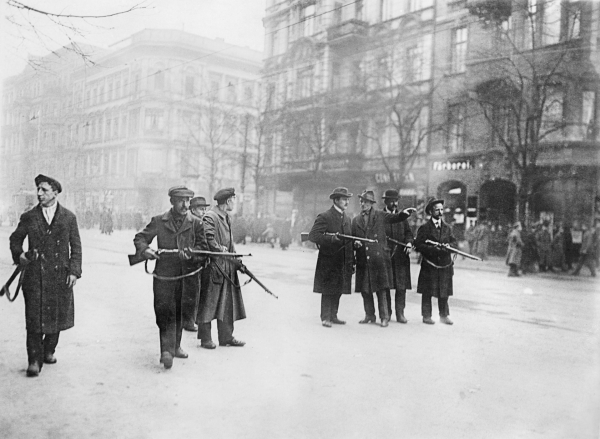
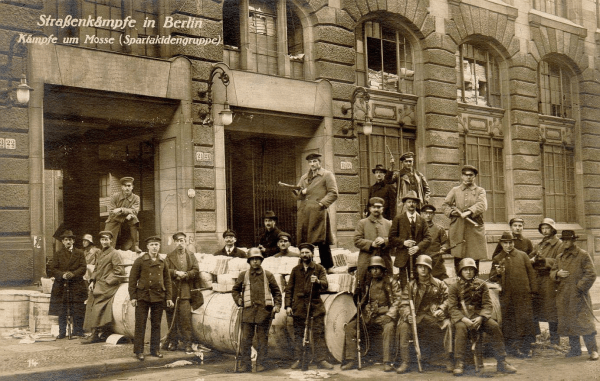
It is not certain in which year Ernst Klopp arrived in Berlin. He probably participated in the counter-revolutionary activities of the Freikorps deployments in the capital city. In January of 1919 street battles took place, as well as general strikes of all sorts, and at the beginning of March, a major attack of the Freikorps against the Berlin proletariate shook the nation. The Reich defence minister Notke issued the martial-law order, “Each person caught with weapons is to be shot immediately!” Ernst’s sister was indeed exercising a good portion of wisdom to tell her younger brother to throw away his gun.

Communist Spartacists Taking Control in Berlin – Wikipedia Public Domain

BBC BiteSize provides the following historical background information: During 5 – 12 January 1919, 50,000 members of the post-World War One Communist Party, known as the Spartacists, rebelled in Berlin, led by Rosa Luxemburg and Karl Liebknecht. The government was saved when it armed bands of ex-soldiers, known as the Freikorps, who defeated the Spartacist rebels. In the aftermath, communist workers’ councils seized power all over Germany, and a Communist People’s Government took power in Bavaria. By May 1919 the Freikorps had crushed all of these uprisings.

Street Fights in Berlin Wikipedia Public Domain

At the mass demonstration against the treaty of Versailles in 1920, army and FreiKorps soldiers caused a bloodbath. In March of the same year, the FreiKorps supported the Kapp-Coup. One year later, the last armed Freikorps attacks took place during the communist general strikes in Central Germany. The extent of Ernst Klopp’s involvement in all of these events remains shrouded in darkness.

It is likely that a few years later Ernst Klopp received assistance from his old Freikorps connections, which through work communities (Arbeitsgemeinschaften) and work camps (Arbeitslager) provided shelter and employment to the old comrades up to the years 1924/1925 and in some cases even later on Pomeranian and Mecklenburg estates.

Ernst Klopp (1900 – 1964) – Part 2

My Father’s Childhood and Adolescent Years

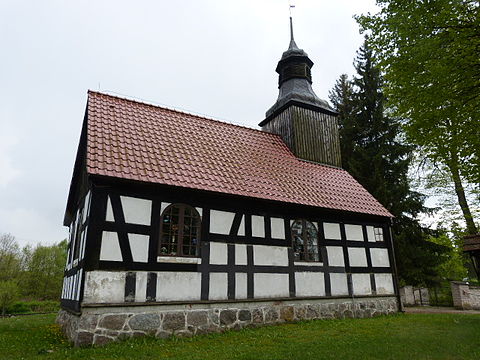
Church in Elsenau (Olszanowo)

Widow Emma moved to West Prussia to take up farming in 1903/04. Thus, Ernst spent his childhood and adolescent years with his remaining five siblings in Elsenau (Briesen County). There and in the neighbouring town of Schönsee, he attended the elementary school from 1906 to 1914. An agricultural apprenticeship followed during World War I. At the beginning of 1918, Ernst was called up for military service to receive basic military service at Kassel. Fortunately, he was not sent to the front. The war to end all war was over.

Ernst, now 19 years old, joined the Free Korps (Freikorps), which was fighting in the Baltic region against Bolshevik intruders. Probably the news reports in January 1919 about violence perpetrated by Polish insurgents prompted him to make himself available to this paramilitary organization. His main objective, however, was to acquire a settler’s parcel of land in Latvia and to make a living by farming it. This plan never materialized since Germany had lost political control over the entire development in the eastern section of the Reich.

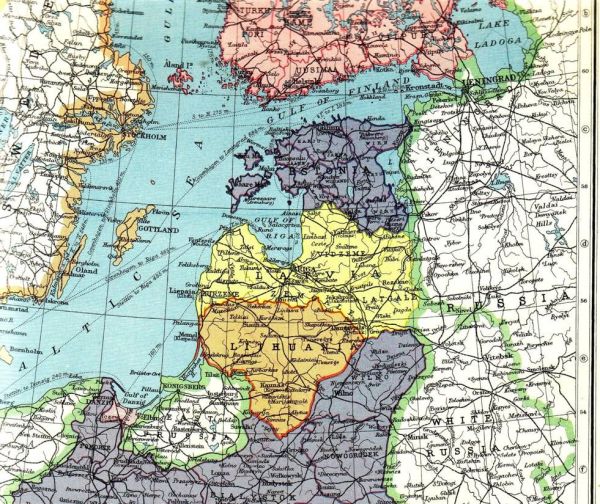
Baltic States (1920 – 1939)

To understand Ernst’s involvement within the historical context of the Germany’s military operations in the Baltic states, I provide a quote from Wikipedia: “The Freikorps had saved Latvia from capture by the Red Army in the spring of 1919. However, the Freikorps’ goal of creating a German dominated state in Courland and Livonia failed. Many of the German Freikorps members who served in the Baltic left Latvia with the belief that they had been “stabbed in the back” by the Weimar Republic, under President Friedrich Ebert. Hundreds of Baltic Freikorps soldiers had planned to settle in Latvia, and for those who had fought there, the land made a lasting impression, and many of them longed for the day that they could return there. The Baltic Freikorps characterized their struggle against the Reds as the “Drang nach Osten”, (the drive towards the East), and some Freikorps units returned to Germany and planned for the day of their return.”

In the early 1920s Ernst Klopp returned to the Berlin area. The only certain information we have from this time is that his sister Jula Steuer strongly advised him to throw away his gun. Carrying a weapon in those turbulent times would have put him into immediate danger.

Ernst Klopp (1900 – 1964) – Part 1

My Father’s Childhood Years

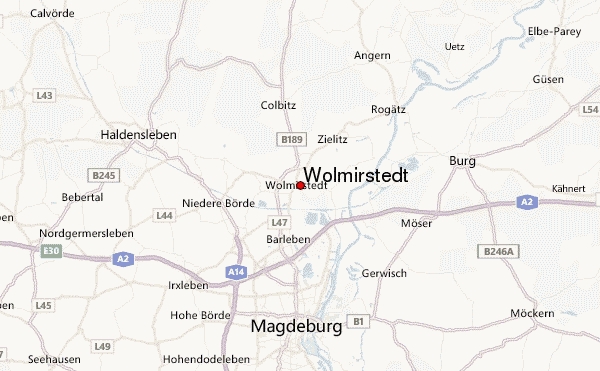
Ernst was the sixteenth and last child of Friedrich and Emma Klopp. Within the short timespan from March till June 1900, four fateful events occurred in Wolmirstedt. In March the eldest son Friedrich (1875 – 1946) married Marie-Luise (née Weihe, 1880 – 1924), who was six months pregnant. At the end of May, Peter Friedrich Klopp (1852 – 1900) passed away. He was good-looking, handsome, slightly obese, and a giant of a man. He was generally of a cheerful disposition and was not disinclined to an occasional drink in the genial company of like-minded buddies every once in a while. 

In the middle of May not long before my father’s birth, he was riding home from a hunting party. It appears that he often left direction and speed to the discretion of his well-trained horse. Maybe on this chilly night, he had had just one drink too many. Falling asleep on horseback is never a good idea, especially when you are in that cozy state of inebriation. Inevitably, he slipped off the saddle, and the horse trod home without him. Early next morning travellers found him lying half-conscious on the roadside. He was sober by now but suffered from a severe case of hypothermia. Soon after, he acquired a kidney infection, from which he was unable to recover. He died on the 26th of June 1900 at the age of 48. 

Photo Credit: Museum Wolmirstedt

At the beginning of June, the first child of the eldest son was born. Her name was Frieda (1900 – 1979). Finally, on June 28, 1900, the fatherless Ernst was born. Thus, Frieda and her uncle Ernst were of the same age. The two have never met again in later years.

These intersecting both joyful and painful events happened during those four months in the crowded conditions of the house in Wolmirstedt. The expulsion of the Klopp son Ferdinand (1879 – 1952) and his departure to the United States also occurred during the first half of 1900. All this wore down the family’s physical and psychological ability to cope. The acquisition of the mill Wehrmühle near Zieglitz by the forty-year-old widow appears almost like a desperate attempt to gain her freedom and independence from all these troubles at home.