Eine ergreifende Liebesgeschichte – 4. Teil

Bitten um Verständnis

Am gleichen Tag erreichte die Familie ein Brief, in dem Elisabeth u.a. schrieb:

„Eberhard und ich haben an dem Tag, an dem Ihr diesen Brief bekommt, also am 4.6., geheiratet. Wir tun es deshalb so schnell, weil wir uns auf ein Kindchen freuen dürfen. Ich weiß nicht, ob es eine Entschuldigung dafür gibt, was ich Euch angetan habe! Das ist mein ganzer Kummer, denn ich habe Euch so lieb, dass es mir unsagbar weh tut, Euch so leiden zu sehen. Wenn Ihr könnt, verzeiht mir. Denkt bitte daran, dass auch Ihr, als Ihr liebtet, fest bei Eurem Entschluss bliebt. Über das, was geschehen ist, möchte ich nichts anderes sagen, als dass es aus Liebe geschehen ist. Ich habe lange darüber nachgedacht, konnte es aber nicht bereuen. Ihr wisst, dass ich es nicht ertragen würde, wenn Ihr nichts mehr von mir wissen wolltet. Ich brauche zu nötig Eure Liebe und Euer Verstehen.“
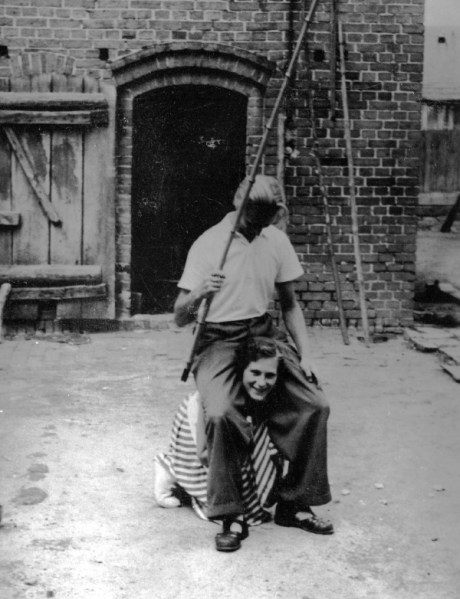
Glückliche Tage der Verliebten 1955 - Titel: Don Quichote auf Rosinante

Glückliche Tage der Verliebten 1955 – Titel: Don Quichote auf Rosinante

Auch Eberhard wendet sich an seine Schwiegermutter, unter anderem mit folgenden Zeilen: „Seit wir Gewissheit hatten, dass Elisabeth ein Kindchen haben würde, stand unser Entschluss fest, so schnell wie möglich zu heiraten. Sie werden das alles vielleicht nicht verstehen, Sie werden sehr böse auf mich sein und wer weiß was von mir denken, weil Sie mich zu wenig kennen. Ich verstehe das wohl. Die Zeit wird es beweisen, dass wir zueinander passen und glücklich sein werden.
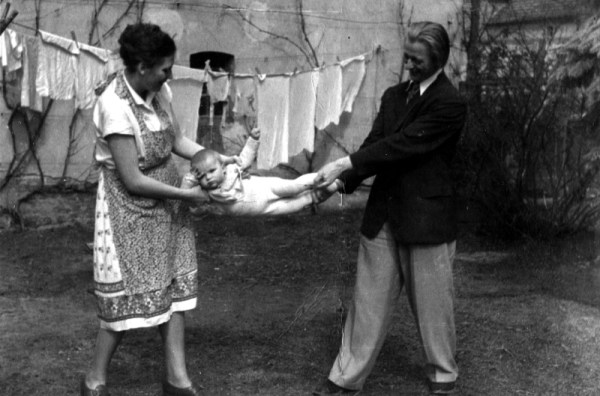
Die kleine Edda mit Eltern 1955

Die kleine Edda mit Eltern 1955

In unseren Freudenbecher werden ein paar bittere Tropfen fallen. Wir wissen, dass Sie mit unserer Ehe nicht einverstanden sind. Aus diesem einfachen Grunde erhalten Sie so spät Nachricht von der bevorstehenden Trauung. Ich wünsche und hoffe nur das Eine: dass die Liebe des Mutterherzens in Ruhe und Besonnenheit die rechte Entscheidung fällt. Ich könnte mir nicht vorstellen, dass ein Mutterherz sich so verhärten kann. Wenn Sie mich auch nicht anerkennen, verschließen Sie Elisabeth nicht die Tür. Sollten Sie sich von uns abwenden, werden wir warten. Unsere Tür wird Ihnen stets geöffnet sein. Einmal werden Sie wieder gut sein, diesen Tag sehnen wir voller Hoffnung herbei.“

Diese eindringlichen Worte und Bitten um Vergebung haben scheinbar ihre Wirkung nicht ganz verfehlt. Schon bald findet im Haus von Elisabeths Mutter und ihrem Stiefvater Emanuel in Mellen ein kleines Fest statt, auf dem das jungvermählte Paar gefeiert und beglückwünscht wird. Gäste waren hier Eberhards Eltern, Minna und Albert, sowie Vera und Paul Rohra, ein befreundetes Ehepaar aus Mellen. Die Wogen haben sich zunächst geglättet und die Zukunft der beiden – und damit auch die unsrige – nimmt ihren Lauf.
 

Chapter 21 of the P. and G. Klopp Story – Part II

To my dear blogging friends: Please note there will be only two posts next week. The one on Tuesday will continue with Anke Schubert’s submission in German: Eine ergreifende Liebesgeschichte, and the one on Thursday will be the next episode of the P.and G. Klopp Story. Canada is celebrating Victoria Day with one extra holiday for the month of May.

Discussion with a Friend on the Nature of Love

Mother had just returned from a visit to Gerry, daughter-in-law Martha and her one-year old grandson Wayne in Medicine Hat, Alberta. It so happened that I was on a ten-days leave and spent a relaxing vacation with her and Aunt Mieze, Aunt Lucie and Uncle Günther at their wonderful house in Watzenborn-Steinberg (Pohlheim). Mother talked a lot about her exciting trip to Canada. The proud grandmother had traveled with Gerry’s family over the Rocky Mountains all the way to beautiful British Columbia. Gerry described the countryside with its lush valleys, wild rushing streams, spectacular scenery and mild climate as God’s country. True to a long family tradition in the Kegler branch of the family, Mother wrote a report of her experiences of her journey to the land of the beavers.

12

Mother Erika Klopp with Gerry on her visit to Canada

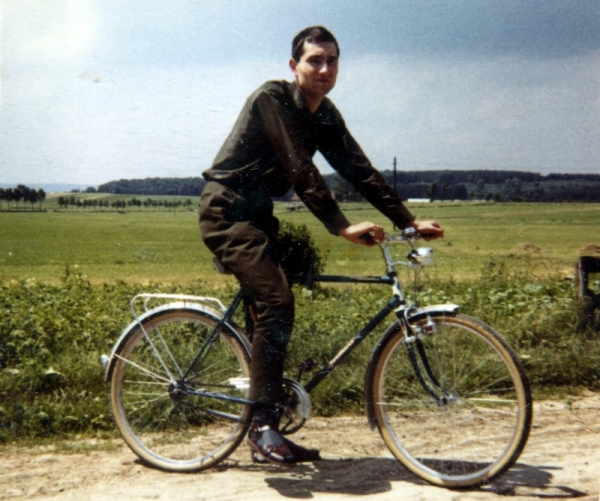
Biene’s school holidays were approaching. In 1962 her family had spent their vacation on the Mediterranean island of Corsica. Now they were planning to spend a couple of weeks at Lake Ammer in Bavaria. Even though I felt my love for Biene was getting stronger with every passing week, I did not openly declare it to her, because I erroneously assumed that she would already know. When she once asked me if I had ever been in love, I missed the golden opportunity to reveal what was on my heart. Instead I used a ride on my brand-new bicycle as a metaphor to describe in the most abstruse way the chaotic state of my inner being. I described how I got lost in the woods. I did not know which way to choose to get out. I dug deep into my psyche, too deep for comfort. Not yet realizing that the good and the evil lie close together within each and every human being, I criticized the world for failing to give me directions. Blind as a bat to my own flaws and weaknesses, I declared the entire world with its political systems, the church, and the army rotten and corrupt. These pathetic meanderings of my mind did very little to express my true feelings for her and would have been better left unsaid.

28a

Peter on his brand new bicycle

For the remaining three or four days I went on a bicycle tour with Dieter, my new army buddy. We traveled first up the River Moselle, then climbed up into the Eifel Mountains and stopped at a beautiful campsite named Pomerania, which reminded me of my grandparents’ lost home province in the east. At nightfall we sat in front of our tent looking at the rising moon in a cloudless sky. The day before I had bought a bottle of Moselle wine, a Riesling well-known for its distinguished qualities due to the grapes, which incredibly ripen more fully during extended periods of autumnal fog in the river valley. Gazing at the crescent of the rising moon I remarked, “If me girl-friend in Velbert also looked at the moon this very minute, our eyes would be fixed on the same heavenly object and in some esoteric way we would be connected with one another.”

X294

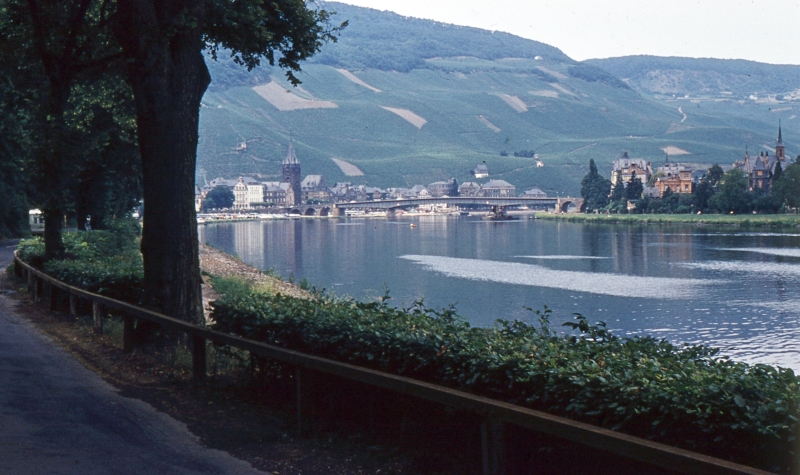
Famous Moselle Valley with Germany’s finest Vineyards

Dieter chortled a few times, before he retorted, “But my friend, don’t be an idiot. That is not the same as being physically present. When I kiss my beloved Heidi, I know real love, love that you cannot even fathom with your strange romantic ideas in your head.” And that was the beginning of a long discussion on the nature of love. When we had savored the last drop of the wine and were ready to crawl into the tent, we had moved away from our opposite points of view and found some middle ground. We agreed that in order for a relationship to be meaningful both the physical and spiritual dimensions would have to be present. We learned something important from each other. As for me, I resolved to arrange a rendezvous with Biene at the first opportunity that would offer itself in the near future. But you never know to start with, how things turn out in the end.

August Otto Wilhelm Klopp (1884 – 1886) – Part I

The Short Life of Emma’s Seventh Child

After the mill business in Olvenstedt turned out to be a complete disaster in 1893 at the very latest, P.F.W. Klopp and his wife Emma moved with their six children to Magdeburg- Neustadt. The people they dealt with, work prospects and accommodation remain a gap still to be filled in the family research. The fact is that Emma’s ninety-one year old grandfather Johann Christian Bauer of Jewish ancestry passed away on December 16, 1883 in Magdeburg-Sudenburg. What amount of inheritance he bequeathed to the Emma Klopp family can no longer be ascertained, but must have been considerable. For it secured the next six years of living expenses in Jersleben and must have formed the basis for the acquisition of a house and property in Wolmirstedt further down the road.

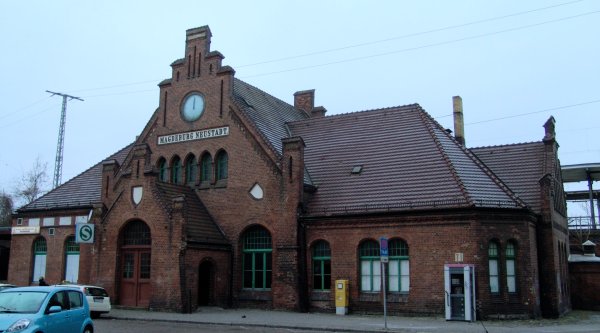
Bahnhof Magdeburg Neustadt - Foto: geolocation.ws

Bahnhof Magdeburg Neustadt – Foto: geolocation.ws

While enjoying the unexpected financial blessing, Emma was also thankfully looking forward to her seventh pregnancy. In August 1884 she bore in Magdeburg-Neustadt her fourth son (seventh child) August Otto Wilhelm. Although Emma was briefly hospitalized in and around this time, the possibility of a hospital birth in those days must be excluded. Besides Emma Klopp was of a robust  physical constitution and always gave birth at home without any complications.

Remark: Every once in a while I need to remind my readers, who praise me for the research on the Klopp family, that the author of this amazing story of our ancestry is not I but Eberhard Klopp, a distant cousin of mine. After an intensive research over a period of many years in the 90’s he published the results in Germany under the title “Ein Brief an die Nachfahren der Familie Klopp aus Altendorf/Brome und Wolmirstedt“. Since many of the descendants have spread all over the North American continent and most of them no longer speak German, I endeavored to translate the relevant parts of his book into English.

Eine ergreifende Liebesgeschichte – 3. Teil

Hochzeit ohne Familie

Es blieb nicht aus, dass auch das Schulamt Wind von der Sache bekam. Es gab ziemlichen Ärger und Elisabeth wurde „strafversetzt“, sie kam noch 1953 nach Rühstädt. Doch auch diese Maßnahme brachte ebenso wenig Nutzen, wie die häufigen Besuche von Elisabeths Großmutter, unserem Omchen, in Rühstädt, die dem Zweck dienten, die beiden zu trennen. Eberhard fuhr abends oft mit dem Fahrrad nach Rühstädt, um seine Elisabeth heimlich zu treffen. Einmal wäre er dabei beinahe Omchen in die Arme gelaufen, die gerade wieder in verlorener Mission unterwegs war. In letzter Sekunde erkannte er die Gefahr und machte sich schleunigst wieder auf den Rückweg.

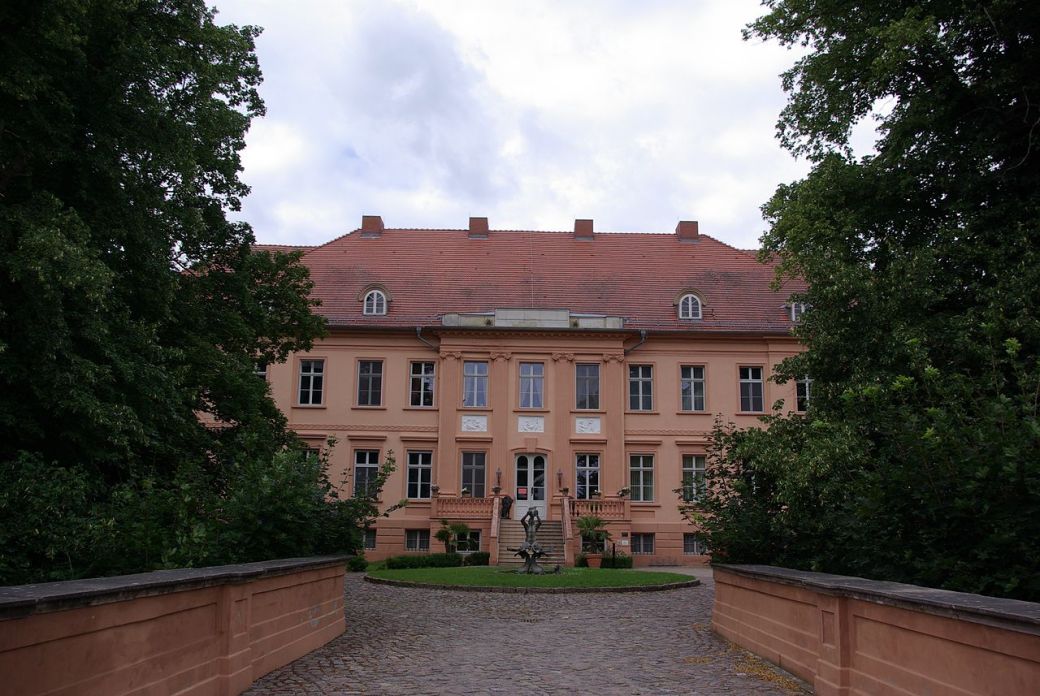
Schloss Rühstädt Photo Credit: wikipedia.org

Schloss Rühstädt – Photo Credit: wikipedia.org

Eberhard stand zu seiner Liebe und leitete seine Scheidung in die Wege, und als er auf diese Weise seine „Familienangelegenheiten“ in Ordnung gebracht hatte, wie es sich für einen Schulleiter gehörte, durfte Elisabeth wieder an die Schule in Quitzöbel zurückkehren.

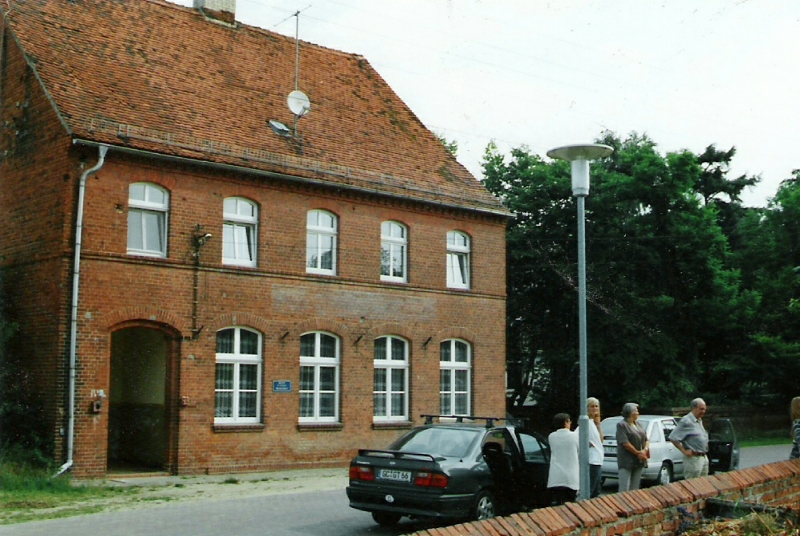
Die Lehrerwohnung in Quitzöbel 2003

Die Lehrerwohnung in Quitzöbel 2003

Nun gab es zwar dienstlich keine Beanstandungen mehr, aber Mutter Johanna und Omchen waren noch lange nicht mit der Beziehung einverstanden. Wenn ich heute zurückblicke, waren sie das wohl nie aus vollem Herzen. Elisabeth verstand sich gut mit ihrem Bruder Hartmut und dessen Freundin Gisela. Die beiden Frauen trafen sich oft in Bad Wilsnack, wo die Weiterbildungen zur Vorbereitung auf die Lehrerprüfungen stattfanden. Oft gingen sie nach dem Unterricht noch eine Bockwurst essen und unterhielten sich. Bei einem dieser Treffen war auch Hartmut dabei. Den beiden fiel auf, dass Elisabeth sehr schlecht aussah, und sie führten das auf die große seelische Belastung durch die Auseinandersetzung mit Mutter und Großmutter zurück. Elisabeth konnte sich jedoch leider nicht entschließen, Gisela und Hartmut von dem wahren Problem zu erzählen, das in ihr heranwuchs – mein Schwesterchen hatte sich auf den Weg gemacht, das Licht der Welt zu erblicken. Ich glaube nicht, dass sie befürchtete, ihr Bruder könnte sie zu Hause verraten, vielmehr wollte sie ihn sicher nicht vor die Entscheidung stellen, sich entweder der Schwester oder aber der Mutter gegenüber loyal zu verhalten. Elisabeth und Eberhard glaubten keinen anderen Ausweg zu sehen, als alle vor vollendete Tatsachen zu stellen, und so kam es dazu, dass sie am vierten Juni 1954 allein und ohne die Familie zuvor davon in Kenntnis zu setzen, heirateten.

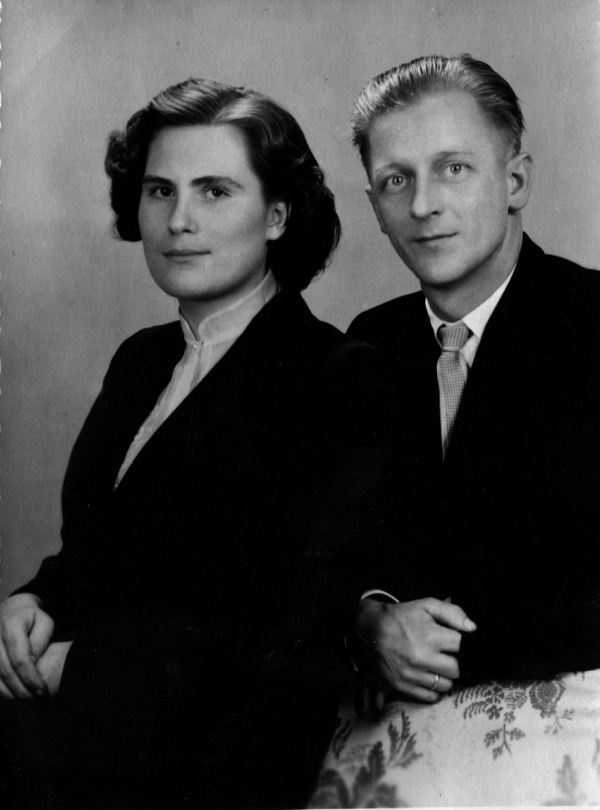
Elisabeth und Eberhard Trampenau am Tag ihrer Hochzeit

Elisabeth und Eberhard Trampenau am Tag ihrer Hochzeit

Chapter 21 of the P. and G. Klopp Story – Part I

Sorrows of Young Peter


“The Five W’s of Life:
WHO you are is what makes you special. Do not change for anyone.
WHAT lies ahead will always be a mystery. Do not be afraid to explore.
WHEN life pushes you over, you push back harder.
WHERE there are choices to make, make the one you won’t regret.
WHY things happen will never be certain. Take it in stride and move forward.”

Anonymous


With the transfer to the Falckenstein Barracks in Koblenz things were looking up for me. Our room was only slightly smaller than the one we had at the basic training camp, but instead of fifteen men only ten would share the sleeping facilities. The only drawback at the beginning was that the windows were facing one of the major north-south traffic arteries. The noise from the trucks and cars was considerable and lasted right through the night. At first I thought I could not sleep at all in a room inundated by the roar of engines and swishing of tires even with the windows closed. But little by little I got used to it and like the loud surf at the seashore at the Baltic Sea it no longer bothered me after a few days. I am sure that if the din below had suddenly stopped the silence would have woken me up.

80

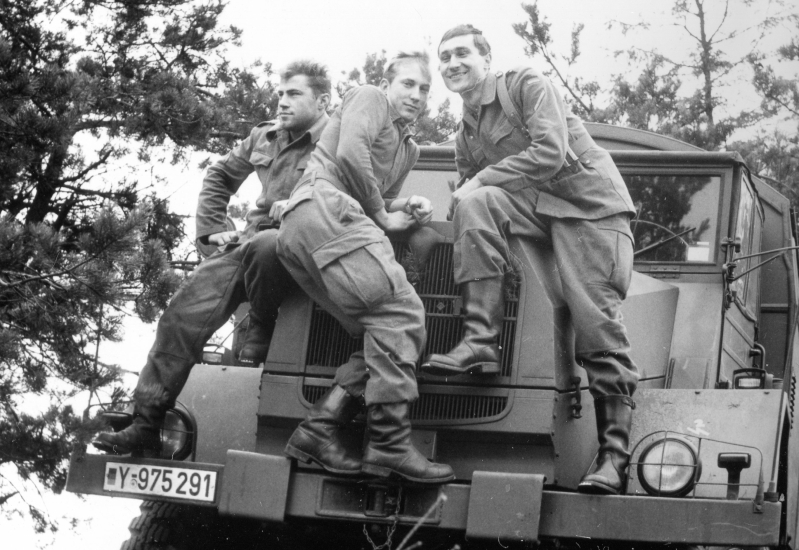
Peter on the right with truck driver and communication assistant

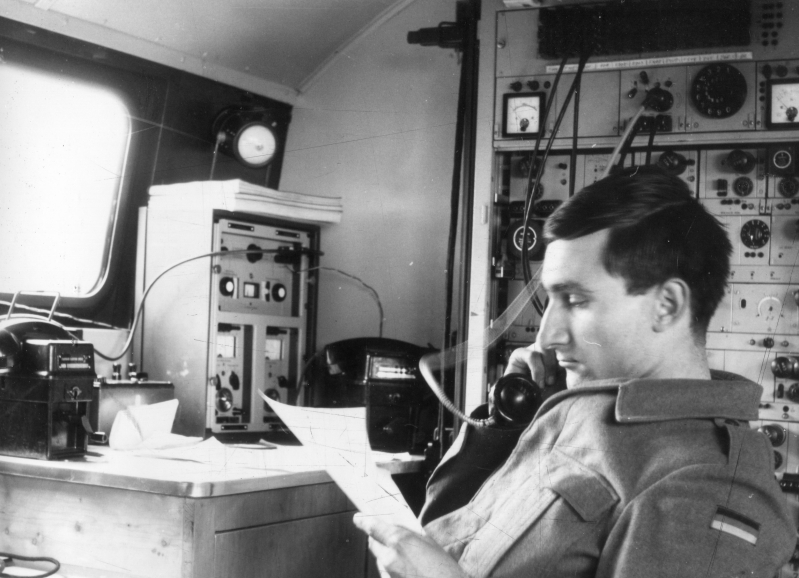
Also the pace of our daily routines significantly slackened. We still had to line up and stand at attention for the morning and noon announcements. But there were now more instructional sessions both theoretical and practical with emphasis on specialization depending to which of three major groups we belonged in the signal corps. The linemen were responsible for connecting the various field centers during military exercises. They had from a physical perspective the toughest job. Rain or shine, heat or cold, their task was to unroll miles of cable and when the maneuver was over roll it back onto the empty drums on their backs. I had the good fortune that I was assigned to the second group. I was working inside a Mercedes truck packed with electronic gear, which I had learned to operate during my training sessions. The linemen would arrive huffing and puffing after a strenuous march through forests and fields. All I had to do was to connect the wires to the carrier frequency sets, call up my counterpart at the other end and tune up the line so that it would be capable of carrying several channels at once. It was the latest technology in those days, but miniscule by today’s standards, where thousands of telephone calls can be placed over a single wire or a wireless connection. The third and most prestigious group consisted of the wireless operators trained to set up and maintain point-to-point, line-of-sight connections. To be useful, the linemen also had to connect them by cable to our stations. I liked maneuvers of this kind, especially the ones that lasted a whole week, and often as a bonus resulting in an extra long weekend pass. It was during these action filled times that I began to reflect on the career proposal the captain had made to me less than a month ago. During guard duty, which I had to do every three weeks or so, whenever my turn was announced on the company bulletin board, I had also some time to do some thinking on the purpose and meaning of military service in a world that lived under the spell of the Cold War and under the threat of a massive attack by communist forces to take over Western Europe. While walking inside the fenced perimeter of our barracks I was searching for answers to those questions that popped up in my mind during those boring two-hour shifts in the dead of night. I composed a poem, which I included here in the hope that not too much is lost in translation.

Peter at work at his 'home' packed with electronic gear

Peter at work at his ‘home’ packed with electronic gear

Night Watch

Drearily the rain is falling.

I am walking in monotone even steps.

Nothing is moving in the semi-darkness.

Radio trucks like monsters are staring at me.

They appear to mock me,

Indeed threaten to devour me.

You servants of men!

To what end are you being abused?

Abused?

Aren’t you defending freedom and peace?

If you prevent that

For which you have been built,

Then sacred is your presence.

Yeah, just stare at me!

Your power brings me joy.

And I am walking past them

In monotone even steps.


To avoid war, an army must be strong so that an aggressor will understand that nothing would be gained and much more would be lost. It was the balance of power that kept the peace in the Cold War period, in which I was a soldier.

Elise Alma Klopp (1882-1975) – Part III

Active and Mentally Alert to the End

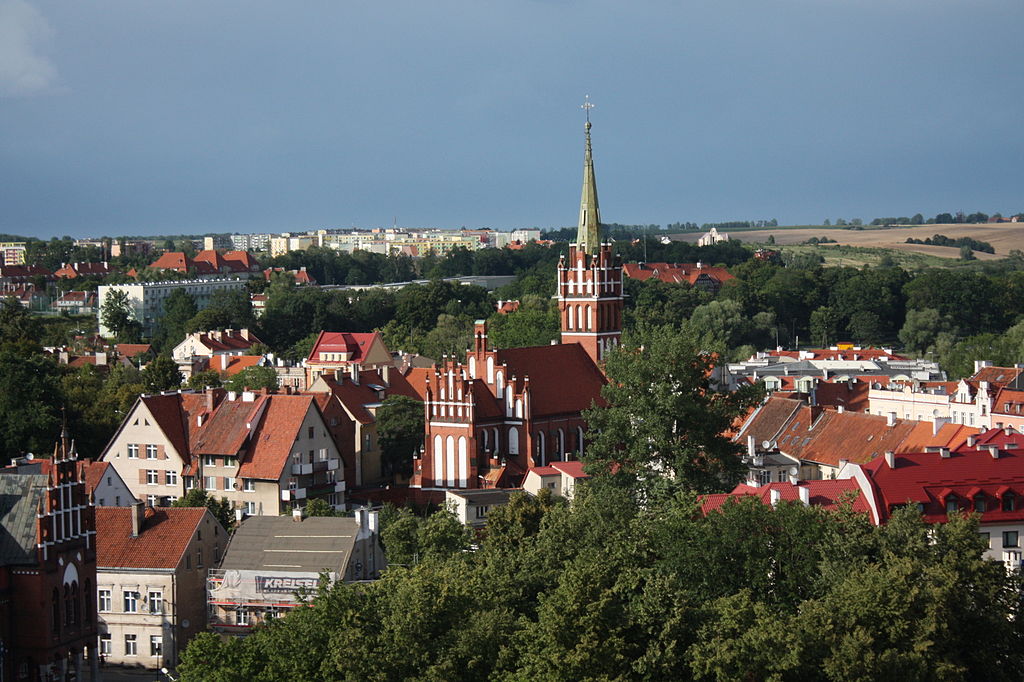
Rastenburg (Kętrzyn), East Prussia - Photo Credit: wikipedia.org

Rastenburg (Kętrzyn), East Prussia – Photo Credit: wikipedia.org

At the end of World War II Else was the only surviving child of the Scholz family. Else had married the engineer Artur Thieß. He is the one I called Uncle Artur, even though he was my cousin by marriage. He was born in Rastenburg, East Prussia,in 1905. For twenty years he had been active in the technical division of the German Post Office. After the war he was teaching at the institute of engineering within the East German postal system. There his talents found recognition and he quickly advanced to the position of lecturer at the department of engineering and electronics specializing in low-frequency applications in Berlin-Lichtenberg. In 1952 he published a book on low-frequency transmissions. He also frequently served as guest lecturer at the famous Humboldt University. [Knowing my interest in the field of electronics, he now and then sent me textbooks on transistor theory and practice.It was apparently permitted to mail books from the German Democratic Republic to the West, but not in the opposite direction.]

Artur

The surviving children of the Thieß marriage were all female: Ingrid, Gerlinde, Antje (see photo below) and Silvia. They were all known to me through my two visits in 1959 and 1962.

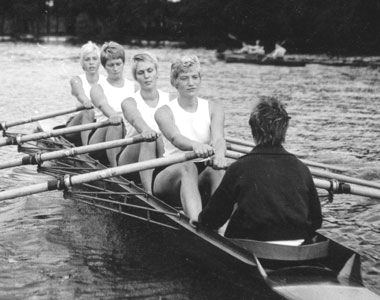
Anje Thieß 1962 (third girl) participating in competitive rowing

Anje Thieß 1962 (third girl) participating in competitive rowing for the German Democratic Republic

In the tender loving care of her daughter Else and son-in-law Artur Thieß,  Aunt Alma passed away on September 10, 1975 at the age of 93. Mentally alert until the very end she reached the oldest age of the entire Friedrich and Emma Klopp family.