Eine ergreifende Liebesgeschichte – 2. Teil

„Zum Verlieben, nur nicht mehr zum Kriegen“
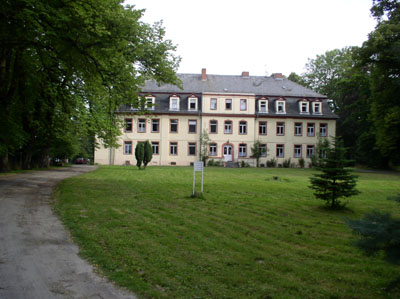
Schloss in Birkholz - Foto: gemeinde-karstaedt.de

Schloss in Birkholz – Foto: gemeinde-karstaedt.de

Nun gab es an dieser Schule in Quitzöbel einen Schulleiter, dessen Name Eberhard Trampenau war, und der zu diesem Zeitpunkt als 28-Jähriger schon ein ziemlich bewegtes Leben hinter sich hatte. Er stammte aus Dallmin bei Karstädt, wo er zusammen mit drei Brüdern und zwei Schwestern auf einem Gutshof aufwuchs. Sein Vater war dort herrschaftlicher Kutscher, seine Mutter arbeitete auch auf dem Gut. Die Eltern hatten es nicht leicht, ihre sechs Kinder durchzubringen. Mutter Minna war gezwungen, bei der Arbeit auf dem Gut immer mal wieder ein paar Kartoffeln oder Rüben mitgehen zu lassen, um die vielen hungrigen Mäuler zu Hause zu stopfen. Vater Albert war überzeugter Atheist, was in jener Zeit, der ersten Hälfte des zwanzigsten Jahrhunderts, ziemlich ungewöhnlich und dem Ruf der Familie im Dorf nicht gerade förderlich war. Es entsprach dem damaligen Zeitgeist, dass Pfarrer, Lehrer und Gutsbesitzer in einem Dorf bestimmten, was „rechtens“ war. Auch Eberhard hatte das als Jugendlicher zu spüren bekommen, denn als er konfirmiert werden wollte, war der Pfarrer der Meinung, dass er nicht die „richtigen“ Sachen anhabe und ließ ihn aus diesem Grund nicht zur Konfirmation zu. Es ist verständlich, dass Eberhards Einstellung zur Kirche zeit seines Lebens nicht nur ablehnend, sondern auch von Wut und Intoleranz gekennzeichnet war. Sein Werdegang als Jugendlicher und junger Mann war durch die Verhältnisse der dreißiger Jahre und der Kriegszeit vorprogrammiert: Hitlerjugend, Arbeitsdienst, Unteroffiziersschule, Kandidat der Offiziersschule. Mit 18 Jahren musste er in den Krieg ziehen, wurde dort bald verwundet und verlor zwei Finger. Gleich nach dem Krieg nahm er an einem „Neulehrerlehrgang“ teil (der kurioserweise wahrscheinlich im Gutshaus in Dallmin stattfand), das heißt, er wurde in relativ kurzer Zeit zum Lehrer ausgebildet, an denen damals großer Mangel herrschte. Sie waren entweder im Krieg gefallen oder aufgrund ihrer politischen Vergangenheit für diesen Beruf nicht mehr tragbar.
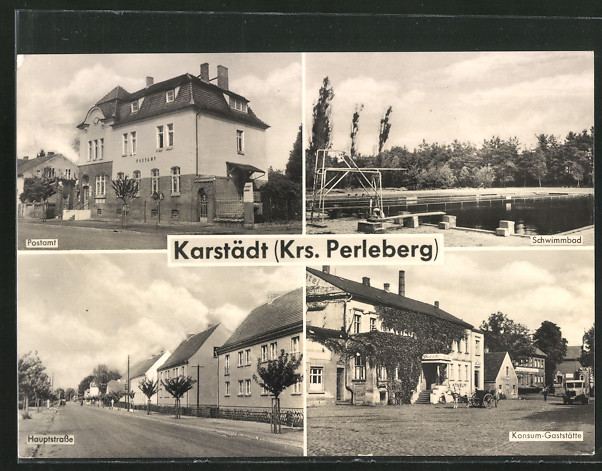
AK-Karstaedt-Postamt-Konsum-Gaststaette-Schwimmbad

Jedenfalls hatte es Eberhard in dem Jahr, als Elisabeth an seine Schule kam, bereits zum Schulleiter gebracht. Auch war er bereits verheiratet und hatte eine Tochter, wobei Gerüchte über lautstarke Auseinandersetzungen und durch die Luft fliegende (volle!) Windeln darauf hinwiesen, dass diese Ehe nicht gerade glücklich verlief.
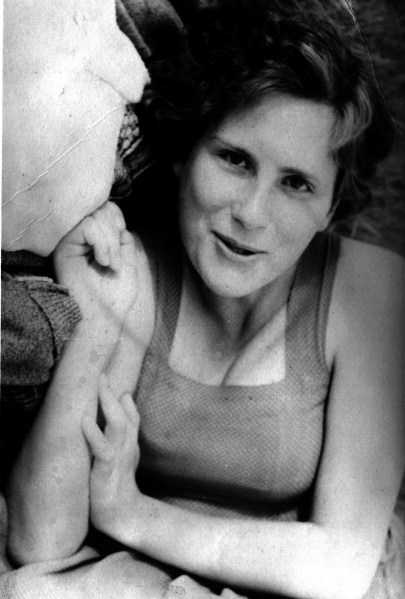
Elisabeth 1955

Elisabeth 1955

Kaum hatte Elisabeth ihre Arbeit an der Schule in Quitzöbel begonnen, verliebte sie sich Hals über Kopf in ihren Schulleiter. In ihrem Tagebuch – das ich 20 Jahre später lesen durfte und das mich zu Tränen rührte, und das dann irgendwann unverzeihlicher Weise und zu meinem großen Bedauern nach einem heftigen Ehestreit in den Heizkessel flog – schwärmte sie immer wieder davon, wie nett und gutaussehend und klug er sei. An die Worte „Zum Verlieben, nur nicht mehr zum Kriegen“ kann ich mich noch genau erinnern. Wie das Leben so spielt, war auch Eberhard recht angetan von ihr, und es kam, wie es kommen musste: sie gaben ihren Gefühlen nach und beschworen damit für sich und natürlich auch für ihre Familien eine schwere Zeit herauf. Viele Kollegen verurteilten sie, Elisabeths Mutter und Großmutter versuchten hektisch, sie zu bekehren, Eberhards Frau war unglücklich, aber sie konnten nicht voneinander lassen. War es Unrecht? Ich bin da nicht ganz objektiv, denn wären die beiden „vernünftig“ geblieben, würde es mich und meine Geschwister nicht geben, und das fände ich ganz schön traurig. Also mag das jeder selbst beurteilen, und wer darüber den Stab bricht, hat entweder noch nie geliebt oder war bei Eintritt seiner eigenen großen Liebe in der glücklichen Lage, gerade frei und ungebunden zu sein.
 

Chapter 20 of the P. and G. Klopp Story – Part IV

Biene’s Moroccan Pen Pal

One Saturday morning, not long before the short weekend leave, the corporal nervously entered our room and told us that the captain himself would be checking out hallway, room and closets. “Don’t disappoint me,” he demanded half pleadingly, half threateningly. We were eager to oblige being interested only in one thing, the pass that allowed us to go home. So we scrubbed and polished the wooden floor, mopped the tiles of the hallway especially well. For weeks I had specialized in cleaning the windows. I discovered that the toilet paper available in large quantities worked best to give the glass that desirable sparkling look. Of course, the closet had to be immaculate. Over one speck of dust a grumpy sergeant could deny your weekend pass or at the very least cause a delay of several hours.

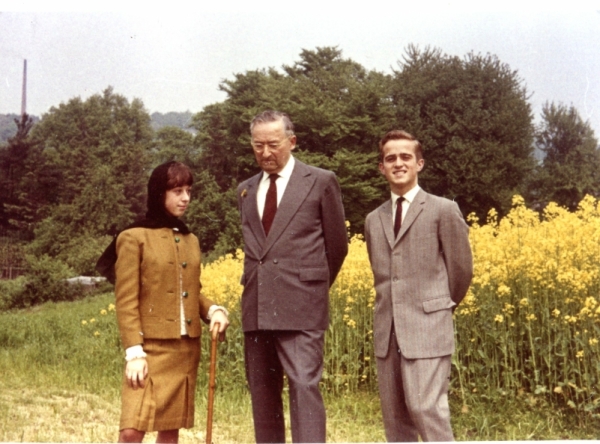
Biene, Papa Panknin, and Twin Brother Walter

Biene, Papa Panknin, and Twin Brother Walter

The captain, however, not only represented the kind and benevolent father figure to us, but also had recently become the proud father of twins, the event that among us soldiers earned him the title Scatter Gun (Streubüchse). He now entered the room. We stood at attention next to our closet. It was clear from the way the captain approached the first soldier that he was more interested in passing on a few words of wisdom than in the inspection of our open closets. So when it was my turn, I was quite relaxed. He must have gone through our personnel files, for he said, “Klopp, I see that you are a high school graduate. What are your plans for the future?” Without waiting for an answer, he continued, “When you are young, you must have a dream. Without a dream you are nothing but a hollow entity. Understand me right; I am not talking about a fuzzy dream about getting rich and famous. What I mean is the dream of becoming a valuable member of society and a contributor to the common good.” With about these words the officer, turned philosopher, spoke to me. Now he reminded me that he had not answered his question.

“I love electronics and would like to become a high frequency engineer,” I stated emphatically.

As if ignoring my reply, the captain went back to the importance of having a dream. “A dream is nothing but an idle pipe dream, if you cannot find the means to realize it. You must have a plan backed up by a number of concrete steps. You must always keep your goal no matter how distant before you inner eyes, so you don’t miss your target.”

Then he came to the point, “So you want to become a high frequency engineer. That’s your dream. Well, here is a plan for you to consider. The Bundeswehr (German army) will send you to a postsecondary technical institute all expenses paid. In return, you commit yourself for ten years of service or if you wish, you can opt for a permanent career as officer and instructor. Think about it and let me know when you are ready to talk.” With these words he moved on to the next soldier, who had a picture of a naked woman taped to the inside of his closet door. The captain took one look and to our surprise did not reveal the slightest trace of anger, when he addressed him with a soft voice, “Say, young man, how would you feel to see a photo of your sister in the nude on somebody else’s closet door?” and with that remark he moved on to the next soldier. Needless to say we all got our weekend pass including the one with the pornographic picture. In a general assembly of the company our leader once spoke about his dream to read and understand Immanuel Kant’s ‘Critique of Pure Reason’ before his retirement. To be sure, it was a far loftier goal than mine of becoming an electronic engineer. The book that he was referring to is to the understanding of philosophy what Einstein’s theory of relativity is to the understanding of physics.

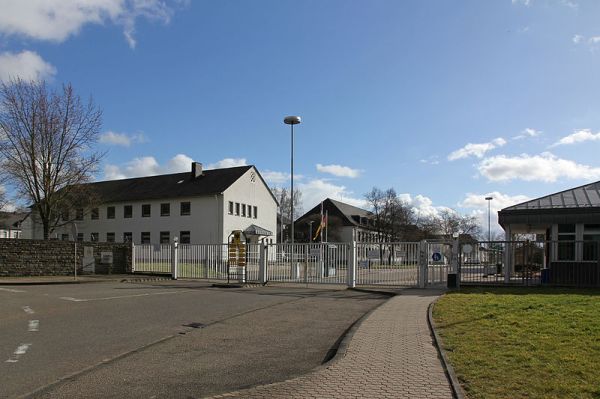
Falckenstein Barracks still in Use Today - Photo Credit: wikipedia .org

Falckenstein Barracks still in Use Today – Photo Credit: wikipedia .org

In the meantime Biene’s letters kept coming with the regularity of a clock and brought the sunshine of her empathy for the hardships of a soldier into my heart. We agreed to write one another in such a way as if we had known each other for a long time, to treat each other with honesty so that in the absence of face-to-face encounters no false impressions developed in our minds. Even secretiveness would be a form of dishonesty I noted in one of my letters. Being sincere was the necessary ingredient for the development of a true friendship leading so I was hoping to something more permanent. All Biene and I had for now were the letters, in which we expressed our feelings in the discussions of poetry, movies we had seen, or simply the daily obstacles that fate would throw into our path.

Up to this moment I had also maintained a loose correspondence with my dance partner Margret, who was working as a nurse’s aid in the Wesel hospital with the goal of becoming a registered nurse. The letters we wrote read more like newspaper reports and contained for the most part our criticism of the rotten world around us that we could not change. In short they were devoid of any feelings expressed or implied. In response to the dilemma that could only grow worse over time, I decided to write her a short note explaining to her in keeping with our sober writing style matter-of-factly as to why I did not wish to carry on with our correspondence. She acknowledged receipt of my message in a final postcard. I was relieved that she took my note with a sober mind and in the end did not get emotional about it.

Morocco's Beautiful Coastal City - Photo Credit: wikipedia.com

Morocco’s Beautiful Coastal City – Photo Credit: wikipedia.com

In the meantime Biene was raving about the sunshine, warmth, beauty of a rocky coastline in a distant land in North Africa. I attributed the sudden and unexpected passion for Morocco to the extended periods of rain and depressing overcast skies we had experienced of late. But later she wrote about her grave concern for her pen pal. He had suddenly become ill and wanted her to come and visit him presumably in the hope for a miraculous recovery. The news came like a cold shower and considerably dampened my spirits. I realized that while I had read perhaps too much between the lines, Biene might have read too little. But who was I to assume that just because I had broken off the correspondence with Margret, Biene should do the same with her pen pals? So I did the right thing and expressed my sympathy with the fatally ill young man of Morocco. ‘Thousands of people’, I wrote, ‘die every day and it does not affect us. But if a friend or close relative passes away it is as if our world is falling apart. The bridges we so lovingly and carefully built to reach across suddenly collapse and only memories remain at the end.’

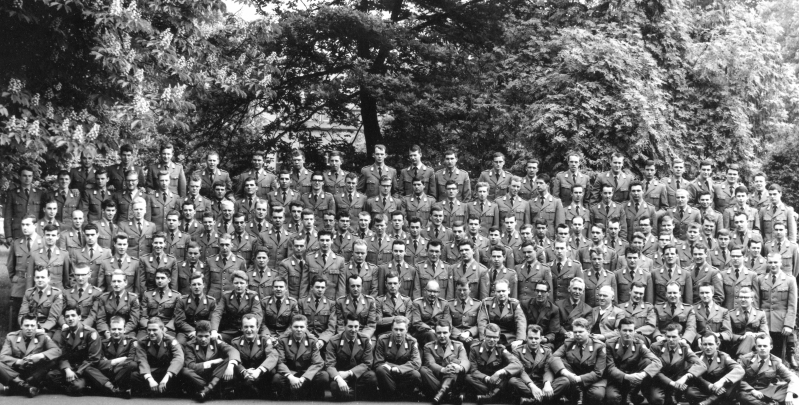
Final Photo of the entire Company - Who can find Peter?

Final Photo of the entire Company – Who can find Peter?

In the meantime my basic training was coming to an end and I was getting ready for the transfer to the Falckenstein barracks. There was a lengthy pause in the flow of mail. Biene’s high school class went on a field trip to Paris, which was intended to be a short immersion into French culture. Upon her return she sent me a long letter describing her exciting adventure with her class in France, but did not mention her Moroccan friend any more. I carefully avoided the topic. Instead, knowing that Biene was taking Latin classes at high school I boldly sent her a signal in Latin: Amor qui non agitur moritur, which means ‘Love that is not active dies.’


Elise Alma Klopp (1882-1975) – Part II

Alma Scholz (née Klopp) and her Family

Alma. widow at 37, did not marry again. During WWII she lived in the Friedrichstraße in Berlin close to Strausberg Square. There, already 63 years of age, she lost her home during a bombing raid in 1943. From that time on she lived with her daughter Else and her son-in-law Artur Thieß.

Friedrichstraße_Unter_den_Linden_Berlin - Photo Credit: wikipedia.org

Friedrichstraße, Unter den Linden Berlin – Photo Credit: wikipedia.org

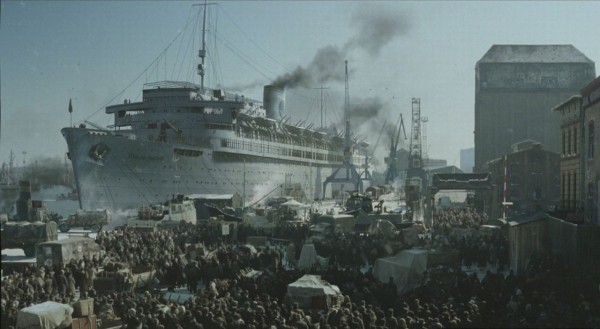
Her two sons Otto and Willi did not return from the war. Willi died in action on Christmas Eve 1943 in Finland, while Otto was reported missing in East Prussia at the beginning of January 1945. He probably perished with thousands of refugees and injured soldiers, when the hospital vessel “Wilhelm Gustloff” sank in the icy Baltic Sea, after being torpedoed by a Soviet submarine on January 30, 1945.

Boarding the Wilhelm Gustloff January 1945 - Photo Credit: renagadetribune.com

Boarding the Wilhelm Gustloff January 1945 – Photo Credit: renagadetribune.com

The online encyclopedia Wikipedia has the following to say and I quote, “The MV Wilhelm Gustloff was a German military transport ship which was sunk on 30 January 1945 by Soviet submarine S-13 in the Baltic Sea while evacuating German civilians, Nazi officials and military personnel from Gdvnia (Gotenhafen) as the Red Army advanced. By one estimate, 9,400 people died, which makes it the largest loss of life in a single ship sinking in history.” Lucky were those who survived the war, because they had been refused to board the already overcrowded ship.

Eine ergreifende Liebesgeschichte – 1. Teil

Anke Schubert schreibt über ihre Eltern

Eberhard Trampenau und Elisabeth Kegler

Familienzweig Kegler – Karte II a – III

Rühstädt, Quitzöbel 1953

Es war einmal – so beginnt auch dieses Märchen von einer großen Liebe, die 27 Jahre später nach vielen Höhen und Tiefen erloschen sein sollte – eine junge Lehrerin. Das war Elisabeth, die später unsere Mutter werden sollte. Sie zählte 20 Lenze und war ein sehr hübsches Mädchen. Eigentlich hatte sie ihre Lehrerausbildung noch gar nicht abgeschlossen, weil ihre lebensbejahende und offene Art es mit sich brachte, dass der Weg zum Ziel so manches Mal durch Umwege verlängert wurde. Nach ihrem Abitur hatte Elisabeth angefangen, in Potsdam Pädagogik und Deutsch zu studieren. Doch schon nach einem Jahr entschied sie sich, das Studium abzubrechen, denn eine unglückliche Liebe ließ es ihr unmöglich erscheinen, weiter in Potsdam zu bleiben.

View of the rebuilt Potsdam City Palace at night - Photo Credit: wikipedia.org

View of the rebuilt Potsdam City Palace at night – Photo Credit: wikipedia.org

Dieses Hindernis auf dem geradlinigen Weg zum Erreichen des Berufszieles hörte auf den Namen Jochen. Er war das, was man gemeinhin einen Herzensbrecher nennt, sah gut aus, war bei allen beliebt und hatte schließlich sein Interesse Elisabeth zugewandt, die ihr Glück zunächst gar nicht fassen konnte. Man traf sich häufiger, ging zusammen aus und Elisabeth war überaus zufrieden. Der junge Mann, immerhin schon 22-jährig, wollte sich aber schon nach kurzer Zeit nicht nur mit Händchenhalten und Abschiedsküsschen abfinden. So inszenierte er die perfekte Verführungssituation – eine Flasche Wein, Kerzenschein und leise Musik. Elisabeth fand das zwar wunderschön und sehr rührend, war aber trotzdem noch nicht zu dem bereit, was er sich erhoffte. Sie bat um Jochens Verständnis und um mehr Zeit. Beides war er aber nicht zu geben bereit. Verletzte männliche Eitelkeit und Egoismus ließen ihn vom feurigen Verführer zum beleidigten Macho werden, und um ihr zu beweisen, dass er keineswegs auf sie angewiesen war, tauchte er alsbald mit einer anderen Dame an seiner Seite in Potsdams Straßen auf. Elisabeth war darüber sehr unglücklich. Sie meinte, es nicht ertragen zu können, ihn und seine jeweiligen Bekanntschaften noch jahrelang sehen zu müssen und brach kurzerhand das Studium ab.

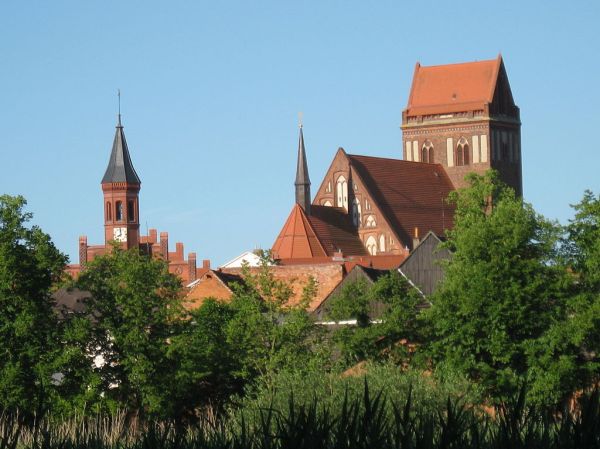
City Hall and Church at Perleberg - Photo Credit: wikipedia.org

City Hall and Church at Perleberg – Photo Credit: wikipedia.org

Das war damals wohl nicht ganz so tragisch – gemeint ist natürlich der Abbruch des Studiums, nicht dessen Ursache -, denn es gab für sie wie für viele andere junge Leute die Möglichkeit, schon als Lehrerin zu arbeiten und sich nebenbei durch Weiterbildungen auf die erste und später auf die zweite Lehrerprüfungen vorzubereiten. Also reiste Elisabeth von Potsdam nach Perleberg und ging zusammen mit einer Freundin zum Schulamt, um sich um eine Lehrerstelle zu bewerben. Der Schulrat hörte sich ihre Geschichte an, hatte ein gewisses Verständnis für ihre Situation und bot ihr an, nach Quitzöbel zu gehen, dort an der Schule ihre praktische Ausbildung zu vollenden und ein Jahr später, im Juli 1954, ihre staatliche Abschlussprüfung abzulegen. Elisabeth war überglücklich, als sie das Schulamt verließ. Nun sollte doch noch alles gut werden, und sie konnte ihr Berufsziel verwirklichen.

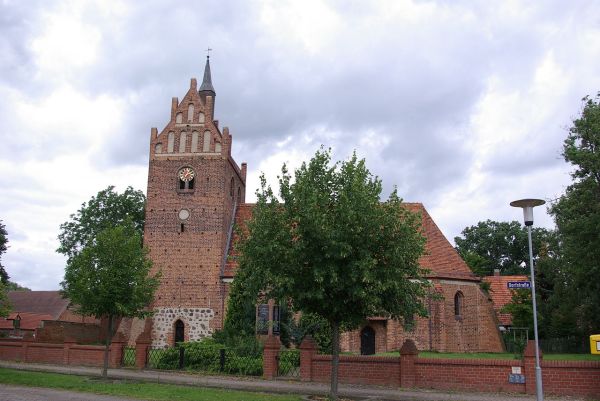
hurch of Legde_Quitzöbel - Photo Credit: wikipedia.org

Village Church of Legde-Quitzöbel – – – Photo Credit: wikipedia.org

Als ansonsten meist folgsame Tochter hatte sie es in diesem Fall aber leider versäumt, ihre Familie über diese nicht unwesentliche Abänderung ihres beruflichen Entwicklungsweges zu informieren. Just an diesem Tag hatte nun ihre Mutter Johanna, die ja auch Lehrerin war, dringende Erledigungen beim Schulamt zu machen und traf dort ihre Tochter, die gerade glücklich in Richtung ihres neuen Wirkungskreises aufbrechen wollte. Von Mutter Johanna zur Rede gestellt, beichtete Elisabeth alles. Johanna war äußerst aufgebracht und forderte, alles wieder rückgängig zu machen und nach Potsdam zurückzukehren, aber Elisabeth ließ sich nicht dazu überreden und fing ungeachtet des Protestes ihrer Mutter ihr neues Leben in Quitzöbel an.

Elise Alma Klopp (1882-1975) – Part I

Alma, the Sixth Child of Friedrich and Emma Klopp

Foreword by Peter Klopp

Aunt Alma is the only person in the Klopp family, with whom I maintained a correspondence until her death in 1975. As a young man I paid two visits to Berlin-Köpenick, where she resided, the first before and the second after the building of the Berlin Wall. Her son-in-law Arthur Thieß, whom I called Uncle because of the huge age difference, continued the correspondence. Until his passing we  exchanged letters, documents and photos providing an invaluable source of data on my early childhood environment at Gutfelde (Zlotniki) near Dietfurt (today’s Znin in Poland).

Aunt Alma of Berlin

Aunt Alma from Berlin and Peter, Gutfelde 1942

Alma was born as the sixth child in the ‘Düppler’ mill of Olvenstedt near Magdeburg on December 6, 1882. At the age of 22 she got married in Berlin on January 14, 1905 to the farmer’s son Otto Scholz. He had his roots in Sosnitza-Steinksheim (today Polish Sosnica at the Lutynia river) about 10 km southwest of Pleszew, where he was born on November 27, 1880.

800px-Düppler_Mühle

Aunt Alma from Berlin and Peter, Gutfelde 1942

Otto Scholz was employed as coachman by lamp manufacturer Wessel, who at that time the entire 25 ha peninsula Schwanenwerder/Havel (known as Sandwerder until 1902). Here the children Otto (1906), Else (1907), Charlotte (1908), and Willi (1910) were born. Otto Scholz participated in the battles of WWI and returned safe and sound from the war to his hometown. In the starvation year of 1917 their daughter Charlotte was sent to a children’s care facility in East Prussia, where she died after coming down with dysentery. Since Otto was noticed for the adroit handling of horses during the war years by an army veterinarian, he found employment in 1918 at the Berlin Veterinarian Institute (later taken over by the Humboldt University). During the production of serum Otto Scholz contracted blood poisoning and anthrax, of which he died on February 13, 1919.

1024px-Klare_Lanke

Schwanenwerder Peninsula Berlin – Photo Credit: wikipedia.org

Chapter 20 of the P. and G. Klopp Story – Part II

Getting to know my Army Buddies

We did not have much time to really get to know each one another in Room 203. But before we settled down for the first night, I had learned that most of us came from the same region in Northwest Germany. However, nobody came from the same town no matter how big and, as I discovered later, no more than two were high school graduates. It seemed to me that someone in the personnel department had done a good job in creating groups from social and regional backgrounds as diverse as possible. This was to prevent cliques from forming and to promote harmony. The other high school graduate was a violinist . He planned to further his musical talents after his mandatory 18 months by studying at a music conservatory. He had applied for a transfer to the band division of the army before he arrived in Koblenz showing convincingly that regular army service would ruin the dexterity of his delicate fingers needed for becoming an accomplished violinist. I took an instant liking to him and, enthused about his virtuosity, recorded on quiet weekends many of his solo pieces on my tape recorder. Overall the troop in Room 203 fitted nicely together. Perhaps the only thing that made me feel slightly uncomfortable when conversing with my comrades was that in contrast to the heavy Low German accent of the Ruhr industrial area (the Ruhr Pot) I spoke the standard High German, which made me stick out like a sore thumb in the otherwise very congenial group. But that did not seem to bother them in the least. They would often good-naturedly tease me or would say, if they had a problem or question, “Let’s ask the professor. He will know.” In short, I had the good fortune to be among a good bunch of people. And if there was any misery coming our way– to be sure there was going to be lots of it -, it would come from the drill sergeants, whose job was to toughen us up for the tasks ahead.

Old City Center of Koblenz - Photo Credit: wikipedia.org

Koblenz at the Confluence of the rivers Rhine and Moselle – Photo Credit: wikipedia.org

At the morning line-up we were standing on the pavement neatly arranged in a triple row from the tallest to the shortest. I occupied a fairly safe position from the critical eyes of the corporals in charge of the inspection. I stood in the third row on the left being one of the tallest in the company. The soldiers in the front row were the most vulnerable to harassment, where a missing button on the uniform, an half-open fly, dirty boots would come under an instant scathing rebuke peppered with such earthy language, were it not delivered half in jest with great exaggeration, it would have scared us right out of our wits. We at the back internally chuckled, when the sergeant noticed that we were not perfectly lined up and scornfully shouted, “You are standing there like the bull pisses!” or at the fly that a soldier had not completely buttoned up, “You pig, it smells like leather around here!” If one had learned to develop a thick skin, these verbal assaults were of little consequence. They simply put you on the alert to make sure that at line-up time you looked prim and proper by military standards. If you were found with dirty boots, the consequences were of a more serious nature. You usually wound up losing a weekend leave over such an outrageous crime against the honor of the army. On rifle inspection days you could expect similar punitive action, if you allowed a few dust particles to settle inside the shiny barrel of you rifle. Comments describing in most hyperbolic terms the lack of care for our most precious weapon were quite common like, “It looks like a herd of elephants has been stomping through your gun barrel!” Finally the captain as if on cue arrived. After his noncommissioned underlings had done the dirty job of whipping us into shape, he could afford to play the nice guy. With his kind, encouraging remarks he radiated the image of a loving surrogate father. He even suggested during one of the assemblies that, if we had a problem, which kind of problem he did not care to specify, his door to his office on the ground floor would always be open to us.

Army Buddies of Room 203 - Peter at Center Back (1963)

Army Buddies of Room 203 – Peter at Center Back, the Violinist at the Far Left

I was always looking forward to the afternoon line-up. Not only did I feel well rested after the noon break and pleasantly drowsy with a nutritious meal in my stomach, but also I was also full of anticipation that there might be a letter from Biene. At least once a week the sergeant would call out my name, and I would happily emerge from the back row to receive my mail. If a red wax seal adorned the backside of the envelope, I knew it was a letter from her. I buried it deep into the side pocket of my army pants, so I could secretly read it during the boring afternoon lessons on the organization and structure of the fifth tank division, to which we belonged.

Gertrud (Biene) with Papa Panknin in the Gruga Park

Gertrud (Biene) with Papa Panknin during a walk in the Gruga Park

There was only one other soldier, who received letters with the same frequency as I did. One evening, when all the other comrades were out for a beer, he proudly showed me the content of his girlfriend’s letter, which I was not in the least interested to see. From the top to the bottom of a piece of foolscap she had written repetitively just one single sentence: I love you. My roommate looked at me with that special kind of vulnerable expectancy that warned me to be careful with my response to this rather bizarre love-letter. He had to share his happiness with someone like me of whom he was almost certain, but not quite certain that I would not mock his tender feelings apparently so out of line with the rough environment of our life in the army. After a long pause of hesitation, which must have heightened the young man’s tension almost to the breaking point, I simply remarked, “A very powerful message!” Of course, I kept Biene’s letter in my pocket, her words were so precious to my heart that I would not have shared it even with any of my best friends. For it contained her responses to the world of thoughts and feelings about each other on a more elevated plane, where the word love had not yet surfaced and its presence could only be fathomed on second and third reading somewhere hidden between the lines.