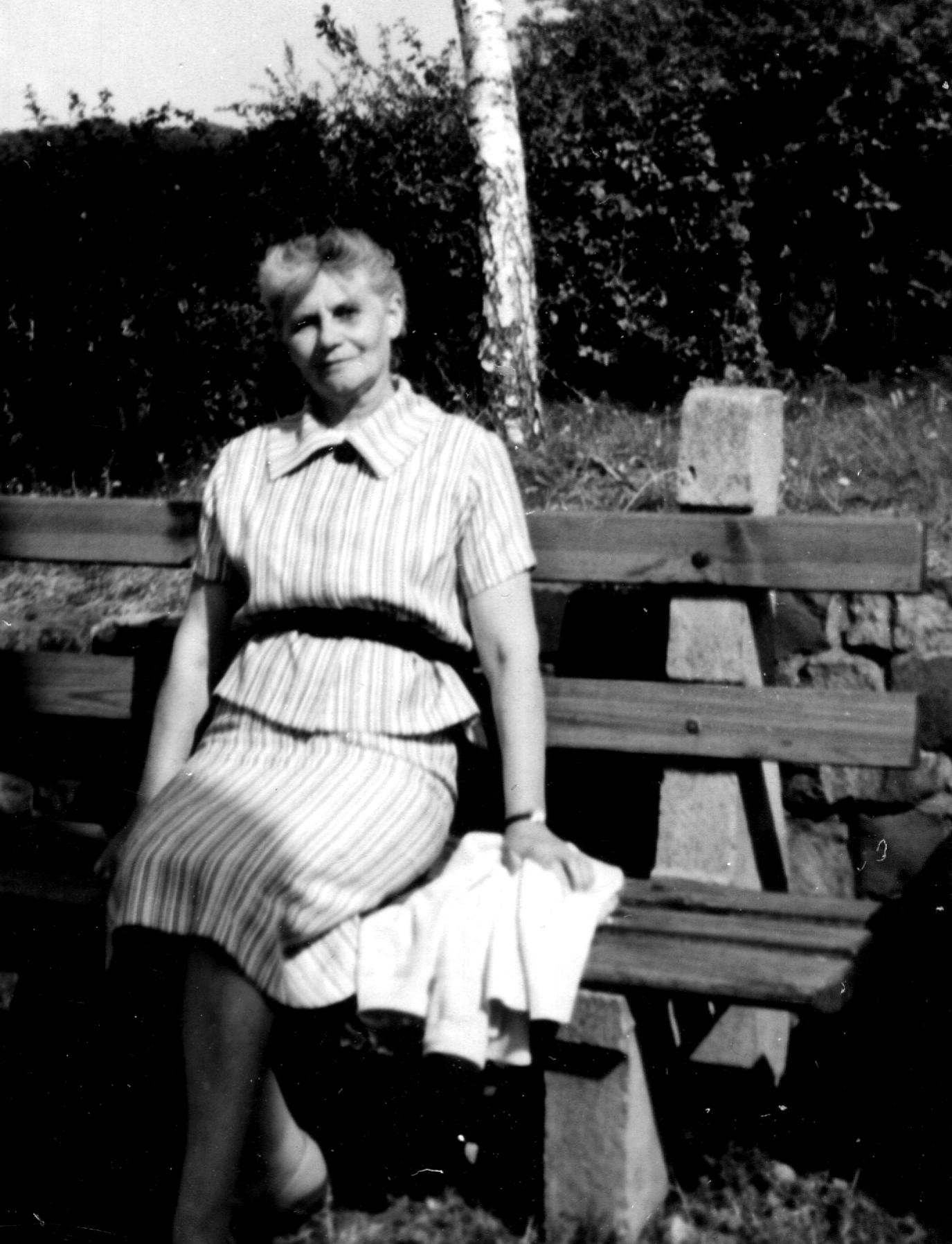
Gertrud Kegler 1896 – 1957

Life-long Service to the Sick and Wounded

Chart II a – II

On March 27, 1896, Gertrud Kegler, second daughter of Pastor Carl Kegler, was born at home in the parsonage of Grünewald, Pomerania. She attended the local elementary school from 1902 to 1905. For the following three years she received private instructions in a neighboring village to prepare her for the all girls’ high school in Stettin (Szczecin). Like all the other Kegler children she was confirmed by her father in the village church of Grünewald. It must have been a great joy for Pastor Kegler to see his three lovely daughters sitting in the front pew, while he was delivering his Sunday sermon from the pulpit. He endearingly called Marie, Gertrud and Erika (my mother) his three lilies.
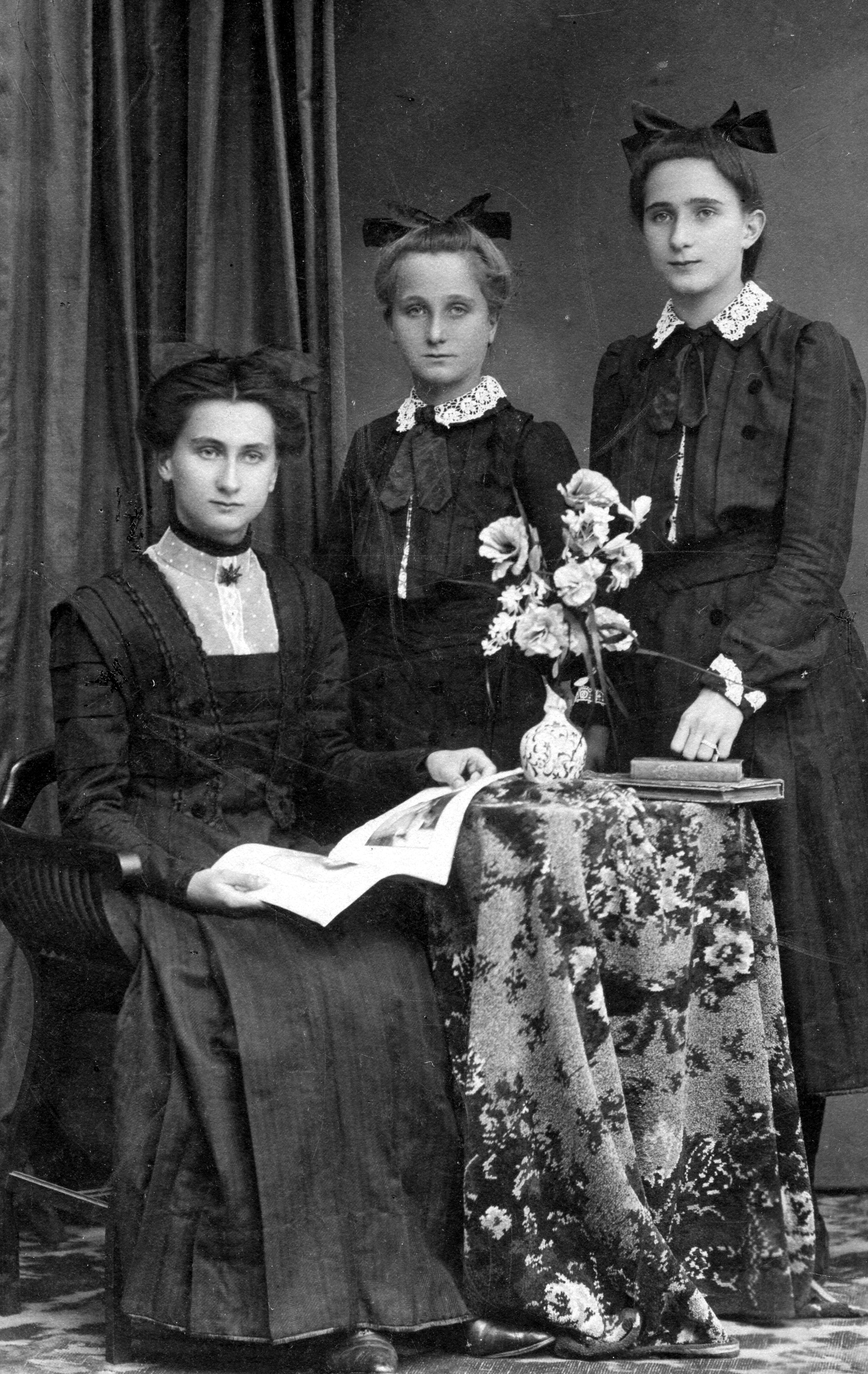
The Three 'Lilies'

The Three ‘Lilies’

After graduation from high school she took nurses’ training in Neustettin (Szczecinek) and obtained certification as a registered nurse in 1919. For almost 20 years she worked as a member of the sisterhood of the Johanniter Order. The Order’s regulations have worded this command as, “The Johanniter answers the call, where the suffering of his neighbor awaits his act of love, and where the irreligion of the afflicted demands that he witness his faith.”
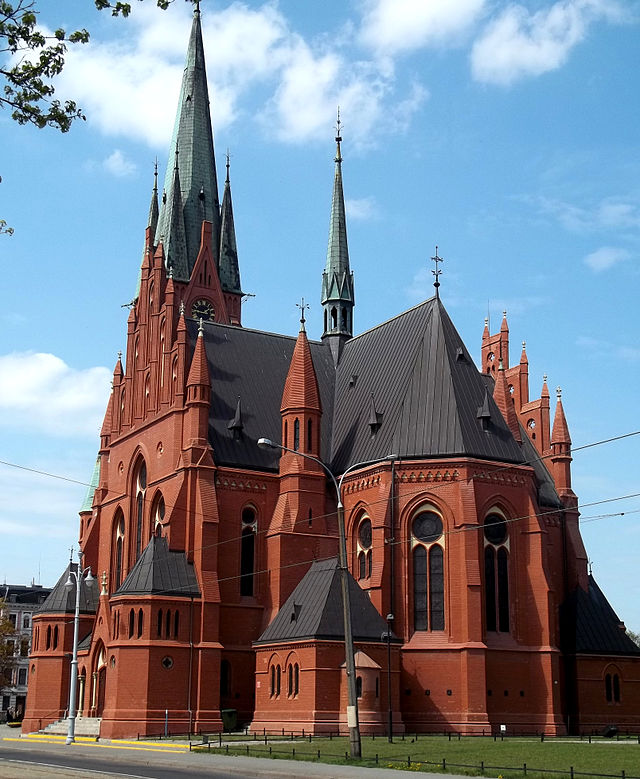
Saint Catherine of Alexandria church Photo Credit: wikipedia.org

Saint Catherine of Alexandria church in Thorn – Photo Credit: wikipedia.org

During the Second World War she worked from 1939 to 1945 in a military field hospital at Thorn (Torun) tending to the needs to the sick, disabled and injured. This came to a sudden end, when the advancing Red Army forced the medical administration to close down the hospital. Gertrud fled with her colleagues and managed to reach Stolpmünde (Ustka), where my grandmother Elisabeth and Aunt Marie were renting a small apartment. Shortly after,through a kind of ethnic cleansing all Germans in Pomerania and all the other eastern provinces were expelled from their homeland. So the three eventually arrived in Middle Germany, what later  came to be known as the German Democratic Republic.
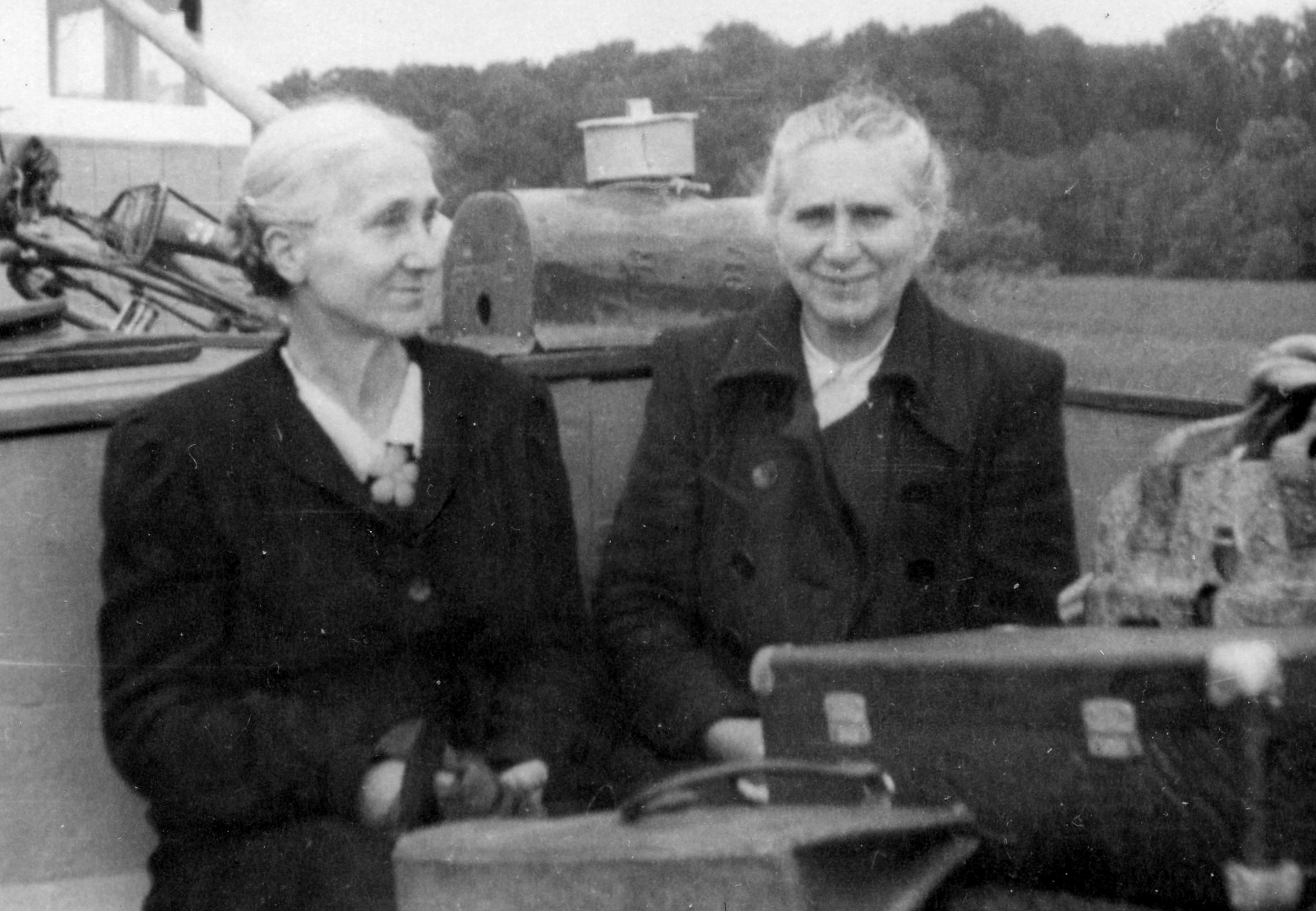
A276

Mother and Aunt Gertrud on the Right

After the war from 1945 to 1947 Gertrud Kegler continued to work as a nurse in Belsen-Bergen, where nearby the infamous Nazi concentration camp was located. In 1948, the chief physician, who had worked with Gertrud in Thorn, West Prussia, remembered her as a highly qualified and competent nurse. He asked her to join his staff at the hospital in Malchin. There she was employed as head nurse. She helped under most difficult circumstances to build up the medical facilities of the hospital.

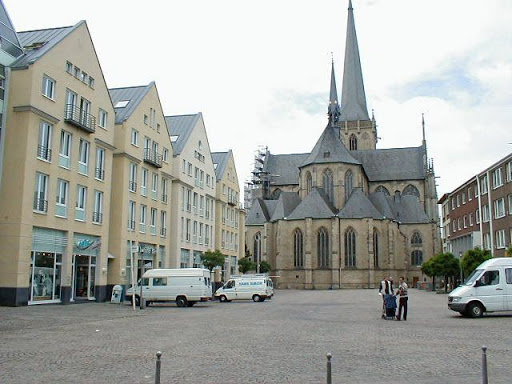
My wife Biene already described in her fascinating blog ‘This Miraculous Life’ at bieneklopp.com the lure of the ‘Golden West’. In addition to the attraction of greater freedom and prosperity in West Germany, there was a third factor that prompted my aunt to cross the Iron Curtain. Her sister Marie, who lived with my mother and me in Wesel from 1956 to 1962, had noticed an ad in the local newspaper for the position of a head nurse in a senior citizens’ home and alerted her Gertrud to the opportunity to start a new life in Wesel. When my aunt arrived in 1956, the three sisters were finally reunited.The Dom in 2001
However, what could have been a joyful period for the three, ended in tragedy. On her time off from work, Gertrud would often drop in at our small two-bedroom apartment on the street corner of ‘Auf dem Dudel 1’. Stress from the new and very challenging position as head nurse was written all over her face. It was not just the tremendous workload in a totally different environment that caused her a lot of grief. It was rather the envious and ill feelings her staff had toward the Ossie (slang for someone from East Germany) that gave her so much pain. Also they may not have liked the conscientious attitude of their supervising nurse, who put the care and well-being of the elderly front and center before comfort and ease at the work place. Gertrud did not mince words when it came to correct sloppiness and negligence in the treatment of the most vulnerable in her care. She may also have suffered under depression, which had struck on and off quite a few members of the Kegler family when they had been under great duress and mental strain. After one year of suffering she could not take it anymore. She committed suicide on February 21, 1957. I was not yet 15 years old at the time. Not having a concept of death as a final event for us here on earth, I was not overly shocked by her parting. I remember her as the kind aunt with enormous eye brows, who liked to listen to me, when I was reading aloud from my Latin reader.
Chapter IX of The P. and G. Klopp Story – Part VI

Of Crime and Punishment

During the second half the school year Frau Stoll gave birth to a baby boy. With his arrival came also a dramatic change in my relationship with the Stoll family. Had I experienced until then a semblance of acceptance as being part of the family, I now felt completely out-of-place. I had become a nuisance, an irritant, a foreign obstacle that needed to be brushed aside to make room in their home and hearts for their newborn son. Old grandma Stoll with her gigantic, trumpet-like hearing aid pretended not to hear me anymore. Frau Stoll was now occupied with her own child and had no time to bring some cheer into my heart. Herr Stoll’s attitude towards me became more and more critical on everything that in his view was unacceptable behavior. He was meting out harsh punishments for my tardiness at suppertime. I had no watch and being a dreamer I easily lost track of time. He also spanked me harder and more frequently for associating with the ‘wrong’ friends.

messkirch_1

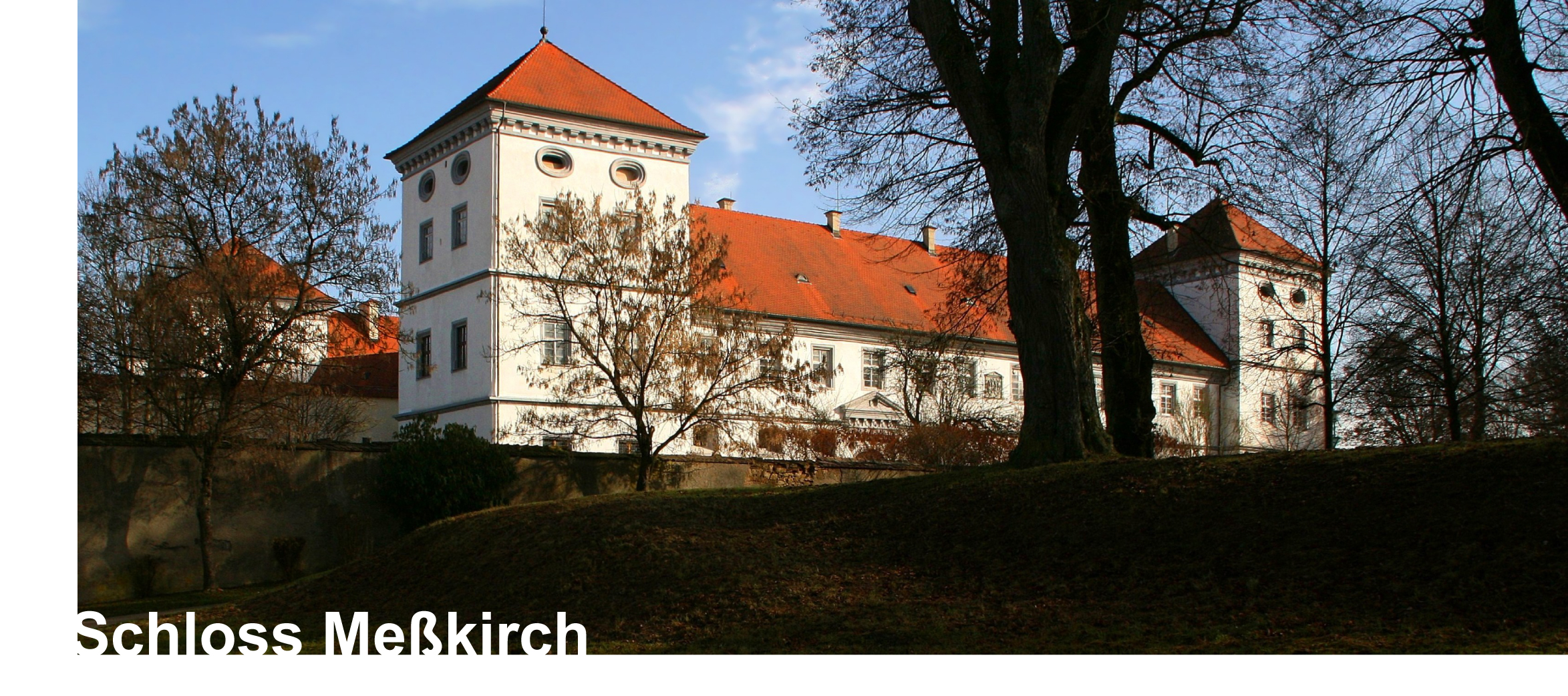
Castle and Park in Messkirch – Photo Credit: schloesser-bawue.de

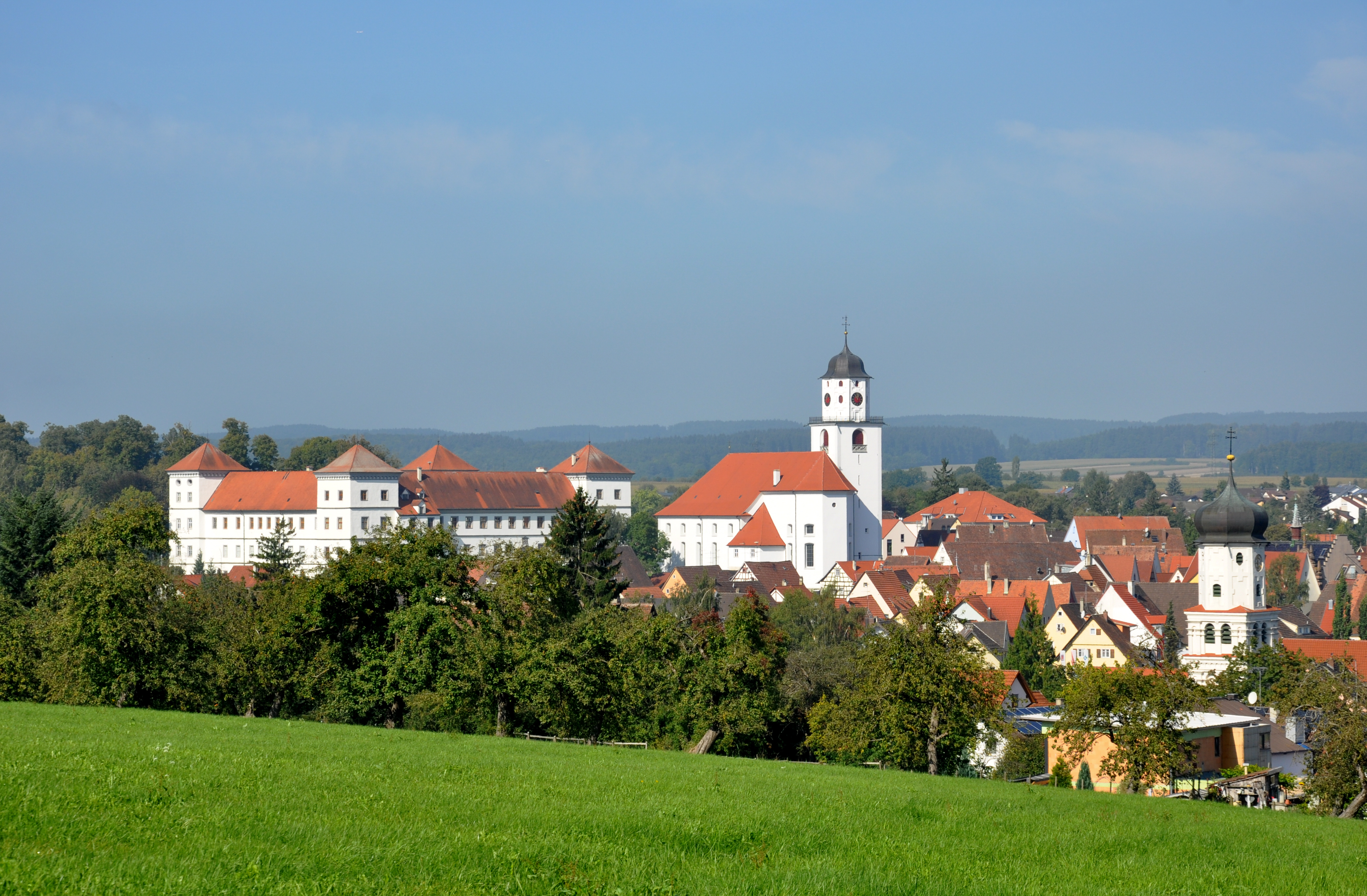
Toughened up by the frequent spankings I often took on the role of the victim in the ‘Cowboys and Indians’ games I played with my friends in the beautiful park of the Messkirch castle. On one occasion I allowed myself to be captured and tied with ropes onto a tree. In a bizarre combination of fun and cruelty the ‘Indians’ were howling and dancing around the tree taking turns at punching me in a ritual of crime and punishment. Later on when they had released me, they praised me as their hero for so stoically and silently taking their punches. I delighted in their accolades. The role of the cooperative sufferer with real life experience in the domain of pain suited me well. However, its enjoyment was indicative of a character warped by the loveless and punitive atmosphere in the carpenter’s household.

Castle and Park in Messkirch - Photo Credit: schloesser-bawue.de

Messkirch – Photo Credit: schloesser-bawue.de

One rainy afternoon I had to stay indoors after school and spent time at the carpenter’s shop downstairs. Herr Stoll and his three apprentices had been working on various woodworking projects. I was standing next to the first-year apprentice at the very front of the workshop. He had taken a liking to me and often found time to chat with me. It was near closing time. While the young man was cleaning up his workplace, I teased him by hiding his plane he been working with just a few minutes before. The young man was puzzled by its sudden disappearance. While he searched for it, Herr Stoll like a raging bull came racing down the aisle. Without giving a simple word of explanation he grabbed me by the neck and dragged me to the back of the workshop, where he beat me in his furious anger, slapped me in the face, banged me around and threshed my behind. When my cries had turned into a mere whimper and then into silence, Herr Stoll decided that the first part of my punishment had been successfully completed. Nearby was a small storage room for plywood and other wood products. That’s where he threw me for the second installment of my punishment for distracting the apprentice from his all-important clean-up job. I sat on the bare floor aching all over. For how long I sat there I cannot remember. In the darkness of the storage room I contemplated on the crime I had committed against one of my master’s employee. I was still stunned by the traumatic experience, when after a very long time the door of my prison cell opened and the bright outside light made my eyes squint. The shadowy silhouettes of Herr and Frau Stoll like phantoms of the netherworld were looming in front of me. Looking down on this miserable human bundle, Frau Stoll glanced at me as if expecting a word of apology for my misbehavior. Wondering about my silence she remarked to her husband, “Look how guilty he must feel. He is not saying anything at all.”

From this time on I was desperately thinking of escape. Anxiety about this horrific life and homesickness often drove me to the balcony on the north side of the building. There I stretched out my arms towards my home village Rohrdorf as if to invoke some magical force to rescue me from this intolerable situation. But there was no rescue and no home to flee to. The Klopp family once so miraculously reunited was beginning to show signs of disintegration. The failure of the farming venture resulted in a debt load that created a lot stress. Father suffered under long episodes of backaches. From time to time he found temporary employment in the village, while Mother worked hard in a household in the town of Sigmaringen to make ends meet. Karl had gone to Göttingen to study economics. Adolf, who had worked at the Bizerba factory in Messkirch, emigrated to Canada in 1953. He was tired of handing over all his hard-earned money to cover family expenses. Eka (Lavana) had begun her nurses’ training in Hamburg and Gerry had moved to Switzerland to enter a toolmaker’s apprenticeship program. By looking back at the extended periods of separation between Father and Mother I am sure that their relationship was already greatly strained. At the time when I was desperately yearning for the comfort of an intact home, it had ceased to exist.

The Rise and Fall of the F. Klopp Rope Making Enterprise

The Collapse of the Wolmirstedt Business Venture

Adapted and translated from Eberhard Klopp’s Family Chronicle

Chart I – II

Within five years the Klopp and Weihe families had added amongst and against each other so many wounds that only after a century one can look at them with a certain emotional detachment. They should not remain the last ones. Within the course of one generation, the two families had drifted apart and  the deep gulf of enmity between them was steadily widening. In the Weihe family the daughter did no longer communicate with her mother, in the Klopp family mother, brothers, sisters no longer with Emma’s eldest son. In the Klopp/Weihe family – no longer worth being called a family – all members completely acted out their mutual dislikes emerging out of the most varied and unlikely causes.

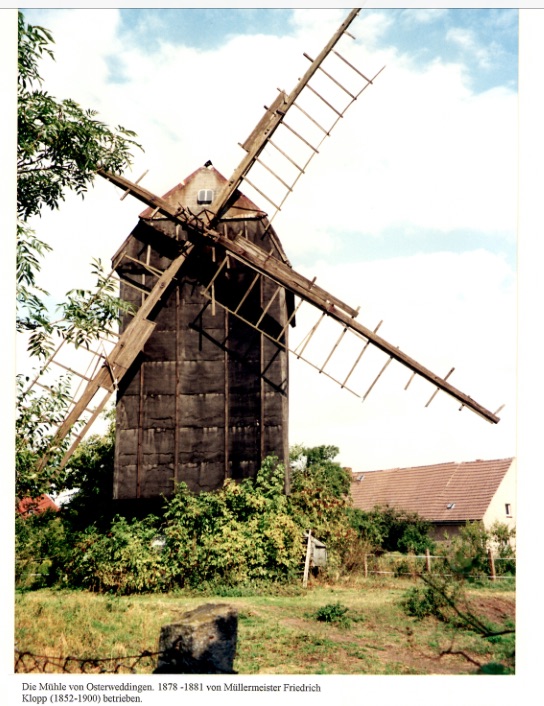
Windmill

The mill my grandfather Peter Friedrich Klopp owned and operated is now a German heritage site.

In the Klopp house in Wolmirstedt Friedrich devoted all his energies to the business. For the boat people on the River Ohre he produces ropes and cords, which the rope manufacturing plant ‘Seilerei von Friedrich Klopp’ kept ready for his costumers. Furthermore, he acquired a piece of land with a workshop south of the Ohre bridge on the right side on the road to Elbeu. There Friedrich and his workers twisted hemp fiber into ropes, The length of the ‘rope course’ was 15 m. In front of the bridge ramp the last house on the left at the Magdeburg Str. was the inn ‘At the Anchor’ (Zum Anker). It served as the meeting place for the Ohre boaters and was strategically located only 40 m from Friedrich’s factory and residence. Diagonally across stood ‘Fatje’s Hotel’, which served as a kind of exchange agency for goods and services, where the Wolmirstedt business elite would do their trading transactions. At the business table would often sit among other dignitaries Carl Loß (1865 – 1937), owner of a nobleman’s estate and of the largest sugar and starch factory of the region. Through him Friedrich primarily sold his various rope products. Ropes and nets were very useful and much-needed during harvest time. In order to secure the safe transport of sugar beets on the horse-drawn wagons they found much use in the Loß’s agricultural enterprise.

In these years 1907 and 1908 two more children were born to the Friedrich Klopp family. Under slowly deteriorating economic conditions Friedrich managed to provide food and shelter for his growing family until 1912, when he gave up his business. The steady decline of shipping  on the Ohre River reduced the profitability of his business. The taking down of the old wooden Hindenburg Bridge in 1908 and the long wait for the construction of the new stone bridge cut off Friedrich’s access to the market, further diminishing his already declining business. Add to these problems new attempts by his brother Ferdinand to seize house and business and we find the perfect recipe for financial ruin and disaster.

To be continued ….

Salute to Günther Kegler (1894 – 1986) Chart II a II

Günther Kegler was a true patriot who dearly loved his fatherland. Historians made many attempts to trace back the causes of the two World Wars. By doing so they put the blame on Prussia. This German state with its military might was the driving force behind Germany’s first unification after the French-German War in 1871. To single out Prussia as being the root cause for the great wars of the 20th century is a gross oversimplification of history. It totally ignores the injustice done by the Treaty of Versailles, which imposed through its harsh economic measures incredible hardships on the German population. Thus, it created among millions of unemployed workers a fertile breeding ground for the radical ideas promoted by the Nazis, which were swept to power in 1933. There is a lesson to be learned. Social injustice leads to widespread unrest and turmoil, which is often taken advantage of by demagogues, who will gain control with their promises to bring prosperity and set things right.

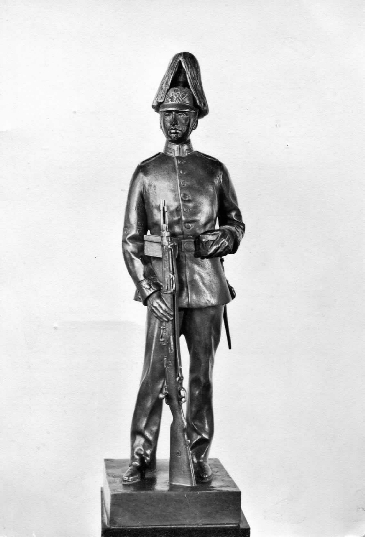
Prussian Cadet

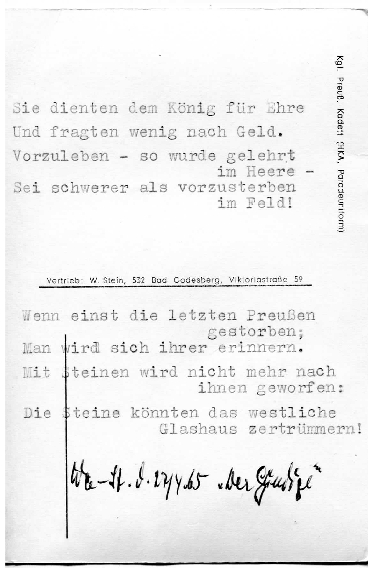
My uncle was deeply troubled by the prevailing historical claims in postwar Germany. They made the ideals of Prussia responsible for all the misery and horror of the two World Wars. When I immigrated to Canada in 1965, he gave me a postcard with a picture of a Prussian cadet and on the backside he typed a little poem, which I will attempt to translate into English.

Prussian Cadet Text

They served their king for honor

and did not much ask for money.

To live as model to follow – so it was taught in the army –

was more important than to die as hero in battle.

When one day the last Prussians have passed away;

One will remember them.

Stones will no longer be thrown at them:

The stones could shatter the Western glass house.

With these lines I conclude my report on my uncle. Looking at our present day world one might detect in them a somber warning, a prophecy perhaps we wish not to come true.

Chapter IX The P. and G. Klopp Story – Part IV

 Succulent Peaches and Playful Friendship with a French Girl

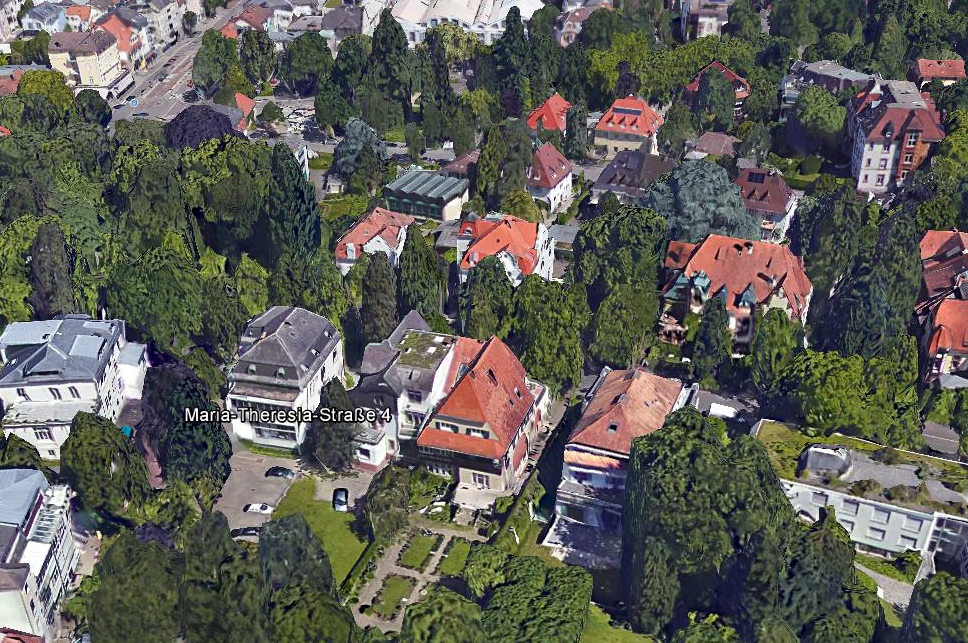
The yard around the house at Maria-Theresia-Str. 4 was beautiful indeed. A hedge completely surrounded the property except for the iron wrought gate near the main entrance of the house. Various fruit trees decorated a good part of the yard, and the peaches were reaching full maturity. There was nobody who expressly told me not to eat them. I ate them, because they were there and because they tasted delicious. With each new bite the juice was squirting into my face and running down on each side of my mouth. My taste buds were so delighted that I overindulged in the pleasure of eating the succulent fruits, until my stomach began to grumble and was sending warning messages, which I chose to ignore. Too late! At first I barely made it up the two flights of stairs to get to the bathroom on time. Then the visceral revolt became too strong, I ran behind a bush to relieve myself. A woman from a next-door balcony watched in horror the revolting sight and rushed over to complain to my aunt, “This boy did not have the decency to go to the washroom and he disgusted himself on the lawn.” This was the way she described it in her excessive sensibility regarding bodily functions with that the rare German expression ‘Er hat sich verekelt.’


House, where Aunt Meta lived - Photo Credit: Google Earth

House, where Aunt Meta lived – Photo Credit: Google Earth

On the ground floor lived a high-ranking officer of the French occupation forces with his wife and a daughter, who was about my age. She often came out on the yard to play with me. There was no language barrier. We played all the simple games we had learned in school that required no or very little equipment, such as hopscotch, throwing pebbles into a circle, hide-and-go-seek, etc. Prejudices of our two different nationalities did not exist in our young hearts. The extent of my French vocabulary after three months of instruction was still under one hundred. However, under the tutelage of this vivacious little girl bubbling over with words and gestures my stock of words grew by leaps and bounds. When I made my first attempt to use some of the new phrases I had learned from her, she giggled goodnaturedly over my enthusiastic effort to communicate in her mother tongue. I have very fond memories of my summer holidays in Freiburg, and they will remain as one of the pleasant highlights of my childhood years in Southern Germany.

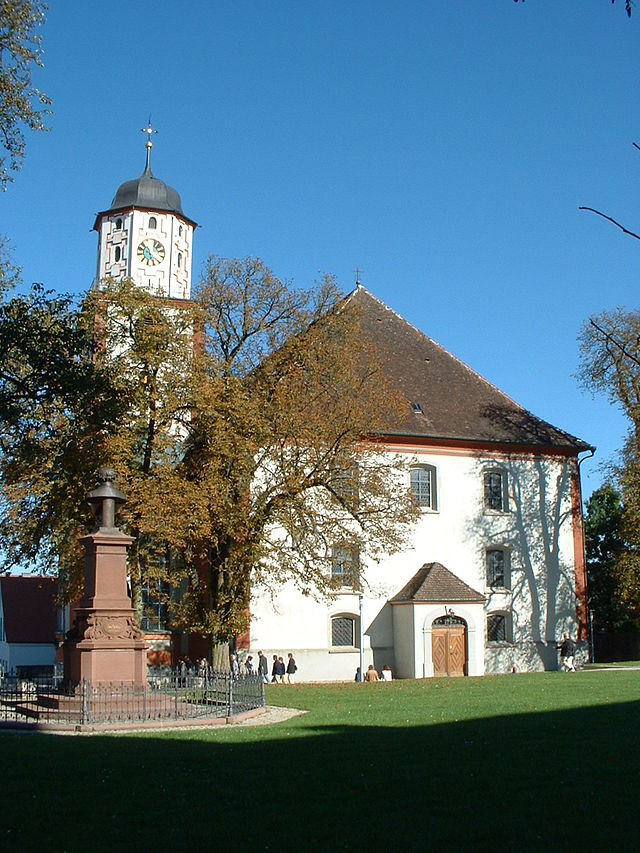
St. Martin Church Messkirch - Photo Credit: wikipedia.org

St. Martin Church Messkirch – Photo Credit: wikipedia.org

Upon my return to Messkirch things were looking up for awhile. My homeroom teacher Fräulein Welte was quite pleased with my sudden interest in French and with the general improvement in the other subjects as well. My more positive attitude was in part prompted by the so-called ‘blue’ letter. It was sent home to inform parents about their child’s poor performance in school. Now I was no longer in danger of failing the grade. Also there was a more pleasant atmosphere at the Stoll family. They must have enjoyed the break from having to deal with me during the summer holidays. The focus was now on the upcoming joyful event. For the baby was due in less than two weeks.

The P. and G. Klopp Story – Chapter IX Part III

Stress-Free Summer Holidays in Freiburg


The summer holidays came as a relief from the mounting anxieties that I felt in school and at the Stoll’s. My parents put me on the train to Freiburg, where Aunt Meta lived at Maria-Theresia-Str. 4.

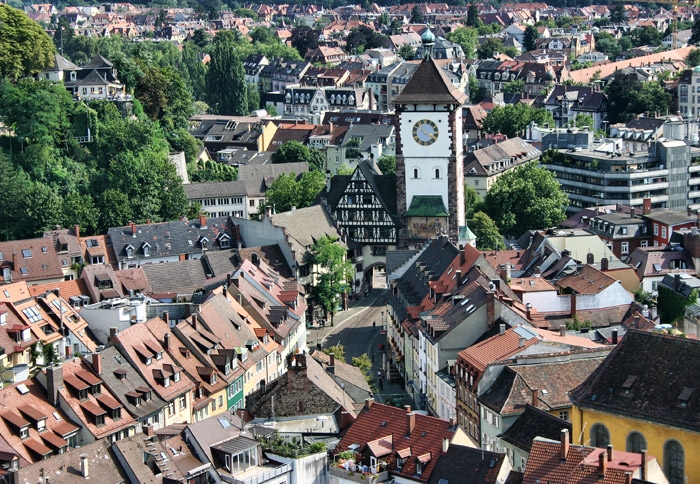
Freiburg - Photo Credit: newline-magazine.com

Freiburg – Photo Credit: newline-magazine.com

The city has now a population of 200,000 people. Historically, Freiburg has acted as the hub of the Breisgau region on the western edge of the Black Forest in the Upper Rhine Plain. One of the famous old German university towns, archiepiscopal seat, the city was incorporated in the early 12th century and developed into a major commercial, intellectual and ecclesiastical center of the region. Freiburg is located in the heart of a major wine-growing area and serves as the primary tourist entry point to the scenic beauty of the Black Forest.

When I arrived at my aunt’s apartment, I immediately felt that a great burden had been taken off my shoulders. Aunt Meta, Father’s youngest sister, cheerfully received me into her pleasant home and the love, which I had been so sorely missing for the last three months, she lavished upon the youngest child of her youngest brother Ernst. Her husband, Professor Vincenz Mülbert, had been suffering from a lengthy illness and was in the hospital during my entire stay. Meta Emma Klopp made me feel right away at home, and even though she had no children of her own, she was like a mother to me. And when I needed correcting for something in my conduct that she strongly disapproved of, her kind words flowing from a warm and understanding heart accomplished much more than the harsh treatment that I had endured at the carpenter’s house in Messkirch.

Aunt Meta

Aunt Meta

In the spacious living room stood a grand piano. Tante Meta allowed me to play on it, even though I had never received any lessons. What attracted me were not its sheer size and unusual shape and the looks of the mysterious white and black keys. Rather I was fascinated by the discovery that by simply pressing the keys of the piano I entered a world hitherto unknown to me, the amazing world of musical sounds. Each individual note or sequence of notes created a pleasant sensation, which made me search for other notes to reinforce it. I once sang Kindergarten songs to seek comfort from the fear of darkness, I played the kazoo to express the joy of being part of a group, but the notes I played on the piano had a more profound impact. They provided a first glimpse into the power of music to open the doors to my inner being, the very gateway to my soul. However, for someone else, especially for Aunt Meta my musical explorations on the keyboard must have been horrible to listen to. Her patience and understanding were truly admirable.

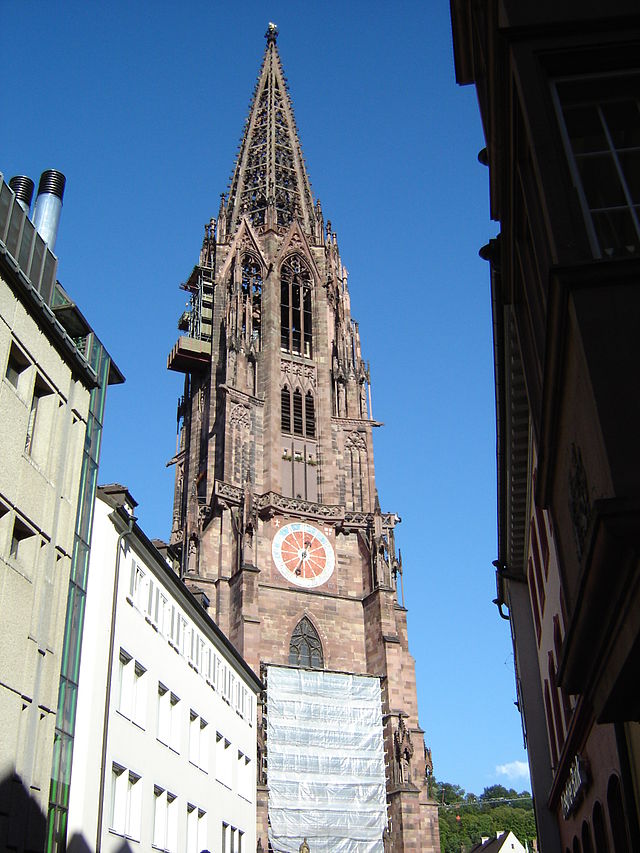
Freiburg Cathedral - Photo Credit: wikipedia.org

Freiburg Cathedral – Photo Credit: wikipedia.org

On Sundays, Aunt Meta took me to the church service in the famous Münster of Freiburg. Everything in the cathedral, the towering stone columns, the stained glass windows, the altar, indeed the entire building itself inside and outside pointed heavenward towards God. You stand there in awe of the splendour created to the glory of God by generations of craftsmen. The priest delivered a sermon whose content I have long forgotten. It must have been a very simple homily. For almost every sentence emphasized the need to pray and the need to be thankful. And that was I guess the essence of what the priest conveyed to his flock in church.