Like-Minded People of Applegrove Road – Part I

LIKE-MINDED PEOPLE

A BRIEF HISTORY OF APPLEGROVE ROAD

By late Bill Laux

Applegrove Road takes its name from an early real estate development at the mouth of Taite Creek. Sometime before 1912, real estate promoters, probably from Edmonton, bought lot 6904 and had that thin slice of lakefront north and south of Taite Creek cleared and apple trees planted on it. One street, Edmonton Avenue, was laid out running north and south and crossing Taite Creek on a bridge. Lots on the lake shore side of the street were one acre in size. On the other side larger lots were available.

Start of Applegrove Road

Start of Applegrove Road

A trail was slashed through from the development to Fauquier. This was not intended to be a road but rather a trail down which Fauquier farmers could bring their teams to clear and log the company’s land. This trail established the route now followed by Applegrove Road.

Continue reading

William Laux – His Art, His Castle and a Tower of Bats – Part II

From the archives of the Arrow Lakes Historical Society

Author Unknown

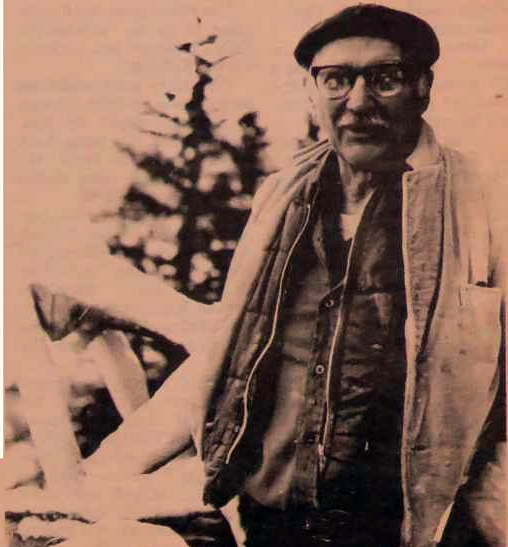
On Thursday, the 7th of October 2004, Bill Laux, resident of 42 years on the lake shore south of Fauquier, succumbed to advanced lung cancer. Bill, when first diagnosed with the dreadful disease, had resigned himself that his life was nearing its end, but picked up a hopeful attitude again when chemo-therapy and blood transfusions gave him back some strength. He even went to visit some friends again, albeit with the oxygen bottle in a little backpack. He could continue to write some more on the early Kootenay mining and railroad ventures, which had been subjects close to his heart. He had been an avid collector of historical facts about the Kootenays.

Bill Laux

Bill Laux

Bill was bom in La Crosse, Wisconsin, 28th Feb. 1925. He served in the American Army in the last two years of the Second World War and then studied various subjects, majoring in English. His father had been a professor for European history. While Bill’s brother James followed their father’s footsteps and became a history professor too, Bill ventured out into the great outdoors, taking employments in the US Forest and National Parks Service, in particular in Yosemite Park, where he met his wife Adele. They both had artistic inclinations, which came to the fore when they met Jack and Janie Wise, who were running a batik factory in San Miguel de Allende, Mexico.

The militarily charged atmosphere in the US drove the two couples in the early 60’s to British Columbia, where they settled on the shores of the Lower Arrow Lake south of Fauquier, building up a new Batik workshop and studio under the name “Vaki Batiks”, in which they designed and produced many fine batiks, which were sold at first mostly to California and later also in Vancouver, Banff, Calgary and other art markets.

The first batik workshop, then on what is now Cedar Springs Farm, was located in an old chicken brooder house that had a masonry stove with a large platform, ideal to keep dye vats at the right temperature. One day hot melted wax must have leaked onto the red-hot heating elements of a little hot plate and set the whole building ablaze in seconds, a great loss for the hard-working artists.

Bill and Adele not only did their art and crafts work, but all the other chores associated with “living off the land”: a large garden, firewood, fences, waterline, road work, hauling in supplies and shipping off art supplies; for over the years, Vaki had become a trademark not only for batik but also for the fine aniline dyes, that were imported from Switzerland and sold out of Fauquier to batik makers over all of North America to give batiks those subtle or brilliant colors.

Jack and Janie Wise left after the initial years (Jack becoming a renowned painter on the west coast, known for his holistic miniature mandalas), while Bill and Adelle continued with Vaki Batiks. In late fall of 1967 Bill suffered the tragedy of the death of his wife Adele, who succumbed to a virulent infection before the illness was correctly recognized and antibiotics could be administered.

The following year Bill was joined by a young woman, Lynne Gilroy, who had worked in a bio-technical laboratory and was familiar with meticulous work. She got into the craft of Batik very quickly and became Bill’s right hand helper, not only in the batikery but also in constructing the large home-made brick structure, that is locally known as Bill’s castle. Indeed, Lynne was so inspired that she, after 8 years with Bill, entered UBC’s School of Architecture and became a graduate architect.

Bill, with and without various apprentices, also gave workshops in several towns and cities of BC and Alberta, teaching the art of batik. To the local people of Fauquier, Bill must have appeared quite a bit as a recluse, because he was so taken up with his work and projects (as well as his studies, to which his extensive book collection attests).

For one, the “castle”, built of home-made bricks, must have taken hundreds and thousands of hours of hard work. The bricks were made from a mixture of clay and sand with a small amount of Portland cement, that was pressed under 50000 lbs. in a little ingenious hand press, imported from South America. The sand and clay not only were mixed by hand, but had to be screened, which in the case of clay meant pulverizing dry clay lumps first to mix evenly with sand and cement. After the moist mixture was pressed into over-sized bricks, they were cured by turning and wetting again, until they were strong and ready – a very time-consuming effort, but a technique, which Bill embraced whole-heartedly as an alternative to “cookie cutter” construction.

Once the bricks were mortared into the structure, they were then painted on the outside with hot waste wax from the batiking process, which made the wall water-repellent. As the waste on a farm goes onto the compost pile, so Bill’s waste from the art studio went onto his architectural structures. Recyling: organic or ceramic? Bill also branched out into sculpturing, adorning his castle with over-life-sized figures.

Bill’s other constant job and concern was his water supply – over 2 km all the way from Heart Creek, via board flume on small trestles, plastic pipe and ditch to his, literally, “home and castle”. To keep this flow going, he battled not only the bears, who every now and then would rip apart flume sections, but the ups and downs of Heart Creek. Over the years, the intake on Heart Creek was destroyed several times by spring run-off or log-jam floods. When Heart Creek rose 3 meters high over its regular banks following last June’s cloudburst, it totally washed out Bill’s most elaborate intake structure of cemented stones. Bill’s immediate neighbor Logan Bumpus, with the help of several friends, was able to rebuilt a new intake within days, restoring the flow of water.

Bill at times had help with the flume project, since several neighbors drew water from the same aqueduct, it was basically his effort and constant vigilance that kept the water flowing towards those shores of Lower Arrow Lake, which are not blessed with abundant mountain runoff because Mineral Ridge is a barrier to those flows between Heart Creek and Taite Creek.

BC Hydro had not reinstalled the power supply along the lake shore south of Fauquier after die flooding of the valley in 1969. So Bill installed a small turbine and generator and made his own electricity. Here we have a man who did not ask what his government can hand him out for free, he simply helped himself.

And Bill helped others. Until the illness cut him down, Bill had been walking the hills and mountainsides with much younger men in the effort to prevent logging or road building in places that could impair the community watershed of Fauquier. He will be missed in the Fauquier Watershed Committee.

Possibly his longest lasting contribution to the valley is Bill’s introduction of the California Redwood tree, the sequoia gigantea. Several grow around his place as well his neighbors’ and I hear one is doing just fine right down in Fauquier

Although Bill was at times perhaps a grumpy recluse, he has many friends and as he aged, he made more in the local community. I believe none of us ever fathomed his depth completely. I got an inkling of his soul when we talked about music that we both loved. So here is to Bill a verse inspired by Mahler’s last song from the “Songs of a Wayfarer”:

By my house there stands a maple tree, there I worked many hours and I felt so free,

And that maple tree that spread its broad leaves over me.

Then I knew at last how life can be.

All was well, all was well, all was well with me.

Well my pain, well my love, well my world and dream.

By the castle now stand some Sequoia trees they grow in freedom and they grow in peace. And those Sequoia trees they’ll grow for a many hundred years.

A tea in honor of Bill Laux will be held Sunday, October 31st, 1 pm, at the Fauquier Hall.

When writing about the Fauquier Communication Centre in a future post, I will return one more time to Bill Laux and his work. He donated much of his historical research material and the remaining batiks to the Centre. I also need to report here that a few years after Bill’s death his castle burned down. More than ten years later people traveling through still inquire about the castle that is no more.

Driftwood Art and Other Visual Delicacies

Fauquier, BC

How beautiful you are!

Photo Gallery by Peter Klopp

William Laux – His Art, His Castle and a Tower of Bats – Part I

William Laux

By Yvette Brend – Arrow Lakes News December 14, 1988

From the Archives of the Arrow Lakes Historical Society

Photos by Peter Klopp

Bill Laux plans nothing.

Forester, Batik artist and sculptor, he builds his talents like he builds his “castle”, ad­ding walls, arched windows and wood stoves to every room. He prefers not to finish.

“When you put the roof on, that’s as high as it’s going to go, and that’s a sad day,” he said. Visitors pass a “Beware of Bats” sign entering Laux’s property, and may no­tice a strange gnome perched on his chimney. Up the hill, overlooking Arrow Lakes stands his strangest, most imposing creation. Laux be­gan his pet architectural pro­ject in 1969. It symbolizes his entire life.
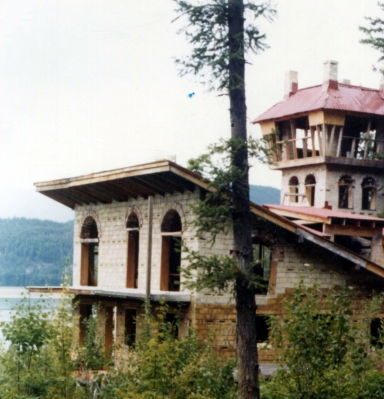
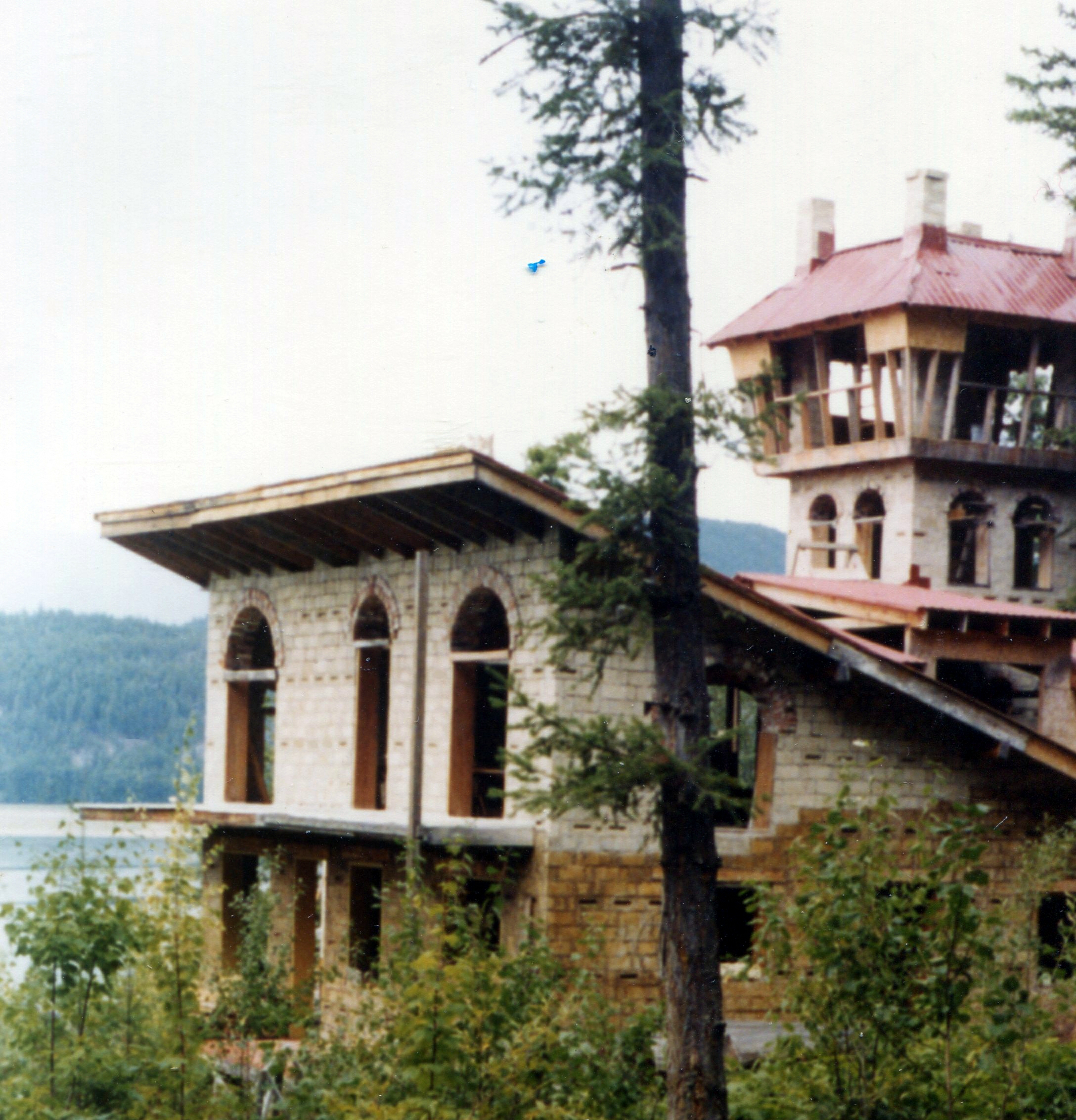
The 'Castle' that would never be finished

The ‘Castle’ that would never be finished – 1977

He has varied interest from the daring architecture of Huntertwasser, and copies of Col. R.T. Lowery’s witty edi­torials to the tiny brown bats that live under the eaves of his “castle.”

Laux has an English de­gree from the University of Wisconsin, with some chemis­try and science background.

“I took English because it gave me the most freedom,” said Laux, “as long as you took one English course, you could take anything else you wanted.”

He worked as a forester in California before moving to Canada, when the U.S. Feder­al government expropriated his property for a park re­serve. He changed countries and then professions. Laux and his wife Adele, bought 100 acres in Fauquier, where he began a batik studio. Laux had no prior artistic experien­ce, but his chemistry back­ground fostered his inventive skills with dyes for fabric.
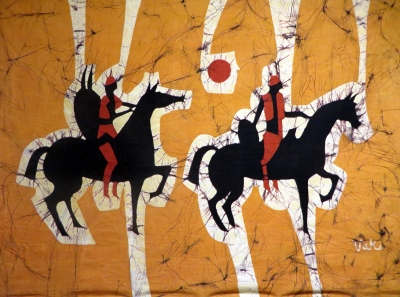
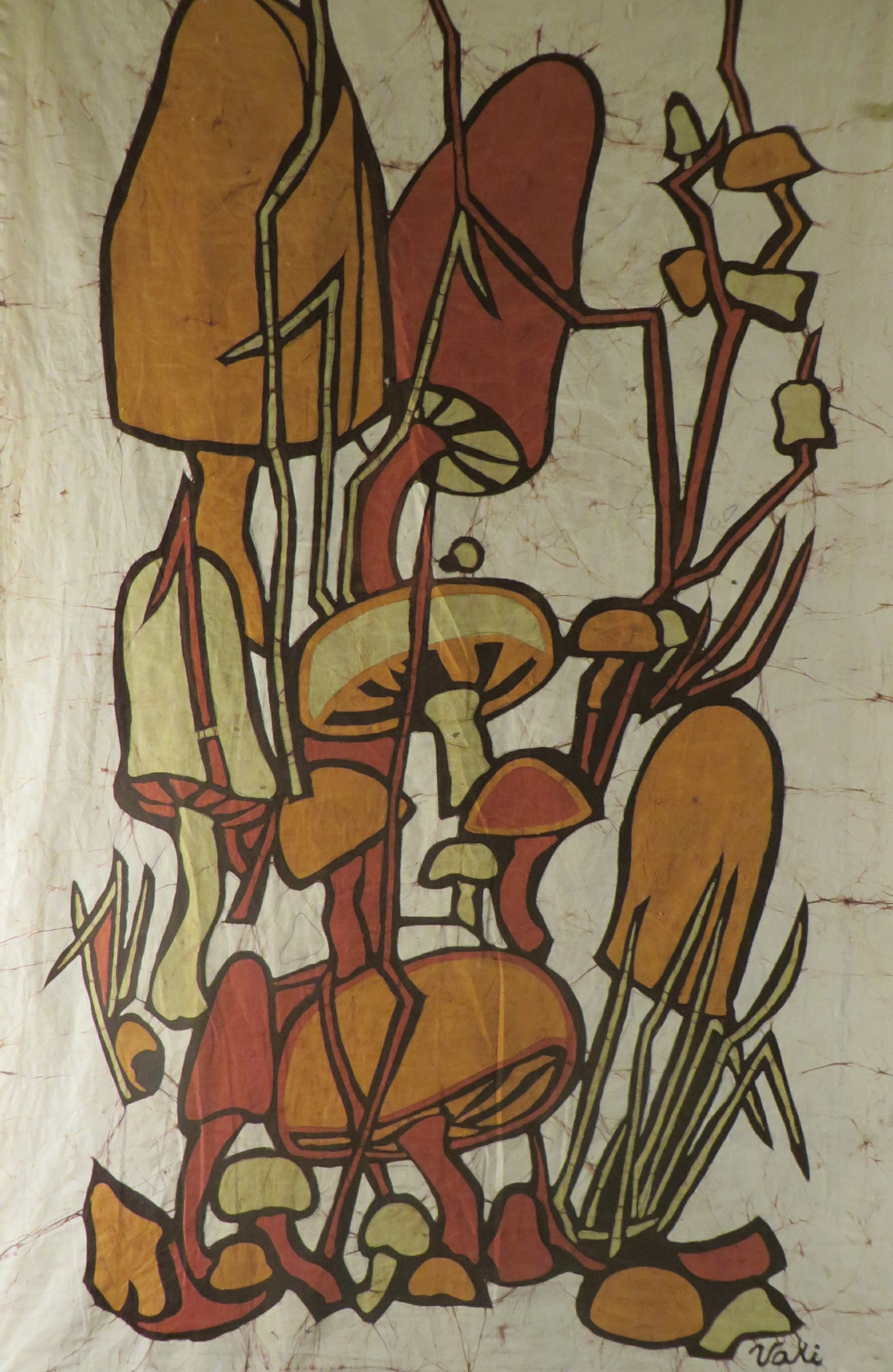
Batik Purchased by Gertrud Klopp - 1977

Batik Purchased by Gertrud Klopp – 1977

“I got involved in batik be­cause I was broke – the great­est motivation in the world,” laughed Bill.

The Lauxs moved to B.C. because they loved the valley, and land was very cheap in the interior during the 1960’s.

When B.C. Hydro bought the flood rights to seven acres of Laux’s property he was cautious. Part of his neighbor Logan Bumpus’ land and Laux’s foreshore was flooded. Laux was compensated with a generator to restore his pow­er. He was not disheartened by this event at all, saying it was good luck to be discon­nected from B.C. Hydro. Lo­gan Bumpus never regained his power. [They do have power now.]

Adele, Bill’s wife, died sud­denly in 1967 from blood poi­soning, leaving him alone in Fauquier.

Batik was very stylish in the 1970’s and artists began to gather at Laux’s in the summer to learn the art of waxing and dyeing fabric.

Bill joined with other art­ists to form Vaki studios – a Tarahumara Mexican Indian word meaning “homestead”.
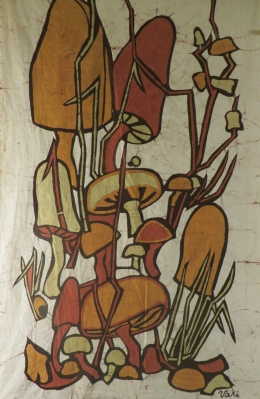
Batik Purchased by Gertrud Klopp - 1977

Batik Purchased by Gertrud Klopp – 1977

When Vaki studios started booming it supported five full time artists, who worked dur­ing the winter and sold on the road two months of the year.

Laux said it took some time before he felt confident as a designer, he excelled at the chemical mixing of dyes and created new dyes for different effects.

He taught Batik techni­ques to students until 1975, but now he prefers to create.

Batik is a form of artwork using waxes and dyes to em­boss a pattern on a natural fabric – usually high quality cotton.

A negative design is drawn on the fabric with wax resist of different consistencies, then dipped into a dye one co­lor at a time, using yellow first, then ruby red, tur­quoise-blue to black, and slowly a design is built.

Originally Batik was sold as yardage for clothing. Batikers created a design and made a yard of it for sewing into garments. For this rea­son many Batik artists had problems as the process was recognized only as craftwork. Crafts have a use; art is creat­ed solely for aesthetic value.

Once completed, a batik is identical front and back. Silk screening – the process or printing fabric with oil based ink – does not produce this ef­fect. Hung in a window, in front of a light source, the ba­tik acts like a stained glass window, casting colored light.

“There’s no way to dupli­cate a batik, except going through the process again,” said Bill.

Different waxes used on the fabrics creates varied ef­fects, a brittle wax creates more of a “crackle” or cracked texture, smoother wax gives an even color. Ba­tiks were in fashion in the 1920’s, and again in the 1960’s, “Oh they’ll come in fa­shion again. ’ ’ said Laux.

Vaki studios sold at least 80 batiks a year, in British Columbia and along the west coast of the U.S. They pro­duced Westcoast Indian de­signs, Mexican Indian patterns, Oriental and floral pat­terns. The artists worked on each other’s ideas, making the operation a co-op studio. Vaki Studios designed an Owl Lo­go for the Calgary Inn. The Inn only bought one batik of the design, fearing the $90 art work would be damaged if placed in the rooms.

“I would recommend this to anybody, when you go into a hotel, with those awful pic­tures on the wall, put them under the bed, and I mean leave them there, ” he said emphatically, “ After a while management may get the hint – It’s visual pollution, but no­body says anything.”

“We couldn’t make enough bullfighter stuff in Calgary,” Bill speculated that many rich Calgarians holiday in Mexico, and admired the Mexican styles of their work.

Indian designs were also popular. Art studio refused to handle genuine Indian artists, and their skills remained in tourist booths – carving totem poles and soapstone.

Some of the titles of his pieces were Toro, Witness Tree, Constipated Owl, and Lovers or Madonna and Child.

Through the growth of his studio, Bill also began work on his “castle” in 1968 with fellow artist, gone architect, Lynne Gilroy. “Those happy days are gone. A lot of art outlets in B.C. have gone bankrupt and can’t make it anymore,” laughed Laux. “If I were to hit the California market now, I’d sell them life sized sculptures of their astrological signs.”

So Laux began to spend more time with his pre­packaging dye and tool busi­ness and his architectural pro­ject. He still does some cus­tom work for commercial in­teriors, such as hotel lobbies and other public buildings.

“When you’re in the art business you have to keep changing. Tastes change.”

Someone gave him the idea of sculpting with steel wool and cement, so he built a strange gnome, which perches on his chimney. After seeing his chimney ornament, a resi­dent of Fauquier commis­sioned him to create a meteor­ite-like chimney pot, and two customers, in Seattle and Wenatchee Washington, have also ordered custom sculp­tures.

Four of his life-sized struc­tures will also be placed on his turret, one for each chimney. He has rigged a pulley system to hoist the heavy pieces into position.
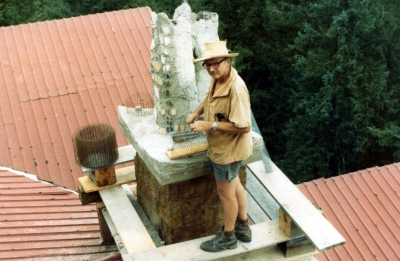
Bill Laux working without a Plan - 1977

Bill Laux working without a Plan – 1977

Laux’s castle can be viewed from his small two le­vel cabin and studio, lower on the property. The ominous structure faces the lake with turrets, endless chimneys and white-framed windows.

“We didn’t draw any plans, we just let it keep growing,” said Bill.

Entering the house, a gey­ser spurts water on its left – perhaps for a fountain? Bill prefers to leave it to the ima­gination.

The house has three main levels and countless smaller rooms on varying levels. The main turret has three levels, one planned as Laux’s bed­room, with a small hatch door on the floor to close off the world.

Laux said he learned “rude carpentry” from his experi­ence as a forester and experi­mented from there.

Two of the chimney statues are in place. They are naked females, one with flowing gol­den hair. The third, a nude In­dian with spear is almost fini­shed, and the fourth is still in Laux’s imagination.

From the turret another chimney topped by an ab­stract chimney pot, made of old dishes, mirrors and brown clay, can be viewed.

The tower also presents a seemingly endless view of the Arrow Lakes. “The higher we

went, the better the view got,” he said.

Downstairs, past veran­das and window frames hand sculpted with Poly filler, the basement floor is heated by a huge log burning stove, and contains Laux mini sawmill he uses to cut the lumber for building. The bathroom and kitchen should be finished by next year, when Laux may move in.

Bill picked up a tiny bat, dead from exposure, on his or­nate windowsill, and gently examined it.

“I don’t plan, I never have planned, because when I plan something, I always change it.”
Another Story on Shady Mr. Fauquier

Mr. Fauquier’s Funk Place!

Submitted by Richard Eichenauer

Why did the local people want to rename in 1967 the settlement of Fauquier into something else, like „Birchpoint“, or „Aqua View“ or „Oakville“, etc.? There were two reasons: One was that many felt, they had a hard time with the pronunciation of the name Fauquier. It sounded too close to a four-letter word, which workmen and loggers used all the time, but couldn’t be said in the company of ladies. The other reason was that some of the old-timers felt that Mr.Fauquier, who had given the little settlement its name, had been a „crook“ about 80 years earlier.

Besides various stories I heard from the then still living old timers about embezzlement of government moneys by Mr.Fauquier, I also heard the story of how he tried to „ailinate“ a prime section of „Crown land“ with a stroke of his pen from some first settlers that had gone to the trouble of staking that piece of land according to the laws of the land. The piece of land in question lies about 1 km south of the present day ferry landing on the Fauquier side.

In those long gone by days, you could get a 1/4-section (160 acres) by “staking a homestead“, build an abode for yourself and family, clear enough land for a garden and some fruit trees and living on this land, improving it over a period of about 5 years, pay almost next to nothing for the land, and then get the „title in fee simple for a free hold“.

The „Staking“ for a homestead in those days, I was told, had to be done on the 1st of January in a given year. You would have had to explore the parcels of land that had been „written out“ in the previous year, and see what it was like: location, soil type, water availability, access by trail, road or water, if there was a lake near by.

The first of January in this country and in those years meant between 2 and 6 feet of snow on the ground, and the temperature to go with it. Needless to say, there were no roads then and you had to hike into the place you desired to claim by staking it. And staking meant that you had to go to the approximate corners of the 160 acres and pound a marked stake into the frozen ground – as early as you could do so, so as to be the first on site to do just that, especially if you were going after a prime location in a valley where there was not much flat land anyway, and possibly with access to a lake, on which sternwheelers held a reliable connection to the rest of the world. And for such a prime location you better went early, real early, namely New Year’s midnight – at the best in partial moonlight stomping through all that snow around 160 acres.

160 acres in this case was roughly a square with a side length of 800m. To stake the 4 corners, you had to stomp a minimum of 3.2 km, plus the way there from wherever you had your covered wagon or camp – through rough virgin forest – in deep snow, in the dark!

In 1890 or there about, the Funk brothers had all done the appropriate steps and hikes at New Year’s midnight. When they came to Nakusp a day or two later to register their homestead land claim, the government registrar, who was Mr. Fauquier then, informed them that that piece of land had already been claimed. The brothers asked by whom. Mr.Fauquier refused to tell them. The brothers told Mr. Fauquier that they had not met anybody at New Year’s midnight and that they claimed that land.

You can imagine the rage the brothers felt when it turned out later that Mr.Fauquier had claimed the 1/4-section lakefront land for himself by just writing in his name in the papers without going through the necessary steps and hardship of staking it. The Funk brothers finally were granted title to the land in question, to Lot 7604 and not Mr.Fauquier. He somehow ended up on a parcel that is now the Fauquier golf course, which previously had been „Fauquier’s Landing“ during the times, when sternwheelers were still plying the Arrow Lakes and Fauquier’s place became a stop for the boats.

Needles – a Town that is no More Part II

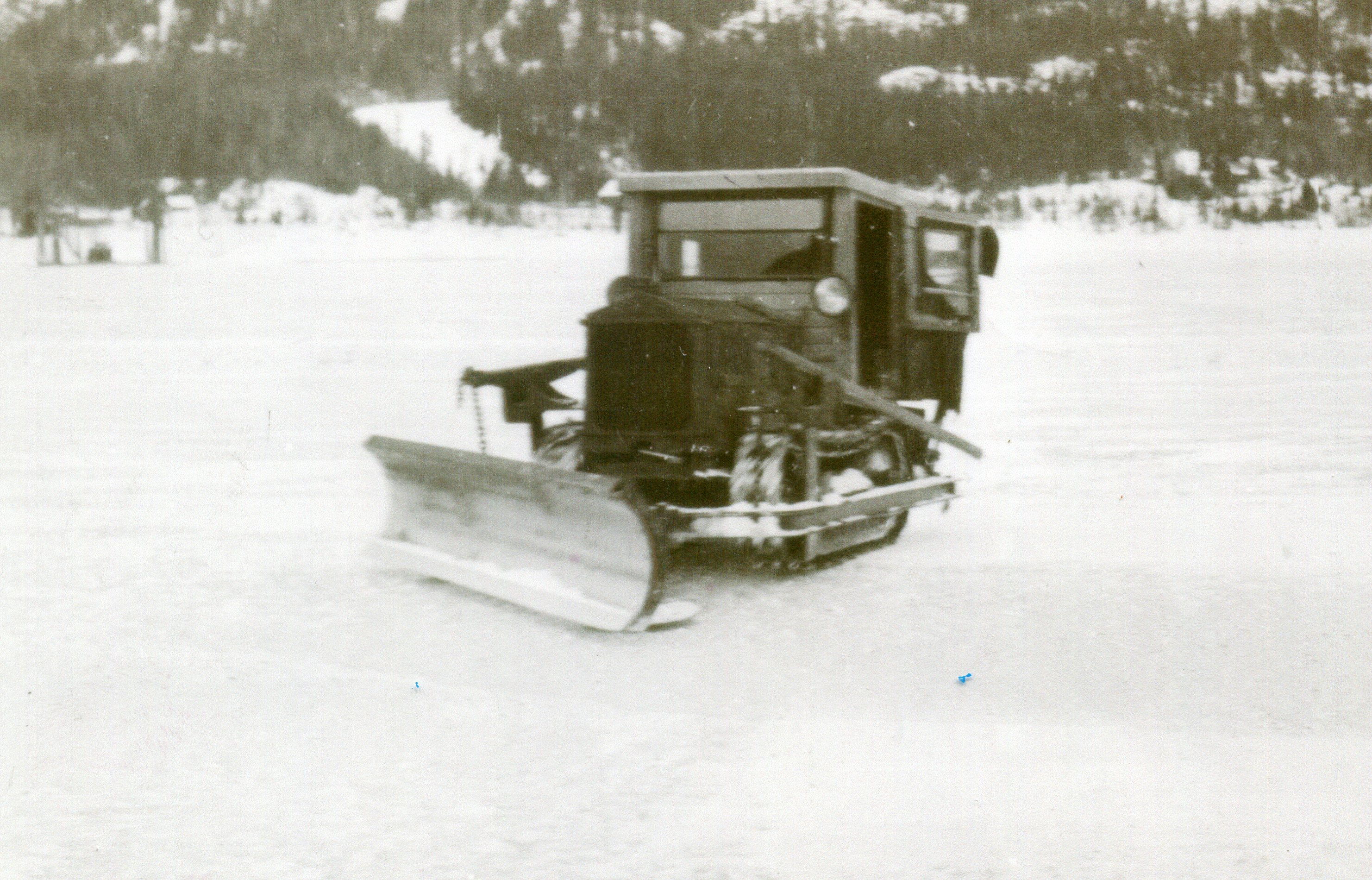
A Tractor Snowplow Crossing the Lake

A Tractor Snowplow Crossing the Lake

Story and Photos contributed by Annette Devlin

Also, as the lake froze over in the winter, mail was transported by horse and sleigh from Burton over the ice.

A403

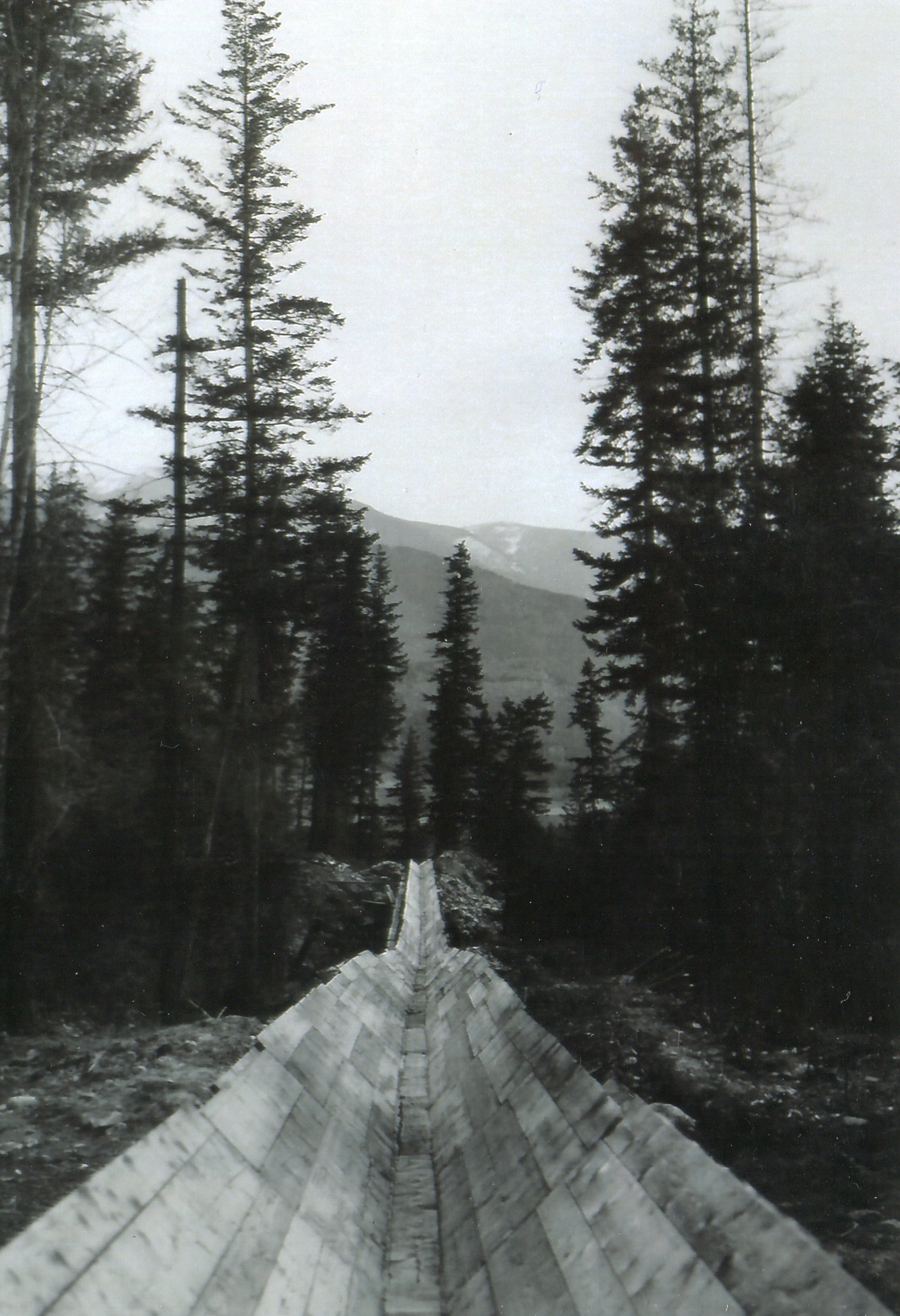
Needles had also been a logging centre. In 1922, it had a large log flume for logs that ran for four miles from the Whatshan to the Arrow Lakes, at one place where it crossed the road it was 12 feet above.

Log Flume Four Miles Long

Log Flume Four Miles Long

Due to the flooding of the Arrow Reservoir the town site of Needles no longer exists. However, the properties both north and south above the high water line are still occupied.

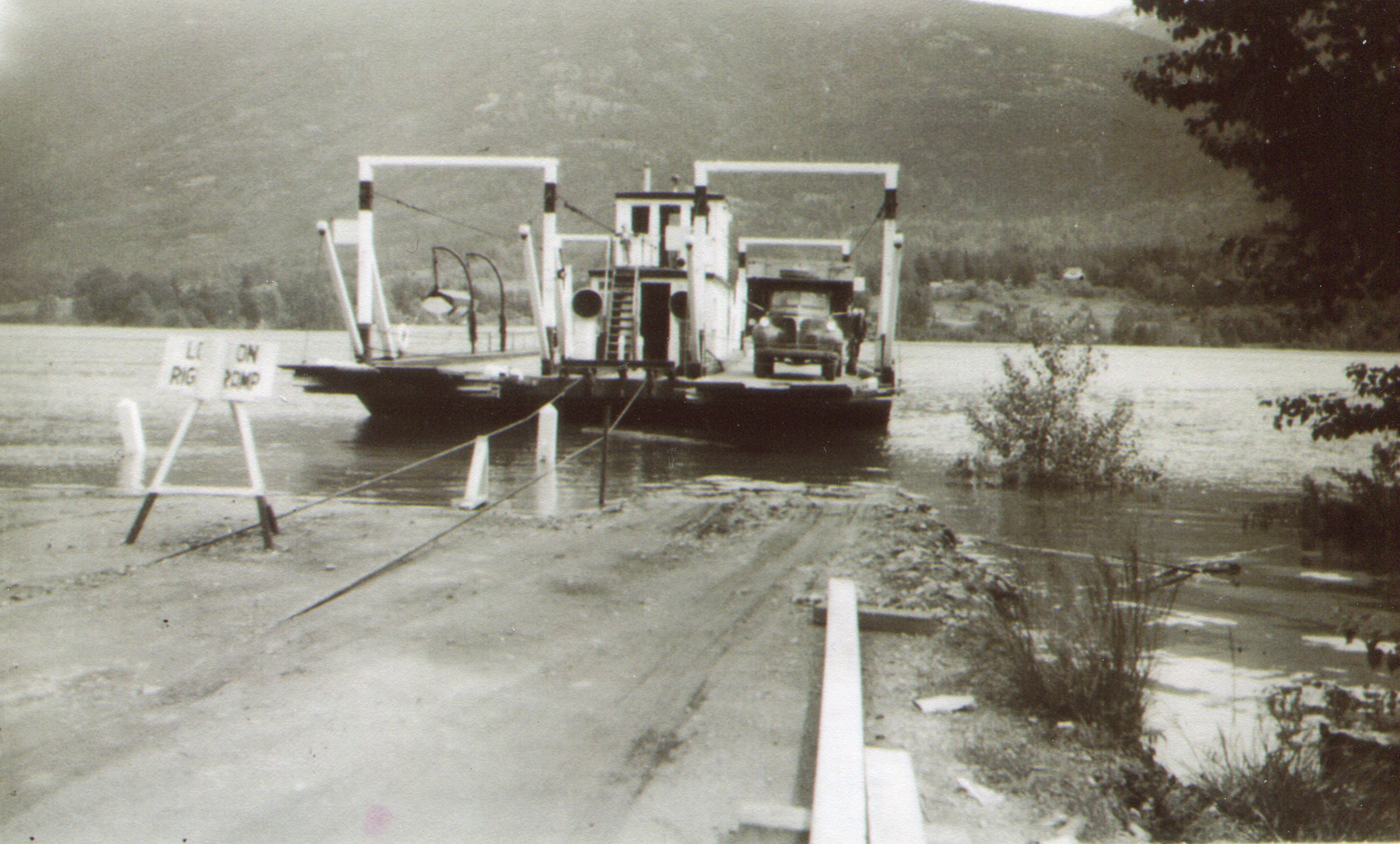
Ferry Service in the early 1920's

Ferry Service in the early 1920’s

As reported the first ferry to cross the Arrow Lakes between Needles and Fauquier was a 6 HP launch in 1919. In 1922, a raft towed by Mr. O.J.Aspinall’s rowboat was used. By 1924, hourly daily service was started by Mr. George Craft consisting of a boat for foot passengers and a raft for vehicles powered by a small boat called the “Kathleen.” In 1928, Claude Rollins was engaged to give better service with a larger boat. In 1931 a three-car ferry was installed. 1941 saw an eight-car cable ferry put into use. As the years went on, the increase in traffic warranted larger ferries and more hours of operation.

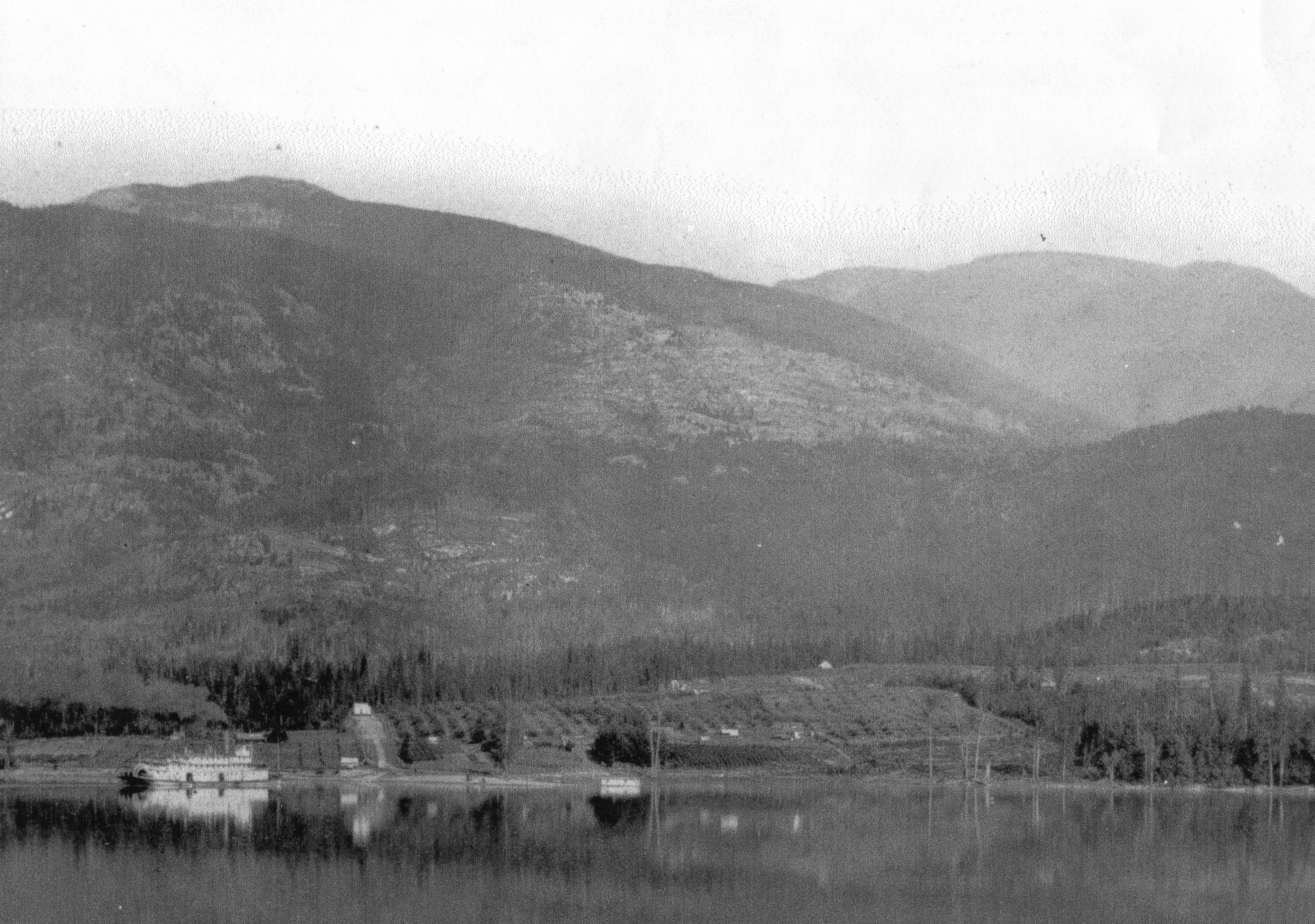
Fauquier as seen from the Needles Side

Fauquier with its Large Orchard as Seen from the Needles Side