Gerhard Kegler, the general, who dared to disobey Himmler – Part VII

Kegler’s Death Sentence and His Life put on ‘Probation’

If you have not read the previous posts on Major-General Kegler, you can look them up by clicking on I, II, III, IV, V and VI.

Parts V and VI are a digression from the report extracted from the book: The Siege of Küstrin – Gateway to Berlin 1945. But they provided some valuable insight into Kegler’s personal life before he was called away from Gutfelde to become commander of the newly established Woldenberg Division and also commandant of Landsberg/Warthe, which was declared a fortress by Himmler.

 “At dawn on February 4, the remains of the ‘Woldenberg’ Division began crossing the anti-tank ditch that blocked the Landsberger Chaussee at the eastern end of Küstrin. They had already come to within 10 kilometres of the town the previous day but had waited for darkness to get through the area occupied by Soviet forces.

General Busse had sent a young liaison officer to meet them, but without any instructions for Major-General Kegler. When the latter arrived in Küstrin he was promptly given orders to report to the standing court-martial in Torgau, thus becoming one of the last to leave Küstrin by the normal road. As the witnesses to the events leading up to Kegler’s court martial were now trapped in Küstrin, evidence had to be obtained from them by telephone.” Thus, one reads in the book ‘The Siege of Küstrin: Gateway to Berlin 1945’.

Court martial proceedings against Major-General Gerhard promptly began on February 11, 1945  and ended on the following day with the pronouncement of his death sentence for not having defended the city of Landsberg against the enemy.
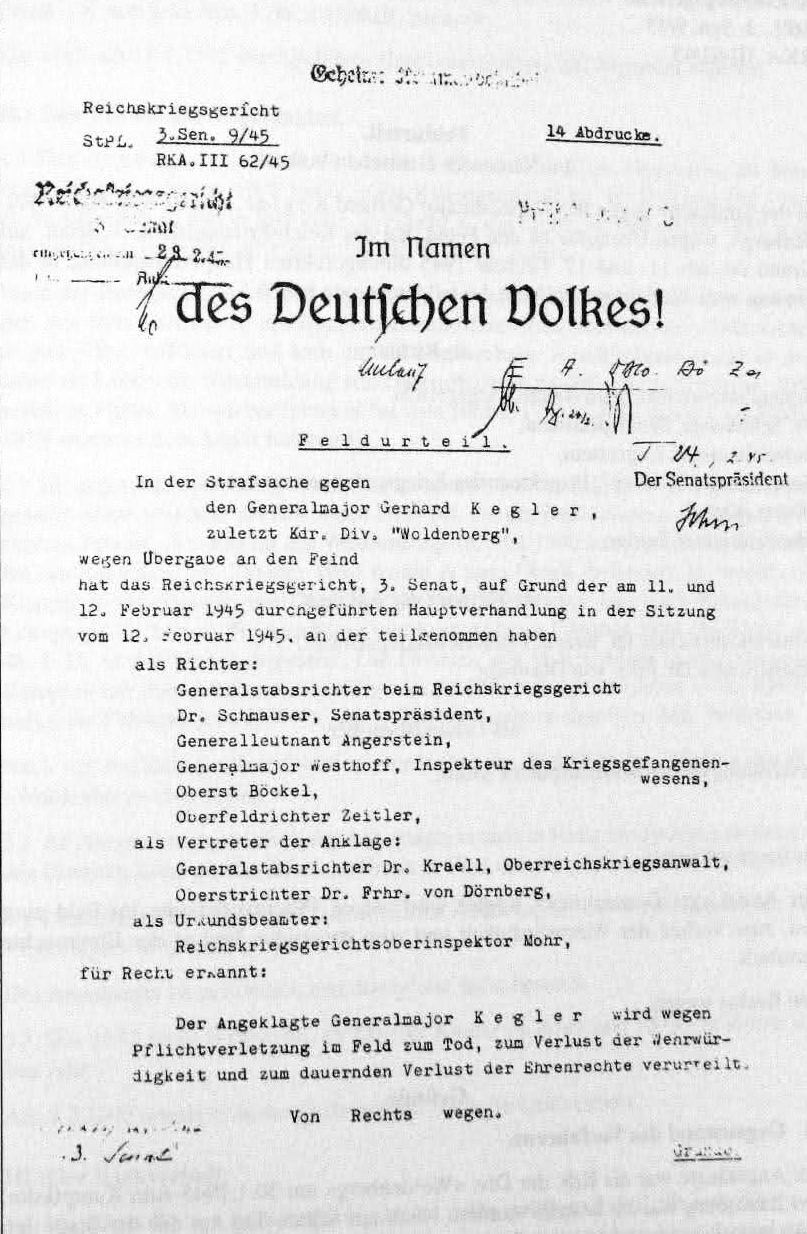
The Death Sentence of Major-General Gerhard Kegler

The Death Sentence of Major-General Gerhard Kegler

The bottom line of this document written ‘In the Name of the German People’ reads: The accused Major-General Kegler due to his breach of duty on the battle field is condemned to death, to loss of his eligibility for military service and to perpetual loss of his civil rights.
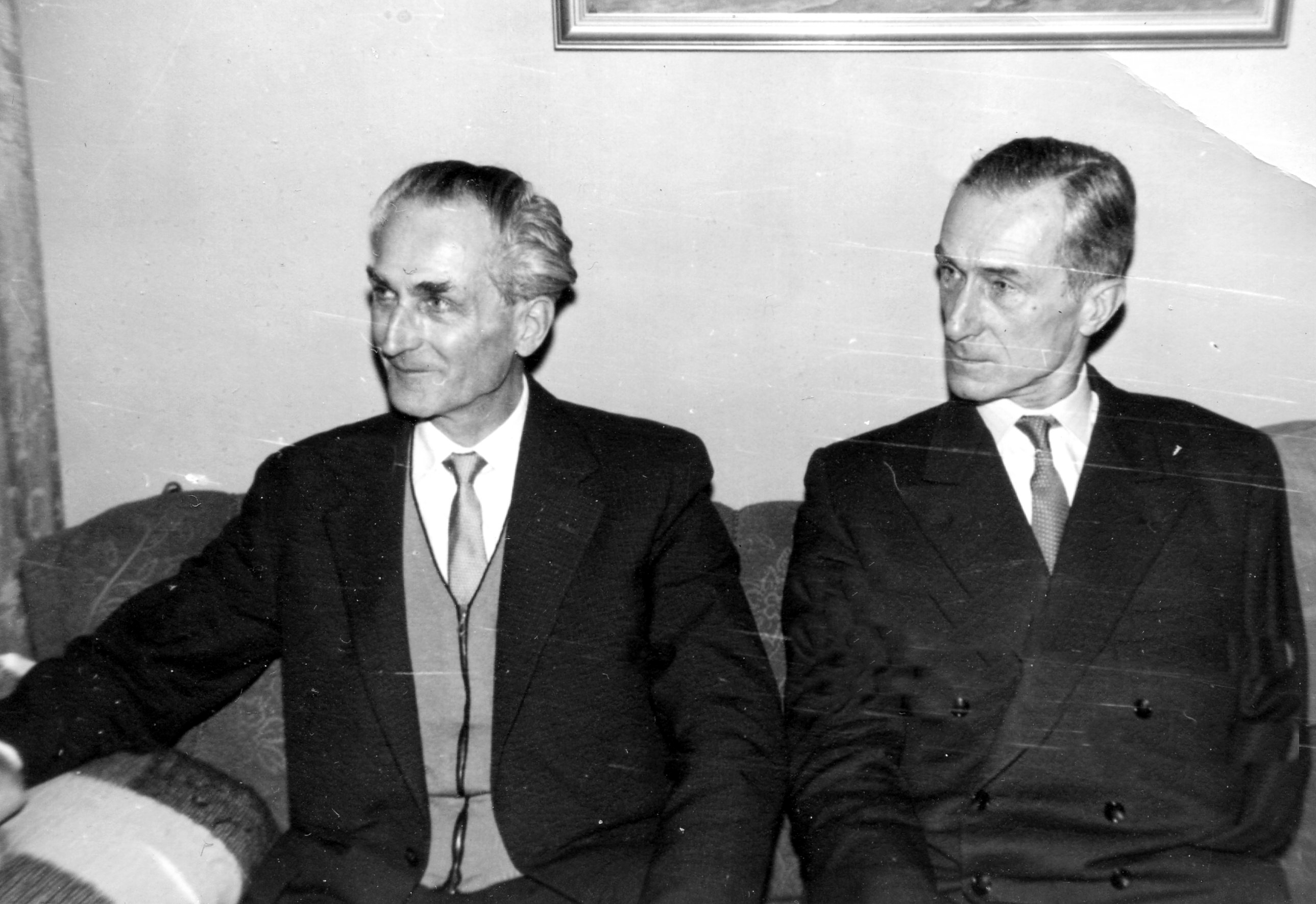
The Two Kegler Brothers, Günther on the left and Gerhard without his right Arm

Von Scheele, the president of Nazi-Germany’s Court Martial Justice System, brought about a suspension of the death sentence and postponed its execution to the end of the war.Demoted to the rank of a private, he was to die a heroic death or to prove himself worthy to be pardoned. As a soldier in the battle field he was severely injured losing his right arm and in the closing weeks of the war became a prisoner of war of the British, who promptly promoted him back to the rank of a ‘Nazi-General’.
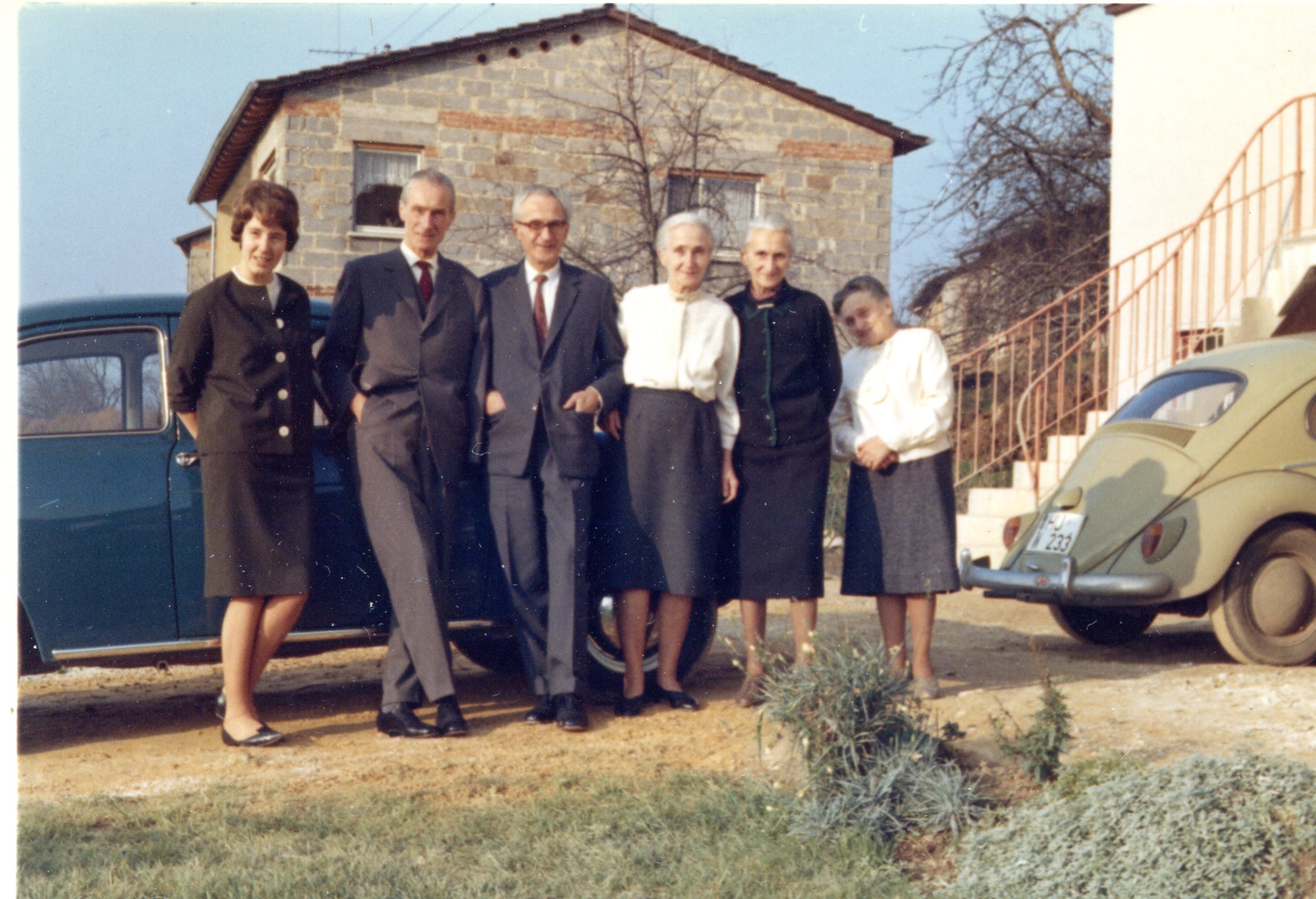
The Kegler Family with Gerhard and his daughter Helga on the left

The Kegler Family with Gerhard and daughter Helga on the left (1964)

When in 1952 he applied for a pension as a former general of the armed forces, the official in charge declared, “You have been condemned to death by Himmler!” and turned down my uncle’s application. What followed is hard to believe. Gerhard Kegler had to apply to have his death sentence annulled in order to be eligible for his pension. However, the provincial court of Hesse in Giessen rejected his application on the ground that he had missed the deadline regarding compensation for injustices suffered under the Nazi regime. The West-German press heard about this case and spread the news about the condemned general with headlines like ‘Does Himmler still rule from his Grave?’. The news created such a public outcry that in the end Theodore Heuss, the first President of the Federal Republic of Germany, stepped in and officially rescinded the death sentence. Thus, my uncle finally regained his status as general in retirement and was able to draw his pension.
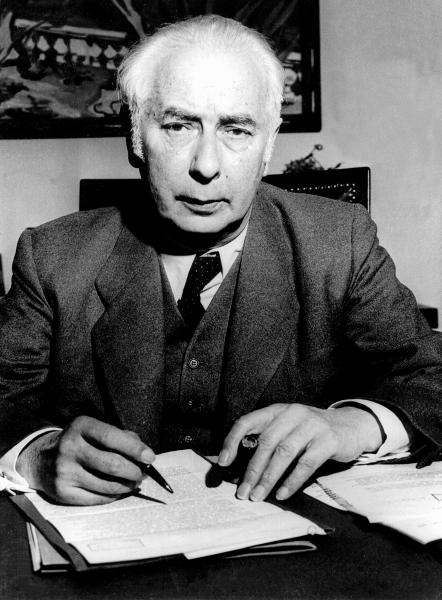
Theodor Heuss, First President of the Federal Republic of Geramny - Photo Credit: germany.info

Theodor Heuss, First President of the Federal Republic of Germany – Photo Credit: germany.info

To be concluded on next week’s post

The Annual Pine Mushroom Bonanza at the Arrow Lakes

The Pine Mushroom, a Renewable Resource

Mushroom Picker's Delight: A Pine Mushroom Button

Mushroom Picker’s Delight: A Pine Mushroom Button

Among all the choice mushrooms growing in our forests, such as Chanterelle (Pfifferlinge), Lobster, King Boletus, Honey Mushroom, and many others, no fungus can compare in monetary value to the prized Pine Mushroom.  Every fall local and out-of-town mushroom buyers set up shop for the annual harvesting bonanza. This is the time of the year, when people, who would normally sleep a few extra winks on the weekends, get our of bed way before dawn and scour the woods for that elusive fungus.

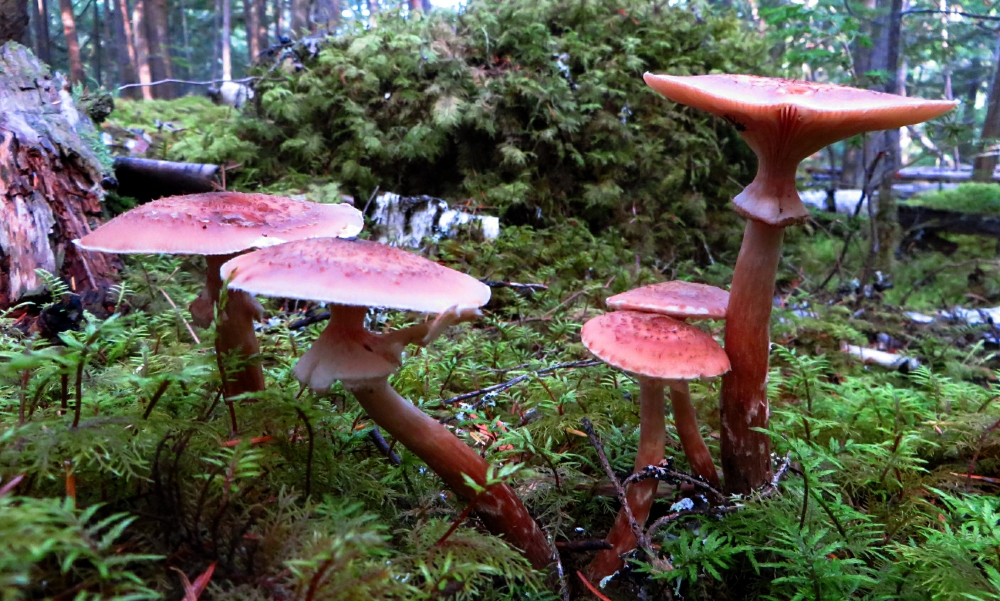
A Nest of Honey Mushrooms

A Nest of Honey Mushrooms

The article below is an excerpt taken from the Arrow Lakes News published last year in their October 29th edition. It describes very well the dilemma of the major industries in our area, timber and mushroom, being in conflict with each other over the management of our natural resources. The photos shown on this post are from my own personal archive.

Triplets of Boletus Mushrooms

Triplets of Boletus Mushrooms

Since she was 12 years old, Jean Hewat has been involved in the mushroom industry. As a kid, she went out with her family picking for pocket-money and she’s been buying mushrooms from other pickers at her place on 15 Avenue on the north end of town for the past 21 years. With some help from her mother and occasionally other family members, she is more or less a one-woman show.

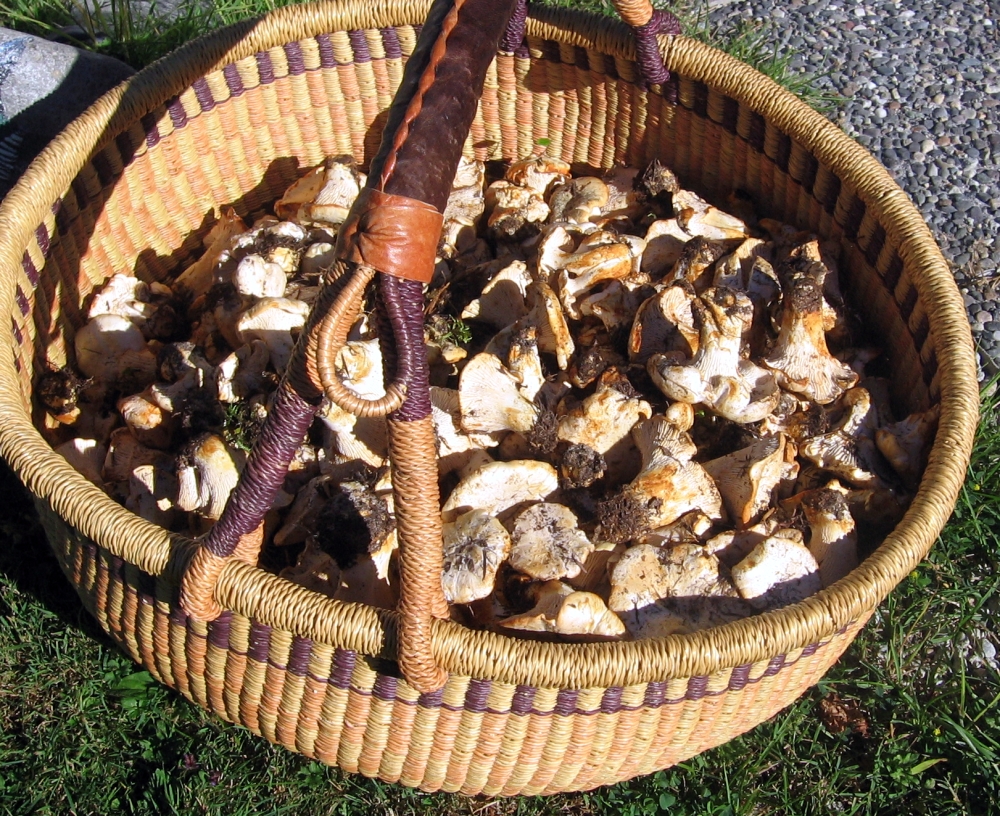
A Basket Full of Chanterelles

A Basket Full of Chanterelles

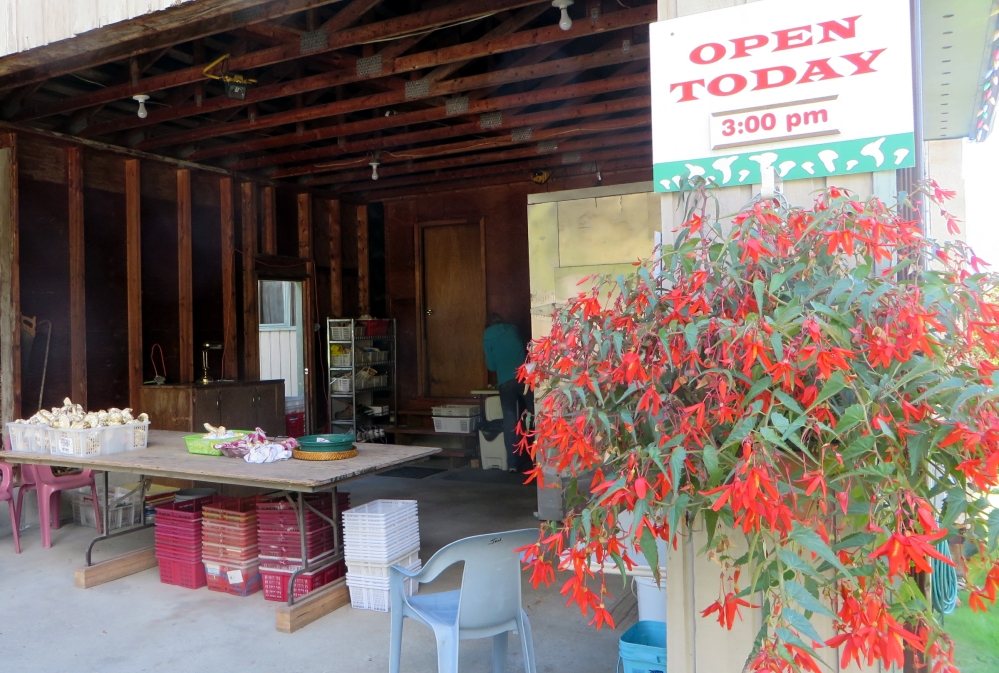
The set up has moved from her garage to a new building still being finished on her property with plenty of parking and a large walk-in cooler. She explains the unfinished building during an interview with the Arrow Lakes News as her mother answers the phone and groups of pickers come in carrying their bounty — large buckets of freshly picked fungi.

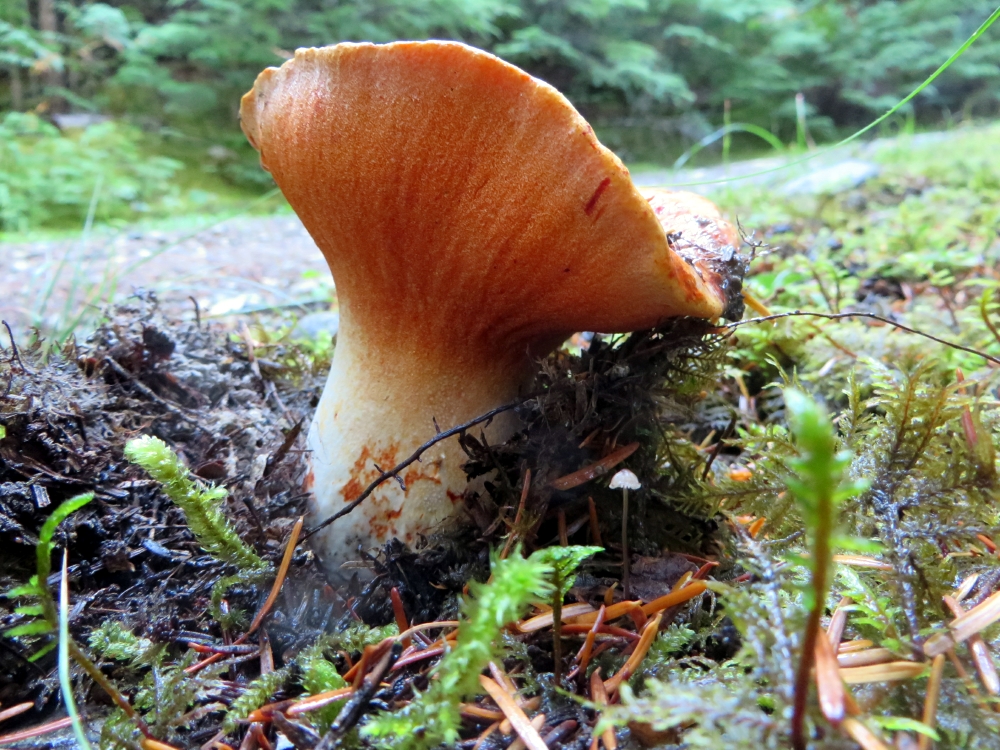
Lobster Mushrooms are rarely as clean as this one.

Lobster Mushrooms are rarely as clean as this one.

The odour inside is damp and mossy — the baskets of mushrooms are mostly the large, fluffy white pine, or Matsutake as they are known in Japan, where most of these are destined to go. The largest market for pine mushrooms in the world is in Japan, but Canada is not the only supplier. They are also grown in the US, China, Scandinavia and elsewhere.

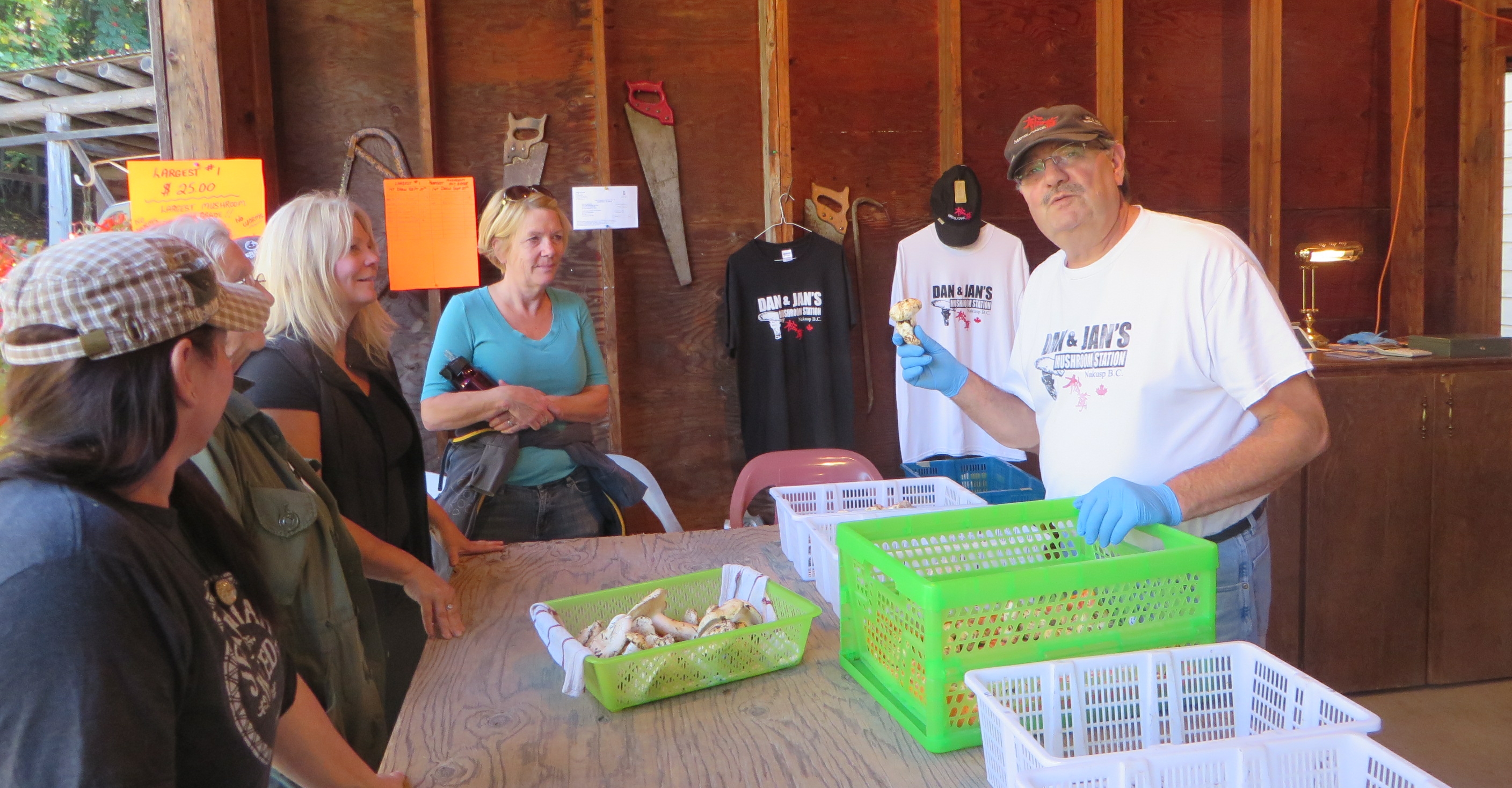
Dan and Jan's Buying Station in Nakusp

Dan and Jan’s Buying Station in Nakusp

Local to Nakusp, Chanterelles, Lobster and several other varieties sprout up inexplicably in pockets throughout the forest. Many locals covet their spots; at least those that haven’t been decimated by the biggest competitor to mushrooms: forestry.

Logging is one of the highest paying primary industries in the Kootenays, yet it poses the biggest threat to the niche industry of mushrooming.

Mushrooms are a multi-million dollar industry bringing tourists, pickers and buyers to the area. During September and October, the streets are lined with vehicles belonging to people who are in town because of this natural resource. They are buying gas, groceries and other supplies and are staying in hotel rooms and going out to dinner. More dollars are being pumped into the local economy, but all of it is threatened by clearcut logging.

“Mushrooms grow naturally in certain little micro climates, pockets and patches that are ideal for their growth. It is possible for the two industries to coexist. My family grew up on logging,” Hewat explains while sorting pines by hand. “They don’t grow everywhere; just small spots in the forest. In hindsight, things like selective logging, saving sections probably could have been done but it hasn’t.”

Dan Dahlen Carefully Grading my Wife's Mushrooms

Dan Dahlen Carefully Grading my Wife’s Mushrooms

Janis Dahlen of Jan and Dan’s Mushroom Station echoes the same sentiment.

“Clear cutting—it takes the mushrooms right out and it could be 80 years before they grow back. We’ve worked the last couple of years with Nakusp and Area Community Forest (NACFOR) to do some strip logging to try to preserve some of the mushroom areas. But (much of it is) being logged as we speak and the mushrooms will never come back. Logging is our first industry in Nakusp. It’s a hard mix.”

Pine Mushroom Just Pushing through the Forest Floor

Pine Mushroom Just Pushing through the Forest Floor

Next week I will talk about habitat, harvesting, grading and manipulative pricing of the Pine Mushroom.

Chapter XIV of the P. and G. Klopp Story – Part 1

Travels to Berlin (1959), Spain (1960) and Yugoslavia (1961)


The world is a book and those who do not travel read only one page.

St. Augustine

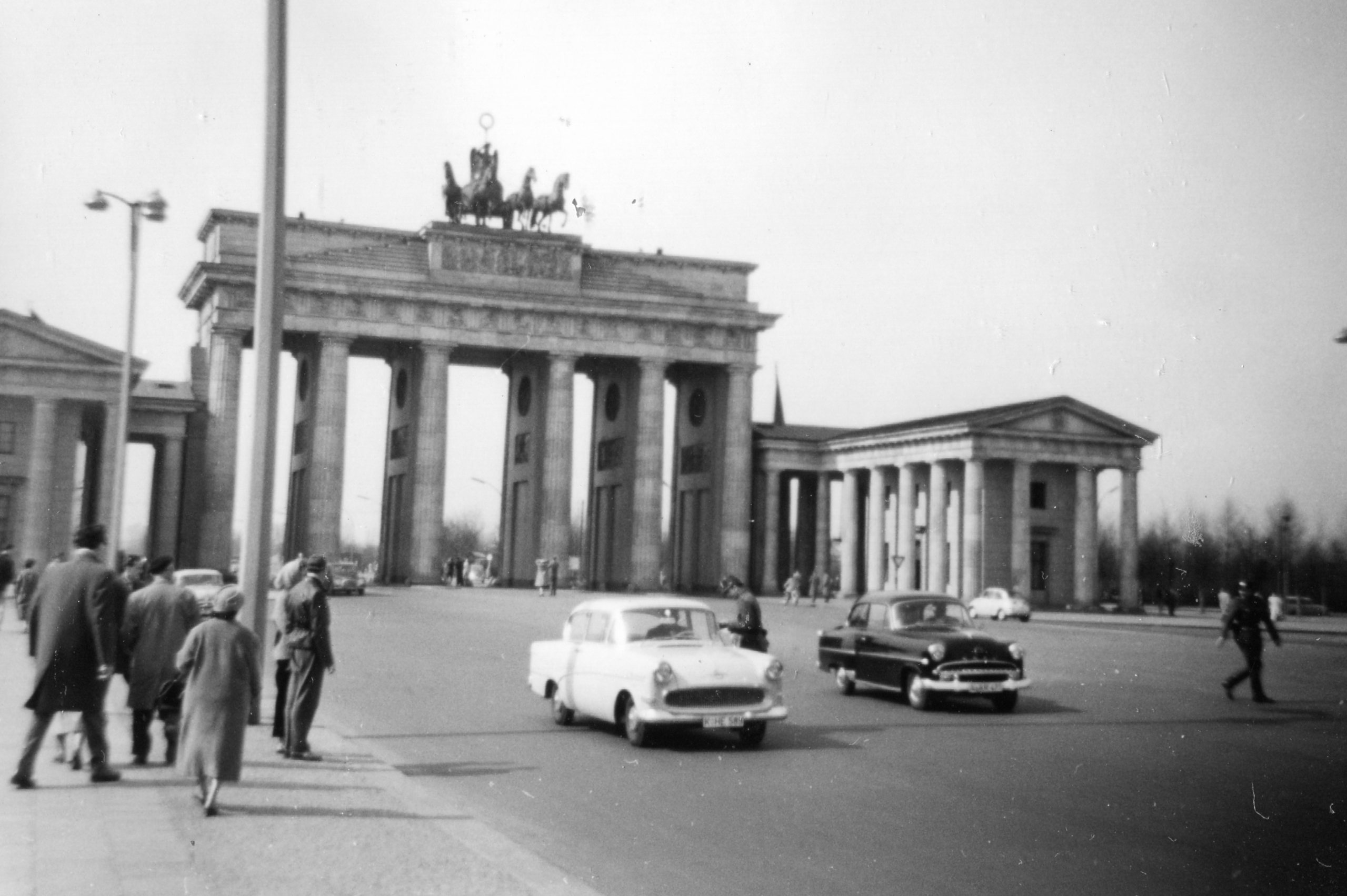
Brandenburg Gate 1959

Brandenburg Gate 1959

During my Easter holidays Mr. and Mrs. Peter L., who had recently escaped from the German Democratic Republic (GDR), invited me to come and visit them in West Berlin. Whether they were distant relatives or just friends of the family, I can no longer tell with certainty. But after their escape from the Eastern Zone, as the GDR was called, they had often visited us in Wesel. In those days West Berlin was geographically isolated from West Germany. It was an exclave surrounded by communist East Germany. Also a fence stretching over a thousand kilometers following the inner German border complete with thousands of observation towers prevented the mass migration from the east. Many people died in their attempt to flee from their ‘socialist paradise’.

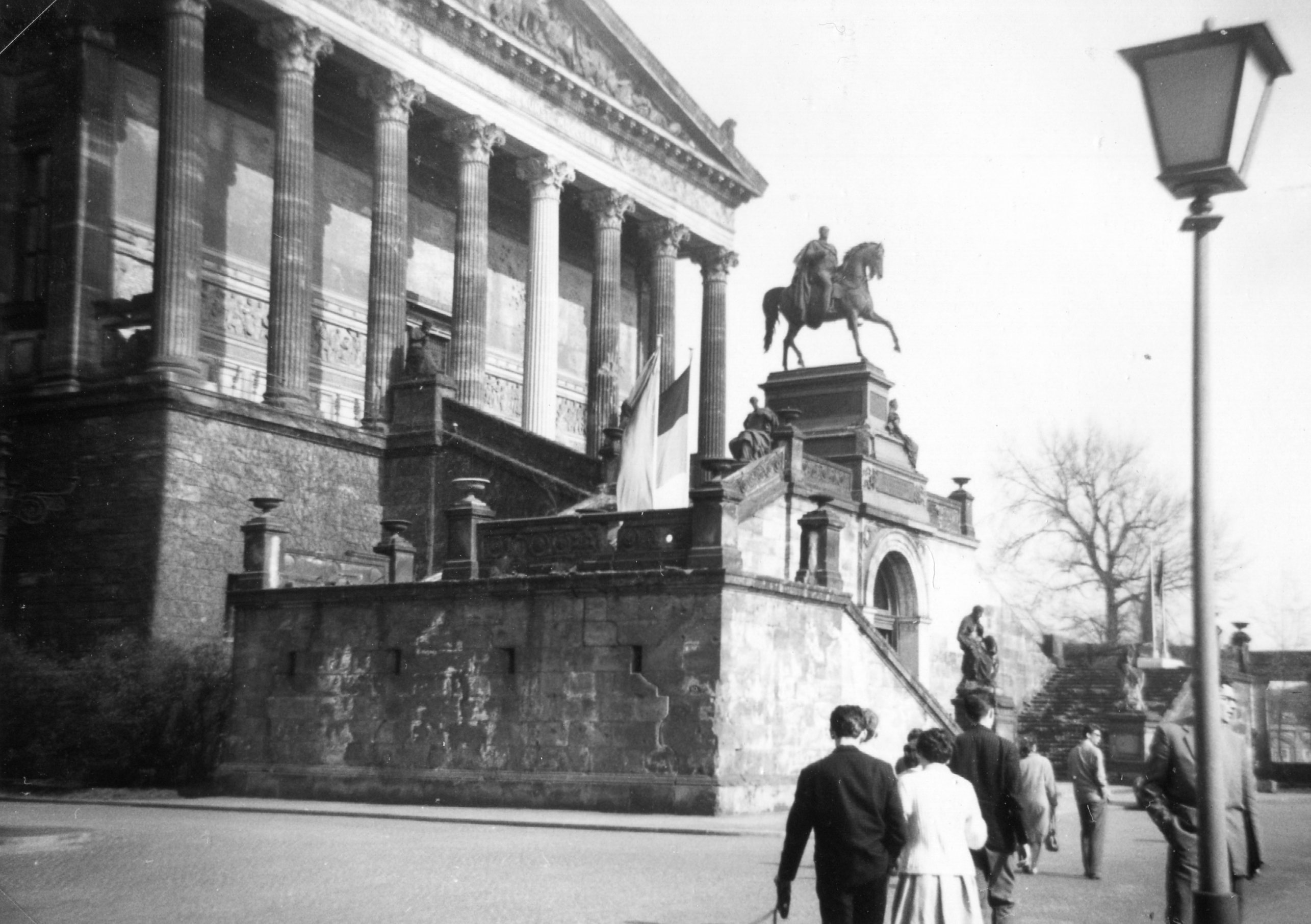
State Museum 1959

Old State Museum 1959

The rapid train I had taken from Cologne stopped at the border where travelers had to show their passports to cross the Iron Curtain to go from one part of Germany through another part of Germany to Berlin. This was the only stop for the train. After it had been given the green light, it sped through all the major railway stations past many towns as if trying to shield us from the ugly sights of a country that still lay in ruins so many years after the war. At the border station near West Berlin another even more thorough inspection was being made that included the search for fugitives who might have jumped in transit onto the train. Border guards were using specially trained dogs to sniff out any potential escapees clinging to the train’s undercarriages in their desperate attempt to get to freedom. Finally the train was given clearance and allowed to cross into West Berlin. I breathed a sigh of relief, when our train rumbled into the main station, where Peter L. was waiting for me at the platform.

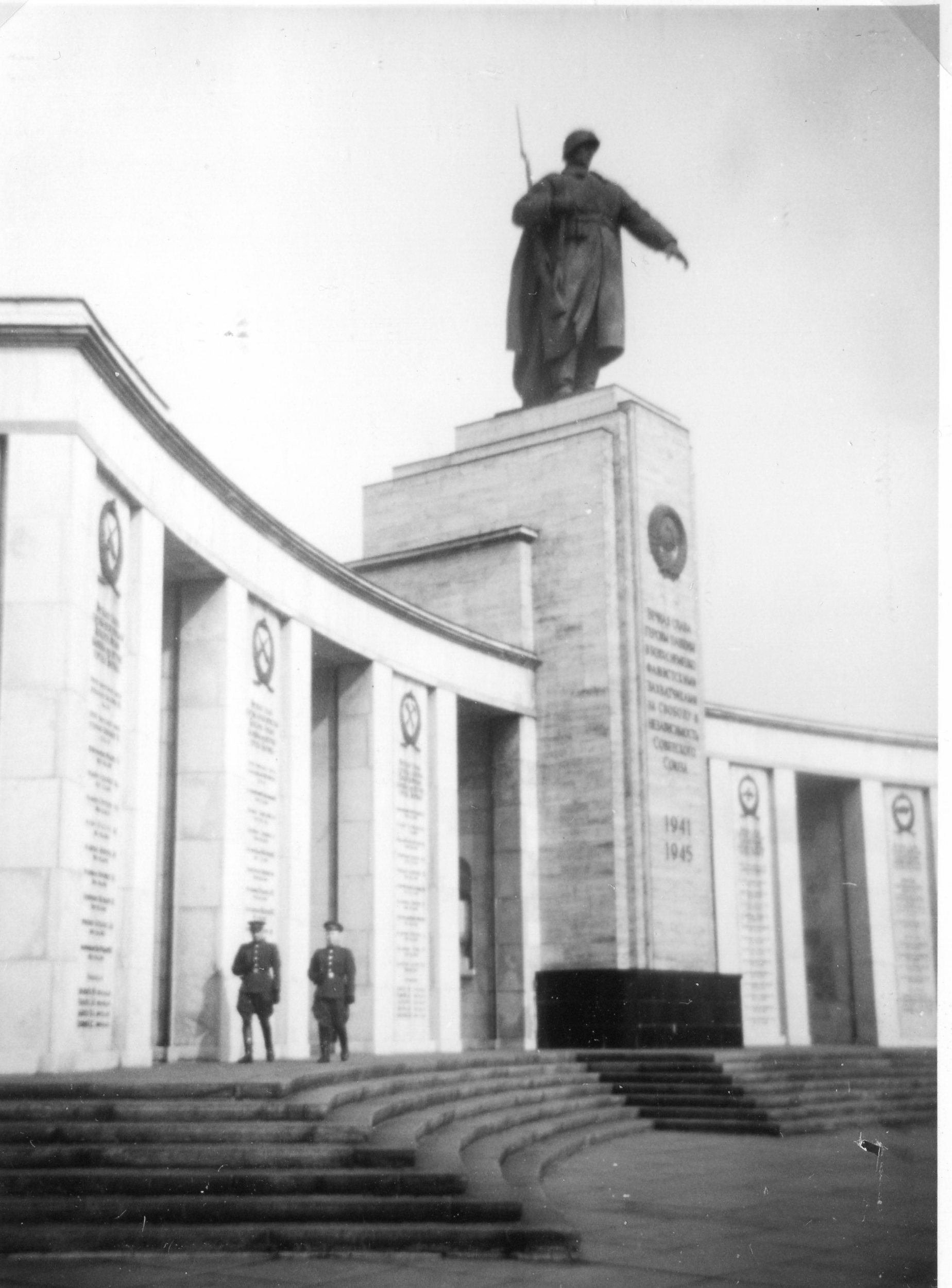
Soviet War memorial commemorating the 80,000 Russian soldiers who died in April and May 1945

Soviet War Memorial 1959

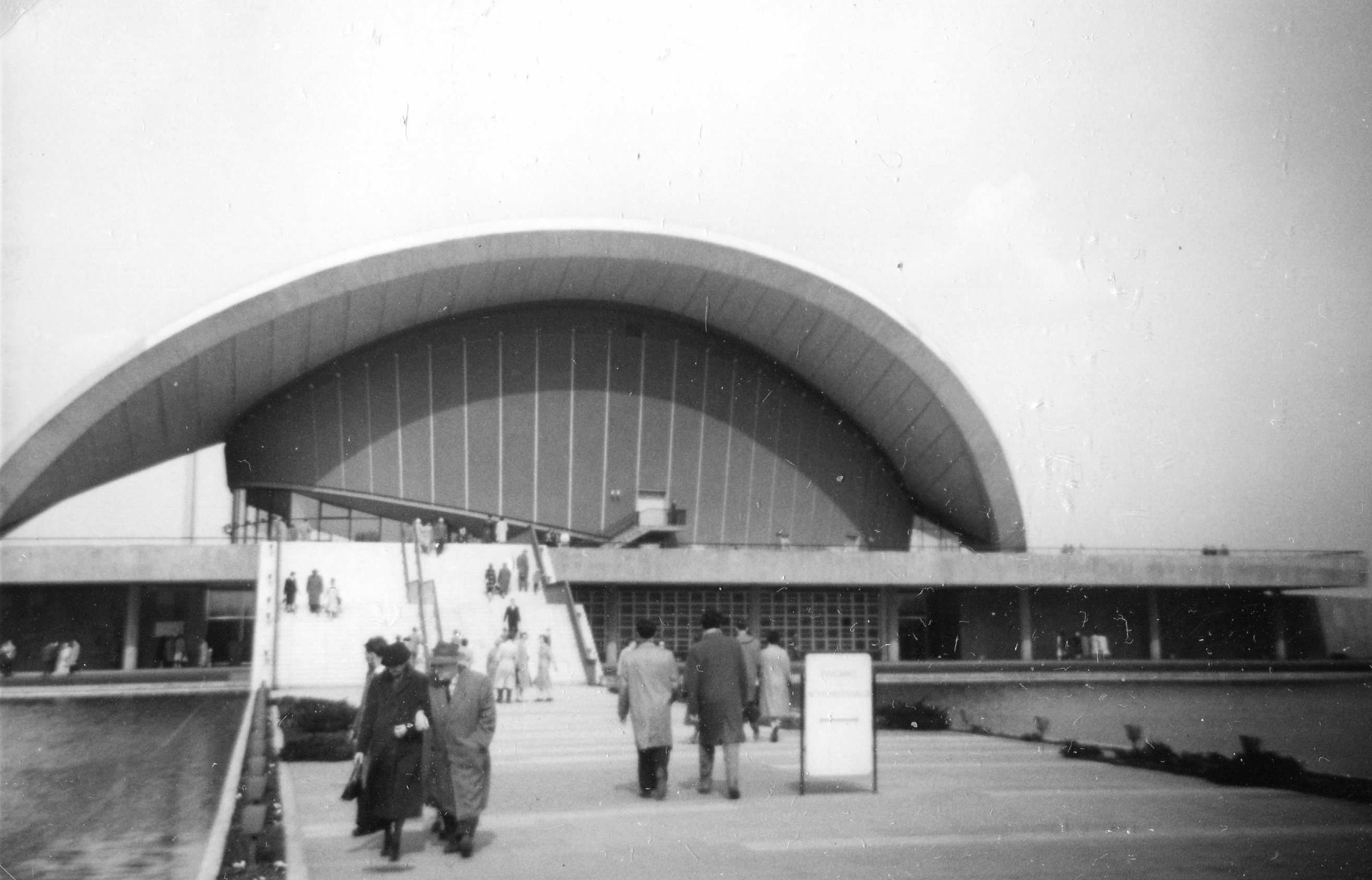
On the very next day Peter took me on a whirlwind sightseeing tour through the divided city that was still interconnected by subway, streetcar and roads. Thus, Berlin was the only remaining escape route for thousands of refugees, until the building of the infamous wall stopped the ever-increasing flow in 1961. Among the sights were the illustrious Brandenburg Gate, which stood right behind the border crossing in East Berlin, and the Soviet War memorial commemorating the 80,000 Russian soldiers who died in April and May 1945 in the Battle of Berlin. Then we went to see the Congress Hall, which on account of its shell-like shape the Berliners irreverently call the Pregnant Oyster. Here Bill Haley and his rock and roll band caused an uproar, when he whipped the mob of young fans into such a frenzy that they demolished their seats normally reserved for more conservative concert goers.

The Congress Hall (Pregnant Oyster)

The Congress Hall (Pregnant Oyster)

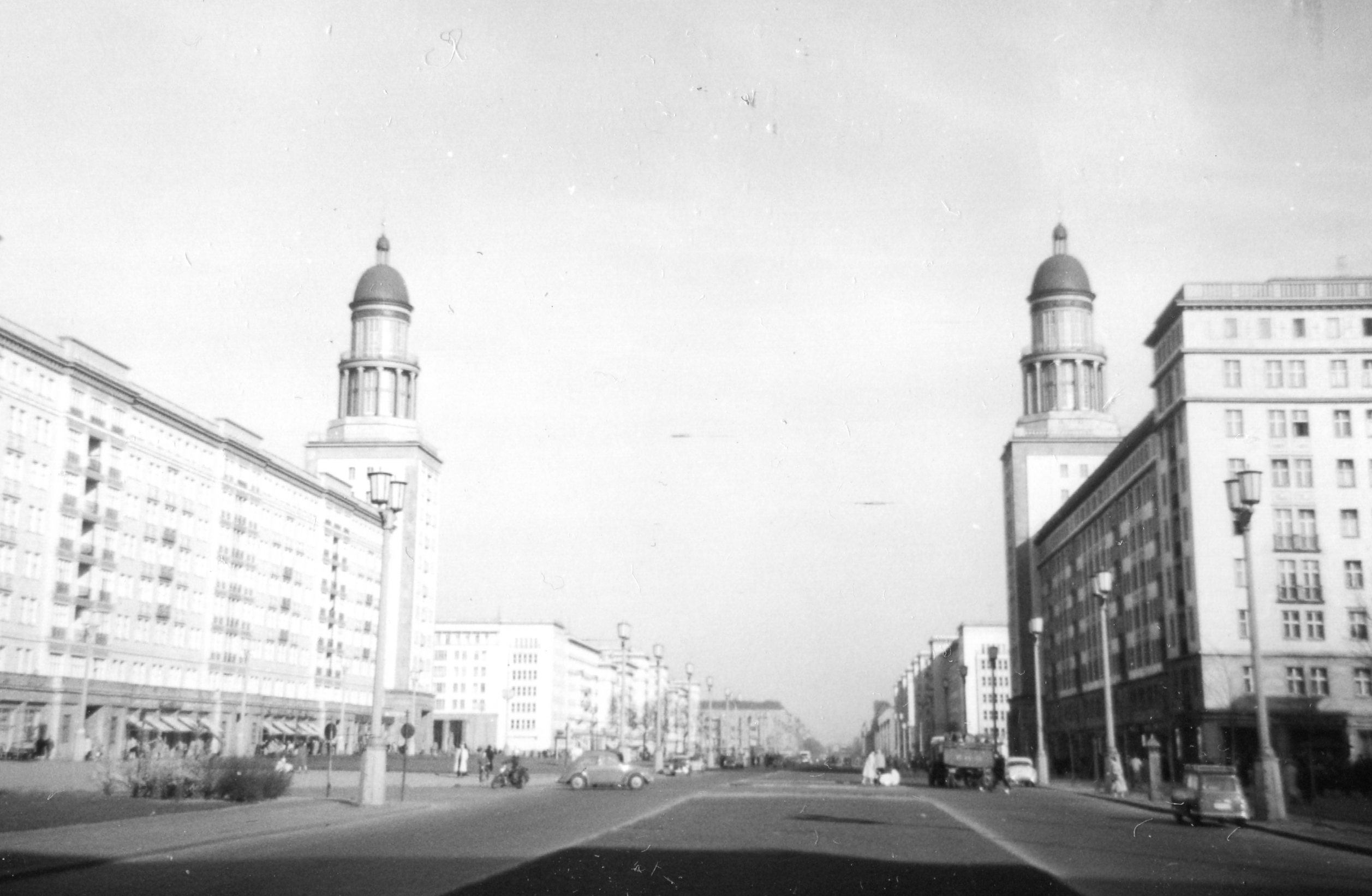
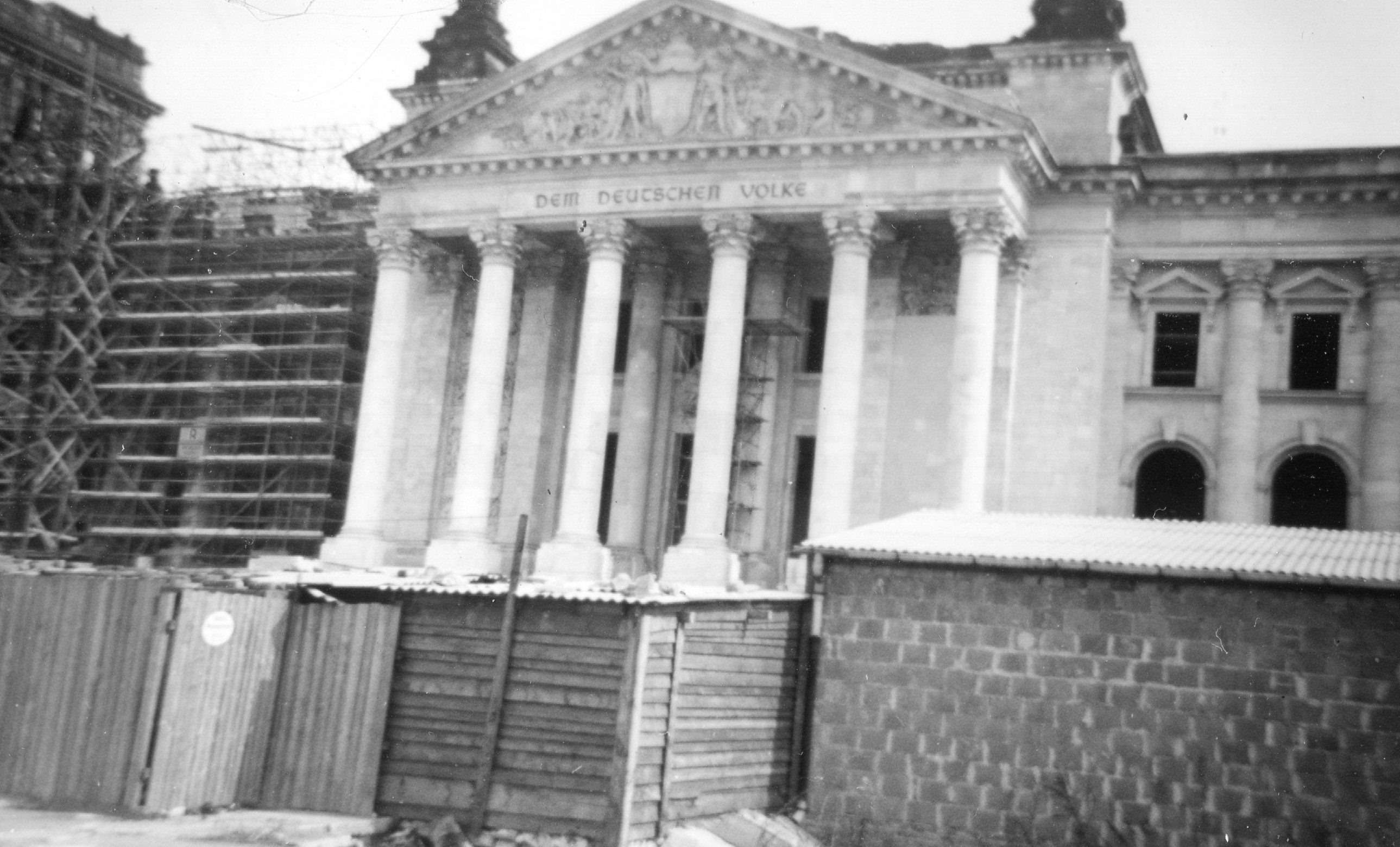
We also looked at the Reichstag building, which was almost completely destroyed during WWII and now was being reconstructed. We were not much impressed by the Stalin Boulevard.

Stalin Boulevard - Now it is called again Unter den Linden

Stalin Boulevard – Now it is called Karl-Marx Street.

With its new box-like massive apartment buildings, built Soviet style, the structures were completely out of tune with modern architecture, but were designed to serve as a showpiece of the fledgling East German capital. There were so many impressions that at the end of the day I could no longer absorb any more sights. In today’s language I began to suffer from a severe case of information overload.

The Reichstag Building under Reconstruction 1959

The Reichstag Building under Reconstruction 1959

So I was glad when Peter suggested we should go and find a place to eat. As a former citizen of the GDR he knew that the basic necessities of life, such as food, were heavily subsidized by the socialist state. As it was close to dinnertime, he took me to the great student-dining hall of the Humboldt University in East Berlin. There we feasted with a good appetite on an excellent meal complete with roast beef, fresh veggies, beer and dessert for the extremely low price of two east marks. Considering the depressed value of the currency often trading at less than one tenth of the value of the West German mark, we had our fill for the measly amount of 20 pennies, for about a Canadian nickel. Even though I had learned early to look out for a bargain, it did not feel right to take advantage of a state supported facility that was not based on profit but on service to the people. Later on I found out that the West German government in Bonn heavily subsidized West Berlin to help with housing and food expenses. Even luxury items, such as coffee, cigarettes and liquor were selling so cheaply that even I could buy half a dozen bottles of fruit wine with my pocket-money for as little as six marks. West Berlin had become a showcase for the entire world, a giant billboard of glamour and glitter, the gateway to the ‘Golden West’. Refugees from East Germany found out upon their arrival the harsh realities of life in camps, old army barracks, and other emergency shelters. The reader may wish to read more on this topic in my wife’s blog bieneklopp.com.

Chapter XIII of the P. and G. Klopp Story – Part 4

Finding Stability during Adolescent Restlessness

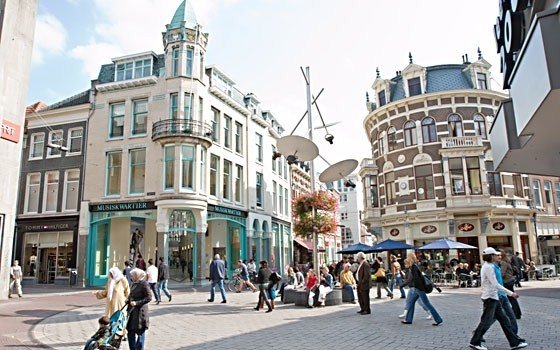
Shopping at Arnhem, Holland - Photo Credit: holland.com

Shopping at Arnhem, Holland – Photo Credit: holland.com

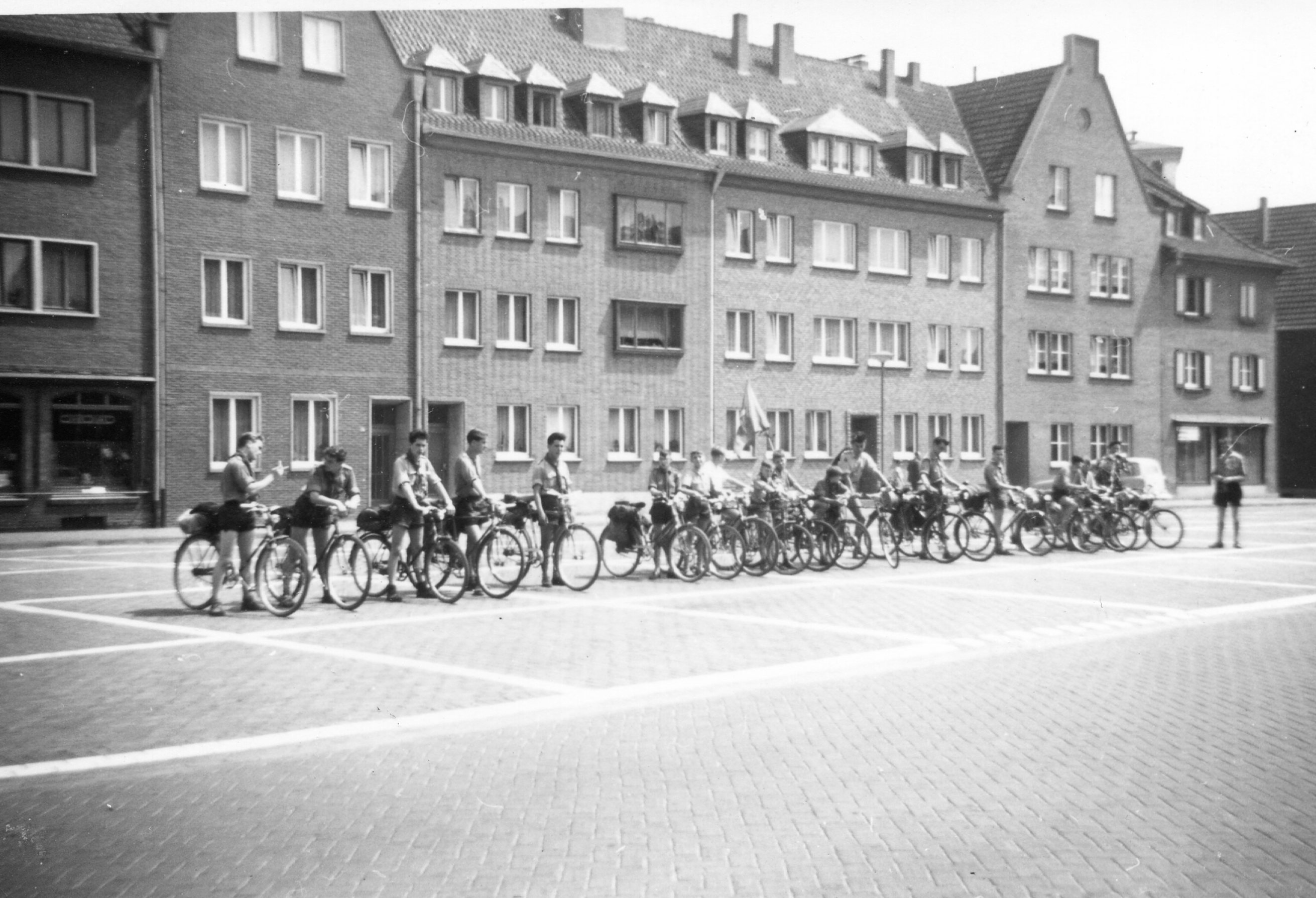
When it came to matters concerning the entire tribe Zoska, Günther with the uncomplimentary nickname Little Chicken was in charge and took care of the organization of the big events. Two things stand out for me as truly memorable: the bike ride to Arnhem in Holland and the regional jamboree at the youth hostel in Wesel. Arnhem is the first major city in the Netherlands not far from the German border about an hour’s drive by car from Wesel. The country is as flat as a pancake, especially on the Dutch side of the border where bicycle trails are often totally separated from the noisy traffic arteries. On these trails the combined clans were pedaling in a giant snake-like formation towards our destination, the youth hostel in Arnhem. It was a beautiful sight to behold, some fifty boy scouts in their traditional black attire. Those wearing their uniform-like khaki shirts proudly displayed their honor badges they had earned in the last couple of years. I was at the tail end of this giant human snake winding through the gentle curves on this wonderful bike trail. My job was to make sure that we would not lose any stragglers on our one-day journey. While the sightseeing in Arnhem and the communal life with all its exciting games and best of all the singing were fun, it was the trip itself, the getting-there as one body and soul that I remember best and treasure most as a powerful metaphor for my own journey through life.

Lining Up Part of Tribe Zoska

Lining Up Part of Tribe Zoska

The year 1960 was going to be my last full year of service within the Union of the European Scouts. I had just turned eighteen, brimming with physical strength and vigor, yet very clumsy at sports, full of ideals to create a better world, yet often confused by my own contradictory behavior.  I again began to slip academic achievement, which became more and more important in the senior years. I also lived in an artificial world not of my own making, but by a society that was still stubbornly clinging to archaic traditions in a rapidly changing social environment. One of the traditions was the complete separation of boys and girls in the high schools. There was no provision for interaction with the opposite gender. We boys lived in a bubble filled with an explosive mix of ignorance, half-truths and acute awareness of our own adolescent stirrings. Lacking any objective knowledge either from home or school, we gathered information about sex mainly from highly questionable sources. The rumor about a pregnant student at the girls’ high school at the opposite end of town and her subsequent expulsion ran like wild-fire through the gossip mills in the senior grades at recess and lunch. Sex was on everybody’s mind, surfacing thinly concealed even in our monthly student newspapers. Some would-be scholars made an attempt to lend a degree of academic respectability to the topic by passing notes around in the classroom mostly during the boring geography lessons. It was a never-ending stream of  Latin phrases of highly questionable content. As witty as some of them were, they could only warp even more the already distorted views we held on the topic. The meaning of a healthy relationship that goes beyond the physical to embrace the social even spiritual aspects of a lifelong partnership was completely foreign to us.

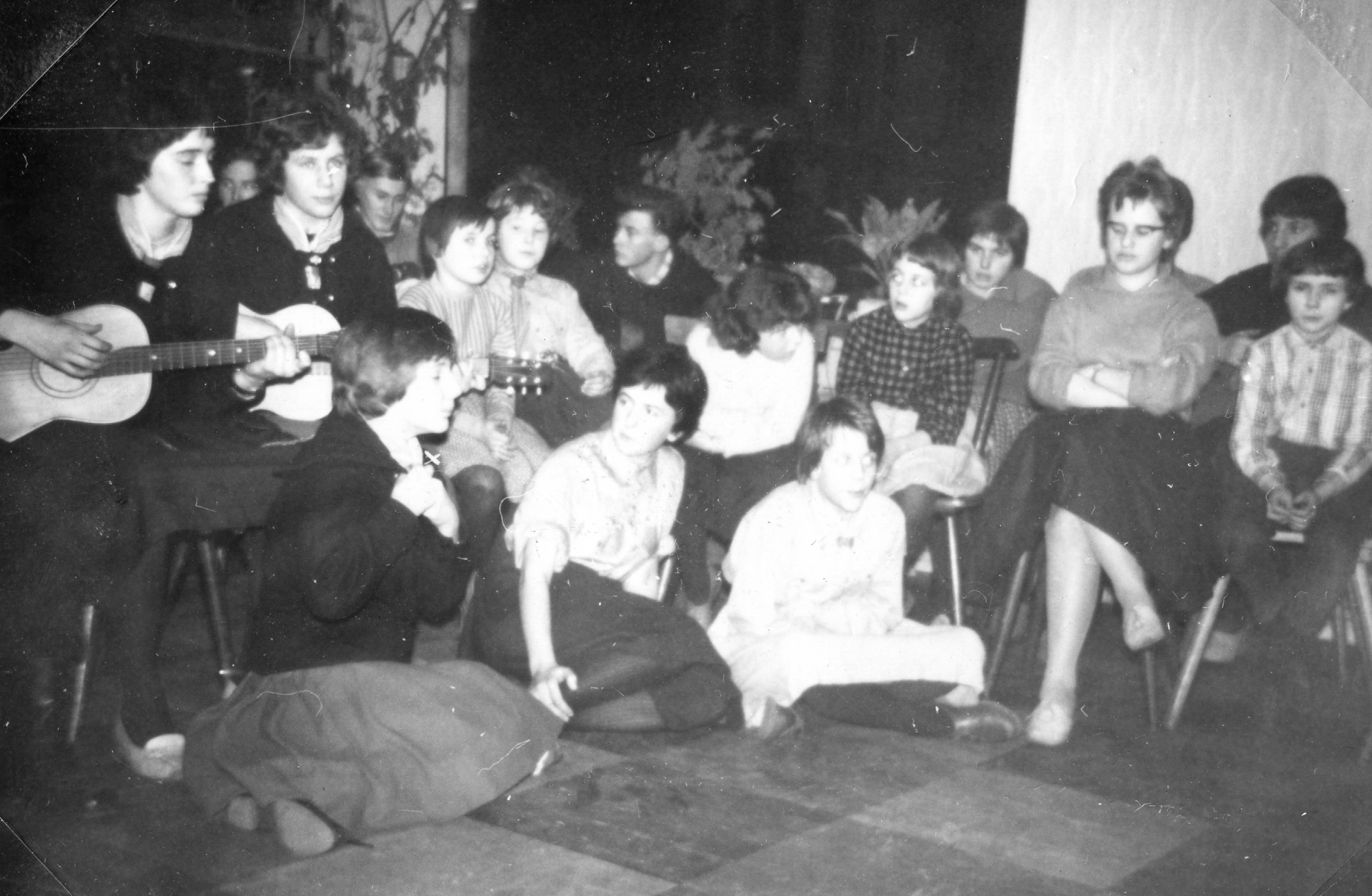
The Girl Scouts from the neighboring Town of Geldern

The Girl Scouts from the neighboring Town of Geldern

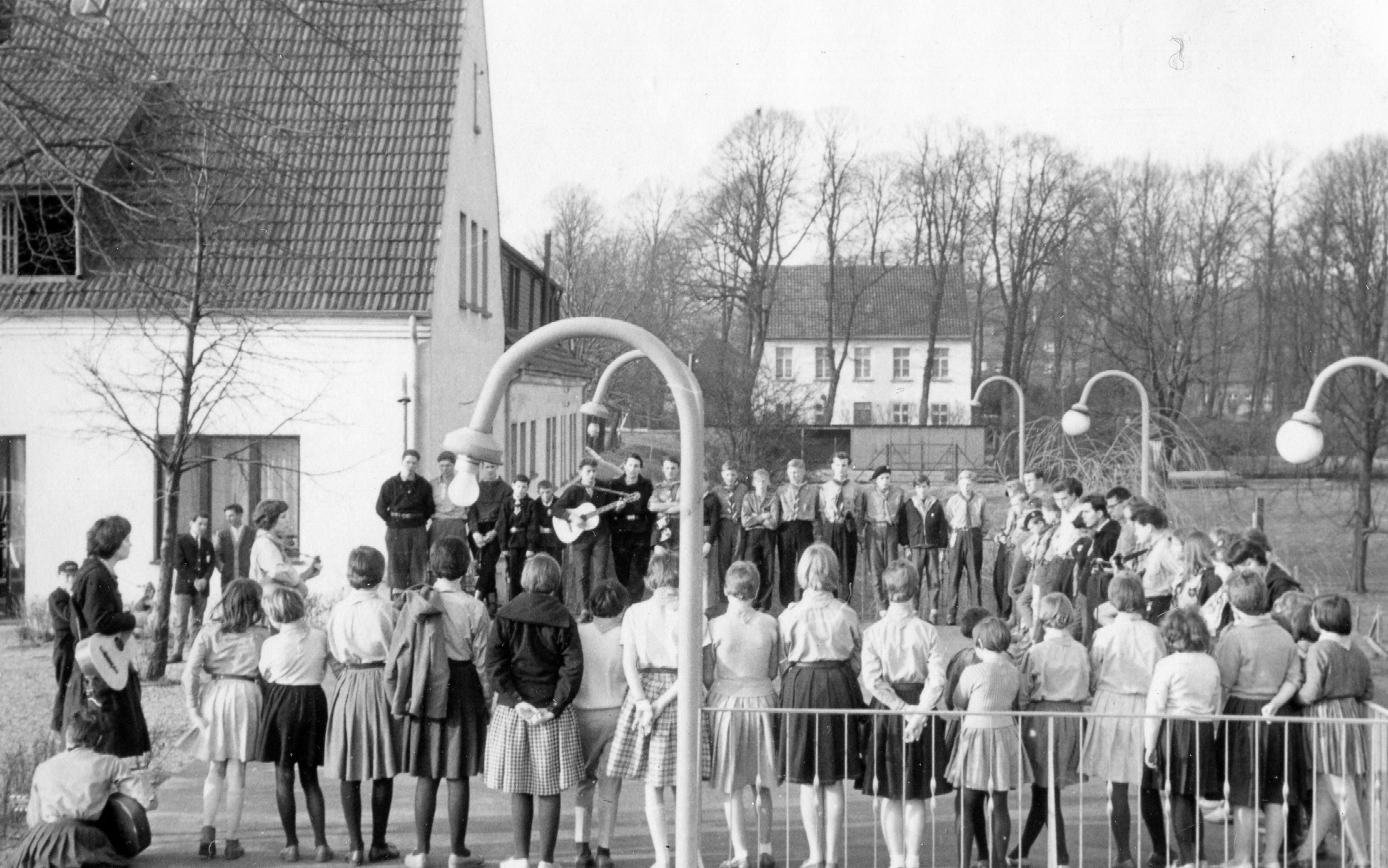
A source of true comfort and stability continued to be my involvement in the scout movement. It provided an anchor in the turmoil of the emotional storm in which I was being tossed about. Commitment to a worthy cause, action repelling the evil spirit of idleness, order being pitched against chaos, in which a multitude of vices surface and thrive. In short, these virtues provided fixed reference points, which I could use for my own moral orientation. Little Chicken organized a regional jamboree at the Wesel Youth Hostel, to which he had also invited an all girl contingent from the town of Geldern. Except for my elementary school years in Rohrdorf I had never participated in an event on a large scale such as this, where boys and girls were doing things together on an egalitarian basis. While the playing of the customary games, the presentation of humorous skits, the singing of our favorite camp songs pretty near followed the familiar pattern, the girls added a new dimension to our gathering.

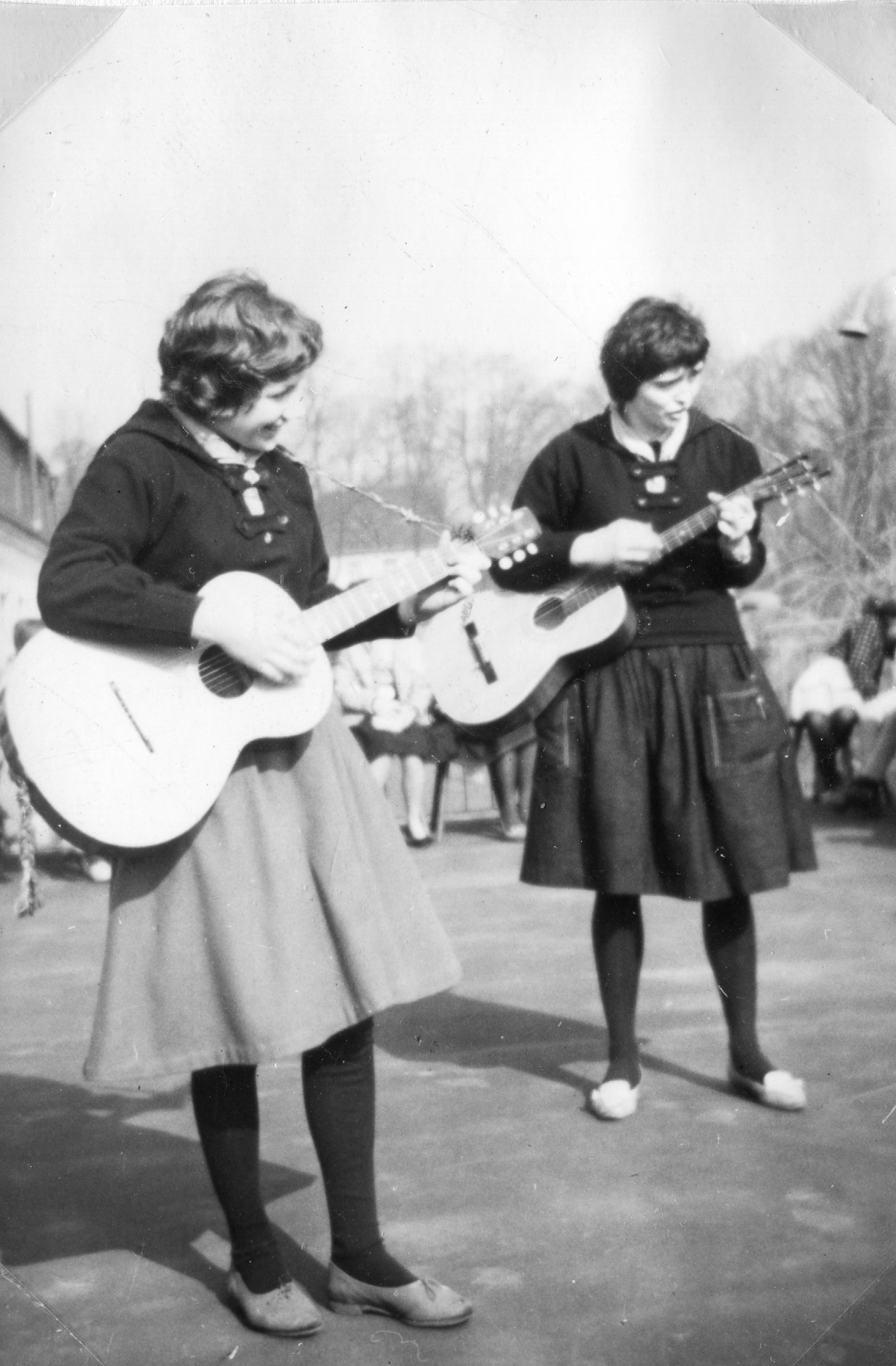
Jutta and another Girl Scout Playing the Guitar

Jutta and another Girl Scout Playing the Guitar

Jutta, their leader, impressed me with her gentle firmness in her voice, with which she directed her clan in the various activities. To exercise her authority, she did not need to raise her voice. Her strength lay in the calm assured manner, in which she delivered her instructions. Perhaps more importantly I discovered in the girls a kind of beauty, which distinguished itself through their simple attire and appearance. Just like flowers displaying their natural beauty, these lovely human counterparts needed no artificial hair color, rouge, lipstick, perfume and other distracting accessories to cover up what was already inherently beautiful. Thus, I had developed a liking for natural beauty in girls and this attitude became a guiding principle in my search for a spouse in the following years.

Final Assembly at the Wesel Youth Hostel

Final Assembly at the Wesel Youth Hostel

Highlights of Summer 2015

On a Mountain High and then the Accident

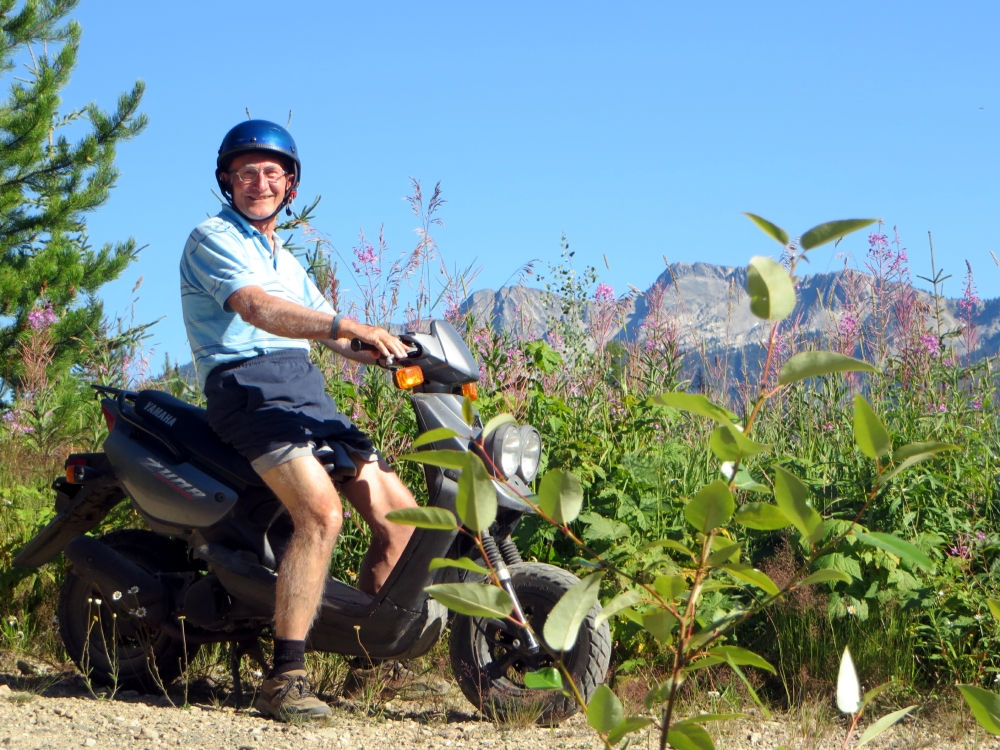
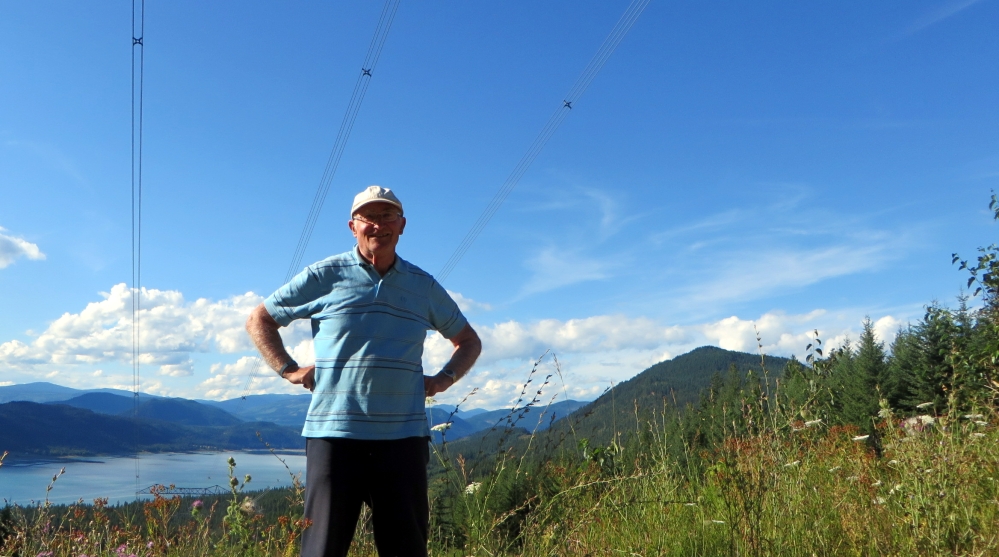
Peter on Top of the Power Line Road

Peter on Top of the Power Line Road

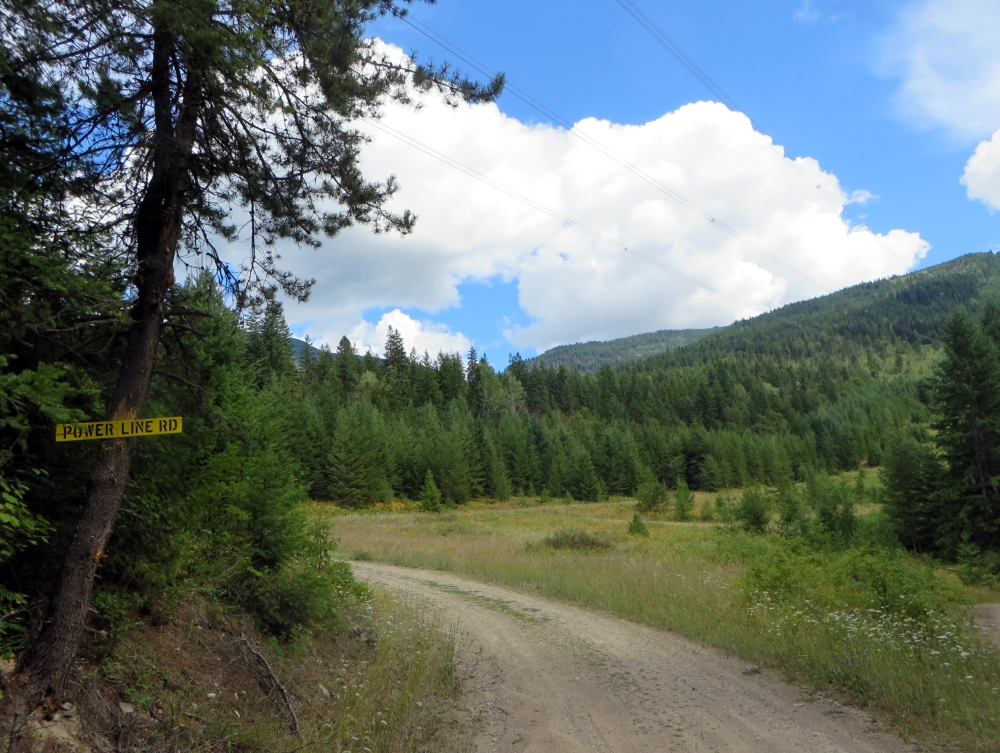
On my Yamaha scooter I made several exploratory trips on the nearby forestry roads. The one that grabbed my attention was the Power Line Road so named because it provides access of the BC Hydro crews to the transmission line that carries 500,000 V electricity across the border to the highest bidder in the United States. It is a steep and winding road leading to a ridge from which one can view the Valkyr Range. I heard that the hydro tower on that route has at 2000m the highest altitude in the entire province of BC.

Start of the Power Line Road

Start of the Power Line Road

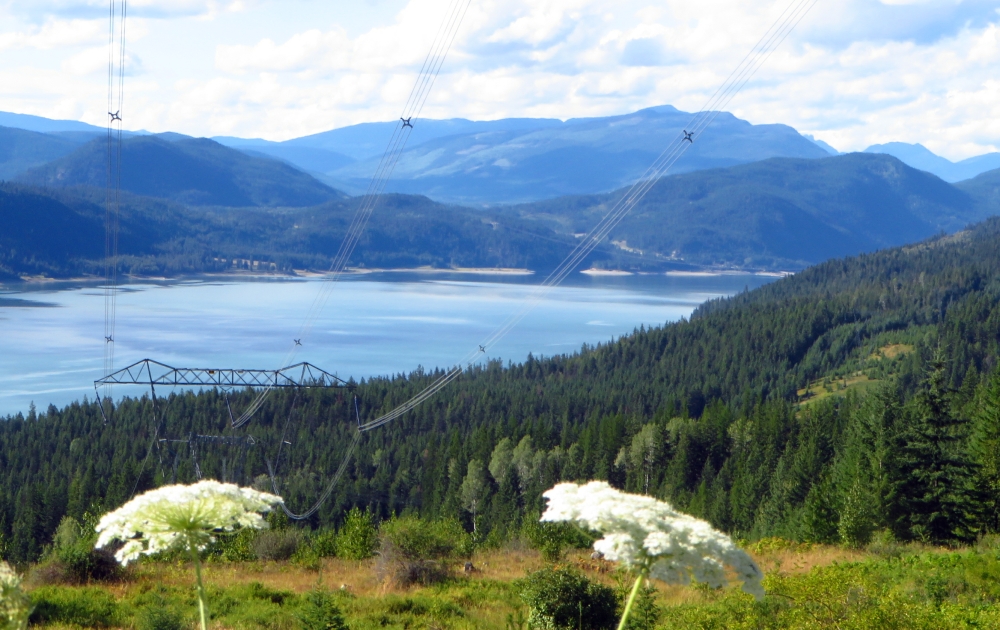
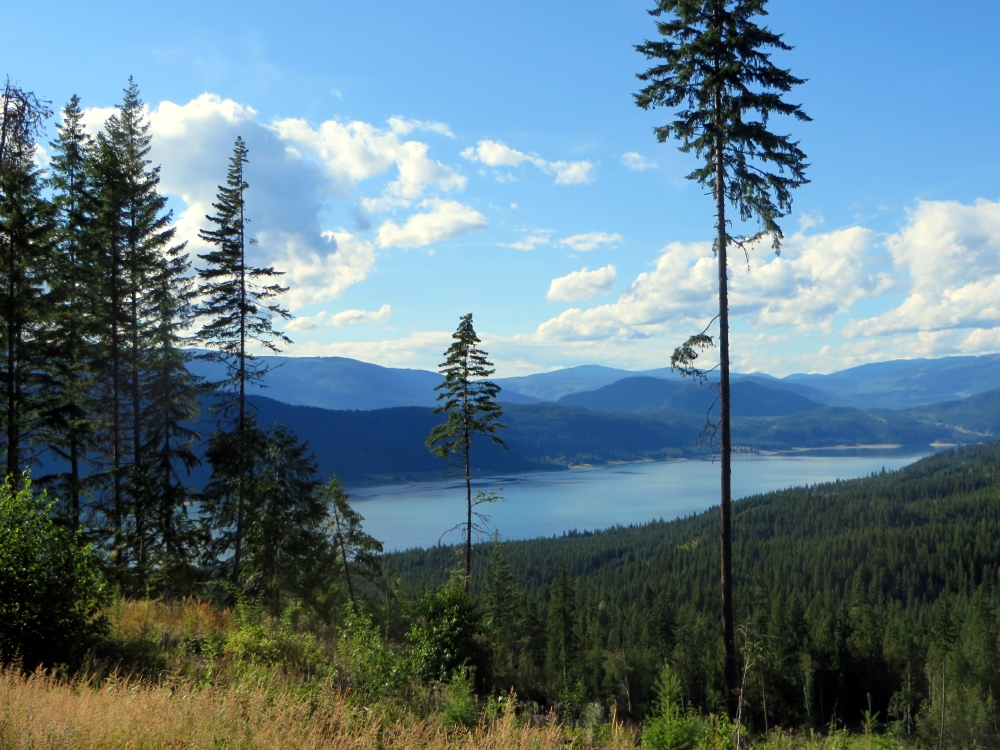
My aim was to ride my scooter to a viewpoint, from which I could look down onto the lake and see the mountains to the south. When I checked later on a map with contour lines, I found out that I had climbed a total of 1000 m to reach my destination.

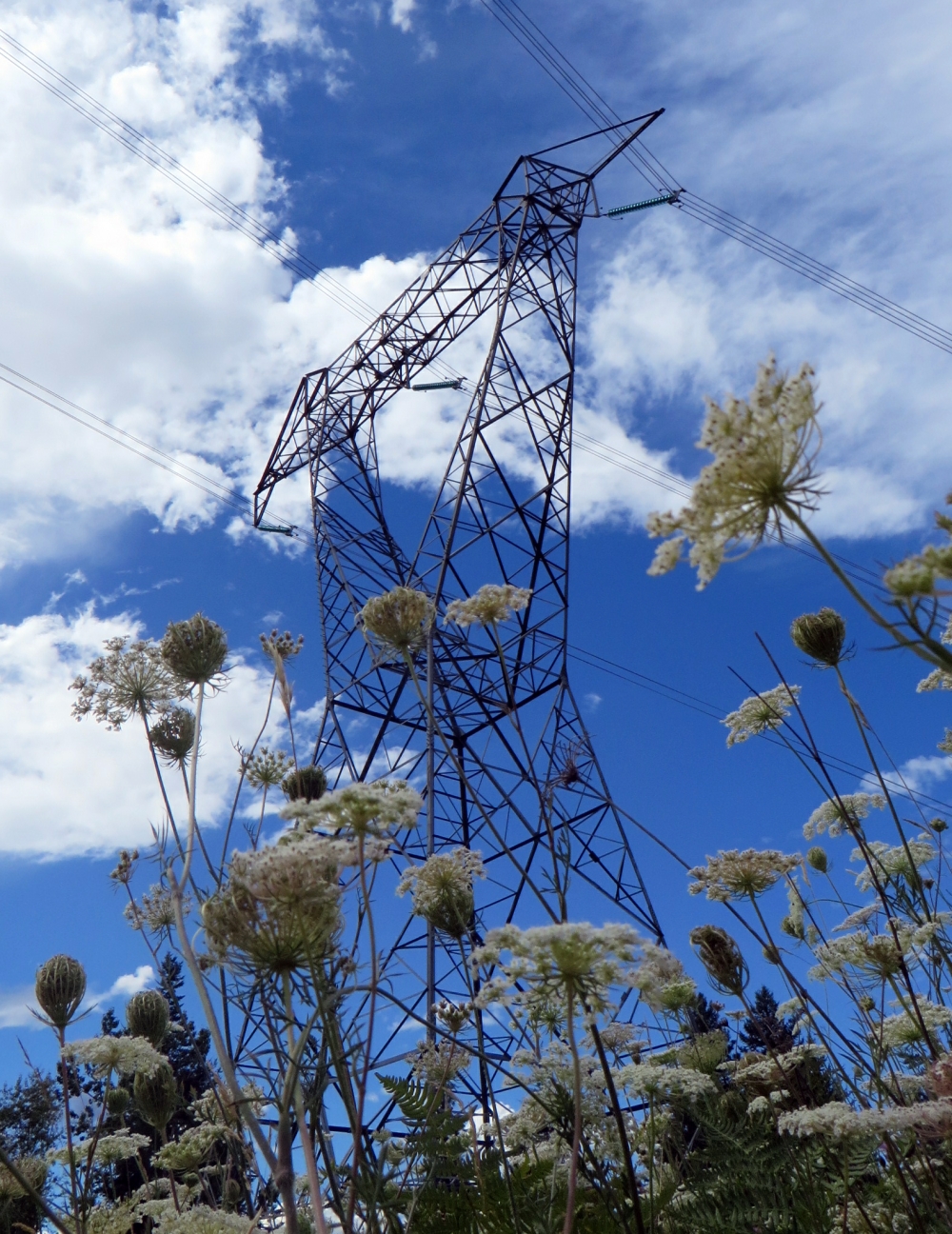
Low Shot of one of the Majestic Power Structures

Low Shot of one of the Majestic BC Hydro Towers

The magnificent scenery can hardly be put into words, and the photos on my post can offer only a glimpse of the beauty that I experienced with all five senses, the amazing colors of the valley and the Arrow Lake below, the rustling of dry grasses in the wind, the scent of the wild flowers, the cool mountain air gently stroking my face, and the bitter-sweet taste of wild black currants growing on the sun bathed slopes.

View from Halfway up the Power Line Road

View from Halfway up the Power Line Road

One can imagine how excited I was coming down from the Valkyr range frequently stopping to take pictures, happily whistling and, yes, even singing a few German scout songs that unexpectedly popped into my head, until quite suddenly at the very bottom of the road two giant trailers blocked the access to the campground.

Peter Making a Self-portrait with View onto the Arrow Lake

Peter in a Self-portrait with View onto the Arrow Lake

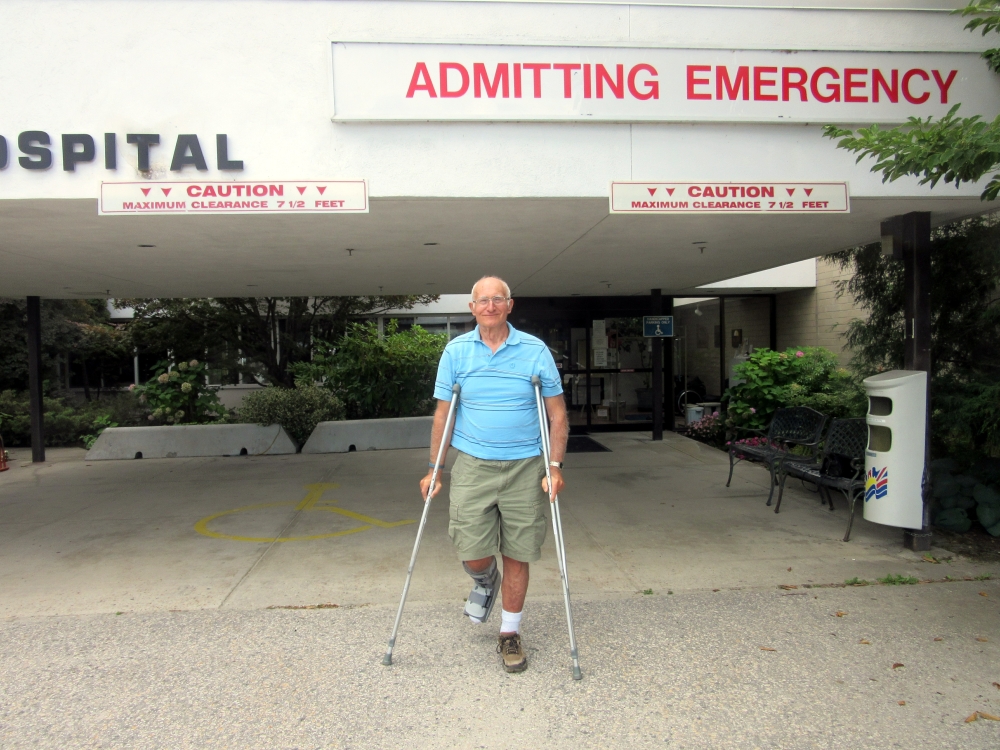
Anxious to tell Gertrud about my adventure I attempted to maneuver my scooter past these two monstrous recreational vehicles. Everyone knows that when you are riding on two wheels and bring your speed down to zero, you lose your balance. So to make a long story short, I fell off onto the rocky ground with the foot guard of the scooter falling on my right leg. Without really knowing at first I had broken my fibula bone slightly above the ankle.

One could hike to this fantastic viewpoint in abt. 2 hours.

One could hike to this fantastic viewpoint in about. 2 hours.

The consequences were altogether unpleasant to say the least: Gertrud’s anger with my stupidity of going into the mountains without wearing more protective clothing, the physical pain I suffered, my frustration over being severely curtailed to a life of inactivity for more than six weeks, and a lot of regret. Fortunately, my spirits were rising in step with the gradual easing of the pain in my right ankle.

Peter on Crutches at the Arrow Lakes Hospital

Peter on Crutches in front the Arrow Lakes Hospital

While I had to spend many hours on the couch with a so-called aircast on my right foot, the thought occurred to me that the accident may have prevented something much worse. Perhaps I would have become too bold, taken greater risks with my scooter on the following days, and driven even farther away from help on some remote mountain road. Then there were these devastating forest fires in the Southern Okanagan with smoke so dense that air quality alert were being issued at the time we had planned for our vacation at Hedley. So while I was languishing on the couch, I had at least the time to reflect, ponder, meditate and pray. And in itself that was a good thing.

Chapter XIII of the P. and G. Klopp Story – Part 3

Dangerous Play with Ammunition

The Siegfried Line (Westwall) was a German defense system covering a distance of 630 km with over 18,000 bunkers, tunnels and tank traps, the so-called dragon’s teeth. It started in Kleve on the border with the Netherlands along the western border and went as far south as the town of Weil am Rhein on the border with Switzerland. Touted by the Nazi propaganda as a unbreachable bulwark, the Siegfried Line was only able to delay the Allied advance to the center of Germany for a very short time in early 1945.

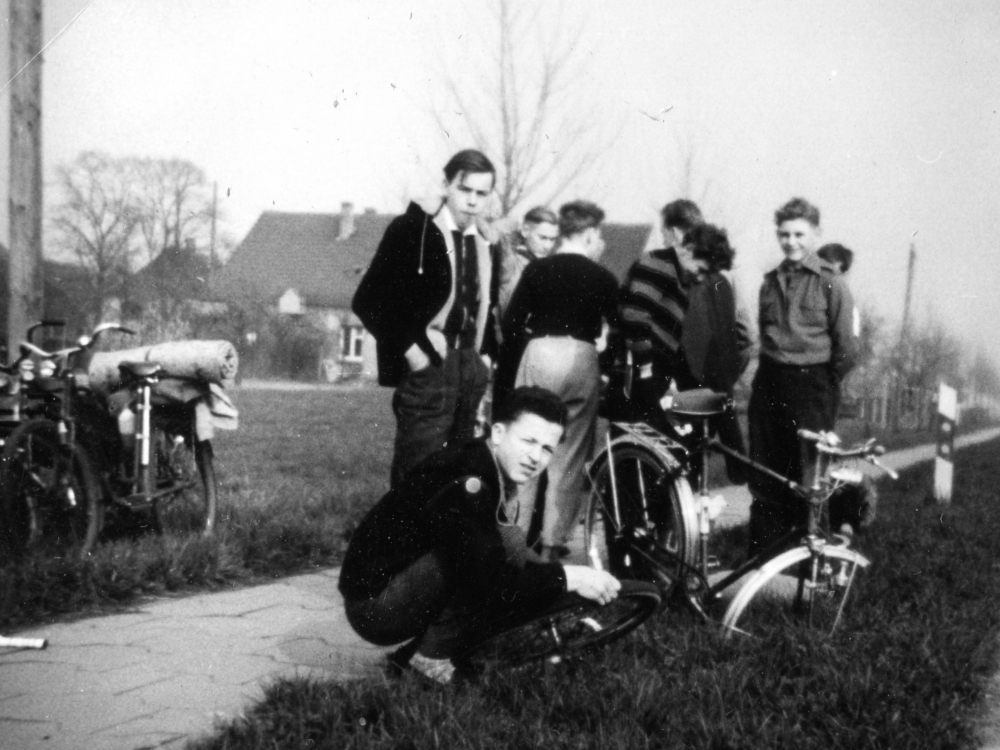
Fixing a Flat Tire on the Way to our Hide-Out

Fixing a Flat Tire on the Way to our Hide-Out

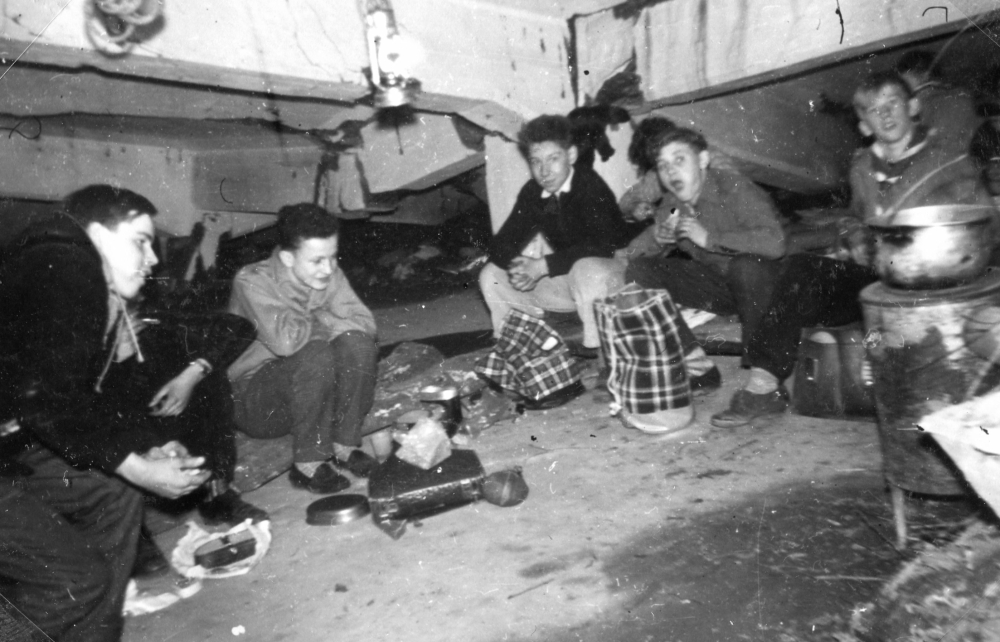
On our way home taking another route away from the main highway we discovered deep in the forest of the Reichswald a number of bunkers from that famous last line of defense. Their walls and ceiling were 1.5 meters thick and had once offered room for a dozen soldiers each. This would be an ideal shelter and hideout for my clan, I thought. Far from the major traffic routes we would be shielded from curious eyes. There in the densest part of the forest we selected the least damaged bunker that would serve as a permanent base for our outdoor activities. I instantly realized the advantage of a bunker over a tipi. The communal tent would have to be laboriously set up. Young trees would have to be cut to provide the poles for the tipi that was barely large enough to accommodate the clan. Of course, enthusiasm among the scouts was high. Attendance went up and new members showed up for our weekly sessions in the citadel. After two or three weekend trips to our fortress, we had transformed the austere looking concrete dwelling into a cozy shelter complete with beds, table and chairs all made of dead wood that we had picked up from the forest floor. We even had turned a barrel into a primitive stove, which provided warmth during the chilly nights of the approaching fall season.

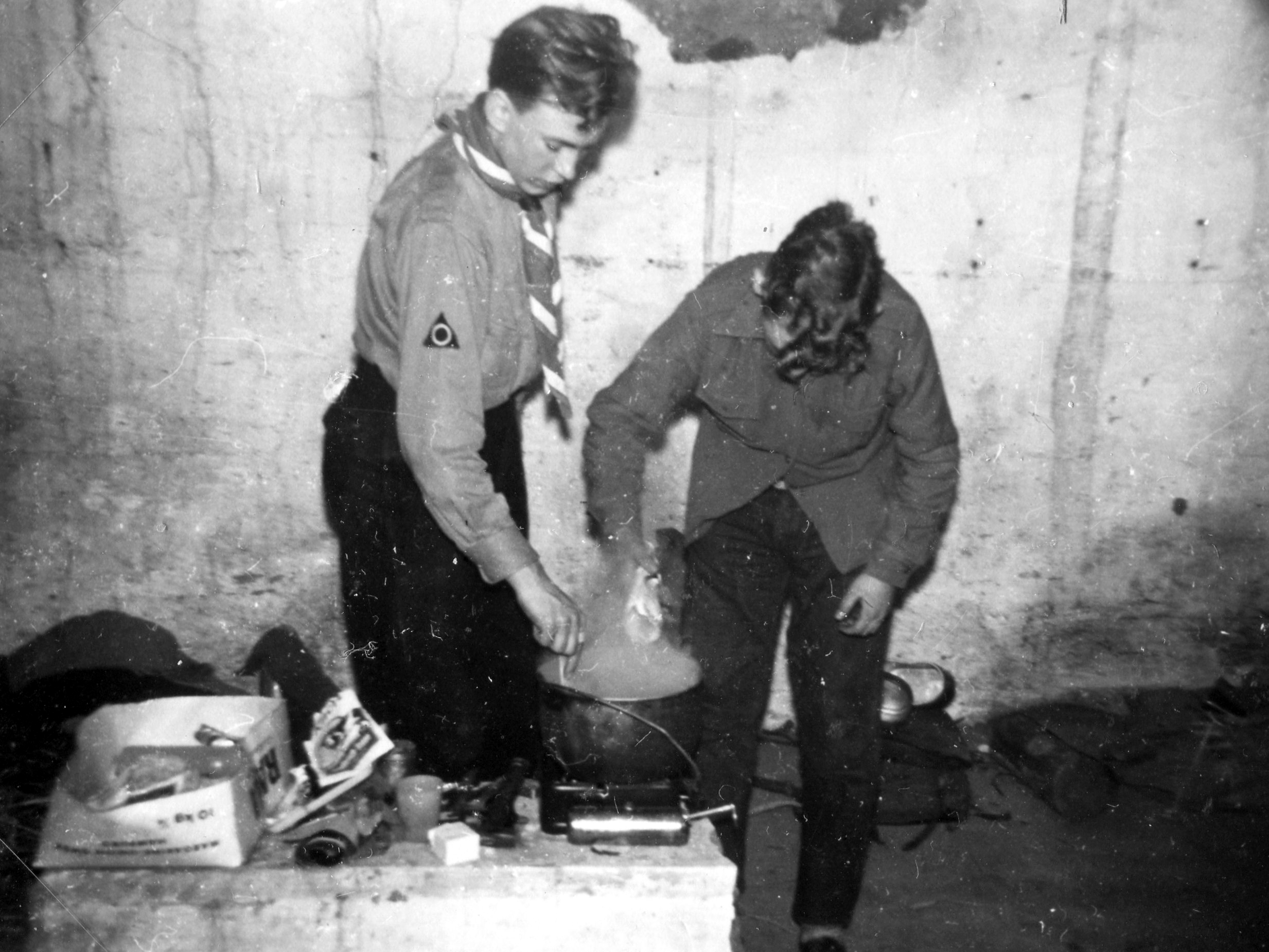
Hans and a Fellow Scout Preparing a Meal for the Clan

Hans and a Fellow Scout Preparing a Meal for the Clan

Fifteen years after the war great dangers were still lurking in this section of the Reichswald. Heavy fighting must have taken place around our bunker. For we found unexploded shells, so-called duds on the forest floor. One young scout stumbled over one of these rocket-shaped shells and tossed it against the concrete wall. I guess in his total ignorance of the potentially fatal consequences he expected it to blow up like a giant firecracker. Fortunately for us it did not go off. When I had somewhat recovered from the initial shock, I blew the whistle as a signal to the scouts to assemble around me. Then pointing to the shell I gave them a stern lecture on the danger to life and limb and ordered them not to touch any of these explosive devices. As punishment for the reckless boy I ordered that they should throw a rope over a sturdy tree branch and attach to it a stick, on which the delinquent would have to sit. In a somber, authoritative voice I pronounced the verdict. The boy shall be pulled up three meters above the ground, where he will have time to reflect on his reckless behavior and serve as a warning to all others who might be tempted to imitate his foolish act. While I maintained a straight face, the entire clan including the culprit took the whole proceedings as excitement and fun. With shouts of hooray they pulled at the rope to raise the boy to the desired height. There he was swinging back and forth until his release from his lofty prison.

Peter's Clan Relaxing in a WW2 Bunker

Peter’s Clan Relaxing in a WWII Bunker

Had I learned my very own lesson about safety regarding WWII projectiles? Looking back, I would say no. For on the day we were breaking camp, I secretly wrapped one of the best looking shells in a towel, placed it deep inside my luggage bag and took it home. There it stood for a while like a trophy in my room on the windowsill. With a new coat of red paint it looked shiny and new and attracted the attention of my visiting friends. It was a very fitting display at a time, when the Russians were launching with great fanfare the first man-made satellites, their famous Sputniks.

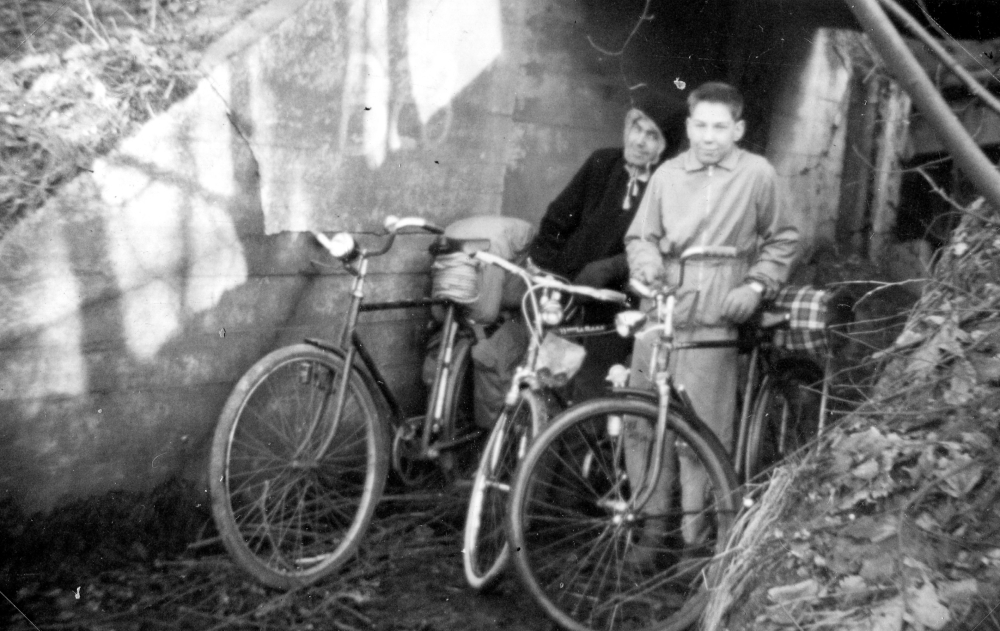
Two Scouts Posing in front of Our Bunker

Two Scouts Posing in front of Our Bunker

On the next bike trip to our bunker we were in for a great disappointment. Someone had discovered our weekend base and reported it to the police as a potential hideout for fugitives from the law. Thus, being alerted, they began patrolling the access roads to the Reichswald. How surprised were they when instead of nabbing a gang of criminals they caught a bunch of teenage boys dressed in neat scout uniforms. Unlike the irate youth hostel man the officer told us in a calm, professional manner how dangerous it was to camp out here with all those explosive devices lying all over the forest floor. He also gave us a scare when he recorded all our names and addresses with a warning that he would notify our parents and that there would be possible fines for trespassing. Luckily, the letters never came. But the encounter with the police made us go to safer wooded areas and sleep again in our tipi. As for me the leader of the clan, I now realized that even though I had taken vigorous measures to alert the scouts to the dangers of the shells I should have avoided the bunkers in the first place. In retrospect it was like divine intervention that the police had put a sudden stop to our adventurous trips to the Siegfried Line. That very same weekend I took the ‘rocket’ and threw it in the garbage can. For all I know it still rests somewhere in the Wesel garbage dump.