The P. and G. Klopp Story


Chapter 6

Flight and New Beginning
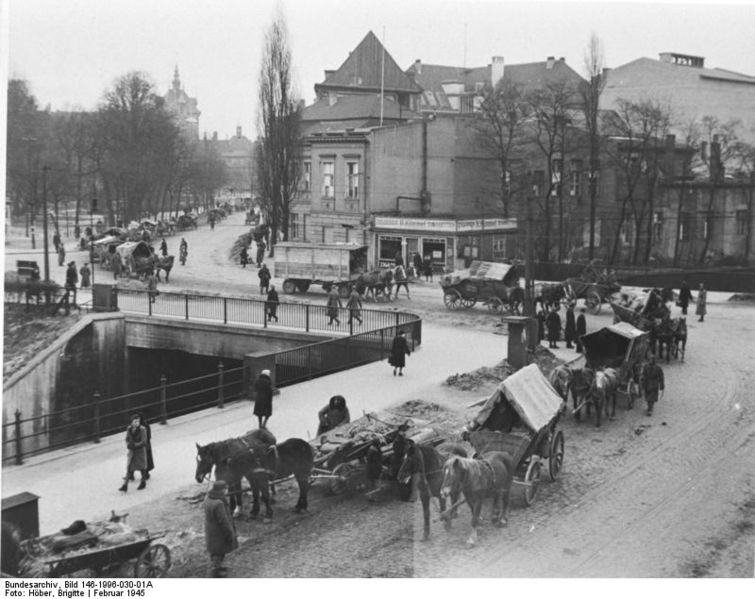
 

Trek of Fugitives

Trek of Fugitives January 1945

Desperation is the raw material of drastic change. Only those who can leave behind everything they have ever believed in can hope to escape.  William S. Burrows


           The German management of Gutfelde under my father’s administration abruptly ended on the 12th and 13th of January 1945 with the family’s flight from the advancing Red Army. A few hours before, the attack began, which turned out to be the most massive offensive ever-recorded in international military history. Under the command of Marshal Schukow and Konjew the Soviet army groups conquered Warthegau and advanced within days all the way to Sagan, Silesia. Panic and chaos spread among the defending forces and the civilian population. The flight with as little baggage as possible succeeded in the direction of Landsberg in spite of bitter cold temperatures and icy, snowed-over roads, which were hopelessly overcrowded with people, horses and wagons. There was an agreement between the NS leader (Ortsgruppenleiter) in Seebrück (Rogowo) and the German farmers including all administrators of the region to join together in order to escape in one single trek. My father found out that the party leaders and NS officials had secretively taken off to safety on their own. He became quite enraged over this lack of leadership on the part of the very people who through courage and fearless guidance were supposed to set an example. While the lonely three trek wagons (Klopp, Kegler, and Dwinger) were slowly heading west, my father on a fast one-horse buggy was racing from farm to farm to warn stragglers of the impending danger and say good-bye to his Polish friends.
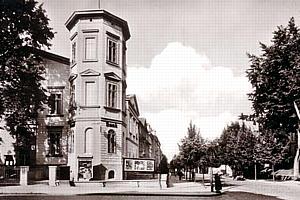
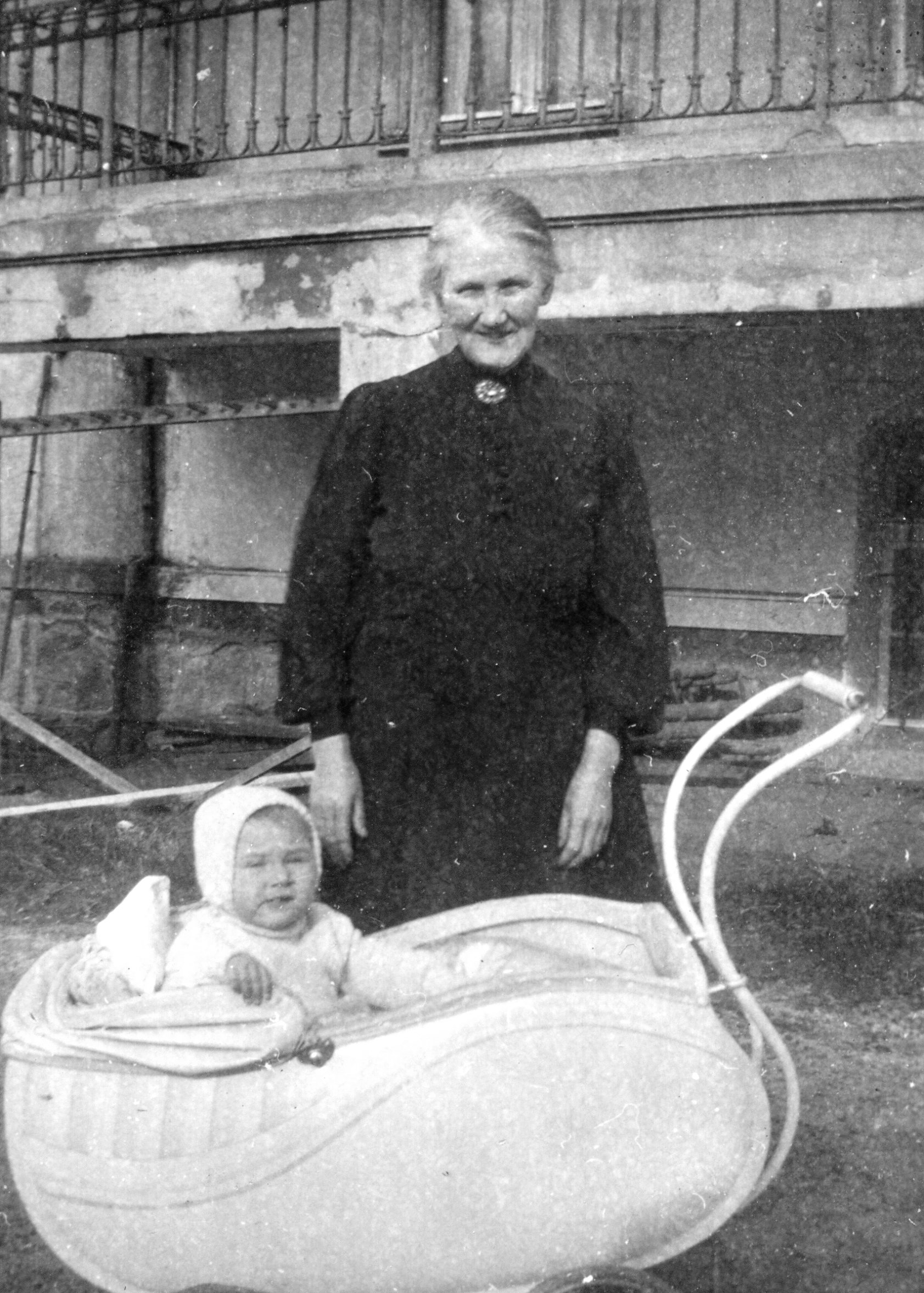
Arnswalde 1930

Arnswalde 1930

The trek managed to get as far as Arnswalde (Choszczno), Pomerania, where the family found temporary shelter in the forestry Kühnemühle. As the place appeared safe at least for the time being, Father decided to stay there longer than warranted by the critical circumstances created by the Soviet armies advancing westwards at lightning speed. Precious time was being wasted with useless discussions and playing Doppelkopf. Perhaps a trace of unfounded hope that the enemy on the eastern front could still be thrown back through a heroic effort by the German troops lingered at the back of everybody’s mind and caused them to dawdle. Suddenly in early February Red Army soldiers arrived at the forestry and took Father as prisoner of war although he was no combatant and assigned him to hard labor in the Soviet Union. In a forced march he returned to Posen (Poznan), to the very region whence he had escaped. Then the Russians shipped him by train to the Donbas area, where somewhere between Charkow and Rostow on the River Don he had to work in the coalmines.
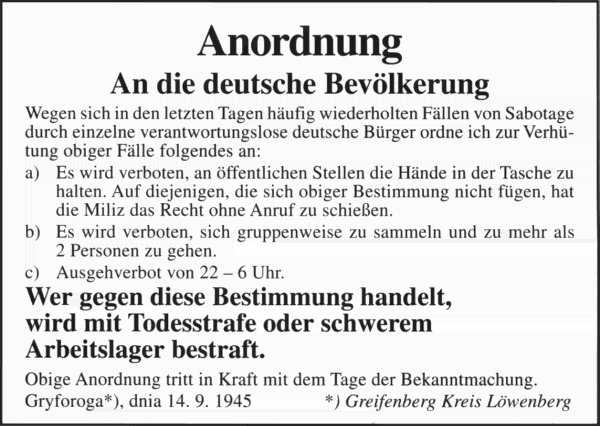
AnordnungThe decree  above states that the German population is not allowed to have their hands in their pockets nor to gather in groups of more than two people. Persons  who act against this regulation  face the death penalty or will be deported to a labor camp.

      In the following weeks and months, Mother had to endure indescribable hardships. Escape across the River Oder, where the area was still in German hands, was no longer an option. The Russian troops were heading in that direction and there was heavy fighting. She was left behind at the forestry with my brother Gerhard and me and the four orphans, whom she had taken along during the arduous trek from Gutfelde. That she and thousands of other women from West Prussia and Pomerania did not despair, did not give up and did not fatalistically slip into a state of utter hopelessness gives me cause for great admiration. After the forestry building burned to the ground, Mother wandered around in search of food, shelter, and relative safety. Eventually she obtained permission from a commanding Russian officer to travel with us children to Belgard in the hope of finding my brothers Karl and Adolf. To her great disappointment she discovered that they had decided to leave school and town, when they had heard that the Red Army would be in Belgard within days. While the town of Belgard remained relatively unscathed from the ravages of war, Mother had to suffer under the harassment and abuses of the new masters in town. In the secret treaty between Nazi Germany and the Soviet Union Stalin had acquired control over the eastern parts of Poland and wanted to keep them in compensation for the stupendous losses in life and material during the German invasion of Russia. So he ordered the Poles to leave their homes and their farms and settle in the German provinces east of the Rivers Oder and Neisse. Now in an ironic reversal of roles, the Poles were now the masters of former German farms and exercising control over the towns and cities. For the Germans, who wanted to stay or could not escape in time, it was now their turn to experience harassment and abuse. Mother refused to be forced into a role in which she would lose her dignity, especially, as it often occurred, if she felt that she was confronted with injustice. She knew about the century old animosity between the Russian and the Polish people. So whenever she felt that the Polish authorities had unfairly treated her, she would go straight to the Russian officer in charge of the district and complain about the incident. To her great satisfaction she received justice ironically from the hands of an enemy officer. Apart from her inner strength that allowed her to show courage where others would have meekly knuckled under, one must also consider the fact that Russian officers had a heart for the plight of little children. One could dismiss this thought as stereotypical and sentimental bias, if what Mother had experienced in Belgard with the six children in her care had been an isolated case of kindness. But such tender feelings on the part of Russian soldier had been documented so frequently as to attest to their truth.
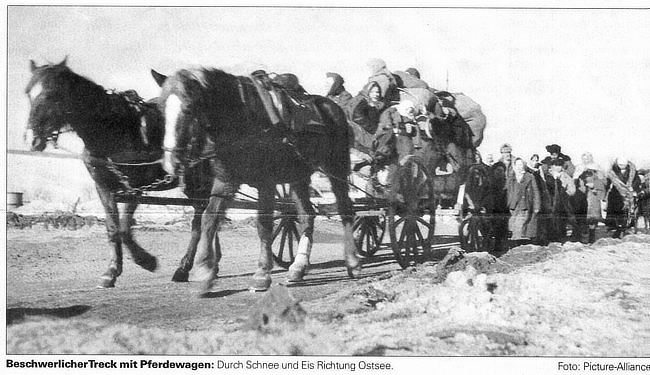
Through Snow and Ice

Through Snow and Ice towards the Baltic Sea

         The war came to an end with Germany’s unconditional surrender on May 8th, 1945. But nothing changed in Mother’s life for more than a year, until early in the summer of 1946 she was expelled along with tens of thousands of other Germans from her homeland. In a well-calculated program of ethnic cleansing all German nationals were forced to leave in order to make room for the Polish people who had been displaced in turn by the Russians in their eastern provinces. Thus, the Pomeranian lands that had once been settled and cultivated for a period of over 500 years by industrious German pioneers and farmers were put under permanent Polish administration.

         By now I was a little over four years old. What I have been writing about myself, I had gleaned from Mother’s diary, from my second-generation cousin Eberhard Klopp, who did extensive research on the Klopp family going back some four hundred years, from Uncle Günther’s Kegler Chronicles and other sources. I am especially thankful and greatly indebted to my brothers Karl and Gerhard (Gerry) and my sister Eka (Lavana) for their personal accounts of their incredible ordeals. I decided to insert them here as documents of a tumultuous period and as a testimony to their inner strength and courage without which they would not have survived.

To be continued …
The P. and G. Klopp Story

From Mother's Diary

From Mother’s Diary

Chapter 5 – Part III

In the last week of August I gave Mother another scare when I came down with my first illness, an especially severe case of intestinal catarrh. She had to change diapers constantly. The diarrhea just did not want to go away. Mother was really worried by now. She immediately stopped giving me milk, cooked a sort of rice porridge sweetened with saccharin and gave me three times daily crushed carbon tablets. That seemed to help. After three days I had recovered and was my usual cheerful self again relieving Mother from the stress of worry and sleepless nights. Now I was ready again to entertain the never ending stream of visiting relatives with my laughter, smiles and beaming eyes: Karl back from high school to help with the harvest during the fall break, grandmother Elisabeth and Aunt Mieze (Maria) from Stolpmünde, and many, many more. Shortly before Christmas the measles were going around among the Klopp children, but to Mother’s great relief I did not get them, even though I had also shown some of the symptoms, a few of those scary red spots on my skin. But in the end we could all enjoy the Christmas season. Although we were now into the fourth year of the war, there were still plenty of gifts for everyone under the beautifully decorated tree. I was only interested in the baby rattle Grandmother had given to me for Christmas. There I had something concrete in my little hands that I could touch, handle, and make noise with. Karl was playing piano and the others were reciting poetry for the family. At year’s end I was proud to be able to stand up in my crib, showed off my first tooth, ate well, was toilet trained, and best of all I was happy to grow up in such a wonderful family.

Aunt Alma from Berlin

Aunt Alma from Berlin

In the New Year Karl and Adolf left Gutfelde to continue their education in Belgard. With Eka and Gerhard also away to attend a local elementary school during the day, it became very quiet around our house. But Mother still had me and I made sure with my increasing demands for food and attention that she would not get bored. We had a brief cold snap and the temperature plunged to minus 20. Nevertheless, Mother felt that even in this frigid air I must be outside and ‘toughen up’. Janina, the young Polish assistant in the Klopp household, who had taken a real liking to me, took me often for a quick stroll in my baby carriage. In the evening, when it was time for me to go to bed, friends would drop in to spend a few hours in the comfort and cozy atmosphere of the Klopp residence. Invariably discussion would turn to politics and, of course, to the war that was raging and after the surrender of the 6th Army at Stalingrad was no longer progressing in Germany’s favor. Out here, far away from police-informers and free from the fear of being denounced to the Gestapo, they voiced their opinion on the gloomy prospects of the war and even dared to make sarcastic remarks like: ‘The Führer (Hitler) has gotten us into this crappy hole, he will also take us out of it again.’ As for me, the world was still intact. I enjoyed the triple benefit of good food, shelter, and love. On that solid basis of early childhood nurturing I was being prepared to withstand the traumatic events that were to follow later with the major offensive of the Red Army in January 1945. But for the time being, even for the grown-ups with their depressing views it was still safe to live in our corner of the world. When the noisy discussion abated a little, someone suggested playing a round of Doppelkopf, the second most popular German card game. Forgetting their worries at least for a few hours, Father, Mother and her guests played the game of a long family tradition. They had a few drinks for good cheer, smoked a cigarette or two and were having a good time, while I was dreaming about my next wintry outing with Janina.

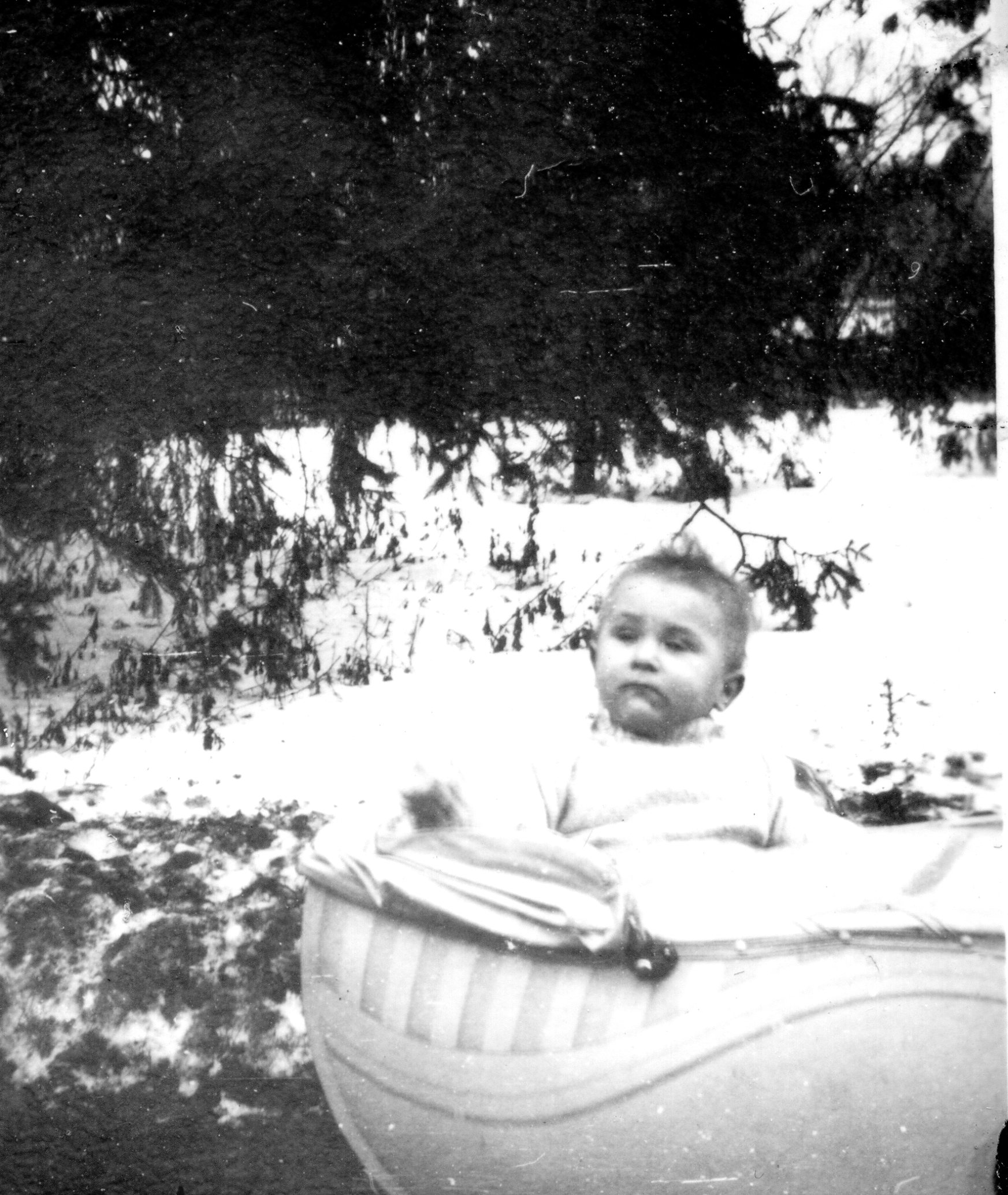
Peter in his Pram

Peter in his Pram

Spring came early in 1943. I spent a lot of time outside exploring the world around me. I learned to stand up on my own and ventured to make my first stumbling steps. Jupp, the friendly family dog, was my steady companion and my best friend for a while. Unlike my older siblings I refused to take the bottle and from my first birthday on I proudly drank my milk from the cup. When people were watching, I did my best to entertain them and show off my newly acquired skills. With the good weather also came a stream of visitors to enjoy the peaceful environment and the hospitality they found at Gutfelde: Grandmother Elisabeth and Aunt Mieze ((Maria) again from Stolpmünde (Ustka), Aunt Alma from Berlin, Aunt Margot (wife of Uncle Gerhard, General-Lieutenant in the German army) with her three children Helga, Nati and Dieter, and finally my cousin Arthur Thiess from Berlin and his three daughters Ingrid, Gerlinde and Anje. These visits spread over a couple of months were quite enjoyable for hosts and guests alike, even though some stayed for as long as three weeks or even longer. On top of it all, Karl and Adolf came home for the Easter holidays. Karl had acquired a certain degree of stardom with his excellent performance at the Belgard High School and his rapid development of his piano playing skills. As always, when he was home, he was asked to demonstrate his progress at the family piano. This went over very well, especially as his music teacher was also present and accompanied him on Father’s violin.

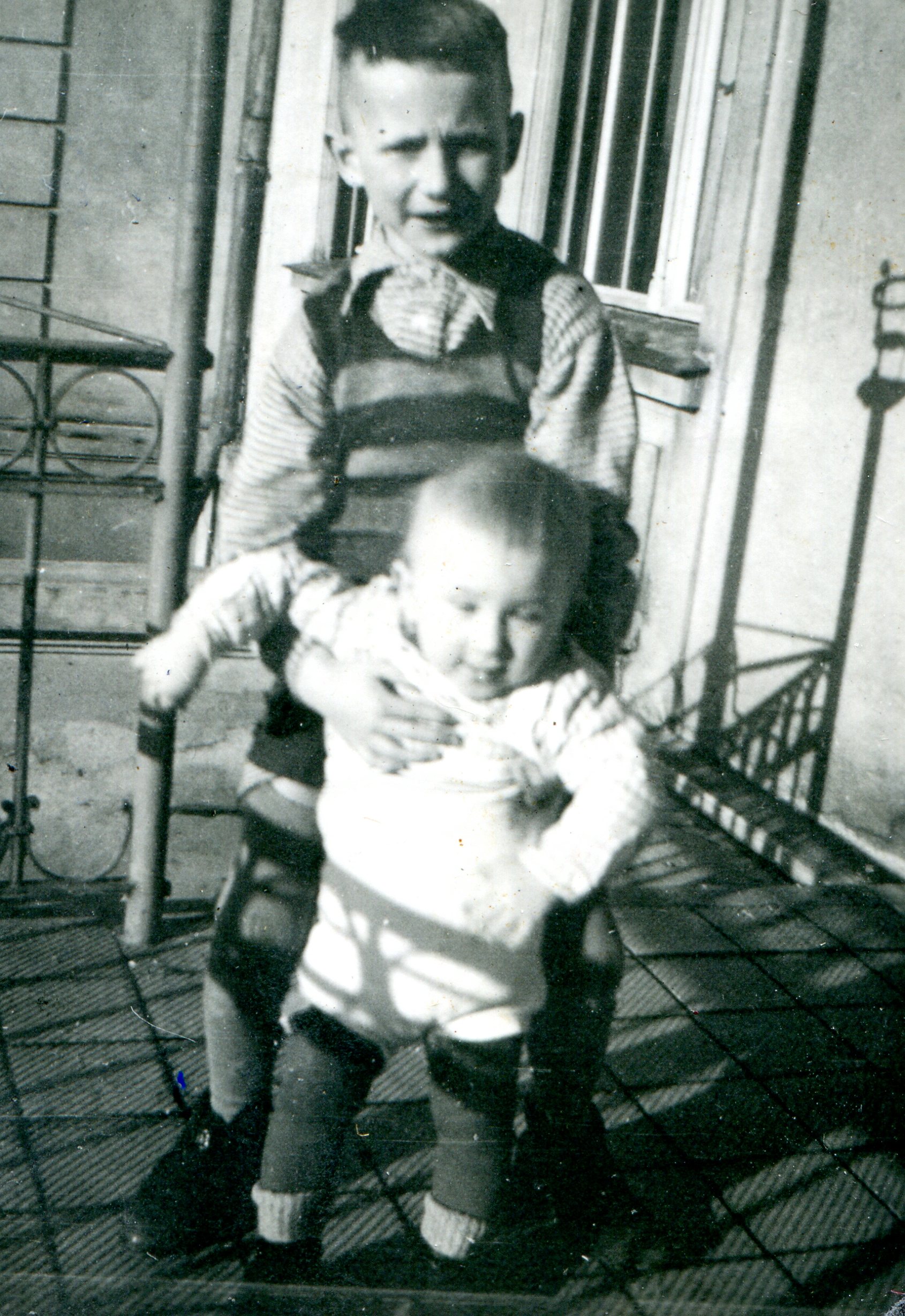
Gerhard Holding his Kid Brother

Gerhard Holding his Kid Brother

Mother was honored for the second time, since I was born, on Mother’s Day in Seebrück (Rogowo), a near-by town southwest of Gutfelde. With her five children, four of whom were male, she ranked very high among all the mothers in the region. Apart from the fact that Mother’s Day was a state supported festival, upon which a lot of emphasis was given to the meaning of motherhood mostly for ideological reasons – I would say for mythical reasons from ancient Teutonic folklore as well – women in general were considered not weak, but precious entities that had to be protected at all cost from any involvement in war activities. Germany was the only nation that did not employ women in the war effort in any shape or form. Young girls in colorful dresses presented flowers to the mothers. This year it was Father’s turn to make a speech to the assembly. What he was saying about motherhood and family came straight from the heart and with his genuine admiration left a lasting impression on all those who were present.

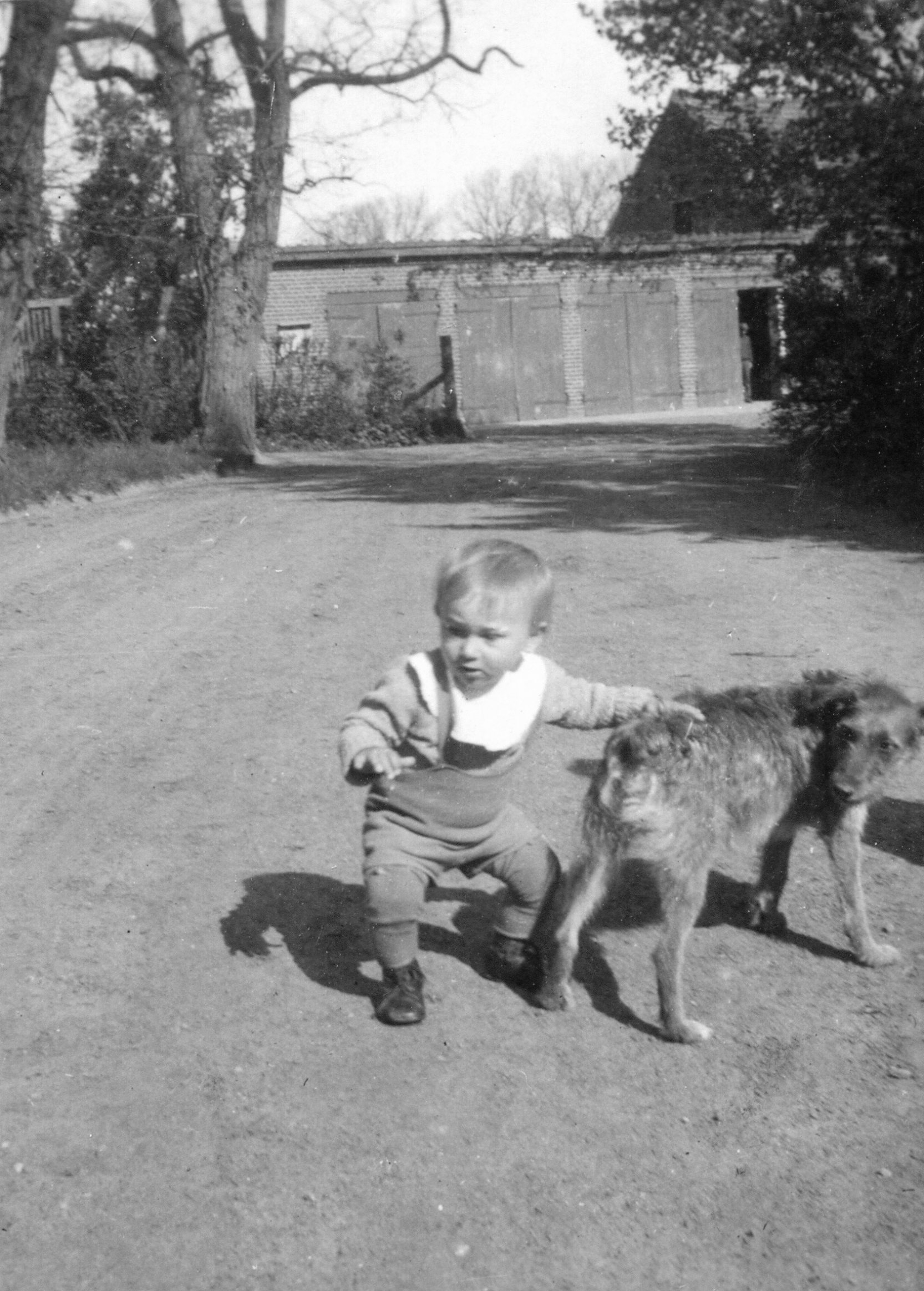
Peter and his Friend Jupp

Peter and his Friend Jupp

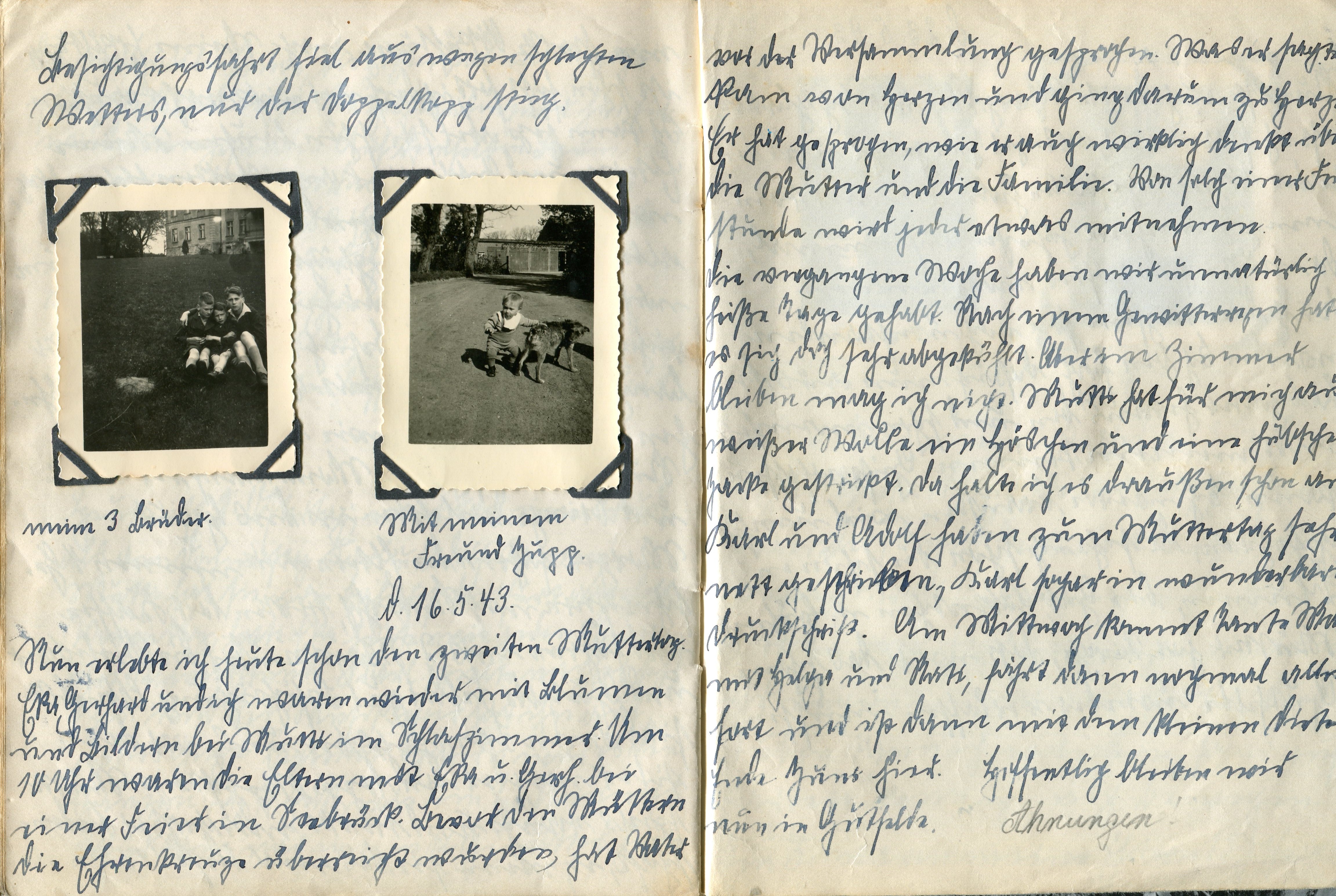
Mother’s diary of the first 15 months of my life came to an unexpected sudden end, because she had simply reached the last page and did not want to start another booklet. If one considers that this diary with the many tiny photographs pasted into it and written in beautiful Sütterlin handwriting was from among all the other precious goods the only object that she managed to bring safely to West Germany, one must concede that we are dealing with a little miracle. The far greater miracle, the survival of the entire Klopp family in the closing days of  World War 2 and afterwards, will be the subject of the next chapter.

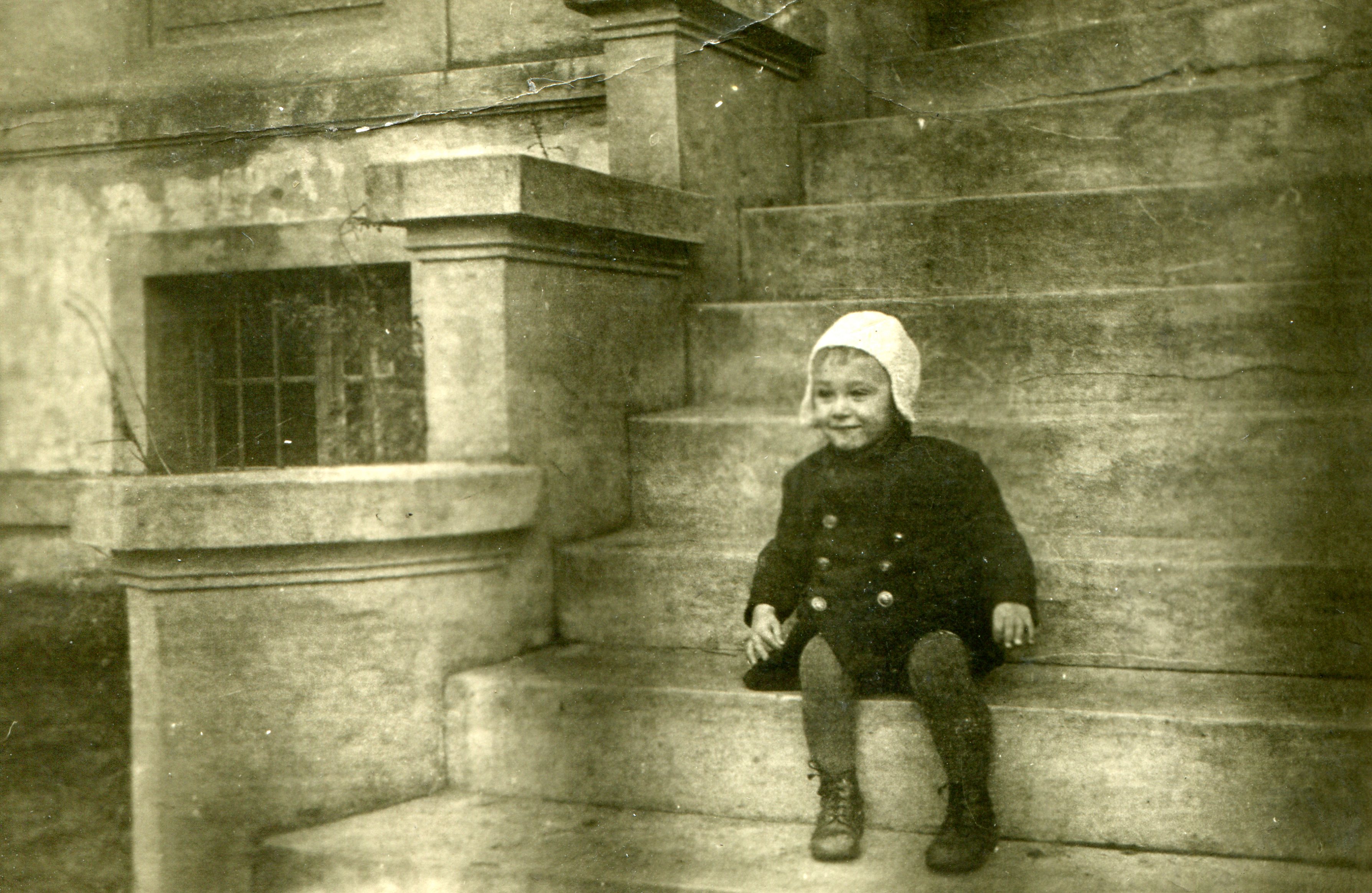
Peter Sitting on Gutfelde Staircase

Peter Sitting on Gutfelde Staircase

The Ending of the Mystery Story (Chart I – III)

The mystery story should rather be called mysterious, perplexing and horrifying. The reader might question the audacity and recklessness on my part to send such a horrible piece of writing to my girlfriend. What kind of love letter was this supposed to be?! How would a girl, just 19 years old, respond to the horrors of a subterranean cave dweller other than with total rejection of the young suitor, who had just revealed his otherworldly distorted sense of reality?

As it turned out Biene was deeply touched by the story, even though it did not have a good ending. But she had the advantage of getting the entire story in one piece. She also found that the story was based on a real event that took place at our yard back home, when I was on a weekend leave from the West German army. Uncle Günther was upset that mice had dug deep tunnels into the ground and if unchecked would have eventually ruined the wonderful lawn of the backyard. I witnessed how he flushed out the mouse with the garden hose and stomped on her as she was trying to escape out of her flooded den underground.

Sorting out some old documents, I came across a handwritten booklet of the mouse story and thought it might be of interest to some of the readers of my blog.

Plötzlich blendete sie grelles Tageslicht. Mit einem Satz sprang sie hinaus ins Trockene, in die Freiheit, ins Leben. Keuchend und zitternd vor Atemnot, aber glücklich für das zum dritten mal geschenkte Leben, lag die Frau da, bemerkte zu spät den dunklen Schatten, der vernichtend auf sie niederhieb. Kein Zufall, kein hier und dort treffender Schicksalsschlag, höhere Absicht bis in die letzte Einzelheit gewollt, begründet auf einen unerklärlichen Zorn, waren ihre letzten Gedanken, die ihr durchs Gehirn schossen. Der Hieb des unbekannten Gewichts saß haargenau. Es entschwand sogleich wieder in die blaue Höhe, um das Opfer gleichsam höheren Blicken freizugeben. Bestimmt schon tot, wenn auch das bloßgelegte Herz noch tüchtig pochte. Das Blut, das nach allen Seiten gespritzt war, färbte das welke Gras mit grellroter Farbe. Unter dem plötzlich schweren Druck sprizte nicht nur Blut in die Natur. Der Leib hatte die innere Last nicht mehr halten können. Umgeben von zuckendem Gedärm lagen blind und nackt die ungeborenen Kinder auf dem Geröll der Erde! Welch ein erschaudernder Anblick! Kann einem Menschen soviel Leid geschehen, wie es dieser jungen Maus geschah?


Mit lässiger Fußbewegung stieß der Mann die Überreste der Maus in das Loch zurück. Sie war ihm schon lange ein Dorn im Auge gewesen und hatte ein großen Teil seines Ziergartens unterwühlt. Nun holte er den roten Gartenschlauch aus dem Nachbarloch und spülte die blutigen Körperfetzen in den Schlund zurück. Zufrieden steckte er sich seine Pfeife an und sog den aromatischen Duft in seine Lungen. Die Schuld war beglichen.


Mystery Story in German

Kein Unterschied, Homunkulus!

By Peter Klopp

After Biene and I had met for the second time at Lake Baldeney (near Essen, Germany) in July 1964, I composed for her the following short story. I deliberately left out the final two paragraphs to give all my readers a chance to ponder about how the story will end. If you want to place your guess into the comment section, that would be cool. I will publish the end of the story on Wednesday’s post. My apologies to all, who don’t know German. But it would have been too time-consuming to translate such a lengthy piece of writing.

Paps war ausgegangen, Nahrung zu holen. Eigentlich war er noch kein Vater, aber sie nannte ihn so, und das war entscheidend. Tief unter dem Erdreich saß sie in der gemütlichen Stube und betrachtete liebevoll ihren Leib. Sie dachte an die Kinder, die da kommen würden, und horchte still in sich hinein, ob sie nicht vielleicht schon ein zartes Pochen der Herzchen vernehmen könnte. Ihre schwarzen Äuglein leuchteten zufrieden, sie ging ihrer Erfüllung entgegen.

Und wo aber auch?! Mit keinem Palast dieser Erde hätte sie die so nützlich und sicher angelegte Wohnung getauscht, die ihr Mann in unermüdlicher Arbeit aus dem Erdreich gestampft hatte. Er hatte für alles gesorgt: Die Kinderzimmer grenzten mit ihren niedlich ausgerundeten Eingängen an die gute Stube und das Schlafzimmer der Eltern. Mit ihnen verbunden war ein lang sich erstreckenden Gang wohl drei Körperlängen hoch und mehr als dreißig solcher Längen lang, in dem die Kinder ungestört herumtollen könnten, wenn sie erst einmal ein wenig größer geworden sind. Und was den kommenden Winter anbetraf, so hatte ihr Mann mehr getan als alle Männer dieser Welt. Die Kornkammer war zum Bersten voll, genug, um eine zwölfköpfige Familie den Winter durchzubringen. Das wäre alles jedoch kein Weizenkörnchen wert gewesen, wenn nicht der umsichtige Vater auch für die Sicherheit gegen Wetter und Feind gesorgt hätte. Continue reading