Ernst Klopp (1900 – 1964) and his Family – Part 34

The Writing on the Wall

Who can read the signs, when the fabric of family unity begins to unravel, when the glue that once held the clan together breaks loose under the load of stressful times? It is easy to answer such questions as we are looking back more than sixty years into past events. But at the time when the eldest son left the house, it appeared perfectly normal. After all, grown-up children with a few exceptions have always abandoned their nests to assert their independence and eventually have a family of their own. Yet, with hindsight we can probe a little deeper below the appearance of normalcy. Why would Adolf, the second oldest son, choose to immigrate to Canada, which turned out like the promised land, which however he did not know at the time he made the decision to emigrate? Or was it not rather the desire to escape his financial obligation to support the little farm in Rohrdorf with his meagre income? And why would Gerhard, the second youngest son, follow in Adolf’s footsteps if not for the same reasons. But most importantly, we children had no clue about the strain that the failed farming venture exerted on our parents. Ernst Klopp, once responsible as manager and director for a 3000 ha farming operation, utterly failed in turning the puny farmstead into a profitable venture. The psychological blow to my father must have been devastating.
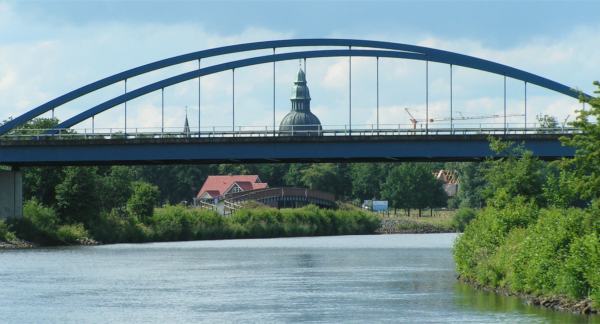
Haren, Ems Bridge – Photo Credit: wikipedia.org

In 1954, Father in search for meaningful employment moved to Haren at the Ems River in Northwest Germany. He worked in the office of the weaving factory of his nephew Georg von Waldenfels. The manufacturing plant was primarily producing cloth which was in high demand at the time. The newly created West German army (Bundeswehr) turned out to be a lucrative market for the son of Anna von Waldenfels. Unfortunately, Ernst Klopp and his meddlesome employer’s mother-in-law did not get along very well. The friction often resulted in unpleasant scenes, which wore him out and caused him to leave in 1957.

Rudersberg

In the meantime, my mother Erika Klopp had taken on a supervisory position in the kitchen facility of a senior citizen home in the town of Rudersberg northeast of Stuttgart. Her sister Maria Kegler, an elementary school teacher at the small village of Brünen near the city of Wesel took the 12-year old Peter under her wings. From there, he took the bus to attended the all-boys high school in Wesel, a city that ten years after the war had still many parts lying in ruins.
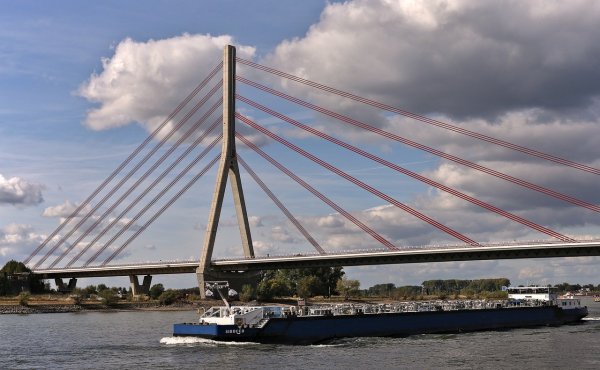
Lower Rhine Bridge at Wesel – Photo Credit: Thomas Biermann Pixabay

Rebuilding the city in the mid 1950s was in full in swing and the pressure of the extreme housing shortage was beginning to ease. Through some fortuitous connections, aunt Maria, also endearingly called Mieze, was able to find an apartment. An invitation went out to her sister Erika in Rudersberg to run her household in exchange for free roam and board. So it happened that in 1955, while Father was still doing office work at the cloth factory in the Ems Country, Peter’s mother finally found a place she could call her home again.
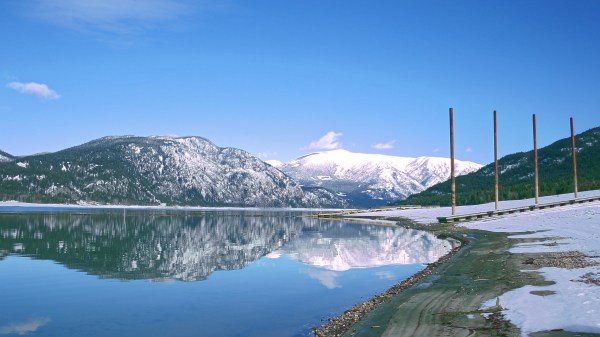
Natural Splendour of the Arrow Lakes

Wednesday’s Photos

Ice Sculptures

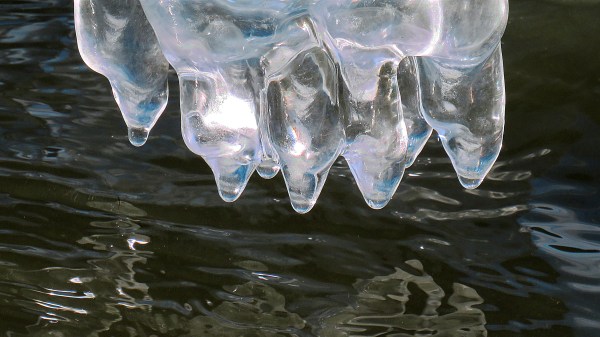
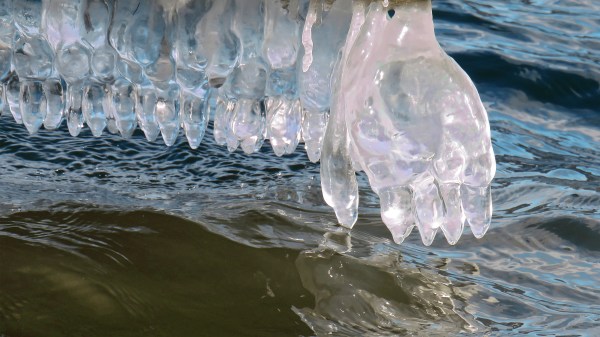
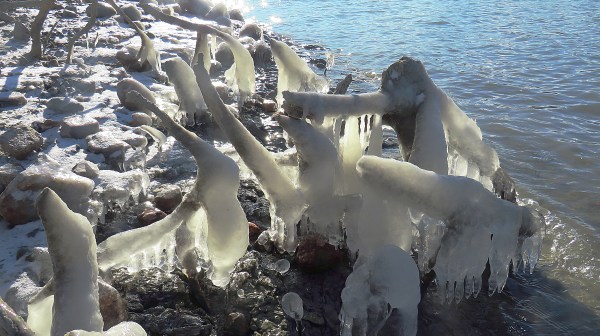
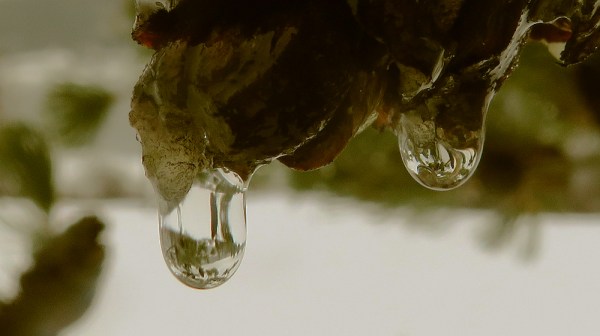
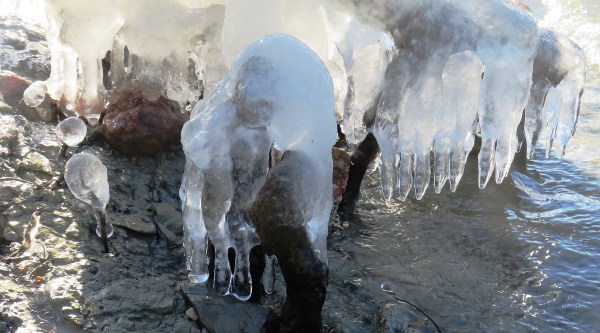
Winter has finally arrived. Extreme cold has gripped the Arrow Lakes region with temperatures hovering around the minus 15 C mark. Luckily, the cold weather was still tolerable, as the sun was casting its brilliance over the winter landscape. My wife and I all bundled up walked along the lakeshore at the Fauquier boat dock. The freezing temperatures had worked hard to cover driftwood, boulders and boat launch with a thick layer of ice. Then I discovered icicles in all kinds of forms and shapes which I captured with my camera. The following is just a small sample of Nature’s artwork. Enjoy.

Ernst Klopp (1900 – 1964) and his Family – Part 33

Signs of Disintegration

The only child left in 1954 with his parents Ernst und Erika Klopp was the 12-year old Peter. With no family workers left on the farm that produced little more than a few eggs from the henhouse and milk from a goat or two, my father’s health being on rapid decline, there remained scant hope  for a successful farming operation and inevitably Father’s dream came to a sudden end. All the Ernst Klopp children eventually emigrated and settled in Western Canada.

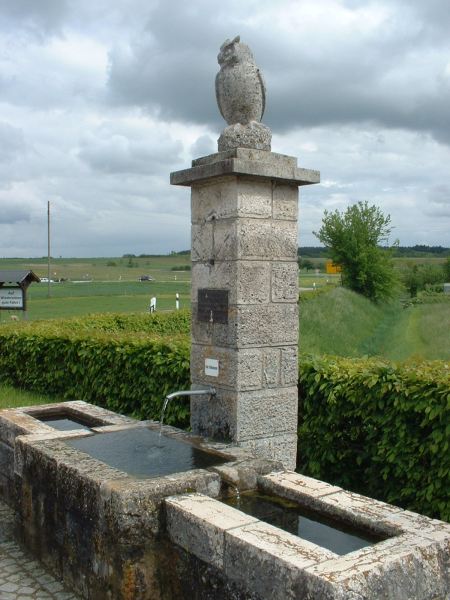
The Fountain at the Intersection in the Lower Village – 2003

Four years after the lease agreement with retired farmer Ös came into effect, my father gave up and burdened with a heavy debt load became officially unemployed. He moved into a tiny house at the bottom of the hill where he was often bed-ridden suffering from intense backaches for long stretches of time. In the meantime, my mother found employment as a housekeeper and cook at the Hohenzollern Castle at Sigmaringen. In the meantime, carpenter master Stoll and his wife in Meßkirch took care of little Peter in the role of foster parents, while he was attending the local high school.

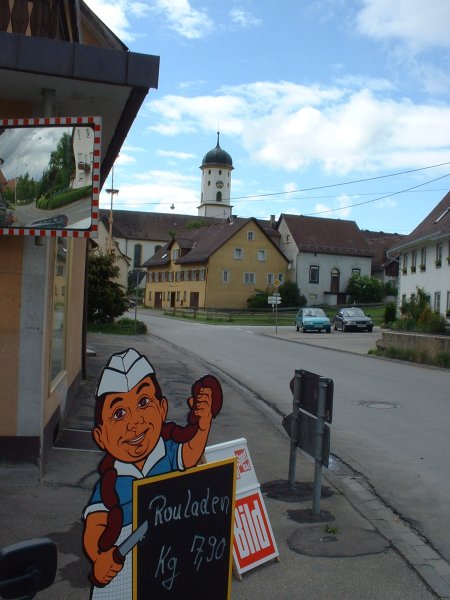
Store in the Upper Village – 2003

So after what had begun with a miraculous escape from death and destruction in their home province Pomerania and a promise of fetching a few morsels of the former happiness, the glue that once held the family together loosened and showed definite signs of disintegration.

Natural Splendour of the Arrow Lakes

Wednesday’s Photos

One More Video Clip

Last week before the weather changed our natural playground into a deep freeze, my wife and I went for another hike along the shoreline of the Lower Arrow Lake. As always we took our cameras along. I also had my camcorder in my pocket. I placed it on a tripod and pointed it to the near-by mountains where the morning fog was just lifting. The 15-minute video was later reduced in time-lapse fashion to less than two minutes making the fog lifting look more dramatic. Enjoy.

Ernst Klopp (1900 – 1964) and his Family – Part 32

The Ös Farm

Then suddenly in the summer of 1950 an opportunity presented itself to Ernst Klopp. An elderly farmer by the short name of Ös decided to retire and leased his farm house and a few parcels of land not more than 6 ha in size to my father on credit. By comparison to the 3,000 ha Ernst had administered in Gutfelde, the total of arable land available for farming was minuscule. The house was adequate and a vast improvement over the upstairs dwelling of the ‘poor house’.  It came with a large barn with a hay loft, a sufficient quantity of farm implements, a fair-sized kitchen, the ubiquitous manure pile in front of the kitchen window and an outhouse. The only luxury item that I recall was the large tile stove (Kachelofen in German) providing warmth and a cozy ambience for the entire dwelling. Many of my sweet childhood memories are going back to the Ös farm, as we often irreverently called it.

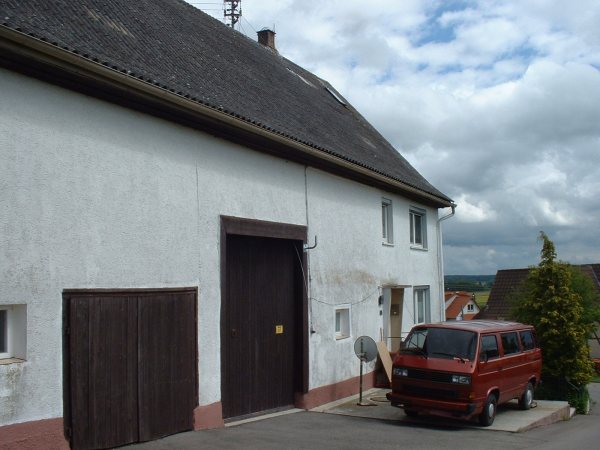
The Ös Farm – 2003

So here my father Ernst Klopp tried with little prospect of success to pick up his life-long dream again to running a farm under his very own management. Having no capital to spend on much needed supplies, he heavily depended on loans, which created a heavy financial burden. He must have counted on the help from my older siblings for turning the farming operation into a successful venture. 

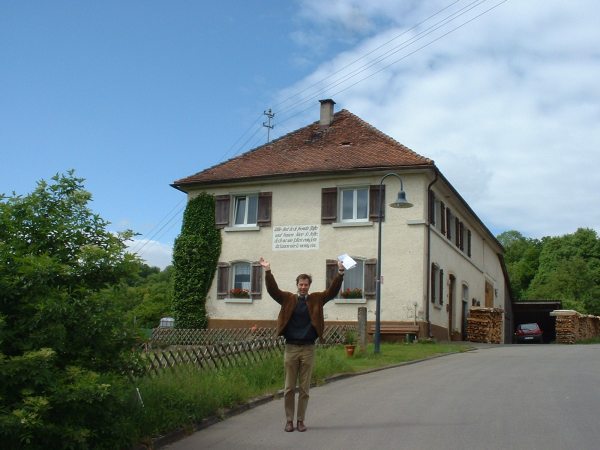
  The Farm House opposite to the The Ös Farm – Visit by our sons Robert and Stefan in 2003

Soon after his high school graduation Karl left home to study economics at the university of Braunschweig. Adolf, my second eldest brother, barely 18 years old found work at the Bizerba Factory in Meßkirch. Since that time in the early 1950s the Bizerba Company GMBH has developed into a world leader in weighing technologies for industry and trade. Adolf had to contribute most of the money he earned in order to keep this fledgling farming operation financially afloat. Three years later, Adolf was getting tired to support what in his opinion was a hopeless enterprise. Together with another refugee son by the name of Waldemar Klein he immigrated to Canada. Soon thereafter, my sister Erika also left home to take up nurses’ training in the City of Hamburg. In 1954, Gerhard managed to get an apprenticeship placement in a prestigious institute of technology in Switzerland.

Natural Splendour of the Arrow Lakes

Wednesday’s Photos

Rain, Rain, and more Rain

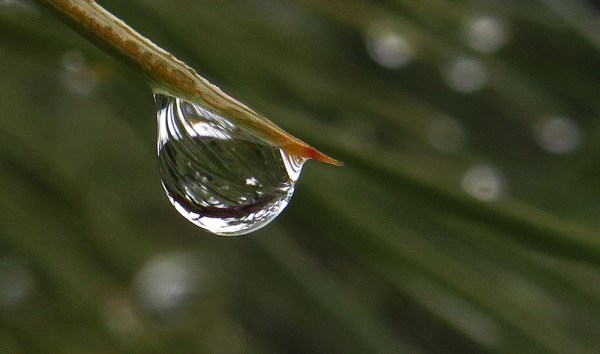
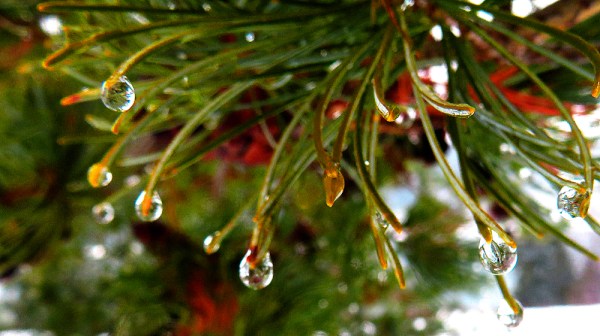
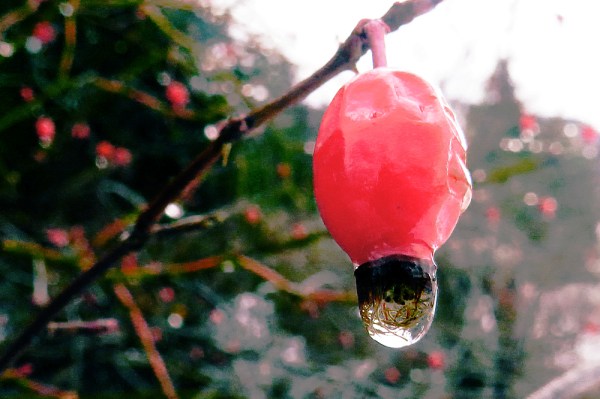
This has so far been the mildest winter, since we moved here over forty years ago. In the early 1980′, we experienced massive snowfalls with snow piling up all the way to our kitchen window. In the extreme cold weather often lasting several weeks in a row, the lake would occasionally freeze over and our ferry barely managed to break the ice in the morning. It seems that such extreme weather is now part of the past. After a night of wet snow covering the ground with a white blanket, rain, quite heavy at times, returned to our area at the Arrow Lakes. When it let up a little, my wife and I went out for our daily walk equipped with our cameras hunting for rain drops. Here are the results. Enjoy!