Natural Splendour of the Arrow Lakes

Wednesday’s Photos

February Impressions

There is normally not much sunshine in February in our neck of the woods. When there is, one needs to go out to soak up enough of the sun’s invigorating energy to carry us through the next gray and depressing period. On those bright occasions, I always carry my camera ready to capture the beauty of the winter landscape. Enjoy.

A-IMG_1188

Waiting for the clouds to lift

IA-MG_1251

Finally, a blue sky to enhance the landscape

A-IMG_1249

A rosehip’s head and nose covered by snow crystals

A-IMG_1245

Snow Sculpture 1

A-IMG_1224

Snow sculpture 2

Gustav Robert Hermann Klopp – Friedrich and Emma’s Eleventh Child – Part 1

Fighter Pilot and Hereditary Estate Farmer

Friedrich and Emma’s eleventh child, Hermann was the first one to be born in the recently acquired house on 30 August 1892. In 1903 the eleven-year-old boy moved with his mother Emma and his six younger siblings to the farmstead at the village of Elsenau near Schönsee (now Polish: Kowalewo Pomorski) in West Prussia. Hermann completed an agricultural apprenticeship in that area and found before 1916 an administrative post of the Prussian state property Wtelno near Gogolinke, county of Bromberg (now Polish: Witelno near Gogolinek, about 20 km northwest of Bydgoszcz). The agricultural area of the domain was 385 ha.

In 1916 Hermann became a soldier and participated in World War I. He enlisted at the newly established air force unit just as his brother Ferdinand, who had served from 1915 on at the airstrip Großenhain. In August 1917, according to an army postcard, he became a fighter pilot trained at the “Flieger-Ersatz-Abteilung I”.

From March 21 to November 10, 1918, the day of the unit’s closure, Hermann Klopp belonged as a lieutenant and fighter pilot to the Airforce Unit I, which was headed by Manfred von Richthofen (1892 – 1918). Hermann was on active duty when his leader was fatally shot down on 21 April 1918 between Bray and Corbie (France).

Since the end of March 1918 the headquarters of the famous unit JG I was moved forward to the airport Léchelle as part of the German March offensive. After Richthofen’s death, First Lieutenant Reinhard became Herman’s new leader. On 6 July 1918 Captain Hermann Göring (1893 – 1946) was installed as the last commanding officer of the Imperial Airforce.

Under Göring’s leadership, the distinguished and audacious unit suffered heavy losses in the summer and fall of 1918. During the course of these air battles, during which Lieutenant Hermann Klopp flew the fighter plane Fokker D VII, his flying machine was shot down in the vicinity of Léchelle/Cappy. Seriously wounded he was transported to the nearest field hospital. It was found that he received a non-operable lung shot, from which he suffered for the rest of his life.

To be continued …

Brief Visit to Biene’s Studio

Wednesday’s Photos

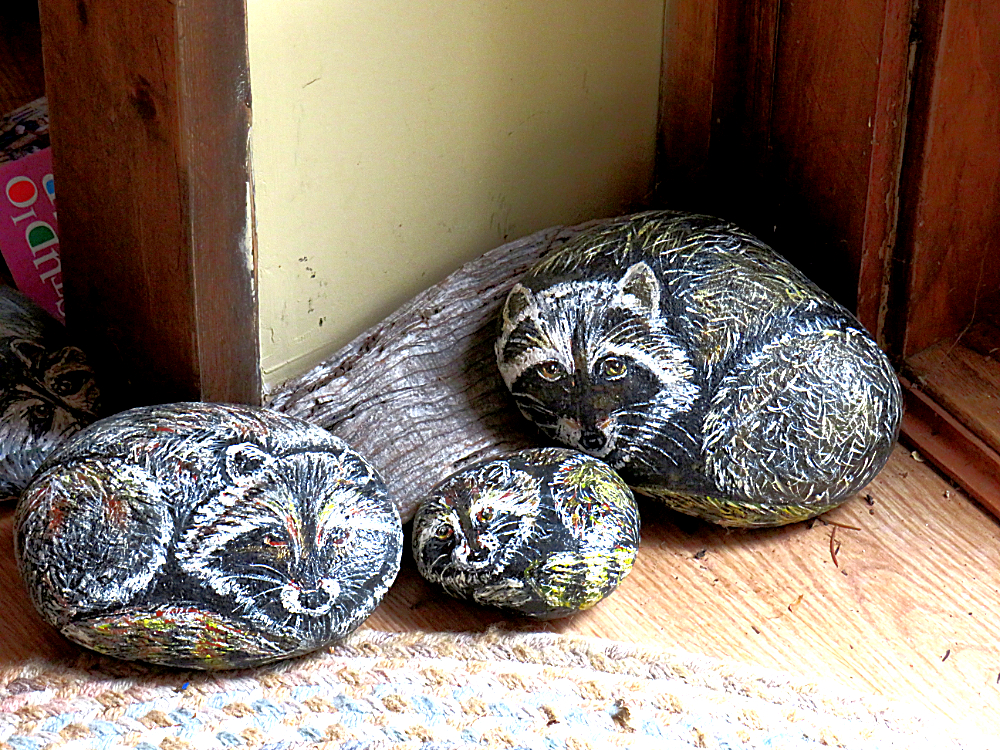
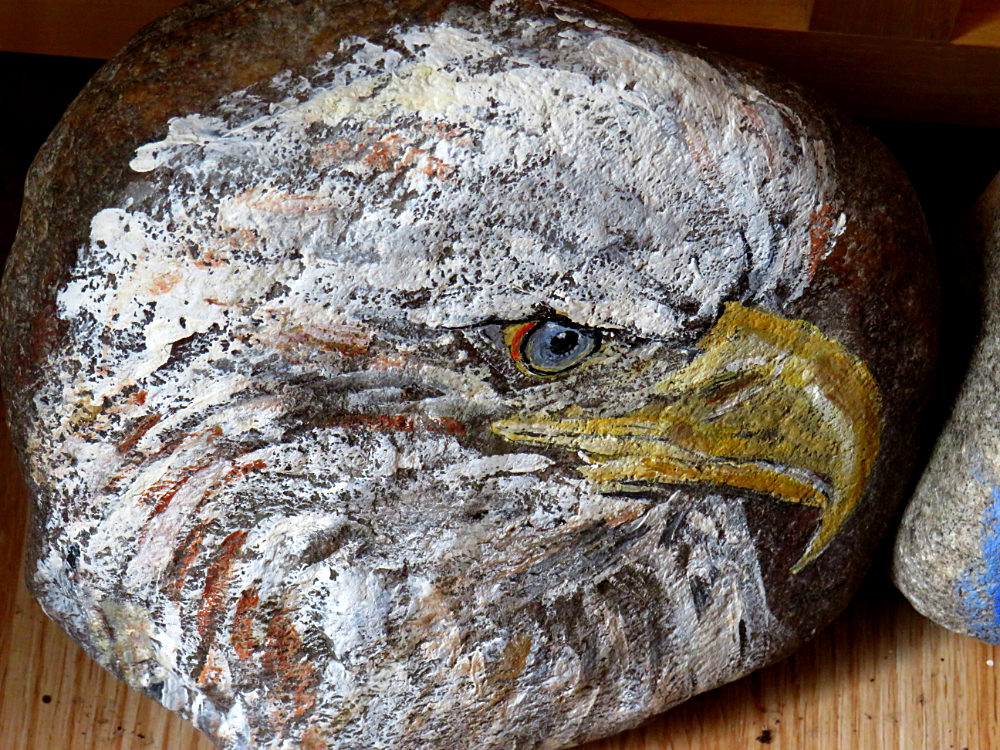
While the weather feels miserable and the clouds hang depressingly low, it is best to focus on some creative indoor activities. Thanks to the many encouragements from my blogging friends, my wife has been very busy with her rock paintings. The floors are covered with old and new artwork. Here is but a small sample. Enjoy.

A-IMG_1173A-IMG_1174A-IMG_1182A-IMG_1184A-IMG_1185


Hermann Valentin Friedrich Klopp (1890 – 1903?)

Mittellandkanal_bei_Calvörde

Typical Landscape near Jersleben, Lower Saxony – Photo Credit: Wikipedia

A Young Boy’s Early Death

Like the seventh child, the tenth descendant of Friedrich and Emma Klopp (my grandparents) died prematurely. Hermann was born on 26 April 1890 in Jersleben near Wolmirstedt. His name is not mentioned in the Klopp family records. The sixth Klopp son was baptized by the renowned regional historian of the Altmark Dr. Friedrich Daniel, who had been a pastor in Jersleben since 1887. The date of the boy’s death could not be determined from the official towns’ records of Wolmirstedt, Jersleben and Elbeu. All relevant circumstances point to the fact that Hermann took part in mother Emma’s resettlement and move to Elsenau, West Prussia (County of Schlochau) in 1903, where he passed away shortly after their arrival in his early youth.

Czluchow,_Poland_-_panoramio_(26)

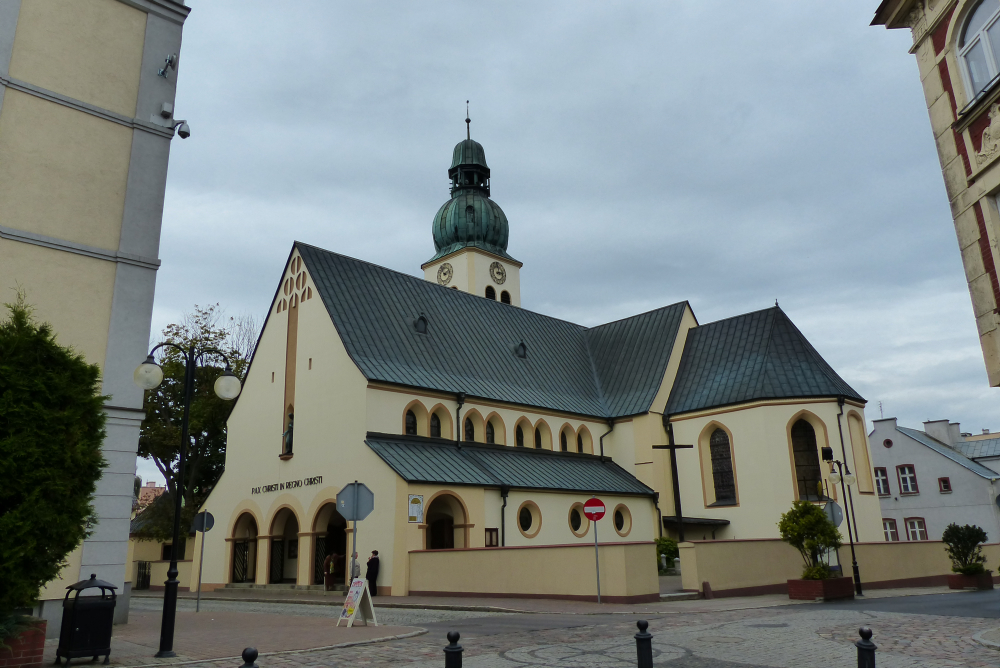
St. Jacob’s Church in Schlochau, the administrative centre to which the village Elsenau belonged.


Natural Splendour of the Arrow Lakes

Wednesday’s Photos

First Sunny Weekend in 2020

On the first Sunday in February, my wife and I decided to take advantage of the first sunshiny weekend of the year. The road down to our favourite campsite was so buried in deep snow that we had to park our car on the main road. Fortunately, the partially melted snow cover had frozen so hard that we could easily walk down to the beach without any trouble. The sun felt warm in spite of the subzero temperature. It was an invigorating hike, and the photos, which I took home and I have chosen for today’s post,  were an additional bonus. Enjoy.

A-IMG_1000A-IMG_1111A-IMG_1135

Friedrich Wilhelm Otto Klopp (1886 – 1937)

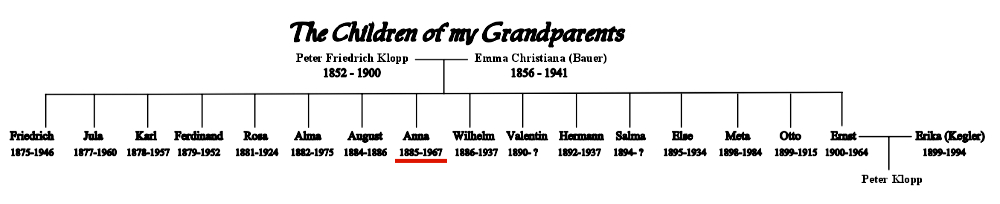
Chart I Peter and Emma Klopp Tree simple

The stories of the first eight children of my paternal grandparents have been told in earlier posts last year. Here are the links to the first half of Friedrich and Emma Klopp’s sons and daughters: Friedrich, Juliane, Karl, Ferdinand, Rosa, Alma, August, and Anna.

Friedrich Wilhelm Otto Klopp (1886 – 1937)

The Innkeeper of the “Brown Elk”

As the ninth child Wilhelm was born on 8 December 1886 in Jersleben. Due to the sparse memory retention of the descendants, Eberhard Klopp, the author of the Klopp Family Chronicles, had not been able to dig up any information on Wilhelm all the way up to 1919, when after the lost WW1 the latter returned from the eastern German provinces (given to Poland by the provisions of the Treaty of Versailles) to Elbeu. At the Magdeburg Street of Elbeu, Wilhelm bought a house, presumably with agricultural land attached to it. With his brother Ferdinand he seemed to have come to some sort of financial arrangement involving a considerable sum of money paid out by the state to compensate for lost property in the eastern provinces.

From Wilhelm’s first marriage with Maria Söchting come two sons: Wilhelm and Gerhard. Their mother died in 1912. In 1912 Wilhelm married his second wife Louise (née Grünwald). From this marriage originate four children: Viktoria (1914), Fritz (1916), Heinz (1919) and Günther (1924). It is safe to assume that 28-year old Wilhelm became a soldier in 1914. When he returned from the war with his brothers, he procured for his brother Ferdinand Klopp (1879 – 1952) the lease of the Elbeu Inn “Brown Elk”. Over financial disagreements in August 1922, the two had in the barroom a fight, during which Ferdinand shot his brother. Wilhelm was wounded at his left shoulder. Louise, who was standing behind him, was grazed by the bullet. Mother-in-law Emma Klopp must have heard about this incidence either at her daughter Rosa Diesing’s (1881 -1924) place at Schöneberg or experienced it first hand right on location in Elbeu. At any rate, it had been passed down through the grapevine that Emma had used the highly defamatory term “Satan’s wife” in describing her daughter-in-law. Mother Emma condemned Wilhelm’s excessive alcohol consumption, which she blamed on his wife’s bad influence. Louise died in 1924, presumably on account of the injury she suffered from the grazing bullet. Wilhelm was reconciled with his brother Ferdinand – at least on the surface, took over the “Brown Elk”, and remained innkeeper for the rest of his days.

Around 1925 he married for the third time: Ruth (née Grünwald), the sister of his second wife. Six underage children needed to be cared for. From this marriage descended two more sons: Hans-Georg and Hans-Joachim, both were born in Elbeu. On 7 August 1937, Wilhelm passed away at the age of only 51 years. At the end of his short life, he had apparently become his own best customer of the local watering hole.