Natural Splendour of the Arrow Lakes

Wednesday’s Photos

Nature’s Amazing Art Work

Last week we looked at some wintry photos revealing the beauty of our area in the West Kootenays of British Columbia, Canada. Today our focus will be on the amazing shapes and forms that Mother Nature can produce in the winter. Again I present five images to you. I would like to find out which ones my readers like best. Although always welcome and appreciated, no comments are necessary. I numbered the photos, so it would be easy to give a quick personal assessment. Just use three numbers in the order of your preference. Have fun! Enjoy!

33189152572_411b692de4_o

1) Africa Shaped by Ice

32687435570_a009d373cc_o

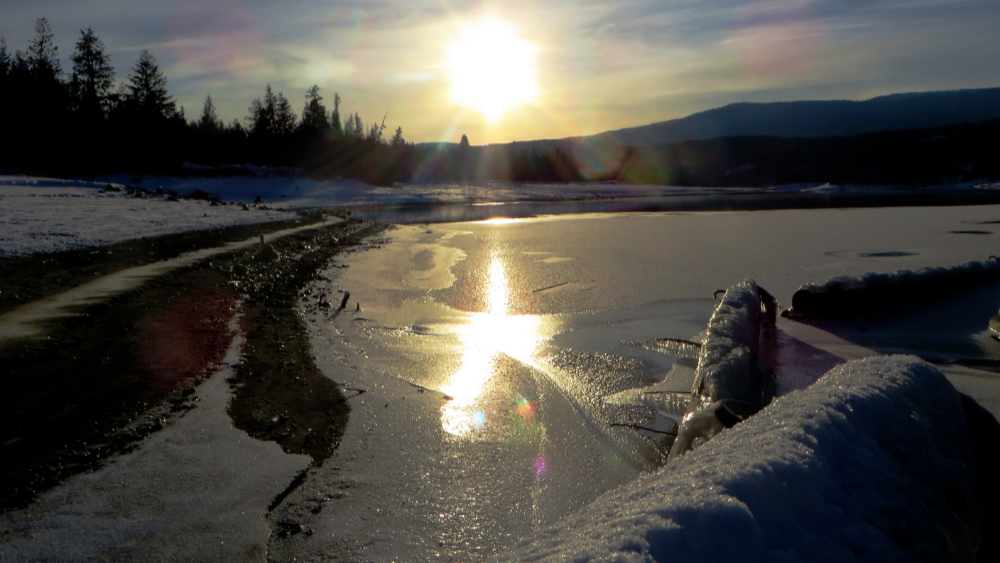
2) Undulations in Snow

32505902896_9b2df6df91_o

3) The Three Frosty Graces

32153749375_1c1c5767c2_o

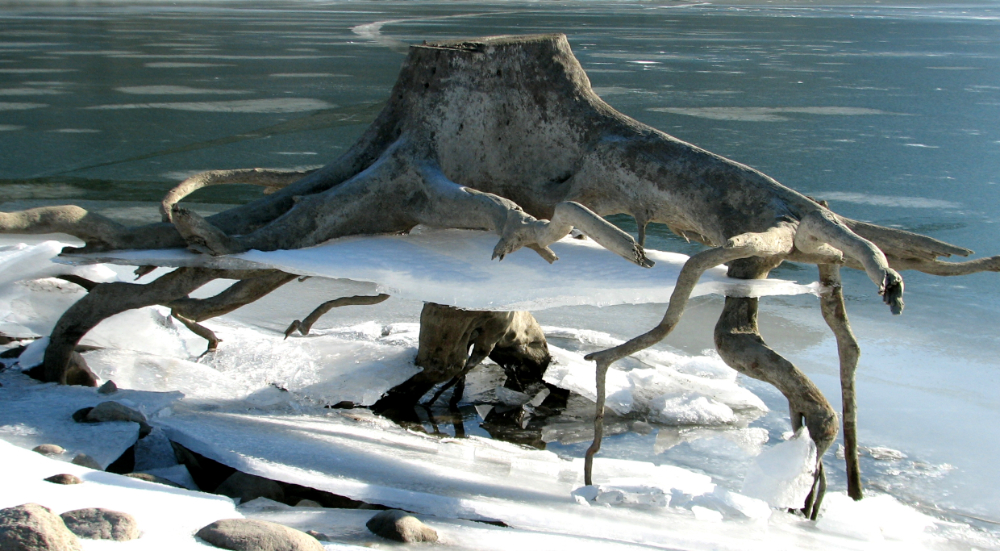
4) Tree Stump with a Table of Ice

24015738131_396060a5eb_o

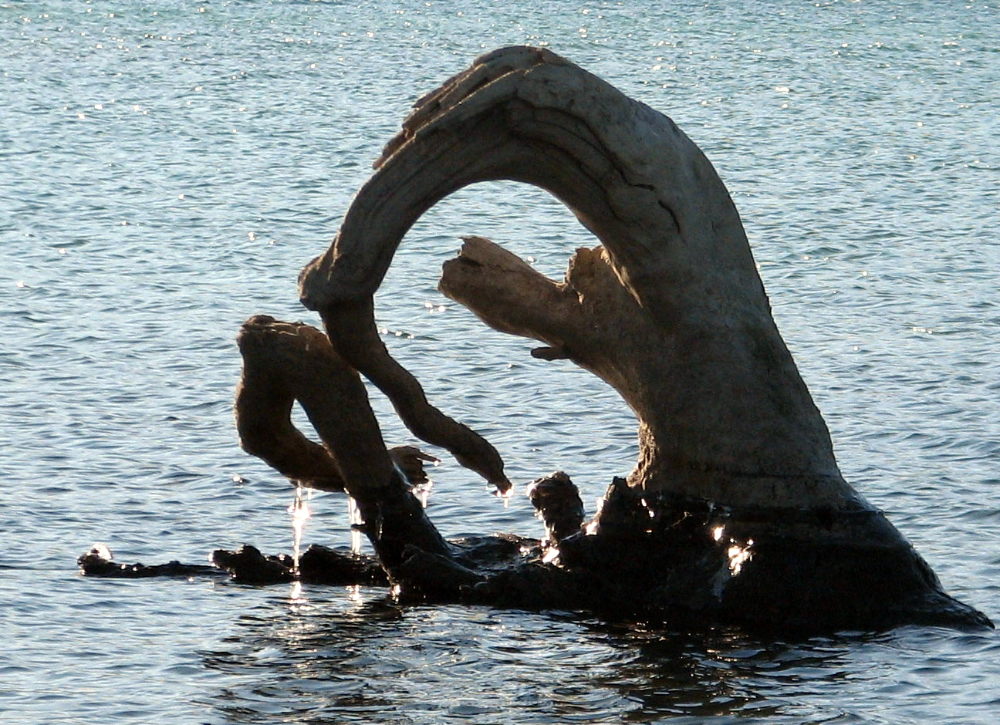
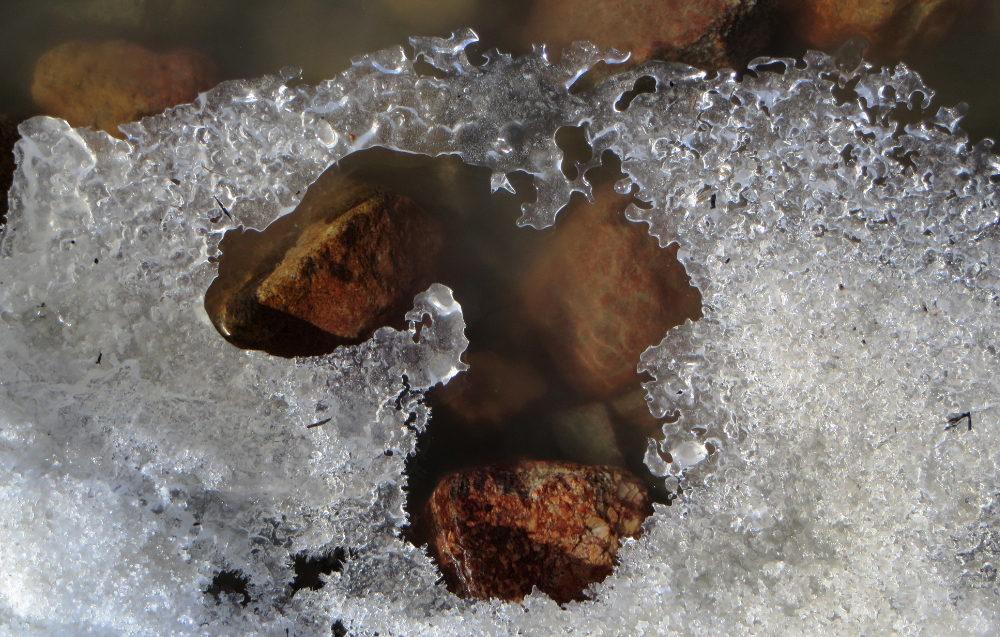
5) Mystery Shapes

You can also view my photo stream at flickr.com. Photos are taken mostly from the Arrow Lakes area. Simply search for Peter Klopp under people.

The Most Liked Photo in Last Week’s Post

There were fifteen people of my followers at WordPress and FaceBook, who sent in their evaluation of last week’s photos. Most stated that they found all pictures equally beautiful, but if pressed they would choose …. It turned out that picture #4 (Fauquier Twilight Hour) had a slight edge over the other four. Here is the winning photo:

Fauquier Twilight

Halleluja by Leonard Cohen

An Amazing New Year’s Greeting

For New Year our friend in Germany sent us a couple of videos of his family celebrating Christmas, enjoying an impressive fireworks display on New year’s Eve and of his wife Edda playing the Halleluja by Leonard Cohen. Edda is the granddaughter of my Uncle Bruno. If you look at the Kegler family tree, you will find her on Chart IIc. Never have my wife Biene and I received a more touching and more precious New Year’s greeting than this video. A big thank you goes out to Dieter, Edda’s husband, who made this beautiful recording! It is my hope that you like it as much as we do.

Chapter 33 of the Peter and Gertrud KLopp Story – Part VI

Empathy for Peter

62

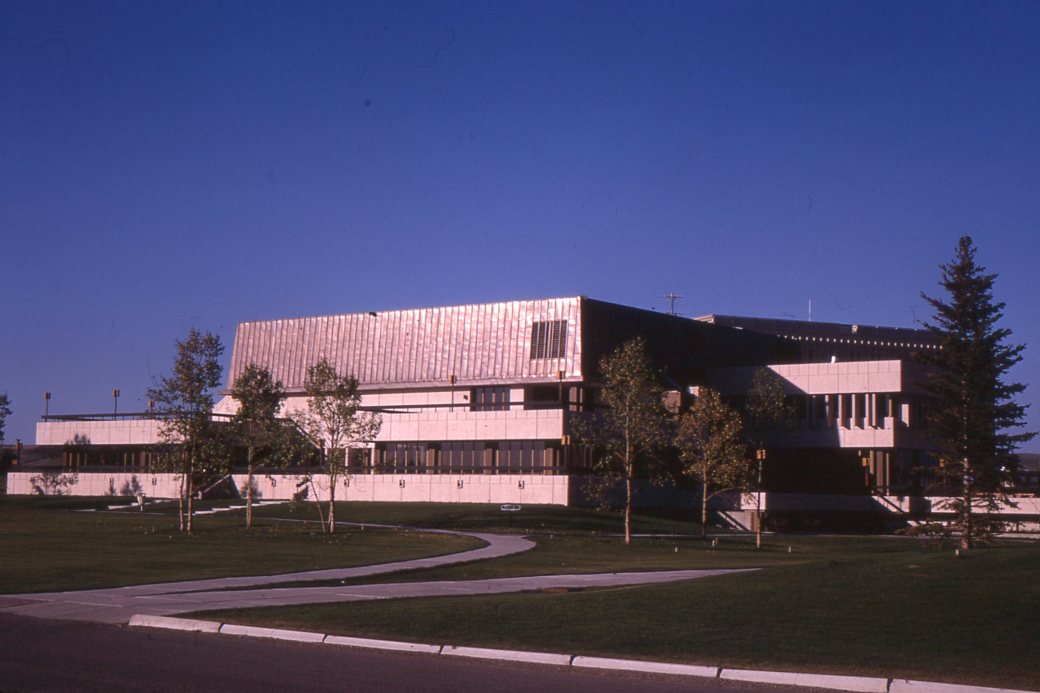
Brand New University of Calgary in the Mid 60’s

In Educational Foundations we studied the great philosophers of education from Socrates to Piaget. For this course also the university had set up tutorial classes to facilitate the exchange of ideas in small discussion groups. I spite of my language difficulties I felt I had a noticeable advantage. I was about five years older and therefore more mature in many aspects of learning. I also brought a wealth of life experiences, which enabled me to enrich the class with new and fresh ideas. To the amazement of my much younger fellow students I was not afraid to criticize the great thinkers of the past. There was venerable Rousseau for example, who advocated locking up disobedient children in a dark room instead of using corporal punishment. Remembering all too well my own ordeals being locked up as a young child in the dingy storage room of Mr. Stoll’s carpentry shop, I declared that in my opinion locking up a child was one of the cruelest forms of punishment and that ultimately spanking justly applied without causing physical harm was to be preferred.

Some other time we were discussing the importance of the family in early childhood development. Having a much broader concept of education in mind, I emphasized with as much conviction as I still have today, “The family is the smallest unit in a society. As healthy cells make a healthy body, so family units that are intact and provide a caring environment for the children are the building blocks for a strong society. Take away the health of the family and the state will sooner or later suffer and begin to disintegrate.” I am sure that I expressed these thoughts quite differently, but the idea came across with electrifying results. The students were most likely wondering, where this immigrant student had all his ideas from. Little did they know that I had studied Mommsen’s ‘History of Rome’ and that the ideas about the importance of the family were as old as the Roman Republic!

One day our tutorial instructor felt the need to divide us into groups of four or five students each. To develop a feeling for empathy, a term that can be easily defined in clinical terms but is otherwise quite an elusive concept, we needed someone in our group, who would be willing to take on the role of a client and come up with a story, to which the others as would-be councillor would react with supportive questions and remarks. A lot of time was being wasted, because nobody wanted to be saddled with the difficult role of the client. After a long pause, I said, “OK, I’ll do it. Just give me a little bit of time to think.”

Then I began without referring to any specific time or place to tell the story of my father, how close we had become before he had left home, how he gave me a guiding hand with my schoolwork, how much I was shaken up by my parents’ divorce, how I had to wait for five long years before I could see him again, how I spent many happy hours at his new home, then how suddenly and unexpectedly I had lost my father all over again and this time forever, when he died of a massive heart attack. By the time I had spoken the last sentence, it was so quiet that you could hear a pin drop in the tutorial room. All other groups had stopped their exercise to listen in to the extraordinary story that was grabbing everybody’s attention. Then the students were getting noisy with shouts of praise and admiration. After the tutor regained quiet and order, he said to me, “It seems your creative story caused quite an outpour of empathy. How did you think it all up so quickly?”

In a strange mix of pride and self-pity, I replied, “I’d wish it had been just a story.” With these words I quickly left the room. In my heart I was thankful to tutor and students for respecting my privacy and not asking any more questions in the sessions that followed.

Natural Splendour of the Arrow Lakes

Wednesday’s Photos

Arrow Lakes Winter Scenery

When the winter days appear to be dreary and the lack of sunshine is getting you down, you must get out of the house and make good use of a rare sunshiny day. And even if the sun never manages to penetrate the gloomy cloud cover in the valley, open your eyes and you will find beauty everywhere to capture  with your camera. I am sure it will give you a big lift and pull you out of the winter blues. Today I present five images to you. I would like to find out which ones my readers like best. Although always welcome and appreciated, no comments are necessary. I numbered the photos, so it would be easy to give a quick personal assessment. Just use three numbers in the order of your preference. Have fun!

Nakusp

1) View of the Nakusp Marina

Saddle Mountain

2) Saddle Mountain behind a Cloud Frame

Burton Creek

3) Burton Creek Estuary

Fauquier Twilight

4) Fauquier Twilight Hour

Taite

5) Taite Creek Area south of Fauquier

You can also view my photo stream at flickr.com. Photos are taken mostly from the Arrow Lakes area. Simply search for Peter Klopp under people.

Chapter 33 of the Peter and Gertrud Klopp Story – Part V

Discussing Marriage at Lunch Break
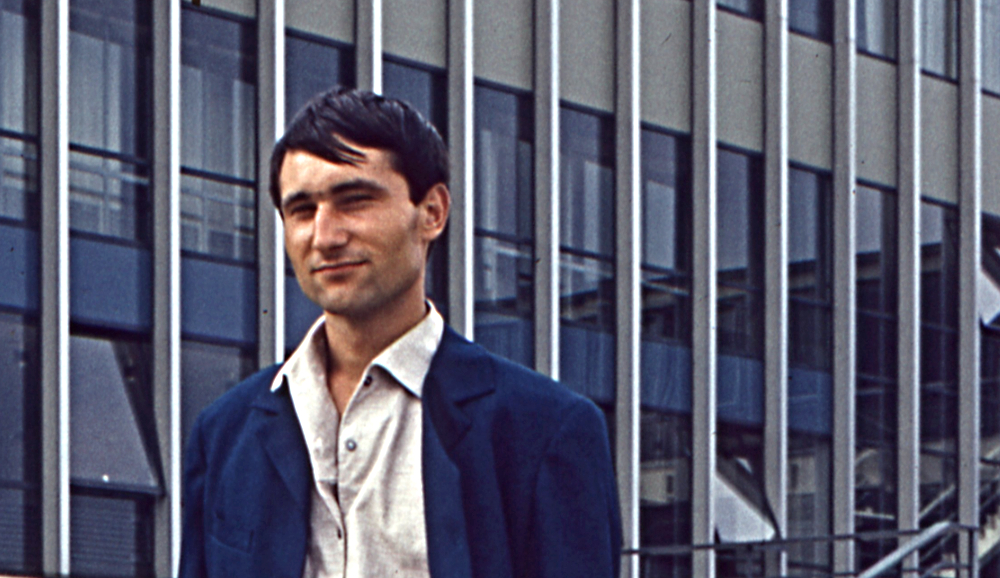
Student Peter

Peter in front of the University of Calgay

On the wall of my basement room hung a timetable, a rigid what-to-do list that was to govern my life for the next seven months. On weekdays I got up at six and after a cornflakes-and-milk breakfast spent sixty minutes to have an early morning study period. Then I took the bus for my first morning class at campus. I had one hour for lunch that always consisted of the same homemade bologna and cheese sandwiches washed down with the watery coffee from the vending machine. During this time, when I managed to relax a little bit, I often met with three students on alternate days, as they all had their own schedules to follow.

On Tuesdays and Fridays I sat together with Brian Fisher, since we both attended the same afternoon tutorial class for Math 211. It made me feel very good to be able to help him with many of the questions from the weekly assignment sheets. In turn I got gradually used to the informal, casual way of English conversation. On the other days I met with two women, both married, one from Great Britain, whose husband had recently been promoted to a managerial position in an IBM sponsored business in downtown Calgary, the other Mrs. Karen Bolso, an immigrant from Norway. Both were attending the same late morning psychology lecture. In a country that was built on the skills and talents of hundreds of thousands of immigrants the voices of three individuals producing an interesting blend of Oxford English, Scandinavian and German accents were not unusual in the student lounge. All three of us, coming from Europe, had interesting stories and experiences to share. The British student, whose name I can no longer recall, had recently followed and joined her husband in Calgary and was pursuing a teaching career to get out of the house as she put it, while her husband was busy setting up calculating machines, the forerunners of business computers. Her main point of advice relating to happiness in marriage was that the two partners should come from the same ethnic and cultural background. Their children would integrate quickly with their new environment, but the parents would take a long time to adjust. “Like oil and water Canadian and immigrant spouses just do not mix,” she stated her opinion with a slightly superior air.

Mrs. Bolso, whose marriage was on the rocks, protested and said, “Well, let me tell you something. I was married to a Norwegian, and yet things did not work out at all. When I arrived as his bride from Norway, he lavished gifts on me, bought me a diamond ring and a fur coat with money he did not have. He had bought all these luxury goods on credit, even though he held only a low paying job. He could barely put enough food on the table for our two children and me. I would rather have a husband, who would show his love in a financially responsible manner. Your theory is all wrong!”

Then it was my turn to voice my opinion. I spoke quite eloquently presenting an entirely idealistic viewpoint, which, as I could see from their reaction, took them by surprise. “Even if a partner could afford the most expensive diamond ring, a fancy car, and an even more fanciful house, it would be all for naught, if love and faithfulness were not present to hold the two together.” Then I thought it would be a good time to talk about my invisible engagement ring, the story about Biene, my fiancée, who was going to join me here in Calgary next spring. After many exclamations of ‘O, how wonderful’, ‘You must be so happy’ and the like, we moved on to other topics.

For the evening my timetable allowed me one hour for preparing and eating a frugal meal for supper. Two hours of studying followed till nine, after which I granted myself a little bit of time to play and practice a few tunes on my guitar. But if I had gotten stuck in my attempt to solve a particularly difficult calculus problem, there was no time for relaxation, until I had found the solution. One evening I had been working over a thorny differential equation. Stubborn as I was when working on problem solving, I did not want to give up. It was way past my bedtime. Midnight was rapidly approaching. Finally common sense prevailed and I decided to go to bed. But the brain having been overstimulated did not want to come to rest. So many possible solutions were gliding by in front of my inner eye that it took another hour before I managed to fall asleep. Before the alarm went off, I woke up with a jolt. My body had rested, but my brain had not. I jumped out of bed, ran up to the table, grabbed paper and pencil, and before it would fade away, I jotted down the solution, which my brain had worked out correctly in my sleep. Having no coffee maker, I put an extra spoonful of ground coffee into the cooking pot, added water and brought the brew to a boil over my two-element stove to make myself a cup of strong coffee. What a life!

Chapter 33 of the Peter and Gertrud Klopp Story – Part IV

Walking the Line

64

Historical Photo of the University of Calgary in the Mid 60’s

After a few sessions in the Calculus Course I realized that I had underestimated the scope and depth of this extremely demanding subject area. I was of the mistaken belief that I could easily sail through its content with a minimum of effort, as the course appeared to be merely a review of what I had already learned at the German high school. Also the lecture hall for the Math 211 students was overcrowded with more than two hundred students in attendance. The course was compulsory for all first-year students in the Departments of Engineering and Education. Then there were the obligatory tutorial classes, which were much smaller and more conducive to the nature of a question-and-answer period. The tutor, a young graduate student by the name of Jenkins, was very keen on telling us off-color jokes and even more questionable mathematical riddles very much to the embarrassment of the female students in the class. When asked to explain how to go about solving a particular math problem, he appeared often evasive and rarely was of any real help to anyone. So we got into the habit of helping each other.

This is how I got to know Brian Fisher, with whom I immediately struck up a friendship that was going to last a lifetime. I helped him to get through the course with a passing grade, while he freed me from my social isolation  His mother was a very caring person. Seeing that I had been on a hunger diet she insisted that I should join the family for Thanksgiving. For the first time in my life I looked at an oven-roasted turkey, smelled the aroma of the carved up slices on my plate that together with the mashed potatoes drenched in mouth watering gravy, the cranberry sauce, and the mix of carrots and peas presented a most wonderful culinary delight. This was truly a treat for someone like me, who out of budgetary constraints was content with a diet alternating between chicken noodle soup on one day and chunky dinner out of a can on the next.

In the meantime the calculus course had become increasingly more difficult. We were now struggling with the concepts of mathematical limits and the first derivative. At the end of the tutorial class a female student intending to become a music teacher approached me rather timidly and asked if I could give her some help with a problem that Mr. Jenkins had been unwilling or unable to explain. Why the curriculum required that primary, music, art and all other teachers not embarking on a career in secondary math had to take this course, I could never figure out. I was able to give her some valuable clues without providing the answer. On the next tutorial class she cheerfully told me that thanks to my help she was able to solve the problem and asked me a little less timidly this time if I could spare a few minutes again after the tutorial to assist her with a question she had some trouble with. As I showed her the steps that would lead her with some work of her own to the answer, I noticed how excited she had become during my lesson. And when I saw her joyfully singing and prancing down the hallway, I realized that she had more on her mind than just receiving extra help from me. So I told her there and then that my fiancée was coming to Canada next spring and that we intended to get married soon after her arrival. Disappointment was written all over her face. But she managed to say, “I am so happy for you two.” I had to repeat the story a few more times during the course of the year, when I felt I was being approached by some other girl with similar intentions. I had no trouble doing so and did it each time I felt in my heart that someone has been trying to cross the line. Before I immigrated to Canada I had often listened to the popular Johnny Cash song ‘I walk the line’ on the American Forces Network in Munich. It has been one of my favourite tunes and lyrics to this very day.