Chapter 28 of the Peter and Gertrud Klopp Story – Part IV

Canada’s Natural Splendor

And the Price of Economic Growth
172

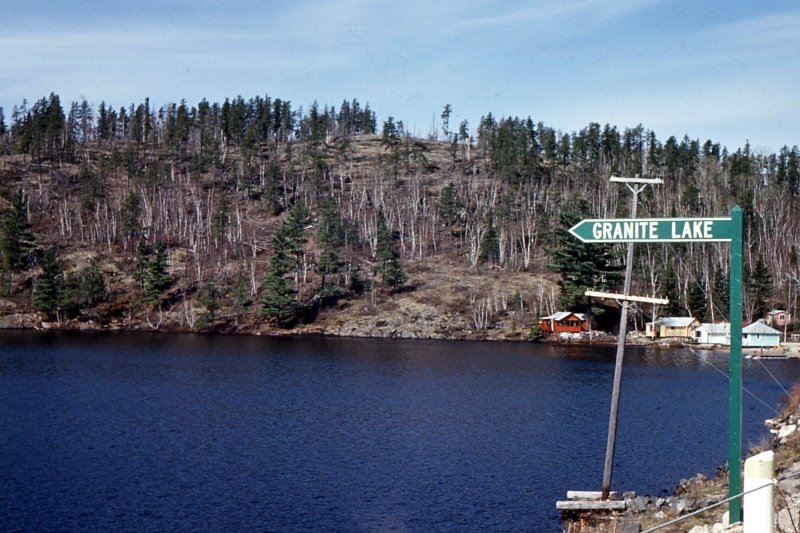
Granite Lake, Ontario – One of the many Lakes Dotting the Landscape on Highway 1

The next morning we had to put up with an annoying delay. Adolf, having noticed disturbing vibrations from the front wheels, decided to have them balanced. Unfortunately, the mechanic of the small town service center took his time showing up for work on this Sunday morning. He gave us the distinct impression that he would rather go fishing than manning the lonely service station and doing repairs on a car that should have been fixed on a weekday. On second thought, we were lucky that we did not have to wait till Monday.
day 4

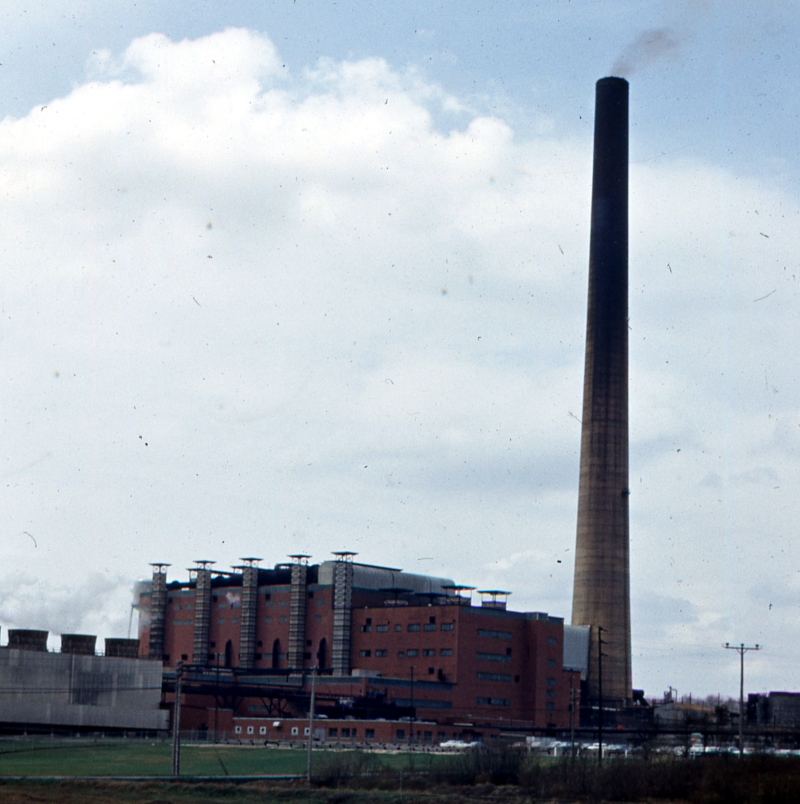
To make up for lost time Adolf especially on the long straight stretches exceeded the speed limit often clocking 130 km/h on the speedometer. I was not too unhappy about it, since the landscape, as we were approaching Sudbury, looked more and more like a moonscape, barren and desolate. The city named after a town in England had once been a major lumber center, but now was a booming mining community, where high concentration of nickel ore was being mined. Looking at the treeless industrial wasteland, where big processing plants with their tall chimneys belching out a mix of steam and smoke, I had a first real inkling of what man’s emphasis on economic growth could do to nature. I was not interested at all how many thousands of tons of ore were being processed in the Nickel Capital of Canada. One could even read these facts on picture postcards and travel brochures.
X332

Nuclear Research Station as Mentioned on the Previous Post

Adolf stopped for lunch at a downtown restaurant where the food was good and the prices were reasonable. While we were eating a juicy hamburger, I softened a little my critical stance on the devastating effects of industrial exploitation. I realized that people in order to live needed work. I also found out later that much larger regions, some greater in size than the two Germanys put together, remained untouched and unspoiled wilderness. I could see that Adolf was right after we left the dust and grime of the city, where a quarter of all its workers were employed by the giant nickel company Inco. Once we had traveled past Sault St. Marie, a steel manufacturing town just across from the State of Michigan, I was in for a visual treat. All of a sudden we were back in the forest driving past idyllic lakes and streams, then through the Lake Superior Provincial Park. All I remember is a blur of images and impressions of one the greatest freshwater sources in the world. Whenever we drove close to the shoreline of Lake Superior, fantastic scenery would present itself to our eager eyes. When I glimpsed a chain of islands large and small within an easy reach by canoe, many of them treed, I enthusiastically exclaimed, “Adolf, as soon as I have earned enough money, I am going to buy one these lovely islets for Biene and me.”

Adolf put on a sardonic grin and replied, “To earn money, you need a job, perhaps in a place like Sudbury.”
174.jpg

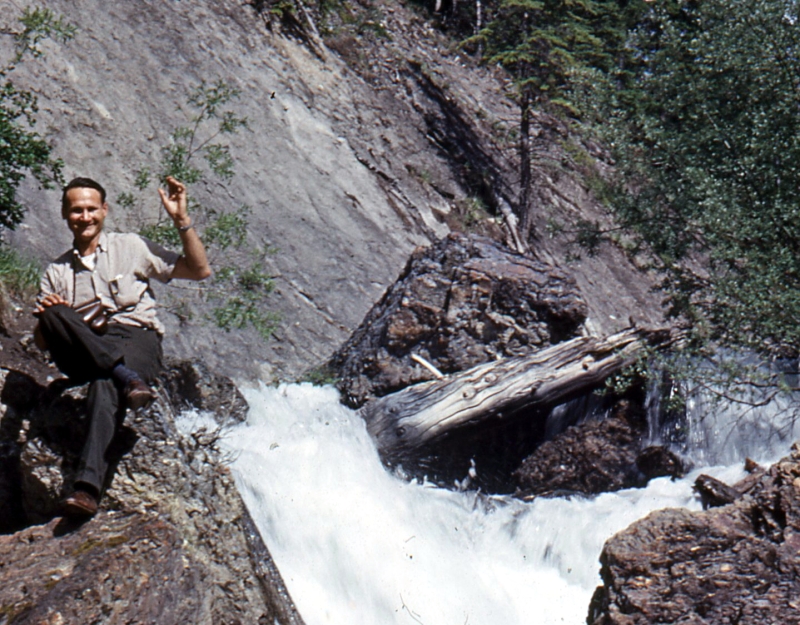
My Brother Adolf Taking a Break at a Picturesque Waterfall

We stopped at one of the recreational areas with its robust wooden picnic tables near the edge of the water. It seemed like we had the entire park to ourselves, as it was still early spring for tourists to venture out to this remote natural paradise. In the cool of the approaching evening fog patches settled over both land and water creating a magical effect. The islands with their spruce tops sticking out in dark silhouettes against the orange evening sky appeared to be drifting ghost-like across the tranquil lake. Then we drove on to the small community of Wawa, the gateway to the hunting and fishing grounds of Northwestern Ontario. On this night we slept in a hotel for a change, having spent altogether $23.00 for gas, repairs, food and lodging.
Chapter 28 of the Peter and Gertrud Klopp Story – Part III

A Brief Visit to Ottawa and a

Four-Hour Drive into the Night

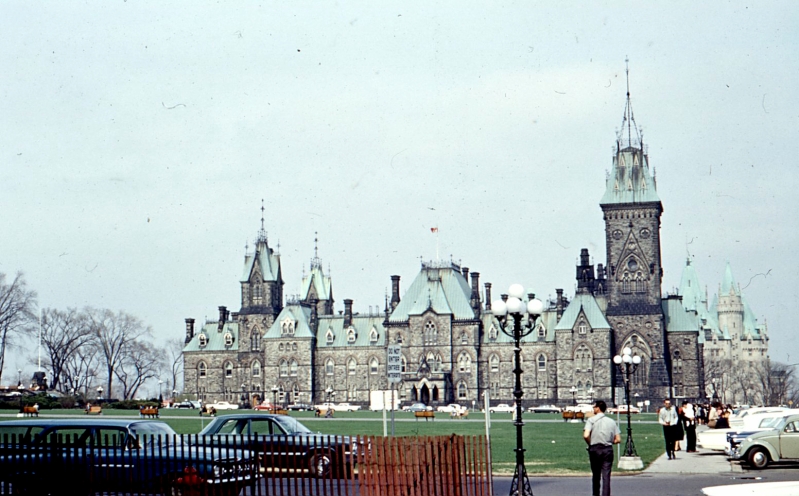
Canada’s Parliament Buildings in Ottawa – May 1965

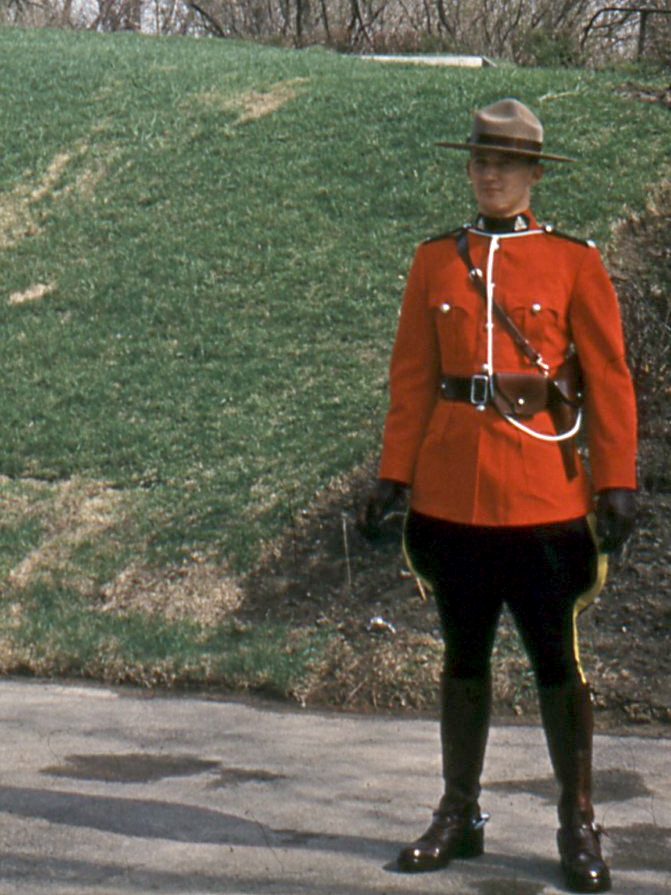
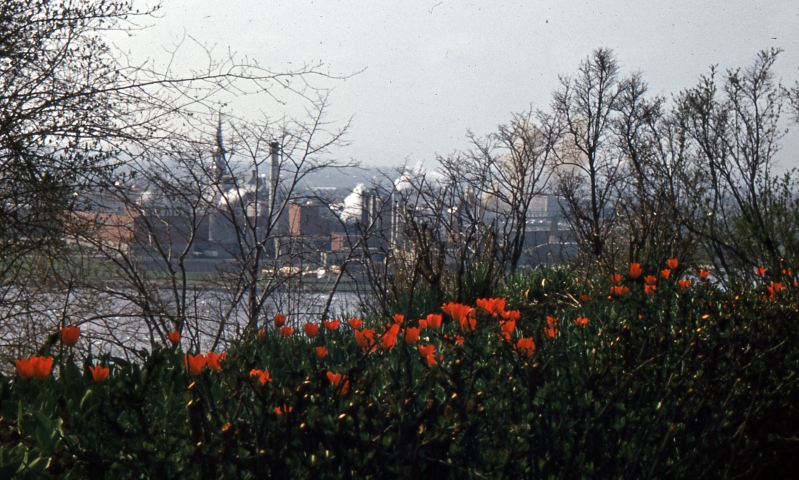
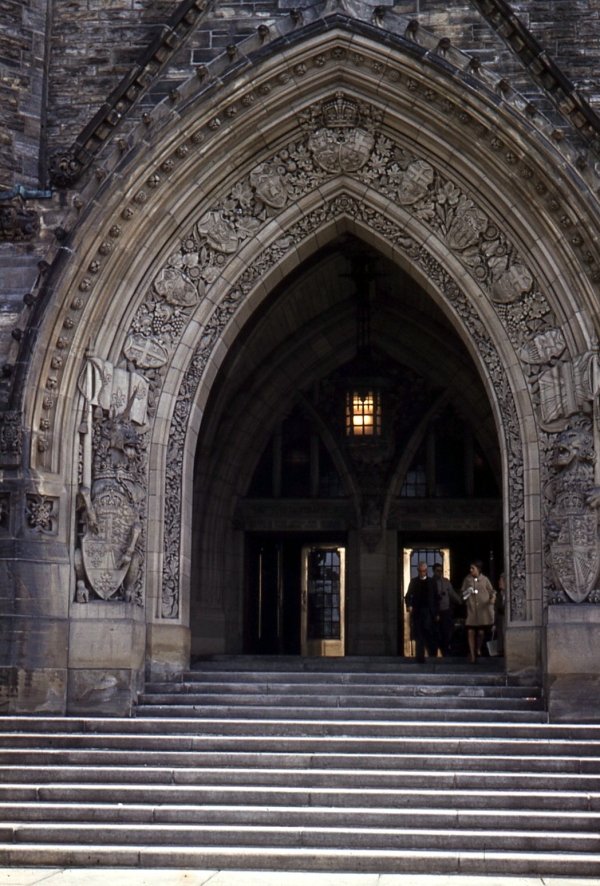
We crossed again the Ottawa River and half an hour later we were standing in front of the Parliament Buildings that was not in session at the time. Its Gothic revival suite of buildings serves as the home of the Parliament of Canada. The huge square looked almost deserted. A lonely mountie, short for a member of the Royal Canadian Mounted Police, was kind enough to let me take a picture in his red uniform. Too bad that the tulips were not out in full bloom yet! They would have added some much needed color to the somewhat dreary early spring landscape. Just then the afternoon sun was breaking through the cloud cover reminding us with its warm rays that spring was not too far off even in these northern climes of Canada.

Main Entrance to the Parliament

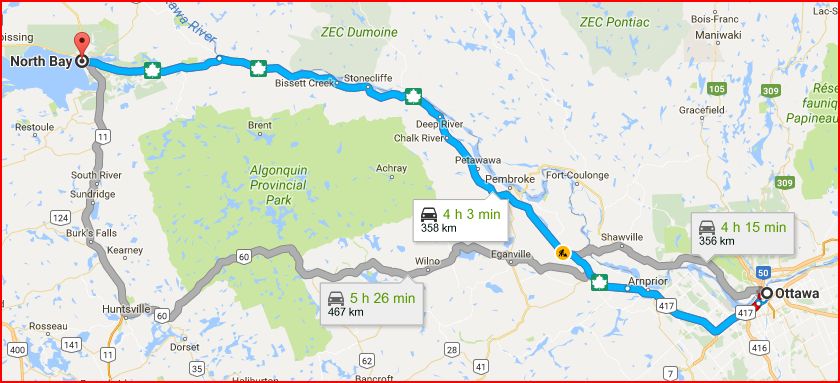
Back in the car we figured we had about three or four hours of daylight left to cover until dark a few hundred kilometres on the Trans Canada Highway. It is, along with the Trans-Siberian Highway and Australia’s Highway 1, one of the world’s longest national highways spanning more than 6,000 km from Victoria, BC to St. John’s, NL. As we were rolling through the great Canadian Shield, the largest and oldest rock formation in the world, towns and villages became sparser and except for the road there were few signs of human encroachment on the stark beauty of the bare undulating hills, pristine forests, crystal-clear lakes and wild rivers. I was fascinated by the images of the constantly varying scenes and yet conveying the feeling of one unified untouched wilderness.

A Mountie in Traditional Uniform posing for a Picture

All of a sudden like in a bad dream barbed wire fences, military installations, artillery shooting ranges and barracks emerged in the distance. ‘What would it be like to be a Canadian soldier?’ I asked myself. But I instantly brushed aside this silly question, which had brought back some bad memories. Shortly afterwards we drove by a nuclear research facility at Chalk River. What was the purpose to have it operating out here in the bush far away from the big population centres of Toronto and Montreal? Was it concern for public safety that motivated the Ontario power corporation to experiment with radioactive materials? Or would there perhaps be less criticism, less public opposition out here in the wilderness? These were some of the questions Adolf and I raised and could not answer.

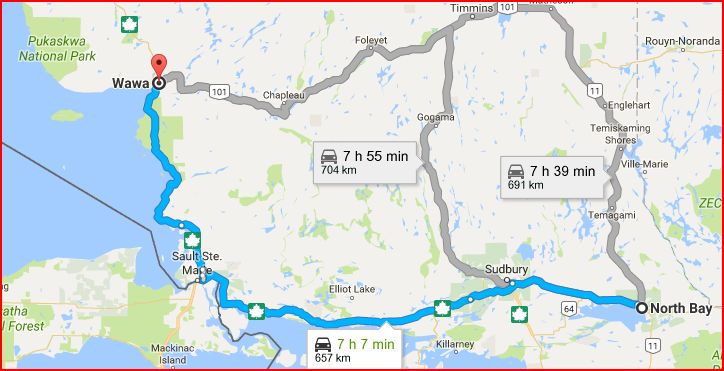
Route on the Third Day of our Cross-Country Journey

We were now following the Ottawa River in a northwesterly direction. It once had provided access for the intrepid voyageurs and enterprising fur traders to the vast interior of Ontario. My brother switched on the headlights, as it was getting dark. He also drove a lot faster now. The next service station and motel was still more than two hours away. One hour before midnight we finally arrived at a small motel at the outskirts of North Bay. Needless to say we were dead tired and slept like a log in our cozy motel beds.

Chapter 28 of the Peter and Gertrud Klopp Story – Part II

Peter’s Immersion into the English Language

Looking across the Ottawa River into Gatineau QC

Heading west our first goal was Ottawa. On a secondary road following the densely populated St. Lawrence valley, we drove quite slowly. The leisurely pace allowed me to take a closer look at the landscape near the river. Hundreds of islands were glowing in the evening sun. Many a romantically inclined individual had built his dream cabin on a treed retreat surrounded by water away from the hustle and bustle of the nearby City of Montreal. The properties on the mainland were generously large, where people had built their homes according to their fancy. Some dwellings were constructed entirely out of wood, others were stone buildings, some were imposing castle-like mansions, but most were simple and of modern design. Adolf must have noticed my admiring glances and remarked that in contrast to the Old Country – he always referred to Germany as the Old Country – hard working people from all walks of life could afford to live in their own house with a bit of help with a mortgage from a financial institution. His remarks swept away any remaining doubts and worries about the plans I had made with Biene earlier this year. Now I was almost certain that barring any unforeseeable adverse circumstances there was no turning back. It was here in Canada where I wanted to put my roots down. Looking at the setting sun that flooded the valley and immersed it into liquid gold, I felt energized, optimistic, and adventurous all at once. I also realized that the obstacles ‘Fate’ would throw into my path would be there to test my resolve to stay. It was almost dark when Adolf pulled up at a roadside motel, where for $6.00 we spent a restful night in comfortable beds somewhere between Montreal and Ottawa.

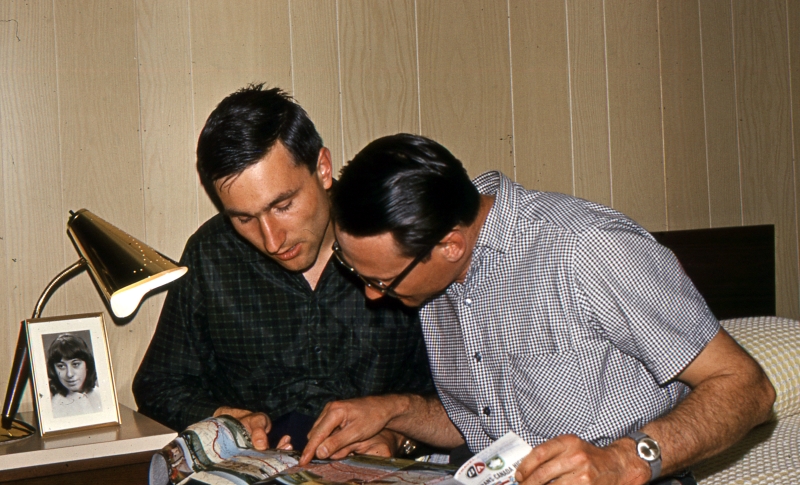
Adolf and Peter Studying a Road Map

The next morning at a nearby coffee shop I had my first Canadian breakfast, which consisted of two eggs fried over easy, two strips of crisp bacon, hash browns with plenty of ketchup, four slices of toast, all sorts of jam in tiny plastic cups and the standard not-so-strong coffee. Hunger is the best sauce, as the English proverb asserts. So for me this simple meal was a culinary delight. With Adolf switching to English only conversation, my English immersion program began, when he explained the difference between eggs over easy and eggs sunny side up. Obviously such fine details about the different ways of frying eggs had not been part of our English curriculum at the German high school. But there was much more to learn, especially in the use of idiomatic expressions. The waitress came by our table and asked me whether I wanted her to warm up my coffee. I replied a little taken aback by this seemingly silly question, “No thanks, my coffee is still warm!”

Fortunately, my strong German accent made it clear to her that I had not understood what she offered and that it had not been my intention to insult her. With a shrug she moved on to another table and asked the same question. “You idiot”, Adolf scolded me. “All she wanted was to give you a refill!”

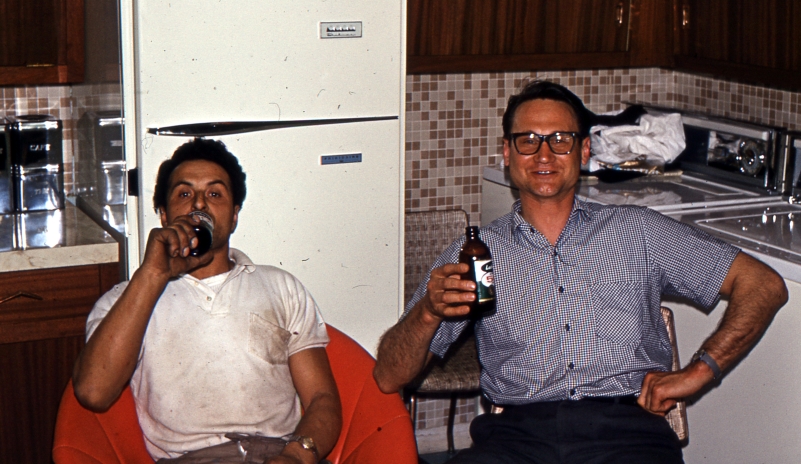
My brother and his buddy Waldemar enjoying a beer

Having received my first English lesson under somewhat embarrassing circumstances, we traveled to Ottawa and then crossed the Royal Alexandra Bridge over the Ottawa River into Hull now better known as Gatineau. There my brother had a friend by the name of Waldemar Klein from Rohrdorf, who immigrated with him to Canada in 1953. His house looked like it was in need of repairs on the outside, downright ugly from a critical perspective. In Germany a residence including its surrounding hedge or fence and even the lawn had to be prim and proper. Much later I found out that some property owners deliberately keep the exterior of the house unfinished with unsightly tar paper nailed to the walls in an attempt to keep the property taxes low. This was obviously the case with Waldemar’s home. However, the inside presented an entirely different view. It seemed to me that every spare dollar was invested into making their home feel more comfortable, cozier and more beautiful. The modern kitchen was equipped with the latest appliances to make life easy for Waldemar and his wife. She spoke mostly French and very little English, which made communication almost impossible. Obviously, she did not like strangers to enter her home. When she had at last comprehended that Adolf was her husband’s old buddy form Germany, she invited us in for coffee and called Waldemar from work. He was making good money as an independent contractor installing windows in the new federal office buildings that were popping up like mushrooms all around the city center. When he showed up shortly after the call, the joy of seeing his friend Adolf was great. Over a case of beer they revived old memories and exchanged the latest information on the Klopp and Klein families. Then it was time to move on.

Chapter 28 of the Peter and Gertrud Klopp Story – Part I


 Cross Country Canada


My dream is for people around the world to look up and to see Canada like a little jewel sitting at the top of the continent.

Tommy Douglas – 7th Premier of Saskatchewan

Late Start in Montreal

It was almost noon when after hours of waiting we finally got our turn to go through Canada customs. The officials were friendly and efficient. The long delay was due primarily to the large number of passengers whose innumerable suitcases, boxes and crates that needed to be checked. Afterwards we locked away our stuff in rental lockers and took a taxi to the City of Montreal. Our sister had already said good-bye to us, as she was going to board the next available train to Calgary. So Adolf and I were on our own in search of a car dealer. My brother needed a vehicle that would carry us across the North American continent.

160

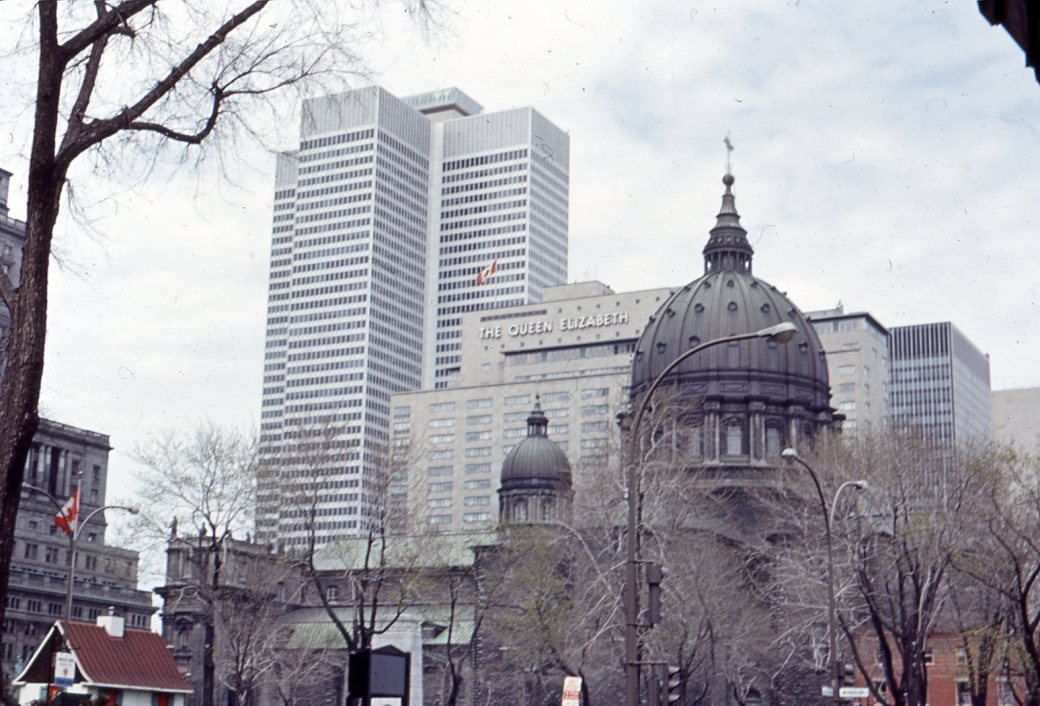
Queen Elizabeth Hotel at Montreal – May 1965

Near the city center we got off the taxi and decided to make use of the much cheaper transit system or cheaper and healthier yet to just walk. Now I had a chance to take a few photos of the new office buildings that were popping up everywhere like mushrooms after a heavy rain. I found that the Elisabeth Hotel towering over a much smaller church building was especially interesting, as the structures symbolized the transformation of Quebec from a church dominated province to a secular society. I was getting a little worried, while Adolf dragged me from one car dealer to another. He had not yet found, what he had in mind and was already talking about taking the train as well.

161

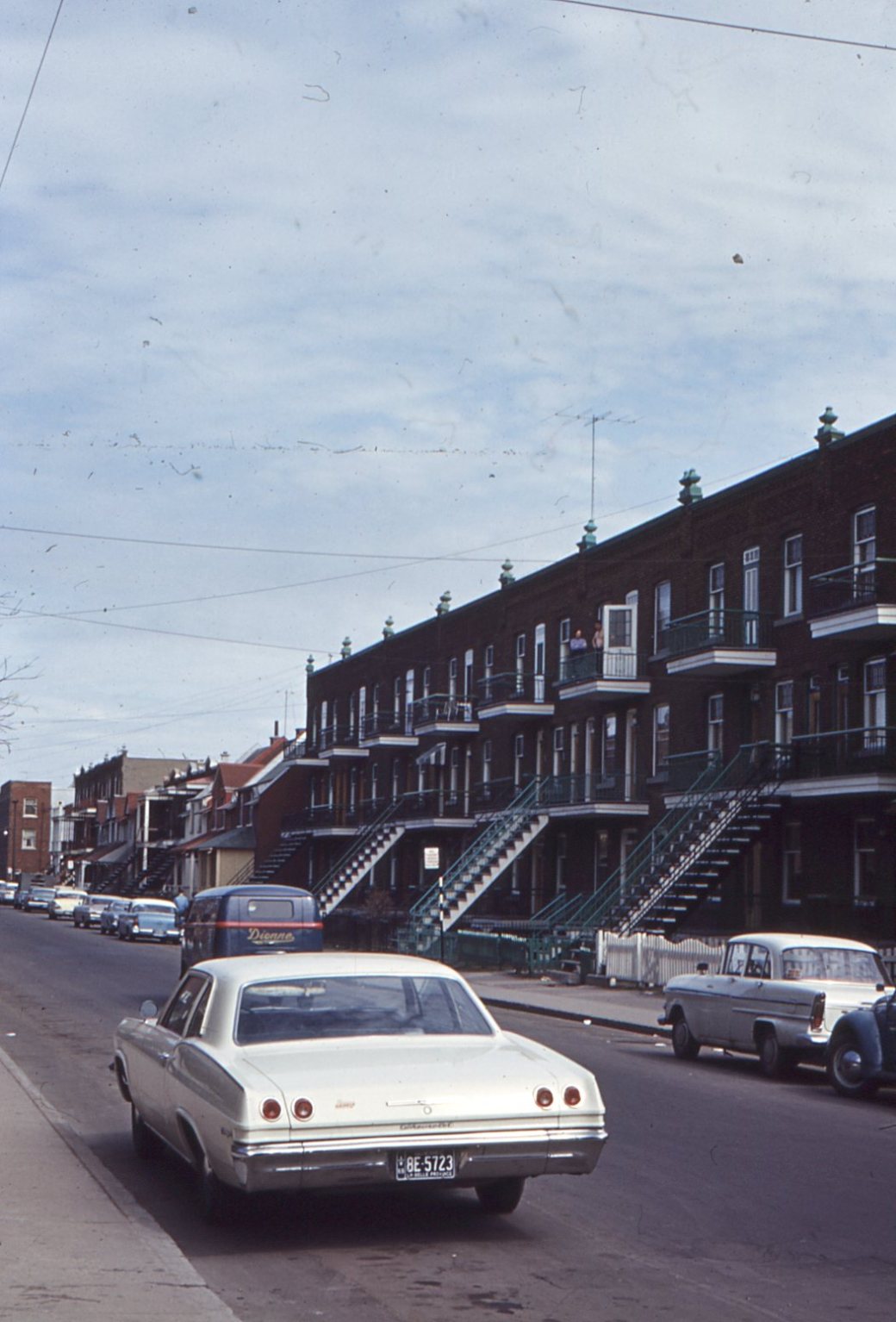
Typical Outside Staircases in a Residential Area

As we were roaming through the streets of a residential area searching for another car dealership, I noticed the peculiar construction of most of the houses. In order to gain more living space, they had no interior staircases but had metal stairs leading up to the entrance doors at the second and even third floor. I was thinking of the densely populated cities back in Germany, where floor space for renters was at a premium. How much more apartment space could be generated with this typical French-Canadian building concept.

170

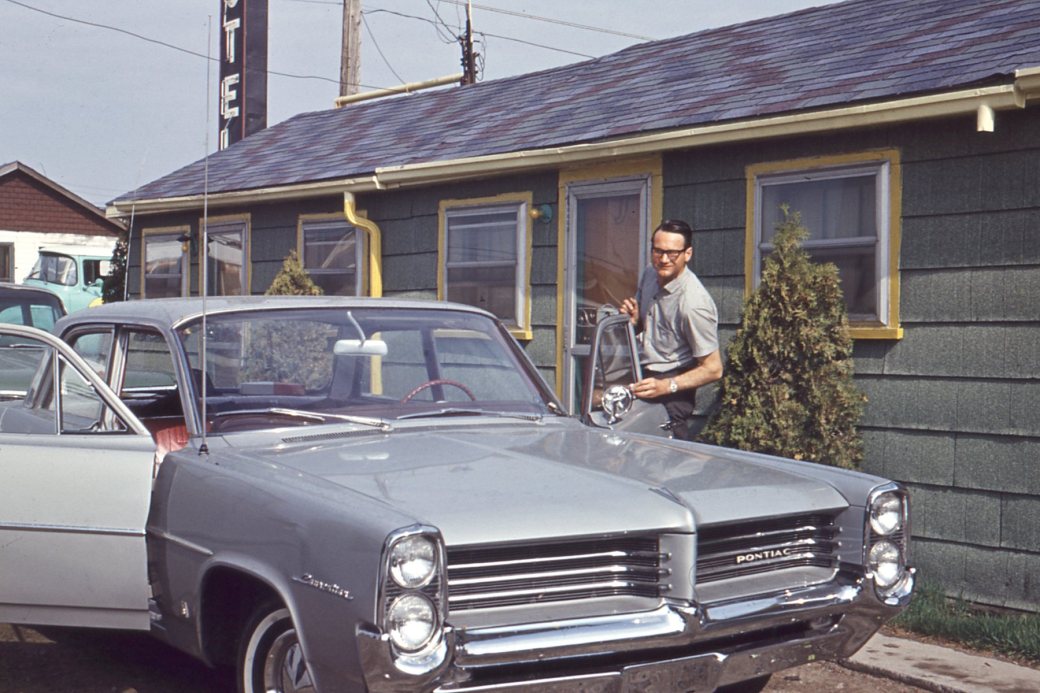
Proud Owner Adolf of Used Pontiac

Finally Adolf had found a good, used 8-cylinder Pontiac at an equally good price of $2,500. The manager, apparently very pleased with my courageous attempt to communicate in French with him, made an arrangement with Adolf that quickly consolidated the sale. It happened exactly the way my brother had once explained to me on our summer wine tour to Trier. He paid the full amount in cash. In return M. Gagé allowed him to travel with the dealer’s license plates to Alberta to save him the high provincial sales tax. Those were the days when business transactions were concluded with a handshake based on mutual trust. M. Gagé expected Adolf to mail back the plates to Montreal.

I had never sat in the such comfort of a huge and powerful American car before. It was even equipped with automatic transmission quite rare in Germany during the mid 60’s. I really enjoyed the ride back to the storage facilities, where we picked up our suitcases and wooden crates with all our belongings. It was already getting late in the afternoon, when our cross-country Canada trip began.

Chapter 27 of the Peter and Gertrud Klopp Story – Part VII

First Impressions

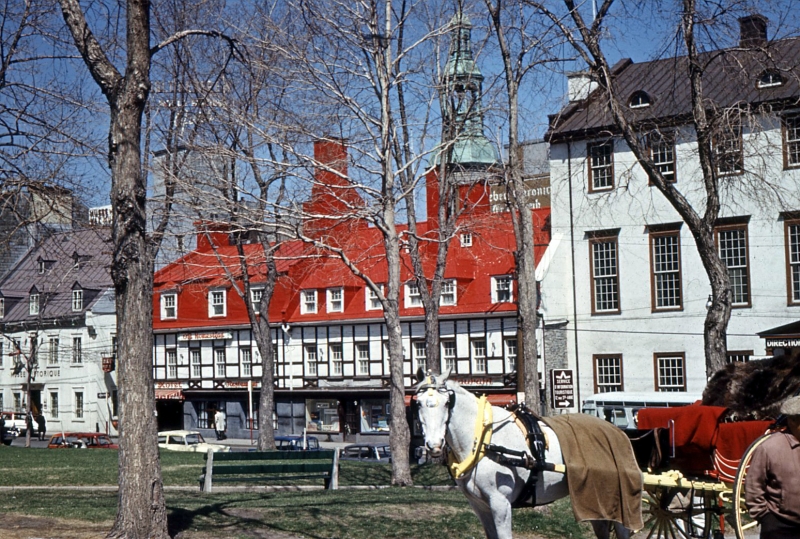
Picturesque Quebec City – May 1965

Now we were at liberty to visit Quebec City. Adolf, who as Canadian citizen did not have to go through the immigration procedure, joined us to explore the only walled city in all of North America. We took a taxi to the city centre. We traveled past wooden houses painted in bright, sometimes garish-looking colors offering a bewildering sight for the new immigrants from the Old Country. When my sister and I noticed the ugly power poles often leaning at a precarious angle in the back alleys with wires seemingly helter-skelter stretching out in all directions, we broke out in irreverent fits of laughter. Adolf was quite annoyed, as we had touched a sensitive nerve. After all it was his home country that we were insulting with our disrespectful conduct.

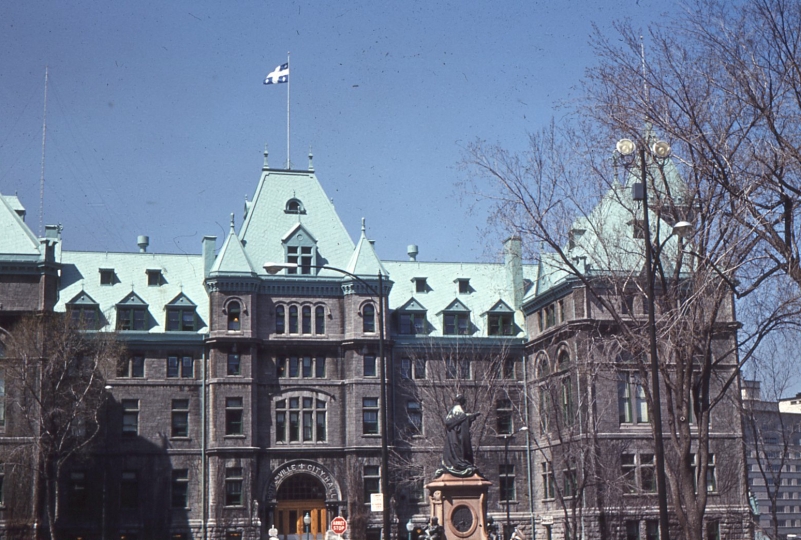
City Hall Quebec City

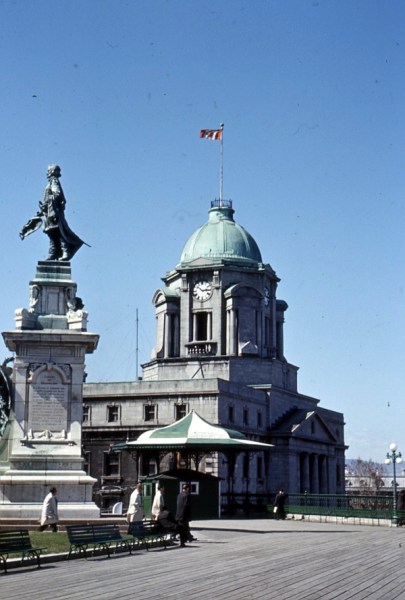
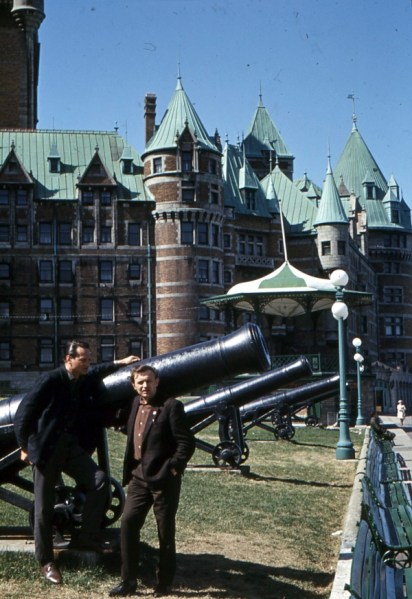
We got out of the taxi at the statue of Samuel de Champlain, the French explorer, founder and first governor of Quebec. There Adolf and I decided to separate from Erika and her companion Beate, as they were more interested in shopping. We two brothers, however, wanted to have a good look at the ramparts and fortifications of this historically rich city. So we took a tour of the classical 17th century defense systems with its mighty walls, which unfortunately in the end did not prevent the British redcoats from taking over all the French colonial possessions in North America.

Samuel Champlain – French Explorer and First Governor of Quebec

When hunger pangs reminded us that it was time to have lunch, we dropped in at one of the many restaurants catering to the tourists that were flocking to Quebec City by the tens of thousands every year. We ordered steaks, large enough to fill out the entire plate and at $2.00 a bargain even at the then current dismal German Canadian currency exchange rate of four marks to one dollar. I had trouble communicating with the waiter with my Parisian school French. So I could not figure out, why they could not serve us any beer, which would have complemented nicely the fabulous meat dish. To quench our thirst, it felt odd that we had to move on in search of a beer parlor. To call it a pub would have definitely been a misnomer. The place was filled with dense cigarette smoke wafting above oversized round tables, the jabbering of hundreds of people echoing from the bare walls gave more the impression of a large waiting hall at a German railroad station than that of a cozy inn, like the one where Biene and I had spent a romantic afternoon on Mount Vogelsberg. These beer parlors had been built based on the mistaken belief that their grotesque ugliness would deter people from gathering and drinking beer. Great was my amazement to watch the clients order half a dozen glasses of beer all at once, not caring about their drink getting stale. Some even sprinkled salt on their brew or ate heavily salted peanuts to increase their thirst for more. Adolf was quite used to this custom, which seemed to me a relic of the past. It was a bit of a culture shock to me and I was happy when we returned to the Ryndam, where we enjoyed the sumptuous farewell dinner that the cooks had prepared for us, truly a culinary experience par excellence.

Cannons and Fortifications – My Brother Adolf on the Left

There were many last times on this floating hotel and entertainment centre that had safely carried us across the Atlantic, the last dinner with our table companions, the last game of chess with a Yugoslav doctor, the last card game of Mau Mau, the last visit to the bar, the last time I climbed up to my upper bunk, a last glance from above on Biene’s portrait on the cabin’s tiny desk, the last time the little room bell tinkled and called us for the last breakfast on board of the Ryndam. My heart filled with a sense of nostalgia and bittersweet feelings of regret. I had to leave this wonderful ship with her dedicated staff behind. I felt sad that I had not been able to share all these memorable experiences of the eight days on board with Biene.


Chapter 27 of the Peter and Gertrud Klopp Story – Part VI

         Arriving in Canada in our Sleep

Iceberg – Photo Credit: icebergwatereurope.com

In the meantime on board of the Ryndam we could tell that we were approaching Canada’s territorial waters. The storm that had been stirring up the ocean moved on eastward and made room for sunny sky and calm conditions. The temperature plunged to 2° C. On deck we had to wrap ourselves in woolen blankets to enjoy a short sunbathing session in the cold air. The Ryndam seemed to have reduced her speed although there were hardly any waves. Suddenly we heard a message over the intercom speakers to alert us to an iceberg that was floating by less than one km to the right. As we were coming closer, we marvelled at the beauty of the mountainous object that glittered in the bright sunshine like a diamond of gigantic size. Knowing that ninety percent of an iceberg is submerged and invisibly spreads into all directions, we now understood why the captain had decided on a slower pace. Fifty-five years ago about the same time and in the same waters a single iceberg had sent the ‘unsinkable’ Titanic in less than three hours to the bottom of the sea.

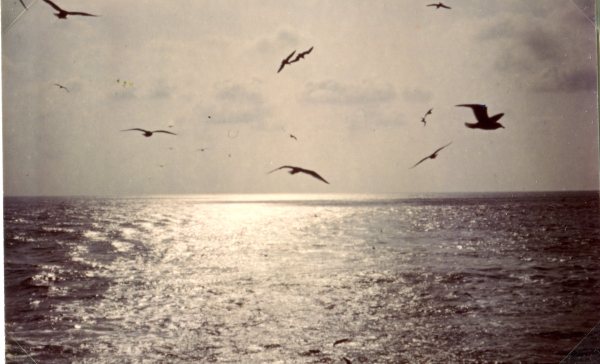
The First Seagulls

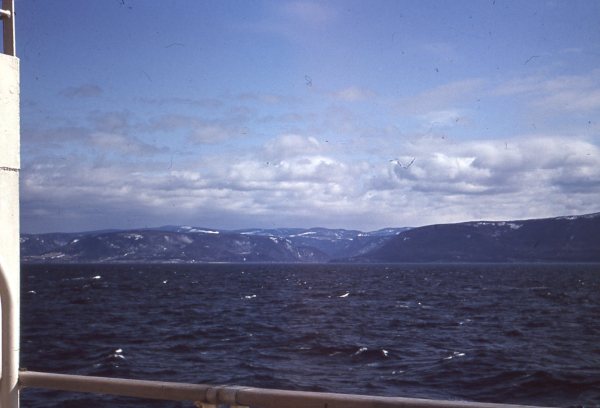
The next morning three fishing vessels were slowly passing by on starboard, a sure sign that we were not far from land. Seagulls suddenly appeared as if from nowhere and trailed our ship at the stern expecting to find scraps of food that someone might have thrown overboard. Then the first offshore islands emerged from the hazy horizon. They looked desolate and uninhabited. They were all covered in snow. The icebergs, the snow on the islands and the chill in the air made us feel that spring had not yet come in this part of Canada.

The First Off-Shore Islands

My sister suffered from a sore throat and decided not to accompany us in the car to travel across the continent, but to take the train instead. In the evening Adolf and I went into the bar that was more crowded than usual to say good-bye to our friends and table companions. At three in the morning, I am not sure after how many shots of whiskey and how many glasses of beer, we were finally done with saying our good-byes. After getting only a few winks of sleep, we awoke this time not by the familiar tinkling of the breakfast bell, but by an eerie quietness. Still groggy from all the partying the night before we however managed to jump into our clothes at lightning speed and rushed on board. We were anxious to find out what kind of calamity the Ryndam had gotten itself into. Perhaps the engines had broken down. Or did those dreadful icebergs surround us? What a pleasant surprise was unfolding before our eyes! The Ryndam peacefully lay securely tied to the pier posts at the Quebec Harbor. What a shame! While sleeping we had arrived in Canada.

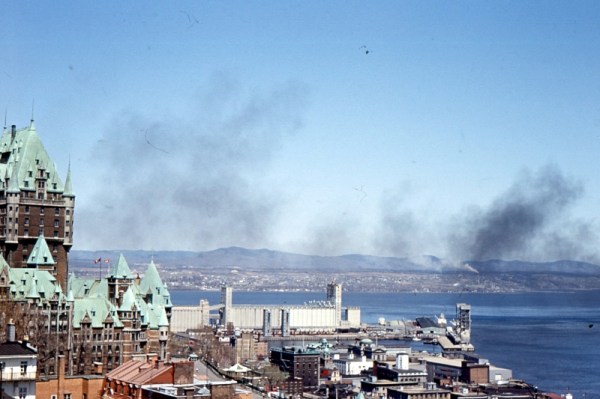
Quebec Harbor – May 1965

After breakfast Erika and I with all the other immigrants walked over the gangway past large cargo and shipping facilities to the federal office building. There a friendly bilingual customs and immigration official greeted us and carefully examined our passports and the flimsy unassuming piece of paper we had received from the Canadian embassy in Cologne. The terrorists of today would be laughing at the simple document of fifty years ago. A photocopy on ordinary paper would have sufficed to let them slip by our border checkpoints. While we were waiting to get our documents stamped and approved, a charitable organization offered us our first cup of coffee on Canadian soil. It turned out to be a typical brew as offered then in most American coffee shops, so weak and bland you could be drinking it all day without any adverse effect, as some people were in the habit of doing. A Catholic priest asked us about our plans and provided us with useful information on Alberta, British Columbia and the other provinces of Canada. Then quite relieved that we had successfully jumped the first hurdle and had officially become a member of the Canadian society with all its rights and responsibilities except for the right to vote, we returned to our ship to reconnect with Adolf. The French-Canadian officials at the pier smiled, when I played the German folk song ‘Muss i denn, muss i denn zum Städtele hinaus’ on the harmonica. Elvis Presley sang this lovely tune while with the American Armed Forces in Germany. Wooden Heart was its English title. The sentimental Germans who themselves were beginning to forget and to neglect their very own folk songs liked the Elvis version so much that the song maintained the number one position on the German record charts for several weeks in a row.