Chapter XII of the P. and G. Klopp – Part I

Summer Vacations

Don’t walk behind me; I may not lead. Don’t walk in front of me; I may not follow. Just walk beside me and be my friend. Albert Camus

Hamburg 1956

Among our family acquaintances and friends I had a few aunts to whom I was not related. Out of convenience and lack of a better word I called them so. One was Auntie Pippi, who had known me from the time in Gutfelde (Zlotniki). She had lost her first husband in January 1945 and had married Ernst Grohmann, a well-to-do master of the chimney sweeper guild in Hamburg. From her first marriage she had a son whose name was Thomas about my age. Since Mother and Auntie Pippi were very good friends, they decided that I should travel to Hamburg and spend my summer holidays with Thomas. Auntie Ella, another of Mother’s close friends, agreed to provide bed and breakfast for me in a nearby district of the city.

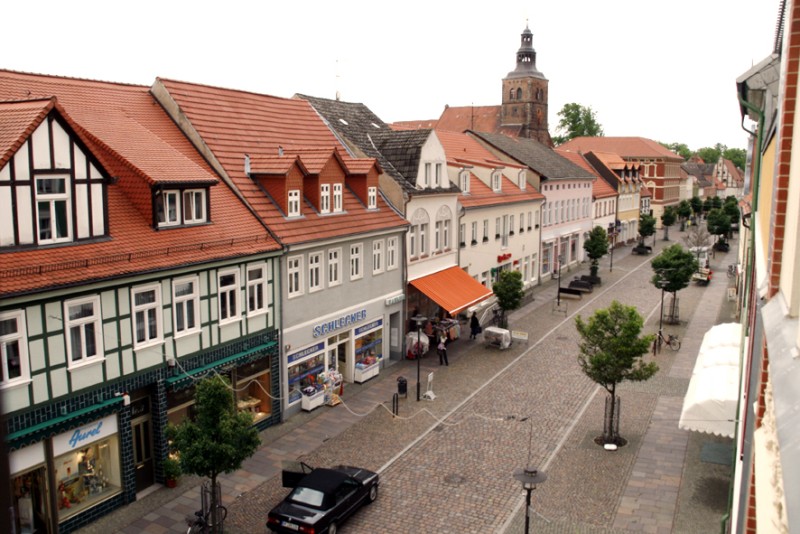
City of Hamburg - Photo Credit: hamburgbuch.de

City of Hamburg – Photo Credit: hamburgbuch.de

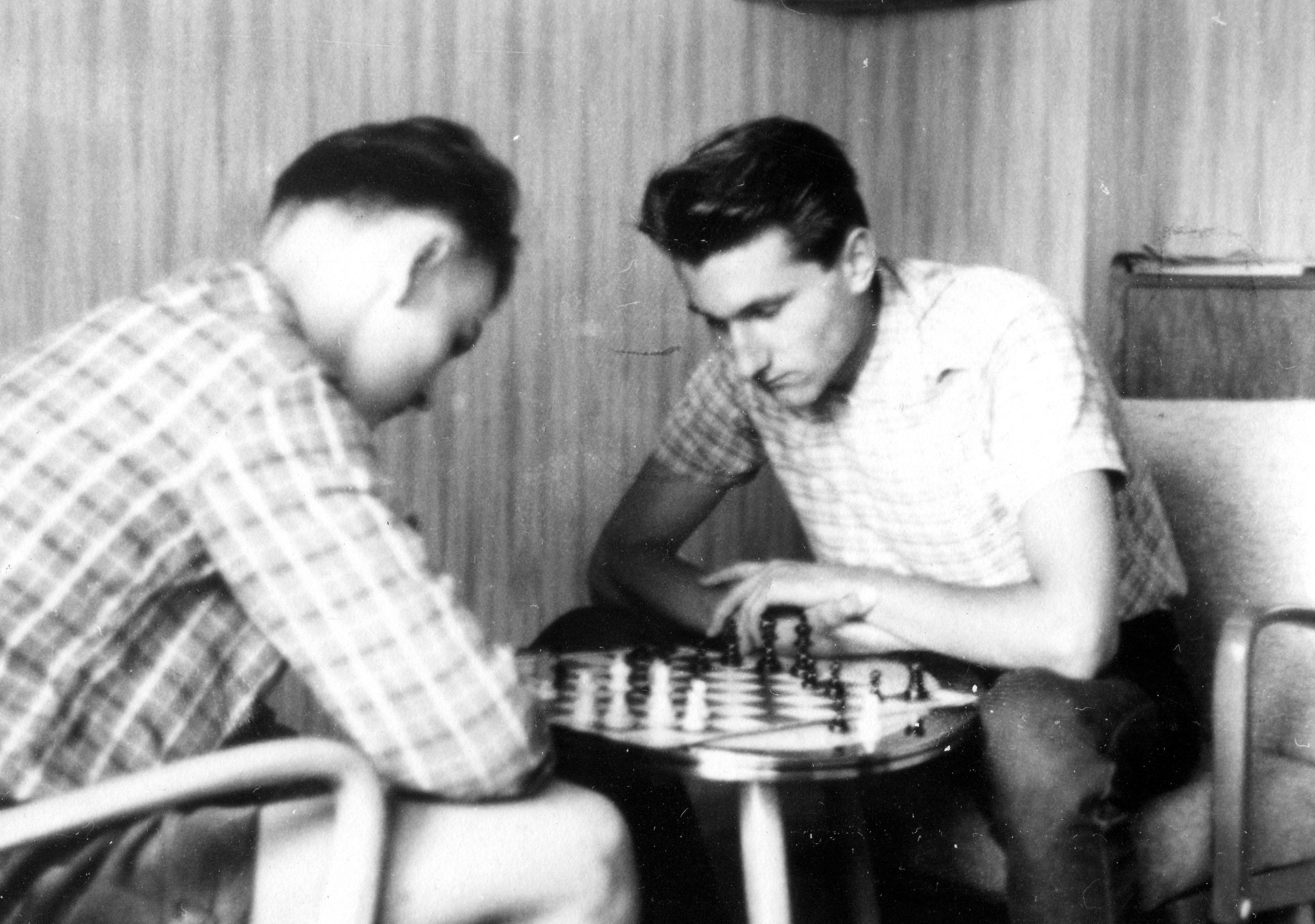
Thomas and I had a great time together. We played outdoor games in the yard, climbed trees, or played chess when it was raining. But what I regretfully remember most are the utterly foolish and thoughtless things we did in the name of having fun. Relatively mild in retrospect were our chess games we conducted over the phone. Using the European method, we identified each move by a combination of letters and numbers. Moving the king pawn two squares from its original position would be e2 – e4. What we did not realize in our enthusiasm for the royal game was that a local call at that time was charged by the minute. As all chess players know a good game lasts at least one hour. After a dozen games that we played during my stay in Hamburg the telephone bills must have been quite a shock for poor Auntie Ella.
4

Playing Chess with a Friend a Few Years Later

Getting bored with spending the afternoon hours on trees and itching to do something more exciting, we decided to build traps for imaginary wild animals in the neighborhood. We dug 30 cm deep holes, covered them carefully with twigs and dead branches and camouflaged them with clumps of grass to blend in nicely with the lawn. Just as we were digging another hole at the far end of the yard, Auntie Pippi stepped out from the backdoor and walked across the lawn to bring us some refreshment. She was a heavy lady weighing at least three hundred pounds. Not that she was overindulging in calorie rich food; on the contrary she was literally starving herself to keep herself from gaining more weight. She was suffering from a severe case of malfunctioning thyroid glands. In horror we saw her walking straight to the first trap. Why we did not call to warn her is hard to understand. Perhaps we were stunned, perhaps we hoped that she would miss the trap and we would not be scolded for digging unsightly holes. But she stepped right onto the camouflaged twigs and plunged her right foot deep into the hole. With a loud terrifying shriek she dropped the tray and managed to land on both hands cushioning the impact of her massive body on the ground. She could have easily broken her ankle. Great was her anger over our stupidity and thoughtlessness. For punishment we had to restore the lawn to its original state of perfection, which we gladly did.
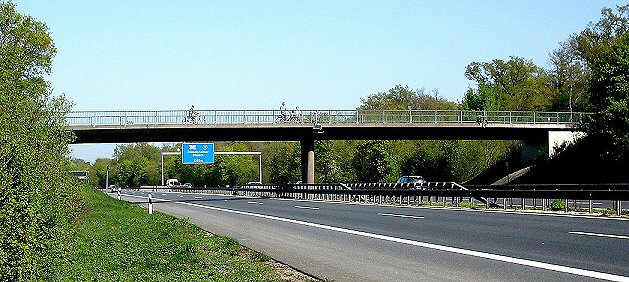
Typical Autobahn Bridge - Photo Credit cdu-nauheim.de-

Typical Autobahn Bridge – Photo Credit: cdu-nauheim.de-

One day we went to a pedestrian overpass to watch cars and trucks traveling north and south on one of Germany’s busiest freeways. It is one thing to throw flat stones onto the surface of a lake to make them skip, but it is unquestionably a most reckless prank to lob small pebbles onto the cargo areas of passing trucks from an overpass. In our adolescent fervor to seek excitement at all cost we were blind to the grave danger of causing damage, injury or even death to the drivers below. We had not dropped too many pebbles, most of which had luckily fallen onto the pavement, when one landed with a loud clang onto the top of a truck’s cabin. Before we had time to rejoice over the successful throw, the truck pulled over to the emergency lane and came to a complete stop. The driver emerged from his vehicle and seeing us young punks at the railing immediately started racing up the hill that separated the overpass from the highway. In our attempt to escape the angry truck driver, we broke all athletic school records in the one-kilometer run for our age group. Even though we managed to escape, I often felt guilty and even more so considering what could have happened if the truck driver had not taken any action and had not stopped our dangerous game. To this day I am being reminded of this event and cringe when I hear reports in the news of similar mindless behavior on our city bridges and overpasses.
Gerhard Kegler, the general, who dared to disobey Himmler – Part IV

The Woldenberg Division and Himmler’s Order to Defend Landsberg

Excerpt Taken from the book ‘The Siege of Küstrin: Gateway to Berlin 1945’ by Tony Le Tissier, Publishers: Pen and Sword Books

If you missed reading the related posts, go back to May 13 May 22, and June 5.
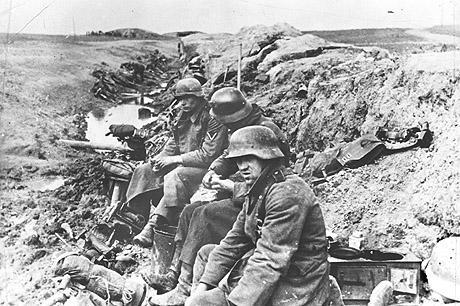
Eastern Front 1945: Worn-out and Ill-equipped German Soldiers - Photo Credit:: taringa.net

Eastern Front 1945: Worn-out and Ill-equipped German Soldiers – Photo Credit: taringa.net

Lieutenant Rudolf Schröter continues his report:

I had to overcome the resistance of the staff officers to get through to the general. Major-General Kegler was astounded but open to my arguments:

  1. Once an order had been given it must be adhered to in order to keep up the morale of the troops.
  2. The Army Headquarters’ radio message ‘Report situation and intentions’ unusually left open the decision. If this was not so, the message would have read: ‘Report situation. Hold Vietz.’ While it was expected that the Army would correctly use tactical language and especially stressed ‘Report situation’, it meant that it was holding open the opportunity for us to decide for ourselves in this special situation, and our decision was ‘Withdraw’.
  3. There had also been instances in this war in which troops had withdrawn against orders in recognition of their hopeless situation, had upheld the morale of their troops and the officers had received high decorations.
  1. The decisive argument, General, is in accordance with one’s own conscience. The responsible officer must, if common sense is to prevail, understand that slavish obedience in a hopeless situation only condemns him to a senseless bloodbath, which he should spare his men.

These arguments, especially the last, visibly moved Major-General Kegler. He then went briefly into an adjoining room. When he returned, he was white in the face. He asked me where I had lost my right arm, praised the discipline and commitment of my youngsters and also my objections at the conference a few hours ago. Finally the following dialogue ensued:

‘Do you think that you can withdraw the division in good order in this situation?’

‘Yes, if I have your support in doing so.’

‘Then I hereby beg you to undertake it on my staff.’

I immediately sent all the staff officers to the units, where they with the sector commanders were to stop the units and individ­uals retreating and incorporate them into the local defense.

Then I prepared to retake Vietz station with a platoon of my infantry and a Königstiger and while doing so a runner brought me a letter from the general. It read: ‘I have given up command of the division. Kegler, Major-General.’

I then asked a colonel to take over command of the division as a matter of seniority, which he accepted under the condition that I assumed tactical control.

The withdrawal of the division was made ready and all sector commanders summoned to an order group in Vietz at 1500 hours.

After stabilizing the situation in the town I made a recon­naissance in the amphibious jeep with the SS-sergeant-major and one of my recruits, using Major-General Kegler’s map. I discovered that:

  1. The road to Küstrin was not blocked by the Russians.
  2. There were no Russians in Gross Cammin, the nearest enemy movement being in the northerly neighbouring village of Batzlow.

I stuck to the original plan. A radio message was sent to Küstrin fortress about the division’s withdrawal. The order to withdraw was given at 1500 hours and went without problems. When I later went into Vietz with the amphibious jeep to check the enemy situation, the first enemy scouts were already feeling their way forward.

At dawn on February 4, the remains of the ‘Woldenberg’ Division began crossing the anti-tank ditch that blocked the Landsberger Chaussee at the eastern end of Küstrin. They had already come to within 10 kilometres of the town the previous day but had waited for darkness to get through the area occupied by Soviet forces.

General Busse had sent a young liaison officer to meet them, but without any instructions for Major-General Kegler. When the latter arrived in Küstrin he was promptly given orders to report to the standing court-martial in Torgau, thus becoming one of the last to leave Küstrin by the normal road. As the witnesses to the events leading up to Kegler’s court martial were now trapped in Küstrin, evidence had to be obtained from them by telephone.

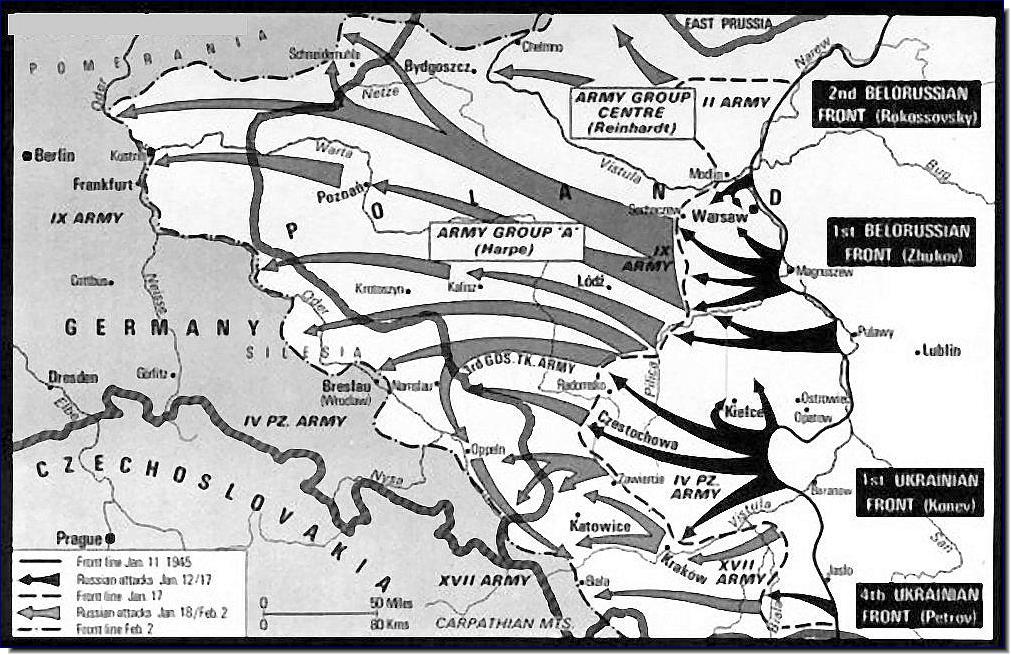
Soviet Advance across Poland - Photo Credit: historyimages.blogspot.com

Soviet Advance across Poland – Photo Credit: historyimages.blogspot.com

To be continued with a translation of the court-martial report and verdict on my next post.

Short History of the Fauquier-Needles Ferry

Special Thanks to the Arrow Lakes Historical Society

for the Newspaper Clipping of 1922

The community of Fauquier has been around for over a hundred years. If you are new to this site, it would be a good idea to view and read a few of the previous articles on the colorful history of mining. logging, fruit-growing in this little town. They can be found under the heading of Fauquier BC.

Early Fauquier Ferry - Photo Credit: Anette Devlin's Personal Archive, Fauquier BC

Early Fauquier Ferry – Photo Credit: Anette Devlin’s Personal Archive, Fauquier BC

Right from the start there was a great need to ferry people, goods and cattle across the Arrow Lake between Fauquier and Needles, which was a thriving and much larger settlement on the west side of the lake. A few enterprising people began to provide transportation by using their boats and barges. But as the newspaper article of the Arrow Lakes News of September 27, 1922, clearly indicated that was no longer good and safe enough.

Traffic Between Edgewood and Nakusp on Increase – Roads Need Attention

NAKUSP, Sept 27, 1922

With the in­crease in the number of motor cars in the various towns along the Arrow lakes making the through run between Edgewood and Nakusp and intermediate points, there is an equally increasing need of a proper ferry service between the east and west side of the lake at Fauquier and Needles. The present ar­rangement of a crude raft operated by an enterprising rancher at Fauquier for the public convenience is inadequate and even dangerous, especially for heavy cars.

 On Sunday alone four cars were fer­ried across both ways, one of which had its wheels in the water. There is much credit, due to Mr. Kendrik of Fauquier for assisting autoists across the water, but the operation is accompanied with a great amount of danger to lives. It is full time that the public works department of the provincial government rises to the occasion and build a ferry similar to that at Robson. The request has been made and passed by the asso­ciated board of trade on more than one occasion, but so far nothing has been done. A petition is being drawn up and circulated praying that this be carried out this fall, also the overhauling of four miles of road three miles south of Burton, which is covered with brush.

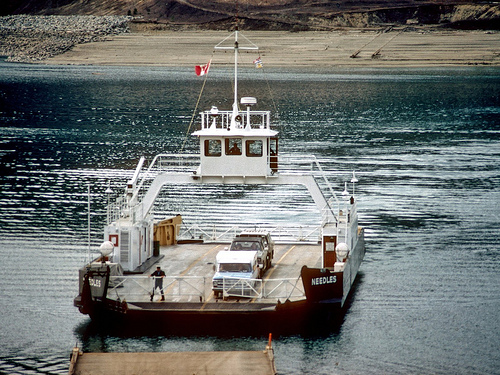
Fully Navigable Ferry - Photo Credit: flickriver.com

Fully Navigable Ferry – Photo Credit: flickriver.com

The outcome of increasing public pressure for better service was that the provincial government provided from that point on regular, safe and reliable transportation facilities, which included not only the ferry between the two communities, but also a highway link to Vernon over the Monashee Pass. When in 1967 the valley was flooded through the building of the dam near Castlegar, the provincial government was going to build a bridge across the lake at Fauquier. When this proved to be too expensive, a promise was made to provide government ferry service 24 hours a day free of charge.

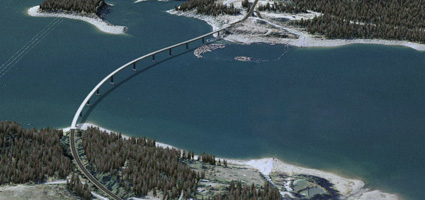
Some thirty years later the costs of running and maintaining the service has become prohibitively expensive. The government attempted to wiggle itself out their obligation to the public by cutting back the time the ferry would be running and by charging a fee. This did not sit very well with the populace and public protests made the government back down. Another bridge building proposal surfaced, which almost became reality if it had not been for a sudden and unexpected increase in steel prices. The photo below shows the designer’s areal perception of the wonderful bridge that never was.

Photo Credit: http://www.b-t.com/

Photo Credit: http://www.b-t.com/

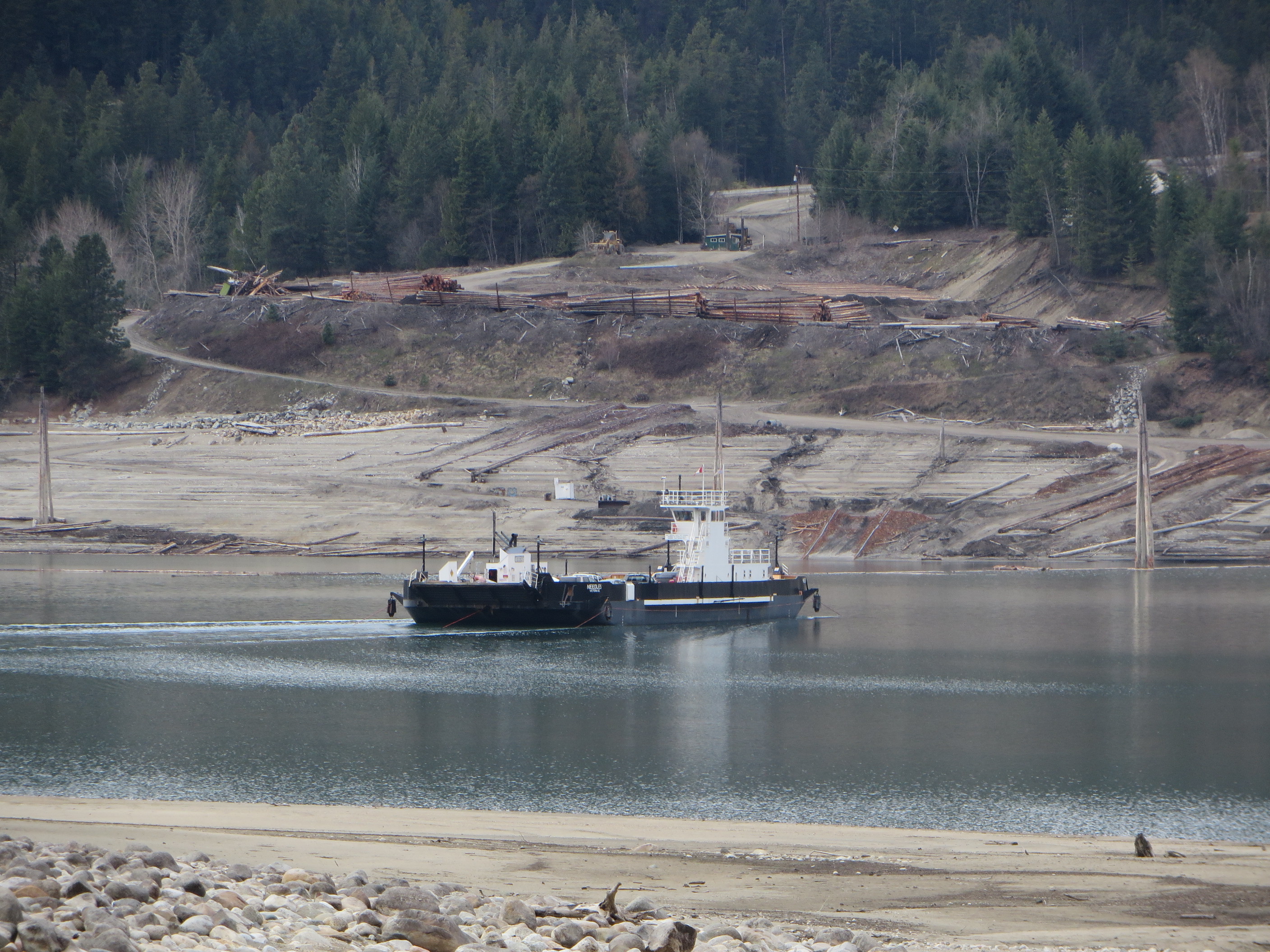
So today the cable ferry is still ferrying people, trucks and cars back and forth between Fauquier and Needles every 30 minutes between 6 am and 10 pm and is on call during the remaining night hours.

Fauquier Cable Ferry 2015

Fauquier Cable Ferry 2015

Last Summer’s Family Reunion in Videos – Part I

Even though I have fully embraced computer and digital technology, I have two problems with both. It has to do with their miniature size. On the cameras I find it often difficult to use the tiny buttons with which to control the settings. On the small SD cards fit thousands of images. If you happen to misplace the card or worse you accidentally erase the files, the loss of these visual treasures could cause a lot of pain. This almost happened to me, when my precious video files from last summer went missing and I had almost given up of ever finding the SD card again. As it turned out, I had put it in a “safe” place, a special card holder not much larger than a Canadian dollar coin. Recently I rummaged through my camera bag. Guess what, I found the card. The result is the video report of our family reunion 2014.

Introducing the Family on the Plank

Having Fun on the Paddle Boards


Friedrich Klopp’s Life Journey (Part II 1924 – 1946)

Dear reader, if you wish to refresh your memory on my uncle Friedrich Klopp (1875 – 1946), the oldest child of Peter and Emma Klopp, go to the Klopp Family page and click on the Klopp tree. There you will find all the previous posts on Friedrich in chronological order.

 Friedrich’s Second Marriage with Auguste Berlin

Translated and Adapted from Eberhard Klopp’s Family Chronicle

Shortly before Auguste Louise Klopp’s early death the family of the mason Friedrich Klopp moved to Hemstedt, about 6 km south of Algenstedt. The commotion and upheaval  surrounding the relocation to yet another residence were taxing Auguste’s energies to the very limits of what she could bear. She suddenly and unexpectedly passed away in Hemstedt on August 9, 1924. This came as a severe blow for the family, especially for her husband who had so far depended on her income.

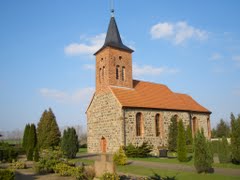
Church at Hemstedt - Photo Credit: margherita.alaio.it.rand.stad.com

Church at Hemstedt – Photo Credit: margherita.alaio.it.rand.stad.com

At the local cemetery you can see still today (1990) the lebensbaum trees, which her then 16-year old son Hermann had planted at her grave site. At the most recent residence widower Friedrich Klopp continued to live for a while with his two youngest children Liesbeth (born 1907) and Hermann (born 1908).

Gardelegen - Photo Credit: gardelegen.de

Gardelegen – Photo Credit: gardelegen.de

On December 22, 1927 Friedrich married the well-to-do widow Auguste Berlin (née Müller) in Gardelegen. The marriage remained childless. Occupationally and privately, things from this point on were looking up. In 1928 the couple acquired in Gardelegen the house at Alte Heerstraße 14 (now Street of the Victims of Fascism). The recently remodeled and pleasant house is still standing today.

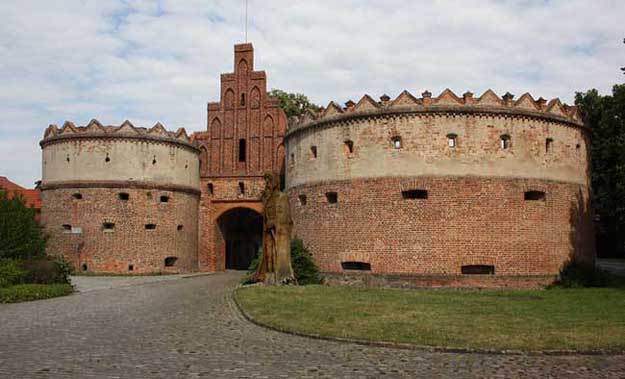
Old Fortress at Gardelegen - Photo Credit: koblenzer-bildungsverein.de

Old Fortress at Gardelegen – Photo Credit: koblenzer-bildungsverein.de

In the masonry line of business Friedrich Klopp quickly gained recognition for his workmanship and advanced to become an experienced construction project manager. In the 1930’s he maintained a financially sound and profitable enterprise. He built several residential houses not to mention a bakery complete with a sales outlet, which turned out to be the largest commercial bakery in town.

The loosening of the ties with the antisemitic Zielitz family of his late wife was like an inner liberation for Friedrich. But being at heart friendly and good-natured, he did not completely sever his contacts. Due to age and declining health he gave up his business in 1937. His son Hermann did not have what it takes to run his father’s construction enterprise.

To be continued …