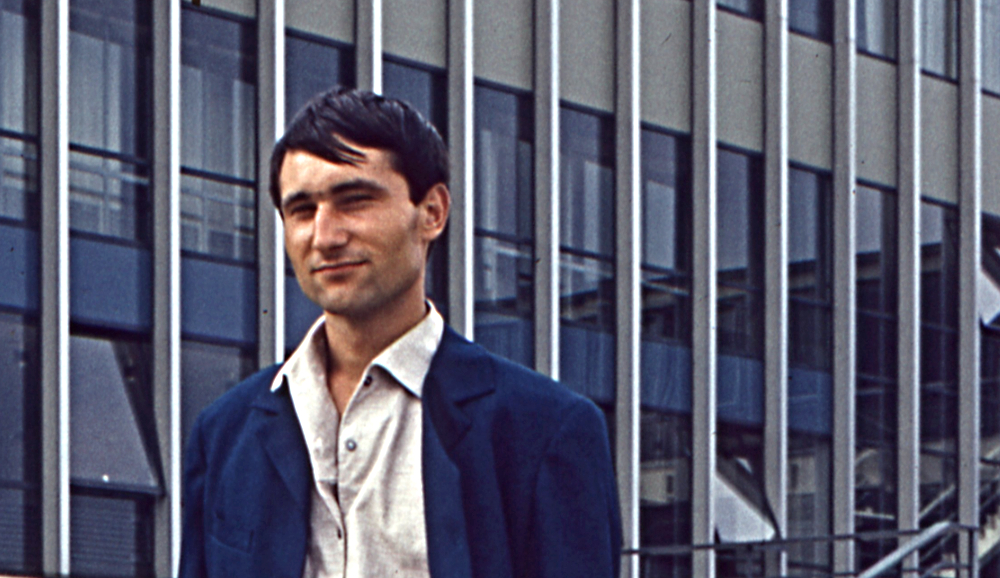
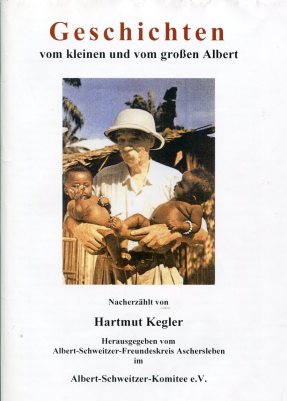
Albert Schweitzer – Seminar #19

Wie Albert Schweitzer wieder nach Lambarene zurückkehrte

AS01

Als sich Albert Schweitzer von der Gefangenschaft etwas erholt hatte, arbeitete er wieder als Pfarrer und als Arzt in Straßburg. Das ist die Stadt, in der er früher studiert und danach auch schon gepredigt hatte. In dieser Zeit wurde seine Tochter Rhena geboren. Ihr Name kommt vom Fluss Rhein. An ihm hatten sich Albert und Helene als junge Menschen ewige Freundschaft gelobt. Rhena ist später auch nach Lambarene gegangen und hat ihrem Vater geholfen.

Neben seiner Tätigkeit als Pfarrer und Arzt schrieb Albert viele Bücher. Eines trägt den Titel „Zwischen Wasser und Urwald”. Darin erzählt er, was er so alles in Lambarene in seinem Hospital und im Urwald erlebt hat. Auch wir werden einige Geschichten daraus vorlesen. Aber zuerst wollen wir sehen, wie es weiterging mit Albert und Helene. Albert gab neben seinen genannten Arbeiten noch Orgelkonzerte und hielt interessante Vorträge.

Aber er war immer noch sehr traurig, dass er sein Hospital in Lambarene verlassen musste. Es ging ihm nicht nur um die Häuser, die nun verfielen, weil Regen und Sturm sie beschädigten und niemand mehr da war, der sie reparierte. Vor allem ging es ihm um die kranken Menschen, um die sich nun keiner mehr kümmerte. Sie mussten leiden und sterben, weil kein Arzt ihnen half. Das alles nur wegen dieses bösen Krieges.

Da bekam Albert Schweitzer eines Tages einen freundlichen Brief von einem schwedischen Bischof. Der hieß Nathan Söderblom. Er war ein guter Mensch und wollte Albert Schweitzer helfen. Er lud ihn ein, in die Stadt Uppsala zu kommen und dort vor Studenten Vorträge zu halten. Er sollte von seiner Lehre von der Ehrfurcht vor dem Leben sprechen, die dem Bischof so sehr gefiel. Gerne ist Albert der Einladung gefolgt und reiste mit seiner Frau Helene nach Schweden, wo er nicht nur Vorträge hielt, sondern auch Orgelkonzerte gab. Das war für ihn eine solche Freude, dass er wieder Lust bekam, nach Lambarene zurückzukehren. Ein wenig Geld hatte er sich ja inzwischen wieder verdient. Außerdem begannen auch seine Freunde in Deutschland, Frankreich und in anderen Ländern, für ihn Geld zu sammeln, damit er in Afrika Wiederbeginnen konnte.

So sagte er eines Tages zu seiner lieben Helene: „Wir haben wieder so viel Geld, dass wir in Lambarene ein neues Hospital bauen können.“ Helene freute sich darüber sehr, war aber auch etwas traurig. „Leider werde ich dich nicht begleiten und dir wieder helfen können“, antwortete sie. „Denn erstens werde ich mich um unsere kleine Rhena kümmern müssen und zweitens fühle ich mich noch sehr schwach.“ Helene hatte nämlich früher eine schlimme Lungenkrankheit bekommen, die Tuberkulose heißt. Sie war zwar von dieser Krankheit wieder geheilt, aber doch noch immer sehr geschwächt. Einen erneuten Aufenthalt im heißen Afrika konnte sie leider nicht auf sich nehmen. Das tat auch Albert sehr leid. Er wollte ja seine Helene auch nicht allein lassen. Sie war immer sein bester Kamerad, wie er sagte. Was sollte er nur tun?!

So musste er sich schweren Herzens entschließen, alleine nach Afrika zurückzukehren, wo viele, viele kranke Menschen auf seine Hilfe warteten. Und wieder dachte er dabei an Jesus, der ihm gesagt hatte: „Du aber folge mir nach!“

Wir merken uns:

Auch wenn man im Leben Schaden erleidet, soll man nicht aufgeben. Man soll auch nie aufhören, Gutes zu tun, und nie die Hoffnung aufgeben. Sonst verliert man alle Kraft. Albert Schweitzer hat einmal gesagt: „Es ist soviel Kraft in der Welt, wie Hoffnung in ihr ist.“

THE MINING ERA OF THE CANADIAN COLUMBIA by Bill Laux – Chapter 15

BONANZAS BEHIND THE MOUNTAINS

It was the completion of the Northern Pacific Railway in 1883 that finally opened the Kootenays to commerce and settlement.   Its mineral resources had been known for forty years, but its isolation behind the mountains had been broken only by brief rushes up its rivers to wash out gold which a man could carry out on his back.   The Canadian Pacific was labouring toward the Columbia, it was true, but over a difficult pair of passes, and having difficulty paying its contractors.   For Canadians the Kootenays remained a hinterland, the land behind all those glaciers and mountains, moated by a pair of swift rivers that encircled it in their icy arms.   

Approached from the east, the Kootenays lay somewhere back of the  Rockies, accessible only by a few Indian trails.  From Victoria and rest of B.C. the Kootenays were a hinterland,  a few hundred Americans and the same number of Chinese, at the end of the infamous Dewdney Trail.   Each attempt to establish a line of communication had proved a ruinous chimera to the Province; no one was ready to throw more money at another ten week bonanza.    And it was all Americans, anyway; no one from the Coast had ever done well in the Kootenays, unlike the wonderful Cariboo that had made Victoria and New Westminster rich.

From the South, from Washington State, however, the mountains ranges, beginning north of the Spokane River, looming blue against the sky and rising steadily higher as one crossed the line into British Columbia, were welcoming arms stretched out southward, sheltering long, north trending valleys.   Up those valleys easy trails and navigable rivers led into the Kootenay mineral country.   Nearly every old timer had been up those rivers and those valley trails in the Fifties and Sixties panning gold for a season or two below those distant peaks where a half-comical little Englishman and his constable had kept the camps orderly and peaceable, and taken fifty cents tax out of every ounce of gold.   There was more mineral in those B.C. mountains; everyone was sure of that, and any young man would be keen to go and find it if someone would only stake him.

With practical transportation for mineral ores via the Northern Pacific Railway which skirted the southern reaches of Kootenay, now possible, three experienced and well financed  American entrepreneurs reached for control of the Kootenays and its mines.    They were Captain John C. Ainsworth, Portland transportation magnate; Daniel Chase Corbin of Spokane Falls who had built a narrow gauge line into the Coeur D’Alene mines to connect them to the Northern Pacific, and begin the Coeur D’Alene mining boom;  and the young Butte copper millionaire, Augustus Heinze, who would enter in the 1890s when a rich copper-gold deposit would be found close to the Columbia River.   The British Columbia capitalists, badly stung by the Big Bend fiasco, had turned their backs on Kootenay, a virtually uninhabited  place, impossible to reach, and, they believed, of dubious value.

The Ainsworths had sold their Oregon Steam Navigation company to the Northern Pacific Railway as soon as it was clear that railways, not steamers, were the future on the  American Columbia.    As major stockholders allied to the NP, they devised a scheme to control  the new silver-lead mining  district on Kootenay Lake.    The B.C. Board of Trade was sick with frustration at the thought that the NP might build  a spur line to Bonner’s Ferry and via steamboats take the Kootenay Lake trade for Portland and itself.   They were wholly unaware that John C. Ainsworth had been the owner of the sternwheeler, Forty Nine, which had stolen the Big Bend Trade in the 1860s, and were apparently unaware of his connection with the NP.    The Ainsworth Syndicate, Captain John C., his son. George, and Enoch Blaisdel, working through their B.C. agent, road builder Gustavus Wright and the B.C. Board of Trade, proposed a counter to the supposed NP threat.    In 1883 it was generally believed that the CPR was bankrupt, and would not complete its transcontinental line.   It was not even yet certain what by what route that line would enter B.C.   A northern route via Yellowhead Pass was favoured by Vancouver Island people, reaching the Pacific at Bute Inlet with some sort of monstrous bridge to their Island.   

The Ainsworths proposed to the B.C. legislature that Wright would  build a wagon road over Eagle Pass, linking the steamers from Kamloops running up the South Thomson and into Shuswap Lake with the Columbia at Big Eddy.   The Ainsworths would then put a steamer on the Columbia and institute a service to the mouth of the Kootenay River.   Here, they would build a 40 mile portage railway around the rapids and falls of the lower Kootenay River to Kootenay Lake.   With this all-Canadian link, Kamloops to the Kootenay mines, the ores could come out to Victoria via the Cariboo Road, and British Columbia merchants would provision the mines.   In exchange, the Ainsworths asked for a grant of 750,000 acres of land of their choosing in the Kootenays.     In 1883 the B.C. Legislature passed a bill incorporating the Columbia and Kootenay Railway and Transportation Company authorizing the railway and the connecting steamer services.    At the same time Gustavus Wright, who was running a store at Farwells, (now Revelstoke) was given the contract to build  the Eagle Pass road. The government of B.C. was making one more attempt to reach the distant Kootenays, but this time economically using the Amercans’ money and handing them Kootenay land in exchange.

The CPR, though in serious financial difficulties, saw the Ainsworth’s scheme for what it was, a deliberate move to shut the CPR out of the Kootenays before it could reach them, and to establish NP dominance there.   As well, the land grant was deemed by many British Columbians, to be excessive,  a scandalous giveaway to American interests.   By the terms of the bill, the Ainsworths could pick and choose, 3/4 of a million acres of the best land in the Kootenays, farm lands, mineral lands, potential townsites, and potential transportation corridors.   With CPR urging, the Dominion Government disallowed the C&K bill as an American incursion contrary to Canadian interests.   The Dominion Inspector of Railways pointed out something which should have been obvious to B.C. Legislators, but was not.   The Ainsworth’s wagon, steamer and rail corridor could deliver American goods to Kamloops and drain all the trade southward to Portland. It all depended on how you looked at the map.    From Kamloops the Ainsworth’s route looked like a connection to the Kootenays; from Bonner’s Ferry it looked like an American route to Interior B. C.

The Ainsworths began a seven year battle in Ottawa and in the courts to get their  bill reinstated, joined by many British Columbians who bitterly resented the Dominion government’s nullification of their legislation.   It may have been a bad bill, but it was intolerable to be dictated to by a senior government which was still in violation of its pledged word to build the Pacific Railway.   As the struggle continued, it became clear that the huge land grant was the plum, the portage railroad around the falls, a minor consideration.   Whoever promised to build the railway could have the grant, and various groups with no interest in the railroad,  but greedy for that huge grant,  came forward volunteering to take over the Ainsworth’s plan. 

  Against all expectation, the CPR managed to get Dominion government backing for its railway bonds, and with new financing was finishing its track twisting over the Rockies and Selkirks and down to the Coumbia at Farwells in 1884.    The Ainsworths, shipping the ore from their Kootenay Lake mines out through Bonner’s Ferry to the NP at Kootenai Station, though blocked in their grand plan by the CPR in Ottawa, shipped the small steam launch Alpha up the Northern Pacific to Spokane Falls, and then wagon hauled it to Marcus, where it was launched on the Columbia.   Captain Pingston was promoted from his rowboat, and given command of the Alpha.   The Ainsworths put it to work hauling provisions up the Columbia and through the Arrow Lakes for the CPR construction camp at Farwells.   Although the rival railway was laying track on Gustavus Wright’s wagon road over Eagle Pass, the Ainsworths contracted to supply its camps with provisions.

The Alpha was too small, or the Ainsworth’s rates were excessive, for the next year the American contracting firm of Henderson and Mc Cartney who were building portions of the CPR through the Columbia region, built the sternwheeler, Kootenai, at Little Dalles, where a wagon road connected with the NP at Spokane Falls.   Materials for the railway construction were shipped west on the NP, wagon hauled to Little Dalles and put aboard the Kootenai under Captain Lindeman, for the construction camp at Farwells.   The Kootenai was a big, ugly work boat, powerful, but with few amenities for passengers.    She was 140 feet long, by 25 feet wide with 14 x 72 inch cylinders and 557 gross tons.    In 1885 she ran on a rock and was towed to Nakusp for repairs.    By the time she had been patched up, the CPR had been completed, and with no work for the Kootenai, she was beached at Little Dalles, awaiting a call to service.

  William Brown, merchant and ferryman of Marcus, Washington had had his business reduced by the collapse of the Big Bend and the financial panic of 1873.   In the 1880s he was supplying  just 200 Chinese who still worked the bars of the Columbia and Pend Orielle.   There had been a short boom supplying the CPR camp at Farwells via the Kootenai , but now, that too was over.   Like other merchants in the Colville Valley he hoped for another mining rush and the return of boom times.    Selling salt, sugar,and tea to Indians and farmers was a dull trade.   Miners, though, were always free spenders and paid in gold nuggets, not credit, not barter.   

In an effort to get something going in 1886, Brown grubstaked a party of local men to go north, cross the border and search more untested Canadian creeks for gold.   The party consisted of the Hall brothers, Winslow and Osner, with Winslow’s five sons, Osner’s adopted son, three men of the Oakes family, Charles Brown, William White and two Indians, Dauncy Williams and Narcisse Downing.   Numbers of versions of the story exist, as in later years each member of the party told the tale the way he remembered it with his own embellishments.    The following account seems the most probable.

The fifteen men crossed the mountains to the northeast of Colville on the old Kalispel Indian trail to the Pend Orielle River.    They then went down river, cutting a trail as they went,  to cross the border into British Columbia.   At Jolly Jack Thornton’s old placer claim on the Pend Orielle, they turned up the Salmo River and moved slowly upstream, cutting trail, and testing the creeks on both sides.   It is odd that they missed Ymir Creek which was to prove such a rich source of lode gold in later years.   Possibly, a pan taken from some barren spot and washed out, discouraged them, and they passed it by.

By the time the party got to what is now Hall Creek, they were low on food, and nothing of worth had been found.   The discouraged party decided to give up the search and return to Colville.   The boys were sent up into the alpine meadows to bring in the horses which had been turned loose to forage.   While hunting the horses in that alpine country, the boys found chunks of brightly coloured peacock ore.   The Hall brothers recognized copper and suspected silver.   In haste they staked four claims: The Silver King, the Koo-in-oor, American Flag, and Kootenay Bonanza.   There was no one to record their claims nearer than Revelstoke, a 150 mile trip up the Columbia.    So, with their carefully collected samples, they returned to Colville.

There, Colonel Nelson Lindsley assayed their find, and told them it was insignificant; the copper was not worth packing out of such a remote spot.   But he questioned them so persistently about just where they had found those valueless rocks, that the Halls became  suspicious: they had heard of assayers giving low values to uneducated prospectors like themselves, in hopes that they would abandon their claim, allowing the assayer to claim it for himself.   They then took their ore to another assayer, Jake Cobaugh, who found high silver values in it..   Since the Halls had not been able to record their claim, they took Cobaugh into the venture to purchase his silence.    Although the Halls refused to divulge any information about what they had found, the secret did leak out.   In the spring of 1887 they were closely watched by all in Colville to see which route they would take out of town when they headed for their discovery. 

The Hall party departed, this time rowing up the Columbia, and followed discreetly by other parties of Colville prospectors.   At Beaver Creek, the Halls pulled in to shore, cached their boats and supplies and hid in the bush until the following prospectors rowed by, some continuing up river, some ascending Beaver Creek on the old Dewdney Trail.   When all had passed, the Halls rowed back to Marcus and took the road to Colville, now emptied of prospectors.   From Colville they took the Kalispel Trail again to the Pend Orielle River and the trail they had cut the year before to Hall Creek on the Salmo.   They then cut a trail up onto what  they called “Mineral Mountain” and their discoveries, all undetected.   By September of that year, their location was known, probably from the Halls making trips out for supplies.   Just where and with whom they recorded their claims is undiscoverable.   Alfred Wheeler at the Ainsworths’ Hot Springs Camp is a likely guess.    Although he was an American citizen and not eligible to be named Mining Recorder, he may have arranged to make records of the locations and forward them to the recorder at Fort Steele (Wild Horse.)    In view of subsequent developments, the recording of the Halls’ Mineral Mountain claims may have been deliberately muddied by interested parties.

The Colville merchant, Charles Montgomery, went in to the discovery that year, and found 30 men at work.   Other prospectors were present as well.   The Americans, Ben Thomas, Charlie Townsend, J.R. Cooke, James Fox, Newlin Hoover, and  A.H. Kelly were staking other locations on what was called Mineral Mountain, or by some, Toad Mountain.   The first shipment of the Halls’ ore was packed out to Colville, and from there sent by wagon to Spokane Falls and put on the Northern Pacific for one of the Montana smelters.    It returned $7000 after paying shipping and smelting charges amounting to $80 per ton.    This first ore assayed $3.03 per ton in silver, $2.50 in gold, and an extraordinary 28% copper content.   This news galvanized the whole Northwest.   Prospectors and miners from the Coeur d’Alene mines, broke camp, bought maps and  supplies, and headed for the new strike.

The high cost of shipping the Hall’s ore was substantially reduced when Joe Wilson from Colville, cut a trail from Toad Mountain north down Cottonwood Creek to the West Arm of Kootenay Lake where the Hendryx Company’s new steamer, the Galena, could forward scows loaded with Hall brothers ore to Bonner’s Ferry, and then over Herndryx’ toll road to the Northern Pacific at Kootenai Station.

In this year, 1887, four railroad towns existed in Kootenay: Field, Golden, Donald and Farwell’s/Revelstoke.    Beyond the CPR line, were only Wild Horse, (now called Fort Steele), the Ainsworth’s Hot Springs mining camp, and  cluster of cabins on Toad Mountain around the Hall’s Silver King mine.   All the non railroad towns got their supplies from Spokane or Colville by pack train or boat on the Kootenay Lake and river.

    At Farwell’s Landing on the Columbia, the CPR was unwilling to purchase lots in the townsite for its station and shops.   Instead, it platted a townsite a half mile to the east, to be called Revelstoke.    Since the new Revelstoke had the railway station, the hotels, eating houses and commercial establishments quickly moved east to the CPR site.   This procedure would be standard for the CPR, and indeed, for all major railways in North America.   Existing towns would be invited to donate lands to the railway for its use; if they refused, the railway would preempt a townsite at some other location, and the businesses would be obliged to pick up and follow.   Once the tracks had arrived, the railway station would become the centre of the settlement, the place where arriving visitors could be solicited for accommodation, the place where mail was dispatched, and where all goods from the outside arrived. 

Like the Halls in 1887, other American prospectors were opening silver mines in the Kootenays.   When the Canadian Pacific Railway was completed, Revelstoke became a new centre of mining enterprise for the silver-lead deposits found up the Illecillewat River.    Daniel Chase Corbin, a mining and railway entrepreneur of Spokane, with J. P Kennedy, bought the Jumbo Mine, and with the CPR nearby, were able to ship its ores to England for smelting.  The generous returns from the Jumbo convinced road builder, G.B. Wright, the Ainsworth’s agent in British Columbia, to form the Selkirk Mining Company and buy the Lanark mine for the Ainsworth syndicate.   The Lanark and the other Ainsworth mines shipped 237 tons of ore to England by the CPR in 1887 for a return of $17,000. 

  Silver needed smelting to release it from its ores, and to promote a smelting industry the British Columbia legislature passed the 1886 “Act to Encourage the Erection of Smelting Works” which would pay a bonus of $2 per ton of ore smelted.   A smelter was built in Vancouver in 1888 by an English company, and George De Wolfe bought the Monarch mine near Field and shipped 600 tons of ore over the CPR to the Vancouver works.   The Vancouver smelter proved to be a failure, probably because of inexperienced management.   At its first run the metal hood over the blast furnace connecting to the stack overheated and the furnace had to be shut down.    The metal hood was replaced by a brick flue and the furnace fired up again.   This time, after about two hours of running, the slag in the furnace froze and the furnace had to be shut down again.   The difficulty was thought to be an excess of lime and sulphur, which should have been removed by preparatory roasting.   But the investors were not willing to spend more money and the smelter was closed down.

  The smelting of ores is a highly  complex process, a fact not appreciated by early mining men in the Northwest.   They had the naive idea that one simply cooked the rocks in a big iron pot until the silver and lead ran out in gratifying streams with the government subsidy cheques arriving in the mail.   The B.C. government subsidy encouraged other investors to put up lead-silver smelting works in the Kootenays in the 80s and 90s, all but one of which failed.   Again, inexperience was the cause, together with the fact that the subsidy was paid on ore smelted, whether the smelting was sucessful or not.   It was not a program which encouraged careful management.

As 1888 opened the activity in the Kootenay Lake mines became a rush and the British Columbians, once the American had demonstrated its value, made a determined, if frugal effort to get in on it.   Bob Lemon, who ran a store in Revelstoke, built a scow in May and loaded it with goods for the Toad Mountain mines.  George Owen Buchanan, lumberman,  recorded his first trip. 

“I made my first visit to Kootenay Lake in May of 1888.   R.E.. Lemon constructed a scow at Farwell of 20 tons capacity, loaded it with merchandise and with the help of one half dozen men navigated it to Sproat’s Landing.   I went along as a passenger.   Several American outfits were camped on the banks of the Columbia.   Lemon pitched a tent, opened out his stock, and continued to do business there….  then walked to Nelson, the principal feature of which was John Ward’s tent hotel.   The trail extended out from Sproat’s Landing 8 miles only.   Beyond this we walked on windfalls and tore our way through thickets of willows and rose bushes… We ran down the Slocan River  on a raft of our own construction and crossed the Kootenay, narrowly escaping the descent of the rapids below the junction. We reached Kootenay Lake in 2 days, and the next day went to the Hall mine.   A snowstorm was raging and we found the Halls in their cabin.”

  The rush of American prospectors warranted appointing surveyor Henry Anderson (who had laid out that first trail over the Cascades) mining recorder for the new district and sending him in.   Anderson laid out a townsite he called Salisbury, on the lakeshore where the ore from the Silver King was transferred to the Galena to be forwarded to Bonner’s Ferry.  Later in 1888 Gold Commissioner, Gilbert Malcom Sproat, a pompous Englishman, contemptuous of every opinion but his own, arrived, and curtly began wielding his authority without reference to local sentiment.   He officially renamed “Mineral Mountain,” “Toad Mountain,” and with a short piece of rope began laying our lots along “Vernon Street” in the townsite he called “Stanley,” about which he boasted , “…could we but keep out newspapers and lawyers, the town of all towns for civilized habitation. ”   Both Anderson and Sproat were stubborn, self important men, and the lakeshore camp continued to be known as “Salisbury” by the Mining Recorder, and “Stanley,” by the Gold Commissioner.   It was not until it applied for a Post Office as “Stanley,”  that the name was changed again, a “Stanley” Post Office being already in existence.    The new and final name was “Nelson.”

Up on Toad Mountain the Americans had built some 25 log cabins, and called their camp “Fredrickton,” with an office building for the new mining companies, a sawmill, a school, and the “Grandview Hotel.”   Down on the lakeshore in cabins, tents, and shacks “Salisbury” or “Stanley” was being built along Ward Creek by Americans from Bonner’s Ferry and Spokane Falls, and British Columbians coming  in from the railroad towns of Donald and Revelstoke.   Denny and Devine, from Spokane Falls operated their American store; Bob Lemon from Farewells was building his Canadian store.    

The isolation of the Nelson camp and the lack of a decent trail to Sproat’s Landing meant that mail went out with U.S. stamps on the Galena to Bonner’s Ferry and the U.S. Post Office system.   Even when the Canadian Post Office was authorized  and a man contracted to carry the mail on his back to Sproat’s landing, the U.S. route was quicker and cheaper.   For its first two years, a third of the stamps sold in the Canadian Post Office were American.

In far off Victoria the B.C. Board of Trade was disturbed that once again the Americans had the trade of the miners in the Kootenays.   They wanted the Hall brothers’ ore to go out by an All-Canadian route via the Columbia River to the CPR at Revelstoke and be smelted in B.C.   However, as against the easy boat and wagon haul to the NP at Kootenai Station, there was only the crudest prospector’s trail from Toad Mountain, down 49 Creek to the Kootenay River and along it, scrambling over bluffs to the Columbia.   And from there some means must be found to get it upstream 160 miles to the railway.   Clearly, this was uncompetitve.

Gold Commissioner Gilbert Sproat was consulted as to how the trade of the Toad Mountain camp might be saved for B.C.   He recommended that the CPR be urged to build that Ainsworth portage railway to connect Kootenay Lake with the Columbia, and that a steamboat service be established from Revelstoke to his new townsite of Sproat’s Landing he had laid out with his knotted rope at the confluence of the Kootenay and Columbia.   He further urged, that until the railway were built, an all-weather trail be built from Sproat’s Landing to the Toad Mountain mines, and ferry franchises be granted for the two river crossings required.   In a typical bad-tempered reversal, he then observed that the U.S. government did not spend money on miners’ trails, but left that to the gumption of the citizens involved.   The American miners, he thought, (for there were few Canadians at the Toad Mountain camp), should build the trail  themselves.

His advice on the latter was not taken; at the urging of the Board of Trade, the B.C. legislature appropriated money for a government trail along the right bank of the Kootenay River.

A ferry franchise was granted to Frank Fitzgerald for a crossing of the Slocan River near its mouth, and to “Long Tom” Ward for a ferry across the Kootenay at Big Pool.   The trail was then to run up 49 Creek to the Toad  Mountain camp.   No provision was made for a link to Nelson, for that settlement, like Ainsworth and Bluebell, was an American camp on the U.S. route to Bonner’s Ferry, the NP railway and Spokane, and the B.C. legislature did not choose to further it.   L. Macquarrie took the contract, and with a crew of Indians, set to work building the government trail.   1000 tons of ore lay on the Silver King dump and the Halls waited to see which route would give them the best rates.

As soon as the appropriation for the government trail was passed,  three Revelstoke  merchants, J. Fred Hume, William Cowan and Captain Robert Sanderson found the confidence and funds to build the steamer, Despatch, and put her on the run from the CPR connection at Revelstoke to Sloat’s landing, from which the government trail led to the Toad Mountain mines.

The Despatch was a 54 foot catamaran sternwheeler  of 37 gross tons  with 2  8 x 24 inch cylinders.   She was reportedly a cranky vessel, difficult to steer, but with shallow draft.    Except for a crude cabin at the stern containing a galley and a few bunks, she was enclosed with nothing but canvas, and offered a single chair on the roof from which a passenger might admire the scenery.    With the Kootenai beached at Little Dalles, it was the Despatch that hauled Silver King ore packed out by Joe Wilson to Sloat’s landing, to the CPR at Farwells.   The Canadians had at last, and very modestly entered the Kootenay trade.

The Hall brothers were uneducated men, and their method of running a mine was to dig the ore in sight, sort it, and send it down to the lake by Joe Wilson’s pack train.   When the receipts arrived from the Montana smelters, they would head to town to spend them somewhat extravagantly, and when the money was gone,  go back to dig more ore.   The Halls were typical “good ole’ boys,” and refused to accumulate working capital for a professional development of the mine.   They had found their dream, a fine, rich mine from which they could at need dig out a shipment of ore, have it packed  down to the lakeshore and wait for the cheque from the smelter.   They spent the money on whiskey, tobacco, horses, and fine living, and were wonderfully content.

Professional miners and businessmen were sure the Silver King  could be operated much more efficiently and productively.   Richard Day Atkins, an Irishman who had mining experience in South Africa, and his partner, E.  Ramsey, a Montana mining engineer, visited the Hall’s mines in July, 1888, coming in via the government trail.  They were impressed and offered to buy the Halls out.  The Halls scorned Atkin’s nominal offer.   They had no wish to sell, they told him, and put their price at a contemptuous $1 million.   Another investor, M.S. Davys offered them $350,000 but was also premptorily refused.

  Atkins located in Nelson and continued his efforts to buy the mine.   He offered the Halls a $20,000 loan, and took a mortgage for that amount on the property.   However, instead of using the money to develop the mine, the Halls spent it.  Money was money in their view, and it was best spent in good living.   Atkins loaned them more money, took more mortgages.   In a year, the Hall brothers were deeply in debt to Atkins.

Atkins then took advantage of the uncertainty regarding the staking of the Hall claims.   Secretly, he hired three men from Victoria to jump the Hall brother’s claims and file suit in court for possession.   Atkins, as an educated man, was now able to convince the Hall brothers that they would probably lose their mine in a court fight and be ruined.   He, however, would be willing to fight the case for them and cancel the mortgages he held, if they would make over a half  interest in their properties to him.   The Halls, facing the loss of all their claims, panicked and agreed.  Atkins then by means unknown, had all legal proceedings stopped, perhaps by persuading the claim jumpers to withdraw their suit.   But now the half owner of the enormously rich Silver King Mines, Richard Atkins never profited from his skullduggery.   On August 17, 1890, he died of pneumonia in the Nelson House hotel. 

  All this time the Ainsworths C&K bill continued to wind its way through a succession of court battles.   With the new silver excitement in the Kootenays, some resolution was obviously  essential; a railway to connect Kootenay Lake with the Columbia was needed, and it must be a Canadian enterprise.    It was finally, the CPR’s Superintendent of its Pacific Division, Harry Abbot, who put together the Columbia and Kootenay Railway and Navigation Company to do under the CPR flag what the Ainsworths had proposed.   The B.C. Legislature was convinced this was the way to resolve the issue.   In 1890 they passed a bill authorizing the Harry Abbot’s C&K Company to build the portage railroad, and operate a steamer service on the Columbia and Kootenay Lake.   The land  grant, however, was reduced to 200,000 acres.   The Dominion Parliament then kicked in a cash subsidy of $3,200 per mile, and declared the work to be “For the general advantage of Canada.”   At once the CPR leased Henry Abbot’s  C&K for 999 years, and began building the railway themselves in 1890.   The American contractors, brought the Kootenai off the beach at Little Dalles and used her to haul rails, timbers and supplies from Little Dalles to the construction crews.

Up at Revelstoke,  British investors, counting on the easy availability of the Monarch and Lanark ores, organized the Kootenay Smelting and Trading Syndicate in 1889, and built a smelter on the banks of the Columbia at Revelstoke, south of the present High School.   The lessons of the Vancouver smelter had been heeded and a reverberatory furnace was installed ahead of the blast furnace to roast the feed to reduce its sulphur content.  It was blown in on July 20, 1891, and appears to have operated successfully using coke fuel imported from the U.S. and a much cheaper, locally produced charcoal.   This time an experienced smelter man was in charge, and had laid in supplies of the various fluxes required  for the different ores received.

Lead bullion was produced and sent to the U.S. for refining and silver-gold recovery.  This was the first successful Canadian lead smelter.    However a continuous source of zinc free galena ore was not available.   The smelter could not efficiently operate on intermittent shipments from the local mines, nor could it successfully smelt the zinc-rich Monarch ores.    After a year’s operation was closed down.   A foolish dispute with the Provincial Government over who was responsible for the Columbia River undermining the clay bank beneath the smelter led to a stubborn refusal to act on the part of the owners, and eventually the smelter was washed away by high water in the Columbia, probably in the flood year of 1894.         

A second company, the Galena Mining and Smelting Company went after those tempting Monarch ores –the mine being located just yards from the CPR tracks a few miles east of Field.    A smelter was erected at Golden .  But the zinc content of the Monarch ores again proved refractory to smelting.    In melting, the zinc would alloy with the lead, forming a eutectic with a higher melting point than either led or zinc, and the whole mass would “freeze up” in the crucible and have to be laboriously chiseled out by hand.   In the Revelstoke smelter apparently, the zinc-rich Monarch ores were carefully diluted with enough of the straight galena ores from the Illecillewat mines to overcome the problem.   At Golden, not enough of the zinc-free ores were available, and after a few unsuccessful runs, the smelter was closed.

A third smelter was erected at Woodbury on Kootenay Lake to treat the Ainsworth District ores (and collect the Provincial subsidy).   However, its crucible cracked at the first firing and its inexperienced operators gave up.

Despite the failures of the Kootenay smelters, the presence of numerous deposits of silver-lead deposits, some of them very rich, and the profitable Silver King, silver-copper mine, continued to attract investor attention.    Kootenai Station on the NP was established as the American railhead for the Kootenay district.   Dr. Hendryx’ 35 mile wagon road led to Dick Fry’s camp at Bonner’s Ferry, and then from there the Kootenay River was navigable to Kootenay Lake except when closed by ice in winter.   The steam tugs, Bluebell, Galena, Halys, Midge, Idaho, and Surprise operated during the Eighties bringing ore out and provisions into Dr. Hendryx’ Bluebell Camp, the Ainsworth’s camp across the lake, Nelson and the Silver King mine on Toad Mountain.   The Canadian connection operated via the Despatch from Revelstoke, and the pack trail to Toad Mountain with the C&K under construction.

  But a new and second American reach for the Kootenay mines was underway.   In Spokane Falls, Daniel Corbin who had invested in a number of B.C. mines, was putting together financing to build a railway running northwesterly from the Northern Pacific at Spokane Falls to the Columbia River, and on to Kootenay Lake to compete for that Silver King and Ainsworth ore.
 

THE MINING ERA OF THE CANADIAN COLUMBIA by Bill Laux – Chapter 16

BLUEBELL

Over on the east shore of Kootenay Lake at Big Ledge Dr. Wilbur Hendryx had cleared the titles to the Sproul and Hammil claims in 1887.   With Thomas Hammil dead, his heirs in England neglected his 1/3 interest in the Bluebell Claim, acquired when Colonel Hudnut refused to pay the court costs.   When Hammil’s heirs failed to have the required yearly assessment work done on the claim, it reverted to the Crown, from which Dr. Hendeyx bought it.   He now owned 100% of the Bluebell claim, and obtained a Crown Grant and title to it in 1888.    Two years later, he was able to buy the Comfort and Kooteany Chief claims from the Ainsworths for $100,000 resolving the last of the claim conflicts on the Big Ledge.

On the ground a three year program of mine development was begun in 1887 with a  crew of twenty men.    A wharf was built out into Bluebell Bay from which to transfer the ore to barges, and on shore, ore bins, accommodations, and mine buildings were erected.   A tunnel was begun to intersect the ore body below the surface, and an 18 inch gauge tramline was built to bring the ore down to the wharf.   There remained the problem of the $30 per ton tariff on lead

ores entering the U.S. at Porthill.   To make the Bluebell profitable, a smelter would have to be erected on Kootenay Lake, and the ores processed there before shipment to the U.S.    Down at Pilot Bay, some 15 miles south of the Bluebell, Davies and Sayward, B.C. businessmen, had erected a sawmill and were furnishing lumber to the Kootenay Lake camps.    This was an ideal location for a custom smelter to treat all the ores from Kootenay Lake mines.    It had a good, sheltered bay at the central point of the lake where the three arms converged. 

  Dr. Hendryx reorganized his companies to bring the B.C. sawmill investors with their capital into the syndicate.   A B.C. company was established, the Kootenay Mining and Smelting Company, with Edwin Herrick of Minneapolis, the Hendryx’ partner, as president; Robert Rithet, steamship magnate of Victoria, Vice President; Andrew Hendryx of New Haven, Connecticut, as Treasurer.    All of the other directors, Baker, Chapman, Davies, Ellis and Hutchinson were from Victoria.   Dr. Wilbur Hendryx remained as resident mine manager.   The Kootenay Mining and Smelting Company represented the first  substantial B.C. investment in what had been up until then a wholly American mining industry in the Kootenays.    At the Pilot Bay site in 1892, a crew of 200 men began erecting a smelter with an ore concentrator, a sampler, roaster, engine room, boiler room, machine and blacksmith shop, carpenter shop, assay and general offices.   It was a first class operation for the time, with two boilers of 100 horsepower each, the concentrator had two  9” x 15” crushers, six  jigs, two slime tables and two Frue Vanners.   The roast building had four  17’ x 65’ reverberatory furnaces of 12 tons capacity each, and the smelter was a single 100 ton water jacketed blast furnace.   The engine house contained a 150 horsepower Corliss engine running the concentrator and sampling works with a rope drive. An 85 horsepower blower engine furnished air under pressure for the blast furnace, and a 30 horsepower engine turned a dynamo to light the works.  The whole expensive complex cost the company $650,000.   Smelter capacity was expected to be 100 tons of ore per day, with the Bluebell mine capable of furnishing 220 tons daily.   By the time the works was completed, 52,000 tons or ore was on site ready to be processed.    In March  1895 the smelter was blown in and processing begun.    Fuel was charcoal, locally produced in two beehive kilns, and coal barged in from Bonner’s Ferry where the Great Northern Railway had arrived in 1892.    By the end of the year 3,220 tons of silver- lead bullion had been produced and shipped to markets in the U.S.

A town of about 200 sprang up around the rim of Pilot Bay with the Galena Trading Company’s general store, two Hotels, a butcher shop and a boarding house.    As Dr. Hendryx wanted to run a model community, brothels were banned, but prospector Henry Rose built a number of small houseboats, and anchored them in the bay to serve this purpose, beyond the authority of Dr. Hendryx. 

Limestone flux was barged in from Big Ledge and iron oxide from the U.S.  Ores from other Kootenay Lake mines were purchased, 2,500 tons in 1895, but the bulk of  the smelter feed consisted of the Bluebell ore, and problems with it developed at once.   All the Kootenay lead ores were sulphide ores requiring a preliminary roasting to remove as much sulphur as possible before charging it as lead oxide, into the blast furnace along with coal, coke or charcoal, limestone and iron oxide.   If all went well, the limestone and iron oxide would form a molten slag which would absorb the impurities and earthy matter, and the carbon in the coal or charcoal would react with the lead oxide to form carbon dioxide which went up the stack, while molten lead containing the silver, was tapped out at the bottom of the crucible.   But at Pilot Bay too many things went wrong.   The roasting did not always remove all the sulphur,  and the resulting matte would have to be re-smelted at an increased consumption of fuel.   In normal smelting practice “dry” lead carbonate or lead oxide ores would be mixed with the “wet” or high sulphur ores to dilute the sulphur in the mix and allow its removal in a single pass.    But in the Kootenays, dry ores were not available.   The zinc content of the Bluebell ores also caused problems.  Zinc boils (vaporizes) at 907º C.   This is below the melting point of silver.   If the furnace was run hot enough to recover the silver, the zinc would be lost up the stack as a fine dust.    A metallurgist, Robert Hedley was brought in to manage them smelting operation, but he was unable to convince the stubborn Dr. Hendryx that the Bluebell ore was too refractory to smelt without the addition of dry ores.   The Hendryx company would have to bring in dry lead ores (they were available in Stevens County, Washington) from the U.S. if the smelter was to run at a profit.    Hendryx refused, Hedley departed, and in 1896 the smelter was closed for “reconstruction.”

Throughout the summer a crew of men made bricks for an extension of the smelter’s chimney and laboured at other improvements, while Dr. Hendryx went east to to try raise more capital.   However, in September, his brother, Andrew Hendryx arrived with a grim face.   The works were closed, all employees were discharged except for one watchman; the Hendryx brothers were pulling out.   

The Bank of Montreal foreclosed on the Kooteany Mining and Milling Company, and leased the property to Braden Brothers who shipped their ore from the Ainsworth and Slocan properties to Pilot Bay and ran them through the concentrator.   The concentrator was worked sporadically for the next ten years on local ores, but the smelter was never fired again.  There were hopes that a promised CPR rail line through Crowsnest Pass would bring in cheaper coal and coke, and make the smelter economic.  But the CPR , unwilling to build track until it got government subsidies, did not arrive until 1899.   By that time a new Hall smelter was in operation in Nelson.   The Sawmill closed in 1903, and Pilot Bay temporarily became a ghost town with only a few residents remaining, hoping for a revival.

Surprise Photo

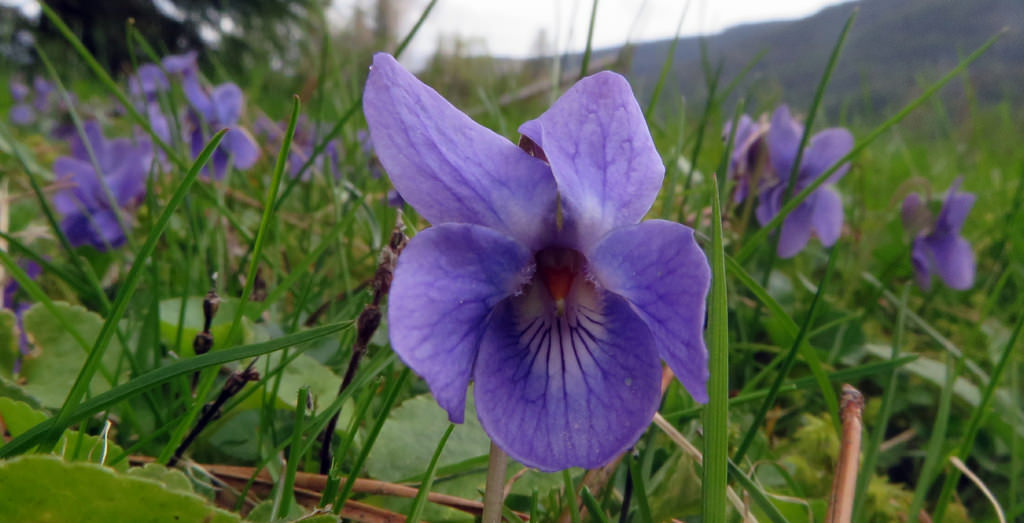
No, it isn’t spring yet in our northern latitudes. Charles, a dear blogging friend,  after honestly praising my snow and ice photo essay yesterday, suggested nevertheless to post a flower, which would bring some comfort to all, who are presently suffering from the dismal cold. Hopefully, this violet will be the signal for spring to arrive soon.

Natural Splendour of the Arrow Lake

Wednesday’s Photos

Bending, but not Breaking

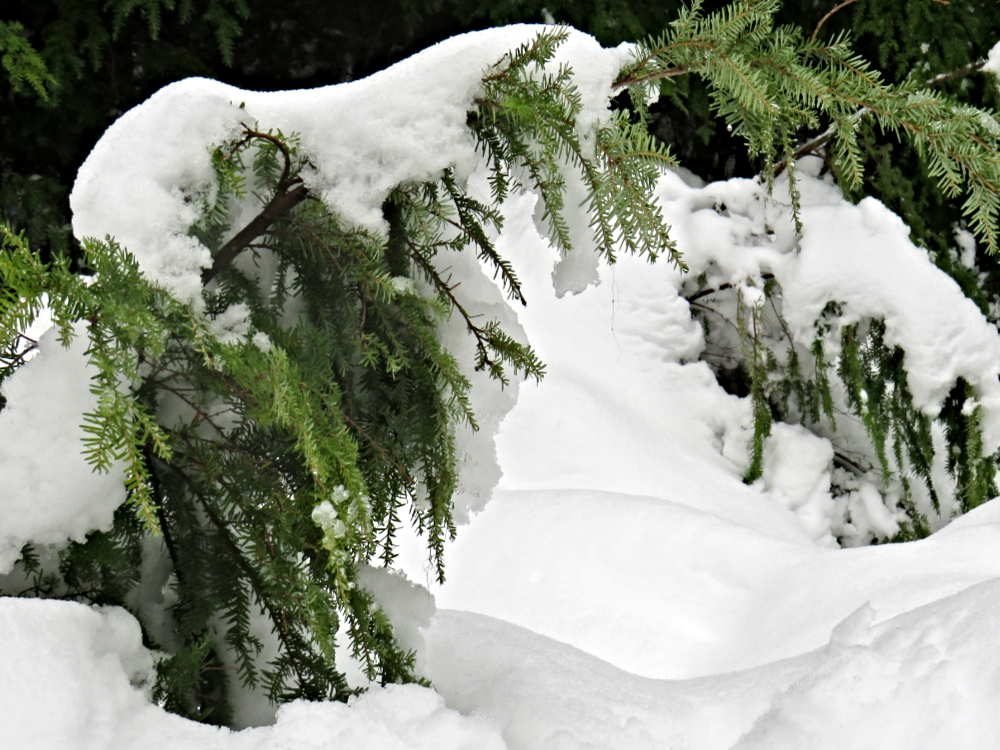
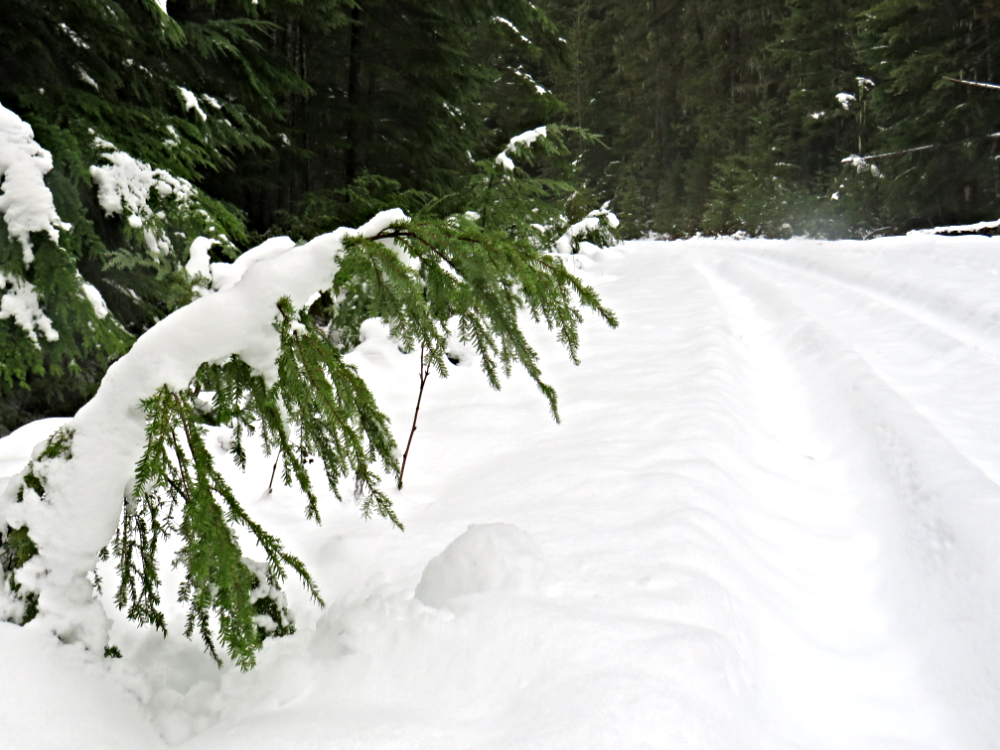
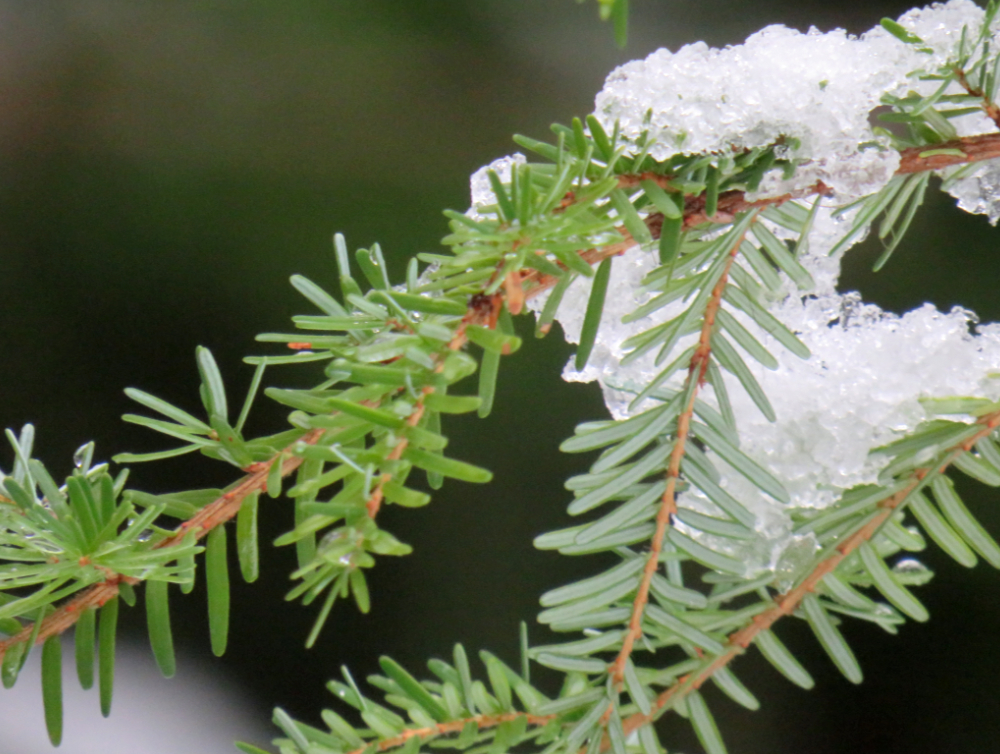
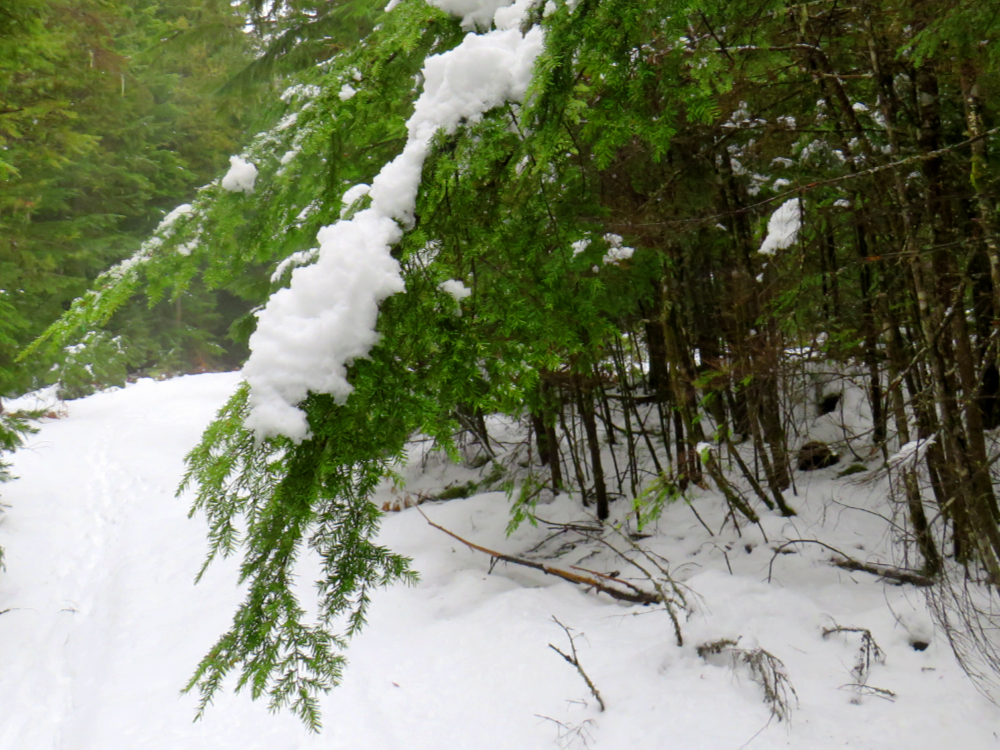
It is good to have a focus when you go out into nature for a photo session. One way to sharpen your focus is to have a theme. With this in mind my wife and I went to the same trail leading down to the Taite Creek Campsite last weekend. One of the great laws of survival, not just for plants and animals, but also for us human beings, is to be able to bend, to be flexible, but NOT to break and succumb to the adversities of life. Here are the photos dwelling on this theme. Enjoy.

iamg_5622iamg_5621iamg_5612aimg_5628aimg_5656

The Peter and Gertrud Klopp Story – Chapter XXXIII

My apology to all my dear readers and followers, who have been missing this post last week. I  skipped over to Chapter 34 by mistake and left out the events that had brought new energy, hope and joy to Biene and me. At that time we had new idea that dark storm clouds were brewing on the horizon of our love story.

First Semester at the University of Calgary

UAC1

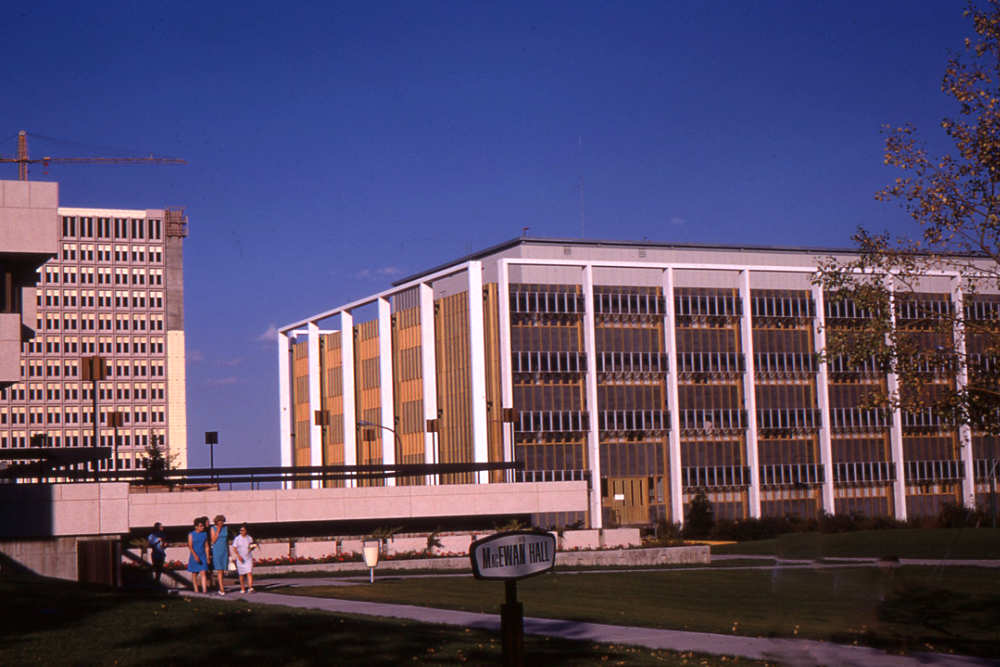
Brand-new University of Calgary – Author’s own Historical Photo

“I will ask no more of life than this that I might love you through all my days, and that you may find peace and joy in the constancy of my heart.”  Robert Sexton

Faithfulness Revisited

While searching for a quote that described best my feelings about love and faithfulness, I came across many quotes about fidelity, loyalty, and faithfulness. These virtues have always found strong support across the ages from philosophers, theologians, and rulers, as long as they were part of an individual’s commitment to an ideal, religion, or country. When I narrowed my search down to the love between a man and a woman, I discovered to my dismay that there were two camps of opinions, which differed from each other like day and night. The dark side would have scoffed at Robert Sexton’s quote as if he was promoting boredom and loss of freedom in human relationships. It ridiculed commitment through faithfulness by quotes, such as ‘The follies which a man regrets the most in his life are those he didn’t commit when he had the opportunity’, ‘A bridegroom is a guy who has lost his liberty in pursuit of happiness’, and ‘Absence makes the heart go wander’. The list is almost endless.

Biene and I were poorly prepared and had nothing except our love to repel the onslaught of subversive opinions and temptations. To this day I am grateful to Biene’s sister Elsbeth for trying to warn Biene about the dangers of a long separation. Even though we were not too happy about the doubts she had cast into our hearts, she at least forced us to confront the issue. By being made aware of the perils for our romantic relationship so far apart from each other, we were able to recognize situations that could potentially destroy it.

Before Biene went to England, she had to learn first hand how a commonly held opinion could put belief in faithfulness into question as something both unrealistic and old-fashioned. A nice young man, a fellow student of the Wuppertal University, no doubt infatuated and attracted to her natural charm and beauty, pursued her and in vain tried to weaken her resolve to wait for me. She was dismayed to see that so few people believed in the power of love, which would give us the strength to be faithful. Incidences of this kind prompted her to ask for a ring as a form of protection against aggressive suitors in Germany and  in England.

I for my part had no such outer sign, with which I started my studies in Calgary. But I thought being male I would find it easier to avoid the pitfalls of temptation. For in the mid sixties it was the man, who would normally invite a girl to a date. While being very worried about Biene in this regard and actually sharing my concerns with her, I myself felt secure in my belief that my female fellow students, who may have taken a fancy to me, would not pursue me, as Biene’s aggressive suitor did in Wuppertal. As it turned out I was quite mistaken. I had to learn and I learned quickly that their methods were not as obvious, rather a lot subtler in their outward manifestations.

For the eighteen-year old female graduates from high school, the faculty of education was the most favourite department to enrol. Very few were willing to face the exacting demands of engineering, nor were they welcome in this male dominated field in those years. But there was also another reason why they were outnumbering young men in the teachers’ training program almost at the ratio two to one. This was still the time when well-to-do parents would send their daughters to college in the hope to marry them off to a professional young man, who would be acceptable within their socially elevated family status.

Missing Biene

65

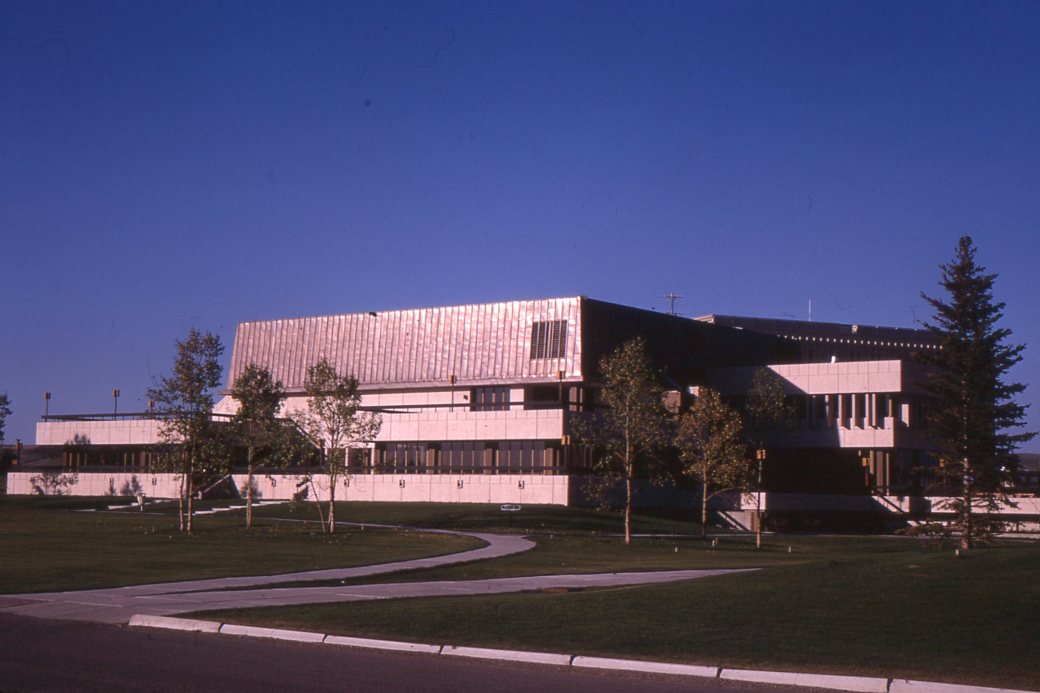
Another historic photo of the University of Calgary in the mid 1960’s!

At the end of the frosh week, during which we new students received our orientation and introduction into the life on campus, the university had organized a dance in the huge gymnasium of the Physical Education complex. Six bands were playing alternately rock and more traditional music. They made sure that there was never a break for the indefatigable couples on the dance floor. Having no friends to hang out with, I felt lonely and wished that Biene were there sharing this special moment with me. With all the tables taken I had no place to sit down. I leaned against the back wall taking in some of my favourite music I remembered so well from my birthday parties. But I was not in the mood to enjoy it. So I left, took the next available bus and returned to my humble basement room. To overcome my feeling of loneliness I wrote a letter to Biene.

September 19th Calgary

My dear Biene, now you will get to know how things turned out with my search for an apartment and with my introduction to the university. For days I have been running around in the northwestern section of Calgary, until I finally decided on a small basement suite. I am exaggerating if I say suite, because it is only one large room. Table and chairs, bed and cupboard, as well as a gas heater and some basic cooking facilities are included in the rent, which is thirty dollars a month. To be totally independent, I decided to exclude bedding from the rental agreement, which would have cost me five dollars more. Now it is gradually turning into a really cozy place All day long I scrubbed the dirty walls, mopped the linoleum floor and cleaned the windows. My old wooden crate has been converted into a cooking stand so that the table remains free for my studies. Oh and then came all the shopping I had to do: bedclothes, blankets, cutlery, bowls and plates, a small radio, etc. Now I am satisfied and wonder whether you would like it.

An old lady also lives down here in the basement adjacent to my room. She is very pleasant and enjoys the sound of my guitar, which I sometimes play for relaxation. I could hardly suppress my astonishment about her ignorance of geography. When I told her that I had come from Germany, she asked me, where that city was located in Canada.

Yesterday we had our orientation complete with welcome speeches and formal ceremonies for the frosh. The professors spoke so clearly and distinctly that all my fear disappeared from my anxious heart. I have already made the acquaintance with a couple of classmates and hope to meet them again later on. To understand them is quite a bit harder for me, because they just don’t make the effort to speak clearly and distinctly.

Yes, dear Biene, if you were here, my happiness would be complete. How much I miss you, I again felt last night, when after the formalities the six largest bands of the city were playing music in the gymnasium, where everyone was dancing except you and me …

The very next day the fall session began. Since I was in a first year program, most of the lectures were held in auditorium-sized rooms accommodating more than a hundred students at a time. Courses like calculus and psychology that were being shared by other departments were especially crowded. Having chosen a senior course in German turned out to be a blessing. Dr. Cardinal, a very likeable professor, was teaching The Age of Goethe to our small group of three students. Here my mind could at least take a short break from the great demands in the other subject areas. Ever since Biene and I had decided on starting our life together as husband and wife in Canada, I knew that I had not merely entered a race for the survival in the academic training program, but also committed myself to an all-out effort to achieve an above average standing. For only with a grade point average of close to an A could I hope to receive substantial government grants and scholarships for the second year. I had poured my entire savings from my army service and my summer earnings as a labourer into the cost of tuition, textbooks, rent and living expenses. There would be little left for me to finance another academic year except with the help of financial support from the Alberta Government. Thus, in spite of my limited English language skills I set my goal to nothing less that a B+ over all standing. To achieve this, I had to get near perfect scores in German and Calculus, while maintaining a minimum of 70% final grade in the other subjects. For the first couple of weeks this appeared to be an unobtainable target. I often communicated my concerns and worries with Biene. I told her that I did not want our life to start in poverty with no chance for a prosperous future. Even just to finish the year with merely passing grades looked like a great challenge to me in the beginning. Then came another shock. I had set my hopes on studying lecture notes and textbooks and on doing well in the multiple-choice tests that were becoming very popular in the mid sixties. Instead we were required to write one essay after another. I felt that I could not compete very well in this challenging field  with my Canadian fellow students. A visit to the office of my English professor was going to shed some light onto the nebulous trail of my academic future at the U of C.

Facing the Challenges of the English Literature Course

66

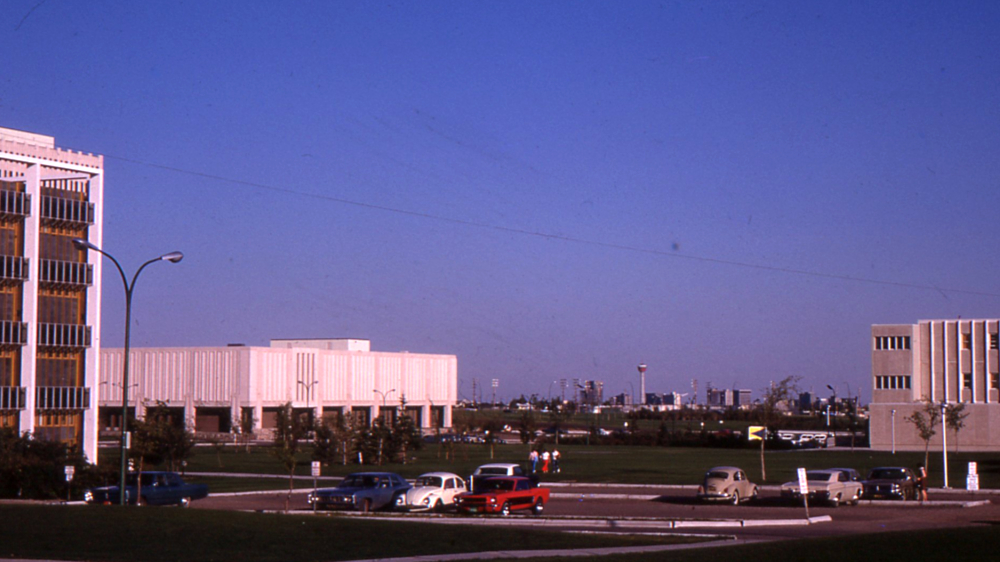
University Campus with the Calgary Tower in the Background

I took some comfort in the fact that the English literature classes were small. The one I attended had only twenty students under the loving tutelage of Dr. Alexander. In my mind I called her Dr. Nightingale, because she was frequently teasing her students for not knowing the European songbird that had taken such a prominent place in John Keat’s ‘Ode to a Nightingale’. I went to see her one day after class in her office to get advice as to how to cope with my language problems. Apparently having a good knowledge of the European high school system, she pointed out that I had studied the principles of essay writing for much longer and in greater depth than my Canadian fellow students. What I would have to do was to concentrate my efforts on expanding my active and passive vocabulary and thus build up my confidence.

I became very eager to prove my ability to write well after this encouraging and heart-warming interview.  Near the end of one of the Friday morning lectures Dr. Alexander announced to the class that for Monday she planned on giving us a written test on one of two topics having to do with poems of English Romanticism. Having all weekend to prepare myself I chose the topic I felt most comfortable with, I first wrote the essay on a piece of scrap paper, then memorized the three pages sentence by sentence. When I could recite the entire text out loud, I was looking forward to take the test. All I needed to do now was to rewrite the essay from memory on the official exam paper on Monday. How proud I would feel, if I could report to Biene my first A in English 240!

Well rested and as I thought well prepared I sat at my desk in the small lecture room waiting for Dr. Alexander to come in, while others were chatting about all the fun they had over the weekend. A bit annoyed that they were partying while I had been studying so hard, but at the same time quite relieved that with their poor preparation I would have a better chance of getting a high mark on the test, I attempted to tune them out and tried to focus on the precious content I had stored in my memory. By now I was well known to the other students for my strong, not necessarily unpleasant German accent and my often-stilted way of expressing myself. Some asked, “Well, Peter, I bet, you studied really hard for the exam.”

“I studied hard enough to get by with a passing grade,” I replied trying to be modest.

Then our professor walked in with her endearing smile. Without further ado she handed out the papers and then announced, “You will write on the second topic”, whereupon she sat down apparently quite content to spend the lecture free morning watching us write.

In the meantime I felt the emotional shockwaves of her incredible announcement racing through my mind. Believing we had a choice between the two topics, I had studied for the first one. For several minutes I stared at the blank paper in front of me. The pen I held in my right hand did not move for a very long time. Then finally I began to calm down. Under pressure and time constraints, where others would fall apart, I had the ability to make the best out of a bad situation. In a creative surge I took the parts of the memorized essay, which at least by some stretch of imagination bore some resemblance to topic two, reworded them and recombined them with ideas which I had picked up at the lectures. In spite of the initial delay I was able to hand in my finished work at the end of the fifty-minute session. With some apprehension I was awaiting the return of my paper. Great was my relief when I read the professor’s comment, ‘Well written! But very weak conclusion! 67%.’

Walking the Line

64

Historical Photo of the University of Calgary in the Mid 60’s

After a few sessions in the Calculus Course I realized that I had underestimated the scope and depth of this extremely demanding subject area. I was of the mistaken belief that I could easily sail through its content with a minimum of effort, as the course appeared to be merely a review of what I had already learned at the German high school. Also the lecture hall for the Math 211 students was overcrowded with more than two hundred students in attendance. The course was compulsory for all first-year students in the Departments of Engineering and Education. Then there were the obligatory tutorial classes, which were much smaller and more conducive to the nature of a question-and-answer period. The tutor, a young graduate student by the name of Jenkins, was very keen on telling us off-colour jokes and even more questionable mathematical riddles very much to the embarrassment of the female students in the class. When asked to explain how to go about solving a particular math problem, he appeared often evasive and rarely was of any real help to anyone. So we got into the habit of helping each other.

This is how I got to know Brian Fisher, with whom I immediately struck up a friendship that was going to last a lifetime. I helped him to get through the course with a passing grade, while he freed me from my social isolation  His mother was a very caring person. Seeing that I had been on a hunger diet she insisted that I should join the family for Thanksgiving. For the first time in my life I looked at an oven-roasted turkey, smelled the aroma of the carved up slices on my plate that together with the mashed potatoes drenched in mouth watering gravy, the cranberry sauce, and the mix of carrots and peas presented a most wonderful culinary delight. This was truly a treat for someone like me, who out of budgetary constraints was content with a diet alternating between chicken noodle soup on one day and chunky dinner out of a can on the next.

In the meantime the calculus course had become increasingly more difficult. We were now struggling with the concepts of mathematical limits and the first derivative. At the end of the tutorial class a female student intending to become a music teacher approached me rather timidly and asked if I could give her some help with a problem that Mr. Jenkins had been unwilling or unable to explain. Why the curriculum required that primary, music, art and all other teachers not embarking on a career in secondary math had to take this course, I could never figure out. I was able to give her some valuable clues without providing the answer. On the next tutorial class she cheerfully told me that thanks to my help she was able to solve the problem and asked me a little less timidly this time if I could spare a few minutes again after the tutorial to assist her with a question she had some trouble with. As I showed her the steps that would lead her with some work of her own to the answer, I noticed how excited she had become during my lesson. And when I saw her joyfully singing and prancing down the hallway, I realized that she had more on her mind than just receiving extra help from me. So I told her there and then that my fiancée was coming to Canada next spring and that we intended to get married soon after her arrival. Disappointment was written all over her face. But she managed to say, “I am so happy for you two.” I had to repeat the story a few more times during the course of the year, when I felt I was being approached by some other girl with similar intentions. I had no trouble doing so and did it each time I felt in my heart that someone has been trying to cross the line. Before I immigrated to Canada I had often listened to the popular Johnny Cash song ‘I walk the line’ on the American Forces Network in Munich. It has been one of my favourite tunes and lyrics to this very day.

Discussing Marriage at Lunch Break

Student Peter

Peter in front of the University of Calgary

On the wall of my basement room hung a timetable, a rigid what-to-do list that was to govern my life for the next seven months. On weekdays I got up at six and after a cornflakes-and-milk breakfast spent sixty minutes to have an early morning study period. Then I took the bus for my first morning class at campus. I had one hour for lunch that always consisted of the same homemade bologna and cheese sandwiches washed down with the watery coffee from the vending machine. During this time, when I managed to relax a little bit, I often met with three students on alternate days, as they all had their own schedules to follow.

On Tuesdays and Fridays I sat together with Brian Fisher, since we both attended the same afternoon tutorial class for Math 211. It made me feel very good to be able to help him with many of the questions from the weekly assignment sheets. In turn I got gradually used to the informal, casual way of English conversation. On the other days I met with two women, both married, one from Great Britain, whose husband had recently been promoted to a managerial position in an IBM sponsored business in downtown Calgary, the other Mrs. Karen Bolso, an immigrant from Norway. Both were attending the same late morning psychology lecture. In a country that was built on the skills and talents of hundreds of thousands of immigrants the voices of three individuals producing an interesting blend of Oxford English, Scandinavian and German accents were not unusual in the student lounge. All three of us, coming from Europe, had interesting stories and experiences to share. The British student, whose name I can no longer recall, had recently followed and joined her husband in Calgary and was pursuing a teaching career to get out of the house as she put it, while her husband was busy setting up calculating machines, the forerunners of business computers. Her main point of advice relating to happiness in marriage was that the two partners should come from the same ethnic and cultural background. Their children would integrate quickly with their new environment, but the parents would take a long time to adjust. “Like oil and water Canadian and immigrant spouses just do not mix,” she stated her opinion with a slightly superior air.

Mrs. Bolso, whose marriage was on the rocks, protested and said, “Well, let me tell you something. I was married to a Norwegian, and yet things did not work out at all. When I arrived as his bride from Norway, he lavished gifts on me, bought me a diamond ring and a fur coat with money he did not have. He had bought all these luxury goods on credit, even though he held only a low paying job. He could barely put enough food on the table for our two children and me. I would rather have a husband, who would show his love in a financially responsible manner. Your theory is all wrong!”

Then it was my turn to voice my opinion. I spoke quite eloquently presenting an entirely idealistic viewpoint, which, as I could see from their reaction, took them by surprise. “Even if a partner could afford the most expensive diamond ring, a fancy car, and an even more fanciful house, it would be all for naught, if love and faithfulness were not present to hold the two together.” Then I thought it would be a good time to talk about my invisible engagement ring, the story about Biene, my fiancée, who was going to join me here in Calgary next spring. After many exclamations of ‘O, how wonderful’, ‘You must be so happy’ and the like, we moved on to other topics.

For the evening my timetable allowed me one hour for preparing and eating a frugal meal for supper. Two hours of studying followed till nine, after which I granted myself a little bit of time to play and practice a few tunes on my guitar. But if I had gotten stuck in my attempt to solve a particularly difficult calculus problem, there was no time for relaxation, until I had found the solution. One evening I had been working over a thorny differential equation. Stubborn as I was when working on problem solving, I did not want to give up. It was way past my bedtime. Midnight was rapidly approaching. Finally common sense prevailed and I decided to go to bed. But the brain having been overstimulated did not want to come to rest. So many possible solutions were gliding by in front of my inner eye that it took another hour before I managed to fall asleep. Before the alarm went off, I woke up with a jolt. My body had rested, but my brain had not. I jumped out of bed, ran up to the table, grabbed paper and pencil, and before it would fade away, I jotted down the solution, which my brain had worked out correctly in my sleep. Having no coffee maker, I put an extra spoonful of ground coffee into the cooking pot, added water and brought the brew to a boil over my two-element stove to make myself a cup of strong coffee. What a life!

Empathy for Peter

62

Brand New University of Calgary in the Mid 60’s

In Educational Foundations we studied the great philosophers of education from Socrates to Piaget. For this course also the university had set up tutorial classes to facilitate the exchange of ideas in small discussion groups. I spite of my language difficulties I felt I had a noticeable advantage. I was about five years older and therefore more mature in many aspects of learning. I also brought a wealth of life experiences, which enabled me to enrich the class with new and fresh ideas. To the amazement of my much younger fellow students I was not afraid to criticize the great thinkers of the past. There was venerable Rousseau for example, who advocated locking up disobedient children in a dark room instead of using corporal punishment. Remembering all too well my own ordeals being locked up as a young child in the dingy storage room of Mr. Stoll’s carpentry shop, I declared that in my opinion locking up a child was one of the cruelest forms of punishment and that ultimately spanking justly applied without causing physical harm was to be preferred.

Some other time we were discussing the importance of the family in early childhood development. Having a much broader concept of education in mind, I emphasized with as much conviction as I still have today, “The family is the smallest unit in a society. As healthy cells make a healthy body, so family units that are intact and provide a caring environment for the children are the building blocks for a strong society. Take away the health of the family and the state will sooner or later suffer and begin to disintegrate.” I am sure that I expressed these thoughts quite differently, but the idea came across with electrifying results. The students were most likely wondering, where this immigrant student had all his ideas from. Little did they know that I had studied Mommsen’s ‘History of Rome’ and that the ideas about the importance of the family were as old as the Roman Republic!

One day our tutorial instructor felt the need to divide us into groups of four or five students each. To develop a feeling for empathy, a term that can be easily defined in clinical terms but is otherwise quite an elusive concept, we needed someone in our group, who would be willing to take on the role of a client and come up with a story, to which the others as would-be councillor would react with supportive questions and remarks. A lot of time was being wasted, because nobody wanted to be saddled with the difficult role of the client. After a long pause, I said, “OK, I’ll do it. Just give me a little bit of time to think.”

Then I began without referring to any specific time or place to tell the story of my father, how close we had become before he had left home, how he gave me a guiding hand with my schoolwork, how much I was shaken up by my parents’ divorce, how I had to wait for five long years before I could see him again, how I spent many happy hours at his new home, then how suddenly and unexpectedly I had lost my father all over again and this time forever, when he died of a massive heart attack. By the time I had spoken the last sentence, it was so quiet that you could hear a pin drop in the tutorial room. All other groups had stopped their exercise to listen in to the extraordinary story that was grabbing everybody’s attention. Then the students were getting noisy with shouts of praise and admiration. After the tutor regained quiet and order, he said to me, “It seems your creative story caused quite an outpour of empathy. How did you think it all up so quickly?”

In a strange mix of pride and self-pity, I replied, “I’d wish it had been just a story.” With these words I quickly left the room. In my heart I was thankful to tutor and students for respecting my privacy and not asking any more questions in the sessions that followed.