Walter Panknin (1898 -1977) and His Family Ch7 Part 3

Papa Panknin’s Life in Review

Born and raised in Kalthof, West Prussia, steeped in the traditional work ethics of his time, Walter Panknin perceived his employment as a police officer as a contract between the state and the individual. The state offers the individual a permanent position with an income commensurate with his rank and the prospect of a pension providing security and a comfortable living for retirement. In return, the individual faithfully and honourably delivers a service to his country.
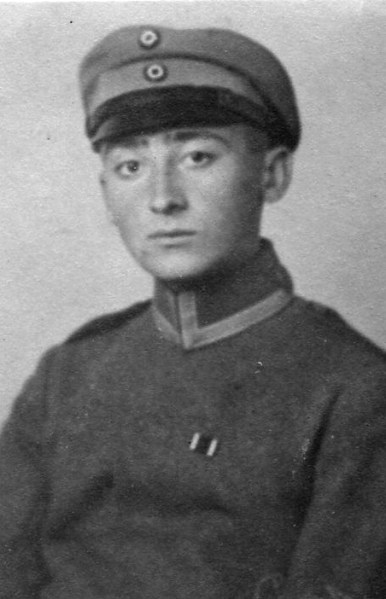
Walter Panknin 1918

In 1915, barely seventeen years old, Papa volunteered and served as a soldier in the Great War. When the German army was reduced to 100,000 men in 1919, he embarked on a career in the police force in North Rhine-Westphalia. His leadership qualities were soon recognized, and he moved quickly up the ranks, becoming a leader of a police detachment in a small town near Dortmund during the turbulent time of the Weimar Republic. One day, while riding his bike to work, he took a spill and fell to the ground. Unfortunately, as he landed on the cobblestone street, his service pistol went off and sent a bullet through his abdomen. At the hospital, the surgeon discovered that the shot had destroyed his left kidney. So Papa had to spend the rest of his life with only one kidney.
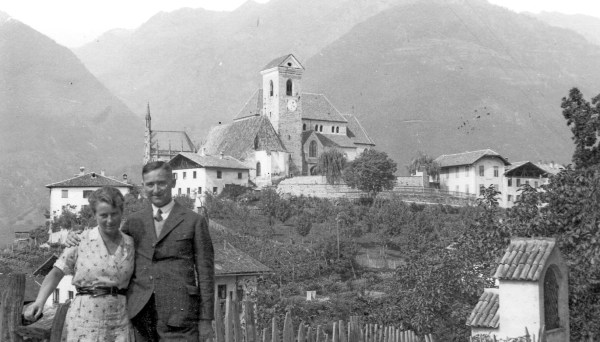
Walter and Elisabeth Pankin on their Honeymoon in Italy

The night before the Nazis seized power in 1933, rowdy Brownshirts (SA stormtroopers) terrorized the townspeople with their unruly behaviour in the streets. Walter Panknin, responsible for law and order, sent out the police force and had the troublemakers arrested. The very next day, a call came from the Nazi headquarters, demanding his immediate resignation. His career as a police officer would have ended if some influential friends had not put in a good word for him. That was his first brush with the new dictatorial regime.
Walter Panknin (1898 – 1977) and His Family Ch7 Part 2

Struggle for Justice

Biene described in vivid detail her mother’s exhausting trips by public transportation and on foot to the government offices in the bigger cities. With unwavering determination, she bypassed the lower-ranked officials. She gained access to the ministers of justice and social services, an incredible feat that only people familiar with the German bureaucracy can understand. In those days, there was no phone service for the general public, no emails, and no Internet search engines that we in the twenty-first century take for granted. With her tenacity and unshakeable resolve, she managed to open doors, scout for invaluable information and find assistance in the fight to recognize their refugee status and Papa Panknin’s pension claim.

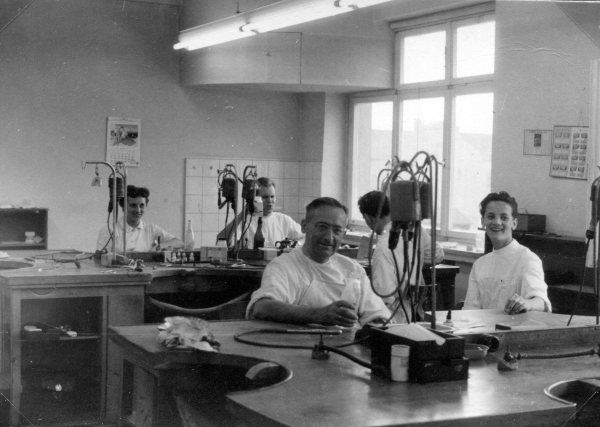
Walter Panknin at the Dental Lab 1957


To fully understand their situation, we need to go back to 1957. The Panknin family, like so many refugees from the Soviet-controlled eastern part of Germany (GDR – German Democratic Republic), lived in extreme poverty. My father-in-law, former captain of the police force and later commander of an army unit in former Yugoslavia, provided with his meagre income the cost of food and shelter for the family of four. He worked as a dental technician in a lab in a nearby city. What his wife had accomplished by blazing a trail and opening doors to influential politicians, Walter Panknin complemented her efforts by resorting to his powerful writing skills. Reading his elaborate correspondence with the movers and shakers of the government ministries of the West German province of Rhineland-Westphalia, I gained great insight into their struggle for justice. What really impressed me was how the couple worked together as a team. I also learned that despite the glitz and glamour of the economic boom (Wirtschaftswunder), there was something rotten in Germany.

Walter Panknin (1898 – 1977) and His Family Ch6 Part 20

Frau Panknin’s Success and Biene’s New Friend Angelika

Biene wrote this post.

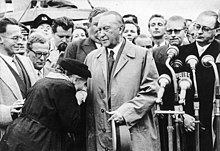
Often my mother was at the point of exhaustion and desperation to give up. The bureaucracy was so overwhelming that all her efforts seemed futile. But my mother’s tenacity and indefatigable spirit finally paid off after seven years. She went to the highest government department to plead for justice as a last desperate effort. Miraculously, she was received by a representative of the German Chancellor, Konrad Adenauer, who had a sympathetic ear and got the “ball” rolling in no time. My father was finally entitled to a sizeable pension and a big back pay for the lost years. My mother had won the struggle for financial security at the expense of her health and vitality. The years of worries and deprivations had taken their toll. But my brother and I were too young and self-absorbed to notice. For us, she remained a pillar of strength and comfort. Her love for us was inexhaustible.

Adenauer with the mother of a German POW brought home in 1955 together with thousands of other POWs from the Soviet Union due to Adenauer’s visit to Moscow– Photo Credit: Bundesarchiv


After this memory fragment of my mother, let’s return to my life. Shortly after our second year of high school had started, “Mecki,” our homeroom teacher, introduced a new student. He assigned her to sit beside me since I had lost my desk partner the previous year. She had failed the grade.
I glanced furtively at my new companion, who looked straight ahead at Mecki. Angelika had a cute snub-nose and big blue eyes with long dark eyelashes. Her short hair curled softly around her round red cheeks. She had a nicely curved mouth and dimples. When she eventually dared to smile at me, she looked beautiful.

Walter Panknin (1898 – 1977) and His Family Ch6 Part 9

Finally Regular School Again

Biene wrote this post.

When I woke up from a deep sleep the following day, I could see through the big window that a clean blanket of snow had covered the drabness of the yard outside the Old House of Rocky Docky.  My father had heard the famous song on the radio and aptly applied it to our new abode.  It would always cheer us up to listen to our “theme song,”  We would sing it with gusto to make the old house rock.

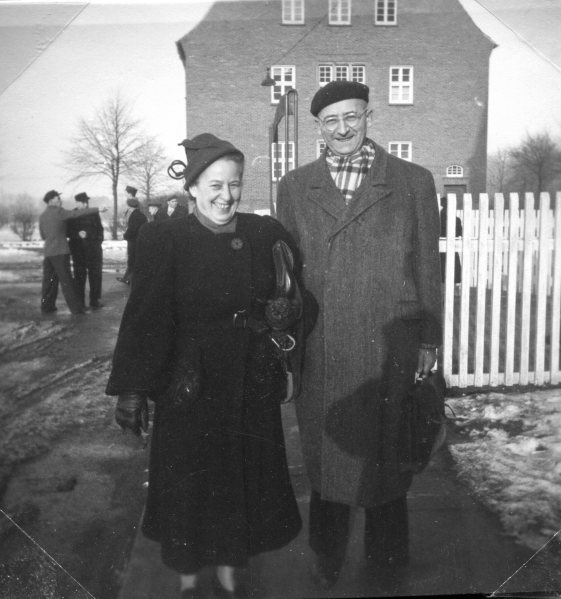
Walter and Elisabeth Panknin smile at the prospect of having their own apartment soon.

The bright morning sun made the snow crystals sparkle and dance; Despite the first signs of spring earlier, winter was not over yet. My parents were already dressed to go out. My mother told us that the manager of the refugee shelter had allocated them some funds to buy household items, utensils and other necessary equipment for everyday living. Our mother told us that before she would go shopping, she would enroll us in the nearby school called Elementary School at the Tree.   Since we had missed classes for more than a month in the transition camp in Massen,  we were looking forward to regular school life again.

Walter Panknin (1898 – 1977) and His Family Ch6 Part 8

Mama Panknin in Agony

Biene wrote this Post

At the end of it, there was a door leading to a small room with a large recessed window in the bare rock wall.  It looked like a prison cell, except there were no bars on the window.  There were two sets of bunk beds, a table with four chairs, a small table with a two-burner hotplate and a small dresser.  “This is your temporary place until your apartment is completed,” the manager told us.  And in response to my parent’s questioning glance, he added, “This may take up to two years.  We just don’t know where to house all you people,” he grumbled, leaving us to attend to the other families.

We all stood dumbfounded until my mother’s loud sobs broke the silence for a moment.  She collapsed on one of the beds and cried and cried.  I had never seen my mother cry like that before, which shocked me deeply.  My father looked helpless.  Eventually, he started stroking my mother’s back.  My brother and I climbed onto our top beds, completely bewildered.

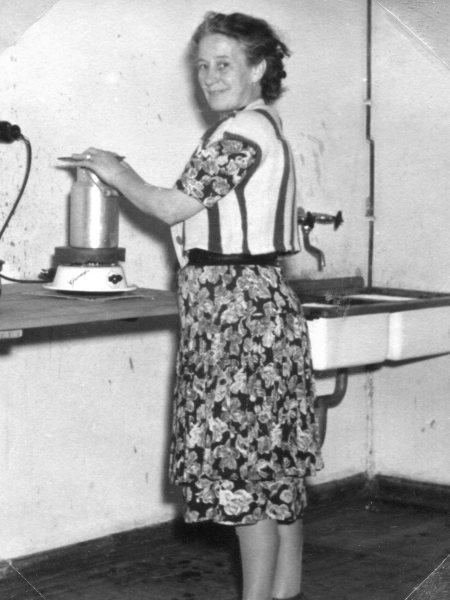
Mama Panknin Making Tea on the Hot Plate

Eventually, my mother’s crying stopped.  She rallied and took us to the outhouse.  She found a clean wash basin to scrub the grime off our face and hands’ long dusty truck ride.   She magically produced some bread, butter, cheese and jam. She also made some weak tea on the hot plate.   We were so starved; it tasted heavenly. Then she hugged us warmly and said,  “With God’s help, we’ll make it through.”

Walter Panknin (1898-1977) and His Family Ch6 Part7

This Old House

Biene wrote this post.

The driver jumped out of the cab, opened the truck ramp, and started unloading the luggage and helping us jump out.   Dazed and bewildered, numb from the cold and very hungry, we all stood speechless for a moment.  “Take your belongings and follow me,” the driver told us.

When the Panknin family had moved into this dingy, rundown place in 1954, the single ‘THIS OLE HOUSE” had just been released in the US and became very popular in Germany with the version in German. The song provided some joy despite the depressing living quarters.

He led us around the extremely long building to a courtyard with a row of several outhouses.  “You can go there in a minute,” he told us, “but let me show you your quarters first. This old building used to be a pub and a bowling alley,” he continued,  “now it has been converted into an emergency shelter for people like you.  I’ll introduce you to the manager of this establishment.” He laughed and pointed to a man who had just stepped out of the entrance to receive us.

THIS OLE HOUSE IN GERMANPapa Panknin liked this song as it gave a fitting description of the refugee camp they now had to live in until they had found an apartment.

We were the first ones to be led to our room.  We had to go through a long hall with several big sinks, laundry tubs and a wash line with a few rags drying.  There were brooms, mops, pails, garbage cans and other equipment stored along the walls.  The evening light coming in through oversized windows could hardly soften the drabness of this dingy hall.