Ernst Klopp (1900 – 1964) – Part 8

New Beginning in the Wartheland

In September 1939 Ernst Klopp was drafted into the army and took part in the attack on Poland, which triggered the beginning of World War II. Within days Great Britain and France declared war on Nazi Germany. In the fall of 1940 Ernst Klopp was released from military service to take on new civilian assignments. In October 1940 he took charge as an administrator of the recently incorporated agricultural estate Oberhof northeast of Posen (Poznan). The Polish owner’s name was Stanislaus Brodnicki and his inspector was Nowak. The estate’s size was 279 ha. In 1939 the building of the manor had already been in ruins. Ernst managed the farming area of this property until May 1941.

Subsequently he was assigned to administer until November 1941 the manor and lands of the former Polish Magnate Moszczenski in the village of Srebrna Gora/Siberberg (German) with a total agricultural area of 510 ha. Both estates now belonged to the newly created county of Dietfurt/Znin (Polish).
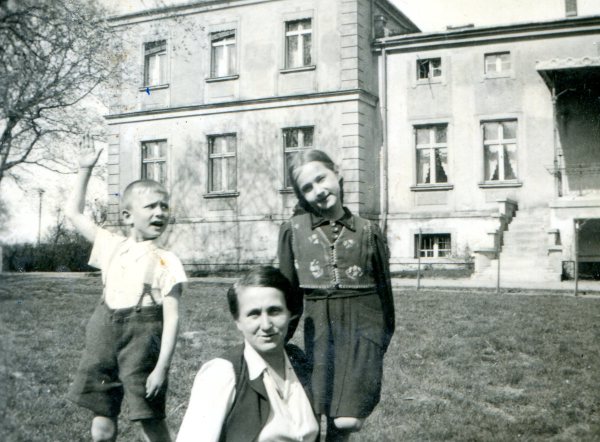
Gutfelde/Zlotniki 1942 – Mother Erika Klopp with her children Gerhard and Eka

In November 1941 the German Agricultural Society (renamed in 1942 ‘Reich’s Society for Agricultural Purposes) installed Ernst Klopp as an administrator of the farming and forestry domains, which belonged to the former Polish Estate Zlotniki/Gutfelde (German) in the county of Dietfurt. The estate belonged till 1939 to Zdenek Czarlinski and comprised 365 ha of arable land.

Peter’s commentary: To my greatest surprise I was able to find my father’s name and inspector Haladuda on a Polish website that deals with the history of Polish manors. Here is a brief excerpt from the article I found on the Internet and translated somewhat crudely by Google Translate: 
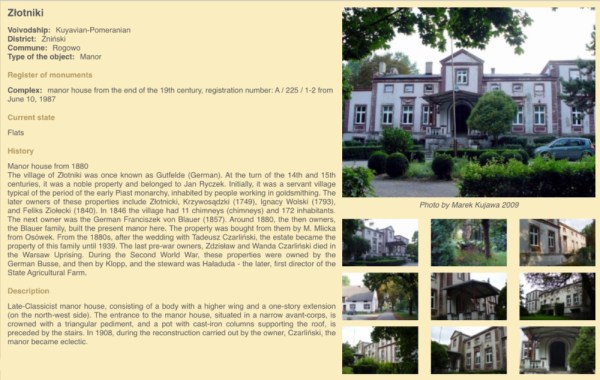
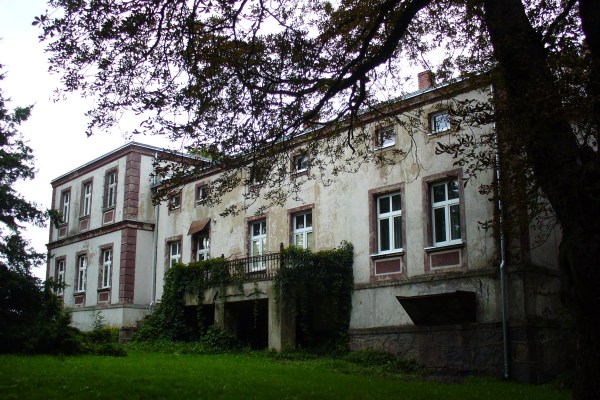
Zlotniki 2012 – Credit: Polish Manors Website – There has been little change to the outside of the building since the time our family had to leave this beautiful place in 1945.

The constant change of Polish and German ownership of Gutfelde is very noticeable in this short history of the manor.
Ernst Klopp (1900 – 1964) – Part 7

Brief Historical Background

Ernst Klopp in the Wartheland ( 1940 – 1945)

The partitions of Poland and Lithuania were three partitions of the Polish-Lithuanian Commonwealth that took place toward the end of the 18th century and ended the existence of the state, resulting in the elimination of sovereign Poland and Lithuania for 123 years. The partitions were conducted by the Habsburg Monarchy, the Kingdom of Prussia, and the Russian Empire, which divided up the Commonwealth lands among themselves progressively in the process of territorial seizures and annexations.

German Empire (1871 – 1919)

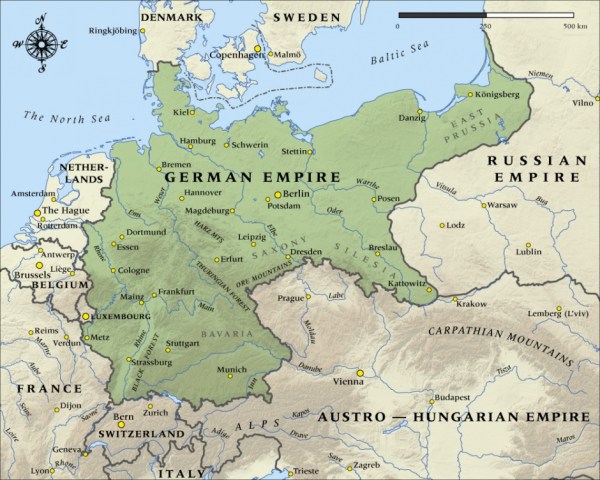
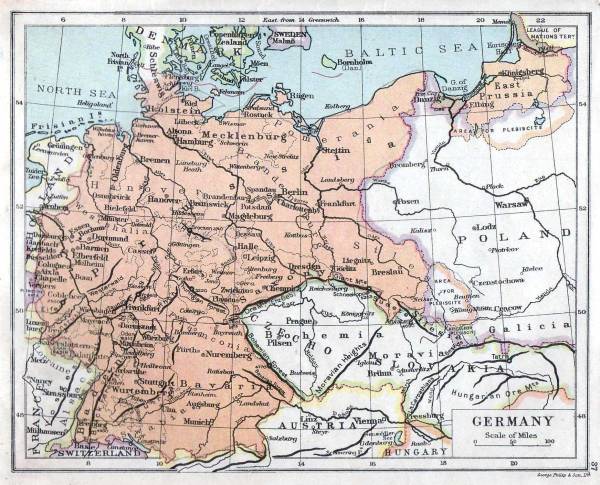
My readers may remember that my grandmother Emma Klopp had settled in Elsenau, West Prussia not many years after her husband Peter Friedrich Klopp has died in 1900. Due to the provisions of the Treaty of Versailles, in 1920 she had to move west together with thousands of other dispossessed Germans. Also the area further south around the city of Posen (today Poznan) had to be returned to the newly created Polish State. That particular region was known as the Warthegau during the Nazi era and was named after the River Warthe. It was here in the area near Dietfurt (Znin) that my father Ernst Klopp received his assignment as director of three abandoned farms.

Map of Germany after World War I

On 1 September 1939, without a formal declaration of war, Nazi Germany invaded Poland, using the pretext of the Gleiwitz incident, a provocation (one of many) staged by the Germans, who claimed that Polish troops attacked a post along the German-Polish border.  During the following days and weeks the technically, logistically and numerically superior German forces rapidly advanced into the Polish territory. Secured by the Molotov–Ribbentrop Pact, the Soviet troops also invaded Poland on 17 September 1939. Before the end of the month, most of Poland was divided between the Germans and the Soviets.

Source of the historical background and maps: wikipedia.org

Ernst Klopp (1900 – 1964) – Part 6

New Responsibilities and a Growing Family

Ernst Klopp followed Pascheke and took over the administration as director of the entire complex. His assistant director was Karl Paetsch. Ernst Klopp was heading the functions of the mission establishments self-responsibly until the fall of 1940. Since the ‘entire realm for the people’s food production was exclusively a national-socialist domain’, those in control over all aspects of administration converted the church-run training home into an establishment of the state, which was now under the jurisdiction of the provincial land association. During this decisive conversion to a state-controlled training centre, Ernst Klopp, as evidenced by keeping his director position, must have made a favourable impression.

In-between three more children were born: Adolf (1932 – 1989), Erika (1934), and Gerhard (1936). In these years, Ernst managed to have a painting of his parents Emma and P. F. W. Klopp done from an old no longer existing photo. The painting accompanied the family until 1945. In Belgrade also hung the framed message of brother Otto’s death, who was killed in Russia in 1915. On January 27, 1936, the entire family celebrated on Ernst-Flos-Estate the 80th birthday of mother and grandmother Emma Klopp (née Bauer). A photo of this eventful day still exists and is in the personal archives of Eberhard Klopp, the author of the Klopp Chronicles.

Three years before the family moved from Belgrade further east to West Prussia (re-occupied by the Nazi regime) Ernst Klopp had a house  built on the Ernst-Flos-Estate property, in which the family lived until the fall of 1940. Finally, the family had their own home separate from the institutional buildings.

Ernst Klopp (1900 – 1964) – Part 5

Gleichschaltung of the Belgard Institutions

The Belgard institutions of the Inner Mission were divided into three work areas: The Dr.-Klar-Foundation, the Johannis-House and the Ernst-Flos-Estate. In 1930, Ernst Klopp took over the agricultural part of the Ernst-Flos-Estate. For its operation, Ernst made use of orphans and young delinquents, agricultural apprentices of the town of Belgard, and asocial people, who were being drafted during harvest times. With this workforce at his disposal, Ernst was able to secure the food requirements for all the people under his care. In the home of the Dr.-Klar-Foundation these were mostly senior citizens and special needs persons and in the Johannis-House alcoholics and the incurable sick. For the delinquent youth and orphans there was mandatory school attendance.

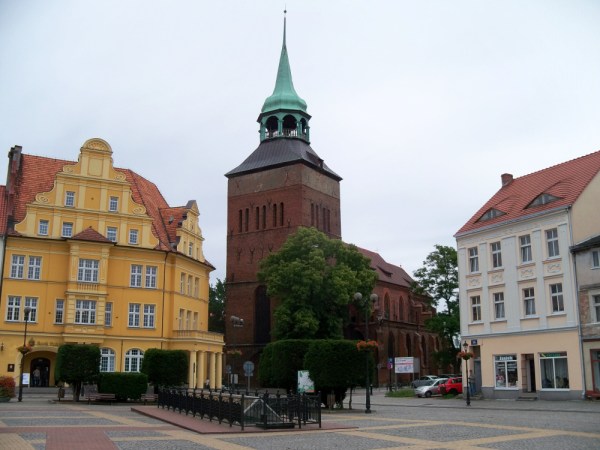
Belgard, Pomerania (now Polish Białogard) – Wikipedia

Erika Klopp (my mother) in the role of a domestic administrator was in charge of the personell from the ‘Alcoholic Rescue Home’, the Johannis-House, who had beed assigned to the Ernst-Flos-Estate. After 1933, female members of the NS Work Service (Reichsarbeitsdienst) and the operators of a pig farm for the NS Food Supply Service (Ernährungshilfswerk) were added to the growing enterprise.

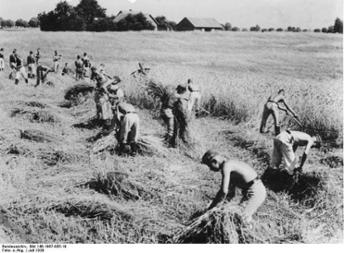
Reichsarbeitsdienst at Harvest Time – Bundesarchiv

Direktor Pascheke had been serving the Dr.-Klar-Foundation as House Father (Hausvater) since 1925. In 1933 or 1934, he was dismissed on account of alleged financial irregularities, an often used method by the Nazis to replace ‘undesirable’ individuals with more party-friendly people in their take-over of independently run institutions.

Ernst Klopp (1900 – 1964) – Part 4

Wedding Bells and Return to Agriculture

With assistance from his Freikorps organization, Ernst Klopp continued his training in agriculture. In 1923 we find him working in the Magdeburg area. From 1927 onward, he worked as administrator at Neuhof (former Pomerania) in the Schlochau County, at the estate of his sister Anna and brother-in-law Ludwig von Waldenfels.

Ernst Klopp circa 1927

In the fall of 1927 after the sale of the Neuhof property, Ernst found temporary employment at an estate in Quastenberg near Burg Stargard. [photo wiki]. In 1928, he moved into the family hotel of his sister Jula and and her husband Friedrich Steuer in Diensdorf at Lake Scharmützel.

In the same year on June 5, he married Erika Klara Else Kegler, who lived in Stolpmünde, Pomerania, 20 Willan Street. Erika Kegler (my mother) was born on March 24, 1899 in Grünewald, Neustettin County (Pomerania). She was the daughter of the Protestant pastor Carl Kegler (September 22, 1860 – June 15, 1919) and his wife Elisabeth Kegler ( August 13, 1868 ß September 14, 1948). Her forefathers had lived in villages around Obornik north of Posen (now Polish Poznan).

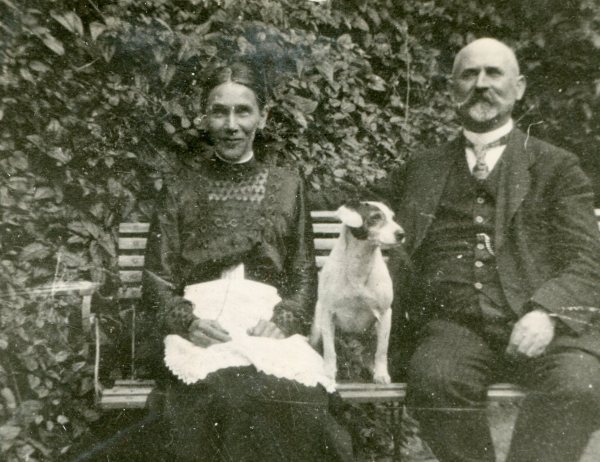
Carl and Elisabeth Kegler, Grünewald, Neustettin County (Pomerania)

On March 6, 1929, Ernst and Erika,s eldest son wad born in Stolpmünde (now Polish Ustka) at the Baltic Sea. In the same year through his wife’s family connections, Ernst was able to link up with the Protestant Inner Mission and its institutions in Belgard, Pomerania (now Polish Bialogard). The complex together with a large-sized farming area stretched in northwestern direction on either side of the Köslin Stree on the road to Kolberg.

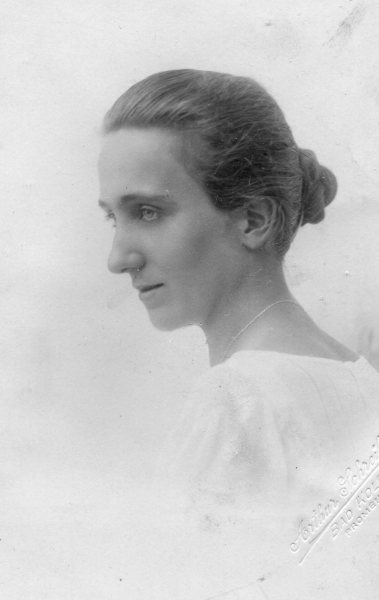
My mother Erika Klopp circa 1927

Ernst Klopp (1900 – 1964) – Part 3

Chaos and Violence in Berlin

My Father’s Involvement in the Freikorps

It is not certain in which year Ernst Klopp arrived in Berlin. He probably participated in the counter-revolutionary activities of the Freikorps deployments in the capital city. In January of 1919 street battles took place, as well as general strikes of all sorts, and at the beginning of March, a major attack of the Freikorps against the Berlin proletariate shook the nation. The Reich defence minister Notke issued the martial-law order, “Each person caught with weapons is to be shot immediately!” Ernst’s sister was indeed exercising a good portion of wisdom to tell her younger brother to throw away his gun.

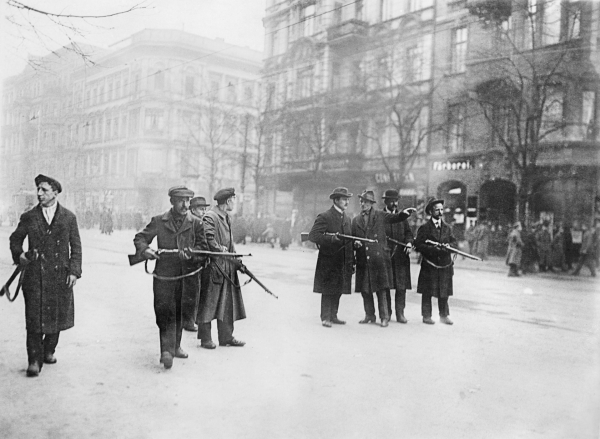
Communist Spartacists Taking Control in Berlin – Wikipedia Public Domain

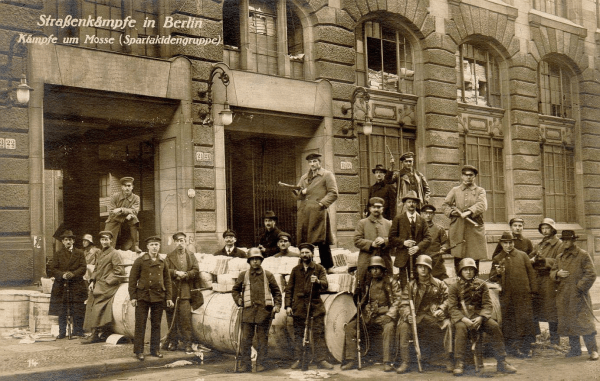
BBC BiteSize provides the following historical background information: During 5 – 12 January 1919, 50,000 members of the post-World War One Communist Party, known as the Spartacists, rebelled in Berlin, led by Rosa Luxemburg and Karl Liebknecht. The government was saved when it armed bands of ex-soldiers, known as the Freikorps, who defeated the Spartacist rebels. In the aftermath, communist workers’ councils seized power all over Germany, and a Communist People’s Government took power in Bavaria. By May 1919 the Freikorps had crushed all of these uprisings.

Street Fights in Berlin Wikipedia Public Domain

At the mass demonstration against the treaty of Versailles in 1920, army and FreiKorps soldiers caused a bloodbath. In March of the same year, the FreiKorps supported the Kapp-Coup. One year later, the last armed Freikorps attacks took place during the communist general strikes in Central Germany. The extent of Ernst Klopp’s involvement in all of these events remains shrouded in darkness.

It is likely that a few years later Ernst Klopp received assistance from his old Freikorps connections, which through work communities (Arbeitsgemeinschaften) and work camps (Arbeitslager) provided shelter and employment to the old comrades up to the years 1924/1925 and in some cases even later on Pomeranian and Mecklenburg estates.