Needles – a Town that is no More Part I

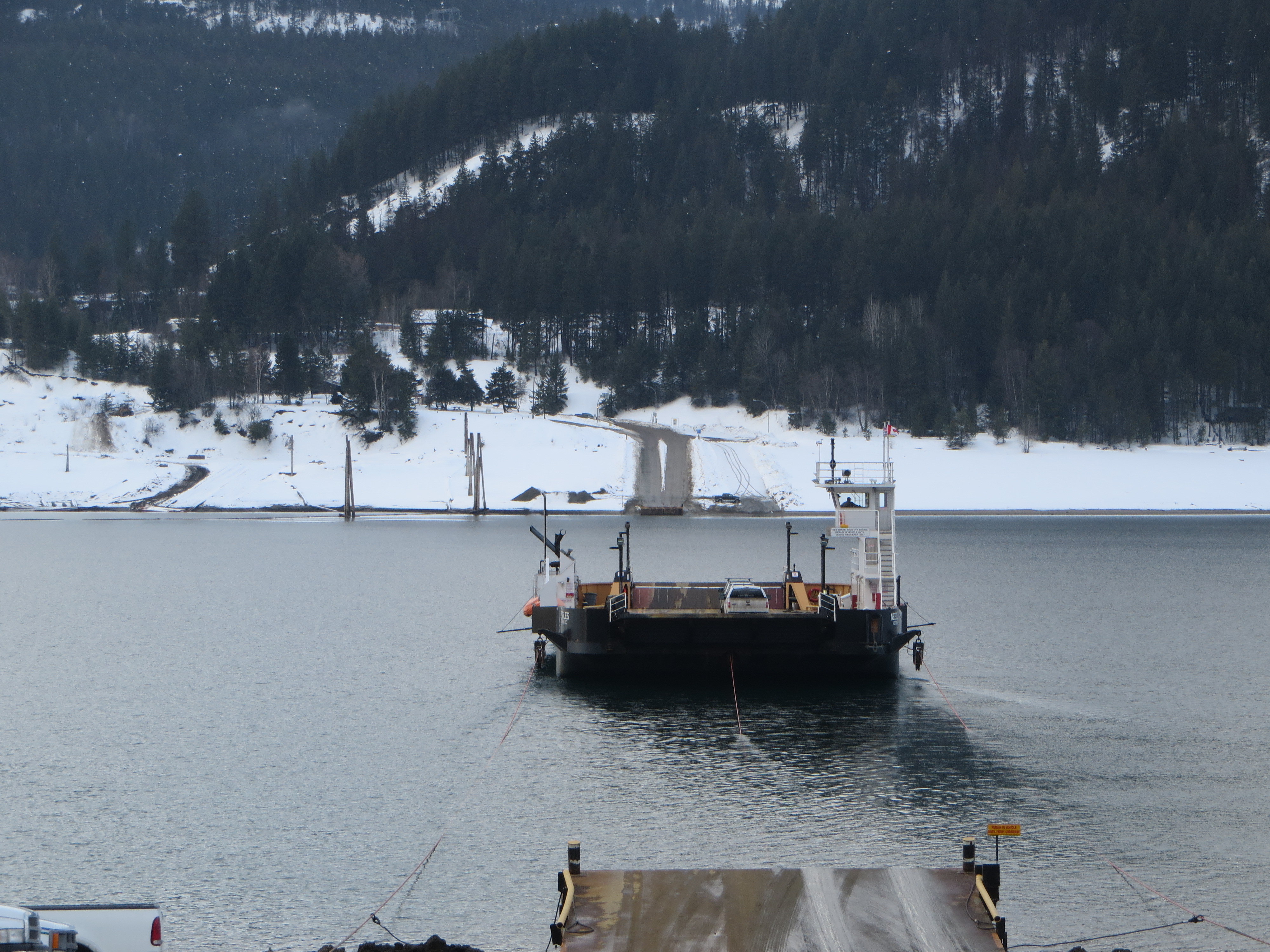
The ferry at Fauquier is generally known as the Needles ferry. One may wonder why this is so. Before the valley was flooded for the BC Hydro project in 1967 there was Needles, a prosperous little town on the other side of the lake. Mrs. Annette Devlin describes the early beginning in a report with pictures, which with her kind permission I have taken from her own personal archive.

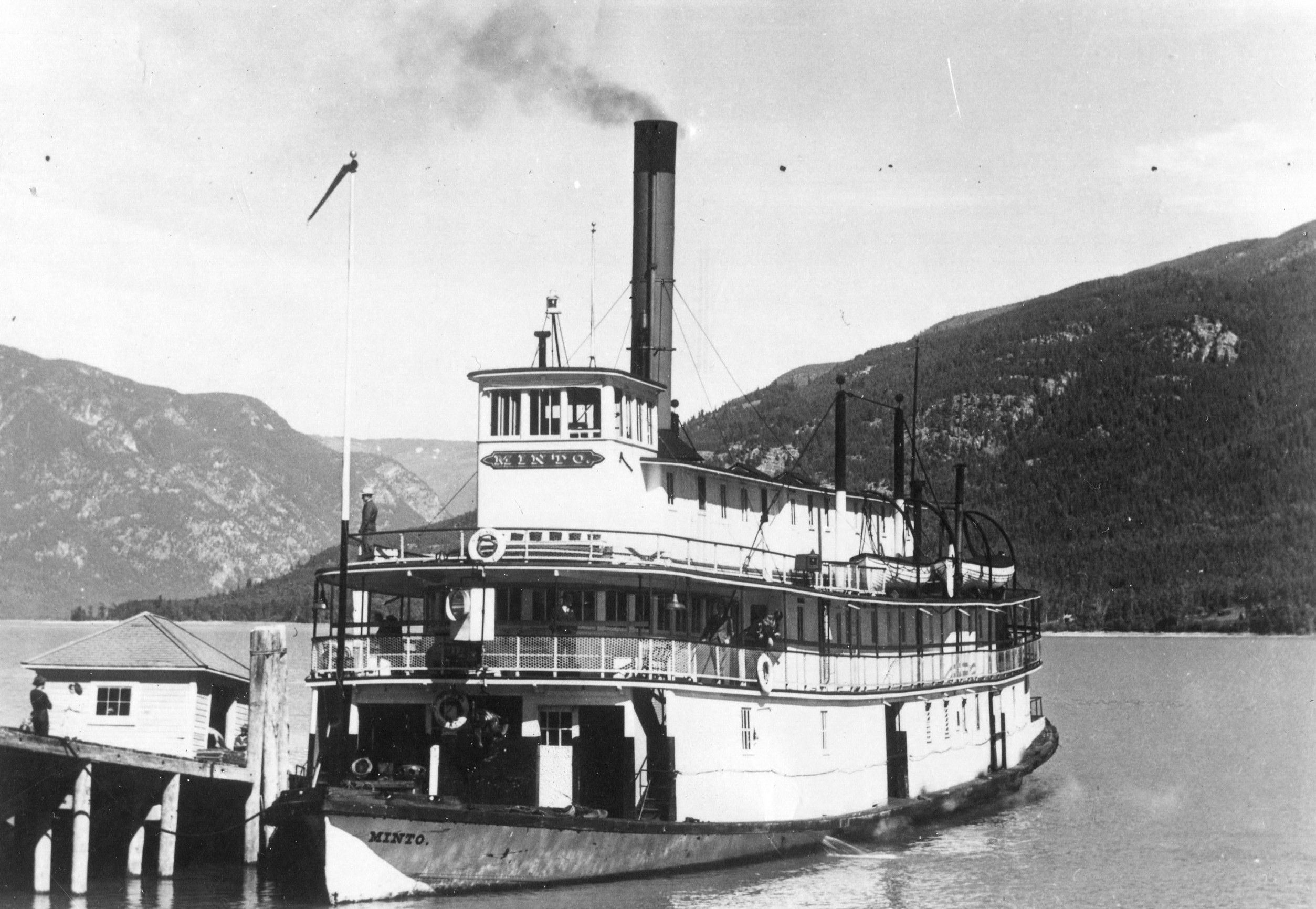
Minto at Needles Photo Credit:Provincial Archives, Victoria, B.C.

Minto at Needles  – Photo Credit:Provincial Archives, Victoria, B.C.

Why did many old timers always speak of Needles as “The Needles”? This was due to the long sand points that reached out into the lake. In the late 1800’s and early 1900’s there was a rapidly growing district surrounding the town site of ‘Needles’. Amongst the early settlers of Needles were Mr. & Mrs. Robert Shiell and brothers, Jim and George Shiell who arrived in 1900. They first lived in some of the early day miner’s buildings at the Monashee mines. In 1903 there were only four names on the voter’s list.

A401

The settlers at that time working in the district had over 1500 acres of highly approved land cleared, cultivated and planted to orchards. Within a year’s time Needles became a large fruit-distributing centre. In one season there were over 3000 boxes, crates and trays of all kinds of the highest quality fruit sent to prairie markets. One of the most valuable additions to the town was the large packing house, which was completed in 1913. A government wharf was also built at that time. The first schoolhouse was built in 1908 and the first teacher was Mr. Freeman. The first post office was at Mr. J. Bang’s place in the Inonoaklin Valley (then Fire Valley) and was moved to the Shiell’s home in 1902.

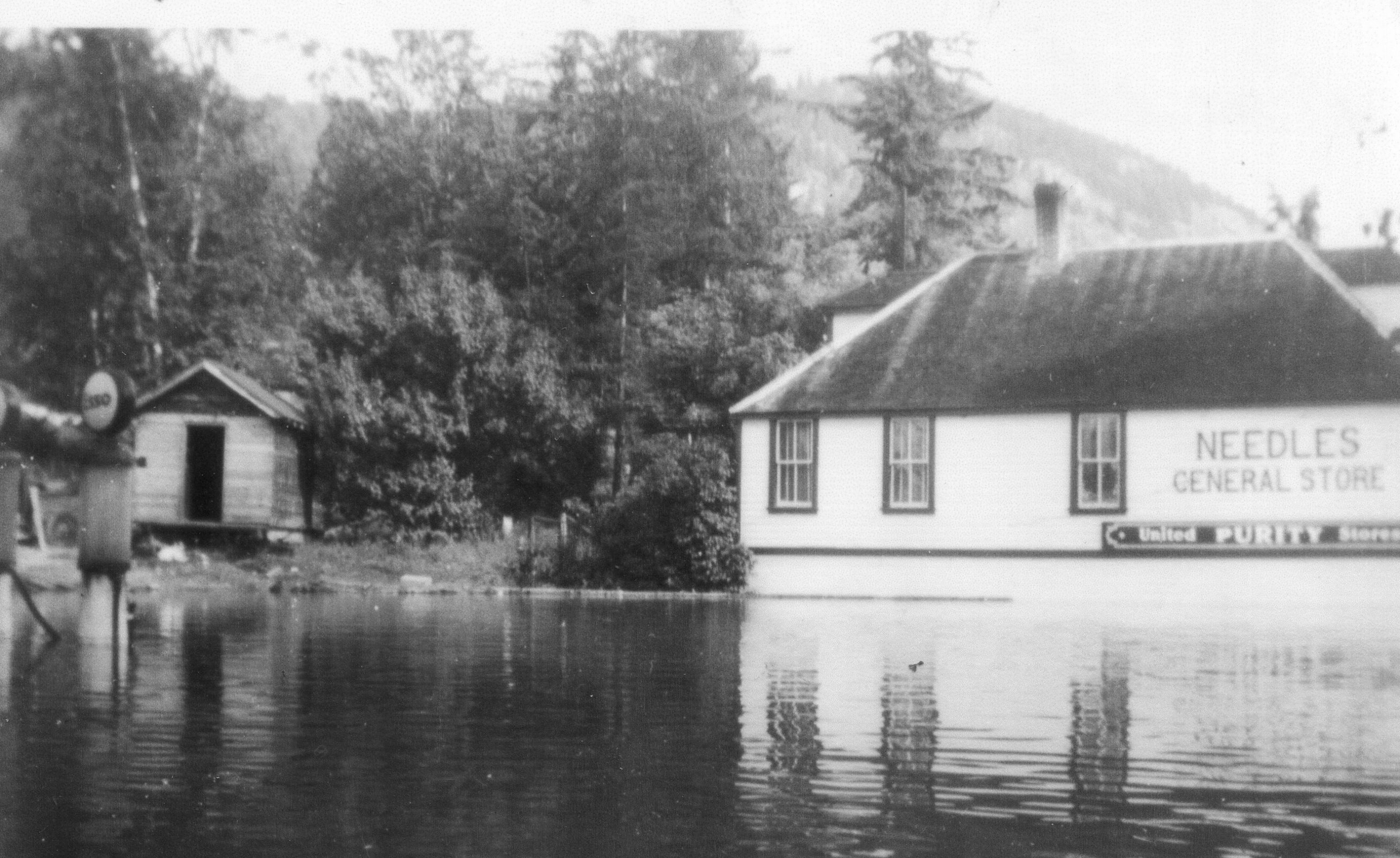
Needles General Store after a Flood

Needles General Store after a Flood

In 1908 a general store was built by Mr. A.W.Lift. A hotel was built by Mr. G. Craft and was completed in 1923. Mail service was daily by C.P.R. boat.

Winter on Hasty Retreat in Fauquier


What a Difference a Week Can Make

A Walk with Biene in the Sunshine

After seven days of rain, drizzle and fog, the sun broke through the depressing cloud cover like a belated Valentine’s gift. Biene and I decided to take advantage of this unusually pleasant springlike weather and took a walk down to the boat dock and strolled along the beach, where the lake level is at its lowest level in decades.

Down at the Golf Course, the snow almost 1 m high barely two weeks ago had disappeared except for the grotesque sculptures left behind by the snow plows. The first Canada geese arrived and landed accompanied by their customary honking with a splash not far from the boat dock. Biene took it as  propitious sign, as she always does when she spots an eagle. Two eagles were soaring high in the sky. Further down at the beach many tree stumps attracted my attention and I could not resist taking a few more pictures of nature’s art work in the driftwood, which was sticking out of the sand. As a bonus for our long walk I discovered on a muddy stretch dozens of golf balls that were embedded in the mud, which we carried home. There, in Biene’s flower bed. we noticed the first daffodil pushing through the dirt. Spring is not too far.


More pictures of our excursion to the lake can be viewed at Flickr. To see them, all you have to do is click on the tab above the banner on the right.


Short History of Fauquier BC – Part 2

Economic Boom and Decline

Adapted from an Untitled Document at the Arrow Lakes Historical Society

Photos from A. Devlin’s Personal Archive

In 1914 everything came to a standstill due to World War I. All the young men (15) enlisted and left their land. Not one of them returned. Eventually their land reverted. Middle-aged farmers with growing families worked the land and once again they had thriving orchards. The fruit industry was flourishing. The crops were shipped up and down the lake by steamboat, and around the province by train. There were two steamboats a day, one traveling south, and the other north. Therefore, service was prompt, which was in favor of the fruit growers.
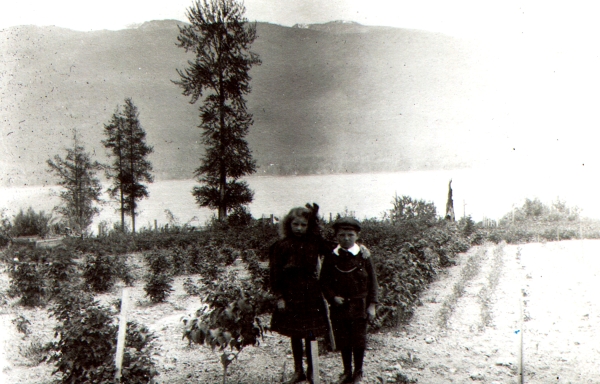
Orchard

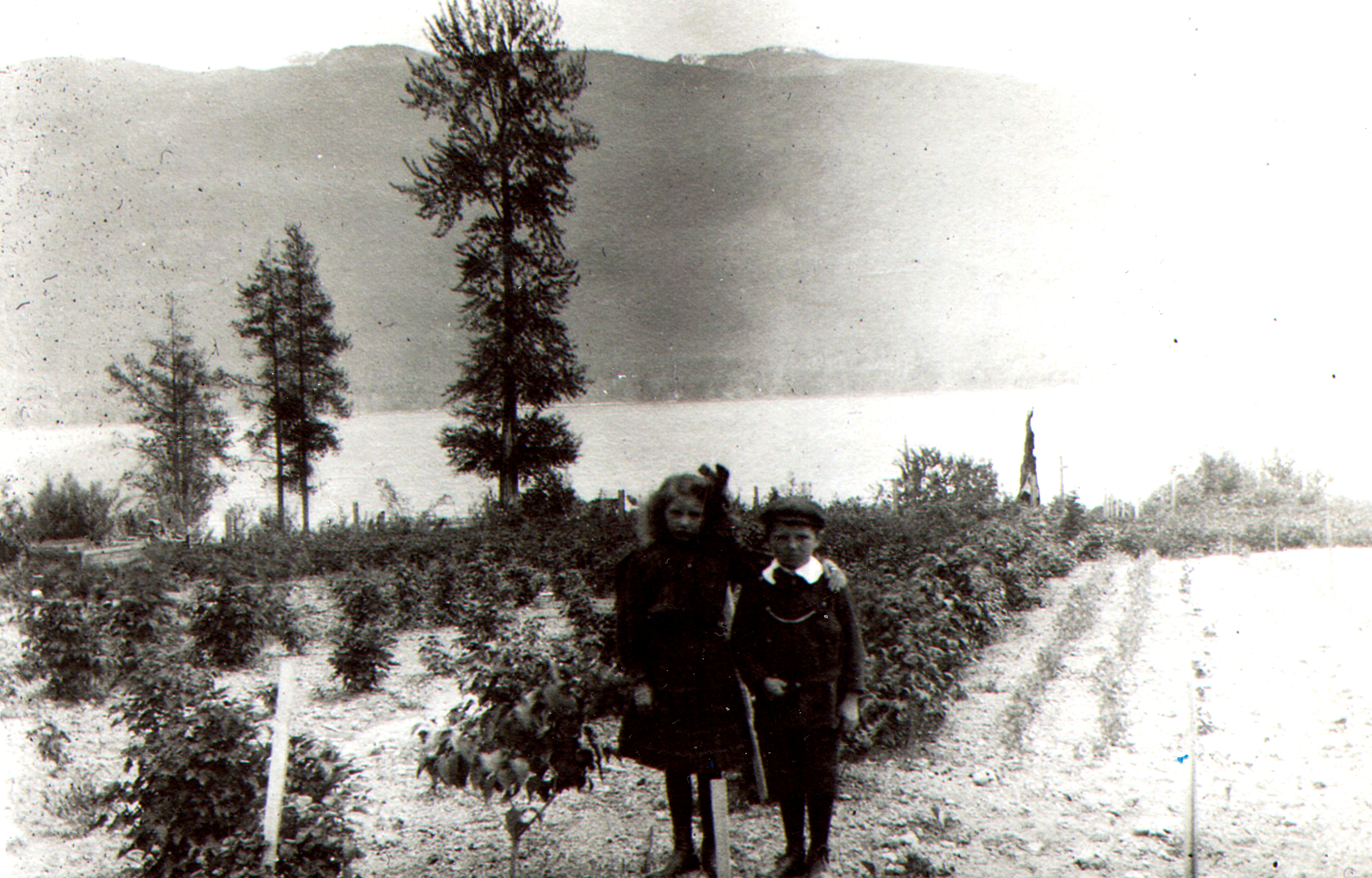
At the Prosperous Fauquier Cherry Orchard

In December 1917, Mr. Fauquier died. He was badly in debt due to his loss of land sales during the war. Thus, the “Needles Ranch” was put into the hands of an administrator. In 1919, there was an influx of newcomers. The Fauquier farm was sold in two halves. Other properties outside the ranch were also sold. These were the good years, for the orchards were in their peak. A need was felt for a Packing House, and the growers got together to put up a building. Experienced packers graded, sorted and packed the fruit. Between ten and twelve box cars of apples and pears were exported from Fauquier yearly. Each boxcar contained approximately 875 boxes of fruit.
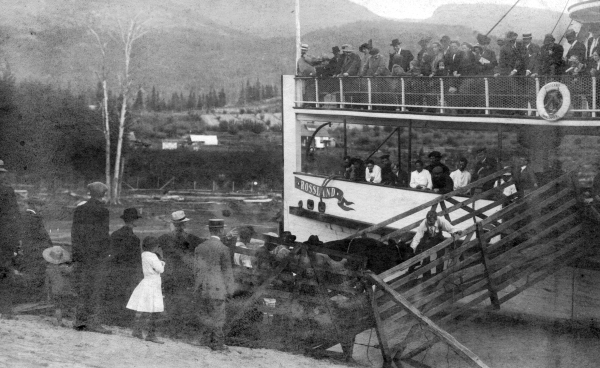
Loading Cattle on the Rossland at Fauquier

Loading Cattle on the Rossland at Fauquier

In the late 1920’s, the Okanagan developed a series of irrigation systems and planted thriving orchards. It was soon discovered that their fruit was of fine quality and developed three weeks ahead of Fauquier’s. The Okanagan slowly but surely stole its market. Fruit farmers of Fauquier suffered a great loss. With the loss of fruit sales, the C.P.R. reduced steam­boat service. Now, only one steamer made a trip a day, and as time went on, only two trips a week were made.The 30’s brought the depression. The orchards were neglected and times were very poor. The Packing House was no longer required. In 1943, it was given to the community, and it was turned into a community hall.

During World War II, farming lost its importance and logging took over. Farming was only done in the summer, while logging was done during the rest of the year. A flume was built that brought logs from Whatshan lake to the Arrow Lakes. Family farmers made some cash by selling vegetables to logging camps.

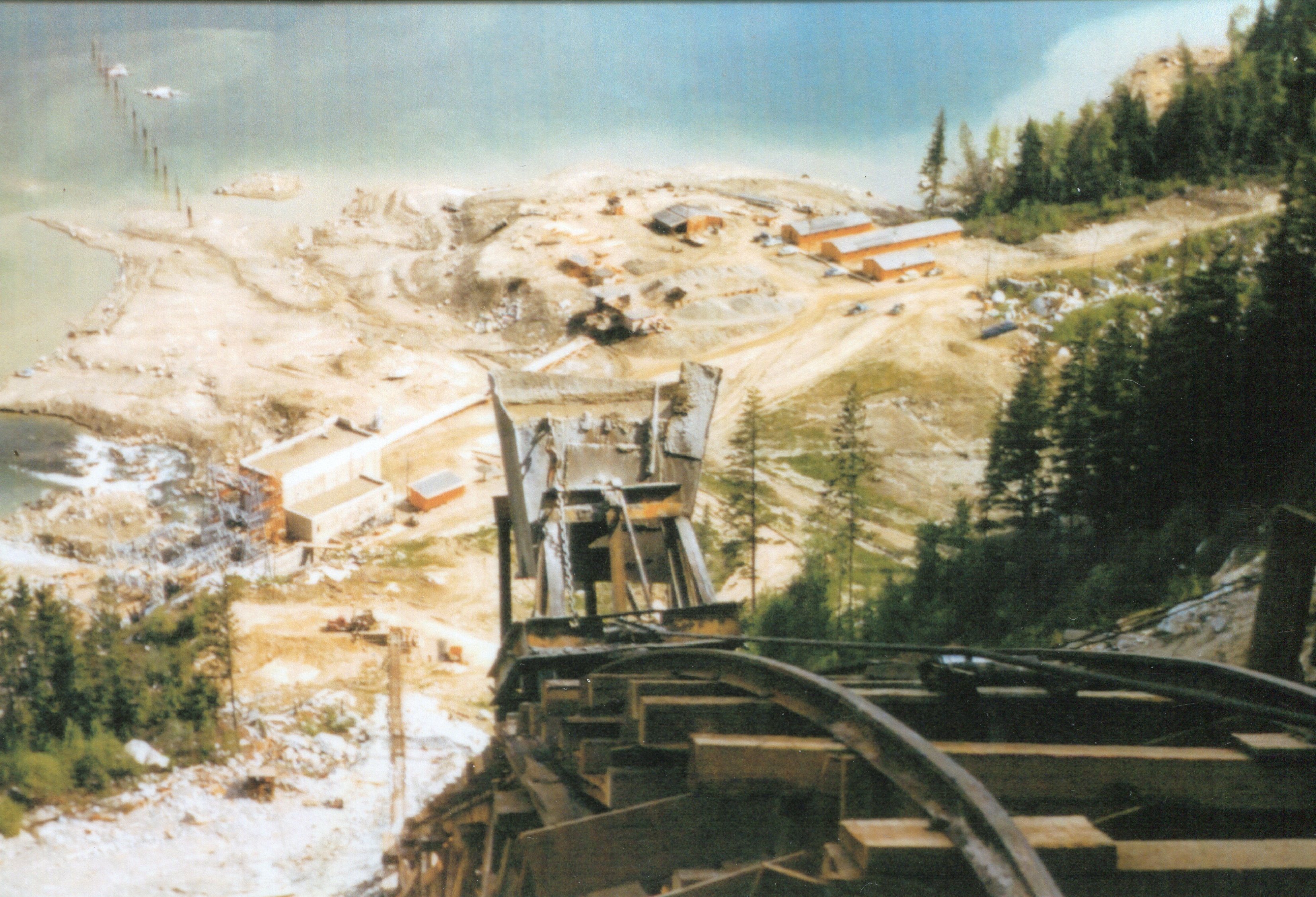
In 1948, the Whatshan power plant was built and provided employ­ment for every available man. The people started to improve their homes; toilets and running water were installed. In 1951, electricity was brought to Fauquier. In 1965, Hydro bought the whole of the Needles Ranch. It was surveyed into the present site of Fauquier. With the installment of the Keenleyside Dam, the lake was flooded. Most people moved away, but some moved into the new town.
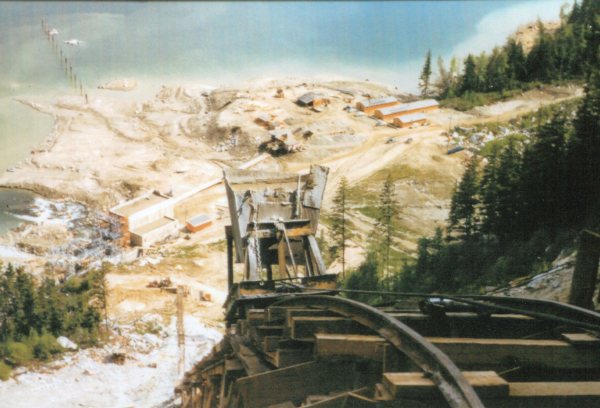
New Whatshan Powerhouse under Construction

New Whatshan Powerhouse under Construction

Today, logging is still the main industry of Fauquier. Without it Fauquier would die. Since Fauquier is a bridge point, the general store, gas station, and the presently defunct motel still have potential for growth in business. Today, Fauquier’s population consists mainly of retired old people due to its beauty and quietness. The school is closed. The BC Forestry Service relocated to Nakusp and Nelson. Young families have moved away due to lack of work. The town seems to have come to a halt. There are fewer social activities or get-togethers. The future doesn’t look very promising. The question is: Will Fauquier survive?

In a future post I will add a note of optimism by pointing out the many attractions that the big overcrowded cities just cannot match: tranquility, serenity and beauty experienced through an impressive number of recreational activities. Is there potential for economic growth in a pastoral setting? Perhaps. For now, I can only express my hope that this will be so.
Where in the world is Fauquier BC?


There are two reasons you may have trouble finding Fauquier on a map.

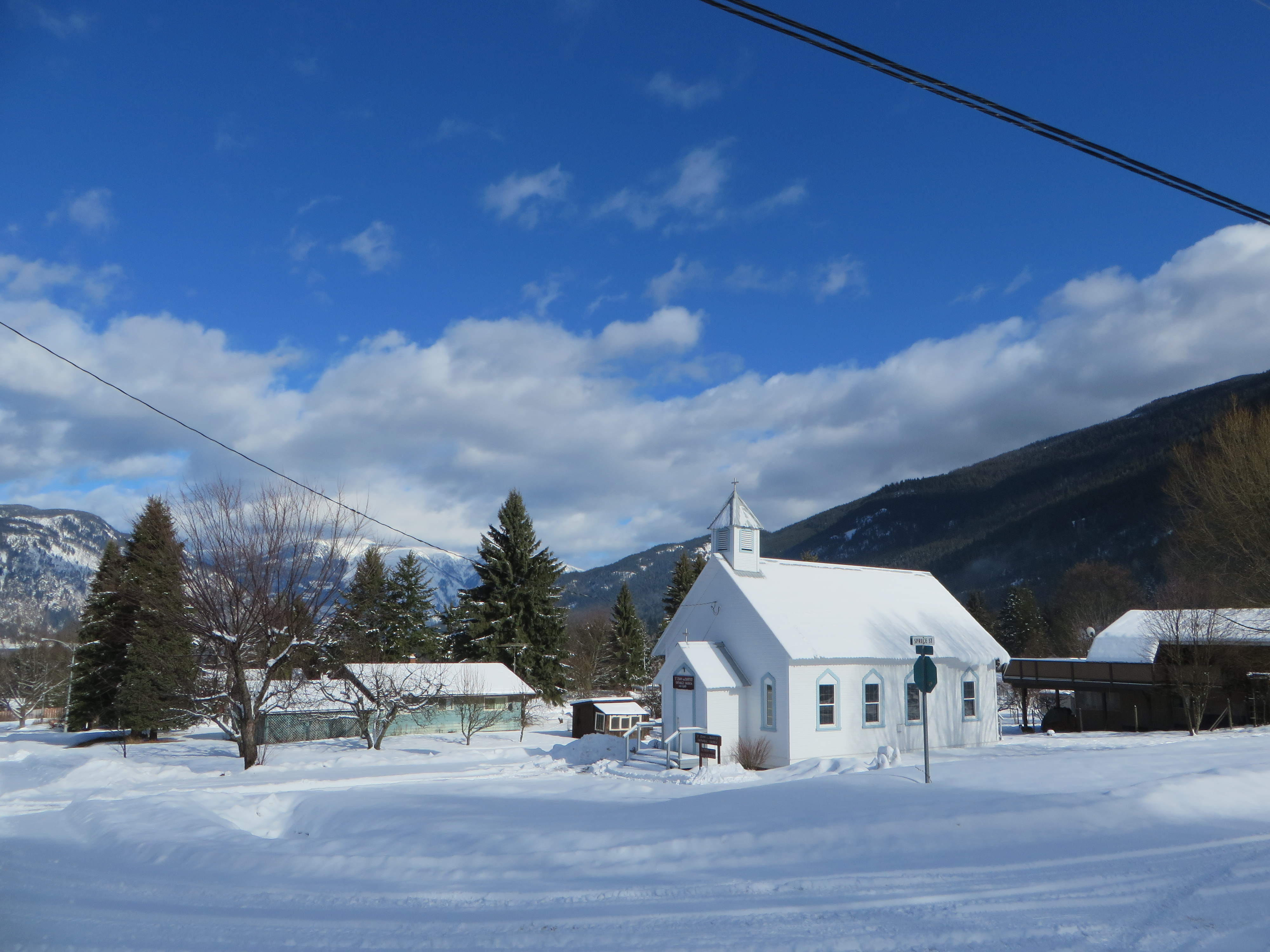
First of all, our community is very small. It has only a little over 200 people. Some would mock and say, ‘Dogs and cats included’. There is a small grocery store, where you can buy all the basic food stuff, drinks, alcoholic beverages included. There they also sell gasoline, diesel and propane for traveling and camping needs. Nearby is the large Fauquier Community Hall, where the people gather for small and large social events, such as dances, dinners, birthday and anniversary parties, weddings and memorial services and much more. In one of the upper rooms, the Fauquier Community Club is holding its monthly meeting. Their mandate is to look after the maintenance of the hall and many community events. Fauquier is too small to afford a municipal government. So our unincorporated village depends very much on the financial support from the Regional District. In the former Fauquier Elementary School, where I had been teaching for almost a quarter of a century, we find the Fauquier Communication Center, which houses the communication equipment for wireless Internet service and  the library. Here also take place Yoga classes, preschool activities, crib games and many other worthwhile events, too numerous to mention. There is a small Catholic church that looks after the spiritual needs in the village. Overlooking the breathtaking scenery of the Arrow Lake is the Fauquier and District Golf course, that is very popular among travelers and local people alike, because of its beauty and uncrowded conditions.

St. John The Baptist Church

St. John The Baptist Church

Secondly, we live in a relatively remote area. A two hours’ drive will take you to Vernon, the nearest city to the West on Highway 6. To get there, you first have to take the free ferry, which crosses the Lower Arrow Lake every 30 minutes. Then you travel on a winding mountain road up to the Monashee Pass at abt. 1200 m overcoming an altitude change of more than 700 m. If you are not in a hurry, you can stop and take a break at a picnic area close to a mountain lake. Going in the opposite direction you again follow Highway 6, until you reach Nakusp famous for its hot springs, a beautiful walkway along the Arrow Lake, and its many quaint stores and restaurants. Going north from this town you need to cross the lake at Galena Bay by enjoying a 30 minute ferry ride. Eventually you will arrive in Revelstoke on the Trans Canada Highway, which will take you passing through the spectacular Rocky Mountains some 600 km east all the way to Calgary, Alberta. If you should decide going west instead, you would eventually reach Vancouver, the world-famous city on the West Coast.

IMG_3590

Ferry just Leaving the Fauquier Side of the Arrow Lake

Research at the Arrow Lakes Historical Society

A Wealth of Information on Fauquier, BC

Today I paid my second visit to the Arrow Lakes Historical Society in Nakusp. I dropped in at their spacious room on the second floor of the library building to which it is conveniently connected.

The purpose was to find out what resources would be available for the menu item ‘Our Community’ on this blog. Two things impressed me very much: the friendly and helpful staff, Rosemarie Parent and Kyle Kusch, and an abundance of material for my research on Fauquier. There is very little information on the Internet. Wikipedia has less than half a dozen lines on our community with a brief reference to its namesake Frederick George Fauquier.

Kyle like the week before located all the relevant binders on the shelves of the of the archival section and laid them out on the table for me to look through. One binder that contained newspaper clippings on the present and former residents of Fauquier caught my immediate attention. Kyle opened the Klopp files for me. Apart from a reward ceremony, in which I had been honored for 20 years of service for the Arrow Lakes School District, I discovered the newspaper article on our son Richard winning a $1500 scholarship for outstanding academic achievement at Nakusp High School in 1987.

This discovery really fired me up to take a closer look. From that moment on I copied many pages using my digital camera. And while I was doing it, I caught glimpses of a legacy of so many remarkable people that had helped shape Fauquier during the past 100 years or so. Armed with all this information, I will endeavor on my next post to explain why our little community has such a strange French name that outsiders have trouble pronouncing it properly.

Arrow Lakes Historical Society Building

Arrow Lakes Historical Society Building