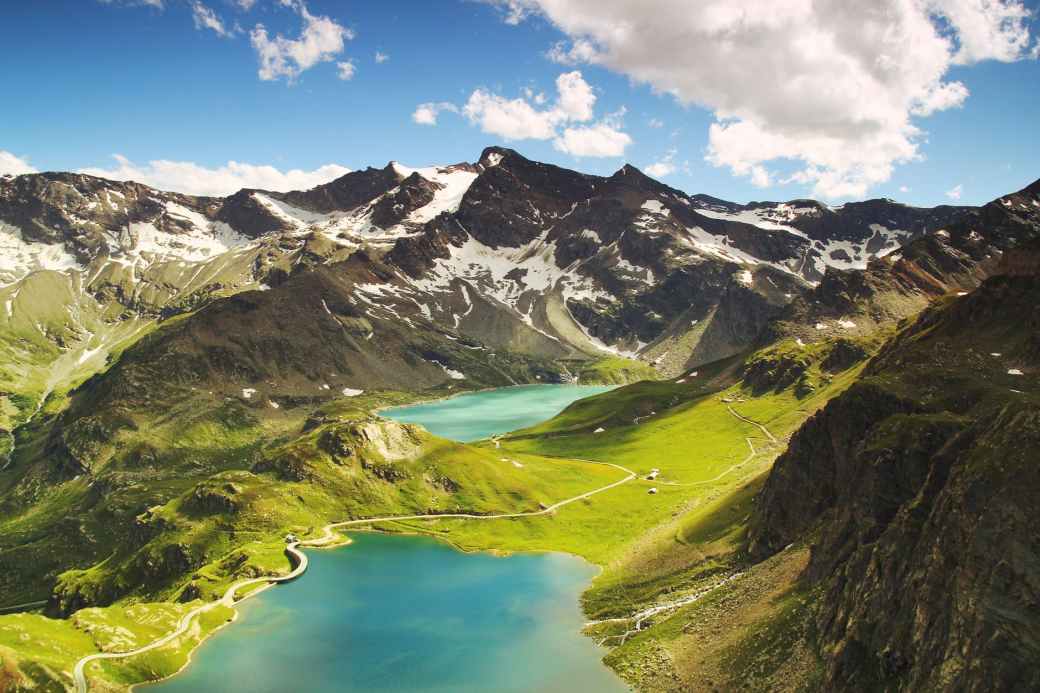
Natural Splendour of the Arrow Lakes

Wednesday’s Photo

Fall Poem

A couple of years ago I wrote a poem inspired by the splendour of fall just within our own yard, which represents a microcosmos of the wonderful world of the Arrow Lakes. I embedded the poem two lines at a time into the video that captured the autumnal mood. Enjoy.

The Peter and Gertrud Klopp Story – Chapter XXIII

The Complexities of the Heart

 The heart has its reasons which reason knows not. Blaise Pascal


Marburg Castle - Photo Credit: wikipedia.org

Marburg Castle – Photo Credit: wikipedia.org

Biene and I had met twice in the early summer of 1964, each time for only a few hours, as I had a long train ride to get back to the barracks before midnight. Being completely incapable to feel happy for any length of time until then, I was amazed how my restless heart and mind could be in perfect harmony to permit that elusive sensation of happiness during those five wonderful hours I had spent with Biene along the shores of Lake Baldeney. This blissful feeling was further enhanced when Biene wrote that she now knew that I was no longer just a fantasy person, but a real human being she could love and be happy with.

Alas, barely two weeks later, while I was still deeply immersed in a state of euphoria, a letter from Biene arrived with an obscure message out of which I could make very little sense.

“Dear Peter,

You will probably ask yourself why I haven’t written to you sooner. Indeed, you may ask this question. It is strange with me; for I can’t get rid of my sadness. When everything outside looks so peaceful and when I think of you, it is getting even worse. I would rather crawl into my bed being so much in pain and cry. How beautiful it is outside! The sun is shining and the wheat fields have already turned completely yellow and the stalks are swaying in the wind and making a gentle sound. Normally wheat fields fill me with joy and let me dream many a beautiful dream. And now?

I would like to talk to you about everything that moves me. But it is not because of you that I cannot do it. I have a great longing to be with you. But I cannot tell you what I want to tell you. It would increase my sadness, because I would hurt you, and I would like you so much to be happy, if you think of me. Please forgive me that I write nothing that would cheer you up. Normally, I am not like that. Now even beautiful memories don’t comfort me. I don’t want to think about anything of the past …”

Uncle Günther and Peter

Uncle Günther and Peter

I reread this passage at least half a dozen times in an effort to penetrate the veil, with which Biene may have covered a secret of the past. With all the talk in the male-dominated army, where many a room buddy had made himself an expert on what made the girls tick, on how to deal with their capricious behaviour, on how to please them, what to do and what not to do, with all that half knowledge of the opposite gender floating around in the gossip mills, not one of the so-called specialists ever mentioned the devastating influence of the monthly period. I was completely ignorant about what most women had to put up with, their mood swings, feeling psychologically and physically down, often bordering on severe forms of depression. More likely than not, the topic was one of the few remaining taboos left in the otherwise rough and tumble world of the military environment. If only I had had an inkling of those terrible days, often labeled ‘the evil days’, then truly I would have worded my reply with greater understanding. But not knowing the true nature of her problem I merely encouraged her to unburden herself of her troubling past.

Do you really believe, dear Biene, that I could be happy at your expense? I know that so much of your past has been left unexplained and remains shrouded in darkness.  Now you write that the ‘before’ oppresses you or whatever else it might be. But you won’t say, because you don’t want to hurt me. How sweet of you! But you must understand me right. If you are not happy, I cannot be happy either. It makes no sense to shield me from your pain. On the contrary, the silence is more torturous. I start to dig in my memories and try to figure out what it is that bothers you. And someone, who contemplates, gets too many ideas.  I’d rather be sad with you than to wander about in fateful darkness, where there is no room for true happiness. Does it have to do with Henk? Or haven’t I understood you yet? Are you afraid that I would some day be lost to you forever? A thousand questions that make me sick! Dear Biene, I ask you, be of good courage and write what oppresses you. Otherwise, I don’t feel happy any more …”

Then there was Biene’s question about my brother Adolf.

“Sometimes I think of your brother from Canada. I cannot understand that no girl would want to be his wife. If two love each other, it does not matter where the two are together, and if it were at the end of the world. Don’t you think so?”

It was obvious that Biene used the example of my brother Adolf to indirectly tell me that if I was going to Canada and stayed there, she would be willing to follow me and be my wife. However, dense as I was then with regard to her hypothetical questions, I failed to read between the lines – the very same ineptitude, of which I had often accused Biene in the past. Or was it that we both suffered from the same tendency to back off whenever we came dangerously close to making a commitment? So I lamely replied as if Adolf had truly been her main concern.

Family Gathering: Aunt Mieze, Eka (Lavana), Mother, Peter and Adolf

Family Gathering: Aunt Mieze, Eka (Lavana), Mother, Peter and Adolf

“You wonder, dear Biene, why Adolf can find no girl, who is willing to follow him to Canada. Have you ever put yourself into this position? Think about what a girl would have to give up: her parents,  friends, dear acquaintances, her home country, etc. Girls cling much more to matters of the heart than boys.  Adolf knows this …”

So we two continued to beat around the bush. We only indirectly described to each other our innermost desires and hopes and out of fear of appearing too bold, we foolishly held back and failed to openly state what really was important to us, our love for each other.

Biene’s Visit to her Birthplace in Gotha

and her Vacation on the Island of Majorca, Spain

In the meantime Biene traveled to Gotha, where her half-sister Elsbeth and husband Paul Werner with their two children Norbert and Christian lived. Biene grew up in Gotha, until her parents and family escaped to West Germany. After a lengthy ordeal at the refugee camp in Aurich her parents eventually succeeded in receiving a decent apartment in Velbert.

Castle Friedenstein, Gotha - Photo Credit: thueringerschloesser.de

Castle Friedenstein, Gotha – Photo Credit: thueringerschloesser.de

Biene reported enthusiastically about her former home province Thuringia. They made many excursions into the surrounding area of Gotha, even visited the famous castle, the Warthburg, where Martin Luther within the safety of the massive walls translated the Bible into German. But what mattered most to Biene was that she and Elsbeth became close friends. They spent as much time as possible together.

biene

Biene with her sister Elsbeth

While everyone was sound asleep, Elsbeth, twenty years her senior, would share her most precious memories with her. The two would often talk into the wee hours. Biene learned that Elsbeth loved to pen stories and even contemplated writing a book. After the wedding she was deeply saddened that her husband did not share her passion for writing. He was a very practical man with both feet on the ground and was focusing only on what had to be done to survive in the postwar communist society, where most basic consumer commodities were scarce. Paul ignored what was dearest to his young wife’s heart and treated with contempt what was in his eyes useless, sentimental tripe. He callously burned her entire portfolio of creative and much cherished writing leaving her nothing of her priceless collection except for a very few stories, which she managed to save from the senseless destruction. Overall, Biene had spent a wonderful time at her birthplace, that quaint house and apartment, where little had changed, since Biene and her family had escaped from the socialist ‘paradise’ in 1954.

The House in Gotha - Biene's Birthplace

The House in Gotha – Biene’s Birthplace

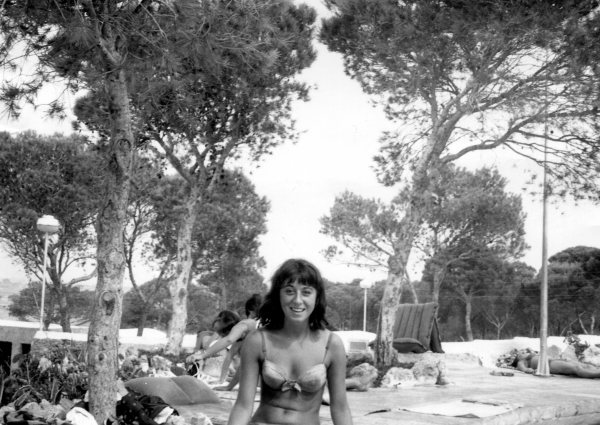
Within barely a week upon her return to Velbert she was getting ready to fly with her friend Gisela to the Spanish Isle of Majorca. There in the company of other young girls and boys she enjoyed two relaxing weeks at the sandy beaches of the Mediterranean Sea. This was the first time Biene was allowed to travel alone without parental supervision. Her mother had always kept a watchful eye on her stunningly beautiful and romantically inclined daughter, who had given her in the past much grief with her dangerous, almost fateful attraction she exerted on her male admirers. But as it turned out, Biene returned home safe and sound, tanned by the southern sun so dark she could have easily been mistaken for a Spanish senorita.

Biene on Vacation on Majorca Summer 1964

Biene on Vacation on Majorca Summer 1964

Apart from lounging at the beach and going swimming, Biene had once gone scuba diving in the crystal clear waters to explore the mysterious seascape, which gave her quite a thrill. However, as she soon discovered, diving and depending on the vital air supply from the oxygen tank on her back was not entirely without danger. While she took in the wonders of the strange world under the sea, the air supply suddenly dwindled forcing her to quickly surface. There was plenty of oxygen left in the tank. Perhaps Biene had put a kink into the connecting hose. Fortunately she had kept her cool and after being confronted with imminent danger did not panic. After this scary experience Biene decided that it was safer to stick with the more relaxing beach routine. Their flight back to Germany had been delayed by more than a day due to the loss of a plane, which the small tourist airline had suffered in a plane crash elsewhere. When they finally arrived in the dead of night at the Düsseldorf Airport, no busses were running any more to take them home. Biene and her friend were stranded. They were waiting at the dreary railroad station for the morning to come. Then a small miracle happened, which I let Biene describe in her own words.

Beach on Wild Coastline of Majorca - Photo Credit: wikipedia.org

Beach on Wild Coastline of Majorca – Photo Credit: wikipedia.org

          “In the bungalow village was also a young girl who was teased by all, especially by the boys. She was strutting about in an extravagant attire entirely too dressed up. Nobody liked her. I had only once exchanged a few words with her. When Gisela and I were now waiting at the station for the morning and had gone outside to catch a little bit of fresh air, she suddenly walked up to us. She knew that our plane had landed late. When she learned that our bus would arrive only in the early morning, she took us without hesitation to her place not far from the station. She gave us each a couch, where we totally exhausted slept until she woke us with coffee and buns. You wouldn’t believe how lovingly she cared for us. I had never before noticed so prominently how much one lets outer appearance deceive oneself. I was really stunned by such kindliness.”

The Pain of Indecision

73

Romantic University City of Marburg, Hesse, Germany  1964

Love that is engulfed by fear is not perfect. It cannot grow in the darkness of uncertainty, where doubt enters the heart and where there is no commitment. In my excessive sensitivity towards Biene’s past distressing experiences of love coming too early and too suddenly, but also out of the horrid fear of rejection, I never found, as I should have, the courage to ask her point-blank to marry me. With a clear yes or no, we both would have been able to carry on with our lives and make plans for the future with or without being together. There is infinite wisdom in the convention to have a formal engagement when both partners gather with their families, relatives and friends, exchange rings, and promise before witnesses to marry each other. In as much this formal coming together was lacking, doubtfulness and its evil ally distrust cast a dark shadow on our relationship in spite of our declared love for each other. Until we met again in November, the pretence to be happy with a mere friendship on my part caused us both to sit on the fence. Frustrated with the regression to a mere amicable correspondence between two very good friends, I responded to Biene’s lamentation over the power of Fate, which was threatening to separate us,

          “Leave Fate, dear Biene, out of the picture. Fate in our case is not a blind, impersonal power, to which we must submit. We all create it with our own desires and action. When you say that Fate will one day separate us; that we have to knuckle under; that we have to be happy with what we have given to each other, then you don’t mean Fate, but you yourself and your hidden wishes. What should separate us? Is it perhaps my voyage to Canada? This is not Fate’s power, but my own wish. My wish is also to return if necessary, and yours could be simply to follow me. Why am I harping on it so long? Because I remember all too well our agreement right from the beginning to be honest and truthful, even if it meant to hurt one another. Please don’t be angry with me that I am writing to you so openly… I do not stand terrified and inconsolable before this mysterious force called ‘Fate’. No tyrant, nor any distance, nor any ocean can separate us. We alone separate each other.”

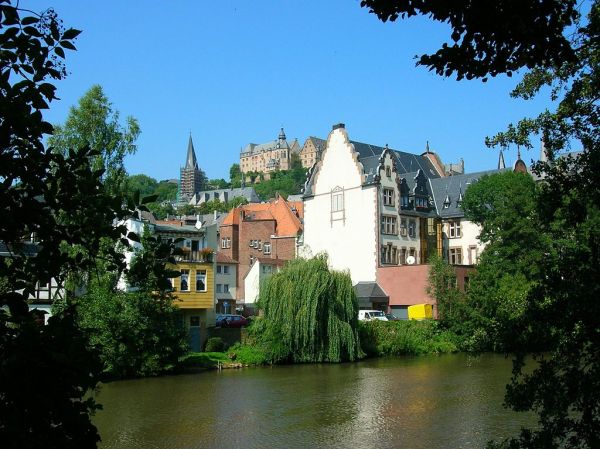
Marburg, Germany on the Lahn River - Photo Credit: wikipedia.org

Marburg, Germany on the Lahn River – Photo Credit: wikipedia.org

          There is some truth in my reflections of some fifty years ago. People do indeed use this irrational force as a pretext to excuse their own lack of courage, inability to act when action is required, their self-doubt and uncertainty about that portion of their personal life that could be given direction and purpose if there was a will. However, truth becomes tarnished when mingled with disingenuous motives and intentions. Such was the case when I accepted the boundary that Biene had set for our love, although in reality I had always wanted to cross that boundary. Instead of giving a pedantic lecture on Fate, why didn’t I tell her that I loved her, asked her to marry me, and then, if she said yes, point out that we needed to make plans to turn our dreams into reality? With horror I look back and realize how much I had been willing to risk with my provocative letter, in which I had renounced my true intentions. But I was young and inexperienced, only a little over a year out of high school. I was groping in the dark. I had nobody to turn to for advice. I only had Biene’s responses and reactions, which were often just as bewildering and confusing to me as were my letters to her. The problem was that we were so much alike in our fear of the pain of permanent separation, which was looming more and more ominous with each passing month that we were erecting walls to protect ourselves, when we should have been busy building bridges of love and faithfulness. Thus, it is not surprising that Biene shrouded in darkness about my true feelings for her would not be writing very encouraging words to bolster our relationship.

          “Alas, I also hope, as you do, that everything will work out nicely between the two of us, before you depart, although then the good-bye will be even harder. I thank you that you want to grant me my wish (respecting the boundary) and imagine, sometimes I even wish the opposite. Oh Peter, it is so confusing. Please forgive me! I don’t understand it myself. The more I want to free myself from you, the more my longing for you increases.”

          Were these lines popping up sporadically in her letters not an urgent plea to me to make a move, to take the first step to reach out to her, to comfort her with a word of commitment? In the culture of traditional values and conventions of the mid-sixties Biene expected me to take the initiative and break the stalemate. But shy like a little schoolboy I kept beating around the bush. The word marriage was not part of my vocabulary. However, mindful of my good friend Dieter’s advice, I began to arrange another rendezvous with Biene. She was eager to prepare our meeting and combine it with a visit to the Wuppertal Opera House. We both were looking forward to it. We sincerely felt that seeing each other again would chase away those gloomy thoughts and ominous forebodings about our impending separation and potential break-up of our tenuous, yet so cherished relationship.

Natural Splendour of the Arrow Lake

Wednesday’s Photos

November Flowers

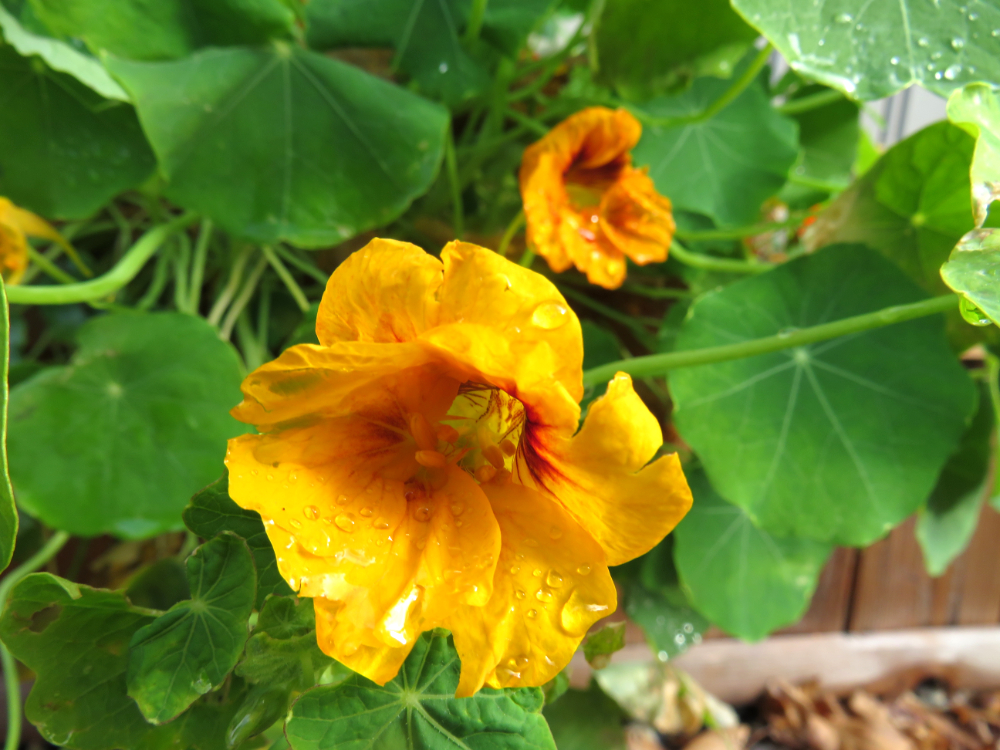
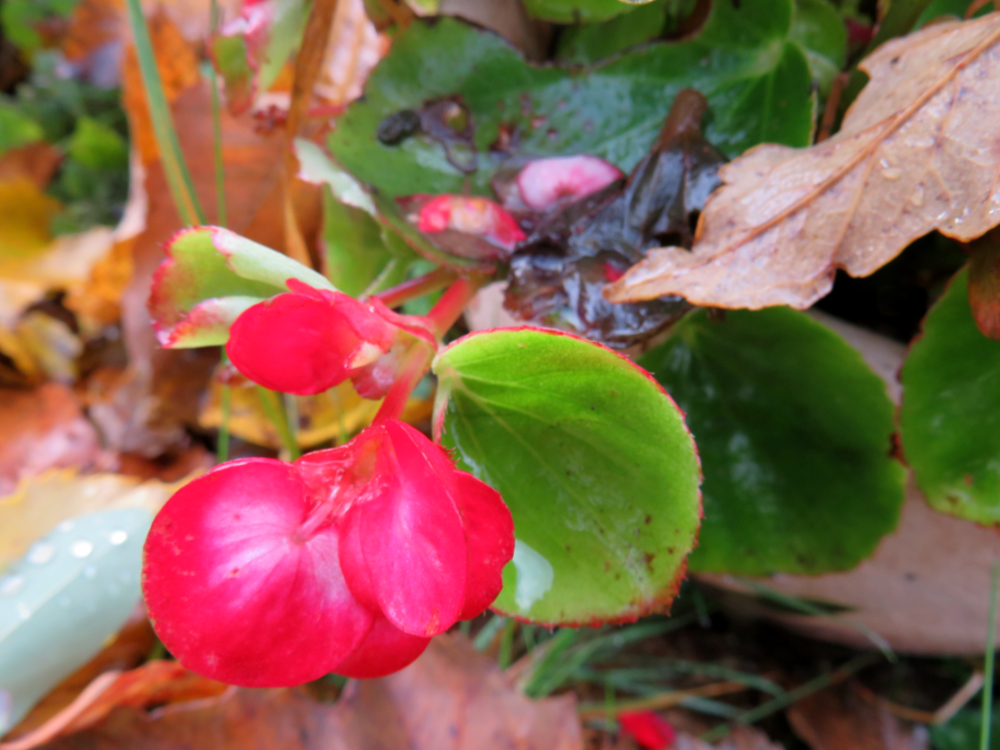
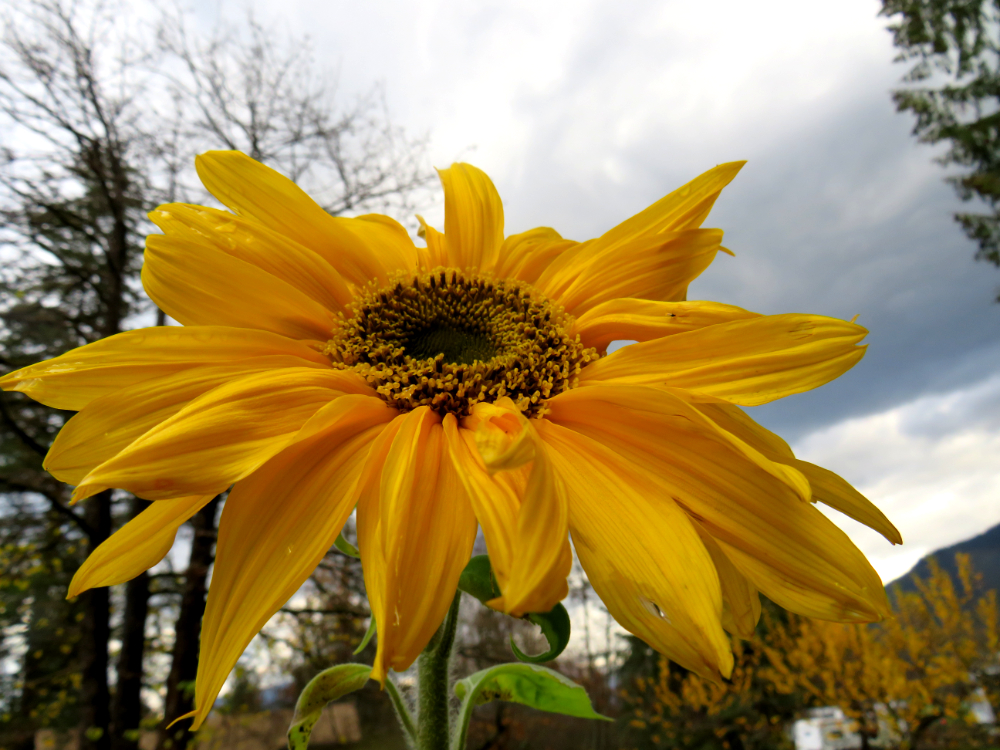
This year we experienced the longest frost-free period at our little community of Fauquier, BC. It was not unusual to see the meadows in the valley white covered in hoarfrost in the early morning hours at the end of August. Now we are already in November and the hardier flowers are still blooming, which I decided to photograph for your enjoyment.

IMG_4962EdIMG_4963EdIMG_4964EdIMG_4968EdIMG_4971Ed

The Peter and Gertrud Klopp Story Chapter XXI

Sorrows of Young Peter

“The Five W’s of Life:
WHO you are is what makes you special. Do not change for anyone.
WHAT lies ahead will always be a mystery. Do not be afraid to explore.
WHEN life pushes you over, you push back harder.
WHERE there are choices to make, make the one you won’t regret.
WHY things happen will never be certain. Take it in stride and move forward.”

Anonymous

With the transfer to the Falckenstein Barracks in Koblenz things were looking up for me. Our room was only slightly smaller than the one we had at the basic training camp, but instead of fifteen men only ten would share the sleeping facilities. The only drawback at the beginning was that the windows were facing one of the major north-south traffic arteries. The noise from the trucks and cars was considerable and lasted right through the night. At first I thought I could not sleep at all in a room inundated by the roar of engines and swishing of tires even with the windows closed. But little by little I got used to it and like the loud surf at the seashore at the Baltic Sea it no longer bothered me after a few days. I am sure that if the din below had suddenly stopped the silence would have woken me up.
80

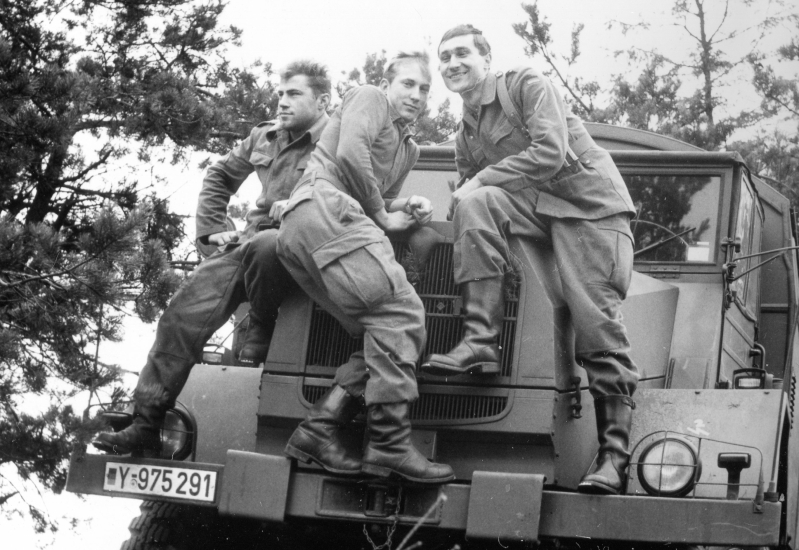
Peter on the right with truck driver and communication assistant

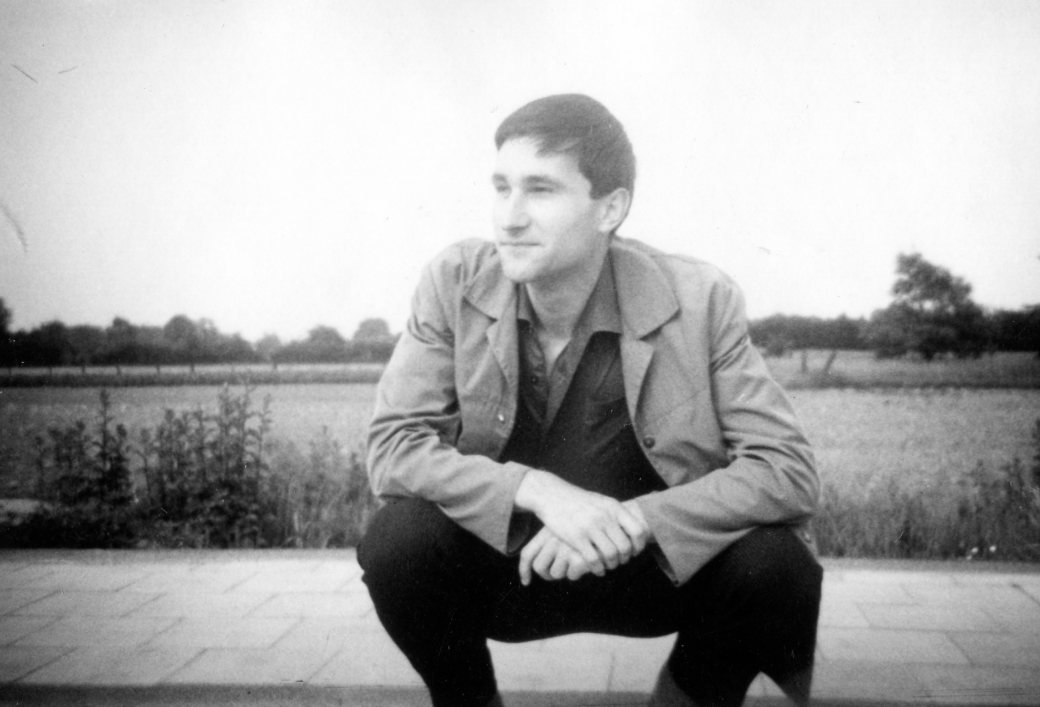
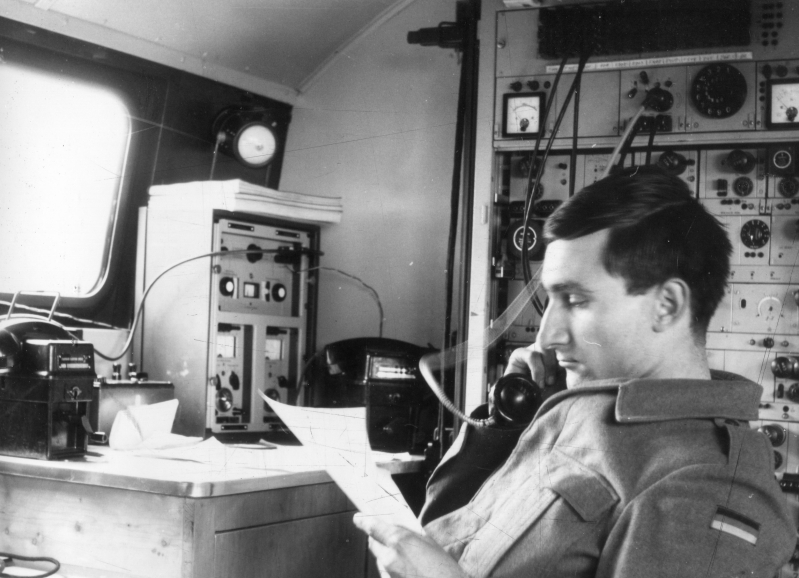
Also the pace of our daily routines significantly slackened. We still had to line up and stand at attention for the morning and noon announcements. But there were now more instructional sessions both theoretical and practical with emphasis on specialization depending to which of the three major groups we belonged in the signal corps. The linemen were responsible for connecting the various field centres during military exercises. They had from a physical perspective the toughest job. Rain or shine, heat or cold, their task was to unroll miles of cable and when the maneuver was over roll it back onto the empty drums on their backs. I had the good fortune that I was assigned to the second group. I was working inside a Mercedes truck packed with electronic gear, which I had learned to operate during my training sessions. The linemen would arrive huffing and puffing after a strenuous march through forests and fields. All I had to do was to connect the wires to the carrier frequency sets, call up my counterpart at the other end and tune up the line so that it would be capable of carrying several channels at once. It was the latest technology in those days, but miniscule by today’s standards, where thousands of telephone calls can be placed over a single wire or a wireless connection. The third and most prestigious group consisted of the wireless operators trained to set up and maintain point-to-point, line-of-sight connections. To be useful, the linemen also had to connect them by cable to our stations. I liked maneuvers of this kind, especially the ones that lasted a whole week, and often as a bonus resulting in an extra long weekend pass. It was during these action filled times that I began to reflect on the career proposal the captain had made to me less than a month ago. During guard duty, which I had to do every three weeks or so, whenever my turn was announced on the company bulletin board, I had also some time to do some thinking on the purpose and meaning of military service in a world that lived under the spell of the Cold War and under the threat of a massive attack by communist forces to take over Western Europe. While walking inside the fenced perimeter of our barracks I was searching for answers to those questions that popped up in my mind during the boring two-hour shifts in the dead of night. I composed a poem, which I included here in the hope that not too much is lost in translation.
Peter at work at his 'home' packed with electronic gear

Peter at work at his ‘home’ packed with electronic gear

Night Watch

Drearily the rain is falling.

I am walking in monotone even steps.

Nothing is moving in the semi-darkness.

Radio trucks like monsters are staring at me.

They appear to mock me,

Indeed threaten to devour me.

You servants of men!

To what end are you being abused?

Abused?

Aren’t you defending freedom and peace?

If you prevent that

For which you have been built,

Then sacred is your presence.

Yeah, just stare at me!

Your power brings me joy.

And I am walking past them

In monotone even steps.

To avoid war, an army must be strong so that an aggressor will understand that nothing would be gained and much more would be lost. It was the balance of power that kept the peace in the Cold War period, in which I was a soldier.

Discussion with a Friend on the Nature of Love

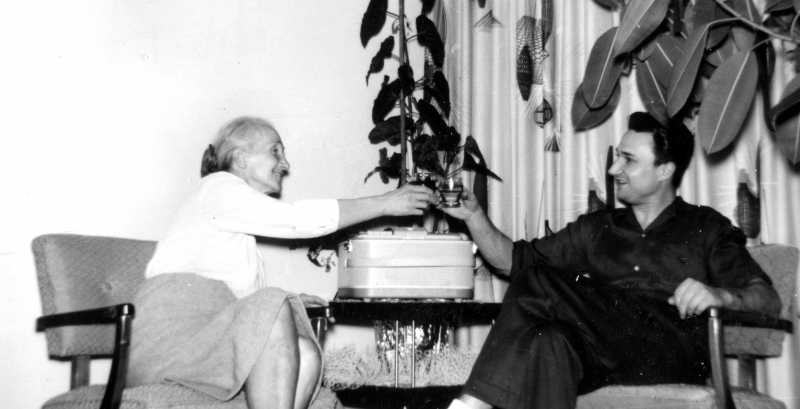
Mother had just returned from a visit to Gerry, daughter-in-law Martha and her one-year old grandson Wayne in Medicine Hat, Alberta, Canada. It so happened that I was on a ten-day leave and spent a relaxing vacation with her and Aunt Mieze, Aunt Lucie and Uncle Günther at their wonderful house in Watzenborn-Steinberg (Pohlheim). Mother talked a lot about her exciting trip to Canada. The proud grandmother had traveled with Gerry’s family over the Rocky Mountains all the way to beautiful British Columbia. Gerry described the countryside with its lush valleys, wild rushing streams, spectacular scenery and mild climate as God’s country. True to a long family tradition in the Kegler branch of the family, Mother wrote a report of her experiences of her journey to the land of the beavers.
12

Mother Erika Klopp with Gerry on her visit to Canada

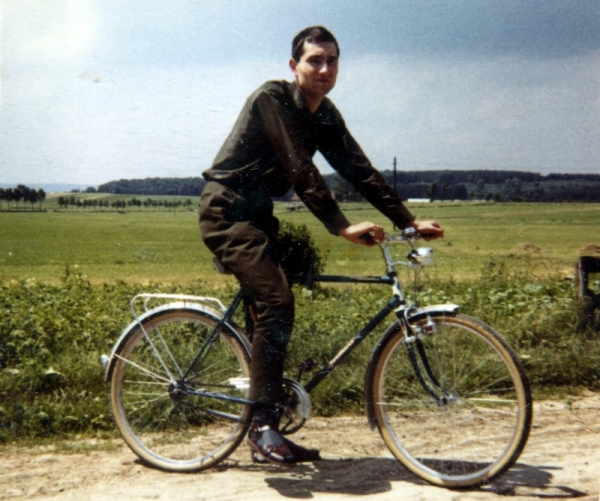
Biene’s school holidays were approaching. In 1962 her family had spent their vacation on the Mediterranean island of Corsica. Now they were planning to spend a couple of weeks at Lake Ammer in Bavaria. Even though I felt my love for Biene was getting stronger with every passing week, I did not openly declare it to her, because I erroneously assumed that she would already know. When she once asked me if I had ever been in love, I missed the golden opportunity to reveal what was on my heart. Instead I used a ride on my brand-new bicycle as a metaphor to describe in the most abstruse way the chaotic state of my inner being. I described how I got lost in the woods. I did not know which way to choose to get out. I dug deep into my psyche, too deep for comfort. Not yet realizing that the good and the evil lie close together within each and every human being, I criticized the world for failing to give me directions. Blind as a bat to my own flaws and weaknesses, I declared the entire world with its political systems, the church, and the army rotten and corrupt. These pathetic meanderings of my mind did very little to express my true feelings for her and would have been better left unsaid.
28a

Peter on his Bicycle

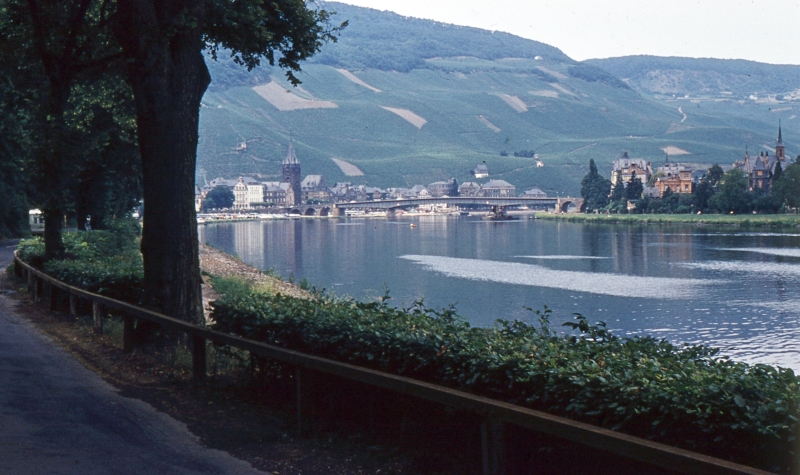
For the remaining three or four days I went on a bicycle tour with Dieter, my new army buddy. We traveled first up the River Moselle, then climbed up into the Eifel Mountains and stopped at a beautiful campsite named Pomerania, which reminded me of my grandparents’ lost home province in the east. At nightfall we sat in front of our tent looking at the rising moon in a cloudless sky. The day before I had bought a bottle of Moselle wine, a Riesling well known for its distinguished qualities due to the grapes, which incredibly ripen more fully during extended periods of autumnal fog in the river valley. Gazing at the crescent of the rising moon I remarked, “If me girl-friend in Velbert also looked at the moon this very minute, our eyes would be fixed on the same heavenly object and in some esoteric way we would be connected with one another.”
X294

Famous Moselle Valley with Germany’s finest Vineyards

Dieter chortled a few times, before he retorted, “But my friend, don’t be an idiot. That is not the same as being physically present. When I kiss my beloved Heidi, I know real love, love that you cannot even fathom with your strange romantic ideas in your head.” And that was the beginning of a long discussion on the nature of love. When we had savoured the last drop of the wine and were ready to crawl into the tent, we had moved away from our opposite points of view and found some middle ground. We agreed that in order for a relationship to be meaningful both the physical and spiritual dimensions would have to be present. We learned something important from each other. As for me, I resolved to arrange a rendezvous with Biene at the first opportunity that would offer itself in the near future. But you never know to start with, how things turn out in the end.

Storm Clouds on the Horizon

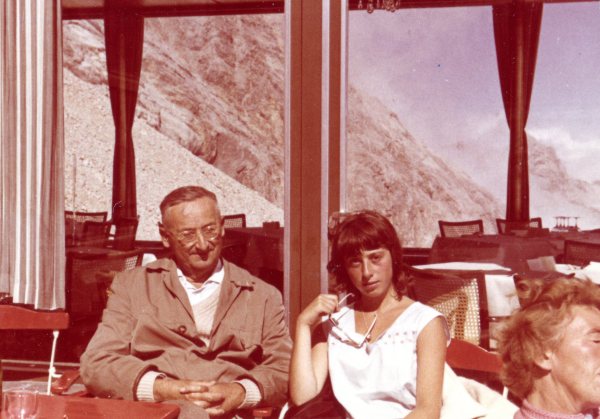
In the meantime Biene had an exciting vacation with her family in Bavaria, often went paddling on Lake Ammer with her parents’ folding boat. She and her twin brother Walter almost drowned, when their boat capsized in a violent storm. They traveled to the German Alps and even took a gondola ride up to the Zugspitze, which is with an altitude of 3000 m the highest mountain in Germany. She returned home filled with wonderful memories. There was so much to tell, but the flow of letters began to ebb. The intervals between them began to widen into two-week gaps. Something must have happened that made me worry. Had my letters lost its fervour? Were the thoughts expressed too philosophical, self-centred, out of touch with reality? I could not tell.
Biene and her father on the Zugspitze 1963

Biene and her father on the Zugspitze 1963

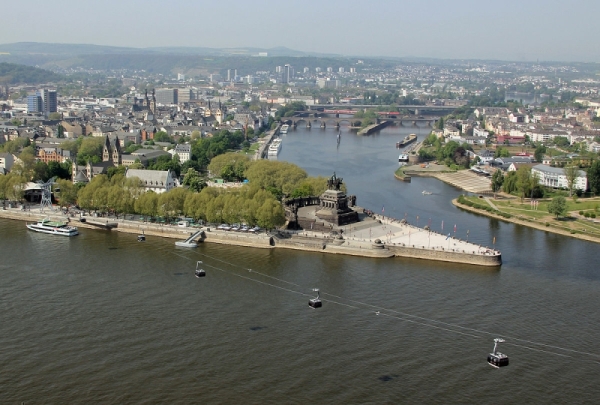
Fall was a beautiful time in Koblenz. The park at the German Corner, located at the confluence the Rivers Moselle and Rhine, was ablaze with brilliant red, yellow and orange colours. There I often sat on a park bench alone away from the noisy inner city and read about the fall and utter destruction of Rome’s rival Carthage in Mommsen’s History of Rome. I was fascinated to discover that the cause of the three Punic wars was the same as of most other conflicts in the history of mankind, namely the desire for economic power and growth at the expense of some other country. I gained important insights into the ways in which imperialistic expansions were intertwined with a general decay of the moral fibre of a nation. I saw so many parallels in our modern world that I contemplated writing a novella on the mighty city on the North African shore, if I could only add and weave in some personal experiences to the story to make it more interesting. These experiences were coming my way faster than expected, and in the end I got more than I had bargained for. Indeed I would have preferred not to write the novella in exchange for the pleasant status quo.
Deutsches Eck in Koblenz, Germany

Deutsches Eck in Koblenz, Germany – Photo Credit: wikipedia.org

I had just settled into the routine of orderly army life with its duties of monthly night watches, sessions of theoretical and practical instructions and the occasional maneuvers, which I enjoyed more and more, because they took place in the great outdoors away from the stuffy barracks in the city. Then a command from the newly formed signal corps at Maxhof in Bavaria went out to all army divisions to provide two truck drivers each. Our crafty commanding officer in Koblenz selected private Gauke and me for the transfer effective October 1st, even though we had no driver’s license for those colossal Mercedes communications trucks. Obviously, he wanted to keep his precious truck drivers for himself. We were told that we would receive professional training and certification that could be very useful later on, when we returned to civilian life. However, it was immediately clear to my that with the transfer to Maxhof, I would lose out on the chance of becoming part of the upcoming officer’s training program. It would upon successful completion raise me to the rank of a lieutenant of the reserve with a much higher pay-out at the end of my two-year term. The wheels had been set in motion. I had no recourse to an appeal process. The decision was final. I was devastated.
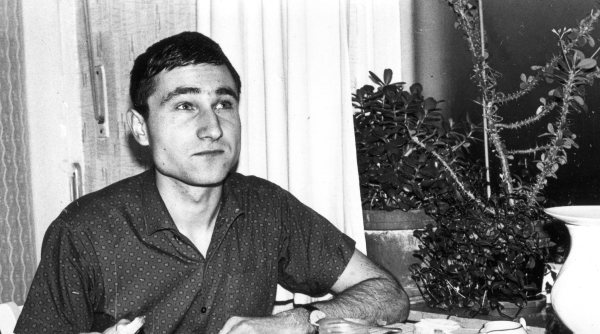
58

Peter in a contemplative mood at home in Watzenborn-Steinberg


One Misfortune Never Comes Alone

I was still reeling under the blow of the unexpected military transfer to Maxhof, Bavaria, when another one hit me like a bolt out of the blue. Biene wrote that she had met a young Dutch man by the name of Henk, to whom she was now engaged. They were dreaming about their own home at the edge of a forest near the city of Arnhem and were planning to get married. The news nearly tore me apart, all the more as Biene described our relationship as merely a nice correspondence between friends. Although my emotions were running high, I immediately responded to her letter and thanked her for being honest. It was a miracle of sort that I agreed to keep writing her. That promise was so terribly out of character, so contrary to what my pride and sense of honour would have allowed me to do that there was only one explanation. I was still in love with her.
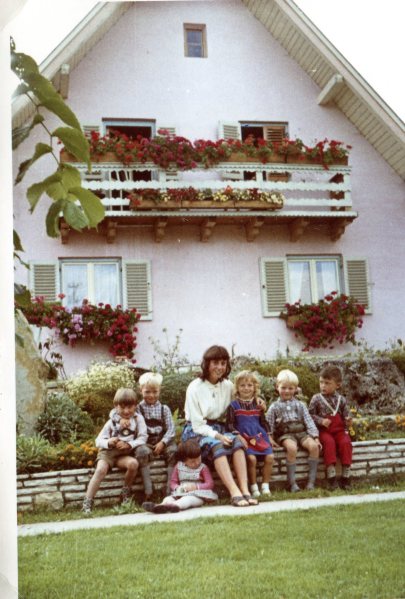
Biene on Vacation at Lake Ammer 1963

Biene on Vacation at Lake Ammer 1963

Sleepless nights followed. I held endless conversations with myself. At times I would place the entire blame on my shoulders. Dieter was perhaps right, when he said that a kiss is more powerful than words, passion stronger than tender sentiments expressed merely in letters. Then the American folk song ‘On Top of Old Smokey’ was going through my mind during those agonizing hours of wakefulness. The apparent truth of the line ‘I lost my true lover for courting too slow’ hit me especially hard. Suddenly the pendulum swung into the opposite direction. For a short while, I found relief by putting the blame on Biene. ‘Surely, one does not get engaged overnight’, I argued. ‘Why didn’t she write me sooner? Why did she allow the correspondence to drag on so long? What about her other pen pals, the young man from Morocco for example? Does she want to keep all her options open? Is she like a bee, as her name implies, flying in a kind of romantic dance from flower to flower to see where she would find the sweetest nectar?’ Having experienced both ends of the emotional spectrum, I finally settled for a more balanced view. The wildly swinging pendulum was coming to rest in the middle. Concern for Biene pushed anger and jealousy aside; she might have responded to the lure of marital bliss too quickly. These internal monologues went on and on through several nights, at the end of which I was completely exhausted. But I had calmed down enough to finish my letter to Biene with the words, “Just one thing you must promise me. If you perceive a danger for your happiness in that you cannot distinguish between true friendship and love between a man and a woman or if your future husband does not like our correspondence, then have the courage to say goodbye. For I do not want to destroy your happiness.”

Frauenkirche, Munich, Bavaria - Photo Credit: wikipedia.org

Frauenkirche, Munich, Bavaria – Photo Credit: wikipedia.org

With my Phillips tape recorder in one hand and a heavy suitcase in the other, train tickets and army papers in my wallet, I stepped on the Intercity train to Munich. Private Gauke, whose first name I no longer recall, accompanied me to our destination. We were both in uniform, as this was a requirement when traveling on official assignments. While the high-speed electric train was rushing toward the Bavarian capital, Gauke tried to cheer me up by pointing out all the advantages of the prestigious truck driver’s license later in civilian life. But he succeeded only partly in pulling me out of my morose taciturn shell. He did not yet know about the other problem, for which the possession of a driver’s license offered no solution. In Munich we had to catch a local train to Starnberg. Thousands of passengers were milling about the main station. At the crowded automated billboard announcing arrival and departure times I spotted the wrinkled face of my former scout leader, Günther von A. He was as surprised to see me, as I was to see him. What were the chances of this occurring? Once in a million or less. And what were the chances of still being in love with Biene? The question made me think about fate and destiny, a topic that philosophers and theologians great and small have been grappling with for centuries, a can of worms, which I decided in my present state of mind to leave unopened.

Army Heaven

Lake Starnberg, Bavaria - Photo Credit: bavaria.by

Lake Starnberg, Bavaria – Photo Credit: bavaria.by

Maxhof, a modern army training centre, was a pleasant surprise to me. In contrast to the drab sameness of the 19th century design of the Falckenstein barracks, Maxhof impressed me with its pleasant appearance. It had more the looks of a hypermodern youth hostel than of a military building complex. Trees and ornamental shrubs surrounded the sleeping quarters, the cafeteria, and the administration building. There were even flowerbeds at the main entrance. Best of all was the room, where we were going to sleep. With its comfortable beds, its large windows with a view from the park-like setting all the way up to the nearby mountains, its brightly painted walls, a spacious desk for Gauke and me, all I needed was Mother’s fancy tablecloth, a vase with some pretty fall flowers to have the illusion of being at home.

Maxhof with Lake Starnberg in the background

Maxhof with Lake Starnberg in the background

Gauke and I reported for duty the following morning at the main building. There was a momentary kafuffle over us two soldiers from Koblenz. Apparently the officer in charge of the transfer was supposed to have provided certified truck drivers. The officer behind the counter was very much upset over being cheated out of two valuable experienced drivers. But in the end he assigned us to a driving instructor and informed us to show up for our lessons the very next morning. Gauke and I could hardly show restraint in our ecstatic joy over this most fortunate turn of events. Apart from our first positive impressions about the physical surroundings we noticed with glee that there were no mandatory line-ups, no check-ups of room, closet, and clothes; this was army heaven.

Massive Mercedes truck - the type we were trained on

Massive Mercedes truck – the type we were trained on

After two weeks of enjoyable driving lessons on the big Mercedes trucks, the compass needle of my inner life was no longer spinning out of control. More than three weeks had passed by now. Biene had not yet responded to my letter and I thought that if our correspondence was to end it should at least end on a good note. So I wrote,” … A relationship, no matter how you look at it, which had so beautifully and lovingly developed, is not the kind that we just break off. Something of that, which we shared, will remain open and will eat forever at our hearts. Therefore, I would like to amiably end, what we have so amiably started. Let us if not in reality then at least symbolically shake hands and without any bitter feelings part from each other. I am thankful for all the dear letters and  I tell you once more that you have given me much during the time of inner trouble and distress. Please do not turn down my last request, dear Biene, and write to me just one more time. One last sign from you, and I will be content…”

But there was no sign, and I was not content.

Destruction of Ancient Carthage

A Metaphor for Emotional Turmoil

There was enough explosive emotional energy bottled up inside me. Having no one to write to, I had to return to the unfinished novella to release it. At the park bench near the German Corner in Koblenz I had most of its content on Carthage written up in my notebook. The personal experiences making the story come alive were missing though. Now they were burning with a searing fire in my heart. My fingers were itching to commit them to paper.

Ancient Carhtage - Image Credit: ancient.eu

Ancient Carthage – Image Credit: ancient.eu

Our driving lessons had unexpectedly ended. We were told that the instructor was needed elsewhere and we would start over together with the next batch of soldiers coming in to render the course more efficient. Gauke and I were delegated to work  in the office. The assignment was to catalog the total electronic equipment with all its individual parts down to the last nut and bolt. Thus, we created a giant database for the signal corps stationed at Maxhof. I dictated the names and parts numbers and Gauke typed. One can hardly imagine anything more boring than this. But there was one advantage. We only worked during regular office hours, and we were done with our daily chores of number crunching by 4:30 p.m.
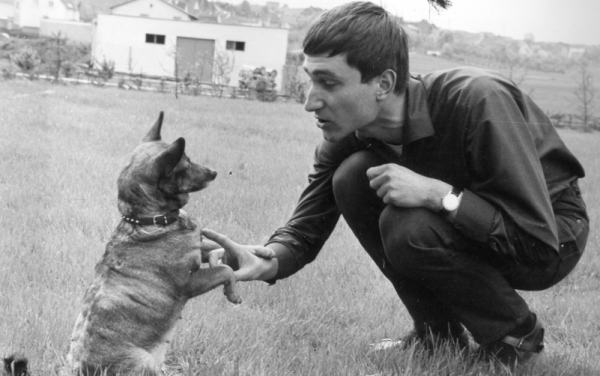
69

Peter playing with the neighbor’s dog (1963)

So I had more time than ever before to write in the semi-private room of our Maxhof residence. The historical sections of the novella heavily leaned on Mommsen’s historical work ‘History of Rome’ and to the best of my knowledge they described the power politics and Machiavellian schemes of Rome very accurately. My heart, which had lost two girlfriends within the span of less than six months, was the fertile breeding ground for the stuff that good writing feeds on. I transformed my former pen pal Margret, into Bersika, the daughter of a wealthy member of the Peace Party of Carthage to make the final dramatic encounter in the burning capital of the Carthaginians more believable. On the other hand, Claudia (Biene) and her twin brother received a more realistic description reflecting our first encounter at Lake Baldeney and the ensuing correspondence, which had ended so painfully. On the Palatine Hill in Rome Publius (Peter) and his friend became acquainted with an old sage, who introduced the young men to the philosophical centre piece of the novel, which reflected my ideas, in part burrowed from Democritus, on God and His creation and how He lives within it in a mysterious interplay between mind and matter. The destruction of Carthage, the fierce house to house street fighting, the slaughter of tens of thousands of civilians, the senseless resistance of the dictatorial ruling party against the almighty Roman war machine, the burning houses, the stench of unburied corpses provided the background for the final scene symbolizing my chaotic troublesome state of mind.
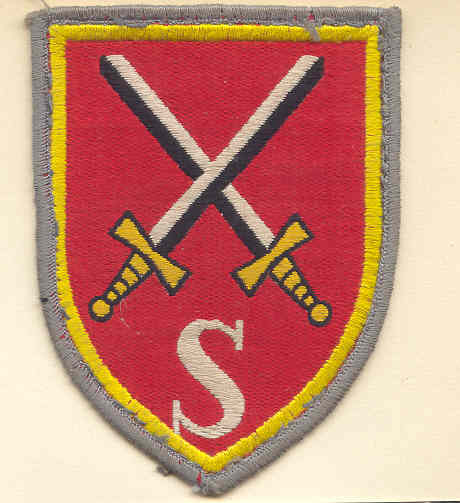
Crest of the Signal Corps

Crest of the Signal Corps

When I had penned the last line, I felt an eerie calm come over me. For a while I sat at my desk without a thought, without a feeling; it seemed that my inner being had been poured out into the thick writing book before me. Private Gauke entered the room. He had been teasing me about my writing craze for the past couple of weeks and had noticed with genuine concern how I was withdrawing more and more into my crusty shell. He said, “Peter, it is about time that you get off your chair. I just discovered a cozy pub in Feldafing. Let’s go and have a drink of that great Bavarian beer.” Gauke was a fine fellow. I gladly came along. The novella was finished.

New Year’s Eve Party

Chief Günther Kegler provides some much needed distraction

The stupendous outpour of pent-up emotions alleviated the anger and the pain. I began to enjoy the almost daily outings with my friend Gauke. But in spite of the pleasant distractions the visits to the pubs provided by the excellent beer, wholesome food, Bavarian music in the background, and the pretty waitresses in their traditional dirndls, I could not push the troubling spectre of my lost love out of my mind. I had asked her for a farewell letter or card to end amiably what had started amiably. Two months had passed. The silence became unbearable. So against my own conviction like a moth attracted to the flame of a burning candle I wrote her another letter from home before Christmas, in which I reiterated how much I appreciated her supportive letters during the hard days of my basic training, Then all of a sudden as if triggered by the emotionally cry of despair on the last pages of my novella, I let the proverbial cat out of the bag, “… Add to that the devastating fantasy, which produced during our correspondence the strangest imaginary flowers. At times I saw you – please don’t be alarmed, dear Biene – in my arms, then at my side travel to Canada, study with me in Marburg or Berlin, and in the more distant, but all the more brighter future spend a life with you through joy and sorrow. All these fantasies essentially destroyed our relationship…”
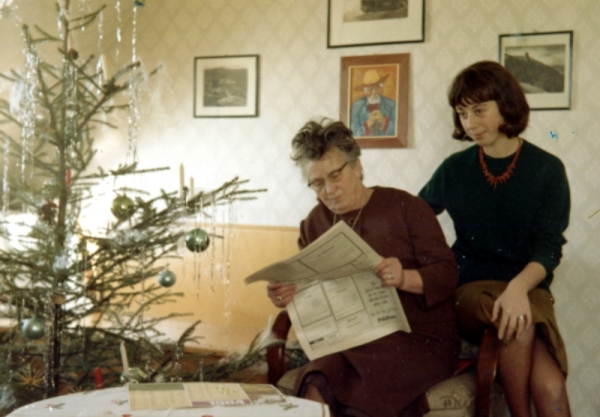
Biene and Mother ß Christmas 1963

Biene (Gertrud) and her mother  Elisabeth Panknin – Christmas 1963

Again I urged her to reply, even if she had no desire to write, just one more time. Before I sealed the envelope, I inserted a short story, which I had especially written for her. I hoped that it would in allegorical terms evoke the tender feelings we had once felt for one another. I did not mention the novella, which as an unedited rough copy I did not yet consider complete. Within three days and just in time for Christmas a miracle occurred. The letter that I no longer expected, but had hoped for arrived. And what it contained surpassed all my expectations. Instead of a farewell message, she wrote that my story about little Irwin had moved her to tears, but more importantly that she had once entertained similar thoughts and dreamed similar dreams about the two of us living a life time together. Even though she too had also allowed her fantasy to go too far and expressed doubts about the fickle nature of dreams, which often do not bring the fulfillment one had longed for.  She placed her trust in the mysterious force called Fate that one day things would work out between the two of us. The way she was wording her sentences I sensed that she had gone through some troublesome times during that long period of silence in our correspondence. Some way or another the anguish was connected to her fiancé Henk, whose father had suddenly and unexpectedly passed away. Nevertheless the news that our friendship at least at the correspondence level had been restored gave me a big boost.
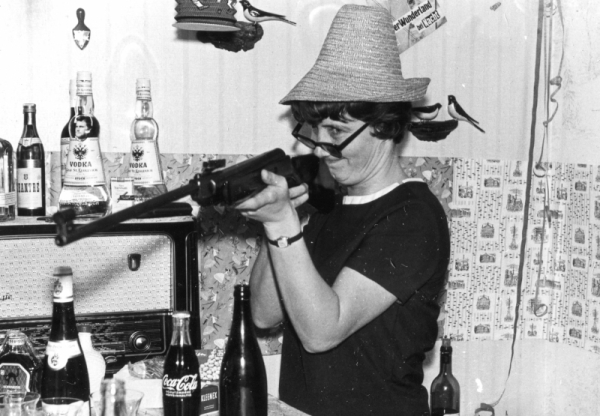
Helga Kegler - daughter of General Gerhard Kegler

Helga Kegler – daughter of General Gerhard Kegler

I participated eagerly in the preparations for the New Year’s family party planned by the ‘chief’ of the Kegler clan, Uncle Günther. In the large vestibule of the basement suite we set up a bar, which we dubbed the Flamingo Bar. The good uncle had it well stocked with choice wine and beer as well as nonalcoholic drinks for this festive occasion. We decorated the wall with pictures, photos and old movie posters. I even contributed my painting of the 21st century space woman now looking down on a happy party crowd. Happy and diverse indeed was the crowd ringing in the New Year, young and old celebrating in perfect harmony, Uncle Günther, Aunt Lucie, Mother and Aunt Mieze, Adolf, Erika, my cousins Helga and Jutta, two young ladies, the daughters of a pastor’s couple, whose names I can no longer recall, and my humble self. My tape recorder provided the background music for the party, and whenever there was a call for a dance I cranked up the volume and switched the music to a livelier beat.
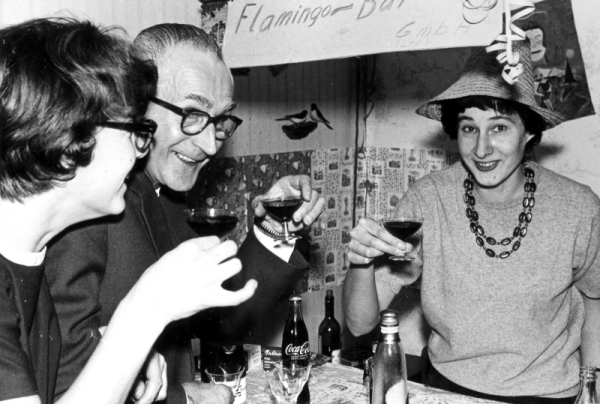
From left to right: Helga, Uncle Günther, and my sister Eka (Lavana)

From left to right: Helga, Uncle Günther, and my sister Eka (Lavana)

At midnight we raised and clinked our champagne glasses wishing each other a Happy New Year. With Biene’s letter tucked away in my suit pocket I looked with confidence into the future. I felt that 1964 was going to be a great year for me. However, if I had read Goethe’s autobiographical novel ‘The Sorrows of Young Werther’ and understood how I, like Werther, was also entangled in a love triangle, I would have been less optimistic. The frayed thread on which our love was hanging was ready to snap any time. Whether I would have shot a bullet through my brain on a night watch in the army, if Biene had married Henk, was doubtful. Eventually I would have found and married another girl. But the oppressive awareness of having lost my first love would have lingered on my consciousness for the rest of my life.
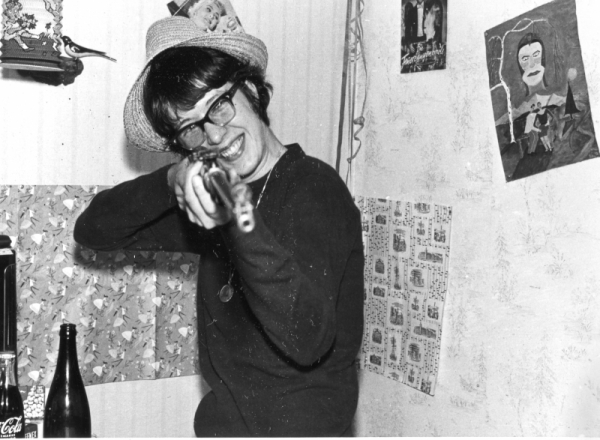
Jutta Kegler - Youngest daughter of General Gerhard Kegler

Jutta Kegler – Youngest daughter of General Gerhard Kegler


The Peter and Gertrud Klopp Story – Chapter XVIII

On my Moped to Father in Michelbach

It doesn’t matter who my father was; it matters who I remember he was.

Anne Sexton

50

My Father in front of Erna’s House in Michelbach near Schotten

It had been more than five years, since I had seen Father. He had left one day looking for work at friends and relatives. Considering his poor health and age, he was faced with the dilemma of having to return to Wesel, where he would be dependent on Aunt Mieze’s financial support or else be content with the odd casual work, which barely supported his livelihood. Furthermore considering his intensive pride as a former successful agricultural administrator and the pain he must have suffered from the dismal failure of his farming venture in Southern Germany, I can understand his anguish and feelings of having become utterly worthless in his own eyes and in the eyes of his family. Pride and failure have never been good bedfellows in a man’s heart, and Father was no exception. As for me, I missed his presence a lot, but I was too timid to ask as to when he would come back and did not know what was going on behind the scenes. Much later I found out that with Uncle Günther’s support Mother had initiated divorce proceedings. On the basis of the law that required common residence and conjugal relations Mother was able to get a divorce in exchange for waiving any rights to financial support from Father. So to make this sad and depressing story short, Father after the divorce joined and not long afterwards married Erna Krämer, an old acquaintance from the Warthegau days, who lived in her rustic and cozy home in the village of Michelbach at the foot of Mount Vogelsberg north of Frankfurt.

Schotten_Uebersicht_Kirche

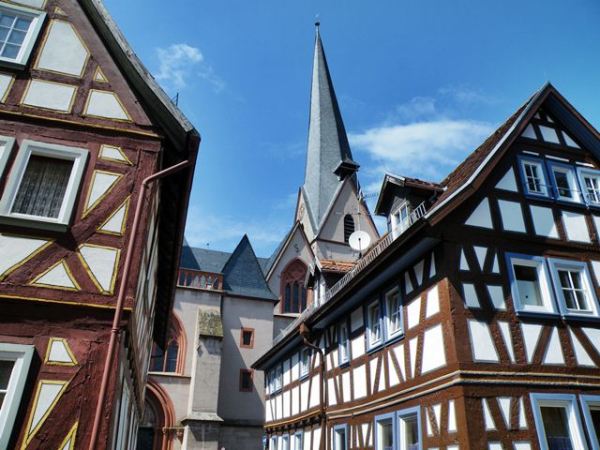
Picturesque Schotten – Photo Credit: wikipedia.org

The last summer holidays before graduation were only a few weeks away. It was also to be the last year Mother and Aunt Mieze would reside in Wesel. Uncle Günther and Aunt Lucie had invited them to live with them in Watzenborn-Steinberg (now Pohlheim), where all four would share the rent of a brand-new house that had been built by a teacher as a retirement home in the distant future. Naturally there was a lot of joyful excitement among the three Kegler siblings having been raised together at the parsonage in Grünewald and now having the chance of living once more under one roof. There was just one problem. How would I fit into the grand plan of bringing the family members together? A transfer to a high school in another province with different graduation requirements was out of the question. The solution was an obvious one. I had to stay behind and continue my studies later on in the fall, while they would move to the land of the Hessians. The decision to finish my secondary education in Wesel proved to become one of the great milestones and turning points of my life.

34

Twenty-year Old Peter

But for now at the beginning of the six-week break from school I had other things on my mind. I had to think of visiting Father. One of my old scout buddies sold me his moped for DM 50.00, a true bargain at the equivalent of ten monthly allowances. It had a peppy engine and in spite of being quite old was in excellent shape. The best part was that I did not need a driver’s license. Having always envied Klaus for his scooter, I now had my very own motorized transportation with which I could travel to Michelbach to see Father and his new wife Erna.

60

Philosophical Discussions with my Father

At a maximum speed of 50 km/h it took me all day to reach the scenic hill country around Mount Vogelsberg. Father and Erna gave me a warm welcome alleviating immediately all fear that Father might have turned into a stranger. I had departed from Wesel with these somber feelings, which had been building up due in part to our long separation, but also due to Mother’s bitter and regretful remarks that she had sometimes made about the divorce. So it was a great relief to be greeted so cordially and be welcomed as son and friend into their cozy old farmhouse. Here then I was going to spend the next six weeks, would become reacquainted with a rural environment slightly reminiscent of Rohrdorf, would get to know Father more closely through our philosophical and historical discussions, would begin to like his wife, would be introduced to her friends and relatives in the village, would taste her hearty meals albeit a little too rich in fat, in short I was here to relax and feel completely at home in an atmosphere of genuine friendliness and camaraderie.

Joy at my Father’s Home

Right from the beginning of my visit Erna and I got along very well. Her cheerful and lively disposition did not allow me to lose myself in gloomy moods, as I was occasionally prone to do, especially during prolonged periods of idleness and aimlessness. I could even see, even though I was reluctant to admit it, that Erna was the right person for Father. She was the sunshine that had brought lightness and contentment to his sunset years. From her radiated a contagious joyous spirit that created the in-peace-with-the-world atmosphere so conducive to Father’s healing process from a torturous past, from which he only now began to recover. I definitely do not remember him as a man broken in body and spirit, as my distant cousin Eberhard Klopp described him in his book of the Klopp Family History.

Schotten - Photo Credit: vogelsbergtourist.de

Town of Schotten – Photo Credit: vogelsbergtourist.de

Erna also had a moped of the same make and the same 49 cc class as mine, on which she would travel down the steep hill into the town of Schotten to buy the few things she needed for the small household in Michelbach. When there is company, one always seems to find the time to show off the beauty surrounding one’s home turf. Without visitors one tends to delay and leave such outings for another day. Erna was no exception. Now she was eager to travel with me to the nearby-forested hills, up the scenic Nature Park around Mount Vogelsberg, down winding country roads into the lush verdant valleys neatly tucked in between minor mountain ranges. There was no better form of transportation than our two mopeds. With a lunch pack clamped to the rear luggage rack we were ready to dart off into the wonderful Hessian landscape. Father a little overweight for these light machines gladly stayed behind looking after a few chores still to be done on this mini-farm with just a few goats to feed and milk,. Just as we were revving up the engines, Father came to the road to congenially shout over the noise, “Have a good trip!” At the end of my vacations thanks to our weekly excursions into the hill country, I had acquired a solid geographical knowledge of the region. As I was internally preparing myself to leave the Rhineland for good after my graduation, I had already created a new base to drop in as son and stepson, a place I could truly call home.

Landscape of Vogelsberg Hill Country - Photo Credit: vogelsbergtourist.de

Landscape of Vogelsberg Hill Country – Photo Credit: vogelsbergtourist.de

In the long summer evenings after supper we three would sit in the living room leisurely sipping homemade apple cider. We would talk until it was time to go to bed. More accurately speaking it was Erna, who did most of the talking. She truly had the gift of the gab. With the unerring memory for minutest details spiced up with colourful expressions and peppered with the melodious dialect of her village she was the born storyteller. I will never forget how she described the chaotic scene of the German Reichstag of the roaring twenties. She and her friends were sitting in the same living room forty years earlier and acted out the ugly political debates they had heard over the radio. And they did this with such exuberance, with so much mock yelling and screaming that the poor cats terrified by the brouhaha created by the inflammatory speeches sought refuge under the sofa and added to the parliamentary cacophony with much hissing and growling.

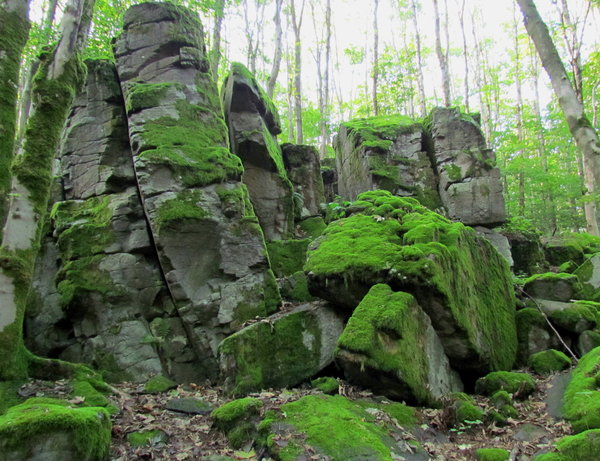
Incredible Rock Formations near the Top - Photo Credit: myheimat.de

Amazing Rock Formations near the Top – Photo Credit: myheimat.de

Is it Love?

Within the scope of the family history I would go too far if I included Erna’s side of the family except the ones that I came into contact with. There was the Langlitz family, Walter, Frieda (Friedchen) and their two daughters Helga and Anita. Walter had become a successful contractor who ran a prosperous business with his impressive array of trucks,

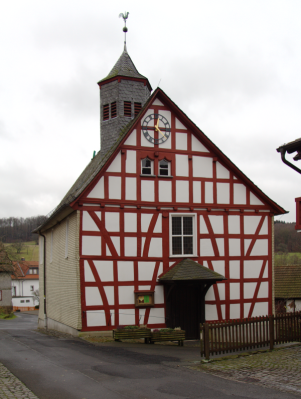
Church of Michelbach now part of Schotten - Photo Credit: wikipedia.org

Church of Michelbach now part of Schotten – Photo Credit: wikipedia.org

caterpillars, backhoes and other heavy machinery that he had acquired to assist in the government sponsored land reform program. In contrast to the northern provinces of Germany, where the eldest son inherits the farm, inheritance laws in the south required equal division of the fields among all the children of the deceased farmer. Thus, over time emerged a chaotic patchwork of tiny fields often less than one ha in size, which made farming more and more inefficient and unproductive. So Walter profited from the reallocation of land by owning the right equipment at the right time. The two daughters, Helga and Anita, age 12 and age 10, whose exact degree of relationship to Erna I do not recall, often showed up to play board games, such as chess and checkers with the newcomer in Father’s home.

52

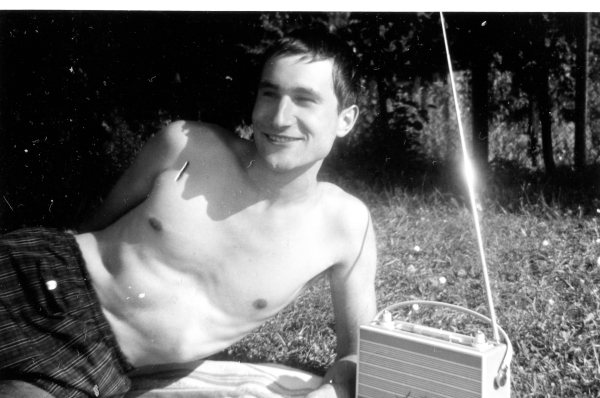
Peter Basking in the Sun – Summer 1962

Erna was also anxious to have me meet her 16 year-old niece Roswitha, who lived a few houses down the street with her widowed mother. Even though I did not recognize it at the beginning, it was clearly a matchmaking effort supported by Father. In collusion with her sister-in-law, Erna invited her niece over for coffee and cake to make sure we would see each other as often as possible. Roswitha in terms of the standards I had set for what a girl should look like fell well within the range of acceptability. However, inner qualities, such as interests in activities that one could do together, readiness to share and exchange thoughts and feelings, to support them and if necessary even to oppose them, such qualities, which began to gain more and more in importance for me, were severely lacking. In a way my encounter with her helped me set the bar a few notches higher, which further limited the number of choices for my future mate. I vaguely felt for the first time that only love could help jump the hurdle. But what is love? I could not tell, because I had not experienced it yet. So what Erna had hoped for, did not happen. We were friends, who did things together for a while. We walked down the steep hill down to the town and district swimming pool in Schotten and on Saturday evenings we went dancing in the nearby villages. The music was not exactly rock ‘n’ roll, but we could dance to it, whenever a fast beat would permit. The performance of the band improved with each refill of the giant beer mugs during the frequent breaks. Thanks to the loud music there was no opportunity to talk, and there would not have been much to talk about. On our long walk home in the moonlight I explained to her how the stars would move like the sun following the rotation of the earth. For everything I said during my scientific dissertation she approvingly giggled. Only once did she protest to express her utter disbelief, when I insisted that the moon shining so brightly now onto the forests and meadows would also show its pale face during daytime.

My brother Adolf relaxing at the Schotten Swimming Pool

My brother Adolf relaxing at the Schotten Swimming Pool

With my first visit to see Father after such along gap inconceivable in the light of today’s custody laws that require visiting rights at regular intervals, I accomplished much more than just reconnecting with him. The ice had been broken. Other family members now were eager to come in a spirit of reconciliation that was shared even by Mother albeit somewhat reluctantly. Near the end of my holidays my brother Adolf dropped in for a visit. He had returned from Canada to Germany on a temporary basis to learn a trade in an apprenticeship program at the Honeywell Company at Hanau. There he eventually acquired a journeyman ticket as a trained machinist that would – so he was hoping – land him a good paying job upon his return to Canada. Adolf endowed with a witty sense of humor and an extroverted personality was the life of the party no matter where he went. In formal or informal gatherings, in suit or in jeans, with academics or with factory workers, he was the born entertainer who made people cheer up when they were depressed, got things rolling when they appeared to be stuck. Everybody liked him. He had many friends and few enemies. There was just one problem with this gregarious likeable brother of mine. He seemed to be shy, yes even afraid of unmarried women, who might take too much of a liking to him, pursue him with the full force of passion and lock him up in the golden cage called marriage. When we received an invitation to a social evening by Roswitha’s mother, Adolf felt safe, because his youngest brother was with him. On the surface it looked like we were the suitors, Roswitha being courted by two promising young men. In reality in a strange reversal of the customary roles it was the other way around. As we gathered in the living room, Frau K. served us wine, crackers and cheese, spent a few perfunctory minutes in conversation with us and discretely withdrew with a few cheerful words meaning that we now were on our own. I found the situation very odd and to some extent embarrassing, because I had expected her to stay. It was Adolf who saved the day or more accurately the evening with his social skills that helped to get the ball rolling. He asked Roswitha about school, hobbies, her likes and dislikes, the weather, and all the other trivia that he was so apt in using as a social lubricant. To her replies often accompanied by the aforementioned giggles he added humorous comments that made us laugh and feel at ease. Eventually even I emerged out of my taciturn shell and presented to everyone’s amusement a few jokes and riddles. Around eleven o’clock Adolf ironically remarked that it was time for us ‘boys’ to go home. We politely said good night and cheerfully departed to have another drink of a more potent kind at our Father’s place.

Happy End to a most Enjoyable Visit

Then my sister Erika dropped in for a brief visit. When she heard that I had been going out dancing with Roswitha, she mockingly and contemptuously commented on her in Father’s presence, “Ho! Ho! Peasant duffer! (Bauerntrampel in German)” By now I had become quite accustomed to the unpredictable outpourings of her sharp tongue. Her caustic and biting remarks at Mother’s place in Wesel had been edged forever into my memory. However, Father was livid. Having respected all his life the hard honest work of the farmers from whom we receive our daily bread, he was deeply insulted by that derogatory remark. He gave her a severe dressing-down for displaying unjustified disdain for such an honourable class of people. Never since my early childhood days, when he had read me the riot act for stealing eggs from Mother’s henhouse, had I seen Father so angry. If I did not know the meaning of holy wrath, I knew it now.

My brother Karl and his wife Ingrid with an aunt in front of Erna's house

Erna Klopp with her neighbor’s baby in her loving arms

Erna’s house was at least half a century old and the electrical wiring was outdated and no longer in compliance with the latest electrical code. It required that all circuits be properly grounded. It made me feel good that I was not just there to enjoy a relaxing summer visit but also had the opportunity to make myself useful. Father had bought the three-prong wire, and I installed it and connected it to the junction boxes, outlets and switches. When I showed reluctance to take the twenty marks Father wanted to give me as pay for my work, he lectured me somewhat like this, “Listen, Peter, if someone offers you money, not dishonest money mind you, but money earned for work you did, do not hesitate to accept it. For you not only cheat yourself out of the reward that is rightfully yours, but you also insult the generosity of the giver.” To such a powerful argument I had nothing to reply and took the twenty marks.

Together with Helga and Anita in Michelbach

Together with Helga and Anita in Michelbach

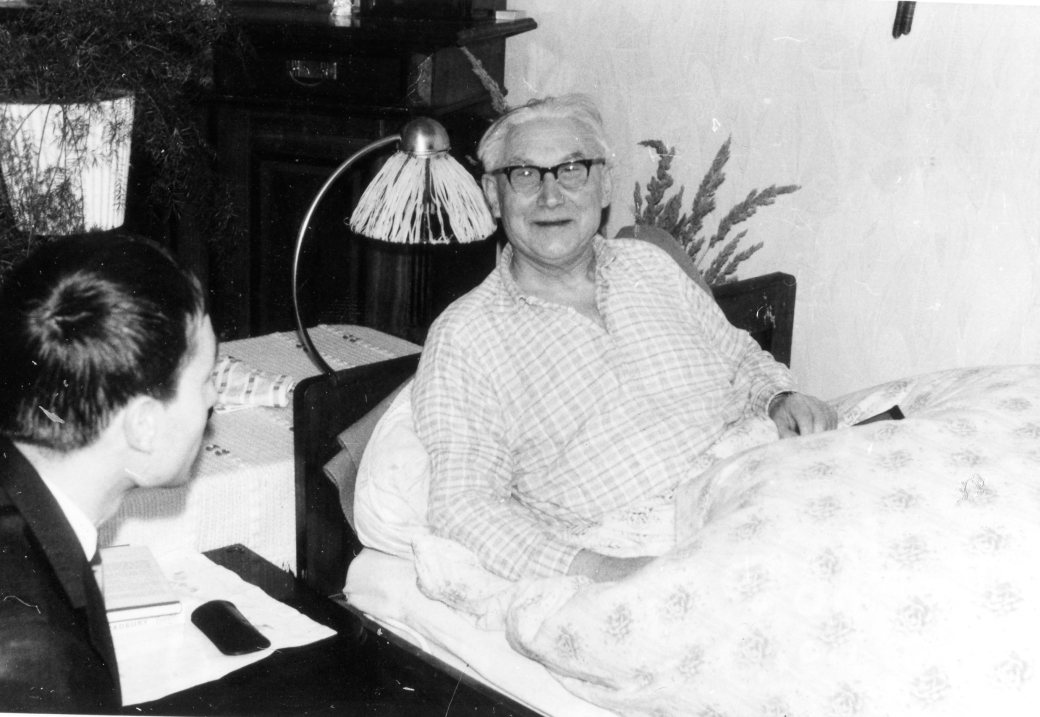
At times when Father’s back pains were hurting too much, he stayed in bed for most of the day. Adolf and I were sitting at his bedside to keep him company. Then Father and I would often talk about the great empires of the past and the lessons one might learn from the causes of their decline. I really warmed up to this topic as I had recently taken a keen interest in the history of the Roman Empire. We came to the conclusion that if one allows foreign religious and ethnic elements to penetrate the cultural core of the nation, it will sooner or later lose its identity, its values and strength and will eventually have to face first decline and then total collapse. Germany according to Father has not learned her lessons and was headed in the same direction. He pointed to the record player on the night table remarking, “The record is turning, the needle appears to be progressing even though it is running in circles, but in the end it will be starting all over again symbolizing the eternal recurrent of the same in world history.” Adolf feeling a little left out in this highfalutin talk said he would buy himself a couple of history books to study up on the things he had missed in school.

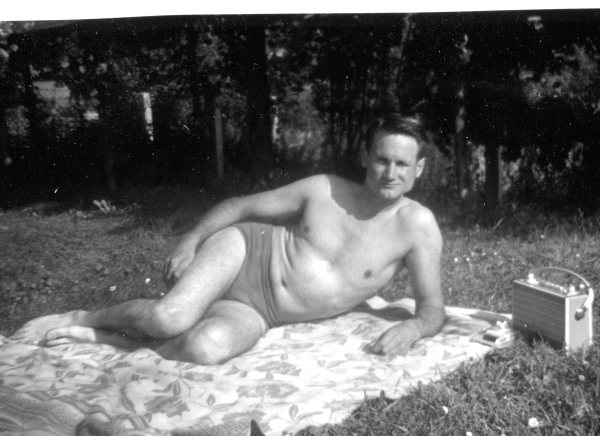
Reading and Relaxing - Summer of 1962

Reading and Relaxing – Summer of 1962


Chapter 42 of the Peter and Gertrud Klopp Story – Part II

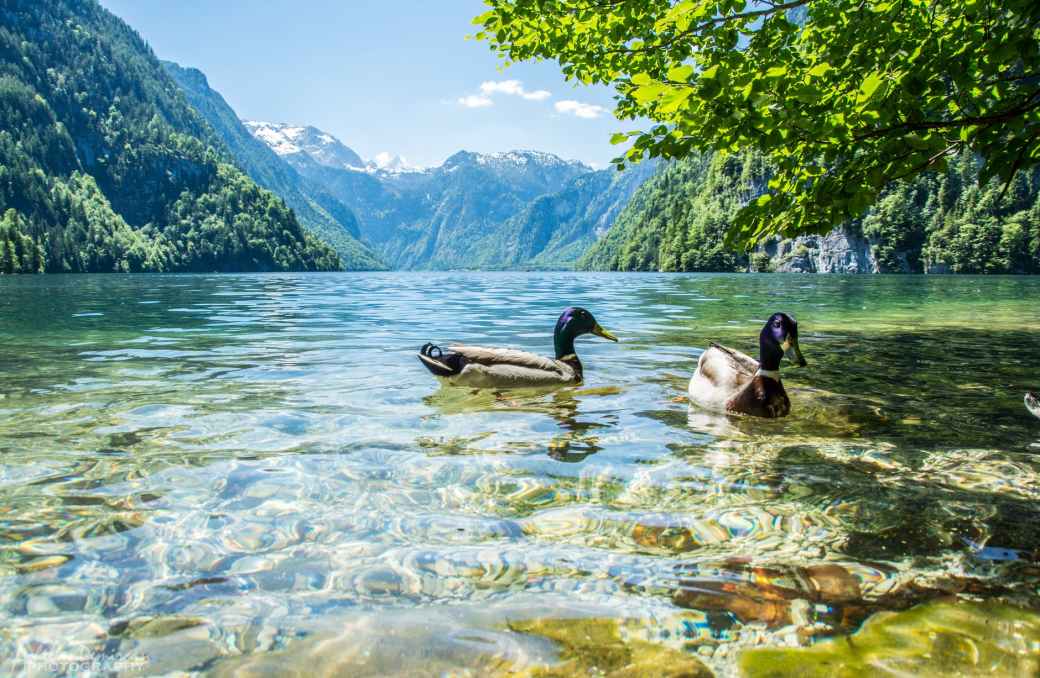
animals avian daylight ducks

Photo by Achilles Demircan on Pexels.com

Finally Together

In the meantime my brother Gerry (Gerhard) and I were getting ready to pick up Biene at the airport. The Chinook winds, which had brought spring-like weather to the city of Calgary less than a week ago, now yielded to the cold front chilling to the bones everyone who was foolish enough to venture outdoors. I was grateful to my brother and his wife Martha for providing accommodation for Biene until the time of the wedding. Biene seemed to have forgotten that this arrangement was part of the conditions we had to fulfill for getting her landed immigrant status. ‘Tempora mutantur et nos mutamur in illis.’ Times are a-changing and liberally minded people may scratch their heads nowadays and ponder in mockery and disbelief over this old-fashioned provision by Canada Immigration of the 1960’s.

At the airport we found out to our great dismay that Biene’s plane was delayed by two hours. I admired Gerry’s patience for having to wait that long before he could drive back to his home in southeast Calgary. This being Wednesday he had to work the next day. And I had a psychology lecture to attend in the morning. Shortly after midnight we were standing at the gate, through which the first bunch of travellers  were passing and were being received with cheerful hellos from friends and relatives. As their number dwindled to a trickle and the flight attendants were marching through the gate, Gerry noticed the grave expression on my face and in his own peculiar way to cheer me up remarked matter-of-factly, “Don’t worry, Peter. Biene is not coming.”

He had barely finished teasing me, when a figure, rather slim and bundled up in a black coat emerged all alone in the doorway. The fluorescent light gave her a pale appearance. But her smile upon seeing me was unmistakably Biene’s. Weaving our way through the remaining stragglers we approached each other faster and faster like driven by powerful magnets feeling the overwhelming forces of attraction every step of the way. Then we embraced and kissed each other, while Gerry looked on amazed at the sheer length of time we took just to say hello.

So it came to pass that exactly one year after we had kissed each other good-bye in Germany, Biene and I were wondrously reunited at the Calgary Airport.

End of Book I

Note to my dear readers: I will be taking a break from the Peter and Gertrud Klopp Story. I consider to write Book II on Biene’s side of the family, especially on her father, who unfortunately has been getting a lot of negative coverage in the final chapters of Book I. I  also would like to start a series of stories on the life and work of Albert Schweitzer written by my cousin Hartmut Kegler in German. It is a wonderful children’s seminar on this famous doctor and activist for peace. For my English speaking friends I suggest Google translate, if you are interested. I also want to do another series of posts on Bill Laux’s unpublished work on the mining and railroad history of Western Canada.  Of course, it goes without saying, I will also continue with the popular series ‘Wednesday’s Photos’. That will be enough on my blogging plate for the next couple of months.

aerial alpine ceresole reale desktop backgrounds

Photo by SplitShire on Pexels.com