Marie Kegler, Stalwart of Christian Faith – Part II

Aunt Marie (Tante Mieze)

In a previous post I described how Marie Kegler got to look after me for an entire year in 1954. That was the year when she resumed work as teacher at the Elementary School in Brünen. She had found modest accommodation at a miller’s farmhouse. You can read more about it in greater detail in an upcoming chapter of the P. and G. Klopp Story.
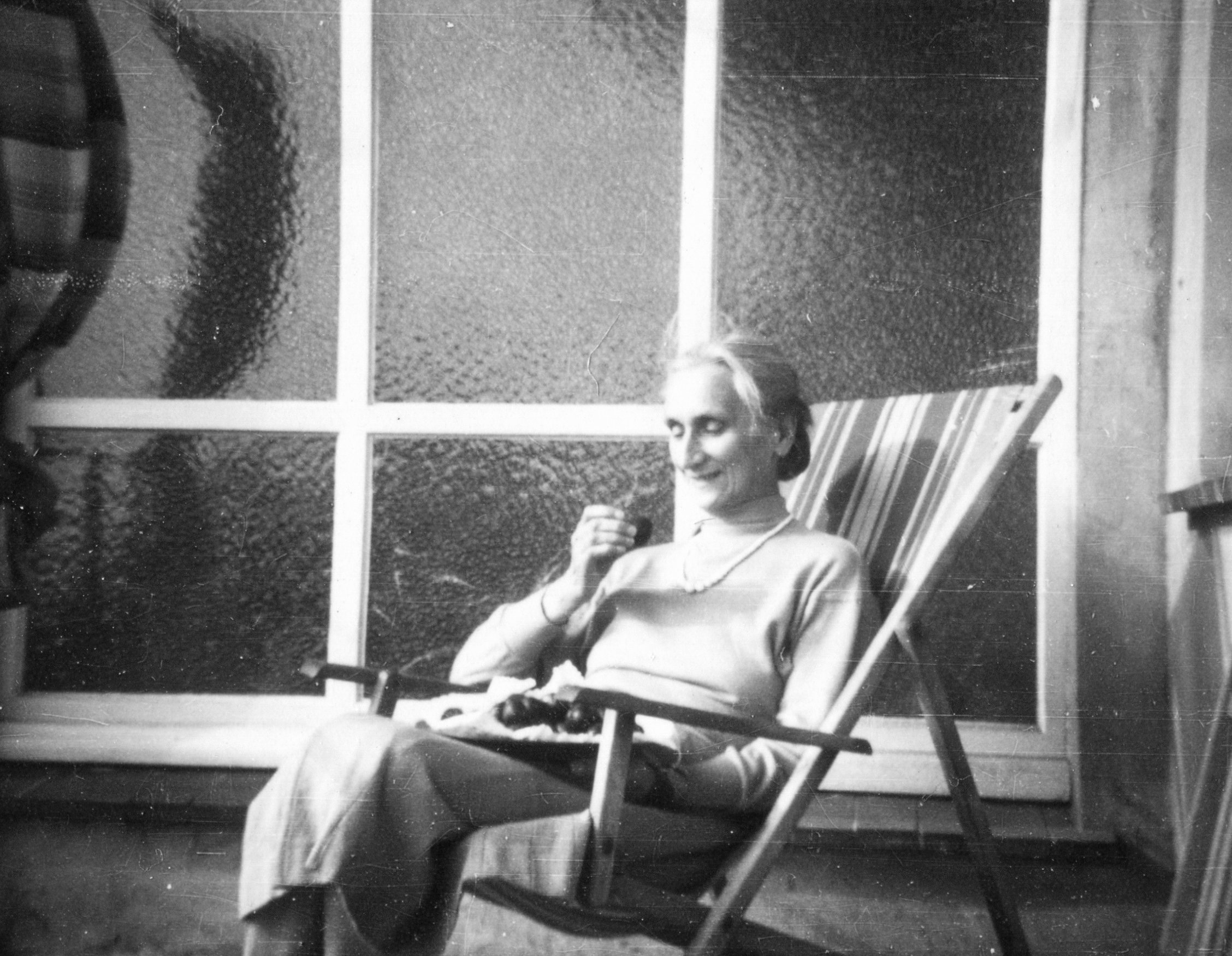
Marie Kegler on the Balcony of our Wesel Apartment

Marie Kegler on the Balcony of our Wesel Apartment

In 1955 she managed to land a teaching position in the nearby city of Wesel on the River Rhine. At a time, when there was a great housing shortage in the bombed-out city, she located a two-bedroom apartment. At last, Mother, who had become Tante Mieze’s housekeeper in exchange for room and board, was able to reconnect with me. Marie Kegler retired in 1957 and in 1962 the two sisters accepted my uncle’s invitation to share a rental house in Watzenborn-Steinberg. The new place turned out to be a veritable beehive of relatives and friends dropping in for a taste of the pleasant hospitality, which Uncle Günther, Chief of the Kegler Clan and avid Doppelkopf player, his wife Aunt Lucie, Aunt Marie, and my mother were tirelessly offering to their guests. I have the fondest memories of my frequent weekend visits during my army years. Aunt Mieze as during the time in Wesel continued to provide spiritual leadership by daily reading from a devotional booklet and saying grace and thanks to God at breakfast, lunch and dinner time.
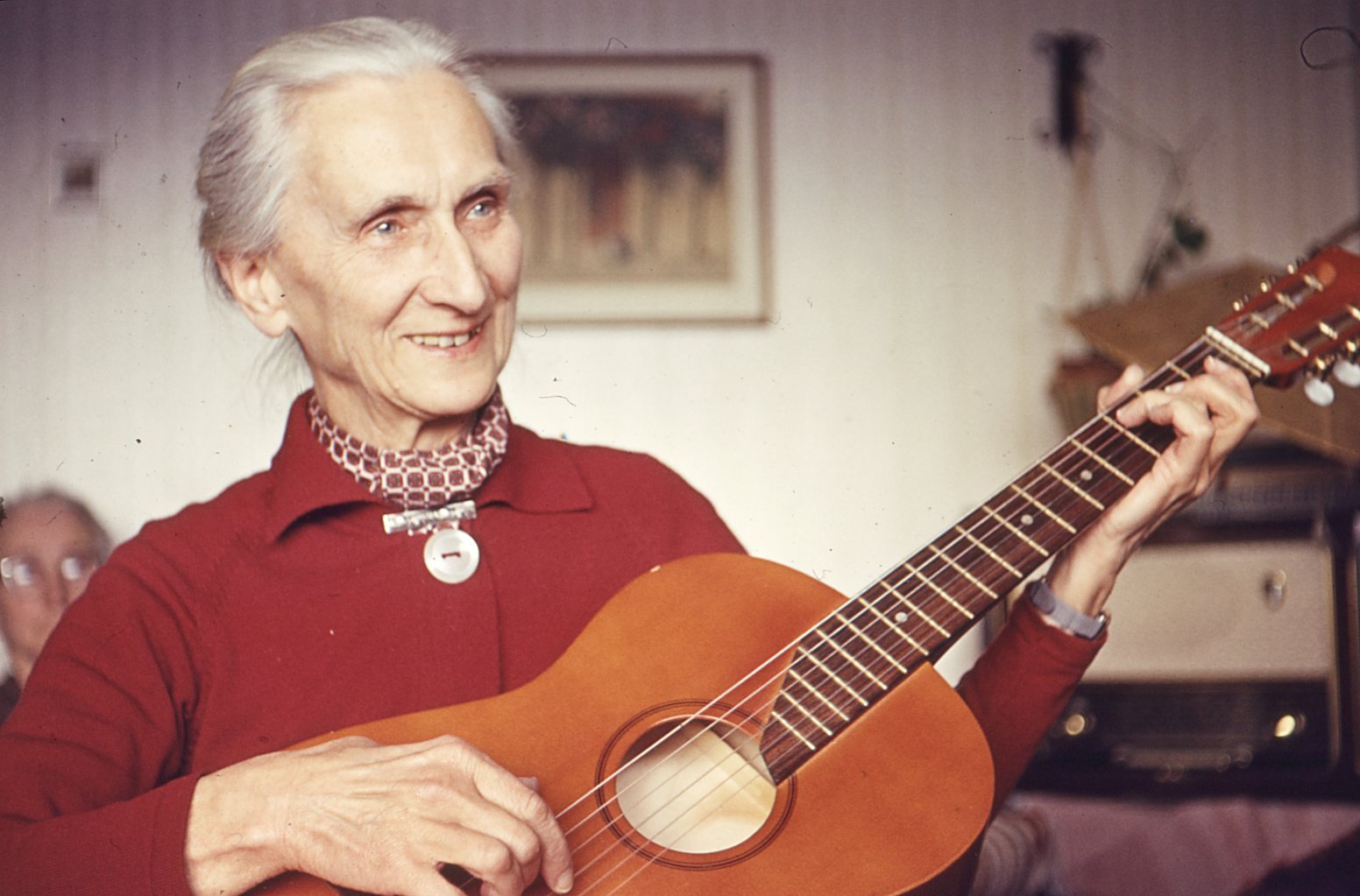
Pretending to Play the Guitar

Trying out my  Guitar

Alas, Aunt Lucie passed away after a lengthy illness. When Uncle Günther remarried and moved with his new wife Aunt Friedel to Kassel, a very happy period of family togetherness came to a sudden end. Tante Mieze could not afford to pay the rent. Even if she had had the means, the house in Watzenborn was too large for just two people. So they moved to Bad Ems in the beautiful Lahn Valley, where they lived in Haus Abendfrieden (House Evening Peace) for another six years. In 1980, Tante Mieze became very ill. The Senior Citizen Home, where they stayed, had no intensive care facilities. Thus, they had to move to Gladenbach close to the picturesque medieval city of Marburg. Shortly after Tante Mieze had been taken by ambulance to the Old Folks Home, she died at the age of 89.
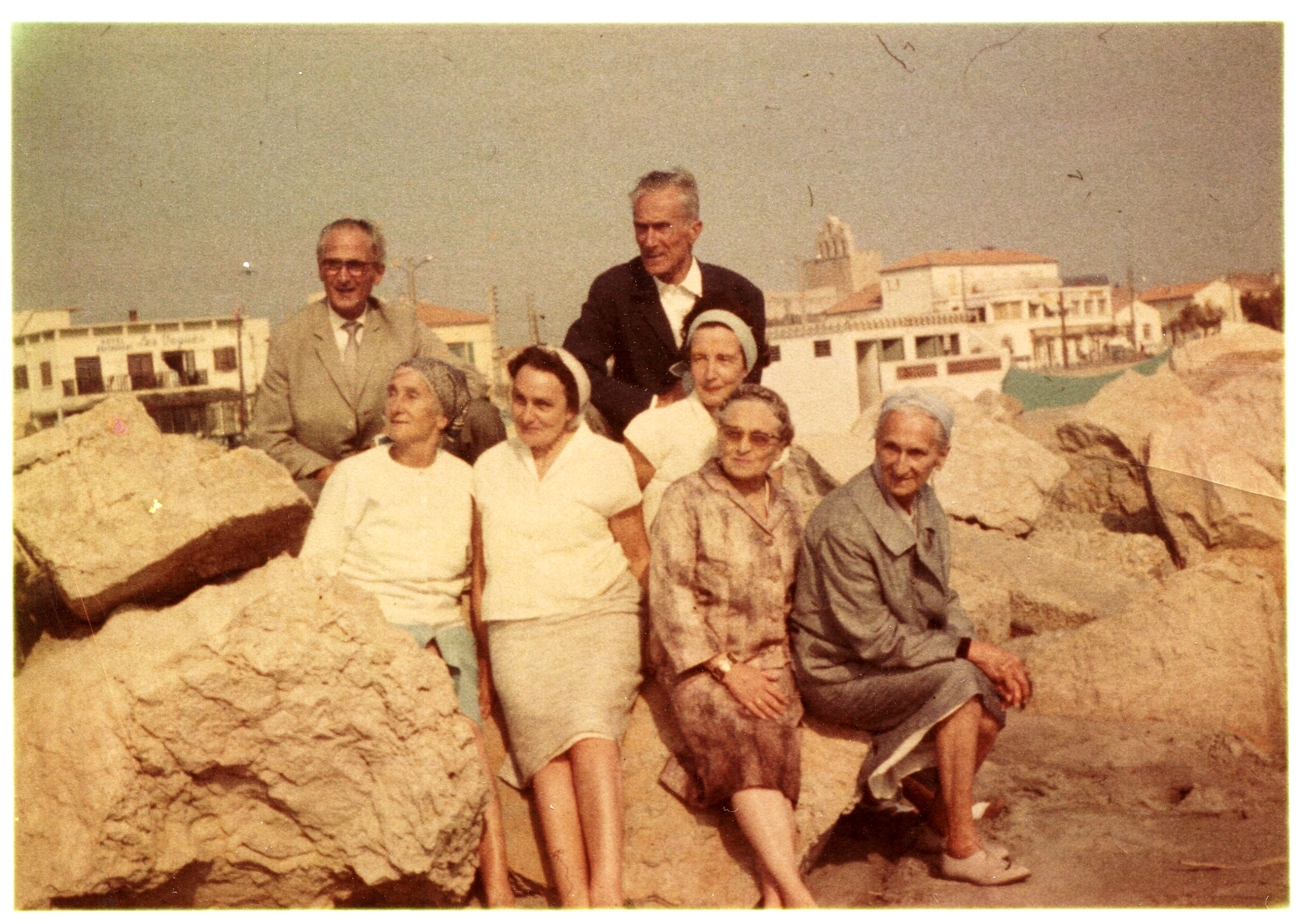
Südfrankreich 1965 Gerhard Margit Günther Lucie Erika Johanna Mieze

Günther, Gerhard, Mother, Johanna. Margot, Lucie, Marie Kegler in Southern France

Deeply steeped in the Christian faith, she led a life that in my view was exemplary. When she saw other people in need, she was always ready to help.Thankfully I will always remember her kindness to invite Mother to join her in Wesel. With her financial help I was able to finish my German High School diploma. without which my teaching career in Canada would have been unthinkable. After we emigrated to Canada, she kept mailing devotional booklets to her niece and nephews in the hope to provide some spiritual guidance. I must admit I did not take the time to read them. My brother Gerry too was not too interested either and irreverently called them flyswatters (Fliegenklappen).

In the world we live in we appraise a person’s success in life by standards, such as wealth, status, popularity, etc. God on the other hand looks at the motives and favors the purity of the heart. Aunt Marie’s actions always spoke louder than words. Love and compassion for her fellow human beings were the guiding principles throughout her entire life.
Memory Fragments by Anke Schubert

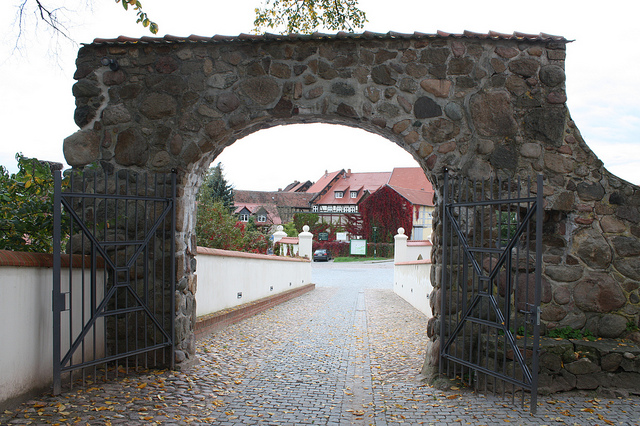
Lenzen

Lenzen near Anke’s Hometown Mellen – Photo Credit: Lea@Flickr

Reflections on Early Childhood Memories

Anke Schubert (Chart II a – IV)

Translated by Peter Klopp

Do you feel the same as I do? The older you get, the more in your memories you return to your childhood years. That’s at least how it is with me, especially now that the children have grown up and are taxing my physical and mental strength around the clock any more. Thoughts are stirring, nostalgic and regretful at times, because happy days, familiar places and dear people are gone forever, but I am also filled with joy, because they were once present way back in long-gone times.

Actually I thought that I would remember next to nothing at all about my earliest childhood. But sometimes and quite suddenly like out of the blue a memory shoots through my mind, a piece of the past, an event of my childhood, often only a single image without any connection. The more these ‘memory fragments’ go back in time, the smaller, the more scattered they appear to be. Yet, as the thoughts travel back more frequently, other thoughts rise and flash on my inner horizon. Often I no longer know how they are connected. In fact, it is next to impossible to maintain a reliable sequence of the fragments in my early childhood memories.

But that is actually not so important.I simply try to nail down a few of these fragments, before they vanish forever into the abyss of eternal darkness. There are some events, which I no longer know or cannot know at all, because they happened before I was born, for example, how my parents got to know each other. These things I will draw from old letters and later down the road from my old journals. Who knows there might be somebody somehow involved here, who might add something to whom I may pass on to read the rough copy of my scribbles. They may perhaps contribute a couple of their own memories to turn the individual fragments into a cohesive picture of my – or much better – of our childhood in Gulow and in Mellen.

The P. and G. Klopp Story

Report by Gerhard (Gerry) Klopp – Chart I – III

1942 -1944 Gutfelde

A safe heaven for family and friends from threats of enemy bombings and other calamities

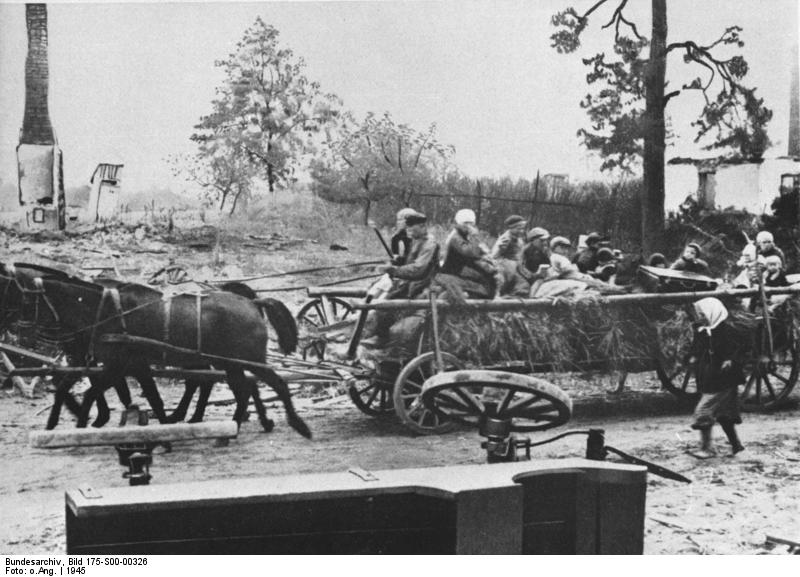
Refugees 1945

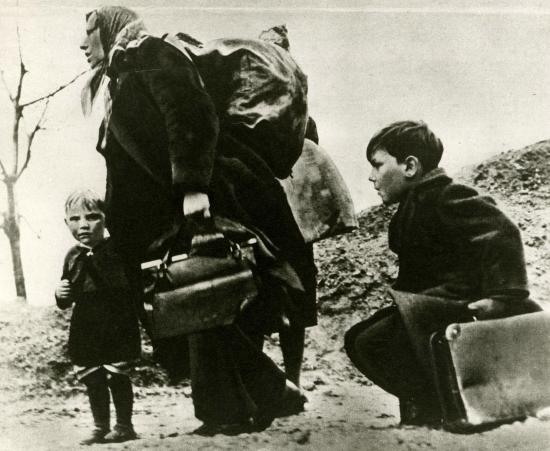
Refugees Fleeing from the Advancing Red Army 1945

Recall Karl’s visits. December 1944. We sat in a “bunker” that Karl built from scrap lumber and card board. He posted a picture of Rommel and told me about all his victories. We now know how Rommel died and why. Around Christmas time the family set around a small table with a small squeaky radio listening to Hitler’s last big gamble on the western front. The Battle of the Bulge. German tank units had smashed through the Ardennes forest and were headed to the coast cutting off all allied supply lines. Victory was our fearless leader’s Christmas gift to us. Karl: ”Mensch Pose. Wir gewinnen den Krieg”.

Again. We know how that went. Karl quickly rounded up boys and girls and organized war games, which would replicate those German victories and more to come. In order to keep up the high moral he instituted a system of executing deserters and cowards. To facilitate this he needed an example of what happened to such bad Germans. He convinced me to become an actor and become the first to be shot. He used an older army rifle and some carbide explosive to scare forced onlookers to witness my execution. As told, the bang occurred, I dropped to the ground. Onlookers ran screaming into the house. End of my acting career.

Recall a party our father put on for a group of volunteers from the Dutch speaking part of Belgium. They were eager to fight for Germany against the communist menace. They sang German war songs and enjoyed their good times. Likely their last one as well.

Christmas 1944 was still a lavish one. Huge tables set with gifts and all sorts of chocolate and cakes. Last of the good times. Shortly after, frantic packing and loading of wagons. Had no idea what this was all about. Thought this was great fun or some other entertainment. Father as ordered or expected by our glorious leader stayed behind. On the urging of our Polish friends advising: ”We know you, others do not” did he load up his one horse-drawn four-seater wagon. Beautifully decorated and with pneumatic tires. On his way to find us, he picked up 3 recently orphaned children by the side of the road. Their father was killed in the war and their mother shortly before the order came to flee to the west. Our mother now had 5 children to care for. Seemingly endless rows of wagons. Some motorized soon to be abandoned by the side of the road or simply broken down during very severe weather and road conditions. Not sure if we made 29 km a day. Food and fresh water often impossible to get. First some babies died to be buried by their mothers by the roadside in the snow. The sick and elderly soon followed. We were lucky. Our horseman and driver was experienced and knew the countryside well and most drivable side roads.

Mother and Children

Mother and Children

Father must have discussed that with him as he did meet up with us at a remote country location. Some days later we ended up at a large farm overrun with refugees from all over. Dead tired, I fell asleep in a haystack. Next morning as I awoke I realized that I was separated from all my family. Seemingly hundreds of people were running around looking for toilettes, water, food or a way to get moving west. I was terrified and lost. It was here in all the confusion Father appeared. Our good Polish friend and driver of our wagon urged us on as the presence of Russian tanks was heard all around us. Our next stop was at a remote small farm owned by a local forester. The owner Mr. Novac discussed what to do. Novac suggested to remain at his place together and to outwait the war. Still east of the Oder River, our chances of making it across alive were slim. Our good Polish horseman and wagon commander Wurblewski, likely spelled wrong, insisted on living in his own quarters. A small house on a top of a hill. We stayed with our family in the forester’s home.

Russian T34 Tank

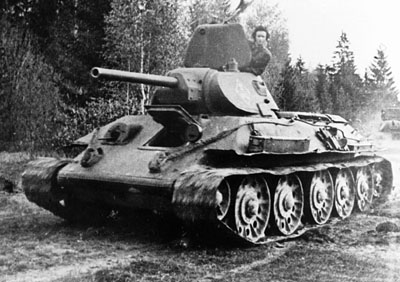
Russian T34 Tank

Situated at the bottom of a small valley. At night we heard gunfire. Did not make much of it, as it was now a common occurrence. Early next morning an exited and distraught Wurblewski knocked on our door holding his beautiful huge fur coat, his prize possession, up for us to see. A large hole in the middle of the coat. Clearly, a gun shell had smashed through the house barely missing the sleeping man. Father had to reassure him that we all are very happy that our chief navigator is still alive. On another day Russian soldiers with horse-drawn wagons showed up. They were confused and lost. They asked a Polish speaking elderly farm employee for directions. A boy about my age, possibly a relative of the farm woman was talking to the Russians. He hopped on the wagon and they departed in a hurry. Not knowing what it was about, I ran after the wagon hoping to go along for the ride. A Russian sitting on a bench facing backwards raised his gun and pointed it straight at me. Heard a click. I froze. Just stood there. He put his gun down and sternly waved pointing to the farmhouse. I ran as fast as an Olympic runner. Not certain if just another rumor. Very common under the circumstances. The boy was never seen again. Heard later that the boy led the Russians into an ambush. All were killed. German soldiers often separated from their units continued to harass the Russians behind the front lines. Some would visit our farm at night in search of food and other supplies. Few days later more Russians arrived. They ordered us out at gunpoint.

Being Brutally Resettled 1946

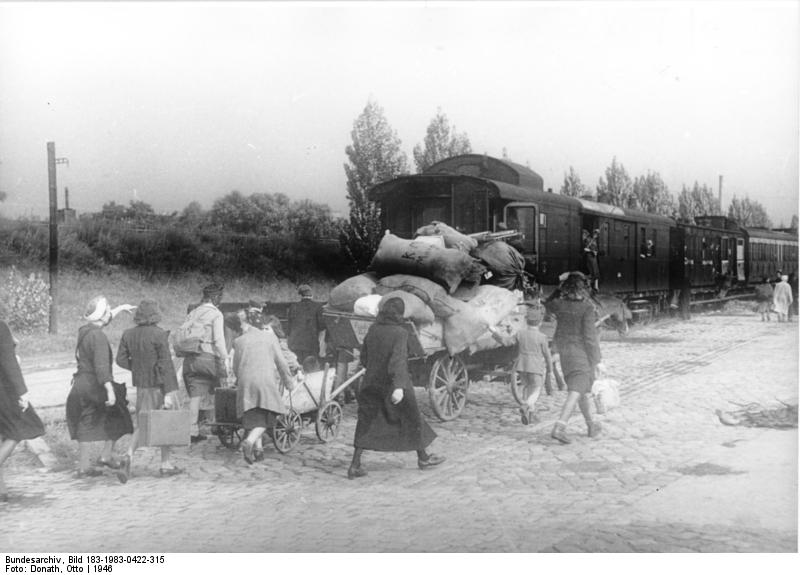
Being Brutally Resettled 1946

Burnt the complex down. We were once again homeless, cold and had nowhere to go. Not certain how we got to the next village intact. Our mother forever worried what may have happened to her two sons in Belgard. A city where they were boarding with friends in order to attend schools not available near Gutfelde. Her only daughter Erika was boarding with relatives in Silesia. Mother packed us up and took a train though Russian occupied territory to Belgard. The three orphans father had added to our family were still with us. The Meisner family, where both Karl and Adolf were boarding took us gladly in. But the reason for our journey was to be reunited with Karl and Adolf. They had left some time earlier to avoid the Russians advancing on Belgard. Their Odyssey is described with Karl’s report. Hope to remain in Belgard to await final outcome of the war ended when the Russian administration decided to deport us west. First to a camp in Stettin. They made us walk miles through snow-covered trails. Any luggage we could no longer carry was simply thrown away. We were then shipped in boxcars to a refugee camp in Schleswig-Holstein.

The Klopp Grandparents IV

Heraldry of Wolmirstedt

Heraldry of Wolmirstedt

Emma’s Father, Friedrich Wilhelm Bauer

1818 – 1868

Adapted from Eberhard Klopp’s Family Chronicle

F. W. Bauer’s job description ‘factory inspector’ goes back to government regulations, which were based on laws pertaining to safety and protection at the workplace. Factory inspectors with the authority of the local police ensured the prevention of child labor, enforced the labor law regarding the maximum number of hours permitted for day and night shifts, and generally were there to protect the safety and health of the workers. In addition to these duties, they made sure that all workers were provided with proper ID cards and that logbooks be kept with their employment records.

In other words my great-grandfather F. W. Bauer in Jersleben now belonged to that special organization of state employees, who in the interest of factories took up control functions for the protection of the workers. The scope of his responsibilities as a commercial policeman may have included the supervision of mills, sugar and starch plants of the region around Jersleben and Wolmirstedt.

About three years after their move from Rottendorf F. W. Bauer died in Jersleben on April 20, 1868 at the age of only 50. His wife Sophie Bauer (née Wegener), a woman of exceptional beauty in the memory of her descendants, outlived her husband by thirty years and died in 1898 at the age of 76 in the Wolmirstedt house of her grandson Friedrich Klopp (1875-1946).

Photo Credit: Museum Wolmirstedt

Photo Credit: Museum Wolmirstedt

Needles – a Town that is no More Part II

A Tractor Snowplow Crossing the Lake

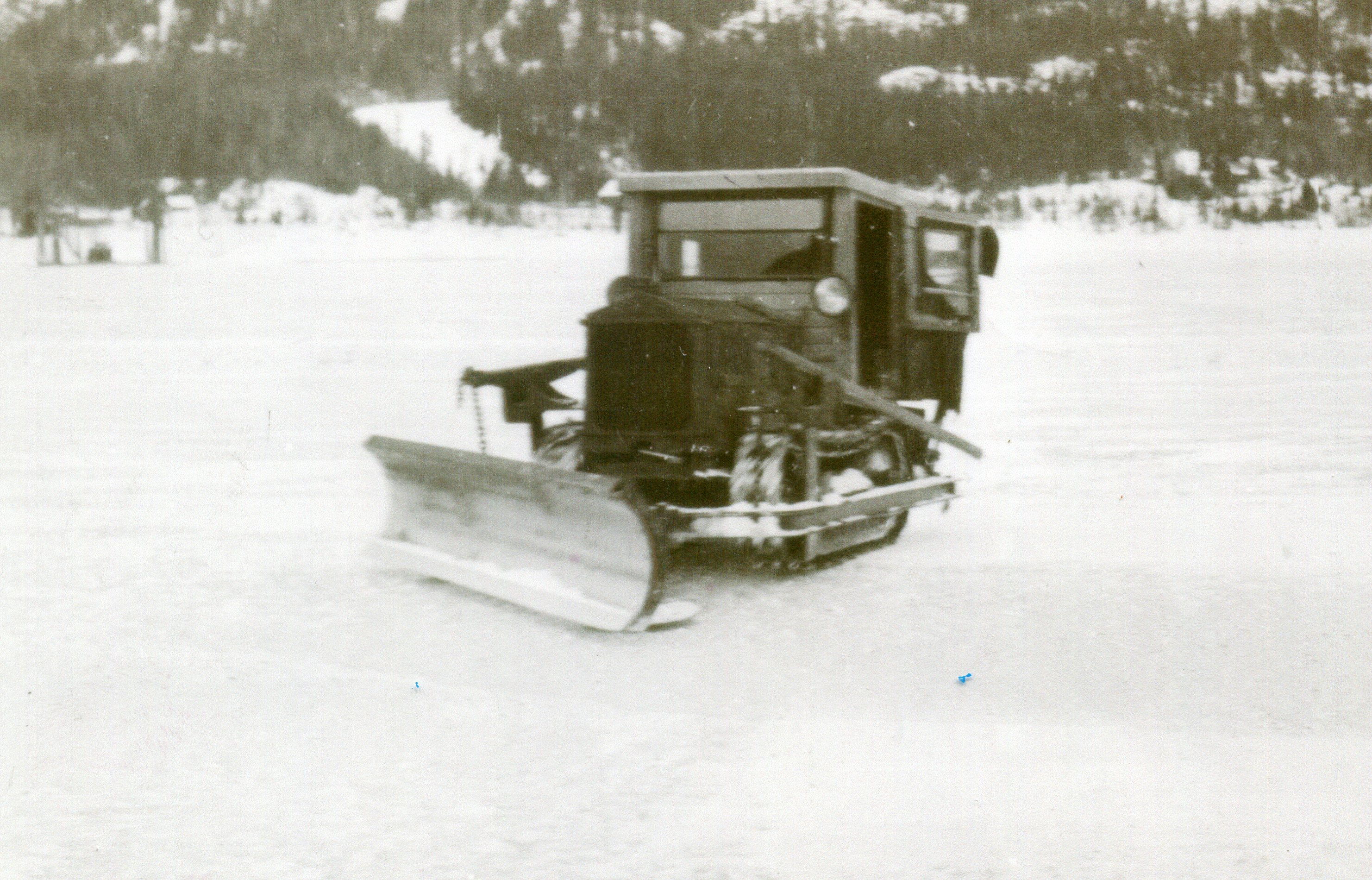
A Tractor Snowplow Crossing the Lake

Story and Photos contributed by Annette Devlin

Also, as the lake froze over in the winter, mail was transported by horse and sleigh from Burton over the ice.

A403

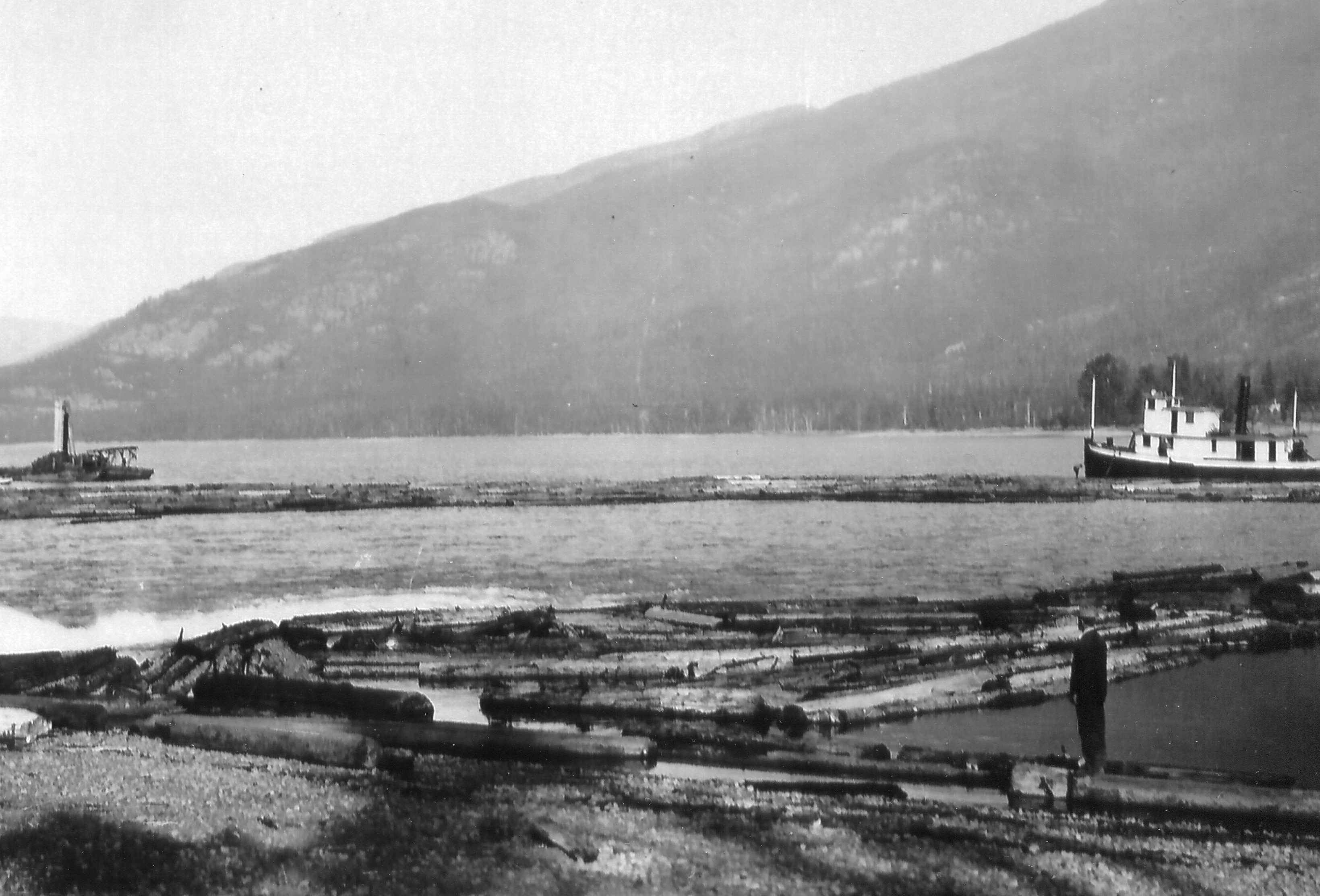
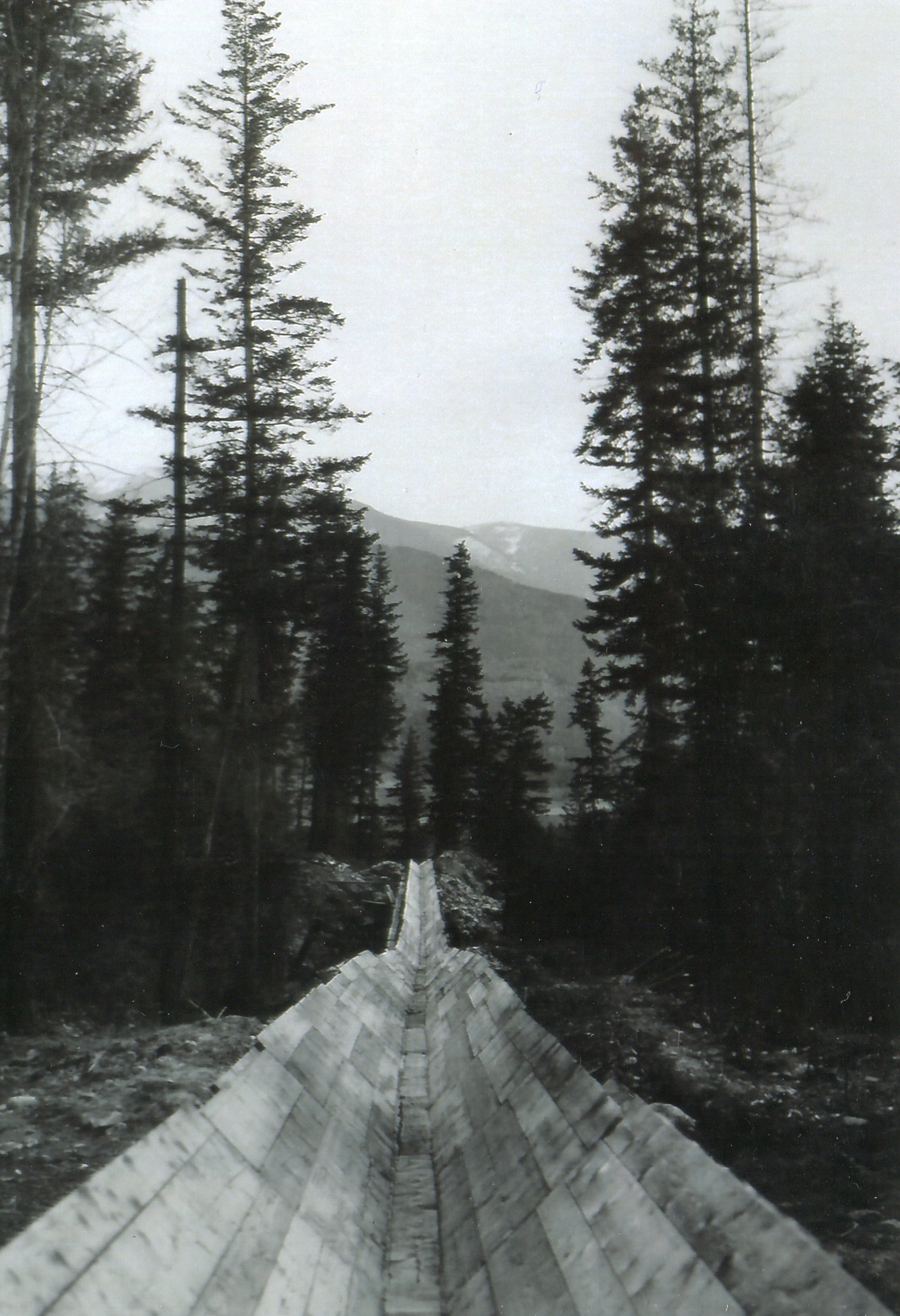
Needles had also been a logging centre. In 1922, it had a large log flume for logs that ran for four miles from the Whatshan to the Arrow Lakes, at one place where it crossed the road it was 12 feet above.

Log Flume Four Miles Long

Log Flume Four Miles Long

Due to the flooding of the Arrow Reservoir the town site of Needles no longer exists. However, the properties both north and south above the high water line are still occupied.

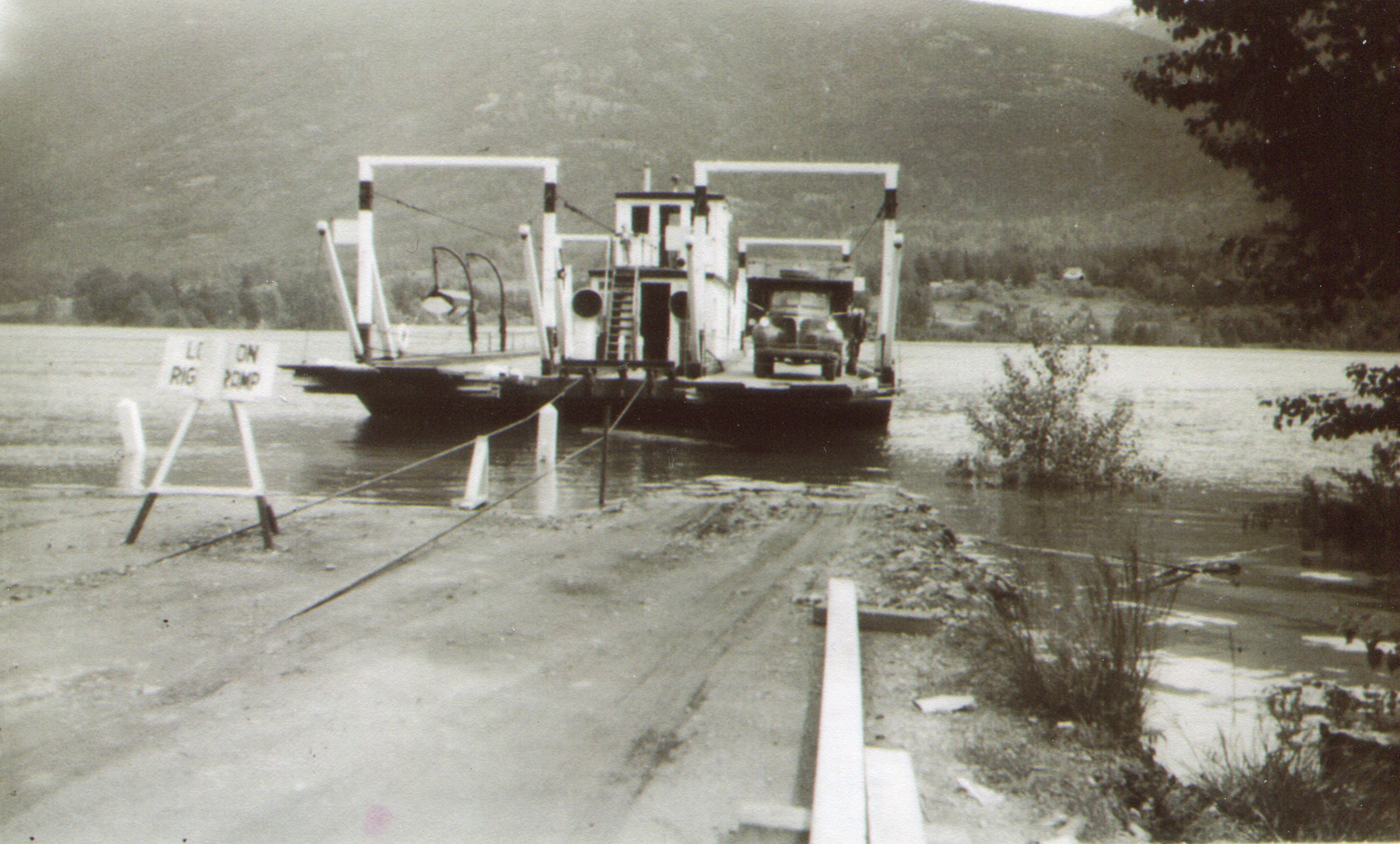
Ferry Service in the early 1920's

Ferry Service in the early 1920’s

As reported the first ferry to cross the Arrow Lakes between Needles and Fauquier was a 6 HP launch in 1919. In 1922, a raft towed by Mr. O.J.Aspinall’s rowboat was used. By 1924, hourly daily service was started by Mr. George Craft consisting of a boat for foot passengers and a raft for vehicles powered by a small boat called the “Kathleen.” In 1928, Claude Rollins was engaged to give better service with a larger boat. In 1931 a three-car ferry was installed. 1941 saw an eight-car cable ferry put into use. As the years went on, the increase in traffic warranted larger ferries and more hours of operation.

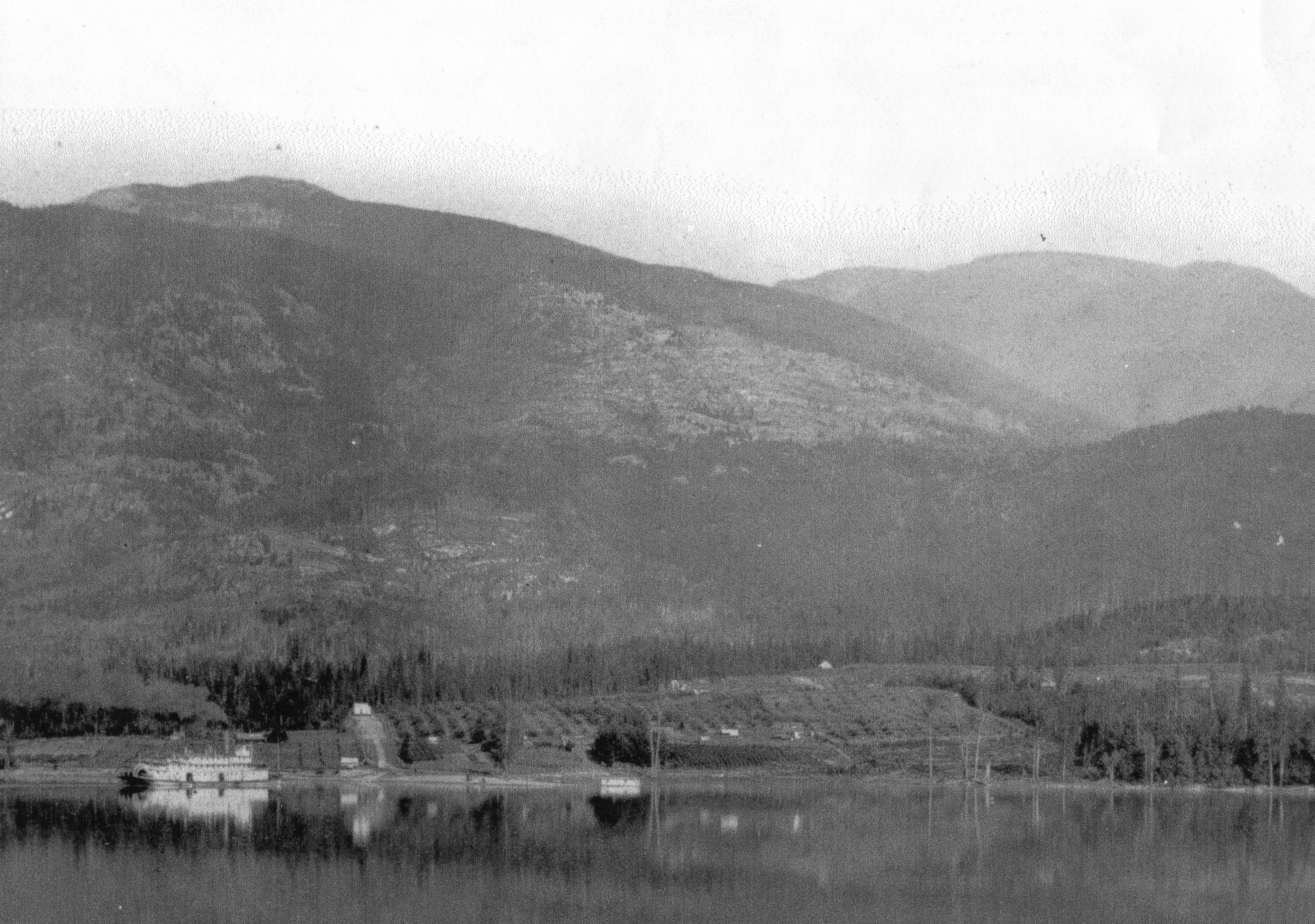
Fauquier as seen from the Needles Side

Fauquier with its Large Orchard as Seen from the Needles Side