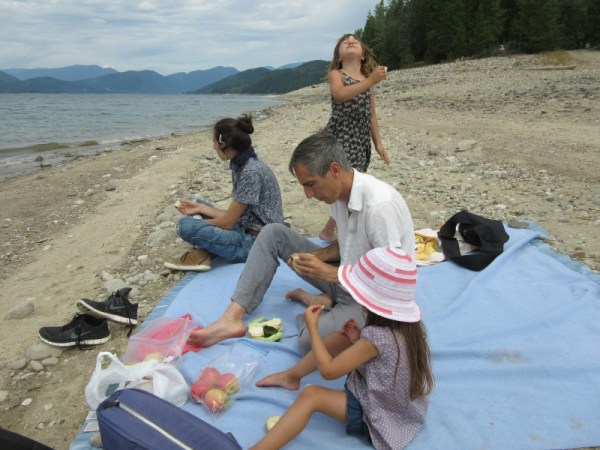
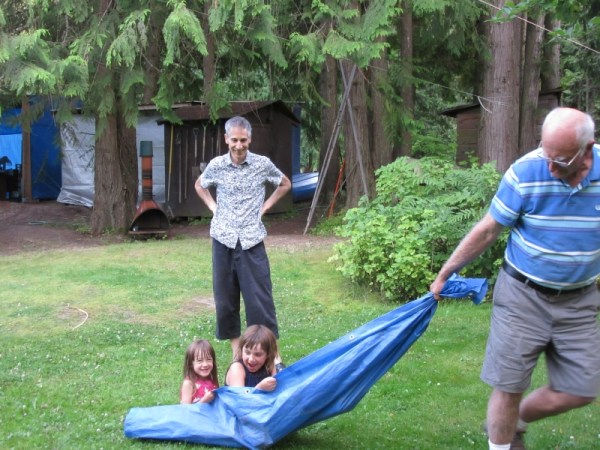
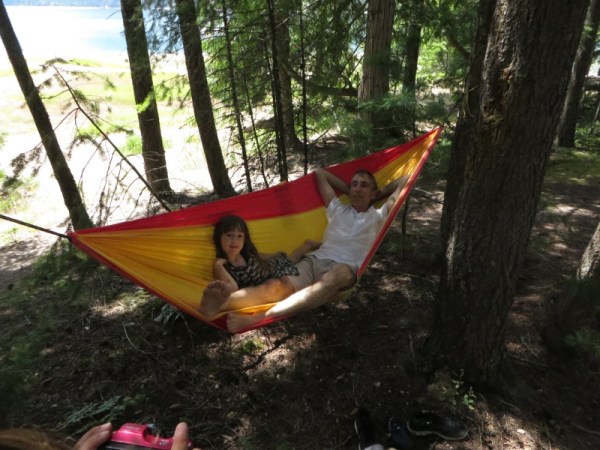
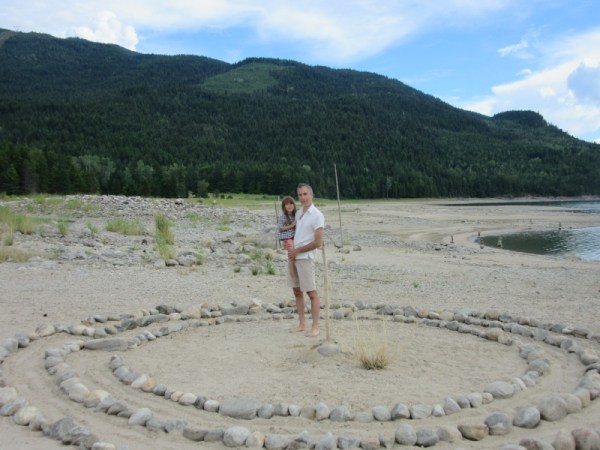
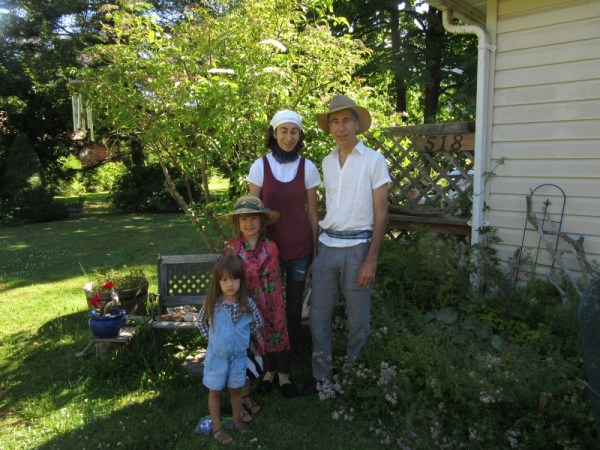
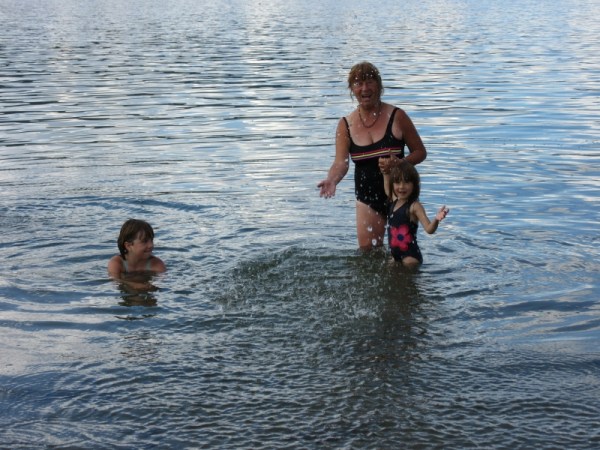
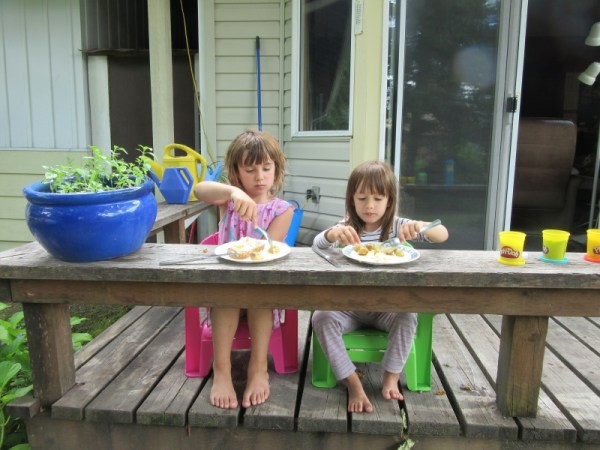
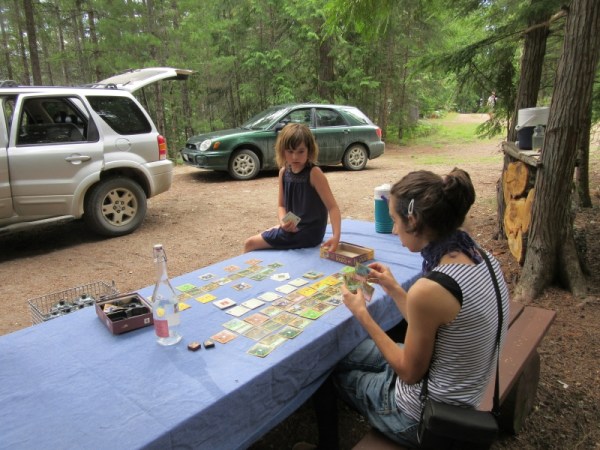
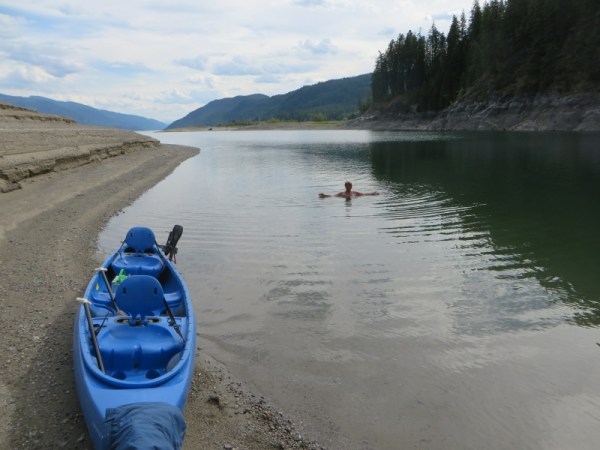
In early July our family gathered on Galiano Island. This was definitely a major highlight in the lives of all family members. In addition to strengthening the bond of our family that is scattered all over Canada and the world, it was also a celebration of Gertrud’s and my golden anniversary. We spent four glorious days with the finest weather on this beautiful Gulf Island. The participants were our son Richard from Montreal with our three grandchildren Mateo, Azure, and Emeline, Anthony and his partner Lisa from Victoria, Michael and his wife Angie from Vernon, Stefan and his partner Laura from Vancouver. Unfortunately, our eldest son Robert could not attend, as he had just started a new engineering job in Germany. The video below will tell the entire story. Enjoy!
Author: Peter Klopp
Back on Track
To all my friends and followers I am sending out my apologies for resuming later than promised my blogging activities. As I am relaxing in the sunshine of a glorious late summer day at our favourite Taite Creek campground on our beautiful Arrow Lake, I am typing up the major themes of the Klopp Family blog for the coming fall and winter.

Keeping Company with Blue Herons
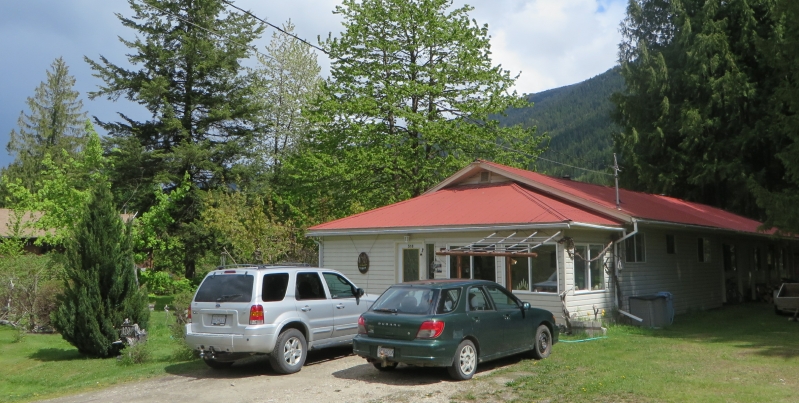
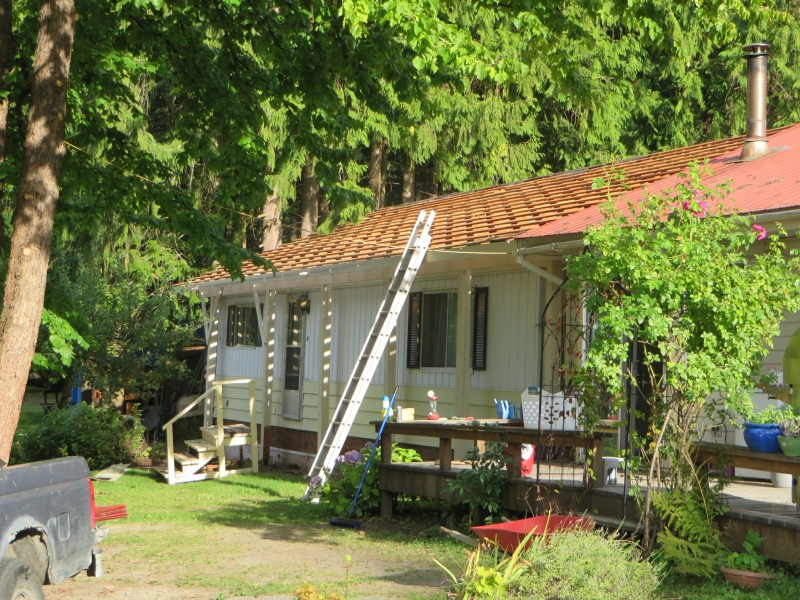
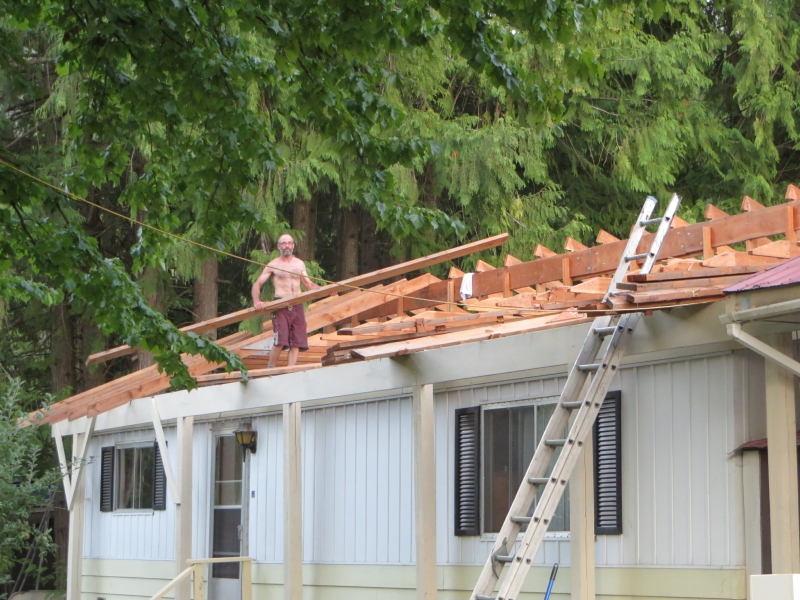
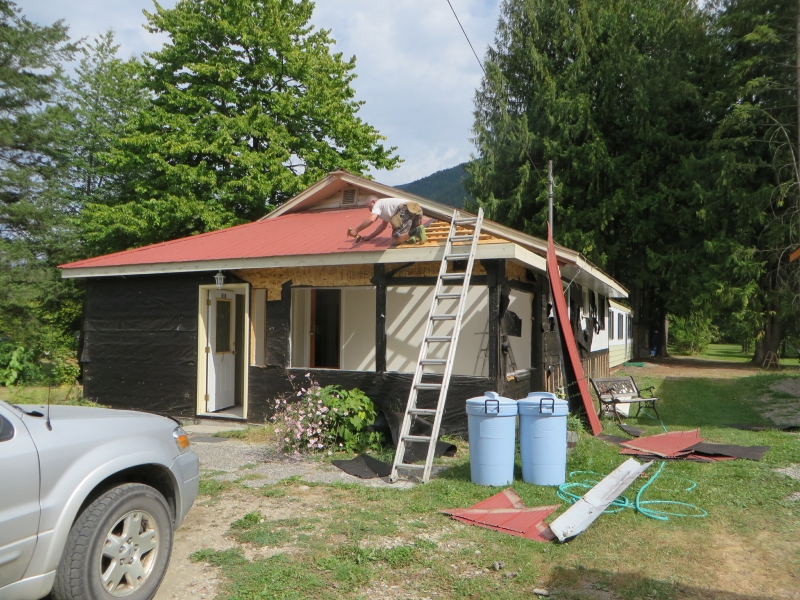
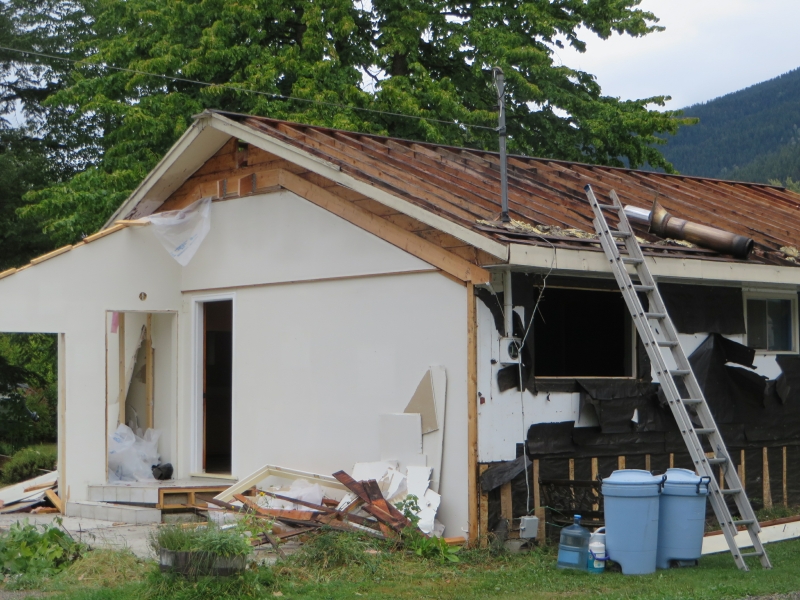
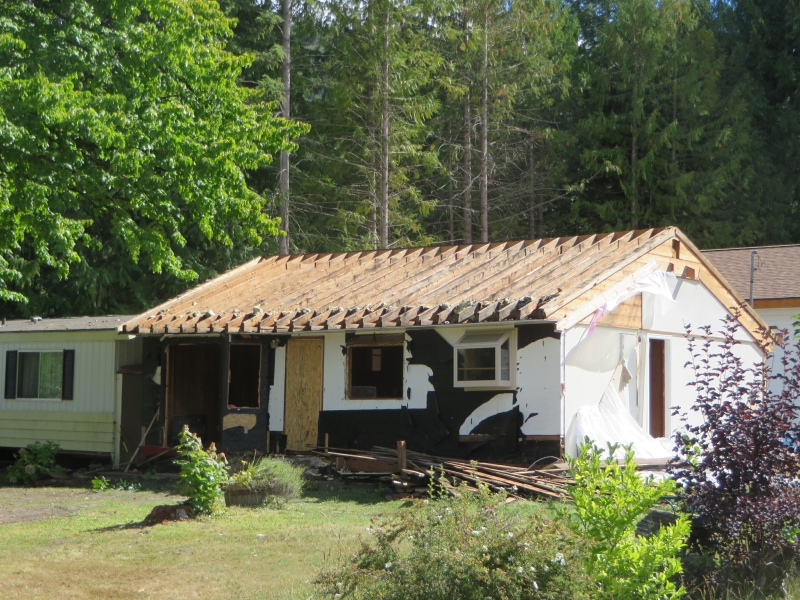
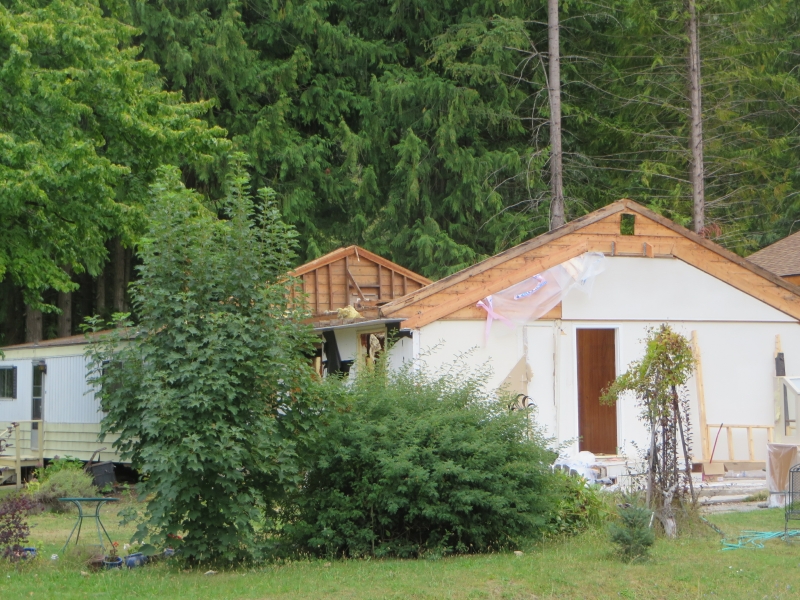
Before I delve into that I wish to express my sincere regret front having had the time to read and appreciate our posts during the last couple of weeks. The summer months – normally already very busy with travels, visiting family and friends, and activities away from the computer – turned out to be extremely strenuous and stressful this summer, although the events also brought a lot of joy into our hearts. After our family reunion on Galiano Island, our son Richard, our grandson Mateo, and the two granddaughters Azure and Emeline spent their vacation with us in July and August. Unfortunately, this was also the time of preparation for the removal of our old house to be replaced by a new modular home, which our son Michael ordered for us to be built on the site of the demolished house.

Early Morning Magic at Taite Creek Campground – Photo Credit: Gertrud Klopp
So you know now why I am writing this introductory post at the campsite. For my wife and I are practically homeless for the next couple of weeks and have to make do in our small travel trailer.
For the fall and winter season, I will focus on the following themes:
The Peter and Gertrud Klopp Story (continued)
Revamping and Improving the Family Trees
Fauquier – Nature’s Beauty in the West Kootenays (continued)
Fauquier – Its History (continued)
Aunt Anna – Baroness of Von Waldenfels
Local Enterprises and Cottage Industries
Contributions by Family Members in German
Family Review of Summer 2016
Without home access to the Internet I will publish at the beginning just one or two posts per week. I am looking forward to read again all your posts and am really excited to find out what is going on in your part of the world.
Sligachan and the Cuillin Mountains of Skye
It was our last day on Skye and we piled into our Rabbie’s mini-bus right after breakfast and John, our tour guide and driver, headed out of Portree. We were on our way on the long drive back to Glasgow. But we stopped after only ten miles to get one last look of the misty isle. We gazed at the river winding down the glen and noticed that the hills on the left were smaller, rounder and well, redder, than their neighbors on the other side which were taller, rockier and darker. The Red Cuillins on the left are made of granite. The Black Cuillins on the right are made of gabbro. Together they form the Cuillin and are considered the most beautiful mountain scenery on Skye.
View original post 719 more words
Skye’s Museum of Island Life
I reblog this post for all my friends who love Scotland and/or going to visit this beautiful country soon. I also highly recommend readingcrowcanyonjournal’s previous posts on Scotland.
After our spectacular views of the Quiraing on Skye’s northern tip, John, our Rabbie’s Tour Guide, thought it would be best to take us to a museum. He must have noticed that the weather had taken a turn for the worse. So he drove us over to the northwest side of the Trotternish Peninsula to the village of Kilmuir where on a clear day you get a nice view of the strait called The Minch that separates Skye from the islands of the Outer Hebrides. But this was not a clear day. In fact, the wind was rather fierce and the rain was often horizontal as we dashed between one thatched croft house and another at John’s museum. We discovered quickly that John’s museum was not an ordinary museum. Yes, we found some roofs over our heads. But also a lot of space between the roofs!
View original post 476 more words
Chapter 22 of the P. and G. Klopp Story – Part II
Challenging Times at Maxhof
In these turbulent days I now and then pulled out Biene’s letter and carefully read it over looking for a sign of encouragement, a key to her heart, but there was none except perhaps that she had written to me at all. Again I was in a dilemma. One side of me said, ‘In view of her engagement and promise of marriage to another, it is unfair for me to keep writing. Let her go! Leave her alone!’ The other more irrational side, which by definition is not persuaded by reason, urged, ‘You loved her; and you love her still. Cling to her as long as you can.’ So unable to keep the two warring parties apart within me, I wrote a short note intended to show that I was still thinking of her, but at the same time emphasizing that we were hopelessly drifting apart.

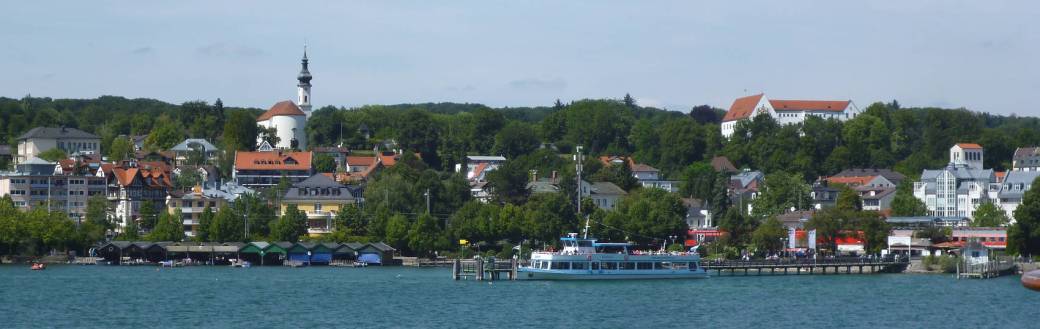
Feldafing – Photo Credit: immo-vilalta.com
In a poisonous blend of regret and resignation I wrote, “From month to month our tracks are more and more drifting apart, and what is left, as you write so correctly is the pain. But also pain eases over time. What seemed so devastating at first does not hurt as much any more. Only from time to time when I look at your pictures, melancholy sets in and spreads its debilitating influence. But even that will end like a river disappearing in the parched sands of the desert…”

Kegler Family: Helga. Gerhard, Günther, my mother Erika Klopp, Marie and Lucie Kegler
Picking up Biene’s very own words I continued, “Will we see each other again? Perhaps. But may Fate prevent this from happening! We met, played and laughed at Lake Baldeney. We were dreamy idealists, when we wrote each other! It was good that things turned out this way for you and also for me. We would have deeply disappointed each other; I would have certainly disappointed you. Believe me, there are a thousand sides to my personality, and in my letters I showed only one. Until next time! Farewell, dear Biene! Your Peter.” As soon as I had dropped off the letter in the mailbox, I called myself a fool. For I was sure that Biene after reading these confusing, despairing, heartless lines would not consider me worthy of another reply.

Feldafing from above – Photo Credit: bayern.de
The response to our complaint was swift, and realizing that most things in my life lately have turned out to be a surprise, I began to expect the unexpected. The way the army brass dealt with the transfer grievance was no exception. I wanted the major of the signal corps to deal directly with our problem, invite us to respond to more questions, and eventually serve justice by reinstating us into the driving school or even put us into the officer-of-the-reserve program. Instead, we were called in to see the very same officer we had filed our complaint against. If he was angry at the system on our first visit, he was now openly hostile at us. He resented that we had the audacity to bypass him and that we had gone straight to his superior to complain about him, even though we had not even mentioned him in our letter. With a calm voice calculated to instill fear he told us while pointing to our letter on his massive desk that we had two choices. Either we withdrew our grievance with no disciplinary action taken against us or we foolishly insisted on following through with our complaint before a hearing committee with most unpleasant consequences if it is determined that we had made false accusations. Barely concealing the intended threat he nevertheless spoke matter-of-factly almost in a conciliatory, amiable tone, “You must know, young fellows, we merely spoke of the possibility of getting you into the driving school. The office staff for some reason or other did not inform you of the impending transfer. That’s the whole story, regrettable for you, but true.” Gauke and I looked at each other. The threat had worked. We would have no leg to stand on, even if the hearing committee was going to lend us a sympathetic ear. Thus, we signed the document certifying the withdrawal of our grievance.
“Listen,” the officer said with a triumphant smirk on his face, “Enjoy your stay at Maxhof. You have more than two months left here. Most soldiers would only be too happy to trade with you.” So Gauke and I had accomplished nothing. We returned to our living quarters deeply disappointed.
Note: This was the last post of the Peter and Gertrud Klopp Story. The Klopp Family Blog will continue later in the fall. There are just too many events coming up that will have priority over my blogging activity, such as a major family reunion, traveling through BC, demolition of our old house and its replacement by a modular home. Hopefully, I will reconnect with all my readers and followers. Thank you for all your encouraging comments! They were all very much appreciated.
Origin of Needles, BC
Needles took name from Arrow Lake Sandspits
by Greg Nesteroff
reprinted by kind permission from Arrow Lakes News
Needles, the western terminal of the Lower Arrow Lake ferry, was formerly known as The Needles, and was first mentioned in the Nelson Miner of Nov. 30,1895, concerning two mining claims recorded by John D. McDonald and A. A. McPherson “at the Needles, Lower Arrow Lake.” In an interview published in the Arrow Lakes News on June 19,1958, Rose Wright explained the names origin: ‘“Why do you and many old timers speak of Needles as The Needles?’ ‘Well, it was always The Needles in the old days, due to the long points that reached out into the lake. It is only in later years that it has been shortened to Needles.”’ Actually, the shortened version actually first appeared in the Miner a week after the long version debuted, also in relation to mining claims, but it wasn’t until the Fire Valley post office was renamed Needles on Oct. 1, 1906 that it became commonplace. Even so, the “The” stuck around for some time — the Nelson Daily News of July 13,1911 noted “Welford Beeton of the Needles came in last night…”

Needles Ferry (Fauquier – Needles) – Photo Credit: Gertrud Klopp
According to the BC Geographical Names database, Needles is the landing’s name, but The Needles is still the official name of the narrows, even though construction of the High Arrow Dam in the 1960s submerged both the sandspits and the community that grew up there.
A new Needles post office was established in 1908 and closed in 1968 upon the flooding of the Arrow Lakes. Today the only thing left of the old community is its cemetery.
In 1910, A.H. Green surveyed what’s now Fauquier, on the east side of the lake, but the map called it Needles Ranch, a name by which it had been known since at least 1905.
According to Just Where is Edgewood, a place between Needles and Edgewood was known as McKallister’s Landing, after “the land agent who settled the townsite of Needles.”
No contemporary examples have been found of this place name and it’s not known exactly who its namesake was, although he was apparently still in the area selling property as of 1911.
The late Bill Laux said McKallister’s (or McAllister’s) Landing was the site of the original Fire Valley post office, which opened in 1894. Later, the CPR called this place Page’s Landing after William Henry Page (1861-1933), an English miner who came to the area from Butte, Mont. around 1893 and served as Fire Valley postmaster from 1908 to 1910.
Just Where is Edgewood (which erroneously calls him Walter Page) describes him thusly: “ [H]e lived on the lakeshore between Edgewood and Needles … He had been married at one time but his wife never moved to the valley. He was always referred to as Captain Page and often took the part of Santa Claus in the early Edgewood years. He was a fat, jolly type of person.”
He was among the first burials at the Needles cemetery, although his grave is unmarked. A mountain ridge was supposedly named for him as well, but it’s no longer on the books.
Pages Landing was first referred to in the Revelstoke Kootenay Mail of Sept. 26,1902: “The scene of the new strike is only 16 miles from Page s Landing, on Arrow Lake …”
It was only ever mentioned a few more times.

George Craft is seen in front of the Needles Hotel, which was also the post office. He was postmaster from 1920 until his death in 1942, whereupon his wife Edith took over the job. Today all that’s left of the old Needles townsite is the cemetery.
Courtesy Ed and Marian Craft