Friedrich Otto Karl Klopp (1878-1957) – Part III

Karl’s Professional Development

(Klopp Family Tree – Chart I – II)

To see the Klopp family tree, click here.

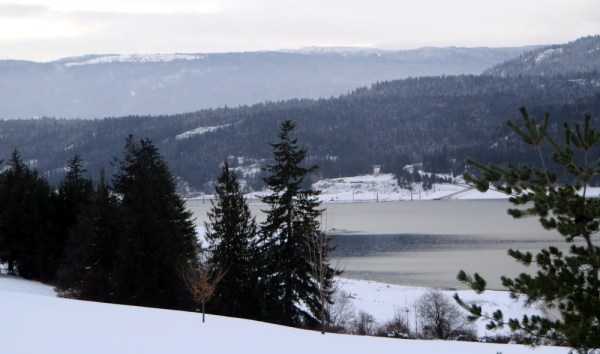
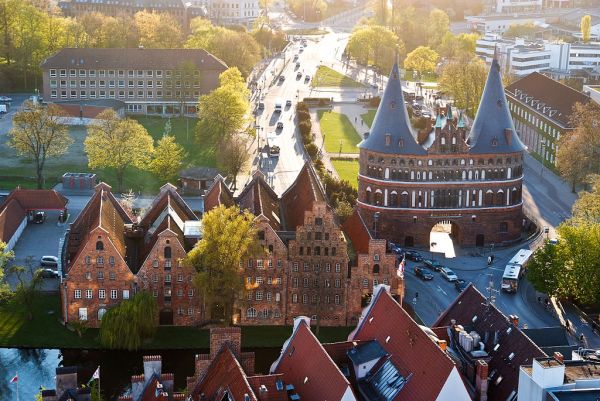
View of Lübeck - Photo Credit: wikipedia.org

View of modern-day Lübeck – Photo Credit: wikipedia.org

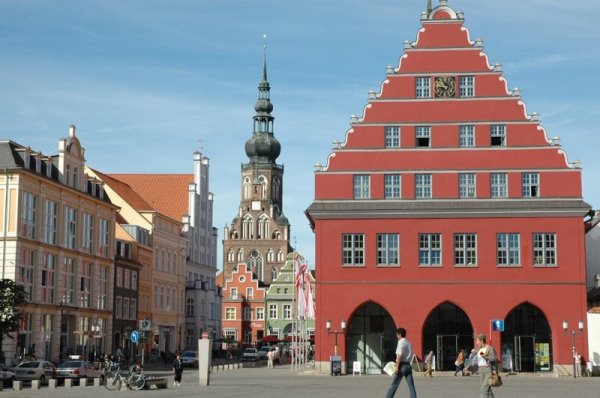
After his active service of ‘4 years, 11 months and 27 days’ Karl Klopp returned to civilian life. He attended a training course of the agricultural department at Greifswald, Pomerania, and then became adminstrator and manager of dairies and export companies, also construction foreman of the machine assembly plant H.G. Schröder in Lübeck.

Greifswald_-_Town_Hall

Town Hall of Greifswald – Photo Credit: wikipedia.org

In 1905 he succeeded in getting a management position of the dairy in Hüttenkofen near Straubing, Bavaria. In 1907 Karl attended the dairy institute at Nortrup not far from Quakenbrück and obtained the certificate officially qualifying for a management position.

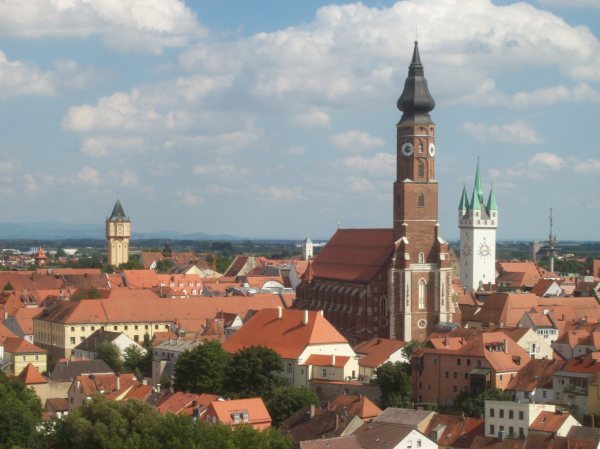
City View of Straubing, Germany - Photo Credit: wikipedia.org

City View of Straubing, Germany – Photo Credit: wikipedia.org

In the same year he married the teacher’s daughter Augusta (neé Hauer). Two daughters Luise (1907) and Auguste (1908) were born. In 1908 Karl bought the dairy of his former employer in Hüttenkofen and also became owner of a house at Radkofer Street 7 with a total assessed value of 29,000 marks. Karl Klopp, industrious and goal-oriented worked his way up into a respectable and wealthy Bavarian dairy owner.

To be continued next Thursday …

A Tale of Two Teachers

A Humorous Comparison by Dieter Barge

Today I have a little joke. Peter Klopp, a retired teacher, had asked me to make a blog post about cacti with pictures of particularly beautiful blossoms. I will soon do this.

Today I would like to quickly report something about Wilhelm Busch, who was a German painter, early cartoonist, and most beloved of all German poets. In his book “Max and Moritz”  he wrote the story in seven boyish pranks about the two little rascals Max and Moritz. While their devout teacher Lämpel is busy at church, the boys invade his home and fill his favorite pipe with gunpowder. When he lights the pipe, the blast knocks him unconscious, blackens his skin and burns away all his hair.  Here is the beginning of the 4th trick:

An old saw runs somewhat so:

Man must learn while here below.

Not alone the A, B, C,

Raises man in dignity;

Not alone in reading, writing,

Reason finds a work inviting;

Not alone to solve the double

Rule of Three shall man take trouble;

But must hear with pleasure Sages

Teach the wisdom of the ages.

In addition the teacher is drawn like this:

Lämpel

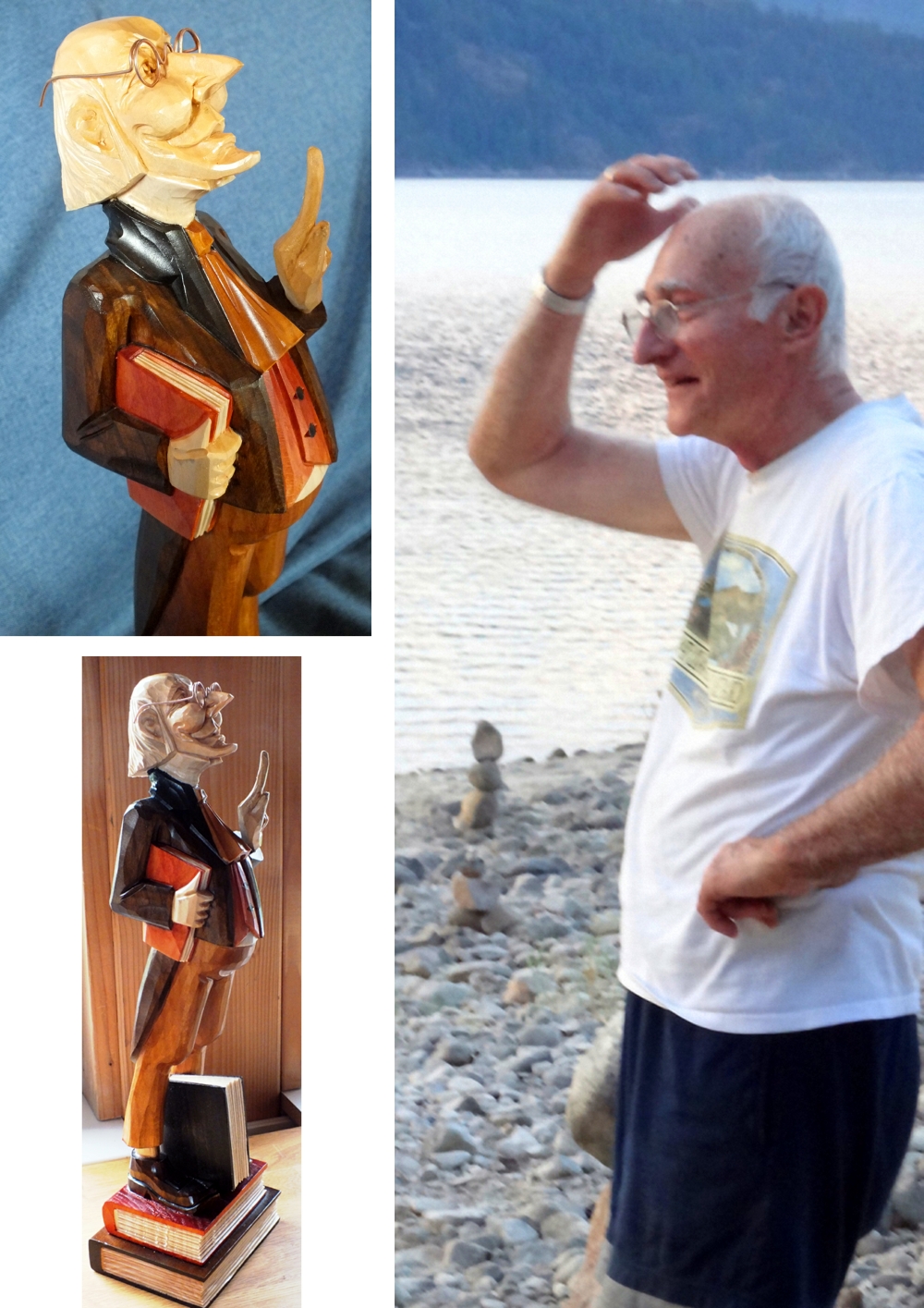
We bought a carved figure of Master Lämpel ! Now a certain resemblance between two teachers has struck me:

Peter Klopp Lämpel small

On this post I share my discovery with glee. Peter will certainly not be angry with me!

Contributed by Master Jester Dieter Barge, who married Edda, the granddaughter of Bruno Kegler (my uncle) and thus became an invaluable member of the illustrious Klopp-Kegler Clan famous or perhaps rather notoriously known for its jocular disposition. To see the Kegler Family Tree, Chart II a – IV, click here. – Peter Klopp


Chapter XV of the P. and G. Klopp Story – Part II

My Twentieth Birthday Celebration

558606-960x720-grillagetorte

In contrast to the war games my birthday parties with Hans, Klaus and Rainer took place in a rather amicable atmosphere. Mother, who liked my friends very much, was very supportive and ensured that we boys would have fun in celebrating my special day. She even contributed a bottle of fine Mosel wine. Since each guest also brought a bottle, Mother hid them and mad sure that only one bottle at a time would be on the living room table. She did this to alleviate my aunt’s concern over our overindulgence in alcoholic beverages. Before the actual party began, Mother and Aunt Mieze joined us for coffee and cake. All eyes were fixed on the main object of attraction, a visual feast, which made our mouth water in delightful anticipation. Mother had known my preference for the same cake during the past four years and had done it again for my 20th birthday. In the middle of the table she had placed the beloved Grillagetorte, which she had ordered from the local bakery and pastry shop. As soon as you mention this cake outside the Lower Rhineland, you encounter blank faces, because nobody seems to have heard of it. But for decades the Grillagetorte had been the center of many traditional coffee parties and the focus of family get-together and festive days. The cake is the product of high-level pastry making, a pastry composition made from half-frozen cream and meringue. This was heavenly cake for us. It had a fresh and crisp taste, crunchy and rich with its layers of cream and pastry, in short it was fit for the celebration of the first twenty years of my life. How much we enjoyed the feast can only be measured by what little was left over on our plates, which looked as if we had licked them clean. Mother and Aunt Mieze now withdrew to the kitchen so that the all-boys party could begin. We opened the first bottle of wine, filled our glasses to the rim and said cheers.
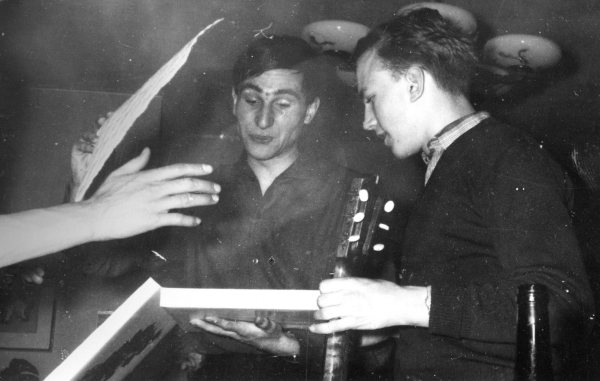
11a

It’s Time to Hand out the Sweets – Hans Holding his Guitar on the Right

It was the tacit understanding that each guest would have to make a presentation worthy of the occasion. Rainer took on the role of a nonagenarian and delivered a comical review of his long life in a slapstick mix of prose and poetry, which, because I remember it so well, I will attempt to translate into English.
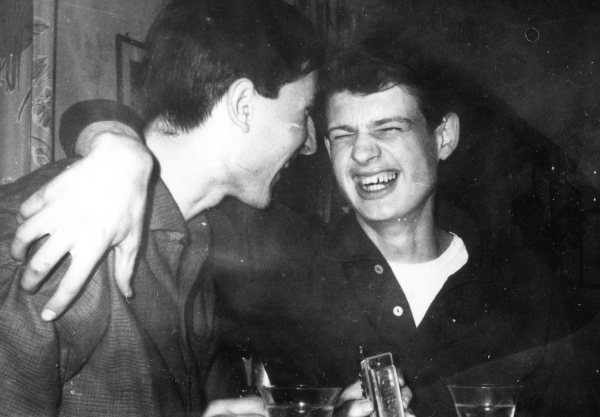
9a

Rainer and the Birthday Child Having a Fun Time with Song and Drink

“Today I am celebrating my 90th birthday. I don’t feel that old yet, but I always say, what is gone, is gone. When I was born, there was nobody at home. On the table lay a note that said, ‘The milk is in the oven’. My mother’s maiden name was Federal Railway, for that name was written on our towels. We did not have a clock. When the chamber pot was full it was six o’clock in the morning. But when my father had gone boozing, the pot was running three hours fast. When I was six years old, I went to a special needs school. What my special needs were, I still don’t know to this day. The teacher was quite dumb and asked a lot of questions. One day he asked one student, ‘What do you know about the ancient Romans?’ The student answered correctly, ‘They are all dead.’ Then it was my turn, ‘What do you know about the ancient Wends (a Germanic tribe that sounds like walls in German)?’ I answered, ‘The plaster keeps falling off from them.’ He must have liked my answer, for he pressed his hand into my face. After I had completed my education, I started to work in a photo shop. There I could not develop, because my boss was constantly fixing me. One day a woman came into the shop and asked me to enlarge her family. I told her to kindly go to the man who had started it all. Each time I opened the cash register I got a cramp in my fingers. My boss did not like it and I was voluntarily forced to leave. Then I went on a long journey with my older brother. All the things he found, other people hadn’t even lost yet. One day we found a rope with a cow attached to it. The judge would not believe that we just wanted the rope and he gave us three years of free board and room. During that time I discovered my poetic talents and wrote a number of fine poems, one of which I would like to share with you now.

‘Ein Stinktier saß auf einer Bank und stank.

Es hatte keine Eile, es stank aus langer Weile.

Und als die Sonne war versunken,

da hat das Stinktier immer noch gestunken.’


Roughly translated into English, it reads like this:

‘A skunk sat on a bench and stank.

Away it wouldn’t scurry.

It wasn’t in a big hurry.

And when the sun had finally sunk

The skunk on the bench still had stunk.

The translation provides a little bit the flavor of the story, which was very well received by the entire gang and cheered with another glass of wine from a new bottle of slightly inferior quality. Hans for his contribution played three pieces of classical guitar music composed by Sor, Carulli, and Albinoni. This was truly a feast for our ears, even for Rainer not accustomed to this musical genre. Hans, an absolute genius in so many fields of endeavor and autodidact in the fine art of playing the guitar, performed later in his university years on his simple six-string so expertly that a wealthy aficionado gave him as a gift the best classical guitar money could buy. What amazed then and still amazes me today is how a single instrument can sound as if there were three: one for the melody, another for the accompaniment, and a third for the rhythm provided by the tapping of the free remaining fingers on the hollow body of the guitar.
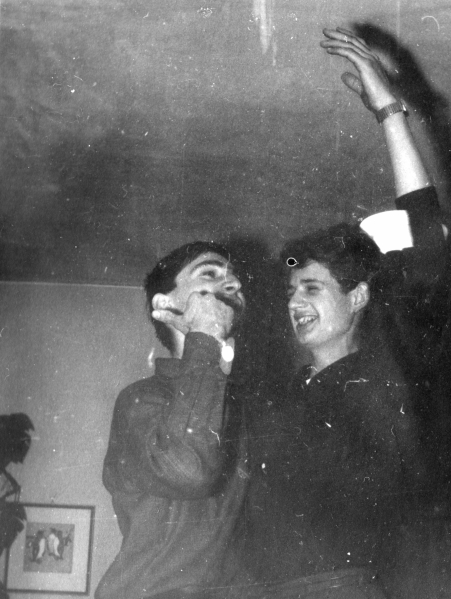
Rainer and Peter Singing a Duette

Rainer and Peter Singing a Duette of our Opera

Mother brought another bottle with a happy smile as if she was reminiscing about the good, old days in Gutfelde, where liquor also flowed in abundance to serve as a social lubricant. Then Klaus, apparently ill prepared, suggested that we all produced a totally improvised opera with the lofty theme of an emperor going to the bathroom. By this time we had imbibed so much wine that we most enthusiastically accepted the challenge to do a mini-opera without an orchestra guiding us from scene to scene except for Hans’ intermittent strumming on the guitar. We sang solos, duets, every possible combination of roles and characters describing graphically in a down-to-earth language the emperor’s pains and troubles on the toilet seat. As it was also loaded with words that would never surface in a properly written school essay, I will spare the reader any further details of our otherwise artfully created opera.
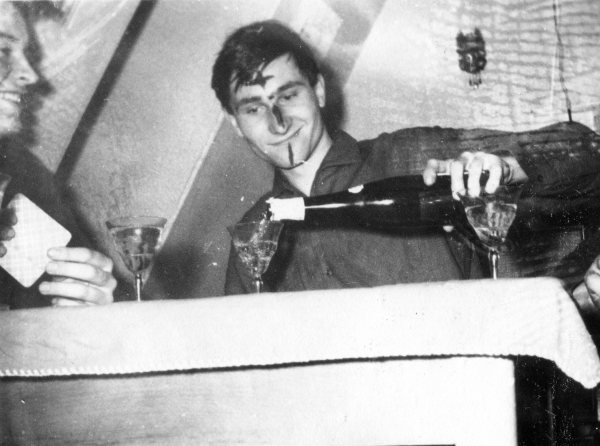
Peter Pouring another Glass of Wine

Peter Pouring a Glass of Wine to Celebrate another Black Poker Mark

After we had emptied the third bottle and our cheerfulness had turned into a cacophony of uninhibited song, fragments of classical music, and pop music from the radio, we transferred our party to my room at the opposite end of the apartment as not to disturb the elderly tenants below. With wine being consumed more in gulps than in sips, the level of our inebriation had reached its climax. We played a round of strip poker, in which for each lost game the player had to surrender one piece of clothing on his upper body and be marked with a black cross from a chunk of charcoal. Finally it was time for my friends to go home. I guided them down the two flights of the creaky wooden staircase making sure that nobody would fall over their wobbly legs and also would not make a racket that would incur the wrath of the landlady. She had once asked me rather innocently how I liked the new apartment. Not expecting any guile, I naively replied, “Oh, I love the new place very much.” Then in a threatening tone she retorted, “Then make sure that you will keep it!”
Friedrich Otto Karl Klopp (1878-1957) – Part II

Military Service in China and Bavaria (Chart I – II)

To see the Klopp family tree, click here.

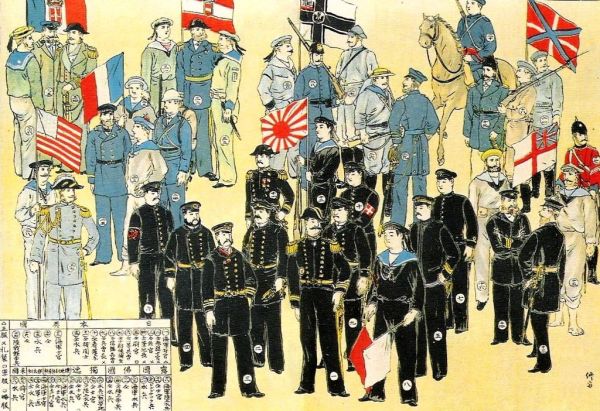
The Eight-Nations Alliance in the Boxer Rebellion

The Eight-Nations Alliance in the Boxer Rebellion 1900-1901 – wikipedia.org

During the Boxer Rebellion Karl Klopp first belonged until June 1001 to the 4th East Asian Infantry Regiment ‘Count Montgelas’, then until the completion of the campaign in October 1901 he was part of 2nd Infantry Regiment.

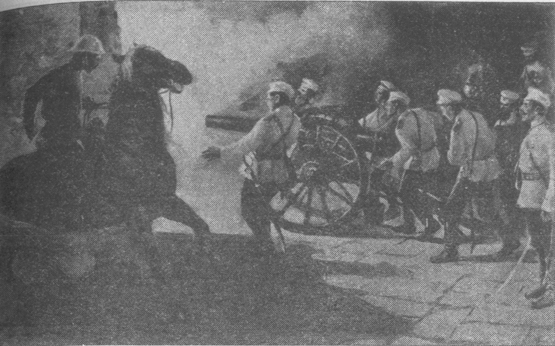
Russian Troops Storming Beijing_Gates - Photo Credit: wikipedia.org

Russian Troops Storming Beijing_Gates – Photo Credit: wikipedia.org

On March 8, 1901 he participated in a mountain battle at the Thanscheng Pass. There he succeeded in the capture of four cannons, for which he received for the first time military recognition. Overall he was awarded during his service the Bavarian medal for bravery, the Prussian military medal, the Austrian First Class Medal for Bravery, the China Commemorative Coin and the Prince Regent Luitpold medal.

Typical Commemorative Medals - wikipedia.org

Typical French Commemorative Medals 1900-1901 – Photo Credit: wikipedia.org

After his return from China he served until September 1903 again at his home battalion at Straubing. There on March 1, 1902 he was promoted to the rank of a sergeant. His subsequent assignment to the Infantry Regiment ‘Prince Ruprecht’ can be seen as a special privilege and preference in recognition of his exemplary role as a leader.


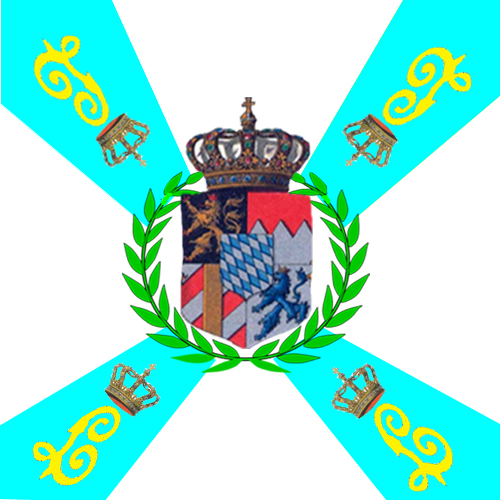
Insignia of the Bavarian Army - Photo Credit: wikipedia.org

Insignia of the Bavarian Army – Photo Credit: wikipedia.org

During that time he suffered an injury to his left knee and was transferred on October 5, 1903 to the reserve beginning his civilian life.

To be continued next Thursday …

Beautiful Poem by Dan Frugalberg

IMG_3366

Rarely does one find in our modern times a poem that has structure, rhythm, rhyme and meaningful content. This beautiful fall poem by Dan Frugalberg is one that I highly recommend for poetic enjoyment to the readers of my blog. If you like the poem, make sure to visit his website at danfrugalberg.com for more inspiring poetry.

Forgotten days of summer, shed, the robes of fall,
Shortening of the daylight, winter’s silent call.
As snowflakes softly gracing, woods, their hallowed hall,
Deep in restful slumber, His creatures, great and small.
~ D.F.

Chapter XV of the P. and G. Klopp Story – Part 1

Chess, War Games and Birthday Parties

“When you see a good move, look for a better one”
Emanuel Lasker

Since Father had taught me to play chess, the royal game, as he called it, I took every opportunity to challenge my friends and classmates to hone my thinking skills. What I liked about it was that its outcome did not depend on luck. As a matter of fact, the game was for me like a metaphor for life containing all the ingredients necessary for success, such as planning ahead, anticipating good and bad situations, making decisions, keeping a solid grip on your emotions, distinguishing between a real mistake and a bait or trap, being gracious and humble in victory and defeat. The chess literature offers a plethora of anecdotes making fun of the foibles of human nature among chess players, especially among those suffering from an excessive amount of vainglory and self-importance. One character can be added to this list in the following true story.

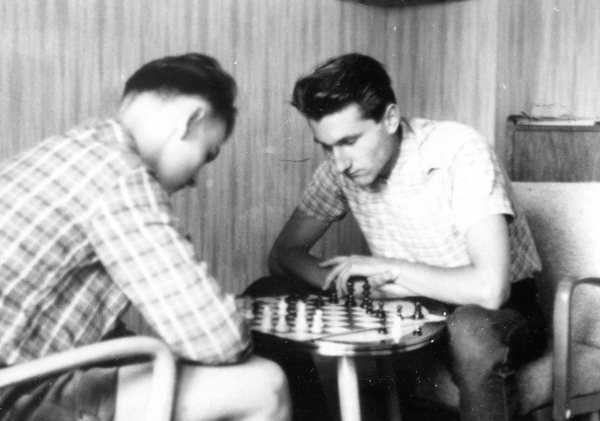
Peter with Spiked Haircut Playing Chess with a Friend

Peter with Spiked Haircut Playing Chess with a Friend

Whether ancient languages, mathematics, physics were the subjects, or playing classical guitar or practically anything else Hans took on, he excelled and was superior to anyone around him during the nine years I happened to know him. Being so good in everything, he could afford to be humble. But when I had beaten him in chess three times in a row, his reaction was definitely not a modest, humble acknowledgement of defeat. He exploded, “I cannot understand how somebody as dumb as you can beat me in chess!” I was so content with my victory over the genius of the Wesel High School that I was not even insulted. Actually I took his disparaging words as a compliment.

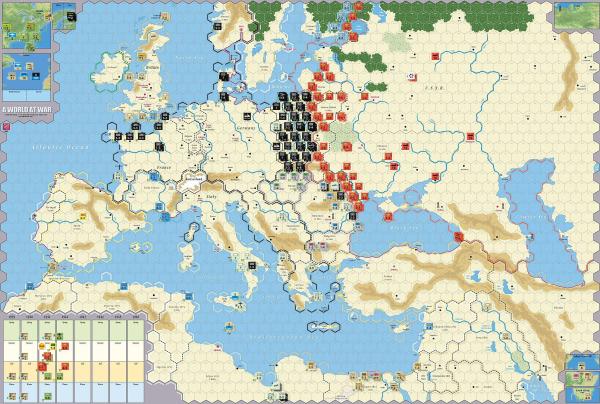
Typical Commercial WW2 Board Game - Photo Credit: warplanner.com

Typical Commercial WWII Board Game – Photo Credit: warplanner.com

The chessboard is like a miniature battlefield except that the opposing armies are at the beginning identical in position, numbers, and strength. But with trillions of possible moves for the average game of thirty moves and counter-moves, the scales begin to tip in favor of the player who has the superior strategy and avoids making mistakes. Somehow it was this combative game that inspired me to create my own war game for four players. From chess I learned that a good game should not depend on luck, on the roll of dice, or cards pulled randomly from a stack. In the final version that would take three to four hours to play, transport vessels and battle ships, tanks, trucks and soldiers had their own movement and attack properties, very much like pawns, bishops, knights, rooks, queen and king in the chess game. On a large piece of  cardboard I had drawn a giant grid of 600 squares, on which I placed the four countries with their respective capitals around the inner sea in a perfectly symmetrical fashion. The successful occupation of a capital by any enemy piece would be equivalent to checkmate with one particular twist: all the lands, islands, the wealth of resources, war material and money would become immediate property of the player who captured the capital. Reflecting realistically the pattern of conquest throughout the history of mankind, the game had to include precious resources not available at the beginning within the borders of the four countries. Gold, iron, and other vital ores were located on the islands at the center of the ocean. To access any of the islands, the player would have to send his transport ships and occupy them. So war was inevitable. Each player depended on the resources to manufacture weapons or to turn them into money whose value fluctuated with the growth or decline of the island possessions. Add to this the player’s ability to form alliances, to make treaties, or arrange secret deals under the table, and we had an exciting game that was in its simplicity of rules and in complexity of scenarios years ahead of the commercial war games, such as ‘Rommel in the Desert’, ‘Eastern Front’, ‘The Battle of the Bulge’, and many others.

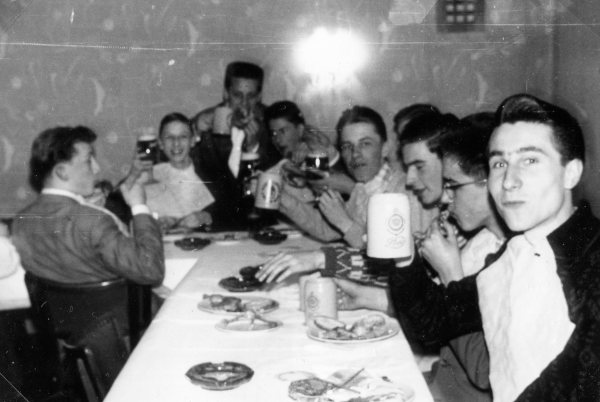
Year End School Party with Classmates

Year End School Party: Peter with raised Stein on the Right

As for me, the inventor of the game, I had the distinct advantage of knowing how to deploy the army and navy units most effectively. So it was no surprise that for most games I emerged victorious either as an ally with a willing partner or daringly going forth all alone. One day I arrived a little late for our weekly war game at Rainer’s place. I immediately sensed that my three friends had come to some sort of agreement to form an alliance against me that was supposed to hold at least until I was defeated and eliminated from the game. I saw my suspicion confirmed, when the two players whose countries were adjacent to mine almost immediately prepared an attack with their ground troops at the two borders, while the third player was directing his naval fleet towards my favorite island amounting to a declaration of war. It was plain to see that Hans, Rainer and Klaus had prearranged this maneuver, because the ships were loaded to their maximum carrying capacity with tanks and trucks, while the borders remained virtually unprotected. Never before had I been in such a precarious scenario, in which I had been outnumbered three to one in a war against all three playing partners. Once the enemy forces would have occupied the islands and cheap production of more war material would have begun, the odds would even be worse. I had to act swiftly and decisively. I suspected that Hans had devised this Machiavellian scheme, since in the past he had always been at the losing end of the stick. Although he amassed his troops at my border, he merely engaged in minor skirmishes. He was obviously hoping that the major battles would be fought by his allies who near the end would be so worn-out that all he would have to do was to let his units undiminished in strength and number march into the poorly defended capitals and taste effortlessly the sweet glory of victory. To his dismay I concentrated most of my forces at his border and forced him into battle. While his allies were making good progress facing only token resistance at land and at sea, Hans suffered heavy losses against an experienced general and began to grumble against his allies. When I cheerfully encouraged Rainer to capture my undefended capital, he was convinced that he had been double-crossed. Although their unexpected success was due to my strategy, he called them traitors and hurled undeserved and unmentionable expletives at their faces. No longer able to control his temper he swept the playing pieces off the game board. Thus, I managed to escape the humiliation of certain defeat at the hands of my three friends and enjoyed the honor of the details of this particular game being discussed by my friends for a long time afterwards.

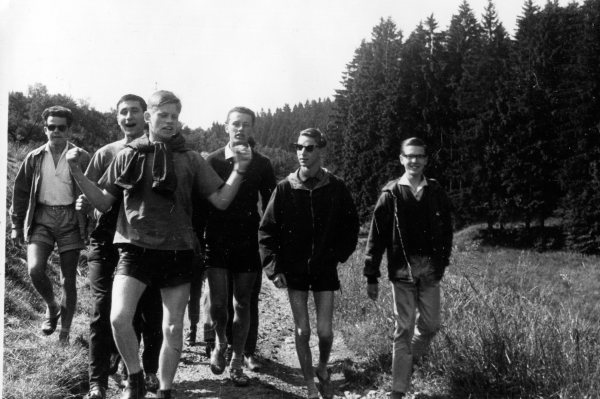
Happy Times: Class on a Hiking Field Trip

Rare Happy School Moments: Class on a Hiking Field Trip