Looking at our Yard in the Mirror of the Four Seasons

A Walk through our Yard – Early Spring

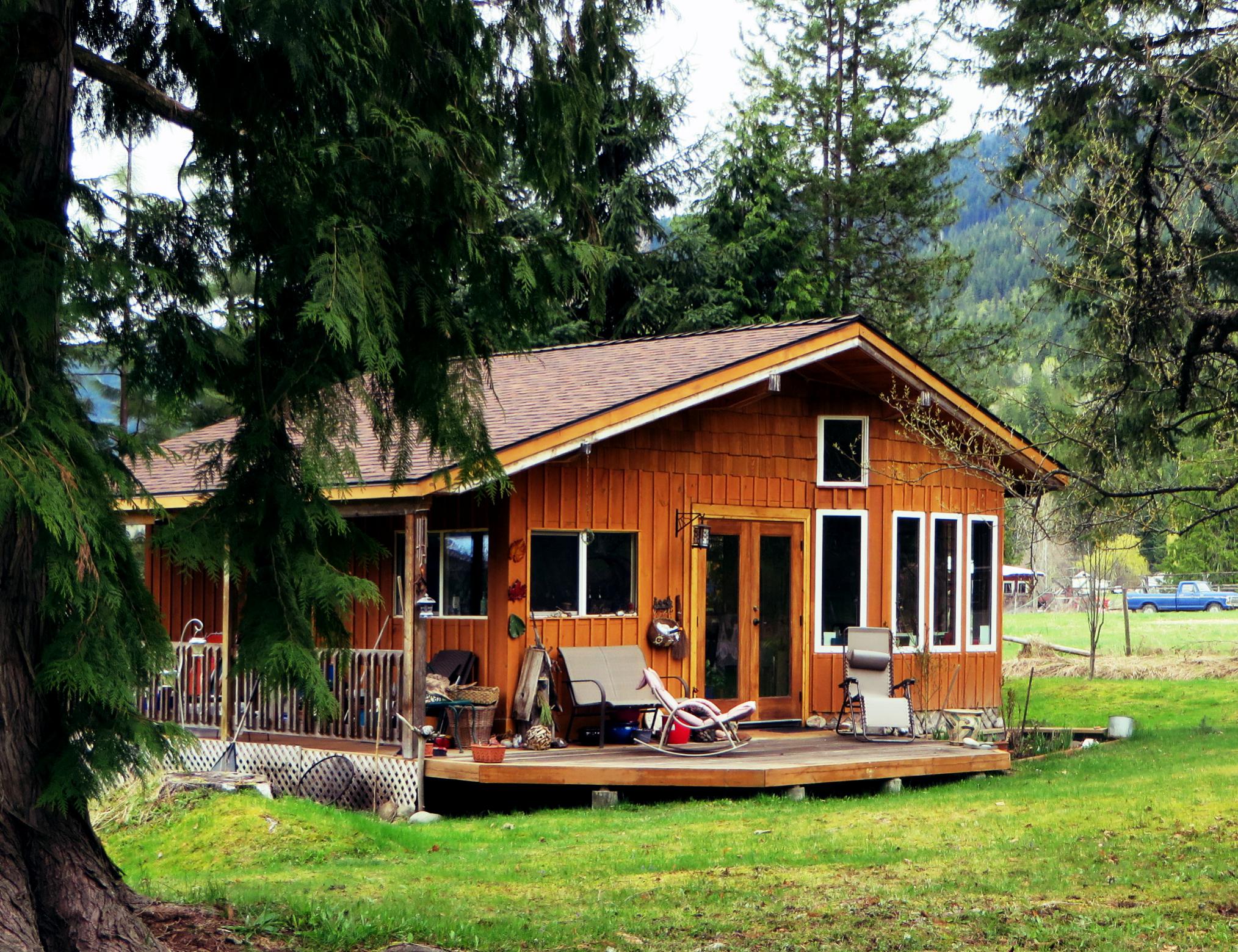
When our family moved to Fauquier in 1976, the only house available was a two-bedroom bungalow with an ugly lean-to serving as storage area. It looked more like a summer cottage than a house having only a total living area of about 100 sq m. The yard is huge by comparison with a length of 100 m and a width of about 30 m. The back half of the lot was completely undeveloped. Wild Russian poplars and the odd cottonwood covered the mostly swampy land.

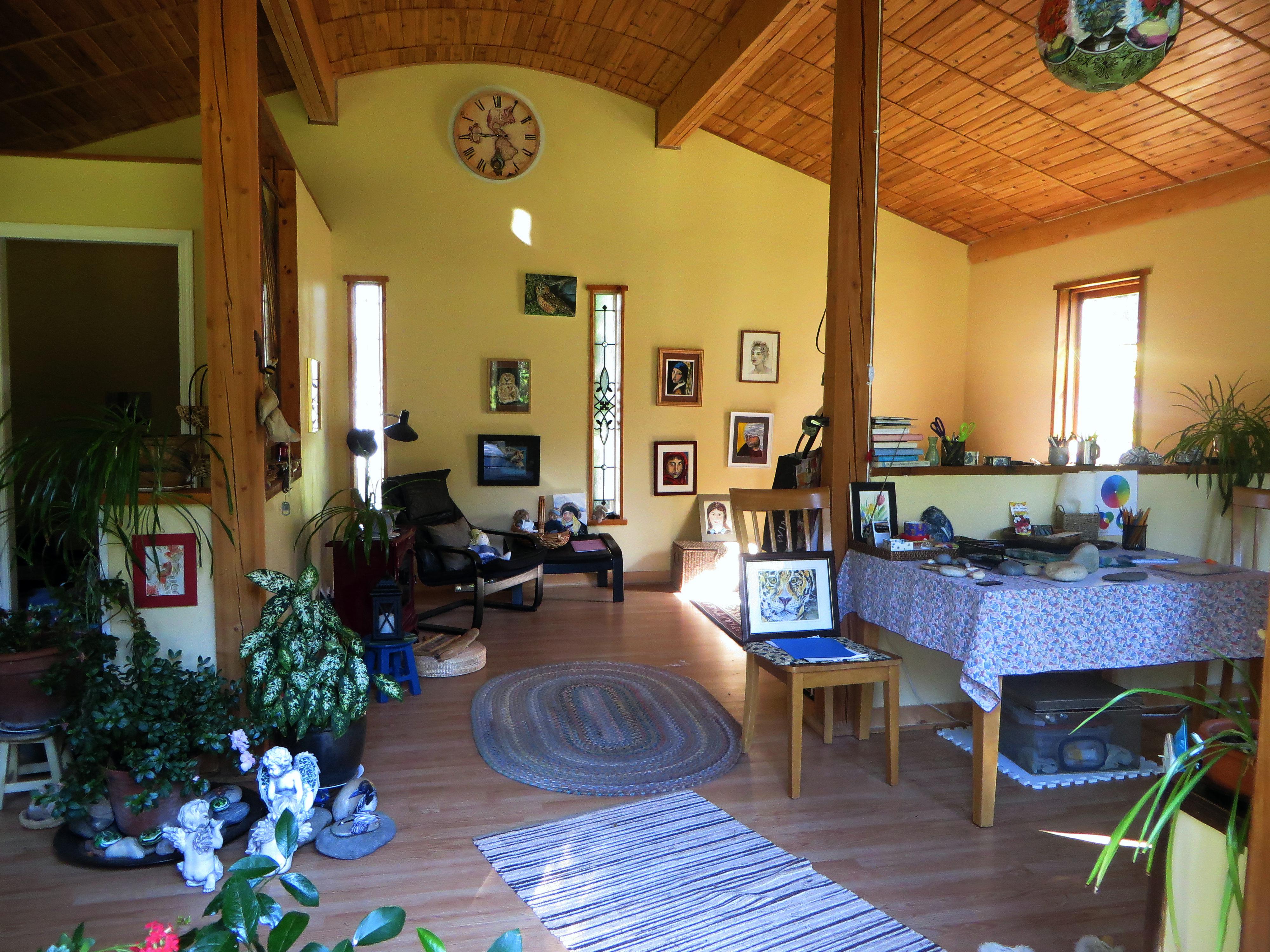
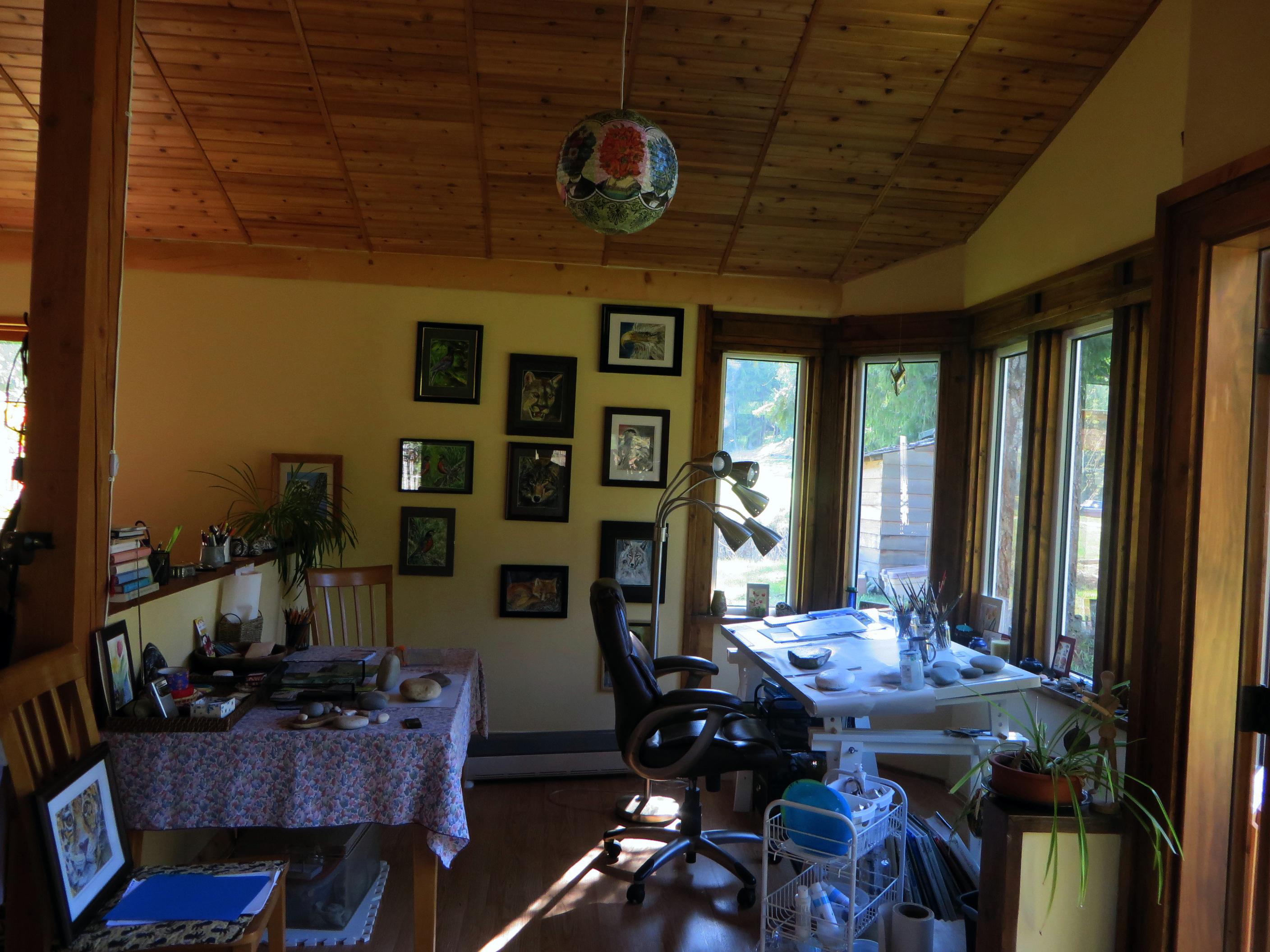
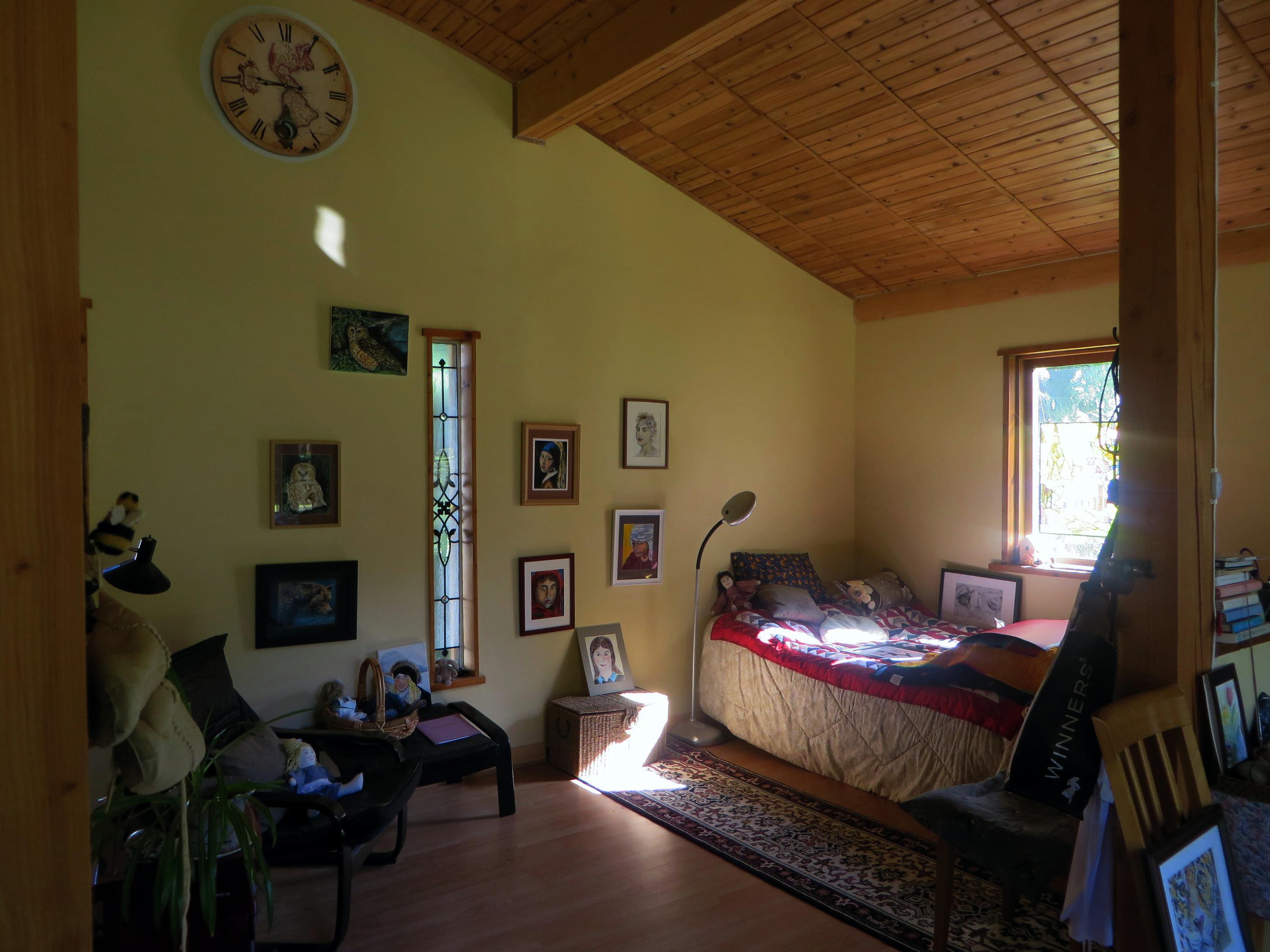
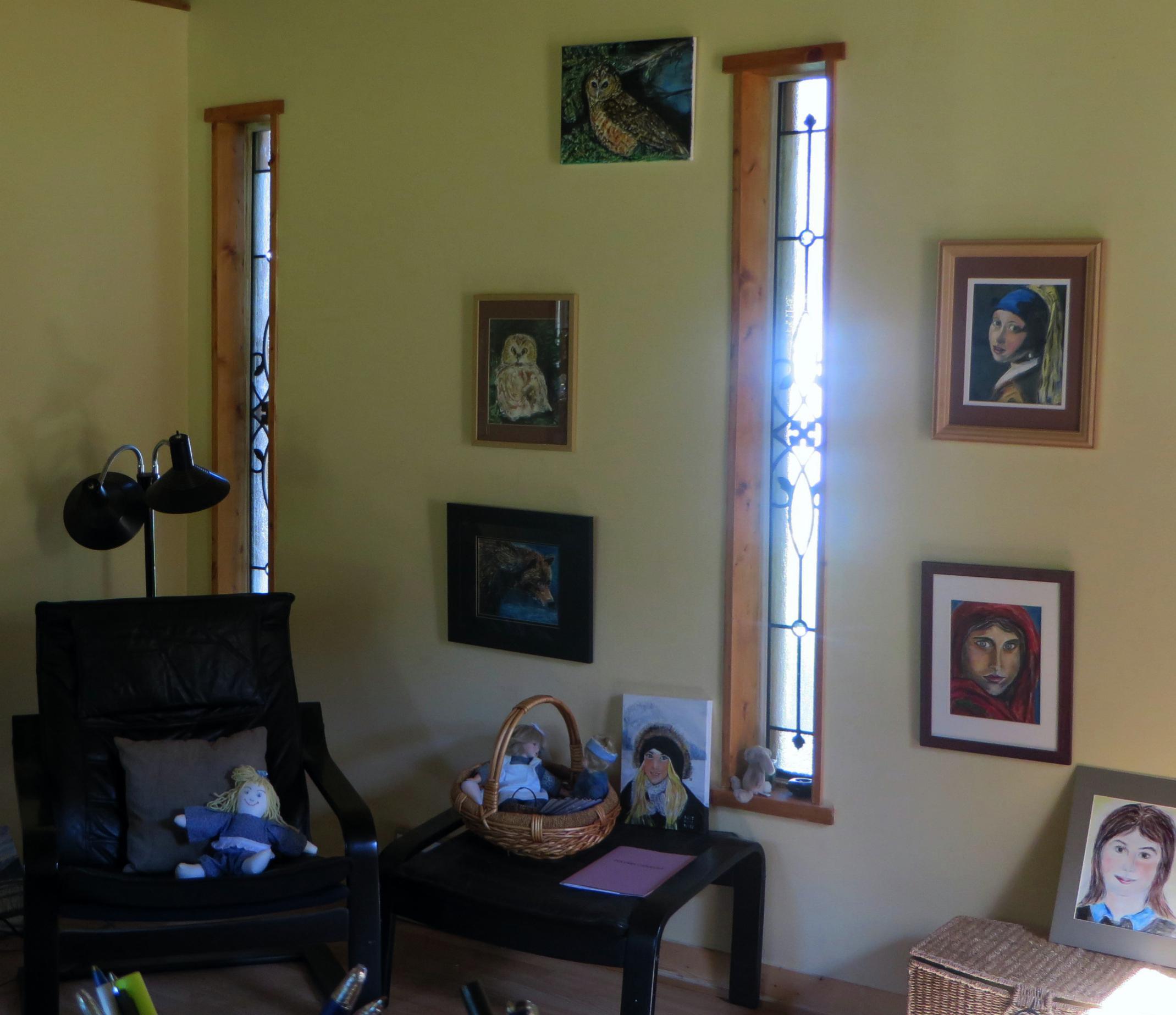
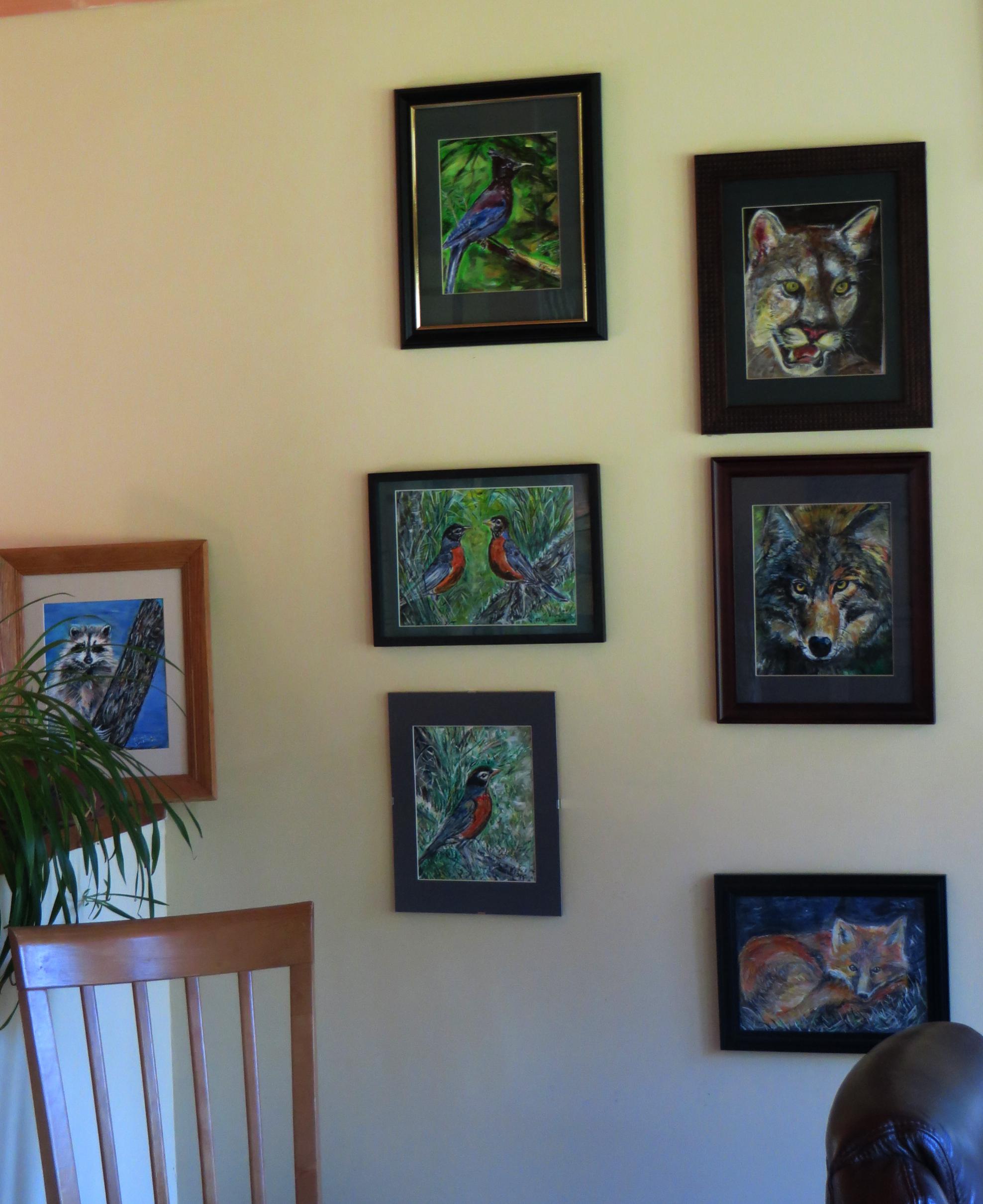
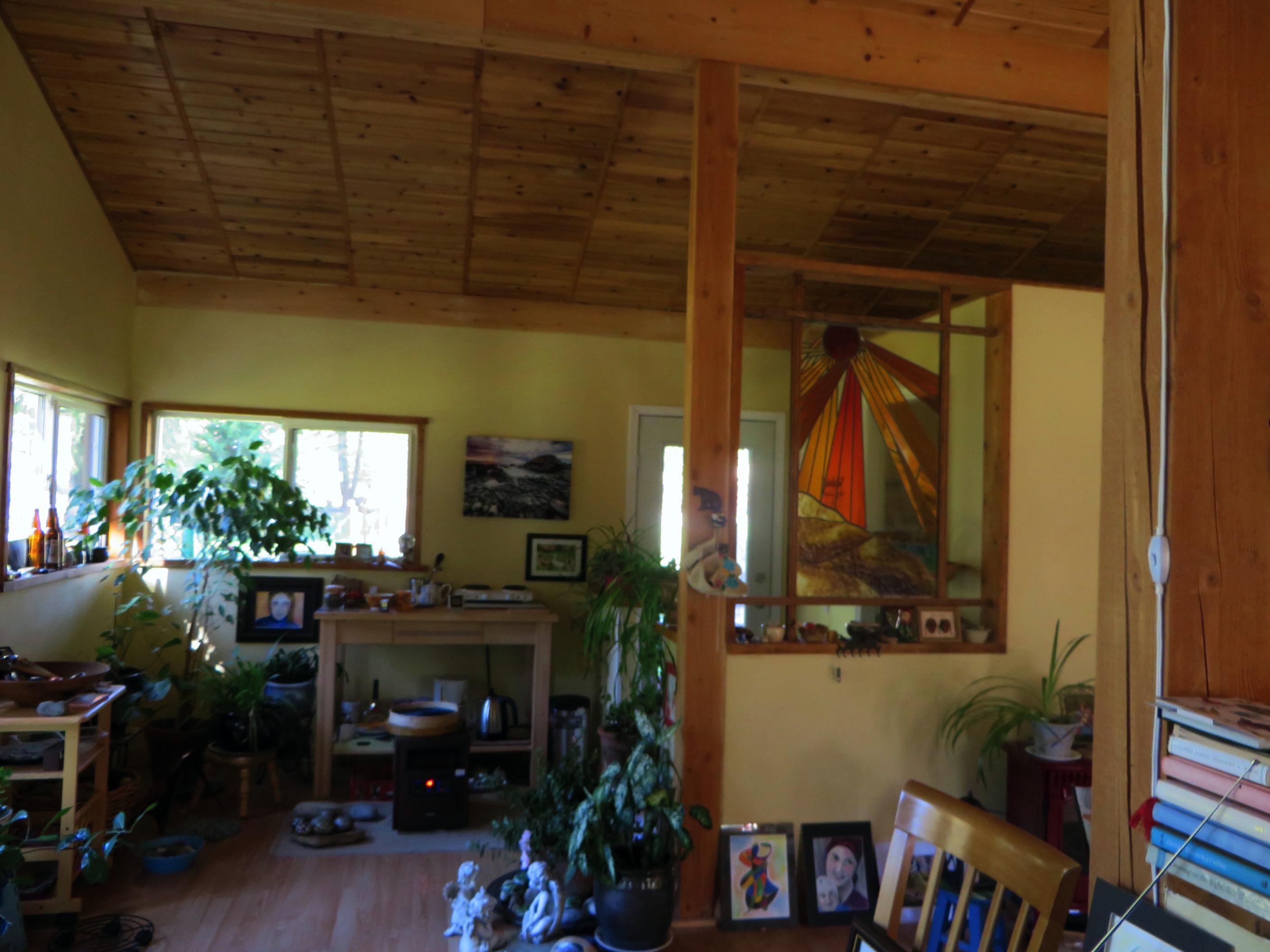
It was obvious that the house would not be large enough to accommodate our family of seven at the time of our move from Alberta.  My father-in-law had to have his own bedroom during his visit in Canada. The four boys took the other bedroom and slept in bunk beds. Biene and I slept in the tiny living room on a couch that we converted into a bed for the night. In the spring of the following year we added a double wide mobile home to the house with a breezeway connecting the two units. From one moment to the next we had two bathrooms, two living rooms, and even two separate kitchens. Year after year, as  our limited financial resources would permit, we made improvements to house and property, which included a sundeck, a sun room with pantry, a new roof over both houses, and a large garden. I planted two apple trees, two pear trees and several plum trees after clearing the land. But the best and most precious thing for Biene was to have her dream fulfilled. She finally has her own studio, which our son Robert built for her in 2009. This is the place, where she can be away from the distractions caused by phone, computer, TV and the constant reminder of things that need to be done. Here in the quiet surrounding of her studio she lets her creativity inspire her to paint or draw animals, flowers and portraits. Biene will one day showcase on her own blog bieneklopp.com some of her work by setting up a virtual gallery.

Now let us begin our early spring walk through this beautiful place on the hill overlooking the Arrow Lake.

Like-Minded People of Applegrove Road – Part II

LIKE-MINDED PEOPLE

A BRIEF HISTORY OF APPLEGROVE ROAD

By late Bill Laux

Aspinalls had a farm at the Fauquier end of Applegrove Road, the present De Boer property. The Spillers had come from Austria in 1913 and taken up land on Heart Creek, which they reached off the Applegrove trail, which Mr. Spiller must have widened to a wagon road to access his property from the Ferry landing.

The Mead-Eichenauer Property with Sauna and Pond in the Foreground

The Mead-Eichenauer Property with Sauna and Pond in the Foreground

Others, opening up the trail, took up land at each promising meadow or marshy location, which looked suitable for draining. It was, in those first years, crucial to have a hayfield while the heavily timbered lakefront land was being cleared and stumped. Gaustein took up the land along März Brook in 1920 (the present Netting property since 1966). Apple trees were planted and these early orchardists engaged in horse logging to make a living until their apples should come into production. The logs were horse-hauled to the lake shore, decked on the beach in the winter to await high water and the tug to tow them to Waldie’s mill at Robson. It seems certain that by the Twenties there was a wagon road as far as the Mosheimer Place and probably another kilometer past it to a house, which had been built on the clearing at the top of Eichenauer’s hill. The name of this settler is not known. Percy Schlag, who had an orchard in Fauquier, opened up a meadow on the south side of Heart Creek at the source of März Brook and drained it with a ditch to make a hay field. During the years when the lake shore lands had to be cleared and stumped for orchards, any mountain meadow or drainable swamp was a prize location to be preempted and   put into production for hay.

IMG_5272

From about 1913 Apple Packing Schools were held in the Valley to show the new orchardists how to get their fruit into commercial channels. Only perfect fruit was acceptable, no blemishes permitted. This left, especially in bad scab years, a great deal of fruit unharvested. These apples were used by many to fatten pigs for sale and most everyone made apple juice. With the addition of a bit of wine yeast, fermentation took place and hard cider was produced. August Scribe took the process farther and built a still. He located it under his pig shed to conceal the odour and took care to have a dry-hinged gate, which would squeak loudly, if anyone approached. He planted wormwood nearby to use as a flavoring, telling his customers he had made absinthe. It is said he shipped the product in cream cans to Nelson on the Minto with each can sealed with dairy stickers only to be removed by the milk inspector.

Mosheimer had his feet badly crushed in a logging accident and had to give up farming. He and his wife moved to Vernon where they opened a laundry. The property was bought by Mr. Kendricks of Needles, who leased it out for hay and pasturage. It came to be known as Kendricks Place (close to the present day Mead-Eichenauer Place). Gaustein, as well, left, though we do not know when.

All these years the slashed trail to Applegrove was still used as a route for Fauquier farmers to take their teams down to Taite Creek where from time to time horse logging jobs were available. Several wagon roads were built off Applegrove Road to reach the magnificent old-growth timber up the various creeks. One road ran up Heart Creek a short distance to reach a particularly fine stand of large cedars. Another extended Percy Schlag’s road from the south end of the Funk Meadow up and around the north end of Mineral Ridge to reach the timber on the North Fork of Taite Creek. In the early Sixties logging contractor Steiner built the Pin Road to harvest the Mineral Ridqe timber and the Heart and Pin Creek drainaqes. Applegrove became little more than a log dump.

Continue reading

The Klopp Grandparents VIII

Adding Oil to the Fire

Friedrich Klopp and His Mother-in-law (Chart I – I & II)

Translated and Adapted from Eberhard Klopp’s Family Chronicle

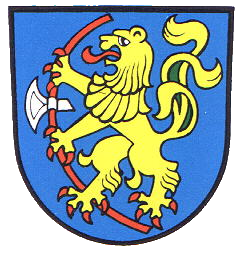
Crest of Loitsche - Photo Credit: Wikipedi.org

Crest of Loitsche – Photo Credit: Wikipedi.org

Out of the marriage between Friedrich Klopp and Marie-Louise Weihe came two sons and two daughters. The first child Frieda was born on June 7, 1900 in the Wolmirstedt house, also Liesbeth on June 5, 1907 and Hermann on September 16, 1908. But their eldest son was not born here, but in 1905 in Loitsche about 20 km north of Magdeburg, so to speak as a consequence of mother-in-law’s meddlesome behavior. Behind the interruption of the birth sequence in Wolmirstedt we may see Friedrich’s attempt to escape from the scene of a now poisoned family atmosphere.

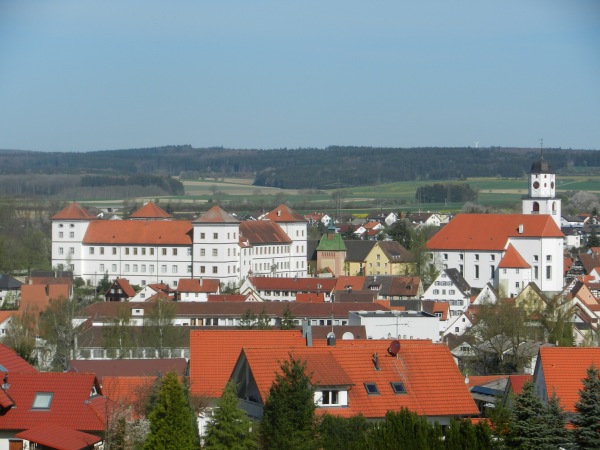
Loitsche Today

Today’s Loitsche – Photo Credit: tokiohotel.myblog.de

Acting on his wife’s prompting Friedrich tried to establish a new economic base in another trade. A determining factor may also have been the return of his brother Ferdinand from the United States, who failed to realize his economic plans there. Suddenly his younger brother was making inheritance claims on business and property, which Friedrich obviously did not recognize as valid. Considering the additional fact the economic picture of the land was not exactly rosy, it is not hard to understand that the flour and feed business was slow and did not prosper in Wolmirstedt.

Unnerving were also the events, which their brother Hermann recalled 90 years later. Grandmother Louise Weihe of Zielitz without any commercial experience interfered in all matters pertaining to the purchase and sale of goods. To add insult to injury, she circulated all kinds of rumors about her son-in-law and family with harmful effects on the business. To make matters worse, her sister started also to pour oil on the fire.

One particular rumor was making the rounds among family members. The insidious claim was that Emma’s daughter Anna Auguste Louise (1885-1967) had an illegitimate child, whose father was supposed to have been the ‘Polish Jew Grasmück’. Actually the story was quite different, as will be explained in another post on my Aunt Anna at a later date. The nonsense, completely made up of thin air, broke the camel’s back.

All these events cast some light on the chasm-deep hateful feelings, which the mother-in-law from Zielitz dumped without any compunction on the Klopp family. On the other hand, the Emma Klopp side in turn did not hesitate to make Friedrich worry a lot about his inheritance, Insults and cantankerousness dominated from now on the scene of the warring parties.

To be continued …

Low Lake Level Reveals a Thriving Forest Industry of the Past

Log Ramp and Tree Stumps

The water level of the Arrow Lakes is always at its lowest at spring time to make room for the run-offs later in May and June. That is when the snow in the mountains begins to melt. If the season is accompanied by very warm weather and heavy long-lasting rains, then we can expect the rivers and creeks to turn into raging torrents causing wide-spread destruction. Before the lake was dammed up in 1967 and large tracts of fertile agricultural land were flooded, Fauquier’s prosperity relied primarily on the forest industry. It provided work and income for the local residents. In the 1940’s the area around the two branches of Pin Creek and Taite Creek formed the basis for a large logging operation employing many people. The loggers often lived in camps, as the distance was too large for the daily round trip to and from home. The cheapest way to ship the logs to the log mills was to haul them down to the lake, where they would roll down the log ramps into the water. Tug boats would then pull the log booms down to Castlegar for processing. This year the lake level was much lower than normal due to maintenance and repair of marinas, boat docks and other recreational facilities along the lake shore.

Today I went for a walk along the beach and took some pictures of one of the log ramps that is usually submerged as a result of the building of the Keenleyside Dam some 30 km south of Fauquier. The ramp and the tree stumps are now a relic of the past and stand in stark contrast of the natural beauty of the surrounding mountains, scenery and the beaches of the Arrow Lakes.

Chapter VIII of the P. and G. Klopp Story – Part IV

 Great Acting, a Chocolate Stand and a Scary Tale

 Each year the school organized a concert for the parents and the general public. We students would sing in a choir, recite poetry, and put on plays. In this annual event we had an opportunity to showcase our artistic achievements. As to the drama performance this year, Frau Schroff was especially ambitious. She selected a medieval play, the farcical comedy: The Wandering Scholar from Paradise. The author Hans Sachs gained international fame as the central figure of Richard Wagner’s opera: Die Meisteresinger von Nürnberg. Sachs was a Meistersinger or mastersinger, who plied his trade as a shoemaker in the city of Nurnberg. He was also a creative narrator in the local guild of poets and musicians. ‘The Wandering Scholar from Paradise’ is about a farmer’s gullible wife, who falls victim to a traveling student’s claim that he had seen her beloved first husband in paradise. Frau Schroff decided that I would be the best candidate to play the role of the wandering student. And I did not disappoint her. As it turned out this challenging comedy was such a success on our modest school stage that we three actors received a standing ovation. Needless to say our teacher was beaming with pride over our success. At the end of the concert, she took me aside to tell me that I had earned with my spectacular performance the price of a new ruler. She also promised not to write that ominous letter to my parents. So I did not only bask in the glory of a wonderful performance that evening, but I also felt a great relief from the anxiety caused by my recklessness in the classroom.

Hans_Sachs

Hans Sachs, Author of ‘Travelers from Paradise’ – Image Credit: Wikipedia

It is one thing to do something creative because it is a school function, such as organized and directed by a competent teacher. It is quite another when young children prompted by their own inspiration start an activity strictly for their own enjoyment. This is exactly what happened in a group of seven boys, which we called ‘The Rohrdorf Village Musicians’. Once or twice a week, when the weather was fine and the grass was dry, we would get together on a sunny hillside between the Upper and Lower Village at least two km away from the nearest farmhouse, where nobody could disturb us during band practice. Our immensely talented bandleader was Klaus. His personality radiated confidence and enthusiasm. I remember the energetic movements of his arms, hands and fingers controlling our musical endeavors with the élan worthy of a professional conductor. But what was there to conduct, since we had hardly any musical instruments? There were only two, one was a tin bucket placed upside down, which served in combination with two wooden spoons as the drum section. The other was slightly more complicated and consisted of a large comb with widely spaced teeth and a sheet of wax paper loosely wrapped around it. The musician had to hum and barely touch the wax paper with his lips to create a rasping musical note. Today one can buy a metallic kazoo for as little as two dollars. The boys without instruments would add variety to the sonorous qualities of the kazoo and the tinny clang of the drum by whistling and humming. My friend Günther even managed to complement the drum by clicking his tongue. I for my part added tonal depth to the ensemble by creating a flute-like sound. To do this I clasped both hands, interlocked my fingers and thus created a hollow between my palms. All I had to do was to blow at a certain angle between the thumbs changing the pitch by expanding or contracting the cavity. With each band session our repertoire of the most common German folksongs grew until we were able to play for half an hour without repeating any of the tunes. Even though we never played for others, it was a most enjoyable experience, a definite highlight of my childhood years.

Continue reading

Chapter VIII of the P. and G. Klopp Story – Part III

 Sledding Accident and Trouble in School

After the first heavy snowfall the boys and girls of the Lower Village took out their sleds to celebrate the beginning of winter on our long and steep hill. The Davos sled named after a Swiss village, where this most popular sled in the world originates, is traditionally fashioned from hardwood and is 80 to 130 cm long accommodating up to three persons in an upright position. Two metal runners in this otherwise all-wood construction ensure a smooth and stable ride. The Klopp children had only one long sled. So we took turns to take on the 1 km run down the street that had next to no traffic in the winter. Gerhard would lie down on the slatted seat and I would sit on top. Safety helmets were unknown in those days. The speed increased with each run, as the snow was packed down and turned into a icy surface. Exhilarating was the experience, when I felt the fresh air in my face and the sensation of being part of the fun in the community of children young and old. Soon someone came up with the idea to form a human train by hitching the sleds together. One simply had to hook the feet into the upward-curved front of the next sled. Up to half a dozen sleds connected this way and expanded into a super long snake-like figure. The pilot alone in the front had to make sure that the trip down the hill would be safe and would not result in broken bones. Often I was allowed to sit on the back of the front man. Being the only one sitting erect, I felt like an admiral in charge of an entire fleet. When I think of having so much fun together with friends and family, very fond memories still linger in the crevices of my mind after all these years.

House across from the Ös Farm 2003 - Photo Credit: Stefan Klopp

House across from the Ös Farm 2003 – Photo Credit: Stefan Klopp

 When I was a little older, perhaps 10 or 11, I was allowed to use the family sled to go sledding with my friends on a nearby hill. Cattle would be grazing there in spring, summer and fall. It was completely fenced in except for a gate just wide enough to allow a hay wagon to pass through. When cows were on the pasture, the farmer simply closed the gate by sliding two poles through the horseshoes that were hammered into both end posts of the fence.

The frost in the night before had turned the snow into a crusty surface strong enough that we could with some care walk on it without breaking through. As we were climbing up to the top, an idea suddenly occurred to me,

“Hey, guys, how about making a single pair of tracks with our sleds on the first run. Then we don’t have to plow through deep snow on the following runs and we will go faster, faster, and FASTER.”

“Plus”, I added, “guess what? We don’t have to steer anymore. We will be zipping down the track like a speeding freight train!”

The plan found instant approval with loud cheers. In less than three trial runs we created the double track. And indeed, as I had predicted, our speed increased, because with each trip down the hill the sleds’ runners packed down the snow more and more into a hard and slippery surface. It was about the tenth time that I had climbed to the starting point.

As before I shouted, “Clear the gate opening! I’m coming”, and in one jump I landed belly-down on the slatted seat.

Now I zipped down the track reaching top speed about half way down the hillside. Looking up for the first I noticed that my friends had ignored my warning and were still blocking the gate. Even if they moved out of the way now, it would be too late. Fear of crashing into them gripped and paralyzed me. I was less than twenty meters away. I could have rolled off the sled and let it continue to speed toward the human target, but I didn’t. The collision seemed inevitable within just a few more seconds. Suddenly another force took control over my mind, a force that ignores all danger to oneself and only cares about the welfare of one’s fellow human beings.

My left foot dug deep into the snow. It exerted enough force to make the sled jump out the tracks and veer to the left and away from where my buddies were still idly standing. But now I had to think of myself, as the barbed wire fence and its posts appeared to rush toward me. In a desperate attempt to reduce speed I used both feet now and pushed my boots as far down into the icy crust as possible. I slowed down a bit. But it was too late. The post, worse the iron horseshoe on the post, was less than a meter away. An automatic reflex made me raise my right hand and cover my forehead, before everything around me submerged into complete darkness. When I came to, only a few of my friends were standing around me. Some had run home to get help, but others had left the gory scene of the accident, because they had never seen so much blood before. I was bleeding profusely. Eventually I was able to get up. Completely dazed I took my sled and stumbled home with injuries to the hand and forehead, which the visiting doctor later determined as a severe concussion. The scar under my right index finger reminds me to this day how my hand covering my forehead had softened the potentially fatal impact.

Continue reading