The P. and G. Klopp Story


Chapter 3

On Memory and Truth

Memory is a complicated thing, a relative to truth, but not its twin. Barbara Kingsolver

            Biene and I once witnessed an accident while driving to Vernon over the icy highway on a cold December morning. The car ahead of us showed some extremely erratic behavior and seemed to be out of control as we saw it slipping and sliding on a curvy downhill stretch. A few seconds later, it had collided with an oncoming pick-up truck. Fortunately, nobody was seriously hurt. The truck driver and his pregnant wife emerged unharmed from their vehicle, while the owner of the small passenger car was frantically running around, often looking down over the edge of the ravine on the other side of the road, as if he had lost something during the accident. He did not seem to care much about the occupants of the truck that he just had run into and kept shouting anxiously, “Lucy, Lucy, where are you?”

          A few months later, a police officer knocked at our door and presented me with a subpoena to make myself available as a witness at the Vernon Court House. Memory is defined as the mental capacity of retaining and reviving impressions or of recalling previous experiences. My particular memory of the accident on the Monashee was very accurate, and I assumed that it revealed the truth and nothing but the truth. However, when the Crown prosecutor quizzed me on the details, I realized that logical thinking had filled the gaps created by the bizarre behaviour displayed by the man who had caused the collision. I did not know that the concern for a little dog could be more important to anyone than the well-being of one’s fellow human beings, especially if you were responsible for causing their harm and grief. My logic demanded that the man was calling his female companion who might have been thrown out of the vehicle and might have been severely injured. I am mentioning this incident to increase awareness at the very start of my project that things are not always what they appear to be and to be aware of the potential flaw in the relationship between memory and logic. Distorting reality as a result of this flaw then becomes a major problem for anyone attempting to describe personal experiences of the past. Continue reading

Welcome Mathias, Pamela and Family!

Three New Additions to the Family Tree

Chart II a – V & VI

Contributed by Dieter Barge

Our son Mathias and daughter-in-law Pamela enjoy an occasional visit in our cozy home in Germany. Below the picture gallery showcasing the entire family, you can also watch a short video of Papa  Mathias teaching little Alessia to respond to the rhythm of the music in the background. She also enjoys – that is plain to see – a hug from her brother Frederik.


Even though the video quality was not very good, the message is loud and clear. We have a little girl, who loves music.

Family Research requires Commitment and Persistance

On Family Research

by Norbert Werner (Chart IV – IV)

Note: This article was entirely written in German. You will find it in the P. and G. Klopp Story under the heading Stories in German. There you can read about the difficulties of finding the right scope and basis for any genealogical endeavor. Norbert also writes about the potential legal pitfalls that may dampen your enthusiasm for family research. I translated that paragraph and posted it below.

“I want to throw some light on another aspect. In spite of all the fully justified interest in the documentation of family history and in the fortunes or misfortunes of the people’s background one must cautiously and discreetly deal with such information and carefully deliberate as to what is suitable for the ‘general public’ and as to what one should keep to oneself. A close relative, who had dealt with the matter much more thoroughly, had to endure some bitter experiences. To gather information he had written to all family members, who were still alive, a questionnaire and the request for pictures and information. Furthermore he published the pertinent data on the worldwide web. There Mrs. X read that her father had died of disease Y. As far as she was concerned, he had gone too far and threatened to sue, unless he immediately took it off the Internet.

Fauquier’s Namesake was Guilty of Graft

Frederick George Fauquier – Part II

Report to the Arrow Lakes News by Greg  Nesteroff

From the Archives of the Arrow Lakes Historical Society

What Arrow Lakes community is named after a man jailed for embezzlement? The answer, likely to surprise many, is Fauquier. Frederick George Fauquier’s incarceration was a severe aberration in an otherwise distinguished career that included many government appointments. Indeed, he emerged from prison virtually unscathed: no one seemed to think any less of him for it.  Born in Woodstock, Ontario, to an Anglican bishop, Fauquier came to West Kootenay in 1893 and was appointed mining recorder, police officer, and notary public at Nakusp.

His diligent service was recognized in 1900 when he was transferred to Revelstoke and named stipendiary magistrate, justice of the peace, government agent, assistant lands and works commissioner, assessor and collector, vital events registrar, and gold commissioner. Something, however, went wrong. In August 1901, a government auditor was dispatched to Revelstoke to look into irregularities in the gold commissioner’s office. Fauquier was arrested at home and charged with misappropriating $100 in public funds while mining recorder at Nakusp. He was released on $2,500 bail.

“The greatest regret is expressed in town at this unfortunate affair as Mr. Fauquier is not only personally popular but has proved himself both at Nakusp and here a most acceptable and capable official,’’ the Revelstoke Herald wrote. The Kootenay Mail added Fauquier “had many warm friends” who would have repaid the money had they known it was missing before the auditor arrived.

“It is evident that Mr. Fauquier had been making an effort to straighten matters up as he has been offering for sale his ranch in the lower country,” the newspaper said.

When Fauquier next appeared before a judge, he was further charged with stealing $2,097 in land sale money between Oct. 15, 1900 and Aug. 21, 1901 at Revelstoke as well as $811 in taxes collected from the Imperial Bank on June 22, 1901. The earlier Nakusp charge was dropped. The auditor produced a list of land transactions for which no receipts existed, ranging from $3 to $213. The auditor also presented a statement showing Fauquier received $819 in taxes, while the books recorded only $8. Fauquier was committed for trial, and released again on $12,000 bail. Several more prominent businessmen stepped forward to post sureties.

A few weeks later, however, Fauquier pleaded guilty. The motivation for the crimes was never explained. His lawyer only said he took the money “to pay claims that other men would have ignored.”

And while there was no justification for the offense, “it had always been Mr. Fauquier’s intention to replace these monies,” the Kootenay Mail wrote.

“Mr. Fauquier had a wife dependent on him and also a family, and was without other means than this property. He was prepared, if he got his liberty at no distant date, to repay every cent he had taken.”

The judge sentenced him to two years in the provincial penitentiary. It’s not clear how much time he served (nor if he ever repaid the money he stole), but around 1904, he returned to his ranch, later known as Fauquier’s Landing, or just Fauquier, and began growing fruit. Overall, despite his transgressions, Fauquier’s kept his reputation intact. In 1911, he was spoken of as a potential candidate for provincial office, and upon his death in 1917 at age 65, his obituary was adulatory.

“Always of a bright and cheerful nature Mr. Fauquier was universally liked and highly respected by all who came in contact with him,” the Nelson Daily News wrote. “He was the most extensive fruit grower on the lake, his orchards being considered among the models of British Columbia.”

Fauquier was buried in Nakusp. Although his crimes were whispered of in his namesake community, they are not recorded in any history book.

 Gavel

How Fauquier Got Its Name

Frederick George Fauquier – Part I

From the Archives of the Arrow Lakes Historical Society

S.J. Clarke Publishing Company 1914

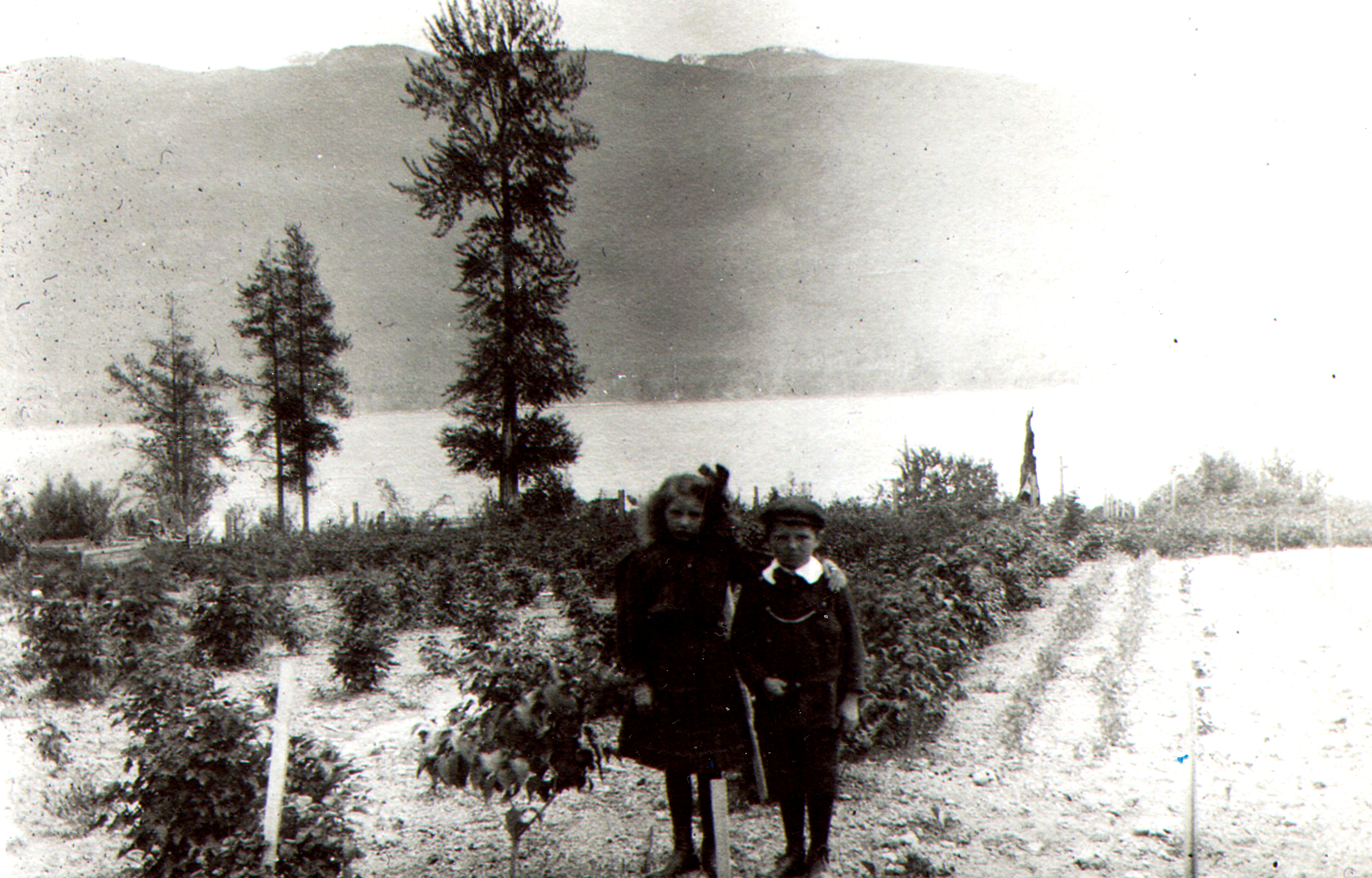
Few men are more prominently or more widely known in the district around the Arrow Lakes than Frederick George Fauquier, who is the founder of the fruit-growing industry in this section and therefore one of the greatest individual forces in the growth and development of the locality. Mr. Fauquier had been engaged in fruit-growing here since 1904 and has today one of the finest producing fruit ranches and one of the best equipped establishments for handling the product in this section. He was born in Woodstock, Ontario 13, 1852, and is a son of Frederick D. and Elisabeth Fauquier, the former minister of the Church of England, afterward becoming bishop of Algoma. The parents have passed away.

F. G. Fauquier acquired his early education in Hellmuth College in London, Ontario, afterward entering Trinity College in Toronto. He was graduated from the latter institution in 1873. Following the completion of his studies he engaged in farming for three years and then moved to Muskoka, Ontario, where he remained until 1885, during which time he became very well known in public life, serving as a member of the local legislature for Muskoka and Parry Sound, When he left Ontario he moved to the northwest and located in Maple Creek, Saskatchewan, in 1885, there engaging in stock-ranching until 1893. In that year he moved to the Kootenay district and after staying for a short time at Nelson he moved to Nakusp, where he was appointed mining recorder. From that city he moved to Revelstoke and there served as gold commissioner for some time. In 1885 he preempted land on the Lower Arrow Lake, then a virgin country, securing possession of the tract which is now the center of his extensive holdings in and around Fauquier, afterward named in his honor.This is located at a deep water landing, making shipping facilities excellent and adding to the advantages of this locality as a fruit-growing center. When Mr. Fauquier located here it was with the expectation of making it a town and the shipping point for the mines, which were then being developed back from the lake at this point. These mines failed to prove paying propositions and, having the land on his hands, Mr. Fauquier began experimenting in fruit growing. A few strawberry plants previously set out had done splendidly and the fruit trees, about a dozen, set out in 1898 proved so promising that he immediately set out one hundred more. These were the first trees on the Arrow Lakes for commercial fruit growing, In 1904 he moved  upon his ranch and began raising fruit for the market. He now has forty acres in bearing and ships many carloads every year. His ranch, well known as the Needles Fruit Ranch, is a model one in every respect, being provided with all the equipment necessary for the packing and preservation of fruit, and his success is amply attested by the great number of prizes which he has been awarded on his exhibits wherever shown in Canada, the States or in England. Mr. Fauquier gives practically his entire time and attention to the scientific development of the property, and his success is the natural reward of his ability and intelligent management.

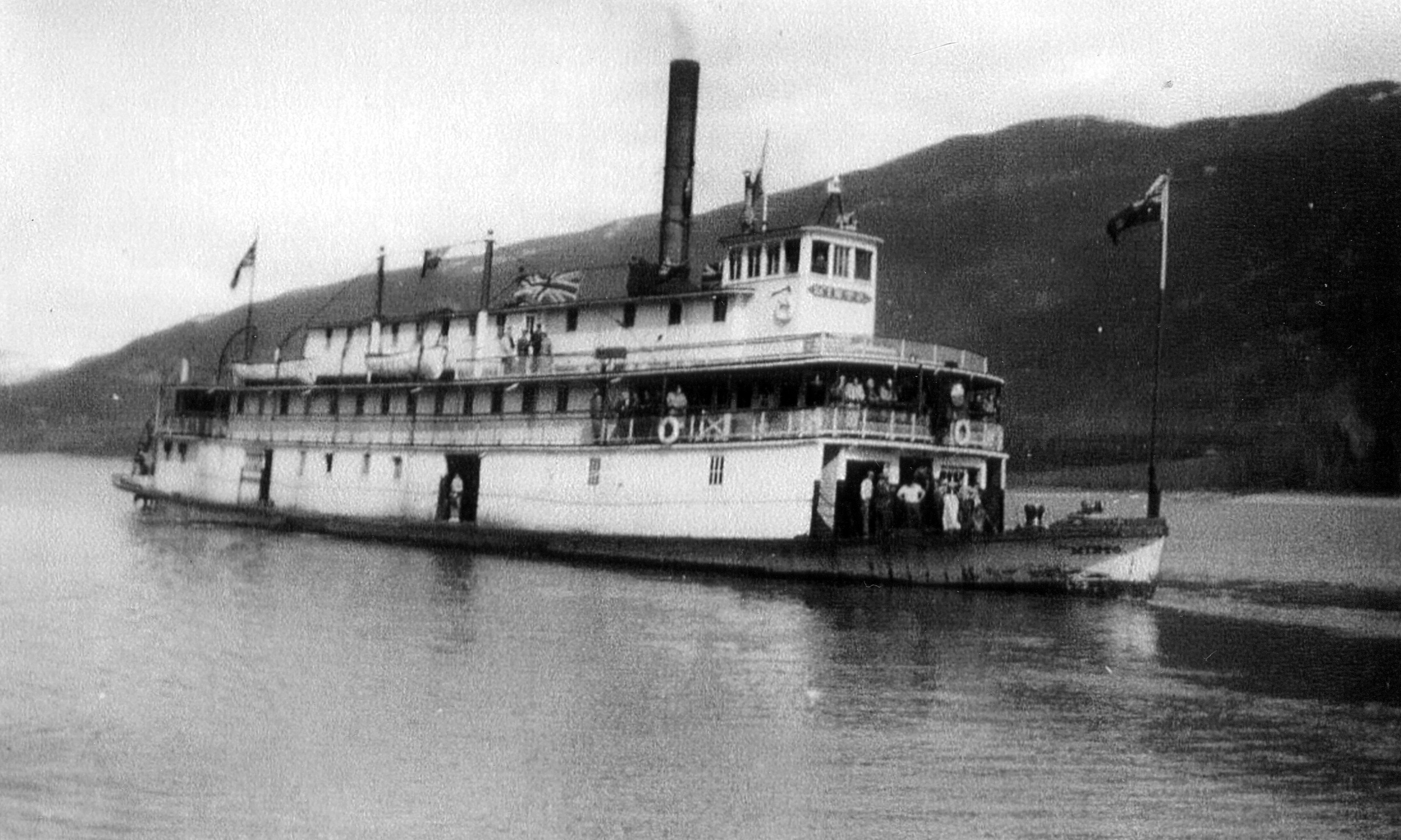
SS Bonnington Plying the Waters of Lower Arrow Lake

SS Bonnington Plying the Waters of the Lower Arrow Lake

Mr. Fauquier is a charter member of the Ancient Order of United Workmen and of the Order of Foresters and is connected also with Oxford Lodge, No. 76, A.F. & A.M. He belongs to the Church of England and gives his political allegiance to the conservative party, taking an intelligent and active interest in public affairs, He stands as a central figure in the promotion of fruit-growing interests here, a pioneer in the development of one of the greatest resources in the locality, and the community owes him a debt which can never be fully repaid.

An Important Change to our Blog

In the menu under the heading ‘The P. and G. Klopp Story’ there is now an additional subheading called Stories in German. There you will find contributions to our family tree written in German. It is my hope that this change will encourage our relatives in Germany to present their work in their own language, which in turn may help increase interest in the blog among people who do not have sufficient language skills in the English language. As for me, I will no longer have to translate lengthy submissions, before I post them. However, I don’t want to be misunderstood. I will continue to translate and post page-length contributions and, of course, welcome photos and documents of any size. An email will also go out to all participants of the family tree project to announce the change in our blog.