


Winter in Rapid Retreat


It was not an easy beginning for the pastor’s couple. Until 1901 six children were born. In addition to the already crowded household there were Frau Pastor’s parents, Mr. and Mrs. A.Mass with their two unmarried daughters dwelling under the same roof since 1895. Marie Mass died in 1900, Adof Mass in 1906, Klara Mass in 1908 and Hedwig Mass in 1919. All have been buried in Grünewald. The small village cemetery is now completely overgrown, and gravesites can no longer be recognized. The former Eastern Provinces have become Polish territory. Up to 1900 the household of the pastoral home consisted of twelve persons.
Worth mentioning would also be the fact that Grünewald was a church patronage, a designation for the privileges of the patronage master of the church. The acquisition of these privileges resulted from a donation of a building lot and the funding for the construction of the church. The patronage master had the right to be part of the selection process for filling a pastoral vacancy. The patronage master of the Grünewald parish was Christoff (popularly called the ‘Stoffer’) von Glasenapp at the Grünewald domain. Von Glasenapp originated from an old Pomeranian nobility, just as von Kleist, von Gaudecker and many others.
What can we say about Frau Pastor – or colloquially called ‘Fru Pastern, Fru Preistern’! We could summarize her description with a ancient Indian proverb:
Where mothers keep watch,
The gods may rest!
Whoever experienced her as mother, grandmother, church mother in the broadest sense, friend, acquaintance, leader of a steadily growing household, und much more, could not say anything better! No matter how often the children brought home friends for the holidays, nothing was too much for her! Amazed and in awe her children are aware of this, her descendants upon hearing stories about her will feel the same! Awareness and silence are in order and are worth more than a thousand words!
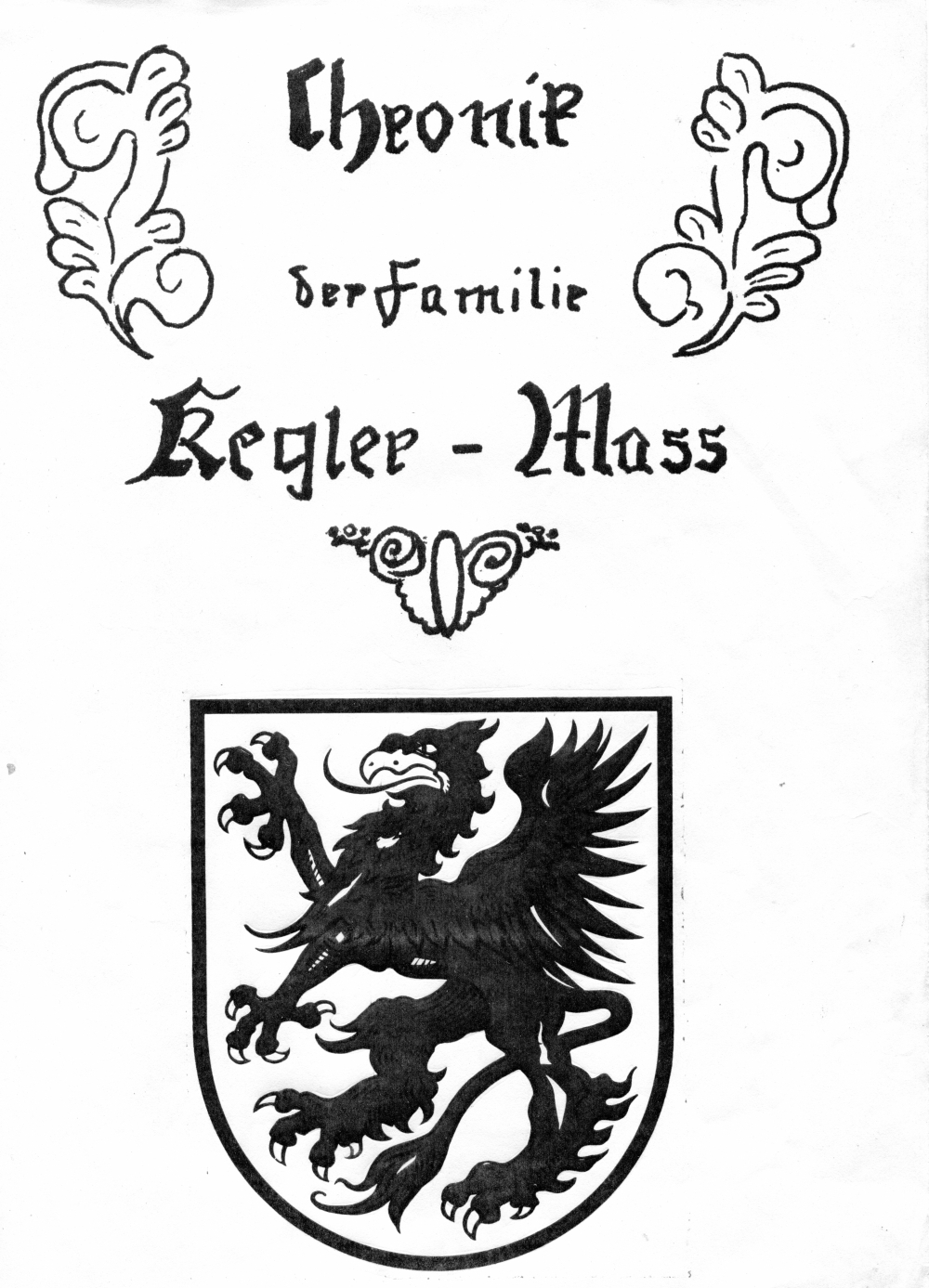
Title Page of the Kegler-Mass Family Chronicle
Carl Kegler
Born 1860-09-22 in Luckow, Randow County, Western Pomerania,
Pastor in Grünewald, Neustettin County,
Died 1919-06-15 in Grünewald.
and his wife
Elisabeth Kegler (neé Mass)
Born 1868-08-13 in Groß-Krossingen, Obornik County, former Province of Posen (Poznan),
Died 1948-09-14 in Erfurt after the expulsion from Stolpmünde at her son’s residence.
The two were married 1891-02-05 in Pniewno-Konopat, Schwetz County, former Province of West Prussia.
Carl Kegler studied theology in Greifswald, Berlin and Halle. He was a member of the student fraternity “Neo-Borussia”, a color-bearing association with the color band black-white-black-red. The fraternity founded after the Napoleonic Wars adhered to Christian-patriotic ideals and strove for the unity of the German nation. He would talk a lot about his student life, the great challenges, about serious and also lighthearted matters. Soon his children could sing many of student songs by heart, such as Halle on the Saale and many more. His youngest son Bruno was especially receptive for such things and would have loved to study.
In 1891 he was installed as pastor of Grünewald, Neustettin County and stayed in the congregation until his early death. He was the successor of Pastor Nedtwig, who had taken the vacant and larger parish in Gramenz, Neustettin County.
Affiliated with the parish of Grünewald were also the sister congregations (without pastors) Zechendorf and Kowalk and some other smaller churches especially during WW1. The distances were considerable and the congregations could only be reached by horse buggy or bicycle. He was not only a spiritual caregiver with all his strength, but also as a farmer’s son a capable countryman. To the parish also belonged ca. 40 Prussian acres (morgen) of land with a barn, stables, cattle and farm implements, etc. Thus, in the agricultural domain he was able to be helpful with much advice and supportive action.
For more information I added the text of the eulogy, which a pastor and friend had delivered at Carl’s funeral in 1919. It is in German and can be located at the usual subheading of the P. and G. Klopp Story.
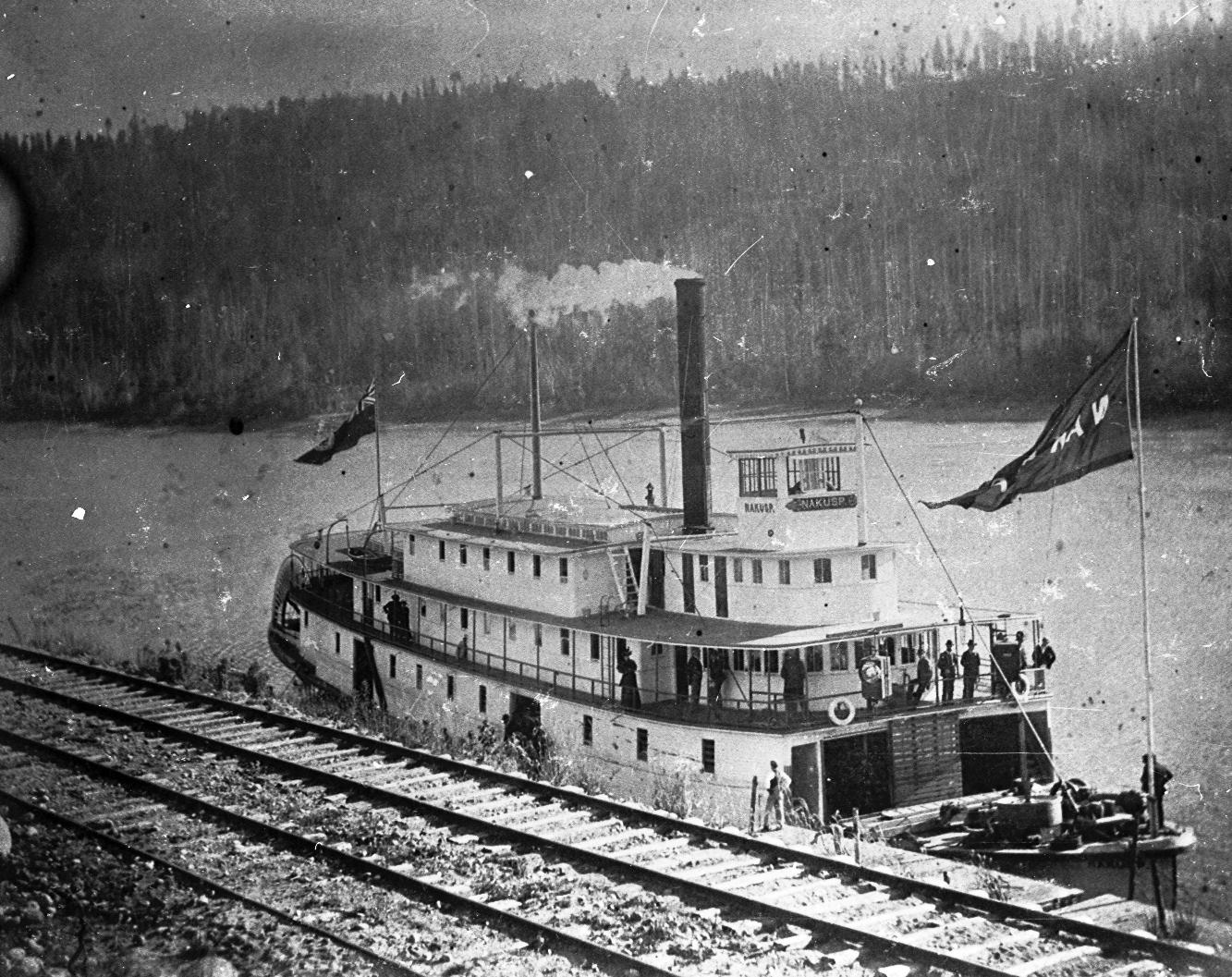 1895 – SS Nakusp – first steamship built in Nakusp – here docked at East Robson on the Columbia River 1898
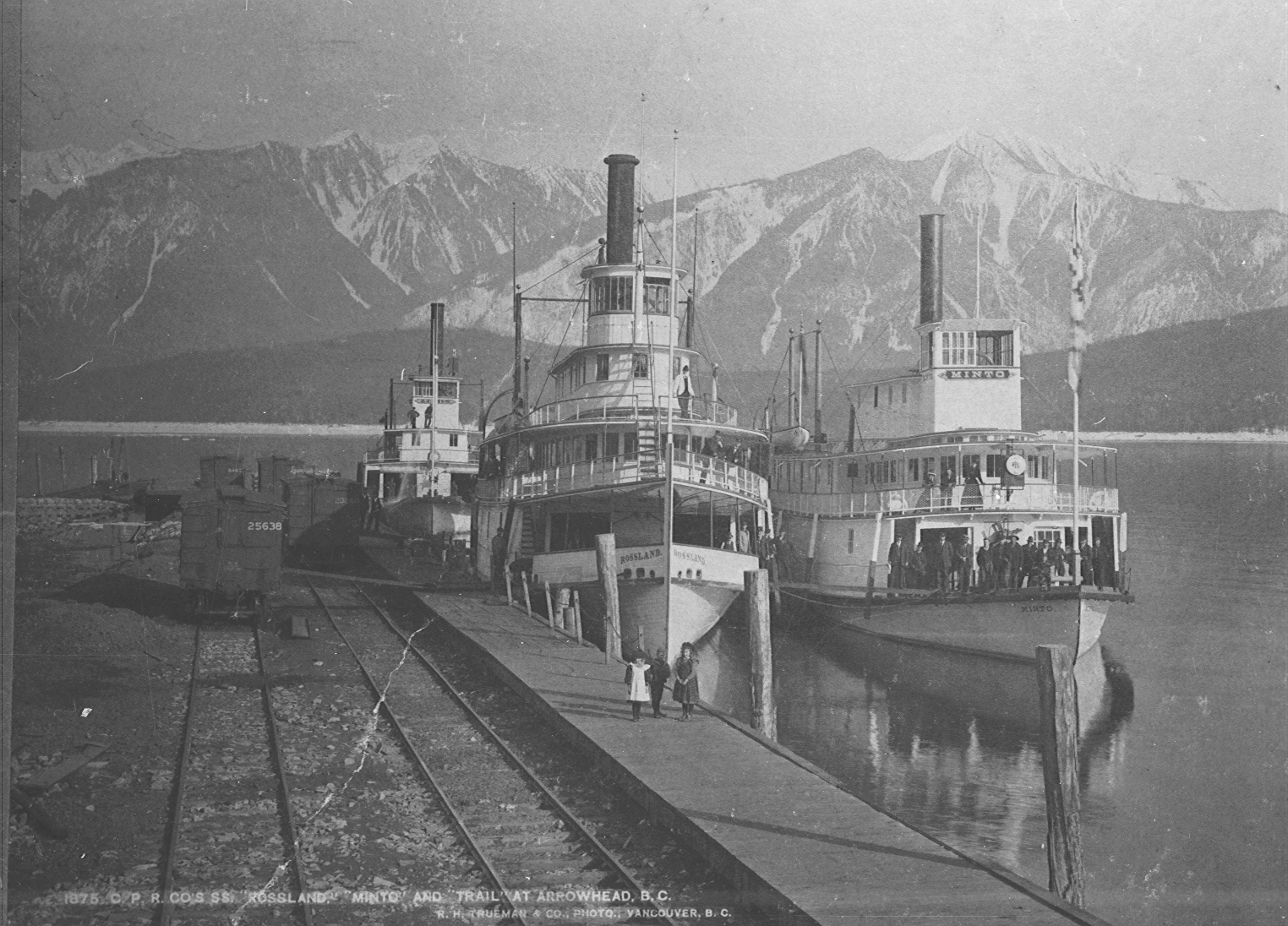 1896 – SS Trail built in Nakusp, used to haul freight and to push a barge from Revelstoke to Trail. The barge carried coal for the smelter in Trail, then she hauled ore from the smelter to Northport. Here she is docked behind the Rossland at Arrowhead, Upper Arrow Lake, 1898.
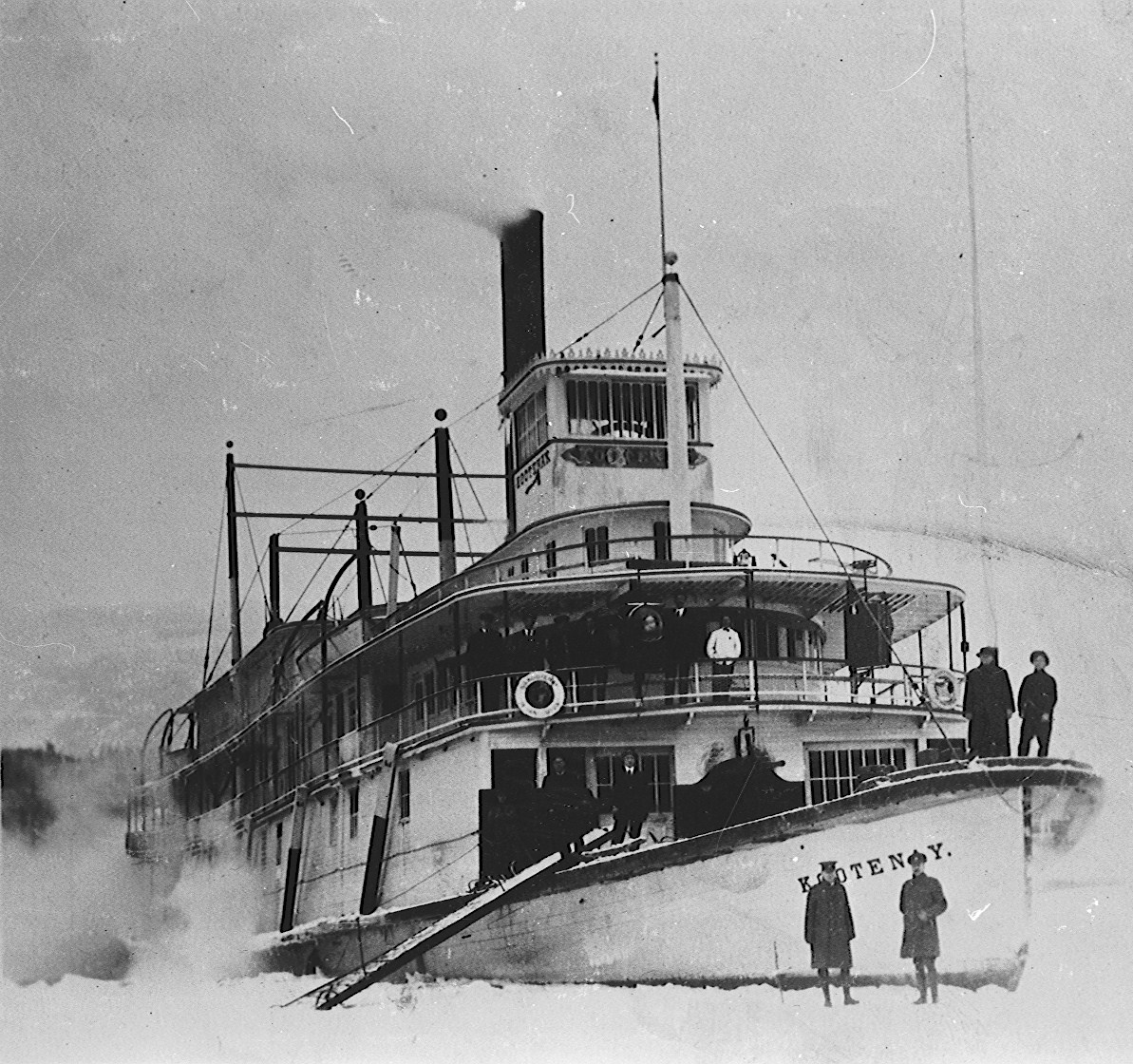 1897 – SS Kootenay built in Nakusp and launched in April – group posing in front of sternwheeler on frozen Upper Arrow Lake ca. 1920
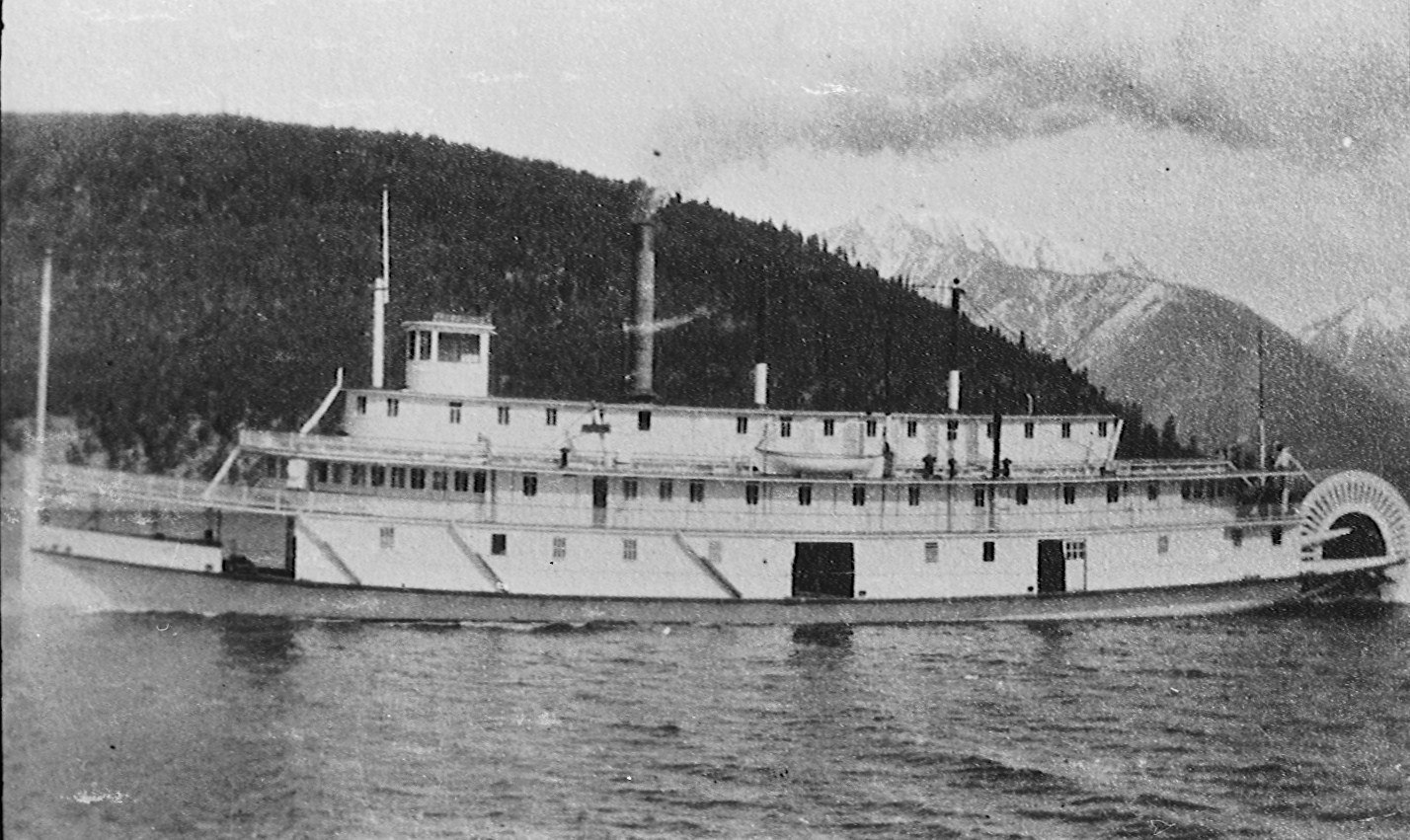
1897 – SS Rossland built in Nakusp and launched without furniture, fittings or windowpanes so that the SS Lytton could be withdrawn at last for repairs, here seen sailing on Upper Arrow Lake (1898- 1916).
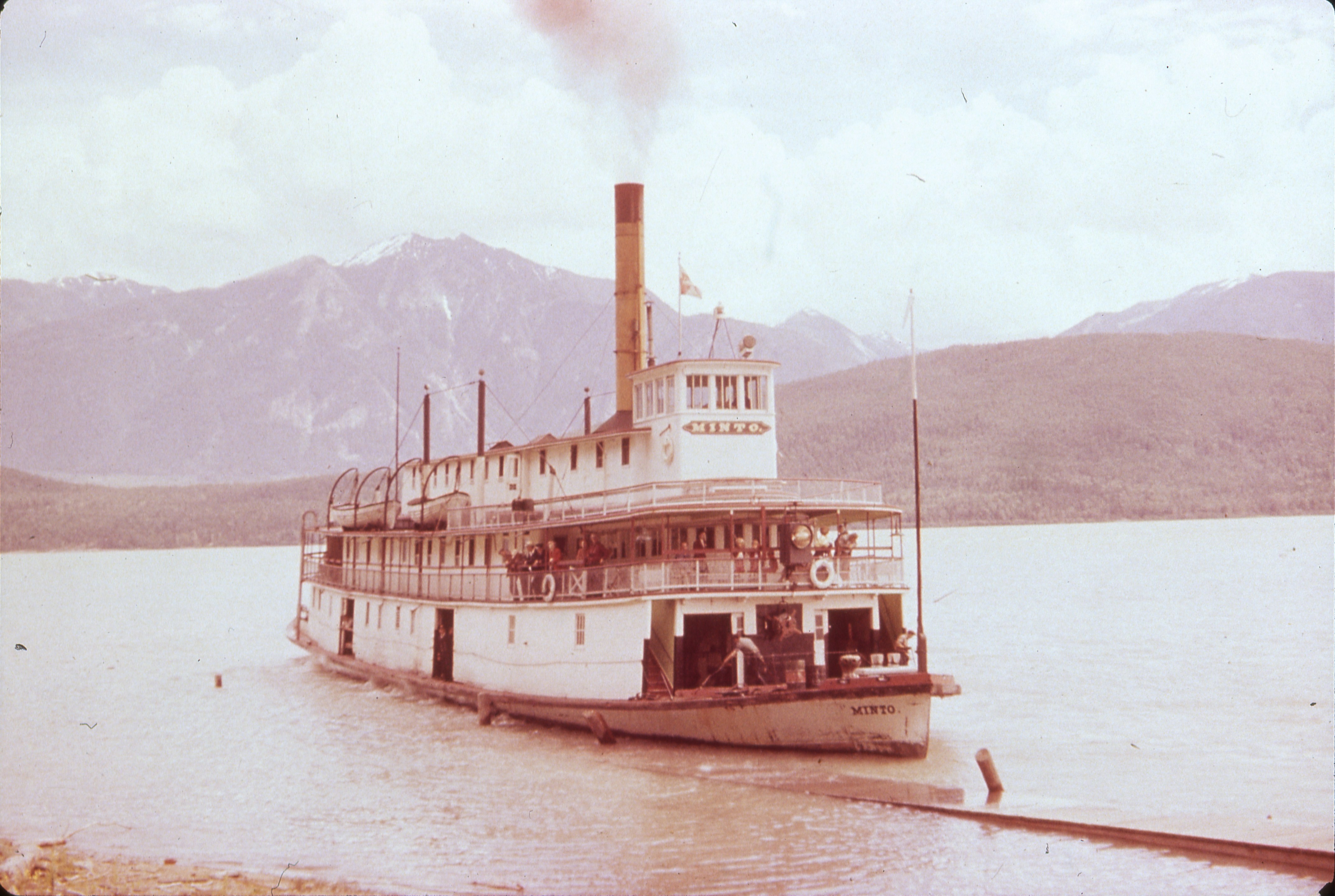
1898 – SS Minto built in Nakusp, parts from Toronto, shipped to Nakusp in 1000 parts. First steel hull on the Arrow Lakes and named after Canada’s Governor General. It was meant to go to the Stikine River for the Gold Rush. The picture was taken at Arrowhead on Upper Arrow Lake, 1952.
 1902 – SS Revelstoke built in Nakusp, used to take tourists between Revelstoke and Downie Creek. It was the last sternwheeler to run the fast water of the Columbia River Canyon from 1902 to 1915.
1906 – prosperous fruit trade began on the Arrow Lakes
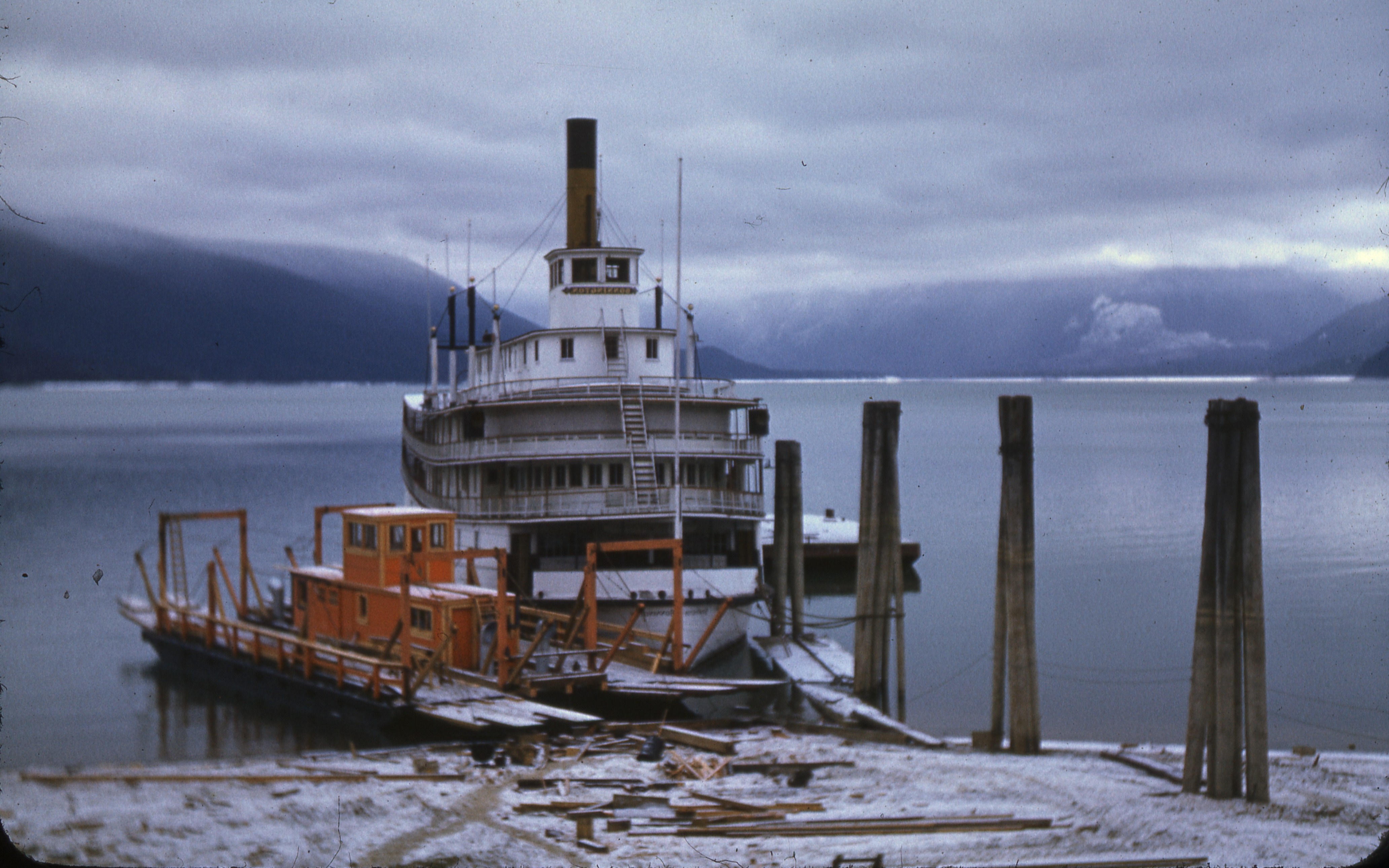 1911 – SS Bonnington built in Nakusp; largest steamer on the Arrow Lakes; was to be used to carry passengers for a proposed circle tour by CPR (Revelstoke to Arrowhead by rail, Arrow Head to Robson by steamer, Robson to Nelson by rail, Nelson to Lardeau by steamer, Lardeau to Trout Lake City by rail, Beaton to Arrow Head by steamer, Arrow Head to Revelstoke by rail); launched in April and a half day holiday was declared in Nakusp. On the picture above the derelict SS Bonnington docked at CPR wharf, Nakusp, 1940 or 1941; Fauquier – Needles ferry temporarily docked at left for repairs.
Znin is a modern town in an area with a rich history going back to Roman times. The visitor will find more information on this beautiful town and its many cultural and touristic attractions on Wikipedia and many other sites. I will limit today’s presentation to just the pictures to give a sense of where I come from. You can read more in Chapter 5 of the P. and G. Klopp story to be posted soon. If anyone of the Polish visitors of our blog knows the town well and would be so kind to tell if the old hospital building still exists, I would be extremely grateful.


“We never know the love of a parent till we become parents ourselves.”
Henry Ward Beecher
When I was born on March 24th, 1942 in Dietfurt (Znin) in the Reichsgau Wartheland, the superpowers of the world were at war with one another. Nazi Germany was in control of most of Western Europe. Hitler had not learned from Napoleon’s defeat in 1812 and invaded Russia in June 1941. Driven by his megalomania he thought himself to be the greatest military genius of all times and planned to conquer, subdue and rule over more territory than Alexander the Great, Hannibal and Napoleon put together. With Japan’s aerial strike and attack on Pearl Harbor in December 1941, the winds of war had invaded the Pacific Ocean and had suddenly engulfed the entire world. Yet, at the time of my birth, my family living in this remote corner of the Reich enjoyed a semblance of peace and security. The entire region was out of reach from the Allied bombers, which began with ever increasing intensity to terrorize the populace of the larger cities of Western and Central Germany. It was at Gutfelde near the small town of Dietfurt, where my father Ernst had recently been transferred to take over the administration of three large farming estates. Continue reading

