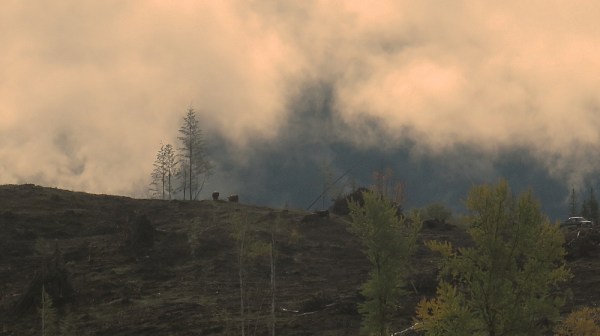
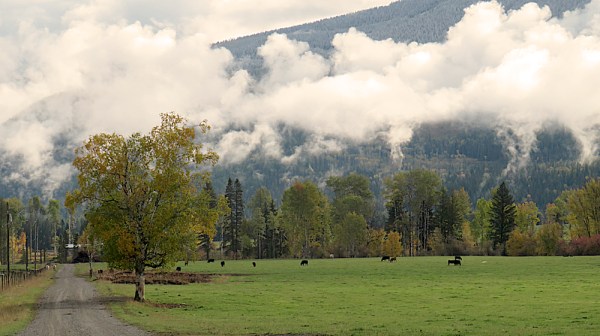
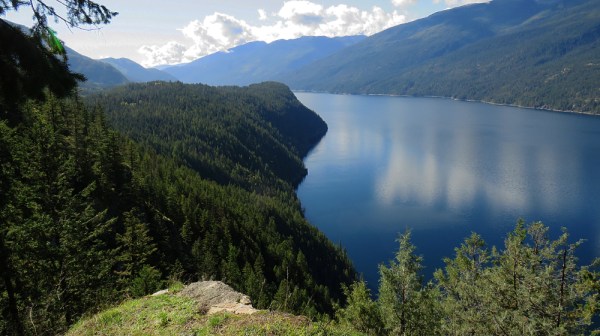
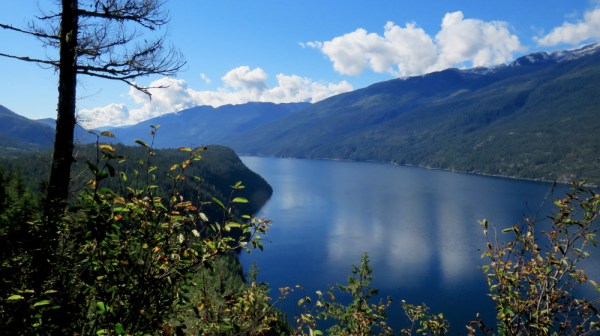
The arrival of fall in the Arrow Lakes region of BC is little behind schedule this year. Yes, the maple and poplar trees show their spectacular colours, but the larches are holding back as if they are not yet ready to face the long winter. Also, we did not have any real night frost yet in our area, which is sometimes – tongue in cheek – referred to as the banana belt of the Kootenays. A good hard frost always sets the spectacular colour wheel of autumn splendour in motion. Here are a few photos giving you a glimpse of fall at the Arrow Lakes. Enjoy.
After reading the horrific tales in Papa’s notes, I thought he was exaggerating the conditions he had to suffer through. So I did some research on US administered POW camps in general, but especially on the one near Bad Kreuznach, where Papa had spent most of his camp time. I avoided German websites that might appear to harbour pro-Nazi sentiments. Instead, I sought out American sources to lend credibility to Papa’s eyewitness account.
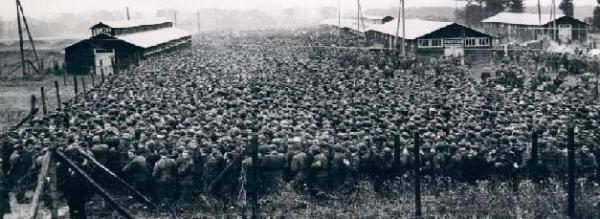
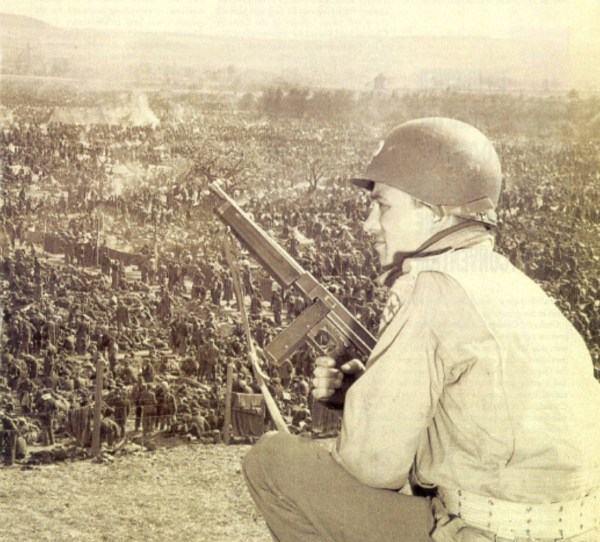
The first quote is from the US-based Journal of History: “Half of the German POWs in the West were imprisoned by US forces, half by the British. The number of prisoners reached such a huge proportion that the British could not accept any more, and the US consequently established the Rheinwiesenlager from April to September of 1945, where they quickly built a series of “cages” in open meadows and enclosed them with razor wire. One such notorious field was located at Bad Kreuznach, where the German prisoners were herded into open spaces with no toilets, tents, or shelters. They had to burrow sleeping spaces into the ground with their bare hands, and in some, there was barely enough room to lie down. In the Bad Kreuznach cage, up to 560,000 men were interned in a congested area and denied adequate food, water, shelter, or sanitary facilities, and they died like flies of disease, exposure, and illness after surviving on less than 700 calories a day. There are 1,000 official graves in Bad Kreuznach, but it is claimed there are mass graves which have remained off-limits to investigation. There were no impartial observers to witness the treatment of POWs held by the US Army. From the date Germany unconditionally surrendered, May 8, 1945, Switzerland was dismissed as the official Protecting Power for German prisoners, and the International Red Cross was informed that, with no Protecting Power to report to, there was no need for them to send delegates to the camps..”
Overcrowded POW Camp
The second quote is from the universal online encyclopedia Wikipedia.com: “To circumvent international regulations that dealt with the handling of POWs, the surrendered forces were termed “Disarmed Enemy Forces” (DEF), and the term “Prisoner of War” (POW) was not applied. Due to the number of prisoners, the Americans transferred internal control of the camps over to the Germans. All administration such as doctors, cooks and workforces were all undertaken by the prisoners. Even the armed guards were former troops from the Wehrmacht’s Feldgendarmerie and Feldjägerkorps. Known as Wehrmachtordnungstruppe (English: Armed Forces Order Troop), they received extra rations for preventing escapes and keeping order in the camps. In June 1946, these military police would be the last German soldiers to officially surrender their arms.”
Thus, by a mere change of the term “Prisoner of War” (POW) to “Disarmed Enemy Forces” (DEF), the International Red Cross was prevented from entering the camps and providing care packages to the starving soldiers. Terrible things happened to the soldiers of both Allied and Axis nations during World War 2 on the battlefields and in the POW camps. But what happened to the German soldiers after the war was over can only be described as an act of revenge and a crime against humanity. My father-in-law was lucky to survive the ordeal relatively unharmed who perhaps received slightly better treatment because of his officer’s rank in the army.
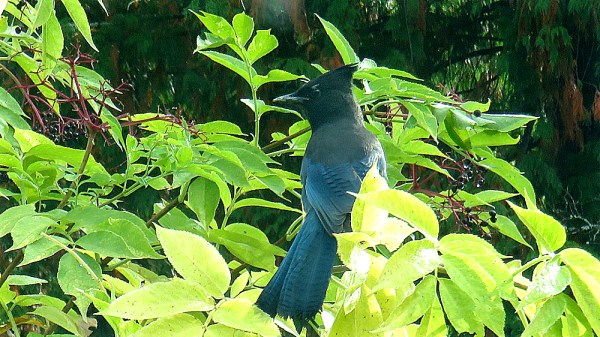
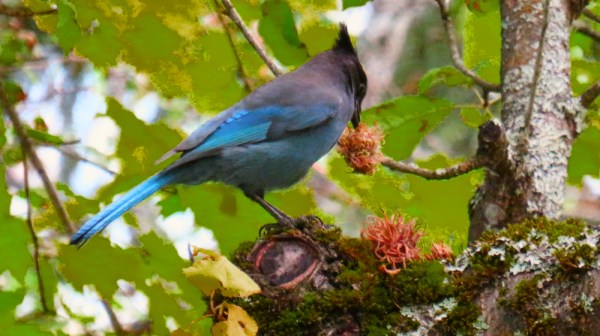
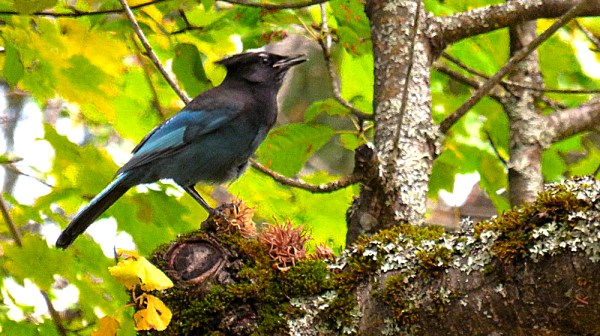
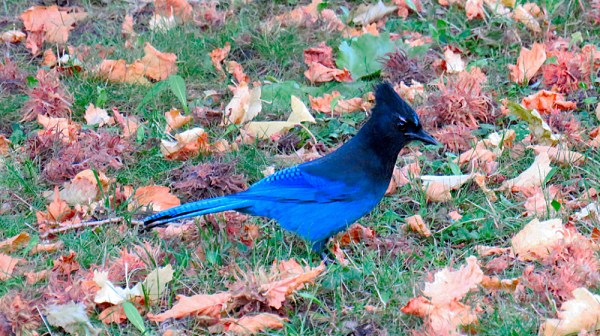
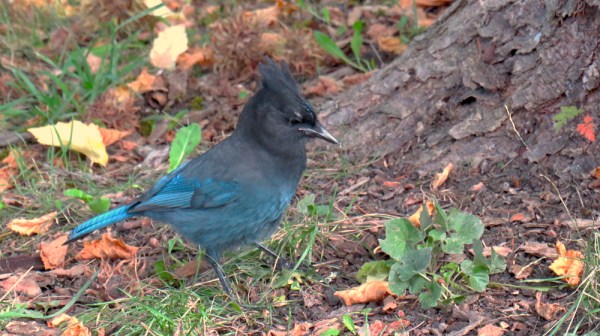
With wild hazelnuts dropping en masse to the ground and elderberries ripening on the bush, it is heaven for the steller’s jays. They are usually very wary of anyone pointing the camera at them. But their greed and competition from other jays make them let their guard down just enough so I could get a few good shots in. Here they are. Enjoy.
Eyeing the remaining elderberries is half the fun.There is a hazelnut hidden in every husk. Let’s get cracking.Cracking a nut is hard work.There are plenty of nuts on the ground. No need to hurry.I will rest for awhile before I continue my search for the delicious hazelnuts.
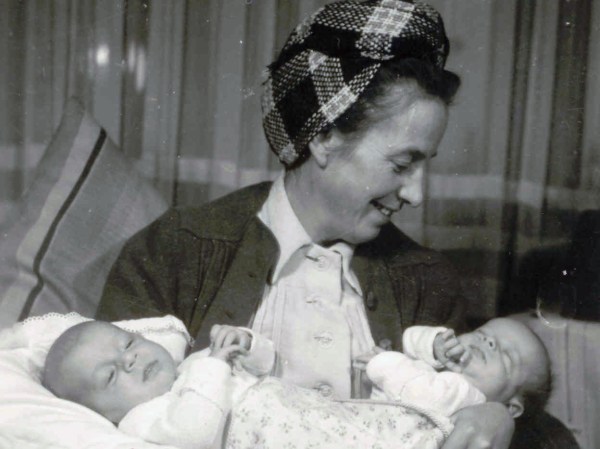
Papa compared the US camp administration with the Sphinx of Ancient Egypt. The secrecy about the political development in their respective home provinces was a riddle to which there was no answer. With its heavily censored articles, the camp newspaper ‘Wahrheit’ (Truth) offered very little information and even less ground for an early dismissal. One thing Papa was able to figure out, though. The Russians had taken over Thuringia and Saxony and had become the master over his hometown Gotha. Whether his wife and children had been able to survive the war, he did not know. He repeatedly expressed his worry and concern over their safety.
The Family Constantly on Papa’s Mind
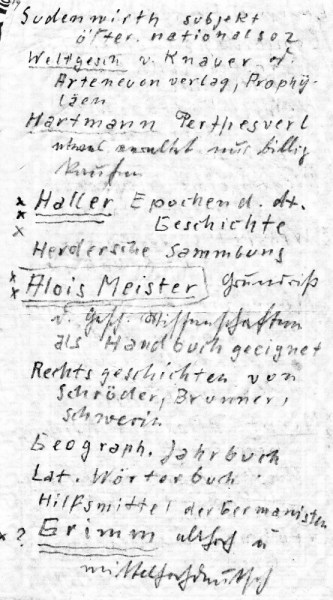
Among the captured officers, many intellectuals, professors from various disciplines were taken out of their university. They served in the army in a commanding position. To fight boredom and help their colleagues get their minds off the common misery, they offered lectures on their expert knowledge of their particular field of research. These open-air sessions were top-rated and offered a broad range of topics, interpreting operas, 5000 years of Ancient Egypt, understanding Goethe’s Faust, to name a few. Through conversation with some of these impressive presenters, Papa hit on the idea of jotting down all the books, which they recommended for further study and which he was eager to read to feed his idea-hungry intellect. A glance at the list gave me deep insight into Papa’s enquiring mind, and I could not help admiring his fascination for history. Later on, after his release, he began to acquire these books, primarily historical and devoured them at a rapid pace. He went through an entire set of over 20 volumes on world history written by world-renowned historian Leopold von Ranke.
Papa’s Partial Book List
Unfortunately, from week to week, the food situation was getting worse. One day their thin, sugary breakfast soup arrived only at one o’clock in the afternoon. Even the most exciting talk about ancient history could not detract from the fact that the POWs at the Bad Kreuznach Camp were starving and growing weaker every day. Papa noticed the absence of mice, which was highly unusual considering so many men concentrated in such a small area. He concluded that in the most humble household, there was always some food left in the pantry. Here at the camp, with thousands of men milling about in constant search for food around the camp kitchen or some mouldy scraps from the garbage cans, nothing was edible left that might attract even a hungry rodent.
The sun shone brightly. No fog obstructed the view so my wife and I decided to travel again to the Summit and Slocan Lakes, which are part of the West Kootenays where we live. Our spontaneous decision did not disappoint us. What a change in the landscape we noticed within such a short time! As photographers we have often experienced how a scene can alter its appearance within just few minutes. When a cloud blocks the sun, it even happens at the blink of the eye. Enjoy.
In the next section of his narrative poem, he addresses in a satirical fashion liberally sprinkled with sarcasm all housewives in general and his wife Elisabeth in particular. To wash clothes is easy, he says, when you have buckets, detergent, water, and means of bringing it to a boil. With those things readily available, every man could do the same, he claims. Then he begins to enumerate all the difficulties of doing the laundry in a POW camp. In wartime, people have to line up for butter and bread. Similarly, the prisoners first had to stand in line to receive some water, then sneak into the packed laundry house. To wash your clothes anywhere else was strictly forbidden. For the entire cleansing exercise, the camp rules allowed per company only twenty minutes, during which time the POWs could wash their face and body. Papa bemoaned the resulting failure of keeping body and attire clean.
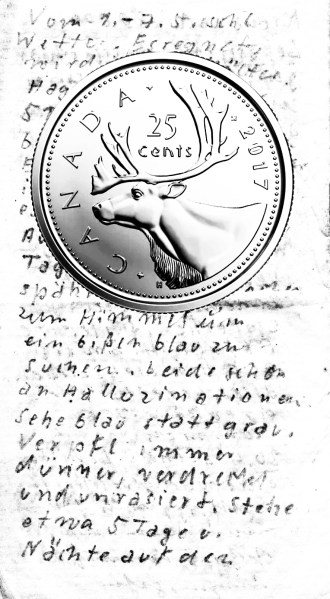
I placed a quarter on the tiny paper that Papa had written his POW notes. It gives you a sense of how tiny the paper was he used.
Dust also was a big problem when they were beating their blankets in the morning or frantically tried to sweep off the dusty dirt floors. Following the vigorous action of multiple brooms in action, fine particles remained floating in the air for a long time and eventually settled exactly in nooks and crannies in a never-ending cycle, which would make German housewives boil over in anger and frustration. Papa would have written many more verses on dirt and dust in the camp. Alas, for lack of paper and pencil, he was unable to jot them down. When finally he traded in a good chunk of chocolate for those most precious writing utensils, he had forgotten them all. And indeed, there were more important things to report.
Kinzig-Remagen POW Camp Spring 1945 – U.S. Army Archives
Food or rather its dwindling rations became once again the number one topic at the camp. And the chicaneries resumed. The POWs complained that the kitchen staff had maltreated them at a recent call to a non-existing breakfast. In a sadistic response to the justified complaint, the German kitchen personnel collaborated with their American supervisors and devised another sinister plan to make life more miserable for the prisoners. What they came up with was to serve breakfast between four and five. That would take care of the complaint of being called for breakfast and not getting one. Breakfast consisted from now on of watery vegetable soup. Add to this the long wait for lunch, which made their suffering even worse. When finally they received coffee or tea with one slice of wheat bread, it became evident they were set on a starvation diet. The word circulated from company to company that they should do as little physical activity as possible to conserve precious calories. Their survival was at stake.




 The Peter and Gertrud Klopp Family