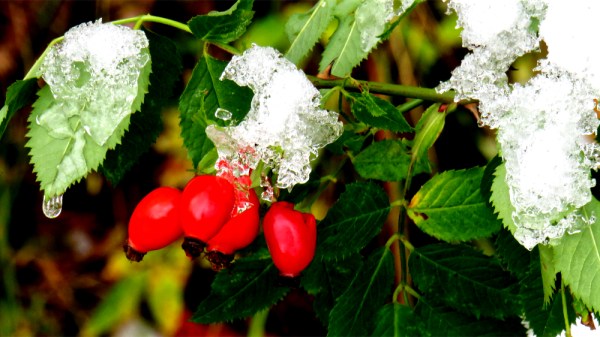
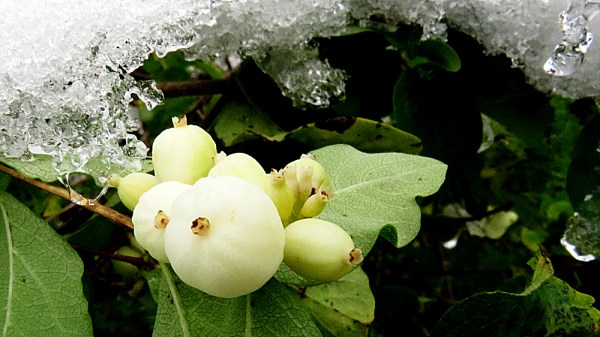
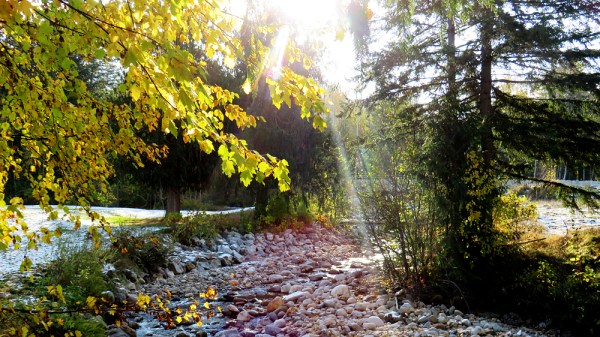
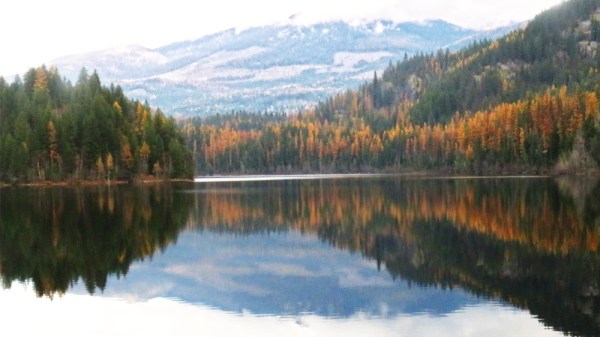
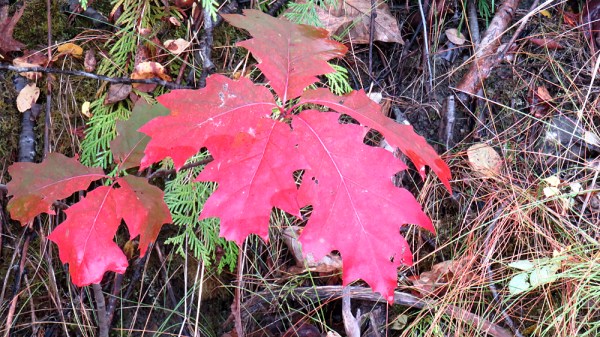
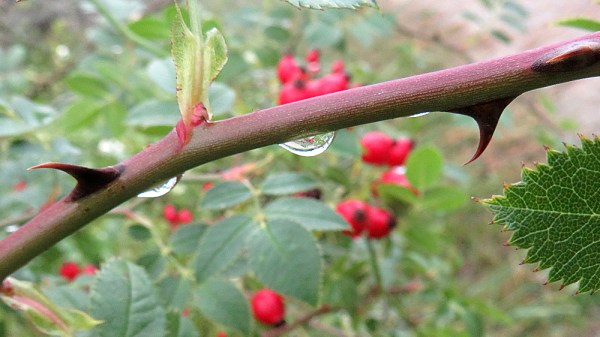
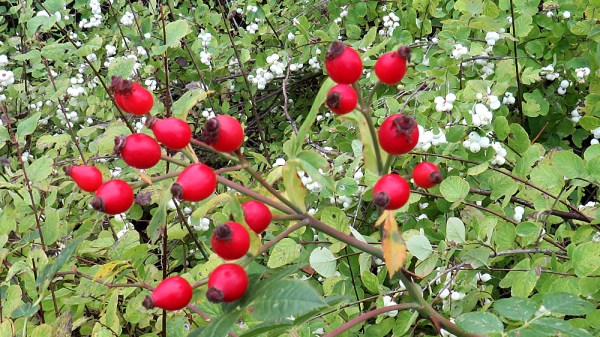
Rarely in the Arrow Lakes region does one experience fall and winter co-existing for such a long time. Normally late in the fall, the snow comes and melts away on the following day. On our recent walk along our local golf course, my wife and I captured fall and winter scenes, which were eagerly competing with one another for the prize of beauty. I let you decide on the winner. Enjoy.
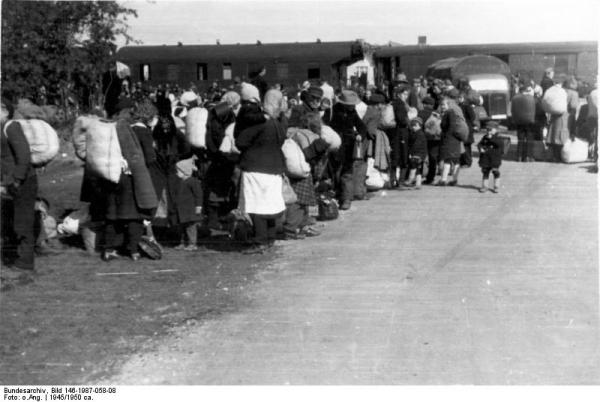
The war came to an end with Germany’s unconditional surrender on May 8th, 1945. But nothing changed in Mother’s life for more than a year until early in the summer of 1946 when she was expelled along with millions of other Germans from her homeland. In a well-calculated program of ethnic cleansing all German nationals were forced to leave in order to make room for the Polish people who had been displaced in turn by the Russians in their eastern provinces. Thus, the Pomeranian lands that had once been settled and cultivated for a period of over 500 years by industrious German pioneers and farmers were put under permanent Polish administration and are now part of Poland.
Arrival of Refugees in West Germany
By now I was a little over four years old. What I have been writing about myself, I had gleaned from Mother’s diary, from my second-generation cousin Eberhard Klopp, who did extensive research on the Klopp family going back some four hundred years, from Uncle Günther’s Kegler Chronicles and other sources. I am especially thankful and greatly indebted to my brothers Karl (died in 2019) and Gerhard and my sister for their personal accounts of their incredible ordeals. I decided to insert them here as documents of a tumultuous period and as a testimony to their inner strength and courage without which they would not have survived.
Report by my sister Erika who adopted a new name Lavana Kilborn in the early 1980s
My Journey from 1943 to 1947
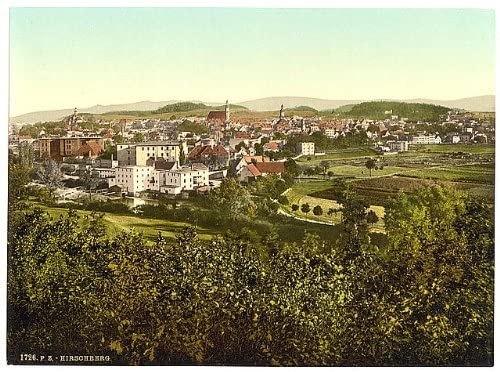
In the summer of 1943, my mother and I left by train for Hirschberg, where relatives of mine resided. As we lived in the country, it was necessary for me to move in order to obtain proper schooling. My host-family consisted of my widowed aunt Johanna, her parents and three cousins of mine, one of them being a girl, named Elisabeth and two boys. After a few days my mother returned home.
Hirschberg near Breslau, Lower Silesia
I got along very well with my new family, in particular with Elisabeth, who was of the same age as myself. We sat side by side in school and became good friends. The beautiful city had a large swimming pool, surrounded by grass to sunbathe, play ball etc. On weekends the family would go hiking in the nearby mountains, where the source of the mighty Elbe River is located. The song “Oh du schönes Riesengebirge, wo die Elbe heimlich rinnt …” still makes me melancholic, when I sing it. We also skied on wooden skis. There were no lifts then, but how much fun it was. All these activities were new and exciting experiences for me.
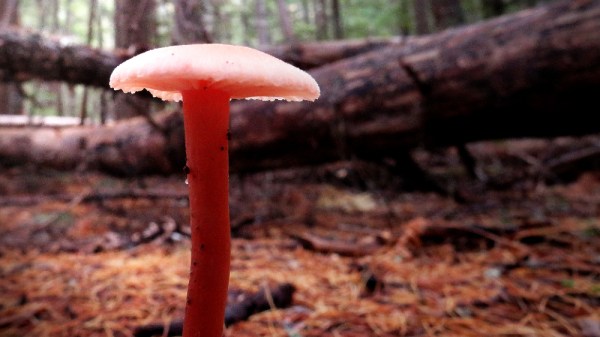
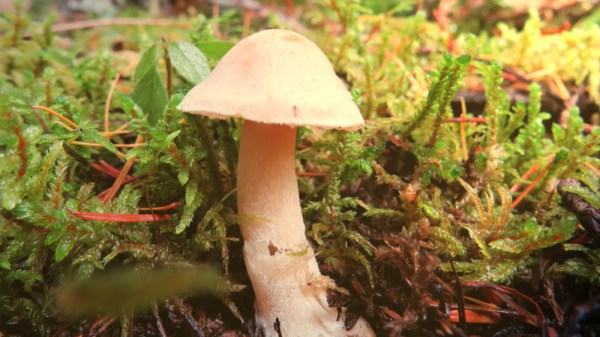
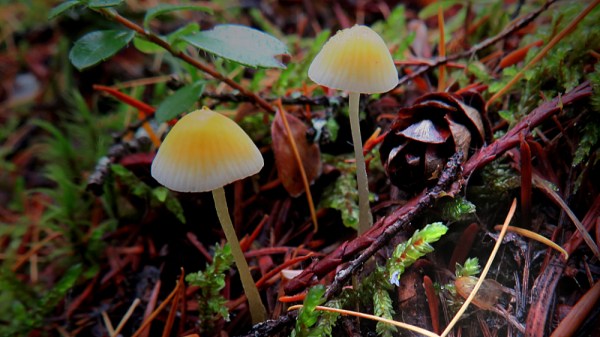
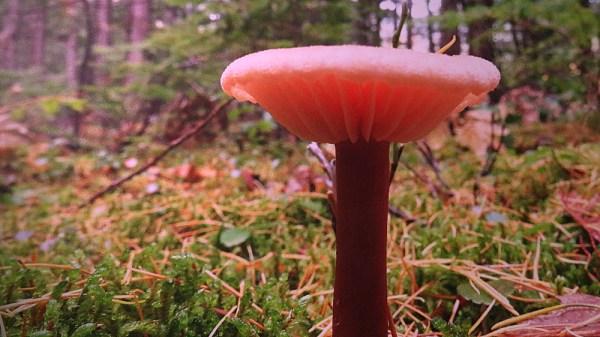
Two weeks ago my wife and I went on one last mushroom hunt. The mushroom buyers had closed their shops. So our focus was on eating them ourselves. We were hoping to find a few more chanterelles, since they are so healthy and taste so good. Alas, there was not even one chanterelle we could find. Instead I discovered these tiny beauties. Enjoy!
The spectacular place where we found the mushrooms
While Father slaved away in a Soviet coal mine, Mother had to endure indescribable hardships. Escape across the River Oder, where the area was still in German hands, was no longer an option. The Russian troops were heading in that direction and there was heavy fighting. She was left behind at the forestry with my brother Gerhard and me and the four orphans, whom she had taken along during the arduous trek from Gutfelde. That she and thousands of other women from West Prussia and Pomerania did not despair, did not give up and did not fatalistically slip into a state of utter hopelessness gives me cause for great admiration. After the forestry building burned to the ground, Mother wandered around in search of food, shelter, and relative safety. Eventually she obtained permission from a commanding Russian officer to travel with us children to Belgard in the hope of finding my brothers Karl and Adolf. To her great disappointment she discovered that they had decided to leave school and town, when they had heard that the Red Army would be in Belgard within days.
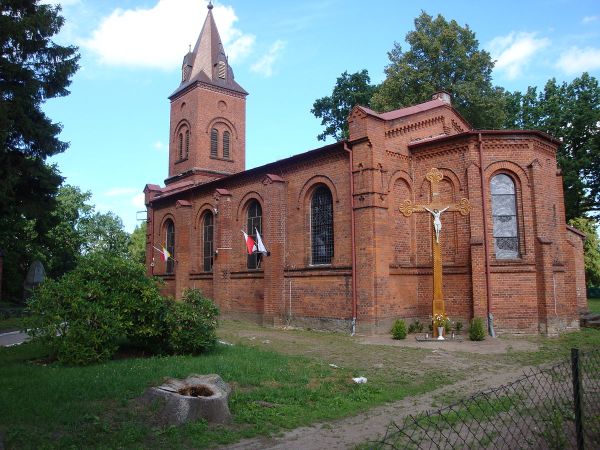
Belgard, Pomerania (now Polish: Bialogard) – Photo Credit Wikipedia
While the town of Belgard remained relatively unscathed from the ravages of war, Mother had to suffer under the harassment and abuses of the new masters in town. In the secret treaty in 1940 between Nazi Germany and the Soviet Union Stalin had acquired control over the eastern parts of Poland and wanted to keep them in compensation for the stupendous losses in life and material during the German invasion of Russia. So he ordered the Poles to leave their homes and their farms and settle in the German provinces east of the Rivers Oder and Neisse.
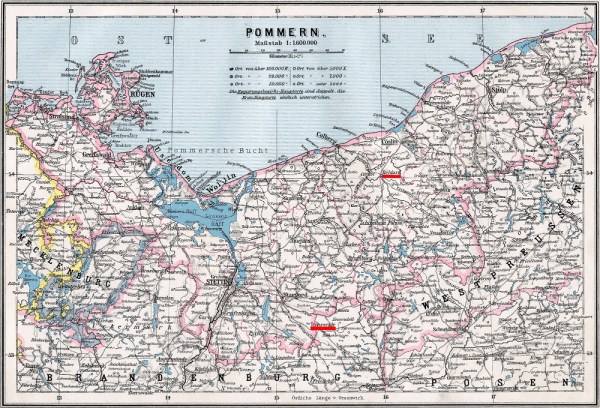
Pomerania, now part of Poland
Now in an ironic reversal of roles, the Poles were now the masters of former German farms and exercising control over the towns and cities. For the Germans, who wanted to stay or could not escape in time, it was now their turn to experience harassment and abuse. Mother refused to be forced into a role in which she would lose her dignity, especially, as it often occurred, if she felt that she was confronted with injustice. She knew about the century old animosity between the Russian and the Polish people. So whenever she felt that the Polish authorities had unfairly treated her, she would go straight to the Russian officer in charge of the district and complain about the incident. To her great satisfaction she received justice ironically from the hands of an enemy officer.
Apart from her inner strength that allowed her to show courage where others would have meekly knuckled under, one must also consider the fact that Russian officers had a heart for the plight of little children. One could dismiss this thought as stereotypical and sentimental bias, if what Mother had experienced in Belgard with the six children in her care had been an isolated case of kindness. But such tender feelings on the part of Russian soldier had been documented so frequently as to attest to their truth.
Last week the forecast was for much colder weather with the possibility of snow. So far we have been very lucky and did not have any frost. I still have lettuce and red beets growing in the garden, which is highly unusual for our region in late October. Prompted by the wintery forecast my wife and I went for a walk and captured the beautiful autumn atmosphere of the Arrow Lakes. Enjoy.
As already mentioned earlier, my father Ernst Klopp and thousands of other German citizens were captured by Red Army soldiers and as a non-combatants were deported with full approval of the other Allied powers to forced-labour camps in the Soviet Union. At Wikipedia we read: “The capture and transfer of civilian ethnic Germans to the Soviet Union began as soon as countries with a German minority began to be overrun in 1944. Large numbers of civilians were taken from countries such as Romania, Yugoslavia, and from the eastern parts of Germany itself.”
At this tragic juncture, the Ernst Klopp family was scattered all over the eastern provinces of Germany. My mother was left to fend for herself. From Arnswalde she travelled north with four orphans, my brother Gerhard and me in search of the older sons Karl and Adolf to Belgard (today Polish Bialogard). There, they had attended the local high school and had boarded with family friends. But the 16-year and 14-year old brothers had already taken off to escape from the approaching Red Army. For the longest time, Mother did not know their whereabouts. Furthermore, my sister Erika attended school at Hirschberg, Silesia, where she stayed with uncle Bruno’s widow and her children Hartmut, Elisabeth, and Jürgen. Writing a cohesive account of all members of the family during the postwar years is very difficult and has to wait until I have concluded my father’s life story.
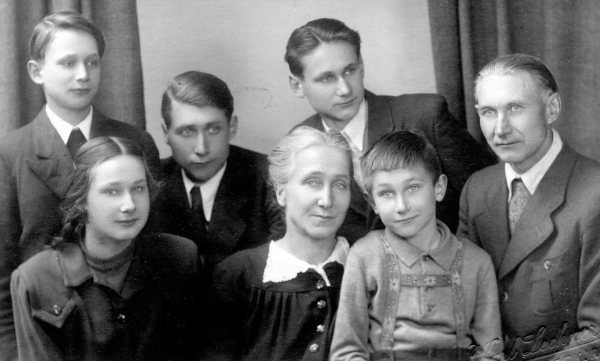
In the meantime Father had a major accident, while he was working in the coal mines in the Donbass region of the USSR. He received treatment for his head injury and would have been sent back to work, if he had not feigned continual headaches. Thus, he succeeded in getting an early release and was sent back to Germany. When he arrived at Uncle Günther’s place in Erfurt, he heard that the entire family had survived the war. He established contact with Mother and the children and in 1947 moved to Rohrdorf, a small village in Southern Germany between the River Danube and Lake Constance. There he found employment with the regional branch of the Fürstlich-von-Fürstenberg forest administration. Eventually the entire Klopp family was reunited. Although now extremely poor, often hungry, and dispossessed, the family was finally together again and could attempt a new beginning.
First Photo of the Reunited Ernst Klopp Family in Rohrdorf 1950