The contrast between the peace and serenity of our yard and the raging waters of a nearby creek could not be any stronger. On the one hand, there is the pastoral scene of the mallard duck couple happily searching and eating the sprouting vegetation in our yard. We had so much rain that small ponds developed in the low lying sections of our property which attracted the water loving creatures. On the other hand, there was the unnerving warning from our regional district that there was an imminent danger of flooding. Many communities were put on an evacuation alert, as the rivers and creeks were overflowing after heavy rains just a week ago. My wife and I went to have a look at Taite Creek some 10 km south of where we live. Here are two short videos that show peace and power provided by mother Nature. Enjoy.
While translating parts from the family chronicles written by my cousin Eberhard Klopp, my main focus was on rendering an accurate translation. My personal interest in our family history and a deeply felt responsibility towards the Klopp branch and future descendants living in Canada provided me with the motivation and necessary persistence to delve into this laborious and time-consuming undertaking. With the exception of four aunts and my father Ernst Klopp, I did not get to know the other twelve children of my paternal grandparents Emma Christiane and Peter Friedrich Klopp.
As I was writing down the wealth of ancestral information of Eberhard Klopp’s book containing more than 200 pages in small print and then publishing it on my blog one uncle and one aunt at a time, I gained deep insight into the causes of what makes a family function in harmony and of what makes it fall apart. Quite frankly, reading some of the stories shocked me so intensely that I hesitated for a long time to publish them online.
My readers, who read the posts on my nephew Georg von Waldenfels, a Nazi SS officer, may understand as to why I was tempted to leave out this embarrassing chapter of our family history. In the 1930s many people were misled by the promises made by the Nazi propaganda for a more prosperous and stronger Germany after having suffered through the worst economic depression in German history. Actually, at least initially, their hopes and aspirations were being fulfilled. While millions of people had been struggling to make ends meet, every person willing to work was now gainfully employed and able to put bread and butter on the table. They had no idea that the Third Reich that was supposed to last a thousand years would lie in ruins so quickly and millions of soldiers and civilians would be sacrificed on the altar of an insane ideology.
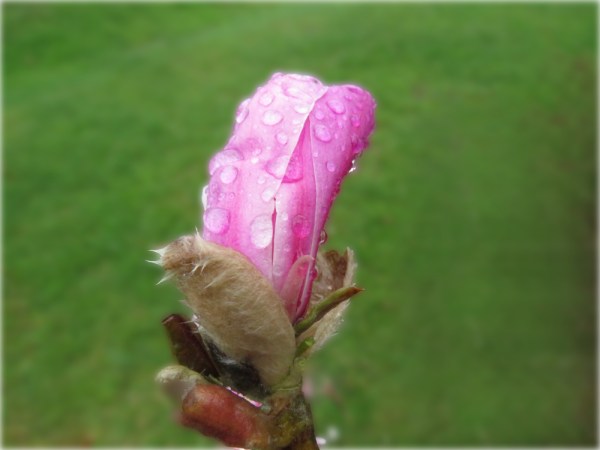
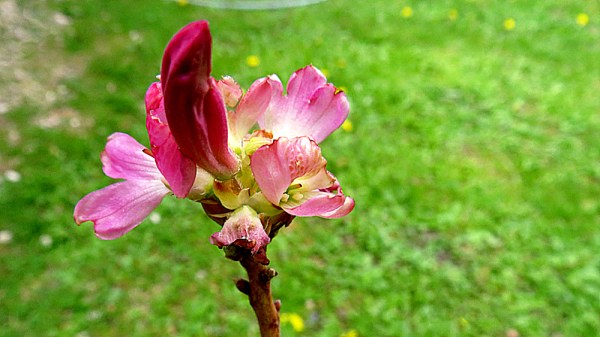
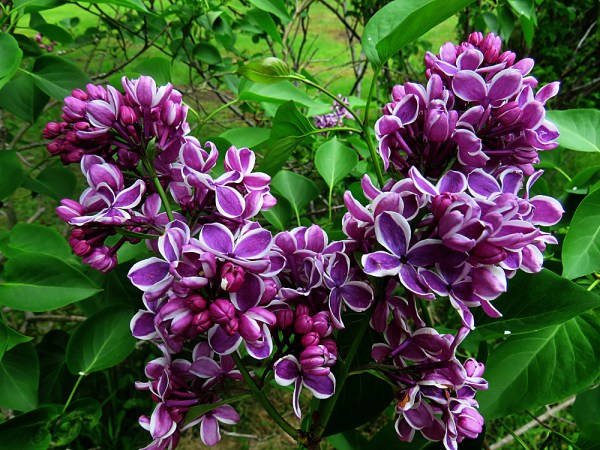
You will recall the budding development studies a couple of weeks ago. After six weeks of waiting, the magnolia bush put its beautiful flowers on glorious display. Then as a big surprise, the azalea plant, which had been so slow during the entire period, suddenly as if in response to my taunting was bursting out with a colourful and victorious cry: I am not going to be last as predicted by that ignorant blog writer Peter. And in third place comes the blooming lilac bush. So the rank order is official now. For the rose (in fourth place) to blossom, we will need to wait at least another week.
It was very difficult to obtain any concrete information on Otto Klopp, as no birth and place records were found. It is not even certain if mother Emma had taken him with her to her new residence in Elsenau, West Prussia in 1903 or 1904. In any case, he was mentioned among family circles as a 15-year or 16-year old in Wolmirstedt.
Hermann Weihe (1888 – 1947), the brother of his sister-in-law Marie-Luise Klopp (née Weihe) of Zielitz, arranged a job for Otto at a farm in Farsleben near Zielitz before 1914. There Otto in all likelihood started an apprenticeship program in agriculture. He was, therefore, the only one of the Klopp-Bauer children with whom mother Emma maintained a connection with the otherwise avoided Klopp-Weihe family. The author, Eberhard Klopp, offers the following explanation. Emma tried very hard to keep financial and family responsibilities within a manageable scope. For that reason Otto had to be taken care off in Farsleben.
At Wolmirstedt, Otto was presumably drafted into the German army to fight on the Russian front where he was killed in the 1915 offensive. As cause for his ‘hero’s death, several events during that year in World War I could be considered: his involvement in the Winter battle of February March 1915 in Masuria, East Prussia. Furthermore, he could have lost his life during the establishment of a new front and munition line of the Tenth army northeast of Suwalki. Finally, in connection with an attack at Kowno, he could have been killed during an enemy counterattack in the summer operation against Russia in July or August 1915. Otto Klopp received a shot through the lungs and bled to death in a wire entanglement.
A death notification similar to the one above was sent to Emma Klopp, Otto’s mother..
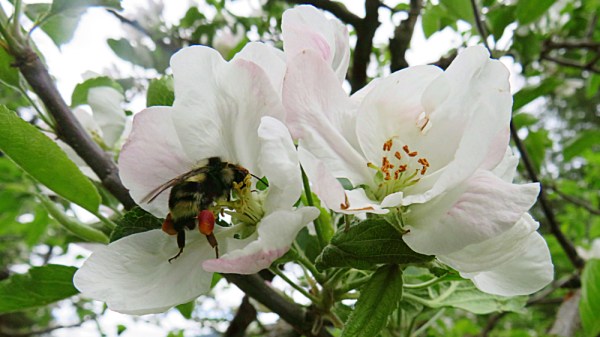
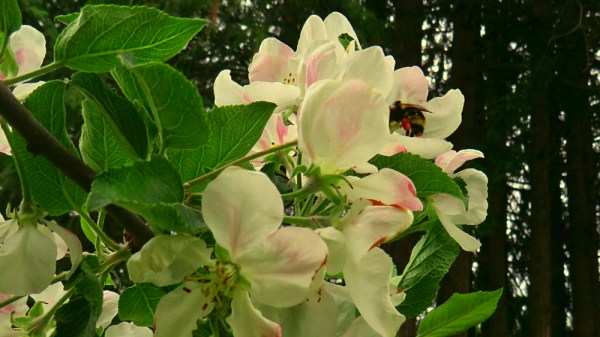
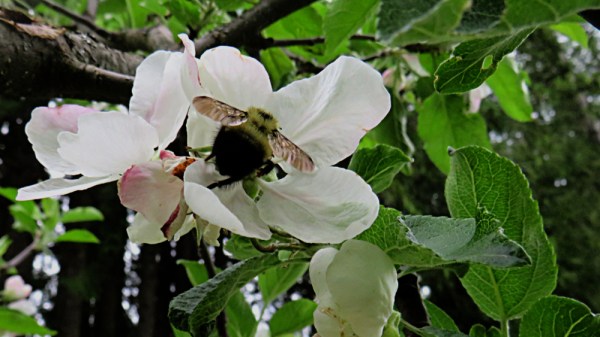
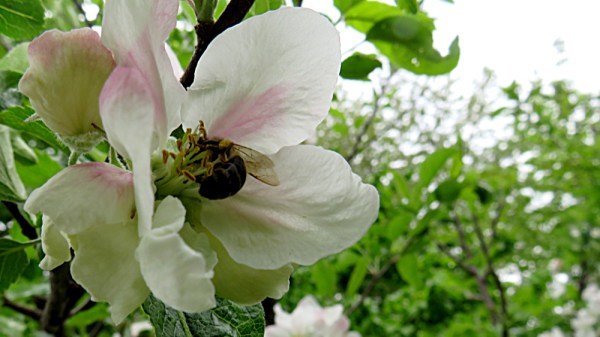
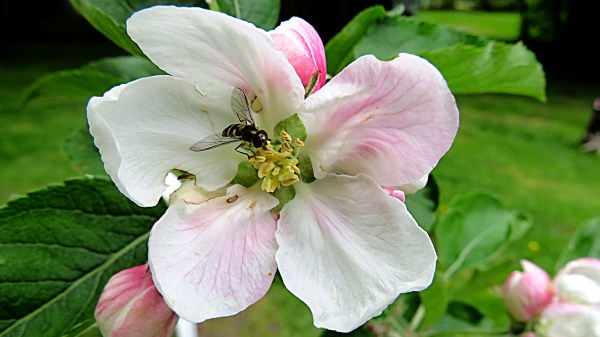
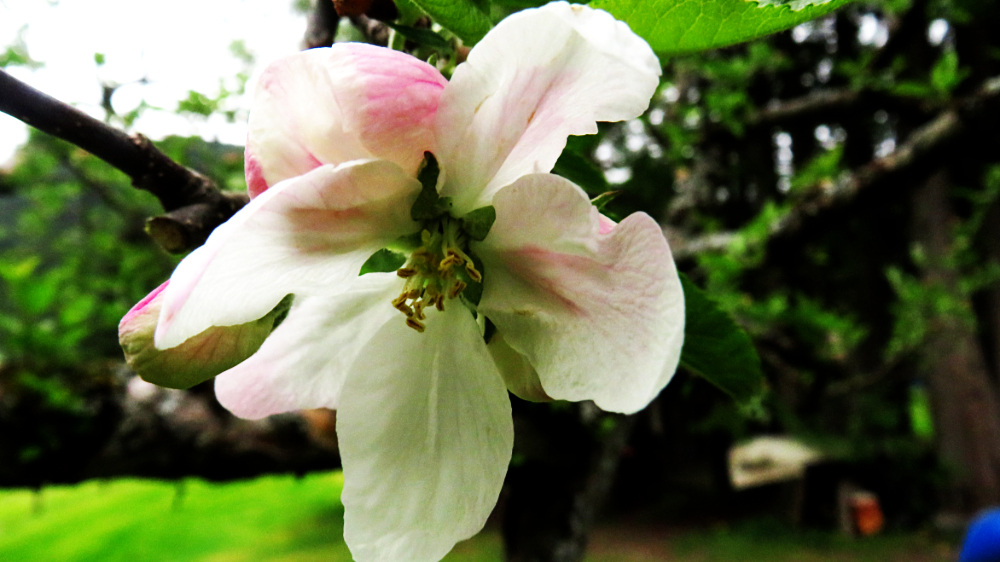
This is our red delicious appletree. Today I noticed a lot of humming and buzzing around the blossoms. We have no honey bees in our community. So I thought I would only be seeing bumblebees. To my great surprise, there were other insects, some looked like wild bees and others I have not encountered before. Perhaps some of you insect experts like my blogging friend Gerhard in Germany could figure out and report back their names. Enjoy.
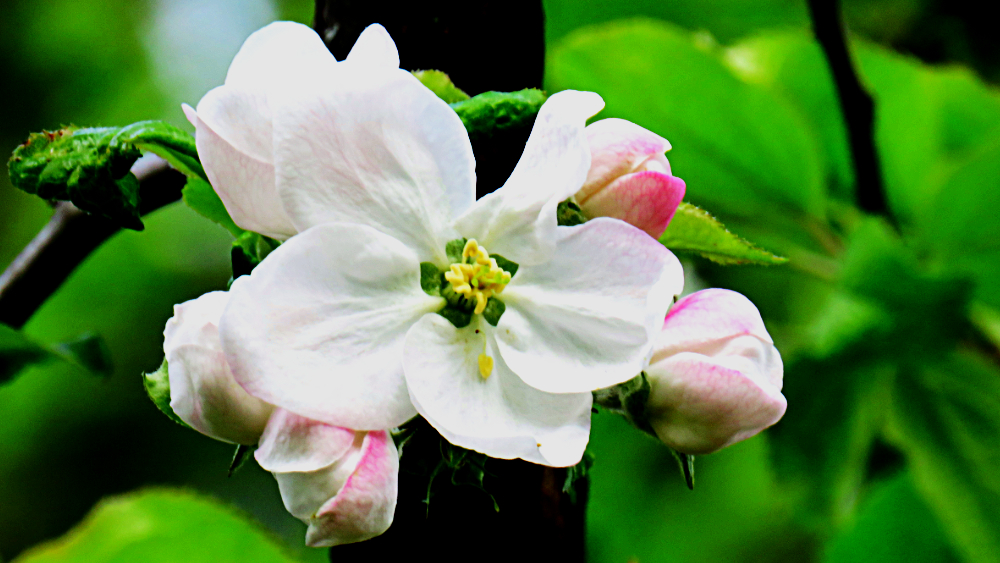
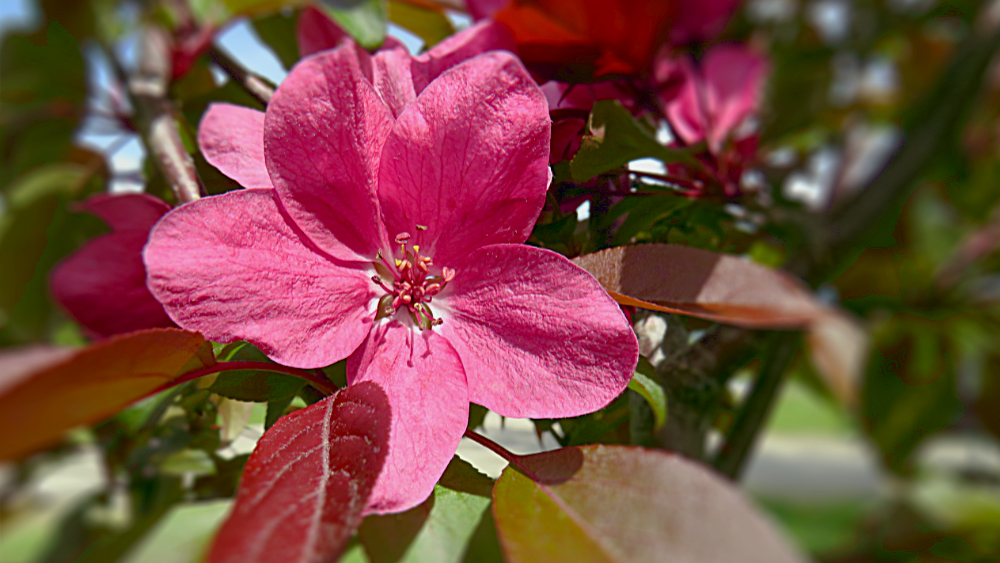
All of a sudden, it’s apple blossom time in the Arrow Lakes region. In our mini-orchard, we have three varieties of apple trees: the Grafenstein, the Red Delicious and the Crab Apple. The Grafenstein apple tree blossoming first is also earliest to produce very delicious and juicy fruit. Unfortunately, they need to be consumed rather quickly, because they quickly become mealy and lose their crispiness. On the other hand, the Red Delicious produces somewhat harder apples but has the definite advantage of being excellent keepers. Just today my wife made the last apple cake with the very last batch of the crop. The crab apple produces very small fruit not suitable for eating, but its red flowers are truly magnificent.
Gravenstein BlossomsRed Delicious BlossomsCrab Apple Blossoms
By the way, on last week’s post, I must have insulted the poor little azalea bush by claiming that it is going to be last to bloom. Guess what, right behind the magnolia tree, it has taken second place in the rank order of my budding studies.
Azalea, last week a mere bud, now a magnificent flower