Chapter 17 of the P. and G. Klopp Story Part II

A Most Curious Camping Trip

How I Met Biene

Pentecost was a long weekend and the beginning of a one-week break from school, the last one before the summer holidays. Hans had dropped out of our planned camping trip, because he had to baby-sit his younger stepbrothers and sisters. So Helmut and I got together to discuss our destination and the supplies we needed for the two and a half days. The reasons for the choice of our campsite will forever remain one of the great mysteries of my life. The nearby forests on either side of the River Rhine were within easy reach of a two- or three-hour bike ride. Our favorite camping sites were on federal land, rarely controlled for trespassing by forestry officials, miles away from the noisy highways, perfect places to be in tune with Mother Nature. The choice for this particular location was the opposite of everything I had learned to cherish during the years as a scout. As Helmut and I unfolded the map for the area of North Rhine Westphalia, we glanced over the tent icons, which marked the locations of campsites, and spotted one that bordered directly on a lake. On closer inspection we found out that it was Lake Baldeney between the city of Essen to the north and the city of Velbert to the south.

Lake Baldeney - Photo Credit: dirkosada.de

Lake Baldeney – Photo Credit: dirkosada.de

          Apart from the dead side branches of the River Rhine, there was no real lake in the vicinity of Wesel. It appears to me that the things one does not have exert a certain attraction that one often finds hard to resist. So despite nagging doubts that in the light of the hard facts we had made a poor choice about our camping destination, our decision to go there was irrevocable. Who would have thought it possible that I would have considered taking a train to go camping? Was it not totally insane to trade a peaceful refuge in the forest for the hustle and bustle of a noisy commercial campground? The Rhine was filthy and burdened with chemical pollutants that came from the Ruhr industrial area, to which we were planning to go. With the economic recovery of West Germany came the demand for energy. Mining for the high-quality anthracite coal was in high gear bringing work and prosperity to the region, albeit at a price. On windless days the coal dust polluted the air. Dirt and grime covered walls, lawns, and even the wash that women hung up to dry. Yes, it is hard to believe that Helmut and I actually went, where – as people who knew the area around Essen warned us – the sun would seldom completely break through the gray cover of a leaden sky.
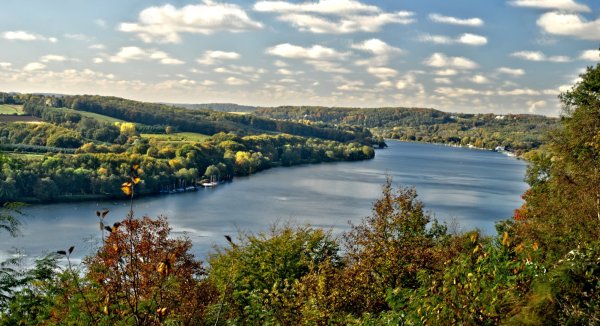
Lake Baldeney near Essen - Photo Credit: mapio.net

Lake Baldeney near Essen – Photo Credit: mapio.net

          So it came to pass that on the late afternoon of June 9th, 1962, two young men carrying heavy backpacks and holding a two-man tent between the two of them arrived at the Baldeney Lake campground. Helmut and I were pleasantly surprised to view scenery quite different from what we had anticipated to find. The sky had cleared from the cleansing action of an early morning rain. There was not even a layer of industrial haze left to obscure the blue sky. The sun shone brightly, the trees were in full leaf, the lawn impressed us with its light-green spring verdure, best of all the brilliantly shining lake reflecting the blue sky created an ambiance we had not expected in a park south of the city of Essen. Since it was still early in the season and only a few hardy people had ventured out to camp, we had no trouble finding a suitable site near the lake shore to set up our tent. We enjoyed an early supper, which I had prepared from a can of chunky soup and had heated it up over my gasoline fueled camp stove. We spent the evening listening to pop music from my transistor radio and taking in the lush-green trees and bushes that the locals call the green lung of the Ruhr region. The only reminder that the black gold was mined north of here deep down from the rich coal deposits came when we looked at the dark soles of our feet black from our bare-foot walk through the park.

          Next morning after a frugal breakfast with cereal and milk we pulled out our air mattresses into the brilliant morning sun. We relaxed reading, listening to music from Radio Luxembourg and watched people saunter by on the way to the beach. Two men, one in his early sixties, the other a little bit younger than I, caught our attention as they brought two of those so-called folding boats down to the lake shore. They can be easily transported on buses, trains, and even in the trunk of a car, because when folded together they easily fit into a large duffle bag.
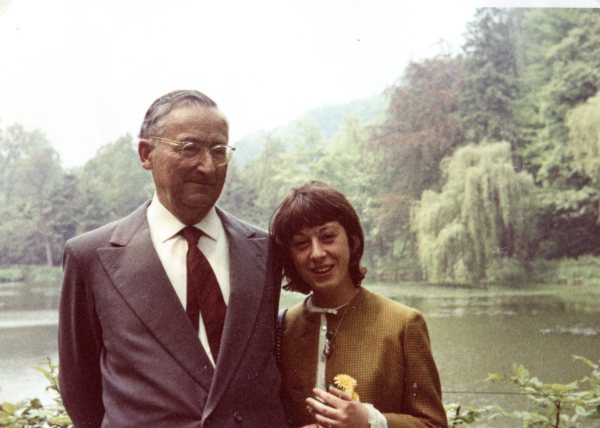
Biene and her Dad

Biene and her Dad

          For lunch I opened a can of sardines, an excellent staple for people like us traveling on a shoestring budget. Helmut having relied on me in charge of the provisions grumbled about the meal that consisted only of slices of dry bread and fish. In the meantime the boaters had returned to their tent with the folding boats. As we found out later, they were Herr Panknin and his son Walter. It seemed strange to us that they had nothing to eat and just sat there as if they were waiting for something. That something was obviously food. For now at a distance we noticed two persons approaching the camping area. As they came nearer, they turned out to be a woman and a young girl carrying baskets filled with delicious food perfect for a picnic in the sun. Enviously we looked on, as Frau Panknin and daughter Gertrud with a rather curious nickname Biene (Bee in English) unpacked the mouthwatering content of the baskets. We could see that this was culinary heaven on earth, Schlaraffenland, as a German fairy tale by Grimm so aptly describes the land, where people eat the finest delicacies in gluttonous quantities without having to work for them.
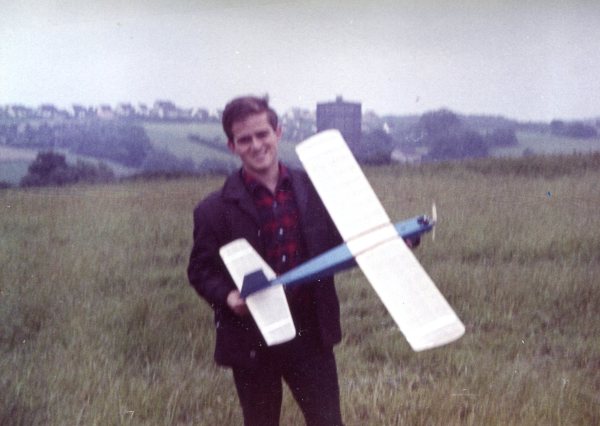
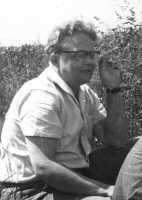
Twin Brother Walter with one of his Model Airplanes

Twin Brother Walter with one of his Model Airplanes

          What attracted me to this family, however, was not so much the food, which in comparison to our lunch was so alluring, but rather that pretty seventeen-year old girl whose first impressions on me provided a good match with the image of idealized beauty that had been growing in my mind for the past two years. Biene, from the moment I cast my eyes on her, radiated a charm whose magic did not depend on bracelets, earrings, and similar outward adornments, not on make-up or perfume, which I rightly or wrongly loathed as poorly disguised cover-ups, but rather on the very lack of all those artificial means. In short, I gazed in admiration at the girl of my dreams.
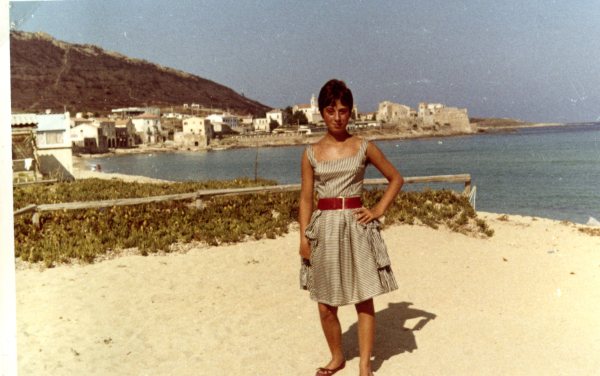
Biene at the Mediterranean Sea

Biene at the Mediterranean Sea

          Helmut and I were watching Biene and her twin brother play badminton in the open field. There was no net. The game was not very competitive. Its objective was to set new records by counting the number of times the birdie would fly back and forth before hitting the grass. Suddenly the idea occurred to me that we all could organize a mini-tournament with two pairs competing with each other for the highest score. After we had introduced ourselves, I explained the idea of a badminton tournament to be played with two pairs. Seeing that this would add a little bit of excitement, Walter and Biene readily accepted the proposal. As I had secretly wished, Biene wanted to form a team with me. I no longer recall how many rounds we played, but Biene and I always succeeded in getting the greatest number of hits. We were both very competitive, but the success in the game depended on complete cooperation. We felt good about our victories over our rivals and even more so, because we had won them together.

          It was only a matter of time, until the topic of the folding boats would surface in our conversation. Walter suggested going for a ride on the lake. Herr and Frau Panknin voiced no objections, indeed they were happy to see their twins go boating and at the same time having a little bit of peace and quiet. Somehow Helmut had managed to partner with Biene, which at first made me feel quite annoyed. But he argued convincingly that it was now his turn, since I had spent so much time playing badminton with her. As I was paddling with Walter, I soon got over my disappointment. Full of enthusiasm for his hobbies, Walter talked about his model airplanes and ships that he had been building. That was quite a pastime for Walter and took a lot of time, skills and dedication to bring a building project of this kind to perfection. I thought that just as Walter needed to have a plan and all the parts ready before he could even begin, so did I going through the same process in building a working radio. The moment Walter mentioned that he was thinking of using radio controlled devices to direct his model in the air or on water, I got quite excited and told him about my electronics projects, especially about the tube driven transmitter that provided musical entertainment to my friends in the apartment block in Wesel. Having found an area of common interest, we paddled less and less vigorously and talked all the more enthusiastically not realizing how fast time had been slipping by. When we pulled the boat ashore, we had already exchanged addresses and promised each other to mail each other schematics of electronic circuitry. Of course, what Walter did not know was that I had established a link to Biene, a connection that went beyond mere electronics. Like in an electric current, which the battery is pumping through a circuit providing energy and action to its individual parts, so warm feelings were flowing through my heart in the belief that Biene may have taken a liking to me during our badminton contest with Walter and Helmut.
Chapter 17 of the P. and G. Klopp Story Part I

Some Reflections on the So-called Coincidences of Life

“Coincidence is God’s way of remaining anonymous.”
Albert Einstein

Camping with Hans and Helmut
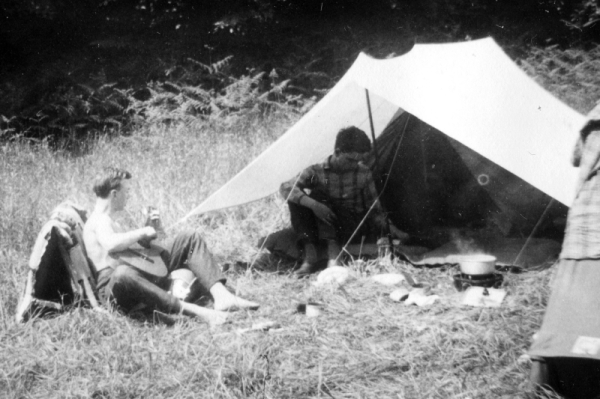
Hans Playing the Guitar and Helmut Sitting in frontofmy Tent

Hans playing the Guitar and Helmut sitting in front of my Tent

          Spring came early in 1962. I no longer played an active role in the scout movement. But my desire to get out of the city and enjoy nature in the company of friends was as strong as ever. Among my friends, who had survived the nine-year culling process at the high school, only Hans and Helmut were left. All the others were either eliminated by the academic hurdles or departed on their own looking for other ways of moving up the educational ladder. Ever since I did Helmut that great favor at the ballroom final, he was seeking my friendship and clung to me like a burr on a woolen sweater. He wanted to be included in our overnight camp-outs. When I objected on the grounds that there was not enough room in my tent, he replied that he would sleep in his own tent. So it happened one sunny weekend that three young men went out camping together, with Helmut – so it appeared – being the odd man out. Hans and I in spite of our differences shared a bond that had lasted for more than five years. Our friendship was based on experiences in the boy scout movement, on our common interest in experimental electronics, all the way back to early days on the school yard, when I was Ede Wolf and Hans one of three piglets that I was supposed to catch. Helmut was a newcomer and in a sense also an intruder, gentle, polite, simply wanting to be part of our camaraderie. Perhaps on his part it was a struggle against loneliness that intellectuals feel more intensely, but we perceived him as an intruder just the same.

13

Peter strumming a few tunes on Hans’ guitar

          It was evening, when we arrived on our heavily packed bikes at a clearing. We quickly erected our tents helping each other to get ready for the night. After we had wolfed down our sandwiches, which our mothers had so lovingly prepared, we hurried into the woods, gathered dead branches and proudly started a campfire with only one match. In no time, flames leaped up and around the kettle, which we had suspended over the fire on a wooden tripod. Helmut, in my eyes still an intellectual nerd, impressed me how well he had learned the basics of camping in such a short time, and most of all how hard he tried to be helpful. The tea water in the kettle had almost come to a boil. Hans and I ceremoniously took turns adding tea bags, plenty of red wine, pepper and other assorted spices into the steaming brew. We lifted the kettle off the tripod to prevent the alcohol from evaporating. To fortify the punch some more, I pulled from my coat pocket a small bottle of rum and poured its brown content under the approving applause of my friends into the aromatic brew. By now it was getting dark. The stars began to shine in ever increasing numbers on the canopy of a moonless sky. The fire merrily crackled and its fiery tongues shot up high casting dancing shadows of us onto the mossy ground. It was time to fill our cups to the rim, to cheer to each other’s health and happiness, and drink. Hans grabbed his six-string and entertained us for a while with Spanish guitar music, which he played superbly off the cuff. In the meantime, the cups needed a refill. The warmth of this miraculous elixir penetrated deep into our bodies and spirits. During a pause I suggested to Hans to do something together, while the drink was good and the fire burning, “Let’s raise our voices and sing our favorite scouting songs.” Helmut being a good sport supported my suggestion, even though he did not know the lyrics of most of these specialized traveling songs. He would whistle along, whenever he recognized the tune, he said. Soon a chorus in a strange blend of young male voices, guitar chords, and whistling rose above the campfire strengthened in volume and enthusiasm by the concoction from the kettle. The birds waking up in the forest may have wondered why we were making such a cheerful noise. The more the night advanced, the more boisterously we belted out the songs, which glorified the violence and cruelty of the German and Swedish pike men in the Thirty-Year War in lines like, ‘We also came to Rome, there we threw the pope from his throne.’ ‘The little nobleman’s daughter we cast her into hell.’ And ‘Hang the chaplain on the window cross’. The booze, the raucous singing, the flickering flames, the starry night, all contributed to conjure up images in our young hearts of a time wild and free, in which we participated for this one short moment and in which Helmut had become a member of our friendship circle. Long after midnight we poured the remaining dregs from the kettle over the embers and happy and sleepy crawled into our sleeping bags.

Chapter 16 of the P. and G. Story Part V

Learning to Dance

In the year before graduation social convention for students attending high school required that they attended a school for formal ballroom dancing. The purpose was that under the tutelage of a competent instructor we would not only learn the various types of dances both classical and modern, but also to teach us good manners and etiquette. The list of dances offered in the program was quite extensive including the slow waltz, the Viennese waltz, the foxtrot, the rumba, the cha-cha-cha, and the tango. Our dance instructor, a lady not disdaining modern trends, did not exclude the twist and rock ‘n’ roll from her impressive repertoire.

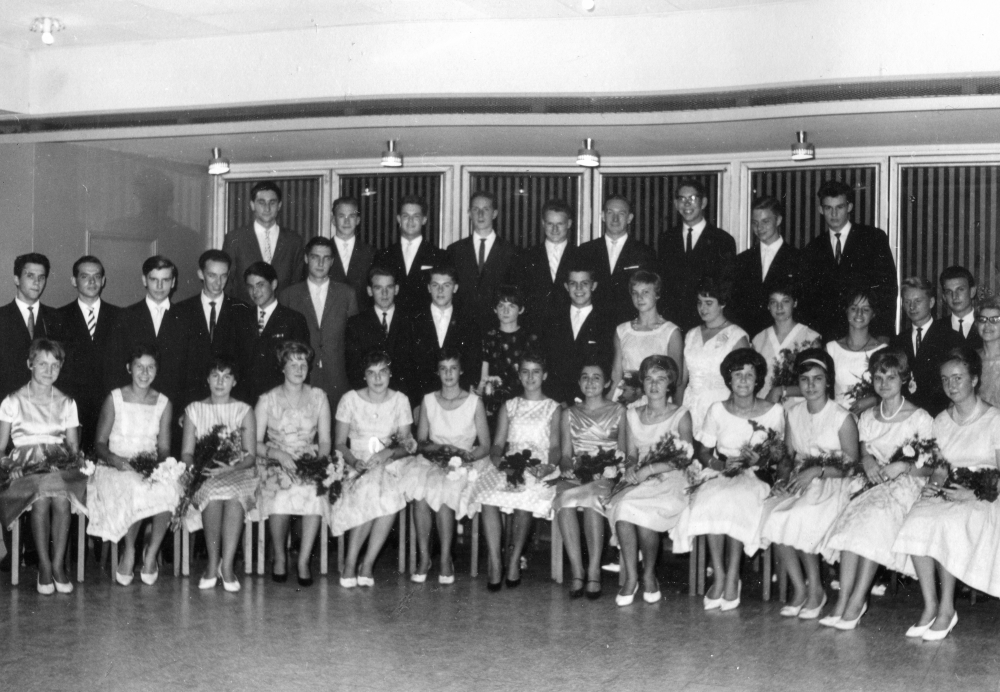
Dance Graduation Class at Wesel - Peter in the Upper Row on the Far Left - 1962

Graduation Class of Ballroom Dancing at Wesel – Peter in the Upper Row on the Left

Clumsy as I was in those days I looked at first at dancing as a dreadful extension of the P.E. program at school. At least in the gym class I could show off my expertise in yoga and compensate a little for my shortcomings. But to dance gracefully and skillfully with young ladies was an entirely different story. I was thrown into unfamiliar waters. I had to swim or sink. Dropping out was out of the question. Aunt Mieze had paid the non-refundable fee. Besides I was not a quitter. Thus I got together with a classmate, who struggled with similar problems in physical dexterity. Helmut B. was a lawyer’s son. He reflected in his appearance and demeanor the stereotypical image of an intellectual. He wore old-fashioned wide-rimmed glasses. His hands were always moist and sweaty, which made him quite unattractive, when German greeting formality required the mandatory handshake. I still cringe when I see in my mind the ludicrous scene of the two of us practice dancing steps and sequences in my tiny bedroom – one, two, cha-cha-cha; one, two, cha-cha-cha. When Helmut had gone home, I tenaciously carried on with the practice, until I felt I could do the required movements in my sleep. The reward of my efforts came at the weekly dance class in the Wesel Community Hall, which was located not far from the main railroad station. A word or two of praise from the dance mistress worked wonders for my low self-esteem and made my peers look up in genuine surprise at my newly found dexterity. Perhaps not noticeable to others I still mechanically went through the motions, but I discovered the joy of dancing to the tune and rhythm of the music that a portable record player provided. It was through this challenge of learning how to dance that I discovered the principle of success underlying virtually all human endeavors. The ingredients are ninety percent hard work and dedication, the rest being taken up by inspiration, talent and intelligence. The success in overcoming a major hurdle gave me confidence that with the same determination I could work on other weaknesses, such as my mediocre school performance. All of a sudden my life had become goal-oriented.

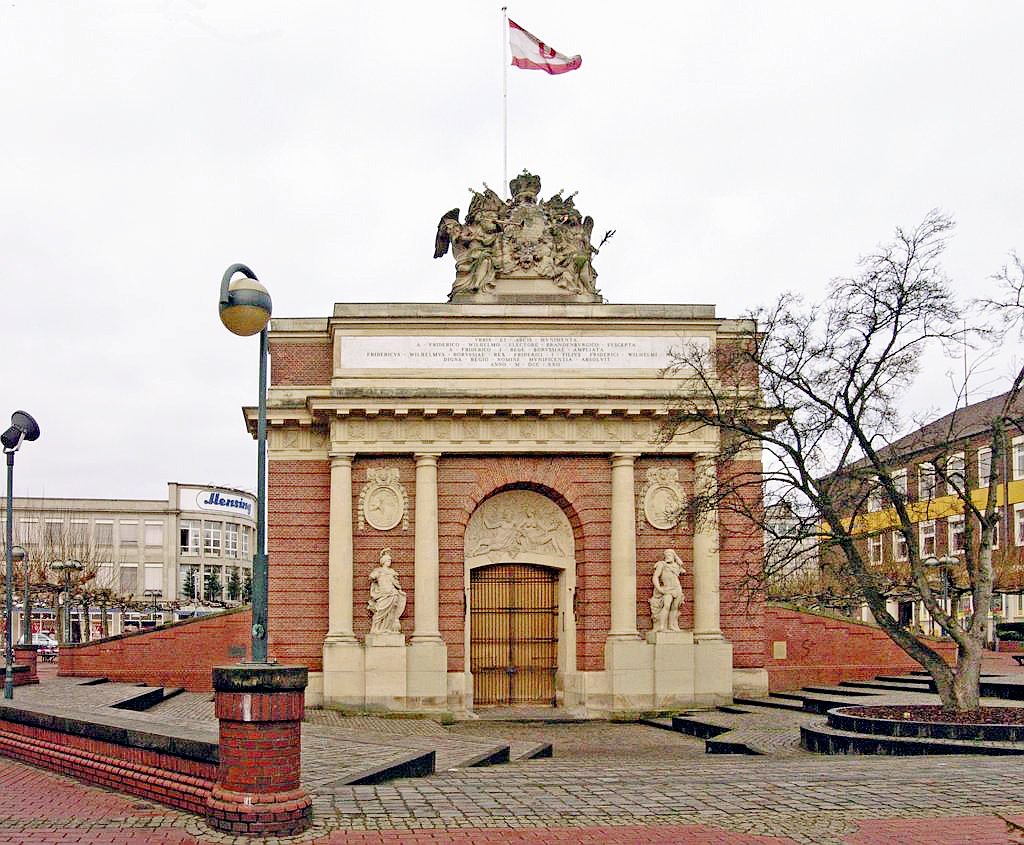
Berlin Gate at Wesel 2012 - Phot Credit: wikipedia.org

Berlin Gate at Wesel 2012 – Phot Credit: wikipedia.org

As the final day for the grand ball was approaching, we needed a dance partner with whom we could present our dancing skills to parents, relatives and friends. They were going to be invited to the formal graduation festivities. During the course of our practice sessions I had ample opportunity to dance with most of the girls. Even though my skills to move about on the dance floor through my exercises at home had tremendously improved, I still felt shy about the sociable aspects of being so close in touch with the opposite sex. I mechanically followed the rules laid out by our instructor, like walking up to the girl of my choice and saying, ‘May I have the honor and request this dance with you?’ Etiquette required that the girl could not turn me down. So everything on the surface appeared safe. Yet, I felt awkward and could not see within this formal setting the stage for enjoyable personal social interaction. Although I had no problem competing with the guys in the race for a dancing partner, I often turned to the plain-looking and unpretentious girls, whose simple looks and natural composure were more appealing to me. On the suggestion of our dance mistress we often changed partners, which made sure that even the so-called wallflowers would not be neglected. There was one pearl among them. Gerda M. was her name. She was a bit short for her age, but was quite pretty in my eyes. While I was dancing with her, she made me feel at ease with her contagious cheerfulness and her forgiving acceptance of my occasional faux pas in a complicated step sequence. One day after the lessons she offered to share her umbrella on the way home, as it was raining cats and dogs. I accepted the invitation, as we were both heading in the same direction. We strolled down Railway Street and like in a game of hopscotch jumped over the puddles that had quickly formed on the sidewalk. In spite of or rather because of the rain and the occasional gust that threatened to tear the umbrella out of my hand it was a delightful walk. After I had said good-bye at the intersection where our ways parted, I realized too late that she had wanted me to ask her to become my dance partner at the final ball. The following week Wilhelm von N. accomplished to my great disappointment what I had failed to do. Losing Gerda as my partner was the price I had to pay for my procrastination. Now I had to hurry, for we were told that if we had not made any arrangements on our own, the dance instructor would make the decision for us. The threat of winding up with a randomly selected partner prompted me to ask Margret X., a tall girl about my size, with whom I had danced a few times before. Having had similar concerns and being quite comfortable with me for the dancing test, she readily agreed, and the matter was settled for the final ball as well. Poor Helmut, who did not have the courage to ask out of fear of rejection, approached me during the break and entreated me to make the arrangements with Fräulein Z. for him. Somewhat reluctantly I walked up to the girl that Helmut had indicated to me and passed on his invitation to become his partner, which she joyfully accepted. She did wonder aloud though, why on earth he would use me to ask her, which I discretely left unanswered.

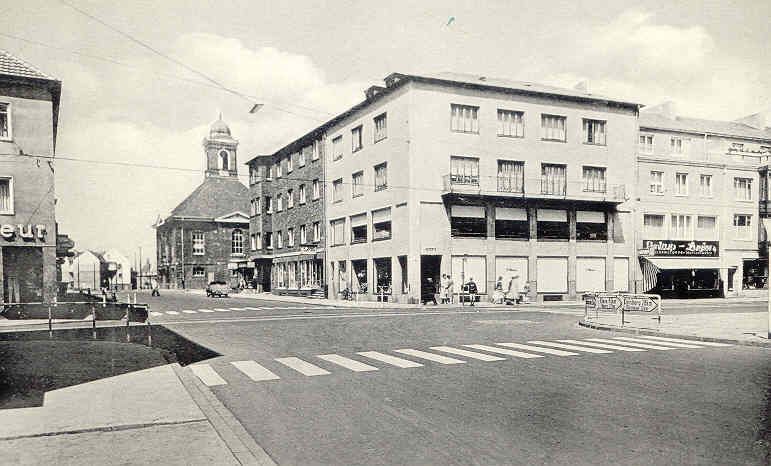
Downtown Wesel in the early 1960's

Downtown Wesel in the early 1960’s

The final ball proceeded with much pomp rivaling in decorum and detail a high school graduation ceremony. The event was definitely a crowd-pleaser for participants and invited guests alike. When it was our turn to show off our newly acquired skills in a mock test (nobody actually failed), Margret and I did the slow waltz as our first number and then the rock ‘n’ roll dance to the beat of contemporary rock music. We had not left out any of the prescribed dance sequences, such as the spin, change of hands behind the back, two hands wrap and turn, and many variations to the rotations of my partner and myself, but best of all the pretzel, which because of its difficulty I have never used since. What I liked about this dance was the freedom to choose any combination of the learned sequences so that each dance felt like your own creation. To show their appreciation for our creativity, the audience rewarded us with a longer than usual applause.

Thus an important formative segment of my life came to a satisfying conclusion. Many of the dance skills acquired during that period eventually faded with the passage of time. Like with so many other skills the truth of the saying remains, “Use it, or lose it.” But the memory being rekindled through my writing here will stay. This coming-of-age phase, when I was about to turn twenty, was going to play a significant role in my metamorphosis from adolescence into adulthood in the years that followed.

Chapter 16 of the P. and G. Story Part IV

Terror in the Classroom

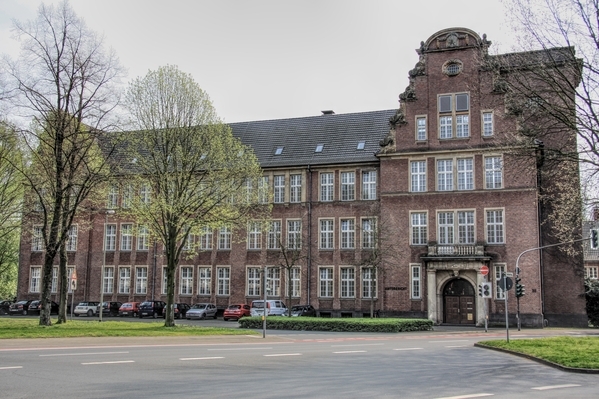
Wesel High School for Boys - Now the Court House

Wesel High School for Boys – Now the Wesel Court House

There were also the weak and incompetent teachers, who should have chosen a different profession. If they had only known the tortures from revengeful students, who focused with uncanny precision on their weaknesses! These were the teachers, who would not dare to report any unruly behavior to the vice-principal out of fear of being accused of having no control over their students. Dr. R. was teaching mainly Math and Science to the lower grades, but unfortunately for him was assigned to our class for Social Studies, in which he enlightened us with what he had recorded in his dilapidated thirty-year old notebook about the Soviet Union as an underdeveloped country. Strictly speaking he was not teaching us anything. With his back turned to the class he simply copied his outdated information on the blackboard, which we in turn copied into our notebooks. Any experienced teacher worth his salt would know that turning your back to the class is an open invitation to disaster. Upon a finger signal from the leader of the pack the entire class acted in complete unison, where each individual was hiding behind the anonymity of the mob finding protection from punishment through group solidarity. The inner voice of conscience that tells us what is right and what is wrong was drowned by the rush of emotions, that temporary high of having power over somebody who is invested with authority, but who is incapable of exerting it over a bunch of immature adolescents. One – the left finger of the ringleader went up, all students as if driven by a magical force grabbed their textbooks with their right hand. Two – the middle finger went up, that was the sign to lift the heavy books above our heads. Three – the leader’s left hand spread wide open, and in unbelievable synchrony of motion the books slammed the student desks sounding like the explosive bang of a single gunshot. Dr. R. swiftly turned around. There was terror and bewilderment written on his face, as he looked at a well-behaved class very attentive and ready to take more notes. All eyes were fixed on the board, as if the terrifying explosion had not happened at all. We students offered a picture of exemplary behavior, with which Dr. R. would have been delighted and proud. If the principal had walked in this very moment, he would have praised him for his excellent control. However, it was only an illusion. The diabolical game went on, until the poor teacher could not take it any more. He left the classroom and mustered enough courage to report to the vice principal that he could no longer control these louts. He asked for and received a reassignment to a more manageable class. Now it was our turn to find out what it meant to be harassed. For the dreaded vice principal well known for no nonsense army-style teaching methods took over the Social Studies instruction.

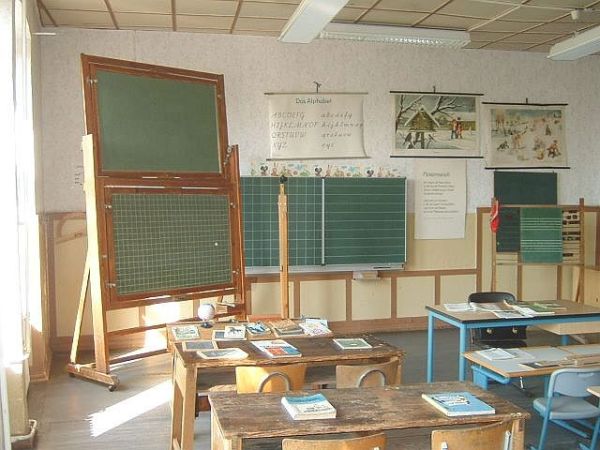
Old Fashioned Classroom of the 1930's

Old Fashioned Classroom of the 1930’s

At the far end of the building at a good distance from the regular classrooms was a tower, which housed the room for music instruction. We climbed up the stairs twice a week for our lessons, which we did not find overly inspiring, because our teacher, Mr. T., wanted us to sing for the most part old-fashioned folk songs, to which he played the accompaniment on the piano. While singing in school was a time-honored tradition in all German schools, we openly rebelled against the idea of using our beautiful male voices on silly little songs we remembered from our elementary school years. As it turned out, Mr. T. had never learned to control a rebellious class like ours. The physical distance to the principal’s office was an additional disadvantage. But by far the biggest handicap was the poor selection of songs, which one would describe in modern jargon as inappropriate for our age level. Testing the teacher’s patience we started off by changing the lyrics of the song “High on the yellow coach”. The chorus line at the end of every verse, “But the yellow coach is rolling”, was transformed into “But the Harzer cheese wheel is rolling” (Harzer cheese is one of the more odiferous cheeses and originated in the Harz Mountains). Each time we repeated that ridiculous line, we sang it a little more loudly and more boisterously. The music teacher tried to ignore the adulterated version of one of his beloved folk songs. Revealing his true weakness, he incited us to seek stronger measures. Soon we were deliberately singing off key and as far as our deep voices would allow in high-pitched tones like a clutter of cats whose tails had just been stepped on. This was too much for our music teacher to swallow. His anger gave him courage to rant and rave calling us names we had never heard coming out of the mouth of the normally placid and rather peaceful teacher of music and religion. His whole body convulsed, his eyes wide open with utter contempt glared at us, and he screamed out the word that described us best, “SADISTS!!!”

His mouth so far ajar could no longer hold his dentures in place. They popped out and landed with a clatter on the floor. Nobody moved. There was dead silence in the classroom. We were stuck in a morass of embarrassment. We had gone too far. I felt guilty and still feel guilty thinking about it today that I had not opposed the shameful escalation of psychological violence perpetrated against a defenseless human being. After Mr. T. had sufficiently calmed down, he bent down and picked up his dentures off the floor, and without saying so much as another word left the music room, quietly closed the door behind him, as if not to disturb our remorseful silence. The next day he did not show for work. The rumor had it that he had suffered a nervous breakdown.

Let there be Peace on Earth

OLYMPUS DIGITAL CAMERA

Christmas – A Family Tradition

For as long as I can remember from the days after the war in Germany, 1Christmas has always been the most important event in our family. More than anything else it symbolizes the light that came into the world. For the men, women, and children, who survived the horrors of World War II, this light shining in the darkness had special meaning in a time of hopelessness and despair. For me as a young boy perhaps six or seven years old, there were three traditions that brought the Christmas message of peace closer to my heart.

3

The first custom actually originated in Germany way back in the 17th century. My mother would take tender spruce or fir branches and weave them into an Advent wreath, on which she would place four red candles, one for each Sunday in the Advent season. Later on in the mid 50’s we moved together with my aunt Marie, who enriched the short celebration by playing a couple of Christmas melodies on her recorder.

IMG_9247

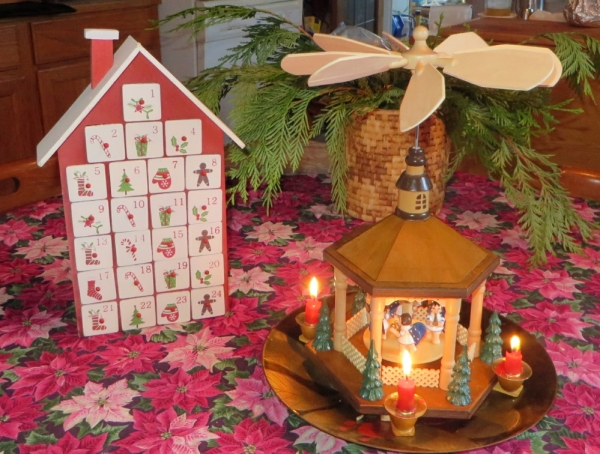
The second custom that I really liked was the Advent calendar. It was not an ordinary calendar. It was only used in the month of December and came with 24 doors. Starting on December 1st, I opened the first door to see what picture lay hidden behind it. The pictures were all associated with the upcoming event and would display stars, candles, the Christmas tree, angels, toys, and so forth. On the morning of Christmas Eve, I finally  opened the last door, which was a big double door, behind which I would find the manger-scene showing Mary, Joseph, the shepherds, the three Wise Men, and, of course, Baby Jesus in the manger.

175

My wife and I carried on with these traditions after immigrating to Canada. While our children grew up, they became acquainted with the third and in their view most important custom, the celebration of Christmas Eve.

5

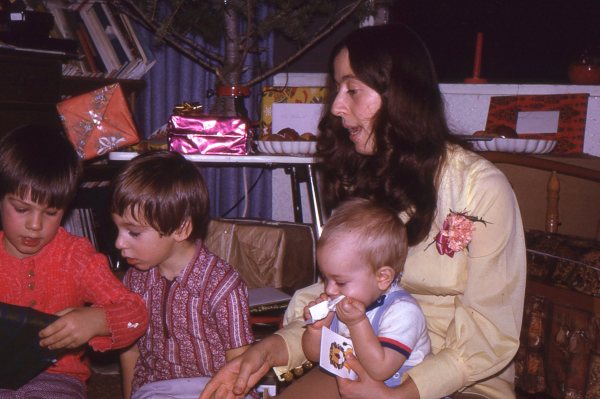
After singing a few Christmas carols both in English and German and the reading of the Christmas story, they were allowed to open their presents. Needless to say, they liked our Christmas better and were the envy of the kids in the neighborhood, who had to wait till morning to receive their gifts, which they would find under the tree.

9

This will be the last post before the New Year. So my wife and I would like to pass on our good wishes to one and all. Have a wonderful and blessed Christmas and a Happy New Year!

10

Chapter 16 of the P. and G. Story Part III

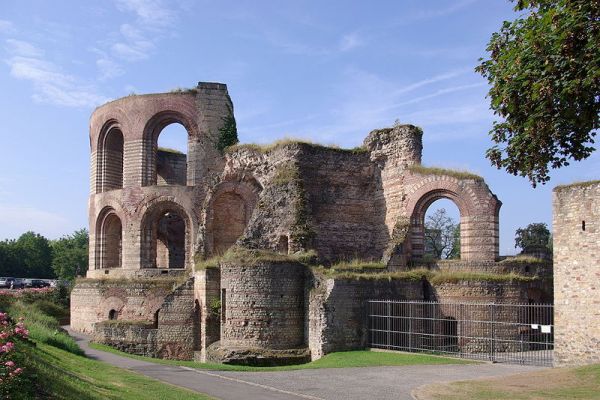
Roman Thermal Baths at Trier- Photo Credit: wikipedia.org

Roman Thermal Baths at Trier- Photo Credit: wikipedia.org

A Failing Grade in English

Although I had developed quite early in my life a knack for languages, I was not doing very well in the English course. In spite of my efforts, especially in the last two senior grades, I failed to obtain a passing grade.15a To overcome my apparent deficiencies I even enrolled in an independent commercial correspondence course. I began to read English novels, exchanged notes and worked with friends, wrote a research paper on the British welfare system, all to no avail. Mr. M., our English teacher, used a rigid, my-way-only teaching approach, which I dreaded and which caused me to have nightmares. This young and inexperienced teacher had a peculiar way of marking our written work. For each grammatical error he would put a big cross in red ink on the margin of the test paper. No matter how good the essay was, no matter how well the student expressed his thoughts, the final grade would never be better than a mere satisfactory mark. But if one received two of those red marks, as was often the case with my work, the best one could hope for was a D (a 5 on a scale from 1 to 6). This method was stifling my creativity. For me the only way to squeeze out a satisfactory result was to write as little as possible in an effort to avoid those fearful crosses. Mr. M., of course, noticing my attempts of circumventing the grammatical pitfalls, now zeroed in with vengeance on the sketchy details and evaluated my writing as scanty and deficient. It became very clear to me then that I could not develop my true potential in an atmosphere of paralyzing fear and indeed I wound up with an unsatisfactory grade on my graduation certificate.
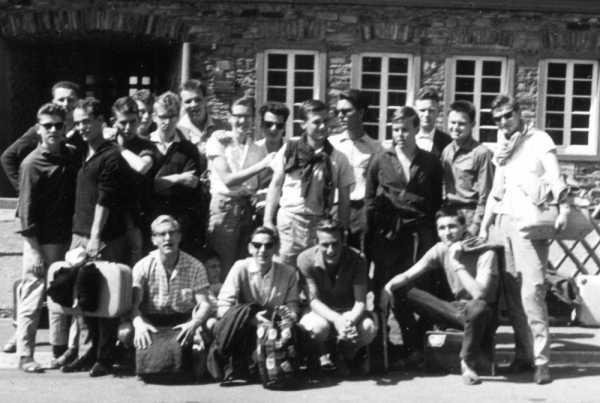

Filed Trip to Trier, the Imperial Summer Residence of Roman Emperors

Filed Trip to Trier, the Imperial Summer Residence of Roman Emperors

We had teachers, whom we feared and despised, teachers, whom we feared and respected, and teachers, whom we loved and respected. One of the latter was Mr. Müller, our math teacher in the senior grades. He presented his lessons on analytical geometry and calculus with clarity and a sense of humor. Being still in his early thirties, he was in touch with what made an adolescent mind tick. He gained our respect through his profound knowledge of the subject matter, his enthusiasm for mathematics and his ability to infuse in us understanding and even love for the queen of science. He often introduced a new topic with a joke. To warm us adolescents up to the trigonometric functions hinting with a meaningful twinkle in his eyes at their beautiful curves, he told us the joke about a teacher in an all-girls high school in the lower grades. One day the young girls asked him a question during the math lesson, “What are sine functions, Mr. T?”

Sine wave

He promptly answered while revealing his knowledge of ancient languages, “The word ‘sine’ is derived from the Latin ‘sinus’ and means bosom. But you will get that later in the upper grades.” No doubt, that joke and many others of this kind appealed to us boys being in that volatile stage of development sandwiched between child- and adulthood.

To be continued in the New Year …