Friedrich Klopp (1875 -1946) Conclusion – Chart I – II

The Last 5 Years of Friedrich’s Life (1941 -1946)

In the summer of 1941 Friedrich Klopp’s eldest son, Friedrich (1905 – 1988), the father of the author Eberhard Klopp, paid the only visit to his family in Gardelegen. During World War 2 family members exchanged a few postcards, which have been preserved and indicate that to a minimal extent some important information, such as deaths, was being passed around in spite of the prevailing family feud.

At one point Friedrich mentioned in his correspondence Emma Klopp, but did not know about her death in 1941, a clear indication that forty years after the deplorable events in Wolmirstedt his sister Anna von Waldenfels (1885 – 1967) had maintained her distance to her brother Friedrich.
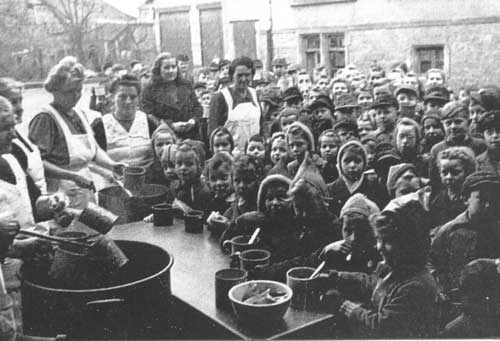
People Gathred around Soup Kitchens - Photo Credit: digada.de

Children Being Fed 1945 – Photo Credit: digada.de

The tragic death of his 9-year grandson Hermann badly shook him up. In the summer after the war Hermann and several of his friends had carelessly played with an anti-aircraft shell, which they had found lying around from old German army stocks. The shell went off with devastating effects. Hermann and several of his playmates were killed. (Chapter XIII of the P. and G. Klopp Story will also deal with the danger of playing with WWII ammunition, which still posed a threat to life and limb in the forests, where battles were fought near the end of war).
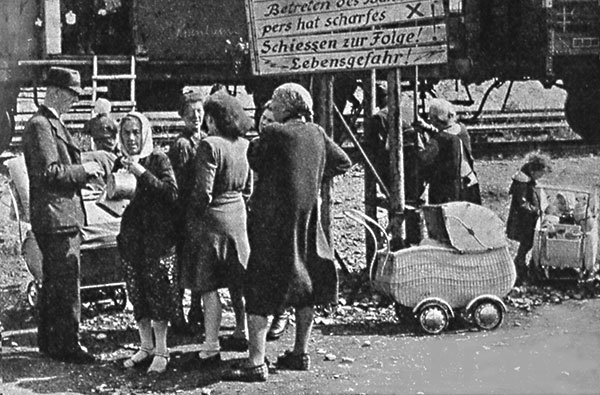
In Search of Food and Shelter 1945 - Photo Credit: kiel.de

In Search of Food and Shelter 1945 – Photo Credit: kiel.de

Grandfather  Friedrich died in Gardelegen on November 3, 1946. In the cold and wintry postwar period his eldest son Friedrich succeeded in making the perilous trip from Naumburg to the  funeral in Gardelegen. On his way he had to run the gauntlet of all kinds of armed guards of the Soviet Occupied Zone and also of the Russian military police. They were aggressively searching for former soldiers and ‘other fascists’, black market dealers and smugglers, people crossing the border and those fit to be deported into labor camps. All these men and perhaps women too were the preferred targets in the overcrowded, filthy and unheated trains of those days, Under such conditions in the former Soviet Zone Friedrich undertook the journey of almost two days in a life threatening experience. A special permit of the Leuna Works in Merseburg rescued Friedrich Klopp out of quite a few unpleasant situations. Two brothers and two sisters saw each other for the last time at their father’s grave site.

Here ends the story of Peter and Emma’s eldest child and my uncle Friedrich Klopp.

Chapter XII of the P. and G. Klopp – Part I

Summer Vacations

Don’t walk behind me; I may not lead. Don’t walk in front of me; I may not follow. Just walk beside me and be my friend. Albert Camus

Hamburg 1956

Among our family acquaintances and friends I had a few aunts to whom I was not related. Out of convenience and lack of a better word I called them so. One was Auntie Pippi, who had known me from the time in Gutfelde (Zlotniki). She had lost her first husband in January 1945 and had married Ernst Grohmann, a well-to-do master of the chimney sweeper guild in Hamburg. From her first marriage she had a son whose name was Thomas about my age. Since Mother and Auntie Pippi were very good friends, they decided that I should travel to Hamburg and spend my summer holidays with Thomas. Auntie Ella, another of Mother’s close friends, agreed to provide bed and breakfast for me in a nearby district of the city.

City of Hamburg - Photo Credit: hamburgbuch.de

City of Hamburg – Photo Credit: hamburgbuch.de

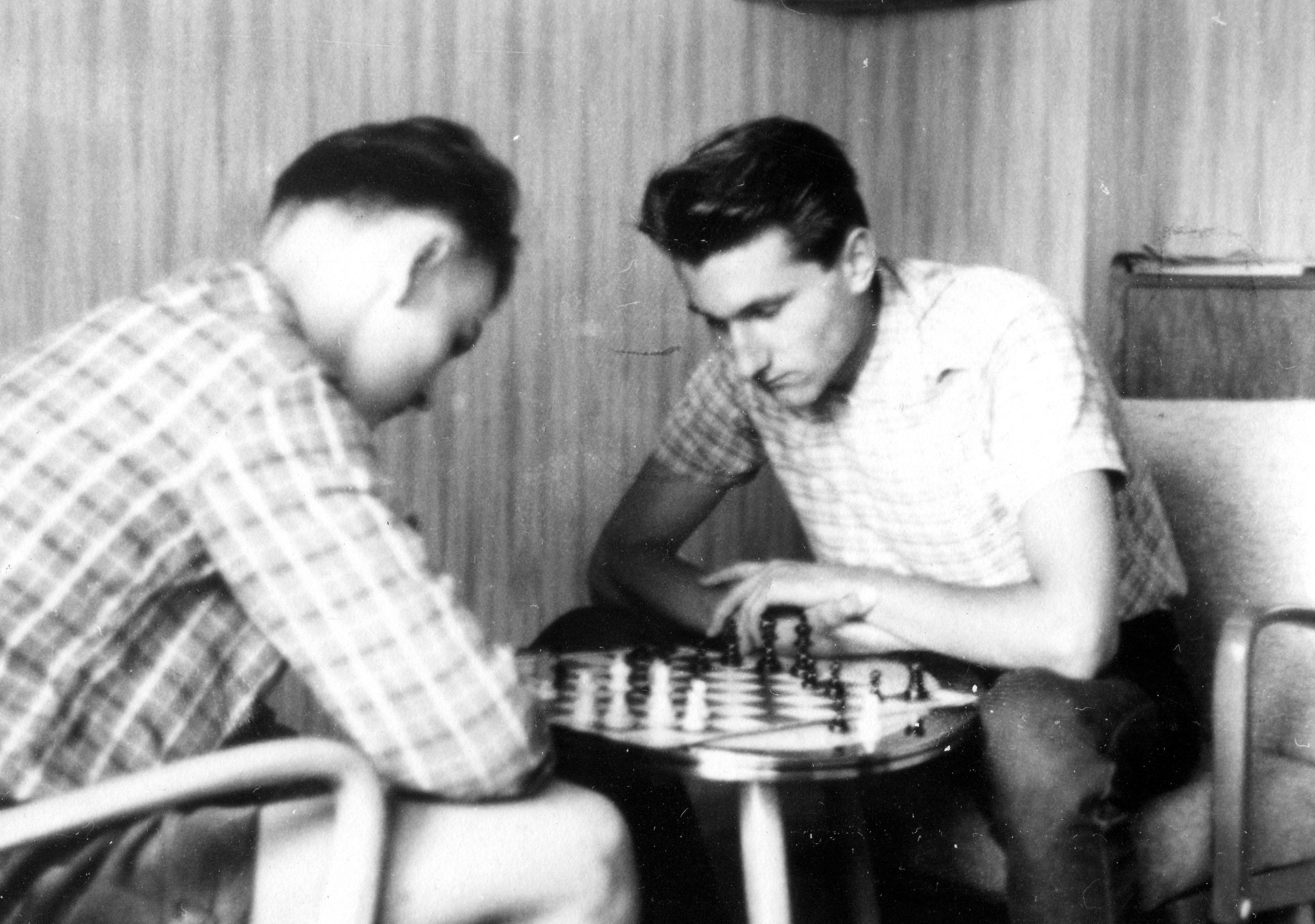
Thomas and I had a great time together. We played outdoor games in the yard, climbed trees, or played chess when it was raining. But what I regretfully remember most are the utterly foolish and thoughtless things we did in the name of having fun. Relatively mild in retrospect were our chess games we conducted over the phone. Using the European method, we identified each move by a combination of letters and numbers. Moving the king pawn two squares from its original position would be e2 – e4. What we did not realize in our enthusiasm for the royal game was that a local call at that time was charged by the minute. As all chess players know a good game lasts at least one hour. After a dozen games that we played during my stay in Hamburg the telephone bills must have been quite a shock for poor Auntie Ella.

4

Playing Chess with a Friend a Few Years Later

Getting bored with spending the afternoon hours on trees and itching to do something more exciting, we decided to build traps for imaginary wild animals in the neighborhood. We dug 30 cm deep holes, covered them carefully with twigs and dead branches and camouflaged them with clumps of grass to blend in nicely with the lawn. Just as we were digging another hole at the far end of the yard, Auntie Pippi stepped out from the backdoor and walked across the lawn to bring us some refreshment. She was a heavy lady weighing at least three hundred pounds. Not that she was overindulging in calorie rich food; on the contrary she was literally starving herself to keep herself from gaining more weight. She was suffering from a severe case of malfunctioning thyroid glands. In horror we saw her walking straight to the first trap. Why we did not call to warn her is hard to understand. Perhaps we were stunned, perhaps we hoped that she would miss the trap and we would not be scolded for digging unsightly holes. But she stepped right onto the camouflaged twigs and plunged her right foot deep into the hole. With a loud terrifying shriek she dropped the tray and managed to land on both hands cushioning the impact of her massive body on the ground. She could have easily broken her ankle. Great was her anger over our stupidity and thoughtlessness. For punishment we had to restore the lawn to its original state of perfection, which we gladly did.

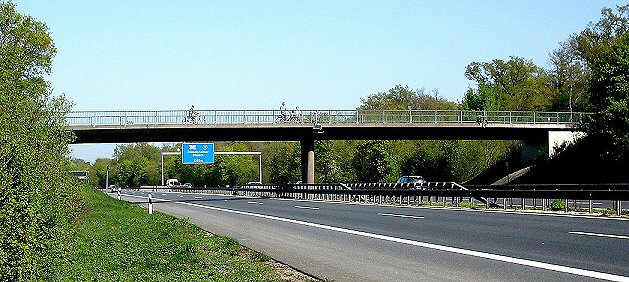
Typical Autobahn Bridge - Photo Credit cdu-nauheim.de-

Typical Autobahn Bridge – Photo Credit: cdu-nauheim.de-

One day we went to a pedestrian overpass to watch cars and trucks traveling north and south on one of Germany’s busiest freeways. It is one thing to throw flat stones onto the surface of a lake to make them skip, but it is unquestionably a most reckless prank to lob small pebbles onto the cargo areas of passing trucks from an overpass. In our adolescent fervor to seek excitement at all cost we were blind to the grave danger of causing damage, injury or even death to the drivers below. We had not dropped too many pebbles, most of which had luckily fallen onto the pavement, when one landed with a loud clang onto the top of a truck’s cabin. Before we had time to rejoice over the successful throw, the truck pulled over to the emergency lane and came to a complete stop. The driver emerged from his vehicle and seeing us young punks at the railing immediately started racing up the hill that separated the overpass from the highway. In our attempt to escape the angry truck driver, we broke all athletic school records in the one-kilometer run for our age group. Even though we managed to escape, I often felt guilty and even more so considering what could have happened if the truck driver had not taken any action and had not stopped our dangerous game. To this day I am being reminded of this event and cringe when I hear reports in the news of similar mindless behavior on our city bridges and overpasses.

Gerhard Kegler, the general, who dared to disobey Himmler – Part IV

The Woldenberg Division and Himmler’s Order to Defend Landsberg

Excerpt Taken from the book ‘The Siege of Küstrin: Gateway to Berlin 1945’ by Tony Le Tissier, Publishers: Pen and Sword Books

If you missed reading the related posts, go back to May 13 May 22, and June 5.
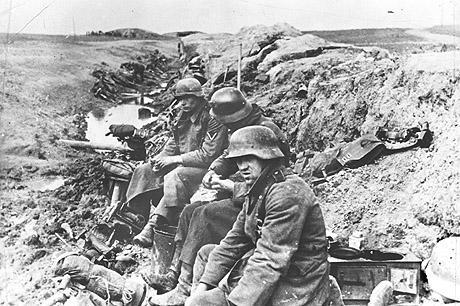
Eastern Front 1945: Worn-out and Ill-equipped German Soldiers - Photo Credit:: taringa.net

Eastern Front 1945: Worn-out and Ill-equipped German Soldiers – Photo Credit: taringa.net

Lieutenant Rudolf Schröter continues his report:

I had to overcome the resistance of the staff officers to get through to the general. Major-General Kegler was astounded but open to my arguments:

  1. Once an order had been given it must be adhered to in order to keep up the morale of the troops.
  2. The Army Headquarters’ radio message ‘Report situation and intentions’ unusually left open the decision. If this was not so, the message would have read: ‘Report situation. Hold Vietz.’ While it was expected that the Army would correctly use tactical language and especially stressed ‘Report situation’, it meant that it was holding open the opportunity for us to decide for ourselves in this special situation, and our decision was ‘Withdraw’.
  3. There had also been instances in this war in which troops had withdrawn against orders in recognition of their hopeless situation, had upheld the morale of their troops and the officers had received high decorations.
  1. The decisive argument, General, is in accordance with one’s own conscience. The responsible officer must, if common sense is to prevail, understand that slavish obedience in a hopeless situation only condemns him to a senseless bloodbath, which he should spare his men.

These arguments, especially the last, visibly moved Major-General Kegler. He then went briefly into an adjoining room. When he returned, he was white in the face. He asked me where I had lost my right arm, praised the discipline and commitment of my youngsters and also my objections at the conference a few hours ago. Finally the following dialogue ensued:

‘Do you think that you can withdraw the division in good order in this situation?’

‘Yes, if I have your support in doing so.’

‘Then I hereby beg you to undertake it on my staff.’

I immediately sent all the staff officers to the units, where they with the sector commanders were to stop the units and individ­uals retreating and incorporate them into the local defense.

Then I prepared to retake Vietz station with a platoon of my infantry and a Königstiger and while doing so a runner brought me a letter from the general. It read: ‘I have given up command of the division. Kegler, Major-General.’

I then asked a colonel to take over command of the division as a matter of seniority, which he accepted under the condition that I assumed tactical control.

The withdrawal of the division was made ready and all sector commanders summoned to an order group in Vietz at 1500 hours.

After stabilizing the situation in the town I made a recon­naissance in the amphibious jeep with the SS-sergeant-major and one of my recruits, using Major-General Kegler’s map. I discovered that:

  1. The road to Küstrin was not blocked by the Russians.
  2. There were no Russians in Gross Cammin, the nearest enemy movement being in the northerly neighbouring village of Batzlow.

I stuck to the original plan. A radio message was sent to Küstrin fortress about the division’s withdrawal. The order to withdraw was given at 1500 hours and went without problems. When I later went into Vietz with the amphibious jeep to check the enemy situation, the first enemy scouts were already feeling their way forward.

At dawn on February 4, the remains of the ‘Woldenberg’ Division began crossing the anti-tank ditch that blocked the Landsberger Chaussee at the eastern end of Küstrin. They had already come to within 10 kilometres of the town the previous day but had waited for darkness to get through the area occupied by Soviet forces.

General Busse had sent a young liaison officer to meet them, but without any instructions for Major-General Kegler. When the latter arrived in Küstrin he was promptly given orders to report to the standing court-martial in Torgau, thus becoming one of the last to leave Küstrin by the normal road. As the witnesses to the events leading up to Kegler’s court martial were now trapped in Küstrin, evidence had to be obtained from them by telephone.

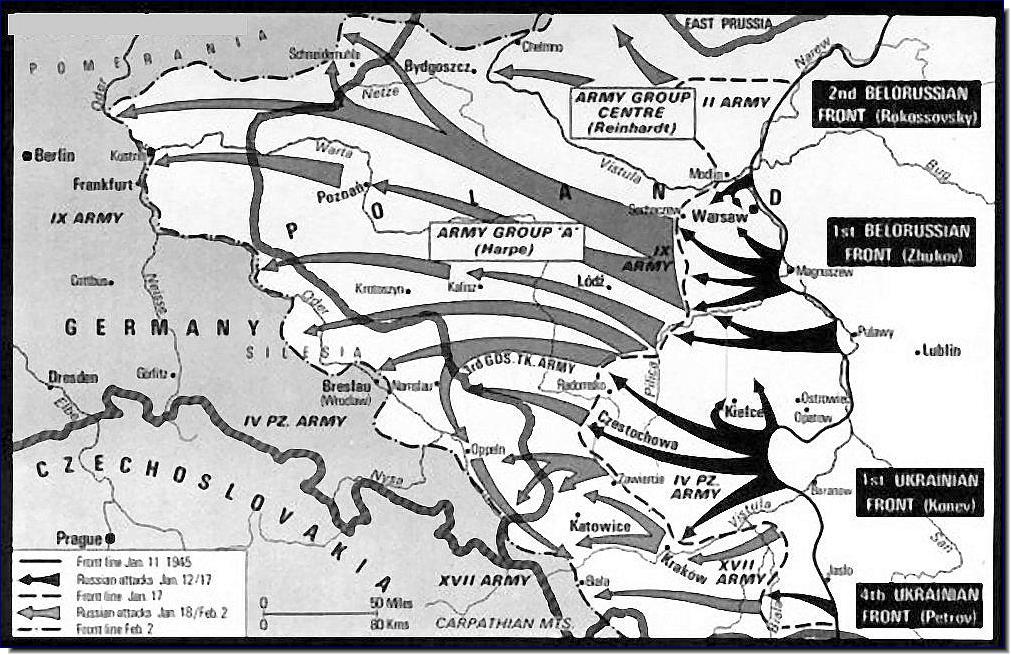
Soviet Advance across Poland - Photo Credit: historyimages.blogspot.com

Soviet Advance across Poland – Photo Credit: historyimages.blogspot.com

To be continued with a translation of the court-martial report and verdict on my next post.

Friedrich Klopp’s Life Journey (Part II 1924 – 1946)

Dear reader, if you wish to refresh your memory on my uncle Friedrich Klopp (1875 – 1946), the oldest child of Peter and Emma Klopp, go to the Klopp Family page and click on the Klopp tree. There you will find all the previous posts on Friedrich in chronological order.

 Friedrich’s Second Marriage with Auguste Berlin

Translated and Adapted from Eberhard Klopp’s Family Chronicle

Shortly before Auguste Louise Klopp’s early death the family of the mason Friedrich Klopp moved to Hemstedt, about 6 km south of Algenstedt. The commotion and upheaval  surrounding the relocation to yet another residence were taxing Auguste’s energies to the very limits of what she could bear. She suddenly and unexpectedly passed away in Hemstedt on August 9, 1924. This came as a severe blow for the family, especially for her husband who had so far depended on her income.

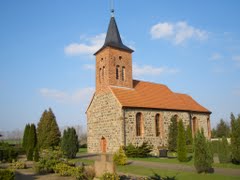
Church at Hemstedt - Photo Credit: margherita.alaio.it.rand.stad.com

Church at Hemstedt – Photo Credit: margherita.alaio.it.rand.stad.com

At the local cemetery you can see still today (1990) the lebensbaum trees, which her then 16-year old son Hermann had planted at her grave site. At the most recent residence widower Friedrich Klopp continued to live for a while with his two youngest children Liesbeth (born 1907) and Hermann (born 1908).

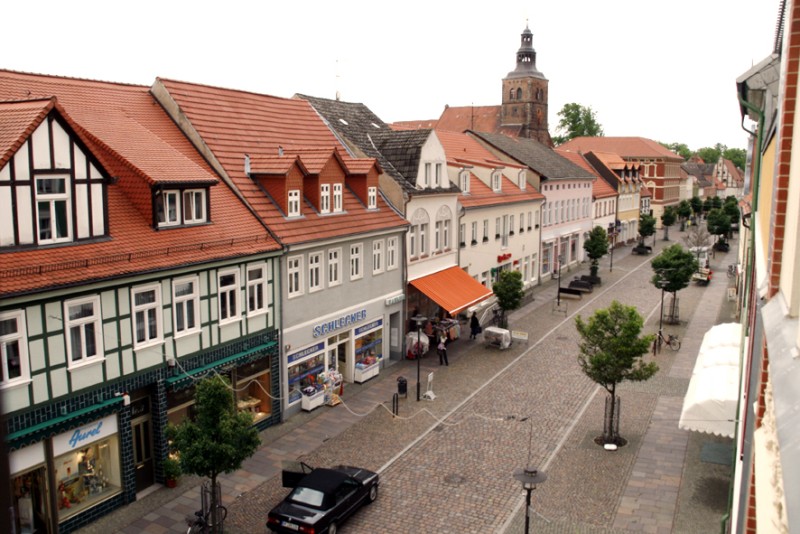
Gardelegen - Photo Credit: gardelegen.de

Gardelegen – Photo Credit: gardelegen.de

On December 22, 1927 Friedrich married the well-to-do widow Auguste Berlin (née Müller) in Gardelegen. The marriage remained childless. Occupationally and privately, things from this point on were looking up. In 1928 the couple acquired in Gardelegen the house at Alte Heerstraße 14 (now Street of the Victims of Fascism). The recently remodeled and pleasant house is still standing today.

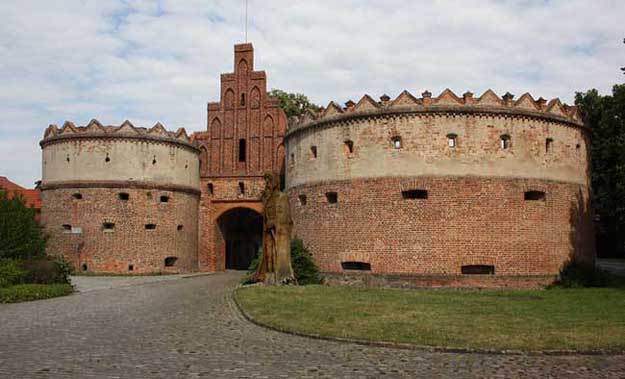
Old Fortress at Gardelegen - Photo Credit: koblenzer-bildungsverein.de

Old Fortress at Gardelegen – Photo Credit: koblenzer-bildungsverein.de

In the masonry line of business Friedrich Klopp quickly gained recognition for his workmanship and advanced to become an experienced construction project manager. In the 1930’s he maintained a financially sound and profitable enterprise. He built several residential houses not to mention a bakery complete with a sales outlet, which turned out to be the largest commercial bakery in town.

The loosening of the ties with the antisemitic Zielitz family of his late wife was like an inner liberation for Friedrich. But being at heart friendly and good-natured, he did not completely sever his contacts. Due to age and declining health he gave up his business in 1937. His son Hermann did not have what it takes to run his father’s construction enterprise.

To be continued …

Chapter XI of the P. and G. Klopp Story – Part VI

Breeding Gold Hamsters

Taking care of a pet is not the same as looking after a car, a yard or a household. The main difference is that people have an opportunity to interact with a living organism. So it was with me and the fish in the aquarium. To make them thrive, I had to feed them, replace the water every month or so, scrape off algae that grew on the walls and make sure the sand at the bottom was free of gunky waste material. I committed myself to do this chore, because I liked the little acrobat. By responding and interacting with me, it had won my heart.

Golden Hamster - Photo Credit: petsplanetinfo.blogspot.com

Golden Hamster – Photo Credit: petsplanetinfo.blogspot.com

It was not too long before I could afford to buy a different kind of pet, a sweet little golden hamster in a large cage. The pet store sold only females to prevent customers from breeding and competing with their line of business. The average life expectancy is between two and three years, so customers sooner or later would have to come back and buy a replacement. My hamster was a cute, lively and healthy creature making me quickly forget my tiny pike. My friends were delighted as well taking turns holding her and letting her tickle them with her whiskers.

Deutschland, DEU, Cuxhaven: Weiblicher Goldhamster (Mesocricetus auratus) links bei der Abwehr eines Männchens. | Germany, DEU, Cuxhaven: Golden Hamster (Mesocricetus auratus), female on the left discouraging male on the right. |

Getting Acquainted – Photo Credit: animal-affairs.photoshelter.com

During the twilight hours she became most active. Often she would climb into the exercise wheel and turn it at an incredible speed for more than half an hour at a time. During the day she would snuggle up in her cozy nest made out of wood shavings. One day I brought her a male companion from a pet vendor at the Wesel kermesse. After a friendly greeting ceremony and a get-acquainted ritual of touching and sniffing, they discovered that they were of opposite sex. Without further ado they mated in front of my surprised eyes. They obviously thoroughly enjoyed what they were doing and took their time to prolong their pleasure of communing together. After the two were done celebrating their union, each withdrew to its own nest at opposite corners of their cage.

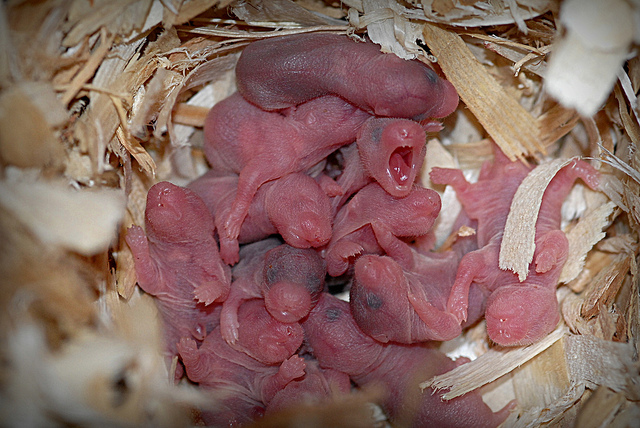
Golden Hamster Babies - pixfocus.com

Golden Hamster Babies – pixfocus.com

Now golden hamsters have the shortest gestation period of all mammals, a mere sixteen days to produce a litter. Word spread quickly among my friends and in turn to their acquaintances that I was breeding the cutest pets they had ever held in their palms. Before the pups were even born, they were sold to six prospective buyers at two marks a piece. Great was the disappointment, when the first litter contained only two. I learned first-hand what the economic law of supply and demand really meant. There were four pups in the second litter, and they sold well with a 50% increase in the price. In the following litter there were eight, and when on the fourth cycle sixteen pups were born, my mathematical mind saw the pattern of a geometric progression and predicted thirty-two the next time around. Well, there was no next time. Mother hamster had enough. She figured the best birth control would be to kill her partner on his next amorous approach, with which by now she was completely familiar. And that’s what she did. My poor golden male hamster died shortly afterwards succumbing to the lethal wounds and lacerations from her razor-sharp teeth. The population explosion had come to a sudden end.

In the evenings Mother and Aunt Mieze had often company. My brother Karl and sister Eka (Lavana) now and then came for a visit. I felt quite frustrated that my bedtime was still nine o’clock. I was excluded from the after-supper conversations that would have granted me interesting insights into the world beyond my little town. So during the day equipped with a sharp and wide-blade screwdriver I attempted to drill a hole through the wall to participate at least passively in what was being discussed. Two years later I would have had enough know-how to install a hidden microphone in the living room. But drilling a hole through a concrete wall proved to be too much of a challenge. I had barely penetrated the plaster. No matter how hard I pressed my ear against the hole in the wall, I could not pick up a single word. But for now, I had to wait for a bedtime extension a few years down the road.

When Aunt Gertrud, who had been head nurse in an East German hospital, managed to escape the communist state and slip across the German-German border, she found immediate employment in the Wesel Senior Citizen Home. She often dropped in at our apartment and bitterly complained about the chaotic conditions at the home for the elderly and grieved about the lack of respect for her as a person and leader. The staff envied her position that in their opinion should have been filled by a local administrator and not by a ‘foreigner’ from the German Democratic Republic. All alone against the backdrop of daily insubordination and insidious backstabbing, she became quickly depressed and despondent. Cases of severe depression were well-known among the members of the Kegler branch of our family. Less than a year after she had entered the ‘Golden West’ with high hopes to find freedom and prosperity she couldn’t take it any more and committed suicide. Not being particularly close to my aunt with the bushy eyebrows and not quite realizing that death meant final separation from our earthly existence, I went about my daily life as if nothing had happened (See also post on Gertrud Kegler of May 5).

Gerhard Kegler, the general, who dared to disobey Himmler – Part III

The Woldenberg Division and Himmler’s Order to Defend Landsberg

Excerpt Taken from the book ‘The Siege of Küstrin: Gateway to Berlin 1945’ by Tony Le Tissier, Publishers: Pen and Sword Books

If you missed reading the related posts, go back to May 13 and 22.

Lieutenant Rudolf Schröter, whom we last encountered west of Landsberg on the morning of 31 January, was completely unaware that he and his 400 recruits were part of the ‘Woldenberg’ Division,’ as he related:

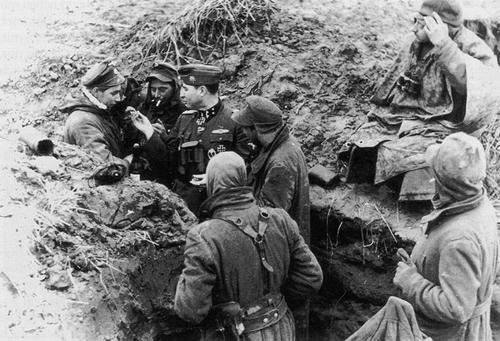
Field Commanders discussing a Desperate Situation - Photo Credit: softairmania.it

Field Commanders discussing a Desperate Situation – Photo Credit: softairmania.it

On the morning of the 31st January my unit rejoined the Königstiger SS-sergeant-maior about 4 kilometres west of Landsberg in the Wepritz area. As we were still without a super­ior command or orders, I had us retreat westwards.

Beyond Dühringshof I was met by a car with a general, who received my report, did not introduce himself nor did he name his formation. He ordered me to deploy left of the road to Diedersdorf. My left-hand neighbor would be Second- Lieutenant Clemens’s unit.

When we stopped a Russian armored reconnaissance vehicle with infantry fire, the soldiers jumped over the sides with a blanket that was supposed to protect them from our fire. That night the first Russian attack occurred with more on the 1st, 2nd and 3rd February. Small enemy breaches were driven back with counterattacks by the exemplary fighting recruits.

On the 3rd February I was summoned to a conference by the divisional staff in Vietz town hall. Here for the first time I discovered that my unit belonged to the ‘Woldenberg’ Division. The divisional commander, Major-General Kegler, described the situation.

The division was surrounded by Russian troops. Vietz station on the south-eastern edge of the town was in enemy hands. Blumberg was also occupied by the Russians. Two enemy infantry regiments were at Gross Cammin. Communication with Küstrin was severed. Re-supply was only possible by air. His decision was to leave.

The orders handed out by the divisional chief of staff for my unit and that of Second-Lieutenant Clemens were not possible of execution or would entail heavy losses. I therefore rose to protest and suggested that we should first disengage ourselves from the attacking enemy so that the immovable heavy weapons and especially our infantry could get out of the diffi­cult terrain and deep snow.

As the general declared to the chief of staff that this was also his opinion, the following radio message arrived from headquar­ters 9th Army: ‘Report situation and intentions. Hold Vietz.’ Major-General Kegler promptly rescinded his orders for the division’s withdrawal.

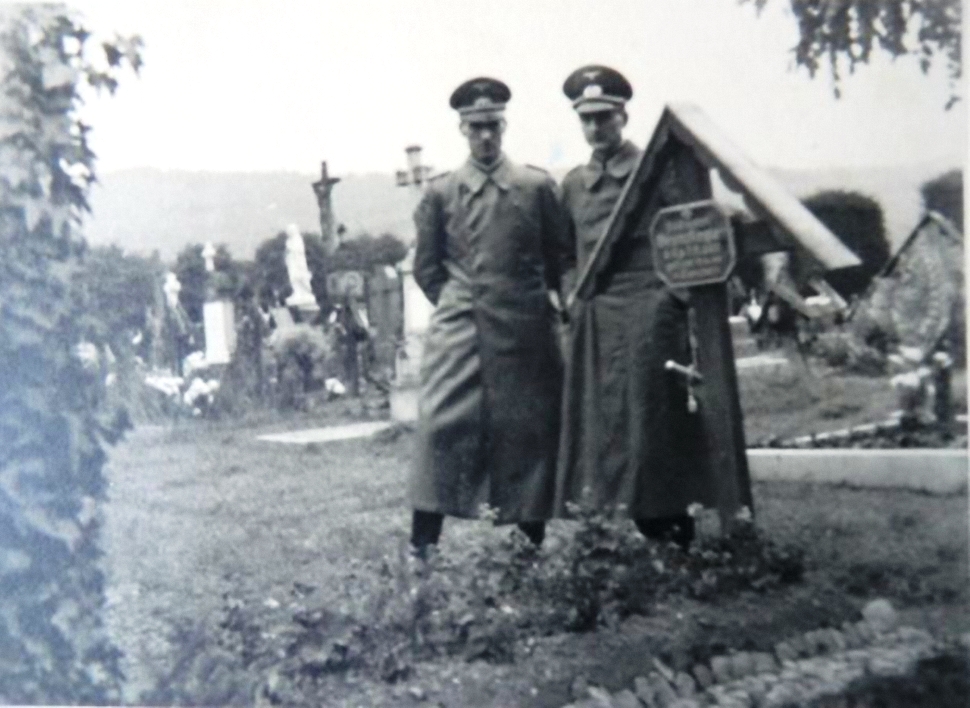
My Uncles Günther and Gerhard Kegler at the Grave of their Brother in 1940

My Uncles Günther and Gerhard Kegler at the Grave of their Brother in 1940

Back in my position and after speaking to my left-hand neigh­bor, both of us fearful of having pointless high casualties among our recruits, I decided to convince the divisional commander that he should stick to his plan to withdraw, and that in any case I would decide according to my conscience. I returned to Vietz.

 To be continued …