From Dover in England to Fauquier in BC

Richard (Dick) Horace Andrew Hall

A Call for Help by Guest Contributor Paul Loseby

My name is Paul Loseby and I live with my wife here in the middle of England.  My wife Penny’s heritage takes her through Kent and her she came across something which really saddened her until she heard about Fauquier, BC.
Fstone

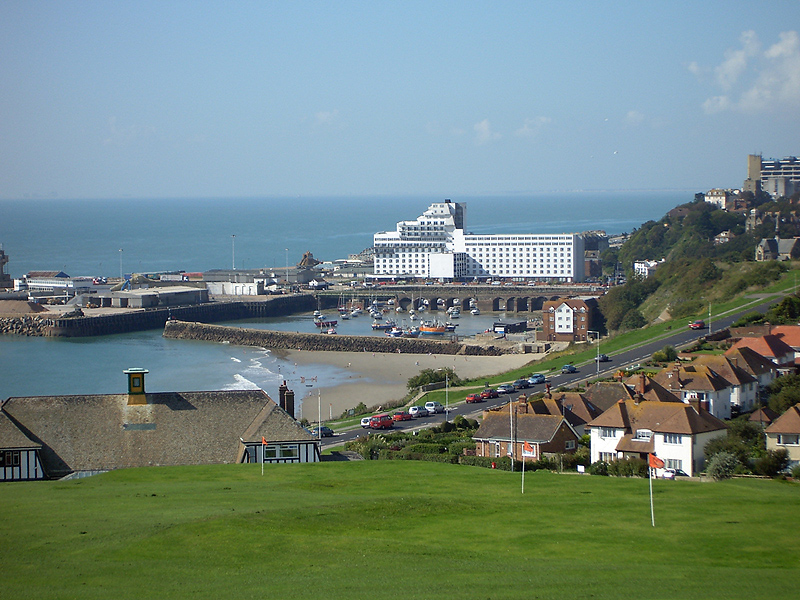
Modern Folkestone in Kent – Photo Credit: wikepedia.org

Penny’s grandmother married for a second time in 1946.  Her new husband was a Richard Hall who had a son by a previous marriage.  That son’s name was Richard (Dick) Horace Andrew Hall and he was born in 1914 in Folkestone in Kent. Throughout the early 1900’s, the Canadian government had been trying to get young men and women to migrate to work on farms or as domestic servants.  Many youngsters went willingly but a great many, under the excuse of being unruly children or where their parents were suspected of being unable to bring them up properly,  were just taken from their parents and put on a ship.  This was contrary to the apparent aims of the people running the scheme – the British Immigration and Colonization Association.  There were also many stores of the children being poorly treated and cared for in the new country.  An uncertain future indeed.
dickswedding

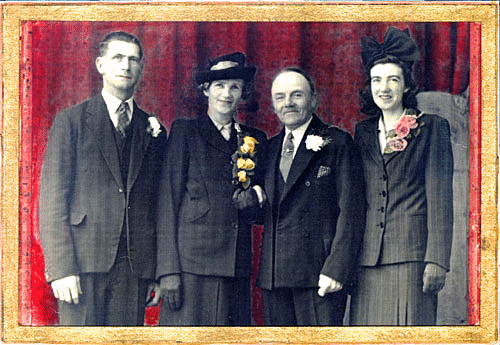
Dick’s Father with Second Wife Edith – Wedding Picture 1946

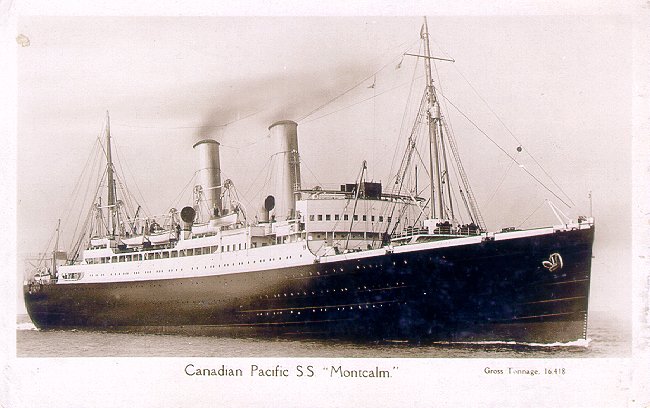
We don’t know whether Dick went willingly or not but on the 18th October 1928 with the equivalent of a couple of Canadian dollars in his pocket and the clothes he stood up in, he boarded the SS Montcalm in Liverpool.  How could this be – a 14 year old child taken from his parents to start a new life alone? Dick was with a group of other minors under a scheme by the BICA whose headquarters were at 87, Osborne Street in Montreal.  These premises were also a hostel for the boys where they waited to be distributed throughout Canada.  They landed in Quebec on the 20th October.
SS Montcalm

Sadly not everyone fared well – some boys had committed suicide; not all were found homes and there had been a high failure rate.  This led to the BICA being temporarily closed in 1925 so that their affairs could be put in shape.
MainSteetWhitchurch-Stouffville2

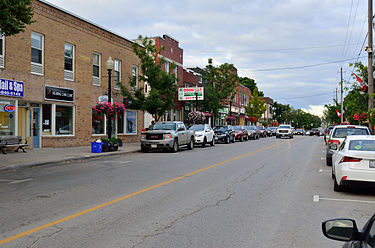
Today’s Main Street of Stouffville, Ontario

Dick it seems was one of the lucky ones who not only survived but thrived in his new country.  Shortly after arriving, Dick was sent to Stouffville in Ontario.  Here he began his work as a farmer’s hand.  He was obviously paid well as within three years, he had earned enough money to return to England to see his parents and spend the 1931 Christmas with them.  It was obviously his wish to return though as at the beginning of April 1932, he set sail, again on the SS Montcalm, for Halifax.
Thehomeheleft

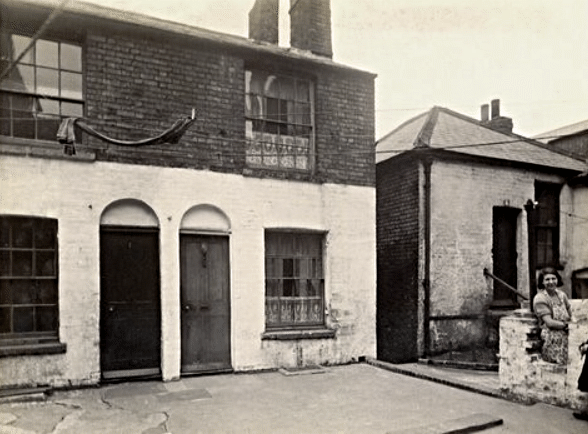
Home that the young boy Dick Hall left to go to Canada

Dick went straight back to Stouffville and then went to work on another farm owned by a William Hewlett.  The following year, still working on the farms, he moved up to Winnipeg in Manitoba.  There he worked for a Mr. Lindsay and was earning what would have been a lot of money in those days, $25 CA with his food and accommodation thrown in.

He then had the opportunity to move across to Lander, initially staying with relatives but within a few months, had moved up to the Bralorne mine where he worked for a couple of years.  When Canada entered the war, Dick tried to enlist but was rejected on medical grounds.  Not deterred and still wanting to help the war effort, Dick moved to the Vancouver Shipyards where he worked  during the war.
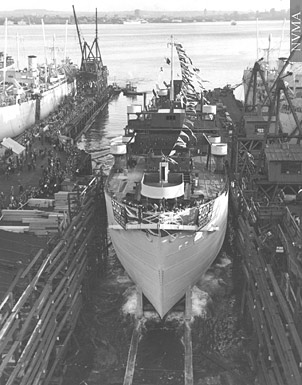
Vancouver Shipyards during WW2

Vancouver Shipyards during WWII – Photo Credit: North Vancouver Museum and Archives

In 1943, he met and married Alice Gledhill of Aldergrove.  He eventually left the shipyards and went to work for BC Electric for eight years before moving to Summerland.  In 1951, he was in partnership with his brother in law Morely Austin, running  a garage and grocery store in Needles.  He stayed running the garage until just before Needles was flooded.  In 1966, he moved to Trout Creek where he owned Trout Creek Shell but in September the following year, he died during heart surgery in Vancouver.
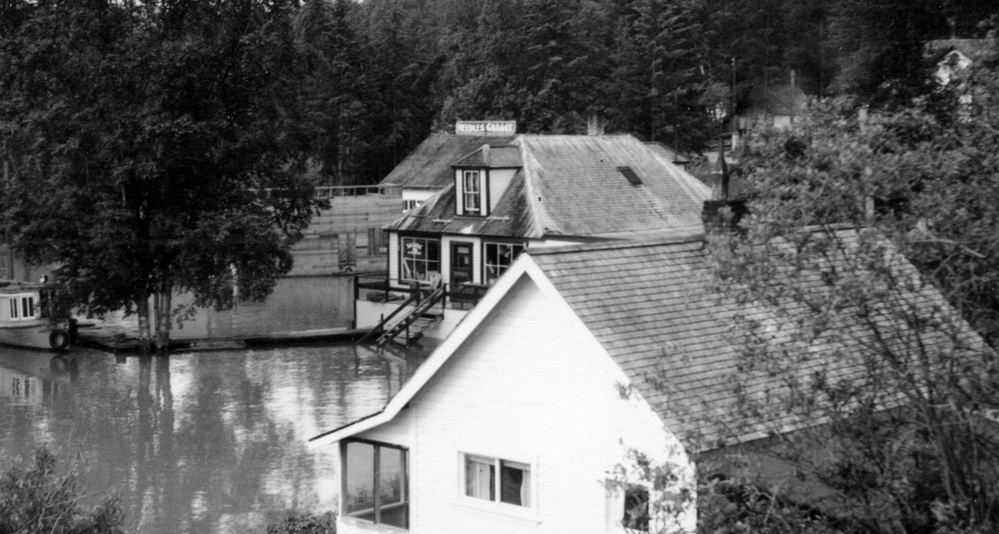
A332

Needles across from Fauquier after Flood 1948

My wife and I met and married in 1968 and Penny’s granddad, Dick’s father used to tell us of how proud he was of his son and that he was living in Canada. He obviously never knew that  Dick had died the previous year. We wouldn’t normally have pursued the family history of someone who was not a direct blood relative but we did know Dick’s father well and have many memories and photographs of him in his later years. As soon as Penny realized what had happened to ‘Canadian’ Dick, she was heartbroken and in tears.  At that time, all we knew was that he had been put on a ship with just the clothes he stood up in and enough money for a drink on the way.  How could they do that to him?  We just didn’t know.  Since then we have tried to find out more about Dick, not just for ourselves but in the hope that we could find Dick’s children, Gordon, Lois or Carol and give them some insight into their grandfather who they would have never known.
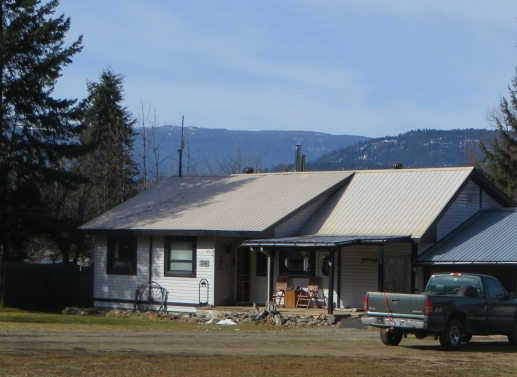
IMG_9659

Dick Hall’s house that had been moved  by barge to Fauquier

Canadian family history can be difficult with no records of births and marriages being readily available online so we have no idea whether ‘the children’ got married and had children of their own.  It would appear that after Dick’s passing, Mary his wife, married someone called Jackson as Dick is buried with her in the beautiful Peach Orchard Cemetery.

Now, looking on the internet at the absolutely beautiful place you live in, perhaps we should have moved too. If anyone does have any information or photographs of Dick and his family, we would really love to hear from them.  We can be contacted on our email pal@loseby.co.uk
Paul Loseby

Note by Peter Klopp: An alternative way of sending information via Paul’s email would be the comment section of this post. Thank you, Paul, for writing this touching story on a former resident of Needles, BC. I am confident that the Arrow Lakes Historical Society will add your report to their archives.
Chapter 19 of the P. and G. Story – Part I


Alone at the Siemens Apartment Building


“Study hard, for the well is deep, and our brains are shallow.”

Richard Baxter

In search for a place to spend the next six months Mother had found a mini-apartment in a huge building complex that had been specifically built for single workers in the local Siemens factory. Small it was indeed. The room I called my own covered hardly an area of fifteen sq. m. I shared the hallway, which contained a few basic kitchen facilities, with an older man next door, who fortunately moved out before Christmas with no one moving in to replace him. On the right side of the hallway was the common bathroom with a shower instead of a bathtub. In spite of the limited space I was extremely happy to have my own four walls with a large window and even a tiny balcony facing the rising sun.

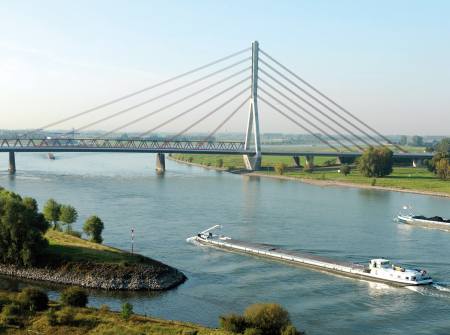
Wesel at the Rhine

Wesel at the River Rhine with the New Bridge

It was from here that I wrote my first letter to Biene’s twin brother Walter at the end of August. As promised I included schematics of electronic circuits that I thought might be of interest to him. Of course, I had not forgotten Biene, whose image began to fade in my mind, but whose idealistic afterglow I cherished all the more. “And do not forget to greet your parents and Biene from me,” I ended this letter and all subsequent ones. Walter promptly replied and inserted an advanced RC transistor diagram that was far too complex for me to understand or to be useful for my simple projects. But the desired connection had been made, and before long Biene and I were corresponding with each other. There were two important aspects to the letters, which were traveling back and forth between Velbert and Wesel. One, they opened a window and brought bright sunshine and fresh air into the often gloomy, stuffy interior of my soul; two, due to the physical distance we could write about our thoughts and feelings, wrapped up in a flowery language, carefully worded and lovingly presented. We opened our hearts to each other and discovered that we both had a romantic vein that was rich and seemed to be inexhaustible. In short, the seeds of our developing relationship had fallen on fertile ground. For me in particular, the correspondence proved to be a journey into the wonderful world of self-discovery. I enjoyed creating written tableaus depicting dream-like, often melancholic scenes with fact and fiction imaginatively intertwined. They engendered in a perpetual cycle an ever increasing sense of self-awareness. Reminiscing about a stopover at a railroad station I once wrote her.

Wanne-Eickel 22:10

          Over the railroad station sways the moon. Its pale light flickers through dense patches of fog, and the moist shimmering rails vanish behind the impenetrable wall of uncertainty. I am pacing the empty platform up and down, three minutes forth, and three minutes back. Slowly, hesitatingly the heavy hand of the clock advances from one-minute mark to the next. Lost in thoughts I look up to the moon. The cold, damp forces of nature’s power attempt to snuff out its golden light. But it is not you, good moon, who are eluding me, you, the embodiment of all my happiness. No, around me lurk the cold forces; they seize me with their moist fingers. Oh happiness, you would always dwell among people, if darkness were not all around us that hides you and saddens my heart. Two lights emerge from out of the fog. They have a goal; they glide over solid tracks. I can put my trust in them. In vain the dense fog is clutching to hold the iron vehicle; it cannot delay its course. I step onboard. 22:20

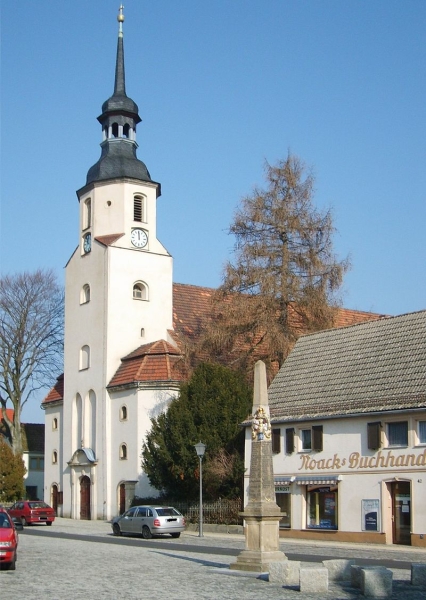
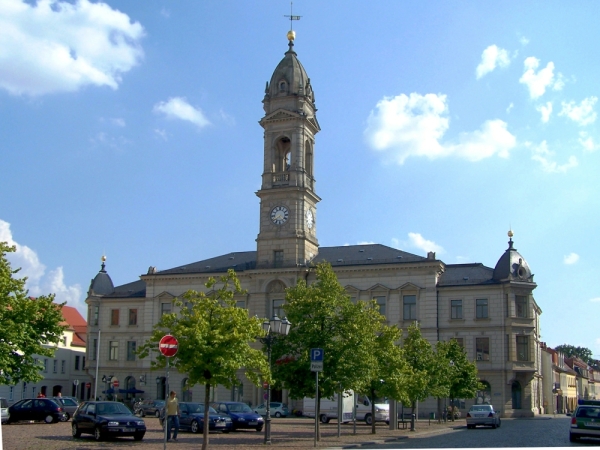
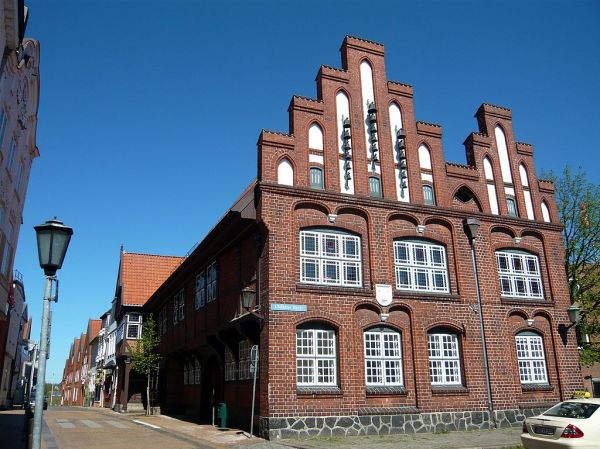
Old City Hall of Rendsburg - Photo Credit: wikipedia.org

Old City Hall of Rendsburg – Photo Credit: wikipedia.org

Shortly after I had written the letter to Biene with its sentimental railroad story, I traveled by train to Rendsburg in Northern Germany to attend my eldest brother’s wedding. Karl’s bride was Ingrid Lehmann, born in Königsberg (now Kaliningrad), East Prussia, whose father was a retired sea captain. Karl was making sure that everything was prim and proper for the festivities. He checked out my clothes and appearance very carefully and was quite pleased with the new suit I was wearing. Even though I had shaved in the morning, Karl spotted the beginning of new growth darkening the area around my chin and requested for the sake of the important event another shave. Putting my usual stubbornness aside, I complied with his request.

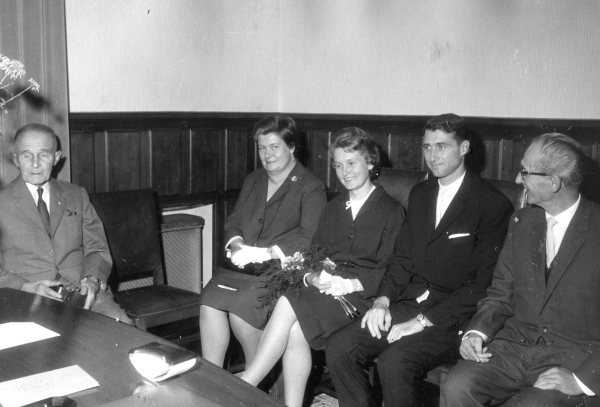
Wedding Ceremony at City Hall

Wedding Ceremony at City Hall

With almost all close relatives present it was a memorable wedding. At the banquet Captain Lehmann and Uncle Günther solemnly delivered words of wisdom, reflections on their lost home provinces in the East, fine speeches, which were recorded on tape and can still be heard today on audio CD. It was here in Rendsburg that for the first time I was seriously contemplating about what it would be like to tie the knot and form a life-long partnership in marriage. I also began to see that hard work at school and university must come first to realize such dreams. I thought that as an electronics engineer I might have a fairly good income to support a wife and family.

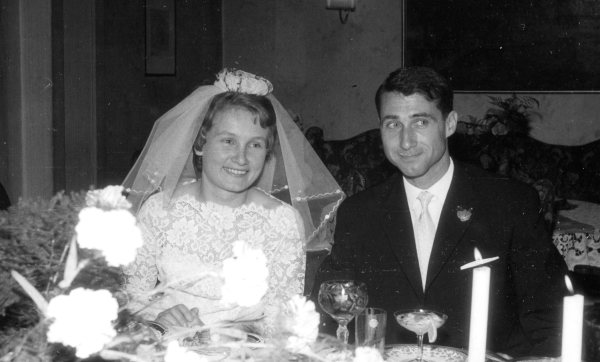
Karl and Ingrid Klopp (Lehmann) at the Wedding Banquet

Karl and Ingrid Klopp ( née Lehmann) at the Wedding Banquet

Friedrich Wilhelm Ferdinand Klopp (1879-1952) – Part V

Mother Emma and Ferdinand

Klopp Family Tree

Chart I – II

In 1923 Ferdinand acquired the inn “At Recreation” (Zur Erholung) in Hainrode near Sangerhausen. Connected to and supporting operation of the inn was a small farm. Here mother Emma, often traveling from place to place, found a reliable stop-over and return station. She was very thankful to her son for support and encouragement. Ferdinand’s daughters had fond memories of the idyllic hours, when Grandma talked about the olden days and taught them how to dance.

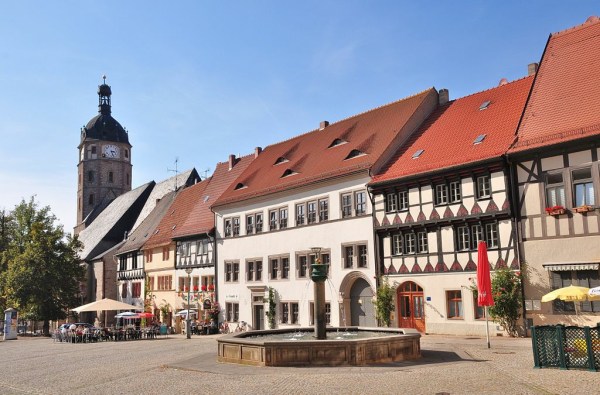
Sangerhausen in the Harz Mountains - Photo Credit: wikipedia.org

Sangerhausen in the Harz Mountains – Photo Credit: wikipedia.org

Ferdinand sent the older daughters for their education to a boarding school in Magdeburg, while the youngest daughters Meta and Rosel to the Berlin Lette-House for their trade diploma. There Ferdinand’s sister Anna had already received her education  around the turn of the century.

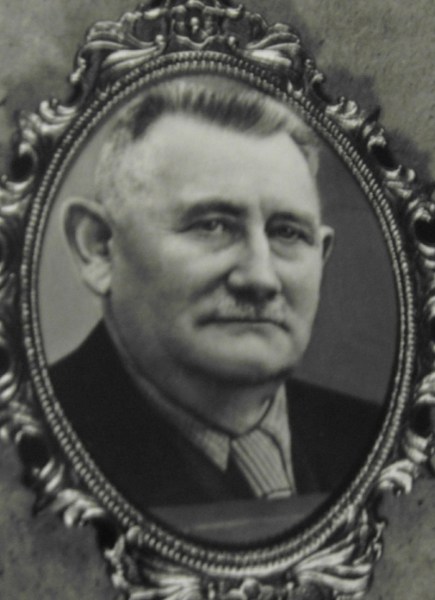
Ferdinand Klopp

Ferdinand Klopp

Ferdinand sold the inn in Hainrode in 1930 and acquired a private house in Bad Saarow-Pieskow at Lake Scharmützel. Perhaps in conjunction with his sister Jula’s auctioning off of her hotel, Ferdinand abandoned his property again in 1930. He moved with his wife Rosalie and his two daughters – the other 4 were already on their own – to St. Andreasberg in the Harz Mountains. There he managed for three years the “Hotel at the City Park” (Hotel zum Stadtpark). The property was destroyed in a bombing raid. Already in 1939 the family had moved to Nordhausen.  The author of the Klopp Family Chronicles, my distant cousin Eberhard, reported that the daughters Meta and Rosel refused to answer questions as to how their father managed to pay for their upkeep and how he had spent the years during the Nazi era.

Chapter 18 of the P. and G. Klopp Story – Part IV

Happy End to a most Enjoyable Visit

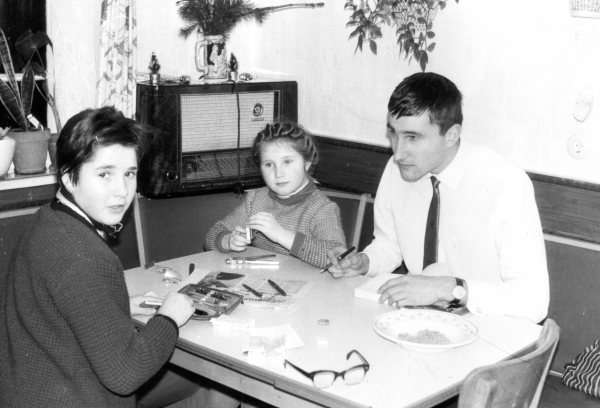
Then a close family member dropped in for a brief visit. When she heard that I had been going out dancing with Roswitha, she mockingly and contemptuously commented on her in Father’s presence, “Ho! Ho! Peasant duffer! (Bauerntrampel in German)” By now I had become quite accustomed to the unpredictable outpourings of her sharp tongue. Her caustic and biting remarks at Mother’s place in Wesel had been edged forever into my memory. However, Father was livid. Having respected all his life the hard honest work of the farmers from whom we receive our daily bread, he was deeply insulted by that derogatory remark. He gave her a severe dressing-down for displaying unjustified disdain for such an honorable class of people. Never since my early childhood days, when he had read me the riot act for stealing eggs from Mother’s henhouse, had I seen Father so angry. If I did not know the meaning of holy wrath, I knew it now.

My brother Karl and his wife Ingrid with an aunt in front of Erna's house

Erna Klopp with her neighbor’s baby in her loving arms

Erna’s house was at least half a century old and the electrical wiring was outdated and no longer in compliance with the latest electrical code. It required that all circuits be properly grounded. It made me feel good that I was not just there to enjoy a relaxing summer visit but also had the opportunity to make myself useful. Father had bought the three-prong wire, and I installed it and connected it to the junction boxes, outlets and switches. When I showed reluctance to take the twenty marks Father wanted to give me as pay for my work, he lectured me somewhat like this, “Listen, Peter, if someone offers you money, not dishonest money mind you, but money earned for work you did, do not hesitate to accept it. For you not only cheat yourself out of the reward that is rightfully yours, but you also insult the generosity of the giver.” To such a powerful argument I had nothing to reply and took the twenty marks.

Together with Helga and Anita in Michelbach

Together with Helga and Anita in Michelbach

At times when Father’s back pains were hurting too much, he stayed in bed for most of the day. Adolf and I were sitting at his bedside to keep him company. Then Father and I would often talk about the great empires of the past and the lessons one might learn from the causes of their decline. I really warmed up to this topic as I had recently taken a keen interest in the history of the Roman Empire. We came to the conclusion that if one allows foreign religious and ethnic elements to penetrate the cultural core of the nation, it will sooner or later lose its identity, its values and strength and will eventually have to face first decline and then total collapse. Germany according to Father has not learned her lessons and was headed in the same direction. He pointed to the record player on the night table remarking, “The record is turning, the needle appears to be progressing even though it is running in circles, but in the end it will be starting all over again symbolizing the eternal recurrent of the same in world history.” Adolf feeling a little left out in this highfalutin talk said he would buy himself a couple of history books to study up on the things he had missed in school.

Reading and Relaxing - Summer of 1962

Reading and Relaxing – Summer of 1962

Before the end of my vacation in Michelbach I gave Erna my moped. The engine of her better looking moped had completely broken down. Adolf, the skilful mechanic and jack-of-all-trades, took the good engine out of mine and installed it into Erna’s moped. As reward for my generosity Adolf drove me in his Volkswagen beetle back home to Wesel, where he was going to spend a few days to visit with Mother and Aunt Mieze.

Chapter 18 of the P. and G. Klopp Story – Part III

Is it Love?

Within the scope of the family history I would go too far if I included Erna’s side of the family except the ones that I came into contact with. There was the Langlitz family, Walter, Frieda (Friedchen) and their two daughters Helga and Anita. Walter had become a successful contractor who ran a prosperous business with his impressive array of trucks,

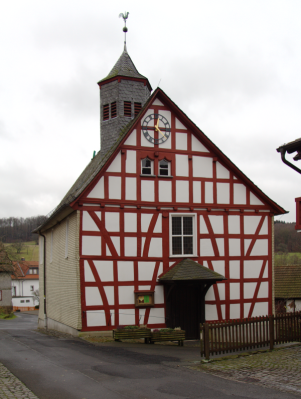
Church of Michelbach now part of Schotten - Photo Credit: wikipedia.org

Church of Michelbach now part of Schotten – Photo Credit: wikipedia.org

caterpillars, backhoes and other heavy machinery that he had acquired to assist in the government sponsored land reform program. In contrast to the northern provinces of Germany, where the eldest son inherits the farm, inheritance laws in the south required equal division of the fields among all the children of the deceased farmer. Thus, over time emerged a chaotic patchwork of tiny fields often less than one ha in size, which made farming more and more inefficient and unproductive. So Walter profited from the reallocation of land by owning the right equipment at the right time. The two daughters, Helga and Anita, age 12 and age 10, whose exact degree of relationship to Erna I do not recall, often showed up to play board games, such as chess and checkers with the newcomer in Father’s home.

52

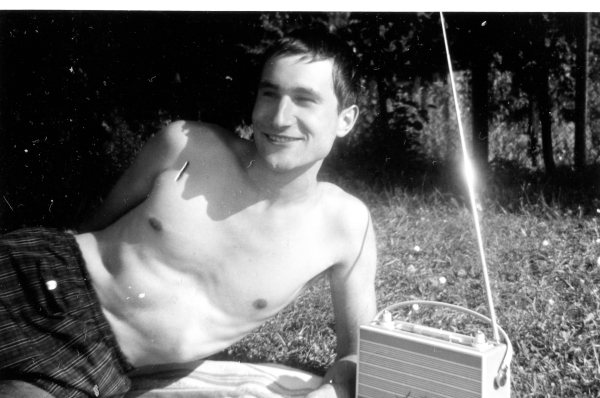
Peter Basking in the Sun – Summer 1962

Erna was also anxious to have me meet her 16 year-old niece Roswitha, who lived a few houses down the street with her widowed mother. Even though I did not recognize it at the beginning, it was clearly a matchmaking effort supported by Father. In collusion with her sister-in-law, Erna invited her niece over for coffee and cake to make sure we would see each other as often as possible. Roswitha in terms of the standards I had set for what a girl should look like fell well within the range of acceptability. However, inner qualities, such as interests in activities that one could do together, readiness to share and exchange thoughts and feelings, to support them and if necessary even to oppose them, such qualities, which began to gain more and more in importance for me, were severely lacking. In a way my encounter with her helped me set the bar a few notches higher, which further limited the number of choices for my future mate. I vaguely felt for the first time that only love could help jump the hurdle. But what is love? I could not tell, because I had not experienced it yet. So what Erna had hoped for, did not happen. We were friends, who did things together for a while. We walked down the steep hill down to the town and district swimming pool in Schotten and on Saturday evenings we went dancing in the nearby villages. The music was not exactly rock ‘n’ roll, but we could dance to it, whenever a fast beat would permit. The performance of the band improved with each refill of the giant beer mugs during the frequent breaks. Thanks to the loud music there was no opportunity to talk, and there would not have been much to talk about. On our long walk home in the moonlight I explained to her how the stars would move like the sun following the rotation of the earth. For everything I said during my scientific dissertation she approvingly giggled. Only once did she protest to express her utter disbelief, when I insisted that the moon shining so brightly now onto the forests and meadows would also show its pale face during daytime.

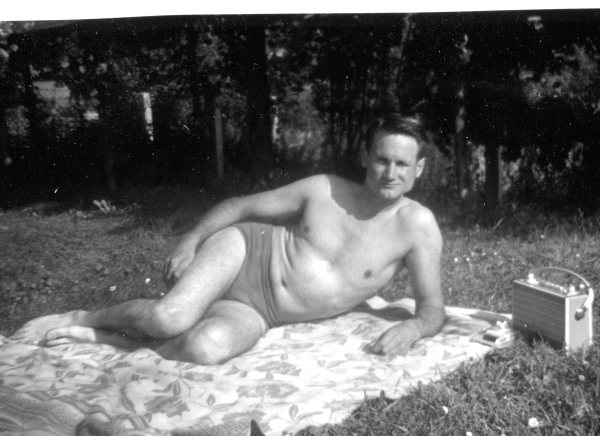
My brother Adolf relaxing at the Schotten Swimming Pool

My brother Adolf relaxing at the Schotten Swimming Pool

With my first visit to see Father after such along gap inconceivable in the light of today’s custody laws that require visiting rights at regular intervals, I accomplished much more than just reconnecting with him. The ice had been broken. Other family members now were eager to come in a spirit of reconciliation that was shared even by Mother albeit somewhat reluctantly. Near the end of my holidays my brother Adolf dropped in for a visit. He had returned from Canada to Germany on a temporary basis to learn a trade in an apprenticeship program at the Honeywell Company at Hanau. There he eventually acquired a journeyman ticket as a trained machinist that would – so he was hoping – land him a good paying job upon his return to Canada. Adolf endowed with a witty sense of humor and an extroverted personality was the life of the party no matter where he went. In formal or informal gatherings, in suit or in jeans, with academics or with factory workers, he was the born entertainer who made people cheer up when they were depressed, got things rolling when they appeared to be stuck. Everybody liked him. He had many friends and few enemies. There was just one problem with this gregarious likable brother of mine. He seemed to be shy, yes even afraid of unmarried women, who might take too much of a liking to him, pursue him with the full force of passion and lock him up in the golden cage called marriage. When we received an invitation to a social evening by Roswitha’s mother, Adolf felt safe, because his youngest brother was with him. On the surface it looked like we were the suitors, Roswitha being courted by two promising young men. In reality in a strange reversal of the customary roles it was the other way around. As we gathered in the living room, Frau K. served us wine, crackers and cheese, spent a few perfunctory minutes in conversation with us and discretely withdrew with a few cheerful words meaning that we now were on our own. I found the situation very odd and to some extent embarrassing, because I had expected her to stay. It was Adolf who saved the day or more accurately the evening with his social skills that helped to get the ball rolling. He asked Roswitha about school, hobbies, her likes and dislikes, the weather, and all the other trivia that he was so apt in using as a social lubricant. To her replies often accompanied by the aforementioned giggles he added humorous comments that made us laugh and feel at ease. Eventually even I emerged out of my taciturn shell and presented to everyone’s amusement a few jokes and riddles. Around eleven o’clock Adolf ironically remarked that it was time for us ‘boys’ to go home. We politely said good night and cheerfully departed to have another drink of a more potent kind at our Father’s place.

Friedrich Wilhelm Ferdinand Klopp (1879-1952) – Part V

Ferdinand’s Wheeling and Dealing

Klopp Family Tree

Chart I – II

On the basis of daughter Victoria Luise’s birth in 1910 at Kriewen (today Polish Krzwin  about 15 km southeast of Koscian) one can safely assume that after two years Ferdinand managed to lease another dairy or mill. Never resting he finally succeeded in squeezing his eldest brother and family out of the house in Wolmirstedt. However, he did not use the property for himself, but rented it out, until he eventually sold it to the neighboring print shop Adolf Grenzau between 1912 and 1914. In 1914 the Ferdinand Klopp family dwelled in Elsterwerda, Brandenburg, where his fifth daughter Else Meta was born. It was rumored that Ferdinand bought agricultural property in that region.

Elsterwerda, Brandenburg - Photo Credit: wikipedia.org

Elsterwerda, Brandenburg – Photo Credit: wikipedia.org

At the beginning of WWI in 1914 Ferdinand was drafted into the army. With the rank  of a sergeant he earned the Iron Cross. On a photograph of October 10, 1915 he is described as a pilot of the Third Company, Aviation Department 6 in Großenhain. Whether he was actually promoted to the rank of an officer could not be determined by the author of the Klopp family chronicles, Eberhard Klopp.

Großenhain - Photo Credit: wikipedia.org

Großenhain – Photo Credit: wikipedia.org

At the end of WWI Ferdinand was in possession of considerable amounts of money due to any of the following circumstances. Mother Emma was known for her financial generosity, the army may have provided funds as part of the decommissioning process, Ferdinand may have received compensation for his lost properties in West Prussia, which now had become part of Poland, last but not least the sale of his Wolmirstedt house may have added a significant amount to his bank account. A decisive factor in his systematic and hard-nosed isolation of his eldest brother Friedrich can be traced back to his insane penchant for revenge by the impulsive and irascible Ferdinand.

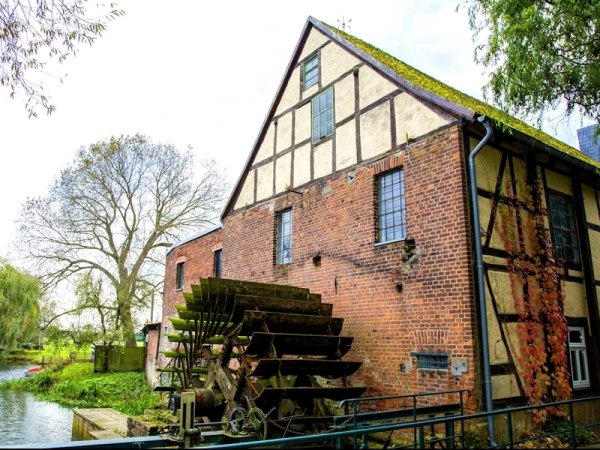
'Coffee' Mill at Elbeu - Photo Credit: wikipedia.org

‘Coffee’ Mill at Elbeu – Photo Credit: wikipedia.org

In Elbeu, where he – so it is said – acquired ‘estates’ in 1919, the sixth and last daughter, Rosel, was born on November 16, 1919. As a matter of fact, Ferdinand and his younger brother Wilhelm (1886-1937) got together on a joint business venture. Wilhelm, who likewise returned for his lost properties in the eastern provinces to Wolmirstedt and had bought a new house in Elbeu, arranged for the purchase of the inn ‘Brauner Hirsch’ (Brown Elk). The author of the Klopp Chronicles, which I am translating at least to a large part in this blog, stated that on his visit of the region in 1990 he viewed a derelict guesthouse run by the GDR trade organization (HO) on the road to Magdeburg. In 1932 the pub had become the scene of a ‘brotherly’ altercation, which resulted in a murder charge and will be the topic of next Thursday’s post.