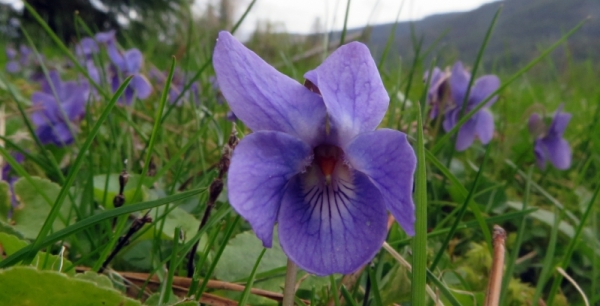
A Photo Essay on Fauquier BC Canada

Awaking of Nature in and around Fauquier

Photos by Peter Klopp

To see more pictures click on the Fauquier page in the menu above.
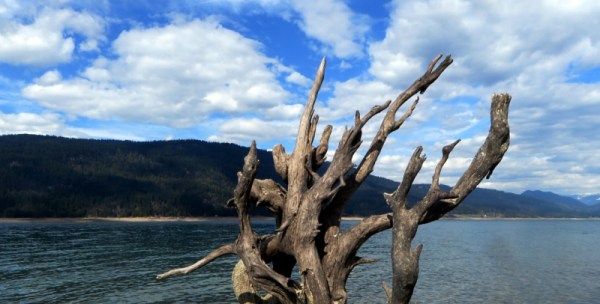
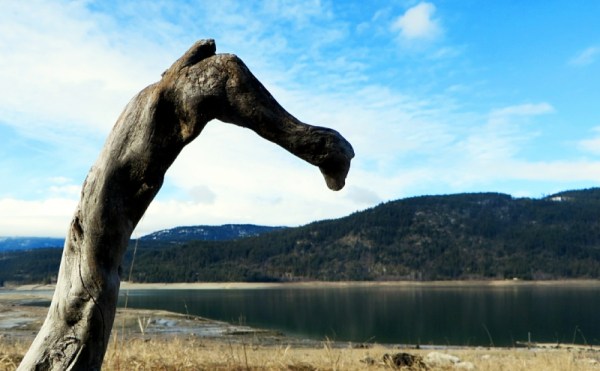
Wooden sentinel keeping a watchful eye the Arrow Lake

Wooden sentinel keeping a watchful eye over the Arrow Lake

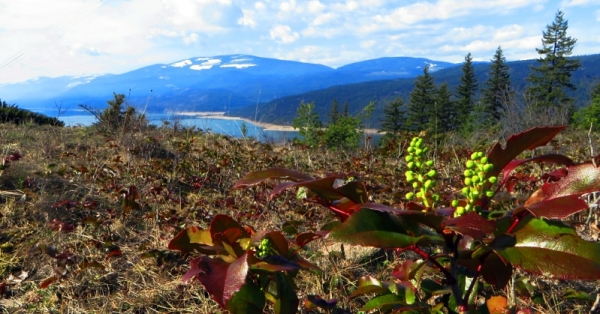
Oregon grapes blooming high above the lake

Oregon grapes blooming high above the lake

Juniper berries in their second year of development

Juniper berries in their second year of development

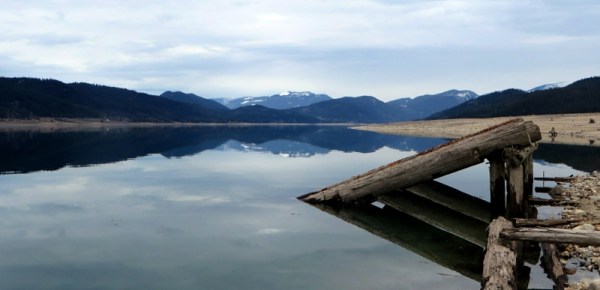
Remnant of a Distant Past - an old logging ramp

Remnant of a Distant Past – an old logging ramp

A driftwood choir singing 'Ode to Joy'

A driftwood choir singing ‘Ode to Joy’

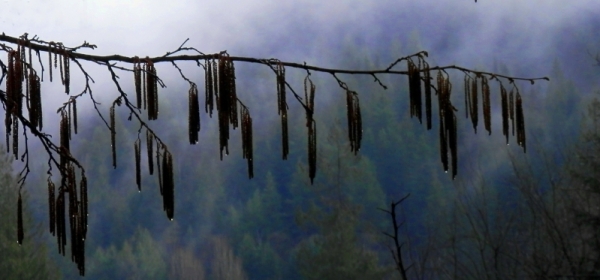
Catkins ready to pollinate the tiny red flowers of a hazelnut tree

Catkins ready to pollinate the tiny red flowers of the hazelnut tree

Tiny, yet so beautiful - thousands of these violets blooming on our yard

Tiny, yet so beautiful – thousands of these violets blooming in our yard

Birds announcing the arrival of spring on every tree

Birds cheerfully announcing the arrival of spring on every tree

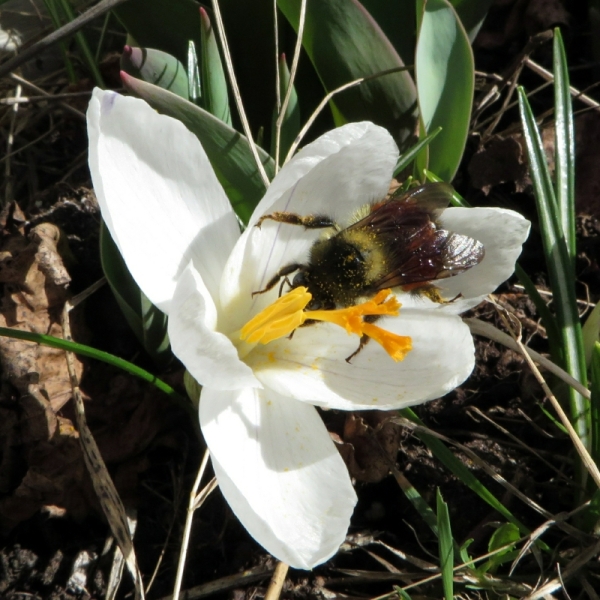
Crocuses receiving their first spring guest in their floral abode

A crocus receiving its first spring guest in its floral abode


Chapter 20 of the P. and G. Klopp Story – Part II

Getting to know my Army Buddies

We did not have much time to really get to know each one another in Room 203. But before we settled down for the first night, I had learned that most of us came from the same region in Northwest Germany. However, nobody came from the same town no matter how big and, as I discovered later, no more than two were high school graduates. It seemed to me that someone in the personnel department had done a good job in creating groups from social and regional backgrounds as diverse as possible. This was to prevent cliques from forming and to promote harmony. The other high school graduate was a violinist . He planned to further his musical talents after his mandatory 18 months by studying at a music conservatory. He had applied for a transfer to the band division of the army before he arrived in Koblenz showing convincingly that regular army service would ruin the dexterity of his delicate fingers needed for becoming an accomplished violinist. I took an instant liking to him and, enthused about his virtuosity, recorded on quiet weekends many of his solo pieces on my tape recorder. Overall the troop in Room 203 fitted nicely together. Perhaps the only thing that made me feel slightly uncomfortable when conversing with my comrades was that in contrast to the heavy Low German accent of the Ruhr industrial area (the Ruhr Pot) I spoke the standard High German, which made me stick out like a sore thumb in the otherwise very congenial group. But that did not seem to bother them in the least. They would often good-naturedly tease me or would say, if they had a problem or question, “Let’s ask the professor. He will know.” In short, I had the good fortune to be among a good bunch of people. And if there was any misery coming our way– to be sure there was going to be lots of it -, it would come from the drill sergeants, whose job was to toughen us up for the tasks ahead.

Old City Center of Koblenz - Photo Credit: wikipedia.org

Koblenz at the Confluence of the rivers Rhine and Moselle – Photo Credit: wikipedia.org

At the morning line-up we were standing on the pavement neatly arranged in a triple row from the tallest to the shortest. I occupied a fairly safe position from the critical eyes of the corporals in charge of the inspection. I stood in the third row on the left being one of the tallest in the company. The soldiers in the front row were the most vulnerable to harassment, where a missing button on the uniform, an half-open fly, dirty boots would come under an instant scathing rebuke peppered with such earthy language, were it not delivered half in jest with great exaggeration, it would have scared us right out of our wits. We at the back internally chuckled, when the sergeant noticed that we were not perfectly lined up and scornfully shouted, “You are standing there like the bull pisses!” or at the fly that a soldier had not completely buttoned up, “You pig, it smells like leather around here!” If one had learned to develop a thick skin, these verbal assaults were of little consequence. They simply put you on the alert to make sure that at line-up time you looked prim and proper by military standards. If you were found with dirty boots, the consequences were of a more serious nature. You usually wound up losing a weekend leave over such an outrageous crime against the honor of the army. On rifle inspection days you could expect similar punitive action, if you allowed a few dust particles to settle inside the shiny barrel of you rifle. Comments describing in most hyperbolic terms the lack of care for our most precious weapon were quite common like, “It looks like a herd of elephants has been stomping through your gun barrel!” Finally the captain as if on cue arrived. After his noncommissioned underlings had done the dirty job of whipping us into shape, he could afford to play the nice guy. With his kind, encouraging remarks he radiated the image of a loving surrogate father. He even suggested during one of the assemblies that, if we had a problem, which kind of problem he did not care to specify, his door to his office on the ground floor would always be open to us.

Army Buddies of Room 203 - Peter at Center Back (1963)

Army Buddies of Room 203 – Peter at Center Back, the Violinist at the Far Left

I was always looking forward to the afternoon line-up. Not only did I feel well rested after the noon break and pleasantly drowsy with a nutritious meal in my stomach, but also I was also full of anticipation that there might be a letter from Biene. At least once a week the sergeant would call out my name, and I would happily emerge from the back row to receive my mail. If a red wax seal adorned the backside of the envelope, I knew it was a letter from her. I buried it deep into the side pocket of my army pants, so I could secretly read it during the boring afternoon lessons on the organization and structure of the fifth tank division, to which we belonged.

Gertrud (Biene) with Papa Panknin in the Gruga Park

Gertrud (Biene) with Papa Panknin during a walk in the Gruga Park

There was only one other soldier, who received letters with the same frequency as I did. One evening, when all the other comrades were out for a beer, he proudly showed me the content of his girlfriend’s letter, which I was not in the least interested to see. From the top to the bottom of a piece of foolscap she had written repetitively just one single sentence: I love you. My roommate looked at me with that special kind of vulnerable expectancy that warned me to be careful with my response to this rather bizarre love-letter. He had to share his happiness with someone like me of whom he was almost certain, but not quite certain that I would not mock his tender feelings apparently so out of line with the rough environment of our life in the army. After a long pause of hesitation, which must have heightened the young man’s tension almost to the breaking point, I simply remarked, “A very powerful message!” Of course, I kept Biene’s letter in my pocket, her words were so precious to my heart that I would not have shared it even with any of my best friends. For it contained her responses to the world of thoughts and feelings about each other on a more elevated plane, where the word love had not yet surfaced and its presence could only be fathomed on second and third reading somewhere hidden between the lines.


Chapter 20 of the P. and G. Klopp Story – Part I

Basic Military Training


The soldier is the Army.  No army is better than its soldiers. The soldier is also a citizen. In fact, the highest obligation and privilege of citizenship is that of bearing arms for one’s country.

George S. Patton Jr.


The train wound its way through the picturesque Lahn valley to my destination in Koblenz, where I was to receive my basic army training. I had celebrated my 21st birthday in the new home that Mother, Aunt Mieze, Uncle Günther, Aunt Lucie were renting in Watzenborn-Steinberg. After the traditional coffee and cake party we played several rounds of our favorite card game ‘Doppelkopf’ in the evening.

Chief of the Kegler Clan, Mother, Aunt Lucie, and Aunt Mieze- Pohlheim near Giessen 1963

Chief of the Kegler Clan, Mother, Aunt Lucie, and Aunt Mieze- Pohlheim 1963

Aunt Mieze was not fond of playing cards, so I had become a valuable game partner now and for all future occasions when I came for a visit. My aunt would rather sit a good distance apart from the noisy bunch in an easy chair and read a book. Often she would fall asleep in spite of the racket we made around the card table. Then the book she was reading would slip out her hands and fall on the wooden floor with a loud thud. Mother suggested to her to go to bed. However, she rather wanted to have the feeling of being part of the family than to give in to nature’s urgent call to sleep. Now on my way to the barracks I had the train compartment all to myself and while passing by ancient castles on the hillsides above the lazily meandering river below I had time to contemplate about the military service that I was about to render to my country. I was now of age, had the right to vote, could do things on my own, I was free, and yet, as I was approaching the city of Koblenz, I felt that I was not. I had simply traded one set of responsibilities for another. And I wondered whether that would always be that way.

German Corner (Deutsches Eck) Koblenz - Photo Credit: wikipedia.org

German Corner (Deutsches Eck) Koblenz – Photo Credit: wikipedia.org

In the early afternoon of April 1st I walked through the barracks gate carrying my suitcase with the few personal belongings we were allowed to bring during the training period. After I identified myself to the guards on duty as one of the new recruits, I proceeded to the building, where I was told I would find further instructions on the bulletin board located on the ground floor. There were about a dozen buildings all in the nondescript shape of rectangular boxes placed around a huge yard that served as the ‘playground’ for the military practice and drill sessions. The entire area was almost devoid of people. The previous generation of soldiers had been successfully ‘calved’ and been transferred for further training to the three major technical companies of the Signal Corps located in the city. Expecting the place to be brimming with activity where there was none gave me an eerie feeling as if I had erred perhaps on the start-up date or worse had fallen victim to a nasty April Fool’s trick. When I looked through the names list of some 120 men, I found it somewhat reassuring that Klopp was indeed on the roster. I even had a rank, which I shared with the other newcomers. From now on until I had advanced to the rank of a private, I would be Fu Peter Klopp, Fu not standing for a four-letter word, but rather more appropriately for ‘Funker’ (radio operator). I was assigned to Room 203, which meant Room 3 on the second floor in the three-story building. The extremely wide staircase surprised me and I wondered about the waste of space until I discovered that there was a method to the madness of the architect’s design of the overly generous width of the staircase and of the hallways. How else during an alarm could 120 soldiers rush out of the building in the required three minutes?

Peter as Civil Servant in Uniform 1963

Peter as Civil Servant in Uniform 1963

I was the first to enter Room 203. Although later on I had sometimes regrets about my eagerness to report for duty, my early arrival had the advantage that I could pick and choose the best location for my bed and closet. The room was definitely not set up for comfort. In the middle of the austere room stood a long table, around which 15 chairs were placed. Five bunks with three beds each were pushed against the walls. Each soldier would have for his personal belongings, army clothes and equipment a lockable wooden closet. The placement of these lockers was such that they formed a partial visual barrier between some of the bunks, thus granting a modicum of privacy. I chose the bottom bed of the bunk nearest to the left window and the closest locker for easy access. I was happy about my choice. The window would provide fresh air and the bottom bed would to some modest degree protect me from the disgusting bodily fumes permeating the entire room, especially after the soldiers returned from the local pubs, where low quality beer was being served.

Crest of the Fifth Tank Division - German NATO forces in Koblenz

Crest: Fifth Tank Division – German NATO Forces in Koblenz

I opened up the closet and stowed away my clothes, toiletry items, Mommsen’s ‘History of Rome’ and a few other books, which I intended to read during the weekends, during which we were not allowed to leave the barracks. There was plenty of room left. The empty shelves were waiting to be filled with army garb from the quartermaster on the very next day. When my belongings were neatly put away in the closet, I locked it securely with a padlock. It was considered just as great a crime to tempt your fellow soldier with an unlocked closet, as it was to steal from it. I put a pocketbook on the pillow of my spartan bed as a sign that I had claimed it as my own. Then I went outside and enjoyed sitting on the retaining wall of large circular pond in the late afternoon sun watching as the other recruits came trickling in at first, then eventually swelling to a human flood, as the deadline of the arrival time was rapidly approaching. Today we were still civilians. Tomorrow we would be soldiers wearing uniforms (derived from Latin ‘una forma’, meaning one form, one shape), individuals still on the inside, but a gray mass of young men pressed into the same mold of dress code, rules, military routines and activities. With the total uniformity of regulated daily life came the assault on our individuality with its profound effect on character and soul. Life in the army became the crucible, in which our character was put to the test, and for me, even though very painful at times, the process brought about refinement, which prepared me well for the many challenges further down the road in my personal life.

Kokanee’s Name Spread Far and Wide

The Origin Of Kokanee’s Name

Article Credit: Arrow Lakes News (December 3, 2015)

by Greg Nesteroff
One hundred and fourth in an alphabetical series on West Kootenay/Boundary place names

In addition to being a fish and a popular beer, kokanee is the name of 14 geographic features in BC: a settlement, bay, creek, two provincial parks, glacier, recreation area, lake, landing, narrows, pass, peak, point, and range. As a result, it’s probably this areas most widely used indigenous word. Kokanee is derived from kekenit the Sinixt term for the landlocked salmon once plentiful in this region. (There’s no need to capitalize kokanee when referring to the fish, al­though many people do anyway.)

Kokanee spawning at Taite Creek

Kokanee spawning at Taite Creek

However, when Europeans first adopted the word, they didn’t know its definition. The earliest reference in the Nelson Miner of June 15, 1895 said: “The jagged ridge visible from Nelson away up the lake to the North-East is Ko-ko-nee, of the meaning of which we are sorry to say, we are ignorant”. The present spelling was adopted the follow­ing year when the Columbia and Kootenay Steam Navigation Co. launched the SS Kokanee on Kootenay Lake. The Trail Creek News of March 21, 1896 explained the name was “after the range of mountains near Nelson.”

Kokanee Creek, also known as YuiU Creek, was so named by October 1896 and a town site called Kokanee was laid out at its head, adjoining the Molly Gibson mine. The Sandon Pay streak of Aug. 14, 1897 kidded that “its inhabitants, when they become numerous enough to need a name, will be called the Kokakanucks.” Kokanee Glacier was first called by that name in The Ledge of lune 17, 1897. After climbing the glacier in the fall of 1898, mining promoter Ernest Mansfield renamed it after Lord Kitchener, but following his departure from the area in 1901, it reverted to Kokanee. Near the spot that the creek emptied into the lake was Kokanee Landing, first mentioned in the Nelson Tribune of April 9, 1899. The earliest known reference to kokanee mean­ing the fish was in a promotional booklet produced in late 1899 or early 1900 called Health and Wealth: Kaslo, BC: “During summer months in many streams emptying into Kootenay Lake, spearing a peculiar red fish of the trout species, called by the Indians ‘Kokanee is quite an amusement. Long strings of these are frequently seen.”
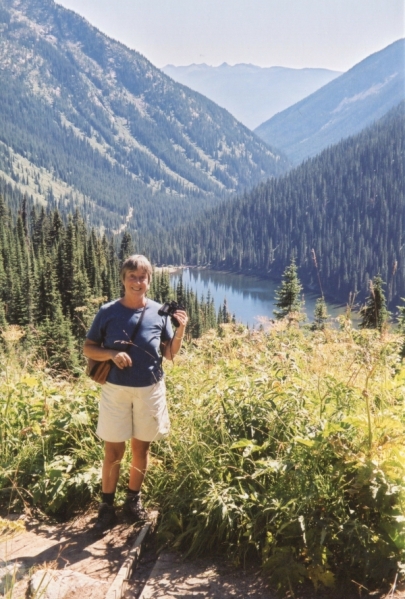
Biene Klopp hiking with me in Kokanee Glacier Park

My wife hiking with me in Kokanee Glacier Park 2001

Somewhere along the West Arm of Kootenay Lake — probably at Lasca Creek, directly oppo­site Kokanee Creek — was what the Sinixt called Yaksakukeni: place of many kokanee. However, it was many more years before kokanee was com­monly used by European settlers to refer to the fish. Two Kokanee post offices existed, the first ap­parently at the townsite, from 1902-11, and an­other at the landing, from 1911-15.

OLYMPUS DIGITAL CAMERA

Biene’s Nephews Norbert and Christian at Kaslo 2005

But what made kokanee a household word be­yond West Kootenay was a conversation between Nelson mayor Tom Shorthouse and H.F. Puder of Interior Breweries in 1959 about the company’s recent move from Nelson to Creston. Shorthouse pointed to the potential of Kokanee Glacier Park — created in 1922 — as a tourist attraction and sug­gested the company name a beer brand Kokanee. “This thought really stuck,” Puder told Shorthouse a year later, “and the more the name ‘Kokanee’ was considered, the better we liked it … To you goes full credit for originating the idea and you may be assured that you will be among the first to sample the product.”
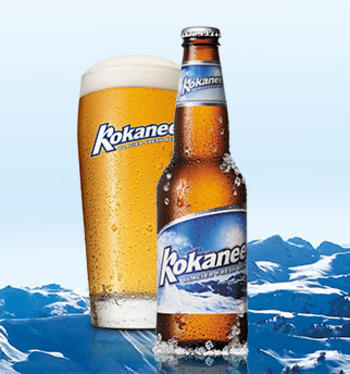
Popular Kokanee Beer

Popular Kokanee Beer

Kokanee pilsner beer first appeared in the spring of 1960 with a label featuring a painting of the gla­cier by Vancouver designer George Me Lachlan. While the artwork has changed over the years, it continues to use a glacier motif and remains one of BC’s best-selling brands.

The name has since spread far and wide. Lots of businesses adopted the name — including Kokanee Springs golf resort. There’s a Kokanee Bay in the Cariboo; a Kokanee elementary school near Seattle; and streets named Kokanee in Nelson, Cranbrook, Vancouver, Whitehorse, Ontario, Washington, Idaho, Montana, Oregon, Colorado, California, and New Mexico. Most of these were presumably taken out of atlases and don’t have anything to do with our area, but there’s a Kokanee Bend fishing area in Montana.
Chapter 19 of the P. and G. Klopp Story – Part III

From Graduation into Carnival

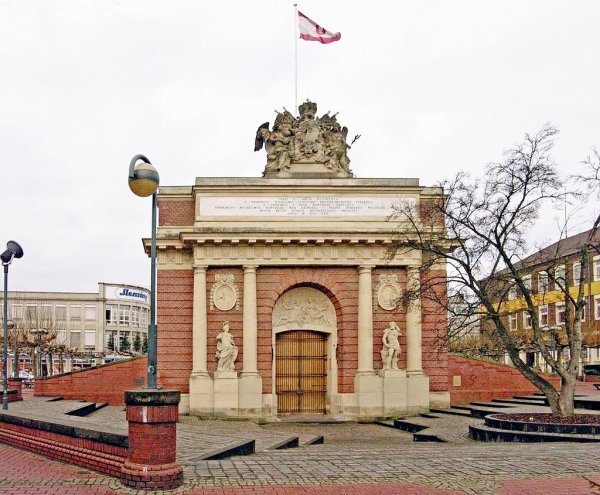
Wesel 'Berlin Gate' - Photo Credit: wikimedia.org

Wesel ‘Berlin Gate’ – Photo Credit: wikimedia.org

When school continued in the first week in January, I avoided all distractions and focused all my energies on last minute studies. By now the school administration had let us know the subjects and topics, in which we were to receive our oral examinations. For me it was Charles V in History and Calculus in Mathematics. In the remaining four weeks I emptied an entire bottle of vodka, which one could take as evidence for my industriousness. I rarely missed to fulfill my daily work quota. Indeed I would go sometimes overboard and even skip my time for relaxation with guitar or harmonica. One morning I woke up late. I was shocked to discover that I had forgotten to set the alarm clock. School had already started, so I quickly jumped into my clothes, grabbed my books, and without having had breakfast I raced to school in record time and barged into the classroom, where my homeroom and German teacher Herr Aufderhaar had just begun a lesson on German romanticism. Because he was bald and also taught religion, we had given him the nickname ‘Kahler Jesus’, which means Bald Jesus in English. He took one look at me and instead of being angry about my tardiness showed remarkable understanding for my circumstances. He teased me good-naturedly and remarked to the entire class, “Klopp is not just late for class. He did not even shave!”

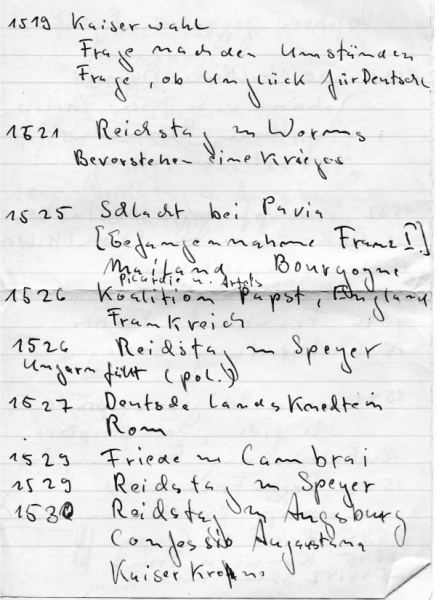
My Notes on Charles V

My Notes on Charles V

 For the oral exam in History I was well prepared. The main topic that I was given was the era of Reformation with special consideration to the way Emperor Charles V dealt with the schism that threaten to tear apart the Holy Roman Empire of German Nations. I had about thirty minutes to write down a few notes for my presentation. Then when my turn had come and I was led into the somber exam room, I described in poignant details the political struggles of the emperor against France and the Turks and the frustrations he, as a good catholic, experienced with the rapid spread of the protestant revolt against the corrupt Church of Rome. I was no longer the timid student who once stood trembling with fear in front of our history teacher. I boldly and convincingly expounded all the pertinent factors that determined Germany’s future historical and religious landscape. I took the entire time allotted for the oral exam. So the committee of principal and teachers had no time to ask any unsettling questions at the end. I walked away with the confident feeling that I had consolidated my satisfactory standing in History. Also in Math I was able to prove that I deserved a better final grade. My task was to find a solution for the total amount of work required to dig a cylindrical hole of a certain depth. Herr Müller, my beloved math teacher in the senior division, guided me through this difficult problem of integration. He so cleverly posed the right questions that they contained valuable hints allowing me to bring the session to a successful conclusion. It would have been nice to express my gratitude to an excellent teacher some fifty years later. Unfortunately, while I was searching the school Website I found out that he had passed away the year, before I started to write our family history.

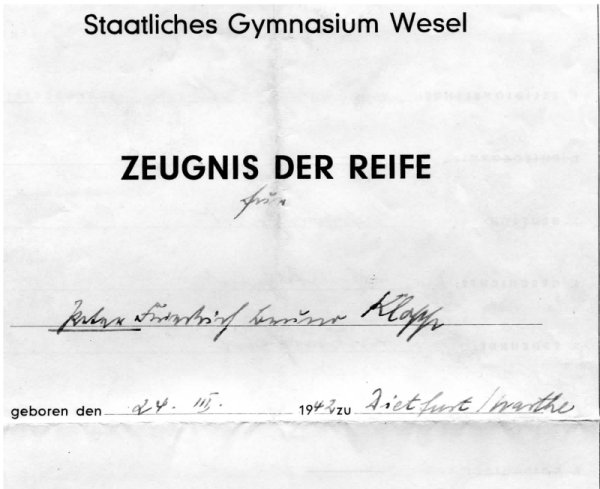
Front Page of my Graduation Diploma

Front Page of my Graduation Diploma

With the prestigious graduation certificate (Abitur) in our possession we had access to many postsecondary programs offered by the German universities. As for me, two years of military service at the Bundeswehr (West German army) had to come first. In those days it was still possible to enlist as a volunteer for a period of 24 months instead of the mandatory 18 months with the advantage of receiving a handsome salary, becoming an officer of the reserve, and being able to choose an army unit in keeping with one’s technical abilities. I opted for service in the signal corps, a choice that definitely reflected my interest in electronics and communication technologies.

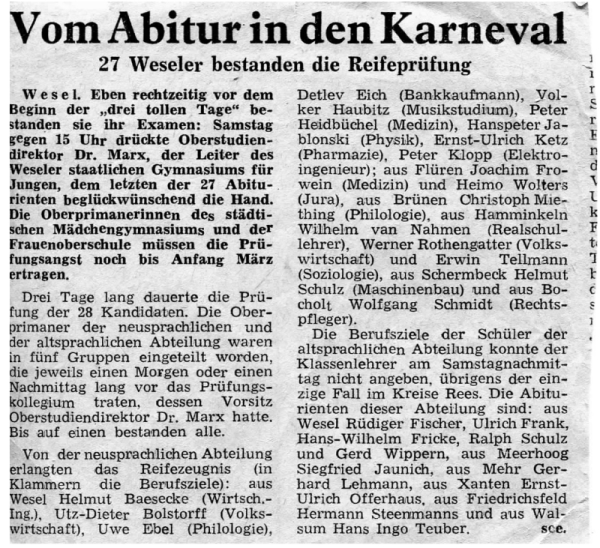
Newspaper Clipping with Names of the Graduates

Newspaper Clipping with Names of the Graduates

It so happened that the graduation exercises had ended exactly at the start of the carnival season. Being together one last time with my friends and classmates, before we would scatter into all directions, I made full use of the golden opportunity to celebrate the great milestone and to lose myself in the relaxed atmosphere of the dance hall, forgetting the trials and tribulations before graduation and not worrying for the time being about the future. When the time of drinking, dancing and attending late night parties was over, I was physically exhausted, but for the moment I felt free as if a heavy burden had been taken off my shoulders.

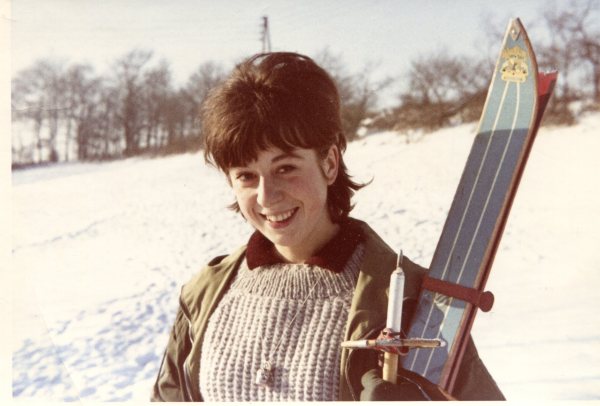
Biene with her first pair of skis - Winter 1963

Biene with her first pair of skis – Winter 1963

I had not forgotten Biene. Now with more time at my disposal I wrote her a letter bringing her up to speed on my success at school and the tumultuous days at the carnival festivities. But what mattered the most I found the courage to express my feelings about what was so special about her in my mind. At the campground in the spring the year before I had discovered in her appearance the natural beauty that needed no cosmetic enhancement with rouge, lipstick or artificial hair color. Biene for me embodied the ideal image of a girl. In the letter I gave her my father’s address hoping that she would reply.

Chapter XIX of the P.and G. Klopp Story Part II

One Drink Too Many

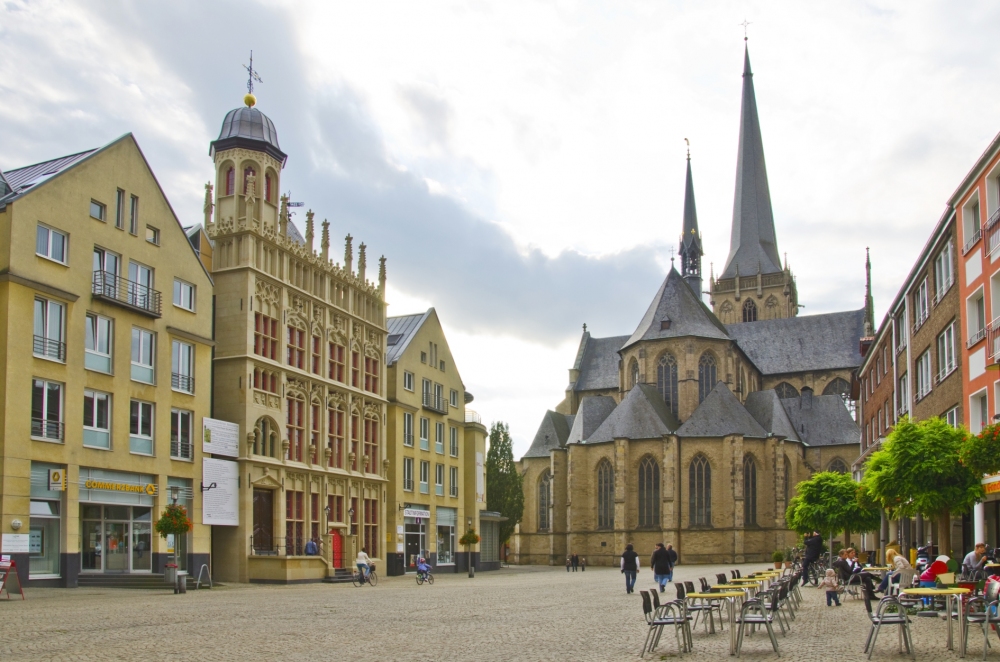
550_6_historische-rathausfassade--grosser-markt-flaggschiff-film

Peter’s Home Town Wesel (Willi Brordi Church) – Photo Credit: hanse.org

When I returned from my brother’s wedding, I resolved to be more goal-oriented, to study hard, to raise myself above mere mediocrity to an academic achievement I could truly be proud of. On the wall hung the work schedule, which I had imposed upon myself outlining a rigorous timetable: getting up at six, attending school from 8 a.m. to 1:30 p.m., taking some time off till three, doing homework and studying till five. After supper followed another two hours of intensive study. I had a lot of catching up to do. An hour before it was time for me to go to bed. usually around ten o’clock, I critically reviewed my day. And if according to the work schedule I had passed the test, I rewarded myself (and only then) with a small shot of vodka and let the pleasant warmth penetrate my body as a form of instant relaxation. The master allowed the slave to temporarily forget the self-imposed burden. At moments like these I would grab my guitar, play a few simple classical pieces composed by Carulli, or take out the harmonica and strike up a potpourri of folksongs, pop music or my favorite scouting melodies.

Bild 62

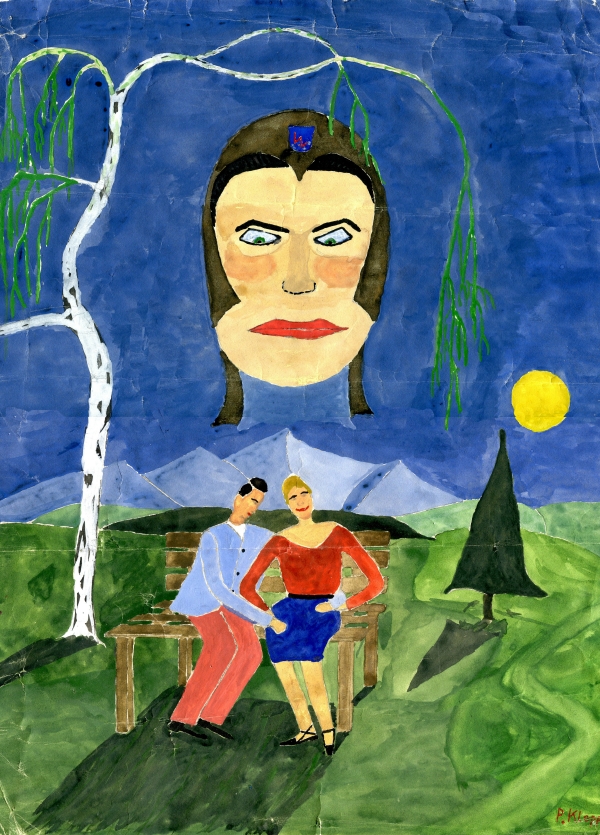
At times when I felt in a creative mood, I would open the metal box with a dozen or so water colors and try my untrained hands to paint a picture often with a futuristic theme inspired by my voracious reading of science fiction novels. One picture (see above) depicts a romantic scene showing a young couple sitting on a park bench under the light of the full moon. High above the horizon towers the head of a helmeted space woman of a distant century in the future, whose envious eyes are glaring down on the romantic couple below.

          Wilhelm, my classmate, came to school from a neighboring town. His father produced apple juice, with which he tried to compete with the popular Coca Cola product that was making economic inroads into the German beverage market. Wilhelm once demonstrated in our school how corrosive coke was by filling two glasses, one with his father’s apple juice and the other with coke. He then threw an iron nail into each glass. In the following week, when we entered the chemistry lab, we were astounded by what we saw. The nail in the glass filled with coke was completely encrusted with rust, whereas the one in the apple juice was still shiny and unaffected. However, we failed to see the connection to the possible ill effects that the popular drink might have on our sensitive stomach linings.

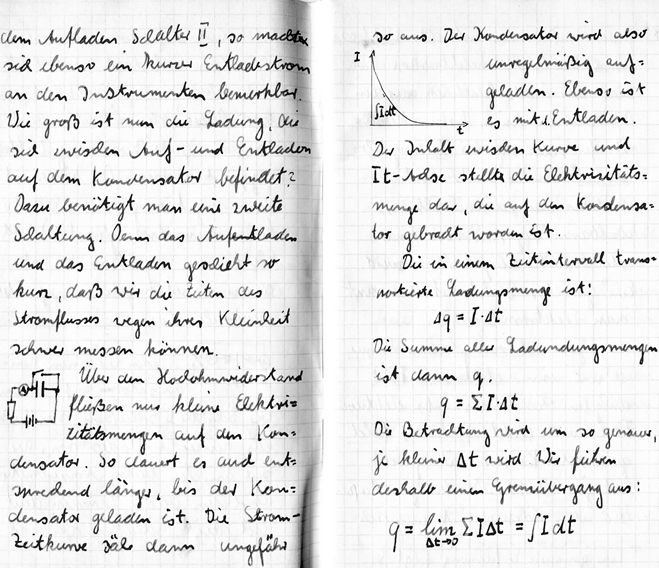
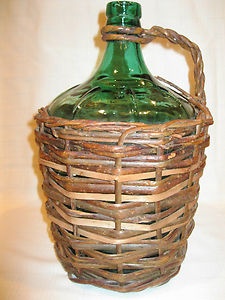
          It was about two weeks before Christmas, when Wilhelm came up to my apartment and brought me a 10-liter jug of apple juice. I placed it on the hot water radiator. Without the aid of a wine making kit with its expensive accessories we embarked on producing a cider by letting Mother Nature do the job. After only a few days I could report to my friends in school that bubbles were rising in the bottle, a certain indication that the process of fermentation had begun. Hans, Helmut, Wilhelm and I were already looking forward to our Christmas break party with the potent apple wine in the making. Soon the bacteria finding ample food in the juice and turning the sugar into alcohol multiplied a million times over generating CO2 at first weakly fizzing, then growing into a crescendo very much like the sound of rushing waters. Finally the bacteria had done their duty, and the homemade cider was ready for the party. School was out. In the New Year the final race would come to the finish line. The dreaded written and oral exams were looming on the horizon. So we four all felt the need to let go and put aside for a while our worries and graduation blues. I had put the jar outside into the wintry air on the balcony to chill the brew into a refreshing drink. We made ourselves as comfortable as possible in my tiny room. My three friends were sitting on the couch that converted into a bed and I sat on the only chair at my desk, whose prominent occupant was the giant jug with its delicious content. I poured the cider into coffee mugs. There were no glasses in the mini-kitchen. At first we had a serious talk about our plans for the future. The classroom genius Hans wanted to enroll at the Marburg University to study nuclear physics; Helmut, the lawyer’s son, was seeking a position in economics; Wilhelm planned to embrace a teaching career, and I had set my eyes on becoming an electronics engineer specializing in high frequency technology.

Aus Elektronik 62

Peter’s ‘Engineering Notes’ on Basic Electricity – 1962

 I poured us another cup of that deceptive cider that tasted like a refreshing fruit drink but carried a powerful punch. Hans tuned my guitar and starting picking a few melodies. Most Siemens workers in the building had gone home to their families. The apartment building was almost devoid of people. So there was nobody we would disturb with our singing. After another cup we had reached the point where singing had become the necessary ingredient for the continued success of the party. The vocal chords well lubricated by the smooth drinks were ready to metamorphose us into a cheerful bunch of young men.

Wine Jug

Our home made cider would not have earned any prizes. But it was potent.

To the great delight of my friends, after we had gone through our favorite scouting and traveling songs, I offered to sing a spiritual to express my sentiments over our oppressive teachers in school: “When Israel was in Egypt’s land, let my people go. Oppressed so hard, they could not stand …”, which I sang with the deepest voice I could muster without floundering. Now Hans injected rhythm into the life of the party and played masterfully one of the Flamenco style pieces with the beats being pounded vigorously on the guitar body. “That was the rendition of our friend and maestro worthy of another drink”, I said. By now the content of the 10-liter jug had dropped to about the halfway mark. Suddenly Helmut got up and said he had to go to the bathroom. The way he staggered into the hallway made it clear that he had already had too much to drink. Someone said, “I hope he’ll find the toilet in time. He looks ‘blau’ (German slang for drunk) to me!” Now one must know that in Germany you locked the bathroom door with a key. Poor Helmut must have taken it out and dropped it on the floor. All of a sudden we heard him call, “Let me out! You locked me in!” We rushed into the hallway and tried to convince him that he was the one who locked himself in and that he would have to find the key. “It is not in the lock”, he complained.

          “Then it must be on the floor. Look for it”, we replied. Finally he located the key. What came next is incredible. Helmut’s level of intoxication was so far advanced that his eye-hand coordination was severely hampered. He was unable to insert the key into the keyhole. Imagine the hilarious scene, in which we three friends tried very hard to give him directions how to put the key into the hole. I was just about going to call the janitor for help, when Helmut managed to open the door. He looked pale and disgruntled, whether it was out of embarrassment or intoxication, we could not tell. Without saying good-bye he took his coat and left. Needless to say the bathroom incident had put a damper on the jolly time we were having. Nobody felt like having another drink. The party was over.