Two Hundred Forty Photos Turned into a Hibiscus Flower Video
Each time a hibiscus flower opens up, it is a marvel to observe how over just a matter of a few hours it unfolds its spectacular petals. This video was created from 240 photos that I shot with the help of a device that connects to my Sony camera and controls the number of shots and the interval between the shots. The pictures were taken one minute apart. The session lasted several hours. Enjoy.
Every day is a new experience for children, and I enjoyed every day of my new life—no time to think of the past. The school was exciting because of our inspiring and kind teacher. With so many families living nearby in the camp, my brother and I had many friends. We spent most of the time outside playing in those endless meadows surrounding the base. There was never a dull moment because someone would always come up with an exciting activity or game. We skipped rope, played ball games, did yoga-type gymnastics and often invented new poses. We had talent shows singing and performing songs we had heard on the radio. We played old-fashioned games like marbles, hopscotch, hide and seek, catch or make-belief games. Sometimes we would collect daisies, dandelions or other flowers for braiding wreaths or lie back in the lush meadows and daydream.
Looking back now, from an adult perspective, life for my parents was not that idyllic. They were eager to have a place again to put down roots and call it home. But time dragged on. Sometimes my mom would take us to the picturesque town of Aurich, where my dad had found a temporary position as a dental technician at the local dentist’s office. My mom would slip quietly into the beautiful old church to kneel and pray for a few ‘Our Fathers’ on those outings. Often it looked like she was crying. My brother and I loved these town outings because my mother would buy us cones with whipping cream, a region specialty known for its sweet and rich cream from happy cows grazing on those lush pastures. My mom would drink East Frisian black tea with little “clouds” of heavy cream, also a specialty of the region.
It was on such a day in January 1953 that our lives changed forever. It had been clear and cold. Our tobogganing hill was slick and fast. Many of our friends were out, and we raced down the steep street again and again. One of my friends wore a new fur-trimmed hat which I liked very much. It was so much prettier than my hand-knit wool tuque. She had just received it in a belated Christmas parcel from her aunt in the West. She also shared some chewing gum with us, which we never had before and enjoyed tremendously for the first time in our life. What a wonderful place the West must be, I thought when I looked at my friend with the pretty hat trying to blow bubbles with her bubble gum.
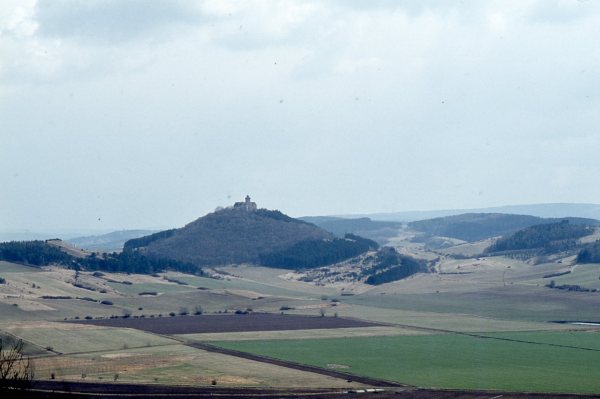
Biene’s Home Province Thuringia – Photo by her late twin brother Walter 1982
It started to snow softly when suddenly I saw my mom approaching us. She never called us home before supper. Puzzled, we ran to her. Taking hold of my brother with one hand and me with the other, she told us that we had to go quickly to town with her before an important office closed. Despite our protests demanding to stay with our friends, she pulled us hurriedly along. I started whining, insisting that she at least buy me a new hat as pretty as the one my friend had received from the West. My mother pulled us relentlessly along without responding to my increasingly vocal demands.
Eventually, we reached the office. My mother signed and received some papers. It was pitch dark when we headed home. I was exhausted and hungry by then and had given up whining. Suddenly I heard my mom whisper that I would soon get a new hat in the West. I was too drowsy to understand what her words meant.
I was so touched by Steve’s father’s poetic essay that I decided to reblog it. What his father said about the Soviet dictatorship that his family could escape from can be equally applied to the Nazi regime. The world is still amazed how it was possible that Germany, which produced Goethe, Schiller, Lessing, Bach, Schweitzer etc. etc., could turn into such a monstrous country. ‘Lilacs’ is a beautiful piece of writing. I read it to my wife, who was also deeply touched by it.
In 1912 my father, Jack (Jacob) Schwartzman, was born in Vinnytsia, a town then under Russian control in the part of eastern Europe that is now Ukraine. In the 1920s his family escaped from the tyranny of the Soviet Union and came to America to be free. Upon his arrival here he spoke Russian but not a word of English. He learned quickly and soon became a craftsman of his new language.
The tyranny now engulfing Ukraine makes this a right moment for a poetic essay that my father published in the spring of 1966, when we weren’t even half-way through the original Cold War. Now that we’ve entered a second one, the essay is as timely as it was 56 years ago. Feel free to repost this in a spirit of solidarity.
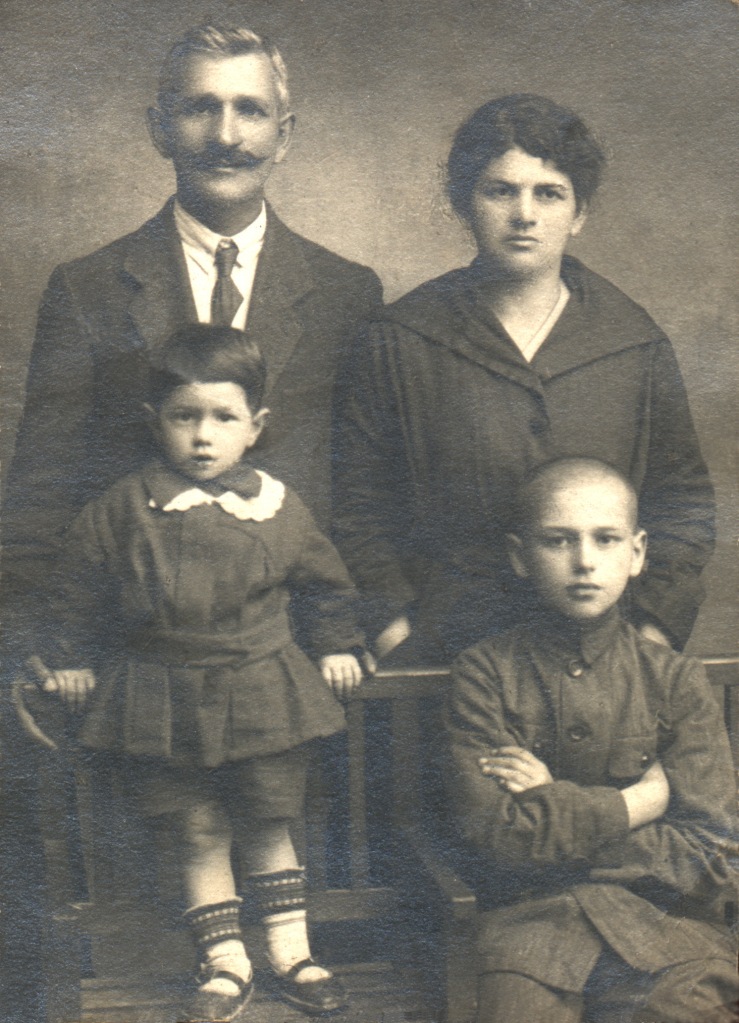
Solomon and Anna Schwartzman in eastern Europe in 1923 with their younger son Isidore and older…
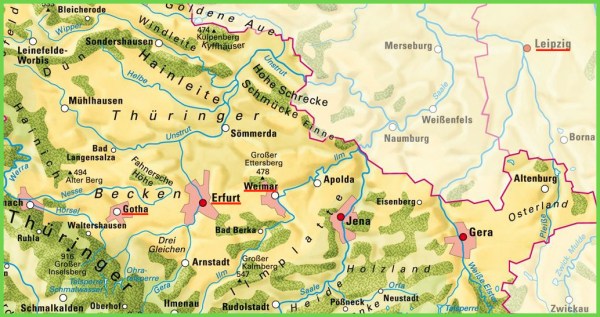
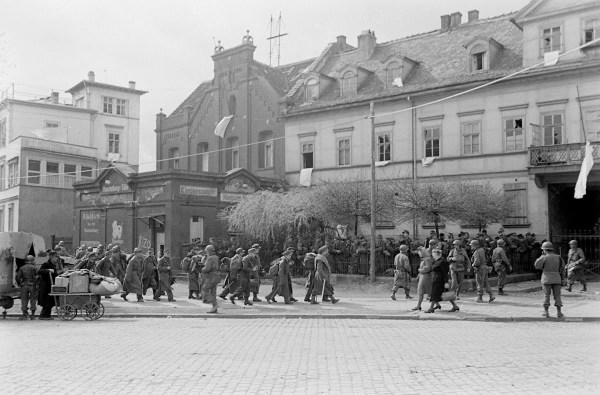
The following night Jepson invited Captain Panknin to sleep at his place. For the first time in weeks, Papa had a good night’s rest. Refreshed from a deep sleep, having recharged his internal batteries, he set out to go to the police HQ to receive further instructions. He had barely walked a few steps when Leipzig came under a sudden and unexpected aerial attack. The bombs were already falling when the sirens belatedly began their alarming howling in the city. An incendiary bomb plunged into a neighbour’s house, which almost immediately burst into flames. Papa helped the poor inhabitants with salvaging valuables from the burning inferno. His clothes singed by the fire and exhausted from the hard work, he arrived at the HQ, where to his greatest surprise, he was presented with yet another marching order, this time to Dresden-Hellerau. He had hardly received his provision for this eastern journey when the order was replaced by yet another, which sent him back to the latest hotspot at the western front near Weimar, where the Americans had launched a major offensive under General George Patton.
On April 8, shortly after midnight, he arrived by train at Weimar, where he went straight to the police HQ. By 06:15, he was climbing with a small troop under his command onto an army truck, which took him straight to the provisional front line near Erfurt. From there, they marched to Schmira amidst a barrage of shellfire and attacks from the air. Upon arrival, Papa looked in amazement at the bewildering array of the hastily set up feeble defence measures, most peculiar-looking anti-tank obstacles, and highly questionable battle preparations. It was dead quiet; the shellfire had suddenly ceased. Was it the calm before the storm? In the ominous stillness of impending doom, Papa found time in a nearby inn to write a letter to Mutti and family, which he passed on to a female communication aid to deliver it if at all possible to his wife in nearby Gotha. All day long, he could hear the droning of enemy planes over Erfurt. After a restful sleep in the basement of the police HQ, he felt his confidence returning, especially regarding Mutti and the children. He began to contemplate the best strategy to survive during the remaining few weeks of the war. In anybody’s reasonable mind, the fighting should stop. However, the regime-loyal fanatics were bent on dragging the German people into even greater misery than they had already suffered so far. Should he stay at the frontline and count on becoming a POW of the American forces? Or should he follow the marching order to Dresden, which was most likely already occupied by the Red Army and try his luck as a POW of the Soviet forces? As a higher ranking police officer, not quite fitting into the overall scheme of an increasingly chaotic defence plan, he had, in contrast to the common soldier, at least some freedom to move.
But more important was the second reason for letting me dwell on the dark side of the postwar Yugoslav history. When Germany was losing the war on all fronts, Papa had been granted leave because of his twins’ birth. He would have most certainly died if not on the atonement marches, then most certainly later, executed as an officer of the much-hated German army.
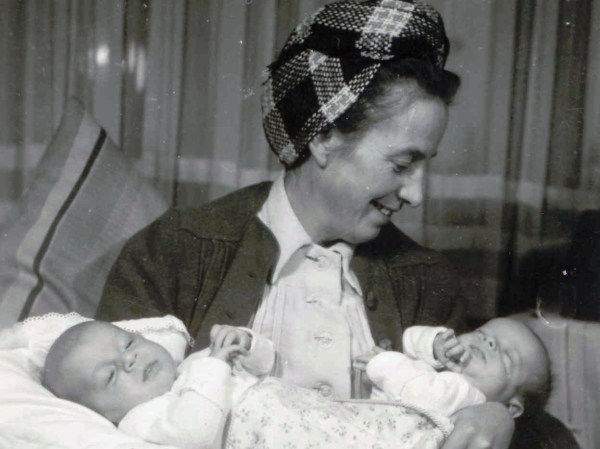
Mutti Panknin with the Twins Walter and Gertrud
When Papa told me his survival story on one of our walks in the lush Gruga Park near Velbert in July 1968, I could not help but notice the similarity between the miraculous escape from death between Biene’s Papa and our family. Was it a coincidence? I remember well my thoughts on the strange circumstances under which Biene and I met at Lake Baldenay and how, against all odds, our relationship developed into a lifelong union. Some may claim that everything in life is coincidental. But as for me, I take comfort in the way God, through our faith, provides the means to go beyond a fatalistic attitude and offers deep spiritual meaning to life even in the midst of death.
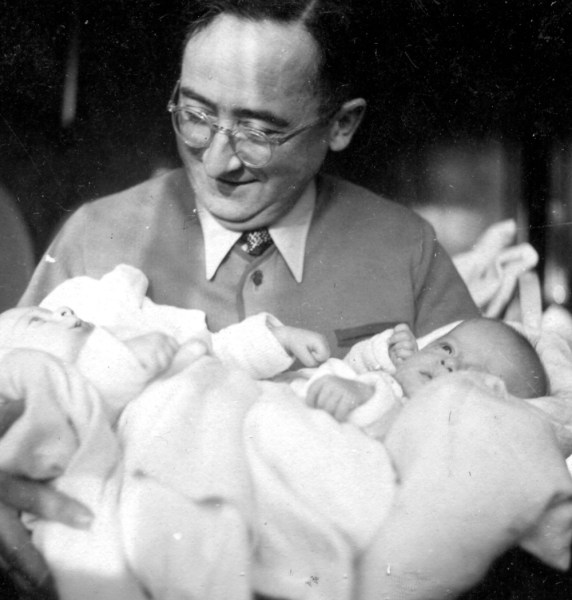
Proud Papa Panknin
The twins Walter and Biene were already more than two months old when Papa was finally able to hold them in his arms. When looking at the photograph of the proud father looking down on his precious brood, I had a rare glimpse of true happiness at the sight of new life that transcends all human tragedy. Despite the spectre of death and destruction at the front lines and the constant bombing raids, Papa, for that short moment in time, seemed far removed from the ravages of war and the worries of an uncertain future. His smile reflected a genuine picture of paternal pride, which prompted him to muster his inner resources in the battle of survival during the final stages of WW2, no longer just for himself but more importantly for his wife and children. The one-week leave and his visit at Gotha with Mutti, his two babies, Grandma Gertrud from Berlin and his adopted daughter Elsbeth came to an end much too soon.
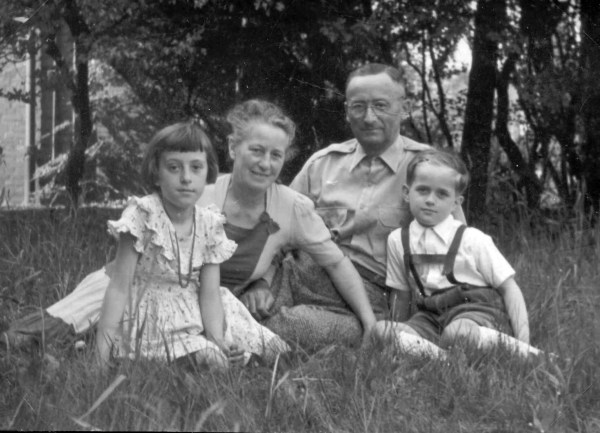

 The Peter and Gertrud Klopp Family