My wife and I had a very peaceful and relaxing Christmas. Even though it was a bit lonely because our children could not travel and visit us due to the Covid-19 restrictions, we made the best of it by going out for our daily walks. You guessed it we also took our cameras along. On Christmas Eve our five sons, their spouses and our five grandchildren got together on a Zoom conference. While it was not like a real family reunion we enjoyed seeing each other and did some old-fashioned carolling. It felt good to take some time off from blogging although I was sometimes tempted to peek into the posts of all my blogging friends. Here are a few of my pictures I had taken on our walks in and around our little village. Enjoy.
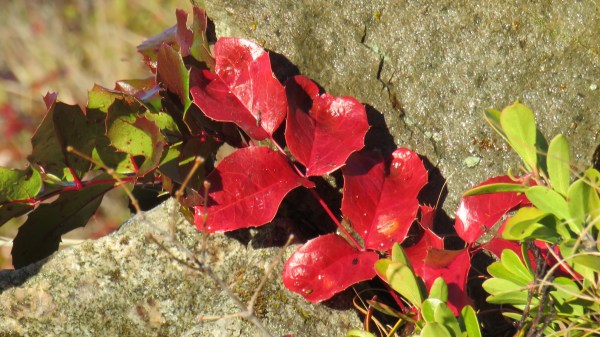
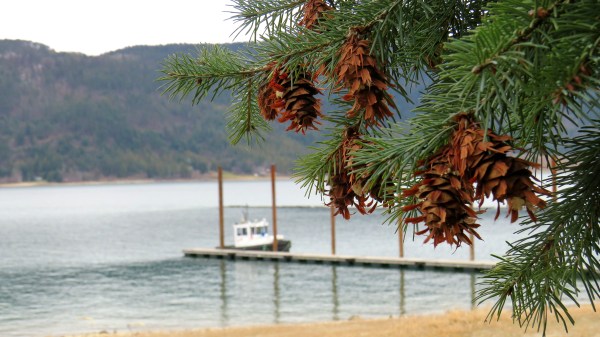
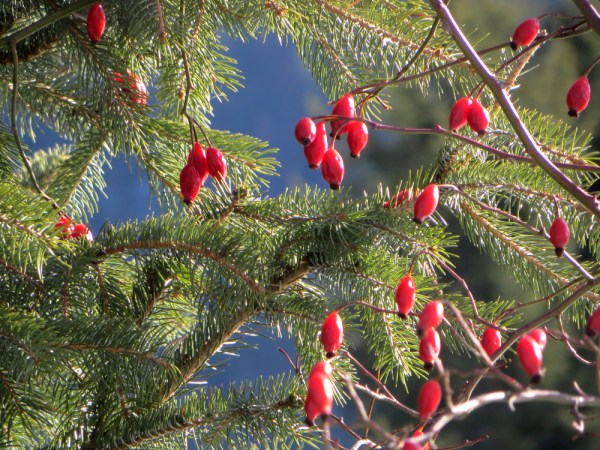
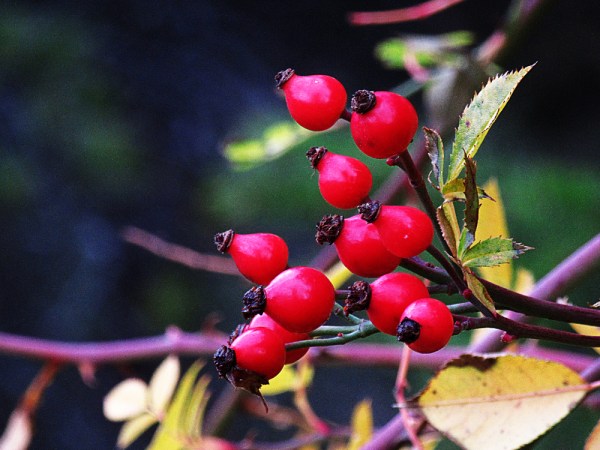
As we are rapidly approaching Christmas, I would like to share a few photos with you where green and red are the dominant colours. Nature is at rest, all the flowers have disappeared from our fields, the bright and cheerful leaves have fallen to the ground, and here in our Northern climes, we are now looking at a bare landscape. Yet all our conifer trees except for the larches keep their verdant attire. For me, they are the symbol of hope in an over-commercialized world where nature is being exploited and trees are primarily viewed as material wealth. Old tradition has always kept nature in high esteem. Coming originally from Germany, I brought some of the Christmas customs to Canada that are not very well known here. One of them is the Advent wreath with its four candles symbolizing the four Sundays before Christmas. And a sprinkle of red provided by the rose hips goes well together with the green. This will be my last post in 2020. I will resume my blogging activity in the New Year. Merry Christmas and Happy New Year!
The Two Brothers Karl and Adolf (16 and 13 years old respectively)
Karl’s Report Part 2
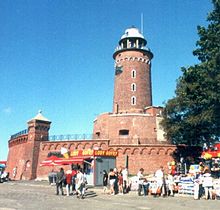
Halfway on the road to Kolberg we saw my classmate Ulrich Schulz (Uschu), with whom I had committed many a prank. He was wearing a bandage around his head. We exchanged a few words, but I have forgotten, what he had said about his injury. In the late afternoon of my birthday we arrived in Kolberg. We had entered the city without any problems. Earlier it had been declared a fortress and since then was considered (also according to army reports) surrounded. We hurried to the harbour, which we also knew very well and the seashore, because we had often traveled with the family or alone to this summer resort at the sea. There also existed relatives and a friendly family. The pictures of the German Baltic seaport of 1945 are well known through TV programs. We too saw the line-ups at the ships. We did not take long to think. We decided to march along the coastline. The great bridge at the Persante river was still intact and so we tried to get to the southern part (Maikuhle) of the city, where the friendly Pascheke family lived, who however had already fled. The city of Kolberg was already being fired at by artillery. The Soviets began the encirclement and assault of this also historically important place.
Kolberg March 1945
Once in a while we had a chance to travel a short distance on military vehicles. Since we had only our schoolbags filled with provisions on us, we were able to quickly climb on board. How nervous some people became, shall be demonstrated by the following example. A woman accused us of having stolen her suitcase filled with valuables. At a beach section we examined a boat that had been pulled up onto the shore as to its sea worthiness, but were quickly distracted by other things. Rides and marches changed according to the situation and opportunity. Finally we were forced to continue on land and a short time later even in an easterly direction. Thus, it happened that we saw a location twice: once on the march back and then again in the planned direction to the Oder estuary. The explanation for this is that the front lines were moving back and forth, often there were even wandering army pockets.
On such march in darkness and blowing snow we saw at the roadside an abandoned hearse. Since we were very tired, we simply lay down on the seats to catch a few winks. Whether it was instinct or battle noise, we left the protective shelter and went into the next village and asked the Pomeranian farmer to stay overnight. He did not want to let us into the barn saying, “You will set it on fire!” He offered us the pigsty and so we spent the remainder of the night right next to the box that housed a well-fed sow. We gave her our empty sardine cans, which she was licking and chewing all the time. When we came by the farm the next day on our way west to the Oder estuary, it was engulfed in flames. Now the farmer had lost everything! An hour later we saw the hearse. It had been totally torn to pieces by gunshot.
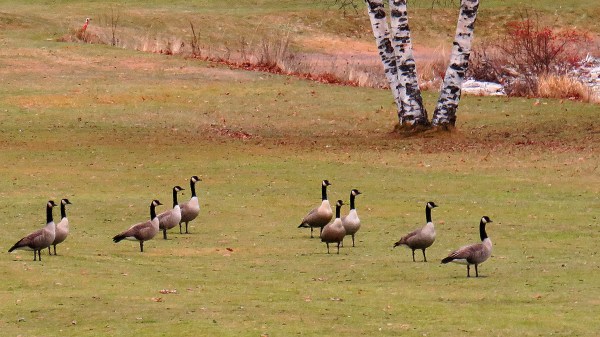
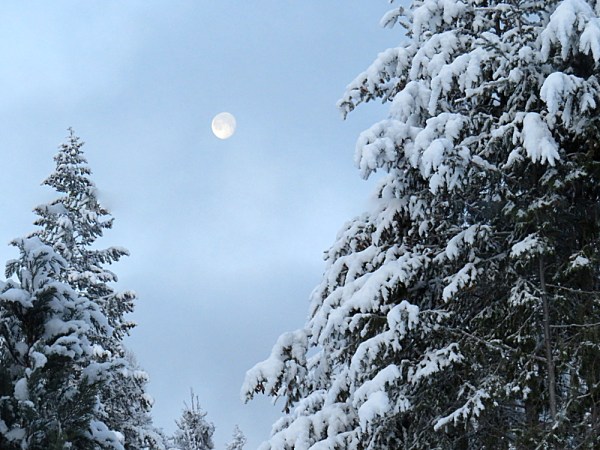
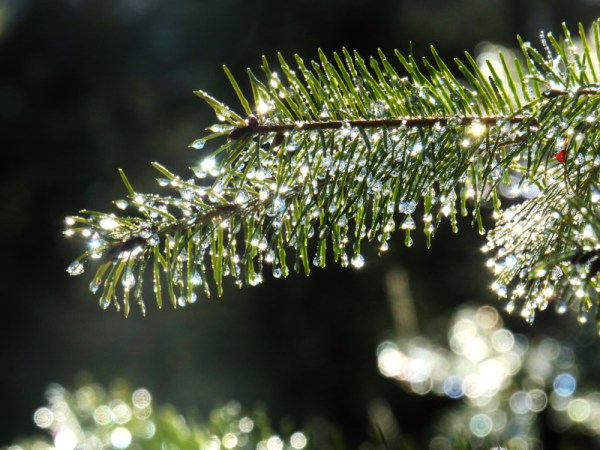
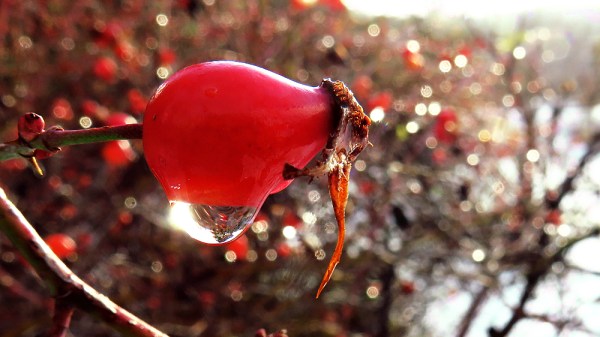
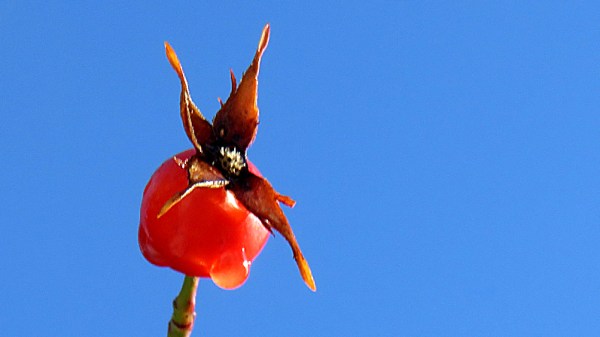
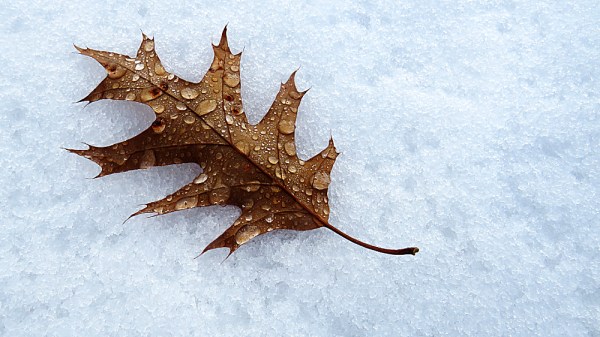
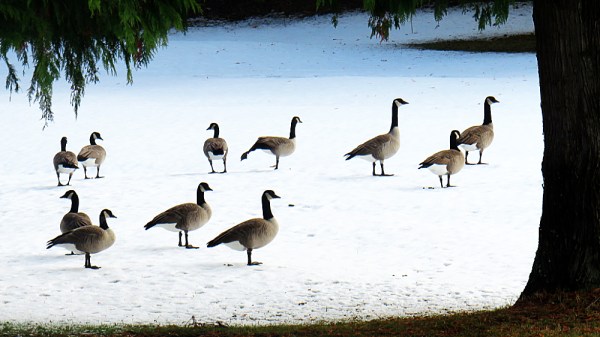
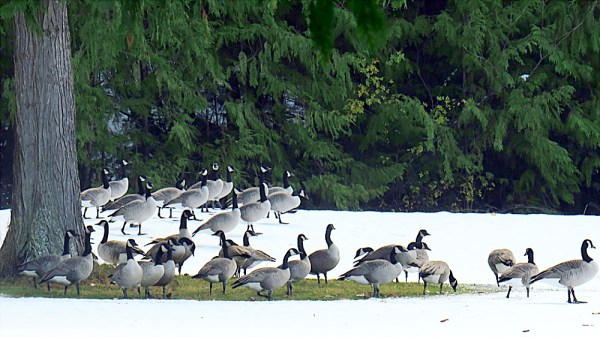
The photos are about two or three weeks old. We had our first winter storm in mid-November with plenty of snow that threatened to stay. The rose hips scintillated with all the jewelry provided by the melting snow. The Canada geese nearby were searching successfully for green grass under the snowy blanket. What a delight it was for me to discover an oak leaf on the wintery golf course. Bedecked with raindrops and contrasting with the bright background the leaf at the end of its life cycle looked truly majestic. Enjoy.
Report Written by Peter’s Brother Karl (1929 – 2019)
Preface
How was it possible that parents and children were going to flee from different places? Father Ernst Klopp had been ordered from our original residence in the Pomeranian county of Belgard into the Land of the Warthe to hand over expropriated Polish estates to Baltic Germans, who had been resettled primarily from Latvia. My brother Adolf and I were boarding with a family in Belgard to attend a secondary school. From there began on March 3rd, 1945 the flight into a westerly direction.
To what degree do memories committed to paper reflect the truth? This document limits itself to the presentation of direct impressions and experiences and sparsely delves into explanations. Therefore it avoids them unless absolutely necessary.
Due to the regrettable loss of a diary that I had kept since my early childhood days, most likely lost in a hay barn on the trek to the West, it is impossible for the sequence of events to be authentic.
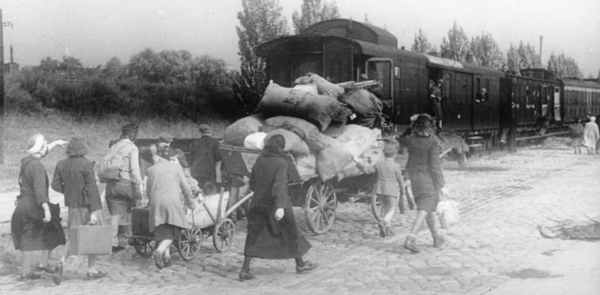
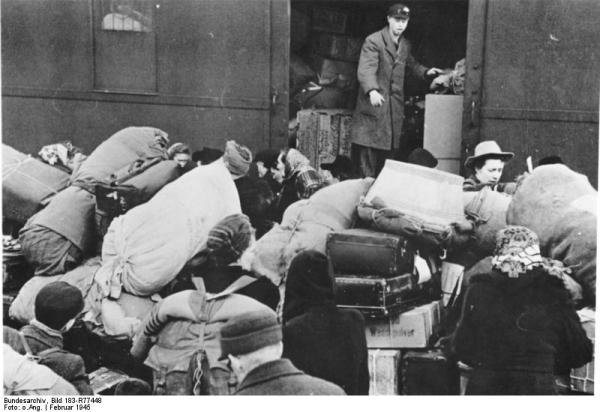
Refugees 1945 – Photo Credit: The Conversation
Also subsequent inserts of military and historical value, or attempts of this nature were unproductive. The Wehrmacht reports, which one can read in the archives, and the historical works by authors based on the former – as far as they could be controlled by personal, absolutely authentic facts – lagged behind the events and even jumped ahead of them.
Memories of the Flight (March 1945)
The Incredible Journey
On March 3rd at 6 o’clock in the evening ‘Tank Alert’ rang out in Belgard. Why did the defence and party headquarters choose the evening to evacuate the civilian population? The family Meißner-Kulmann, two women, five little girls and the Klopp brothers moved under the howling sounds of sirens and the wild perpetual ringing of our church to the designated area, where transportation facilities were supposed to be ready, which was not the case. Without any further discussions the group marched in the direction to the exit road leading to Kolberg in order to reach the coast. Halfway there we stopped in the middle of the night for shelter in the village of Leikow. Some luggage was in the handcart, on which also the children were sitting. Soon we realized that the family did not want to go farther. I was sent back the following evening to Belgard on a bicycle that I had been pushing to get a briefcase with documents belonging to one of their grown-up boys out of the house at the Schidlitz. In us grew the decision to separate from the family, who attempted to stop us by saying, “Fine Hitler boys you are!” I should mention that the march of the trek led us past familiar native places of our early childhood, which slid by in the dark night like shapeless outlines. We recognized how close the front line was by the fire in the village of Lülfitz, which was located north of the Kolberg road, which led in a westerly direction to the coast. In that direction stood also a train recognizable by the stream of sparks: Certainly the railroad line had already been cut.
I always liked to tell that early on my birthday I still got a cake – whether Frau Meißner had baked it in the simple quarters in Leikow or in her own oven in Belgard, I did not find out. March 6th was the day of separation from my room and board mother, who later had walked back to her house in Belgard with her daughters and grandchildren.
As a direct consequence of global warming, the Canada geese that used to fly south to escape our harsh winters prefer to stay in the Arrow Lakes region. On the Fauquier golf course, they find lots of green grass, even though they may have to dig it up from under the snow. Recently, I observed snow geese which had joined the flocks of Canada geese. They seemed to get along quite well with their cousins. I created a very brief video documenting this rather rare event. Enjoy.



 The Peter and Gertrud Klopp Family