Ernst Klopp (1900 – 1964) – Part 6

New Responsibilities and a Growing Family

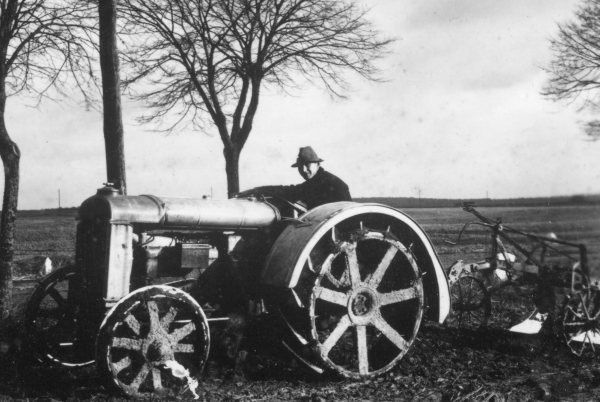
Ernst Klopp followed Pascheke and took over the administration as director of the entire complex. His assistant director was Karl Paetsch. Ernst Klopp was heading the functions of the mission establishments self-responsibly until the fall of 1940. Since the ‘entire realm for the people’s food production was exclusively a national-socialist domain’, those in control over all aspects of administration converted the church-run training home into an establishment of the state, which was now under the jurisdiction of the provincial land association. During this decisive conversion to a state-controlled training centre, Ernst Klopp, as evidenced by keeping his director position, must have made a favourable impression.

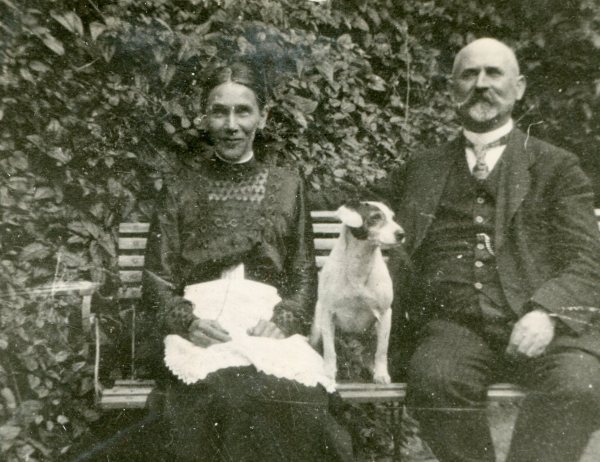
In-between three more children were born: Adolf (1932 – 1989), Erika (1934), and Gerhard (1936). In these years, Ernst managed to have a painting of his parents Emma and P. F. W. Klopp done from an old no longer existing photo. The painting accompanied the family until 1945. In Belgrade also hung the framed message of brother Otto’s death, who was killed in Russia in 1915. On January 27, 1936, the entire family celebrated on Ernst-Flos-Estate the 80th birthday of mother and grandmother Emma Klopp (née Bauer). A photo of this eventful day still exists and is in the personal archives of Eberhard Klopp, the author of the Klopp Chronicles.

Three years before the family moved from Belgrade further east to West Prussia (re-occupied by the Nazi regime) Ernst Klopp had a house  built on the Ernst-Flos-Estate property, in which the family lived until the fall of 1940. Finally, the family had their own home separate from the institutional buildings.

Natural Splendour of the Arrow Lakes

Wednesday’s Photos

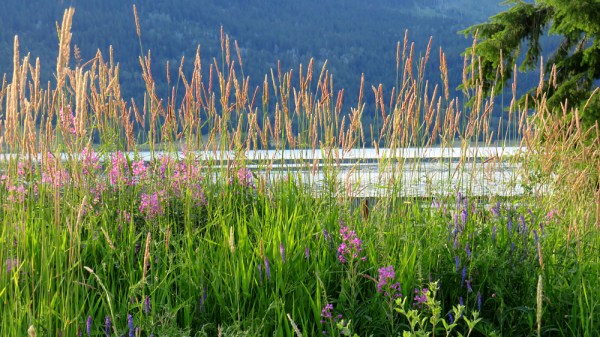
Tall Grasses, Wildflowers and a Bumblebee

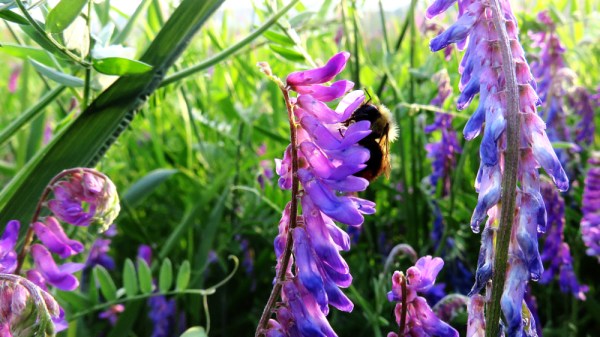
Whether you believe it or not after a very wet spring the grasses along the edge of the Fauquier Golf Course grew up to two metres tall. Since I prefer the landscape format in photography there was no way that I was able to capture their full height. But I was generally very pleased with the results, especially with the setting sun shining through the luscious stalks. The bumblebee feasting on a wildflower – I am sure my blogging friend Steve would know its name – was the icing on the cake. Enjoy.

Ernst Klopp (1900 – 1964) – Part 5

Gleichschaltung of the Belgard Institutions

The Belgard institutions of the Inner Mission were divided into three work areas: The Dr.-Klar-Foundation, the Johannis-House and the Ernst-Flos-Estate. In 1930, Ernst Klopp took over the agricultural part of the Ernst-Flos-Estate. For its operation, Ernst made use of orphans and young delinquents, agricultural apprentices of the town of Belgard, and asocial people, who were being drafted during harvest times. With this workforce at his disposal, Ernst was able to secure the food requirements for all the people under his care. In the home of the Dr.-Klar-Foundation these were mostly senior citizens and special needs persons and in the Johannis-House alcoholics and the incurable sick. For the delinquent youth and orphans there was mandatory school attendance.

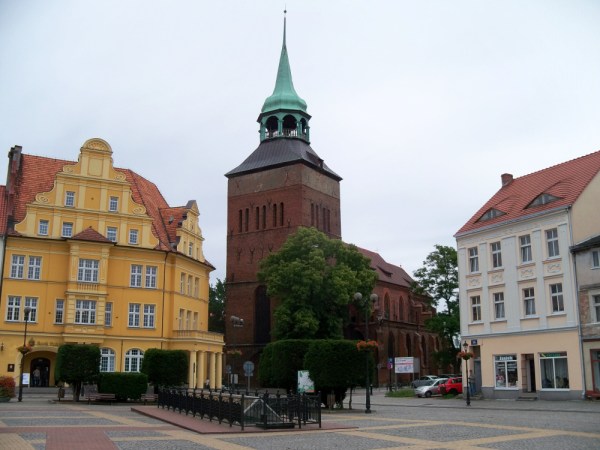
Belgard, Pomerania (now Polish Białogard) – Wikipedia

Erika Klopp (my mother) in the role of a domestic administrator was in charge of the personell from the ‘Alcoholic Rescue Home’, the Johannis-House, who had beed assigned to the Ernst-Flos-Estate. After 1933, female members of the NS Work Service (Reichsarbeitsdienst) and the operators of a pig farm for the NS Food Supply Service (Ernährungshilfswerk) were added to the growing enterprise.

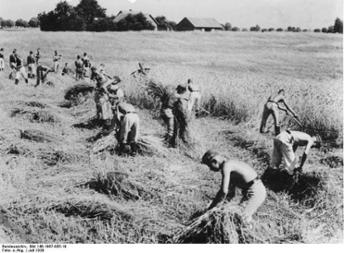
Reichsarbeitsdienst at Harvest Time – Bundesarchiv

Direktor Pascheke had been serving the Dr.-Klar-Foundation as House Father (Hausvater) since 1925. In 1933 or 1934, he was dismissed on account of alleged financial irregularities, an often used method by the Nazis to replace ‘undesirable’ individuals with more party-friendly people in their take-over of independently run institutions.

Natural Splendour of the Arrow Lakes

Wednesday’s Photos

Near and At the Hart Creek

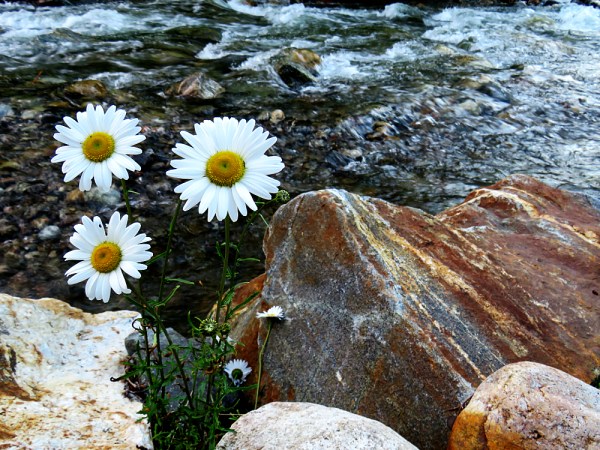
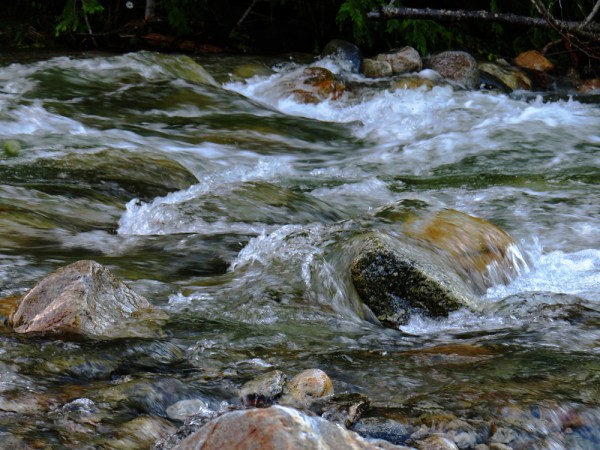
The Hart Creek provides almost all of Fauquier with fresh mountain water. It originates in the Valkyr Range southeast of our community of some 200 people. Many of the mountains tower over a vast area with a respectable altitude of over 8000 ft. In my younger years, I would take my boys up to Mt. McBride, where after a six-hour strenuous hike we could relax and enjoy the fantastic view. Sometimes, we would even set up camp and stay a day or two in the alpine meadows above the tree line. Today I present to you five photos near the mouth of the creek from a recent evening walk with my wife. Enjoy.

Ernst Klopp (1900 – 1964) – Part 4

Wedding Bells and Return to Agriculture

With assistance from his Freikorps organization, Ernst Klopp continued his training in agriculture. In 1923 we find him working in the Magdeburg area. From 1927 onward, he worked as administrator at Neuhof (former Pomerania) in the Schlochau County, at the estate of his sister Anna and brother-in-law Ludwig von Waldenfels.

Ernst Klopp circa 1927

In the fall of 1927 after the sale of the Neuhof property, Ernst found temporary employment at an estate in Quastenberg near Burg Stargard. [photo wiki]. In 1928, he moved into the family hotel of his sister Jula and and her husband Friedrich Steuer in Diensdorf at Lake Scharmützel.

In the same year on June 5, he married Erika Klara Else Kegler, who lived in Stolpmünde, Pomerania, 20 Willan Street. Erika Kegler (my mother) was born on March 24, 1899 in Grünewald, Neustettin County (Pomerania). She was the daughter of the Protestant pastor Carl Kegler (September 22, 1860 – June 15, 1919) and his wife Elisabeth Kegler ( August 13, 1868 ß September 14, 1948). Her forefathers had lived in villages around Obornik north of Posen (now Polish Poznan).

Carl and Elisabeth Kegler, Grünewald, Neustettin County (Pomerania)

On March 6, 1929, Ernst and Erika,s eldest son wad born in Stolpmünde (now Polish Ustka) at the Baltic Sea. In the same year through his wife’s family connections, Ernst was able to link up with the Protestant Inner Mission and its institutions in Belgard, Pomerania (now Polish Bialogard). The complex together with a large-sized farming area stretched in northwestern direction on either side of the Köslin Stree on the road to Kolberg.

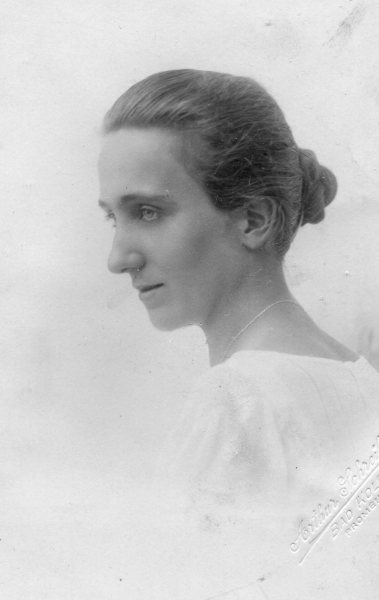
My mother Erika Klopp circa 1927

Natural Splendour of the Arrow Lakes

Wednesday’s Photos

The Miraculous Alberta Rose

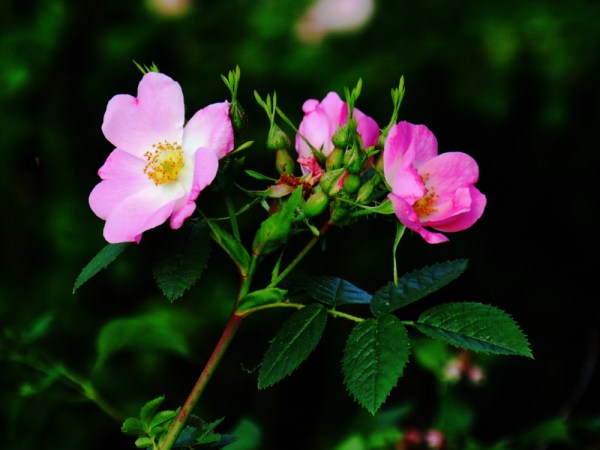
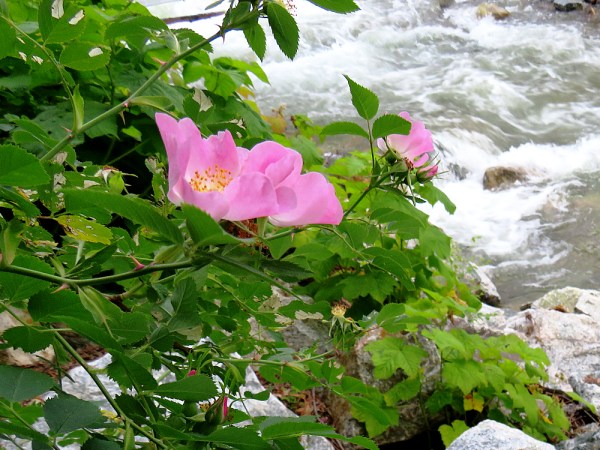
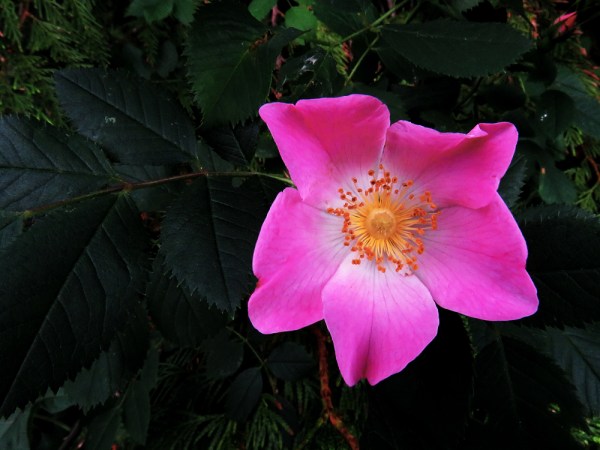
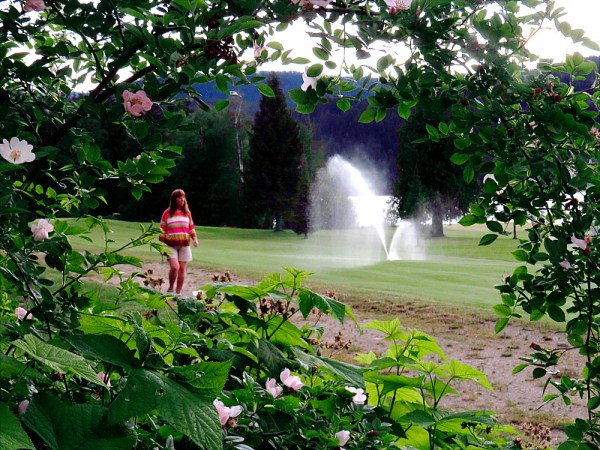
On a recent walk down to the Arrow Lake and our local Heart Creek we encountered so many wild roses that I decided to devote an entire post to the Alberta rose, which is also native to much of the BC landscape. As an emblem, it represents our neighbouring province to the east. It is extremely hardy as far as roses go. It can easily take -40 degrees weather and raging blizzards, which are quite frequent in that corner of the world. It must feel like being in heaven here in our relatively mild Pacific climate. So here are five pictures of our recent evening walk. Enjoy.

My wife viewed through a frame of roses with the golf course in the background.