Ernst Klopp (1900 – 1964) – Part 3

Chaos and Violence in Berlin

My Father’s Involvement in the Freikorps

It is not certain in which year Ernst Klopp arrived in Berlin. He probably participated in the counter-revolutionary activities of the Freikorps deployments in the capital city. In January of 1919 street battles took place, as well as general strikes of all sorts, and at the beginning of March, a major attack of the Freikorps against the Berlin proletariate shook the nation. The Reich defence minister Notke issued the martial-law order, “Each person caught with weapons is to be shot immediately!” Ernst’s sister was indeed exercising a good portion of wisdom to tell her younger brother to throw away his gun.
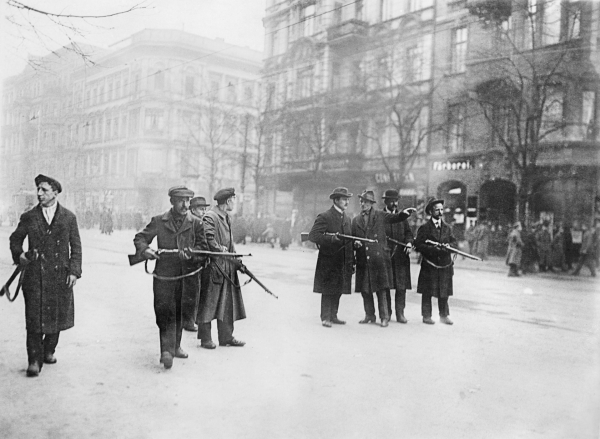
Communist Spartacists Taking Control in Berlin – Wikipedia Public Domain

BBC BiteSize provides the following historical background information: During 5 – 12 January 1919, 50,000 members of the post-World War One Communist Party, known as the Spartacists, rebelled in Berlin, led by Rosa Luxemburg and Karl Liebknecht. The government was saved when it armed bands of ex-soldiers, known as the Freikorps, who defeated the Spartacist rebels. In the aftermath, communist workers’ councils seized power all over Germany, and a Communist People’s Government took power in Bavaria. By May 1919 the Freikorps had crushed all of these uprisings.
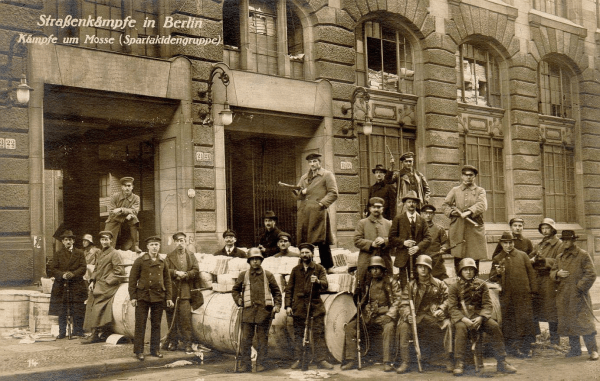
Street Fights in Berlin Wikipedia Public Domain

At the mass demonstration against the treaty of Versailles in 1920, army and FreiKorps soldiers caused a bloodbath. In March of the same year, the FreiKorps supported the Kapp-Coup. One year later, the last armed Freikorps attacks took place during the communist general strikes in Central Germany. The extent of Ernst Klopp’s involvement in all of these events remains shrouded in darkness.

It is likely that a few years later Ernst Klopp received assistance from his old Freikorps connections, which through work communities (Arbeitsgemeinschaften) and work camps (Arbeitslager) provided shelter and employment to the old comrades up to the years 1924/1925 and in some cases even later on Pomeranian and Mecklenburg estates.
Natural Splendour of the Arrow Lakes

Wednesday’s Photos

Wondrous Sights on the Way to Nakusp

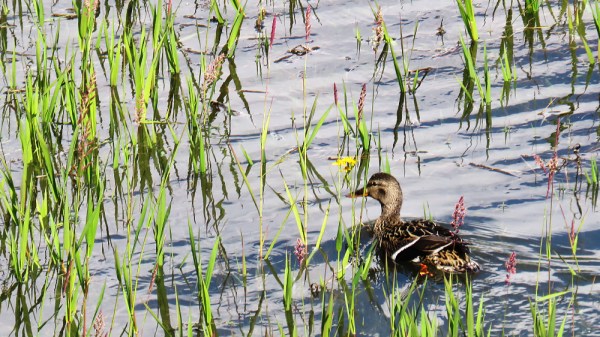
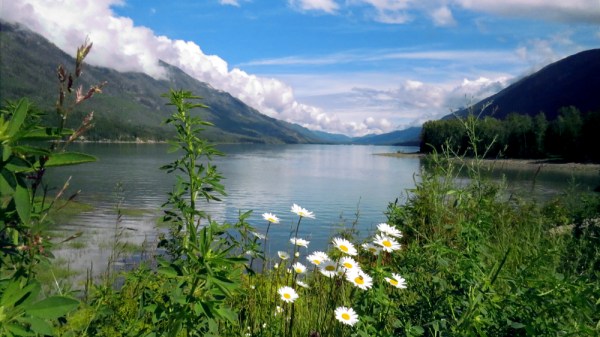
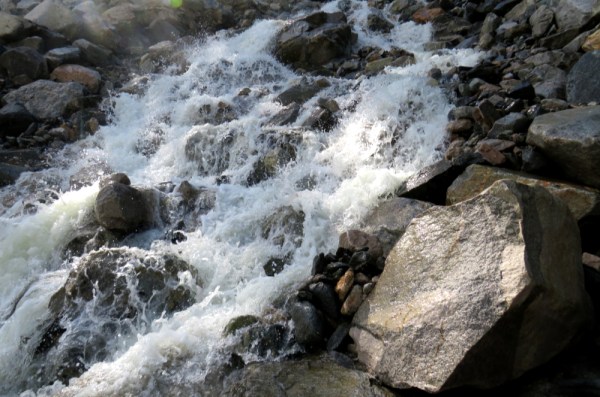
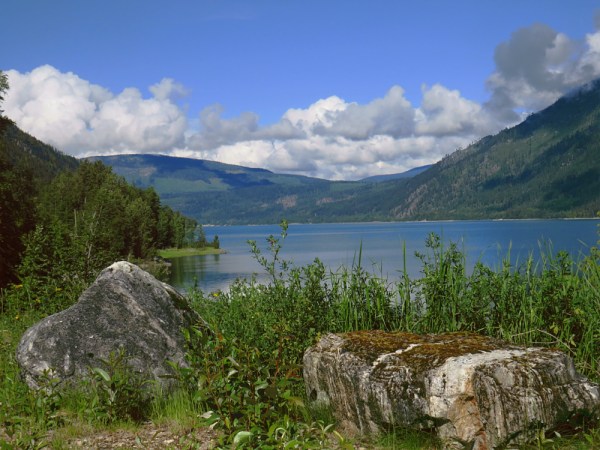
Last Tuesday I drove to Nakusp to do our weekly grocery shopping. It was a wonderful late spring day wildflowers blooming everywhere. I had to stop at a creek which was cascading down the mountain into the Arrow Lake. At a boat launch near Burton I captured a beautiful lakeside scene. You may remember a similar shot I took last year. At the Burton bridge, I spotted a lone duck happily cruising through the reeds. There I also captured the lake view with its dramatic cloud formation and the daisies creating a pleasant foreground. And then there were the lupines that adorn the highway on each side this time of the year from Fauquier all the way to Nakusp. Enjoy.

Ernst Klopp (1900 – 1964) – Part 2

My Father’s Childhood and Adolescent Years

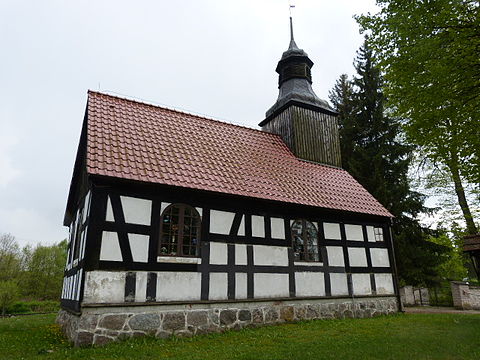
Church in Elsenau (Olszanowo)

Widow Emma moved to West Prussia to take up farming in 1903/04. Thus, Ernst spent his childhood and adolescent years with his remaining five siblings in Elsenau (Briesen County). There and in the neighbouring town of Schönsee, he attended the elementary school from 1906 to 1914. An agricultural apprenticeship followed during World War I. At the beginning of 1918, Ernst was called up for military service to receive basic military service at Kassel. Fortunately, he was not sent to the front. The war to end all war was over.

Ernst, now 19 years old, joined the Free Korps (Freikorps), which was fighting in the Baltic region against Bolshevik intruders. Probably the news reports in January 1919 about violence perpetrated by Polish insurgents prompted him to make himself available to this paramilitary organization. His main objective, however, was to acquire a settler’s parcel of land in Latvia and to make a living by farming it. This plan never materialized since Germany had lost political control over the entire development in the eastern section of the Reich.

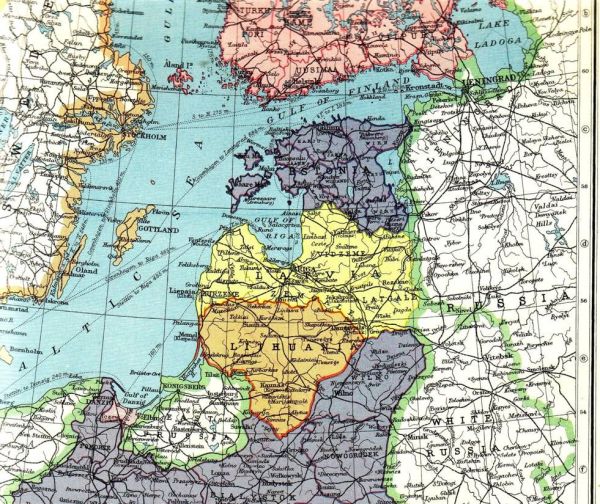
Baltic States (1920 – 1939)

To understand Ernst’s involvement within the historical context of the Germany’s military operations in the Baltic states, I provide a quote from Wikipedia: “The Freikorps had saved Latvia from capture by the Red Army in the spring of 1919. However, the Freikorps’ goal of creating a German dominated state in Courland and Livonia failed. Many of the German Freikorps members who served in the Baltic left Latvia with the belief that they had been “stabbed in the back” by the Weimar Republic, under President Friedrich Ebert. Hundreds of Baltic Freikorps soldiers had planned to settle in Latvia, and for those who had fought there, the land made a lasting impression, and many of them longed for the day that they could return there. The Baltic Freikorps characterized their struggle against the Reds as the “Drang nach Osten”, (the drive towards the East), and some Freikorps units returned to Germany and planned for the day of their return.”

In the early 1920s Ernst Klopp returned to the Berlin area. The only certain information we have from this time is that his sister Jula Steuer strongly advised him to throw away his gun. Carrying a weapon in those turbulent times would have put him into immediate danger.

Natural Splendour of the Arrow Lakes

Wednesdays Photos in a Video

Father’s Day Delight

On Father’s Day my wife and I initiated the beginning of summer with a canoe ride across the Arrow Lake. The weather was perfect and the wind was calm, ideal to cross the lake for the first time in 2020. To make sure we would use the least amount of time, we followed the path of the cable ferry, which was busy with Father’s Day traffic on its half-hour journey back and forth from Fauquier to Needles. To our surprise, the water was warm enough to get in a quick swim. Alas, we had left our swim wear at home. Enjoy the scenery.

Ernst Klopp (1900 – 1964) – Part 1

My Father’s Childhood Years

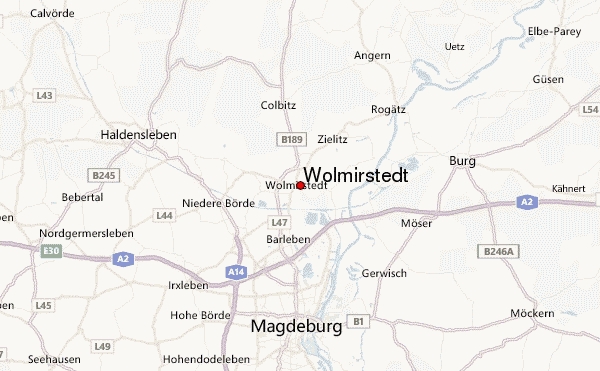
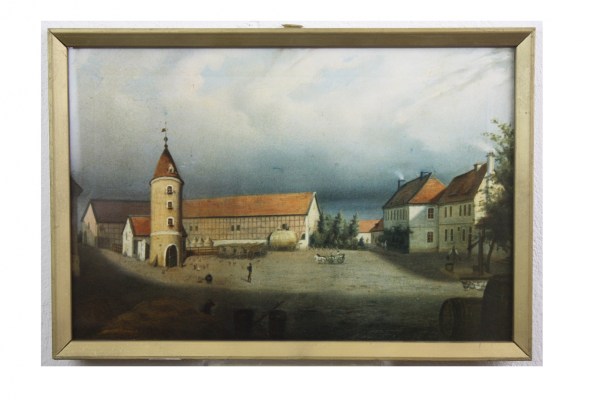
Ernst was the sixteenth and last child of Friedrich and Emma Klopp. Within the short timespan from March till June 1900, four fateful events occurred in Wolmirstedt. In March the eldest son Friedrich (1875 – 1946) married Marie-Luise (née Weihe, 1880 – 1924), who was six months pregnant. At the end of May, Peter Friedrich Klopp (1852 – 1900) passed away. He was good-looking, handsome, slightly obese, and a giant of a man. He was generally of a cheerful disposition and was not disinclined to an occasional drink in the genial company of like-minded buddies every once in a while. 

In the middle of May not long before my father’s birth, he was riding home from a hunting party. It appears that he often left direction and speed to the discretion of his well-trained horse. Maybe on this chilly night, he had had just one drink too many. Falling asleep on horseback is never a good idea, especially when you are in that cozy state of inebriation. Inevitably, he slipped off the saddle, and the horse trod home without him. Early next morning travellers found him lying half-conscious on the roadside. He was sober by now but suffered from a severe case of hypothermia. Soon after, he acquired a kidney infection, from which he was unable to recover. He died on the 26th of June 1900 at the age of 48. 

Photo Credit: Museum Wolmirstedt

At the beginning of June, the first child of the eldest son was born. Her name was Frieda (1900 – 1979). Finally, on June 28, 1900, the fatherless Ernst was born. Thus, Frieda and her uncle Ernst were of the same age. The two have never met again in later years.

These intersecting both joyful and painful events happened during those four months in the crowded conditions of the house in Wolmirstedt. The expulsion of the Klopp son Ferdinand (1879 – 1952) and his departure to the United States also occurred during the first half of 1900. All this wore down the family’s physical and psychological ability to cope. The acquisition of the mill Wehrmühle near Zieglitz by the forty-year-old widow appears almost like a desperate attempt to gain her freedom and independence from all these troubles at home.

Natural Splendour of the Arrow Lakes

Wednesday’s Video

After the Rain

Today I am going to walk you through our yard and garden. You can describe the property as still being in the semi-wild state not typically found on the manicured lawns of city dwellers. After a brief look at our backyard, we enter the garden, which I have downsized by using only raised garden beds, a more age-appropriate gardening method for one approaching the octogenarian stage in life. Then we follow the rapid climb of our youngest son’s hops plants. It reached the present height in less three weeks holding the absolute growth record of all our plants. After looking at the blooming blackberry bushes, we are making a tour around my wife’s art studio with an apple, plum and pear orchard and fire pit area surrounding it. I also would like you to see the rose that finally made its appearance, coming in last after the magnolia, azalea and lilac flowers. Enjoy.