Natural Splendour of the Arrow Lake

Wednesday’s Photos

Sunny January Morning at the Arrow Lake

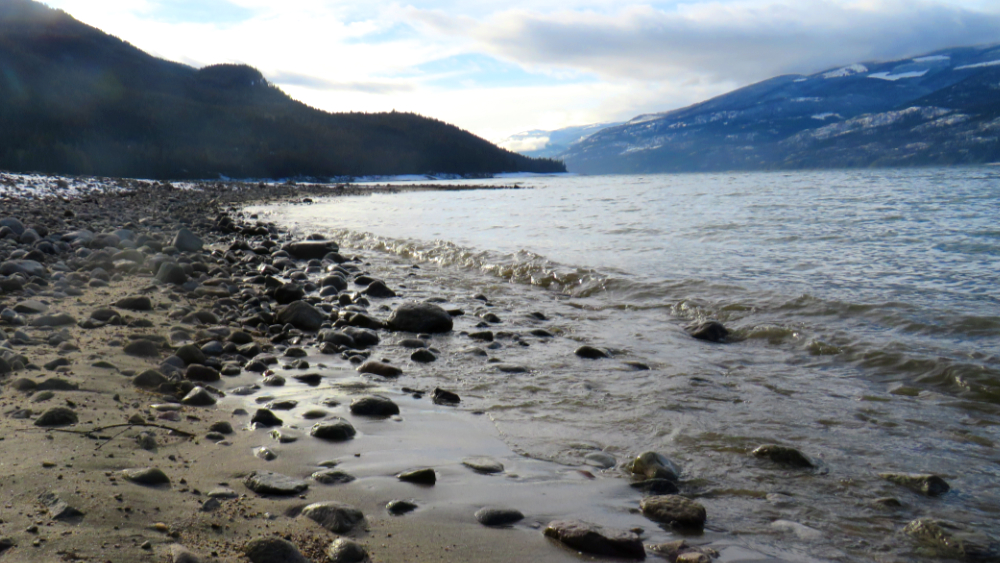
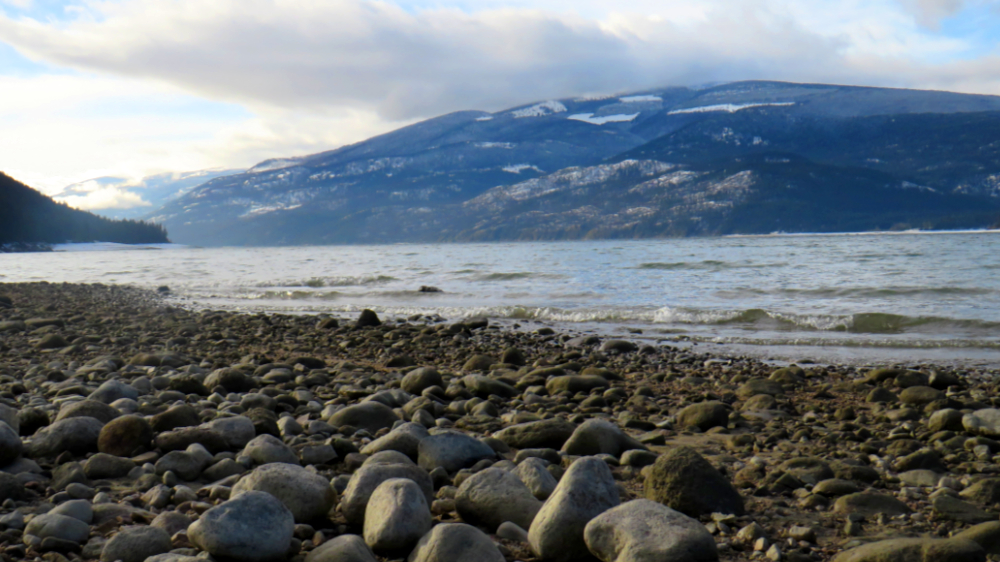
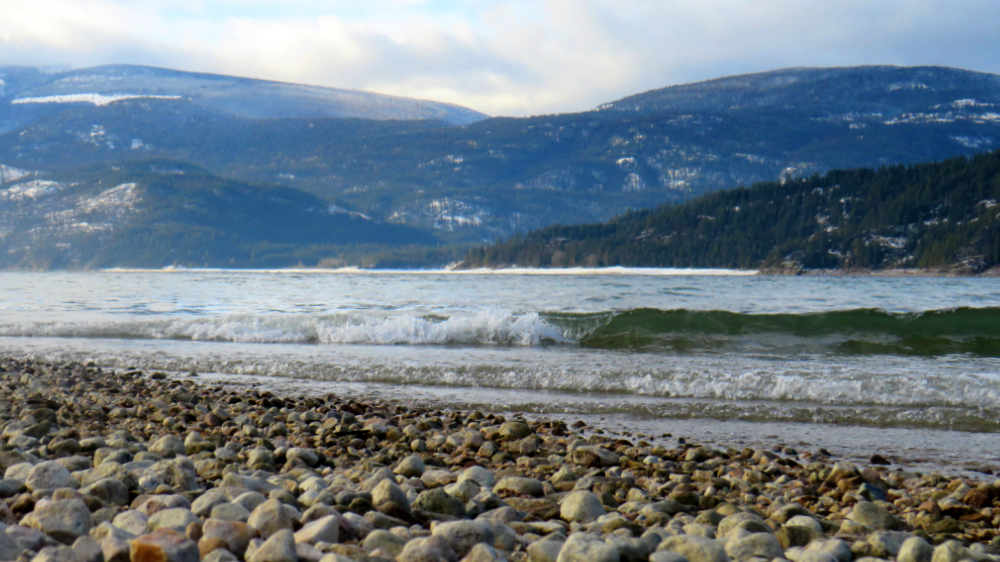
The lake level is dropping to make room for the annual spring run-off. This means that a strip of shoreline was without snow. My wife and I took this as an invitation for a walk on the stony beach section at our favourite place, which never fails to charge up our internal batteries. A strong wind earlier in the morning had whipped up considerable surf action.  I captured the waves by lying on my belly very much to the amusement to my wife. Enjoy.

The Peter and Gertrud Klopp Story – Chapter XXXI

At the Crossroads

“It does not take much strength to do things, but it requires a great deal of strength to decide what to do.”  Elbert Hubbard

Peter Quits his Job

Calgary-1960s-historic-1024x683.jpg

Calgary in the Mid 1960’s

In the middle of July I got an unexpected three-day break without pay. It rained so hard for the entire time that all outside construction was grinding to a halt. Restless and deeply worried I studied again the classifieds in search for a more meaningful job. There I stumbled upon an ad of a geophysical company, which was looking for young candidates whom they were willing to train with pay as seismic observers. I had not yet learned that just because there were positions to be filled and companies advertised them in the newspaper did not mean that one had already landed the job. My youthful enthusiasm for a great opportunity for carving out a happy and prosperous future for Biene and me made me ignore all the hurdles I needed to jump in order to get the job.  Nor did I heed the warnings of the somber prospects of separation, which inevitably would have come with the fieldwork in remote areas of the province. Having been apart for such a long time, this was the very thing Biene and I were trying to avoid. As always when I was all fired up and nothing in the world could dampen my zest for immediate action. I spoke with confidence and a fair level of fluency in English the day I contacted by phone the personnel manager of the company.  He appeared favourably inclined – so I thought in spite of my strong German accent – and promised me to mail right away the necessary forms and a pamphlet what seismic work was all about.

On the very same day I also visited the campus of the University of Calgary to enquire about their teachers’ training program. Here too I was impressed with the friendly and professional manner the lady at the registration booth received me. Little did I know then with my naïve trust in outward appearance that in contrast to the rough and tumble world of the construction industry these people at the institutes of higher learning were trained to be kind, helpful and polite! It was part of their job. Smug about my progress I had made in a single day I rode the bus home to my brother’s place. High in spirit, already projecting myself far into the future and seeing us in our cute little bungalow à la Biene’s vision I sat down to write her a very long passionate letter that evening, essentially pulling us out of the deep trough we had just gone through with the loss of the engagement ring.

At the beginning of the following week the blazing midsummer sun returned full blast and was burning mercilessly from a cloudless sky. Mr. Milne phoned to tell me that he would start on a new building project in the town of Vulcan, where he had taken on a lucrative contract to build a movie theatre. Knowing me as a good and reliable worker, he had assigned me to a special work crew. I found the prospect of working long hours and of making more money quite alluring at first. At five in the morning I climbed on the back of the same old truck, which had taken me to my first job site in early June. There my Yugoslav coworkers and I huddled together for the ninety-minute ride to Vulcan, halfway between Calgary and Lethbridge. The first few days turned out to be quite tolerable in spite of the heat and the long hours. The walls were still low and the heavy concrete blocks were within easy reach of the masons. Best of all the cool of the early morning air lingered on for a good part of the day. It actually felt fairly pleasant to work under such conditions, especially when a breeze brought relief from the heat in the afternoon. Yet, I was totally exhausted after fourteen hours, out of which I was only paid for eleven, because they deducted the traveling time from my pay. I did not complain, the pay was good. I even had recently received a raise, which brought my weekly take-home pay to a hundred dollars. But in the second week the steadily rising walls were beginning to cut off any air circulation and the sun was relentlessly beaming down onto the building site. The masons working high up in the cool breeze were clamouring for the concrete blocks and were shouting at me to hurry up. Down in the searing furnace I struggled to keep up with the demand. With heat being reflected off the walls, the temperature was inexorably rising. I began to drink huge quantities of water and drenched my shirt in a desperate attempt to cool off the overheated body through sweating and evaporation. During such brief breaks, which I had granted myself to recuperate a little, I suddenly realized that the combined worst hardships I endured at the German army during basic training were by comparison to this hell like a pleasant Sunday school picnic. I felt like a slave in the service of Vulcan, the god of fire, after whom the town had been named.

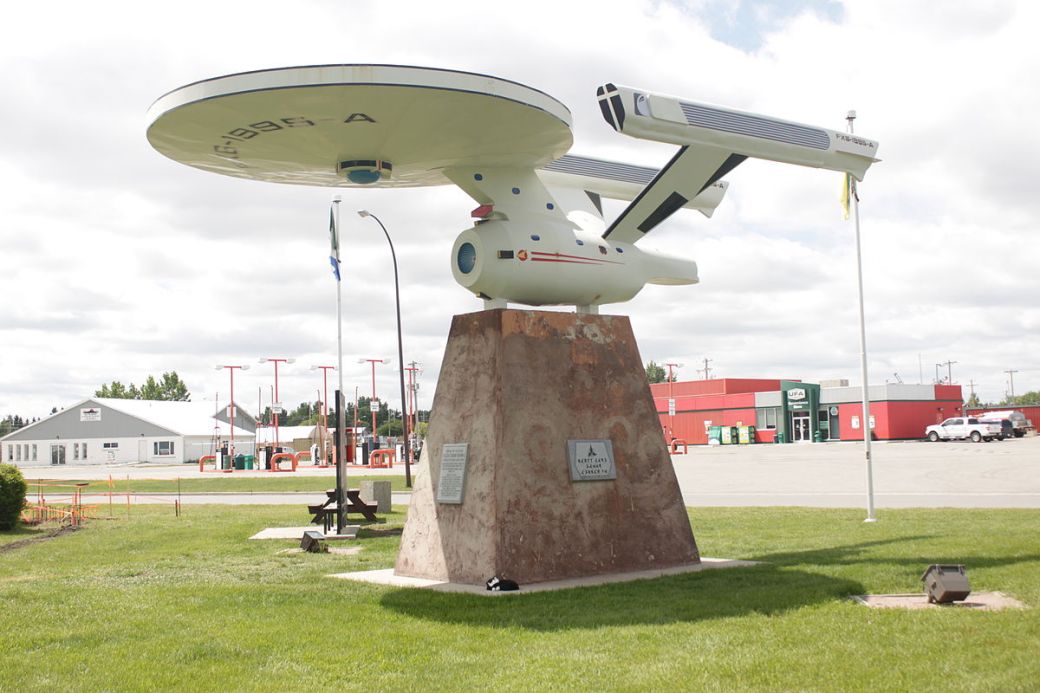
1200px-Enterprise_monument_Vulcan_Alberta_2013

Star Trek Enterprise Replica in the Town of Vulcan – Photo Credit: Wikipedia.org

While I was standing there for a short moment leaning against a huge pile of blocks, my boss caught me, as he called it, in the act of loafing and severely reamed me out. It was there and then that I decided to work only till the next payday and to start looking for another job. Unlike my fellow workers from Yugoslavia I was not a slave of this construction outfit and had the freedom to quit.

Working on a Wheat Farm

199

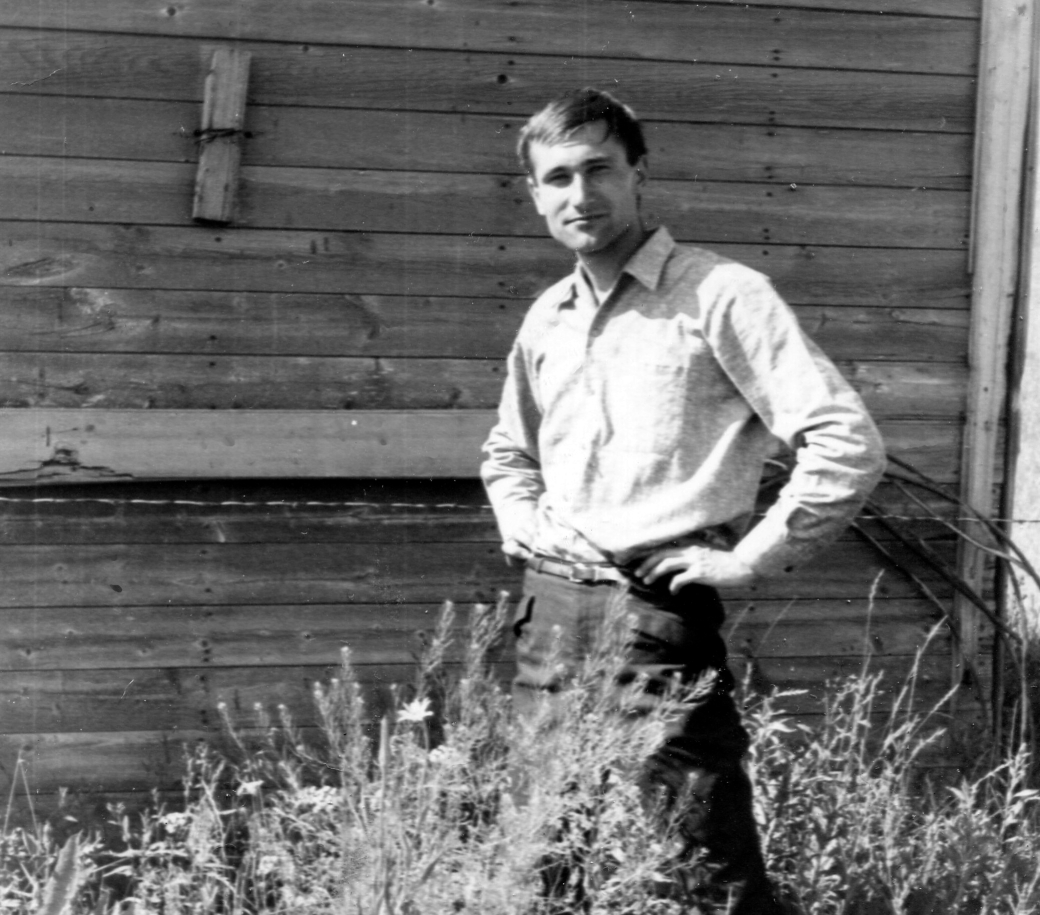
Harry Mueller and his Family in front of the Farm House

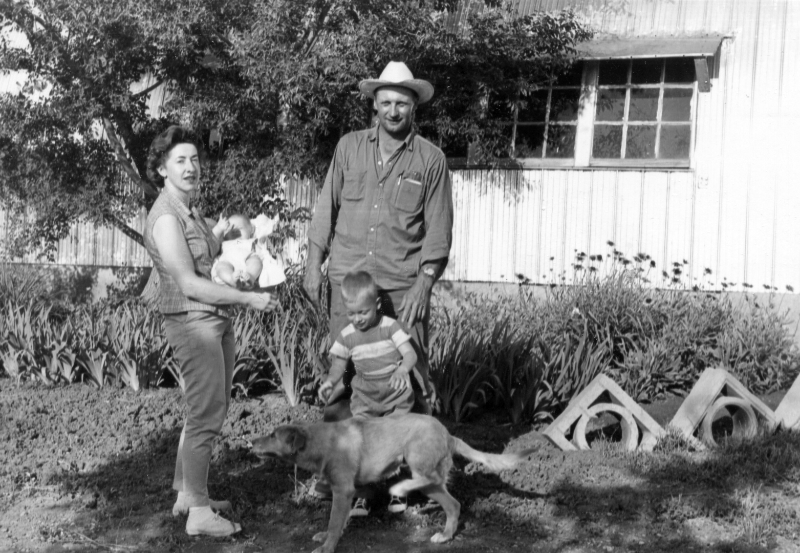
On the weekend Harry Mueller, a wheat farmer from the Hussar region and a good friend of my brothers Adolf and Gerry, dropped in for a short visit. When he learned that I just quit my job, he invited me to help out on his farm, where he would have plenty of work for me. He promised that in return for doing some basic chores he would pay me well in addition to free room and board. I would become part of his extended family that included his permanent farm helper and a young boy on a visit from California, whose company he assured me I would enjoy. I gladly accepted the offer, which after my ordeal as a labourer appeared to me like a godsend. Apart from the welcome change in scenery I felt it would be good to be away from Calgary for a while, where day in and day out I was sitting on pins and needles in tense expectation for some positive sign either from the university or the geophysical company.

I was the third of the Klopp brothers, who worked on the Harry Mueller farm. Adolf, who immigrated to Canada in 1953, had stayed the longest and had become quite attached to Harry and his family. He liked working on the farm. Life in a close-knit family after the turmoil during the postwar years in Germany must have been very appealing to him. Here he found everything he had been missing at home: stability, security, meaningful work, companionship with Harry, Eileen, Harry’s wife, and his mother Mrs. Mueller, whom I remembered well from her visit to us in Wesel in the late 1950’s. Adolf thrived in an environment, where he could see the fruit of his labours, see the results of a day’s work, and relax in the evening having a beer or two and shoot the breeze. He was not the type who would worry about events that may or may not disturb his life in the distant future. He lived very much in the present. His brother Gerry and later also Karl would do the worrying for him and urged him not to remain an unskilled labourer forever. Gerry after his arrival in Canada also spent some time at the farm, but just long enough, until he landed a job as a toolmaker at a bottle manufacturing plant in Medicine Hat. His ambitious nature would never allow him to stay at a dead-end job.

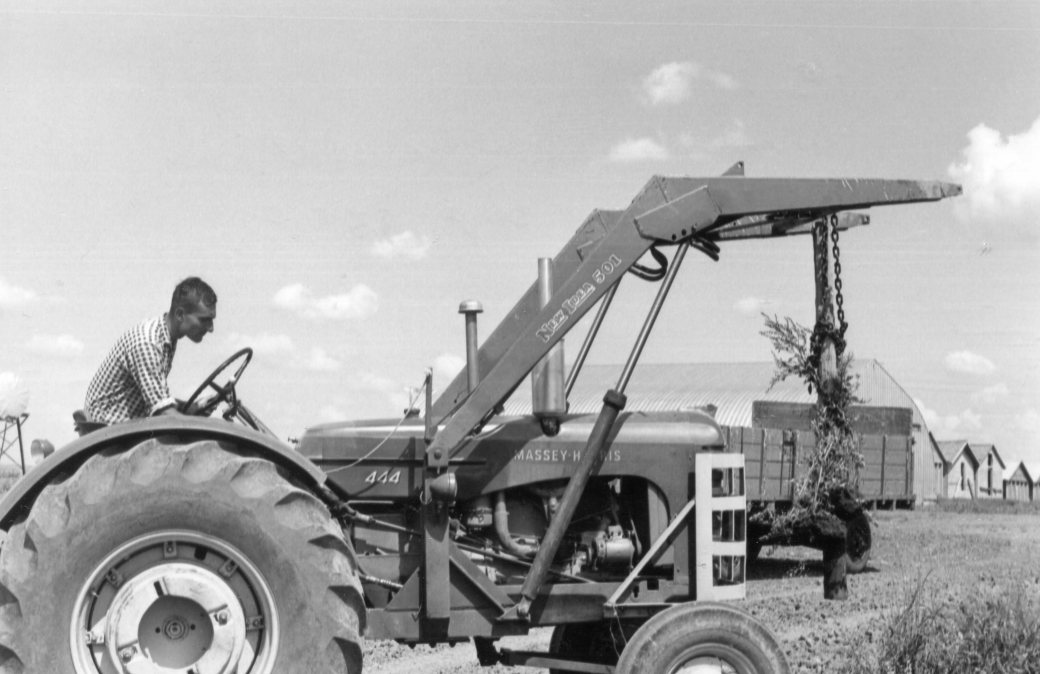
From the very outset it was clear that my time on the farm would be limited to two weeks. It became a respite from the harsh realities of hauling bricks and mortar. Indeed working for Harry felt like taking a holiday. Looking back I can safely say that quite apart from earning money I received much more than I was able to give. I learned to drive a tractor, operated a hydraulic lift arm, and was able to do in one day what the construction crew would not have accomplished in a week. There was a fence that had outlived its usefulness, which Harry wanted me to remove one fence post at a time. He showed me how to use the manual gearshift of the tractor, how to lower and raise the hydraulic lift, how to wrap a chain around the post, and how to attach the chain to the lift arm. Then he hopped on the tractor and gave a brief demonstration of the entire process. Being the owner of a full section of fertile land all planted in wheat, he had more important things to do than pulling out old fence posts. He left me with the encouraging remark, “I see you at lunch, Peter. Good Luck!”

202.jpg

Peter Pulling Fence Posts on the Harry Mueller  Farm

I stood there for a while contemplating the incredible amount of trust he had placed upon my ability to live up to his expectations. I was determined not to disappoint him. At first I took ten long minutes to pull out just one post. But soon I got the hang of it and yanked three out of the ground within the same time period. When Eileen rang the lunch bell, more than twenty posts were lying along the narrow dirt road leading up to the farmhouse.

Great Blunder and a Gentle Rebuke

Eternal-golden-wheat-field.jpg


Half way through the afternoon I noticed that the tractor was running low on fuel. Harry had gone to town to get some supplies. So I took matters into my own hands and drove the tractor to one of the nearest fuel tanks. They stood high above the ground on sturdy metal legs, letting gravity do the work. After I was done filling up, I restarted the tractor and headed back to the nearest fence post. While I was driving, I detected an acrid smell in the air that I had not noticed before. Heavy black smoke belched out of the vertical exhaust pipe. The engine began to stutter and threatened to stall. Panic stricken I immediately turned off the ignition. At that very moment Harry had returned from town and parked his truck right beside me. From a mile away he had seen the ominous smoky telltale that there was something seriously wrong with his tractor.

“What did you do?” he asked.

“The tractor was low on fuel, so I decided to gas up,” I replied.

“Which storage tank did you use?”

I was getting a bit alarmed by Harry’s questions. Sensing that I might have done something wrong, I answered rather timidly, ”From the one nearest to us.”

“Well, Peter,” he began calmly explaining without the slightest trace of anger in his voice, “this is a gas driven tractor. You just refilled it with diesel. You did well in turning off the engine. You could have damaged it, you know.”

We spent the rest of the afternoon draining the tractor tank and refuelling it with gasoline. On startup dark sooty smoke was still spreading its foul stench into the air, but after a few more minutes the oil had been cleared from the internal parts. The engine was chugging along again at its regular smooth rhythm. How grateful I was to Harry for letting me carry on the next morning in spite of my blunder at the fuelling station!

200

Peter Pulling out Fence Posts the Easy Way

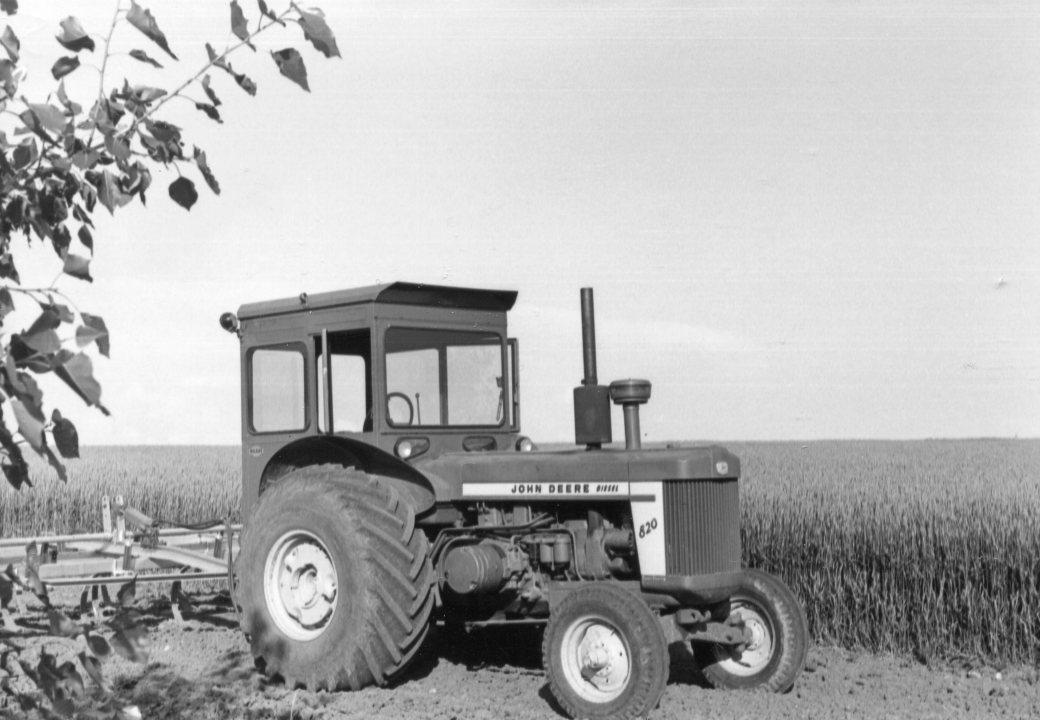
At the end of the week I had pulled out all the posts, had loaded them on a utility trailer and had hauled them away. I was beaming with pride, when Harry entrusted me with a much more challenging task I was supposed to start on the following Monday. With the removal of the old posts I thought I had merely cleared away an eyesore, which would in fact be very low on a wheat farmer’s priority list. Rather I had created some more space for the expansion of the existing wheat field. Harry had already ploughed that part and said that my job would be to drag the harrow over it to break up the clods and remove the weeds. For that he added he would let me use the brand new John Deer tractor. It goes without saying I was absolutely delighted about my latest assignment.

203.jpg

The Immense Wheat Field behind the John Deer Tractor

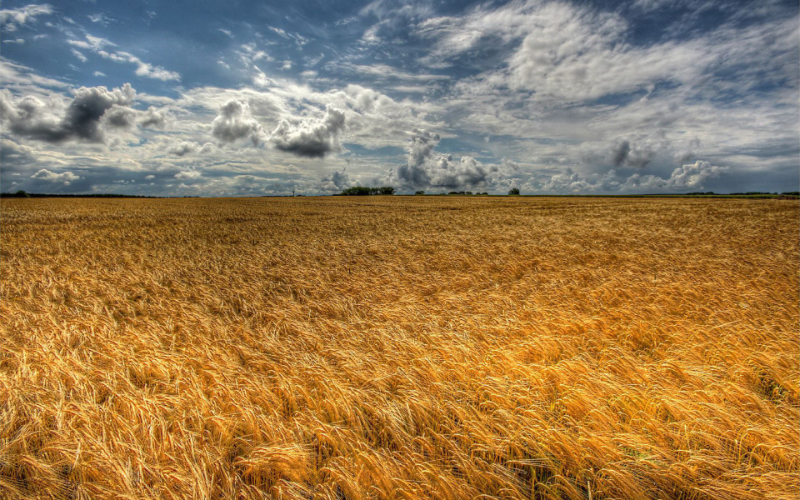
Anyone who ever stood in front of a wheat field so large that one could not see where it ended would understand my fascination about the mysterious way the wind was playing with each individual stalk to create the illusion of waves swirling over the giant expanse in front of me. Unlike an ocean wave, where the water molecules bob up and down and actually never move forward except at the surf near the beach, a wheat wave consists of myriads of stalks swaying in the wind following in faithful synchrony its force and direction. This is especially spectacular to watch when the direction of the wind suddenly shifts, at times creating the strangest patterns of circular motion. They appear to dance around as one unit  until they suddenly dissolve and unite again in perfect harmony with the action on the entire field.

211

A Memorable Fishing Trip

rocky-mountain-high

Near the end of the week Harry, Gary, his permanent farm hand, Chris, the young boy from California and I were relaxing in the living room sipping cool beer straight from the bottle. Harry suggested that it was time for a break and that we should all go together to a remote lake in the Rocky Mountains, where he knew a good fishing spot. That was indeed good news, for I longed to be back in the mountains and fishing would be another skill I could acquire while enjoying nature at its best. The time before the harvest was relatively easy for the wheat farmers on the Prairie Provinces. They often took their vacation in July or August to rest up for the hard work that lay ahead, when they had to bring in the crops. For harvesting, timing was everything. If you harvested too soon and the grain had not matured properly, the wheat board would downgrade the quality. If on the other hand you waited too long and let the rain and sometimes even early snow dampen the grain, you would again not get top dollars for your harvest. Harry had $20,000 worth of high quality wheat growing all around his farmhouse, the equivalent of ten times the amount in today’s buying power.

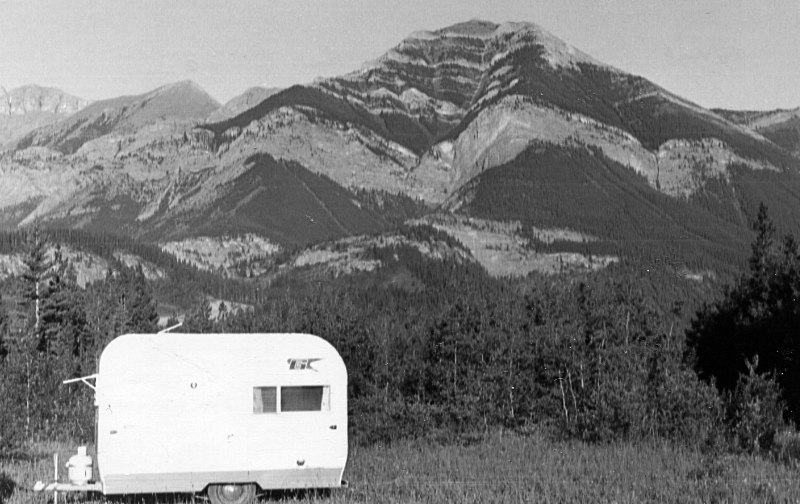
Trailer

Bright and early on Saturday morning we were heading out to the Rocky Mountains. Harry had hitched to the truck his travel trailer, which comfortably slept the four of us. After a three-hour drive, he turned off from the main highway. Somewhere up a steep forestry road Harry knew a good fishing lake surrounded by snow capped mountains. Very few people dared to venture out so far into the wilderness. As it turned out, we would have the rustic campsite right at the edge of the lake all to ourselves. There was nothing to set up. Harry unhitched the trailer and blocked the wheels, while we helped by unloading the two boats off the truck and dragged them into the water. After a quick lunch consisting of bologna and cheese sandwiches, we were eager to try our luck in fishing.

Harry and Chris


Harry took Chris, his young guest from California along and directed his boat across the lake to a promising spot, where he had been fishing in previous years. Gary and I decided to make a circle tour hugging the rugged shoreline in the hope to reel in a good-sized trout or two. My interest in fishing was at best lukewarm. In my mind I saw me actually catch a fish, kill it somehow, and wondered how I would clean and make it ready for supper. Suppressing these disturbing images I focused on the beauty of the mountains all around us, the crystal clear water reflecting the majestic scenery in the still mountain air, and the bright blue of a cloudless sky competing with the dark green curtain of the impenetrable forest. The eyes of the scout in me were searching for suitable sites, where one day Biene and I could set up our little tent, here perhaps a bay with a sandy beach, there a small rocky island with a single spruce tree for protection and shade. A tug on my fishing rod pulled me out of my daydream.


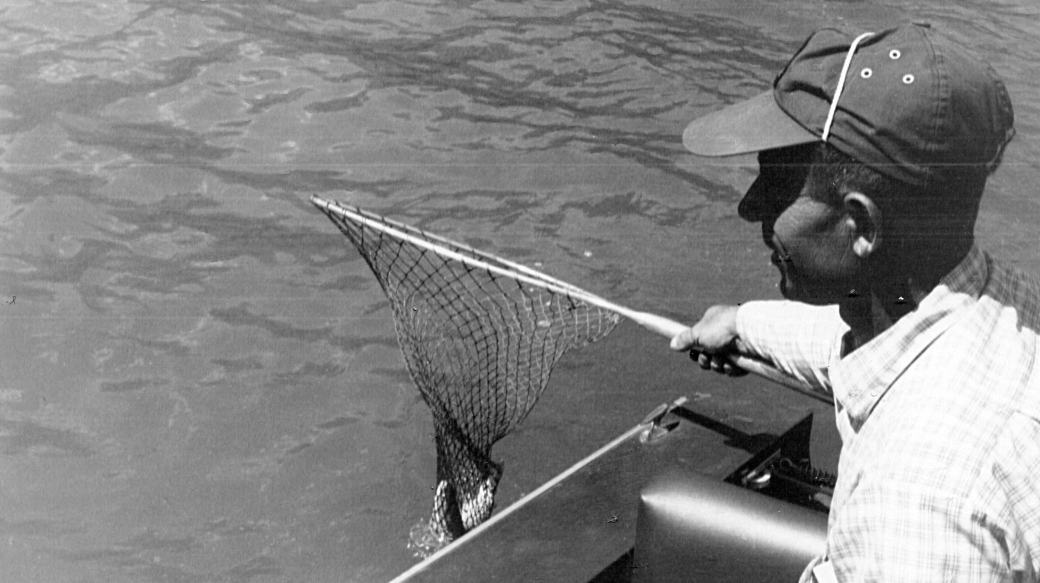
Gary

“Peter, I think you’ve got a fish on your line,” Gary said and stopped the outboard engine. Then giving me clear and simple instructions he guided me step by step in the fine art of landing a fish into the net. It was a medium sized trout. Gary grabbed it and through its gills he threaded a piece of nylon line, which was tied to the boat. Then he threw it back alive into the water where it would stay fresh and would not spoil on deck in the hot afternoon sun. This practical approach to fishing seemed cruel to me. Why not kill it immediately, I wondered. But my interest in fishing got a little boost with my first catch ever. After Gary had restarted the engine, I cast my line with greater enthusiasm. Soon after I felt again a tug and pulled in another trout. Before we had finished our circle tour, I had altogether caught three trout and Gary always too busy with the outboard motor nabbed only one. When Harry and Chris returned from across the lake, we counted six beautiful trout weighing a little under a pound each. Chris. barely able to hide his envy, commented, “Beginner’s luck!” So it was. The greenhorn from Germany had provided half the amount of meat for supper tonight.

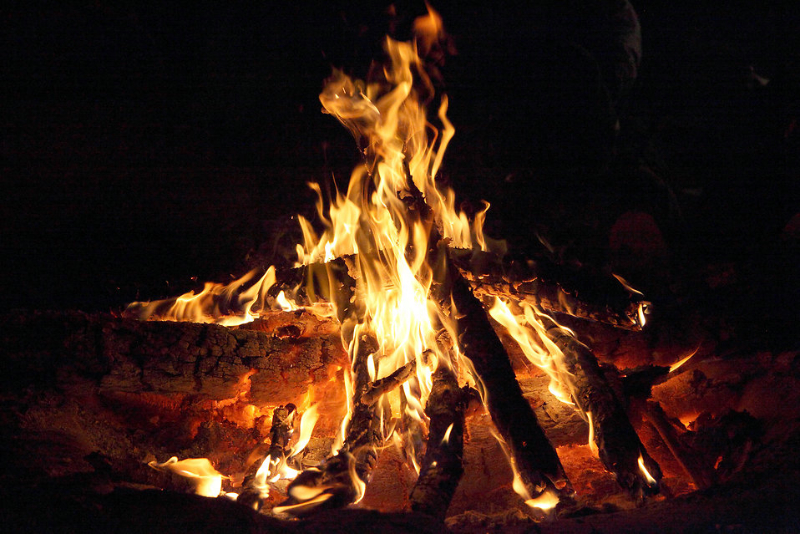
camp fire

Fortunately, I did not have to kill and clean the fish. Harry and Gary took care of the messy job. They also looked after the cooking. I volunteered to make a fire. While I gathered rocks to build a safe enclosure, Chris helped me pick up dry twigs and branches from the forest floor, which he chopped up into small pieces with a hatchet. Soon we were ready to start the fire. I placed some birch bark in the middle of the fire pit. Then I built around it a cone of thin twigs with thicker, longer ones on top. I held a burning match close to the birch bark and said, “A good scout knows how to start a fire with only one match, even when it rains.” Almost instantly the flame fed by the oily substance in the bark spread quickly through the twigs. The crackling sound and the flames shooting higher and higher indicated to all that the one-match experiment had been successful. Chris and I brought out four lawn chairs and kept feeding the fire with bigger branches to make it ready for cooking. By now Gary had wrapped the trout in aluminum foil and suggested to let the fire burn down a bit so that the meat could be baked on the ember. Harry came out of the trailer with a large frying pan filled with cut-up baby potatoes. In no time at all a tantalizing aroma spread around the campfire and made our mouths water. A cynic would have quoted the old adage, ‘Hunger is the best sauce.’ Indeed, we were ravenously hungry. But in the great outdoors, where likeminded people gather around the campfire, a simple meal with just a few ingredients, such as freshly caught trout baked in butter, baby potatoes fried in vegetable oil, ketchup for extra flavour, and a cool beer that was in fact all we needed for total and complete satisfaction.

Pyramids from a Socialist Point of View

All_Gizah_Pyramids

Egyptian Pyramids – Photo Credit: wikipedia.org

After sunset the air quickly cooled off. We threw more wood on the dying ember and moved our chairs closer to the fire pit. It provided the only light, as twilight gradually changed to complete darkness on this moonless night. Our teenage companion, who was first to break the contemplative silence in our group, astounded us with his patriotic, boastful chatter about California being in his opinion the greatest, the most beautiful, the most attractive, the most this and the most that place in the world. Harry impressed me with the calm manner, with which he countered the preposterous display of chauvinism, when he simply stated, “It takes a lifetime of traveling to many countries before one can decide which is the most beautiful place on earth.” Then in a conciliatory tone he added, “But there is one thing we can all agree on.  This place here without comparing it to any other place is truly beautiful. I for my part wouldn’t want to be anywhere else.”

After a few more beers our conversation shifted towards more philosophical topics, such as the eternal grandeur of creation in contrast to the ephemeral nature of the man-built structures, even of the most enduring 5000-year old pyramids of ancient Egypt. When I ventured to express my admiration for the wonderful buildings that the ancient civilizations had created as lasting monuments to their cultural achievements, Gary responded rather disdainfully, “I don’t care two hoots about all these amazing structures in the world, because they have been built on the backs of millions of slaves, who had to sacrifice their lives in pain and agony so that one person, a pharaoh, a king or an emperor would be remembered as great and glorious in the annals of history.”

Gary’s unexpected outburst, tinged with socialist undercurrents, reminded me a little of my brother Adolf and his strongly worded attacks against the exploitation of the working class. But I had to admit that Gary had a point, which didn’t fail to leave a lasting impression on my way of thinking. Not quite firm in the pronunciation of English words I meekly said, “Nature is the best ‘arshitect’. So let us all admire its creation.”

212

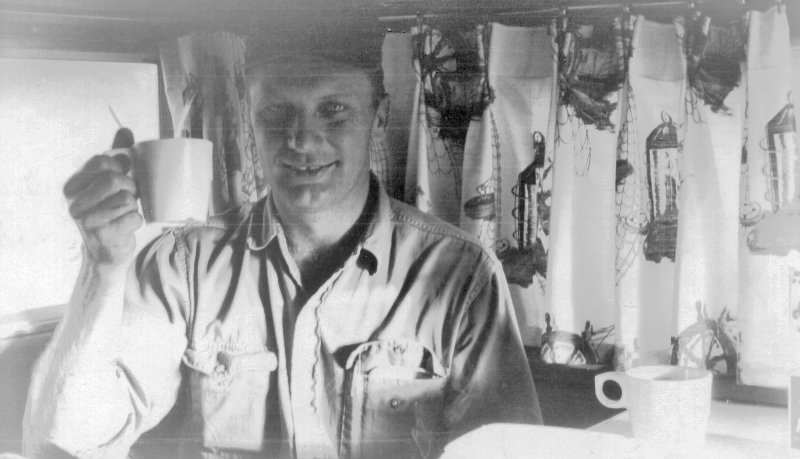
Harry Mueller in his Cozy Trailer

The fire had completely died down. The Big Dipper had moved a considerable distance during the last couple of hours on the starry northern hemisphere. It was time to go to sleep in Harry’s cozy trailer. I was in a very happy mood having plucked a delicate mountain flower, which I intended to send to Biene as a little memento of our weekend fishing adventure. Dreaming about owning a small trailer and traveling with it to a place like this with Biene, I drifted off to sleep being blissfully content with the world around me.

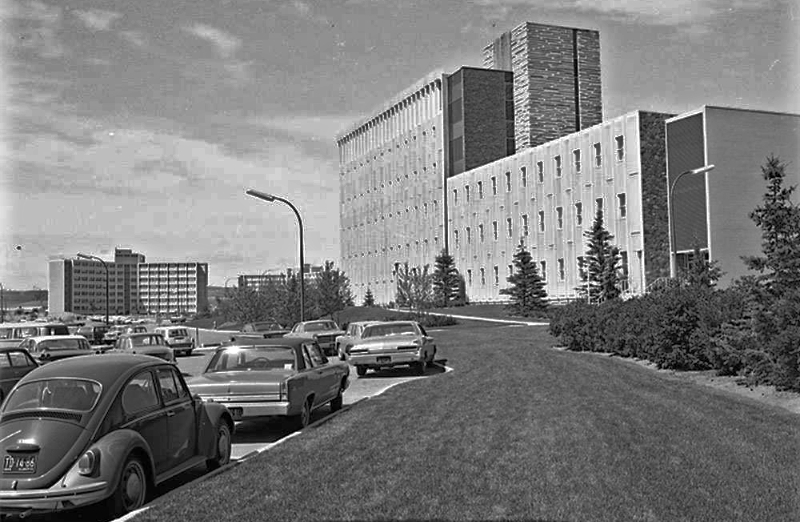
U of C in the mid 60s

University of Calgary in the Mid 60’s

On the way home to the farm Harry dropped me off at Gerry’s place. It was very disappointing not to have any letters waiting for me, neither from the Employment Office nor from the University of Calgary. I was very anxious to find out whether or not my high school diploma had received full recognition for the entrance requirements. So I checked in at the registrar’s office. To my greatest relief, the secretarial staff had done their homework and reported that come September I would be eligible to begin my studies as a student in the Faculty of Education. Now the time had come to decide in earnest which program to choose. To make sure that I would succeed in my first two semesters not just with passing grades, but rather with superior marks in most subject areas, I embarked on a most unusual program. I selected German as my major and Mathematics as my minor. After a brief interview with the head of the Modern Language Department it was decided on the basis of my German background to advance me to the senior courses at the 300 level and above. In math I would take the mandatory calculus courses, which at least for the first semester would be simply a review of the material already covered at my final high school year. This arrangement with the core subjects, I thought, would enable me to concentrate my energy on the other subjects, such as English literature, philosophy, psychology and school administration, all of which required fluency in the English language. Having accomplished all this in the course of a single morning visit, I returned home full of confidence and wrote Biene a letter feeling on the top of the world again.

Peter’s Daring Request and a Chinese Love Poem

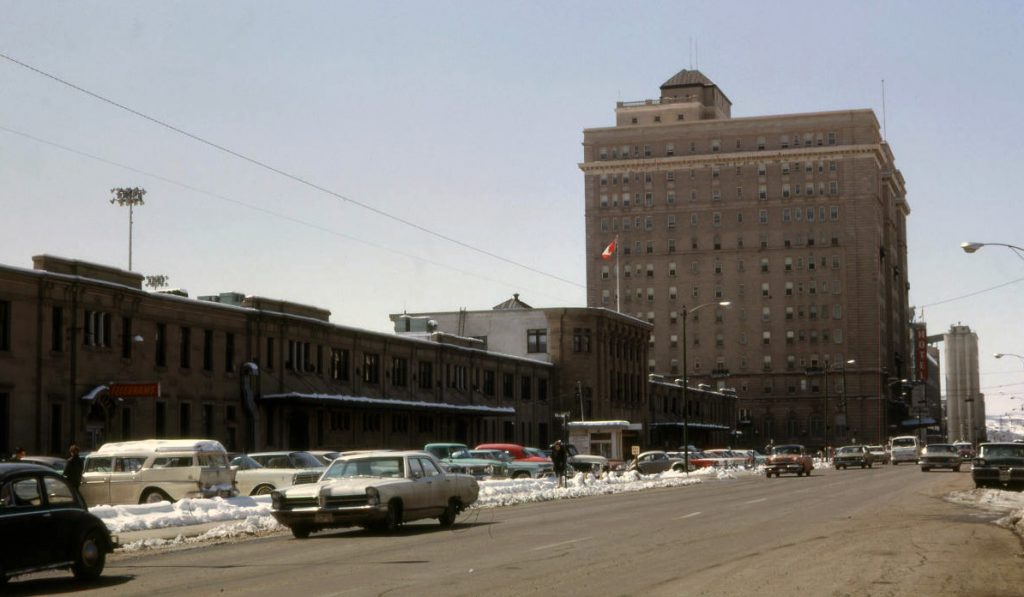
Calgary-Pallister-Hotel-1960s-1024x597

Calgary Pallister Hotel in the 1960’s

Still dwelling on my romantic sentiments fuelled by my recent fishing trip into the Canadian Rockies and riding now on a wave of euphoria brought on by my apparent success at the registrar’s office of the University, I sat down to finally write the letter to Biene, which she had been yearning to receive for such a long time.

August 2nd 1965 Calgary

My dear Biene, …And now I come to the most important part of my letter. Next April my first year will be over, and I will do everything in my power to pass all my exams. Then I will be at the halfway mark of my teachers’ training program, and the most difficult period of my studies will be behind me. However, a very busy summer will be waiting for me, because I will have to earn enough money to pay for tuition and living expenses for the second year. Since the direction, which I have chosen for my profession, will have been secured, I think that it will now make sense for you to come to me so that we two can take on the challenges of the last year together. That way we both will have worked our way up, and it will give us later the feeling of having reached our goal together. But above all remains the fact that I love you, and it seems to me now that two years of waiting will be unthinkable and unbearable. This summer has brought me so many wonderful experiences that I am hurting just to think that you could not share them with me. After your reply I will find out what to do next. I love you. Your Peter

214

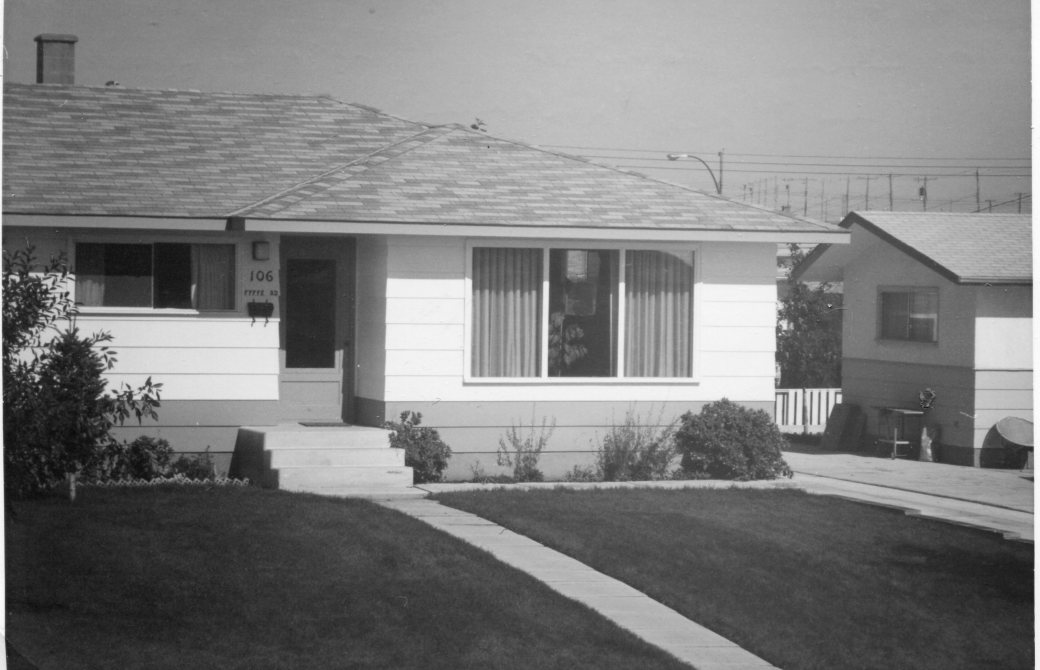
The House on the Fyffe Road

Four days later I received the devastating news from another department of the university administration that they had reviewed my high school certificate and determined that I would have to take a written English proficiency exam on September 10th.  Only if I passed that test would I be admitted as student in the Faculty of Education. I was deeply worried, since I had only a month to prepare myself for this decisive moment in my life. Every day I wrote for practice a paragraph, sometimes even an entire essay on the topics I had gleaned from my brother’s old high school English text. I was afraid that if the standards were nearly as high as they were for essay writing in German at my high school, I would most certainly fail. I was clearly standing at the crossroads. The thought repeatedly crossed my mind to return to Germany and enrol at the University in Erlangen near Nuremberg, Bavaria, for the beginning of the fall and winter semester. Proud as I was, I rejected what was to me like an open admission of surrender of all the plans that Biene and I had made for our future in Canada. Going back to Germany would entail six long years of postsecondary education and an equally long waiting period, before I would reach financial independence. By comparison even one year’s delay here in Canada seemed preferable to me. So I boldly stuck my neck out and asked Biene to come as early as the following spring regardless of the outcome of the test on September 10th. In case I did not succeed in passing it, I would take night classes in English 30 and work during the day to earn more money for my studies in the following year. No matter what was going to happen, I thought, I would be teaching within three years. Biene and I would be navigating through the uncharted sea of an unknown future with the unshakeable trust of reaching eventually the island of a secure and happy life. The dreamer in me was temporarily getting the upper hand. Perhaps it is a good thing to lose oneself in one’s dreams every once in a while. As it turned out, there was no need to ask, to beg, or to entice Biene to come. Her reply was swift and passionately written.

X325

Brothers Adolf (on the right) and Gerry, his Wife Martha and Son Wayne

August 7th Velbert

My dear Peter, How auspicious your letter already looked from the outside! When I opened it full of expectation and the color photos and the little mountain flower fell into my lap,  I already felt that it would contain only good news. And really, from one line to the next I felt warm and happy all over. But when I came to the ‘most important part’, I lost all my composure. My heart leapt for joy and in my excitement I had to read twice before I could comprehend that you meant next spring.

O Peter, you don’t know, how much in the last little while my heart was sinking! I could not and did not want to tell you, because uncertainty lay heavily on your shoulders. You know, Peter, my thoughts about you and our future did not offer any calm. How often did I lie awake at night searching desperately for a solution! And always at the end I came to the same conclusion that if you stayed in Canada, I should come to you as quickly as possible. I wanted to write you this only when a decision had been made. Dear Peter, can you now feel what your question means to me? It feels like being liberated. To me it is as if you read my most secret thoughts, and I always have to think of the lines in the Chinese poem, which a poet had written to his wife over a thousand years ago.

‘I have read your silky characters

and distinctly saw the letters cry.

Hundreds of rivers and mountains block your path.

Yet in thought and desire we are one.’

…Over and over again, since you were gone, I had to think, how much better it would be to bear right from the start all our initial hardships together. When we are so far apart for such a long time, even the beautiful things we experience make us feel sad, because we cannot share them with each other. Isn’t that so?

See, dear Peter, I lived through some bad times after our flight as refugees from East Germany, and so I know that one doesn’t have to be unhappy in times of need. One just has to have confidence. Imagine, like you I thought of renting a room at the beginning. How more easily will we be able to work and learn, when the constant yearning is no longer eating away at our hearts!

Dear Peter, the main thing now for you to do is to write my parents and tell them what your thoughts are on all this so they can put their trust into our plans. When they notice that we thought this through maturely and prudently, they will find it easier to let me go …”

X336

My Brother Adolf 1965

I was delighted, no, more accurately put, I was absolutely ecstatic about Biene’s affirmative response. We two were one heart and one soul with the same sweet wish to join forces to embark on life’s journey as one. However, I was realistic enough to realize that writing her parents at this time would do nothing to convince them of a stable, happy and secure life for their daughter in the light of the current uncertainty over my academic endeavours.

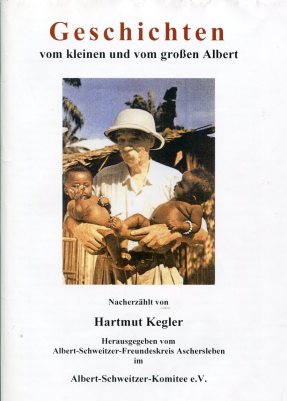
Albert Schweitzer – Seminar #13

AS01

Die Geschichte vom Hühnerstall und vom Arzthelfer Joseph

Die siebzig Kisten standen am Ufer des Flusses. Da bekamen sie plötzlich viele schwarze Beine und wanderten den Hügel hinauf zum Holzhaus des Doktors und seiner Frau. Als der Doktor genauer hinsah, bemerkte er viele schwarze Jungen und Mädchen mit kurzen, krausen Haaren, die die Kisten hoch trugen und dabei lachten und schwatzten. Als alle Kisten im Doktorhaus untergebracht waren, stand nur noch das Klavier am Fluss. Das war aber zu schwer für die Kinder. Da mussten starke Männer kommen und das Instrument ins Haus tragen. Albert Schweitzer spielte nämlich abends nach der Arbeit immer auf dem Klavier Musikstücke von Johann Sebastian Bach oder schöne Choräle.

Schon als Albert und Helene die Kisten auspackten, kamen die ersten Kranken zu ihnen. Die meisten fuhren in Einbaumbooten auf dem Ogowefluss zur Station. Es hatte sich nämlich durch Buschtrommeln herumgesprochen, dass ein weißer Oganga in Lambarene ist. Ein Oganga ist ein Zauberer, der Menschen krank und wieder gesund machen kann. Aber Albert sagte ihnen, dass er kein Zauberer sei und auch niemanden krank machen will und kann.

Das sei nur böser Aberglaube. Aber die Kranken kamen nicht allein, sondern mit ihren Familien. Für die Behandlung mussten sie bezahlen. Weil die meisten kein Geld hatten, bezahlten sie mit Hühnern, Bananen oder Bambusstäben. Das alles brauchte der Doktor zur Ernährung und Unter­bringung der Menschen. Es gab nämlich noch gar kein Krankenhaus. Albert und Helene mussten im Freien operieren. Das war sehr mühsam, denn die Sonne schien heiß vom Himmel und wenn es regnete, mussten sie die Operation unterbrechen. Abends waren beide immer todmüde.

Doch bald kam Hilfe. Der Missionar zeigte ihnen einen kleinen Hühnerstall. Den konnten sie als „Operationssaal“ nutzen. Natürlich musste der Stall zuvor gründlich gesäubert werden. Aber nun mussten Albert und Helene nicht mehr in der heißen Sonne stehen und waren auch vor dem Regen geschützt. Der kleine Hühnerstall war der Anfang ihres Hospitals. Eine zweite Hilfe war der Joseph. Er war früher Koch gewesen und konnte acht Stammessprachen sprechen, außerdem französisch und englisch. So konnte er immer alles übersetzen, was der Doktor zu den Kranken sagte. Nur schreiben und lesen konnte Joseph nicht, denn er war nie in eine Schule gegangen. Der Doktor musste den Kranken ganz wichtige Hinweise geben: „Ihr dürft nicht in der Nähe des Krankenhauses hinspucken!“ Oder: „Ihr müsst eure Medizin so einnehmen, wie ich es euch sage!“ Zuerst haben sie nämlich oft alle Tabletten oder die verordneten Tropfen auf einmal geschluckt. Das war gefährlich und das darf man nicht. Weil Joseph früher Koch war, benutzte er auch Ausdrücke wie Fleischer. So sagte er zum Beispiel: „Der Mann hat Schmerzen am Kotelett.“ Oder: „Dieser Frau tut das Filet weh!“. Manche Kranke nahmen überhaupt keine Medizin ein. Sie glaubten, der Doktor würde sie durch Zauber heilen. Aber auch das ist schlimmer Aberglaube. Das alles mussten ihnen Albert und Helene geduldig erklären.

13 seminar

THE MINING ERA OF THE CANADIAN COLUMBIA by Bill Laux – Chapter 11

THE ‘SQUAWMEN’

Throughout the era of the fur trade on the Columbia, the first half of the Nineteenth Century, the traders and factors comprised the small group of men who were the intermediaries between the Europeans and the Aboriginals.   They knew the Indian languages, many of them had married Indian wives, and were instrumental in keeping relations between the races peaceable.   With the withdrawal of the HBC north of the line of 1846, their place as traders, trail guides, and interpreters went by default to those American frontiersmen who had come north from the California gold fields to participate in the Fraser-Thompson gold rush and who remained after it subsided.   Their more squeamish and racist fellow Americans used the ugly name of “squawmen” to refer to them.  With their Indian wives, their living in a state of boozy intimacy with the Aboriginals, and their habit of extravagant boasting, they were deplored by the “better classes.”    Still, these knowledgeable men were essential as intermediaries with the aboriginals, doing what they had learned to keep the peace permitting unhindered settlement of the great Columbia Plain and the river valleys running northward into British territory.

Each of these men had a similar history.   All had participated in each of the gold rushes as they had occurred, Rock Creek, Similkameen, Colville, Fraser-Thompson rivers, Cariboo, Wild Horse and Big Bend.   All had learned on the placer grounds that while a very few might strike it rich and go home wealthy men, most would return from the gold fields with very little more than it had cost him to outfit himself for the expedition.   Those who had packed in provisions to the camps and sold them for a huge profit, did consistently go home with most of the miners’ gold.

Money, and lots of it, was dependably to be made in packing in supplies and selling them to the hungry miners.  These “squawmen” quickly learned these economics of the gold rush.   Then,   usually with a few Indian relations as helpers, they turned to profitably guiding parties of miners to the gold bars, to packing in supplies, and to operating improvised stores at the camps.

When the gold bars were exhausted and the miners went home, the “squawmen” took up ranches along the creeks in the Columbia Basin or opened small stores along the boundaries of the Indian Reservations to trade with the Aboriginals.

  Dancing Bill Latham, who had led a company in that bloody passage to the Thompson,  operated his “Eureke” ferry at the site of present Bridgeport.   Tenas George Runnels was a man of some education.    He had his Indian marriage to Skocom Analix confirmed by U.S. law in 1872.   He was the author of poems and ballads, and was stockman, storekeeper, as well as a successful prospector.   He located the rich Mountain Lion claim in the Republic Camp in 1896.   In 1904 he kept a store and horse ranch at Keller and was involved in the silver mines there.   His best claim he called the Iconoclast, a clue to the man and his cronies.    Most of these rough “squawmen” were self exiled refugees of conscience from the moral hypocrisy of a society that preached rectitude while practicing  greed.   No doubt many had fled prosecutions they felt unjust, and had taken their pseudonyms for the sake of anonymity in the west.

Since much of the settlement of the Columbia Basin in the hands of these “squawmen” from 1859 until the coming of the railroad in 1883, it will be of interest to describe the life of one of them in some detail

Samuel Wilbur Condit (Wild Goose Bill) was born in Orange, New Jersey in 1835.    No formal education is recorded, and Samuel left home at the age of 17 for the gold fields of California.   His departure may possibly have been a necessary flight, for on arriving in California, he changed his name to “Bill Condon,” and was known by that name from then on in the west.   The family records in New Jersey state: “Lost at sea en route from British Columbia to California.”    This is distinctly odd.   In 1852, the year of his arrival in California, “British Columbia” did not exist.    The family must have received a mistaken report of Samuel’s demise some years later.   Possibly from Samuel himself, if he had had compelling reasons for leaving home and wished to discourage inquiries.

Samuel, “Bill Condon,” came north to the Washington Territory about 1860.    After blowing two gold mining stakes on high living in San Francisco, he had joined the thousands heading for the Thompson-Fraser rush by the inland route.   In 1861, with Dancing Bill Latham, Tenas George Runnels, and others he was in the first party of miners to ascend the Columbia in British Columbia to the Big Bend gold fields.   After that boom subsided, he took a job packing supplies to the mining camps for a merchant in Walla Walla.    On a trip with his pack train, probably in 1864 or 1865, into the Wild Horse camp he found the stores there already amply stocked with the very supplies he was carrying.   Rather than sell at a loss, he started west with his train on the Dewdney Trail for Okanagan Lake where, he had been told, there were many Chinese on the gold creeks.    This could have been at Mission Creek or Cherry Creek. or possibly Fairview.   Accompanied by his Indian helper, Little Jimmy, he reached the Chinese miners, sold his goods, and then headed south for the Washington Territory.   On the way, still in British Columbia, he came on a small pond with a flock of geese, and began shooting them for provisions.   But the fowls proved to be domestic geese, or wing clipped wild geese, and their owner, a very angry woman, came storming after him, demanding compensation.    From that time on Bill Condon was known everywhere in the Columbia Basin as “Wild Goose Bill.”

On his trip back to Walla Walla he came across the well watered valley of upper Goose Creek at present Wilbur, Washington, and noted it as a spot in this arid Columbia Plateau where farming could succeed.    He took up land there and when the gold rushes tailed off, and there was little demand for pack outfits, he sold his, and began farming in that little valley at Goose Creek in 1875.

Owen Wister, the author of The Virginian, put Wild Goose Bill in a story published in Harper’s Magazine in April, 1894, called The Promised Land.  It was based on what his friend, Guy Waring, told him of Wild Goose Bill at whose ranch on Goose Creek he had stayed in 1884.     Waring had there listened to Bill Condon’s extravagantly embellished stories of his exploits during  the gold rush days,and passed them on to Owen Wister.   In Wister’s story Bill Condon appears as “Wild Goose Jake,” depicted as a lurid character who lived by selling  liquor to the Indians.    There is no record of Wild Goose Bill having done so, but the use of liquor to promote  trading transactions with the Indians was common enough during the period.   It had been standard practice for a drink of whiskey to seal a trade deal during HBC days, and the Aboriginals frequently asked for the traditional drink in later days before they would begin to trade.

Owen Wister’s tale was probably not familiar to the settlers moving into the Big Bend region in the 1880s and 1890s, but its sensational depiction of the “squawmen” as drunken, lawless scoundrels must have influenced Midwest opinion of the Frontiersmen they might meet in the West.   And the farmers moving into the Big Bend after the completion of the NP Railroad, were almost all Midwesterners. 

When the Northern Pacific Railroad was completed in 1883, Sprague became the shipping point for the Big Bend and Okanagan country.   Gold had been discovered at Conconnully and silver at Ruby City; miners were bound for those points.   The trail from Sprague to the Okanagan passed through Wild Goose Bill’s ranch.   He saw a chance here to improve it to a wagon road, set up a toll ferry on the Columbia, and build a store there to supply miners, reservation Indians from across the river, and farmers entering the region. 

In 1885 he constructed his ferry across the Columbia at Alameda Flat at the foot of what is now Strahl Canyon Road.   He had a boat big enough to carry one team and wagon built at Layton and Wolford’s sawmill on Hawk Creek and floated down to his site.   This first ferry was propelled by oars and took the traveler across to Saddle Horse flat on the north bank.   From there the Indian trail went up past Omak Lake to the settlement of Omak on the Okanagan River, and from there up the Salmon River to Conconnully and the mines.   The next year Condon improved his ferry by bringing a steel cable up the trail from Sprague and stringing it across the river.   A larger scow was built at Hawk Creek and hung on this cable, as a reaction ferry, using

the current of the river, to push it across.

In the summers of 1887 and 1888, Henry Bair, Gerhart Jurgensen and Frank Robinson, apparently working for Condon, made improvements to the trail to make it usable for heavy freight wagons.    With the mining excitement at Conconnully and Ruby City, a new county, Okanagan, came into existence, and Bill Condon’s road and ferry were the shortest route from the railroad.   No road existed up the Columbia at that time, the many rock bluffs plunging steeply into the river made one impractical.   There was the old Hudson’s Bay Company fur brigade trail from White Bluffs through Moses Lake, and Soap Lake and over the Big Bend plateau to Foster Creek which was followed to the Columbia at present Bridgeport, where Dancing  Bill  Latham, operated his “Eureke” ferry, but Bill Condon’s was by far the shorter route.    

Merchandise for his store on the south bank of the Columbia and for the miners at Conconully, was offloaded from the NP trains at Sprague and put on two ton four horse freight wagons.   It was 107 miles from there to Condon’s Ferry.   The first day’s travel brought them to Coffee Pot Lake, west of present Harrington, approximately along the route of todays’s highway 23 and Coffeepot Road.    On the second day they would reach Wild Goose Bill’s ranch (Wilbur), and on the third day, to Park Springs in Northrup Canyon, descending into Grand Coulee.   The fourth day would take them across the Grand Coulee and out following Wallace Canyon (named for Robert V. Wallace who drove freight teams on this route for Bill Condon), and turning north at Wilson Butte to follow Strahl Creek down to the River and Bill Condon’s ferry and store.

Condon charged $30 per ton for merchandise shipped over this road and paid his teamsters $35 a month, good wages for the time.    His store stocked items for the Indians on the Colville Reservation across the river.   As regulations forbade non-Indian businesses from operating on the Reservation, Condon’s store was well sited to capture their trade, just a ferry ride across the river.  He stocked the usual flour, beans, tea, sugar, bacon, overalls , utensils, farm implements, blankets, calicoes, and other articles required by the Aboriginals.   The Indians seldom had any money with which to buy, but the Indian Department which controlled them, permitted them to sell livestock that they had raised from herds introduced by the Government.   By taking these cattle in trade for merchandise, Bill Condon would increase his herd at his ranch.   Far from being a drunken brawler, as depicted by the sensationalist Owen Wister, Wild Goose Bill had become an astute businessman.

Bill had married Julia, a Coeur d’Alene Indian woman, and they had two sons, George and Billy.   Julia eventually left him, the circumstances unknown, and he married again, this time Mary Ann, from Chief Moses’ band across the river.   They had one child, Charlie, tragically  disabled in body and mind from an accident in infancy.   Those who knew him all said Bill was very fond of the boy and gave him all the consideration and care he was capable of.     This union with a relative of Chief Moses was of inestimable value in his trade with the Reservation Indians.   

The Northern Pacific Railroad began building its Washington Central branch line into the Big Bend country from Cheney in 1888.   The next year the rails reached Bill Condon’s ranch on Goose Creek.   Instead of calling the town which was to grow there “Goosetown,” the surveyors chose  “Wilbur” at the urgent suggestion of J. H. Robertson who had located there as a blacksmith in 1887.   This was taken from the name Bill Condon used on his land titles, “Samuel Wilbur Condit.”    Though uneducated, Bill Condon knew that the use of any but his legal given name on a land title could invalidate it.

The Columbia Townsite and Investment Company, a land holding subsidiary of the Northern Pacific Railroad,  concluded an agreement with Bill Condon, the owner of the land,  by which for his gift of half the lots in the Wilbur townsite, they would guarantee a railroad station, graded streets, and the management of the new town.  It was a standard, railroad contract, probably identical to those negotiated with the other towns on the line, Reardan, Almira, Hartline and Coulee City.    These railroad townsite contracts were a continuing scandal in the west.   Instead of following the engineered survey across the Big Bend country with its nearly level grades, the Washington Central management zigged and zagged its line, up hill and down, to connect those sites, like Bill Condon’s “Goosetown , where the railroad’s townsite company would receive the land gratis from its owner, having only to grant him title to the odd numbered lots.    If the owner of a site along the surveyed grade demanded to be paid for his land, the railroad would bypass him, routing its line to a more amenable land owner, and establishing the townsite there.   The present line, operated by the Palouse and Coulee City Railroad, is still considered a difficult operation by its train crews.   With its roller-coaster profile required to connect the cooperating townsites, it requires four or five diesel units to haul freights of less than fifty cars.

At this time, Bill Condon divided his time between his ranch and the Ferry at Alameda Flat.   When he was in Wilbur,  Mary Ann or her younger sister, Christina, looked after the ferry and store.   With the arrival of the railroad, new people were moving into the Wilbur area to take up farms.    They were socially conservative Midwesterners, frosty Methodists and Presbyterians.   As such, they had scant toleration for the notorious “squawmen,” having no understanding at all of pioneer conditions in that previous Indian country.    Now, with whites outnumbering Indians, the inevitable reversal took place.   The Aboriginals, previously essential participants in the fur trade, and later valued packers, and horse and cattle raisers, were becoming  a minority, and as an Aboriginal minority, despised by the newcomers.   The old timers, who had married Indian women and raised families with them, were regarded henceforth as dangerous and uncouth men, assumed to be lawless and guilty of various past crimes.       

One of these women told historian, Celon Kingston,

My husband brought Bill (Condon) home to dinner one day and before we were ready to sit down Bill pulled up his chair and began to take what he liked from the various dishes.   He seemed so out of  place that I asked my husband not to bring him to dinner again.   I  knew he had his good qualities, but he surely lacked good manners.”

Bad table manners, a fondness for whiskey, an Indian wife, and a presumably lurid past made the “squawmen” socially unacceptable in the newly transplanted Midwest small town society.

Out on the isolated ranches there were other opinions.   Robert Wallace relates,

“It was about the first of December, 1886, while I was working for Bill Condon that I was caught with a heavily loaded four-horse team in a snowstorm some ten miles from Bill’s ranch.  The sun had gone down and the wind blew violently in my face; the air was full of rain, sleet and snow.   I had no blankets and I knew I had to find some sort of shelter.   There was only one settler, a man named Brown in the country round about and I wasn’t acquainted with him but when I finally reached his place I asked them if they could take me in for the night.   I was refused at first because they didn’t have room in their little barn for my four-horse team but when they learned I was working for Wild Goose Bill, their attitude completely changed.   They turned their own stock out into the storm and put my horses into the barn.   Then I was taken to the house, given a good supper, and they made up a bed for me.

“Mrs. Brown told me why they felt they had to do this for me.  ‘This last summer,’ she said, ‘after we moved over here my husband fell sick and for a long time he was unable to do anything.   Our supply of provisions got lower and lower until there was almost nothing in the house left to eat and I didn’t know what to do.   Then one day  very rough looking man came up to the house.  I didn’t know who he was but he said he was Wild Goose Bill and that he had heard we had a sick man in the house.  He    came in and talked with us and soon found out how things stood.    He told us that we could have anything we wanted over at his place.   We had no money but that didn’t make any difference.   We got     flour, meat, sugar, beans, and coffee, etc., and after a while my husband got well again and we were on our feet once more.   That’s why we will always do anything we can for Wild Goose Bill or any of  his outfit.’”

Other men who knew Wild Goose Bill described him as they knew him.   Major Gwydir, Indian Agent on the Colville Reservation from 1887 -1890, remembered,

“Tall, gaunt and slightly stooped, invariably wearing a red bandanna knotted loosely around his neck, and a slouch hat… Impulsive and generous, warm in his friendships and bitter in his enmities, quick to anger but ever ready to acknowledge errors and to make reparation — these were the characteristics of William Condon, or as he was familiarly known, Wild Goose Bill.”

Holgar Jurgensen, another acquaintance,  said,

“Bill was a very good friend and a very bad enemy.   He was not a very large man– I think he weighed about 160 pounds — but he was sinewy and quick.   I wouldn’t call Bill a drinking man because he never got drunk — still he used to drink a good deal.”

In 1894 for some reason unrecorded, Bill Condon’s wife, Mary Ann, left him.   Bill persuaded a young woman of 25, Mrs. Millie Dunn, whose family had moved into the area,  to go to the ferry and look after the housekeeping and his crippled and mentally deficient son, Charlie.   Mrs. Dunn had a six year old son, James, by her first marriage which had ended in divorce.   At this time she was separated from her second husband and was suing him for divorce.   Bill Condon, a man of 60, fell in love with this young woman and proposed that she marry him as soon as her divorce should be granted.    But Millie Dunn had no wish to marry old Bill Condon and spend lonely months at the ferry looking after the incompetent Charlie whom she thought to be, with his brain damage, an unfit companion for her own son James.   Instead, once Bill Condon had left the ferry for Wilbur,  she decamped,  going to live with a cowboy, Jack Bratton, in his cabin on the Hollis-King horse ranch.   With Bratton in the cabin lived Barton Park, a young man of 19, from Lorene, Washington.   

When Bill Condon returned to the ferry to find that Millie Dunn had left him, the desperate love of an old man for a seductive young woman threw him back on that obsolete frontier code he had so long lived by.    He wrote out his will, providing for the crippled Charlie and his other two sons.   He then started out for Jack Bratton’s cabin accompanied by his friend Bert Woodin who was married to Millie’s sister.    Woodin’s wife had gone to Jack Bratton’s cabin to warn her sister that Bill Condon was coming for her,  and that he was an impulsive and  determined man.   She wanted Millie to come back with her to Wilbur where she would be safe.

However, Millie, an equally determined woman, felt that the lovesick Condon would not hurt her and she would be able to talk him out of anything desperate.

Jack Bratton, the cowboy,  had none of Millie’s bravery.   He left the cabin to hide out until the affair should be concluded.   The young Jack Parks, however, stayed, and told Millie Dunn he would protect her.   He lay hidden in a curtained bunk with a rifle and revolver and waited.   The young boy, James, was playing on the cabin floor.    

Condon and Woodin drove up in a cutter.  Bill Condon got out at once and burst into the cabin without knocking.   He picked up the boy, James and set him on a box, asking him if he would like to come back and live with him, giving the boy some candy.   Then he told the boy to get behind the iron cookstove so he wouldn’t get hurt when he went over to talk to Millie Dunn.

Condon asked Millie if she was going to marry him.   Millie told him firmly, “No.”

According to the boy, James, Bill Condon then said, “All right, then, damn you, I’ll kill you!” and fired.   Millie threw up her arm to protect her face and received the bullet in her forearm.   At that moment Jack Parks sprang out of his bunk where he had been concealed, and began firing at Bill Condon.   Condon fired back, backing out of the door, but was hit, and fell out into the snow, dead.    Parks, badly wounded, went to the door, and with Millie Dunn standing beside him,  fired at Bert Woodin who was some distance away, hitting Woodin in the heel.    Parks then collapsed, kneeling beside his bunk saying to  Millie  “I’ve done all in this world I can for you.”   He then died, his head on his arms. 

Millie Dunn, though wounded in the arm, wrapped up her boy, and carried him on foot through the snow to the nearest neighbours two miles away.   From there they were taken to Wilbur where the veterinarian, George Wilson, dressed her wound which healed satisfactorily.   Jack Bratton returned after the affray and spent the night in his cabin with the two corpses.   When asked by a neighbour if that was not a fearful thing to do, Bratton is said to have replied, “I would rather stay with Condon dead than alive.”

One wishes for a photo of Millie Dunn; she must have been a remarkably captivating woman to cause two men to die for her.   Condon’s will left the ferry to his first son George, and the sum of $5.50 to his second son, Willey.   The remainder of his estate was to go to the crippled and feeble-minded Charlie with provision that on the death of Charlie, the remainder was to pass to the school fund of Wilbur.   When Charlie died four years later the provision that the Condon estate should pass to the School Fund was contested by Charlie’s mother, Mary Ann.   The Superior Court ruled in favour of the School Fund but the Washington Supreme Court reversed the ruling, holding that Bill Condon’s will had not specifically stated that Charlie’s inheritance was limited to his lifetime, and for that reason his nearest kin should inherit Charlie’s property.   This reversal of what the ex-Midwestern Wilbur residents felt was a good and generous intent, was deeply resented, with the lawyers and a Indian woman being the beneficiaries rather than public education in Lincoln County.
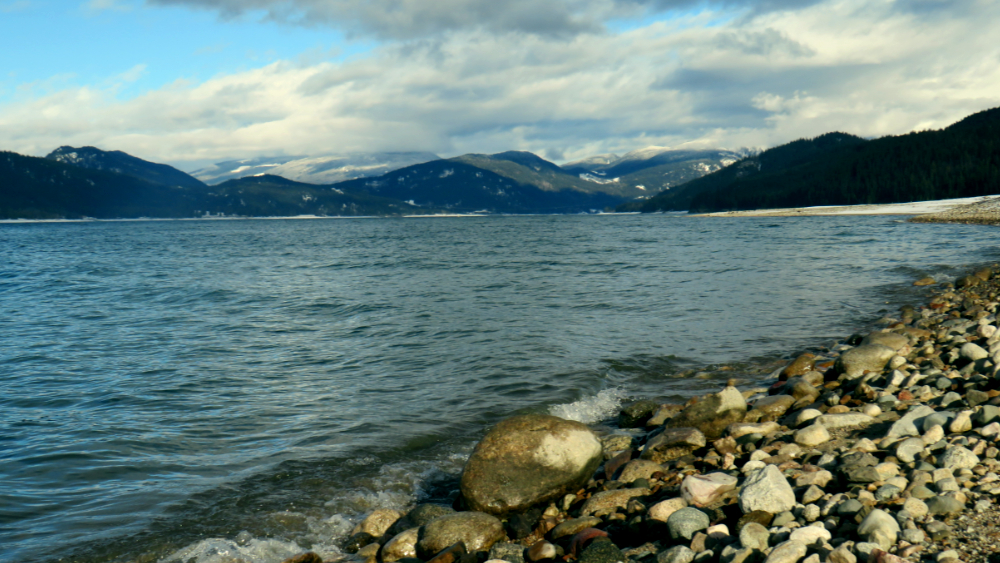
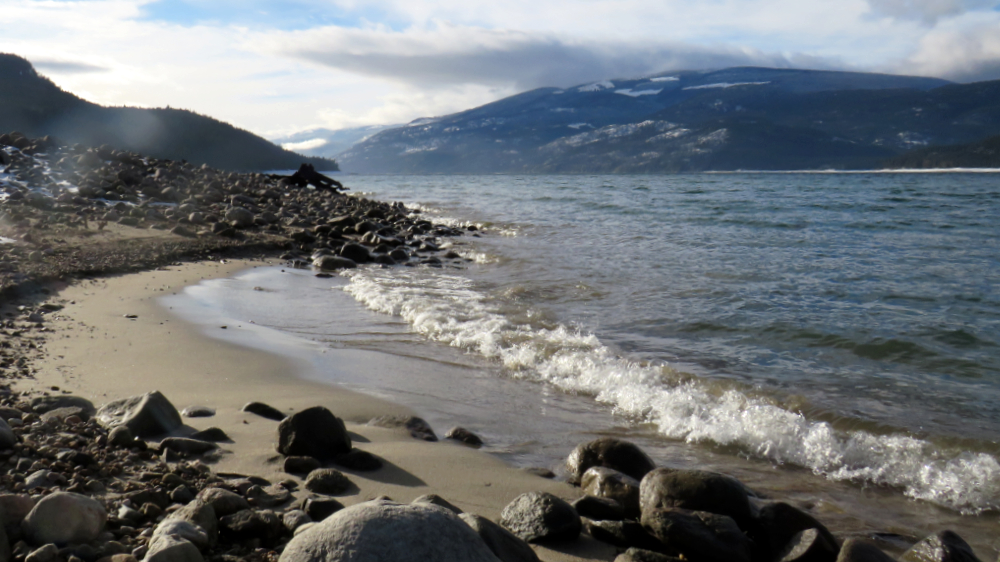
Natural Splendour of the Arrow Lake

Wednesday’s Photos

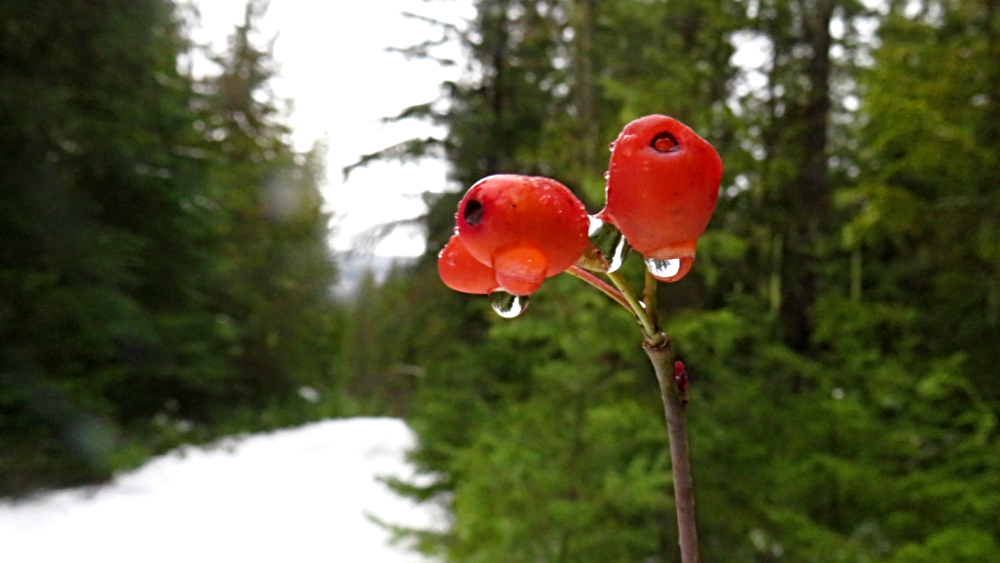
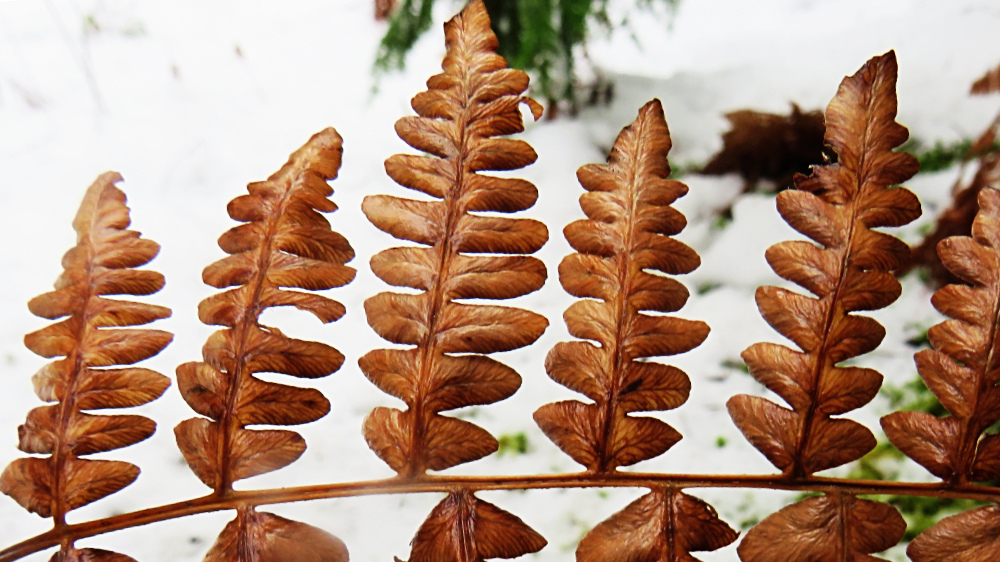
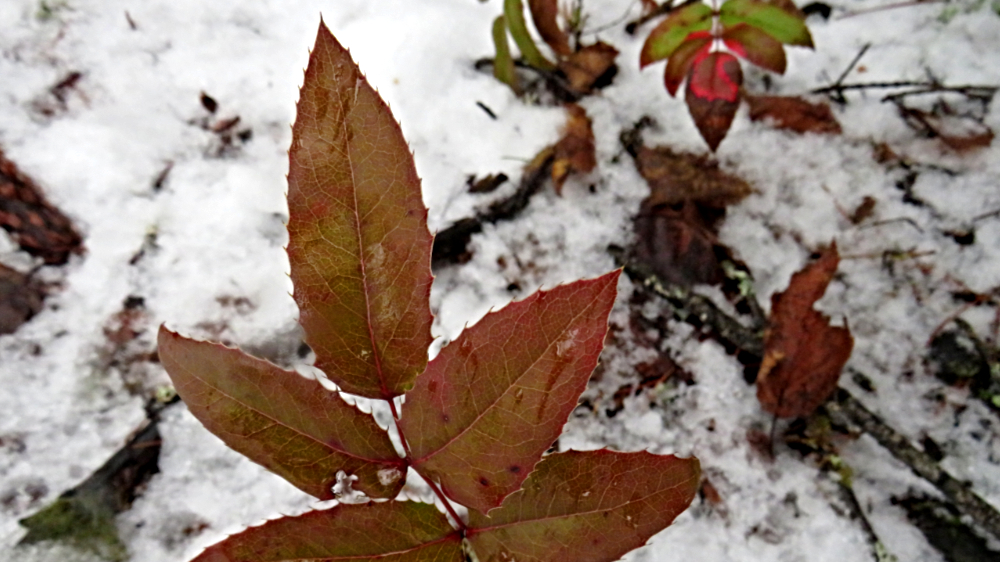
Rose Hips, Ferns and Witch’s Hair

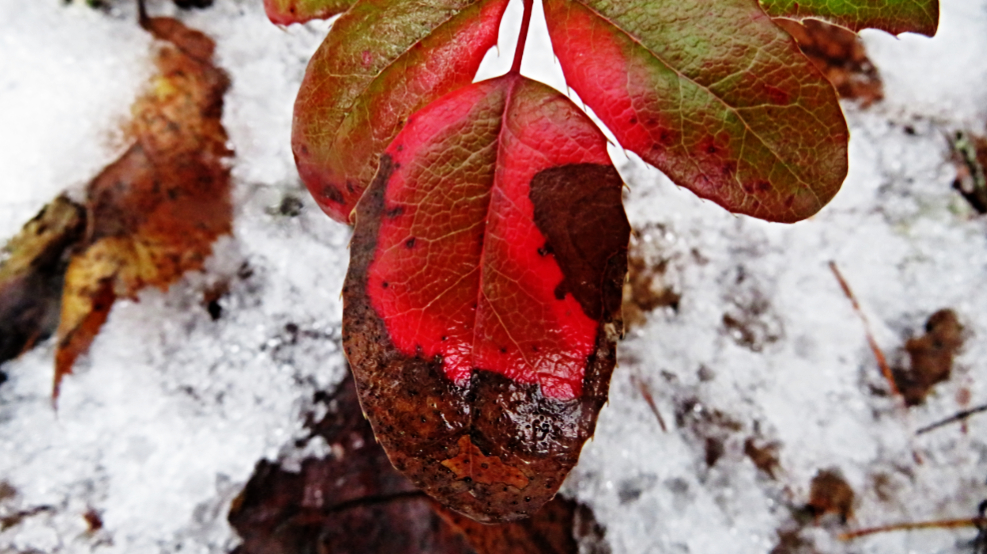
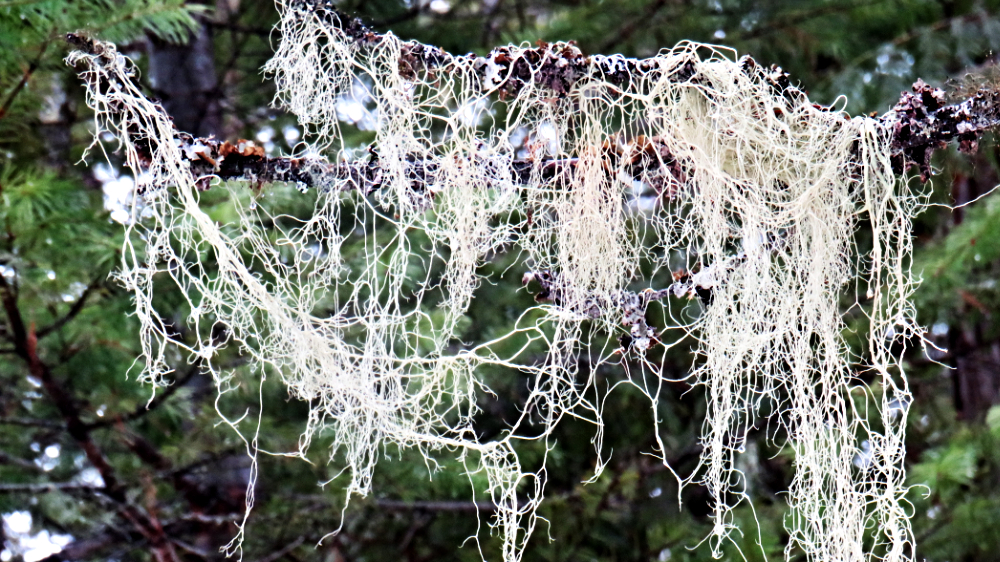
Even though snow had fallen last weekend,  it wasn’t enough to deter us from another hike on our favourite trail through the woods down to the Arrow Lake. My wife and I decided on another theme for this walk through the winter landscape. We wanted to capture plants that managed to stick their heads above the snow. Here are the results. Enjoy.

The Peter and Gertrud Klopp Story – Chapter XXX

The Incredible Journey of Biene’s Engagement Ring

 banff

“When you realize you want to spend the rest of your life with somebody, you want the rest of your life to start as soon as possible.”  Nora Ephron

Peter worries about the Future

This chapter contains a highly condensed version of our correspondence. Only parts that seemed relevant to the theme of the initial challenges facing us on either side of the Atlantic are included here. I reorganized some paragraphs only to enhance the flow of the narrative and sometimes added a sentence or two to make for better transitions. What remained is the fascinating account of the incredible journey of Biene’s engagement ring.

May 29th

My dear Peter,

Your latest letter has made me so happy, and all your plans have touched my heart. I would love to write, o Peter, commit such a great ‘foolishness’, landing a job with the IBM Company and let me soon come to you so that through our closeness we can give each other strength to do all the things that you have described to me. But Peter, you are right; we must not be unreasonable. And perhaps time will pass more quickly and more easily than we think. I am so eagerly waiting for the moment, when your letter to my parents will have arrived. I cannot put into words at all how much I miss you. But because I know that you love me I can bear the long wait…

My dear Peter, now that I am going to England to work as an a-pair girl, I have a special wish. I can hardly overcome my fear to ask you for something that I so fervently desire. But I will directly ask you, because you love me. So I really don’t need to be bashful about it. You know, Peter, I would very much like to wear a ring from you, especially now as I am going to England. Not that I couldn’t be as faithful without the ring. You certainly know that, Peter! I wish that everyone could see that I belong to you and that I promised to be faithful to you. You know, Peter, it is a peculiar feeling, but I believe that I would feel like having some kind of protection, because everyone could see that I have you. Can you understand this, Peter? If I didn’t know how much you love me, I would have never found the courage to write you this…

In Love,  Your Biene

 “May 31st

My dear Biene,

If I had to report on my search for work or my planned studies at the university, I would have nothing to write today. I hope you do not get impatient that the questions about my job and teachers’ training have not been settled yet.

Gradually I am beginning to worry about us and the more I think about the future the more anxious I get. You know, I have a restless heart that is incessantly driving me, even at times troubling and tormenting me, especially when things are not going the way I had planned. This restlessness engenders a yearning for inner peace and security. Dear Biene, you are my alter ego. In you I found everything I did not have. Without you I would be nothing. Because I love you so much, I also want you to be always happy when you are with me. Out of love you are willing to follow me no matter where I live. You emphasized in your last letter that you would even go and cut trees with me if necessary. But did you consider how much you would have to give up not just for a few days, but rather for a lifetime? You would no longer see your dear friends, your classmates, your brother, your father, and your mother. Later I cannot be the substitute for all these dear people. Instead I would like to be your husband and life’s companion. Dear Biene, to put it frankly I fear you will leave far more behind in Germany than what you will gain in Canada. You see, this is how I feel right now. You are on my mind all the time. You walk with me, you talk with me, and I hear warning voices. Perhaps I am totally off base, and one day we will meet again sharing the desire for happiness, security, and contentedness, for which your restless heart is yearning just as much as mine is. However, never would I want that my wish become an obligation on your part. Think it over thoroughly and give me your honest opinion. Please don’t be sad that I have given so much thought to this matter. I am only thinking about what I can do for you to make you happy…
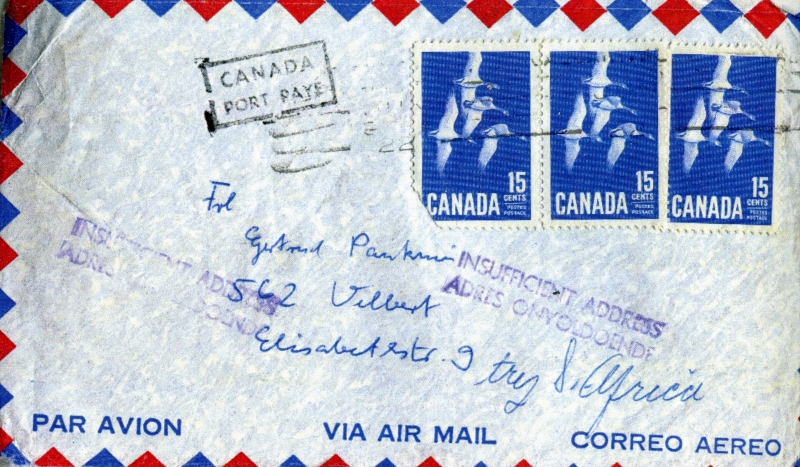
Greetings from the heart, Peter

Biene Withdraws her Wish for an Engagement Ring

Pristine Lake in the Rockies

Calgary, June 2nd

My dear Biene,

I must quickly write you this letter, and indeed for three reasons. Some very pleasant events have come up during the past two days. First and foremost I must ask you not to take my last letter too seriously. I had no work and I was worrying about our future. I missed you so much, and then I began to ponder about how it would be for you to meet me again poor and penniless. At such moments I worry too much. I believe that you already know that part of me well enough.

Today I came home rather exhausted. Yet I was happy and content. In my mind I saw you receive me tenderly in your arms, perhaps because I looked so very dusty and tired. Now I must let the cat out of the bag. Right on the first day of my search I found work. I have a good, but tough job with a construction company, and I am getting $1.80 an hour. Isn’t that a good beginning? Here I will stay until I find something better.

Yesterday I paid a little visit to the University of Calgary. From the bus stop I walked the last mile up the hill. You would not believe, dear Biene, how the people were gawking, because I was not driving a car. At the registration counter they gave me a very friendly reception. They retained my high school diploma for translation into English. Everything that I needed to know for the teachers’ training program in the Department of Education was in the book that the receptionist handed to me together with the application forms. There you have the latest information from me. I will write you again, whenever I can spare another hour.

Be kissed a thousand times! Your Peter

Velbert, June 4th

…Yes Peter, and then I read your letter. When I came to the line, where your expressed your concerns, a strange mood suddenly took hold of me, as if I was lying with closed eyes on my back bathing in brilliant sunshine. All at once a shudder seized me, because a dark cloud had drifted over the sun and for a moment withdrew all warmth from me. But this really happened only in the twinkling of an eye, because I could not understand why you were writing me this. I thought, ‘Why do you want me to be afraid of the future?’ Now I feel ashamed of these thoughts and I am sad that I even allowed them to surface in my mind. Peter, please, you must forgive me. There are certain days, when I am a little sensitive. So I did not recognize at first why you wrote me about your doubts. It was because you care so much about me and worry about my future happiness. I only saw the words, ‘ Did you consider all this very carefully?’ and ‘I don’t want that my wish become an obligation to you.’ I did not notice all the other words at all, which were so much more important. Fearfully I thought, ‘Doesn’t Peter no longer believe that our love can be much stronger than all the bonds of family and friends put together, and would he resign himself to the fact that I would no longer be willing to come to him any more?’ But immediately I felt sorry that such thoughts occurred to me, and all of a sudden I understood with my whole heart what had motivated you to lay all the possible future problems before my eyes. I am not ignoring them, Peter! I know exactly what it means to leave everything behind one day.

I talked to my mother about it and asked her, if she could bear to see me leave, because you wanted me to become your wife. You will see how great my mother’s love is. I regret more and more that you were unable to come for a visit before you left for Canada. She said it would be quite natural that I would leave her one day. But a mother would only let her children go with a light heart, if she knew that they would be happy…

Dear Peter, I feel just as strongly as you do that I could not be without you! Therefore, you must not ponder and mull over such thoughts any more. They put brakes on your zest for action and initiative. And in the end I would even believe that you cast doubts on our love, and that I could never endure. Peter, please promise me to put these depressing thoughts aside. You know that it is so simple for you to make me happy.

Now I would like to say something regarding my last letter. But I do not want to hurt you, and therefore understand me correctly. I would like to tell you that I am sorry that I had asked you for a ring. Perhaps you are not yet able to fulfill this wish, because you do not have the money or you believe that it isn’t the right time for it yet. Therefore, let us do as if I had never asked for it. I thought it would be nice to wear a ring from you, I also thought that perhaps you would be glad that I would want it. Peter, right from the beginning we two ran a course, which was quite different from the ordinary, and for that reason it is sometimes a bit complicated between us. And yet it could be simple, because I sense from every word from you that in your innermost being you are so closely connected to me. Oh Peter, don’t you understand? You must be able to understand that it is easy to give up something if one loves one another. And never would I like to make you unhappy again as I once did, when I had not yet recognized it.

Greetings with all my heart!

Your Biene

Accident at the Construction Site and a Painful Walk to the Jewelry Store

1200px-Rocky_Mountain_National_Park_in_September_2011_-_Glacier_Gorge_from_Bear_Lake.JPG

On Friday, June 18th, I had an accident at the construction site. One of the bricks slipped off the upper board on the scaffold and hit my left knee, which almost immediately swelled up. It could have been much worse. The law did not require safety helmets in the mid 60’s. As I found out much later, I wasn’t even insured and therefore would not have received financial assistance from the Workmen’s Compensation Board. Our boss had deducted the laborers’ insurance and pension contributions from the pay cheques, but kept the money for himself.

Unable to work with so much pain from my swollen knee, I had to call it quits for the day. I promised the foreman that I would report back the following Monday. Instead of returning to my brother’s place, I stepped on the bus, which took me to downtown Calgary. Very close to the bus station stood the building of the Hudson’s Bay department store. With its three stories it was then the highest building in downtown Calgary. From there I limped two and a half blocks on Seventh Avenue to the jewelry store. There on the previous weekend I had ordered Biene’s engagement ring, on account of which so many tender, bitter-sweet feelings had already welled up in our hearts.

I was lucky. Although I had come sooner than planned, the ring was ready. Yet I felt timid and embarrassed in my dirty work clothes and with bloodstains on my pants. I felt oddly out-of-place in this opulent place laid out with red carpets, the walls covered with oak paneling, spotlights illuminating the sparkling wares for the wealthy, with every imaginable piece of expensive jewelry securely placed behind glass cabinets. My heavy German accent was in stark contrast to the polished Oxford English of the gentleman, who was wearing a formal suit. I pulled out four twenty-dollar bills from my back pocket and put the folded bundle on the counter top. It was one week’s worth of hard work. On that very same day Biene’s engagement ring began its odyssey half way around the globe, but never arrived at its intended destination in Germany.

For the longest time I did not know that the letter with its precious content had gone missing, presumably lost in transit somewhere between Calgary and Velbert. Week after week I waited for Biene’s thankful and happy response, while Biene was desperately yearning for a sign of life from me. For her, as we have seen, the ring meant protection, a signal to all that she belonged to me. But perhaps more importantly she perceived it as concrete assurance of my love and faithfulness. Wearing, seeing, touching and feeling it on her finger would have imbued her with a sense of security from within and without. But there was no ring, no letter, not even a card, which would have immediately ended her distress and despair…

Biene Close to Despair


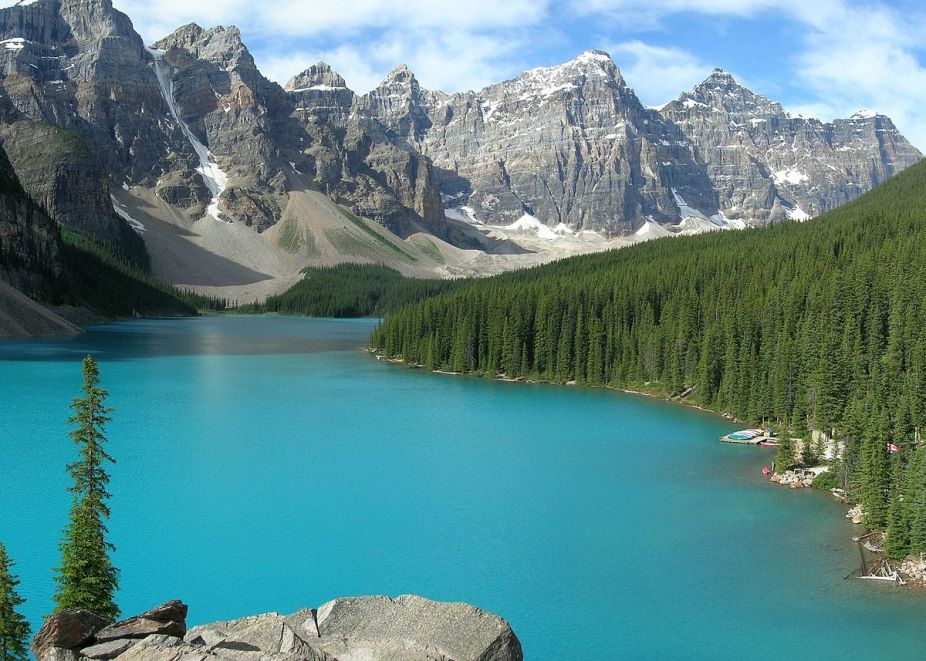
1200px-Moraine_Lake-Banff_NP

Velbert, June 24th

My dear Peter,

Now I cannot be so long without any mail from you and therefore quickly write me again, and even if there are only a few words! You see, it is the only thing we have of each other. I told you that I would understand if you couldn’t write as often as before. Now I start worrying again and wonder what may have happened to you, if you are doing well or are perhaps sick. Since your last letter it seems like eternity, and I am fervently awaiting a letter from you.

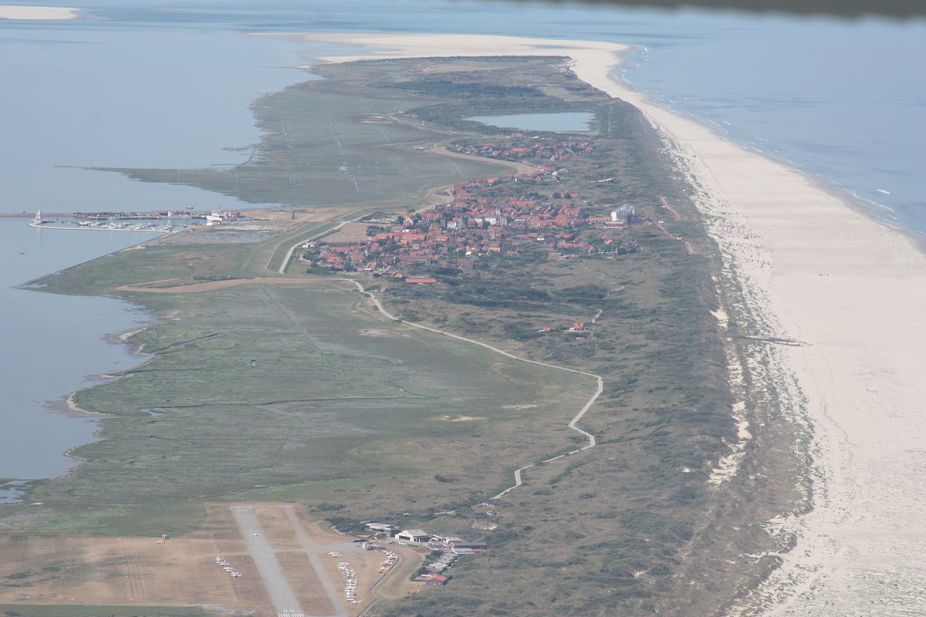
I hope that you received my letters and my card from the Island of Juist. There we spent four carefree and happy days at the North Sea. Every year the Department of English organizes an introductory get-together for the participants in the first semester. More than ever before I had wished you were here to share all these beautiful experiences with me. I met many new friends, but as nice as they all were, nobody can replace you!

1200px-Flug_Juist_2010_PD_223

The sea, when it is stormy, is so captivating and contributed a great deal to the atmosphere of friendship and harmony in our group, which was of course also the goal of this excursion. One cannot speak any idle words when walking along the beach, struggling against the storm, or viewing the playful waves in motion. If one talks at all, then only words, which come from the heart and reveal a small aspect of one’s inner being. I had to talk about you; for every thought is somewhat connected to you. All my companions wanted to look into the locket with your picture in it. Now they all know you a little, and the boys kept teasing me, ‘How is Canada?’ Whenever I saw one of them coming my way, I already expected a question like that. But I wasn’t cross with them; for they meant it well.

What can I tell you about the sea? You already got to know it certainly much better than I on your voyage to Canada. However, one thing you could not do like I did, that is running into the surf and then being carried by the waves. That was an incredible feeling! We were so relaxed that we sang from morning to evening. Our American exchange student, Pete, who had an almost inexhaustible repertoire of songs, taught us many of them, which we sang with never-ending enthusiasm. It was truly a genuine music festival! Peter, you would have very much liked it too. But I promise you to learn all the songs so that later on we can sing them together. O Peter, if only you had been present! Every time they were singing ‘My Bonnie lies over the ocean, my Bonnie lies over the sea, oh bring back my Bonnie to me!’, I ardently wished the wind just like in the song would carry you to me.

Now I wish from the bottom of my heart that you are doing well. And if something troubles you, dear Peter, please write it to me. I am waiting so longingly for your letter. I even asked after school at the post office, but it was all in vain.

Greetings in love and many hugs, Your Biene


Still no letter from Peter …

Velbert, June 30th

My dear Peter, I don’t know what to do any more! I feel so helpless and powerless, because I don’t know what I should do to get an answer from you. What might have happened that you don’t write to me? It is so terrible having to wait so long, when out of worry my heart is almost breaking. Oh had I only not written that I could understand if you wouldn’t be able to find much time to write. So I don’t know at all, if you don’t write on account of my remark or if there is a more serious cause. But since your last letter so much time passed by that in my inner turmoil and anxiety I turned into a veritable bundle of nerves and I am frightened by the darkest thoughts. Oh Peter, tell me as quickly as possible that all is well! Peter, let me come to you! There must be some work for me there too. I am really not afraid of anything except our separation. I did not want to tell you this, but for the moment I have lost all my courage. How much would I gladly endure, if only I could be with you! Dear Peter, if there is somehow a way, then let us take it. It should not be any more difficult than our long separation. How often did you tell me that we must take our ‘fate’ into our own hands! Surely it will turn out well, if we do it together. I firmly believe this.

Please, dear Peter, quickly write me or else I believe that you are gravely ill. I am constantly praying for you. And if I should have written something in my letters, which hurt your feelings, please forgive me. If I did, it would certainly be, because you are so far away from me and not, because I want to hurt you.

I love you, Peter! Your Biene

Rocky_Mountains_banner

Peter finally Breaks his Silence

July 2, Calgary

Dear Biene,

I cannot let you wait any longer. You are like me. You speculate and worry more than it is necessary. Today it was extremely hot again, and yet I had to work for eleven hours. We have to catch up now on the time we lost during the rainy days. But it is not because of my extreme tiredness after work that I did not write to you. The true reason is far more important.

Today, since I know for sure that fate wanted it differently, I can tell you about what happened. Every day I had been waiting for a special message from you. And when you wrote on Monday about your experiences on the Island of Juist and you asked me to write how I was doing, I was already a little concerned, but in spite of your urgent plea I decided to wait for just few more days. But then today on Friday I lost all hope that you actually received my previous letter.

On the German or Canadian side a letter carrier must have stolen it perhaps assuming that it contained something valuable. I am so sad, for he was right. In it I described to you that on the 18th of June, a year and a day after our first date a brick had fallen on my knee and that I was limping to the jeweler’s store. There I picked up the ring I had ordered for you. You can easily imagine the rest of the story. I wanted to give the ring to you, because I was convinced that you truly desired it with all your heart and everything you wrote afterwards was only a renunciation mixed in with painful regret. I saw you in my mind how it first you were perhaps a little angry with me, but then at the end how gratefully and happily you would have acknowledged the receipt of my precious gift. Yes, I am sad that the letter with the ring apparently is lost, but I console myself with the feeling of having turned a good thought immediately into action. Whatever happened on the postal route was beyond my control and we had to accept the bitter fact that the letter was lost.

For more than four weeks Biene and I tried in vain to track down the letter that had gone astray. Obviously it was almost impossible to locate a piece of mail, which I had failed to send by registered letter. After I provided all the particulars, such as type and size of the letter, postage paid and the date, on which I had put the letter in the mailbox, even the thorough and efficient German Post Office was unable to help. Suddenly a ray of hope entered our hearts when I pointed out the possibility that perhaps because of the extra weight and because of insufficient postage the letter had been sent by surface mail, and therefore was still on its way to Germany. This thought occurred to me when I checked the mail I had received from my friend Hans, who had never sent his letters by air. They often took more than a month to arrive. But by the end of July that last glimmer of hope had completely faded. We had indeed resigned ourselves to not seeing the letter with the engagement ring ever again. Besides other things were pressing heavily on our mind. During the long, desperate wait for each other’s reply it became abundantly clear to us and then, when we had resumed our correspondence, even more so that we needed to end our separation much sooner than originally planned. However, shortening the wait time meant that I had to have something concrete, on which to build our romantic aspirations. To find a meaningful job or to enter the teachers’ training program at the university these were the options I was contemplating.

family438

Then a letter arrived that looked strangely familiar. And familiar indeed it was, because it was the missing letter with the ring. In my excitement to fulfill Biene’s wish and dream and perhaps my attention numbed by the pain from my swollen knee, I had forgotten to write Germany on the envelope. Now had Canada Post promptly returned the letter, Biene would not even have noticed the small delay of a day or two. But the overly zealous employee tried to be helpful by second-guessing its destination. To him Velbert sounded Dutch, Elisabethstr. appeared to be British. So our dear postal employee concluded that the country in question had to be South Africa. Thus the letter had traveled half around the globe all the way to Johannesburg by air and had come back ever so slowly by surface mail.

Exactly two months after I had originally mailed this precious letter I put the unopened envelope into a larger one, added a passionately written letter and forwarded it all to Manchester, England, where Biene had already been working as an au-pair girl at the Landes family for a few weeks. But I am getting too far ahead in my story and I must regretfully leave her reaction, her work and her studies for another chapter.