Chapter 22 of the Peter and Gertrud Klopp Story – Part IX

The Romantic Soldier

x305

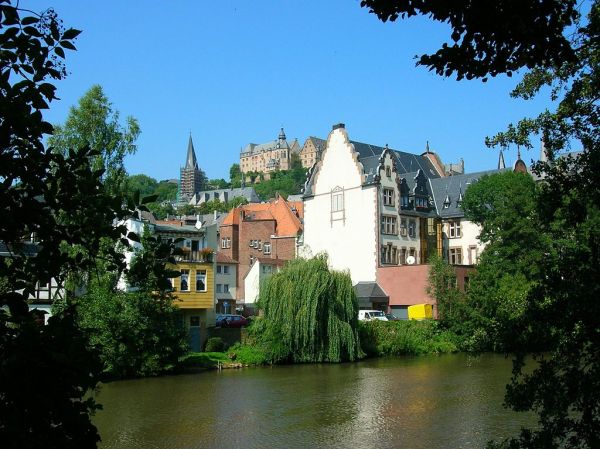
Beautiful City of Koblenz – Summer 1964

I often wondered how it was possible that at certain times all troublesome events seemed to come together to create one powerful drama. Such was my deplorable situation between Christmas and Carnival, when I could barely stem the tide in a string of fateful events, such as the fatal accident of Sergeant Wohl on the icy roads of Feldafing, the loss of my father, emotional upheaval over the injustices caused by red tape in the army bureaucracy, and above all the almost certain demise of a shaky relationship with Biene. And now barely six months later, emerging from an apparently bottomless pit, it seemed as if all favorable currents had joined forces to lift me out of my deep depression into the blissful realm of true happiness in quick succession of small but significant steps: a book written exclusively for Biene, clarifications of the intentions of my heart and their acceptance albeit somewhat hesitatingly by Biene, two rendezvous to show that we were real human beings, not phantoms of our distorted imagination, the discovery of the joy of teaching, the instructional sessions in the afternoons, and the recognition of my newly discovered talents by my superiors. All these events in combination raised my self-esteem so much that I almost regretted having requested a transfer to the Tannenberg barracks in Marburg.

The most enjoyable outings with my brother Adolf on the weekends tore me away from my history books. With his congenial companionship he gave me a renewed spirit with emphasis on the social aspects of life that I had been neglecting far too long. When Adolf was unable to come and I for one reason or another wanted to spend the weekend in the barracks, I would still read Roman history books, but with a focus on topics that were more relevant to my own life and closer to my heart. Instead of dwelling on Roman conquest with the inevitable theme of death and destruction, I now learned about the importance of values, particularly of those pertaining to marriage, family and the raising of children. On sunny days I would find a cozy spot on the lawn near the 400 m oval racetrack. There I would open Mommsen’s chapter on the status and significance of the family in the Roman Republic and would read with increasing interest about the family as the smallest unit, upon which the entire state depended for its health and its very existence. I marveled at the role that the wife (domina) played in running a large and complex Roman villa and in nurturing and imparting values onto her children, while her husband (dominus), being still intimately connected to the soil, would work the fields to provide food and income for the family. Like myriads of individual healthy cells make up a strong body, so the Roman family units protected by law and honored by society provided the moral fiber, which made the early Roman republic so strong and powerful. After such undisturbed moments of contemplation on matters so distant and yet so relevant I returned to my room with the distinct realization that I had received valuable clues for the unfolding of my own personal life in the not too distant future.

roman_family

Roman Family

If there was ever a period in my early adult years that reflected the spirit of 19th century German Romanticism, it was during the summer months of 1964, while I was awaiting my transfer to the Tannenberg barracks at Marburg. My new friend Josef Hegener and I made use of every free moment to escape the stuffiness of the poorly ventilated barracks rooms. Away from the noise and heat of the city we found refuge in the nearby wooded hills, where hiking trails invited us to explore nature in the cool of a Sunday morning. We delighted in the colorful sight of a mountain meadow bedecked with innumerable wild flowers. The buzzing of bees and bumblebees, the happy chirping of birds at the edge of the forest, the murmuring of a brook, the croaking of an army of frogs making their presence known from a pond were together with all the other joyful sounds music to our ears. From a footbridge we gazed at the athletic performances of water striders skimming gracefully over the surface of the gently flowing waters. Joyously we followed the trail to a hilltop, where our eyes feasted on the magnificent mosaic of woods, fields and villages below. Down in the valley a church bell was ringing inviting us to attend the church service and give thanks to God for His wonderful creation. As we entered the village church, the congregation had just started singing ‘Now thank we all our God’, a hymn that became one of my favorite songs of praise both in German and in English. I felt elated after having been granted such a rare glimpse into the connectedness between the grandeur of nature and God’s presence in it. In my exuberance over this wonderful experience I quickly wrote a postcard to my folks back home in the form of a wedding announcement: We have been united in marriage signed Nature and I.

dandelion

Dandelion Flower

The following Monday I met Sergeant Otto Schmidt, as I was crossing the huge center yard on my way to the building, where I was going to deliver another lesson on basic electricity. The sergeant was beaming with pride, because he had just received praise and recognition from his superior officer for his success in running an outstanding instructional program for his unit. He was actually very generous in giving me some of the credit. Then I noticed how his facial expression suddenly changed. Otto Schmidt about a head shorter than I was no longer looking up into my eyes, but gazed straight ahead in utter amazement and bewilderment at my uniform jacket. Had a button come off or had I left the shirt collar too casually unbuttoned? No, these minor flaws in my outer appearance had never been a problem with this friendly sergeant. There was something that he had most likely never seen before. In total disbelief his eyes were fixed on the humble head of a dandelion flower, which I, following my current romantic inclinations, had placed conspicuously on my uniform. Sergeant Schmidt was almost speechless. All he could do was shake his head and stammer, “Klopp, Klopp, what is the meaning of this all?” To his great relief I removed the objectionable flower and hurried off to my electricity class. A symbol of love, a symbol of peace was on the uniform of a German soldier!


What makes a good photographer?

It is not often that we get really good advice on what is important in creating memorable shots in photography written in a non-technical and easy to understand language. Such an advice can be found in this post, which I feel honored to have permission to reblog. Enjoy!

Alok Singhal's avatarThe Learning Curve

I often get the question – Which camera do you use? Seems people think it is only the camera that matters, not the ‘eye’ that one has in finding beauty around!

I am not a professional photographer, but based on the positive feedback I normally get, I can say it is more of how you look at the scene that matters; device comes later. Even if you talk about the device, some pics from my iPhone (I am a huge Apple fan) are equally good as compared to the ones from Sony Alpha 7 that acts as my travel companion.

Now the ‘eye’ I am talking about is looking at the scene holistically and then the details. Are objects complementing each other?, is there something which is not required in the frame?, is it too bright or dull in the background?, is it all symmetric? etc. I like to give my…

View original post 169 more words

Chapter 22 of the Peter and Gertrud Klopp Story – Part VIII

Exploring the Moselle Valley with my Brother Adolf

x294

Moselle River – Summer 1964

My brother Adolf was in the final year of his apprenticeship program at the Honeywell Company in Hanau. This city north of Frankfurt was not far from Koblenz. When the weather was fine, Adolf would make it a weekend practice to pick me up at the gates of the Falckenstein barracks. From there we went on trips in his venerable old VW beetle to explore together the beautiful Lahn and Moselle valleys. The summer of 1964 brought an exceptionally long period of sunshine quite unusual for this western part of Germany, when cloudy skies and rain often drove sun-seeking German tourists south to the Mediterranean beaches of Italy and Spain. On one of these fabulous weekends Adolf suggested a wine sampling tour all the way up the River Moselle to Trier, the ancient location of the imperial summer residence of the Roman emperors.

x303

Peter Relaxing in the Famous Wine Region of Germany

Having finally moved by two rendezvous with Biene at Lake Baldeney beyond a mere fantasy world to a more solid relationship, I felt carefree and cheerful. I readily agreed to Adolf’s proposal, and off we rolled into a westerly direction. Small towns and quaint villages, medieval castles on hill tops, the meandering river, the hills covered with the light green carpets of vineyards offered a magnificent view. At the town centers often located near the local fountain, vintners with samples from last year’s vintage were catering to the traveling tourists in the hope of selling their fine bottled wine. The labels on the bottles were just as alluring as they were their precious content. Some had grotesque, unusual, even titillating names, such as Zeller’s Black Cat, Bare Bottom, Dear Woman’s Milk, just to name a few. Adolf and I took full advantage of the incredibly inexpensive samples of the finest wines in the country. In high spirits we drove on to the next ‘watering hole’, sampled another exquisite wine, and kept on going from town to town, from sampling station to sampling station, like bees flitting from flower to flower savoring the delicious nectar. We happy-go-lucky brothers were singing, joking and drinking all the way to Trier, where Adolf feeling generous invited me to have dinner in a cozy restaurant not far from the historic Porta Nigra and the famous ruins of the Roman thermal baths.

x301

The Imperial Baths of Trier

It felt good to enter the cool premises of an inn after such a long ride through the sweltering summer heat. After a hearty meal we lingered over a cool refreshing beer while waiting for the heat in the valley to come down to a more tolerable level. Air conditioning in a VW was virtually nonexistent in those days.

x298

My Brother Adolf at the Thermal Baths at Trier

There I sat, a bit sleepy and drowsy from the wine and beer, listening half-heartedly to Adolf’s tirades against the American imperialists, the war in Vietnam, the killing of innocent women and children perpetrated by the American ice cream soldiers as he contemptuously called the GI’s, the exploitation of the working people, the advantages of socialism for the common people and the evils of capitalism. When Adolf was talking politics, a passionate fervor seized his entire being; his words poured out as if he had experienced all these real and imagined injustices himself. When the verbose eruption of truths, half- truths and lies had finally subsided with no notable effect on me, the apolitical person that I was at the time, Adolf returned to his congenial and humorous self again, ordered another beer for us from the pretty and courteous waitress and described her benevolently as a ‘nice kid’. Now it was time to introduce me to the kind of vocabulary that would definitely not be very useful for my later academic career. The stock of swearwords coming from the oil patch environment was quite impressive.

x304

Peter on a Sightseeing Tour with his brother Adolf

When he changed topics and began to talk with extravagant enthusiasm about Canada, I was all ears, even though he described a totally different country from the one I had learned from books. Adolf’s opening line for almost anything that had to do with Canada was, “Peter, with us in Canada things are like this.”

x293

Adolf taking a Roadside Break at the River Moselle

Before coming to Germany for a three-year stay, he had worked in the oil fields at Swan Hills in northern Alberta, where work was hard and money was plentiful. He loved to tell me stories of the rough-and-tumble of camp life. At payday many workers would rush to Edmonton, the capital city of Alberta, to spend their hard earned money on booze, women, and cars. Adolf having a good grip over his finances was not entirely immune to the lure of owning a shiny new car. In a sudden wave of nostalgia for the good old days at camp he described how he had once walked into a car dealer’s showroom and pointed at the latest model of an eight cylinder muscle car that he wanted to purchase on the spot. When the delighted salesman asked him how he intended to pay for it, Adolf’s moment of glory had come, which he now revived by telling the story to his kid brother.

“Why,” Adolf answered, “in cash, of course!” And with these words he pulled out a bundle of hundred dollar bills and counted out the full amount of the purchase price on the counter of the astonished salesman. Adolf never failed to make critical remarks about the painfully slow German bureaucracy that he had to put up with, when he bought his VW beetle in Germany.

“Peter, with us in Canada things are like this,” he used his opening pet phrase again. “With all the paper work done and the registration and insurance papers signed I drove that beauty of a car out of the dealer’s parking lot within less than an hour.” Having learned how things were done in Canada, I remarked that it was time to return to my barracks. The evening sun flooded the eastern mountains in a sea of gold. When Adolf and I arrived in Koblenz, the sun began to set and only the pinnacles of the volcanic Eifel Mountains were still reflecting the last rays of the day.

Chapter 22 of the Peter and Gertrud Klopp Story – Part VII


Career Planning and a Painful Self-Assessment

creative-work-by-my-friend-hans-fricke

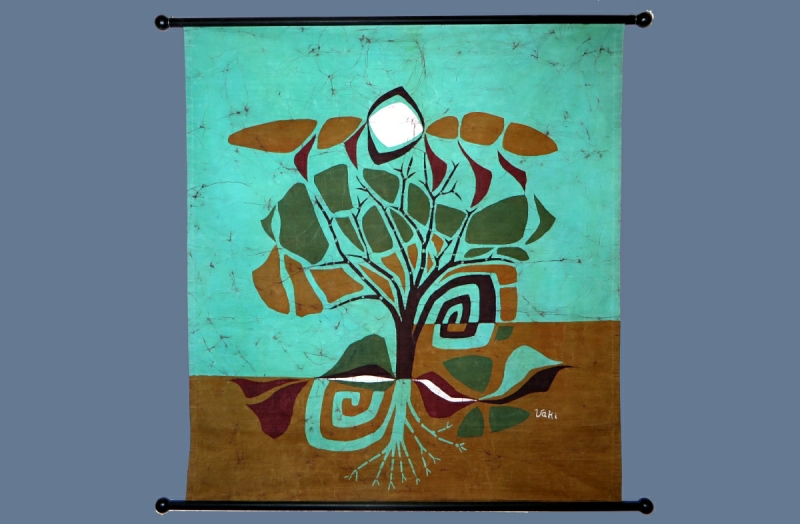
Art Work  Entitled ‘There are many ways’ by my Friend Hans Fricke

My brother Gerry, who lived in Medicine Hat during my service in the West German army, is not exactly known among family members as an avid letter writer. All the more I was surprised to receive a detailed answer from him to my question regarding teacher’s training in Alberta, Canada. Driven by youthful desire for adventure but also by a kind of escapism that was getting stronger with each additional month in the army I wanted to explore a possible teaching career in Canada.

my-brother-gerry-and-wife-martha-in-the-early-60s

My Brother Gerry and his Wife Martha at Medicine Hat

Equally important for the understanding of my sudden interest in a totally different profession was that my staff sergeant in Koblenz had taken notice of my knowledge of basic electricity and electronics and had given me the task to instruct the new recruits. This went over so well that I was given more and more time off from regular duty to prepare my lessons and teach. So it happened that I discovered a talent, which I thought I did not have. Gerry accurately explained the requirements for entering the teaching profession in Alberta. I had to have my German high school diploma validated, had to give evidence for proficiency in the English language, and had to  complete a minimum of two years university training. With this information I was able to do some serious planning for the future. Suddenly a most fortuitous train of thoughts popped up in my mind that greatly increased my longing to go to Canada. Exciting ideas followed in rapid succession: immigration, teachers’ training at the University of Calgary, a teaching career, an income with the prospect of pay increases with more training, getting married to Biene and having a family.

mother-and-daughter-in-law-martha-in-medicine-hat

Mother and Daughter-In-Law Martha at her Home in Medicine Hat

I am still thankful to the captain from the basic training period for instilling the desire for good planning in order to achieve a dream The target I aimed for was still years ahead. It was actually a twin target of a rewarding career and life with Biene at my side. To hit the bull’s eye at such a distance would require a great deal of determination and persistence. Would I have those qualities, but most importantly would Biene support me in something – I am ashamed to admit – I had not even mentioned to her yet? So this would be a good time to have a critical look at myself. In my own eyes I had become a mature young man years ahead of my comrades in terms of acquired wisdom and good planning. But when I looked at the erroneous assumptions I had made about the world around me, about Biene and myself, I marvel at the way all my dreams had eventually become a reality.

Firstly, in my letters to Biene I had written about love, but never about marriage. I assumed that my ‘I love you’ would translate into ‘Will you marry me?’

Secondly, what was Biene to make out of my long-winded flowery dissertation on love between a man and woman?

Thirdly, Biene had already been frightened by the painful events leading up to and following the break-up of her engagement with Henk. Now I came and frightened her some more by openly writing about my passion for her without revealing or at least hinting at my genuine intention to marry her.

Fourthly, it was preposterous to assume that just because I was willing to marry her she would want to marry me too. This was truly the mark of an egocentric ass that I was at the time.

Last but not least, twelve months in the army and my comrades’ boastful talk about their amorous adventures should have taught me that being married and making love do not necessarily belong together. How was Biene supposed to know what was on my mind about a topic that had been a taboo throughout our childhood years?

So in summary I had built a dream castle with love, marriage, family and career on the preconceived notion that Biene had read all this and much more between the lines. It was then one of the great miracles of our relationship that no storm tide came rushing in at that particular juncture and made the castle collapse like a deck of cards.

In a postcard Biene briefly assured me that she no longer wanted a mere soul-mate relationship. She wrote that many of the questions and problems that were troubling us would be resolved once we had met again. And indeed we met exactly two years after we had our first encounter at Lake Baldenay. This brought some sunshine into my heart. My brother Adolf contributed a great deal to enhance that joie de vivre, which I felt all the more intensely, whenever I went with him on an excursion in and around the Rhine, Moselle and Lahn valleys.

Delivery and Set-Up of our Modular Home

Amazing Building Mover at Work again in Fauquier, BC


 October 17, 2016 was another milestone in the Peter and Gertrud Klopp story. For the day had finally arrived, when the long awaited modular home was delivered. It was a wet and dreary morning. It had rained all night and the ground around the construction site was getting soft and soggy. If you watched last week’s video showing the removal of our mobile home, you probably thought that the work was just about as tough as it could get. When you watch today’s video, you will find that the setting up of our new house was even tougher. Again the people of Hammer Pilot Car Services and R.J. Fisher Transport are to be commended for their outstanding work. In the spirit of teamwork every person was doing their best to make sure that the halves of the house were finally located at the precise spot, where the two pieces were going to be joined. However, the star was without a doubt Brian Coates of SSP Excavating. He came with his backhoe to the rescue, when the truck began slipping on the muddy ramp. With the help of a chain, Brian pulled the section into position. One more time three cheers to a job well done!