The P. and G. Klopp Story – Chapter IX Part II

Fun at the Fairgrounds and Breaking Bedtime Rules

Many towns and villages in Germany had and still have an annual Kermesse, a sort of funfair that has its origins in the Middle Ages. When this highly popular event came to Messkirch, the colors and sounds of the fairgrounds attracted me. There were the noisy roller coasters, the gentler merry-go-rounds for little children and the giant Ferris wheel, the cacophony of music blaring from loudspeakers cranked up to full capacity, showmen at dozens of sideshows clamoring for the attention of hundreds of people milling through the narrow alleys, the tantalizing odors of frying Bratwursts, the games people played, such as target shooting with air rifles, throwing darts, knocking down pyramids of cans with tennis balls. Being part of a giant colorful human canvass in motion, I enjoyed just being there. I had no money to spend on a ride on the roller coaster, or on a paper cup filled with French fries topped with mayonnaise, or to pay for the fun of popping a balloon with a dart to win a prize.

Merri-go-round - Photo Credit: volksfestundkirmes.de

Merry-go-round – Photo Credit: volksfestundkirmes.de

When I returned to the Kermesse on the following afternoon, it so happened that one of the attendants of the merry-go-round had not yet shown up for work. The operator who had spotted me hanging around at the ticket booth approached me and asked, if I was interested in a little job in return for free rides. All I had to do was to take and tear up the tickets of the people sitting in the gondolas and waiting for the merry-go-round to start. That was very enjoyable except that it lasted only a few minutes. The tardy worker arrived and my job was done. But to my surprise the operator honored his promise. So I was taking rides for the remainder of the afternoon for free. Unfortunately I had not yet learned much about self-control and did yet comprehend that there is something we call too much of a good thing. Yes, I experienced the thrill of being twirled around in a sea of color and sound. But after the fifth or sixth ride the initial excitement gave way first to boredom, then to nausea. Stubbornly I kept taking one ride after another, until motion sickness forced me to quickly leave the fairgrounds feeling sick to the point of throwing up. Late, far too late I arrived at Schloßstraße 18 pale and exhausted. To make matters worse, Herr Stoll in his anger about my tardiness slapped me hard in the face with his powerful carpenter’s hand and sent me off to bed. Sick and hungry I spent a long time tossing around in my little bed before eventually falling asleep.

My eldest brother Karl attended the same high school in Messkirch. He had lost a couple of years of schooling due to the turmoil in the years immediately after the war. When he was finally reunited with our family in Rohrdorf, the school administration allowed the 18-year old Karl to participate in classroom instructions with students six or seven years younger. The first foreign language offered in all the schools of this part of  Germany was French. Hence Karl who had received no instruction in this language before had to start over again at the lowest high school level. However, in all other subjects he was clearly superior and so he could concentrate all his energies on French. As soon as he obtained the necessary language proficiency, he was allowed to jump to the next higher grade. He did this often several times in a single school year. It did not take very long for Karl to acquire a reputation for being a genius. Enveloped in an aura of success he became a legend, even before he left the school. Teachers and fellow students alike marveled at his exemplary accomplishments. At first I was pleased to hear so many good things about my brother. However, with the accolades heaped upon that miracle student also came high expectations, which I was unable to meet. Instead of doing my homework I spent the afternoons outdoors with friends, whose company Herr Stoll did not approve.

One evening, it was already getting dark and it was time for me to be in bed. Suddenly I remembered a math assignment that was due the next morning. Pretending to sleep, I waited quietly until Herr and Frau Stoll had gone out for their evening stroll. Then I switched on the light, knelt in front of the tiny night table to do my homework. I had barely finished the first exercise, when I heard the staircase creak and the thump-thump of heavy footsteps. In panic I switched off the lamp on my mini-desk and in doing so I knocked over the small ink pot. In the darkness I tripped over my shoes and hit the wooden floor headfirst with a thud. Hastily I got up and jumped into my bed. Too late! The door burst open and the bright light from the ceiling made me squint. I was dazed and unable to move. Herr Stoll walked up to me, and slapped me in the face. Without saying a single word he switched off the light, slammed the door behind him, barely concealing his uncontrollable anger. His wife was waiting for him at the bottom of the staircase. I overheard him saying, “That will teach him obeying bedtime rules.” Even though this time they were really going for their evening stroll, I did not dare to switch the night lamp back on. I crawled under my blanket and listened in horror, as the ink was dripping drop by drop onto the wooden floor.

Soon afterwards our homeroom teacher prepared letters to be taken home to warn parents, whose children were in danger of failing the grade. Fräulein Welte gave me one to be signed by my father. I guess I would have had to present the letter to Herr Stoll, even though it was addressed to Ernst Klopp. Fearful of severe punishments I forged my father’s signature, but was dumb enough to brag about it to my classmates. It did not take very long, before Fräulein Welte got wind of my offense and mailed a letter to my home address in Rohrdorf. Fortunately Father was preoccupied with his own problems and was too far away to deal effectively with mine at school.

The P. and G. Klopp Story – Chapter IX Part I


Away from Home and the Thrill of ‘Mountaineering’

Power is of two kinds. One is obtained by the fear of punishment and the other by acts of love. Power based on love is a thousand times more effective and permanent than the one derived from fear of punishment.
Mahatma Gandhi


The German school system differed considerably from its North American counterpart. While the emphasis in the United States and Canada was on equality of opportunity for all in a democratic society, the system in Germany was based on an elitist model that provided high school education only to those students deemed capable of handling an academically demanding program. At the end of grade 4 or 5, the teacher would decide and make recommendations as to which students would be leaving the elementary branch to continue in high school for another nine years with the purpose of obtaining the prestigious graduation certificate (Abitur). The remaining students, who were unable to jump that hurdle or whose parents did not wish their child to pursue the high school route, would continue their elementary schooling up to grade 8. Then they would choose a trade, enter an apprenticeship program, during which time they would attend once a week a trade school. The school system in Germany was superior in that it produced on the one hand highly qualified trades people and on the other high school graduates who were better equipped for the rigors of a postsecondary education. It suffered, however, from a couple of major flaws. A teacher ultimately had the power of deciding on a child’s academic career, or parents from a lower class background with no appreciation for higher education could prevent their child from taking the high school route, even though he or she was very talented. Finally the overall system was inflexible. Once a student had embarked on the apprenticeship program, it was next to impossible to access a postsecondary education.

Coat of Arms of Messkirch

Coat of Arms of Messkirch

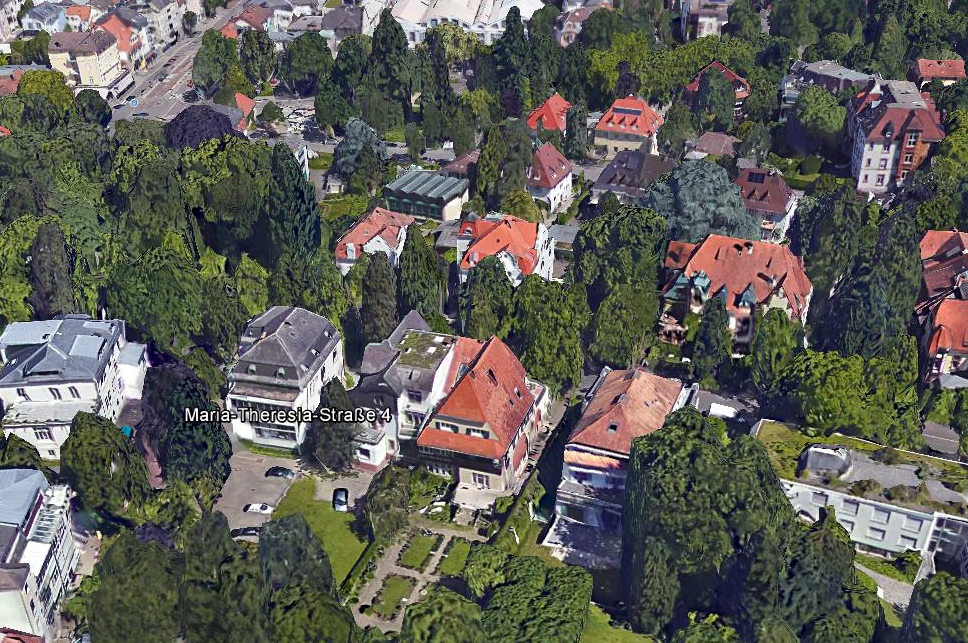
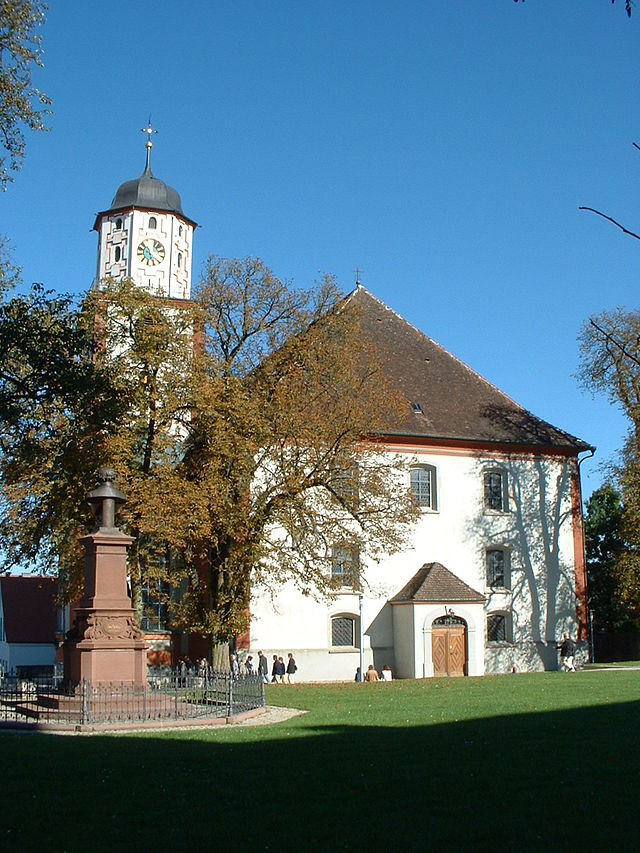
In April 1953 I was admitted at the Messkirch High School (Progymnasium). Since there was no public transportation between Rohrdorf and Messkirch, my parents had made arrangements with carpenter master Stoll to provide room and board and to act ‘in loco parentis’. Herr Stoll, a tall and sturdy man in his mid-thirties, lived with his young wife and his aging half-deaf mother above his carpenter’s workshop on Schloßstraße 18, a street near the famous St. Martin church and the renaissance castle with its adjoining park. Herr and Frau Stoll had recently married and were expecting their first child. They gladly received me into their home on the second floor. The living quarters were divided by a steep staircase into a kitchen and living room area on one side and into bedrooms, storage rooms and an old-fashioned drawing-room on the other. There was also a dachshund, which spent most of his time indoors, but occasionally accompanied the Stoll couple on their evening stroll through the nearby park. For me being away from home for a longer period of time, I felt good that the couple tried very hard to make me feel at home. There was plenty of delicious food on the table. Frau Stoll prepared and served a nourishing meat dish almost every day. I am sure that the rich diet was not intended for the skinny boy from the country, but rather for her husband, a giant of a man with the strength of an ox. Oh, how I loved the meat salad drenched in mayonnaise on my sandwiches at night. Most Germans ate their big meal at noon and were content with a few slices of bread with butter, sausage or cheese in the evening.

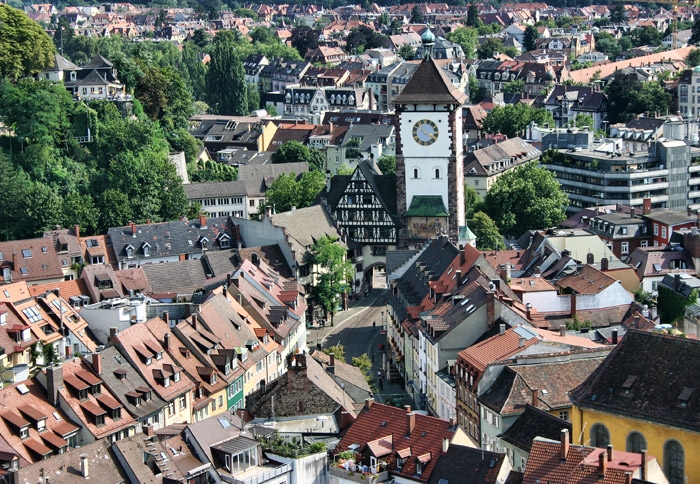
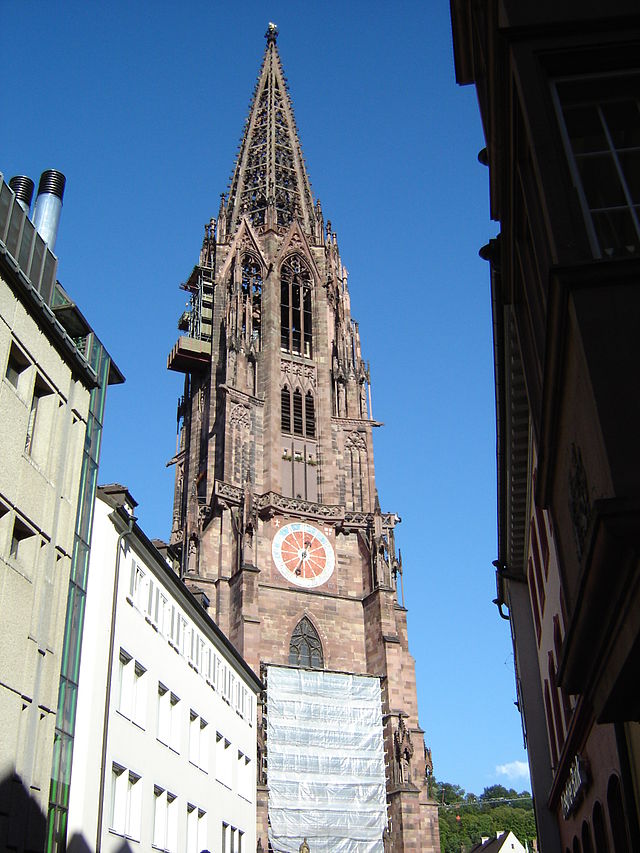
View of Messkirch 2012 - Photo Credit: wikipedia.org

View of Messkirch 2012 – Photo Credit: wikipedia.org

One day Herr Stoll took me to the top of the hill that was overlooking the beautiful medieval town. There was a rather steep incline on the part of the crest that led down to the town square and its market place. There he pointed out to me a faint line in the pavement, which would the starting line of the annual soapbox derby for young children over 10 years old. He once participated in such a race and won a ribbon, when he was about my age. He began reminiscing, and carried away by his nostalgic feelings that brought back happy memories, he promised that I would participate in the upcoming soapbox competition. When he saw my puzzled expression on my face, he quickly added that he would build a car for me in his carpentry shop. A simple soapbox then consisted of a wooden frame often brightly painted in red, blue and yellow colors, two axles, one fixed, the other connected to a primitive steering mechanism and of course the four wheels that hopefully would not fall off during the heat of the race. It was not uncommon to reach more than fifty km/h at the steepest part of the hill. So I, the dreamer of the Klopp family, had something very exciting to dream about. All in all this warm reception at the Stoll’s contributed greatly to ease my transition from country to city life away from home.

By the time I attended high school, I had become completely familiar with my role as a temporary foster child, which is to say that I felt confident enough to be myself again, the boisterous eleven-year old boy who did not quite fit the romantic image Herr and Frau Stoll had in their hearts and minds. It seems to me that before their own child was born I had given them an opportunity to practice, the art of parenting and apply some of the techniques they may have learned from reading books on the fine points of child rearing. Unfortunately, for this role they had unrealistic, rather rigid expectations about obedience, punctuality, choice of my friends, and above all my conduct within the narrow confines of their image of an ideal child. In that regard, it is safe to say that I bitterly disappointed them.

On May 29th 1953, the New Zealander Edmund Hillary and Tanzing Norgay, a Nepali sherpa climber, reached the summit of Mount Everest. The news of their successful ascent of the highest mountain spread like a wildfire over the entire world and quickly reached Msskirch, had its citizens talk about at home, at work and in the pubs. The buzz of this great achievement set off a spark that ignited the fertile imagination of us children. Near the starting line of the upcoming soapbox derby was a limestone outcropping covered almost entirely by moss and by grass at the bottom except for its bare pinnacle towering over the Adlerplatz (Eagle Square) below. Here my friends and I often gathered to play. Now this was our Mount Everest. This was our fantasy world, where we lived and experienced the glory of success and agony of near defeat, the dangers of climbing on vertical cliffs, the physical and mental stress and pain of Himalayan mountain climbing. On the long afternoons after school (in Germany school hours were usually from 8 a.m. to 1 p.m.) when we should have been doing our homework, we climbed in groups or in pairs like Edmund Hillary and his sherpa supported by each other by imaginary ropes. Invisible to a dull onlooker we made full use of every imaginable piece of mountaineering equipment, mountain boots and gloves, helmets, lanterns, tents, sleeping bags, crampons, pitons, ice axe, first aid kit, and so on. The materials needed for our assault on the limestone summit sprang up like magic in our creative minds. We held nothing in our hands, yet our imagination provided everything we needed that no Disney world with all its fantasy gadgets would ever be able to match.

Günther Kegler, Chief of the Kegler-Clan (Part V)

Elfriede Kegler née Grempler

Chart II a – II

Once Günther and his second wife were comfortably settled in their Seniors’ apartment in Kassel-Wilhelmshöhe, they were truly riding into the sunset on a joyful note. But before I get into their adventures and travels of their golden years, we need to have a brief look of Elfriede’s family background.

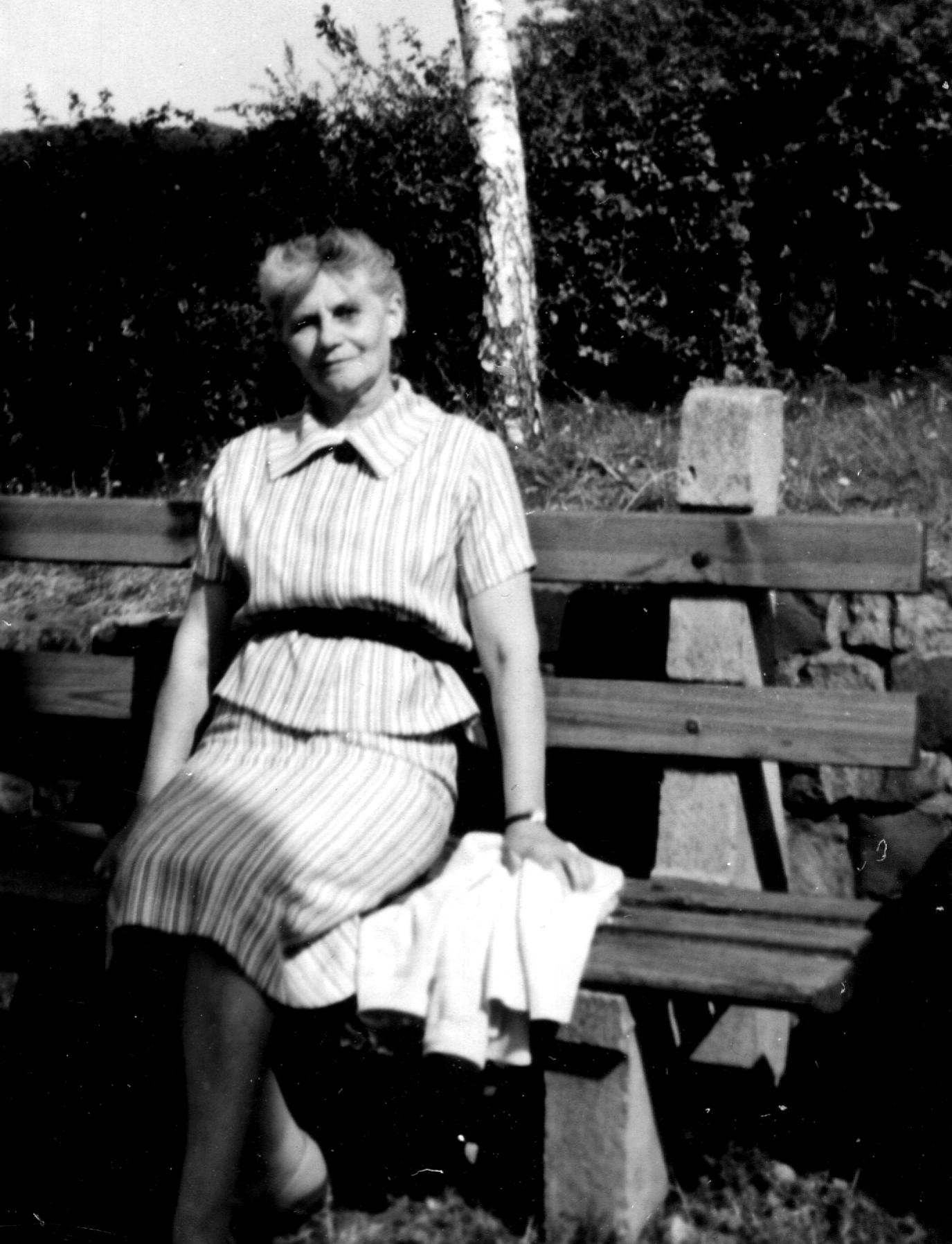
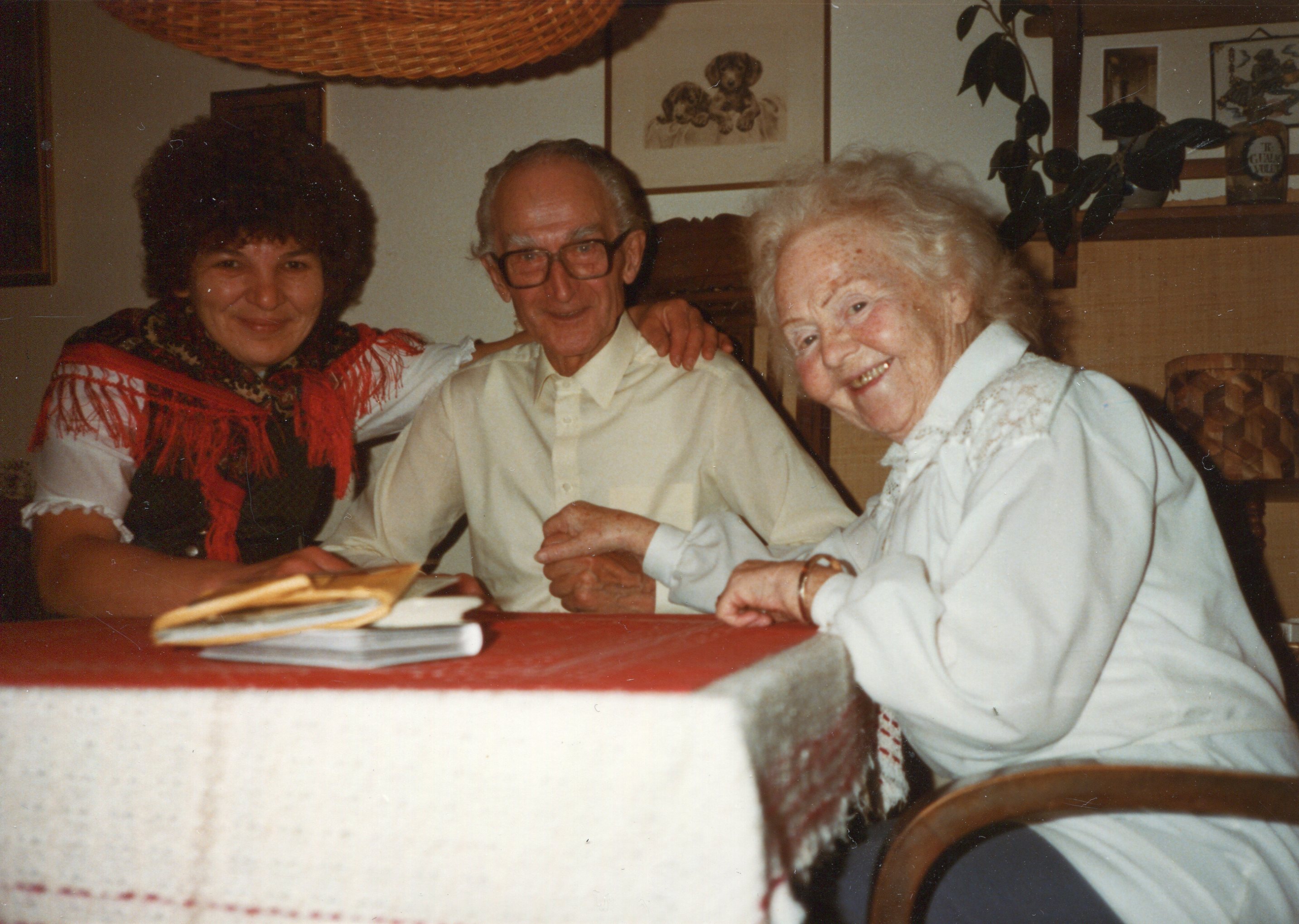
Uncle Günther and Aunt Friedel in Kassel-Wilhelmshöhe 1976

Uncle Günther and Aunt Friedel in Kassel-Wilhelmshöhe 1976

Elfriede Kegler (née Grempler, widowed Diesselhorst) graduated from the all girls Sangerhausen High School in 1919 and received her training in her father’s pharmacy. Then in 1921 she worked for six months as a druggist’s helper in Halberstadt. After father’s sudden death she sought and found employment as payroll bookkeeper at the stoneware plant in Wallhausen. For a complete understanding of the difficulties she experienced my uncle described the following scenario that most Germans faced after Word War I: End of the Imperial Reich, merciless Treaty of Versailles, revolts, bloody unrest, political murders, hunger and misery, unemployment by millions of people, total devaluation of the money, which occurred from 1919 to 1923, first at a crawling pace, then crashing down like an avalanche, change of paper money from thousands to billions of Reichsmark bills, money earned today was worthless in only a few days, the black market flourished with all its evil social repercussions, a dance on the volcano!

A 200,000,000,000 Reichsmark bill worth next to Nothing

A 200,000,000,000 Reichsmark bill worth next to nothing

Now we get the picture of Elfriede’s task as bookkeeper in the stoneware plant of around 250 employees. If she had access to a modern-day computer, it would have certainly crashed under the load of zillions of zeros that needed to be crunched every single day. It was a severe strain on her brain, which caused her to have nightmares.

In 1927 she married the pharmacist Otto Diesselhorst of Hanover. Within in a few years the two managed to pay off the debt of the pharmacy. It was during this time that a life-long friendship developed between the Kegler and the Diesselhorst couples.

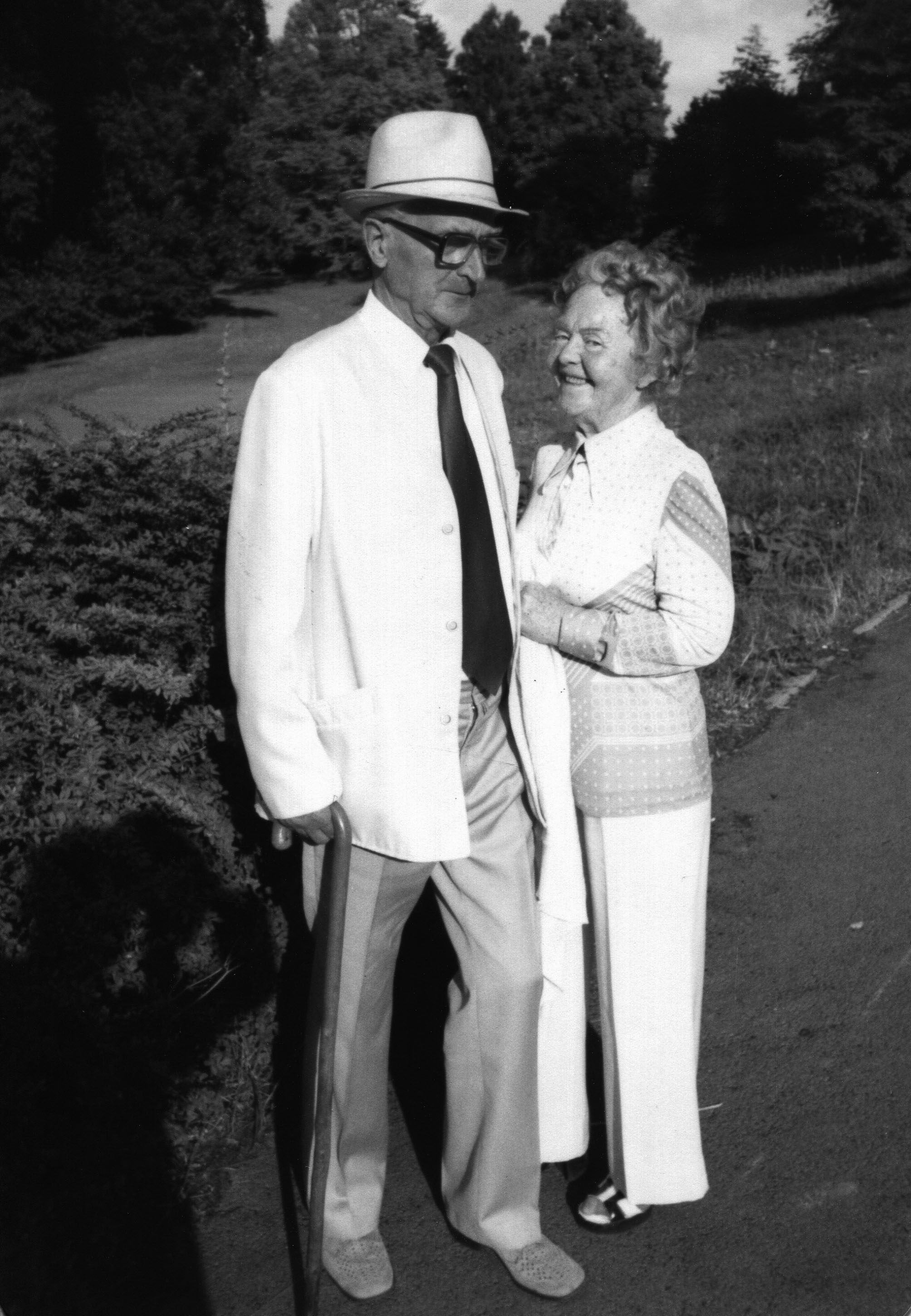
Uncle Günther and Aunt Friedel in Kassel-Wilhelmshöhe in 1984

Uncle Günther and Aunt Friedel in Kassel-Wilhelmshöhe in 1984

To be concluded in a post next week …

Looking at our Yard in the Mirror of the Four Seasons

A Walk through our Yard – Early Spring

When our family moved to Fauquier in 1976, the only house available was a two-bedroom bungalow with an ugly lean-to serving as storage area. It looked more like a summer cottage than a house having only a total living area of about 100 sq m. The yard is huge by comparison with a length of 100 m and a width of about 30 m. The back half of the lot was completely undeveloped. Wild Russian poplars and the odd cottonwood covered the mostly swampy land.

It was obvious that the house would not be large enough to accommodate our family of seven at the time of our move from Alberta.  My father-in-law had to have his own bedroom during his visit in Canada. The four boys took the other bedroom and slept in bunk beds. Biene and I slept in the tiny living room on a couch that we converted into a bed for the night. In the spring of the following year we added a double wide mobile home to the house with a breezeway connecting the two units. From one moment to the next we had two bathrooms, two living rooms, and even two separate kitchens. Year after year, as  our limited financial resources would permit, we made improvements to house and property, which included a sundeck, a sun room with pantry, a new roof over both houses, and a large garden. I planted two apple trees, two pear trees and several plum trees after clearing the land. But the best and most precious thing for Biene was to have her dream fulfilled. She finally has her own studio, which our son Robert built for her in 2009. This is the place, where she can be away from the distractions caused by phone, computer, TV and the constant reminder of things that need to be done. Here in the quiet surrounding of her studio she lets her creativity inspire her to paint or draw animals, flowers and portraits. Biene will one day showcase on her own blog bieneklopp.com some of her work by setting up a virtual gallery.

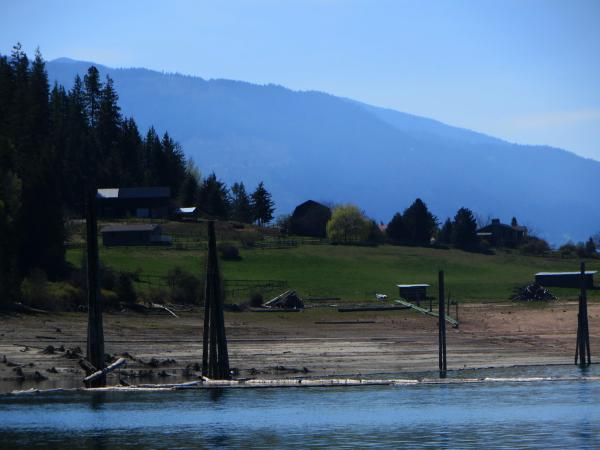
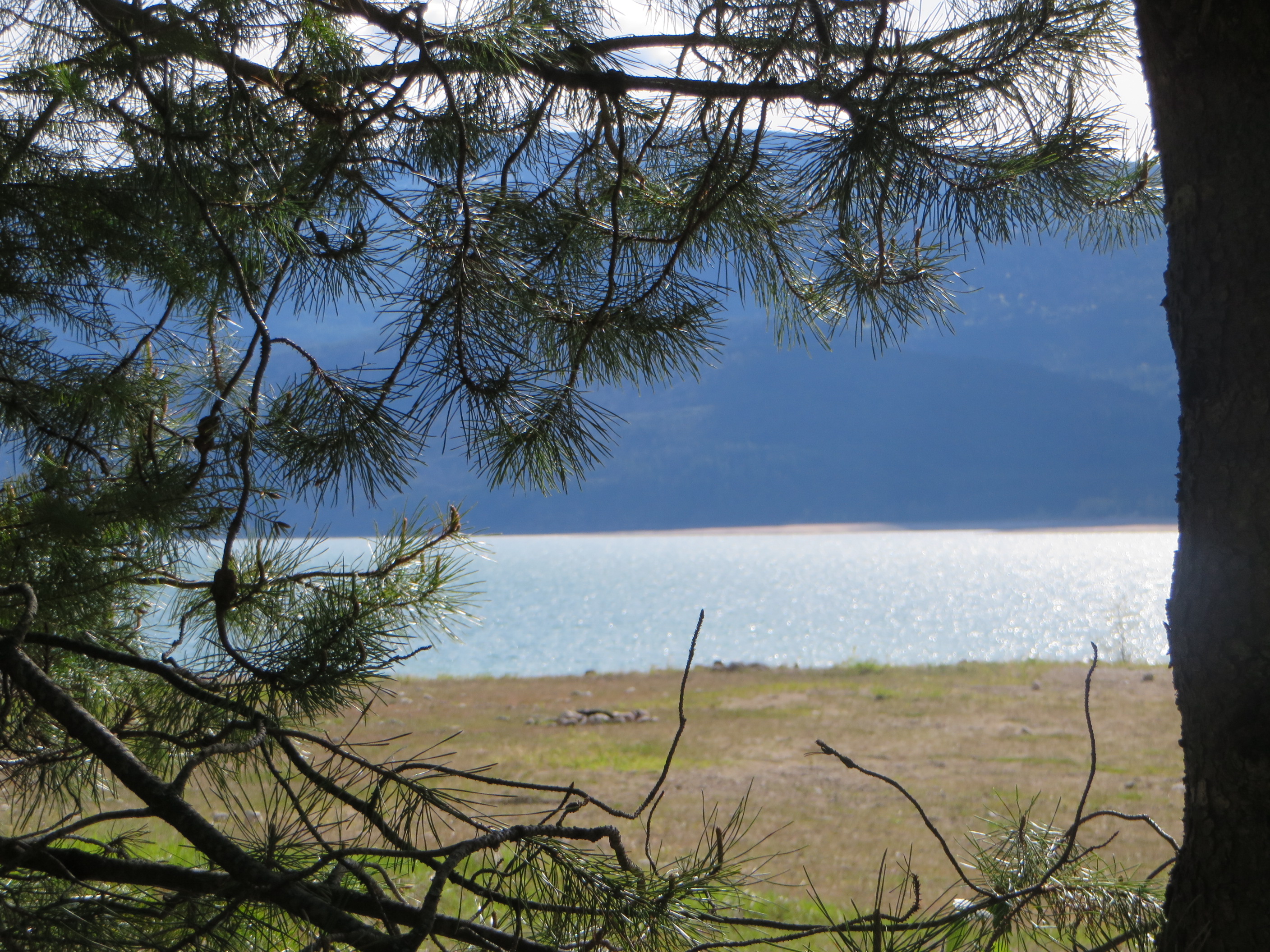
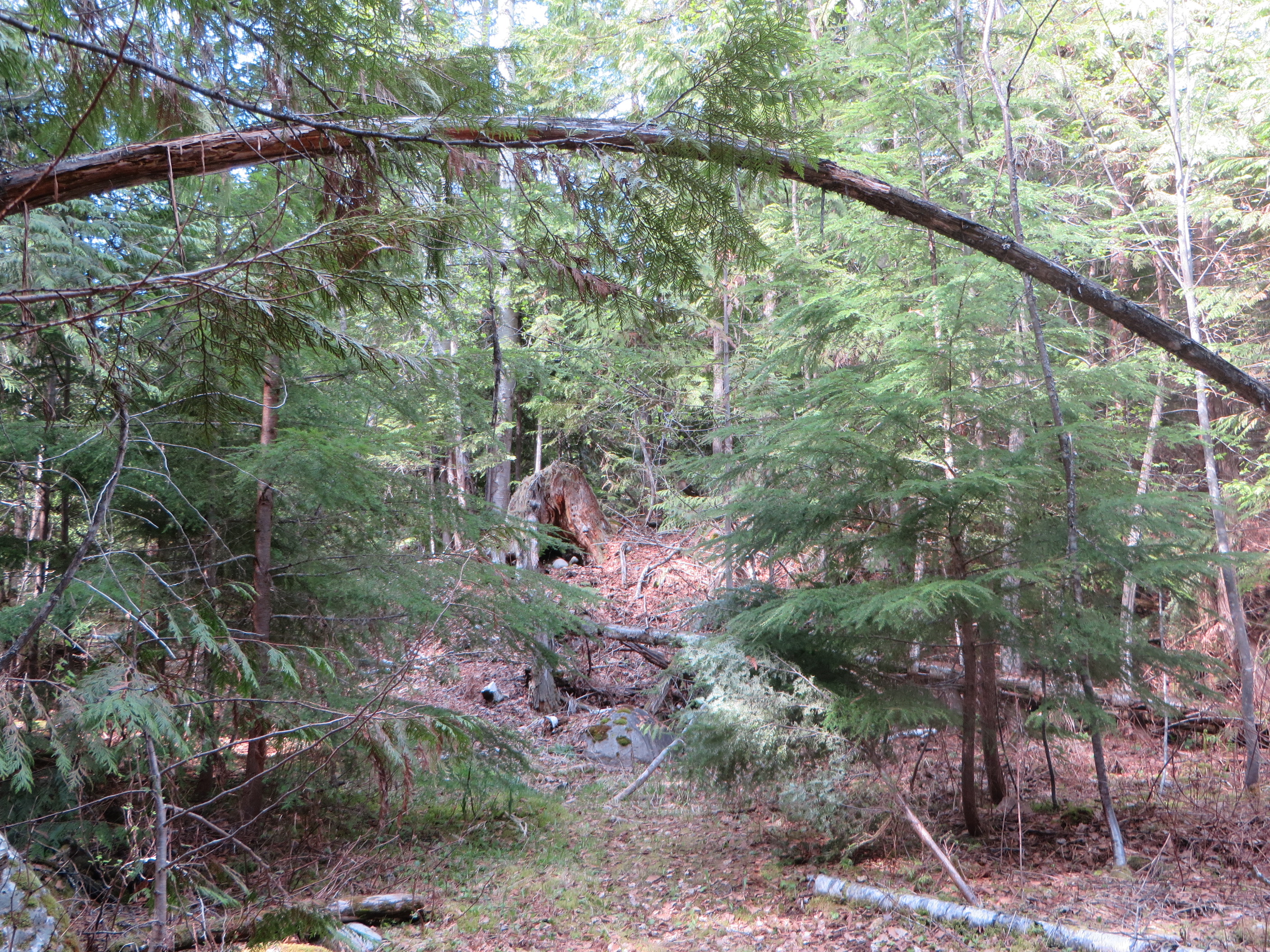
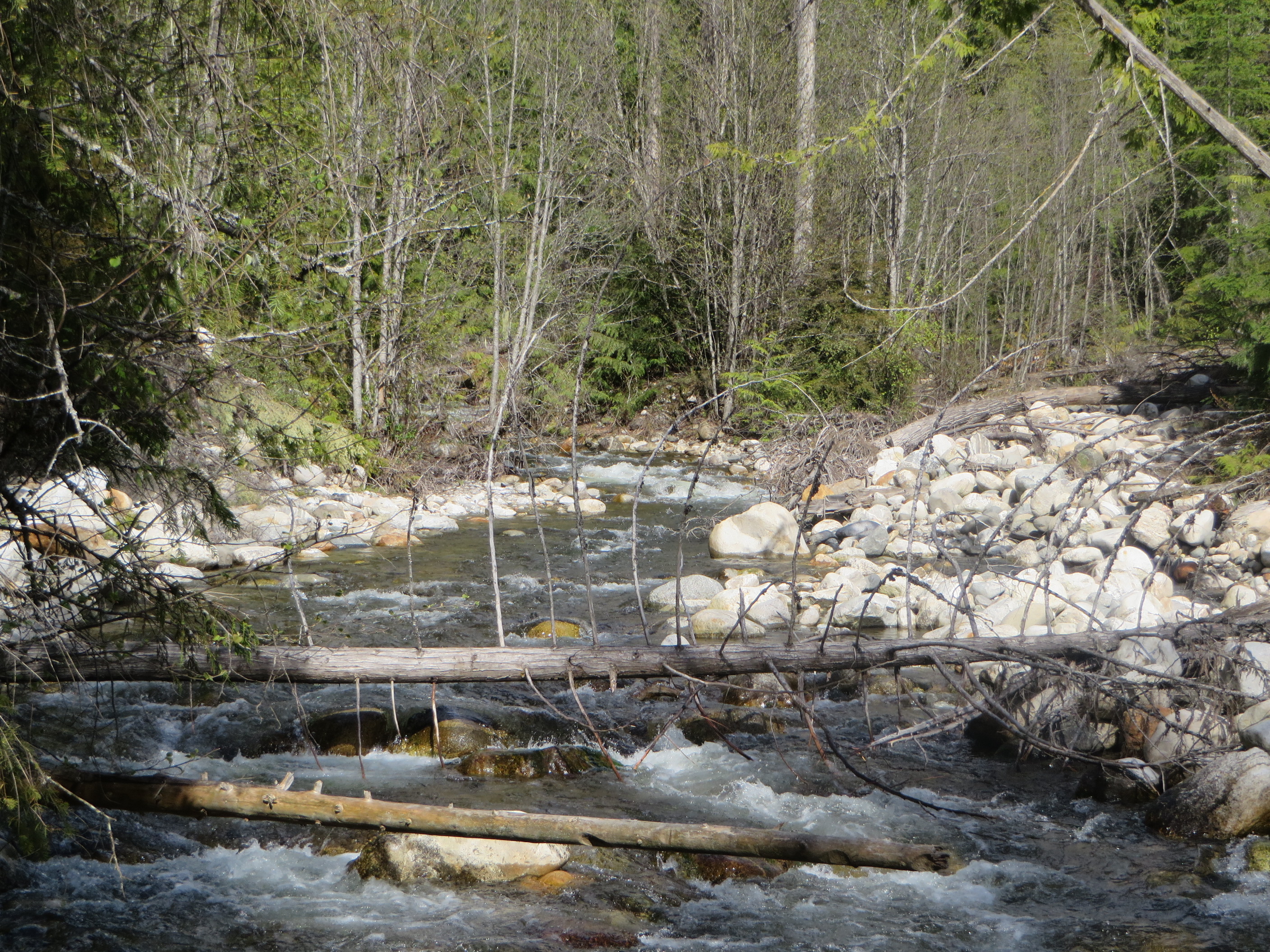
Now let us begin our early spring walk through this beautiful place on the hill overlooking the Arrow Lake.

Like-Minded People of Applegrove Road – Part II

LIKE-MINDED PEOPLE

A BRIEF HISTORY OF APPLEGROVE ROAD

By late Bill Laux

Aspinalls had a farm at the Fauquier end of Applegrove Road, the present De Boer property. The Spillers had come from Austria in 1913 and taken up land on Heart Creek, which they reached off the Applegrove trail, which Mr. Spiller must have widened to a wagon road to access his property from the Ferry landing.

The Mead-Eichenauer Property with Sauna and Pond in the Foreground

The Mead-Eichenauer Property with Sauna and Pond in the Foreground

Others, opening up the trail, took up land at each promising meadow or marshy location, which looked suitable for draining. It was, in those first years, crucial to have a hayfield while the heavily timbered lakefront land was being cleared and stumped. Gaustein took up the land along März Brook in 1920 (the present Netting property since 1966). Apple trees were planted and these early orchardists engaged in horse logging to make a living until their apples should come into production. The logs were horse-hauled to the lake shore, decked on the beach in the winter to await high water and the tug to tow them to Waldie’s mill at Robson. It seems certain that by the Twenties there was a wagon road as far as the Mosheimer Place and probably another kilometer past it to a house, which had been built on the clearing at the top of Eichenauer’s hill. The name of this settler is not known. Percy Schlag, who had an orchard in Fauquier, opened up a meadow on the south side of Heart Creek at the source of März Brook and drained it with a ditch to make a hay field. During the years when the lake shore lands had to be cleared and stumped for orchards, any mountain meadow or drainable swamp was a prize location to be preempted and   put into production for hay.

IMG_5272

From about 1913 Apple Packing Schools were held in the Valley to show the new orchardists how to get their fruit into commercial channels. Only perfect fruit was acceptable, no blemishes permitted. This left, especially in bad scab years, a great deal of fruit unharvested. These apples were used by many to fatten pigs for sale and most everyone made apple juice. With the addition of a bit of wine yeast, fermentation took place and hard cider was produced. August Scribe took the process farther and built a still. He located it under his pig shed to conceal the odour and took care to have a dry-hinged gate, which would squeak loudly, if anyone approached. He planted wormwood nearby to use as a flavoring, telling his customers he had made absinthe. It is said he shipped the product in cream cans to Nelson on the Minto with each can sealed with dairy stickers only to be removed by the milk inspector.

Mosheimer had his feet badly crushed in a logging accident and had to give up farming. He and his wife moved to Vernon where they opened a laundry. The property was bought by Mr. Kendricks of Needles, who leased it out for hay and pasturage. It came to be known as Kendricks Place (close to the present day Mead-Eichenauer Place). Gaustein, as well, left, though we do not know when.

All these years the slashed trail to Applegrove was still used as a route for Fauquier farmers to take their teams down to Taite Creek where from time to time horse logging jobs were available. Several wagon roads were built off Applegrove Road to reach the magnificent old-growth timber up the various creeks. One road ran up Heart Creek a short distance to reach a particularly fine stand of large cedars. Another extended Percy Schlag’s road from the south end of the Funk Meadow up and around the north end of Mineral Ridge to reach the timber on the North Fork of Taite Creek. In the early Sixties logging contractor Steiner built the Pin Road to harvest the Mineral Ridqe timber and the Heart and Pin Creek drainaqes. Applegrove became little more than a log dump.

Continue reading

The Klopp Grandparents VIII

Adding Oil to the Fire

Friedrich Klopp and His Mother-in-law (Chart I – I & II)

Translated and Adapted from Eberhard Klopp’s Family Chronicle

Crest of Loitsche - Photo Credit: Wikipedi.org

Crest of Loitsche – Photo Credit: Wikipedi.org

Out of the marriage between Friedrich Klopp and Marie-Louise Weihe came two sons and two daughters. The first child Frieda was born on June 7, 1900 in the Wolmirstedt house, also Liesbeth on June 5, 1907 and Hermann on September 16, 1908. But their eldest son was not born here, but in 1905 in Loitsche about 20 km north of Magdeburg, so to speak as a consequence of mother-in-law’s meddlesome behavior. Behind the interruption of the birth sequence in Wolmirstedt we may see Friedrich’s attempt to escape from the scene of a now poisoned family atmosphere.

Loitsche Today

Today’s Loitsche – Photo Credit: tokiohotel.myblog.de

Acting on his wife’s prompting Friedrich tried to establish a new economic base in another trade. A determining factor may also have been the return of his brother Ferdinand from the United States, who failed to realize his economic plans there. Suddenly his younger brother was making inheritance claims on business and property, which Friedrich obviously did not recognize as valid. Considering the additional fact the economic picture of the land was not exactly rosy, it is not hard to understand that the flour and feed business was slow and did not prosper in Wolmirstedt.

Unnerving were also the events, which their brother Hermann recalled 90 years later. Grandmother Louise Weihe of Zielitz without any commercial experience interfered in all matters pertaining to the purchase and sale of goods. To add insult to injury, she circulated all kinds of rumors about her son-in-law and family with harmful effects on the business. To make matters worse, her sister started also to pour oil on the fire.

One particular rumor was making the rounds among family members. The insidious claim was that Emma’s daughter Anna Auguste Louise (1885-1967) had an illegitimate child, whose father was supposed to have been the ‘Polish Jew Grasmück’. Actually the story was quite different, as will be explained in another post on my Aunt Anna at a later date. The nonsense, completely made up of thin air, broke the camel’s back.

All these events cast some light on the chasm-deep hateful feelings, which the mother-in-law from Zielitz dumped without any compunction on the Klopp family. On the other hand, the Emma Klopp side in turn did not hesitate to make Friedrich worry a lot about his inheritance, Insults and cantankerousness dominated from now on the scene of the warring parties.

To be continued …