Gerhard Kegler, the general, who dared to disobey Himmler – Part VI

General of the Woldenberg Division

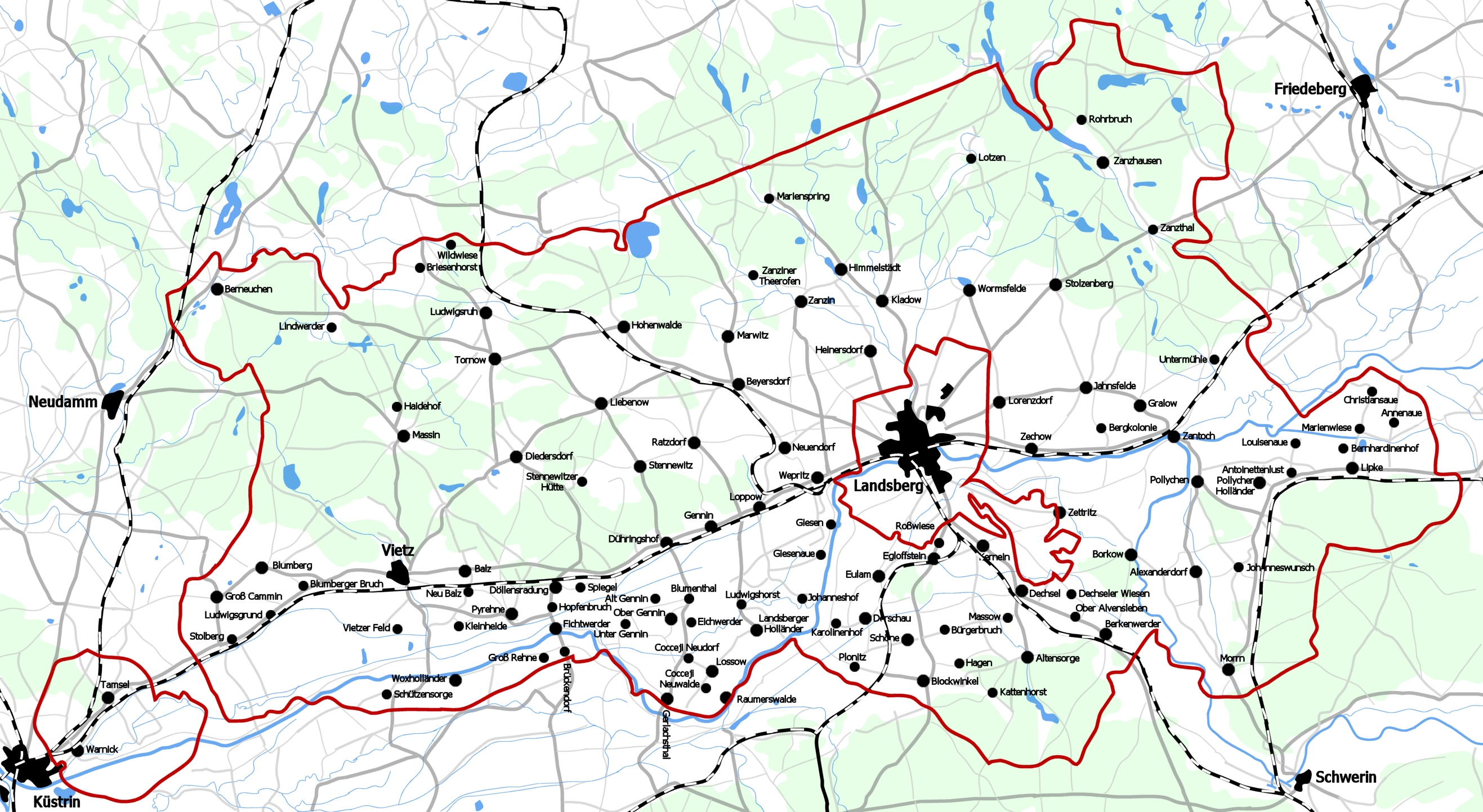
Commandant of Fortress Landsberg

Those who missed reading the earlier posts on my uncle Gerhard Kegler can look them up by clicking on the following links: Part I, Part II, Part III, Part IV, and Part V.

On January 20, 1945, while still on sick leave, Gerhard Kegler received a call from army HQ with the order to take over the command of a division. A few days later  he was assigned to the post of battle commandant at the city of Thorn (Torun). On January 26, while his family had to flee without his help from the advancing Red Army, he was heading to his assigned post. However, he was unable to reach his destination, since the enemy had already captured the city of Thorn. So instead he was given the command over the newly formed Woldenberg division. He arrived at Friedeberg (Strzelce Krajeńskie) on January 28, where the division was located.

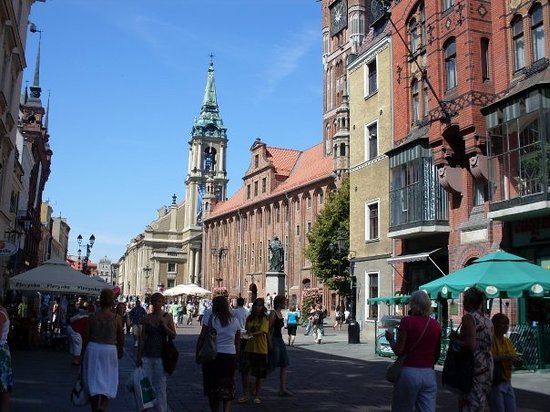
Today's Thorn (Torun) - Photo Credit: tripadviser.com

Today’s Thorn (Torun) – Photo Credit: tripadviser.com

On the very same the Soviets attacked with about 40 or 50 tanks. The town was taken and the division was broken into fragments, most of which managed to withdraw to the city of Landsberg (Gorzów Wielkopolski) at the river Warta.

Landsberg_gross

In those chaotic days, when the entire Eastern Front was at the point of collapse, Hitler in his fortress-like command center in Berlin was moving on military maps tiles, which represented in his mind fully equipped and battle experienced divisions, but in reality were nothing but units that only existed on paper. One of these phantom army units was the so-called Woldenberg division consisting mostly of inexperienced, inadequately trained and equipped soldiers and a lot of useless non-army personnel, with which Major-General Kegler was supposed to defend the Fortress of Landsberg against the impending assault on the city.

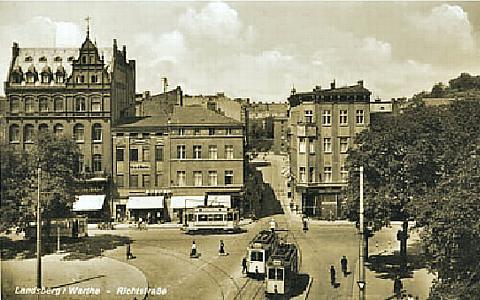
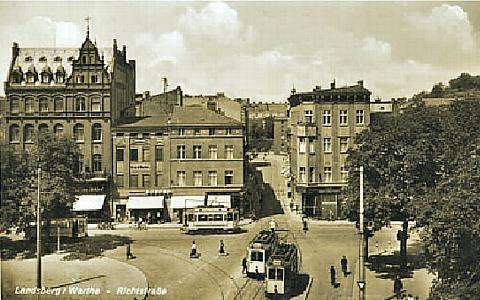
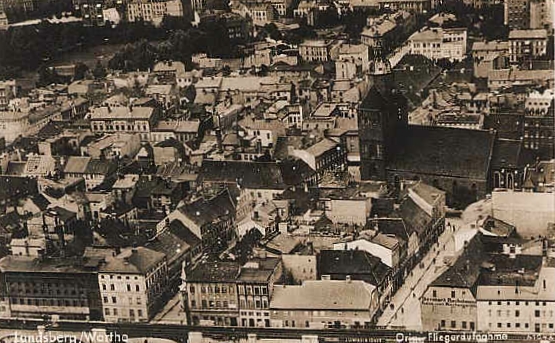
Landsberg - Photo Credit:t wodenber-neumark.eu

Landsberg 1943 – Photo Credit: woldenberg-neumark.eu

To be continued …

Gerhard Kegler, the general, who dared to disobey Himmler – Part V

In and Out of the Generals’ Reserve List 1944/45

(Chart II a – II)

Before I took a break from writing at the end of June, I described in several posts my uncle’s military career in the German army and the events leading up to the disintegration to the Woldenberg Division. By clicking on the Kegler family page, you will find the combined posts in chronological order.

For the newcomers I will give a summary of the dramatic story of my uncle’s last two weeks before he was arrested and charged for failing to defend the city of Landsberg (Gorzów Wielkopolski) on the Warta river.

Landsberg before WWII

Landsberg before WWII

What follows is partly translation partly adaptation of a report I found in the German army encyclopedia: Lexicon der Wehrmacht. On January 14, 1945 Gerhard Kegler was put on the generals’ reserve list, which was no surprise considering the fact that so many entire German divisions were wiped out during the closing weeks and months of WWII. During that time he took a six-week medical leave at my parents’ place at Gutfelde (Zlotniki) near the town of Dietfurt (Znin), where I was born in 1942.

Bild Gutfelde 29

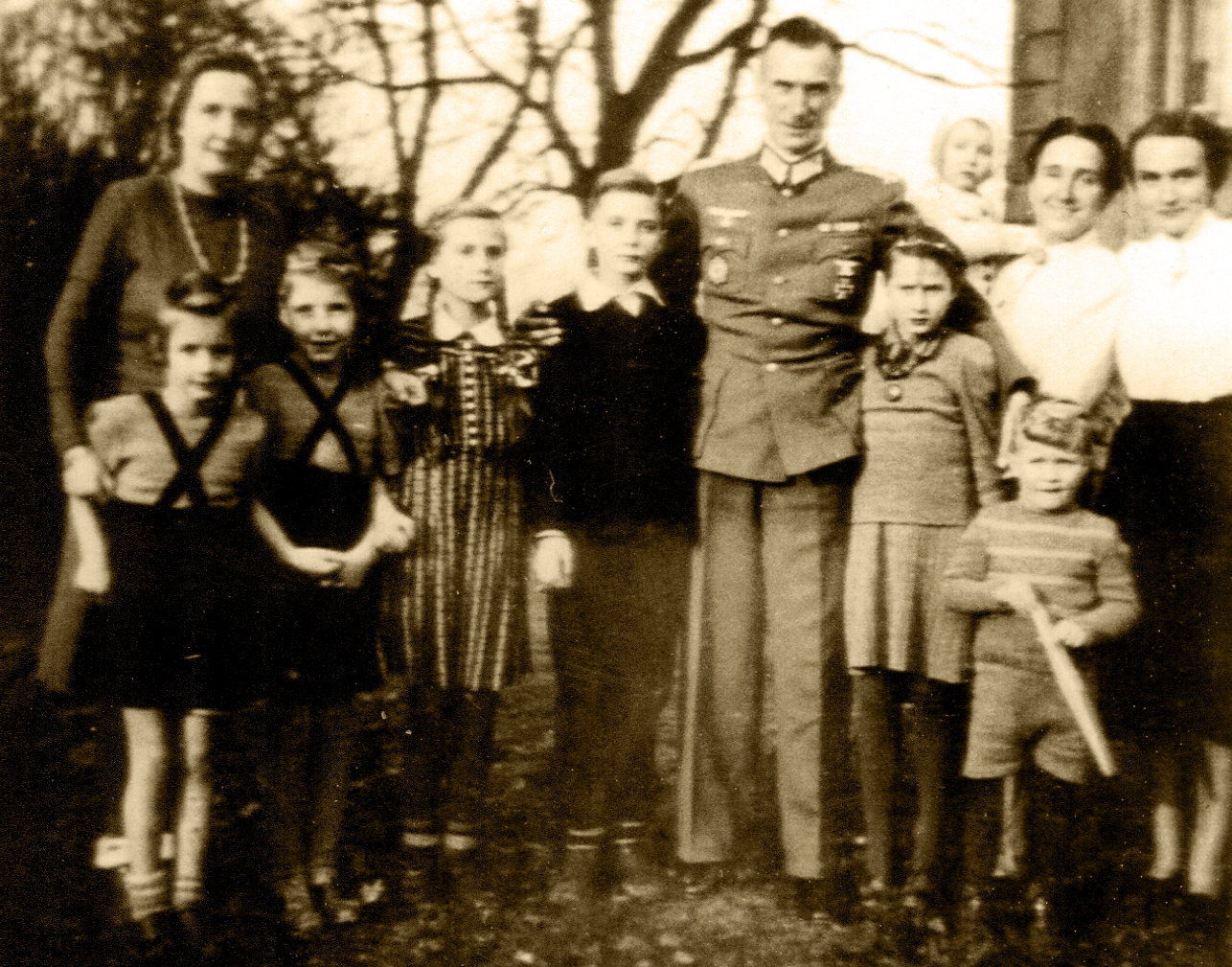
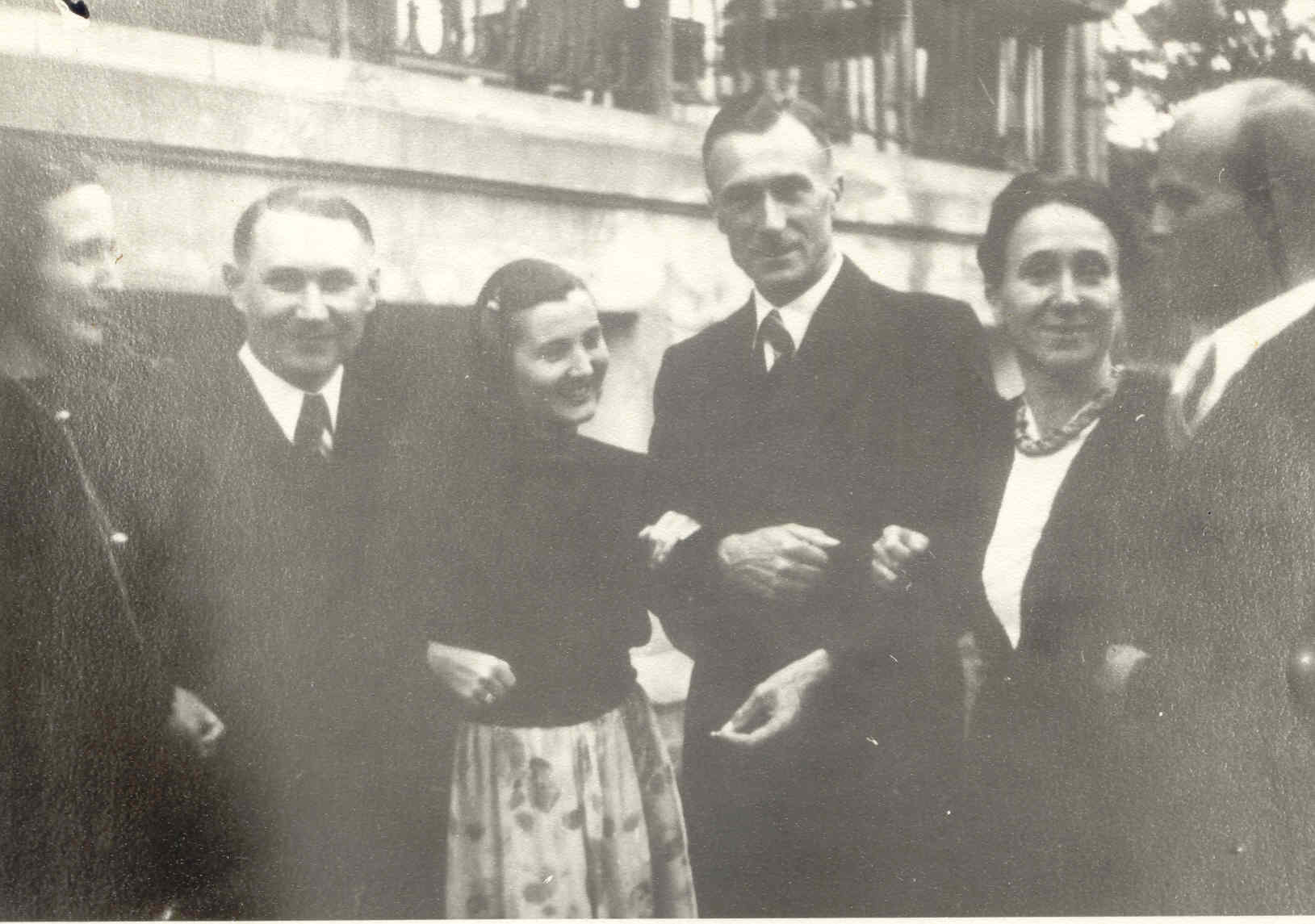
Uncle Gerhard in the Middle, his Wife, Aunt Margot, on the Left, my Mother with me on her Arm, and Aunt Johanna, Uncle Bruno’s Wife to the Right of the General

He believed he would best recuperate in the presence of his wife and children, who had found refuge in Gutfelde from the bombing raids in Central Germany. Perhaps, if he had gone to an official health spa instead, to which he had been entitled, he might have avoided all the troubles that lay in wait for him.

To be continued …

Gerhard Kegler, the general, who dared to disobey Himmler – Part IV

The Woldenberg Division and Himmler’s Order to Defend Landsberg

Excerpt Taken from the book ‘The Siege of Küstrin: Gateway to Berlin 1945’ by Tony Le Tissier, Publishers: Pen and Sword Books

If you missed reading the related posts, go back to May 13 May 22, and June 5.
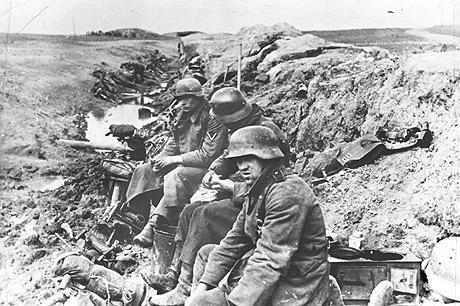
Eastern Front 1945: Worn-out and Ill-equipped German Soldiers - Photo Credit:: taringa.net

Eastern Front 1945: Worn-out and Ill-equipped German Soldiers – Photo Credit: taringa.net

Lieutenant Rudolf Schröter continues his report:

I had to overcome the resistance of the staff officers to get through to the general. Major-General Kegler was astounded but open to my arguments:

  1. Once an order had been given it must be adhered to in order to keep up the morale of the troops.
  2. The Army Headquarters’ radio message ‘Report situation and intentions’ unusually left open the decision. If this was not so, the message would have read: ‘Report situation. Hold Vietz.’ While it was expected that the Army would correctly use tactical language and especially stressed ‘Report situation’, it meant that it was holding open the opportunity for us to decide for ourselves in this special situation, and our decision was ‘Withdraw’.
  3. There had also been instances in this war in which troops had withdrawn against orders in recognition of their hopeless situation, had upheld the morale of their troops and the officers had received high decorations.
  1. The decisive argument, General, is in accordance with one’s own conscience. The responsible officer must, if common sense is to prevail, understand that slavish obedience in a hopeless situation only condemns him to a senseless bloodbath, which he should spare his men.

These arguments, especially the last, visibly moved Major-General Kegler. He then went briefly into an adjoining room. When he returned, he was white in the face. He asked me where I had lost my right arm, praised the discipline and commitment of my youngsters and also my objections at the conference a few hours ago. Finally the following dialogue ensued:

‘Do you think that you can withdraw the division in good order in this situation?’

‘Yes, if I have your support in doing so.’

‘Then I hereby beg you to undertake it on my staff.’

I immediately sent all the staff officers to the units, where they with the sector commanders were to stop the units and individ­uals retreating and incorporate them into the local defense.

Then I prepared to retake Vietz station with a platoon of my infantry and a Königstiger and while doing so a runner brought me a letter from the general. It read: ‘I have given up command of the division. Kegler, Major-General.’

I then asked a colonel to take over command of the division as a matter of seniority, which he accepted under the condition that I assumed tactical control.

The withdrawal of the division was made ready and all sector commanders summoned to an order group in Vietz at 1500 hours.

After stabilizing the situation in the town I made a recon­naissance in the amphibious jeep with the SS-sergeant-major and one of my recruits, using Major-General Kegler’s map. I discovered that:

  1. The road to Küstrin was not blocked by the Russians.
  2. There were no Russians in Gross Cammin, the nearest enemy movement being in the northerly neighbouring village of Batzlow.

I stuck to the original plan. A radio message was sent to Küstrin fortress about the division’s withdrawal. The order to withdraw was given at 1500 hours and went without problems. When I later went into Vietz with the amphibious jeep to check the enemy situation, the first enemy scouts were already feeling their way forward.

At dawn on February 4, the remains of the ‘Woldenberg’ Division began crossing the anti-tank ditch that blocked the Landsberger Chaussee at the eastern end of Küstrin. They had already come to within 10 kilometres of the town the previous day but had waited for darkness to get through the area occupied by Soviet forces.

General Busse had sent a young liaison officer to meet them, but without any instructions for Major-General Kegler. When the latter arrived in Küstrin he was promptly given orders to report to the standing court-martial in Torgau, thus becoming one of the last to leave Küstrin by the normal road. As the witnesses to the events leading up to Kegler’s court martial were now trapped in Küstrin, evidence had to be obtained from them by telephone.
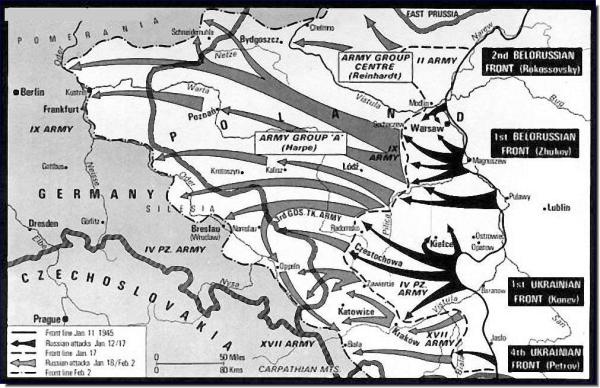
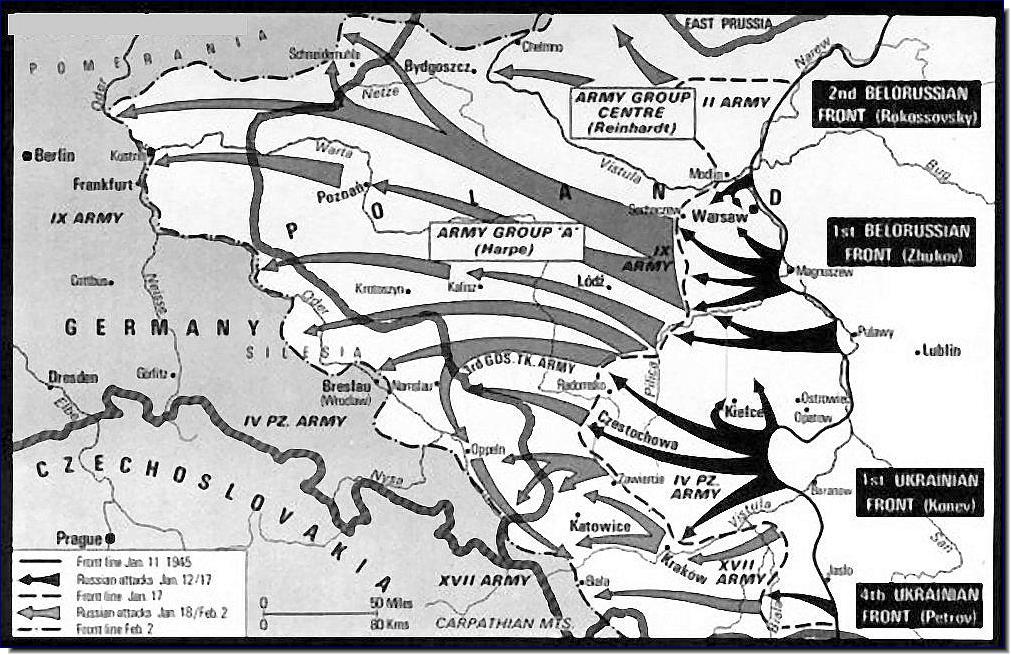
Soviet Advance across Poland - Photo Credit: historyimages.blogspot.com

Soviet Advance across Poland – Photo Credit: historyimages.blogspot.com

To be continued with a translation of the court-martial report and verdict on my next post.
Gerhard Kegler, the general, who dared to disobey Himmler – Part III

The Woldenberg Division and Himmler’s Order to Defend Landsberg

Excerpt Taken from the book ‘The Siege of Küstrin: Gateway to Berlin 1945’ by Tony Le Tissier, Publishers: Pen and Sword Books

If you missed reading the related posts, go back to May 13 and 22.

Lieutenant Rudolf Schröter, whom we last encountered west of Landsberg on the morning of 31 January, was completely unaware that he and his 400 recruits were part of the ‘Woldenberg’ Division,’ as he related:

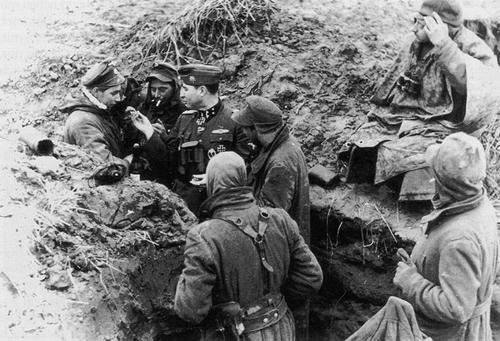
Field Commanders discussing a Desperate Situation - Photo Credit: softairmania.it

Field Commanders discussing a Desperate Situation – Photo Credit: softairmania.it

On the morning of the 31st January my unit rejoined the Königstiger SS-sergeant-maior about 4 kilometres west of Landsberg in the Wepritz area. As we were still without a super­ior command or orders, I had us retreat westwards.

Beyond Dühringshof I was met by a car with a general, who received my report, did not introduce himself nor did he name his formation. He ordered me to deploy left of the road to Diedersdorf. My left-hand neighbor would be Second- Lieutenant Clemens’s unit.

When we stopped a Russian armored reconnaissance vehicle with infantry fire, the soldiers jumped over the sides with a blanket that was supposed to protect them from our fire. That night the first Russian attack occurred with more on the 1st, 2nd and 3rd February. Small enemy breaches were driven back with counterattacks by the exemplary fighting recruits.

On the 3rd February I was summoned to a conference by the divisional staff in Vietz town hall. Here for the first time I discovered that my unit belonged to the ‘Woldenberg’ Division. The divisional commander, Major-General Kegler, described the situation.

The division was surrounded by Russian troops. Vietz station on the south-eastern edge of the town was in enemy hands. Blumberg was also occupied by the Russians. Two enemy infantry regiments were at Gross Cammin. Communication with Küstrin was severed. Re-supply was only possible by air. His decision was to leave.

The orders handed out by the divisional chief of staff for my unit and that of Second-Lieutenant Clemens were not possible of execution or would entail heavy losses. I therefore rose to protest and suggested that we should first disengage ourselves from the attacking enemy so that the immovable heavy weapons and especially our infantry could get out of the diffi­cult terrain and deep snow.

As the general declared to the chief of staff that this was also his opinion, the following radio message arrived from headquar­ters 9th Army: ‘Report situation and intentions. Hold Vietz.’ Major-General Kegler promptly rescinded his orders for the division’s withdrawal.

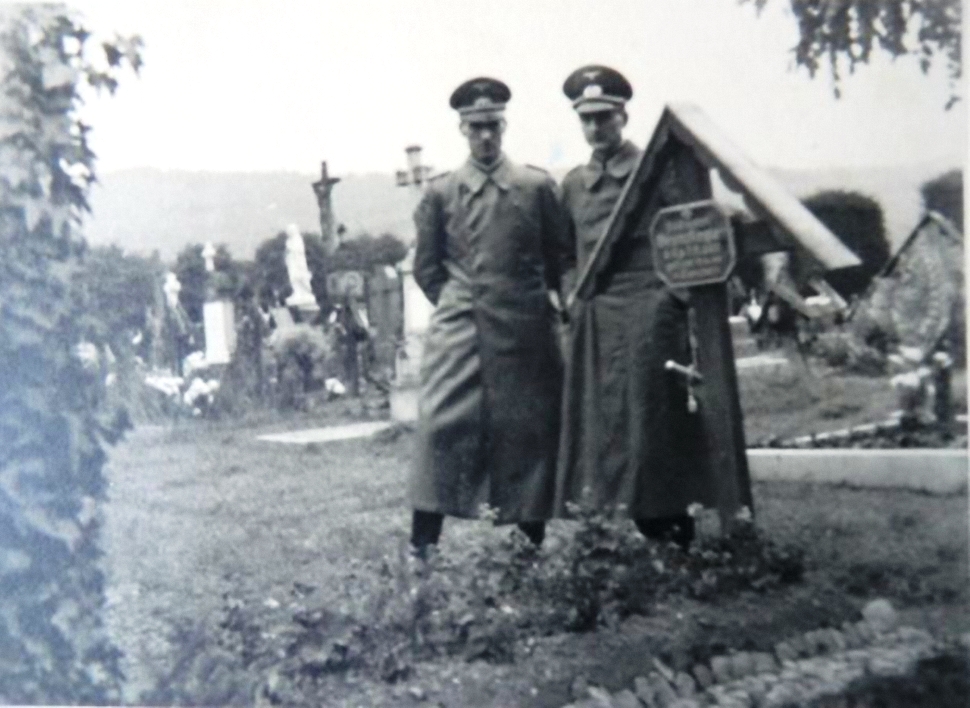
My Uncles Günther and Gerhard Kegler at the Grave of their Brother in 1940

My Uncles Günther and Gerhard Kegler at the Grave of their Brother in 1940

Back in my position and after speaking to my left-hand neigh­bor, both of us fearful of having pointless high casualties among our recruits, I decided to convince the divisional commander that he should stick to his plan to withdraw, and that in any case I would decide according to my conscience. I returned to Vietz.

 To be continued …

Gerhard Kegler, the German general, who dared to disobey Himmler – Part II

The Woldenberg Division and Himmler’s Order to Defend Landsberg

Excerpt Taken from the book ‘The Siege of Küstrin: Gateway to Berlin 1945’ by Tony Le Tissier, Publishers: Pen and Sword Books

The ineptness of Heinrich Himmler’s appointment as commander of Army Group ‘Weichsel’ is clearly demonstrated in his handling of the so-called ‘Woldenberg’ Division, a random assembly of troops taken from convalescent and training units stationed on the north bank of the Warthe, with which he expected to block the Soviet advance. Major-General Gerhard Kegler later wrote of this:

On the 30th January 1945 I received orders from Himmler to take command of the ‘Woldenberg’ Division without being given any orientation on the subject, nor the division’s task.

I had to find the division. I found the division’s command post east of Friedeberg. It had no signals unit and there were no communications with a superior headquarters. I took over command at about midday as I found this recently established ‘division’ in the course of disintegration as it retreated to Landsberg. While I was busy in Landsberg on the morning of the 31st January with the organization and deployment of the available units, I discovered that the ‘division’ had no anti-tank weapons, no ammunition or food supply arrangements and no signals unit. Neither was there a divisional medical officer. The artillery consisted of two horse-drawn batteries. The ‘division’ was not a ‘strong battle group’ nor were the troops battle­-worthy.

The population of 45,000 inhabitants were still in the town and no preparations had been made for evacuation.

I received Himmler’s orders from the commander-in-chief of the 9th Army to defend Landsberg as a fortress over the tele­phone. Russian tanks were already north of the Warthe-Netze sector. I had the Warthe Bridge demolished. After some consci­entious consideration, I decided to disobey this order [to defend Landsberg], which I considered senseless and whose compliance would serve no purpose other than great loss in human life.

Generalmajor Gerhard Kegler

Generalmajor Gerhard Kegler

Landsberg was abandoned by the ‘Woldenberg’ Division that same night. Major-General Kegler had set the withdrawal for February 1st, as the Soviet spearheads had already reached Küstrin some 40 kilometres to his rear, but his demoralized soldiers would not wait and abandoned their positions in the dark. The headquarters staff were only able to stop these demoralized units with difficulty some 3 kilometres west of the town.

'Fortress' Landsberg, Warthe - Photo Credit:  prussianpoland.com

‘Fortress’ Landsberg, Warthe – Photo Credit: prussianpoland.com

Kegler reported by telephone to the 9th Army commander, General Busse, who had meanwhile established his headquarters in the Oderbruch village of Golzow. Busse demanded that Landsberg be retaken and defended, threatening Kegler with court-martial in accordance with Himmler’s orders. Nevertheless, Kegler stuck to his decision to withdraw to Küstrin by stages over the following nights. Even this, in view of the state of his troops and his open flank, was risky, and depended to a large extent upon their not being attacked as they withdrew along the northern edge of the Warthebruch on Reichsstrasse 1.

To be continued …

Gerhard Kegler, the German general, who dared to disobey Himmler – Part I

A Brief Overview of Gerhard Kegler’s Education and Military Background

1898 – 1986 (Chart II a – II)

On January 26, 1898, Gerhard Kegler was born in Grünewald, Pomerania (Province of Germany until 1945). Posts on his three older siblings Marie, Günther, and Gertrud can be found in the archives of this blog. They show how the children of Pastor Carl Kegler and his wife Elisabeth had a happy childhood in the small Pomeranian community of Grünewald. Also the third chapter of the P. and G. Klopp Story has more information on the Kegler family background, which therefore need not be repeated here. Like his brother Günther, Gerhard began his military career as a cadet in 1908. The outline of his comet-like rise in the ranks of the German army follows below.

  • 1904 -1908 Elementary School at Grünewald
  • 1908 – 1914 Military Academy at Plön
  • 1914 – 1917 Military Academy at Groß-Lichterfelde
  • March 1, 1917 Officer Cadet at the 149th Infantry Regiment in Schneidemühl
  • September 1917 On the Western Front at Champagne and Argonne
  • November 1, 1917 Lieutenant
  • 1918 Participated in the last major German offensive of World War I
  • 1919 – 1920 Border Patrol at the section between Schneidemühl and Bromberg
  • End of November 1920  Transfer to the 4th infantry regiment of the newly created army, which was limited by the Treaty of Versailles to 100,000 men
  • 1921 – 1922 Officer’s training in Munich
  • 1924 Teacher at the Officer’s Sports Training School in Berlin
  • 1925 Promoted to the rank of first lieutenant
  • 1926 – 1929 Trainer and Sports Teacher at the Infantry School in Dresden
  • 1929 – 1933 Leader of military courses for officers’ trainees in Berlin and Dresden
  • March 1, 1933 Advanced to the rank of captain
  • 1933 – 1934 In charge of the 11th Infantry Regiment 9 at Spandau
  • 1934 – 1938 In charge of the 3rd MG Battalion 8 at Züllichau
  • 1937 Promoted to the rank of major
  • 1938 Teacher at the Military Academy in Munich
  • 1939 At the beginning of World War II Battalion commander in the Infantry Regiment 282 of the 98th Division at the Western Front
  • 1940 Commander of Infantry Battalion in Training at Kreuznach; front-line duty in the attack on the French Maginot line in the Vosges Mountains
  • November 1, 1940 Commander of the Infantry Regiment  27 and promoted to the rank of lieutenant-colonel
  • 1941 – 1944 Invasion of the Soviet Union
  • February 1942 Promoted to the rank of colonel
  • October 1, 1944 Promoted to the rank of major-general
Gerhard Kegler on a Visit at Gutfelde 1944

Gerhard Kegler on a Visit at Gutfelde 1944 (the tall person in the middle)

In February 1945, Gerhard Kegler was condemned to death after being court-martialed for disobeying Himmler’s orders to defend the town of Landsberg on the River Warthe. The following posts will deal with the circumstances leading up to this terror verdict and will hopefully contribute to dispel the myth about all German officers blindly following the Nazi Regime without any moral backbone.

To be continued