Chapter 27 of the Peter and Gertrud Klopp Story – Part III

Two Letters and a Poem
129

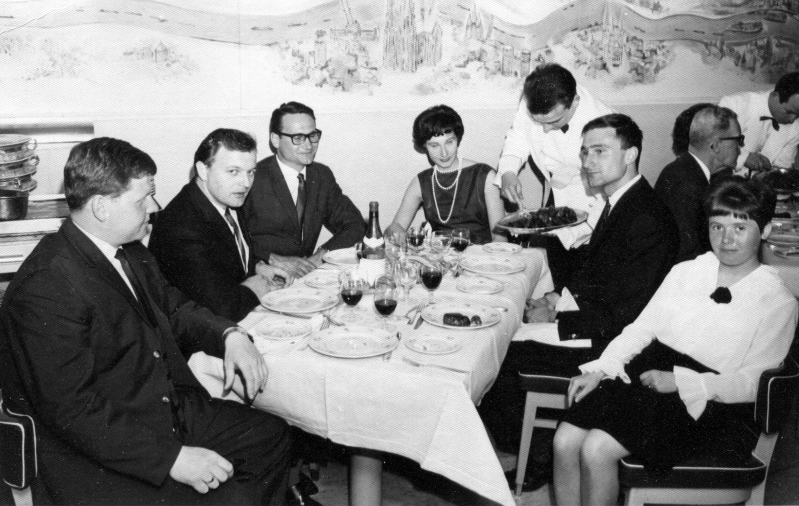
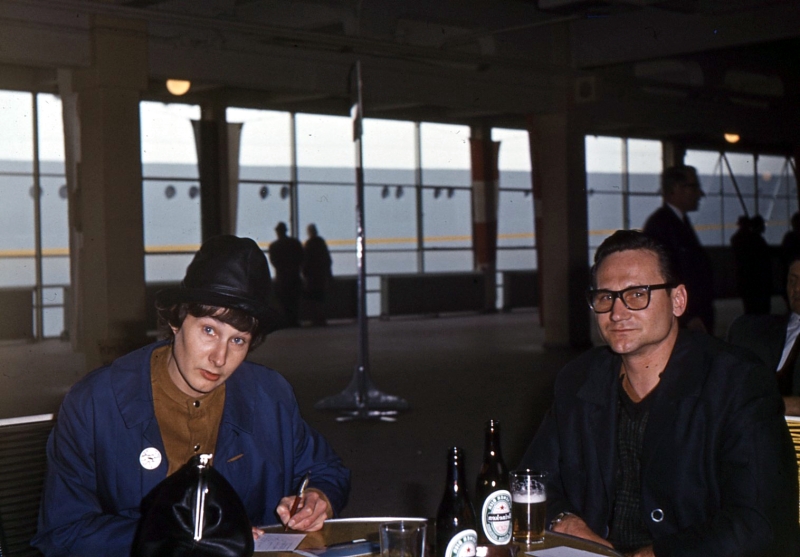
Meal Time on the Ryndam – Adolf, Eka and Peter at the Back

April 28th, 1965 Le Havre

           My dear Biene,

           We just left Le Havre and are heading towards England. Thousands of impressions hit me all at once. I feel as if I had already been on board  for a very long time. It is wonderful. Yet, I am restless, because you cannot experience all this with me. I would like describe to you how a typical day is panning out for us travelers. The tinkling of bells wakes us up in the morning. It also reminds us in this gentle way to show up for breakfast soon. Then I climb down the ladder. For I sleep in the upper bunk, while Adolf sleeps below. We can shower or take a bath for as long as we like.  Then we march off to the dining room. Never before have I seen a greater variety of food. When we return to our cabin, the steward has already made our beds. The cabin is very small, and if one had to share it with a stranger, it definitely would  not be a pleasant experience. We all have our own peculiar habits, which someone else would have to get used to.
124

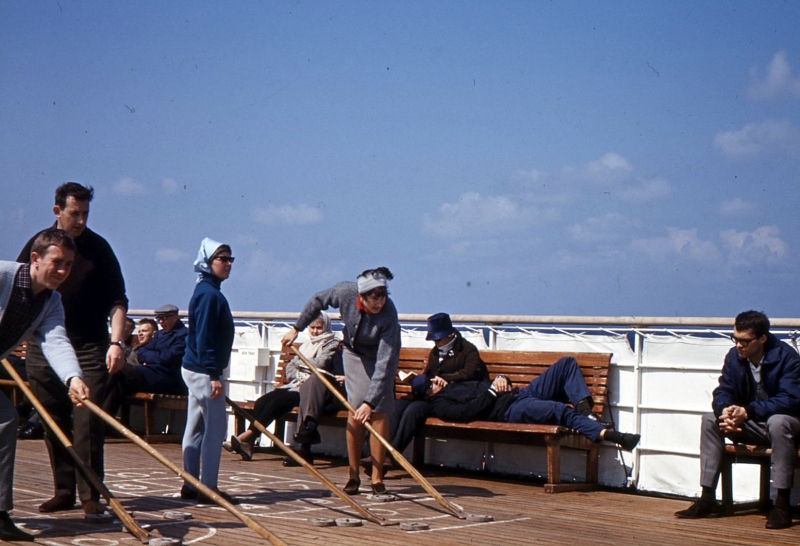
Shuffle Board on the Sun Bathed Deck

          The entertainment program is so rich and varied that one does not know which item to choose first. You can watch English movies, go to the library, play all kinds of games. The big hit here is shuffleboard. After lunch you can attend a concert, go dancing in the evening or have a beer in the bar. And now I experience all this without you! That makes me a little sad and pensive. When I turn melancholic, I gladly withdraw from all these fun activities and write in my travelogue.

          Oh this heavenly weather! People are presently sun bathing and the sea is not rough, not even a trace of a swell. I want to experience a real storm. But my brother says that it will come soon enough, if I am really that keen on getting seasick.
134

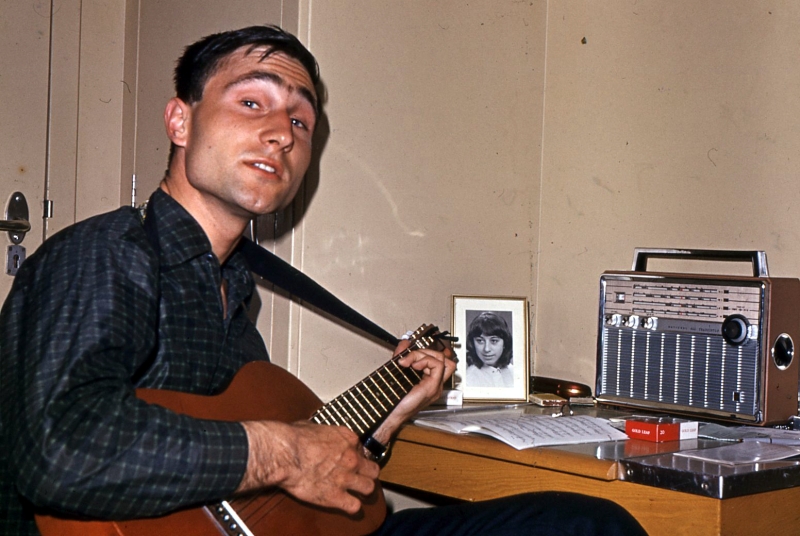
Peter Strumming on his Guitar

          Your picture stands on my little desk. When at night I look down to you from my bed, I feel infinitely happy. I wished I could do the voyage all over again with you one day, when I have enough money to pick you up in Germany.

In a few days you will begin your studies, whereas I while away the time here onboard doing nothing. Tackle your academic work as if you had never applied for the stewardess program and as if you pursued a life’s career. You should know that you can help me also as a trained teacher, perhaps later assist me for a little while, in case my own studies should be dragging on.

          What would I give to be able to kiss you now! Until next time greetings to you and your parents!

          Your Peter

           On the same day Biene also wrote me a letter, which of course I was unable to read, until I arrived at my brother’s place in Calgary. I only included excerpts here to avoid breaking the chronological order of the family history.

April 28th, 1965 Velbert

           My dear Peter,

           Again you have made me cry. But don’t you worry, Peter. I did not have to cry out of sorrow (it was only lingering at the back of my mind), but from an overwhelming feeling of joy, happiness and unfathomable love. I listened to your guitar music  and to your voice on the record you had sent me. I could not grasp it! I just sat there, and tears were streaming down my cheeks. I once read that only a few people really understand how to say good-bye, and you knew how, Peter. Never will I forget this!

Dear Peter, now you have been on board for one day and with every minute you are getting closer to your destination. And when you read this letter, the long sea voyage and the road trip across Canada will already be behind you. Tell me Peter, isn’t it an incomprehensible feeling to be on the high seas and to experience the vastness and beauty of the ocean? When I experienced the sea for the first time, I was deeply moved. It was in the year we had met. My family and I were spending our vacation on the island of Corsica. Toward evening we had landed on the island. It was already night, when we reached our vacation village at the sea after an adventurous trip through the mountains. Completely exhausted we immediately fell into a deep sleep, from which I awoke unusually early in the morning. In eager anticipation to finally cast my eyes onto the sea, I quietly sneaked out, because my brother Walter was still fast asleep. Outside the air was cool and still. The sun had just risen above the horizon. The beach spread before me still completely untouched. I went a few steps down the slope and then I took in the full view of the sea! Somehow I was like in trance and could not move another step forward. Although the view was overwhelmingly beautiful, the infinite vastness also instilled in me a little bit of fear. I sat down very quietly in the sand and remained there, until the first beach guests, who frolicked in the water, broke the charm that had kept me spellbound. You alone, dear Peter, would not have dispelled the magic atmosphere.

          Inspired by her memories Biene wrote the following poem and entered it into the Book of Dreams.

The Sea

 I will forever love the sea,

Even when the gulls scream

Above thousands of storm-tossed waves.

I love the play of colors in the surf,

The billowing clouds, the sun, the warm sand, …

Oh Peter!

How much would I like to sit with you

On a lonely beach, at the sea

With its music

Rather than being

Separated from you

So infinitely far away

On the other side of the ocean.

On board of the Ryndam I also romanticized the sea as if in response to her letter that I had not even read yet.
Chapter 27 of the Peter and Gertrud Klopp Story – Part II

Farewell to Germany


54

Papa Panknin with Daughter Biene and Son Walter 1965

Career planning for his daughter was on Papa Panknin’s mind, when he asked Biene to have a serious talk with him. He was not fond of seeing her becoming a teacher. He felt that it would be too stressful for her.  Sitting endless hours in lecture rooms, bending over and studying textbooks would lead to even getting more stressed out, when after her university training Biene would enter again the educational treadmill. In his opinion the best thing for her to do would be to get a job and earn money as quickly as possible. Being a little tightfisted and in control of the family purse strings, he may also have been thinking of the expenses, which a prolonged period of university training for his daughter would incur. In contrast to North American practice German law required that parents were at least in part financially responsible for their children’s post-secondary education. In addition, there was probably on his mind his son Walter, Biene’s twin brother, who was embarking on a six-year program at the Institute of Engineering at the University of Hanover. Biene, with her eyes firmly set on getting married, agreed to a compromise that her father had proposed. She would start immediately her teacher’s training at the university of Wuppertal, but at the same time apply at the German airline Lufthansa to enter a training program to become a stewardess at the age of twenty-one. In my eyes this was a good plan. I really wanted her to become a teacher. So I took comfort in the fact that thousands of young girls were dreaming about becoming a stewardess and only a few had their applications accepted every year. Therefore, I had no difficulty of sending my wholehearted approval and let Biene romanticize about working for Lufthansa and flying to Calgary, where she could visit me on her stopover flights to Western Canada.

107

Adolf and Eka in the Waiting Room at the Rotterdam Terminal Station

          At last, the day arrived when Adolf, Eka and I were on our way to Rotterdam, where we would board the passenger ship Ryndam that was to carry us to Canada. Mother woke us at 3 a.m. to make sure we would have ample time to enjoy a solid breakfast before we parted. One hour later we sat at the breakfast table. Aunt Mieze read from her devotional booklet and included us in her morning prayers, with which she had been greeting the day for as long as I can remember. The outside world was still shrouded in darkness, which put us all into a somber mood. The thought that we would not be seeing Mother and all the other dear relatives for a very long time was weighing heavily on our mind. Later on, we were occupied loading Jürgen’s car with our possessions, five suitcases, my tape recorder, guitar and a gigantic duffel bag with personal belongings too valuable to be trusted to the wooden crates. The heavy work made us forget a little the pain of leaving home. We even managed to put on a cheerful face, when we said our good-byes adding comforting words like ‘We’ll meet again in beautiful Canada!’

108

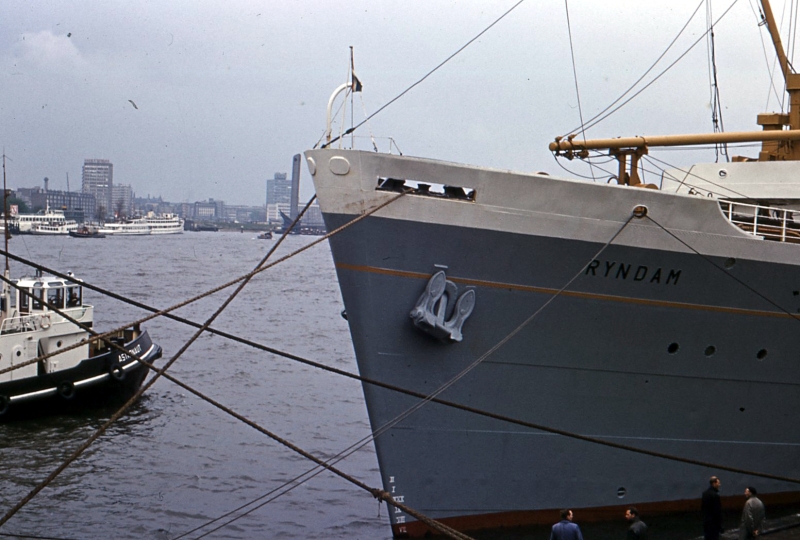
The Ryndam that brought us to Canada – Anchored at Rotterdam Harbour

          The Trans European Express train (TEE) was racing at an incredible speed towards the Dutch border stopping only at major urban centres. At Wesel, my previous hometown, which had grown into a city of almost 50,000, the train did not stop either. Shortly after noon we arrived in Rotterdam, where a taxi took us to the harbour, which was and still is one of the biggest and busiest ports in the world. There our ship was waiting for her passengers to come on board. In the harbour inn Adolf and I sat and drank beer, while Eka had a coffee to perk up with after such a long train ride. We were quite annoyed at the delay of our departure caused by the much larger sister vessel of the Holland-America line bound for New York, which happened to leave port on the same day. Finally we were allowed to embark. Before heading out into the Atlantic Ocean, the Ryndam, for the next ten days our home, hotel, restaurant, and entertainment centre, had to make two ports of call, Le Havre and Southampton. From England I mailed Biene my first letter written at sea.


Chapter 27 of the Peter and Gertrud Klopp Story – Part I

The Voyage

There is a tide in the affairs of men.
Which, taken at the flood, leads on to fortune;
Omitted, all the voyage of their life
Is bound in shallows and in miseries.
On such a full sea are we now afloat,
And we must take the current when it serves,
Or lose our ventures.

Shakespeare

1024px-2005-08_Gießen_-_Theater

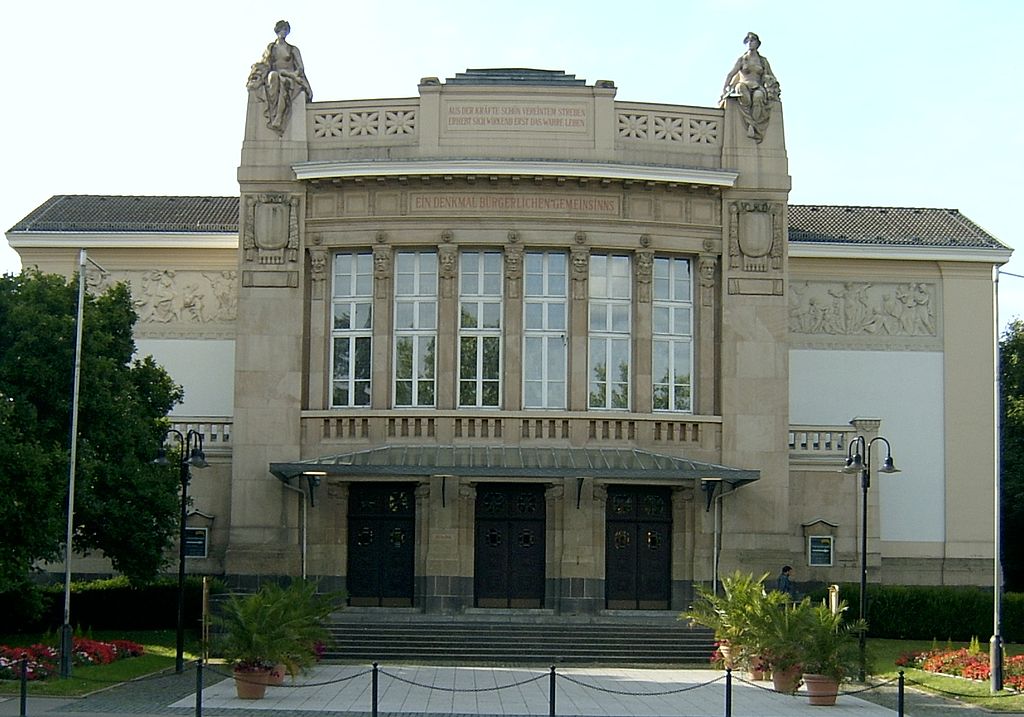
Giessen Theatre – Photo Credit: Wikipedia.org

Travel Preparations and a  Farewell Speech on a Vinyl Record

The day after Biene had returned home, Adolf took my sister Eka and me on a whirlwind tour to Berlin, where we saw for the last time Aunt Alma and her family. On the way back we dropped in at the apartment of our brother Karl in Braunschweig, where he had recently embarked on a banking career at a local bank. There in the beautiful apartment we spent a few days with our brother, his wife Ingrid and their little baby daughter Annekatrin.

93

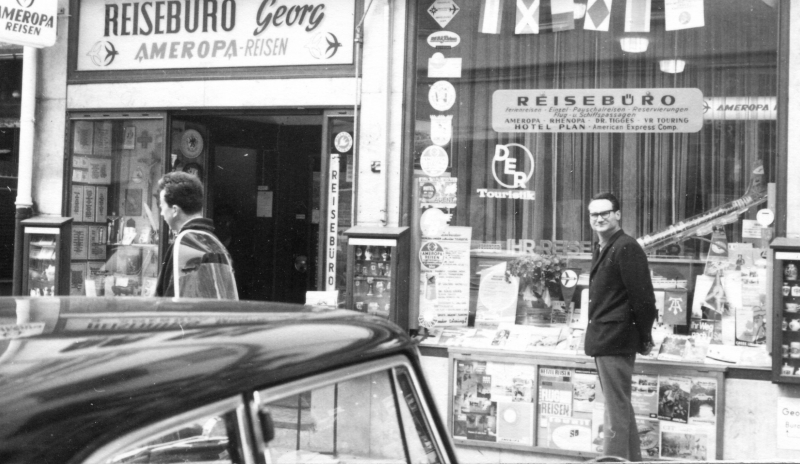
Adolf Standing in front of the Giessen Travel Agency

Back at home we directed our attention to the task of getting our belongings packed and ready. Our tickets for the voyage to Canada included the shipping charges for the wooden crates that contained all our personal effects. Almost too late we found out that we were responsible for moving them to the travel agency in Giessen. Almost instantly arose a heated argument among the hot-tempered siblings, myself included, as to whose fault it was for having overlooked such an obvious problem. Accusations were flying back and forth. It seemed that each one of us was on a faultfinding mission. Of course, no matter how hotly we debated the issue, the heat of the arguments would not move our big, heavy crates to Giessen.

94

Problems Worked out over a Mug of Beer

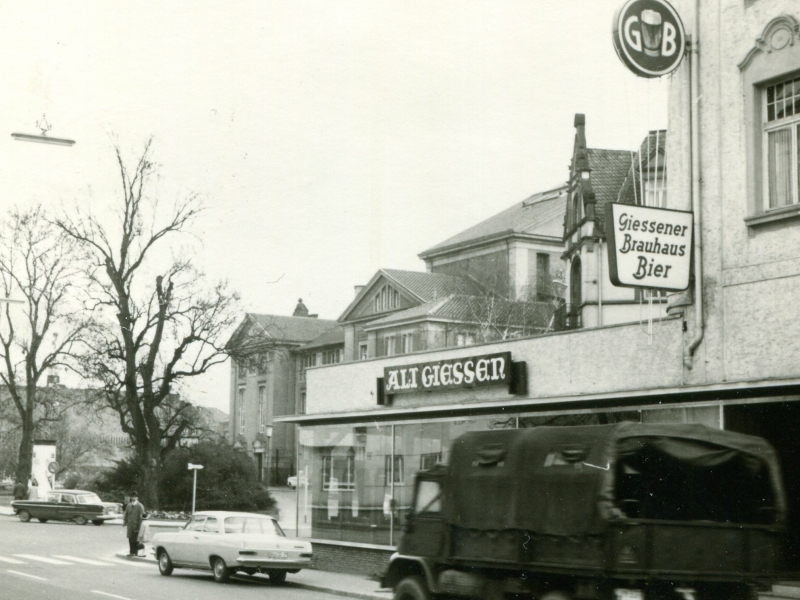
Fortunately our cousin Jürgen arrived just at the right time and helped diffuse a potentially explosive situation. He suggested a cooling-off period for the enraged brothers. In Giessen we dropped in at the ‘Vienna Forest, a popular restaurant, where they served us grilled chicken and beer. Tension and lingering hostility abated quickly at the same rate as our stomachs filled with delicious food and copious amounts of beer. Now we were ready to tackle the shipping in a more amiable environment. Jürgen had just made the acquaintance of a fellow student, who would be willing to provide his old and dilapidated VW bus for the crates. After a few more drinks at a roadside fast food outlet we were going to announce the good news at home. However, the pub, ‘The New Homeland’, was still open in Watzenborn. We thought a few more beers would not hurt and would definitely clear away the last little bit of rancour, before going home. So we finally arrived in a fairly boisterous mood. Everybody had already gone to bed. But this did not prevent us from loudly announcing to Eka that we had found a solution to the shipping problem. We all withdrew into the furnace room, which with its excellent sound-proofed walls offered a modicum of protection against the noise. Befuddled by all that beer I played the guitar rather poorly often missing the correct fret, while Adolf sang the song merrily out of tune with the chords I was playing. In the meantime  Jürgen and Eka had an animated discussion on the poor timing of our nocturnal arrival. Not receiving the appreciative reception that we were expecting, we decided to spend the night at Jürgen’s place in Giessen and slept for want of something more accommodating all three in one bed, but not before having a taste from the bottle of whiskey that happened to be there for this crazy occasion. Next morning (or was it noon?) Adolf and I, feeling somewhat remorseful for our rambunctious behaviour the night before, drove home quite willing to accept any criticism with a repentant heart and to make amends by getting the crates ready for shipment.

Record

In the turmoil of the endless visits of well-meaning relatives and friends, who all came to say good-bye, I still managed to keep up the correspondence with Biene, although it was almost impossible to find a quiet corner in the house. I had  made a recording of a few simple classical guitar pieces that I felt were good enough for her to listen to. In addition, I recorded a farewell message on tape and mailed it together with the music to a company in France to have it pressed onto a vinyl record. A few days before our departure date the record arrived, which I embellished with some pretty labels and redirected it to Biene’s home address. It so happened that on the very day we boarded the Canada bound vessel, the ‘Ryndam’, she received my gift.

The recording sounds a bit scratchy. But what do you expect from a 50-year old vinyl record?

Chapter 26 of the Peter and Gertrud Klopp Story – Part III


Last Rendezvous in Germany

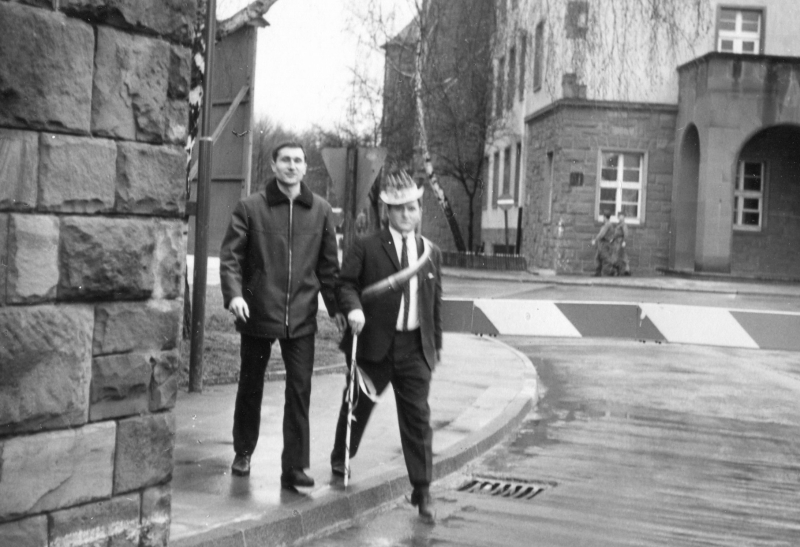
Peter on the Left Walking out of the Falckenstein Barracks

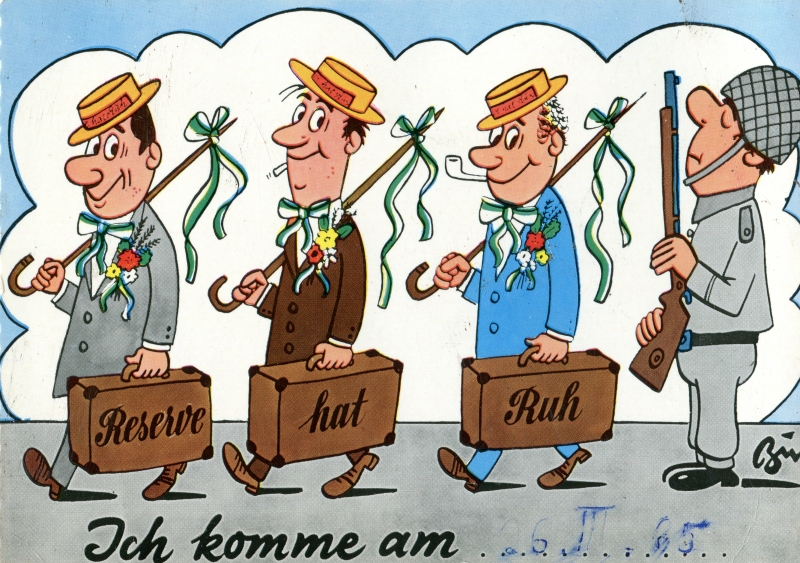
The day of our official release from the West German Army had finally arrived. For the last time we stood in attention in front of the main building. One could easily spot the reservists and distinguish them from the soldiers on active duty by just looking at their clothes. We wore civilian clothes, while the others were standing in their uniform. In spite of all the drudgery during the past two years, it now felt good to have served one’s country. To prevent a war through the presence of a strong army as a deterrent to a would-be attacker was in my opinion far more important than being involved in a conflict with its horrors at the front line and with its casualties among the civilian population. I was grateful for the opportunity to spend my final six months in Marburg. I felt enriched by the outstanding technical training, blessed with a company of cheerful comrades, respected by a competent staff of officers and sergeants. Last but not least I was awarded a fine testimonial, which gave credit to my successful teaching assignments. Soon after the brief farewell speech and words of encouragements and good wishes by the commanding officer we walked through the open gate into momentary freedom until new duties and responsibilities – some of our own choosing, others forced upon us by circumstances beyond our control – would limit our choices all over again. But at this very moment we were truly free. I took the very first available train to take me home to my mother in Watzenborn. In an almost nostalgic mood I hummed in my mind: Parole heißt Heimat, Reserve hat Ruh!

Card Sent Home to announce my Coming

Biene’s reply to my long-winded exposition on love and faithfulness was very encouraging. She also confided to me that only two years prior to meeting me she was not even allowed to step outside the door. Her mother, to whom I will remain for ever grateful, worried a lot about her, kept a watchful eye, and thoroughly investigated, where she was going and with whom she was getting together. At that time quite a few dramas were rolling over the home stage. Biene admitted that during that time she was often in danger of being swept up by her impulsive and passionate feelings. Mother Panknin kept her from getting lost on the wrong path and made sure that her precious daughter would not be led astray by false emotions. But now it seemed that she had trust in her daughter. And even though she had never really got to know me, through the eyes of her daughter she seemed to have developed a favorable image of me. How else, so I asked myself, could she let her travel to me and allow her to stay overnight at a distant location? On Biene’s last visit, before I departed for Canada, with full support of her parents, she came to visit me for an entire week. Perhaps Herr and Frau Panknin shared Biene’s older sister’s view believing that once I was off to another country far away from Biene, our relationship would eventually fizzle out and die a natural death.

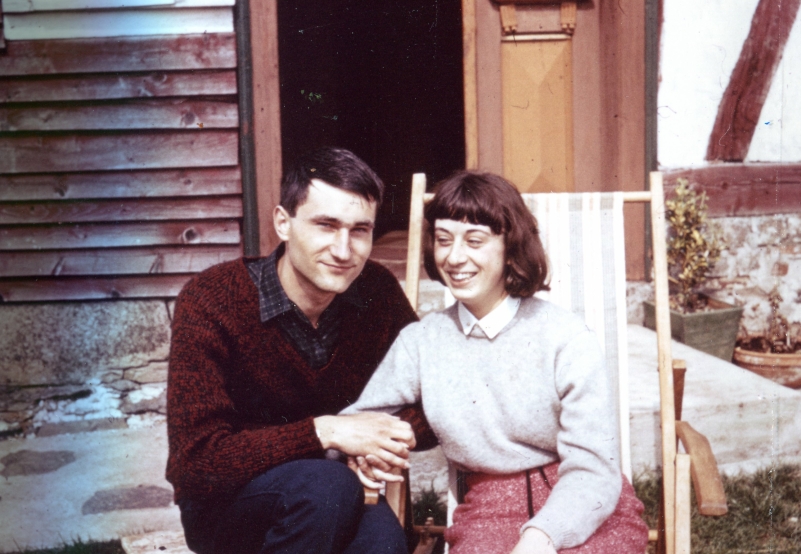
Peter and Biene in Front of Erna’s House in Michelbach

On Monday, April 5th, Biene arrived by train in Giessen, where I met her at the station. From there we traveled together to Michelbach near Schotten at the foot of Mount Vogelsberg. The week before I had given Erna, Father’s second wife, advance notice that we were coming for a visit. She knew that this would be the very last time Biene and I would be seeing each other before my voyage to Canada. Even though she was still mourning over Father’s sudden and unexpected death the year before, she did her best to make us feel welcome in her so typical cheerfulness. Everything was prepared for a comfortable and enjoyable stay for us. I was going to sleep in Father’s bedroom upstairs, while Biene was sleeping in the guest room.

Erna, Father’s second Wife, on the Left with her Friend Friedchen Langlitz

After a good night’s rest and a hearty breakfast, Biene and I decided to hike up to the Hoherodskopf, one of the higher peaks of the Vogelsberg Mountains, a 2500 square km terrain that was formed totally from volcanoes some 19 million years ago. This volcanic region has been long extinct. It had created one of the most amazing basalt rock formations anywhere in the world. But on this wonderful April day we were not going to study geology, we had better things in mind. We were more interested in each other’s company, living in the here and now, savouring each precious moment. It was cool, but the sun shone brightly over the park like landscape. Thunderclouds arising above the western horizon lent the vernal panorama a dramatic effect. We were grateful that we encountered very few people on our leisurely stroll, as it was early in the season. There was nothing that would disturb the warm, tender feelings we felt for one another. This was also not the time to look back at all the obstacles, challenges, and problems that we had to deal with in the past. We had mastered them and had set them aside not allowing them to interfere with our blissful state of mind.

Biene on our Hike to the Vogelsberg Peak

There was no need to talk. Our hearts and souls felt at one. We reached the top just in time to find some shelter from a heavy downpour that was threatening to spoil our outing. Near the peak of the Taufsteinhütte we stepped into a cozy restaurant by the same name, when the first raindrops began to fall. The dining area created that special kind of ambience so conducive for a romantic get-together, each table place at a window with a view over the spectacular scenery. Just then lightning lit up the dark clouds. Then followed the rumbling of thunder in the distance. I ordered a bottle of Mosel wine to celebrate and drink to our love that had carried us so far and would help us bridge the long time of separation ahead. For on this day we had not only climbed Mount Voglsberg, but even more importantly we had also reached a new pinnacle in our relationship. The rain was now coming down in buckets. Thunder and lightning engendered an electric atmosphere. In a strange mixture of fear and passion it made us move closer together. In the spirit of ‘carpe diem’ we did not gulp down our wine as if in hurry, instead we sipped the sweet wine from the Mosel valley to make the moment last. We almost wished that the storm would last forever. At least for the moment, time appeared to stand still. When we tasted the last drop, the storm and rain had subsided and had moved on. Erna, having worried about us, had sent a neighbour to pick us up in his car. We reluctantly got up and with a feeling of regret let the neighbour drive us back to Michelbach.

Schotten – April 1965

On the following day Biene and I promenaded down to the quaint town of Schotten with their timber-frame houses so typical of this region. Biene was quite excited and full of anticipation. For I had announced that I would buy her a mystery gift. Of course, I could not tell her what it was; after all it was supposed to be a mystery gift. Biene behaved as if she knew the secret. Therefore, she kept her innate curiosity for all things unknown to her in check. If I had a picture of us two walking into town, I would in a comic-book-like fashion place two speech bubbles above our heads. The one above Biene would say, ‘Today is the day Peter will buy me an engagement ring. I will be so happy!’ And my bubble would say, ‘Today is the day I will buy her a genuine Hohner harmonica. She will be so happy!’ Had I not played the mystery game, had Biene said just one word, I would have bought the ring and put it on her finger for everyone, her parents, friends and all would-be suitors to see that she was engaged. Instead she was now in possession of a fancy harmonica that could be played on both sides in keys C and G. Biene looked pleased and even appeared happy, but I am sure that deep inside she was also a bit disappointed. What I could vaguely at the time was that we could have saved ourselves a lot of pain and agony in the not too distant future, if we had been able to communicate with each other just a little better.

Michelbach, the Little Village, between Schotten and Vogelsberg Mountain

It was the night before we had to head back to Mother’s place at Watzenborn Was it the moon, or the noisy cats prowling and meowing in the attic, or fear of the unfamiliar surrounding, or romantic passion stirring in us? Perhaps all of these things! The plain fact, however, was that we could not sleep. With the two upstairs bedrooms so close to each other it would have been so simple on any of the three nights to yield to temptation. But we did not. I would be a hypocrite, if I was going to explain our conduct in terms of a moral victory. It just happened, almost certainly for our own good.


Chapter 26 of the Peter and Gertrud Klopp Story – Part I

Of a Young Man’s Needs and Faithfulness

Do not spoil what you have by desiring what you have not; remember that what you now have was once among the things you only hoped for. Epicurus

Biene’s Second Visit to Gotha

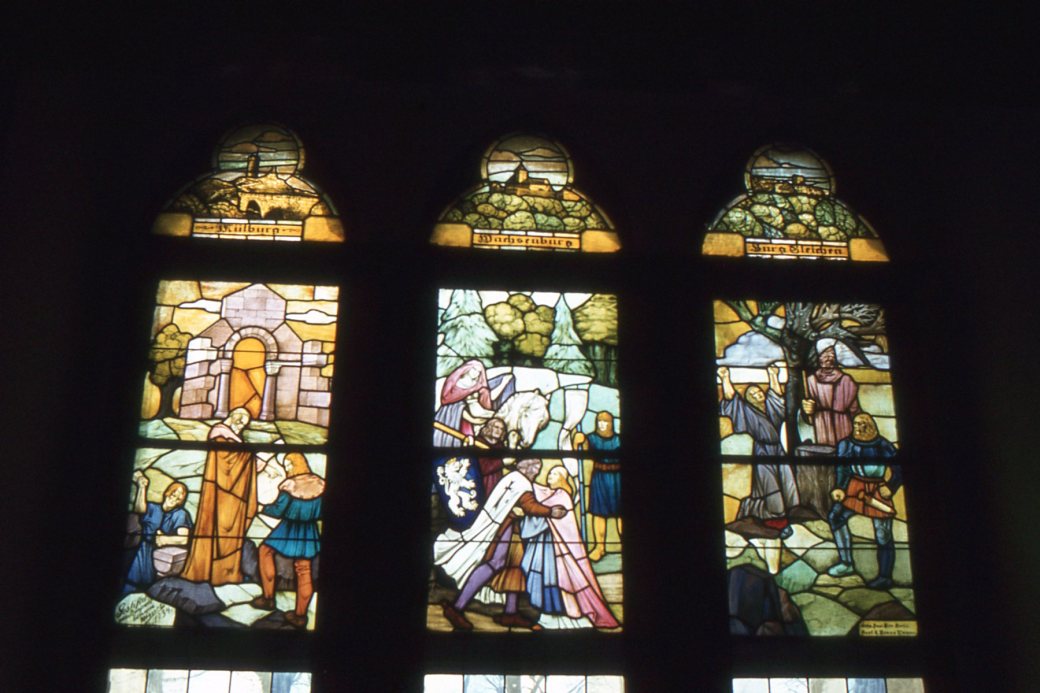
Beautiful Stained Glass Windows at the Erfurt Cathedral

During the last three weeks of my military service I took the time to write a report on my army experiences. I intended to mail it to the ombudsman, whose job was to receive and act on the written complaints from soldiers about alleged abuses and injustices in the West German army. Having gained the much-needed distance from the upsetting transfer episode and having received fair and respectful treatment at my final army post at Marburg, I was in the right frame of mind to describe in an emotionally neutral and objective manner some of the deplorable conditions at the Koblenz barracks, where low ranking army personnel were fraternizing, drinking, and getting drunk with common soldiers and thus tarnishing the public image of the Armed Forces. I also pointed out the errors, which the officer in charge – whether intentionally or not I could not say – committed to bring about my transfer to Maxhof. Furthermore I made it clear that while I lost out on a chance of becoming a lieutenant of the reserve, the army itself would suffer in the long run from such careless and wasteful practices. Biene helped me by typing up the handwritten draft copy of the report.  She was quite impressed how I managed to control my anger and yet decidedly communicated my legitimate concerns to the ombudsman. Being aware of the fact that for the first time we worked together to address and solve a problem, she remarked in her letter that all her thoughts were directed to a time in the future with me. She wanted to do her part that our life would not turn to be something, upon which we would look back with regret, rather a life that was perhaps difficult, but would fill our hearts with joy, because we mastered it together.

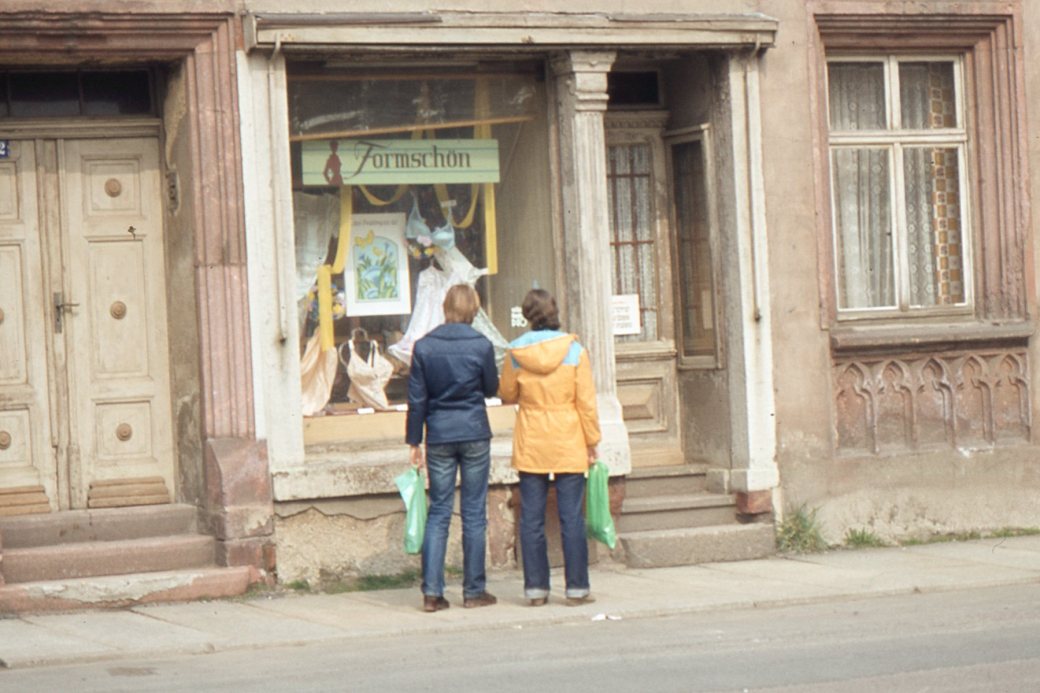
Lingerie Boutique in East Germany 30 Years after the End of World War 2 

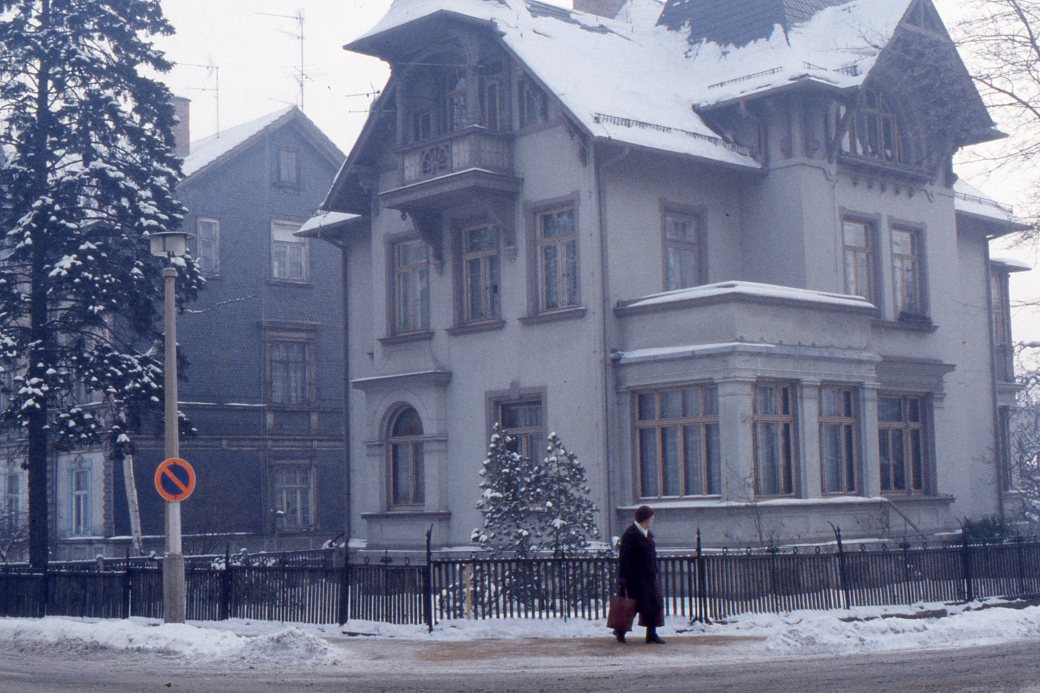
About a week before my birthday Biene and her twin brother Walter traveled to Gotha to visit their sister Elsbeth in the GDR behind the Iron Curtain. In those days, when a fence heavily guarded by the National People’s Army (NVA) divided the two Germanys, a person needed a traveling visa and a residence permit in order to cross the border and visit close relatives. What made the application process so frustrating for so many West Germans was not the hefty fee they had to pay, but the arbitrariness in the approval process by the East German authorities. Only in the event of a severe illness or death of a close relative could one be fairly sure to get that all important entry document. So Biene and Walter were lucky indeed to make their journey to their former hometown Gotha and to be together with sister Elsbeth and her family at their birthplace. The apartment, where Elsbeth, her husband Paul Werner, and their two sons Norbert and Christian lived, was located in a beautiful house that had escaped the destruction of the Allied bombing raids during the war. The home offered the warm, cozy feeling of a secure harbour, where the family found refuge from the desolation of the outside world, the depressing sights of dilapidated houses all around the neighbourhood. While West Germany had experienced an incredible economic boom with an unprecedented growth in prosperity during the past twenty years, not much had changed on this side of the border and large parts of the major cities still lay in ruins. There was a shortage of the most basic consumer goods that forced shoppers to buy, whenever and wherever they happened to be available in the drab city stores.

Biene and her two Nephews Norbert and Christian – 1965

On Biene’s previous visit in the summer of ’64, the two sisters had already formed a close bond with each other. Now Elsbeth was jealously watching that nobody spent too much time with her cherished guest. Together they traveled to Erfurt to visit the famous cathedral, where Martin Luther was ordained in 1507. Inside the 1200-year-old Gothic church they marveled at the beauty of the altar. Biene was impressed by the rich colors of the stained glass windows that let the vibrant light stream into the interior. In the evening the entire family would sit around the table and play a round of the German card game Doppelkopf, which was also our favorite game at the Kegler Clan. Of course, her two nephews were delighted, when they were allowed to spend a little bit of time and go for a sightseeing tour around town with their elegantly dressed and pretty Aunt Biene from the West.

Biene’s Birth Place in Gotha

Elsbeth had watched on East German TV many interesting documentaries on the landscapes and people of Canada. She confided to Biene that if she could live her life over again and had the freedom to travel, she would immigrate to this fascinating country with its magnificent scenery and its promise of a better future. When Biene told her that I was going to Canada in a matter of a few weeks and that we had promised to be faithful to each other, Elsbeth voiced her skepticism and did not mince words in sharing her opinion on what a man of my age needed. She warned her younger sister that I would be looking for a girl who would offer more than she had been able to give. Biene was quite troubled by her sister’s pessimistic views on men’s desires for sex and their  potential lack of faithfulness. True to our promise of always sharing our thoughts and concerns with each other, she immediately communicated her worry regarding these disturbing insights in a letter directly from Gotha and asked me to respond and hopefully reassure her.

Chapter 25 of the Peter and Gertrud Klopp Story – Part VI

Philosophical Musings on Love, Marriage and Family

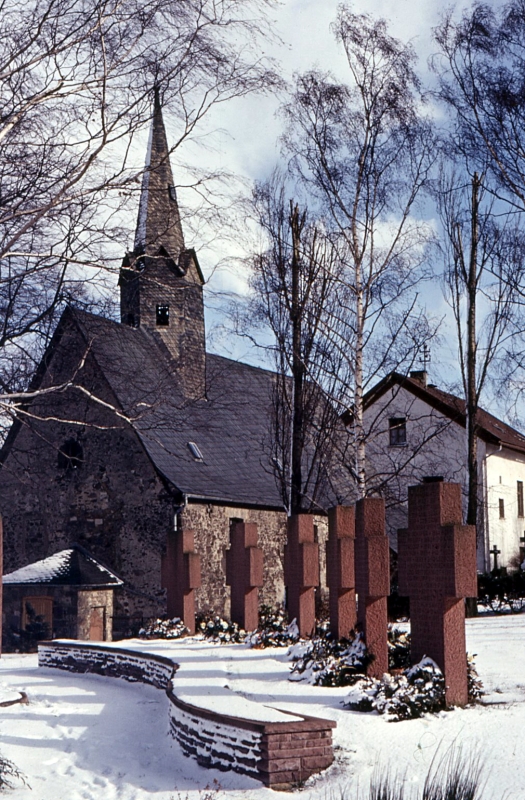
Church in Watzenborn-Steinberg

Church in Watzenborn-Steinberg

Now it was my turn to write and lay out my philosophical musings on love, marriage, and family within the context of their place in society. Just like Biene, I allowed my thinking to go far, even taking a fanciful glimpse into a romantic notion of immortality.

          When I think about two people, who love each other, I see two streams that arise from two different springs, wind through narrow ravines and then, free again, pour into a wide valley, sometimes wedged in, sometimes wide, yet steadily growing in power and strength, finally join and from then on flow together towards their goal, the sea. Who can say which is greater, more glorious and more beautiful? Perhaps an onlooker from one region would praise the charm of the first river, while another would be more pleased with the foaming waterfall in a gorge of the second. What the two have in common is not remarkable, because their charm lies in their difference. So it also appears to me between a man and a woman! For with them as well we see their intrinsic value in their being different from each other.

As we both are different and only when united have a common goal, so will different tasks occupy our entire being. Thus, dear Biene, I am certain, you will want to be wife and mother and you will see in this task your greatest and most beautiful role, and I would like to be husband and father and make sure that I put on a solid foundation, what you in your uniqueness will accomplish in the home through love and warmth for husband and children. And should someone ask us about our understanding of equality, we would simply reply that it is respect for each other’s uniqueness. We will then have said much more than if we had spoken longwindedly about the social position of man and woman in the human society. With it we express the idea that we do not wish to distort nature’s laws in our desire to be equal, but in responsibility for each other and for the family we are on par, of equal worth and value.

          Each person, no matter how insignificant and low in the eyes of the world, influences his environment by his very being. His parents care for him and draw him into their thoughts and feelings. And so he also influences their decisions, as long as he in some way depends on them. Because of him they postpone perhaps a vacation trip or even cancel it; because of him there is perhaps a car accident or perhaps not. Few people are connected with him with their decisions, but the few are intertwined in a remarkable way with thousands of other people, who in turn have an impact with their actions on others. Thus, everyone makes a small contribution to the history of mankind. One need not be Caesar, Napoleon or some other great figure to change the world we live in. Everyone does it, whether he is aware of it or not. But it is good to know one’s power to this effect.

A teacher, who is ambitious and uses his subject areas to have good students graduate year after year, can say at the end of his career, ‘My knowledge and my thoughts did not remain buried in books or in my head, but have beneficially spread among so many people. He will be satisfied with his life, and after he will be long gone, his ideas and thoughts mysteriously live on in thousands of minds and produce for a long time to come precious results. Would he not catch through his work a tiny sliver of immortality? I find, if one looks at life that way, the world appears much brighter, even death loses some of its sting. Thoughts, ideas, knowledge are invisible and work in the shadow of the human spirit, until they step forth in action and then, even if it only happens on a small scale, change the world. You may wonder, dear Biene, what I’m driving at. I would like to lead a life with you and be there for you and the family. And that is only possible if I enter a profession, which first of all brings joy to my heart and secondly offers us financial security. Later on in my profession as teacher I hope to positively affect young people and, as much as I can, will follow with great interest their life’s journey. The question will always occupy my mind, ‘What will become of them?’ However, in my work I will never forget the family and leave its care and worry to you alone. You know, dear Biene, I believe that we live on through our children. And even if one day we will have become old and gray, part of us will always carry over to them, our flesh and blood, and after years of nurturing certainly also our way of life. I would like to cling to this idea, which in its realization will bring so much comfort to us, and it is my greatest desire that one day all this will become reality.

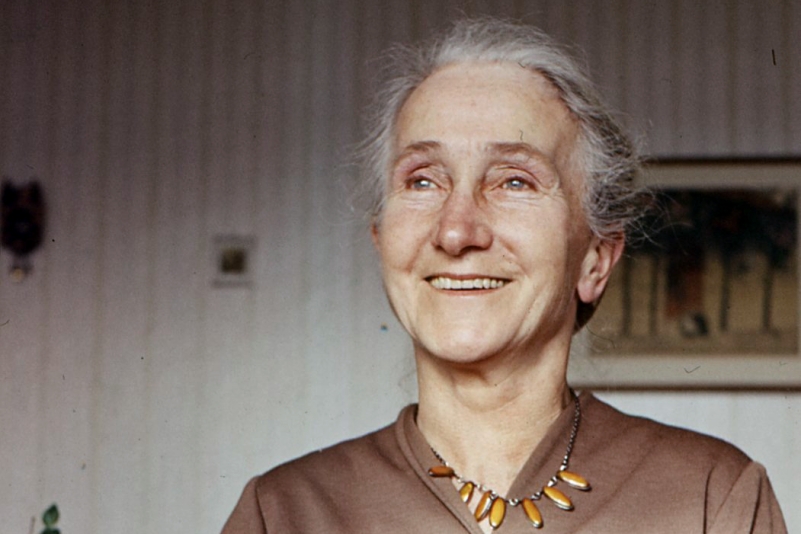
Mother

Mother

          Sitting on Mother’s sofa, Biene and I shared these wondrous thoughts that have so prophetically crystallized into words written down in Biene’s special dream book. They were clear and easy to grasp, to which we could attach our hopes. They were destined to be the blueprint for our entire lifespan.