An Unconventional Engagement
“Love does not consist of gazing at each other, but in looking together in the same direction.” Antoine de Saint-Exupery
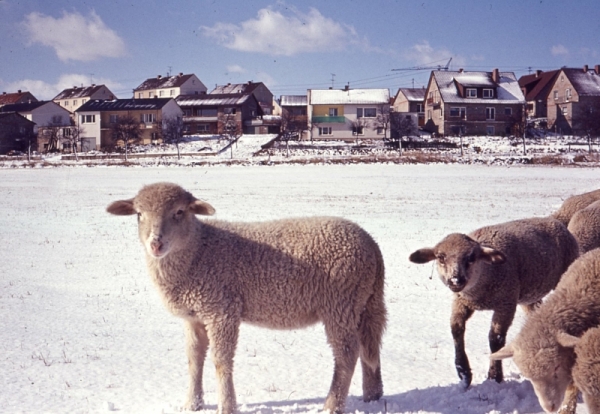
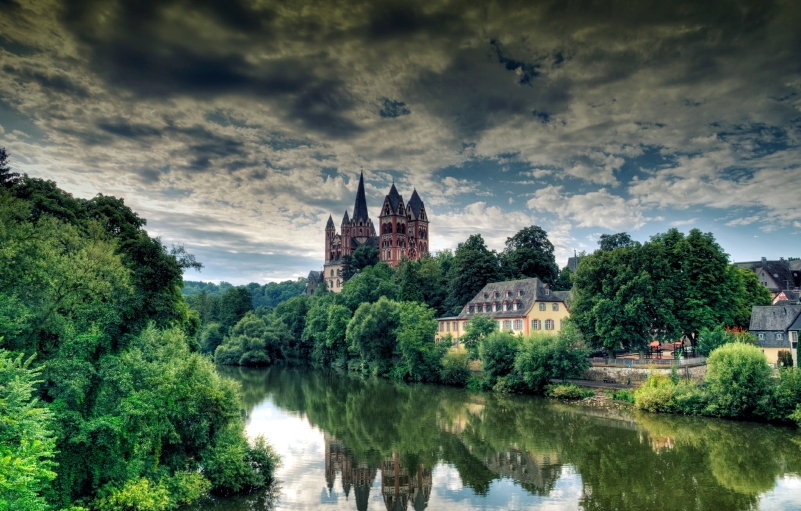
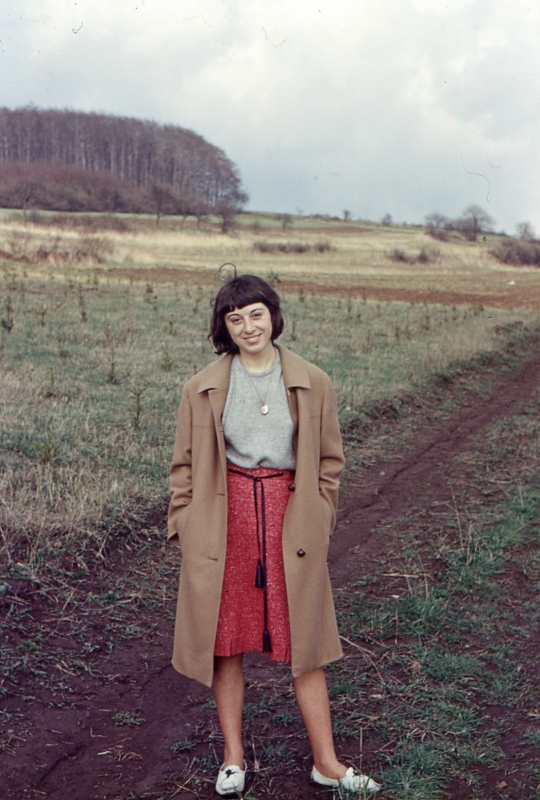
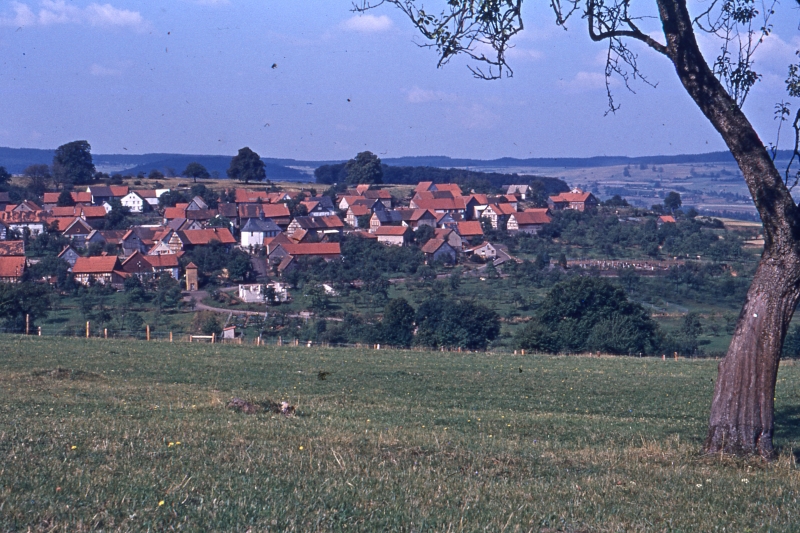
Pastoral Scene of Watzenorn-Steinberg (today’s Pohlheim) near Giessen – January 1965
Tense Moments on a Train Ride
On January 8th, 1965 I took the train to Cologne, where the Canadian Consulate was located. In those days it was relatively simple to become a landed immigrant of Canada. One had to be in good health, have useful skills or at least demonstrate to have the potential. In addition, one needed sponsors, who were willing to vouch for the new immigrant’s good character. My brother Gerry and sister-in-law Martha in Calgary were willing to take the risk of sticking their neck out on my behalf. So it happened that on that momentous Friday I received the official permission to enter as landed immigrant the country of my dreams.
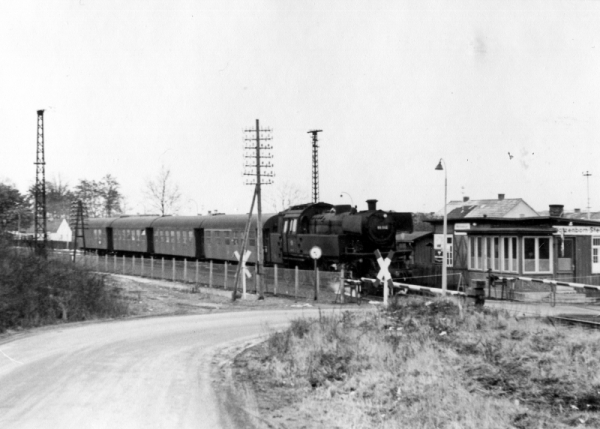
On the same day I traveled to Wengern on the River Ruhr, where on account of Mother’s kind arrangements I received from her acquaintances a warm welcome, a fine meal and accommodation for the night. Frau Wolpert, a war widow, had a daughter about my age, who was still living with her mother in the small apartment. I was not too happy, when I heard that the young lady was taking the same train in the morning. Courtesy required that I sat with her in the same compartment. Lacking my brother Adolf’s outgoing character and social skills, which he could so easily employ in any situation, I kept mostly quiet except to ask where she was heading. And when she replied that she was attending a trade school in Siegen, I was dumbstruck and became more and more apprehensive, since I had made the arrangement with Biene that I would join her on the train to Siegen with the plan of traveling together to my Mother’s place. The thought of being in the same compartment as Fräulein Wolpert greatly troubled me and a long embarrassing silence followed this shortest of all dialogues. While I was frantically searching for a way out of my dilemma, she may have been perplexed over my sudden shyness or may have wondered whether there was something about herself that I may have found offensive. I would have had plenty of time to explain to her that my girlfriend is already waiting for me in the train from Essen to travel home with me to meet my relatives. But unable to talk about things that I considered too private to share, I remained silent. However, when at the transfer station in Hagen she followed me hot on my heels and boarded with me the express train to Giessen, I couldn’t think of a good excuse to get rid of her and considered it best to tell the truth.
“Excuse me”, I spoke rather timidly, “I must say good-bye now. My fiancée is sitting somewhere in this train and I must go and find her.”
With this more than cryptic remark I hurriedly left Fräulein Wolpert in the compartment where she had just sat down on the bench and was in all likelihood puzzling over my strange behaviour and the even stranger excuse. Regaining my calm I ambled from carriage to carriage, until I finally found Biene at the far end of the train.
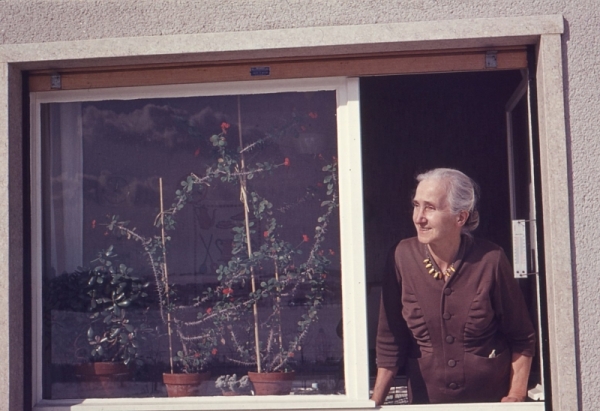
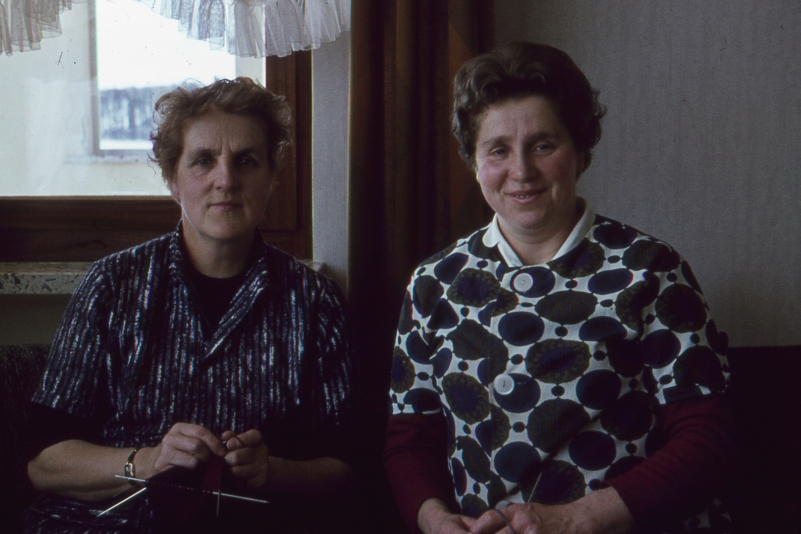
Mother (better known as Mutter Köhm)
We were so happy to see each other that we forgot to talk about what was so important to us. On the three-hour train ride to Giessen we missed in our rapture the golden opportunity to make concrete plans, on which we could confidently hang our dreams and aspirations. Adolf picked us up at the station and took us to Watzenborn, where Mother, Aunt Lucie, Aunt Mieze and Uncle Günther gave us the customary royal reception that made Biene instantly feel right at home. She was originally supposed to stay overnight at Philip XI, a small bed and breakfast establishment, but Mother insisted that Biene would sleep in the guest room, thus having a better chance to get to know her. Adolf and I were delighted to cede our bedroom to the finest and most beautiful young lady. We gladly slept on the downstairs sofas instead.
In a mysteriously worded note to Biene I had announced that I would take her, perhaps on a flying carpet, to a distant land and return home during the same evening. The distant exotic land turned out to be a Chinese dinner at my cousin Jürgen and his fiancée Inge. Jürgen impressed me with his sharp wit and exuberant jolly manner, with which he entertained his guests. I could see why he and Adolf got along so well with each other. He cracked a few jokes about the West German army, which I found as a member of the armed forces less amusing. For even though I had had bad experiences until very recently, I felt too much a member of the body to which I belonged to ignore my sensitivities about his jocular attacks. Like many of my friends in Wesel, Jürgen was exempt from military service, because his father Bruno had been killed in action at the beginning of WW2 in Alsace-Loraine.
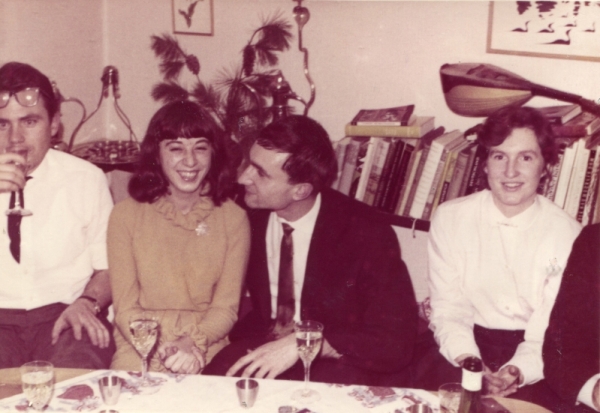
From left to right: Jürgen, Biene. Peter and Inge
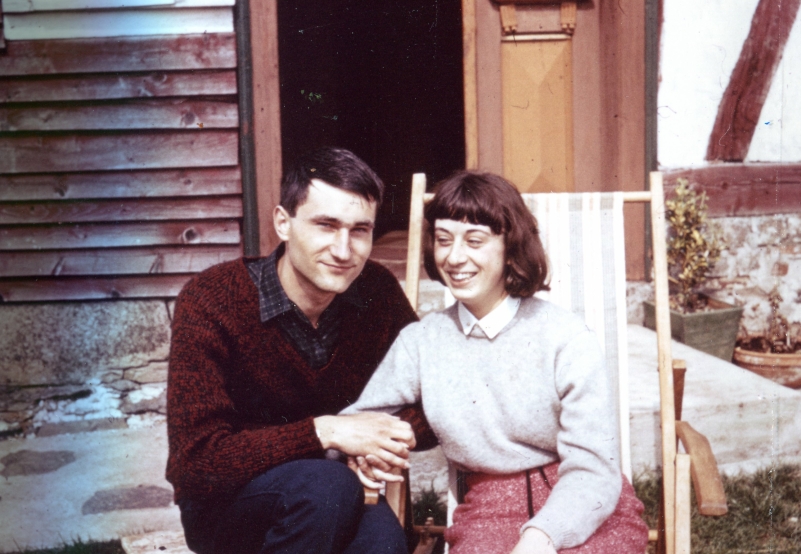
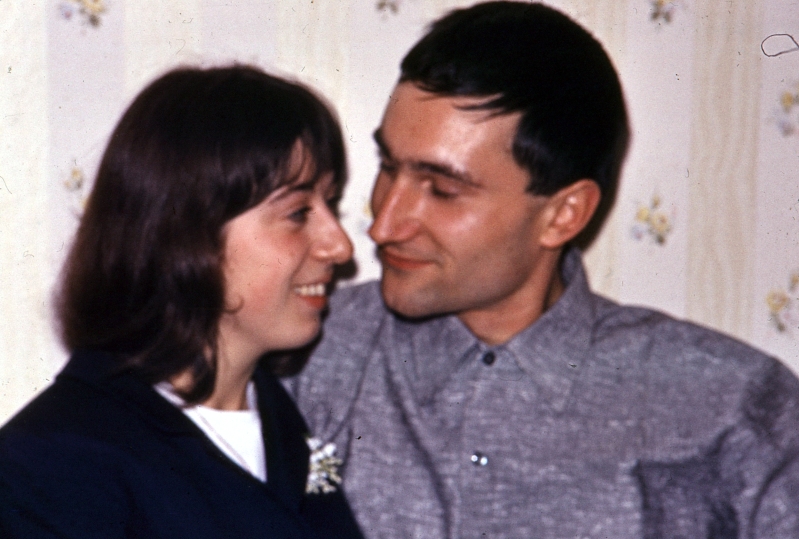
The Chinese dinner was a great success. Biene and I enjoyed every minute of it. It was here at Jürgen’s apartment that Adolf took the first photos of us two being together. Near the end of the party another guest probably from Egypt said that he had a culinary surprise for Biene. He wanted her to guess a mystery food from his North African country. He asked her to close her eyes and open her mouth. When she complied in great anticipation, he slid the mysterious object into her mouth. All eyes were focused on her facial expression. Having crunched it and tasted its flavour, she asserted that it was quite delicious and pleasant to eat. Great was her amazement when she learned that she had just swallowed a chocolate covered grasshopper, considered to be a delicacy in some African countries. Merrily we returned home to Watzenborn over the snowy wintry roads in Adolf’s old faithful Volkswagen beetle.
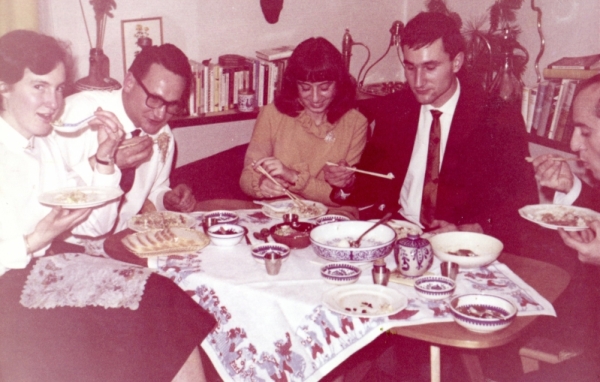
From left to right: Inge, Adolf, Biene, Peter and a Friend – January 1965
Mustering up the Courage to Talk about the Future
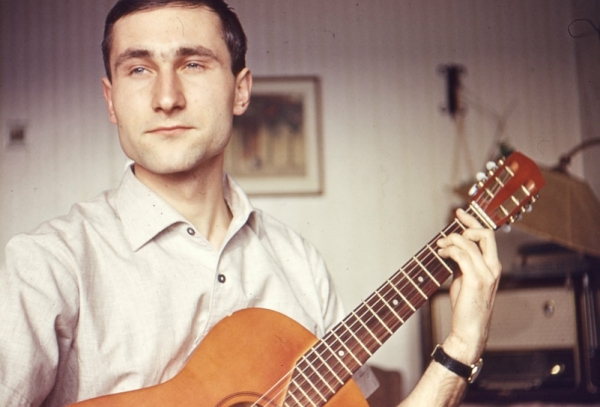
Peter Playing the Guitar for Biene
On Sunday morning Mother, like always, lovingly prepared a sumptuous breakfast. Then on Biene’s request I played a selection of a few very simple classical guitar pieces composed by Carulli. As I was nervous and excited, I made quite a few mistakes. Going as far back as my early childhood years I had never suffered from stage fright. I had taken on challenging rôles in Christmas concerts and other major school events. But this was different. Biene was the audience. While she listened to my renditions with an understanding heart, she was lovingly ignoring my mistakes. The frequent boners I committed bothered me all the more, since I often managed to play the tunes perfectly, when I had been alone. Then it was Biene’s turn to perform. I set up the microphone and the Grundig tape recorder to capture her voice. She recited in her soft, sweet voice the two poems she had written for me at Christmas. Although at the pinnacle of total bliss, I was unable to push away the nagging thought of words yet unspoken that needed to be said.
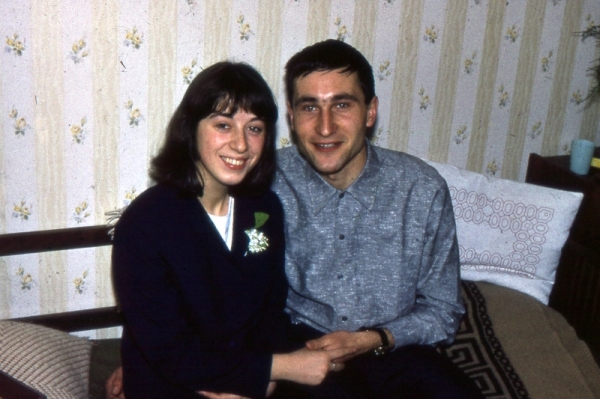
This had so far been the very best get-together with Biene. Should we again with our hearts overflowing with wondrous feelings miss the golden opportunity for a good solid talk about our future. For the day was dragging on and Biene’s time to leave was rapidly approaching. Resolutely I invited Biene for a walk along the wintry trail behind the house. We were holding hands, as I began to talk.
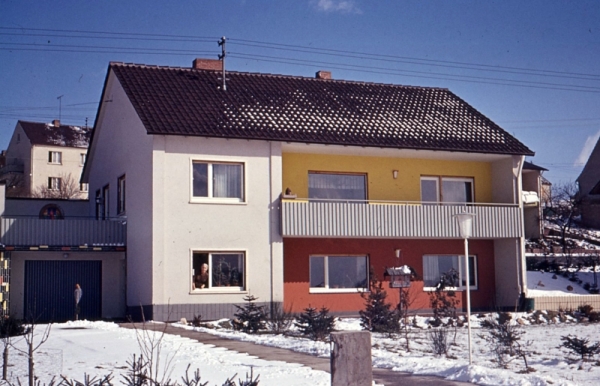
Mother Waiting for Peter and Biene
In just a few months I would be traveling to Canada on the Ryndam, a ship of the Holland America Line. It would not mean permanent separation. I would simply go and check out to see if it was true, as my brother Gerry asserted, that I could become a teacher with only two or three years of university training. If it was indeed true, my next step would be to get admitted to the University of Alberta at Calgary with my German high school diploma (Abitur). If successful in fulfilling all entrance requirements I would devote all my energies to acquire a teaching certificate in the shortest possible time.
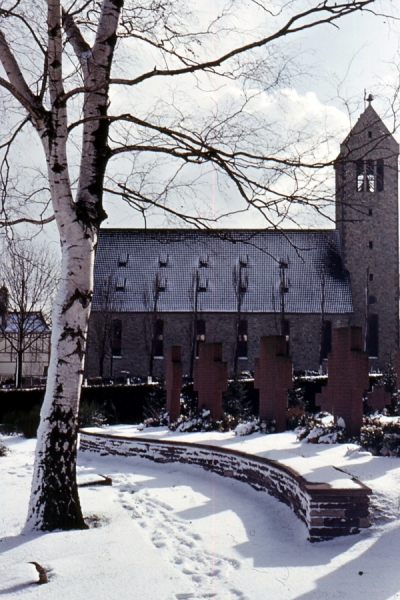
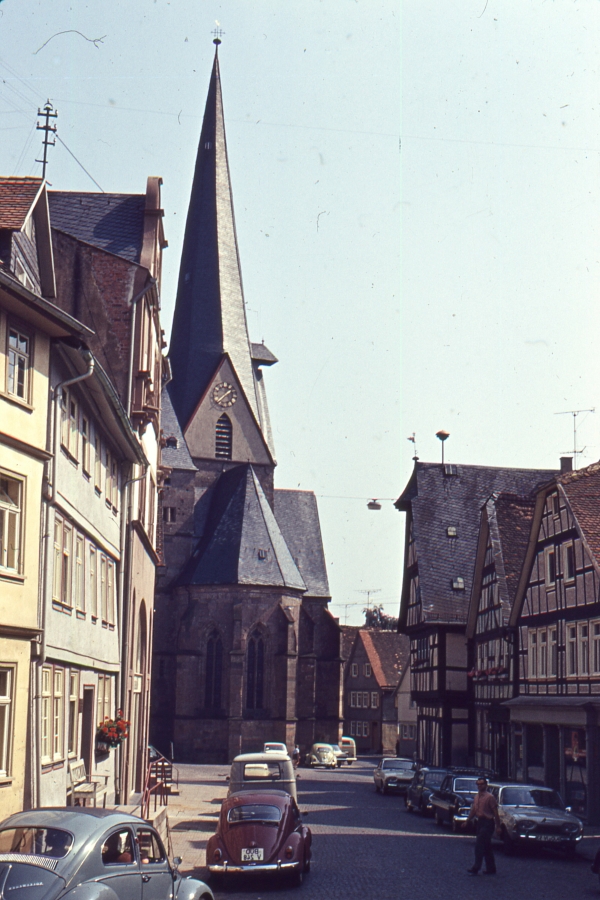
Church at Watzenborn-Steinberg (now Pohlheim)
And then … I paused for a moment noticing in Biene’s dreamy eyes the expression of sweet anticipation of words never spoken or written before, which she had been expecting from me, the slowpoke, for such a long time. “And then,” I continued almost choking with emotion, “I will ask you to come and be my wife.” Now she squeezed my hand and her face was beaming. Little did I know that with these words I fulfilled her secret wish, which at her home in Velbert had been conceived in her heart on New Year’s Eve! So with all our hitherto hidden desires so plainly revealed with my promise to marry her we huddled a little closer together on our way back to the house. To be sure, this was not entirely due to the ice and snow and the wintry chill in the air.
The Ring
A most unconventional, secret engagement had taken place. Biene and I did not feel any need to share the joyful news of our clandestine arrangement with anyone. While our parents, relatives and friends saw our love story unfolding before their eyes, they did not suspect anything more than what was normal at our age to do, to have a few dates, to meet at regular albeit long intervals. However, breaking well-established and meaningful conventions, such as a formal engagement, was not without peril, which we in our elevated state of romantic ecstasy did not foresee and whose warning signs we did not heed.
Another danger was lurking from deep within me, the tendency to fast forward into the future, then to look back from an imaginary vantage point and view in horror all the possible things that could go wrong. The worst of these mental acrobatics was that I was afraid that I would have to take the blame for Biene’s future hardships, suffering and pain. These were the thoughts that were passing through my convoluted mind. In simple terms, I was also a bit scared about having the boldness to ask her to marry me in the light of having ahead very little income, an uncertain future, and a long period of separation. So I wrote in a letter:
“Now I recall something else I wanted to tell you. I would very much like, when I am no longer in Germany, that you feel obligated by nothing except by your heart and feeling. Do you know what I mean? We have always striven to be honest even when we found it hard to do so. But it is exactly that honesty, which unites us so firmly. Perhaps you had expected to hear from me more concise plans on our walk through the snow to the old mill and back. See, my dear Biene, this was also the reason, why I found it so difficult to talk. I do not wish to exert any pressure on you. When I tell you, I need you –I really need you -, then in a sense I have already exerted pressure. Therefore, dear Biene, I urge you to let your heart decide.”
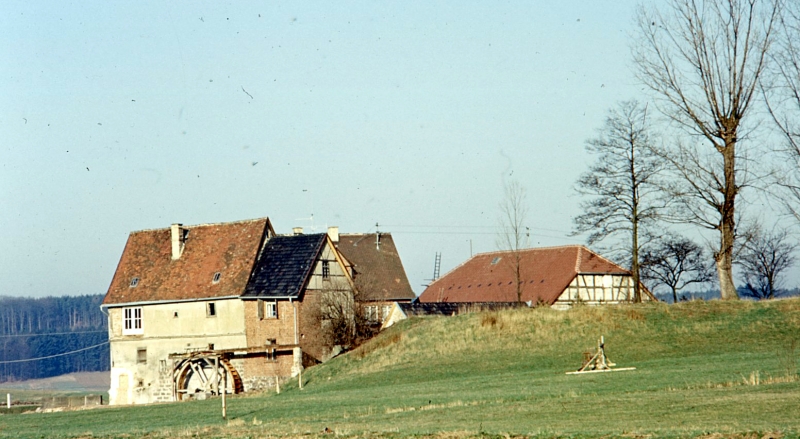
The Old Mill at the Edge of Town
The promise we made to each other on our wintry walk was barely one week old. And already I had cast doubts on the strength of our love for each other. I was very lucky that Biene did not take it as an insult. Even though it had never been my intention, one could have accused me of putting her love to the test. Of course, from her response I could tell that she felt saddened by the doubts I still had about her true feelings. But at the same time, my letter had compelled her to say that she loved me so much that she could belong to no one but me. I had to smile when I read the following lines,
“And if you were as poor as a church mouse, I would rather be a church mouse. Peter, don’t laugh, I really mean it. I would also like to give you a sign. May I give you my ring? It is the most precious thing I possess except for your letters and the book you wrote for me. Never would I have parted with it, but with you I find it easy to do. You must not think I am superstitious, but I believe it will bring you luck. And one day, dear Peter, when you write to me, ‘Biene, come to me!’ you can return it to me. Oh Peter, it makes me so indescribably happy to believe in a future with you. I am always thinking of us and I am indescribably happy about our secret. Dear Peter, I am so thankful that you have always stuck with me even though I so often hurt you, because I didn’t know that I loved you so much.”
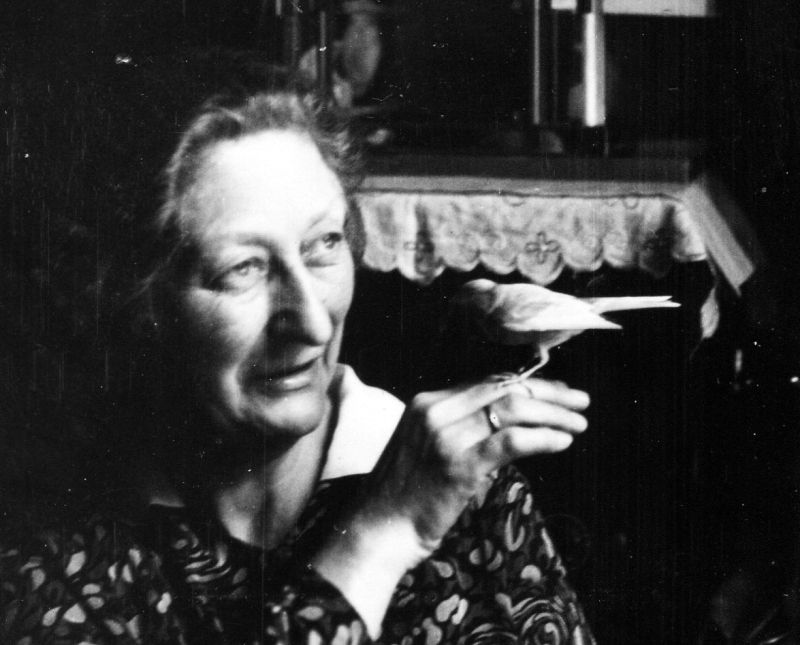
Gertrud Panknin, Biene’s Grandmother – 1931
The ring turned out to be a very precious family heirloom that was being passed down from Biene’s great-grandmother to her grandmother Gertrud and then, after the latter had passed away, finally to Biene. It was symbolic in more than one way. But the meaning as an engagement ring escaped me completely at the time. Of course, I was happy with it as a gift and as a token of Biene’s love. It was a bit too small to wear on my ring finger. To be sure, if I had, it would have raised a few eyebrows in my military environment. But I did wear it on my little finger during the night and turned it a few times to let it do its magic. Alas, in spite of all that talk about talking frankly and freely, I never understood the real meaning of Biene’s gift, and Biene did not have the courage to ask me for an engagement ring. If the reader thinks I needed to be rich and gainfully employed, before humbly falling on my knees to ask for her hand in marriage, he would have been misled by the Anglo-American custom of buying a diamond ring for one’s sweetheart. In Germany, all one needs is a golden ring, which one wears on the ring finger of the right hand for the engagement and on the left hand at the wedding. What a simple and affordable tradition! Yet, I was blind and did not interpret Biene’s gift as her most ardent desire to wear a ring from me, before we separated for a very long time.
The Vision
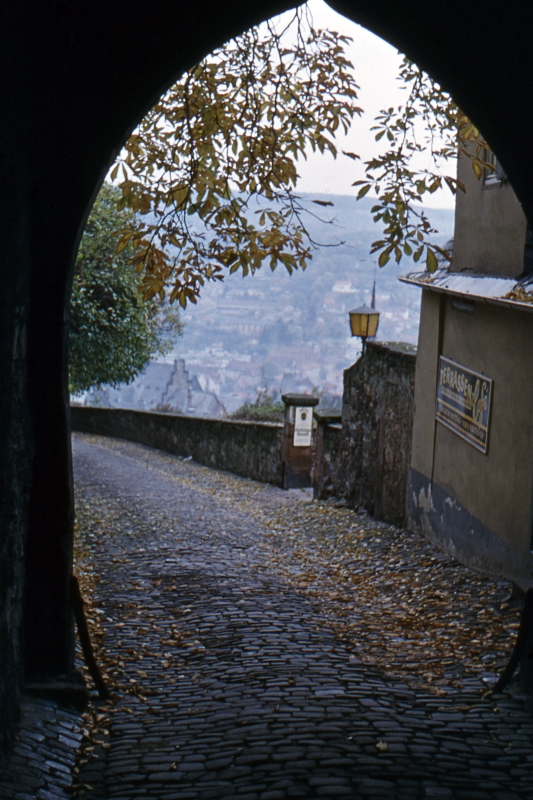
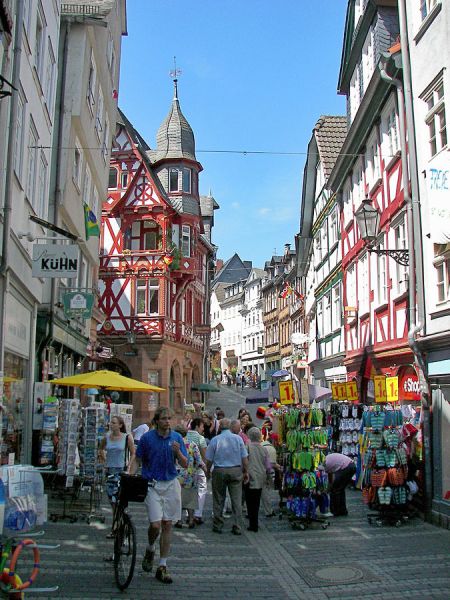
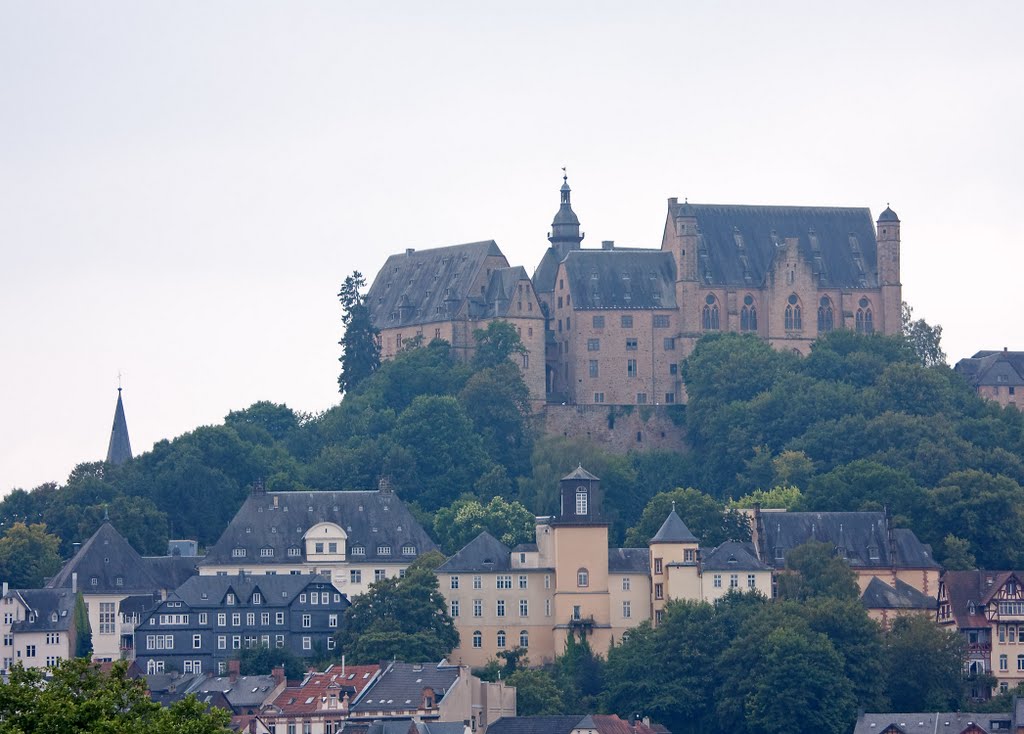
Romantic Medieval Town of Marburg
In a letter to Biene I wrote: “A long period of time will come, when we can no longer quickly step on a train and come for a visit. We will have to wait for a long time, before we see each other again. Yet I am confident, dear Biene. For you are no longer afraid you could lose me. One day I will ask you to come. Haven’t we written each other for two years without seeing each other? How much easier will I be able to endure everything, when I know for whom I work and also know that you will come! Dear Biene, you wrote so kindly that it wouldn’t matter to you whether I am poor or rich, if you could be with me and help me. I do not yet know for sure what to expect in Canada. But one thing I know; it is a thousand times more beautiful, if we start our life together than if I could immediately present you with a house and a car. The joy will be much greater, when you can say, ‘Peter, we deserve this sliver of happiness, which we were able to secure for ourselves, because we love each other and you without me and I without you would be unthinkable. In my mind I am propelling us so wondrously into the far away country but without danger, because I firmly believe in our future.
Since you have made your decision. I am looking farther still, beyond Alberta, where I will study at the University of Calgary, over and beyond the mighty Rocky Mountains westwards to British Columbia into the land, which like Germany lies between the mountains and the sea. It is not without reason that people call this province God’s country. Far away from the big cities, nature is still unspoiled by city life and industrial pollution. It appears to me incomparably more beautiful than Germany. Dear Biene, do not believe that I shut out our home country from my heart. Not only, because you need to stay behind for a while, do I depart reluctantly, but also because I must depart from people, who are dear to me. However, the world has become too crowded for me. I am searching for freedom, in close contact with nature, and for meaningful work in my future teaching profession. And should I not find them, I would be bitterly disappointed. But dear Biene, we both want to believe that I shall find after an eager search this envisioned, yes, almost ideal world in the reality of our life.”

Banff National Park, Canada – Photo Credit: wikipedia.org
Biene replied: “My dear Peter, do you still remember your words, when you asked me to write to you one last time so that our friendship, which threatened to end in a discord, would dissolve in harmony. Sometimes I have to think about these words; for at that time they touched me deeply. For me it was as if this melody, which had always been in my heart, since I know you, must never fade away. Sometimes it only sounded rather timidly, but now my heart is full of music. I cannot express it in any other way. Was our correspondence during the two years not a good test whether the voice in our hearts that drove us together was genuine and true? Say, was it not also good that we had hurt each other and were saddened over it? I would rather be sad over you than feel nothing for you! Pain often carries the seed of deeply felt happiness. If we had never before been sad over each other, could we now fathom the happiness of having found each other?
I am hoping with you that you will find in Canada the freedom, for which you are longing, to be able to develop your abilities. But my dear Peter, you must not despair if you will be a little disappointed in certain things. Yes, you speak from my heart and soul when you say that it is far more rewarding and satisfying to build a future together based on our own strength than when everything just falls into our lap and one lives like in a golden cage. Through you I can now believe in a future, as I have always desired it. If we firmly believe in it and apply our strength, then our dreams, which we have always been dreaming, will become true.”
Biene had already written her final written exams before Christmas and sensing that she did well on them began the New Year in the knowledge that a major hurdle lay behind her and that her high school diploma was almost certainly within reach, although she still had to contend with a lingering anxiety about her upcoming oral tests in February. In contrast to the previous year when due to the emotional turmoil during her engagement with Henk and its sudden break-up her marks had dropped and for the first time in her entire school life she had been facing the spectre of failing the second last grade, now she was looking with a new sense of optimism into the future. She claimed that our love and the wonderful prospect of a life together as husband and wife in Canada gave her the strength and determination to face the challenges of the six remaining weeks at school.
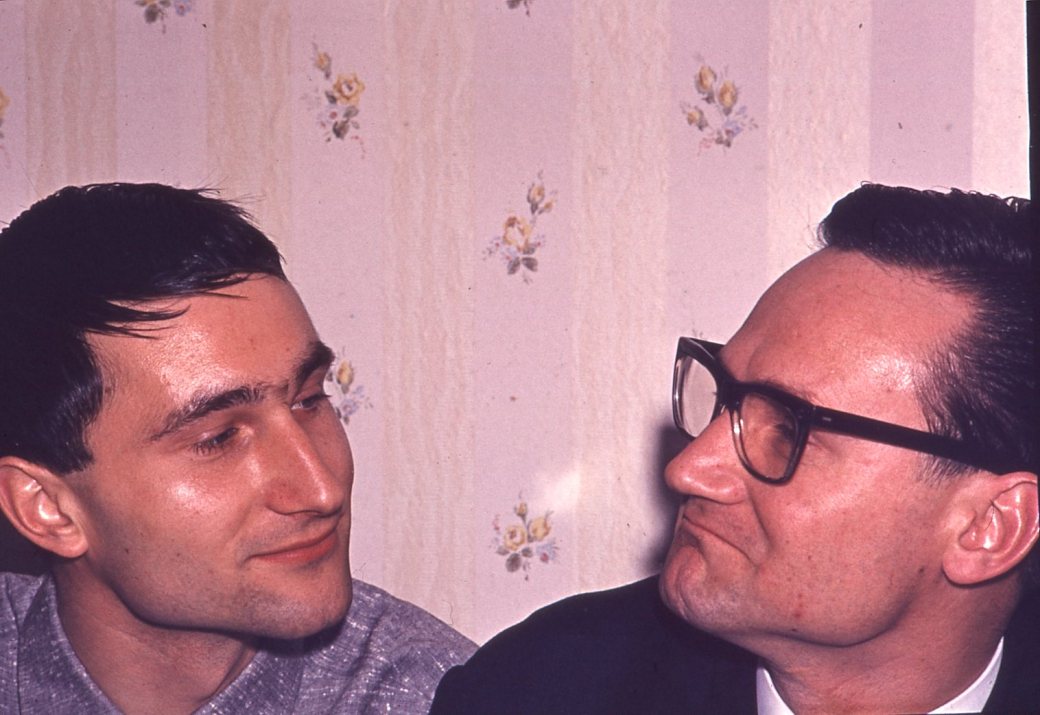
The Two Brothers Peter and Adolf – 1965
Of course, the ring, Biene’s most precious possession, which she had sent to me by mail and which I wore on my little finger at night, occupied front and center our thoughts and feelings and gave rise to reflections in our letters on its deeper meaning apart from being an heirloom from Biene’s great-grandmother. The first and foremost meaning, which Biene now openly declared, was that it symbolized faithfulness to which both of us from now on were committed through our love for each other. But there was also a hidden meaning, which I in my blindness for Biene’s subtle and unexpressed stirrings of the heart failed to see. I am certain that my roommates with their keen sense of perception would have immediately noticed the ridiculous reversal of roles I would have put openly on display with the ring, if it had indeed fitted on my ring finger. I was blind as a bat to Biene’s unspoken desire to receive an engagement ring in response to her precious gift. I could have prevented a lot of pain in the months that followed, if I had chosen to take the conventional route and on our next rendezvous in March had bought two rings for us. That way at least privately we would have had a semblance of a formal engagement. Alas, this thought never occurred to me.
Biene’s Dream House
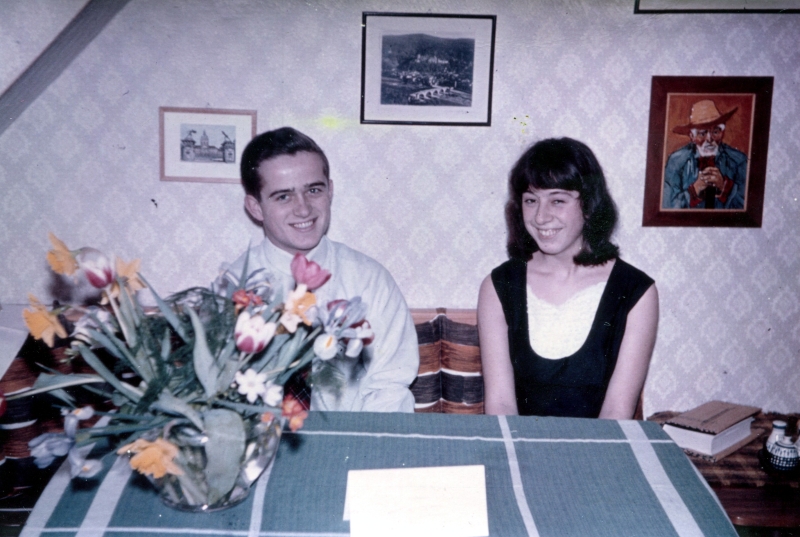
The Happy Twins Walter and Biene after Receiving their High School Diplomas
In the meantime Biene had graduated with reasonably high marks and sent me a telegram to the Tannenberg barracks to tell me the good news. Her parents were so delighted over her success that they granted her permission to visit me again in Watzenborn. Before she came, she had presented me with her idea of writing a family chronicle that would later enable us to look back at our roots.
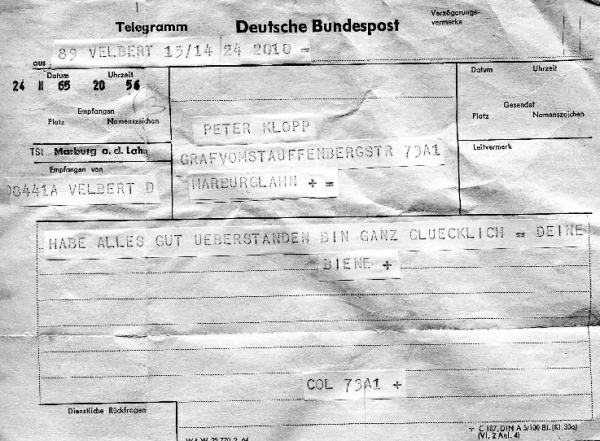
Biene’s Telegram
In addition I had tossed in the proposal of starting a book with blank pages, which we would fill with our vision for the time, when we would be together in Canada. A description of our dream house would be part of this endeavour. Biene wholeheartedly embraced this idea and to this end immediately bought a leather-bound book, which could be locked with a tiny key. In spite of the hustle and bustle of the graduation festivities and inevitable farewell parties she had already made her first entry with the full force of her innate romantic creativity:
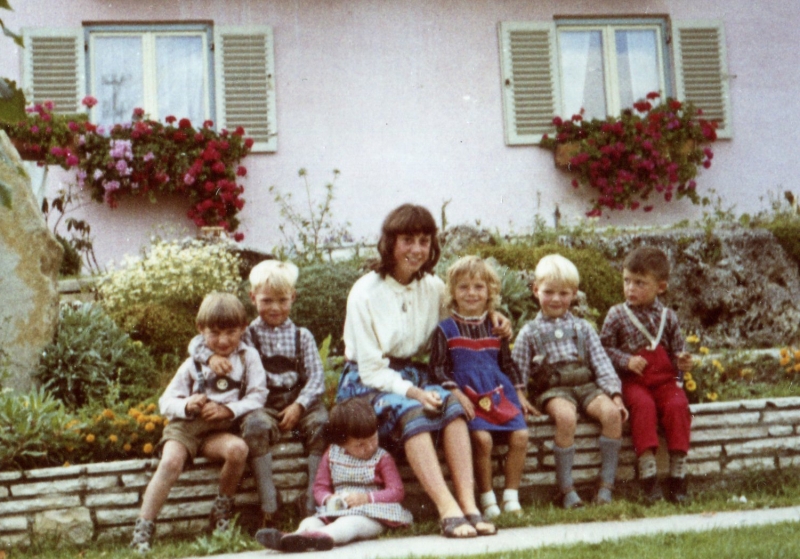
The Photo Biene was referring to
Our Little Dream House
Now when under the first sun rays of spring the forces of nature begin to stir, I can hardly wait, until everything is blooming and the green, which is still slumbering in the swollen buds, breaks forth. Not too long ago I came across this photo and each time I look at it, dreams of a little home of my desires are awakening. You said indeed that we will set no limits to how far our fantasy will carry us, as long as it won’t do us any harm. This is how I imagine our little fantasy home to look like.
So picture this. It is spring. Only nature has progressed a little farther than here today. For everywhere fruit trees are already blossoming and in the sea of blossoms glimmers the first tender green of rupturing buds. You walk along the edge of a small town and are caught in the intoxicating scent of flowering splendour. All of a sudden you see out of the white shimmer a little house emerge. Sheer happiness makes your heart beat faster, and you believe to dream anew like on every day; for this is our little home embedded by this blooming island. It is as I said only a little house made entirely out of dark wood reminiscent a little of a log cabin. It looks neither opulent nor grandiose, but endearing and inviting instead.
Through the large windows the sun and the fresh aromatic air pours into the small cozy rooms. The sun glides over the furniture, which is not so ultramodern as to appear cold and nondescript, but every piece is reassuringly firm and solid and for that reason snug and comfortable. At this moment I must think of the chairs, which Aunt Lucie had painted. Such a piece of furniture is no longer dead, but in a small way radiates life.
Oh, I forget to mention that every window bedecked by a flower box is overflowing with flowers just like on that little photo. Our little home appears as if one day it would be overgrown by nature’s luscious growth, which should provide protection against the cold months, when icy winds drive us inside into the heated room.
Apart from that we spend most of the time in our little yard and even sleep there, when the summer nights are warm and the mosquitoes do not sting us too much. We sleep in hammocks and gaze at the starry sky before falling asleep.
In the winter when it is stormy and desolate, our large tiled stove or fireplace will radiate warmth into the small rooms just like the sun in the summer. Where the rooms are located, I am not so sure about it yet, but I think it would be best to place our bedrooms under the roof; for the slanted attic walls seem so cozy with a bed underneath. Also your study is upstairs, where you have the most quiet and can work fast. Thus, you can devote a lot of time to us. By us I mean everything that is dear to us, the plants and the trees in the yard, the little house, the animals and – I hardly dare to write it again – our children. I believe, if only a fraction of all this may become reality, I would be the happiest woman of the entire world!
Reading the description of Biene’s vision of our dream house, I was amazed at how far her thoughts and ideas had ventured forth with such precise details as if taken from a prophetic book. What astounded me the most, was how much the slow-moving train of life, in which we traveled together, had accelerated in recent weeks and months. Was is not only eight months ago that my novella ‘Carthage’ so fervently written and presented to her as a gift prompted here to say ‘I believe, we love each other’? And now her heart and soul envisioned us as husband and wife having a family in the home of her dreams.
Sitting on Mother’s sofa Biene and I shared these wondrous thoughts that have so prophetically crystallized into words written down in Biene’s special dream book. They were clear and easy to grasp and to attach our hopes to. They gave us a sense of purpose and direction, a blueprint for our entire lifespan.
The morning sun was shining brilliantly into the living room. Early spring was in the air and beckoned us to go for a stroll past the meadows behind the house towards the old mill into the nearby woods. There I once almost lost my way in the maze of trails and roads riding my new bicycle. We directed our path to a hunter’s lookout tower, which was overlooking a small clearing in the woods. We climbed up the wooden ladder to gain a higher vantage point for us. Once we had sat down on the sturdy bench, we no longer allowed our mind to dwell on our plans for the future, but had the strong urge to follow the ancient Roman saying ‘Carpe diem.’ We kissed. It was a very long and sweet kiss indeed. And if there were no other needs in this world, such as for food, drink, and shelter, you would in all likelihood still find us there today. So much we were wrapped up in enjoying the presence. The scene would have inspired the illustrious romantic English poet John Keats to compose a sequel to his famous poem ‘Ode to a Grecian Urn’ entitled ‘Ode to a Hunter’s Lookout’, where our bliss would have been frozen in time for all eternity.
Philosophical Musings on Love, Marriage and Family
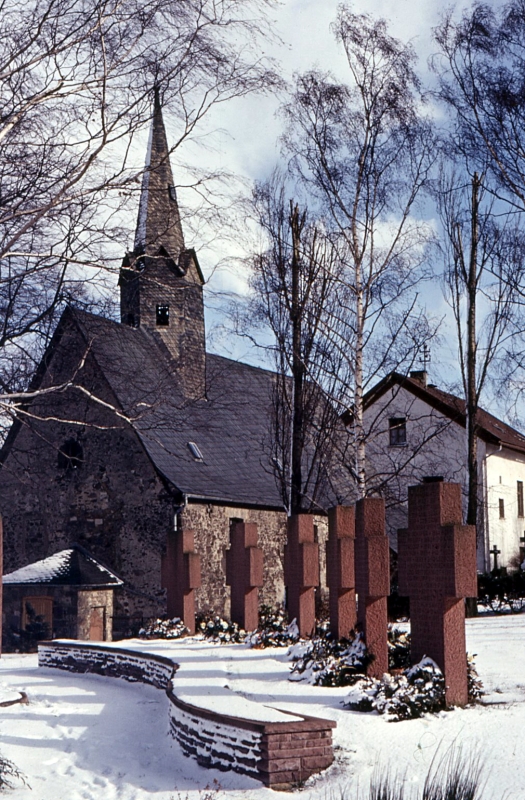
Church in Watzenborn-Steinberg
Now it was my turn to write and lay out my philosophical musings on love, marriage, and family within the context of their place in society. Just like Biene, I allowed my thinking to go far, even taking a fanciful glimpse into a romantic notion of immortality.
When I think about two people, who love each other, I see two streams that arise from two different springs, wind through narrow ravines and then, free again, pour into a wide valley, sometimes wedged in, sometimes wide, yet steadily growing in power and strength, finally join and from then on flow together towards their goal, the sea. Who can say which is greater, more glorious and more beautiful? Perhaps an onlooker from one region would praise the charm of the first river, while another would be more pleased with the foaming waterfall in a gorge of the second. What the two have in common is not remarkable, because their charm lies in their difference. So it also appears to me between a man and a woman! For with them as well we see their intrinsic value in their being different from each other.
As we both are different and only when united have a common goal, so will different tasks occupy our entire being. Thus, dear Biene, I am certain, you will want to be wife and mother and you will see in this task your greatest and most beautiful role, and I would like to be husband and father and make sure that I put on a solid foundation, what you in your uniqueness will accomplish in the home through love and warmth for husband and children. And should someone ask us about our understanding of equality, we would simply reply that it is respect for each other’s uniqueness. We will then have said much more than if we had spoken longwindedly about the social position of man and woman in the human society. With it we express the idea that we do not wish to distort nature’s laws in our desire to be equal, but in responsibility for each other and for the family we are on par, of equal worth and value.
Each person, no matter how insignificant and low in the eyes of the world, influences his environment by his very being. His parents care for him and draw him into their thoughts and feelings. And so he also influences their decisions, as long as he in some way depends on them. Because of him they postpone perhaps a vacation trip or even cancel it; because of him there is perhaps a car accident or perhaps not. Few people are connected with him with their decisions, but the few are intertwined in a remarkable way with thousands of other people, who in turn have an impact with their actions on others. Thus, everyone makes a small contribution to the history of mankind. One need not be Caesar, Napoleon or some other great figure to change the world we live in. Everyone does it, whether he is aware of it or not. But it is good to know one’s power to this effect.
A teacher, who is ambitious and uses his subject areas to have good students graduate year after year, can say at the end of his career, ‘My knowledge and my thoughts did not remain buried in books or in my head, but have beneficially spread among so many people. He will be satisfied with his life, and after he will be long gone, his ideas and thoughts mysteriously live on in thousands of minds and produce for a long time to come precious results. Would he not catch through his work a tiny sliver of immortality? I find, if one looks at life that way, the world appears much brighter, even death loses some of its sting. Thoughts, ideas, knowledge are invisible and work in the shadow of the human spirit, until they step forth in action and then, even if it only happens on a small scale, change the world. You may wonder, dear Biene, what I’m driving at. I would like to lead a life with you and be there for you and the family. And that is only possible if I enter a profession, which first of all brings joy to my heart and secondly offers us financial security. Later on in my profession as teacher I hope to positively affect young people and, as much as I can, will follow with great interest their life’s journey. The question will always occupy my mind, ‘What will become of them?’ However, in my work I will never forget the family and leave its care and worry to you alone. You know, dear Biene, I believe that we live on through our children. And even if one day we will have become old and grey, part of us will always carry over to them, our flesh and blood, and after years of nurturing certainly also our way of life. I would like to cling to this idea, which in its realization will bring so much comfort to us, and it is my greatest desire that one day all this will become reality.
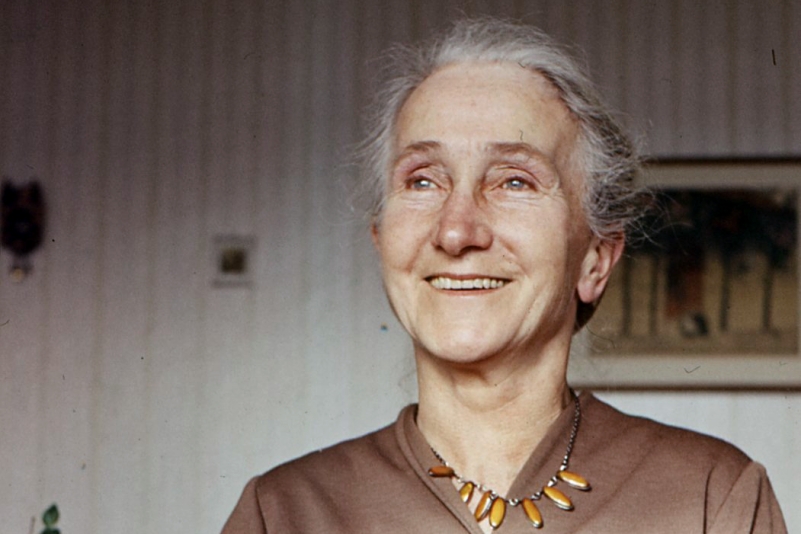
Mother
Sitting on Mother’s sofa, Biene and I shared these wondrous thoughts that have so prophetically crystallized into words written down in Biene’s special dream book. They were clear and easy to grasp, to which we could attach our hopes. They were destined to be the blueprint for our entire lifespan.