Breaking the Code – Part I

Bill Laux and the Mysterious Floppy Disks

vaki1

In spite of my wife’s courageous leap into the world of information technology, she has remained very critical of the many shortcomings of the new tools that our digital era has forced upon us. Would the archeologists a thousand years from now, so she often raises the question, ever be able to find out what lies hidden underneath the shiny layer of a CD or DVD disk. They might claim that the 21st century inhabitants had regressed to a form of sun worship, as it was practiced in ancient civilizations. Those glittering round objects could have been used to invoke the sun to provide more light for the planet darkened by pollution and nuclear fall-out. Having turned mellow after half a century of exposure to marital bliss, I found enough room in my heart to admit, although somewhat reluctantly, that my wife had raised a very important question whose relevance will become evident in the light of my own experiences with outdated technology.

vaki2

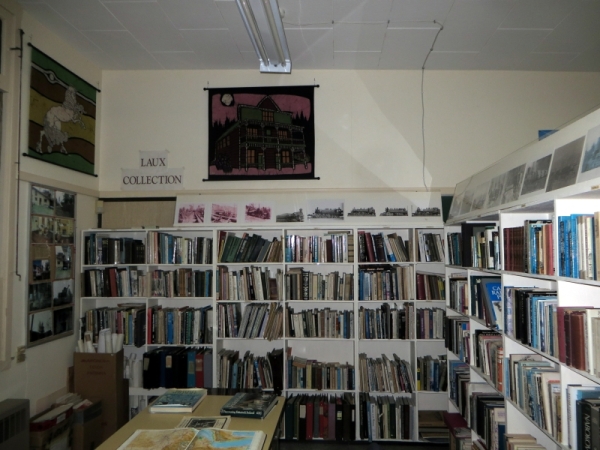
If you had read my previous posts on Bill Laux, the eccentric artist, who built his own castle at the shore of the Lower Arrow Lake, you would know that he was not only famous for his works in batik, but was also known as a writer and researcher of the early mining, logging, and transportation industries in the Pacific Northwest. When he passed away in December 2004, he bequeathed  his entire collection of pictures, books, manuscripts, journals and sundry documents to the Fauquier Communication Center. There his work has found a permanent home and is waiting to be explored, evaluated and hopefully published on the Internet.

vaki5

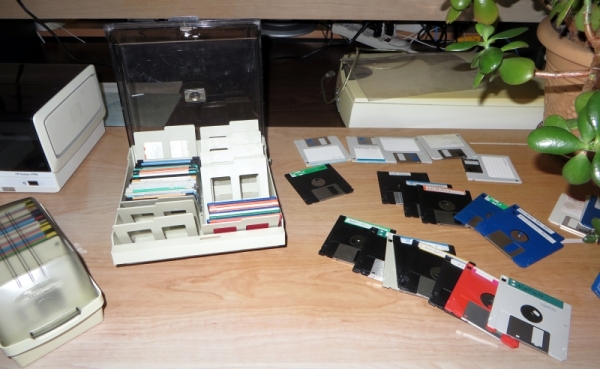
What really piqued my curiosity, were scores of floppy disks stashed away on the side shelves of the computer room of the Fauquier Communication Center. Their content had remained a deep mystery until very recently. On next week’s post I will share with you the immense difficulties I experienced in decoding the information from a storage device barely a quarter century old. What I found was a veritable treasure trove of Bill’s work, which would have been lost forever on the junk pile of modern civilization. Stay tuned.

Chapter 22 of the Peter and Gertrud Klopp Story – Part X

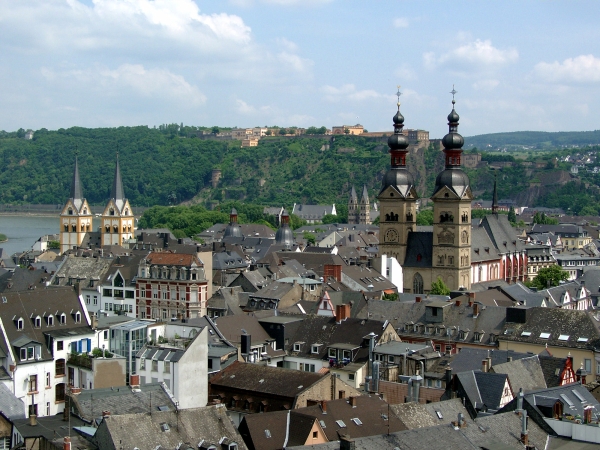
koblenz-altstadt

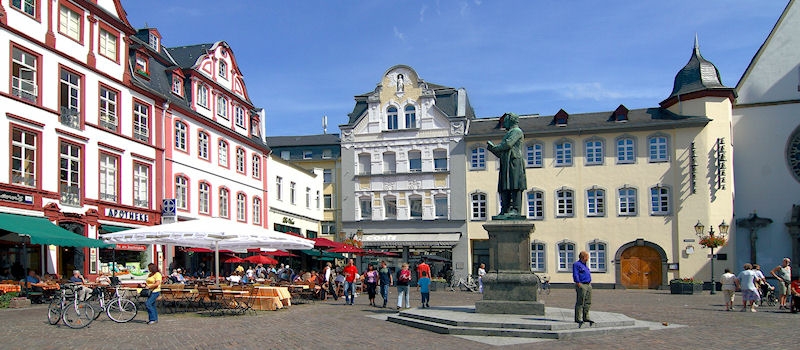
City of Koblenz – Photo Credit: Ferienwohnungen.de

Vittorio’s Entanglement in Sex, Love and Marriage

In our room there was a 17-year-old volunteer with the Italian sounding name Vittorio. At this tender age he was the youngest soldier in the signal corps. He had committed himself to a five-year service in the army and was obviously seeking a life long career with the Armed Forces. As a government employee in uniform he had a sizable income at his disposal, which he squandered with his buddies in the local bars and in establishments of questionable reputation. So it was no surprise to any of us in the room that eventually he fell victim to one of the ladies of the night that was plying her trade in the lucrative barracks city of Koblenz. What I found bizarre, even shocking was that he was openly bragging about his amorous adventures with a prostitute, who had apparently singled him out as an easy target. Even the most hardened comrades in our room gave him contemptuous looks when he treated his sordid affair as if it was true love. At the end of a long weekend he felt especially inclined to proclaim from the top of his bunk his progress with the most wonderful woman he had ever met. I wondered how many women he could have possibly met considering that he was only seventeen. A more outspoken roommate asked him in a sarcastic tone, “Are you paying for her services?”

“Not any more than what you would if you took your girlfriend out on a date,” Ramona was quick to reply.

“Well, well, you don’t seem to understand. Let me put the question to you a bit differently. Are you paying to have sex with her?” Everyone in the room was itching to know how the argument about this hot topic would end.

falckenstein-army-barracks-koblenz-casino-falckenstein-kaserne-koblenz-org

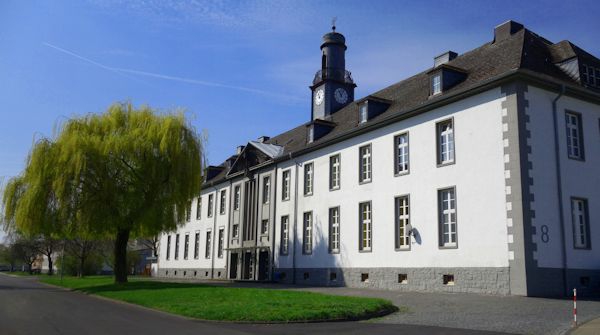
Falckenstein Barracks – Photo Credit: casino-falckenstein-kaserne.org

Vittorio was not easily intimidated. He knew how to fight back. He was aware of the saying that a good offense is the best defense. So he countered, “If you were a volunteer soldier and had a tidy income like me, wouldn’t you make her gifts and give her money because you love her?”

I was sure that our roommate must have felt a bit nettled by Vittorio’s suggestion that as a draftee with a mere pocket-money he would be in no position to argue with him on this matter. Unable to respond to this powerful argument, he resorted to the most obscene and offensive language I had ever heard. If this had been the end of the story, I would not have considered it worthy of being part of my autobiography. As a matter of fact, the story was just beginning.

In the weeks that followed Vittorio was getting more and more quiet and was no longer bragging about his most wonderful woman. I thought that he was afraid of our unnamed roommate. But I was wrong.  One Sunday evening he returned much earlier than usual to our room. He appeared to be in a very agitated state of mind. Not caring whether we wanted to listen to him, he started ranting and raving about the woman he once loved so dearly. We were stunned by the complete reversal of his opinion and wondered whether or not we heard him talk about the same woman. His language now was just as crude and offensive as if his antagonistic roommate was still lecturing him on the definition of women of ill repute. He described the most wonderful woman in the world as a crooked slut, who first was content with twenties, then wanted fifties, and now demanded his entire monthly income.

“I am finished with her,” he screamed, “I will not see her again; she is a whore; she can go to HELL!” Then he threw himself on his bed and cried like a little boy that he actually still was.

aaltstadt_koblenz

City of Koblenz – Photo Credit: Wikipedia.org

It was near the end of the summer shortly before my transfer to Marburg, when a woman walked through the barracks gate and requested to see the commanding officer of the second company of the signal corps. The above lieutenant learned that one of his soldiers, Private Vittorio to be exact, was the cause of her being with child. The officer concerned about the honor and respectability of the army in general and of his unit in particular had Private Vittorio called in and confronted him with the woman he had vowed never to see again. The officer after having established the truth of the woman’s claim suggested in unmistakable terms – one might say he decreed that Vittorio marry the woman who was expecting his child. Upon proof of marriage Private Vittorio would receive two weeks of paid leave for their honeymoon.

Vittorio told us later how things had been arranged in the office and that he was going to get married. Having flip-flopped once more he proudly announced that he was the happiest man in the world to have such a wonderful woman for a wife and soon to have a family. His words were gushing out in a sentimental torrent. This time nobody dared to interrupt him; even the quarrelsome roommate kept quiet. Vittorio had chosen a dubious path. I felt pity, even compassion for the young man who had in my opinion such a small chance of success in his upcoming marriage. I never found out what became of him and his wife to be.

Shortly afterwards I was on my way to Marburg. I left Koblenz with mixed feelings. Not aware that with the recommendations from the commanding officer I would soon be teaching again I looked back with regret at the rewarding instructional sessions, which I had enjoyed so much. I would also miss Josef Hegener and our nature excursions into the local hill country . On the other hand I felt relieved to get away from the revolting environment that our room had become of late. Even though I had been open-minded about listening to and jokes, I knew that Vittorio’s story was not a joke. It was a personal tragedy that shocked me to the core. If there was one good thing that came out of this sordid affair, it made me more determined than ever before to seek and strive for a better world. While an ideal by its own definition remains unobtainable, it nevertheless provides a vision and a goal worth aiming for. To the extent we struggle and make the effort to approach the ideal, we define our human character. With a fresh new sense of optimism I was looking forward to spend the remaining 180 days of my army time in Marburg. I promised myself to meet Biene again, as soon as an opportunity would present itself. For me she represented the embodiment of the light and the hope for a better future.

Gerhard Kegler – Military and Civilian Hero (Guest Post in German)

Gerhard Kegler – ein militärischer und ziviler Held

Biographische Skizze
Beitrag von Dietrich Kegler


Die militärische Laufbahn meines Vaters ist hinreichend bekannt und verschiedentlich nachzulesen, nicht zuletzt im Internet, wo die Generale der Wehrmacht ausführlich vorgestellt werden. Bekannt wurde Generalmajor Kegler in Deutschland vor allem durch die Ereignisse am Ende des Krieges, als er in hoffnungsloser Situation die Stadt Landsberg (ehemals in der Neumark gelegen, heute polnisch) auf Befehl Himmlers verteidigen sollte, der sich die Befehlskompetenz der 9. Armee anmaßte, die eigentlich dem Kommandeur der Armee, General Busse, zustand. Wie man weiß, weigerte sich mein Vater, diesen unsinnigen Befehl auszuführen, wurde sofort zum Kriegsgericht nach Torgau bestellt und dort in einem Schnellverfahren zum Tod durch Erschießen verurteilt.
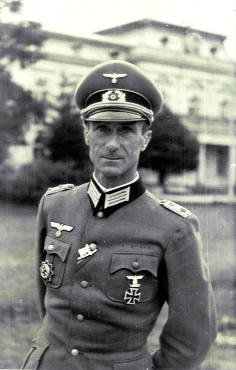
Generalleutnant Gerhard Kegler - Gutfelde 1944

Oberst Gerhard Kegler – Gutfelde 1944

Nur dem Untersuchungsrichter Freiherr von Dörnberg ist es zu verdanken, dass mein Vater überlebte. Er wurde zum Schützen degradiert und als einfacher Soldat wieder an die Ostfront geschickt, die sich bereits an der Oder befand. Dort, unweit von Frankfurt/Oder, wurde er verwundet und in einem langen und sehr beschwerlichen, immer wieder aus der Luft beschossenen Bahntransport nach Eutin in Schleswig-Holstein gebracht. Da hatte sich die ursprünglich kleine Wunde (ein Granatsplitter in der linken Schulter) derartig verschlechtert, dass der linke Arm abgenommen werden musste. Mein Vater blieb noch eine kurze Zeit der Rekonvaleszenz in Eutin und wurde dann aus englischer Gefangenschaft noch 1945 nach Gießen entlassen, wo unsere Familie im Jahre 1947 wieder zusammenfand.
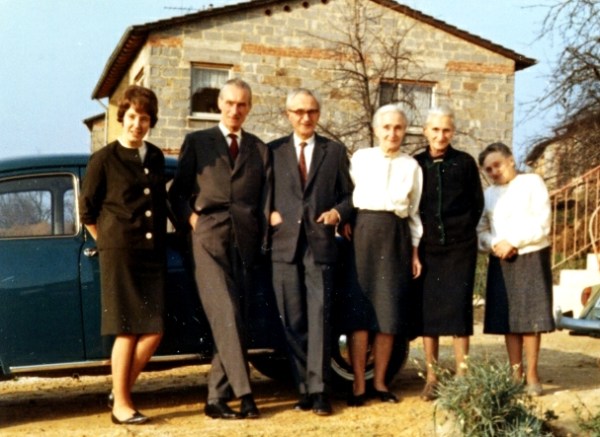
Gerhard Kegler between his Daughter Helga and Brother Günther 1964

Gerhard Kegler zwischen Tochter Helga und Bruder Günther Kegler; rechts folgen die beiden Schwestern von Gerhard, Erika Klopp und Maria Kegler, und Günter Keglers Frau Luci (1964)

Da die Bundesrepublik sich noch lange auf das von Himmler befohlene Urteil des Kriegsgerichts (Degradierung vom Generalmajor zum Schützen) berief und meinem Vater die ihm zustehende Pension verweigerte, bedurfte es erst einer großen Pressekampagne, um die Behörde zu bewegen, das Urteil aufzuheben, was schließlich durch den Bundespräsidenten geschah. Dann konnte mein Vater seine Pension erhalten.

Die große Pressekampagne zeitigte noch eine andere positive Folge. Freunde und Bekannte, die in den Wirren des Kriegsendes, durch Flucht, Ausbombung usw. überallhin verschlagen worden waren, wurden aufmerksam und nahmen Kontakt zu unseren Eltern auf. Ich erinnere mich an viele Besuche ehemaliger Freunde, Kameraden oder Untergebener meines Vaters. Und immer hörten wir großes Lob und große Anerkennung, wenn diese Menschen von den Ereignissen erzählten, die sie zusammen mit meinem Vater erlebt hatten.

Die tapfere und verantwortungsvolle Handlungsweise meines Vaters bei Landsberg ist nicht das einzige Ereignis dieser Art. Immer wieder wagte er, Vorgesetzte zu kritisieren, wenn sie unsinnige Befehle gaben. Dafür wurde er mitunter durch Versetzungen bestraft.

Umsichtiges Handeln in schwierigen Situationen berichtet auch schon die Regimentsgeschichte des Westpreußischen Infanterieregiments 149, dem mein Vater im Ersten Weltkrieg angehörte. Eine dieser Aktionen war die nächtliche Aushebung eines französischen Doppelpostens bei Reims in der Champagne, die dem Regiment wertvolle Informationen lieferte und, wie ausdrücklich betont wird, größere Verluste ersparte. Mein Vater hat uns auf einer Frankreichreise in den sechziger Jahren die Stelle gezeigt, wo er mit ein paar freiwilligen Leuten die Franzosen nachts überraschte, gefangen nahm und hinter die deutschen Linien brachte, wo man sie verhören konnte.

Soweit der militärische Teil im Leben meines Vaters. Aber das Leben ging ja nach dem überstandenen Krieg in Gießen weiter und gewährte meinen Eltern nach der ersten harten und entbehrungsreichen Zeit auch noch schöne Jahre.

Unsere Mutter hatte ebenfalls seit Kriegsbeginn Schweres durchgemacht. Aus München, wo das Leben durch die Luftangriffe immer unsicherer wurde, zog sie mit uns Kindern in den Warthegau. Von dort musste sie sich mit Jutta und mir wie Millionen anderer Menschen auf die wochenlange winterliche Flucht begeben. Wir fuhren zunächst in einem Planwagen mit polnischem Kutscher durch das winterliche Westpreußen, bis der Pole irgendwo in Pommern umkehrte. Ein Offizier nahm uns mit seinem Fahrzeugkonvoi bis nach Berlin mit, von dort ging es in überfüllten Zügen nach Dresden zu meiner Großmutter. Helga und Nati waren vorher schon nach Augustusburg (bei Chemnitz) gebracht worden. Bevor wir aber dort sein konnten, erlebten wir die drei verheerenden Bombenangriffe, an die ich mich lebhaft erinnere.

Im Sommer 1947 verließen wir die sowjetische Besatzungszone und gingen bei Philippstal an der Werra schwarz über die grüne Grenze, wobei uns die ortskundige Tante Lucie half. Unsere Familie fand nun in Gießen wieder zusammen. Wir wohnten zunächst in zwei Zimmern der Bergschenke, einem Hotel und Restaurant, das ursprünglich zum Kruppschen Bergbaubetrieb gehörte. Vater hatte in der Bergschenke eine vorläufige Bleibe gefunden und die Aufgabe eines Hausmeisters und Betreuers der dort wohnenden Studenten übernommen. Diese Studenten waren zumeist bereits Kriegsteilnehmer gewesen und studierten an der Universität Gießen Tiermedizin. Als Familie Stolcke, Onkel Werner, Tante Anni und ihre drei Kinder, nach Argentinien auswanderte, konnten wir aus der Bergschenke in die relativ komfortable „Baracke“ auf dem Bergschenkengelände umziehen, die sie bewohnt hatten.

Die Lebenssituation war in dieser Zeit zwischen Kriegsende und Währungsreform (1948) bekanntlich äußerst prekär. Als Vater uns in jenem Sommer 1947 in Gießen erwartete, sammelte er in einer ehemaligen Munitionskiste eine Menge von Lebensmitteln, die er sich vom Mund abgespart hatte, um seiner Familie einen guten Empfang zu bereiten. Das ist eine Tatsache, die ich selbst nicht bezeugen kann, Helga mir aber erzählte.

Besser wurde die Situation erst, als Vater die Stelle eines Stadtjugendpflegers der Stadt Gießen übernehmen konnte. In dieser Zeit, Anfang der fünfziger Jahre, erfolgte auch seine Rehabilitierung, wodurch sich unsere Lebenssituation entscheidend verbesserte.
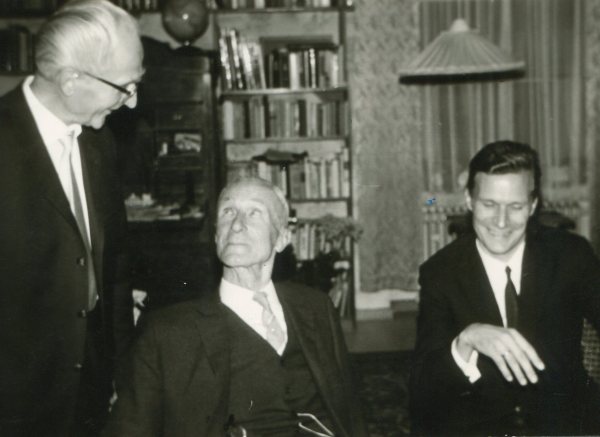
164_69

Gerhard Kegler zwischen Bruder Günther und Sohn Dietrich (1969)

Das Leben mit der Einarmigkeit verlangt sehr viel Geduld und Geschicklichkeit. Durch Geduld zeichnete sich unser Vater gewiss nicht aus, aber er war sehr geschickt bei allen Verrichtungen, wozu ein Mensch normalerweise beide Arme braucht. Und der Stolz über die relative Unabhängigkeit und Selbständigkeit, die Vater sich trotz der Einarmigkeit erworben hatte, kam zum Beispiel in einem Reim zum Ausdruck, den Helga und Nati zum 50. Geburtstag unseres Vaters in einem Gratulationsgedicht formulierten. Sie legten ihrem Vater folgende Worte in den Mund, die er sicherlich in „Prosa“ geäußert hatte: „Was ich mit einer Hand kann richten, macht Ihr mit zweien stets zunichten.“ Vater brauchte nur zu wenigen Handlungen im Alltag Hilfe, so etwa zum Schnüren der Schuhe. Aber Rasieren, Schlips binden, Schreibarbeiten usw. erledigte er ohne Hilfe, auch Autofahren in Fahrzeugen, die dafür nicht besonders präpariert waren. In den Wagen mit Schaltgetriebe, die er zuerst fuhr, musste er zum Schalten das Steuer loslassen. Er fuhr sicher, aber ich erinnere mich, dass mir als Mitfahrer immer etwas mulmig wurde, wenn er schaltete.

In der einsam am Waldrand gelegenen Baracke hatte der General natürlich auch an mögliche Einbrecher gedacht. Die Fenster waren sehr niedrig und stellten kein Hindernis für kriminelle Besucher dar. Vater hatte einen kurzen dicken Knüppel an seinem Bett und sagte mir, als wir uns einmal über die “militärische Lage“ der Baracke unterhielten, dass er hart zuschlagen würde, wenn ein Bursche es wagen sollte, einzusteigen.

Und als Held zeigte sich unser Vater später wieder einmal, als die Eltern in Leihgestern (Am Hasenpfad) wohnten. In einer Sommernacht schlief er allein in seinem Zimmer im ersten Stock. Die Balkontür stand offen, es war eine warme Nacht. Vater wird durch ein Geräusch geweckt und sieht von seinem Lager aus, wie sich ein Einbrecher, der über den Balkon in das Zimmer gekommen war, am Kleiderständer an der Jackentasche des schlafenden Generals zu schaffen macht und sie untersucht. Vater erkennt sie Situation sofort und brüllt ihn noch im Bett liegend an, worauf der Dieb sofort das Weite sucht. Die Reaktion unseres Vaters ist erstaunlich und bewundernswert, denn aus dem Schlaf direkt zum Angriff überzugehen, erfordert Mut, und in schlaftrunkenem Zustand ist man normalerweise moralisch nicht gerade stark.

Die Krankheit, die ihn dann im Jahre 1986 auf das Krankenbett warf, hat er tapfer ertragen. In dieser Zeit war auch unsere Mutter kränklich und pflegebedürftig. Unsere Eltern waren nun auf Hilfe angewiesen, die ihnen vor allem Helga treu und fürsorglich zukommen ließ. Mittlerweile lebten sie in einem kleinen Haus am Alten Friedhof in Gießen.

Der ältere Bruder meines Vaters, Onkel Günter, mein Patenonkel, war schon im Januar desselben Jahres verstorben, und Vater hat ihn noch bis zum Juli 1986 überlebt. Vaters langjähriger Freund, Horst Schubring, ebenfalls Hinterpommer, den er in den ersten schweren Gießener Jahren zufällig kennengelernt hatte – damals Gemeindepfarrer in Wieseck, dann Propst von Oberhessen – begleitete unseren Vater auf dem letzten Gang. Sein Grab, das einige Jahre später auch unsere Mutter und in jüngster Zeit unsere Schwester Renate aufnahm, liegt auf dem Neuen Friedhof in Gießen.

Ein tapferer Mann, dessen Leben im Pfarrhaus von Hinterpommern begonnen hatte, der in den Kadettencorps von Plön und Berlin seine Erziehung zum Offizier erhalten und zwei Kriege und große Belastungen durchlitten hatte und der nach allen Katastrophen noch viele friedliche und gute Jahre erleben durfte, war an sein Ende gekommen.


Dormagen (Gohr) im September 2016

  Dietrich Kegler


Chapter 22 of the Peter and Gertrud Klopp Story – Part IX

The Romantic Soldier

x305

Beautiful City of Koblenz – Summer 1964

I often wondered how it was possible that at certain times all troublesome events seemed to come together to create one powerful drama. Such was my deplorable situation between Christmas and Carnival, when I could barely stem the tide in a string of fateful events, such as the fatal accident of Sergeant Wohl on the icy roads of Feldafing, the loss of my father, emotional upheaval over the injustices caused by red tape in the army bureaucracy, and above all the almost certain demise of a shaky relationship with Biene. And now barely six months later, emerging from an apparently bottomless pit, it seemed as if all favorable currents had joined forces to lift me out of my deep depression into the blissful realm of true happiness in quick succession of small but significant steps: a book written exclusively for Biene, clarifications of the intentions of my heart and their acceptance albeit somewhat hesitatingly by Biene, two rendezvous to show that we were real human beings, not phantoms of our distorted imagination, the discovery of the joy of teaching, the instructional sessions in the afternoons, and the recognition of my newly discovered talents by my superiors. All these events in combination raised my self-esteem so much that I almost regretted having requested a transfer to the Tannenberg barracks in Marburg.

The most enjoyable outings with my brother Adolf on the weekends tore me away from my history books. With his congenial companionship he gave me a renewed spirit with emphasis on the social aspects of life that I had been neglecting far too long. When Adolf was unable to come and I for one reason or another wanted to spend the weekend in the barracks, I would still read Roman history books, but with a focus on topics that were more relevant to my own life and closer to my heart. Instead of dwelling on Roman conquest with the inevitable theme of death and destruction, I now learned about the importance of values, particularly of those pertaining to marriage, family and the raising of children. On sunny days I would find a cozy spot on the lawn near the 400 m oval racetrack. There I would open Mommsen’s chapter on the status and significance of the family in the Roman Republic and would read with increasing interest about the family as the smallest unit, upon which the entire state depended for its health and its very existence. I marveled at the role that the wife (domina) played in running a large and complex Roman villa and in nurturing and imparting values onto her children, while her husband (dominus), being still intimately connected to the soil, would work the fields to provide food and income for the family. Like myriads of individual healthy cells make up a strong body, so the Roman family units protected by law and honored by society provided the moral fiber, which made the early Roman republic so strong and powerful. After such undisturbed moments of contemplation on matters so distant and yet so relevant I returned to my room with the distinct realization that I had received valuable clues for the unfolding of my own personal life in the not too distant future.

roman_family

Roman Family

If there was ever a period in my early adult years that reflected the spirit of 19th century German Romanticism, it was during the summer months of 1964, while I was awaiting my transfer to the Tannenberg barracks at Marburg. My new friend Josef Hegener and I made use of every free moment to escape the stuffiness of the poorly ventilated barracks rooms. Away from the noise and heat of the city we found refuge in the nearby wooded hills, where hiking trails invited us to explore nature in the cool of a Sunday morning. We delighted in the colorful sight of a mountain meadow bedecked with innumerable wild flowers. The buzzing of bees and bumblebees, the happy chirping of birds at the edge of the forest, the murmuring of a brook, the croaking of an army of frogs making their presence known from a pond were together with all the other joyful sounds music to our ears. From a footbridge we gazed at the athletic performances of water striders skimming gracefully over the surface of the gently flowing waters. Joyously we followed the trail to a hilltop, where our eyes feasted on the magnificent mosaic of woods, fields and villages below. Down in the valley a church bell was ringing inviting us to attend the church service and give thanks to God for His wonderful creation. As we entered the village church, the congregation had just started singing ‘Now thank we all our God’, a hymn that became one of my favorite songs of praise both in German and in English. I felt elated after having been granted such a rare glimpse into the connectedness between the grandeur of nature and God’s presence in it. In my exuberance over this wonderful experience I quickly wrote a postcard to my folks back home in the form of a wedding announcement: We have been united in marriage signed Nature and I.

dandelion

Dandelion Flower

The following Monday I met Sergeant Otto Schmidt, as I was crossing the huge center yard on my way to the building, where I was going to deliver another lesson on basic electricity. The sergeant was beaming with pride, because he had just received praise and recognition from his superior officer for his success in running an outstanding instructional program for his unit. He was actually very generous in giving me some of the credit. Then I noticed how his facial expression suddenly changed. Otto Schmidt about a head shorter than I was no longer looking up into my eyes, but gazed straight ahead in utter amazement and bewilderment at my uniform jacket. Had a button come off or had I left the shirt collar too casually unbuttoned? No, these minor flaws in my outer appearance had never been a problem with this friendly sergeant. There was something that he had most likely never seen before. In total disbelief his eyes were fixed on the humble head of a dandelion flower, which I, following my current romantic inclinations, had placed conspicuously on my uniform. Sergeant Schmidt was almost speechless. All he could do was shake his head and stammer, “Klopp, Klopp, what is the meaning of this all?” To his great relief I removed the objectionable flower and hurried off to my electricity class. A symbol of love, a symbol of peace was on the uniform of a German soldier!


What makes a good photographer?

It is not often that we get really good advice on what is important in creating memorable shots in photography written in a non-technical and easy to understand language. Such an advice can be found in this post, which I feel honored to have permission to reblog. Enjoy!

Alok Singhal's avatarThe Learning Curve

I often get the question – Which camera do you use? Seems people think it is only the camera that matters, not the ‘eye’ that one has in finding beauty around!

I am not a professional photographer, but based on the positive feedback I normally get, I can say it is more of how you look at the scene that matters; device comes later. Even if you talk about the device, some pics from my iPhone (I am a huge Apple fan) are equally good as compared to the ones from Sony Alpha 7 that acts as my travel companion.

Now the ‘eye’ I am talking about is looking at the scene holistically and then the details. Are objects complementing each other?, is there something which is not required in the frame?, is it too bright or dull in the background?, is it all symmetric? etc. I like to give my…

View original post 169 more words

Chapter 22 of the Peter and Gertrud Klopp Story – Part VIII

Exploring the Moselle Valley with my Brother Adolf

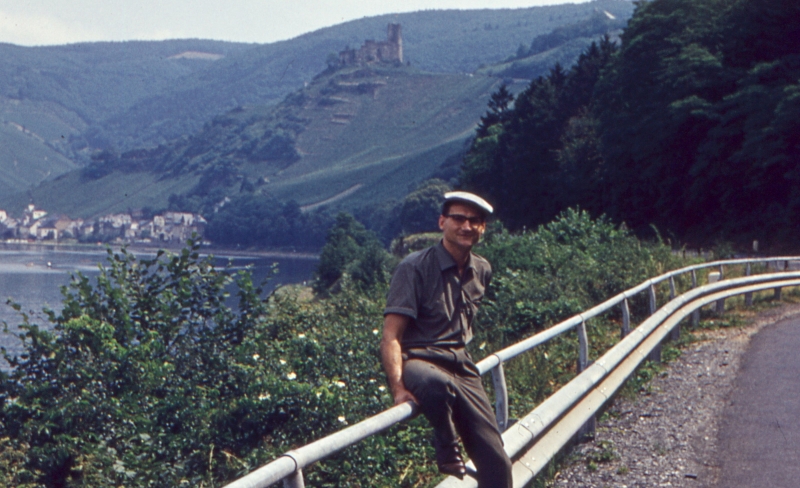
x294

Moselle River – Summer 1964

My brother Adolf was in the final year of his apprenticeship program at the Honeywell Company in Hanau. This city north of Frankfurt was not far from Koblenz. When the weather was fine, Adolf would make it a weekend practice to pick me up at the gates of the Falckenstein barracks. From there we went on trips in his venerable old VW beetle to explore together the beautiful Lahn and Moselle valleys. The summer of 1964 brought an exceptionally long period of sunshine quite unusual for this western part of Germany, when cloudy skies and rain often drove sun-seeking German tourists south to the Mediterranean beaches of Italy and Spain. On one of these fabulous weekends Adolf suggested a wine sampling tour all the way up the River Moselle to Trier, the ancient location of the imperial summer residence of the Roman emperors.

x303

Peter Relaxing in the Famous Wine Region of Germany

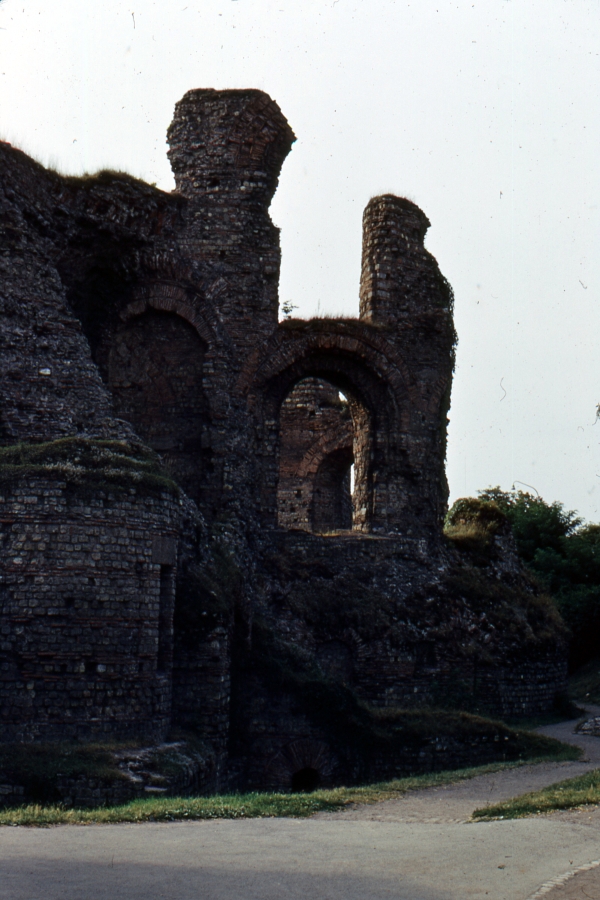
Having finally moved by two rendezvous with Biene at Lake Baldeney beyond a mere fantasy world to a more solid relationship, I felt carefree and cheerful. I readily agreed to Adolf’s proposal, and off we rolled into a westerly direction. Small towns and quaint villages, medieval castles on hill tops, the meandering river, the hills covered with the light green carpets of vineyards offered a magnificent view. At the town centers often located near the local fountain, vintners with samples from last year’s vintage were catering to the traveling tourists in the hope of selling their fine bottled wine. The labels on the bottles were just as alluring as they were their precious content. Some had grotesque, unusual, even titillating names, such as Zeller’s Black Cat, Bare Bottom, Dear Woman’s Milk, just to name a few. Adolf and I took full advantage of the incredibly inexpensive samples of the finest wines in the country. In high spirits we drove on to the next ‘watering hole’, sampled another exquisite wine, and kept on going from town to town, from sampling station to sampling station, like bees flitting from flower to flower savoring the delicious nectar. We happy-go-lucky brothers were singing, joking and drinking all the way to Trier, where Adolf feeling generous invited me to have dinner in a cozy restaurant not far from the historic Porta Nigra and the famous ruins of the Roman thermal baths.

x301

The Imperial Baths of Trier

It felt good to enter the cool premises of an inn after such a long ride through the sweltering summer heat. After a hearty meal we lingered over a cool refreshing beer while waiting for the heat in the valley to come down to a more tolerable level. Air conditioning in a VW was virtually nonexistent in those days.

x298

My Brother Adolf at the Thermal Baths at Trier

There I sat, a bit sleepy and drowsy from the wine and beer, listening half-heartedly to Adolf’s tirades against the American imperialists, the war in Vietnam, the killing of innocent women and children perpetrated by the American ice cream soldiers as he contemptuously called the GI’s, the exploitation of the working people, the advantages of socialism for the common people and the evils of capitalism. When Adolf was talking politics, a passionate fervor seized his entire being; his words poured out as if he had experienced all these real and imagined injustices himself. When the verbose eruption of truths, half- truths and lies had finally subsided with no notable effect on me, the apolitical person that I was at the time, Adolf returned to his congenial and humorous self again, ordered another beer for us from the pretty and courteous waitress and described her benevolently as a ‘nice kid’. Now it was time to introduce me to the kind of vocabulary that would definitely not be very useful for my later academic career. The stock of swearwords coming from the oil patch environment was quite impressive.

x304

Peter on a Sightseeing Tour with his brother Adolf

When he changed topics and began to talk with extravagant enthusiasm about Canada, I was all ears, even though he described a totally different country from the one I had learned from books. Adolf’s opening line for almost anything that had to do with Canada was, “Peter, with us in Canada things are like this.”

x293

Adolf taking a Roadside Break at the River Moselle

Before coming to Germany for a three-year stay, he had worked in the oil fields at Swan Hills in northern Alberta, where work was hard and money was plentiful. He loved to tell me stories of the rough-and-tumble of camp life. At payday many workers would rush to Edmonton, the capital city of Alberta, to spend their hard earned money on booze, women, and cars. Adolf having a good grip over his finances was not entirely immune to the lure of owning a shiny new car. In a sudden wave of nostalgia for the good old days at camp he described how he had once walked into a car dealer’s showroom and pointed at the latest model of an eight cylinder muscle car that he wanted to purchase on the spot. When the delighted salesman asked him how he intended to pay for it, Adolf’s moment of glory had come, which he now revived by telling the story to his kid brother.

“Why,” Adolf answered, “in cash, of course!” And with these words he pulled out a bundle of hundred dollar bills and counted out the full amount of the purchase price on the counter of the astonished salesman. Adolf never failed to make critical remarks about the painfully slow German bureaucracy that he had to put up with, when he bought his VW beetle in Germany.

“Peter, with us in Canada things are like this,” he used his opening pet phrase again. “With all the paper work done and the registration and insurance papers signed I drove that beauty of a car out of the dealer’s parking lot within less than an hour.” Having learned how things were done in Canada, I remarked that it was time to return to my barracks. The evening sun flooded the eastern mountains in a sea of gold. When Adolf and I arrived in Koblenz, the sun began to set and only the pinnacles of the volcanic Eifel Mountains were still reflecting the last rays of the day.