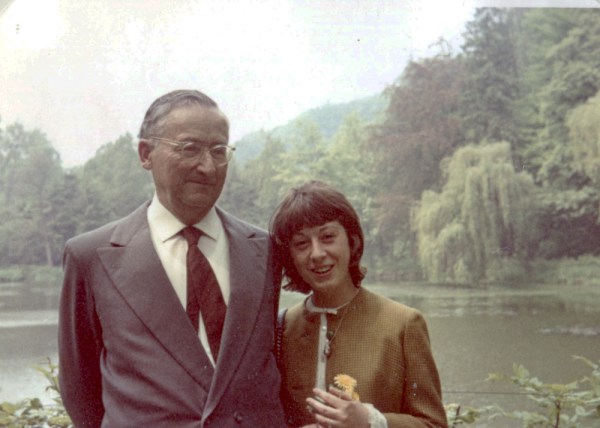
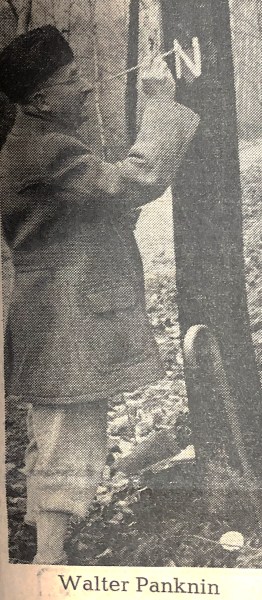
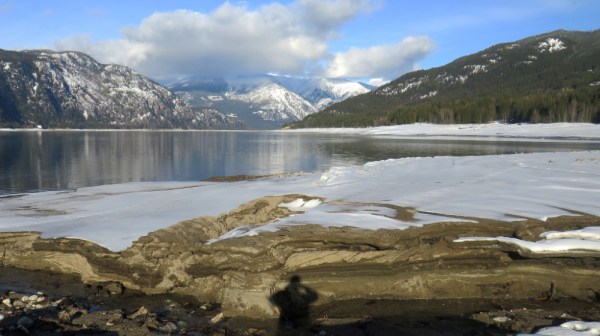
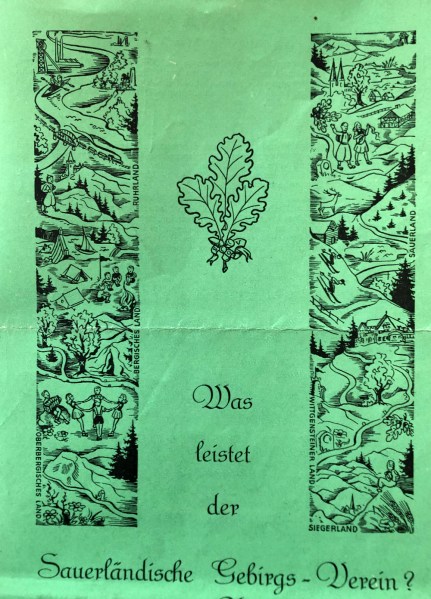
Walter Panknin (1898 – 1977) and His Family Ch07 Part 11

More Steps to Climb

Three stories from the apartment of the Panknin family was the communal laundry room located another staircase down in the basement. The management set up a schedule to regulate its usage to avoid congestion and quarrels among the renters. Each apartment unit could only use the laundry room at a given time and day of the month.

Mutti Panknin and her Twins Gertrud (Biene) and Walter Jn. 1962

So in addition to the shopping routine, Frau Panknin climbed down the three flights of stairs with a heavy load of clothes. In the early 1960s, many women still washed their clothes by hand. Coin-operated washers and dryers were unknown during the post-war years in Germany. For Frau Panknin, the task was laborious and time-consuming. But the worst part of the laundry was yet to come. She packed the wet wash into the basket. Climbing up the stairs with a load now twice as heavy as before, she frequently stopped on the way up to catch her breath. When she finally reached the top floor, there were more stairs to struggle with to get to the attic, where she hung up the clothes to dry. The reader may be inclined to say. Doing this exhausting chore a few times per month was not all that bad for the sixty-year-old housewife. After all, she would have the rest of the time to relax and recover from all that hard work. But wait before we jump to a conclusion.

The apartment had no central heating. The cost of electricity was and still is very expensive in Germany. To heat your home with coal as a source of heat, however, was relatively cheap. Like all the apartment dwellers, the Panknin’s had a small lockable storage facility, where all the things for which there was not enough room in the apartment would be stored. That was also the place where the coal for heating and cooking was located. When I look back some sixty years and ponder about a fair division of labour for this family of four, I must say that it was shocking to learn how Frau Panknin took on this burden without the help from the twins or her husband.

Natural Splendour of the Arrow Lakes

Transformation of Two Images

I recently discovered a twig of a chestnut tree that showed the typical signs of budding we usually observe in early spring. For January, however, such an occurrence is highly unusual. I took a lot of pictures looking for clarity and sharpness. When one photo turned out to be to my liking, I noticed that the background was blurry due to the large aperture opening. Also, I wanted a brighter and more cheerful image.

In my archives, I found a winter scene from last year that looked promising as a better background.

Both went into my Affinity Photo editor. I selected and copied the twig with its impressive bud to the clipboard. Then I cropped the picture above to remove all distracting elements from the composition with the twig. Then I pasted the selected twig into the winter landscape, resized, moved it to the left, and even changed the angle. The result is the third picture. Enjoy.

Walter Panknin (1898 – 1977) and His Family Ch7 Part 10

Papa the History Buff

During his time as a POW in 1945, Papa attended many scholarly lectures that some learned fellow prisoners gave in open-air forums on various topics. As writing was strictly forbidden, he secretly wrote down on the tiny sheets of cigarette paper the authors of books recommended by the lecturers. He was especially interested in history books, which he intended to read later. Fifteen years have passed. Now the time has come to fulfil one of the dreams he had for his retirement. Among the history authors, he admired the famous 19th-century historian Leopold von Ranke the most.  He especially liked the quote that underlines the importance of objectively presenting historical events: “Let the author be quiet, but let the events and documents tell the story.” Proudly Papa wrote in a letter to his friend Herr Kampmann that he had already devoured eight of Ranke’s twenty-five volumes.

The correspondence with his pen pal mainly dealt with political issues of the German postwar era. He drew the most relevant information and its polemic spirit from the German news magazine “Der Spiegel.” Its claim to fame was the publisher’s uncanny ability to uncover and publish government secrets, cases of corruption and scandals. Major Panknin, in retirement, wrote his multi-paged letters on his old typewriter, using carbon paper to have copies for his record. They fill binders carefully ordered by year, month and day. The letters reveal his critical view of the West German political landscape. They describe his disgust over how deep his beloved Germany has sunk into the quagmire of dishonesty and scandalous behaviour. His diatribes take on a familiar ring when we fast forward into the 21st century.

Did I digress from telling the Walter Panknin family story? Having Ranke’s quote in mind, I declare, “Let Papa’s immense correspondence and insatiable appetite for reading history books and historical novels tell the story.”

Natural Splendour of the Arrow Lakes

Wednesday’s Photo

The Oak Tree

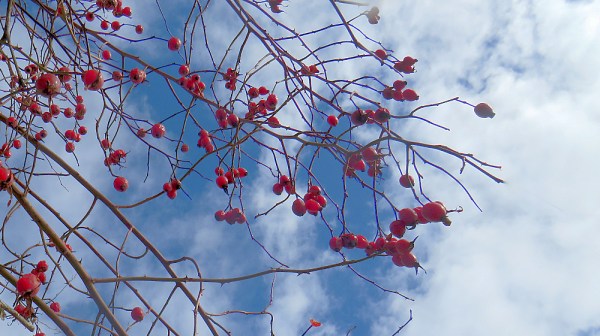
Two weeks ago, I published two photos that added with the help of the rosehips and the pine tree a little bit of colour to the otherwise grey winter landscape. Many people also noticed the oak tree with the orange leaves. Who can solve the puzzle about the leaves still on this tree and also on all the maple trees here in our little community at the end of January? I have never observed this curious phenomenon before. Today’s photo was taken in bright sunshine about a week ago. Enjoy.

Walter Panknin (1898 – 1977) and His Family Ch7 Part 09

The Sunset Years

Before the ‘golden years’ arrived, the division of labour was fair for both husband and wife. In the following posts, I will talk about the injustice of the heavy burden for Frau Panknin as a mother, housekeeper, cook, and wife. I will also show how much, on the other hand, Papa enjoyed his sunset years as a father, hiker, traveller, hobbyist, and history enthusiast.

Grocery shopping has drastically changed since the early 1960s. Nowadays, well-to-do families living in their homes or modern high-rise apartment buildings take the elevator down to the ground floor, step into their car and drive to a nearby shopping centre. After they are done shopping, they may have time to dine in a family restaurant and take the kids to a bowling alley or the movies for some weekend entertainment.

Elisabeth Panknin on her 60th Birthday – 1960

Sixty years ago, in the little town of Velbert, Elisabeth Panknin went shopping at least twice a week. She takes two large cloth bags and descends the 120 steps down to the ground floor of the three-story building. The tiny neighbourhood corner store only carries bare essentials, like bread, milk and butter. Frau Panknin takes the bus to a larger city. She only buys as much as she can carry. Public transportation poses a problem when the bags are filled to the hilt, and there is no seat for a sixty-year-old woman in an overcrowded bus reeking from the nauseating fumes of cigarette smoke. It is also time-consuming. If you miss the bus, you may have to wait up to an hour to catch the next one. Mutter Panknin finally stands at the entrance of the apartment building. Huffing and puffing, she climbs up the staircase with the two heavy bags of groceries. Then, you will not believe this. She immediately starts cooking the evening meal for her husband and the twins Gertrud and Walter.

Natural Splendour of the Arrow Lakes

Wednesday’s Photos

Drops on a Rosehip Twig

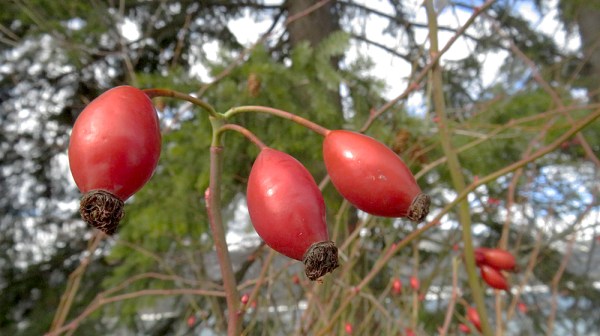
Unusually mild weather has been dominating our January weather. I recently spotted some beautiful droplets hanging from a rosehip twig on a hike at the Fauquier boat dock. Upon closer inspection, I discovered in the reflective lens a few fir trees inside the droplet. Enjoy.