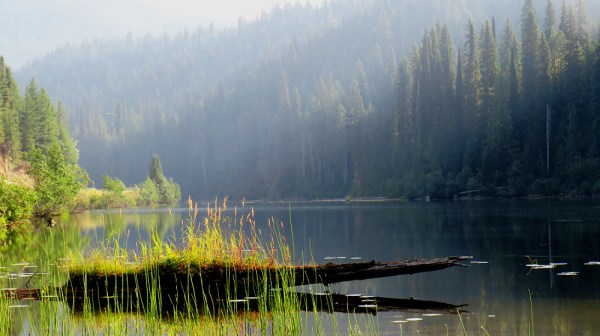
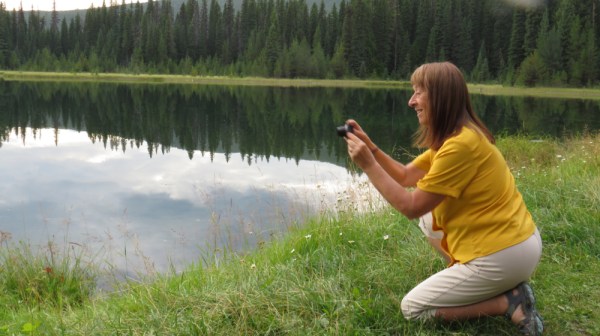
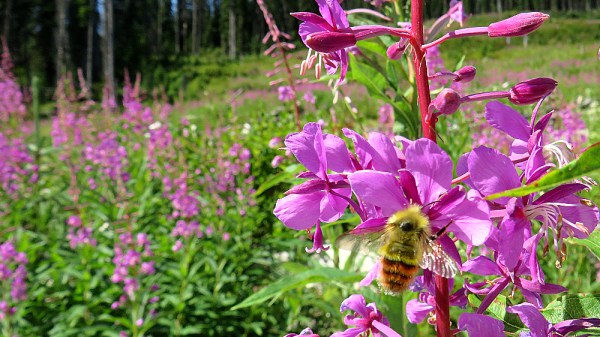
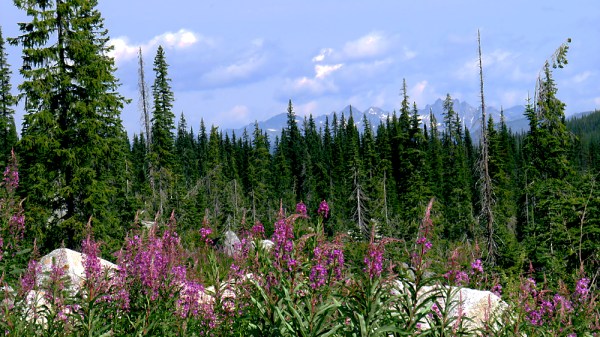
Last Friday on our way home from Vernon we stopped at the Monashee Summit. What a pleasant surprise to see the forest around Lost Lake untouched by the wildfires! For the first time in weeks the air we breathed in was crisp and clean. Dragonflies were dancing above the lake’s surface and the view was like out of a fairytale book. Enjoy.
As a US sergeant was marching a miserable lot of captured German soldiers to the railway station, a drunk Red Army man attempted to strike them with the butt of his rifle but refrained when ordered by the GI to back off. However, great was their horror, when shortly afterwards they saw an American soldier from under a bridge aim his gun at them apparently for the fun of target practice. Papa heard distinctly the click of the trigger followed by the soldier’s derisive laughter, clearly displaying his pleasure of having struck terror into the hearts of the hapless bunch of captives. After a tiring march, they finally arrived at a provisional POW gathering station, where they spent a cold night in the open-air facility. Their treatment was good. Papa felt great relief knowing that, at least for him and fellow prisoners, the war was finally over. He was also becoming optimistic about the near future after hearing the officer in charge of the camp say that they would be treated fairly in keeping with international law and the Geneva Convention.
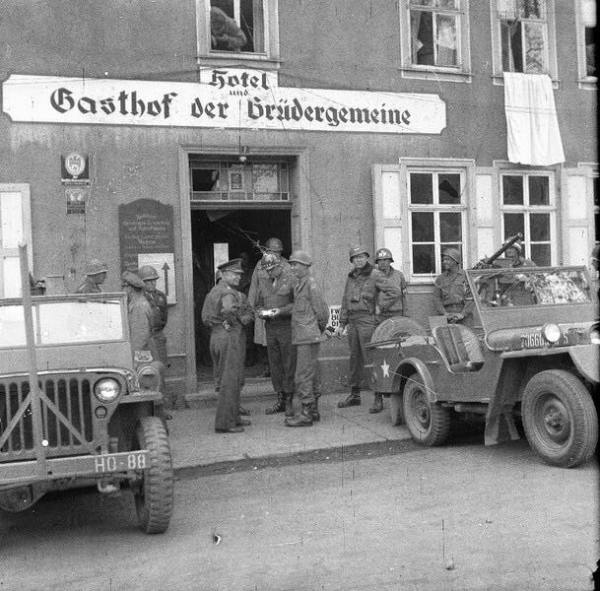
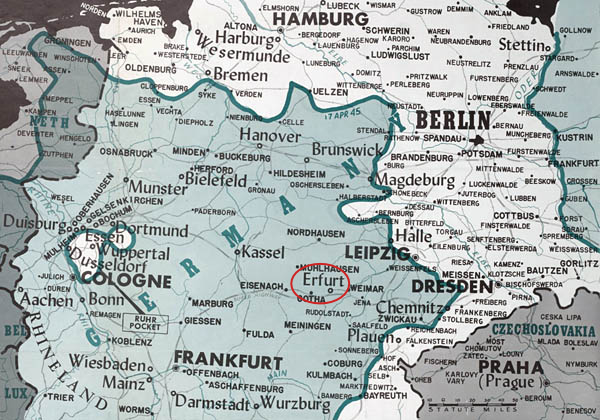
American HQ near Erfurt April 12 1945
After another cold night without shelter, they received, considering they were POWs, a royal breakfast. It consisted of seized German army provisions such as pumpernickel, canned meat and even chocolate once intended as rations for the Air Force. Thus, strengthened by the high-calorie intake, they went on a four-hour march, bringing them to a stadium. They had permission to salvage wood from the dilapidated buildings to make a fire for cooking and to build primitive shelters for protection against the cold and the rain. During the next couple of days, they were being moved frequently from one place to another until they arrived by army truck at a camp at Kirchheim near the city of Bad Hersfeld.
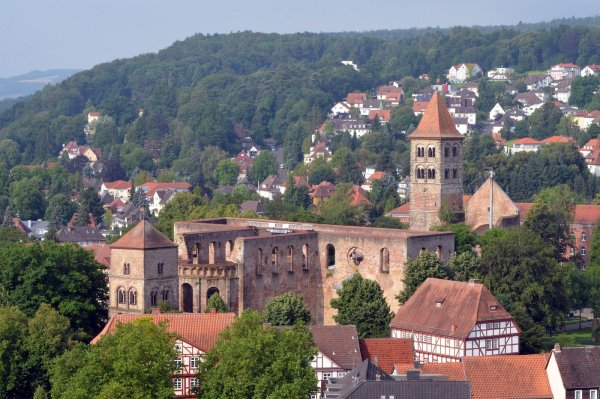
Modern Bad Hersfeld – Photo Credit: Tripadvisor
When Papa had identified himself based on the official documents that he had always carried with him and thus convinced his captors that he was indeed a high-ranking officer, he was immediately given at least for now preferential treatment. He found some relatively comfortable sleeping quarters in the attic of a house confiscated and occupied by the American forces. When Papa arrived, eight other German officers had to share the room. By evening eight more POWs were added to their lot, making things so tight that Papa had to lie down under the table for a good night’s sleep. There was plenty of food. In his notes, Papa marvelled how quickly one could forget past ordeals if one only has some decent food in one’s stomach. The following day, he enjoyed taking in a sumptuous breakfast with delicious items he had not consumed for the last couple of weeks. He felt refreshed, and a new sense of optimism filled his entire being. Some of the items on the breakfast menu were cake and coffee, tea and lemon. Feeling liberated from the ideological shackles, most officers present, even those, who had once strong leanings to the Nazi regime before, displayed a very noticeable shift in their outward behaviour. Less than twenty-four hours after their arrival, they no longer saluted each other with ‘Heil Hitler’ but were quite content to greet one another with a simple ‘Good morning.’
Smoke, smoke, and more smoke! About 10 km behind our small community, the wildfire is still burning out of control. Helicopters are droning overhead and dumping a mix of water and fire retardant on the inferno. In some nearby towns the smoke is so dense that people can barely see things across the street. So instead of posting more gloomy or rather fiery pictures I decided to go back in time to last year, when my wife and I went for a mountain hike on Mt. Scaia. At 7000 ft altitude, we relished the clean mountain air, the alpine flowers and the busy bumblebees visiting them. Enjoy.
On Monday, April 9, Captain Panknin received yet another marching order. German troops were retreating to Weimar, where he was supposed to report for duty. After hearing that the trains were no longer running in the area, he debated whether he should walk there or try to get somehow to Erfurt. He decided to go to the latter, where he received a decent meal and accommodation at the local police station. He complained in his diary that he had not taken a bath for several weeks. Also, the dirty clothes on his body began to bother him. But when he heard that Schmira was under attack by enemy shellfire and was burning, he realized that he had been lucky again and that life was more important than the temporary inconveniences caused by lack of hygiene and cleanliness.
Front Lines April 1945
The following night Opa wrote another letter to Mutti in the relative security of the HQ. At 23 hours, he had just stretched out on his bed when enemy shells exploded in closest proximity to the building, where Opa was trying to find some rest. He quickly rushed down the stairs to the basement that served as a bomb shelter. Many people from the neighbourhood were packing the already overcrowded facilities. Opa had to sleep in the hallway. But it was not a night of good sleep, as stragglers were stumbling over his cot. During these fitful moments of sleeplessness, he was debating in his mind whether he should attempt to walk to Weimar the very next morning. For all train services into and out of Erfurt had been discontinued. An inner voice advised him to stay put and wait with the other police force members until the end of these crazy chaotic conditions. I heard the desperate silent cry of despair while reading the question in his notes, “When will finally somebody come and take us prisoners?”
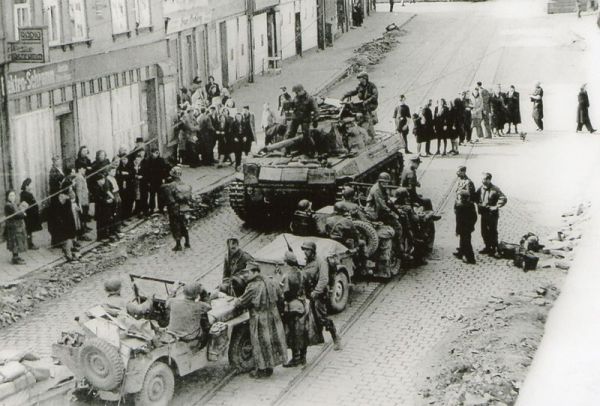
American Army at Erfurt April 12, 1945 – Photo: erfurt.de
At last American soldiers appeared at the basement door. An army captain was calling him and his bedraggled troop to come out of the basement. Earlier other German soldiers had put on civilian clothes. There was one among them who had some command of the English language. When the Gi’s stormed the building, he cried out with a pleading voice, “Don’t shoot. I am not a German Hitler soldier!” These were the final moments when around eight o’clock in the morning of April 12, 1945, Opa became a POW of the US forces in Thuringia.
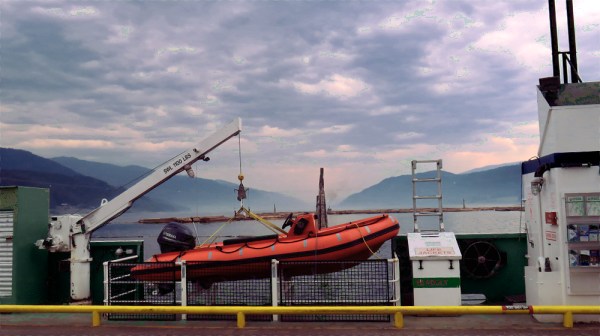
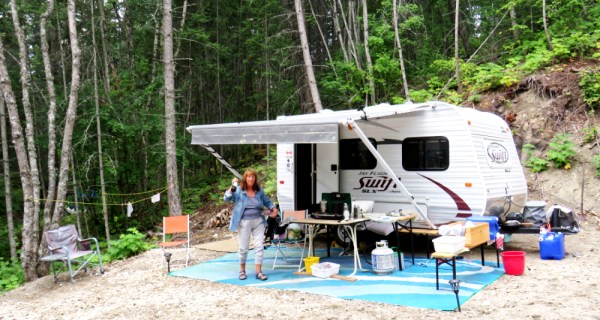
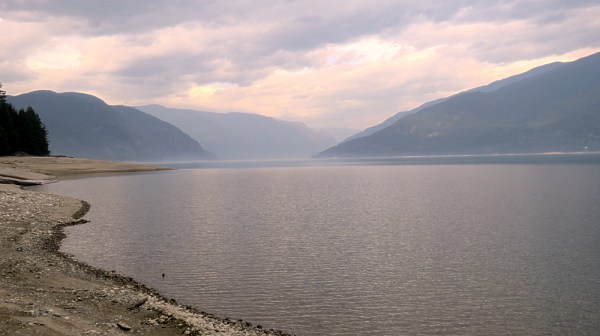
First of all, a big thank you goes out to all my blogging friends for all the compassionate comments that you sent out to me while my wife and I were forced to leave our home first, then also our travel trailer on the other side of the Arrow Lake. I am sorry that during our exile I was unable to write comments even though I read most of your posts and left a like. We have been allowed to come back to our small community with the understanding that we should be vigilant and be aware that while the evacuation order has been rescinded the alert is still in effect. We are very happy that our home has not suffered any damage. Some of the flowers have wilted, but the garden has not suffered too much under the dry and hot conditions. Today, we took the ferry across the lake to visit our beloved beach and check on the trailer. Everything looked just the way as before. Here are a few photos of our little vacation spot at the lake. You can see that there is still smoke and haze in the air from the nearby forest fires. We hope that the wildfires are beginning to ease. Two days ago, we had our first substantial rain in more than six weeks. Thanks again for your patience!
Just a short message to all my fellow bloggers that due to the extreme hazard caused by the nearby wildfires we have been evacuated from our beloved community. Until the evacuation order has been lifted and until we can to return home, we will spend the time at our sons’ places in Vernon, Vancouver and Victoria. Until our return, I will not be able to publish new posts. I also ask you for your understanding that I will not have the time to write comments. Let us hope and pray that our home and our neighbours’ homes will be safe. Thank you for your patience!
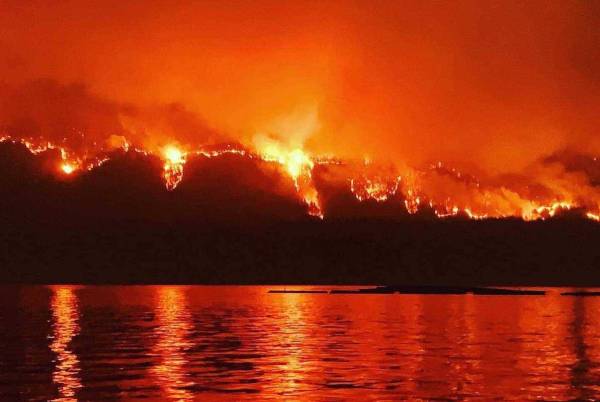
The Octopus Creek fire (10 km south of Fauquier) seen from Edgewood on July 18. Photo: Jeannie Little