Chapter 26 of the Peter and Gertrud Klopp Story – Part I

Of a Young Man’s Needs and Faithfulness

Do not spoil what you have by desiring what you have not; remember that what you now have was once among the things you only hoped for. Epicurus

Biene’s Second Visit to Gotha

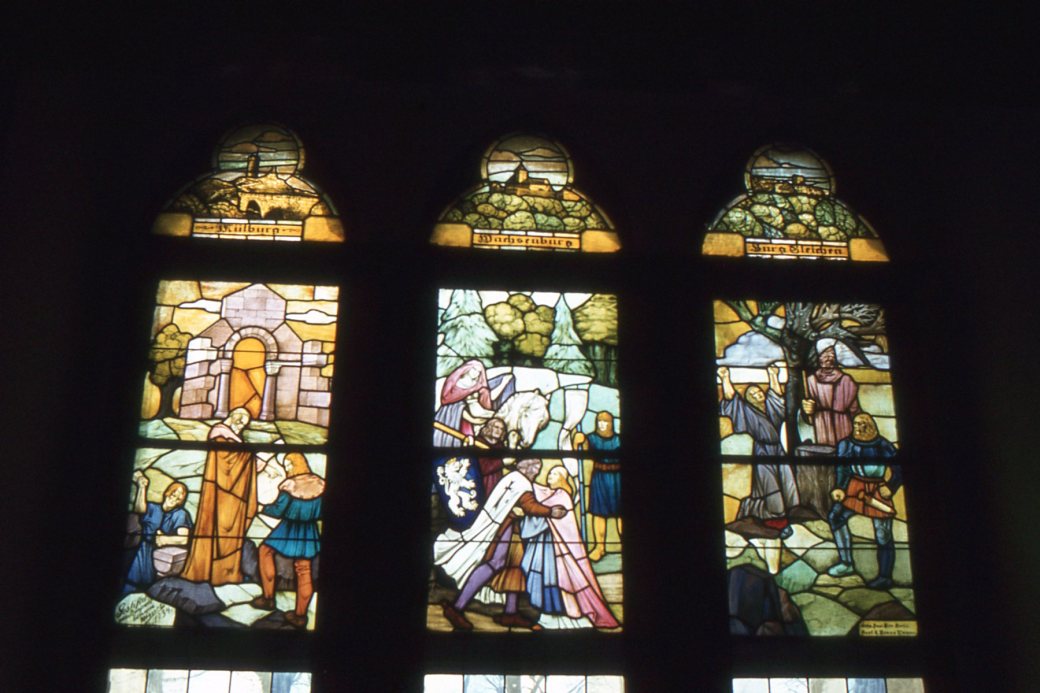
Beautiful Stained Glass Windows at the Erfurt Cathedral

During the last three weeks of my military service I took the time to write a report on my army experiences. I intended to mail it to the ombudsman, whose job was to receive and act on the written complaints from soldiers about alleged abuses and injustices in the West German army. Having gained the much-needed distance from the upsetting transfer episode and having received fair and respectful treatment at my final army post at Marburg, I was in the right frame of mind to describe in an emotionally neutral and objective manner some of the deplorable conditions at the Koblenz barracks, where low ranking army personnel were fraternizing, drinking, and getting drunk with common soldiers and thus tarnishing the public image of the Armed Forces. I also pointed out the errors, which the officer in charge – whether intentionally or not I could not say – committed to bring about my transfer to Maxhof. Furthermore I made it clear that while I lost out on a chance of becoming a lieutenant of the reserve, the army itself would suffer in the long run from such careless and wasteful practices. Biene helped me by typing up the handwritten draft copy of the report.  She was quite impressed how I managed to control my anger and yet decidedly communicated my legitimate concerns to the ombudsman. Being aware of the fact that for the first time we worked together to address and solve a problem, she remarked in her letter that all her thoughts were directed to a time in the future with me. She wanted to do her part that our life would not turn to be something, upon which we would look back with regret, rather a life that was perhaps difficult, but would fill our hearts with joy, because we mastered it together.

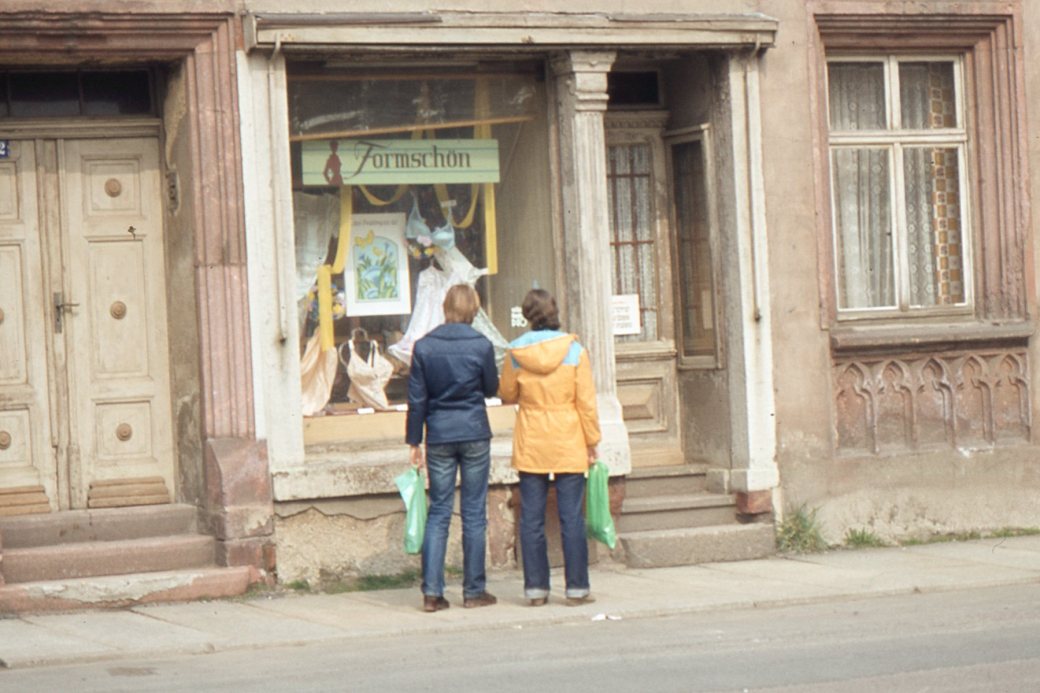
Lingerie Boutique in East Germany 30 Years after the End of World War 2 

About a week before my birthday Biene and her twin brother Walter traveled to Gotha to visit their sister Elsbeth in the GDR behind the Iron Curtain. In those days, when a fence heavily guarded by the National People’s Army (NVA) divided the two Germanys, a person needed a traveling visa and a residence permit in order to cross the border and visit close relatives. What made the application process so frustrating for so many West Germans was not the hefty fee they had to pay, but the arbitrariness in the approval process by the East German authorities. Only in the event of a severe illness or death of a close relative could one be fairly sure to get that all important entry document. So Biene and Walter were lucky indeed to make their journey to their former hometown Gotha and to be together with sister Elsbeth and her family at their birthplace. The apartment, where Elsbeth, her husband Paul Werner, and their two sons Norbert and Christian lived, was located in a beautiful house that had escaped the destruction of the Allied bombing raids during the war. The home offered the warm, cozy feeling of a secure harbour, where the family found refuge from the desolation of the outside world, the depressing sights of dilapidated houses all around the neighbourhood. While West Germany had experienced an incredible economic boom with an unprecedented growth in prosperity during the past twenty years, not much had changed on this side of the border and large parts of the major cities still lay in ruins. There was a shortage of the most basic consumer goods that forced shoppers to buy, whenever and wherever they happened to be available in the drab city stores.

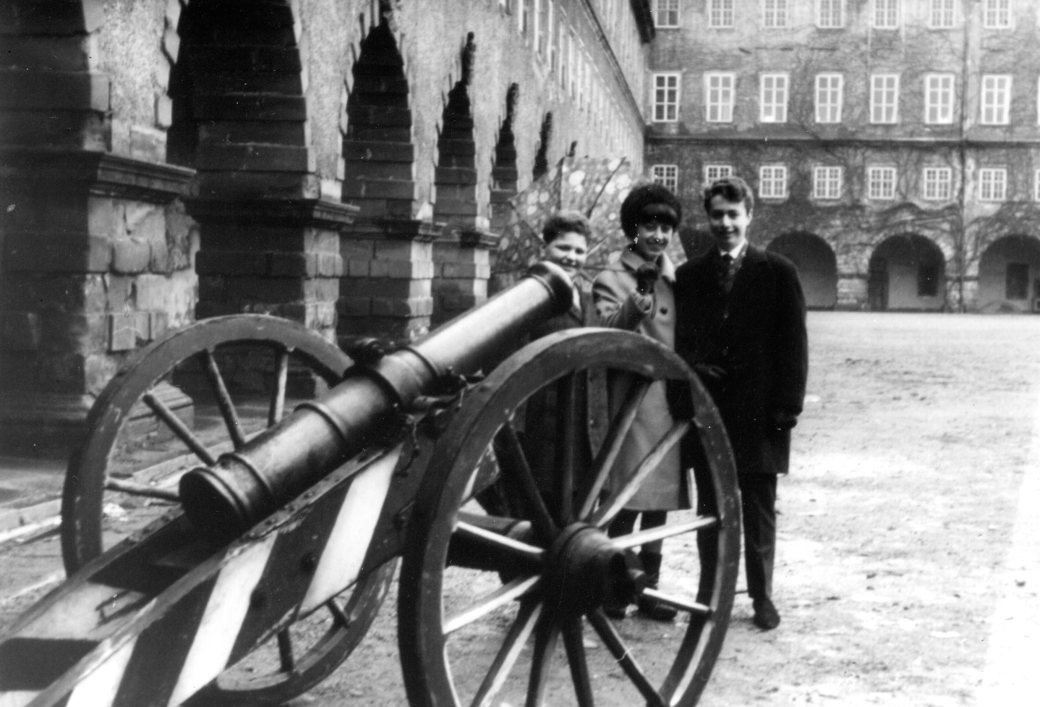
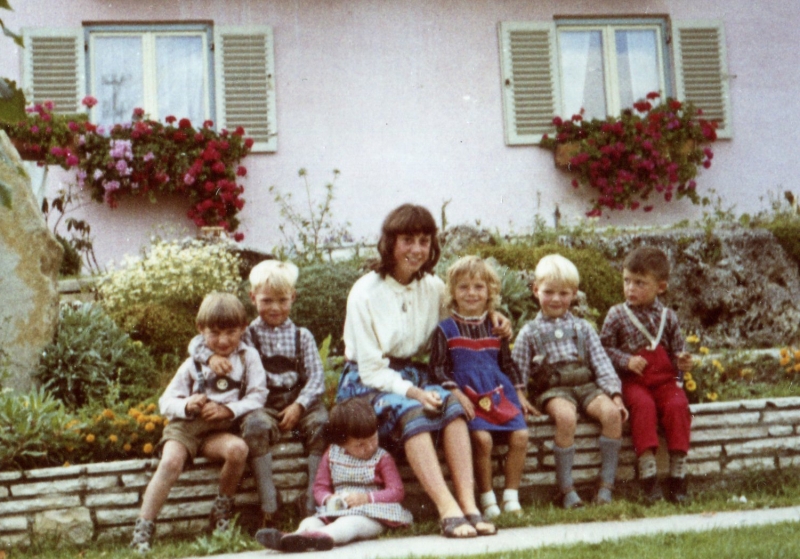
Biene and her two Nephews Norbert and Christian – 1965

On Biene’s previous visit in the summer of ’64, the two sisters had already formed a close bond with each other. Now Elsbeth was jealously watching that nobody spent too much time with her cherished guest. Together they traveled to Erfurt to visit the famous cathedral, where Martin Luther was ordained in 1507. Inside the 1200-year-old Gothic church they marveled at the beauty of the altar. Biene was impressed by the rich colors of the stained glass windows that let the vibrant light stream into the interior. In the evening the entire family would sit around the table and play a round of the German card game Doppelkopf, which was also our favorite game at the Kegler Clan. Of course, her two nephews were delighted, when they were allowed to spend a little bit of time and go for a sightseeing tour around town with their elegantly dressed and pretty Aunt Biene from the West.

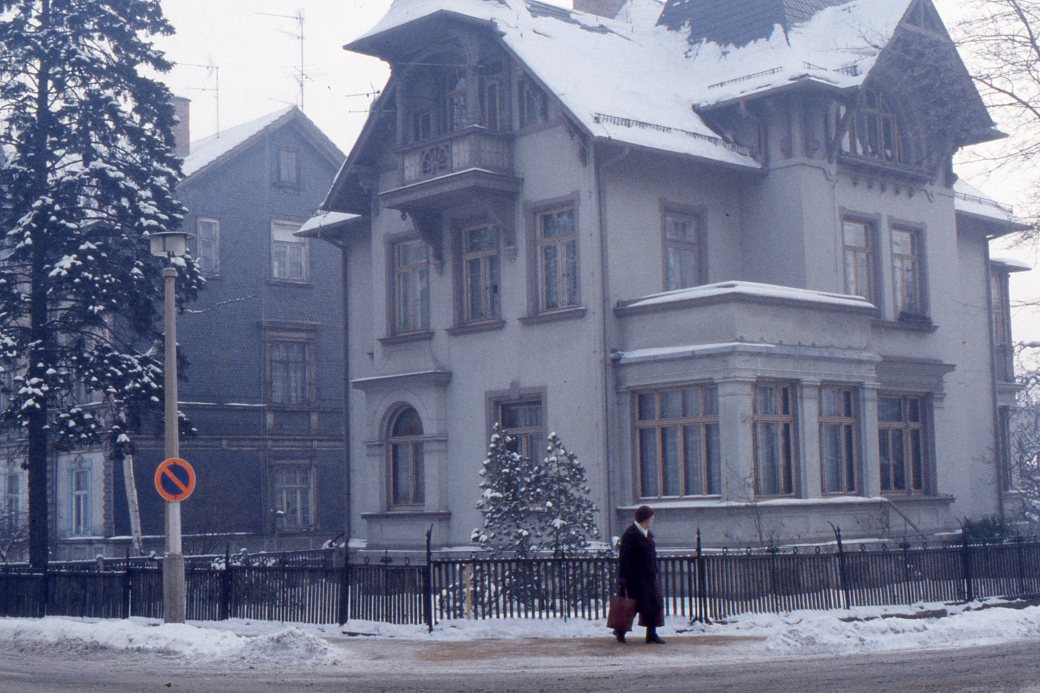
Biene’s Birth Place in Gotha

Elsbeth had watched on East German TV many interesting documentaries on the landscapes and people of Canada. She confided to Biene that if she could live her life over again and had the freedom to travel, she would immigrate to this fascinating country with its magnificent scenery and its promise of a better future. When Biene told her that I was going to Canada in a matter of a few weeks and that we had promised to be faithful to each other, Elsbeth voiced her skepticism and did not mince words in sharing her opinion on what a man of my age needed. She warned her younger sister that I would be looking for a girl who would offer more than she had been able to give. Biene was quite troubled by her sister’s pessimistic views on men’s desires for sex and their  potential lack of faithfulness. True to our promise of always sharing our thoughts and concerns with each other, she immediately communicated her worry regarding these disturbing insights in a letter directly from Gotha and asked me to respond and hopefully reassure her.

STEEP AND CROOKED … by Late Writer, Artist & Castle Builder Bill Laux – Chapter IX

STEEP AND CROOKED: THE MINING RAILROADS OF THE CANADIAN BORDER

 By Bill Laux
CHAPTER NINE

  GRANBY 1895 – 1902

Granby-Smelter

Jay P. Graves at the California mine on Red Mountain had held his breath in 1895 and taken the plunge.   He bought into a pair of copper prospects on Knob Hill in the Boundary range of the Monashee Mountains a few miles north of the border.   An old and trusted acquaintance, H.P. Palmerston, had come to him with a proposal.   Palmerston had been offered one quarter of their claims on Knob Hill by the Greenwood prospectors, Henry White and Matthew Hotter, on a promise that he would raise development money.   Palmerston was ill and unable to interest anyone in these remote claims.   He sold his interest in them to Jay Graves.

Graves put his Spokane boarder, Aubrey White, a bookseller, to peddling stock in these claims to Spokane mining speculators in 1896.   White could get no more than 10 cents a share; on the Spokane Mining Exchange they traded for just 5 or 6 cents.   This was failing to raise enough capital to begin work, so Graves sold his house and moved his family into the Spokane Hotel. With the money from this sale, he hired Henry White, the original locator, to begin to clearing the forest from the claims and digging a trench to expose the top of the ore body.   When the extent of the deposit had been established by trenching the shallow overburden of soil, Graves bought a boiler, a steam powered hoist and a steam pump to begin sinking a shaft into the ore. This machinery had to be hauled by wagon from Bossburg on the SF&N line to Grand Forks.   Then a road had to be brushed out up to Knob Hill on the ridge top west of town. The claims that Graves had bought did not contain the rich, narrow veins plunging steeply into the mountain, as at Rossland.   The trenching had showed that the copper was a large, saucer-shaped ore body just below the surface.   How thick it was, no one knew.   It was only 1 or 2 percent copper, but there was a great deal of it, and it contained minor amounts of gold and silver.   A pit could be opened and the ore quarried cheaply out of the hillside.   Still, more development money would have to be raised to determine the full extent of the ore body.

Graves had incorporated the two claims with 1,500,000 shares for the Knob Hill and 1,000,000 shares for the Old Ironsides.   In 1899 he sent out Frank Hemmenway, a Spokane bank teller who doubled as a miner in the summer, to work with Henry White, trenching and taking samples for assay.   Hemmenway had a sound reputation with Spokane mining investors, and his favorable report boosted the stock price on the Spokane Exchange. It also started a rush of prospectors and promoters to the Knob Hill discoveries.   All those who had been too late to cash in on the Red Mountain bonanza now swarmed over Knob Hill, and claims were staked for several miles in all directions. The trenching White and Hemmenway had done on Grave’s Knob Hill claims suggested the presence of a very large ore body, much large than the original 600 by 1500 foot claims.  Graves used the money stock sales were bringing in to buy the adjoining claims and acquire the entire ore body.   Encouraged by reports of other ore bodies in the district, other serious investors were moving in.   In 1897 the Dominion Copper Company was formed to acquire the Idaho, Brooklyn and Stemwinder claims across the valley of Twin Creek from Graves’ developments.   All of the deposits found, while large and close to the surface, were of low grade.   None of them would pay for the long wagon haul to the railroad at Bossburg or Marcus.

Railroads were coming; Dan Corbin was surveying his line from Marcus to Greenwood.   Fritz Heinze was surveying his route over Mc Rae Pass.   The CPR was, with agonizing slowness, creeping in from Alberta.   The railroads had made Rossland, and Jay Graves was confident that when one reached his mines, there would be a boom bigger than had yet been seen.   A smelter would be required.   To raise money for it, Graves and Aubrey White went east to enlist Montreal investors.   Their pitch to the Montreallers was that it was a patriotic duty for Canadians to invest in these British Columbia mines, and not let them fall into the hands of the greedy Americans. The spectacle of a couple of Americans, Graves and White, glibly promoting Canadian patriotic sentiment was a replay of Captain Ainsworth’s arguments to the B.C. Legislature, twenty years before.   Graves and White were helped by the fact that Canada was in the midst of its great Free Trade Election and the issue of American domination of Canadian business was being fought out at the polls.   The anti Free Trade forces won and so did Graves. He enlisted the support of Stephen Miner, a Quebec industrialist with connections to the Montreal banking community.   Miner wanted a recognized mining engineer to submit a report on Graves’ to circulate to his wealthy friends.   Graves sent out another Spokane Colonel, Nelson Linsley, the head of the Spokane Mining Bureau, and a respected mining engineer, to assess the value of his claims on Knob Hill.

The report was favorable.   In Montreal, Stephen Miner showed it to his friends, and introduced them to Graves who, with his tongue stuck solemnly in his cheek, warned them of the dangers of Americans getting control of this valuable Canadian resource.   Might not even political annexation follow? he asked with a melodramatic shiver.   Miner’s friends were impressed.   The combination of patriotism plus profit was irresistible.   There is something embarrassingly familiar about this to Canadians.   It seems it always takes an American to arouse Canadian patriotism.            With a group of wealthy Montreal investors behind him, Graves went across town to the CPR.   He began lobbying the CPR directors to lay rails to his mines.   The directors were skeptical.   Three mountain ranges would have to be crossed, and they doubted that Grave’s low-grade copper would pay for the construction costs.   Jay Graves was at an impasse.   The railroad was essential to his mines.   Without a firm promise of one, he and Miner could not sell stock in the Old Ironsides and Knob Hill.   And until his mines demonstrated their profitability, the CPR would not move.            And just as it was the threat of American control that brought the Montreal investors into Graves’ scheme, it was Dan Corbin, lobbying for a charter for a railroad to the Boundary mines, that aroused the CPR.   They easily blocked his charter application in Parliament, but when Jim Hill bought Corbin’s railroad, the CPR had to act.   Almost in a panic, they sent their engineers and surveyors into the Monashee snows to rush a line to the Boundary Copper camps.

The arrival of Canadian Pacific rails in Grand Forks in 1899 was marvelous luck for Jay Graves and Stephen Miner.   With the CPR laying track toward their new mining camp of Phoenix, the future of their Granby Company was assured.   However, Graves knew very well the CPR’s intention to create a transportation monopoly in the Boundary district, just as they had attempted in the Kootenays.   And with the knowledge that only a second and competing railroad could bring the CPR ore hauling rates down to the lowest possible figure, Graves went to Jim Hill in St Paul.   He showed him Colonel Linsley’s reports on the Old Ironsides and the Knob Hill.   Would Mr. Hill build Dan Corbin’s line to the Boundary?   Jim Hill said nothing.  His game was bigger.   If Grave’s ore body was as big as Colonel Linsley said, and as cheap to mine, a rail haul, while profitable, would not be enough.   Jim Hill wanted the mines and the smelter as well.   Very quietly, he began buying stock in Graves’ and Miner’s companies. Graves and Miner had organized three companies in 1899, the Old Ironsides, the Knob Hill, and Granby, to control the properties they owned on the ridge between Grand Forks and Greenwood.   Graves brought Yolen Williams over from the California mine at Rossland, made him a director, and hired him to work out plans to extract the ore. Then, at the head waters of Twin Creek, just below their claims, Graves and Miner preempted a town site, called it Phoenix, built a water system, and began selling lots to merchants, saloon keepers, hotel men, and others moving to the new camp.            The town site was a huge success.   Buyers flocked in, scenting a new Rossland.   Within 24 hours of going on sale, nearly every lot was sold for between $500 to $600.   It was said that the town site sale brought in $100,000 to Granby.   Graves and Miner now had enough for a down payment on a smelter, and began to build one on the North Fork of the Kettle River, just over Observation Mountain from Grand Forks. Breathlessly, miners, businessmen and investors, watched the CPR’s branch line to Phoenix being graded around the eastern slopes of Deadman’s Hill toward the mines.   With the CPR laying tracks to their ore, and with directors, Miner and Gault, handling stock sales in Montreal, Aubrey White moved to New York and began selling shares there.   They began moving briskly in the range of 80 cents.   This was delightful news to the Spokane speculators who had bought their shares for a nickel.   And at 80 cents, Jay Graves was now a rich man.

The Guggenheim brothers at that time dominated American metal smelting and refining.   Walter Aldrige at Trail had served in one of their Colorado operations.   Now Graves hired another one of Guggenheim’s smelter engineers, Abel Hodges, to put up a first class smelter on the North Fork site.   With all this activity, the CPR queried Walter Aldridge, whether the Phoenix development was serious. Aldridge, who badly wanted the Phoenix ores for his Trail smelter, told President Shaughnessy that it was quite serious, and that the Old Ironsides held enough ore to support a small smelter.   Shaughnessy was asked by Graves to build a 2-mile CPR spur into the smelter site from the C&W main line at Ward Lake.   It was needed as quickly as possible, Graves emphasized, as the smelter machinery to be installed would be much too heavy for freight wagons.   Aldridge and Shaughnessy wanted the Phoenix ore for the Trail smelter, and were in no mood to facilitate a competing smelter.   They told Graves Granby would have to pay for the smelter spur itself, but the cost would be refunded if the smelter production should reach 100 tons per day.   Aldridge underestimated Granby.   The Phoenix ores were lean, averaging only 1-1/4 percent copper, and would require several smeltings to concentrate them enough for refining.   Abel Hodges assured Jay Graves that he could smelt 150 tons of Phoenix ore a day, and that the spur cost would be recovered. 

The CPR’s Phoenix branch left the main line at the Eholt summit and climbed up Coltern Creek on a 3.4 percent grade.   At the head of the creek a small side hill cut, exposed a mass of chalcopyrite, a sulfide of copper and iron.   An alert workman quickly drove stakes on it and sold it to the Dominion Copper Company as the Emma Mine.  Aldridge and Shaughnessy were in no hurry to serve Jay Graves’ interest, and at this spot they abandoned the climb to Phoenix and ran a 2-1/2 mile spur out to the B.C. mine.   Aldridge urgently wanted that mine’s ore, almost pure copper pyrites, for his Trail smelter, as its high sulfur content would only require enough coal to ignite it in the smelter furnace.   From then on the burning sulfur itself would smelt the ore.    Graves was furious.   The CPR was hauling Boundary ore to Trail before putting rails into his deposit.   If Jim Hill were only on the scene, the CPR would not be trifling with him in this way.   Angrily, he had to send his first ore shipments down the mountain by wagon to the Granby Smelter for its opening on April 11, 1900, exactly as the Le Roi had had to do from Rossland, four years previously.            Finally, the CPR sent its crews back to the Emma mine, and began grading up the east side of Deadman’s Ridge toward Phoenix.   Not a quarter mile from the Emma, their grading exposed another mass of copper ore, and with no Trail engineer present, it was staked as the Oro Denoro, and sold to the Dominion Copper Company.

From that point the graders carefully examined every stone for traces of copper, but no further bonanzas were uncovered in the steep climb to the ridge top flat at the Wellington Camp (later Hartford).   At the chaotic Wellington Camp the ground was covered with stores, tents and cabins whose owners demanded exorbitant prices for a right of way.   The CPR hastily put in a switchback on perfectly level ground rather than pay for the land needed for a loop.   (Later on, when the Wellington Camp declined, a loop was built.)   The switchback reversed the line north where it climbed through the Rawhide, Gold Drop, Curlew, and Snowshoe claims, and turned into a shallow pass at an elevation of 4500 feet to enter the head waters of Twin Creek, the new town of Phoenix and the Granby Company’s mines.

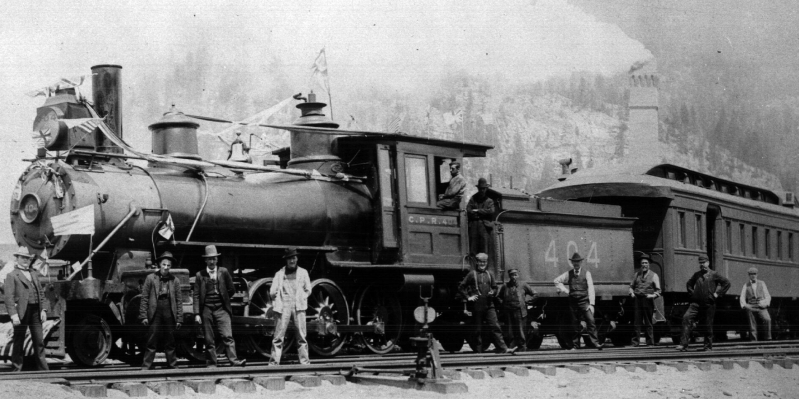
In June of 1900, the rails were spiked down, and the line was complete.   On July 11, the first trainload of ten 30-ton cars of ore from the Old Ironsides mine departed Phoenix behind CPR L class Consolidation No. 317.   At Smelter Junction, the train was split, with five cars set off to be forwarded to the Trail smelter, while the remaining five cars were trundled down the 2 mile spur to the to the Granby Smelter. They arrived at 5:30 PM and were received with elaborate ceremony. Jay Graves and his family, together with C.H.S. Miner, Abel Hodges, and their families, were present.   A local brass band played, and the whistle cords of the engines were tied down to express the jubilation of all present.   It had been a tremendous gamble, but Jay Graves had won.            The two smelter furnaces were fired up the next day, and another trainload of ore arrived, the beginning of daily shipments from Granby and the other mines in the region.   Jay Graves at once ordered two Thew steam shovels on flanged wheels for 36” gauge track.   Quarry faces were blasted into the ore bodies at the Old Ironsides and the Knob Hill, 36” track was laid, and the two shovels began digging out the broken ore and loading it into 4 ton mine cars.   Davenport 0-4-0 saddletanker locomotives hauled the mine cars out of the quarries to a loading platform where they were dumped into the CPR 30 ton ore gondolas below.   At least one of the Davenport saddletankers was a special model for underground use, cut down to a five foot height, and requiring its engineer to operate it and fire it from a sitting position.   This squat steamer could enter the caverns blasted into the quarry walls and pull out ore from underground.

All this mechanization was wonderfully efficient.   Jay Graves boasted accurately to reporters that the Granby ores moved from quarry to smelter untouched by human hands.   Dumping the mine cars was mechanized a few years later when a Granby employee invented the self-dumping Granby mine car.   A wheel on the outside of the car would ride up on a slanting rail fixed to a vertical bulkhead in the dumping shed and tip the car as the Davenport pushed it over the chute.   This “Granby Car” was sold all over North America in subsequent years. As soon as the CPR tracks reached the mines at Phoenix, production went on a six-day week.   The ores rolled in short trains down the steep 12 mile grade to Eholt where they were made up into trains for the Granby smelter and cuts of cars for Trail to be picked up by the next way freight.   A second Shay locomotive, No. 112, identical to the 111 working the Rossland hill, was ordered and put to work on the Phoenix line hauling ore down the hill, and bringing coal and freight up to Phoenix.

With the completion of the Phoenix line, the CPR shifted its crews to Greenwood to build another steep and crooked branch up Motherlode creek to serve the Deadwood, Sunset and Motherlode mines.   The branch left the main line just a few hundred feet north of the C&W station, and climbed the rock bluff above Boundary Creek on a 3.8 percent grade to enter Motherlode Creek above the new smelter being built by the B.C. Copper Company.   From the smelter, the line climbed the left bank of Motherlode Creek to the town of Deadwood, and the Greyhound and Deadwood mines, also open quarries like the Phoenix mines.   From Deadwood the line was built on that same 3.8 percent grade up Castle Creek to a switchback (later replaced with a loop) which reversed it out of Castle Creek and up Motherlode Creek again to the huge Sunset open pit, or “glory hole,” as they were then called.   A quarter mile farther on it reached the Mother lode mine and its even bigger glory hole.   Shay 113 was purchased in 1903 to work this branch.

The CPR surveyors had continued past the Motherlode mine, locating a line winding in and out of creek valleys and looping around the noses of ridges to Dan Corbin’s King Solomon mine.   This location was known as Copper Camp, at 4400 feet elevation, with the King Solomon and Enterprise as the major producing mines.   The line past Motherlode, however, was never graded or built.   Probably because the CPR demanded the mine owners pay for it, with reimbursement after a certain tonnage had been shipped.     Agreement was evidently never reached, and the end of track remained at Motherlode with the King Solomon and Enterprise ores coming down to that point on wagons.

From the Canadian Pacific’s point of view, the building of the Columbia and Western with its spurs and branches was more a defense against Jim Hill than a profitable investment.   They had spent an estimated 7 million dollars to put rails into the Boundary country from Robson West, and yet the mining companies had spent but 4 millions in their developments.   Worse, the startling news came that Jim Hill had bought the supposedly defunct charter of the Vancouver, Victoria and Eastern and his surveyors were staking grades into the Boundary country and up into Phoenix itself.

The CPR built a further spur from the Eholt-Phoenix line to serve the Jackpot and Athelstan mines, and surveyed two more grades long the spine of the Midway range across the border to reach the City of Paris and No. 7 mines at White’s Camp, and the Washington and Lone Star at the head of Big Goosmus Creek in Washington.These two last branches were never built; again, the owners would not pay, and found they could build a 5-mile aerial cableway to transport their ore back across the border into Canada and down to a second Boundary Creek smelter being erected by the Dominion Copper Company.   It went into operation in 1901.   With three smelters competing against him for Boundary copper, Walter Aldridge was finding it difficult to obtain sufficient ore for his Trail smelter.   His Canadian Mining and Smelting Company was obliged to buy or lease producing mines to secure a dependable supply of smelter feed.

By 1902 the Granby smelter was operating at capacity, and still more ore was coming down from the huge Knob Hill and Old Ironsides pits.   Graves and Miner merged all their Companies into Granby Consolidated Mining, Smelting and Power Company, Ltd. and issued $15 million in stock.   $11 million went to the stockholders in the old syndicate; the rest was put on the market to raise funds for enlargement of the smelter, the installation of a converter to produce nearly pure copper, and for a hydroelectric plant at Cascade, on the Kettle River, to furnish additional power for the smelter and to electrify the mines at Phoenix.   This enormous capitalization looked suspicious to many.   No one knew how deep the Old Ironsides and Knob Hill ore bodies were.   Did they really have $15 million dollars worth of ore?   Neither Graves nor Miner could answer this question definitively.   Speculators wondered if Graves and Miner were preparing to sell out at this inflated value before the ore bottomed out.

For his part, Graves had a new scheme.   This minor real estate developer from Spokane was going to try to play the two hostile railroad barons against each other for his own interests.   Graves was never shy; he approached Thomas Shaughnessy,  President of the CPR, with a plan to keep Jim Hill out of Phoenix.   He proposed that Granby should continue to smelt its own ores in its own smelter.   But since there was more ore now coming out of the ground on the heights around Phoenix than the Granby smelter could handle, and the cost of transporting ores to Trail over McRae pass was uneconomic, the CPR could build a second Grand Forks smelter, a custom smelter to handle all the ores from the mines not owned by Granby, B.C. Copper, or Dominion.   These ores could not stand the shipping charges to Trail and were going begging for treatment.   If the CPR would build this custom smelter, Graves promised he would offer as security for loans to build it, 28 options he held on mines in both the Phoenix area and also down in Republic, Washington in the new Eureka Creek mines.   If the CPR accepted his offer, he would guarantee them the haul from all these mines to the custom smelter as well as the Granby haul to its smelter.   Graves estimated revenue from these hauls to be $800,000 per year.   It was not unreasonable; CPR was already getting $380,000 a year from its haul to the Granby smelter alone.   It was a clever scheme; by using the capacity of a second Grand Forks smelter to contract for all the Boundary ores offered, nothing at all would be left for Jim Hill to haul.   He might run his rails up to Phoenix if he wished, but when he got them there, there would be nothing to load into his cars.

If the impetuous Van Horne had still been in charge, he might well have agreed.   But the cautious, conservative Shaugnessy was now President.   He sought advice from Walter Aldridge.   Aldridge told him the Boundary mines were overrated, that they were shallow deposits that would soon play out, that Graves could not demonstrate proven reserves of ore.   Shaugnessy turned down Graves’ offer.   As it turned out, this was a spectacular mistake.   Copper prices would soar during World War I making even the poorest Phoenix ores profitable.

Undismayed, Graves turned around and sounded out Jim Hill.   His new scheme, which he put to Hill, was nothing less than a proposal that the two of them should buy Granby outright.   He asked Jim Hill for a loan of $2 million to buy 500,000 shares of Granby at $4.   With the 150,000 shares he owned or controlled through relatives and employees that would give Hill and himself control. With control of Granby, Hill, when his rails reached Phoenix, could then take all of the Granby traffic and the CPR would be starved of ore.   After promising funds, Hill had second thoughts.   His suspicious nature which George Stephen had played upon so successfully, asserted itself.     He could not bring himself to participate in another man’s scheme.   When Graves got to Montreal to make his stock purchases, there was no money waiting for him.   He found the Granby directors ready to sell, as he had predicted to Hill.   They thought the future for copper was speculative, and wanted to get out while the stock price was favorable.   They were selling, however, to William H. Nichols, a New York copper refiner.   Frantic letters to Hill produced no result. Graves’ scheme was slipping away from him.   When the other directors, unaware of Graves’ intentions, invited him to go along with them and sell to Nichols, he had to agree.   Hill eventually sent him a stingy $25,000 in New York in case Nichols should change his mind, but it was too late.   Nichols and his New York associates had bought Granby outright.

One has to wonder at the eagerness of the Canadian stockholders to sell out to the Americans when it had been appeals to their patriotism that had brought them into Granby in the first place.   Emotionalism is probably much more a factor in business than most will admit. In 1902 Jim Hill’s men crossed the border into Canada at Cascade and began grading toward Grand Forks.   There they were halted by an injunction obtained from the court by one of the most preposterous railroads ever to run a train, Tracy Holland’s “Hot Air Line.”   Jim Hill had encountered his newest and most pestiferous adversary.


Chapter 25 of the Peter and Gertrud Klopp Story – Part VI

Philosophical Musings on Love, Marriage and Family

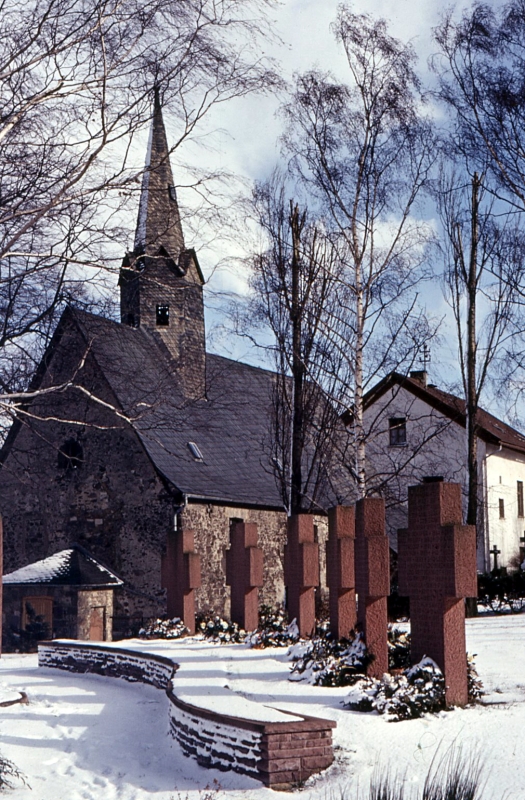
Church in Watzenborn-Steinberg

Church in Watzenborn-Steinberg

Now it was my turn to write and lay out my philosophical musings on love, marriage, and family within the context of their place in society. Just like Biene, I allowed my thinking to go far, even taking a fanciful glimpse into a romantic notion of immortality.

          When I think about two people, who love each other, I see two streams that arise from two different springs, wind through narrow ravines and then, free again, pour into a wide valley, sometimes wedged in, sometimes wide, yet steadily growing in power and strength, finally join and from then on flow together towards their goal, the sea. Who can say which is greater, more glorious and more beautiful? Perhaps an onlooker from one region would praise the charm of the first river, while another would be more pleased with the foaming waterfall in a gorge of the second. What the two have in common is not remarkable, because their charm lies in their difference. So it also appears to me between a man and a woman! For with them as well we see their intrinsic value in their being different from each other.

As we both are different and only when united have a common goal, so will different tasks occupy our entire being. Thus, dear Biene, I am certain, you will want to be wife and mother and you will see in this task your greatest and most beautiful role, and I would like to be husband and father and make sure that I put on a solid foundation, what you in your uniqueness will accomplish in the home through love and warmth for husband and children. And should someone ask us about our understanding of equality, we would simply reply that it is respect for each other’s uniqueness. We will then have said much more than if we had spoken longwindedly about the social position of man and woman in the human society. With it we express the idea that we do not wish to distort nature’s laws in our desire to be equal, but in responsibility for each other and for the family we are on par, of equal worth and value.

          Each person, no matter how insignificant and low in the eyes of the world, influences his environment by his very being. His parents care for him and draw him into their thoughts and feelings. And so he also influences their decisions, as long as he in some way depends on them. Because of him they postpone perhaps a vacation trip or even cancel it; because of him there is perhaps a car accident or perhaps not. Few people are connected with him with their decisions, but the few are intertwined in a remarkable way with thousands of other people, who in turn have an impact with their actions on others. Thus, everyone makes a small contribution to the history of mankind. One need not be Caesar, Napoleon or some other great figure to change the world we live in. Everyone does it, whether he is aware of it or not. But it is good to know one’s power to this effect.

A teacher, who is ambitious and uses his subject areas to have good students graduate year after year, can say at the end of his career, ‘My knowledge and my thoughts did not remain buried in books or in my head, but have beneficially spread among so many people. He will be satisfied with his life, and after he will be long gone, his ideas and thoughts mysteriously live on in thousands of minds and produce for a long time to come precious results. Would he not catch through his work a tiny sliver of immortality? I find, if one looks at life that way, the world appears much brighter, even death loses some of its sting. Thoughts, ideas, knowledge are invisible and work in the shadow of the human spirit, until they step forth in action and then, even if it only happens on a small scale, change the world. You may wonder, dear Biene, what I’m driving at. I would like to lead a life with you and be there for you and the family. And that is only possible if I enter a profession, which first of all brings joy to my heart and secondly offers us financial security. Later on in my profession as teacher I hope to positively affect young people and, as much as I can, will follow with great interest their life’s journey. The question will always occupy my mind, ‘What will become of them?’ However, in my work I will never forget the family and leave its care and worry to you alone. You know, dear Biene, I believe that we live on through our children. And even if one day we will have become old and gray, part of us will always carry over to them, our flesh and blood, and after years of nurturing certainly also our way of life. I would like to cling to this idea, which in its realization will bring so much comfort to us, and it is my greatest desire that one day all this will become reality.

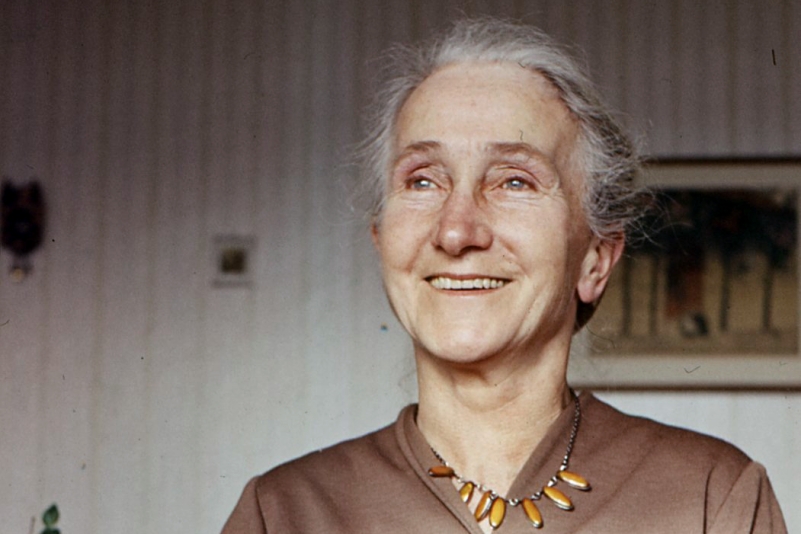
Mother

Mother

          Sitting on Mother’s sofa, Biene and I shared these wondrous thoughts that have so prophetically crystallized into words written down in Biene’s special dream book. They were clear and easy to grasp, to which we could attach our hopes. They were destined to be the blueprint for our entire lifespan.


Chapter 25 of the Peter and Gertrud Klopp Story – Part V

Biene’s Dream House

graduation

The Happy Twins Walter and Biene after Receiving their High School Diplomas

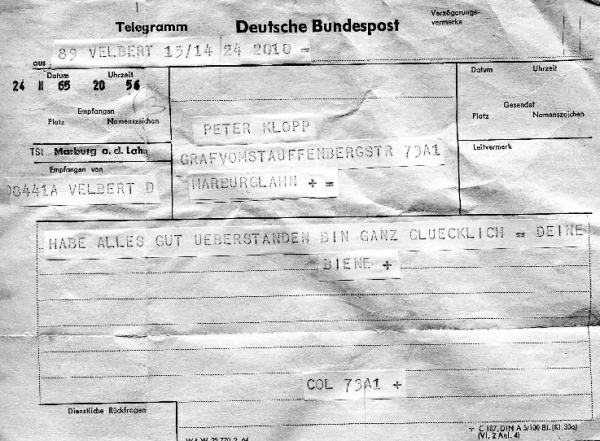
In the meantime Biene had graduated with reasonably high marks and sent me a telegram to the Tannenberg barracks to tell me the good news. Her parents were so delighted over her success that they granted her permission to visit me again in Watzenborn. Before she came, she had presented me with her idea of writing a family chronicle that would later enable us to look back at our roots.

telegram

Biene’s Telegram

In addition I had tossed in the proposal of starting a book with blank pages, which we would fill with our vision for the time, when we would be together in Canada. A description of our dream house would be part of this endeavour. Biene wholeheartedly embraced this idea and to this end immediately bought a leather-bound book,  which could be locked with a tiny key. In spite of the hustle and bustle of the graduation festivities and inevitable farewell parties she had already made her first entry with the full force of her innate romantic creativity:

44b

The Photo Biene was referring to

                    Our Little Dream House

           Now when under the first sun rays of spring the forces of nature begin to stir, I can hardly wait, until everything is blooming and the green, which is still slumbering in the swollen buds, breaks forth. Not too long ago I came across this photo and each time I look at it, dreams of a little home of my desires are awakening. You said indeed that we will set no limits to how far our fantasy will carry us, as long as it won’t do us any harm. This is how I imagine our little fantasy home to look like.

          So picture this. It is spring. Only nature has progressed a little farther than here today. For everywhere fruit trees are already blossoming and in the sea of blossoms glimmers the first tender green of rupturing buds. You walk along the edge of a small town and are caught in the intoxicating scent of flowering splendour. All of a sudden you see out of the white shimmer a little house emerge. Sheer happiness makes your heart beat faster, and you believe to dream anew like on every day; for this is our little home embedded by this blooming island. It is as I said only a little house made entirely out of dark wood reminiscent a little of a log cabin. It looks neither opulent nor grandiose, but endearing and inviting instead.

          Through the large windows the sun and the fresh aromatic air pours into the small cozy rooms. The sun glides over the furniture, which is not so ultramodern as to appear cold and nondescript, but every piece is reassuringly firm and solid and for that reason snug and comfortable. At this moment I must think of the chairs, which Aunt Lucie had painted. Such a piece of furniture is no longer dead, but in a small way radiates life.

          Oh, I forget to mention that every window bedecked by a flower box is overflowing with flowers just like on that little photo. Our little home appears as if one day it would be overgrown by nature’s luscious growth, which should provide protection against the cold months, when icy winds drive us inside into the heated room.

          Apart from that we spend most of the time in our little yard and even sleep there, when the summer nights are warm and the mosquitoes do not sting us too much. We sleep in hammocks and gaze at the starry sky before falling asleep.

          In the winter when it is stormy and desolate, our large tiled stove or fireplace will radiate warmth into the small rooms just like the sun in the summer. Where the rooms are located, I am not so sure about it yet, but I think it would be best to place our bedrooms under the roof; for the slanted attic walls seem so cozy with a bed underneath. Also your study is upstairs, where you have the most quiet and can work fast. Thus, you can devote a lot of time to us. By us I mean everything that is dear to us, the plants and the trees in the yard, the little house, the animals and – I hardly dare to write it again – our children. I believe, if only a fraction of all this may become reality, I would be the happiest woman of the entire world!

          Reading the description of Biene’s vision of our dream house, I was amazed at how far her thoughts and ideas had ventured forth with such precise details as if taken from a prophetic book. What astounded me the most, was how much the slow-moving train of life, in which we traveled together, had accelerated in recent weeks and months. Was is not only eight months ago that my novella ‘Carthage’ so fervently written and presented to her as a gift prompted here to say ‘I believe, we love each other’? And now her heart and soul envisioned us as husband and wife having a family in the home of her dreams.

         Sitting on Mother’s sofa Biene and I shared these wondrous thoughts that have so prophetically crystallized into words written down in Biene’s special dream book. They were clear and easy to grasp and to attach our hopes to. They gave us a sense of purpose and direction, a blueprint for our entire lifespan.

          The morning sun was shining brilliantly into the living room. Early spring was in the air and beckoned us to go for a stroll past the meadows behind the house towards the old mill into the nearby woods. There I once almost lost my way in the maze of trails and roads riding my new bicycle. We directed our path to a hunter’s lookout tower, which was overlooking a small clearing in the woods. We climbed up the wooden ladder to gain a higher vantage point for us. Once we had sat down on the sturdy bench, we no longer allowed our mind to dwell on our plans for the future, but had the strong urge to follow the ancient Roman saying ‘Carpe diem.’ We kissed. It was a very long and sweet kiss indeed. And if there were no other needs in this world, such as for food, drink, and shelter, you would in all likelihood still find us there today. So much we were wrapped up in enjoying the presence. The scene would have inspired the illustrious romantic English poet John Keats to compose a sequel to his famous poem ‘Ode to a Grecian Urn’ entitled ‘Ode to a Hunter’s Lookout’, where our bliss would have been frozen in time for all eternity.


STEEP AND CROOKED … by Late Writer, Artist & Castle Builder Bill Laux – Chapter VII

STEEP AND CROOKED: THE MINING RAILROADS OF THE CANADIAN BORDER

 By Bill Laux

sc9-1-edited

  CHAPTER SEVEN

RAIL OPERATIONS, TRAIL TO ROSSLAND  (1896 – 1929)

On the narrow gauge line to Rossland, three freight trains ran daily, bringing ore down to the smelter, and hauling coal, machinery and supplies to the Rossland Camp from barges on the Columbia.   At the riverfront, a steep track ran diagonally down the riverbank to a switchback, and reversed down to the extreme low water line.   A steamer or a barge moored alongside the track at any stage of the river allowed transfer of freight or passengers directly to the little cars of the Trail Creek Tramway.

Dispatching was from the Tramway office at Smelter Junction, a two story building, with operations on the first floor. The second floor was comfortably fitted up as accommodations for Fritz Heinze where he spent one week of every month in Trail looking after his Canadian enterprises.  The freight schedule had one train loading at the ore bunkers above Rossland, while another was on the line, and a third unloading at the smelter. The ore cars were the 12 ton wooden coal gondolas that had come from Alberta.   They had link and pin couplers, hand brakes, and typically ran in trains of seven cars with no caboose.   Upgrade, the little Hinkleys would have been taxed to their tractive limit by eight empties, or fewer if a car of coal was in the uphill consist. The Tramway ran several passenger trains daily between the Trail waterfront station and Rossland.   Passenger service began on June 5, 1896, with a morning and an afternoon train each way.   The fare was $2.00.   As the Tramway had no proper passenger cars as yet, three freight cars had windows cut in their sides, wood stoves installed, and a double bench was run down the length of the car, the passengers facing outward, back to back, and bracing their feet against the sides of the car for the rough ride up the hill.

The afternoon train of these improvised coaches left Trail at 5:00 PM, and , according to the Trail Creek Times, regularly carried a hundred or more passengers, local people, and travellers disembarking from the sternwheelers down at the riverfront.   At times space in the train was fully occupied and passengers sat on the car steps, on the roofs, and even on the locomotive pilot.   Frequently, in those early days, extra cars had to be added to handle the baggage off the boats, and a second locomotive had to be coupled onto the train to haul it up the steep grades to Rossland.    These were bonanza times, and in their eagerness to get to the golden promise of the mines, travellers were undeterred by such inconveniences; the more overcrowded the trains, the more wonderful the mines above must be.   Miners, promoters, salesmen, saloon keepers, gamblers, prostitutes: everyone was frantic to get in on the roaring days while they lasted.   Farmers and ranchers from the surrounding district rode the Tramway as well.   They made regular trips to Rossland to solicit restaurants, hotels, grocers, for contracts for their produce, fruit and meat.   Many of the orchardists along the Arrow Lakes would contract their entire crop to a retailer in Rossland and ship the fruit, as it came ripe, on the daily CPR sternwheelers that would pause at every rural wharf where boxes of fruit were stacked.   Taken off the steamer that same day at Trail, these perishables would ride the cars up the steep and twisting rails to Rossland.   With this coordinated boat-rail service, strawberries, cherries, raspberries, apples and pears, could be in the Rossland grocers’ windows the day after being picked.   It is deceptively easy for us to dismiss the 19th Century as crude and rustic.   A look at the wilted produce at the market today should remind us that we often grossly overestimate the fruits of progress. Similarly, in the cold months of the year, when lack of refrigeration was no problem,. fresh killed pork, beef and lamb rode the boats and rails to the mines.   Retired farmers and orchardists assert that the golden days of the Rossland Bonanza were the making of their homesteads.   The Red Mountain mines made millionaires out of the Spokane Colonels, but more importantly, it kick-started a brand new Kootenay agriculture which flourished in those years as it has not done since.

The Spokane passenger train left that city at 8:45 AM daily, and its Northport connection on the Red Mountain Railway did not get into Rossland until 4:10 PM, too late to catch the last passenger train down the hill.   They would likely have taken the stage down the steep, twisting wagon road the last eight miles to Trail.   The 10:00 AM Red Mountain Railway departure from Rossland got its passengers into Spokane at 5:35 PM, making the 147 mile trip at and average of 19 miles per hour.   Chartered private trains, not obliged to make station stops, probably made the journey in two thirds of that time.

The timetable above shows that the passenger schedules on the Rossland hill left two daylight windows for freight operations, one from 9:15 AM to 11:00 AM, probably for a run of empty ore cars up to the mines, and another from 1:30 PM to 3:00 PM, to bring down the first loads of ore.   Nighttime was open, and the other two freight runs were certainly made in the dark.

Motive power on the narrow gauge consisted of the two Hinkley 2-6-0 locomotives bought second hand from the Alberta Railway and Coal Company, successors to the Northwest Coal and Navigation Company, when they standard gauged their “Turkey Trail” line to Great Falls, Montana. Hinkleys No. 1 and No. 2 were construction numbers 1780 and 1781 respectively, with 12 x18 cylinders and tiny, 31” drivers which gave them 13,000 pounds of tractive effort.   The Hinkleys were built as 0-6-0 machines with the pilot truck added later.   They probably handled the passenger runs on the narrow gauge with the more powerful Brooks locomotive making the freight runs.   The Brooks was construction number 578, with 14 x18 cylinders, 42 inch drivers, and weighed 20 tons.     Two more moguls were reportedly obtained in 1899.   No. 4 was a Mogul of unknown origin, and No. 5 was a 2-6-0 from the Canadian Locomotive Company of Kingston.   No photographs are known to exist.   Possibly one or both were bought for spare parts. On December 6, 1896, the refurbished private car made its first trip up the line to Rossland with Heinze and a party of contractors who had come to bid on the C&W line to Robson West.

The Trail Creek Tramway from the outset was worked as hard as its diminutive equipment would allow, to bring down the tonnage Heinze required for his smelter.   In the summer of 1896 a new blast furnace was installed at the smelter and capacity was raised to 500 tons per day. This was more than the little 12 ton cars could handle.   In the middle of August, 1896, the tramway was delivering 200 tons a day.   50 tons came from Le Roi, 50 from the War Eagle and a hundred tons from other mines.   A further 50 tons of very high grade ore in sacks was brought down daily and taken to the riverbank to be put aboard the Lytton for Northport and rail shipment from there to the Tacoma smelter. Heinze boasted his tramway was earning $25,000 a month.   In October of 1896, fourth freight run was instituted and the tramway was able to bring down 325 tons daily.   About half this ore was was coming from the stockpiles accumulated at the mines during the years before the railway had come.   The mines themselves were not producing more than 175 tons daily, all told.  When the tramway should have caught up with this backlog, the smelter would need new ores or have to cut back to a reduced capacity.   This prompted Fritz Heinze to go after those Slocan silver-lead ores with his C&W line to Robson West.

The Trail Creek Tramway did not keep its employees long.   The pay was low, only $1.75 per day, from which $1.25 was deducted if one used the company boardinghouse.   As well, the operation was a difficult and hazardous one, bringing heavy trains down one of the steepest railroads in the West at night and without air brakes.   Brakemen had to ride between the cars, with a foot on each, and twist down the brake wheel, with a pick handle for leverage, at whistle signals from the engineer.   In winter the job was particularly brutal.   Most men stayed only long enough to earn a grub stake, then moved on.

In one instance, remembered by freight conductor, Tom Peck, the entire train crew rebelled.   During the obligatory stop at the Tiger switchbacks to let the wheels and brake shoes cool, the grumbling men discovered that they were of one mind: Fritz Heinze could have his damned railroad in a place that would cause him severe discomfort.   Led by conductor, “Lean Dog” McLean, they took a sight on a lighted window in Anable and walked off in a body, leaving the train to look after itself.  For such a steep and difficult line, accidents were surprisingly few.   A passenger train demolished an ore car which had somehow strayed onto the main line in July of 1896.   In August of 1897, the second loaded ore car of a ten car train left the rails on the Davis Street curve in Rossland, just above the Spitzee mine. Conductor Abercrombie and his crew made two unsuccessful attempts to re-rail the car with track frogs.   On the third try, Hackett, the impatient engineer,. took slack, threw the Johnson bar over and opened the throttle wide.   The sudden jerk, instead of pulling the car up onto the frog, threw it over on its side, tumbling it down the embankment, and pulling the first car and the locomotive with it.   Engineer Hackett, Fireman Harkness, and another man leapt free from the locomotive as it rolled, and scrambled away, uninjured.   No. 3, the Brooks Mogul, came to rest upside down, its drivers still turning until someone closed the throttle.   The wreck came at the wrong time, as No. 2 was in the shop for repairs, and Hinkley No. 1 was left to run the Tramway by itself.   Tragedy came during the efforts to right the wreck, and get No. 3 back up on the rails.   The company’s blacksmith, trying to loosen a bolt, had his wrench slip, and falling backward, crushed his kidney on a tree stump.   The injury proved fatal, the first casualty of the little line.

After three years of operation as a narrow gauge line, the Canadian Pacific, when it took over, standard gauged the line in 1899.   The loops at Warfield were widened from 25 to 20 degrees, and at Tiger, the alignment was changed.   The switchbacks could not be dispensed with, but the line linking them was lengthened to reduce the grade.   All but one of the line’s tight curves were eased to 20 degrees, but still the standard CPR Mikado locomotives were never able to be used since their trailing trucks lacked the swing necessary to negotiate a 20 degree curve.   The grade on the line after standard gauging was still 4 percent with short stretches of 4.6 percent, and two sections of 4.8 percent, one at Anable and the other on Le Roi Avenue in Rossland.

In the process of conversion, standard gauge ties were slid under the rails, and the old six foot ties were sent down to the smelter to be used as fuel.   60 pound rails replaced the old 28 pound steel, but one 28 pound rail was left in place so that the narrow gauge traffic could continue uninterrupted during the changeover.   60 pound rail for all the standard gauge switches was cut and set out, and on June 15, 1899, a hundred men, in six gangs, replaced the 14 narrow gauge switches with standard gauge, and the changeover was complete.   By 3:15 PM, on that same day, the first standard gauge train, following the changeover crews up the hill, arrived in Rossland.

The narrow gauge equipment was sold by the CPR.   Hinkley No. 1, went in November, 1899, to Mc Lean Brothers, contractors working on the C&W extension to Midway.   It worked at Bulldog tunnel, on the long fills above Dog Creek and doubtless at other locations as well.   It was reported in 1905 at Midway, working on the abortive Midway and Vernon grade.   In 1907, a locomotive of identical appearance shows up in a photograph as No. 2 of the Belcher Mine Ry, an 8 mile narrow gauge line serving the Belcher mine up Lambert creek near Karamin in Ferry County, Washington.   This may have been Trail Creek Tramway No. 1 or a sister locomotive from the Turkey Trail in Alberta.

Master Mechanic Garlock, left Trail to work in Seattle for the White Pass and Yukon Railway.   He was charged by them with the job of finding narrow gauge equipment for the new line.   He bought Hinkley No. 2 in October, 1900 and shipped it to Skagway where it worked on the White Pass as its No. 64.   It was scrapped there in 1918.   No. 3, the Brooks Mogul, was also bought by Garlock in July,1900, and shipped north to become WP&Y No. 65.   When it was replaced some years later by heavier locomotives, the White Pass sold it to Tanana Mines in Alaska to become their No. 51. It was scrapped by the Alaska Railroad, probably in 1917, when it standard gauged the Tananna Mines line. The fate of Mogul No. 4 is unknown; some reports have it sent back to the Alberta Railway and Coal Company.   No 5, the C.L.C. locomotive, went to McDonnell and Gzowski, contractors, and was put to work on the construction of the spiral tunnels above Field as No. 15.   Its ultimate fate is unknown. There are reports in Trail that Garlock sent the first class passenger coach and Heinze’s private car to the WP&Y as well.   However, there are no records in Skagway to bear this out.

The early coaches on that line have been thoroughly rebuilt and no evidence of origin remains.  However, early photos of the WP&Y show a “duckbilled” roof Billmeyer and Smalls coach, which could have come from either the Trail Creek Tramway or the Coeur D’Alene Railway which was standard gauged about the same time. In 1900, the CPR bought the first of three large three truck Shay locomotives to work the Rossland Hill.   No 111, the first of the Shays, was a 90 ton machine, (120 tons in working order with a full boiler and tank) with three 15 x 17 inch cylinders and 41” drivers.   The big Shay had greater tractive power than any other locomotive the Canadian Pacific possessed at that time.   As the CPR intended to run mixed trains on the Rossland hill, the Shay was fitted with an elegant wooden cowcatcher as the law required for a passenger locomotive.   Wooden cowcatchers were favored by the CPR for mountain districts in the early years of the century.   It was noted that on encountering a boulder on the track at speed, a wooden cowcatcher would disintegrate into splinters, while a steel pilot would be mangled into mass of bent metal, which, passing under the wheels, would frequently derail the locomotive.   But Shay 111, though powerful, was slow, and it is doubtful that the mandated cowcatcher was ever able to overtake a cow in good health.

The Shay could bring eight steel gondolas up the hill, while the light Consolidations assigned to the branch could bring up but four.   Capacity of the Shay on the hill was 213 tons, the Consolidations, 184 tons.   For winter service it was found necessary to sheathe that elegant wooden pilot with steel to throw the snow, and to also extend steel sheathing outside the front truck to keep wet snow from balling up in the gears.   The curves on the Rossland line were too tight to permit a standard snowplough to operate; its long wheelbase caused it to overhang the sharp curves and derail when pushing snow.   A special short coupled plough was built for the Rossland line, and a tiny flanger was constructed on a single truck, weighted with lengths of rail.

The CPR bought two more Shays to the same pattern as 111, for the Motherlode and Phoenix branches, and these locomotives probably worked the Rossland hill as well.   No 112 came in 1902, and was scrapped after a wreck in 1911.   No 113 arrived in 1903.   In 1913 it was sold to become No. 5 on Dan Corbin’s coal line in the East Kootenay.   It was sent to Contractors’ Machinery in Seattle the same year in trade for a lighter Shay, and disappears from the record.   Probably it served out its time on some Northwest logging line.

Winter brought special problems at the ore receiving pockets at the smelter.   All of the Red Mountain ores came out of the mines wet, and in the winter whole train loads of ore would come off the hill frozen solid.   A special thawing house was built at the smelter into which the cars of frozen ore would be shunted and the doors closed.   Stoves would lit to raise the temperature, and steam lances employed in the wooden cars to loosen the ore. Later, when steel ore jennies were introduced, oil fired torches would be played against their sides and workers with sledge hammers would pound the cars until the ore could be broken up.   The scorched and battered sides of these cars testified to dozens of combats with frozen ore.   Finally, the engineering department built a car shaker to break up frozen ore.

Other problems abounded on the steep and crooked line, even in summer.   T.L. Bloomer, who worked on the Rossland hill, remembered, “One of the most trying difficulties on the Rossland Hill in the old days was bad rails caused by smoke from the smelter combining with dew or mist from the heavens.   All sorts of schemes have been tried for overcoming this combination — steam jets to blow it off and different methods of sanding.   I have seen it so bad that the train crew had to get shovels and throw dirt from the side of the track onto the rails, and still the engine would slip.” As the smelter stack was belching tons of sulfur dioxide, the oxygen of the air and the dew on the rails, converted it into sulfuric acid, an oily liquid. Another slippery rail problem was caused by caterpillars in the summer, which, Bloomer reported, “…would cluster on the rails for warmth when the sun went down.   And how they would smell!”

Acid rain, shivering caterpillars, unremarked on a normal railroad, became serious on the 4.6 percent grades, stalling trains and magnifying the trivial into the serious.            Bloomer, and other engineers on the Rossland hill, noted that a light day snow gave ideal traction on the tight curves.   It held the sand on the rail and provided just enough moisture to lubricate the flanges. The trains always ran better through the loops, the crews found, when the outer drivers had just the right amount of slippage on the super-elevated outer rail.   The Rossland hill was a challenge for engineers and train crew, winter and summer.

Coming down the hill with a loaded train or ore, a stop had to be made .4 miles below the old narrow gauge wye for a safety switch.   Here retainers were set up to hold 15 pounds of air on the brakes, the switch was thrown, and the train proceeded down the hill.   The switch was normally lined for an old quarry and if the descending train was unable to stop, the switch would divert it into a pile of loose rock in the quarry.

Freights were limited to 10 miles per hour downhill, passenger trains to 20.   At the Tiger switchbacks, freights had a mandatory stop of ten minutes, to allow brakes and wheels to cool before proceeding down to Warfield.   Most tricky of all, was bringing down a light engine.   The engine brakes in that case could be used only sparingly, for if the steel driver tires overheated, they would expand and come off the drivers, derailing the locomotive.   Engineers put the Johnson bar in the second notch of reverse and open the cylinder cocks slightly and came down on compression, rather than on brakes.

Up above Rossland, the Highline leading to the War Eagle and Le Roi ore bunkers crossed Acme Creek (Centre Star Gulch) on a high trestle built on a 26 degree curve.   Only the Shays and rod engines with blind second and main drivers could negotiate it.   Later, new ore bunkers were built down on the lower line and the ore sent down to them by cable trams to eliminate this awkward spur.

The Canadian Pacific operating department never did like the Shays bought for the steep mine branches.   With their limited speed, they were not interchangeable with rod engines for mainline service.   In 1910, with the coming of the heavy Consolidations of the M4 class, these engines were assigned to the Rossland hill and the Shays confined to the the Phoenix and Motherlode branches in the Boundary district.   The M4 3400s and 3500s were rated at 184 tons on the Rossland hill, and could when required, work the line to Castlegar and Nelson, or wherever else they might be needed. The Shays could out pull them, but that was all.   Later, the N2 class Consolidations worked the hill, the heaviest engines permitted on the line.

With the standard gauging of the line in 1898, passenger connections to Nelson, where all court and government business had to be transacted, and to the outside world, were greatly improved.   A 1905 timetable shows daily except Sunday departures from Rossland at 6:55 PM, dropping down to Trail to pick up passengers, and then climbing back to Smelter Junction to take the line to Castlegar.   The train arrived at the dock at Robson West at 9:00 PM, and passengers would board the sternwheeler “Rossland,” “Kootenay,” or “Minto,” leaving at 11:00 PM for the sixteen hour run up the lakes to the rail connection at Arrowhead.   Arrival at Revelstoke was at 5:30 PM to make connections with trains to Vancouver or Calgary and the East.

On the inbound trip, passengers would leave Revelstoke at 8:15 AM on the branch line train to Arrowhead where they would board whichever one of the three sternwheelers was running that day at 9:15 AM for a 10:15 AM departure.   Arrival at Robson West was at 8:30 PM, after a fast ten hour run down the lakes.   Waiting at the dock would be the Rossland-Trail train, departing at 8:50 PM, and reaching Rossland at 10:50 that evening.   The Nelson and Grand Forks trains would be at Robson West as well, for passengers bound to those destinations.

Robson West was a busy place with a twice daily interchange of steamer and three trains.   At 9:24 AM the Rossland train arrived, followed six minutes later by the arrival of the Nelson train.   After transferring passengers, the train from Rossland departed for Grand Forks and Midway.   At the same time, the train from Midway which had been standing all night, departed for Nelson, and a third train departed for Rossland.

At 8:30 in the evening, the Revelstoke steamer would arrive and ten minutes later, trains began arriving.   First, the Nelson train, then five minutes later,the train from Grand Forks, Greenwood and Midway. Fifteen minutes later, the Rossland train would pull in.

Passengers from the boat boarded their trains; train passengers boarded the boat, and at 8:45 all three trains departed, for Rossland, for Nelson and for Midway.   The steamer took on coal, and at 11:00 PM she departed up lake.   Nothing remains of Robson West today but a double line of rotting piles where the trains used to back down the long, sloping ramp to lie alongside the steamers to transfer freight and passengers.   Directly across the river was the terminus of the Columbia and Kootenay line to Nelson and in the early years, after the steamer had discharged its passengers, it would barge rail cars across to the line on the other side.   In 1902, the CPR bridged the Columbia at Castlegar and the Robson terminus was abandoned.   Robson West continued to function as the rail-boat transfer point until the last sternwheeler, the “Minto,” was withdrawn in 1954.

All of the trains from Rossland, bound for Nelson, or Grand Forks, or Robson West, stopped at Smelter Junction, (now called Tadanac) and backed down the switchback line to Dublin gulch, took the switchback, and proceeded down Trail Creek to the Trail City Station on Cedar Avenue.   Passengers and express would be loaded and the train would back up the gulch to the switchback and then up the 3.9 percent grade to Smelter Junction.   In the 30s trim Ten Wheeler D10g class locomotives were assigned to the Trail- Nelson run.   Gibson Kennedy reports that some engineers with their light, two car train, would work the grade with a short cutoff which yielded a satisfyingly sharp bark from the stack, but produced a surge in train motion with every revolution of the drivers.   This caused the clerks in the mail and baggage car to lose their footing while trying to sort mail. They registered a complaint to the company and engineers were subsequently ordered to moderate their efforts to save fuel on this particular grade.
 

Chapter 25 of the Peter and Gertrud Klopp Story -Part IV

The Vision

Romantic Medieval Town of Marburg

Romantic Medieval Town of Marburg

In a letter to Biene I wrote: “A long period of time will come, when we can no longer quickly step on a train and come for a visit. We will have to wait for a long time, before we see each other again. Yet I am confident, dear Biene. For you are no longer afraid you could lose me. One day I will ask you to come. Haven’t we written each other for two years without seeing each other? How much easier will I be able to endure everything, when I know for whom I work and also know that you will come! Dear Biene, you wrote so kindly that it wouldn’t matter to you whether I am poor or rich, if you could be with me and help me. I do not yet know for sure what to expect in Canada. But one thing I know; it is a thousand times more beautiful, if we start our life together than if I could immediately present you with a house and a car. The joy will be much greater, when you can say, ‘Peter, we deserve this sliver of happiness, which we were able to secure for ourselves, because we love each other and you without me and I without you would be unthinkable. In my mind I am propelling us so wondrously into the far away country but without danger, because I firmly believe in our future.

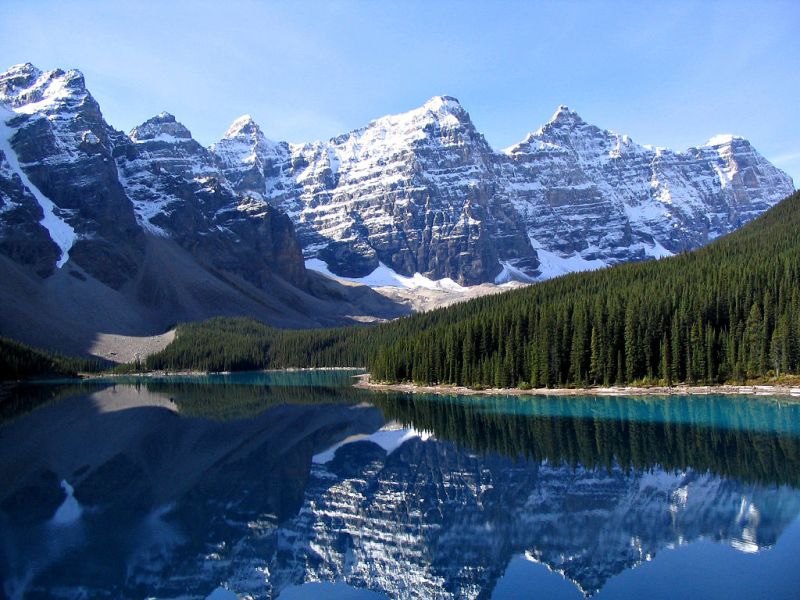
Since you have made your decision. I am looking farther still, beyond Alberta, where I will study at the University of Calgary, over and beyond the mighty Rocky Mountains westwards to British Columbia into the land, which like Germany lies between the mountains and the sea. It is not without reason that people call this province God’s country. Far away from the big cities, nature is still unspoiled by city life and industrial pollution. It appears to me incomparably more beautiful than Germany. Dear Biene, do not believe that I shut out our home country from my heart. Not only, because you need to stay behind for a while, do I depart reluctantly, but also because I must depart from people, who are dear to me. However, the world has become too crowded for me. I am searching for freedom, in close contact with nature, and for meaningful work in my future teaching profession. And should I not find them, I would be bitterly disappointed. But dear Biene, we both want to believe that I shall find after an eager search this envisioned, yes, almost ideal world in the reality of our life.”

Banff National Park, Canada

Banff National Park, Canada – Photo Credit: wikipedia.org

Biene replied: “My dear Peter, do you still remember your words, when you asked me to write to you one last time so that our friendship, which threatened to end in a discord, would dissolve in harmony. Sometimes I have to think about these words; for at that time they touched me deeply. For me it was as if this melody, which had always been in my heart, since I know you, must never fade away. Sometimes it only sounded rather timidly, but now my heart is full of music. I cannot express it in any other way. Was our correspondence during the two years not a good test whether the voice in our hearts that drove us together was genuine and true? Say, was it not also good that we had hurt each other and were saddened over it? I would rather be sad over you than feel nothing for you! Pain often carries the seed of deeply felt happiness. If we had never before been sad over each other, could we now fathom the happiness of having found each other?

I am hoping with you that you will find in Canada the freedom, for which you are longing, to be able to develop your abilities. But my dear Peter, you must not despair if you will be a little disappointed in certain things. Yes, you speak from my heart and soul when you say that it is far more rewarding and satisfying to build a future together based on our own strength than when everything just falls into our lap and one lives like in a golden cage. Through you I can now believe in a future, as I have always desired it. If we firmly believe in it and apply our strength, then our dreams, which we have always been dreaming, will become true.”

Biene had already written her final written exams before Christmas and sensing that she did well on them began the New Year in the knowledge that a major hurdle lay behind her and that her high school diploma was almost certainly within reach, although she still had to contend with a lingering anxiety about her upcoming oral tests in February. In contrast to the previous year when due to the emotional turmoil during her engagement with Henk and its sudden break-up her marks had dropped and for the first time in her entire school life she had been facing the spectre of failing the second last grade, now she was looking with a new sense of optimism into the future. She claimed that our love and the wonderful prospect of a life together as husband and wife in Canada gave her the strength and determination to face the challenges of the six remaining weeks at school.

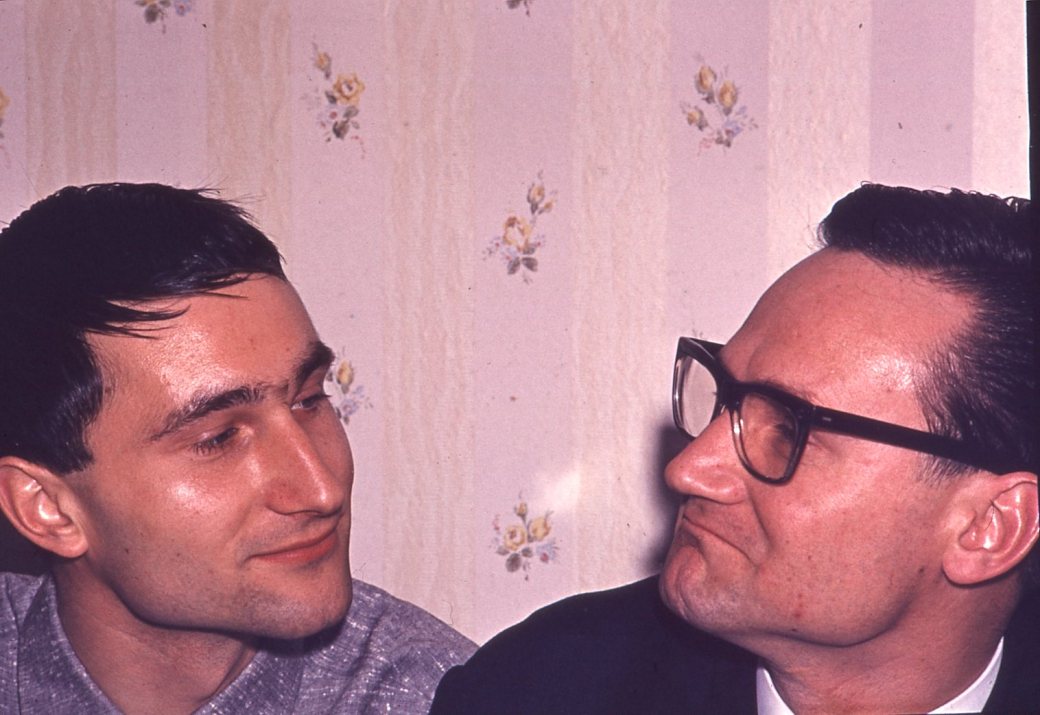
The Two Brothers Peter and Adolf - 1965

The Two Brothers Peter and Adolf – 1965

Of course, the ring, Biene’s most precious possession, which she had sent to me by mail and which I wore on my little finger at night, occupied front and center our thoughts and feelings and gave rise to reflections in our letters on its deeper meaning apart from being an heirloom from Biene’s great-grandmother. The first and foremost meaning, which Biene now openly declared, was that it symbolized faithfulness to which both of us from now on were committed through our love for each other. But there was also a hidden meaning, which I in my blindness for Biene’s subtle and unexpressed stirrings of the heart failed to see. I am certain that my roommates with their keen sense of perception would have immediately noticed the ridiculous reversal of roles I would have put openly on display with the ring, if it had indeed fitted on my ring finger. I was blind as a bat to Biene’s unspoken desire to receive an engagement ring in response to her precious gift. I could have prevented a lot of pain in the months that followed, if I had chosen to take the conventional route and on our next rendezvous in March had bought two rings for us. That way at least privately we would have had a semblance of a formal engagement. Alas, this thought never occurred to me.