Friedrich Otto Karl Klopp (1878-1957) – Part V

Karl’s Many Stations during World War I

Part 2 (1917-1918)

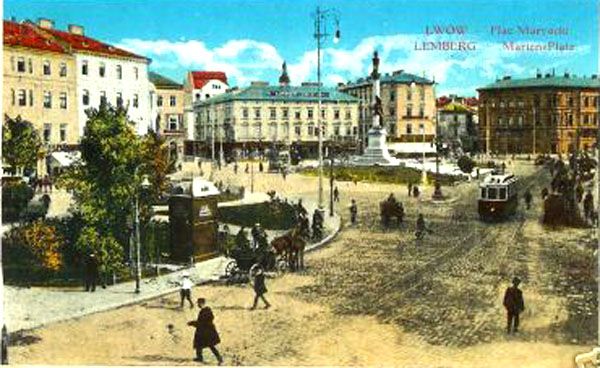
On July 20, 1916, Karl Klopp was sent as a soldier of the Infantry Battalion Passau to the Eastern Front. In Galicia, he immediately took part in the battles at the upper Stryj and Stochod south of Lemberg (Polish: Lwow) and subsequently participated in the battle of Kovel.

Lemberg1915 Mariyska (Lwow or Lviv)

Lemberg 1915 Mariyska (Lwow or Lviv)

From this point on his unit was being deployed in position battles again at Stochod. During the time of the armistice (Peace of Brest-Litowsk), he was stationed from December 1917 until the end of January 1918 in the battle zone of Mal Tovsk. Then until May, he soldiered in Sitowieze, Mielnika, Dubno, Buditschevo and Kosatin.

Finally, he was placed under the command of the First Army Corps in the region of Volhynia and then at the end of May 1918 under the First Infantry Regiment. Suddenly his problems with the knee joint began to bother him again. He received medical treatment and was granted leave at his hometown Hüttenhofen. Until General Armistice Day in November he spent time at the First Infantry Regiment (König) in Munich. In the process of demobilization of the German Army, he was released into civil life by order of the command post in Straubing on December 20, 1918.

Friedrich Otto Karl Klopp (1878-1957) – Part IV

Karl’s Many Stations during World War I

Part 1 (1914-1916)

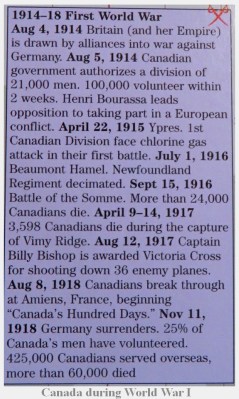
Into my historical posts I will insert from now on a fact sheet to show what made the news headlines during the same time period in Canada.

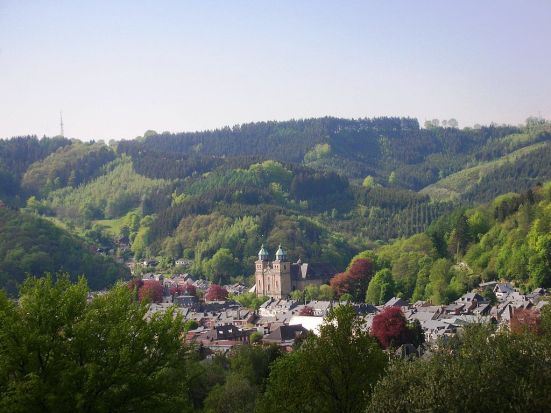
Malmedy, Belgium - Photo Credit: wikipedia.org

Picturesque Malmedy, Belgium – Photo Credit: wikipedia.org

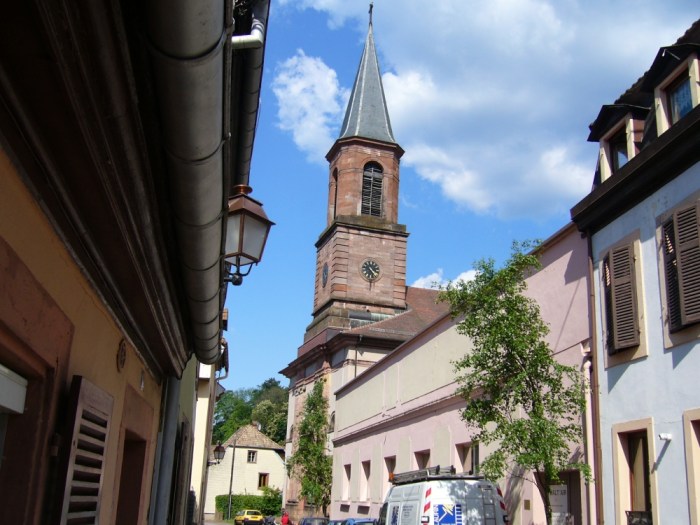
Four weeks after the beginning of World War I Karl Klopp was drafted into the Second Reserve Infantry Regiment on September 1, 1914 and was sent to the front in Belgium on September 11, 1914. On the same day he was promoted to the rank of a sergeant. Two weeks later he had an accident during a bad fall and was placed into the care of the field hospital at Beaumont south of Malmedy. On October 2, 1914, a hospital WorldWarItrain brought him to Munich, where he recovered from his injury. Then in the middle of October he was reassigned to the infantry battalion at Passau as an officer’s substitute. There he remained until September 1915. Together with the 3rd battalion he was again shipped to the Western Front. In his personnel files we read in the reports that as part of a reconnoitering troupe he participated in position combat in the region near Sainte-Marie-aux-Mines in the Central Vosges Mountains. That was the operational area of the 81st Infantry Regiment ‘Schusterberg’.

Sainte-Marie-aux-Mines - Photo Credit: wikipedia.org

Sainte-Marie-aux-Mines  (Vosges Mountains) – Photo Credit: wikipedia.org

From November 1915 until the end of January 1916 he served in the occupational forces of the fortress Strassburg. When his knee injury began to bother him again, he was given treatment at the field hospital at Saarburg, whence he was relocated again for duty to the infantry battalion at Passau. Here preparations were underway for deployment at the Eastern Front

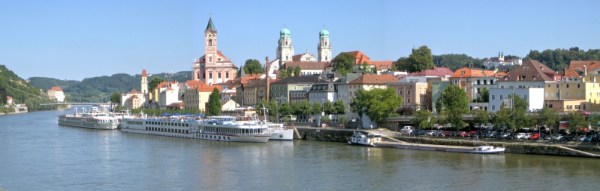
Passau Altstadt Panorama - Photo Credit: wikipedia.org

Panorama of Passau on the River Danube – Photo Credit: wikipedia.org

To be continued next week.

Friedrich Otto Karl Klopp (1878-1957) – Part III

Karl’s Professional Development

(Klopp Family Tree – Chart I – II)

To see the Klopp family tree, click here.

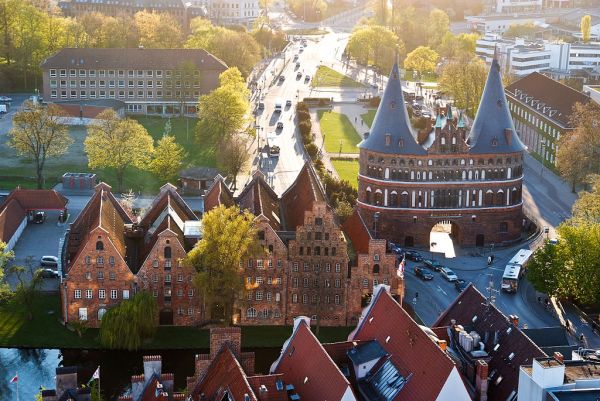
View of Lübeck - Photo Credit: wikipedia.org

View of modern-day Lübeck – Photo Credit: wikipedia.org

After his active service of ‘4 years, 11 months and 27 days’ Karl Klopp returned to civilian life. He attended a training course of the agricultural department at Greifswald, Pomerania, and then became adminstrator and manager of dairies and export companies, also construction foreman of the machine assembly plant H.G. Schröder in Lübeck.

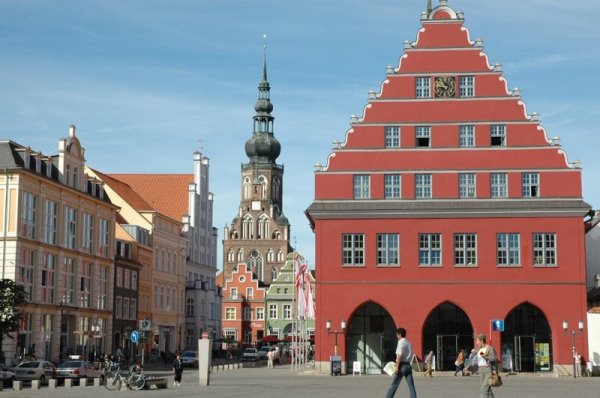
Greifswald_-_Town_Hall

Town Hall of Greifswald – Photo Credit: wikipedia.org

In 1905 he succeeded in getting a management position of the dairy in Hüttenkofen near Straubing, Bavaria. In 1907 Karl attended the dairy institute at Nortrup not far from Quakenbrück and obtained the certificate officially qualifying for a management position.

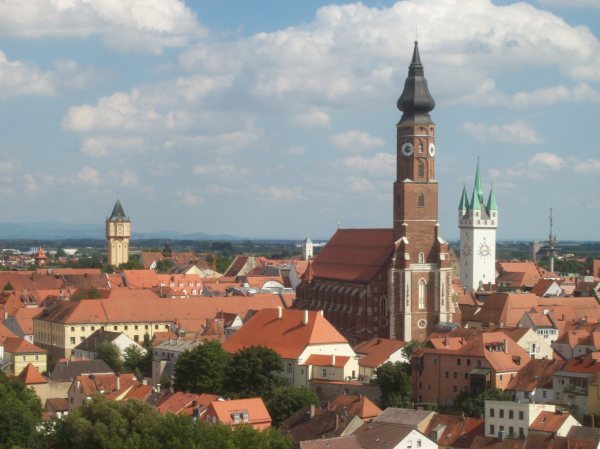
City View of Straubing, Germany - Photo Credit: wikipedia.org

City View of Straubing, Germany – Photo Credit: wikipedia.org

In the same year he married the teacher’s daughter Augusta (neé Hauer). Two daughters Luise (1907) and Auguste (1908) were born. In 1908 Karl bought the dairy of his former employer in Hüttenkofen and also became owner of a house at Radkofer Street 7 with a total assessed value of 29,000 marks. Karl Klopp, industrious and goal-oriented worked his way up into a respectable and wealthy Bavarian dairy owner.

To be continued next Thursday …

A Tale of Two Teachers

A Humorous Comparison by Dieter Barge

Today I have a little joke. Peter Klopp, a retired teacher, had asked me to make a blog post about cacti with pictures of particularly beautiful blossoms. I will soon do this.

Today I would like to quickly report something about Wilhelm Busch, who was a German painter, early cartoonist, and most beloved of all German poets. In his book “Max and Moritz”  he wrote the story in seven boyish pranks about the two little rascals Max and Moritz. While their devout teacher Lämpel is busy at church, the boys invade his home and fill his favorite pipe with gunpowder. When he lights the pipe, the blast knocks him unconscious, blackens his skin and burns away all his hair.  Here is the beginning of the 4th trick:

An old saw runs somewhat so:

Man must learn while here below.

Not alone the A, B, C,

Raises man in dignity;

Not alone in reading, writing,

Reason finds a work inviting;

Not alone to solve the double

Rule of Three shall man take trouble;

But must hear with pleasure Sages

Teach the wisdom of the ages.

In addition the teacher is drawn like this:

Lämpel

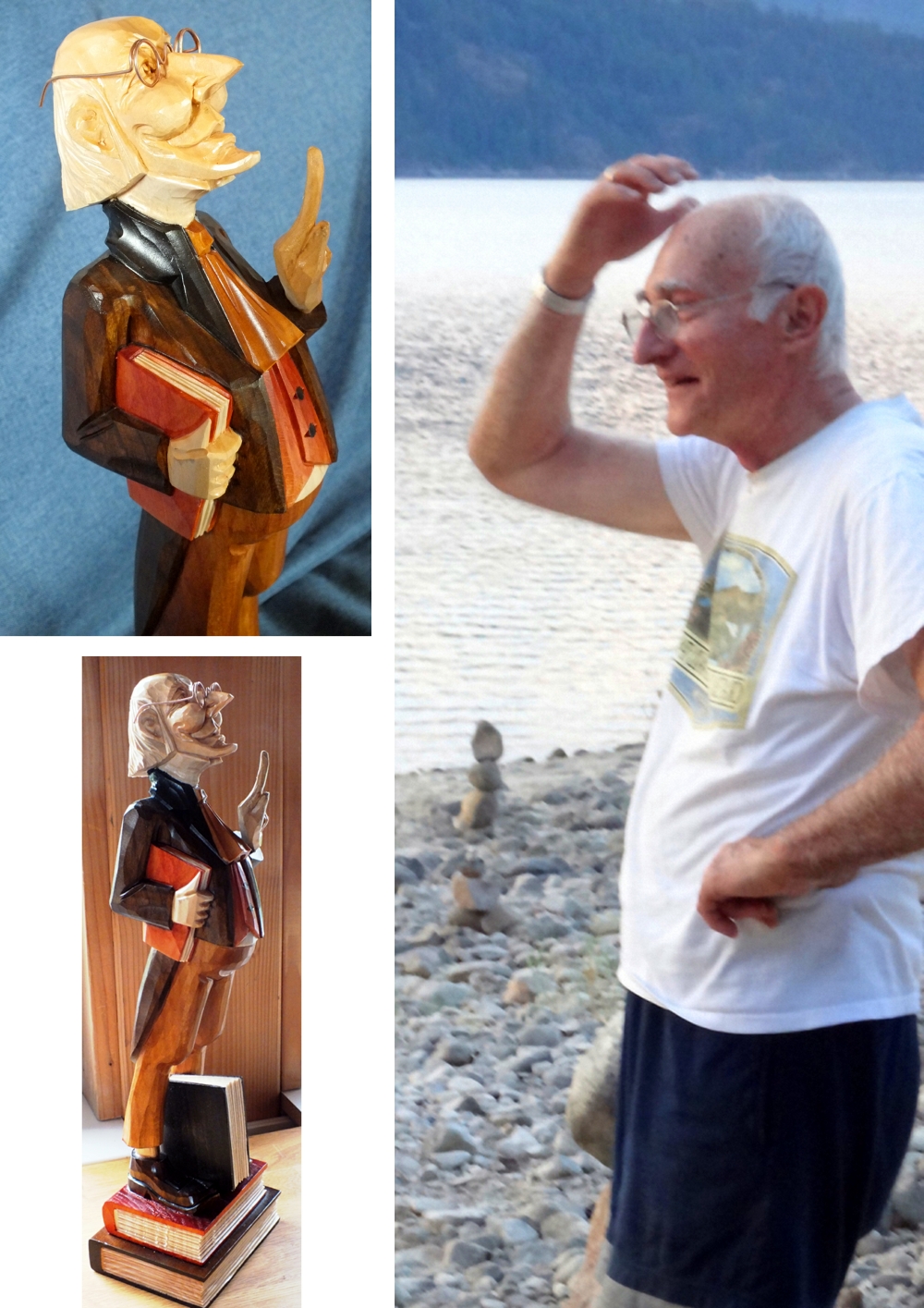
We bought a carved figure of Master Lämpel ! Now a certain resemblance between two teachers has struck me:

Peter Klopp Lämpel small

On this post I share my discovery with glee. Peter will certainly not be angry with me!

Contributed by Master Jester Dieter Barge, who married Edda, the granddaughter of Bruno Kegler (my uncle) and thus became an invaluable member of the illustrious Klopp-Kegler Clan famous or perhaps rather notoriously known for its jocular disposition. To see the Kegler Family Tree, Chart II a – IV, click here. – Peter Klopp


Friedrich Otto Karl Klopp (1878-1957) – Part II

Military Service in China and Bavaria (Chart I – II)

To see the Klopp family tree, click here.

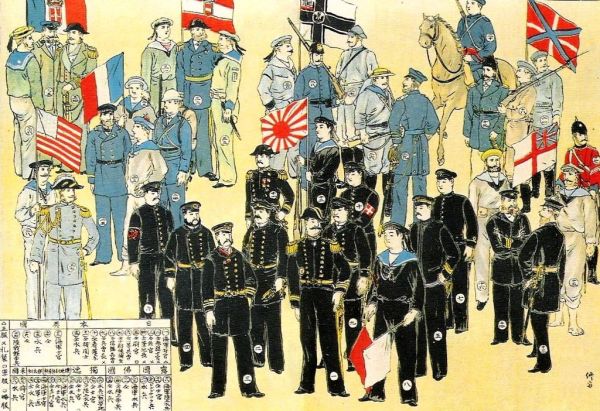
The Eight-Nations Alliance in the Boxer Rebellion

The Eight-Nations Alliance in the Boxer Rebellion 1900-1901 – wikipedia.org

During the Boxer Rebellion Karl Klopp first belonged until June 1001 to the 4th East Asian Infantry Regiment ‘Count Montgelas’, then until the completion of the campaign in October 1901 he was part of 2nd Infantry Regiment.

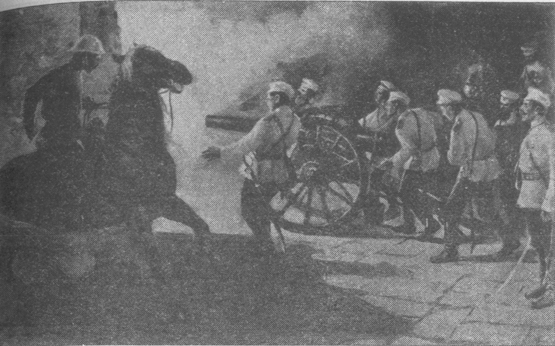
Russian Troops Storming Beijing_Gates - Photo Credit: wikipedia.org

Russian Troops Storming Beijing_Gates – Photo Credit: wikipedia.org

On March 8, 1901 he participated in a mountain battle at the Thanscheng Pass. There he succeeded in the capture of four cannons, for which he received for the first time military recognition. Overall he was awarded during his service the Bavarian medal for bravery, the Prussian military medal, the Austrian First Class Medal for Bravery, the China Commemorative Coin and the Prince Regent Luitpold medal.

Typical Commemorative Medals - wikipedia.org

Typical French Commemorative Medals 1900-1901 – Photo Credit: wikipedia.org

After his return from China he served until September 1903 again at his home battalion at Straubing. There on March 1, 1902 he was promoted to the rank of a sergeant. His subsequent assignment to the Infantry Regiment ‘Prince Ruprecht’ can be seen as a special privilege and preference in recognition of his exemplary role as a leader.


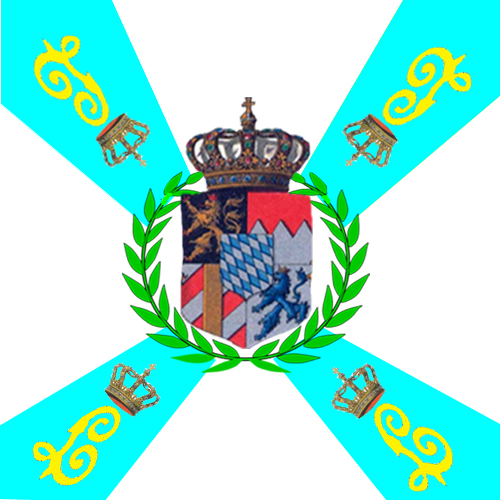
Insignia of the Bavarian Army - Photo Credit: wikipedia.org

Insignia of the Bavarian Army – Photo Credit: wikipedia.org

During that time he suffered an injury to his left knee and was transferred on October 5, 1903 to the reserve beginning his civilian life.

To be continued next Thursday …

Friedrich Otto Karl Klopp (1878-1957) – Part I

Participant in the Boxer Rebellion (Chart I – II)

To see the Klopp family tree, click here.

Karl, the third child of Friedrich and Emma Klopp (my grandparents), was born in Jersleben on March 25, 1878. From 1884 to 1892 he attended the elementary school in Wolmirstedt and after that was apprentice and then journeyman at the number of dairies.  Until 1898 he was employed in Ebersberg, Bavaria. From there he was drafted as a recruit on October 14, 1898 into the third company of the First Rifle battalion in Straubing. A year later he was promoted to the rank of Oberjäger (corporal).
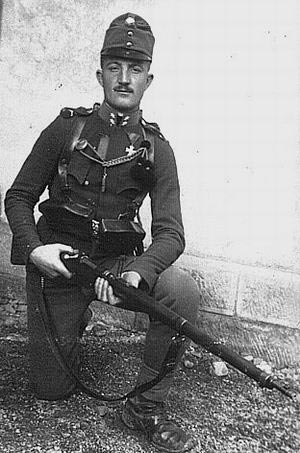
Typical Rifle Soldier - Photo Credit: guns.com

Rifle Soldier – Photo Credit: guns.com

From July 1900 he belonged to the allied armed forces whose task was to quell the so-called Boxer Rebellion in China. As this part of imperialistic history may not be known to many readers of my blog, until myself included, I digress from the narrative of Karl’s adventurous year in China with the following excerpt from wikipedia.org.
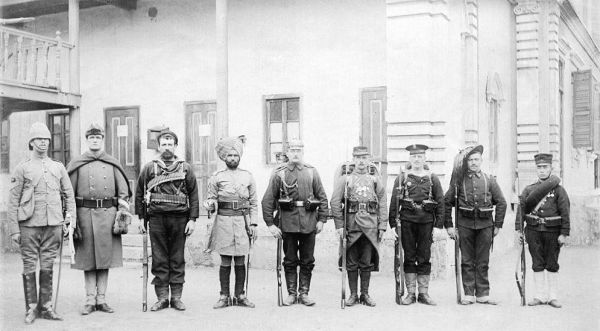
Solders of the Eight Nation Alliance - Photo Credit: warfarehistorian.blogspot.com

Eight Nation Alliance – Photo Credit: warfarehistorian.blogspot.com

The Boxer Rebellion, Boxer Uprising or Yihetuan Movement was an anti-imperialist uprising which took place in China towards the end of the Qing dynasty between 1899 and 1901. It was initiated by the Militia United in Righteousness (Yihetuan), known in English as the “Boxers”, and was motivated by proto-nationalist sentiments and opposition to foreign imperialism and associated Christian missionary activity. The Great Powers intervened and defeated the Chinese forces.
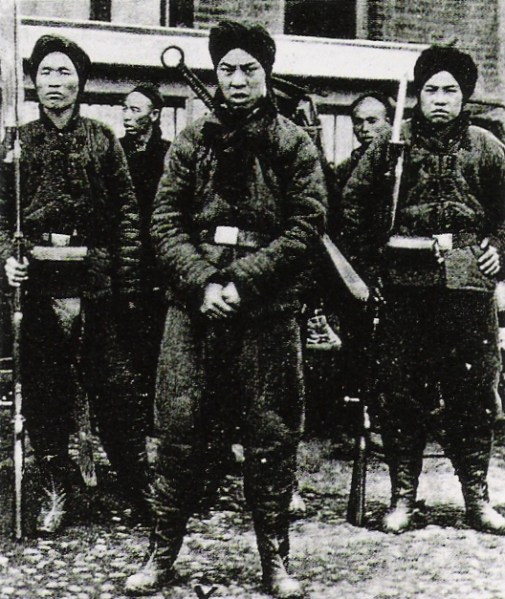
'Boxer' Soldiers - Photo Credit: wikipedia

‘Boxers’  believed to be invincible.- Photo Credit: wikipedia

The uprising took place against a background of severe drought and the disruption caused by the growth of foreign spheres of influence. After several months of growing violence against the foreign and Christian presence in Shabdong and the North China plain, in June 1900, Boxer fighters, convinced they were invulnerable to foreign weapons, converged on Bejing with the slogan “Support Qing government and exterminate the foreigners.” Foreigners and Chinese Christians sought refuge in the Legation Quarter. In response to reports of an armed invasion to lift the siege, the initially hesitant Empress Dowager Cixi supported the Boxers and on June 21 declared war on the foreign powers. Diplomats, foreign civilians and soldiers as well as Chinese Christians in the Legation Quarter were placed under siege by the Imperial Army of China and the Boxers for 55 days.
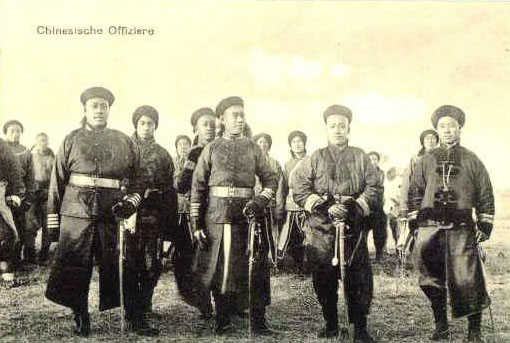
Members of the Qing Imperial Army - Photo Credit: wikipedia.org

Qing Imperial Soldiers- Photo Credit: wikipedia.org

Chinese officialdom was split between those supporting the Boxers and those favoring conciliation, led by Prince Qing. The supreme commander of the Chinese forces, the Manchu General Ronglu (Junglu), later claimed that he acted to protect the besieged foreigners. The Eight-Nation Alliance, after being initially turned back, brought 20,000 armed troops to China, defeated the Imperial Army, and captured Beijing on August 14, lifting the siege of the Legations. Uncontrolled plunder of the capital and the surrounding, along with the summary execution of those suspected of being Boxers.
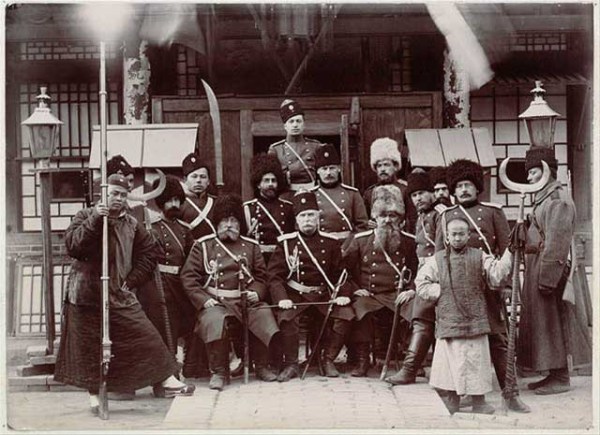
Russian officers in Manchuria during the Boxer Rebellion - Photo Credit: wikipedia.org

Russian officers in Manchuria 1900 – Photo Credit: wikipedia.org

 The Boxer Protocol of September 7, 1901 provided for the execution of government officials who had supported the Boxers, provisions for foreign troops to be stationed in Beijing, and 450 million taels of silver—more than the government’s annual tax revenue—to be paid as indemnity over the course of the next thirty-nine years to the eight nations involved.

More details of these events in East Asia, the atrocities committed on both sides, the role Germany played in the Eight Nations’ Alliance (UK, France, Germany, Italy, Austria-Hungary, Russia, Japan and USA) can be found at https://en.wikipedia.org/wiki/Boxer_Rebellion.

Karl Klopp’s story will be continued next Thursday.