Baroness Anna von Waldenfels (née Klopp) – Part III

The Long Arduous Road to the Panwitz Estate

While World War I was still raging and devastating Europe, Anna’s husband Ludwig von Waldenfels was reactivated into the military service on July 27th 1918 and served as supervising officer at a penal camp at Oberhaus near Dachau until demilitarization in May 1919. Now already 43 years old with a modest pension Ludwig had to worry about his family’s future. After his high school graduation in Munich he had taken a three-semester training course at the forestry college at Aschaffenburg between 1894 and 1896. Therefore, he had some basic agricultural knowledge. On the northern edge of Passau the couple acquired the estate Kastenreuth. On the hilly terrain the work in the fields was not very cost effective and the harvests appeared to have been quite meagre.  Already by 1922 Anna and Ludwig sold the property to the physician and researcher Professor Dr. Wilhelm Kattwinkel.

In the same year they acquired the estate Neuhof (today Polish Garbek) in the county of Schlochau. It was located right at the border of the newly formed ‘Corridor’ between the remaining part of German West Prussia and the new state of Poland. According to my cousin Eberhard Klopp’s research my Uncle Hermann (1892-1937) had passed on the 200ha property to his brother-in-law Ludwig. As a result of the Versailles Treaty the Polish border was moved within a few metres of the estate boundary. It ran about 300 metres east of the village street alongside a pond still existing today. In a 100 m direct line of sight was the Polish hamlet Zychce (German Sichts). In 1921 the West Prussian rural bank founded ten settlers’ places in Neuhof. Baron von Waldenfels and his wife Anna acquired the remaining parcel with the even today well-preserved estate building on the left side of the village street.

In the village of Neuhof of some 200 inhabitants Ludwig von Waldenfels worked the 810ha farming property and served at the same time as mayor until 1927. “The inhabitants originated mostly from the stolen parts of West Prussia and partly from Münsterland (Münsterland is a mostly flat, agricultural region in North Rhine-Westphalia, Germany).  Only 14 people were speaking Polish.” When the family von Waldenfels left Neuhof in 1927, their property was also parcelled into seven more settlements.

It is definitely unimaginable that the couple von Waldenfels accustomed to the big city life style of Metz and Berlin would feel at home in the solitude of a remote little border village. In the year of their departure in 1927 brother Ernst Klopp (1900 – 1964 my father) found employment and stay during the summer harvest. Mostly likely he participated in the preparations for the move out of the second agricultural venture. In the remote bush, heather, and meadow landscape with a few deciduous woods the family von Waldenfels managed to last barely five years.

Now brother-in-law Herman Klopp jumped into action as helper in a new government initiative. Having been the administrator of the copper mill near Meseritz, East Brandenburg (today Polish Miedzyrzcezc) he was familiar with all locally pertinent facts. He made a concrete proposal to the couple von Waldenfels, which turned out to be a stroke of luck.

Natural Splendour of the Arrow Lake

Wednesday’s Photos

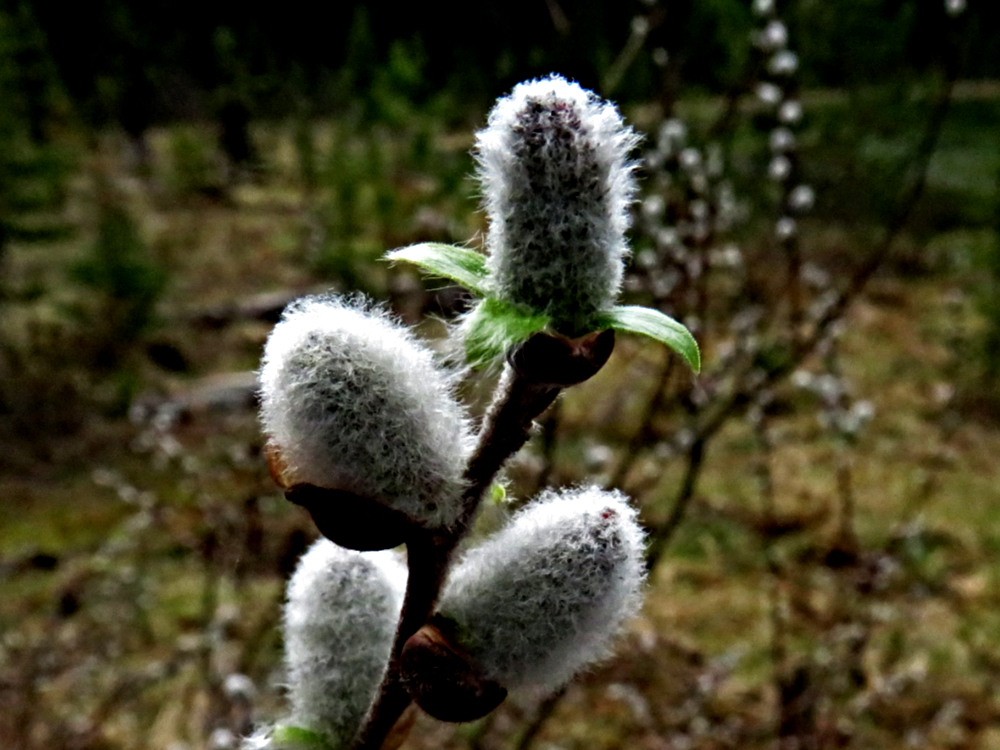
Pussy Willows in May?

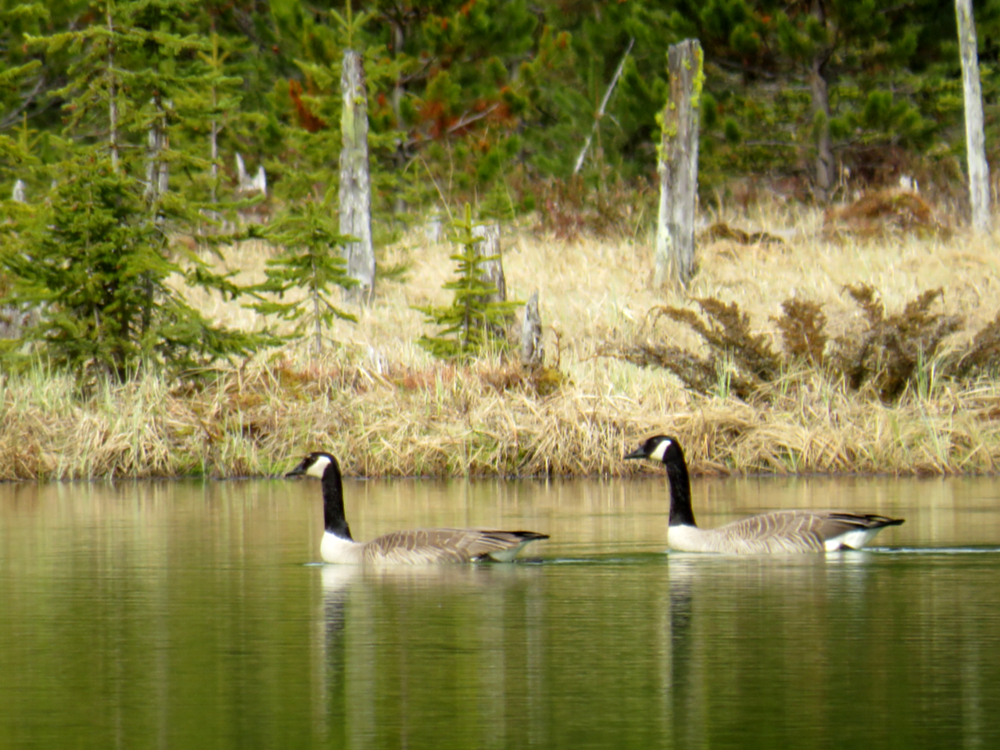
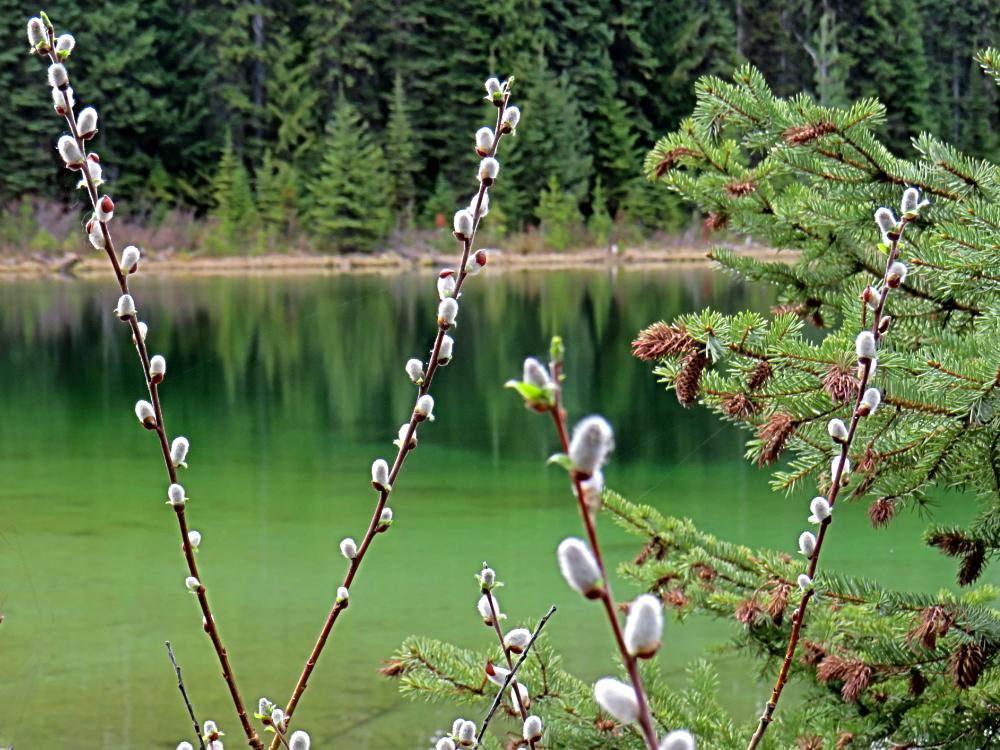
Last week I reported how far behind Nature is at higher elevations. Pussy willows are the very first sign of springs in our valley. They can be spotted as early as February. But at 1200m altitude they are showing their delicate beauty only now in the second week of May. On my way to Vernon I stopped by to have another look at Lost Lake where I had taken a photo of the Canada geese the week before. Enjoy.

IMG_6161AIMG_6162AIMG_6167A

Translation of Mother’s Poem for our Wedding

So many followers of my blog had asked me for a translation of my mother’s wedding poem that I decided to get to work. The poem is quite poetic and uses my wife’s nickname Biene (Bee) as a metaphor for her flight from Germany to Canada in 1966. There was no way to preserve the rhyme and rhythm of this wonderful poem. The translation therefore can only give a crude impression, but at least you will know what this poem is all about.

6707b716a476401098566b9877c25fe5--bee-clipart-cartoon-picture

My Mother’s Wedding Poem loosely translated into English

It whispers here, it mutters there.

It happened to my youngest son.

He wanted to study in Canada

to get himself a really good job.


The exams taken in quick succession

did not bother and confuse him at all.

Also what comes now is not a lie.

Something buzzing came flying to him.


A little bee (Biene) tender and excited,

of a very special kind was she,

flew from the Rhine on and on,

totally joyful and spontaneous,

sometimes high and sometimes low,

almost singed her wings, oh no.


From Montreal to Calgary,

tireless like never before,

the little creature totally exhausted

landed at Peter’s basement door.


Peter showing respect for any kind of life

did not leave the insect unattended.

He took care of the Little Bee,

stroking her wings so tenderly.


Indeed with so much tender-loving care

she turned into a princess without delay.

A young maiden well known to me,

he took her quickly to the marriage office.


On the 21st of May you will be a couple.

That is clear to the people in ‘Born, Germany.

Not too long ago Peter as scout lived in tent.

And now Biene flew to him in a great hurry.


Here are the greetings to all the siblings

from all the uncles and all the aunts.

That all may go well wishes your mother

from the bottom of her heart.

selective focus photo of yellow sunflower

Photo by Karol Wiśniewski on Pexels.com


Baroness Anna von Waldenfels, neé Klopp – Part II

Conversion to Catholicism

Anna’s mother-in-law living at Etzenhausen near Dachau insisted that she and her baby converted to the Catholic faith. This intent according to the Wolmirstedt-Zielitz family clan represented the ultimate of impertinence towards the family, which from earliest times has presumably adhered to the Lutheran confession.

As long as Ludwig Max von Waldenfels has been for 16 long years serving in the same Metzger regiment (1905 battalion assisting officer, 1909 promoted to senior lieutenant, 1913 captain and company commander), religious questions played a minor role in Ludwig’s life. However, the choice of his wife was an entirely different matter. Anna did not befit his social status.

Anna and Ludwig must have been trying for years to navigate around the cliff of Ludwig’s mother’s adamant position. Now because of mother-in-law’s pressure and of related inheritance and financial questions, the situation demanded a sacrifice, from which there seemed to be no escape. The future husband had earlier introduced Anna to his mother as a ‘society woman’. The wedding took place on October 19, 1916. At the same time little Fritz Georg most likely was baptized into the Catholic faith. Obviously money and inheritance matters accelerated the decisive step.

Twelve years had passed until the Klopp offspring Fritz Georg received the prestigiously sounding name von Waldenfels now even with the blessing of his grandmother and the Catholic church. Now the Klopp family of Wolmirstedt and Zielitz could no longer despise Anna for her loose life style they had accused her before, but her conversion to catholicism definitely made her a renegade in their envious eyes. It made no difference whether her change of religion was based on Jewish or Catholic causes. Despicable was everything that deviated from the Wolmirsted-Zielitz norm, even at the risk of having confused in their stupidity apples with pears.

Natural Splendour of the Arrow Lake

Wednesday’s Photos

Nature’s Progress in Early May

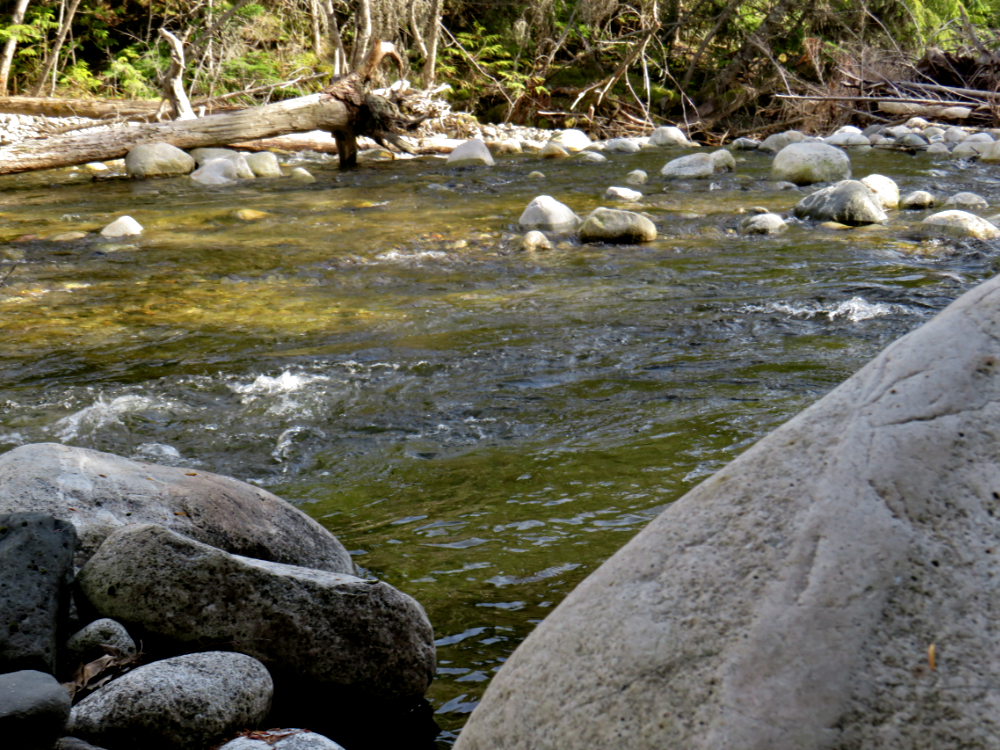
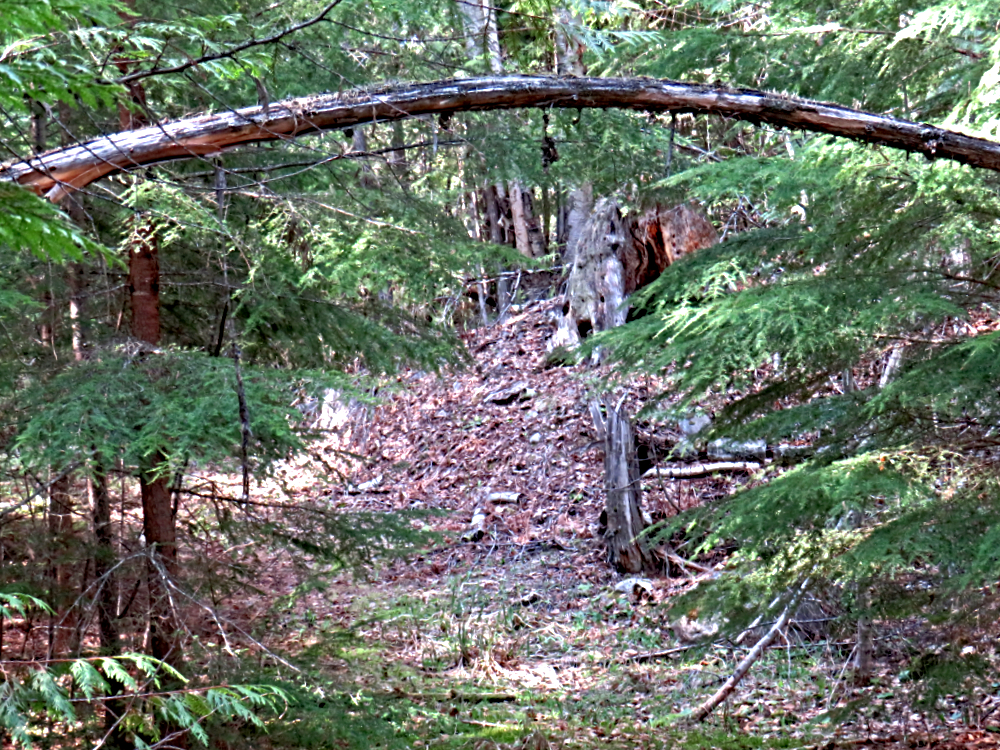
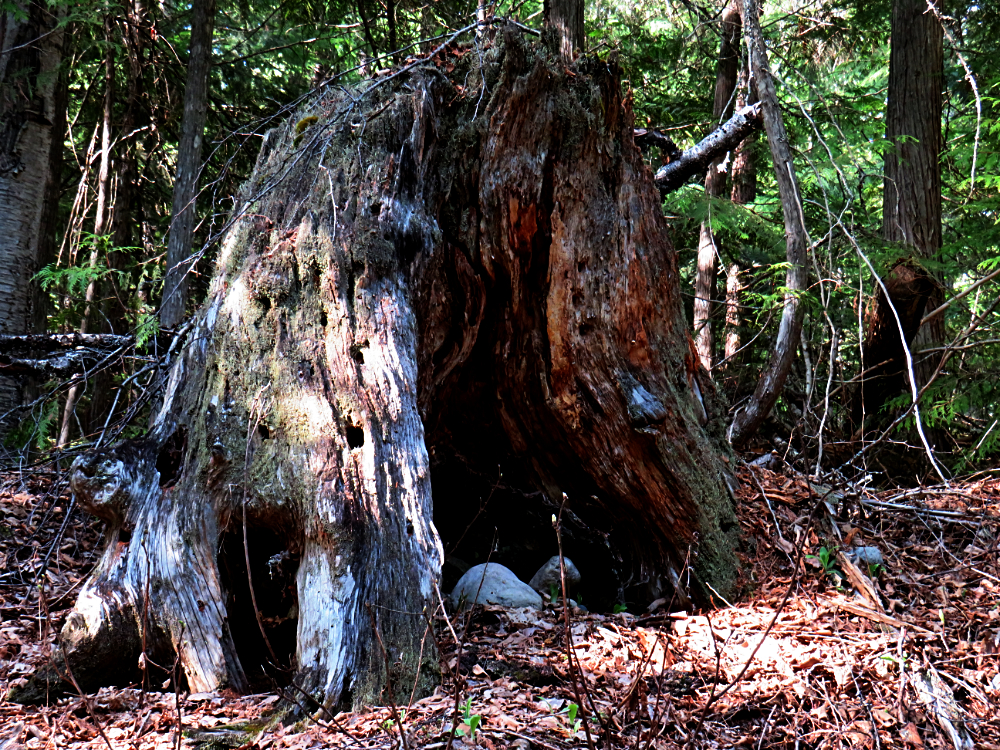
What a difference altitude can make when looking for signs of spring’s progress! The first image was taking only half an hour’s drive from the ferry at Fauquier at an elevation of 1200m. The grass has not turned green yet and there was still snow on the ground. But a pair of geese had already taken possession of this beautiful lake in the mountains. Down in our valley I took picture of calm Taite Creek, which shows yet no sign of the annual spring run-off. Deep in the dark woods I also noticed that nature was quite a bit behind in its normal development. The lonely tree stump at least 50 years old is in a state of total decay giving evidence to Nature’s eternal law that one must give back to her what one has borrowed at the beginning of a life cycle. Looking up I noticed the ‘candles’ of the pine trees silhouetted against the blue sky. Their vigorous growth announces that spring in the forest is also on the march. Enjoy.

A-IMG_6150A-IMG_6138A-IMG_6132A-IMG_6139A-IMG_6127

The Peter and Gertrud Klopp Story – End of Book I

Epilogue

For our wedding on May 21, 1966, my mother wrote a touching poem, which she also spoke on tape. She was unable to attend the wedding. So Biene and I could at least listen to and enjoy her voice. Chronologically, her message belongs to Book III of the Klopp family chronicle, but her good wishes and heart-felt words are a very fitting conclusion to the trials and tribulations we had to endure before we could finally tie the knot.